
20 Outdoor Living Space Ideas for Year-Round Enjoyment
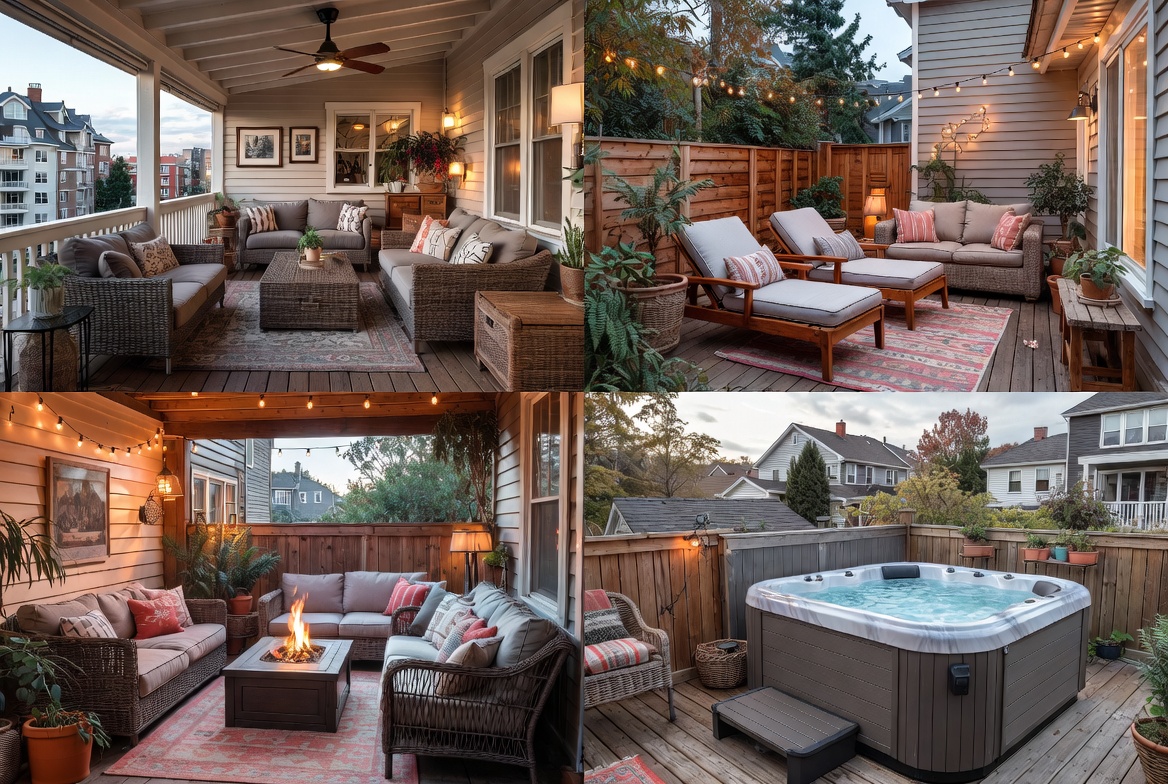
An outdoor living space is the most underused square footage most homeowners have. A patio, deck, or backyard that sits empty except during summer barbecues represents a missed opportunity — for daily relaxation, for entertaining, for the simple pleasure of being outside in a considered space. The best outdoor living areas work like rooms: they have a clear purpose, comfortable furniture, adequate lighting, and enough shelter to be usable across more than one season. These 20 ideas cover every aspect of creating an outdoor space that actually gets used.
1. Define the Space with a Focal Point
Best for: Any outdoor area that currently feels undefined or unfinished
Every successful outdoor room starts with a focal point — one element that anchors the space and gives it a reason to exist. Without a focal point, furniture is just scattered across a patio with no visual logic. With one, the entire arrangement organizes itself around it.
The strongest focal points for outdoor spaces: a fire pit (draws people together and provides warmth), an outdoor fireplace (more permanent and architectural than a fire pit), a water feature (movement and sound), a large specimen plant or tree, or a statement piece of outdoor furniture like an oversized sectional or dining table.
Smart tip: Position the focal point so it’s visible from inside the house as well as from the outdoor seating area. A fire pit seen from the kitchen window is twice as inviting as one hidden at the back of the yard.
Mistake to avoid: Choosing a focal point that’s too small for the space. A small tabletop fire bowl in the center of a large patio looks like a decorative afterthought. Scale the focal point to the space — a large patio needs a substantial anchor.
2. Add a Pergola or Shade Structure
Best for: Uncovered patios and decks, any outdoor space that needs definition and shade
A pergola defines an outdoor space architecturally without fully enclosing it. The overhead structure — whether open timber beams, a sail shade, a retractable awning, or a steel frame — signals that this area is a room rather than just an open area of the yard. It also provides partial shade, which makes the space usable during hot afternoons.
Pergola options by budget: a sail shade attached to the house wall and a post (least expensive, most flexible), a freestanding timber pergola kit (mid-range, genuinely attractive), a custom-built timber or steel pergola (most expensive, most permanent and architectural).
Smart tip: Train climbing plants — wisteria, jasmine, roses, or grape vines — up and over a timber pergola over several seasons. A pergola covered in established climbing plants looks as though it has always been there and provides dappled, fragrant shade that no manufactured shade structure can replicate.
Mistake to avoid: Building a pergola without checking local planning or HOA requirements. Pergolas above a certain size often require permits or approvals. Check before committing to any structural installation.
3. Build an Outdoor Seating Area
Best for: Every outdoor space — seating is the foundation of outdoor living
The seating arrangement determines how the outdoor space functions. Chairs facing a fire pit create an intimate gathering area. A sectional sofa facing a view creates a relaxation zone. A mix of individual chairs around a low table creates a conversational setup. The choice is a design decision, not just a furniture purchase.
Material matters outdoors: teak and hardwoods age beautifully to silver-grey and last decades with minimal maintenance. Powder-coated aluminum is lightweight, rust-proof, and easy to move. Resin wicker looks good and withstands weather, but cheaper versions fade and crack within a few seasons. Choose furniture rated specifically for outdoor use — indoor furniture left outside degrades quickly.
Smart tip: Outdoor sofas need cushions with outdoor-rated fabric (solution-dyed acrylic, polyester with UV-resistant coating) to resist fading, mildew, and moisture. The cushion fabric investment is as important as the frame — cheap cushions on expensive frames look shabby within one season.
Mistake to avoid: Buying outdoor furniture that’s too small for the space. Furniture that looks correctly sized in a showroom often reads as small on an actual patio with sky above it. When in doubt, go larger — or use more pieces rather than fewer.
4. Install a Fire Pit or Fireplace
Best for: Evening use, cool climates, anyone who wants to extend outdoor time into autumn
A fire feature is the single most used and most appreciated addition to an outdoor living space. It extends the season significantly — a well-placed fire pit makes outdoor evenings in September and October as comfortable as July — and it creates a natural gathering point that no other feature replicates.
Fire pit options: in-ground stone fire pit (most permanent, most architectural), above-ground steel bowl fire pit (portable, affordable, flexible placement), propane gas fire pit (no wood required, easy to start and stop, lower maintenance), built-in stone or brick fireplace (most substantial, adds property value, requires planning permission).
Smart tip: Position the fire pit or fireplace downwind of the main seating area when possible. Smoke follows people with inexorable accuracy — knowing the prevailing wind direction before choosing placement saves ongoing frustration.
Mistake to avoid: Placing a fire feature too close to the main seating. The comfortable distance from a fire pit edge to seating is typically 6 to 8 feet — close enough for warmth, far enough for comfort. Closer than 5 feet and the heat becomes uncomfortable on warm evenings.
5. Create an Outdoor Dining Area
Best for: Any home with a kitchen that connects to an outdoor space
Outdoor dining is one of the most reliably pleasant ways to use an outdoor space — the combination of food, fresh air, and natural light improves almost any meal. A dedicated outdoor dining area needs a table sized for the actual number of people who will use it regularly, chairs that are comfortable for a full meal’s duration, and either shade or comfortable sun exposure.
A round table seats more people per square foot than a rectangular one and encourages more conversational dining — nobody is relegated to the end. For entertaining, extendable rectangular tables allow flexibility between everyday use and larger gatherings.
Smart tip: Position the outdoor dining table directly adjacent to the kitchen door or within 15 to 20 feet of it. Every additional step between kitchen and outdoor dining table increases friction and decreases how often the space gets used. Proximity to food preparation is the most practical dining area consideration.
Mistake to avoid: Choosing a dining table without considering how it will be covered or protected. Outdoor dining tables left uncovered accumulate debris, weather, and stains quickly. Either choose a material that ages gracefully without maintenance (teak, stone, powder-coated steel) or plan for a cover.
6. Use an Outdoor Area Rug
Best for: Patios, decks, any outdoor space where the floor surface needs warmth or definition
An outdoor rug does outdoors what it does indoors: it defines a zone, adds color and texture, and makes a hard surface feel like a room rather than a floor. On a concrete or paving stone patio, an outdoor rug transforms the area from functional surface to living space.
Outdoor rugs must be specifically rated for exterior use — polypropylene or solution-dyed polyester woven rugs that resist mildew, UV fading, and moisture. They’re machine washable with a hose and dry quickly.
Smart tip: Size the rug so that at minimum the front legs of all furniture pieces sit on it. A rug that’s too small — with all furniture legs off the edge — looks like a decorative mat rather than a room-defining element. Bigger is almost always better for outdoor rugs.
Mistake to avoid: Leaving an outdoor rug in place through winter in cold climates. Even outdoor-rated rugs degrade faster when exposed to freeze-thaw cycles repeatedly. Roll and store covered rugs through the coldest months for significantly longer lifespan.
7. Add String Lights and Outdoor Lighting
Best for: Any outdoor space used in the evening — lighting transforms outdoor spaces after dark
String lights are the fastest and most affordable transformation available for an outdoor space. Strung between the house and a post, along a pergola, or overhead in a canopy pattern, they create an immediate sense of enclosure and atmosphere that no other lighting achieves as easily or inexpensively.
Beyond string lights, a layered outdoor lighting approach works exactly like indoor lighting: ambient (overall illumination from a pendant light or ceiling fan light under a covered space), task (lights over the grill or dining area), and accent (uplighting trees, path lighting, step lighting).
Smart tip: Use warm white LED bulbs (2700K) for outdoor string lights rather than cool white or daylight. Warm light at night is flattering, atmospheric, and feels welcoming. Cool white string lights look clinical rather than inviting.
Mistake to avoid: Using indoor extension cords or lighting outdoors. Outdoor lighting must be rated for exterior use — IP65 or higher water resistance rating. Indoor equipment used outdoors is both a safety hazard and degrades quickly in moisture and temperature variation.
8. Build an Outdoor Kitchen or Bar
Best for: Homes that entertain regularly, anyone who grills frequently
An outdoor kitchen — even a modest one — dramatically increases how much time is spent outdoors during the warm season. When cooking happens outside rather than inside, the cook remains part of the gathering rather than disappearing into the kitchen. The social dynamic of outdoor cooking is entirely different from indoor.
A minimal outdoor kitchen: a quality built-in grill, a small prep counter, a weatherproof mini-fridge for drinks, and a single outdoor storage cabinet for tools and supplies. This setup fits a 6 to 8-foot counter run and serves most outdoor cooking needs.
Smart tip: Position the grill at the end of the outdoor kitchen run rather than in the middle. A grill produces smoke and heat — placing it at the end allows smoke to dissipate in one direction rather than across the entire cooking area and adjacent seating.
Mistake to avoid: Building an outdoor kitchen without thinking about the plumbing implications of an outdoor sink. An outdoor sink requires water supply and drainage connections — budget and plan for both before designing the kitchen layout. Retrofitting plumbing after construction is expensive.
9. Add Privacy with Plants or Screens
Best for: Urban gardens, properties overlooked by neighbors, any outdoor space where privacy improves comfort
An outdoor living space that feels exposed — visible to neighbors, adjacent properties, or a street — is used less than one that feels enclosed and private. Addressing privacy is often the most important single improvement for urban outdoor spaces.
Privacy options: tall screening plants (bamboo, pleached trees, large ornamental grasses — takes several seasons to establish but looks natural); privacy screens (timber, metal, or composite panels — immediate effect, permanent); pergola with side panels or climbing plants; privacy fence upgrades.
Smart tip: Layer privacy planting — a close-planted row of tall grasses or evergreen shrubs in front of a fence extends the privacy barrier and softens the appearance of the fence from inside the space. The combination looks more like a garden than a defensive installation.
Mistake to avoid: Using bamboo for privacy screening without installing a root barrier first. Bamboo spreads aggressively through its root system and can colonize adjacent garden areas and even neighboring properties within a few seasons. Always install a physical root barrier to contain bamboo planting.
10. Add a Water Feature
Best for: Gardens where the sound of water would improve the atmosphere, spaces near noise pollution
Water features add a sensory dimension to outdoor spaces that visual elements alone can’t provide. The sound of moving water masks background noise — traffic, neighbors, air conditioning units — and creates a quality of calm that’s deeply associated with relaxation.
A small recirculating fountain on a patio table, a wall-mounted water feature, or a freestanding urn fountain all produce meaningful sound from a small footprint. None require complex installation — most can be set up with a power outlet and a garden hose.
Smart tip: The sound produced by a water feature is adjustable — the higher the drop from outlet to basin, the louder and more prominent the sound. Test before installing permanently. A gentle trickle suits meditation and relaxation spaces; a more pronounced sound suits entertaining spaces where it provides ambient noise.
Mistake to avoid: Installing a water feature and then neglecting its maintenance. Standing water develops algae, mosquito larvae, and debris accumulation rapidly. Plan for weekly water level top-up, monthly algae treatment, and seasonal cleaning before choosing a water feature size.
11. Layer Outdoor Textiles
Best for: Any outdoor seating area — textiles complete the room-like quality of outdoor spaces
The difference between an outdoor space that looks like furniture on a patio and one that looks like a room is almost always in the textiles. Cushions, throw pillows, blankets, and an area rug together create the layered, furnished quality of an interior space — outdoors.
Outdoor-rated textiles have advanced significantly — solution-dyed acrylic fabrics resist UV fading, resist mildew, and clean easily. Patterns and colors available in outdoor fabric now rival indoor fabric selections.
Smart tip: Keep a weatherproof storage box or bench on the patio for outdoor cushions and throws. If taking cushions inside after each use requires carrying them through the house, it doesn’t happen consistently. Storage directly adjacent to the seating area reduces friction to zero.
Mistake to avoid: Choosing outdoor cushion colors and patterns that don’t relate to the house exterior or the planting. A cohesive palette — two or three colors that relate to the surrounding space — looks designed. Mixing whatever was available looks assembled from clearance stock.
12. Build a Deck or Raised Platform
Best for: Sloped gardens, properties where the interior floor level is above grade, anyone wanting to define an outdoor room structurally
A timber deck or raised concrete platform creates a defined outdoor room with architectural presence. The raised edge of a deck — even 6 to 12 inches above grade — visually separates the outdoor living area from the surrounding garden and creates the sense of a contained space.
Timber decking materials: hardwood (ipe, teak) — extremely durable, beautiful, expensive; pressure-treated pine — affordable, widely available, requires regular maintenance and staining; composite decking — durable, low-maintenance, more expensive than treated timber but significantly less maintenance over time.
Smart tip: Build the deck large enough for the furniture arrangement you want plus comfortable circulation around it. A deck that perfectly fits the furniture with no room to move around it feels cramped. Add at least 3 feet of circulation space beyond the outermost furniture pieces.
Mistake to avoid: Building a deck without considering drainage. Water that pools on a deck surface causes premature wood degradation and creates slipping hazards. Build with a slight fall away from the house (1:80 gradient) and ensure the structure allows air circulation beneath.
13. Create a Screened or Covered Porch
Best for: Climates with significant rain, mosquito issues, or extreme heat
A screened porch is the outdoor living solution that most reliably delivers year-round usability. The screen keeps insects out, the roof keeps rain off, and the enclosure creates a comfortable environment even in conditions that would make an open patio unusable.
A screened porch can be furnished almost identically to an interior room — upholstered furniture, rugs, pendant lighting, even fans — because the elements don’t directly reach it. The result is a space that feels genuinely indoor in comfort while remaining connected to the outdoor environment.
Smart tip: Add a ceiling fan to any covered outdoor space. Moving air makes temperatures feel 6 to 8 degrees cooler — a meaningful difference in summer — and helps reduce insect presence on a screened porch.
Mistake to avoid: Installing screens too close to ground level on a screened porch in a garden with children or dogs. Lower-level screens get damaged quickly by contact. Run the bottom section in solid material (timber panels, concrete board) to a height of 18 to 24 inches before transitioning to screening.
14. Use Containers and Planters
Best for: Any outdoor space — planters are the most flexible garden design tool available
Large planters placed strategically on a patio or deck bring the garden into the outdoor living space. They define zones, provide privacy, add color and texture at close range, and allow plants to be changed seasonally without permanent commitment.
The key to effective outdoor planters: size. Small individual pots scattered across a patio look decorative but don’t function as room elements. Large planters — 18 inches diameter and above — have genuine visual presence and can house substantial plants including small trees and large grasses.
Smart tip: Group planters in odd numbers (three or five) of varying heights rather than placing them in pairs or rows. Grouped planters look like intentional garden composition; paired or evenly spaced planters look symmetrical and formal — appropriate for some styles, but less versatile.
Mistake to avoid: Using planters without drainage holes on a deck or paved surface. Water that can’t drain from a planter sits in the base and rots roots. On a deck, standing water under a planter without feet also damages the timber beneath. Use planters with drainage holes and raise them on feet or saucers.
15. Add Outdoor Art and Decor
Best for: Outdoor spaces that feel bare or unfinished, blank walls and fences
Outdoor art — wall-mounted sculptures, ceramic pieces, metal wall art, mosaic panels — brings the finishing quality of interior decoration to outdoor spaces. A blank garden wall or fence is an opportunity that most outdoor spaces leave unused.
Weather-resistant art options: powder-coated steel (extremely durable, available in any color), ceramic and glazed pottery (frost-resistant varieties), carved stone, glass mosaic panels (hold color indefinitely), and timber pieces sealed against moisture.
Smart tip: Position outdoor art at the same height as indoor art — with the center at approximately 57 to 60 inches from the ground. Art hung too high on a garden wall reads as separated from the space rather than part of it.
Mistake to avoid: Using indoor art outdoors even temporarily. Even brief exposure to outdoor moisture and UV causes irreversible damage to canvas, wooden frames, and most pigments. Use only pieces specifically made for outdoor installation.
16. Create a Hammock or Swing Corner
Best for: Gardens with suitable trees or space for a freestanding frame, anyone wanting a dedicated relaxation spot
A hammock or garden swing provides something specific that a chair or sofa can’t: genuine horizontal rest outdoors, in fresh air, often shaded. This is qualitatively different from sitting — it’s closer to the experience of lying in bed, and in the right setting on a warm afternoon, it’s genuinely restorative.
A hammock between two trees requires 12 to 15 feet between suitable anchor points and trees of at least 8 inches in diameter. A freestanding hammock stand suits gardens without suitable trees — it’s portable and can be positioned anywhere.
Smart tip: Position the hammock or swing in a spot with both shade at the hottest time of day and a pleasant view — whether a garden, a fence with climbing plants, or a view to the sky through tree canopy. The view from a hammock is the entire experience.
Mistake to avoid: Underestimating the load on hammock mounting points. A hammock with two adults exerts significant outward force on anchor points. Use purpose-made hammock hardware rated for at least 400 pounds per anchor, and inspect mounting points annually.
17. Design for Small Outdoor Spaces
Best for: Urban gardens, apartments with balconies, any outdoor space under about 150 square feet
Small outdoor spaces reward deliberate, carefully scaled choices. The temptation is to add as many features as possible — a table, chairs, planters, a small grill — which creates a cluttered, cramped result. A small outdoor space with two or three well-chosen elements looks intentional and feels larger.
For a small balcony or courtyard: one compact two-seater or small sofa plus a single side table suits most everyday uses. One large planter with a substantial plant (bamboo, olive tree, ornamental grass) is more effective than five small pots. Wall-mounted lights rather than freestanding lamps save floor space.
Smart tip: Use vertical space deliberately in small outdoor areas. Wall-mounted planters, a trellis with climbing plants, wall art, and overhead string lights all add visual interest and garden quality without consuming any of the limited floor area.
Mistake to avoid: Choosing furniture to fill the space. A small outdoor space should have furniture sized for comfortable use plus generous clear space around it. Filling every square foot makes the space feel smaller, not larger.
18. Choose Weather-Resistant Furniture
Best for: Any outdoor space — furniture choice determines long-term satisfaction
Outdoor furniture that doesn’t perform through weather becomes a maintenance burden or a replacement expense within a few seasons. The choice of material determines not just durability but also the maintenance commitment required.
Material guide: teak — naturally water-resistant and durable, requires annual oiling to maintain colour or can be left to weather silver-grey; powder-coated aluminum — rust-proof, lightweight, virtually zero maintenance; stainless steel — very durable, heavy, premium look; resin wicker over aluminum frame — comfortable, weather-resistant, avoid cheap versions with plastic frames; concrete — extremely durable, heavy, suits modern aesthetics; powder-coated steel — durable if coating is maintained, watch for chips that allow rust.
Smart tip: Buy the best outdoor furniture you can afford in a neutral material — teak or powder-coated aluminum — and change the cushion fabric seasonally or every few years for a refreshed look. The frame lasts decades; the cushions can be replaced.
Mistake to avoid: Leaving furniture without any covering or storage through winter in cold climates. Even weather-resistant materials benefit from winter storage or covers. Teak uncovered through winter is fine but weathers faster. Metal and wicker furniture in covers through the coldest months extends life significantly.
19. Extend the Season with Heating
Best for: Temperate climates, anyone who wants to use the outdoor space from early spring through late autumn
A patio heater extends the usable outdoor season by several months in most temperate climates. The difference between a cold October evening without a heater and with one is whether the outdoor space is used at all.
Heating options by type: freestanding propane patio heater (effective up to 10 feet radius, portable, requires propane refills); wall-mounted infrared heater (hardwired, directional heat, more efficient than radiant heaters, suits covered spaces); fire pit or fireplace (warmth plus ambience — doubles as a focal point and heat source).
Smart tip: Infrared wall-mounted heaters are significantly more efficient than freestanding propane heaters for covered outdoor spaces. They heat surfaces and people directly rather than the air, which means they work even in breezy conditions where freestanding heaters lose most of their heat.
Mistake to avoid: Using propane or gas heaters under a fully enclosed space without ventilation. Any gas combustion heater requires adequate air circulation to prevent carbon monoxide buildup. Screened porches with mesh sides are generally adequate; fully enclosed spaces with solid walls require specific ventilation.
20. Connect Indoor and Outdoor Living
Best for: Any home where the indoor-outdoor transition can be improved
The most used outdoor living spaces are those with the most direct and frictionless connection to the indoors. A glass door that opens fully onto a patio, a kitchen that flows directly to an outdoor dining area, or a living room that opens to an outdoor seating area — these connections make the outdoor space feel like a natural extension of the home rather than a separate destination.
Improving indoor-outdoor connection: replace a solid wall with bifold or sliding glass doors; align indoor and outdoor flooring levels to eliminate the step threshold; match indoor and outdoor flooring materials visually (similar stone, consistent timber tones); maintain sight lines from interior seating to the outdoor space.
Smart tip: The single most impactful improvement for indoor-outdoor connection is often eliminating the step threshold between interior floor and exterior patio. Level thresholds — requiring careful waterproofing detail — make the transition genuinely seamless and the outdoor space feel accessible rather than reached.
Mistake to avoid: Designing the outdoor space without considering how it looks from inside the house. The outdoor living area is viewed from interior windows and doors for much of the year — in cool weather and at night, it’s experienced primarily as a view. Design the space to be visually attractive from inside, not just to be functional when occupied.
Before You Start
- Define the purpose first. Is this primarily a relaxation space, a dining space, an entertaining space, or all three? Each requires different furniture, layout, and features. A space trying to do everything often does nothing well.
- Consider sun position. A west-facing patio that gets afternoon sun in summer may be too hot for afternoon use. A north-facing space in a cool climate may never get enough sun for comfortable outdoor sitting. Understand your site’s sun patterns before committing to furniture placement.
- Plan for storage. Cushions, outdoor games, gardening tools, and entertaining supplies all need accessible outdoor storage. A weatherproof storage box or outdoor cabinet is almost always necessary and is often forgotten until after the space is finished.
- Budget for lighting. Outdoor lighting is not expensive and transforms evening use of the space. Budget for it at the planning stage rather than treating it as an afterthought.
- Think about maintenance before beauty. The most beautiful outdoor furniture that requires constant maintenance will be neglected within two seasons. Choose materials whose maintenance requirements you’ll actually follow.
Conclusion
The best outdoor living spaces are used constantly — not just for special occasions but as a regular extension of daily life. Getting there requires honest planning about how the space will actually be used, practical choices about materials that perform through weather, and enough shelter and warmth to make the space comfortable across a longer season than summer alone. Start with the element that will have the most impact for your specific situation — usually seating, shade, or a fire feature — and build from there.
