
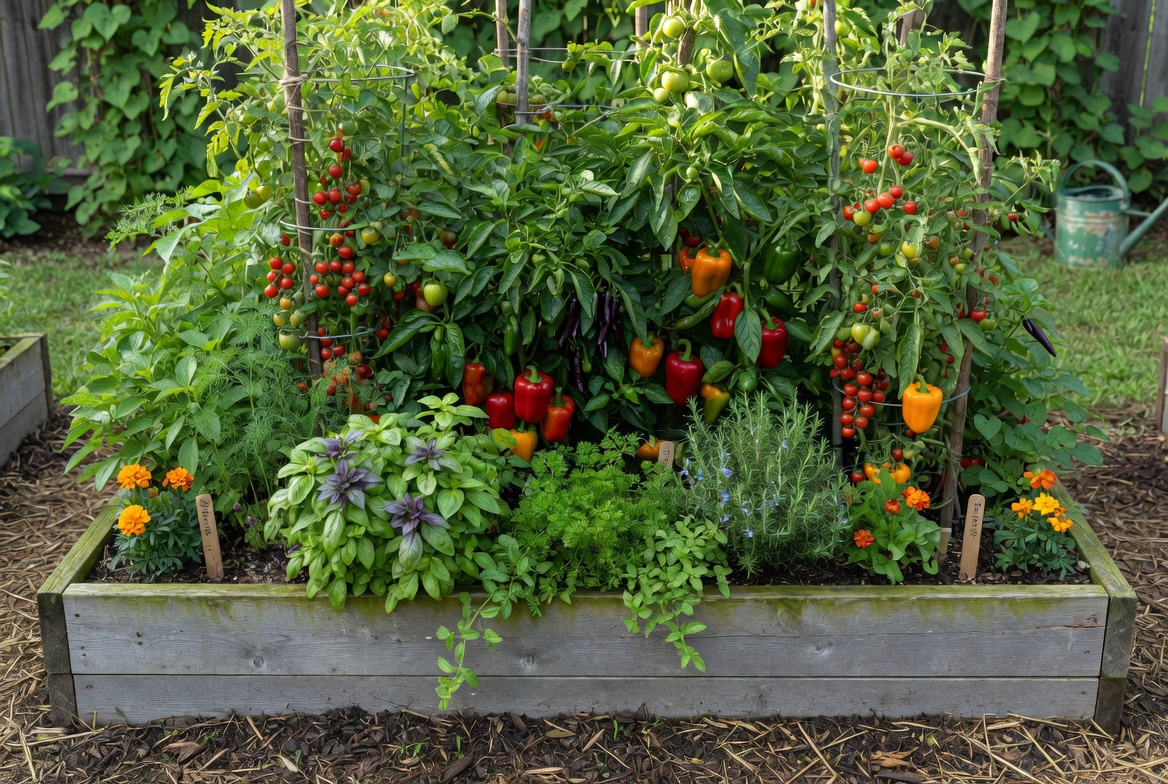
There is a specific pleasure in eating food you grew yourself that no amount of grocery shopping can replicate. A tomato picked warm from the vine at exactly the right moment, a cucumber cut while it’s still crisp and cool, a handful of beans snapped from the plant thirty minutes before dinner — these taste different from anything bought, and the difference is real, not sentimental. A vegetable garden gives you access to produce at its peak freshness, at the moment of perfect ripeness, for a fraction of the cost of equivalent quality from a specialty store.
You don’t need a large yard, a great climate, or previous gardening experience to grow a productive vegetable garden. These 20 ideas cover every approach — from a first raised bed to a full succession planting system — with honest guidance on what grows easily, what requires attention, and what most first-time vegetable gardeners get wrong.
1. Start with Raised Garden Beds
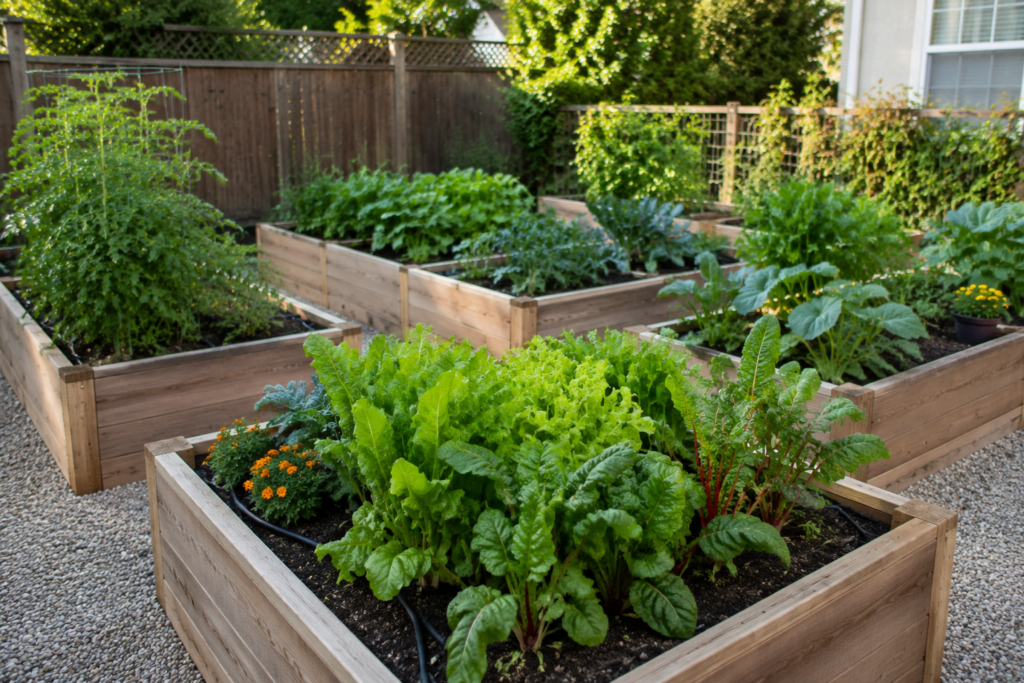
Best for: Any yard — raised beds are the most productive and most manageable vegetable growing format available
A raised bed — a contained growing area with sides 8 to 12 inches tall, filled with quality growing medium — solves the three most common vegetable garden problems simultaneously. Poor native soil is bypassed entirely; drainage is excellent because water moves freely through raised bed growing medium; and weeds are dramatically reduced because the quality growing medium doesn’t contain the weed seed bank that native garden soil accumulates over years.
A 4-foot-wide bed allows access from both sides without stepping into the growing area — eliminating soil compaction from foot traffic. A length of 8 to 12 feet provides substantial growing space without the bed becoming difficult to manage.
Smart tip: Fill raised beds with a mix of 60 percent quality topsoil, 30 percent compost, and 10 percent coarse perlite or aged wood chips. This combination provides the drainage, nutrition, and biological activity that vegetable crops need to perform at their best. Standard bagged topsoil alone compacts over time and lacks the organic matter that keeps soil productive season after season.
Mistake to avoid: Building raised beds too wide to reach the center comfortably. A 4-foot-wide bed is the maximum accessible width when working from both sides — wider beds require stepping into them, compacting the soil and defeating one of the primary advantages of the raised bed format. Build narrower beds (3 feet) if access is only from one side.
2. Grow Tomatoes the Right Way
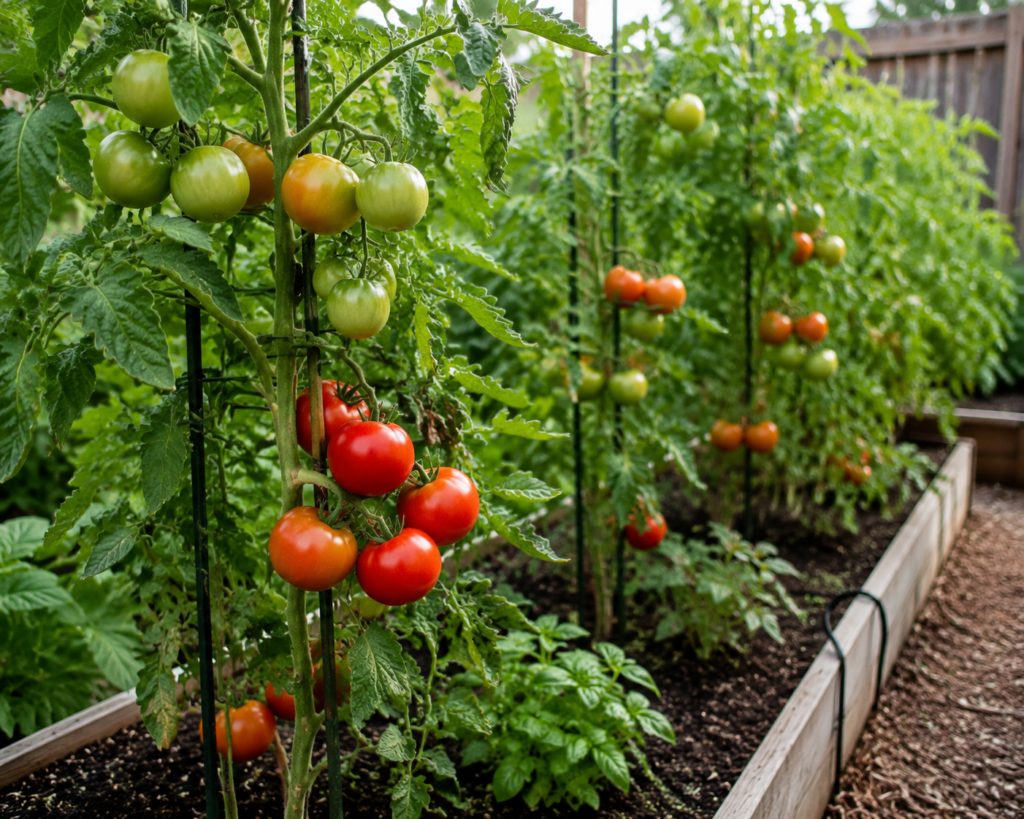
Best for: Every vegetable gardener — tomatoes are the most rewarding and most commonly grown home vegetable for good reason
A homegrown tomato at peak ripeness is one of the clearest illustrations of why home vegetable growing is worthwhile. Commercial tomatoes are harvested unripe for transport and shelf life — a homegrown tomato ripens on the vine to full flavor and never sees refrigeration that damages texture and taste. The quality difference is dramatic and immediately apparent.
Tomatoes require full sun (minimum 8 hours daily), consistent watering, adequate support, and regular feeding to produce their best. They’re demanding compared to many vegetables, but the harvest justifies the attention.
Smart tip: Remove the lower leaves from tomato plants as they grow, keeping the bottom 12 inches of stem clear of foliage. This improves air circulation around the base of the plant, reduces the splash-back of soil onto leaves that spreads fungal disease, and directs the plant’s energy into fruit production rather than maintaining unproductive lower foliage.
Mistake to avoid: Planting tomatoes too early in spring before the soil has warmed adequately. Tomatoes planted in cold soil (below 60°F) stall — they sit without growing and become stressed before the season begins. Wait until night temperatures are consistently above 50°F and soil temperature is at least 60°F before transplanting. Tomatoes planted later into warm soil quickly overtake earlier-planted stressed ones.
3. Build a Vertical Vegetable Garden
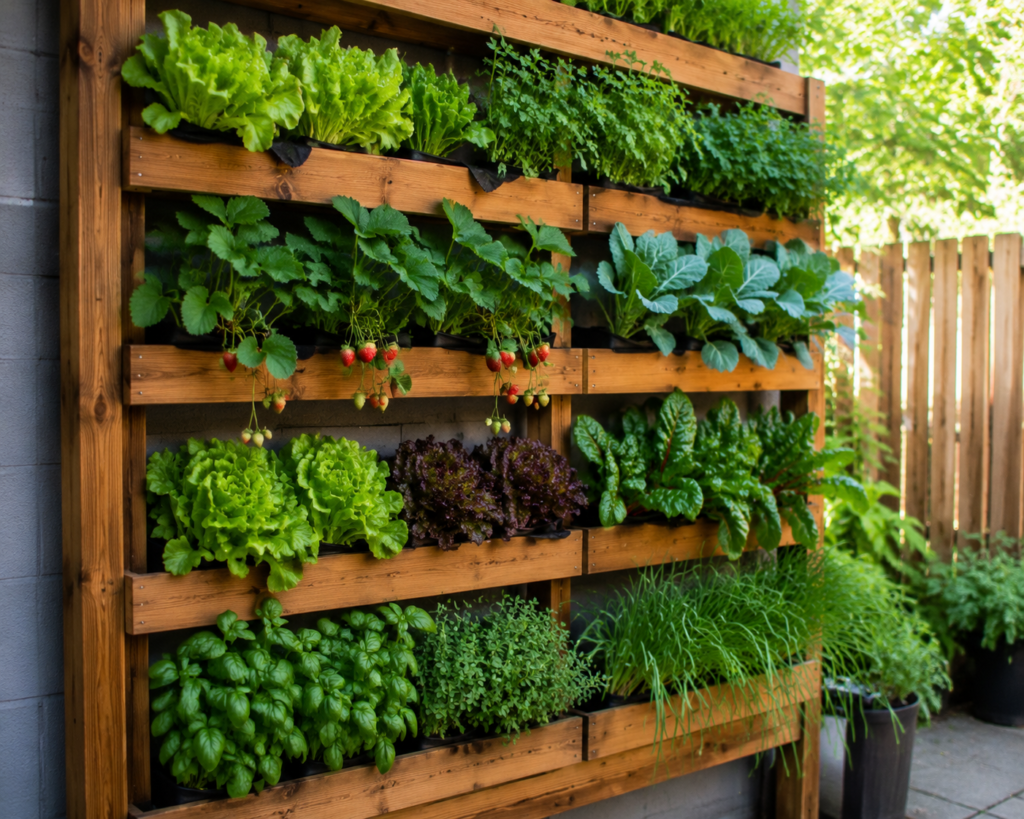
Best for: Small gardens and urban spaces — vertical growing multiplies productive area without expanding the garden’s footprint
A vertical vegetable garden — climbing crops trained up trellises, wire supports, or purpose-built vertical structures — produces significantly more food per square foot of ground area than conventional flat beds. A 4×4 foot trellis planted with climbing beans, cucumbers, or peas provides a harvest equivalent to a much larger flat bed because the vertical surface area is many times the ground footprint.
Vertical growing also improves plant health — better air circulation reduces fungal disease, better light penetration increases photosynthesis and fruit quality, and harvesting is significantly easier when fruit is accessible at eye level rather than hidden under large leaves on the ground.
Smart tip: Position vertical structures on the north side of other vegetable beds so the climbing plants don’t shade lower-growing crops. A trellis of climbing beans on the south side of a bed of lettuce blocks the sun from the lettuce for most of the day. On the north side, it creates shade only in the late afternoon and provides a windbreak that can benefit the adjacent crops.
Mistake to avoid: Using supports that are inadequate for the mature weight of climbing crops. A mature cucumber plant loaded with fruit or a mature squash vine is significantly heavier than it appears when planted. Stakes and wire supports that seem more than adequate in spring become insufficient when the plants are in full production. Build supports to twice the apparent need from the beginning.
4. Use Succession Planting
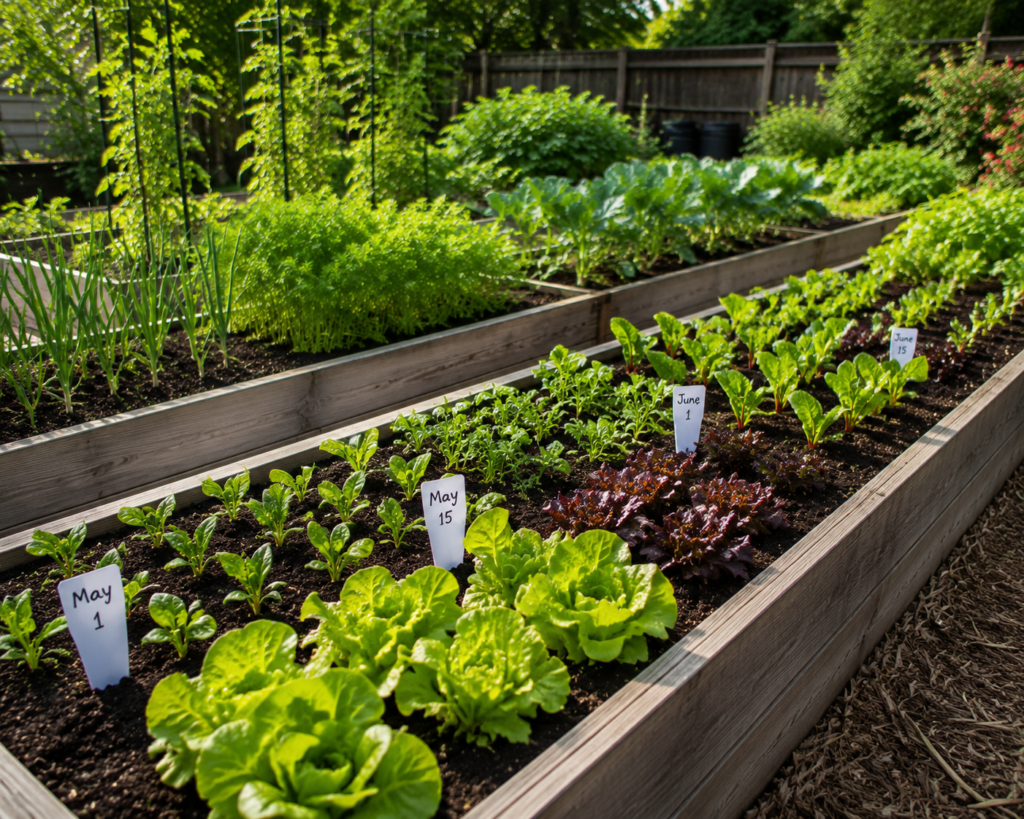
Best for: Anyone who wants continuous harvest rather than a single overwhelming glut — the most important technique for year-round productive vegetable gardening
Succession planting — sowing the same crop in small batches every two to three weeks rather than all at once — converts a single overwhelming harvest into a continuous supply through the season. Without succession planting, a row of lettuce sown on the same day produces all its harvestable leaves simultaneously — often more than can be used before it bolts. With succession planting, a few plants mature every week throughout the season.
The technique applies most usefully to fast-growing crops: lettuce, radishes, spinach, arugula, cilantro, and bush beans all benefit dramatically from staggered sowing.
Smart tip: Mark the sowing date on a small stick in the ground for each succession, and sow the next batch when the previous batch is just emerging from the soil. This visual trigger works more reliably than a calendar reminder — you see the previous batch germinating and know it’s time to sow the next.
Mistake to avoid: Succession planting warm-season crops too late in the season. A batch of bush beans sown in late July in a climate with a first frost in October may not produce a full harvest before frost ends the season. Know your first frost date and count backward from it by the crop’s days-to-maturity to identify the last viable sowing date for each crop.
5. Grow a Salad Garden
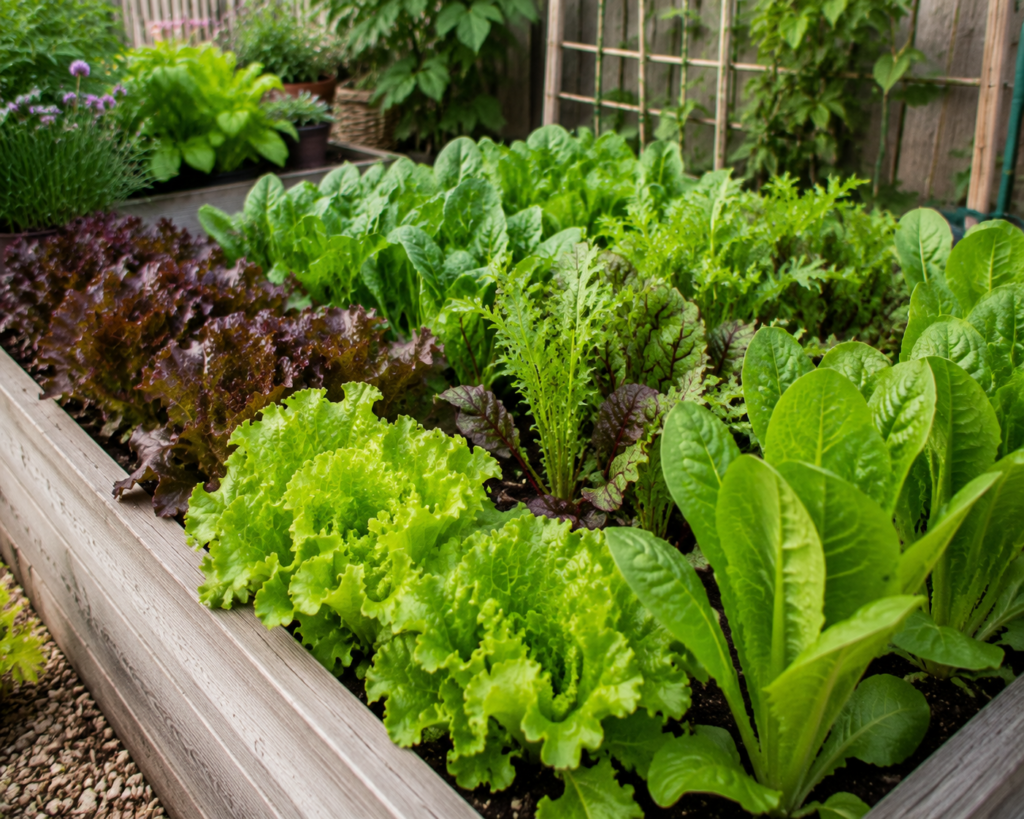
Best for: Beginning vegetable gardeners and anyone who eats salads regularly — a salad garden produces the fastest and most satisfying returns of any vegetable garden type
A dedicated salad garden — several varieties of lettuce, arugula, spinach, radishes, spring onions, and herbs planted together — can be producing harvestable leaves within 30 to 45 days of sowing and continues producing through cut-and-come-again harvesting for months. No other vegetable garden type delivers usable produce as quickly or as consistently.
The salad garden is also the most space-efficient vegetable garden type — a 3×4 foot bed can produce enough salad greens for a family of four to eat salad several times per week throughout the spring and autumn seasons.
Smart tip: Use the cut-and-come-again harvesting technique for all salad crops — cut leaves with scissors 2 to 3 inches above the crown rather than pulling the whole plant. The crown remains in the soil and produces new leaves within 10 to 14 days, effectively multiplying the harvest from each plant three to five times before the plant needs replacing.
Mistake to avoid: Growing salad crops in full summer sun in warm climates. Lettuce, spinach, and arugula all bolt (go to seed) rapidly in hot weather, producing bitter leaves and becoming unusable within days. Grow salad crops in spring and autumn when temperatures are cool, or provide afternoon shade in summer to extend the season. In hot climates, treat salad gardening as a cool-season activity and grow heat-tolerant crops in summer.
6. Plant Cucumbers and Climbing Crops
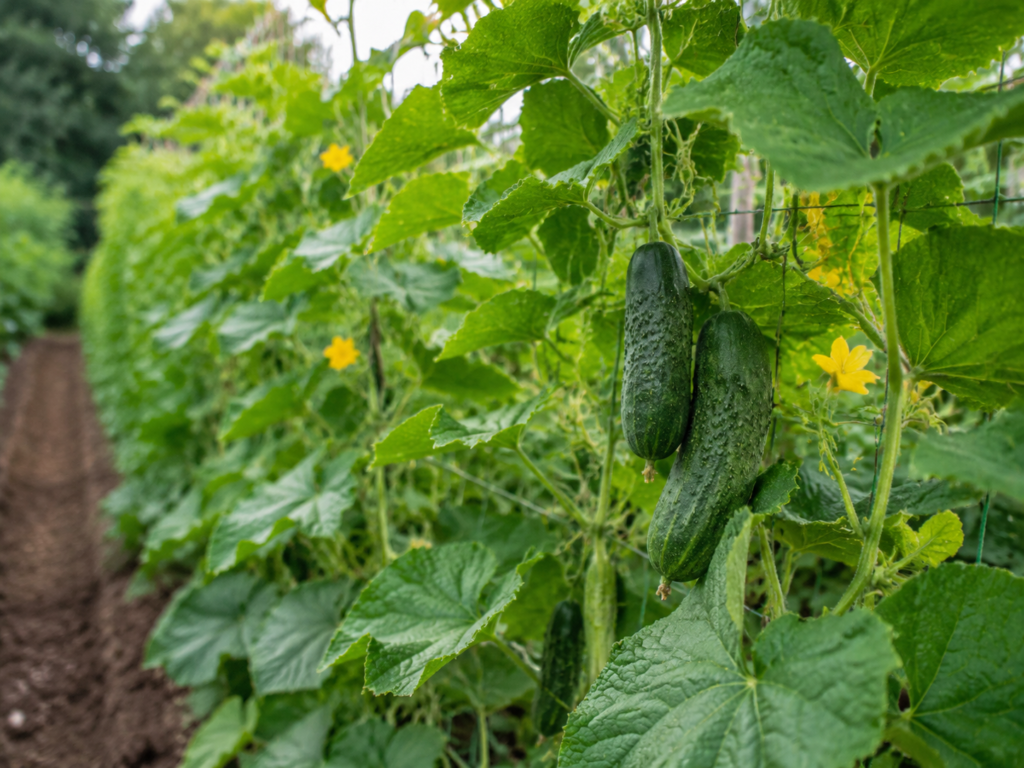
Best for: Any garden with a trellis or fence — cucumbers are one of the most productive and satisfying warm-season vegetables to grow
Cucumbers grown vertically produce fruit that hangs freely, develops straight (curved cucumbers develop when they rest on the ground), is easier to spot and harvest, and is generally cleaner and better quality than ground-grown cucumbers. A single healthy cucumber plant on a trellis in full sun can produce 10 to 20 cucumbers through a season — more than most households can use.
Cucumbers need consistent warmth, consistent moisture, and full sun — they’re intolerant of cold soil, drought, and shade. Within these requirements, they’re remarkably productive and relatively undemanding.
Smart tip: Harvest cucumbers when they reach the size indicated for their variety — typically 6 to 8 inches for slicing cucumbers — rather than allowing them to continue growing. Overripe cucumbers become bitter and seedy, and more importantly, a plant that’s allowed to produce overripe fruit stops setting new flowers. Regular harvesting keeps the plant in continuous production mode.
Mistake to avoid: Letting cucumber vines sprawl on the ground without support. Ground-grown cucumbers develop more disease (the leaves stay damp from soil moisture and splash-back), produce more misshapen fruit, and are significantly harder to harvest — fruit hides under large leaves and is frequently missed, becoming overripe before discovery.
7. Companion Planting Strategy
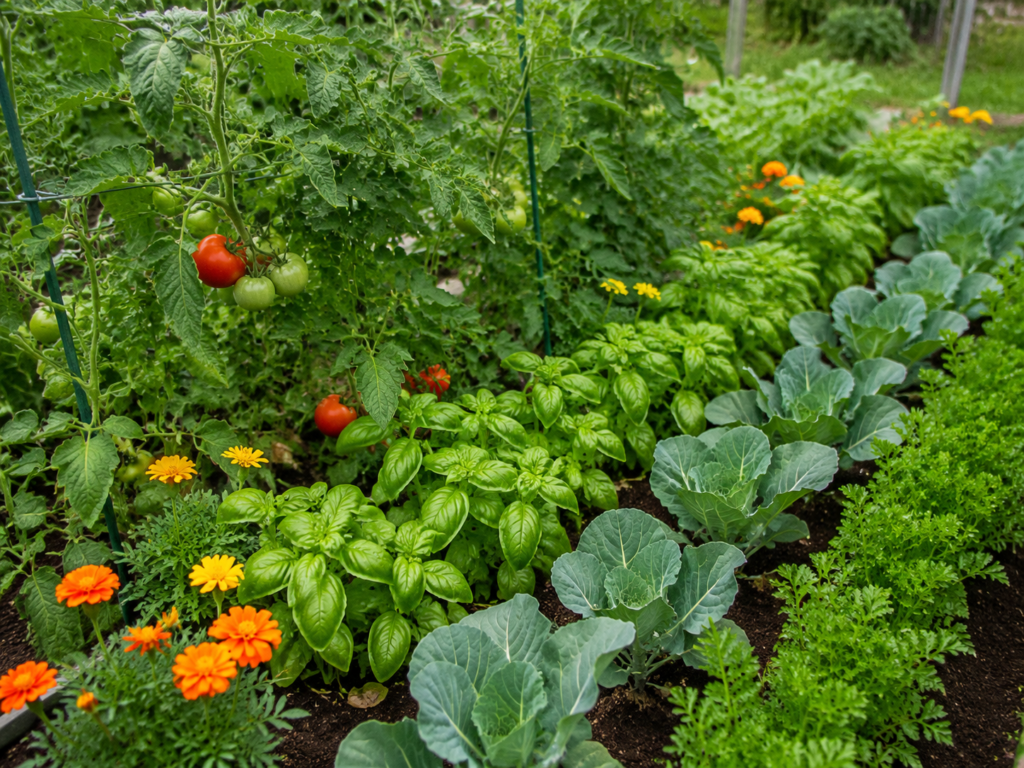
Best for: Any vegetable garden — companion planting improves yields, reduces pest pressure, and makes better use of available space
Companion planting — growing specific plants together that benefit each other — is one of the most reliable and science-supported vegetable garden techniques. The classic companions: basil with tomatoes (basil repels aphids and whitefly and is said to improve tomato flavor); nasturtiums as a trap crop for aphids (aphids preferentially attack nasturtiums, keeping them away from vegetables); dill and fennel to attract beneficial predatory insects; and marigolds at the garden border to deter nematodes and attract pollinators.
Companion planting also makes productive use of space — tall plants can shade lower-growing companions that prefer some protection from intense afternoon sun.
Smart tip: Plant a border of marigolds (Tagetes) around the entire vegetable garden perimeter as the single most cost-effective companion planting investment. Marigolds deter a wide range of soil pests, attract beneficial insects, and provide color that makes the vegetable garden more visually attractive. French marigolds (Tagetes patula) are more effective for pest deterrence than African varieties.
Mistake to avoid: Planting fennel near most vegetables. Fennel is allelopathic — it produces chemicals from its roots that inhibit the growth of most neighboring plants. Tomatoes, peppers, beans, and many other common vegetables perform poorly when grown near fennel. Grow fennel in its own dedicated spot, well away from other vegetables.
8. Container Vegetable Garden
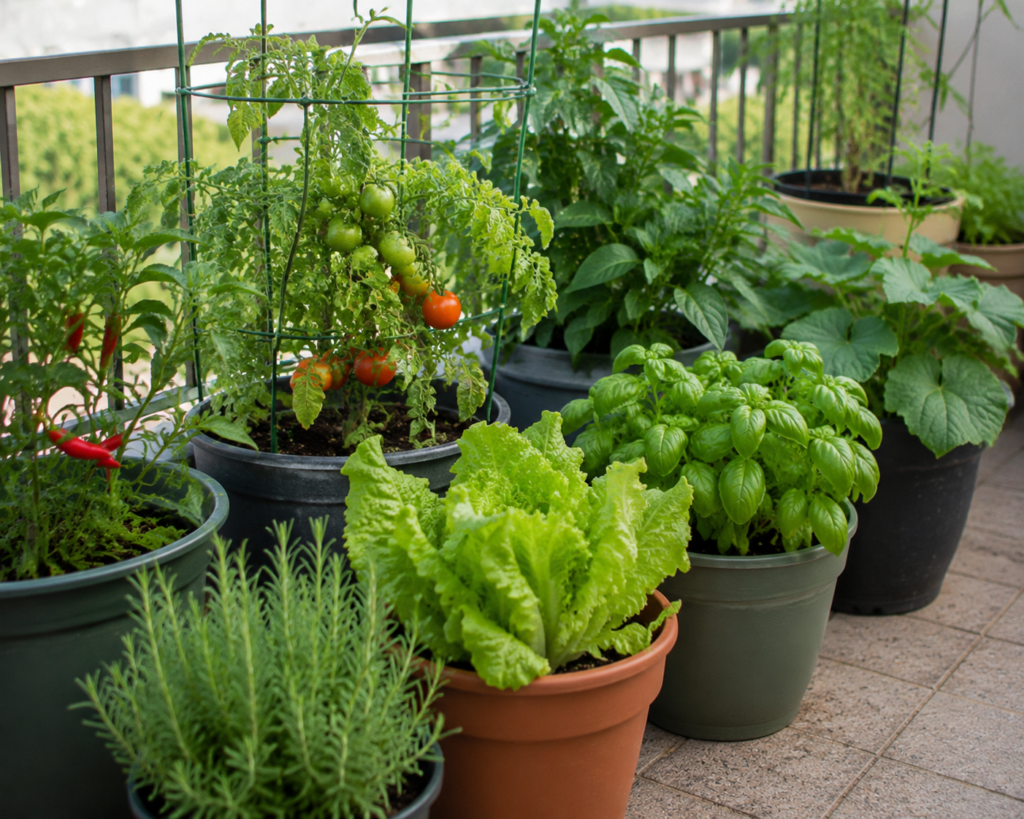
Best for: Renters, small spaces, balconies, and anyone without in-ground garden access — containers bring vegetable growing to any location with adequate sun
A container vegetable garden — crops grown in pots, tubs, grow bags, and other containers — brings fresh produce to balconies, patios, rooftops, and any other space with 6 to 8 hours of daily sunlight. Containers have specific advantages over in-ground beds: soil quality is completely controllable, there are no ground-level pests, watering and feeding are concentrated in a small volume, and the garden is genuinely portable.
The most productive container vegetable crops: tomatoes (bush varieties in 10 to 15-gallon pots), peppers (compact varieties in 5-gallon pots), lettuce and salad greens (any container 6 inches deep), herbs (any container), and radishes (any container 6 inches deep).
Smart tip: Use self-watering containers (with a water reservoir at the base that plants draw from as needed) for any container vegetable garden application where daily watering isn’t guaranteed. Vegetable crops in standard containers can die from drought within 24 hours of the last watering on a hot day — self-watering containers with adequately sized reservoirs provide three to seven days of water independence.
Mistake to avoid: Using containers that are too small for the intended crop. Tomatoes in containers smaller than 10 gallons produce poorly and require water multiple times daily in hot weather. The container size determines the root volume available to the plant — an undersized container limits both yield and the plant’s ability to access the water and nutrients it needs during the most demanding production period.
9. Grow Peppers for Big Harvests
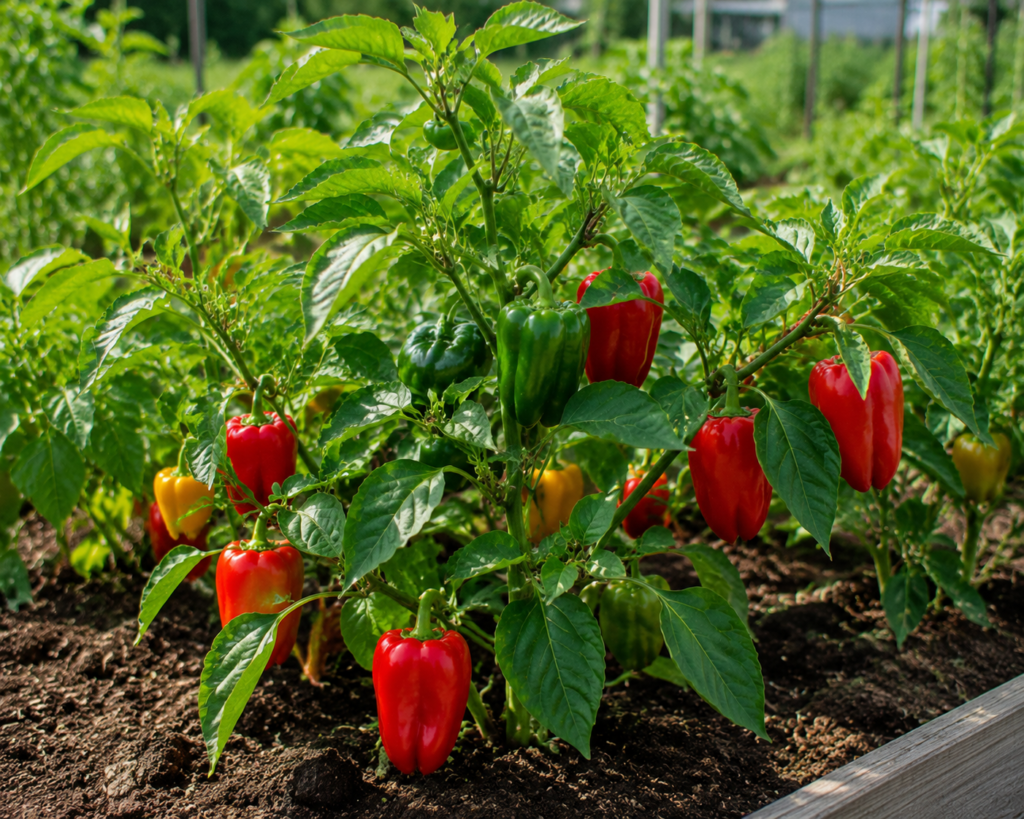
Best for: Warm climate gardens and anyone who cooks with peppers regularly — a single healthy pepper plant produces abundantly
Peppers — both sweet bell peppers and hot varieties — are among the most productive vegetable garden plants available when given the heat, sun, and growing season they require. A single healthy pepper plant can produce 30 to 50 peppers through a season, and unlike many vegetables, peppers improve in quality as the season progresses — fruits that start green ripen to red, orange, or yellow with significantly more sweetness and nutrition.
Peppers require similar conditions to tomatoes — full sun, warm soil, consistent moisture — and share the same warm-season growing window.
Smart tip: Leave a few peppers on the plant to ripen fully to their final color (red, orange, or yellow depending on variety). Fully ripe peppers are nutritionally superior (three times the vitamin C of green peppers), significantly sweeter, and more visually striking. Most gardeners harvest all peppers green for convenience — missing the superior product that the fully ripe version provides.
Mistake to avoid: Planting peppers in partially shaded positions. Peppers in less than 6 hours of direct daily sun produce few flowers, set fruit poorly, and take significantly longer to ripen. Of all common vegetables, peppers are among the most dependent on maximum sun exposure for productive yields. Position them in the sunniest available spot in the garden.
10. Add a Compost System
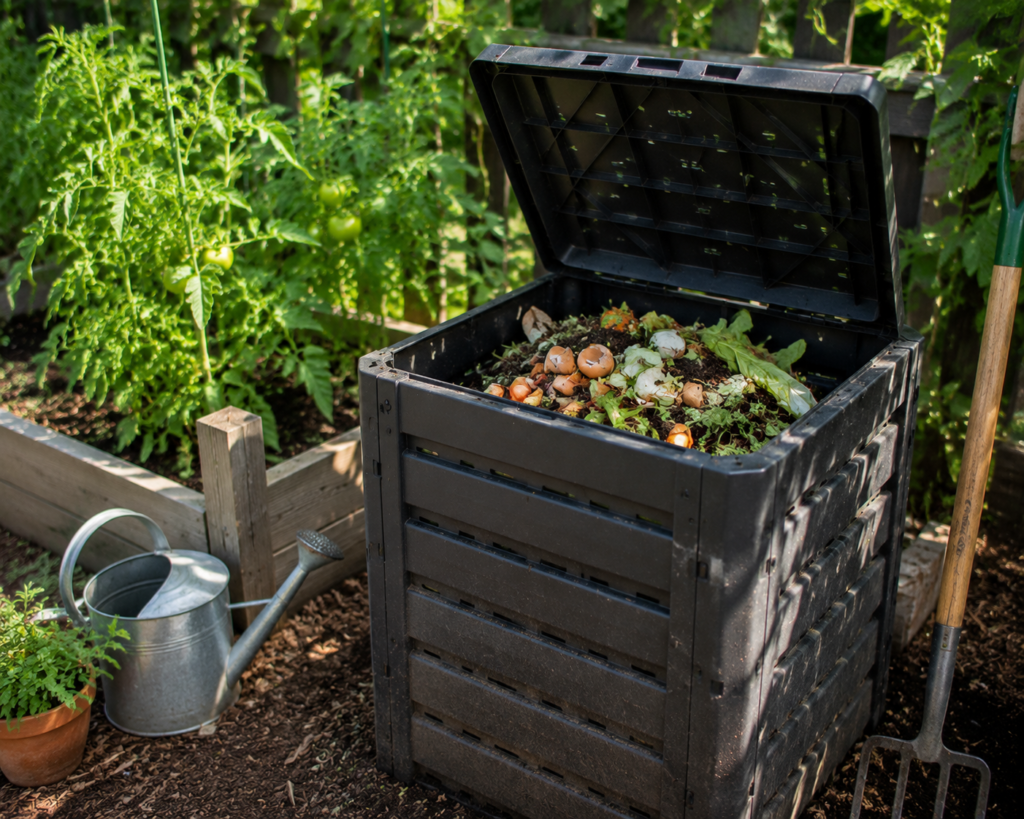
Best for: Every vegetable garden — compost is the single most important soil amendment available and the most cost-effective
A compost system converts kitchen and garden waste into the highest quality soil amendment available — free of cost, continuously. Finished compost improves soil drainage in clay soils, improves moisture retention in sandy soils, provides slow-release nutrition that synthetic fertilizers can’t replicate, and introduces the biological activity that makes soil genuinely fertile.
A vegetable garden fed with compost annually produces significantly better yields than one fed with synthetic fertilizer alone — and the improvement compounds over years as the soil biology develops.
Smart tip: Apply compost as a surface mulch (2 to 3 inches deep around plants) rather than digging it into the soil. Surface-applied compost protects soil moisture, regulates soil temperature, suppresses weeds, and is progressively incorporated into the soil by worm activity — exactly the way organic matter enters forest soils in nature. Digging compost in disrupts soil structure and the fungal networks that benefit plant roots.
Mistake to avoid: Creating a compost heap that becomes anaerobic and smells badly. An anaerobic compost heap — wet, compressed, and lacking oxygen — produces methane and hydrogen sulfide rather than the beneficial decomposition products that feed the garden. Turn the heap every two to four weeks to introduce oxygen, and balance wet green material (kitchen scraps, fresh grass clippings) with dry brown material (cardboard, dry leaves, straw) in roughly equal proportions.
11. Grow Zucchini and Summer Squash
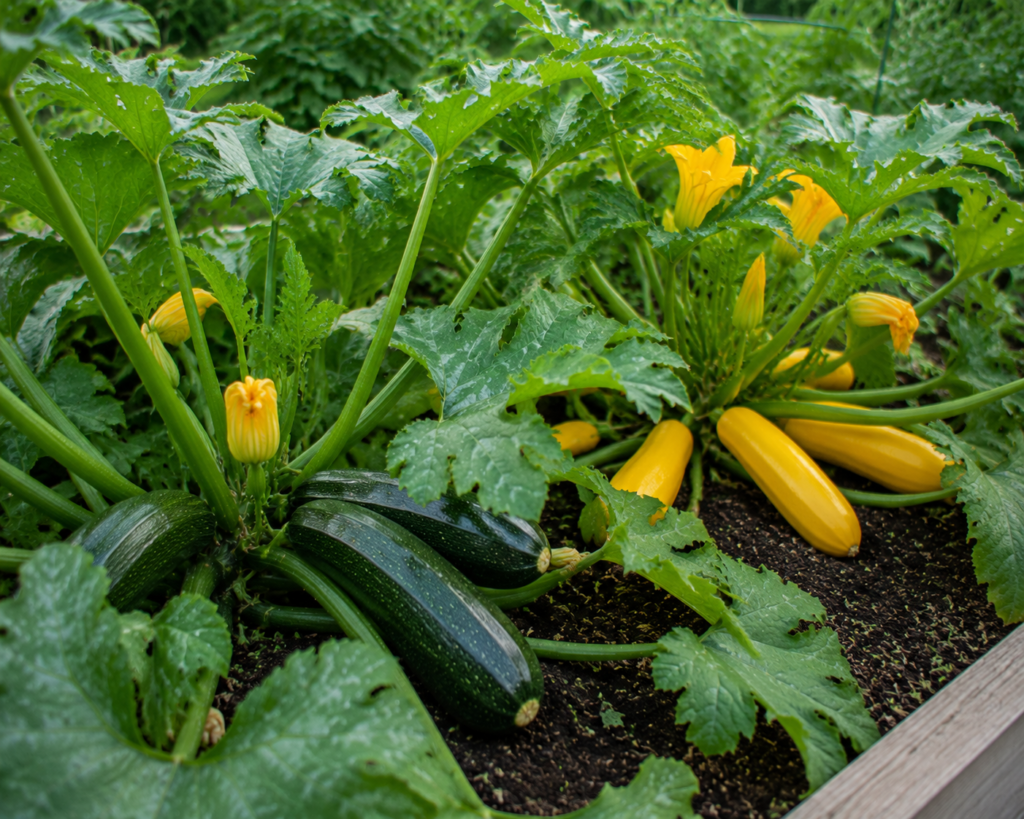
Best for: Any garden needing a high-yield, low-effort crop — zucchini is the most productive vegetable per plant of any commonly grown crop
Zucchini is famous among vegetable gardeners for one reason: it produces almost more than a household can use from just two or three plants. A healthy zucchini plant in full production can produce two to three harvestable fruits per week through the main growing season — enough that most gardeners find themselves giving vegetables to neighbors by midsummer.
This productivity makes zucchini an excellent choice for first-time vegetable gardeners who want the satisfaction of an abundant harvest, and for experienced gardeners who want reliable production without intensive management.
Smart tip: Harvest zucchini when they’re 6 to 8 inches long rather than allowing them to grow larger. Small zucchini are more tender, have better flavor, fewer seeds, and thinner skin than large ones — and regular harvesting keeps the plant in continuous production mode. A zucchini left to become a marrow diverts the plant’s energy from producing new fruits.
Mistake to avoid: Planting zucchini without leaving adequate space. A single zucchini plant at maturity occupies 3 to 4 square feet of ground space — much more than the compact transplant suggests when purchased in spring. Zucchini plants crowded by adjacent vegetables or structures produce less, suffer more disease from poor air circulation, and become difficult to harvest without damage to adjacent crops.
12. Install a Drip Irrigation System
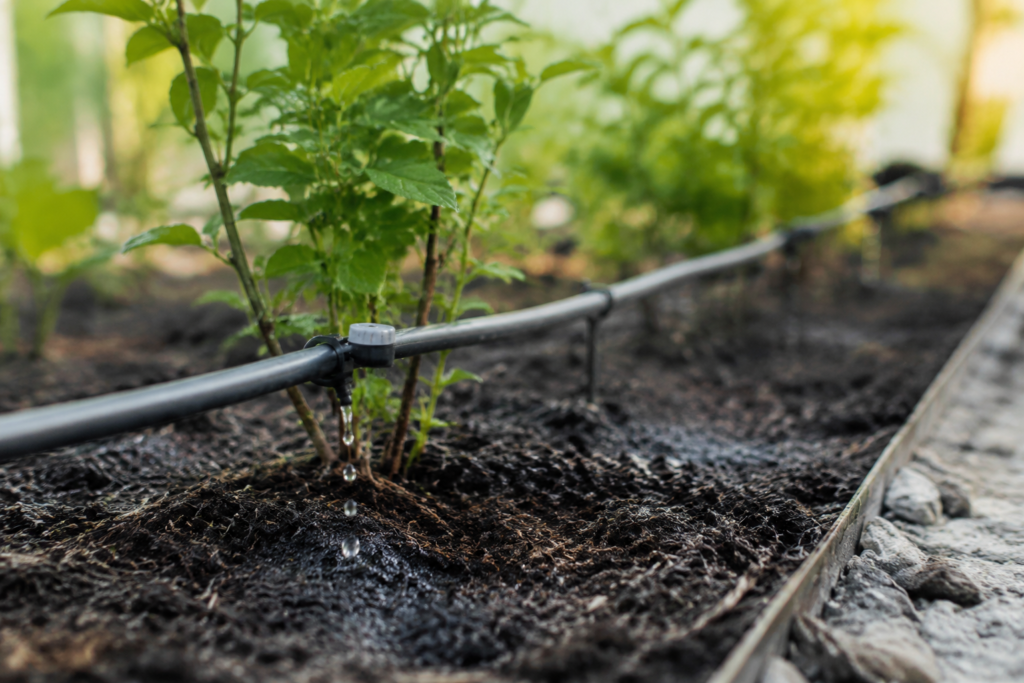
Best for: Any vegetable garden — irrigation efficiency is the most impactful single investment for consistent production
A drip irrigation system — emitters that deliver water directly to the root zone of each plant — provides consistent soil moisture that hand watering and overhead sprinklers can’t match. Consistent moisture is the most critical factor in vegetable garden productivity: fluctuation between wet and dry conditions causes blossom end rot in tomatoes and peppers, splitting in tomatoes, and bolting in salad crops.
A basic drip system for a raised bed vegetable garden — drip tape or soaker hose on a timer — costs relatively little and eliminates the most common cause of vegetable garden underperformance.
Smart tip: Connect the drip system to a timer set to water in the early morning rather than the evening. Morning watering allows foliage that gets wet incidentally to dry during the day, reducing fungal disease. Evening watering leaves foliage wet overnight — the conditions that most fungal pathogens require for infection and spread.
Mistake to avoid: Setting the drip system to water on a fixed schedule regardless of recent rainfall and current weather. A drip system running its normal schedule after three days of rain overwater plants and can cause root rot in raised beds. Install a soil moisture sensor or rain sensor that overrides the timer when soil is already adequately moist — saving water and preventing the overwatering problems that fixed schedules create.
13. Plant a Three Sisters Garden
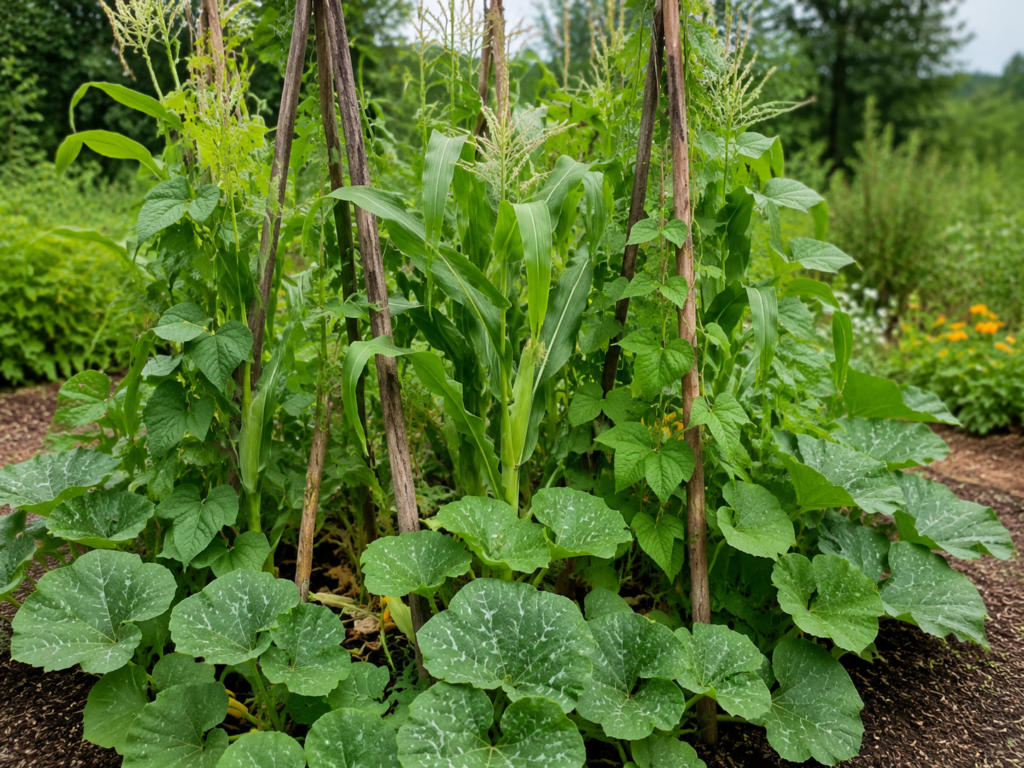
Best for: Larger vegetable gardens wanting maximum productivity from a traditional companion planting system
The Three Sisters — corn, beans, and squash — is the most famous companion planting system in North American gardening, developed by Indigenous peoples of North America over thousands of years. The three crops support each other: corn provides the pole for beans to climb; beans fix atmospheric nitrogen into the soil that benefits all three; squash’s large leaves shade the ground, suppressing weeds and retaining moisture.
The combination produces three complementary food crops from a single garden area while improving soil fertility — the nutritional balance of corn (carbohydrate), beans (protein), and squash (vitamins and minerals) is genuinely complementary.
Smart tip: Plant in the traditional sequence: corn first (direct sow when soil is warm), then beans when corn is 6 to 8 inches tall, then squash when beans have begun to emerge. The timing sequence is important — corn must be established before beans are planted, or the beans grow faster than the corn and have nothing adequate to climb.
Mistake to avoid: Using sweet corn rather than field corn in a Three Sisters planting. Sweet corn is harvested early (while the kernels are in the milk stage) — leaving the bean and squash crops without adequate corn stalk support for the rest of the season. Use a taller, later-maturing corn variety (or field corn grown for grain) that provides support through the full growing season.
14. Grow Root Vegetables
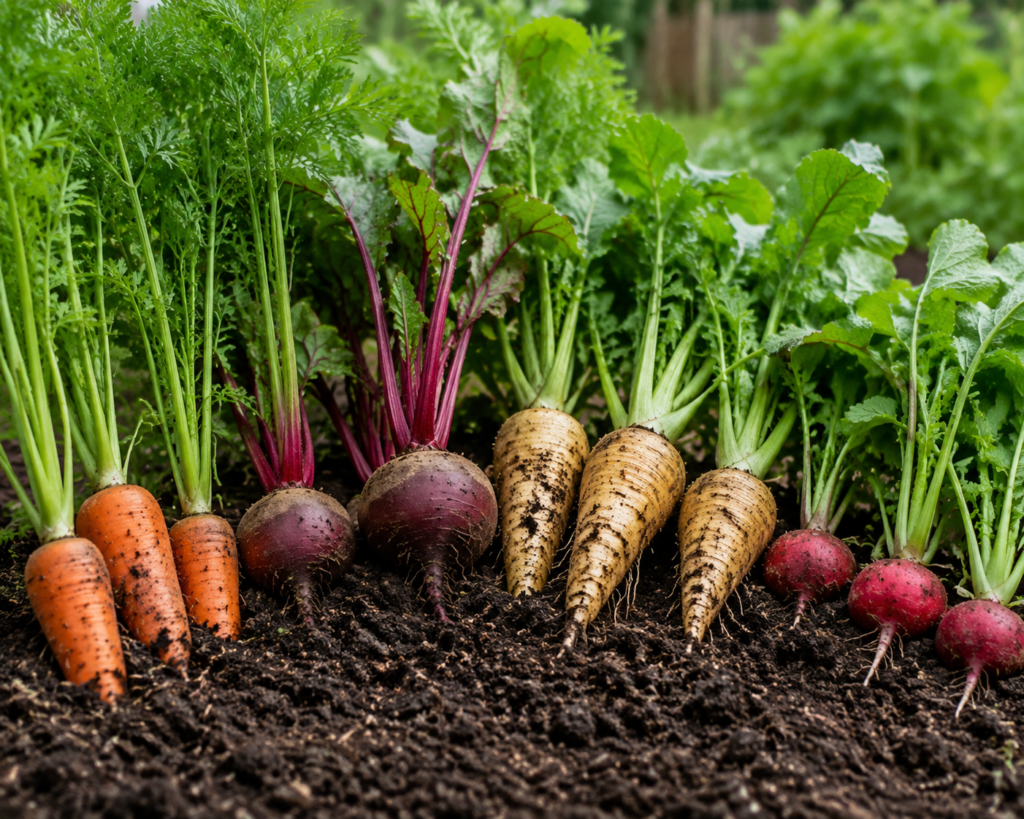
Best for: Gardeners with loose, deep soil or deep raised beds — root vegetables are among the most rewarding to harvest
Root vegetables — carrots, beets, radishes, turnips, and parsnips — have the advantage of developing entirely underground, invisible until harvest, and providing the element of surprise when pulled. A well-grown carrot in rich, loose soil is dramatically better than any store-bought equivalent — sweeter, crisper, and more intensely flavored than the months-old storage roots available in supermarkets.
The key requirement for root vegetables is loose, stone-free soil to a depth of at least 12 inches (deeper for parsnips). Rocky, compacted, or clay-heavy soil produces forked, stunted, and misshapen roots regardless of other care.
Smart tip: Sow radishes alongside slower-growing carrots in the same row. Radishes mature in 25 to 30 days and are harvested before the carrots need the space — effectively growing two crops from one row. The radishes also mark the row while carrots are germinating slowly, and their root growth loosens the soil for developing carrot roots.
Mistake to avoid: Sowing carrot seeds too thickly and neglecting thinning. Carrots sown thickly and not thinned to the recommended spacing (2 to 3 inches between plants) produce a crowd of small, twisted, intertwined roots rather than the large, straight carrots the packet photograph suggests. Thin ruthlessly to the correct spacing immediately after germination — the thinnings are edible.
15. Add a Strawberry Patch
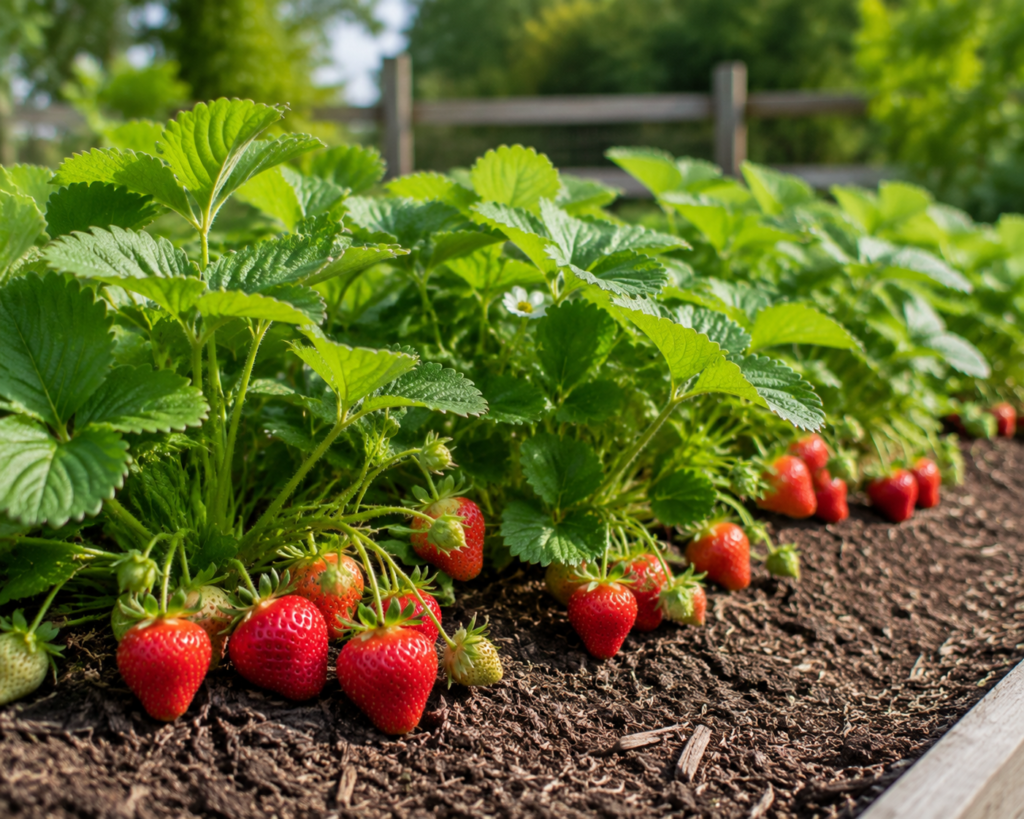
Best for: Any garden with a sunny spot — strawberries are the easiest fruit to grow and among the most rewarding to harvest
A homegrown strawberry at peak ripeness — warm from the sun, deeply red all the way through, picked at the exact moment of maximum sweetness — is one of the clearest demonstrations that homegrown produce occupies a different quality category from store-bought. Commercial strawberries are picked unripe for transport, stored in cold conditions that damage flavor, and travel days or weeks before consumption.
June-bearing varieties produce one large crop in early summer — the fullest, most flavorful harvest. Everbearing varieties produce smaller crops through the season, providing a more sustained supply with smaller individual harvests.
Smart tip: Pinch off all flowers from strawberry plants in their first year of growth. Allowing plants to fruit in their establishment year reduces the root system development that creates productive plants for subsequent years. The sacrifice of the first year’s fruit produces plants that yield two to three times as much in years two and three.
Mistake to avoid: Planting strawberries in the same bed as potatoes, peppers, or tomatoes. These crops share Verticillium wilt — a soil-borne fungal disease that can devastate strawberry plantings when the soil has been previously used for susceptible crops. Rotate strawberries to a fresh bed that hasn’t grown any of these crops for at least three years.
16. Grow Cool-Season Spring Crops
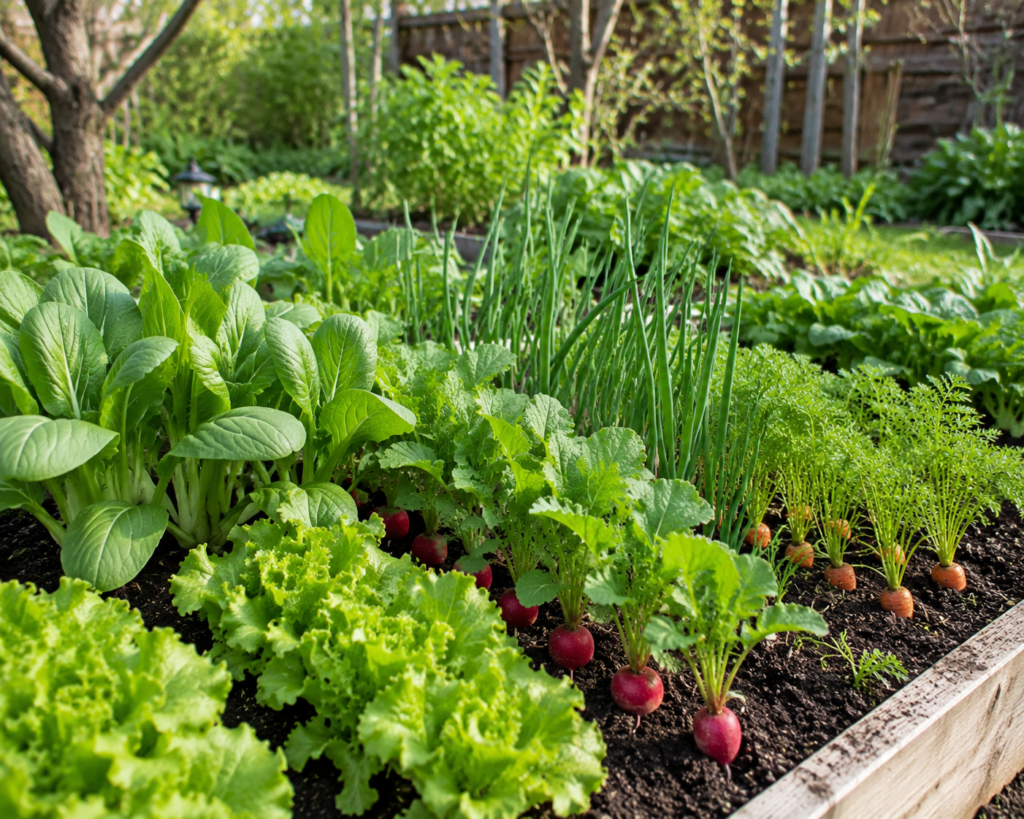
Best for: Extending the productive vegetable garden season — cool-season crops provide harvests weeks before warm-season vegetables are ready
Cool-season vegetables — lettuce, peas, broccoli, kale, spinach, and radishes — grow best in temperatures between 45°F and 65°F and can be planted weeks before the last frost date in spring. A productive spring vegetable garden begins in late winter or early spring with these crops, providing fresh produce for six to eight weeks before the warm-season crops planted after the last frost take over.
Cool-season crops also provide a second growing window in autumn, when temperatures drop back into their preferred range after summer’s heat.
Smart tip: Start broccoli and kale indoors 6 to 8 weeks before the last expected frost date and transplant them out as young plants while temperatures are still cool. These brassica crops benefit from the longest possible cool-season growing period — starting them early indoors and transplanting into the garden while still cold produces significantly better harvests than direct sowing when conditions are already warming.
Mistake to avoid: Planting cool-season crops too late in spring in warm climates. Broccoli, lettuce, and spinach all bolt (go to seed) when daytime temperatures consistently exceed 75°F — producing bitter leaves and flower stalks rather than the vegetative growth that’s edible. In warm climates, spring cool-season crops need to be in the ground earlier than most planting guides suggest and harvested before summer heat arrives.
17. Square Foot Gardening Method
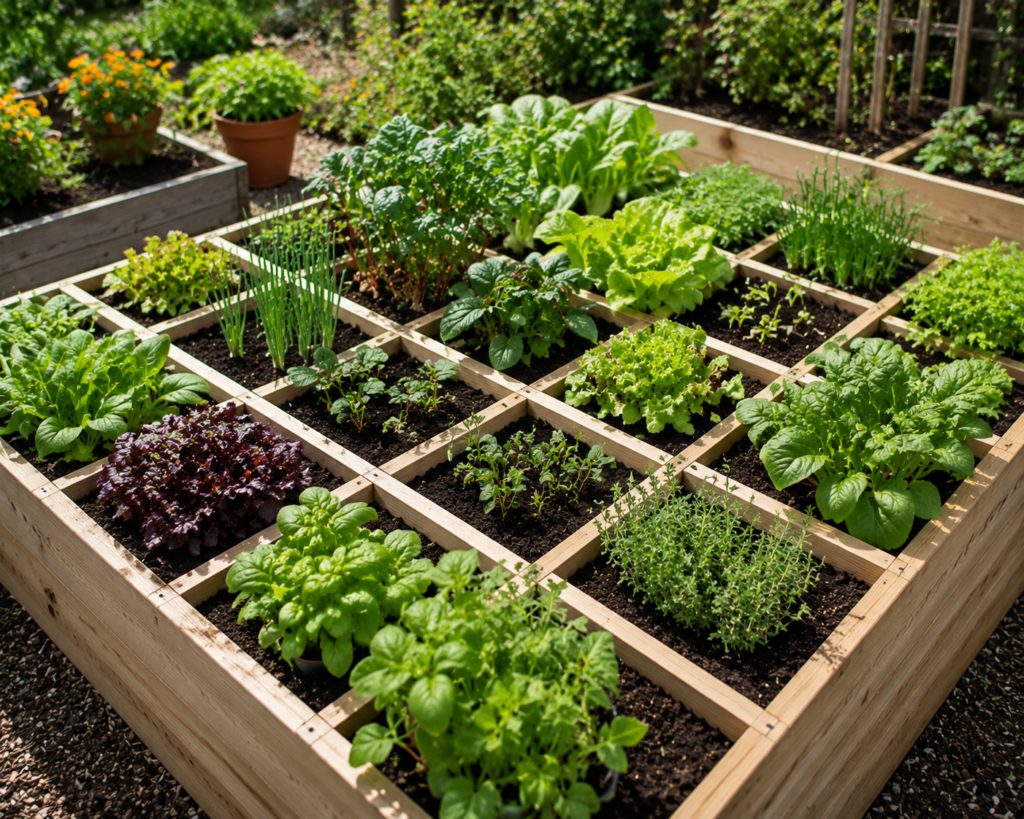
Best for: Small gardens and beginning vegetable gardeners wanting a structured, high-productivity planting system
Square foot gardening — dividing a raised bed into 1-foot squares and planting each square with a different crop at the density appropriate for that crop’s size — is the most space-efficient vegetable garden system available for small areas. Developed by Mel Bartholomew in the 1980s, it produces more food per square foot than conventional row gardening because every inch of bed space is used productively rather than being occupied by wide paths between rows.
The system is also genuinely beginner-friendly — the grid structure makes planting quantities and spacing concrete and easy to follow rather than requiring experience-based judgment.
Smart tip: Install a permanent physical grid on the raised bed surface — a frame of wooden strips or string — that marks the 1-foot squares clearly. The visible grid makes planting into the correct squares intuitive, prevents overplanting of any single square, and serves as a reference for succession planting when harvested squares are replanted.
Mistake to avoid: Using the same growing medium year after year in a square foot garden bed without replenishment. The intensive planting density of square foot gardening extracts nutrients from the growing medium rapidly. Replenish with 1 to 2 inches of compost at the beginning of each growing season — without this annual replenishment, productivity declines significantly after the first season.
18. Extend the Season with a Cold Frame
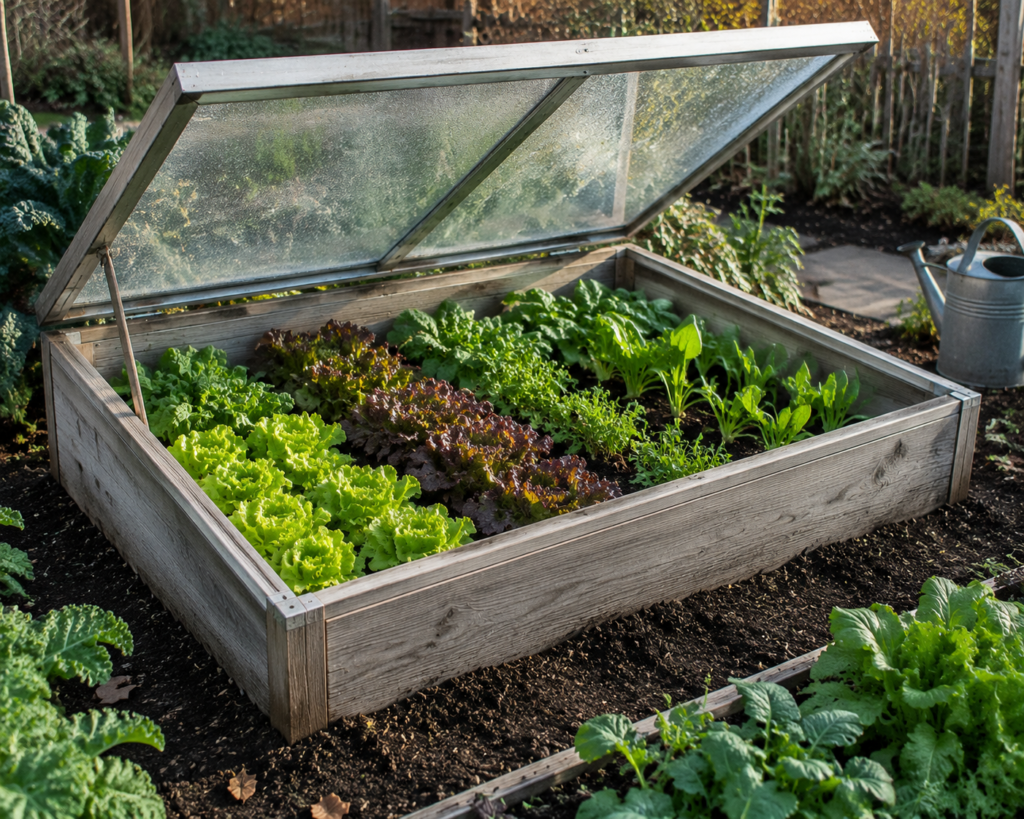
Best for: Gardeners in temperate climates who want to start earlier in spring and harvest later into autumn
A cold frame — a low structure with a transparent lid (glass, polycarbonate, or clear plastic) that creates a sheltered, slightly warmer microclimate — extends the vegetable garden season by four to six weeks at each end. In spring, cold frame crops can be started when outdoor temperatures are still too cold for unprotected growth. In autumn, the cold frame protects crops from the first frosts that would otherwise end the season.
A basic cold frame — four timber sides with a salvaged window frame or polycarbonate panel as the lid — can be built in an afternoon for minimal cost.
Smart tip: Open the cold frame lid on sunny days to prevent overheating and provide ventilation. On sunny spring days, temperatures inside a closed cold frame can exceed 90°F even when outdoor temperatures are relatively cool — cold enough outside to frost but hot enough inside to cook plants. A prop stick that holds the lid partially open on warm days prevents this.
Mistake to avoid: Closing the cold frame tightly during a spell of mild winter weather without monitoring temperatures inside. A closed cold frame on a mild sunny winter day can become lethally hot for the plants inside within hours. Check and ventilate cold frames whenever daytime temperatures rise above 45°F during the dormant season.
19. Grow Green Beans and Peas
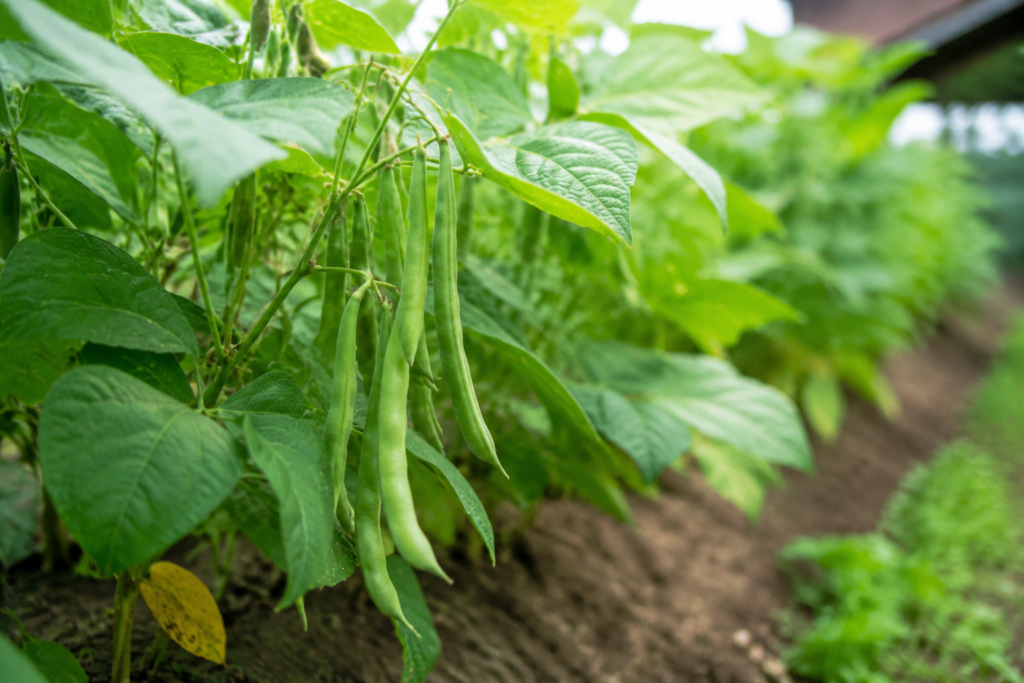
Best for: Any vegetable garden — beans and peas are among the most productive and easiest legume crops available to home gardeners
Green beans and peas have three advantages that make them excellent vegetable garden choices: they produce abundantly from a small planting; they improve soil by fixing atmospheric nitrogen through root bacteria; and they’re genuinely better fresh from the garden than anything available in stores.
Bush beans (compact, no support needed) and pole beans (climbing, require a trellis) both produce abundantly. Bush beans produce all at once over two to three weeks — ideal for succession planting. Pole beans produce continuously over a longer season from the same plants — ideal for small gardens where succession planting isn’t practical.
Smart tip: Sow beans directly in the garden rather than starting them indoors. Bean roots are sensitive to disturbance — transplanted beans suffer a setback that often results in the directly-sown beans catching up or overtaking them within two weeks. Direct sowing is both easier and more successful for beans and peas.
Mistake to avoid: Sowing peas in warm soil. Peas are a cool-season crop that require soil temperatures below 70°F for successful germination and early growth. Peas sown into warm soil in late spring germinate poorly, grow weakly, and produce a fraction of the harvest that peas sown into cool spring soil deliver. Sow peas as early as the soil can be worked — they tolerate light frost and perform best in cool conditions.
20. Plan Your Vegetable Garden for Success
Best for: Anyone starting or redesigning a vegetable garden — planning prevents the most common and most frustrating vegetable garden failures
A vegetable garden that’s planned before planting begins produces significantly better results than one assembled impulsively. The planning decisions that matter most: site selection, crop choice, timing, and layout.
Site: locate the vegetable garden in the position with the most direct sun on your property. Minimum 6 hours of direct daily sunlight — 8 hours is better for most warm-season crops. No other factor matters more. A vegetable garden in partial shade fails regardless of soil quality, watering, and care. Choose vegetables worth growing at home. The crops that show the biggest quality advantage over store-bought are tomatoes, cucumbers, salad greens, fresh herbs, and peas. The crops that show the least advantage are potatoes (store versions are essentially equivalent) and some root vegetables. Focus on the crops where homegrown quality is genuinely superior. Timing: know your frost dates. The last spring frost date determines when warm-season crops can be planted outdoors. The first autumn frost date determines when the season ends. Plan the planting calendar around these dates.
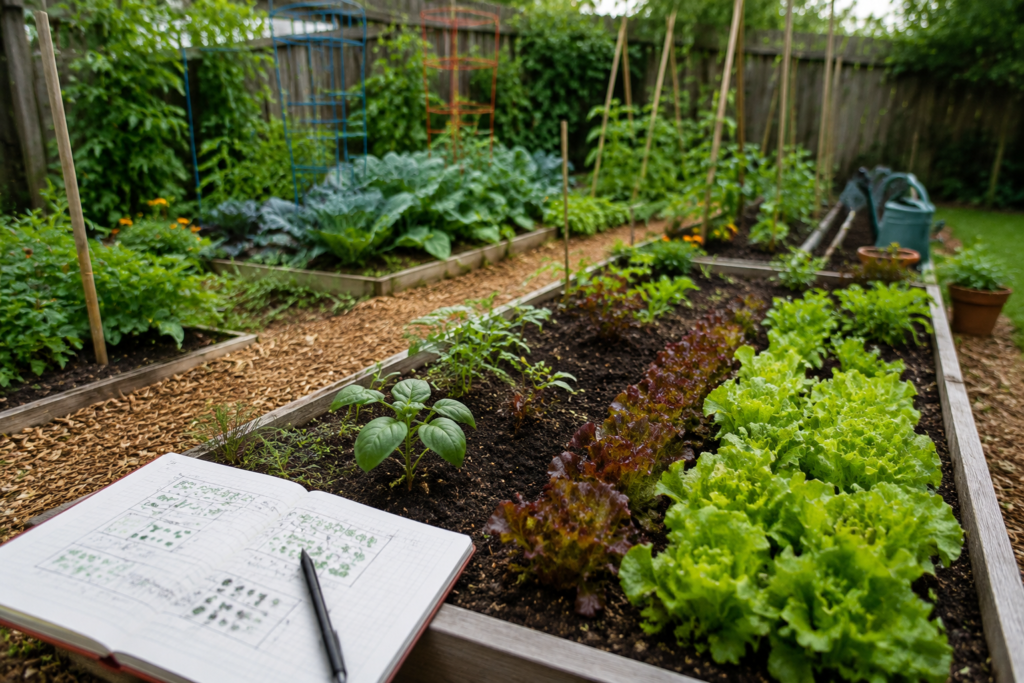
Smart tip: Keep a garden journal for the first three years of vegetable growing. Record planting dates, varieties chosen, weather patterns, pest problems, yields, and what worked and what didn’t. This record is the most valuable resource a vegetable gardener has — it transforms each season’s experience into permanent knowledge that improves the next season.
Mistake to avoid: Starting too large. A first vegetable garden that’s too ambitious to maintain properly becomes overwhelming by midsummer — weeds take over, watering falls behind, and the experience becomes discouraging rather than rewarding. A 4×8 foot raised bed or two smaller containers is adequate to learn from and produce meaningful harvests. Expand in subsequent years as experience and confidence grow.
Before You Start
- Choose the sunniest location. No other factor matters as much as sun. A vegetable garden in partial shade will consistently underperform regardless of every other quality of soil, care, and crop selection.
- Start with easy crops. Lettuce, radishes, beans, and zucchini are genuinely forgiving and produce quickly. Cherry tomatoes are significantly easier than beefsteak tomatoes. Success with easy crops builds the knowledge and confidence to grow more demanding ones.
- Improve the soil before you plant. Vegetable crops are heavy feeders — they produce the best results in the richest soil available. Invest in quality growing medium for raised beds, or incorporate generous compost into in-ground beds before the first planting.
- Water consistently. The most common cause of vegetable garden failure is inconsistent watering — too much during wet periods, too little during dry ones. A simple drip system on a timer solves this problem more reliably than any other investment.
Conclusion
A vegetable garden rewards the right fundamentals — adequate sun, quality growing medium, consistent moisture, and appropriate crop selection — with harvests that justify every hour of attention they receive. The produce a well-managed vegetable garden delivers is genuinely different in quality from anything available in stores: fresher, more flavorful, and picked at the peak of ripeness rather than for transport convenience. Start with the right location, choose crops you’ll actually eat, and keep the first garden manageable — the experience of a successful first season is what converts a vegetable garden from an experiment into a permanent part of how the household eats.
