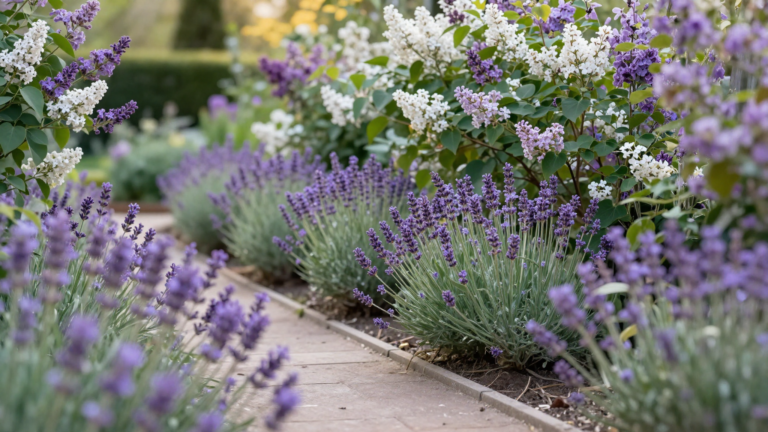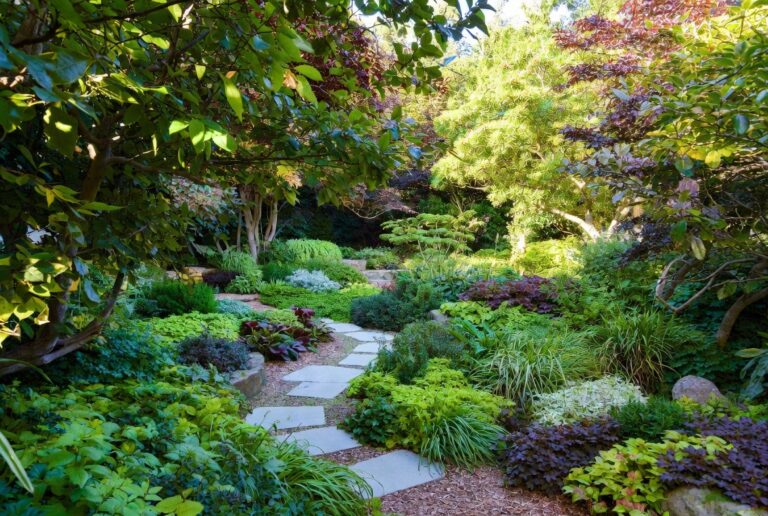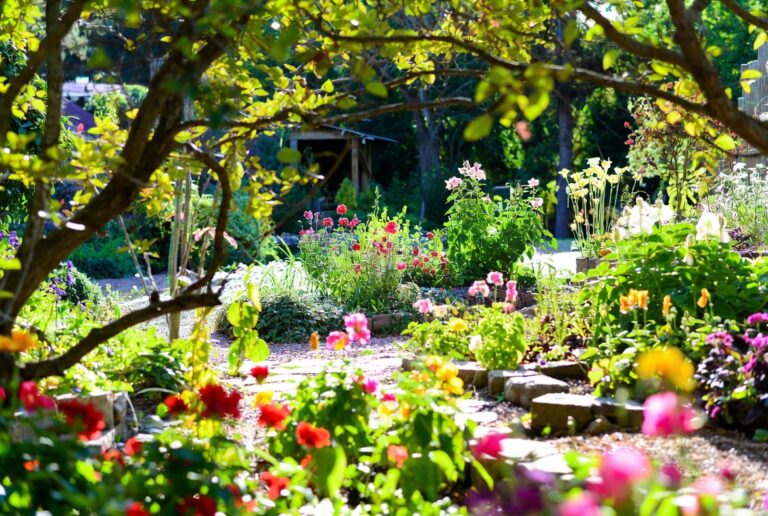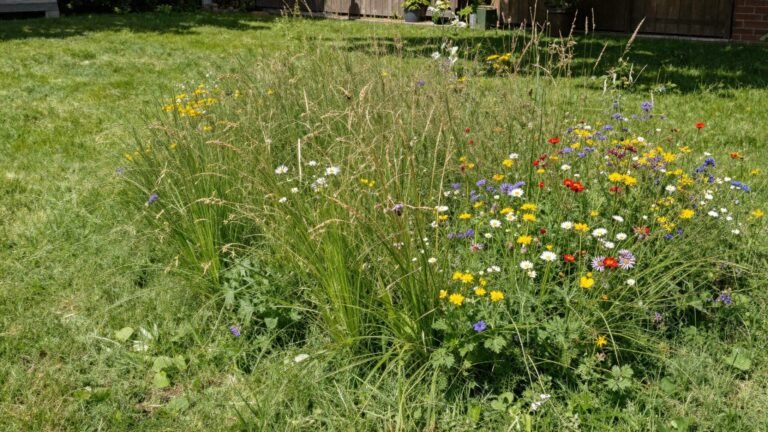
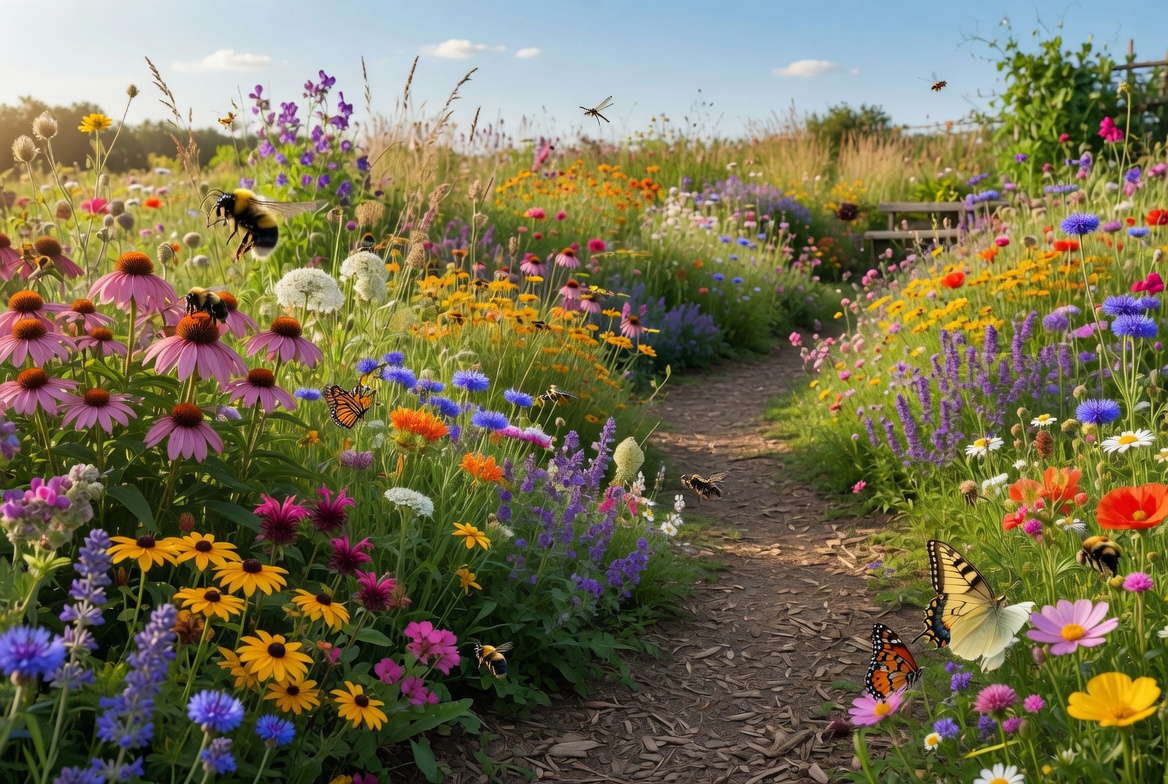
A wildflower garden is the reverse of most garden projects. Instead of imposing a design on the land, you create conditions where plants that want to grow there can do so. The result looks as though the garden happened rather than was constructed — which is exactly the quality that makes wildflower gardens so visually compelling and so emotionally satisfying to be in. They attract insects, birds, and wildlife in numbers that a conventional garden never achieves. They require a fraction of the water, fertilizer, and time of a maintained lawn. And they change continuously through the season — the colors and textures shifting week by week from early spring to late autumn frost. These 20 ideas cover every scale and approach, from a single border along a fence to a full meadow transformation.
1. Start with Native Wildflowers
Best for: Any wildflower garden — native plants are the foundation of a genuinely sustainable planting
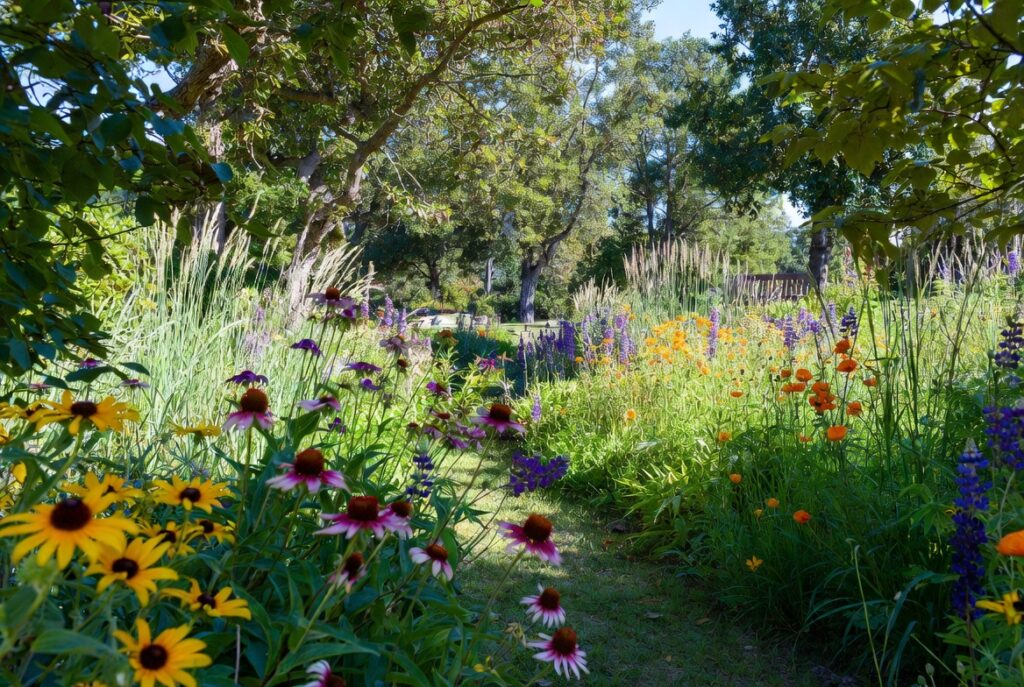
Native wildflowers — plants that evolved in your specific region — are the correct starting point for any wildflower garden because they’ve spent thousands of years adapting to your soil type, rainfall patterns, temperature extremes, and the specific pollinators that share your local ecosystem. Once established, they require essentially no supplemental irrigation, no fertilizer, and no pest control — the local environment already provides everything they need.
Regional native wildflowers that perform reliably across the US: black-eyed Susan (Rudbeckia hirta) — adaptable, long-blooming, golden yellow; purple coneflower (Echinacea purpurea) — drought-tolerant perennial, beloved by bees and butterflies; California poppy (Eschscholzia californica) — vivid orange, self-seeding annual in most climates; blanket flower (Gaillardia) — long-blooming, tolerates poor dry soil; wild bergamot (Monarda fistulosa) — aromatic, excellent bee plant, lavender flowers.
Smart tip: Source native wildflower seed from regional suppliers rather than generic national brands. A “wildflower mix” from a national retailer often contains species from multiple geographic regions — some may not be suited to your specific climate and may even be non-native in your area. Regional seed mixes contain species proven to perform locally.
Mistake to avoid: Planting native wildflowers in over-amended, over-fertilized soil. Most native wildflowers evolved in lean soils with minimal nutrients — rich, heavily fertilized soil encourages lush leafy growth at the expense of flowering. Prepare the site by removing existing vegetation, but don’t add compost or fertilizer before sowing native wildflower seed.
2. Create a Full Wildflower Meadow
Best for: Large gardens, any property with unused lawn — the most impactful single wildflower transformation available
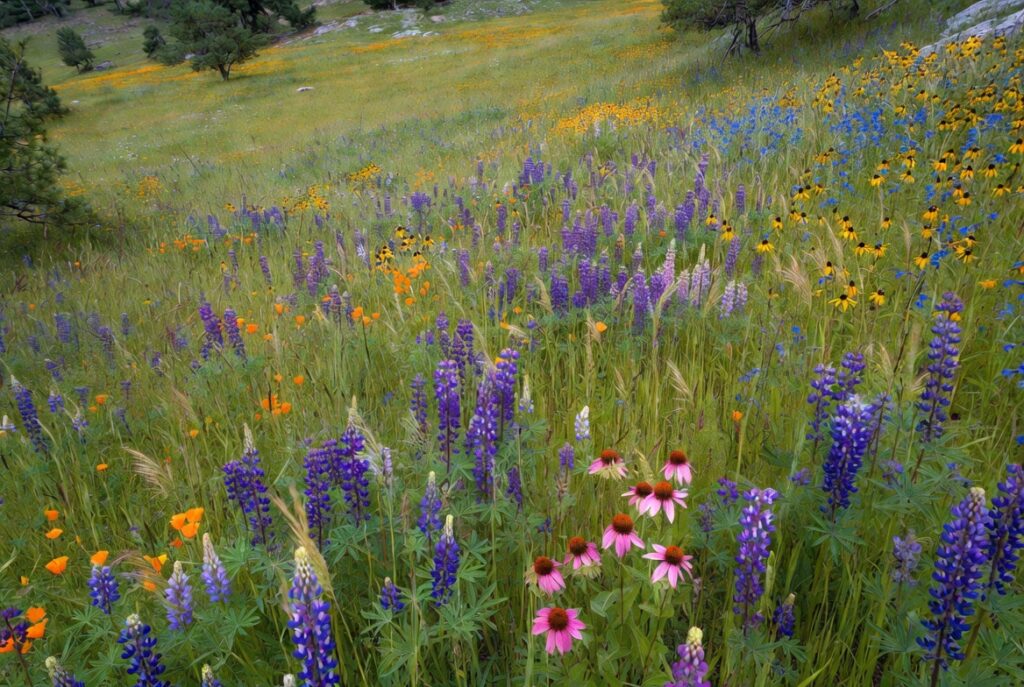
Converting a section of lawn to wildflower meadow is the highest-impact wildflower project available. An established meadow produces vastly more wildlife habitat than the lawn it replaces, requires mowing only once per year (compared to weekly for lawn), and changes from a generic green expanse to a dynamic, seasonally interesting planting that looks genuinely beautiful for most of the year.
The establishment process takes patience: year one is primarily seedling growth with modest flowering; year two sees significant flowering as plants establish; year three produces the full meadow effect as the plant community matures and self-seeding begins to fill gaps.
Smart tip: Choose a meadow location that receives at least 6 hours of direct sunlight daily. Meadow wildflowers are overwhelmingly sun-dependent — a meadow in shade produces a sparse, disappointing result regardless of how good the seed mix is. Full sun is the non-negotiable requirement.
Mistake to avoid: Sowing a meadow into existing grass without first removing the existing vegetation. Grass is extremely competitive — wildflower seedlings sown into established grass are outcompeted and fail to establish. Remove existing grass thoroughly (by solarization, herbicide, or manual removal) before sowing. A meadow sown into cleared soil establishes dramatically better than one sown into grass.
3. Plant a Wildflower Border
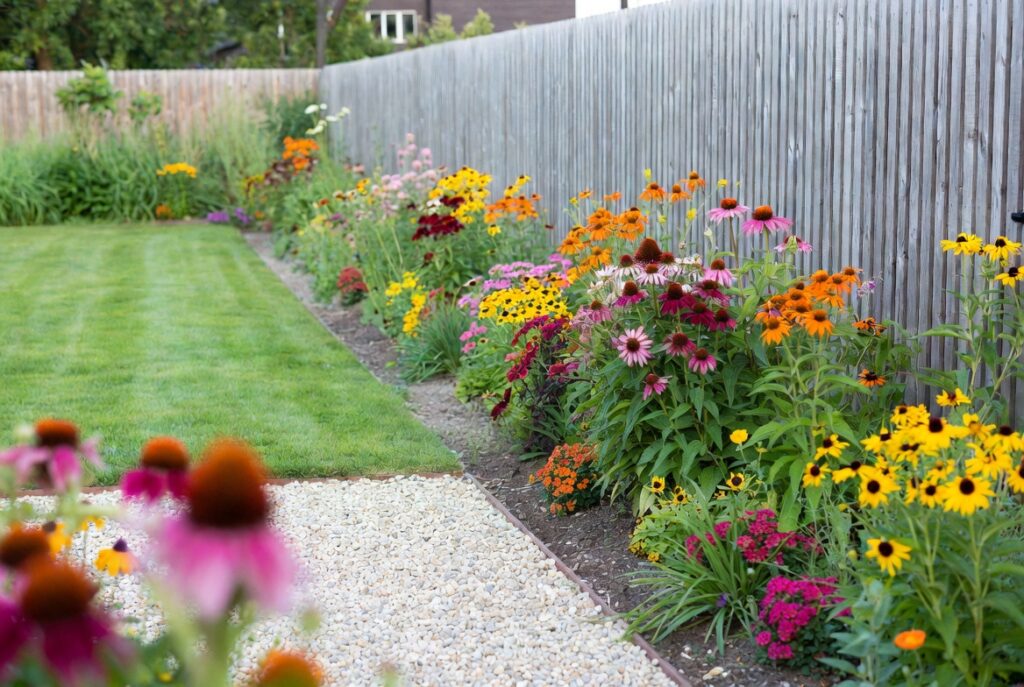
Best for: Gardens without space for a full meadow — a border brings wildflower qualities to any sized garden
A wildflower border — a defined planting bed along a fence, wall, path edge, or property boundary — brings the wildlife, color, and seasonal dynamism of wildflower planting to gardens that can’t accommodate a full meadow. The border contains the planting within a defined area while allowing the natural, informal quality of wildflowers to express itself within those boundaries.
The most effective wildflower border design uses plants at different heights: tall background plants (3 to 5 feet — sunflowers, Joe Pye weed, tall coneflower, verbena); mid-height plants (18 to 36 inches — black-eyed Susan, cosmos, poppies, cornflower); and front-edge plants (under 18 inches — sweet alyssum, low-growing phlox, creeping thyme).
Smart tip: For spring and early summer color, include California poppies, cornflowers, and larkspur — these grow quickly and add vibrant color early in the season. For mid- to late-season bloom when most annuals fade, plant black-eyed Susan, blanket flower, and purple coneflower. The combination provides continuous color from May through October.
Mistake to avoid: Making the wildflower border too narrow to look intentional. A wildflower border less than 3 feet deep looks sparse and accidental rather than designed. At least 4 feet of depth allows enough layers of plant height and density to create the full, naturalistic quality that makes wildflower borders visually compelling.
Loving These Ideas? Get the Step-by-Step Guide
Grab the full 5-day eBook and turn these ideas into a finished room.
4. Mow a Path Through the Meadow
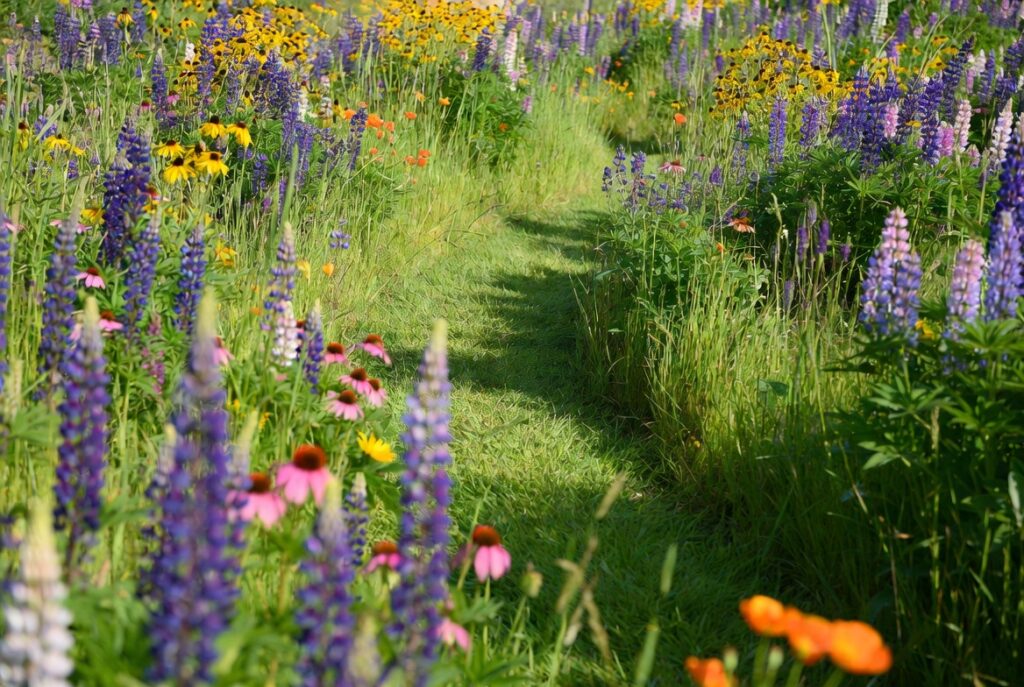
Best for: Any meadow garden — this single technique transforms a wild area into an intentional garden space
A mown path through a wildflower meadow is the design decision that distinguishes an intentional garden from an area of neglect. The contrast between the mown surface of the path and the tall, blooming wildflowers on either side creates a garden composition that reads as deliberately designed — and the path provides access to experience the planting from within rather than only from its edges.
The path can be a simple straight line, a gentle curve, or a winding route that explores different areas of the meadow. Even a 24-inch mown width creates the visual distinction between path and meadow. The mowing maintenance required is minimal — a pass with a mower or brush cutter every 2 to 3 weeks during the growing season.
Smart tip: Position the path so it reveals a view or destination — a garden seat, a bird bath, a tree, or a gate. A path that goes somewhere creates a sense of purpose and invitation. A path that meanders and ends arbitrarily feels unresolved. Even a simple bench at the end of a 30-foot meadow path creates a destination worth walking toward.
Mistake to avoid: Making the mown path too narrow for comfortable walking. A path that requires sidestepping to avoid brushing wet vegetation on either side becomes unpleasant after rainfall. A minimum of 30 inches of mown width allows relaxed walking; 36 to 42 inches is more comfortable for regular use.
5. Grow a Cutting Flower Garden
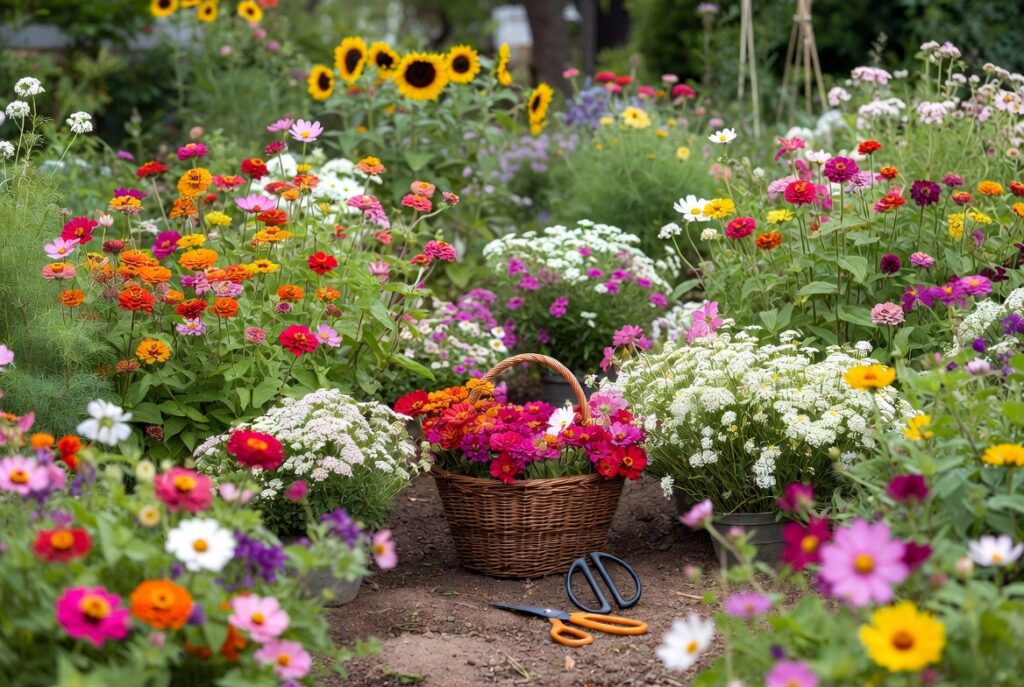
Best for: Anyone who wants fresh cut flowers from the garden throughout the summer
A cutting garden dedicated to wildflowers for vase use combines the ecological benefits of wildflower growing with the daily pleasure of fresh flowers in the house. Many of the best cutting flowers are wildflowers or cultivated versions of wild plants — cosmos, zinnias, rudbeckia, cornflowers, sweet peas, ammi, and larkspur all produce abundant, long-lasting cut flowers from a modest amount of garden space.
The cutting garden logic: plant densely (closer spacing than recommended on seed packets), succession sow every 2 to 3 weeks for continuous production, harvest regularly (cutting flowers encourages more production), and choose varieties specifically noted for long vase life.
Smart tip: Zinnias, cosmos, and rudbeckia are the three most productive cut wildflowers available for a temperate cutting garden. All three produce dozens of flowers per plant throughout the season, have excellent vase life (5 to 10 days), and reseed prolifically — meaning one season’s planting establishes a self-seeding colony that returns year after year.
Mistake to avoid: Waiting for flowers to fully open before cutting. Most wildflowers for cutting should be harvested when the buds are just beginning to open or showing color — they continue to develop in the vase and last longer than fully open flowers cut from the garden. Early morning is the best time to cut, when stems are most turgid.
6. Create a Pollinator Paradise
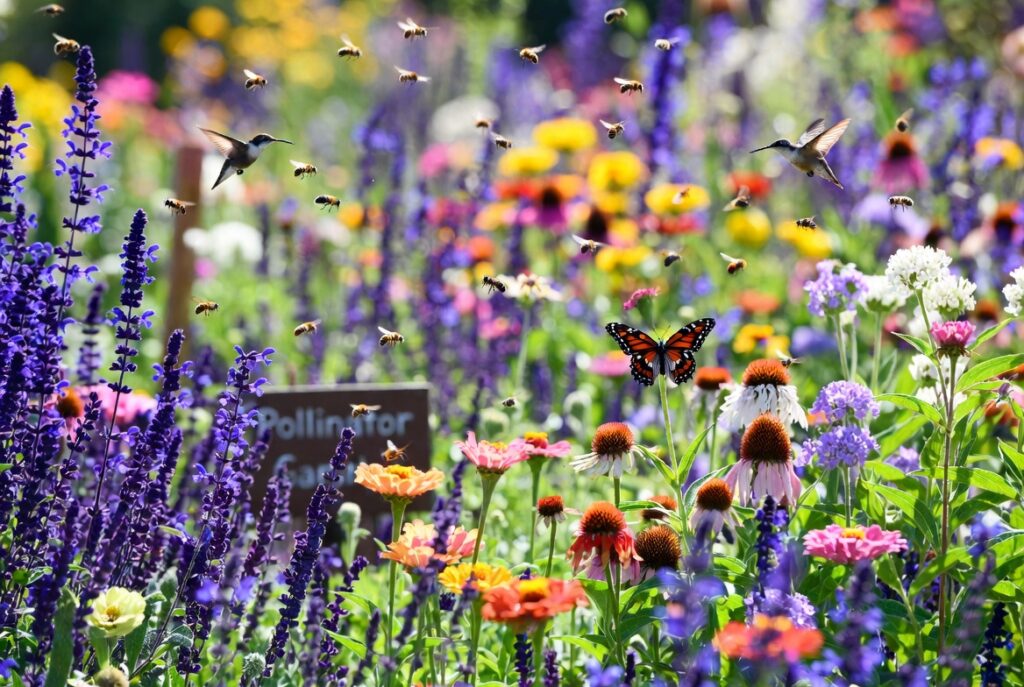
Best for: Any garden where supporting bees, butterflies, and wildlife is a priority
A garden specifically designed to support pollinators — bees, butterflies, hoverflies, moths, and other beneficial insects — combines wildflower planting with the supplementary habitat features (nesting sites, water sources, shelter) that complete a pollinator-friendly environment.
The most valuable wildflowers for pollinators: phacelia (the highest-rated bee plant available — intensely blue flowers, rapid-growing annual); borage (sky blue flowers, beloved by bumblebees, self-seeds prolifically); wild bergamot (native North American, exceptional for bees and hummingbirds); Joe Pye weed (tall native, extraordinary late-season butterfly plant); goldenrod (native, essential late-season pollen source for migrating butterflies and overwintering bees).
Smart tip: Include at least one plant that flowers in early spring (before most wildflowers) and one that flowers in late autumn (after most have finished). Overwintering bees and early-emerging bumblebee queens need food sources at these shoulder periods when most garden flowers are absent. Pulmonaria for early spring; ivy flowers and sedum for autumn.
Mistake to avoid: Using wildflower seed mixes that include double-flowered cultivars. Double flowers — varieties bred for extra petals — look decorative but produce less pollen and nectar than single-flowered forms, and some produce none at all (the extra petals replace the reproductive structures). For a pollinator garden, always choose single-flowered varieties.
7. Use Wildflowers Along a Fence
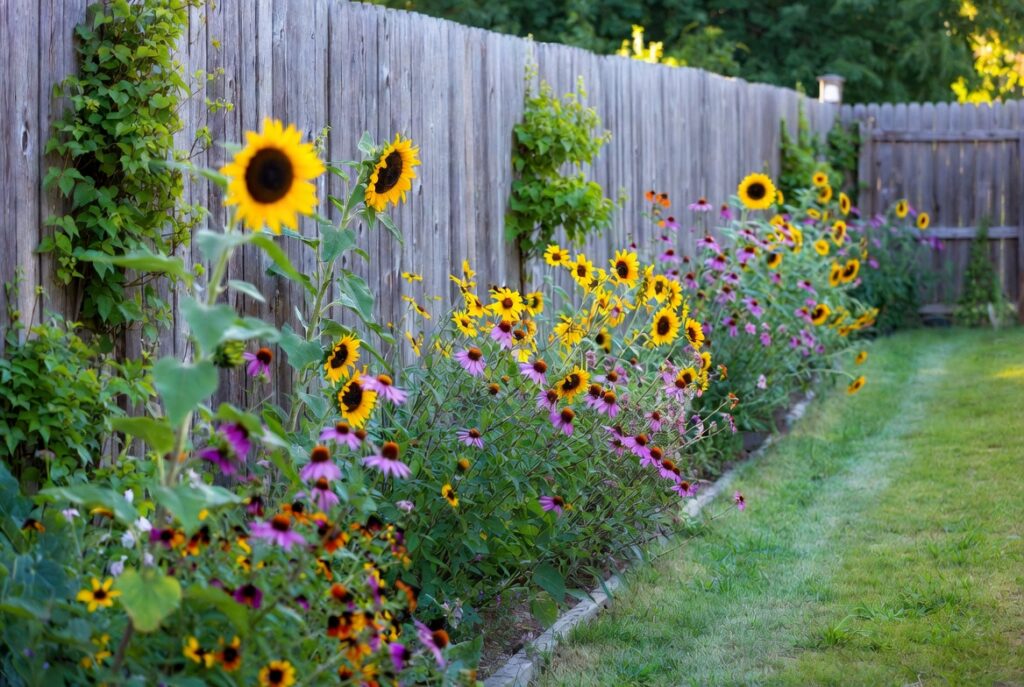
Best for: Any garden with a fence line — this is one of the most impactful and lowest-effort wildflower applications
A row of tall wildflowers along the inside of a fence transforms a bare boundary into a dynamic, colorful planting with almost no effort. The fence provides a vertical background that makes the flowers more visible, support for climbing species, and a defined planting context that prevents the wildflowers from looking out of place.
Tall species suit fence-line planting particularly well: sunflowers (Helianthus annuus) — 4 to 8 feet, the most impactful single-season wildflower available; hollyhock (Alcea rosea) — 5 to 8 feet, traditional cottage garden charm; teasel (Dipsacus fullonum) — 5 to 6 feet, architectural seed heads that birds feed from in winter; and Joe Pye weed — 4 to 7 feet, late-season butterfly magnet.
Smart tip: Sow a mix of annual and perennial wildflowers along a fence line for best results across multiple years. Annuals provide color in the first season while perennials establish. From the second season onward, the perennials dominate and the garden manages itself with minimal intervention.
Mistake to avoid: Planting wildflowers directly against a fence without leaving a maintenance gap. A planting bed 2 to 3 feet wide along a fence with a narrow accessible strip between the bed and the fence allows the fence to be inspected, repaired, and repainted without destroying established plants. A bed pushed against the fence makes maintenance of both fence and plants very difficult.
8. Plant a Rainbow Color Scheme
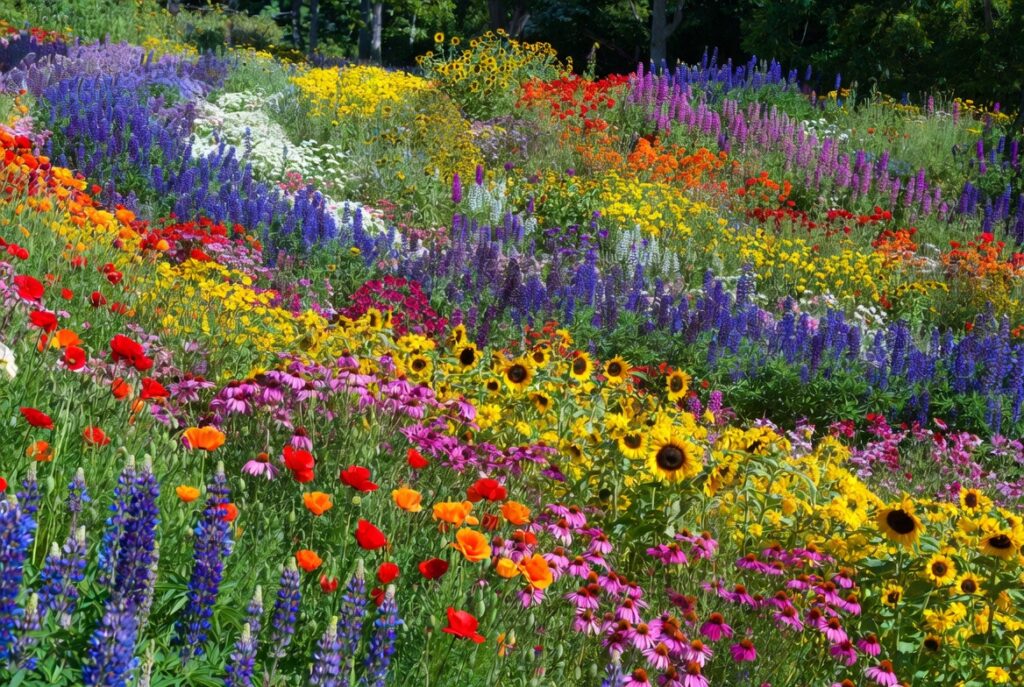
Best for: Wildflower gardens where a curated, visually rich aesthetic is preferred over a purely natural one
A wildflower garden organized by color — either a single color scheme (all yellows and oranges, all pinks and purples, all blues and whites) or a rainbow gradient from one end of the border to the other — creates the structure of a designed garden while retaining the loose, naturalistic quality of wildflower planting.
A single color palette in a wildflower border looks more considered than a random mix. A warm palette (yellow, orange, red) creates an energetic, sunny atmosphere. A cool palette (blue, purple, white) creates a calming, elegant atmosphere. A pastel palette (soft pink, lavender, cream, soft yellow) creates a romantic, cottage quality.
Smart tip: Use temporary labels when sowing different color groups to keep the palette organized during establishment. Once seedlings emerge, distinguishing wildflower species from each other and from weed seedlings is challenging without labels. A simple stick marker indicating which species was sown in each section prevents the palette from collapsing into a random mix.
Mistake to avoid: Planting a rainbow gradient and expecting it to stay organized after the first season. Most wildflowers self-seed — and self-seeded offspring don’t stay where their parents were. A rainbow wildflower garden requires annual management (removing seedlings that germinate in the wrong color zone) to maintain the intended palette over multiple seasons.
9. Combine Wildflowers with Grasses
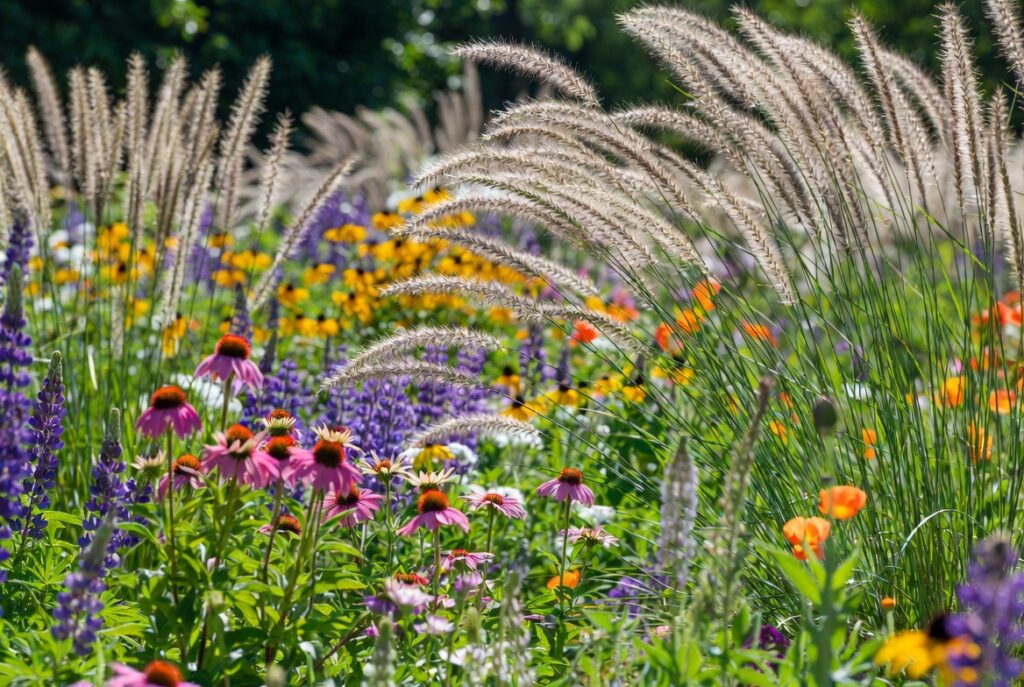
Best for: Prairie-style and naturalistic gardens — the combination is among the most beautiful in the natural world
The combination of wildflowers and ornamental grasses is the defining aesthetic of the prairie planting style that has transformed naturalistic garden design over the past 20 years. The grasses provide structure, movement, and winter interest; the wildflowers provide seasonal color and pollinator value. Together they create a composition of extraordinary visual richness that looks good from spring through winter.
Key grasses for wildflower combinations: little bluestem (Schizachyrium scoparium) — native prairie grass, blue-green summer foliage turning copper-orange in autumn; switch grass (Panicum virgatum) — tall, architectural, stunning autumn color; prairie dropseed (Sporobolus heterolepis) — fine-textured, fragrant, mounds beautifully; blue oat grass (Helictotrichon sempervirens) — steel blue, semi-evergreen, year-round interest.
Smart tip: Plant grasses in groups of three to five of the same variety rather than mixing multiple grass species in the same area. Groups create a coherent visual mass that reads as naturalistic planting. Individual grasses dotted singly through a wildflower meadow look like random additions rather than an intentional design element.
Mistake to avoid: Using invasive grass species in a wildflower and grass combination. Some ornamental grasses — particularly Miscanthus sinensis in warm climates and Pennisetum setaceum (fountain grass) in mild climates — self-seed aggressively and can displace native wildflowers within a few seasons. Research invasiveness for your specific region before planting any grass species.
10. Add a Water Feature
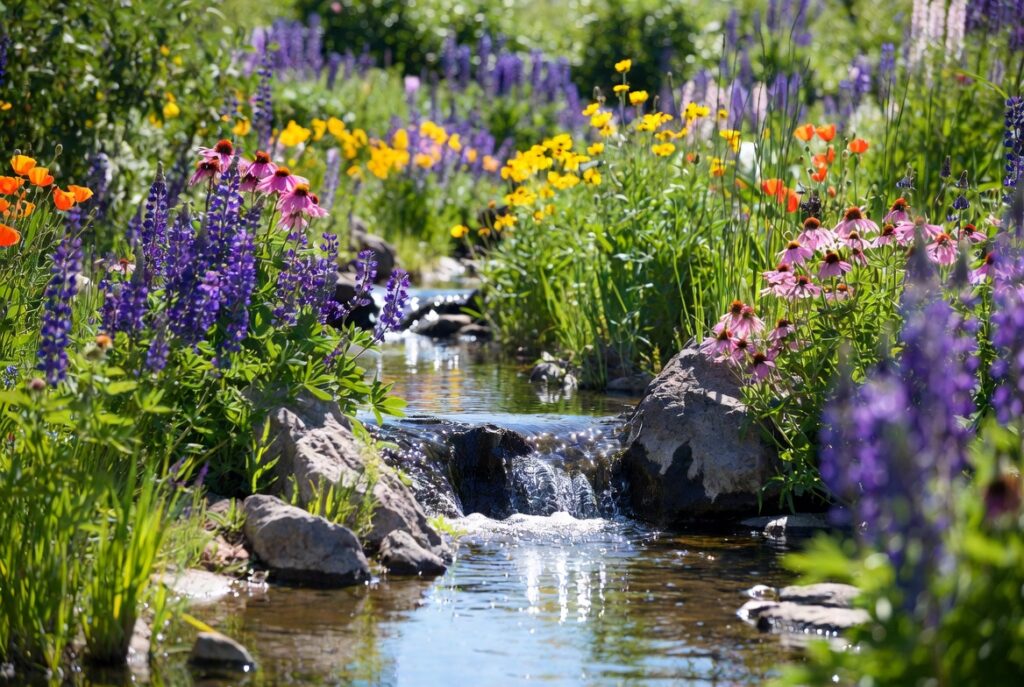
Best for: Wildflower gardens where creating a complete wildlife habitat is the goal
A water feature in a wildflower garden — even a small one — provides the one element that a purely planted garden cannot: open water for drinking and bathing. Birds, bees, butterflies, and beneficial insects all need water, and a garden with wildflowers plus water attracts a noticeably wider range of wildlife than wildflowers alone.
The smallest effective water source: a shallow ceramic dish or a wide-rimmed bird bath with clean water and a few pebbles for perching. Refresh the water every 2 to 3 days to prevent mosquito breeding and keep the water clean. A small recirculating pump keeps the water moving, which deters mosquitoes and attracts more wildlife than still water.
Smart tip: Position the water feature where it’s visible from a window or garden seat — the activity of birds bathing and insects drinking is one of the most engaging wildlife experiences a garden provides. Water in a far corner of the garden provides habitat but not the daily observation pleasure that makes it worth having.
Mistake to avoid: Installing a large, elaborate pond without addressing the mosquito implications. Still water in a garden pond breeds mosquitoes within days in warm weather. Address this with a recirculating pump (moving water doesn’t suit mosquito larvae), mosquito-eating fish (goldfish or native mosquitofish), or a biological larvicide in areas where fish aren’t appropriate.
11. Plant a Moon Garden
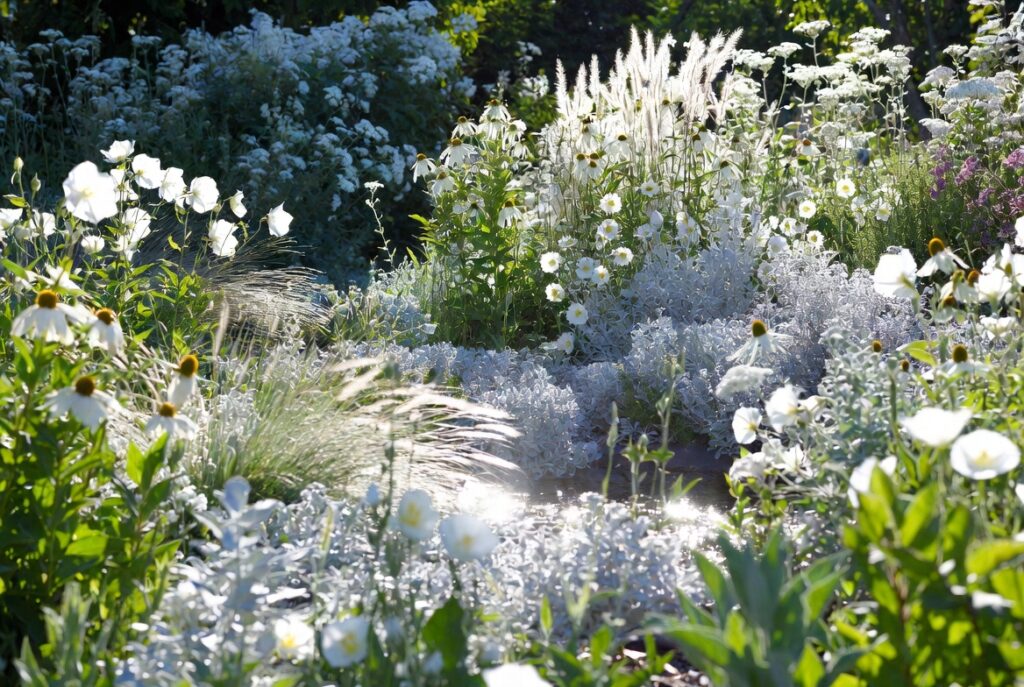
Best for: Gardens used primarily in the evening — wildflowers chosen for their luminous quality after dark
A moon garden — planted with white and pale-flowered wildflowers — has an extraordinary quality at dusk and after dark. White flowers glow in low light in a way that colored flowers don’t, and many white-flowered wildflowers release their fragrance at dusk specifically to attract night-pollinating moths. The combination of glowing flowers and evening fragrance creates an experience that the daytime garden can’t replicate.
Best white wildflowers for a moon garden: evening primrose (Oenothera biennis) — opens its flowers at dusk, intensely fragrant, essential moth plant; white coneflower (Echinacea purpurea ‘White Swan’); white cosmos (Cosmos bipinnatus ‘Purity’); white sweet alyssum (Lobularia maritima) — honey-fragrant, luminous ground cover; night-scented stock (Matthiola longipetala) — unremarkable by day, intensely fragrant after dark.
Smart tip: Position the moon garden adjacent to an outdoor seating area or a path used in the evenings. The experience of a moon garden requires proximity — the fragrance and the glow of white flowers in low light are subtle qualities that require being near them to appreciate.
Mistake to avoid: Including colored flowers in a moon garden. A moon garden works because all the flowers are pale and reflective. Introducing colored flowers — even pale pinks or yellows — breaks the luminous, cohesive quality that makes the moon garden effect so powerful. Commit fully to white and near-white.
12. Wildflowers in Containers
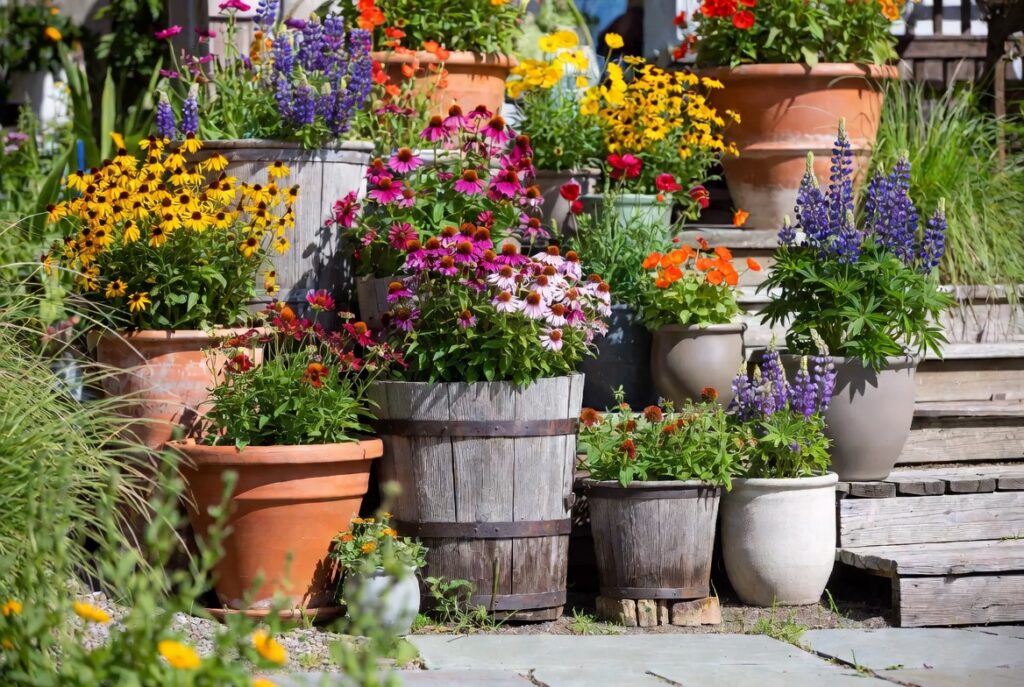
Best for: Balconies, patios, small urban gardens — any space without ground-level planting
Container wildflower gardens bring the color, wildlife value, and natural atmosphere of wildflower planting to spaces with no garden ground. A large container or trough sown with a wildflower mix produces a genuinely beautiful planting that attracts bees and butterflies to balconies, roof terraces, and small urban patios.
Container wildflower success requires: adequate depth (at least 10 to 12 inches for most wildflowers to develop adequate root systems); regular watering (containers dry out much faster than ground planting); and a seed mix specifically selected for container or patio use (lower-growing species, less tendency to blow over in wind).
Smart tip: Large, deep containers (20 liters or more) perform significantly better than small pots for wildflower growing. The greater soil volume retains moisture longer, supports larger plants, and creates more visual impact. Three large containers grouped together creates a more compelling display than a dozen small ones scattered across a balcony.
Mistake to avoid: Using standard potting compost for wildflower containers without adding grit. Standard multipurpose compost is too nutrient-rich for many native wildflowers and too moisture-retentive for good drainage. Mix potting compost 50/50 with horticultural grit or perlite for better drainage and the lean soil conditions that most wildflowers prefer.
13. Replace Lawn with Low Wildflowers
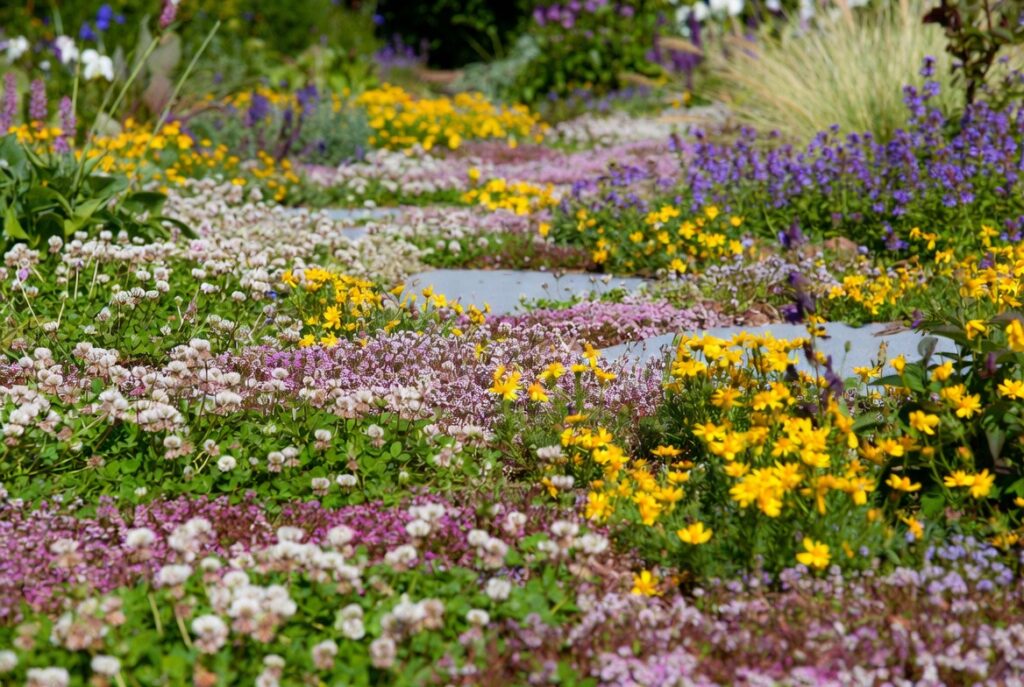
Best for: Front gardens, properties where a full meadow height is inappropriate, gardens with HOA requirements
A low-growing wildflower lawn — planted with creeping thyme, Dutch clover, wild violets, chamomile, self-heal (Prunella), and similar low-growing species — replaces conventional grass lawn with a surface that stays low enough to satisfy neighborhood aesthetics, requires significantly less mowing (many low wildflower lawns need mowing only 2 to 4 times per year), and provides dramatically more wildlife value than pure grass.
Creeping thyme alone transforms a lawn area — it releases fragrance when walked on, produces lavender flowers from late spring through summer, tolerates light foot traffic, and creates a carpet of green that turns purple-lavender at peak bloom.
Smart tip: Overseed an existing lawn with Dutch white clover at a rate of 1 to 2 ounces per 1,000 square feet to begin the transition to a low wildflower lawn without completely removing existing grass. Clover establishes within the grass, fixes nitrogen (reducing the need for fertilizer), produces white flowers that bees love, and stays low enough to mow or not mow according to preference.
Mistake to avoid: Applying herbicide to a lawn before sowing low wildflowers and then sowing immediately. Most herbicides have a soil residue period during which germination is inhibited — sowing too soon after herbicide application produces poor or no germination. Follow the manufacturer’s instructions on waiting period before sowing, or use non-chemical lawn removal methods.
14. Mix Wildflowers with Vegetables
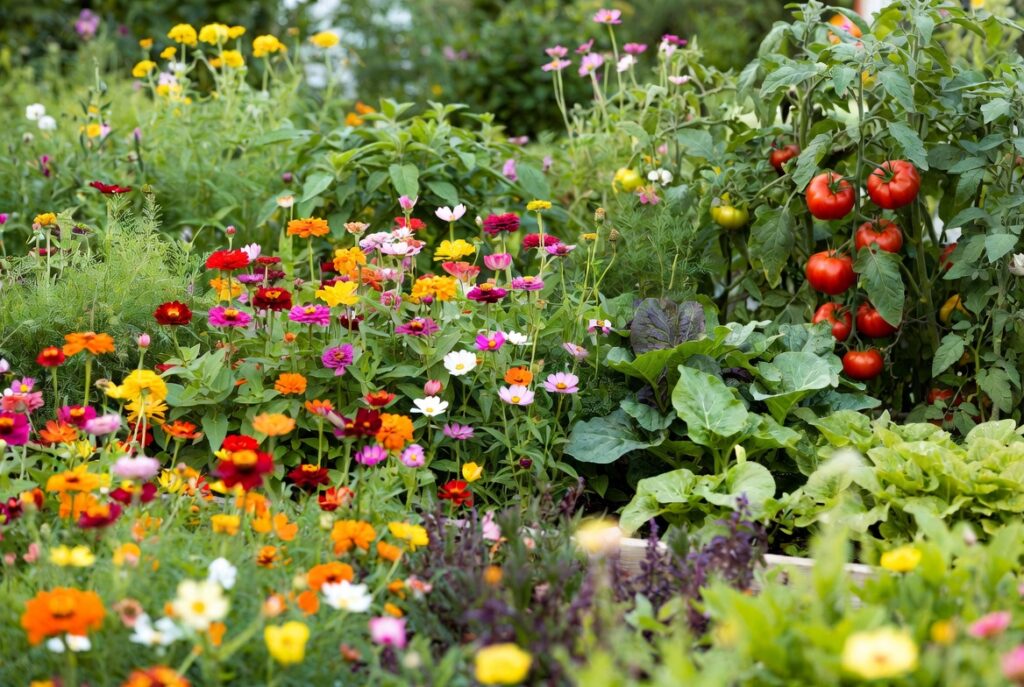
Best for: Vegetable gardens where pollinator activity and pest control are priorities
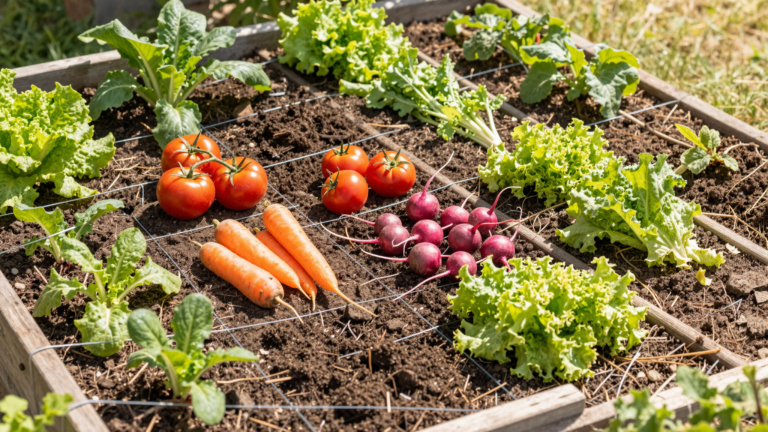
Wildflowers growing alongside vegetable crops provide the single most effective organic pest management and pollination enhancement available. Companion plantings of borage, phacelia, calendula, and nasturtium alongside tomatoes, beans, cucumbers, and squash attract pollinators that improve fruit set and predatory insects that control aphids, whitefly, and caterpillars.
The integration can be as simple as sowing nasturtiums at the base of bean trellises, phacelia in a strip between vegetable beds, or calendula at the corners of raised beds. None of these plantings reduces vegetable yield — they enhance it through improved pollination and reduced pest pressure.
Smart tip: Nasturtiums sown among brassicas (cabbage, kale, broccoli) act as a trap crop — aphids preferentially colonize the nasturtiums rather than the vegetables. When the nasturtiums become heavily infested, remove the plants along with the aphid population. This simple companion planting strategy reduces aphid damage on brassicas significantly.
Mistake to avoid: Planting allelopathic wildflowers near vegetables. Fennel is the most problematic — it produces chemicals that inhibit the growth of most vegetable crops. Keep fennel away from the vegetable garden entirely, regardless of its value as a wildflower and butterfly plant.
15. Create a Shaded Wildflower Corner
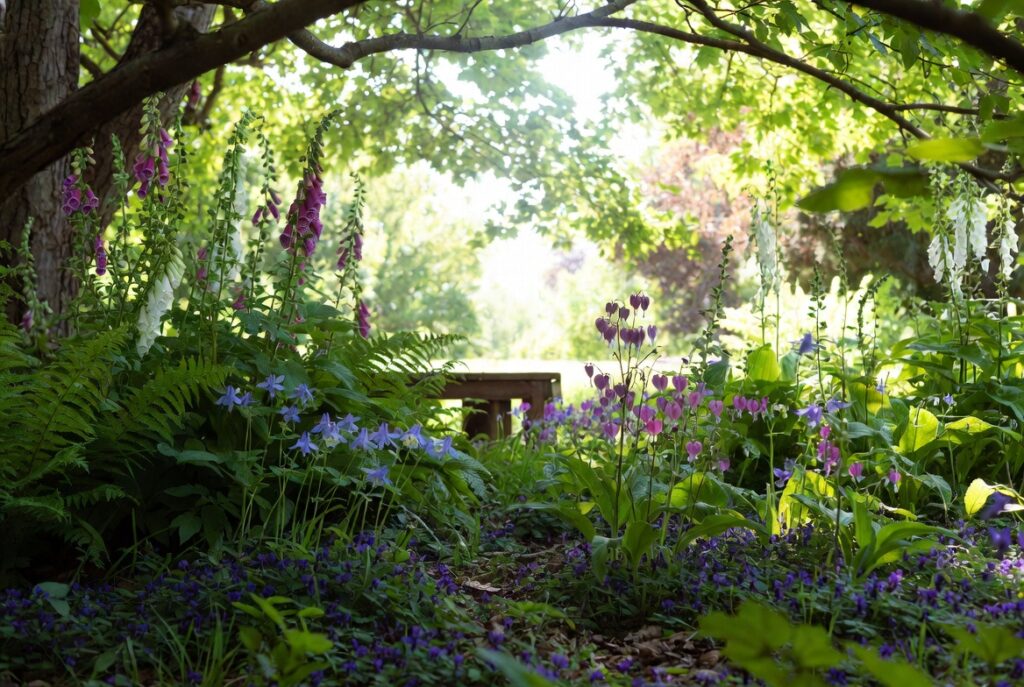
Best for: Gardens with shaded areas where sun-loving wildflowers won’t perform — woodland wildflowers suit different conditions
Many gardens have areas of shade that are difficult to plant successfully. Shade-tolerant woodland wildflowers — species that evolved in woodland understory conditions — thrive in the conditions that defeat most sun-loving wildflowers, creating beautiful naturalistic planting in otherwise challenging positions.
Best shade-tolerant wildflowers: Virginia bluebells (Mertensia virginica) — spring ephemeral, extraordinary sky blue flowers in April and May; wild columbine (Aquilegia canadensis) — nodding red and yellow flowers, long bloom season, self-seeds readily; woodland phlox (Phlox divaricata) — fragrant lavender flowers, spreads gently; bleeding heart (Dicentra) — elegant arching stems with pendant flowers; Solomon’s seal (Polygonatum) — architectural form, white bell flowers, yellow autumn color.
Smart tip: Spring ephemerals (Virginia bluebells, bloodroot, trillium) complete their entire growing cycle — emerging, flowering, and going dormant — before trees leaf out in late spring. Plant them with summer-active ground covers (hostas, ferns) that fill the space when the ephemerals disappear. The combination provides interest from early spring through autumn.
Mistake to avoid: Expecting shade-tolerant woodland wildflowers to produce the same profuse, colorful display as sun-loving meadow wildflowers. Woodland wildflower beauty is subtler — it’s the quality of delicate flowers in dappled light rather than the saturated color of a sunny meadow. Appreciate each for what it is rather than comparing them.
16. Add Rustic Garden Structures
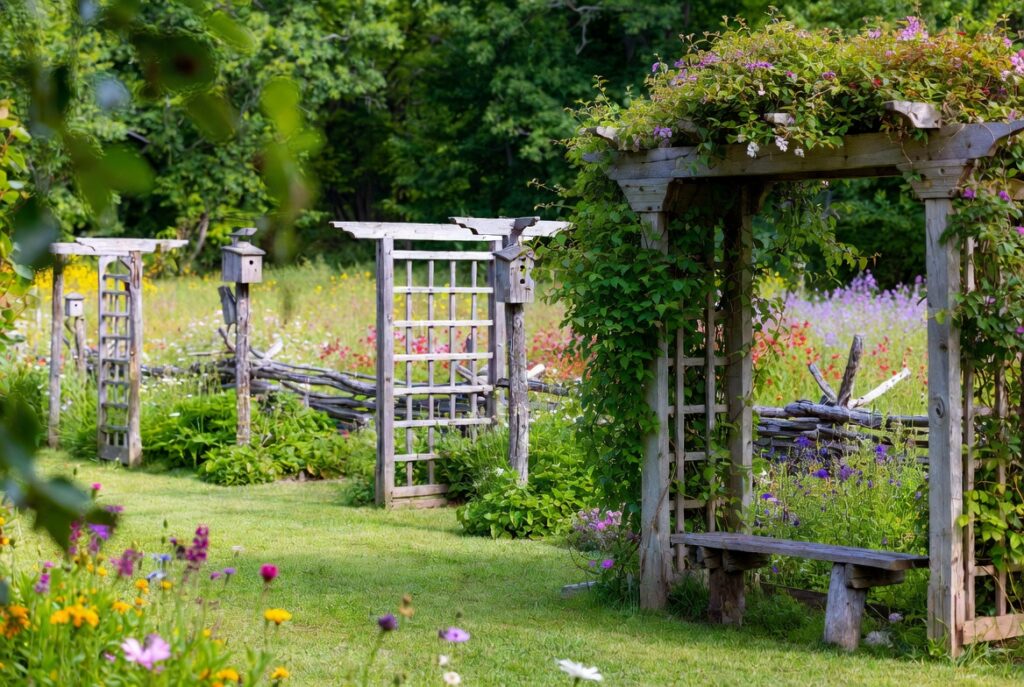
Best for: Wildflower gardens that need anchoring focal points to prevent the planting from looking unintentional
A wildflower garden without any structural element can look like a neglected area rather than a deliberate design decision. A rustic wooden bench, a simple timber arbor, a weathered bird house on a post, or a simple stone seat within the planting creates the focal point that signals intention — that the planting around it is a garden, not simply an area that hasn’t been mowed.
Rustic, natural materials suit wildflower gardens better than painted or highly finished structures. Weathered timber, rough stone, and natural materials integrate with the planting visually; brightly painted or polished structures create a material conflict with the naturalistic planting.
Smart tip: Position a rustic bench or seat within or at the edge of the wildflower planting so that sitting on it puts you inside the garden rather than looking at it from outside. The experience of being surrounded by wildflowers — the sounds of bees, the movement of flowers in breeze, the close-up detail of insects feeding — is the wildflower garden’s greatest gift.
Mistake to avoid: Over-structuring a wildflower garden with too many constructed elements. A wildflower garden’s strength is its natural quality — multiple arbors, statuary, defined paths, and decorative structures can compete with the planting rather than supporting it. One or two carefully chosen structural elements are more effective than many.
17. Plant for Four Season Interest
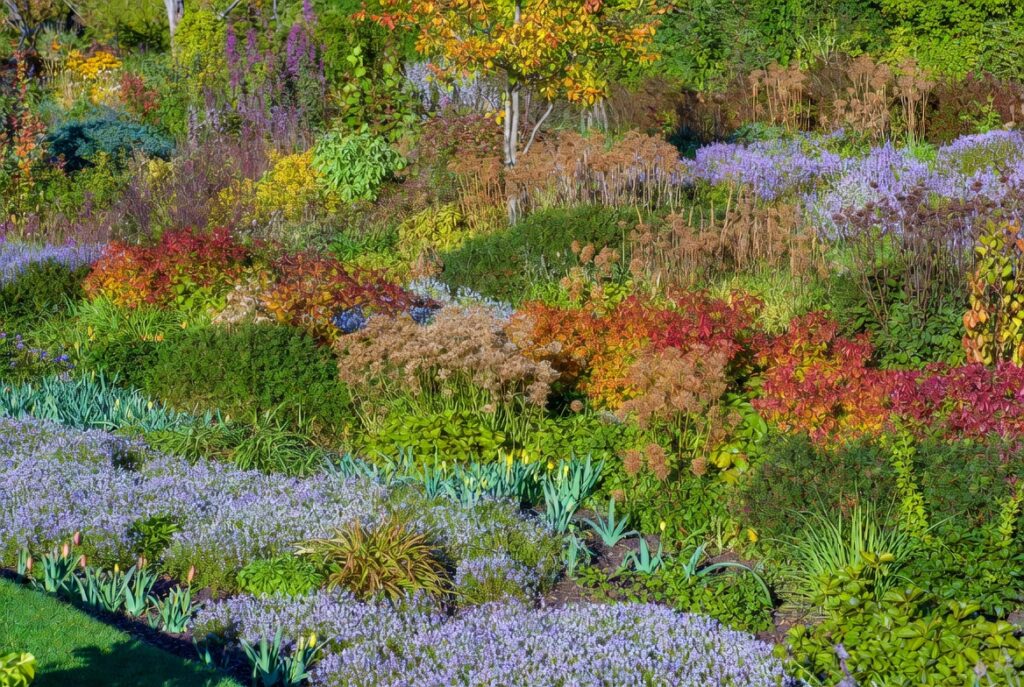
Best for: Any wildflower garden — extending the garden’s visual season beyond summer flowering
Most wildflower gardens peak in summer and early autumn and then become bare for half the year. A planting designed for four-season interest extends the wildflower garden’s value through winter and into early spring, providing habitat, visual structure, and sensory experience year-round.
Four-season planting strategy: spring — bulbs (Narcissus, allium, crocus) emerging through last year’s dried wildflower stems; summer — peak wildflower bloom; autumn — seed heads (echinacea, rudbeckia, teasel) and late-season flowers (aster, goldenrod, sedums); winter — structural dried stems and seed heads providing habitat for overwintering insects and food for birds.
Smart tip: Leave all seed heads standing through winter rather than cutting the garden back in autumn. Echinacea seed heads attract goldfinches and other seed-eating birds from October through February. Hollow stems provide overwintering sites for beneficial insects including solitary bees and lacewings. The winter wildflower garden is structurally beautiful and ecologically valuable — cutting it down in autumn removes both qualities.
Mistake to avoid: Tidying the wildflower garden too early in spring. The impulse to cut back dried stems as soon as temperatures rise in early spring should be resisted until overnight temperatures are consistently above 10°C (50°F). Many beneficial insects overwinter in hollow stems and leaf litter — cutting back too early destroys them before they’ve emerged.
18. Use Wildflowers on a Slope
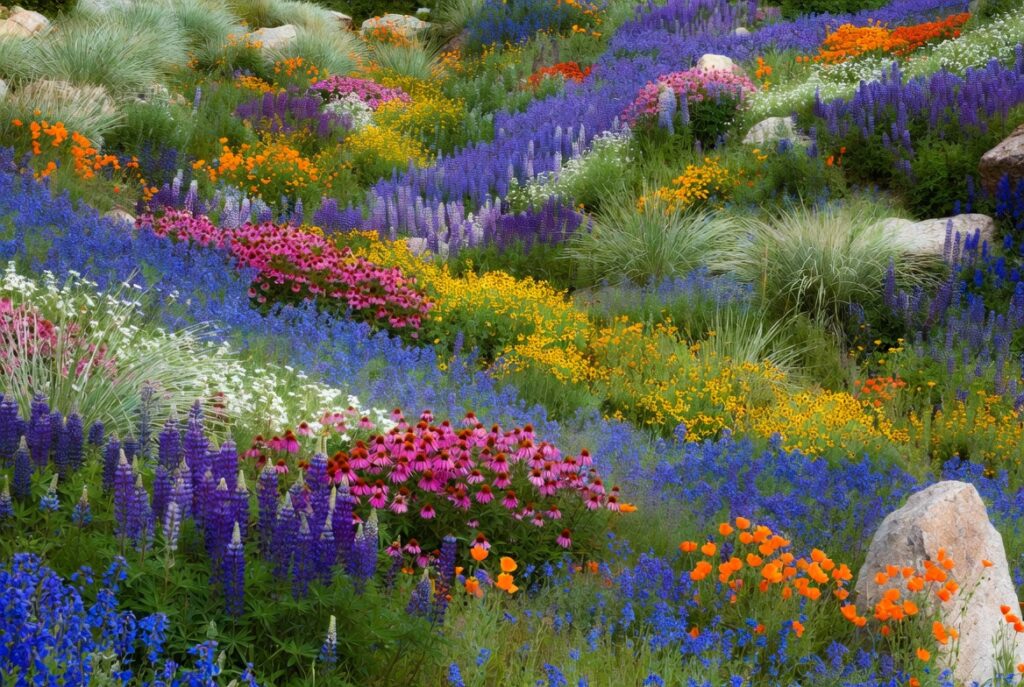
Best for: Sloped properties where mowing is difficult and erosion is a concern
A sloped area planted with wildflowers solves multiple problems simultaneously. The dense root systems of established wildflowers stabilize slope soil, dramatically reducing erosion during heavy rainfall. The elimination of lawn mowing on a slope (always difficult and sometimes dangerous) removes a maintenance burden. And the visual effect of a flower-covered slope is far more attractive than a mown grass slope.
Deep-rooted native wildflowers are the most effective for slope stabilization: native grasses (little bluestem, prairie dropseed) have extensive fibrous root systems; black-eyed Susan and coneflower develop tap roots that anchor the soil; and spreading ground covers (wild ginger, creeping phlox) create a dense surface layer that prevents surface erosion.
Smart tip: On a steep slope, install biodegradable erosion control fabric (jute netting) before sowing seed. The netting holds seed and prevents it from washing downhill during establishment rains, allowing seedlings to emerge and begin establishing root systems before the netting biodegrades.
Mistake to avoid: Using annual wildflower seed mixes exclusively on slopes. Annuals establish quickly but provide only one season of erosion protection — then die, leaving the slope bare and vulnerable again. Combine a small percentage of fast-establishing annuals (for first-year color) with a majority of perennials and native grasses that develop permanent root systems and protect the slope indefinitely.
19. Overseed a Tired Garden Bed
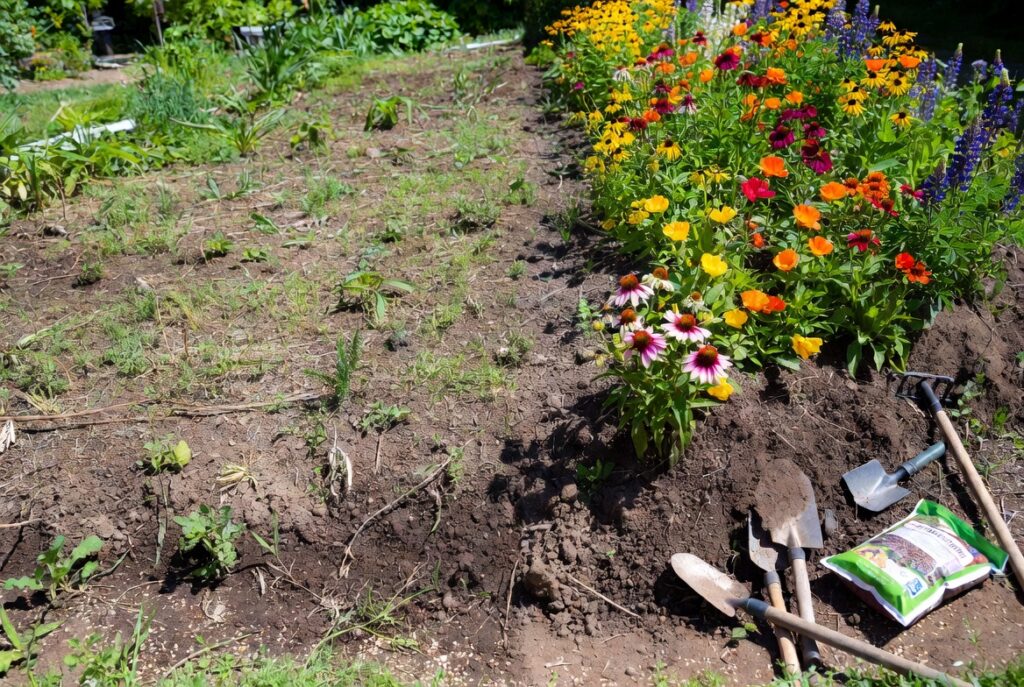
Best for: Existing garden beds that have become sparse, weedy, or uninteresting — a fast, low-cost refresh
Overseeding a tired garden bed with wildflower seed breathes life back into a space that would otherwise require major renovation. Remove obvious large weeds, scratch the soil surface lightly with a rake to expose bare soil, scatter wildflower seed at the recommended rate, and rake lightly to make seed-to-soil contact. Water gently and wait.
The existing perennials in the bed continue growing; the wildflower seed fills the gaps between them. The result after one growing season is a denser, more colorful, more dynamic planting than the sparse bed it replaced.
Smart tip: Choose a wildflower seed mix that complements the existing plants in the bed rather than competing with them. If the bed contains soft, pastel-toned perennials, choose a pastel wildflower mix. If it contains strong, saturated colors, choose a correspondingly bold mix. A coherent color palette across both existing plants and new wildflower additions creates a more composed result.
Mistake to avoid: Overseeding into a bed without addressing the underlying reason it became tired. If the bed is sparse because of shade that has increased as surrounding trees matured, sowing sun-loving wildflowers will produce the same sparse result. Identify the cause (shade, drainage, soil compaction, competition) before overseeding, and choose plants suited to the actual conditions.
20. Maintain a Wildflower Garden
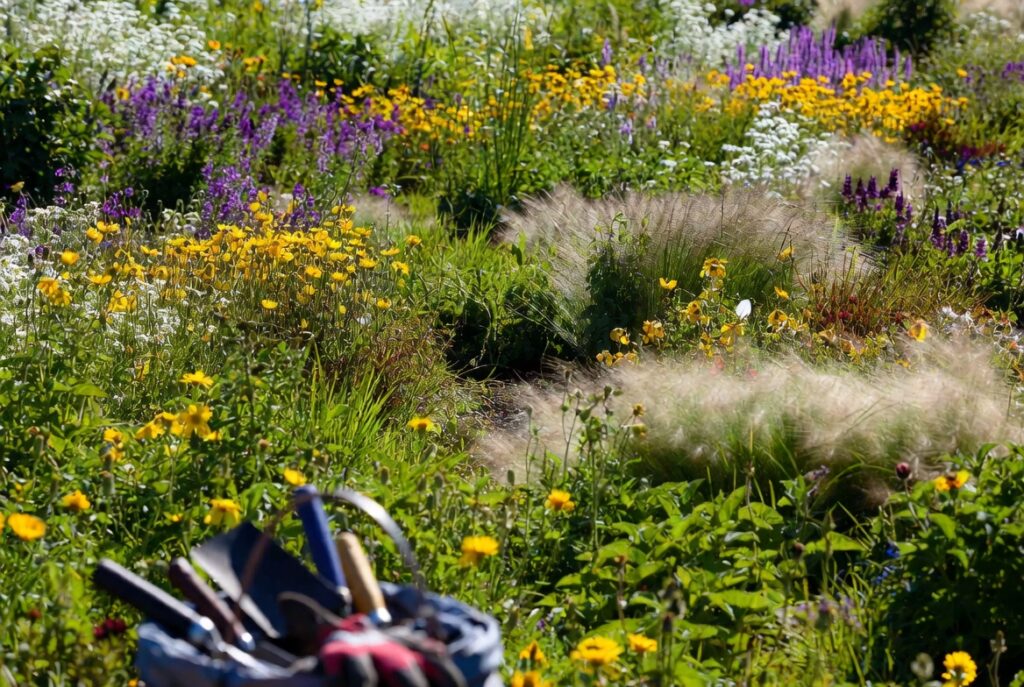
Best for: Anyone establishing a wildflower garden — understanding maintenance expectations prevents frustration and premature abandonment
Wildflower gardens are lower maintenance than conventional gardens but not zero maintenance. Understanding what maintenance is required — and what isn’t — allows the garden to develop properly rather than being over-managed (which undermines the natural quality) or under-managed (which allows aggressive species to dominate and the garden to become monoculture).
Annual wildflower garden maintenance tasks: one mow per year in late autumn or early winter (after seed has set and birds have fed on seed heads) to cut everything to 4 to 6 inches; removal of genuinely invasive species (brambles, nettles, docks) that compete aggressively with wildflowers; and annual assessment of which species are increasing (often aggressive self-seeders) and which are decreasing (often less competitive but more desirable species that need some hand-sowing support).
Smart tip: The mow timing matters significantly. Mowing in late July or August (after first-season annuals have set seed but before autumn-blooming perennials have finished) suits annual-heavy wildflower gardens. Mowing in late winter (February-March) suits perennial-heavy meadows that should be left standing through winter for wildlife. Know which approach suits your planting.
Mistake to avoid: Applying fertilizer to an established wildflower garden in an attempt to improve flowering. Wildflowers flower best in lean, unfertilized soil — this is why roadsides and hedgerows (typically poor, undisturbed soil) produce better wildflower displays than gardens. Adding fertilizer encourages vigorous grass and weed growth that overwhelms the wildflowers.
Before You Start
- Assess your site conditions honestly. Sun exposure, soil type, and drainage determine which wildflowers will succeed. Most wildflowers need at least 6 hours of direct sun — shade-tolerant woodland wildflowers suit shadier positions. Match plant to site rather than hoping plants will adapt.
- Clear existing vegetation thoroughly. The most common wildflower establishment failure is sowing into existing grass or weed growth. Clear the planting area completely before sowing — this one step makes the difference between a successful and a failed wildflower garden more than any other.
- Be patient through year one. The first year of a wildflower garden is primarily establishment — roots developing, plants organizing themselves, the plant community beginning to function. Modest flowering in year one is normal. Year two and beyond is when the investment pays back.
- Start small. A single well-managed border or a modest meadow area that looks genuinely good is more satisfying than an ambitious planting that becomes overwhelming to manage. Expand from success rather than attempting everything at once.
Conclusion
A wildflower garden rewards patience and a willingness to work with natural processes rather than against them. The garden that looks most effortlessly beautiful — where flowers seem to have chosen their positions and the whole composition feels inevitable rather than designed — is the one where the gardener matched plants to conditions, established the planting properly, and then stepped back to let the garden develop. The wildflower garden’s natural quality is its greatest asset. Design decisions that enhance that quality, rather than imposing an artificial order on it, produce the most genuinely satisfying results.
Continue Your Home Transformation
Explore the full collection of step-by-step eBooks and get the guide that fits the room you're working on.