
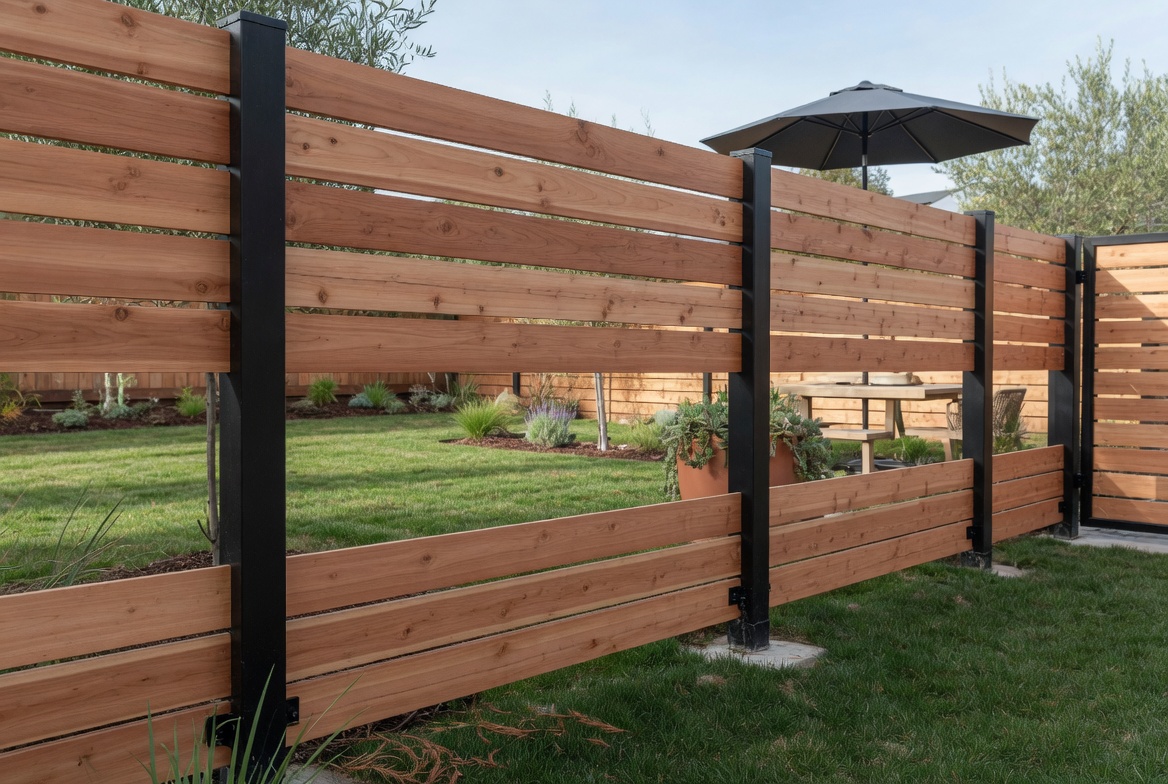
A wood fence is one of the most impactful improvements a homeowner can make to a property. It defines the boundary, creates privacy, frames the garden, and establishes the tone of the entire outdoor space — all at the same time. No other single landscaping element does as much work simultaneously, and no other material does it with the warmth and natural character that wood provides.
The challenge is choosing the right design. A fence that suits a contemporary home looks wrong on a cottage. A privacy fence that works for a flat yard needs different construction on a slope. And a fence that looks beautiful in year one needs to be built correctly to still look beautiful in year fifteen. These 20 ideas cover every style, every function, and every terrain — with honest guidance on what makes each design work and what most homeowners get wrong.
1. Horizontal Slat Fence
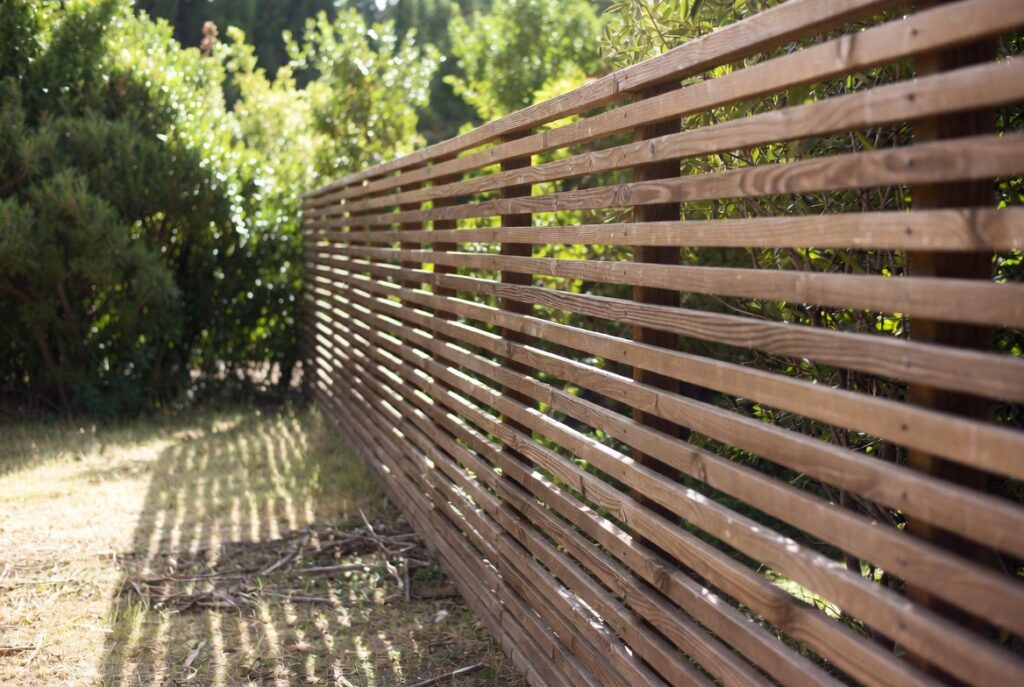
Best for: Contemporary and modern homes — the most popular wood fence style of the current decade
A horizontal slat fence — boards running parallel to the ground rather than the traditional vertical orientation — creates clean, modern lines that read as designed and intentional. The horizontal emphasis makes the yard feel wider, suits the low, linear aesthetic of contemporary architecture, and photographs beautifully against green planting.
Cedar is the most popular species for horizontal slat fences — its warm golden tone contrasts well with dark post materials, it resists rot without chemical treatment, and it weathers gracefully over time.
Smart tip: Pair horizontal cedar slats with black powder-coated steel posts rather than wooden posts. The contrast between warm wood grain and dark structural metal creates a sharp, refined appearance that has become the defining look of contemporary residential fencing. The steel posts also provide superior structural longevity compared to timber posts in ground contact.
Mistake to avoid: Installing horizontal slats without leaving adequate gaps between boards for airflow. Boards laid tight together trap moisture between them, causing cupping, warping, and accelerated rot from the contact surfaces. A gap of 5 to 10mm between slats allows moisture to escape and dramatically extends the fence’s lifespan.
2. Classic White Picket Fence
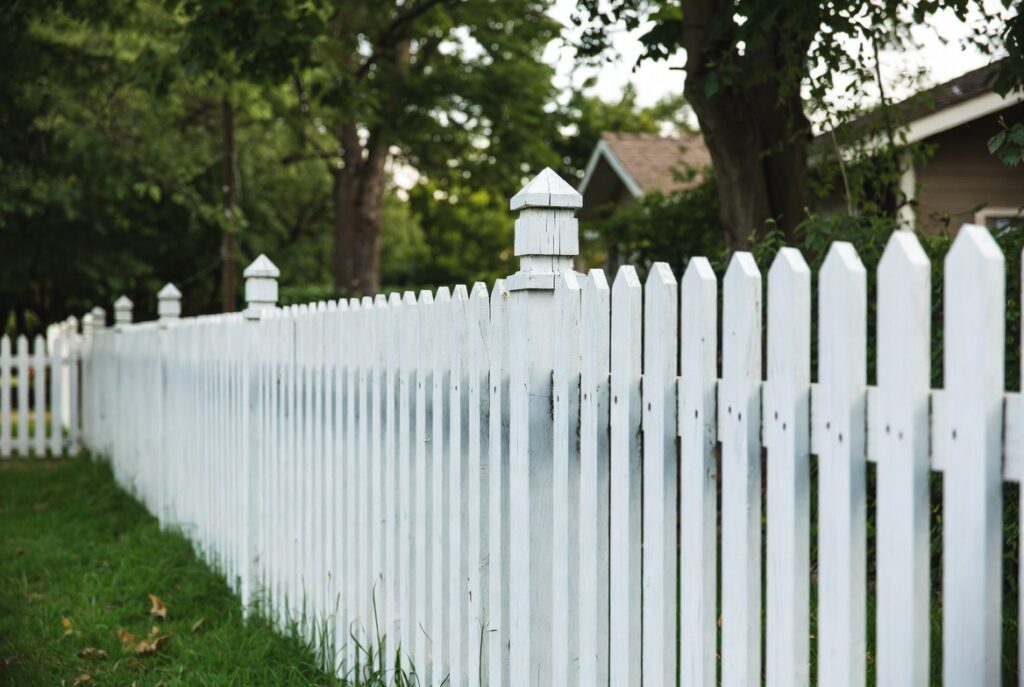
Best for: Traditional, colonial, and cottage-style homes — the most universally recognized residential fence design
The white picket fence carries more cultural meaning than any other fence style — it signals welcome, domesticity, and a cared-for home. It suits traditional architecture, cottage gardens, and front yards where charm and approachability are more valuable than privacy.
A picket fence works best in front yards where it defines the boundary without creating a barrier — the open spacing between pickets maintains visual connection with the street while clearly marking the property edge and providing a frame for garden planting.
Smart tip: Choose pre-primed pickets and apply a quality exterior topcoat rather than using raw timber painted on-site. Pre-primed timber has better paint adhesion and requires less frequent repainting. A well-maintained white picket fence in a quality exterior paint needs repainting approximately every 5 to 7 years rather than every 2 to 3.
Mistake to avoid: Setting picket fence posts directly in soil without concrete footings. Timber posts in direct soil contact rot at the ground line — typically within 5 to 10 years — regardless of treatment. Set posts in concrete footings with the concrete slightly mounded above grade to shed water away from the post base.
3. Board-on-Board Privacy Fence
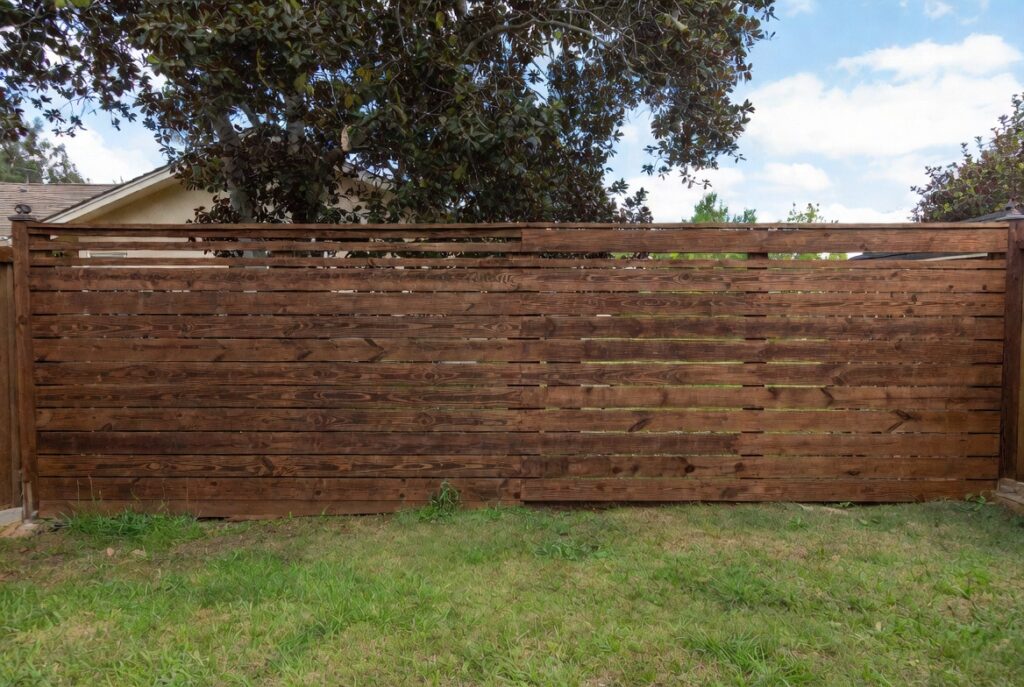
Best for: Backyards where complete privacy is the priority — board-on-board provides the most effective privacy screening available in a wood fence
Board-on-board fencing alternates boards on each side of the fence rail — one board on the front, the next on the back, overlapping — creating a fence with no gaps that provides complete privacy from any viewing angle. Unlike a solid board fence that looks flat and featureless from one side, board-on-board has visual depth from both sides and looks equally finished from the street and from the yard.
The overlapping construction also provides excellent wind resistance — the alternating boards allow wind to pass through slightly, reducing the sail effect that causes solid fences to fail in high winds.
Smart tip: Use 6-inch boards with 1-inch overlap on each side for the optimal board-on-board proportion. This overlap creates complete visual privacy while using the minimum amount of timber — wider overlaps waste material without improving privacy. The slightly staggered appearance of the overlapping boards also creates a more interesting texture than a flat solid fence.
Mistake to avoid: Building a board-on-board fence without considering the weight load on the posts. The alternating boards create significantly more weight per linear foot than a standard picket fence — especially when wet after rain. Posts must be set deeper in concrete and spaced no more than 8 feet apart to prevent the fence from sagging or leaning under this additional load.
4. Cedar Fence with Black Posts
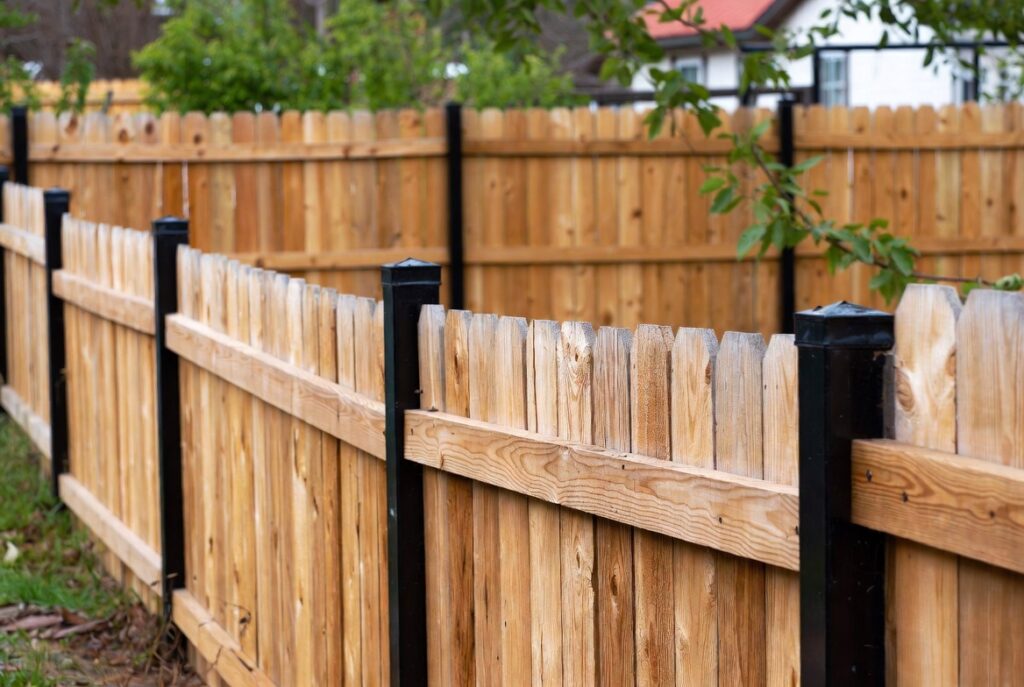
Best for: Modern homes that want warmth and material sophistication — this combination is among the most refined fence aesthetics available
Warm cedar boards against matte black powder-coated steel posts creates a material contrast that reads as premium and designed. The combination is visually distinctive without being aggressive — the warmth of the wood prevents the black from feeling cold, and the sharpness of the black prevents the cedar from feeling rustic.
This fence style suits homes with other black exterior elements — black window frames, black hardware, dark roofing — where the fence becomes part of a cohesive material palette rather than an isolated feature.
Smart tip: Allow cedar to weather naturally to its silver-grey patina rather than staining it, when using black steel posts. The contrast between silver-weathered cedar and black steel is even more sophisticated than the contrast between golden new cedar and black — the aged timber and the dark metal both have a quality of permanence that new wood lacks.
Mistake to avoid: Using timber posts stained black rather than genuine powder-coated steel posts in this combination. Stained timber posts fade and require repainting — within two to three seasons, the black stain weathers unevenly and the refined aesthetic of the combination deteriorates. Genuine steel posts are a permanent, maintenance-free structural element that justifies the premium cost.
5. Shadowbox Fence
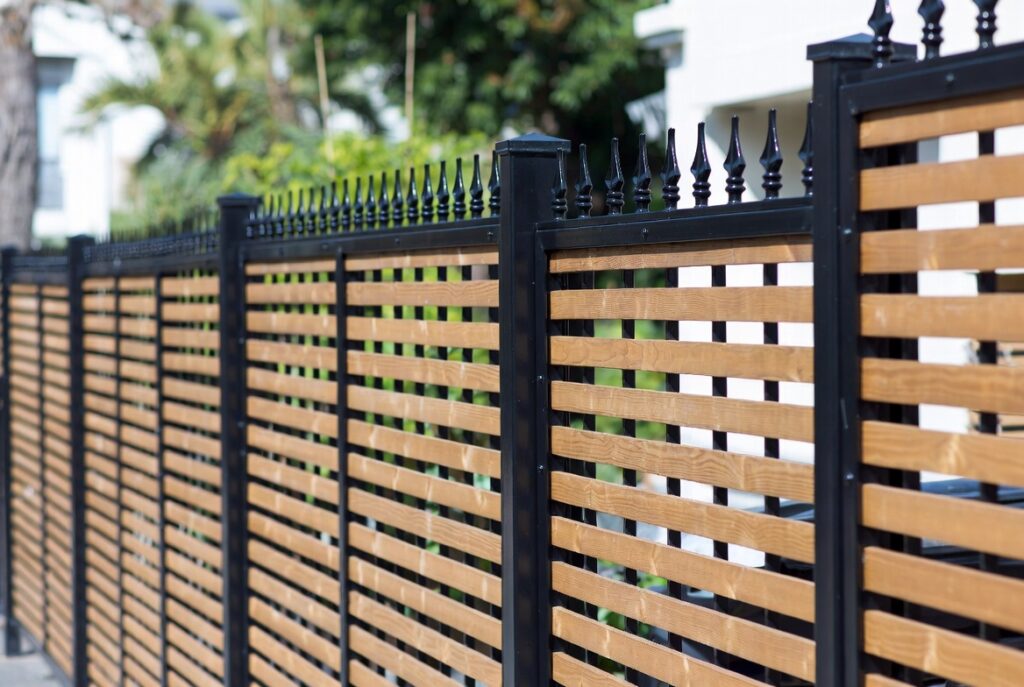
Best for: Shared boundary fences — shadowbox looks finished from both sides and is often preferred by neighbors over one-sided privacy fences
A shadowbox fence alternates boards on opposite sides of a central rail at regular intervals — creating a fence that provides substantial privacy while allowing some airflow and light through the alternating gap pattern. The “shadowbox” name comes from the shadow effects the boards create on each other in direct sunlight, giving the fence visual depth throughout the day.
Its most significant practical advantage is the identical appearance from both sides — a standard privacy fence has a “good” side facing the yard and a “bad” side of visible rails and post backs facing the neighbor. The shadowbox has no bad side.
Smart tip: Use 6-inch boards spaced 3 inches apart on alternating sides for the standard shadowbox pattern. At this spacing, the fence provides approximately 75% visual privacy — sufficient for most backyard applications while maintaining the visual depth and airflow that distinguishes shadowbox from a solid fence.
Mistake to avoid: Building a shadowbox fence with the boards too widely spaced in an attempt to maximize airflow. Wider gaps reduce privacy progressively — at 4 inches or more of spacing, privacy becomes inadequate for most backyard applications. The standard 3-inch spacing represents the optimal balance between privacy and airflow.
6. Dark Stained Privacy Fence
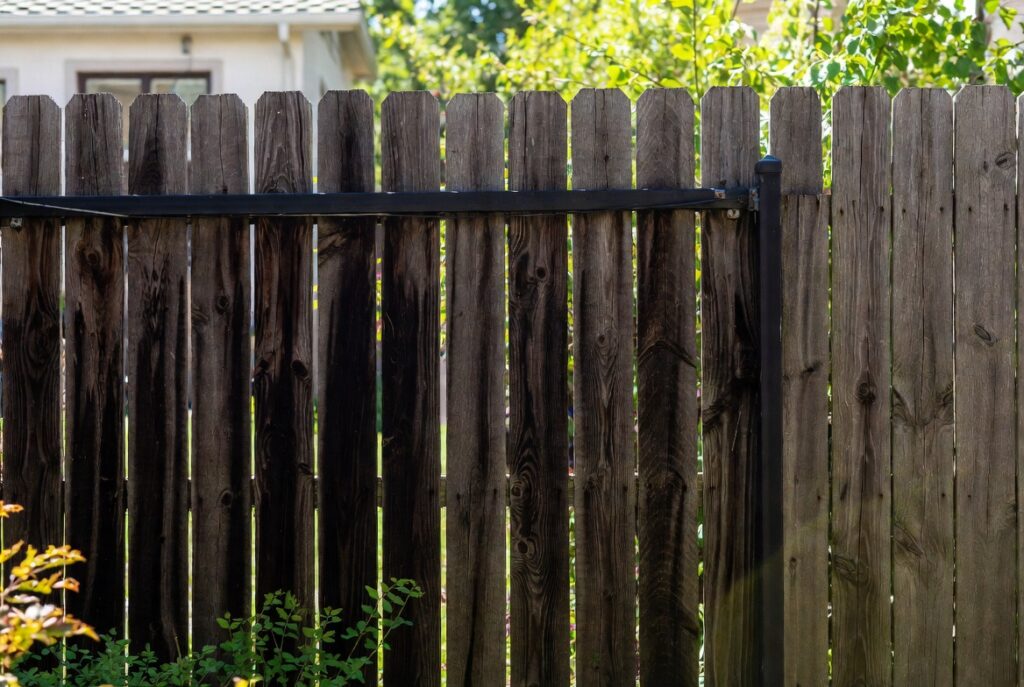
Best for: Modern homes and gardens where a bold, sophisticated fence makes a design statement
A privacy fence in deep charcoal, espresso, or near-black stain creates the strongest possible contrast backdrop for garden planting — every flower color, every leaf texture, and every garden feature reads more vividly against dark wood than against natural or light-toned timber. The dark fence recedes visually, making the garden appear more spacious while the planting appears more luminous.
Dark-stained fences also hide weathering, dirt, and wear more effectively than pale finishes — they maintain a consistent appearance between maintenance cycles better than lighter-toned timber.
Smart tip: Position the darkest stain color on the fence sections most visible from the house interior. The view of a dark fence through a large window or sliding door creates a dramatic, almost theatrical garden backdrop. Planting in front of the dark section — especially white flowers, silver foliage, or bright greens — creates a contrast that’s visible and beautiful from inside the house year-round.
Mistake to avoid: Applying dark stain in direct hot sunlight. Heat causes the stain to dry before it penetrates the wood grain properly — the result is a surface coating that peels rather than a penetrating stain that lasts. Apply all exterior stain in cooler morning or evening conditions when the timber surface temperature is below 90°F.
7. Reclaimed Wood Fence
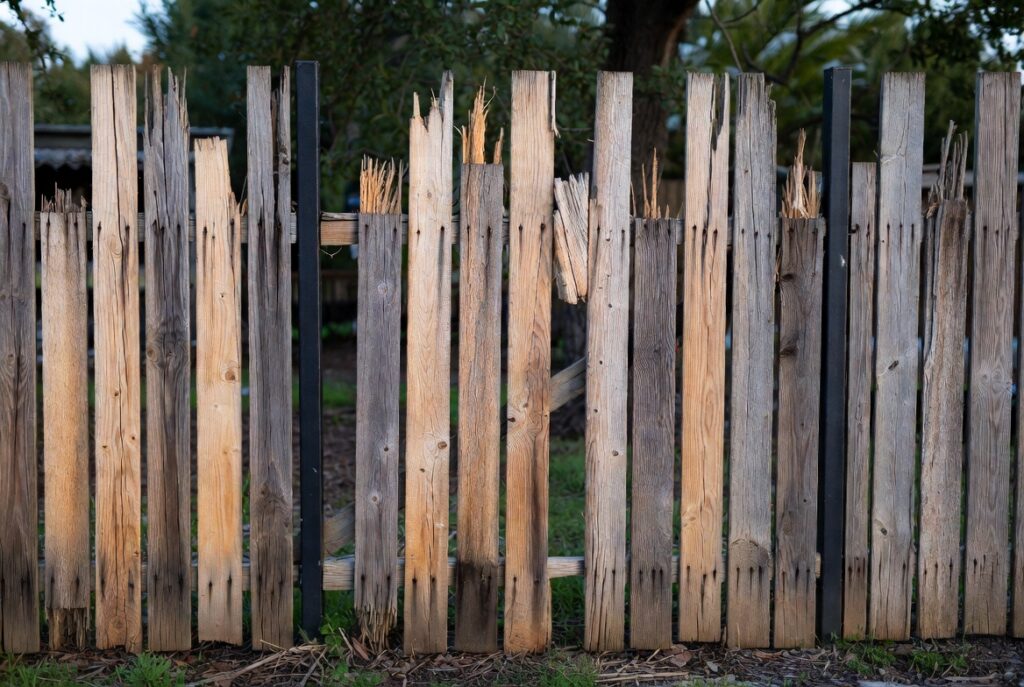
Best for: Rustic, farmhouse, and eclectic gardens — reclaimed timber brings character that no new material can replicate
A fence built from reclaimed timber — salvaged barn wood, old scaffolding boards, or demolished structural timber — has immediate character from its first day in position. The weathered surface, the nail holes, the variations in plank width and thickness, and the aged patina all contribute to a fence that looks as though it has always been there rather than recently installed.
Reclaimed fences suit informal gardens where a degree of irregularity reads as charm rather than carelessness — a perfect choice for cottage gardens, country-style properties, and any outdoor space where rustic authenticity is valued.
Smart tip: Mix board widths intentionally in a reclaimed fence rather than trying to achieve uniformity. A fence with varied plank widths — some 4 inches, some 6 inches, some 8 inches — in a semi-random pattern looks more authentically reclaimed than one with boards carefully sorted to similar sizes. The variation is part of the material’s story.
Mistake to avoid: Using reclaimed timber in structural fence posts. Posts are the most structurally critical component of any fence — they must resist significant lateral loads from wind and the weight of the fence panels. Use new pressure-treated or galvanized steel posts even when the fence panels themselves are reclaimed — the structural reliability is non-negotiable.
8. Split Rail Fence
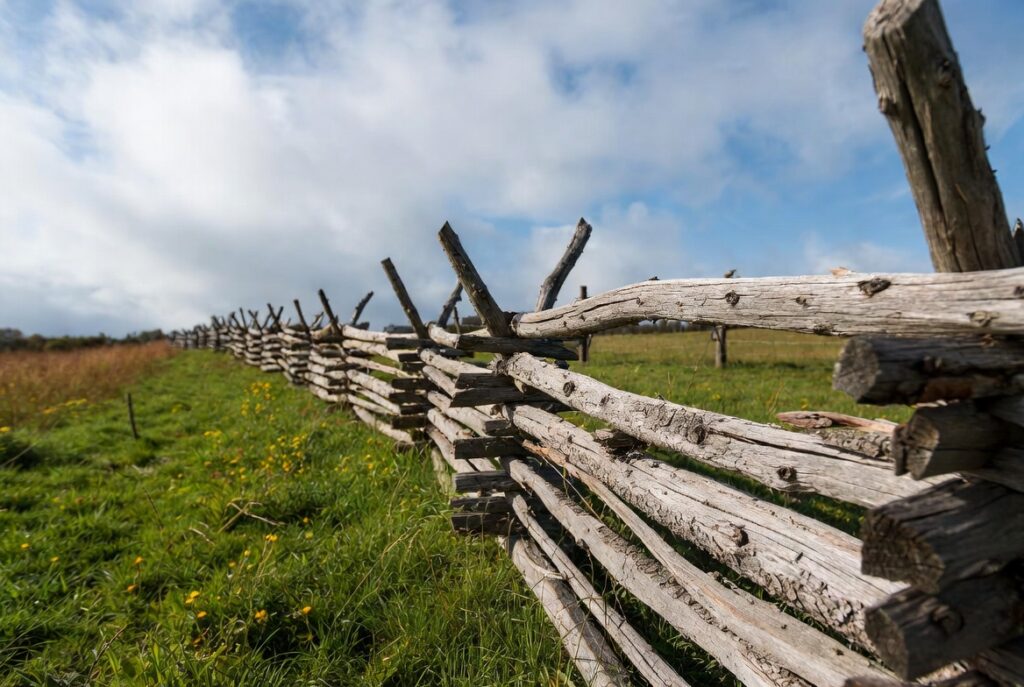
Best for: Large rural and semi-rural properties — the split rail defines boundaries without creating visual barriers
A split rail fence — two or three horizontal rails of rough-hewn timber spanning between simple posts — is the most open and informal wood fence style available. It marks a boundary clearly without blocking views, suits naturalistic landscaping, and has an authentically rural quality that suits large properties surrounded by natural landscape.
It provides no privacy and no security beyond a visual boundary marker — it’s the right choice when the goal is boundary definition rather than enclosure, and when the property’s natural setting would be diminished by a solid fence.
Smart tip: Plant along a split rail fence with native shrubs, wildflowers, or climbing roses to convert a simple boundary marker into a living garden feature. The open rail structure provides a support system for climbing and scrambling plants that fills the space between rails with seasonal color and texture.
Mistake to avoid: Using a split rail fence for any application requiring actual security or privacy. Its open construction provides neither — it’s a decorative boundary marker, not a barrier. Choosing split rail in a situation that actually requires privacy or security creates a fence that fails its primary function from the day it’s installed.
9. Wood and Metal Hybrid Fence
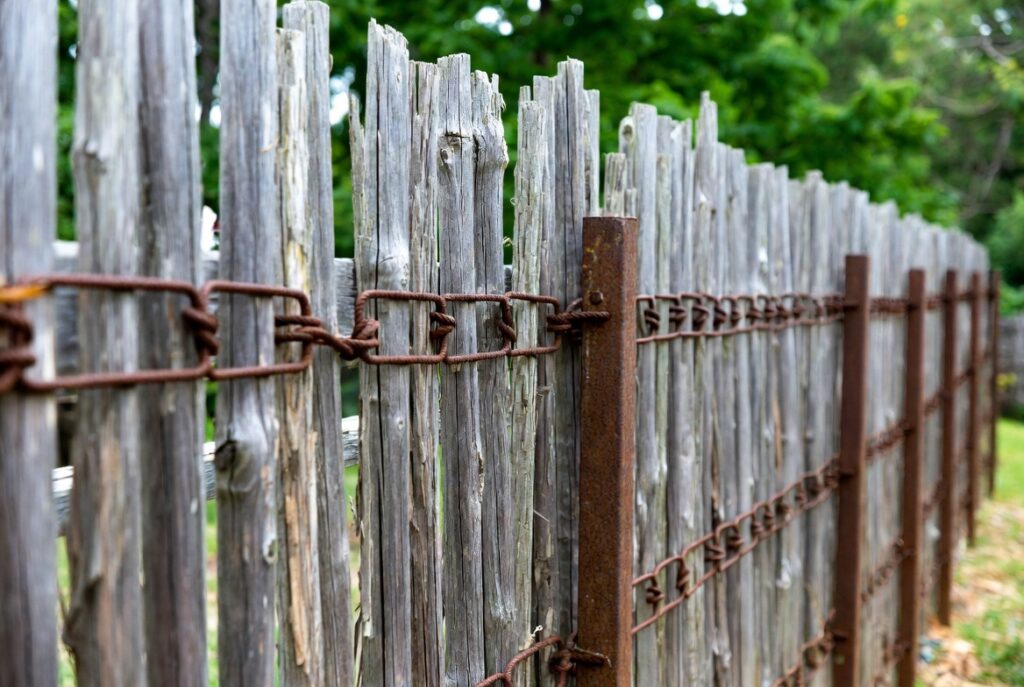
Best for: Contemporary homes wanting maximum visual impact and material sophistication
A hybrid fence combining timber panels with steel or aluminum framework — or alternating timber and metal panel sections — creates a fence with the warmth of wood and the structural authority of metal. The combination is visually distinctive, structurally superior to all-timber construction, and suits modern architectural aesthetics better than any all-wood design.
Corten steel sections combined with cedar panels create a particularly striking combination — the rust-brown patina of weathered Corten and the warm gold of cedar occupy adjacent points on the warm color spectrum that read as composed and intentional.
Smart tip: Use the metal sections of a hybrid fence at the corners and gate positions — the structurally demanding points where metal’s superior strength is most beneficial. Timber panels fill the long straight runs between metal structural elements. This approach uses each material where it performs best structurally while maximizing the visual impact of the material combination.
Mistake to avoid: Using standard mild steel rather than powder-coated, galvanized, or Corten steel for metal elements in a hybrid fence. Mild steel in outdoor conditions rusts aggressively within one to two seasons, and the rust stains adjacent timber permanently orange. Only metals specifically rated for outdoor exposure are appropriate for hybrid fence applications.
10. Fence with Integrated Planters
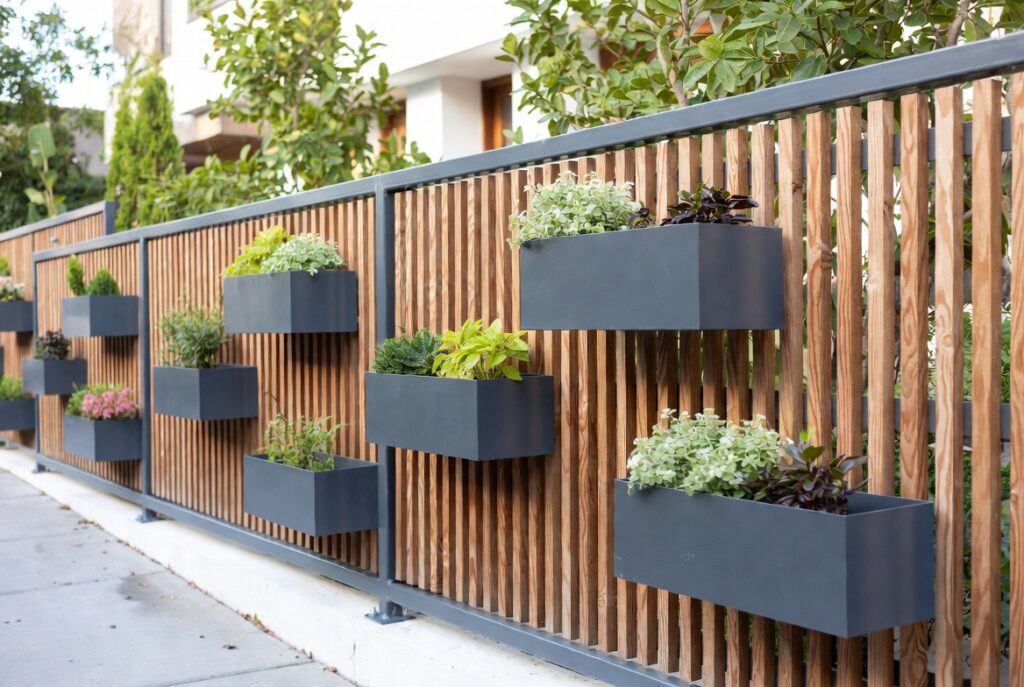
Best for: Small gardens where boundary and garden space must serve multiple functions simultaneously
A fence with planter boxes built into its structure — either attached to the fence face or incorporated into the fence’s structural design — converts a boundary element into productive garden space. The planters are visible from the yard and contribute seasonal color, fragrance, and greenery to the fence line without requiring any additional floor space.
This approach is particularly valuable in small urban gardens where every square foot of ground is needed for other purposes — the fence planting occupies vertical space that would otherwise be unused.
Smart tip: Plant the fence planters with a mix of trailing and upright plants — trailing varieties that cascade over the planter face toward the ground and upright varieties that grow above the planter rim toward the fence top. The combination creates the visual fullness of a planted fence without requiring the fence to be covered with climbing plants that take years to establish.
Mistake to avoid: Building fence planters from untreated timber without waterproofing the interior. Even cedar and pressure-treated timber deteriorates rapidly when in constant contact with wet soil from the inside. Line planter interiors with a waterproof membrane or use purpose-made planter box liners — this dramatically extends the planter’s structural life.
11. Painted Black Wood Fence
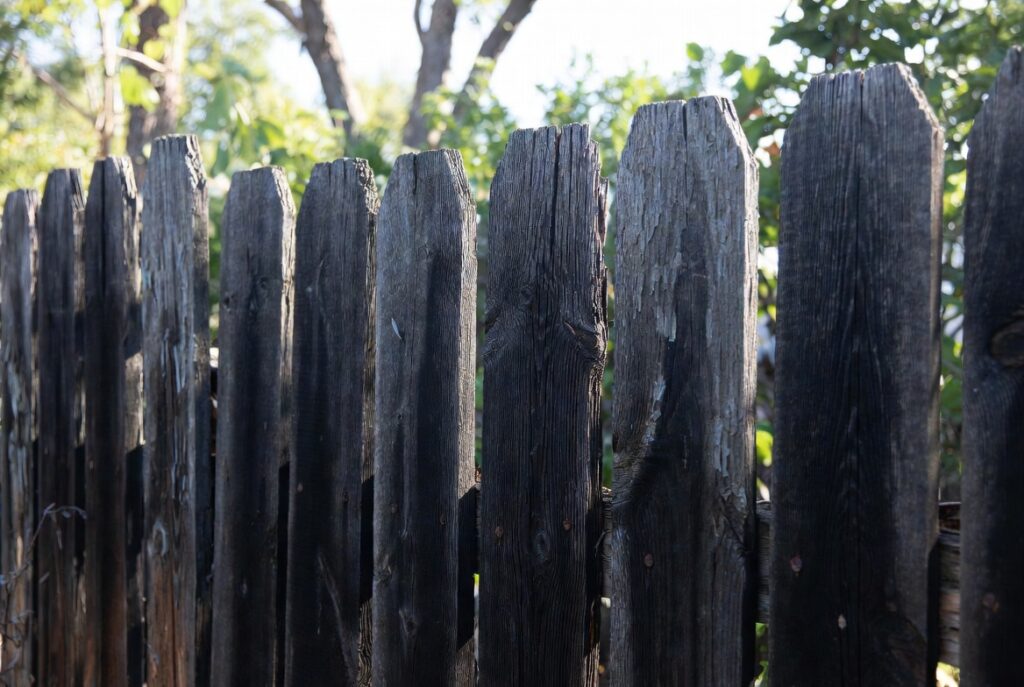
Best for: Any existing fence needing a dramatic transformation — black paint is the fastest and most cost-effective fence improvement available
Painting a timber fence black with exterior matte paint is the single most impactful fence improvement per dollar spent. The transformation from weathered grey timber to deep matte black is immediate and dramatic — the same fence that looked tired and dated before painting reads as a bold design decision afterward.
Black creates the strongest contrast with green planting — every plant in front of a black fence reads more clearly than against any other background color. For garden photography, a black fence background is essentially ideal.
Smart tip: Use exterior masonry paint rather than fence paint for a black fence in a color that needs to last. Masonry paint contains more resin binder than standard fence paint, adheres better to rough timber surfaces, and resists the UV fading and moisture cycling that causes black paint to grey and streak relatively quickly. It costs more per liter and is worth the premium.
Mistake to avoid: Painting a black fence on a surface with peeling or flaking existing paint without thorough preparation. New paint applied over failing existing paint fails at the same rate as the paint beneath it — not at its own adhesion quality. Scrape, sand, and prime any previously painted fence surface before applying the new topcoat.
12. Lattice Top Privacy Fence
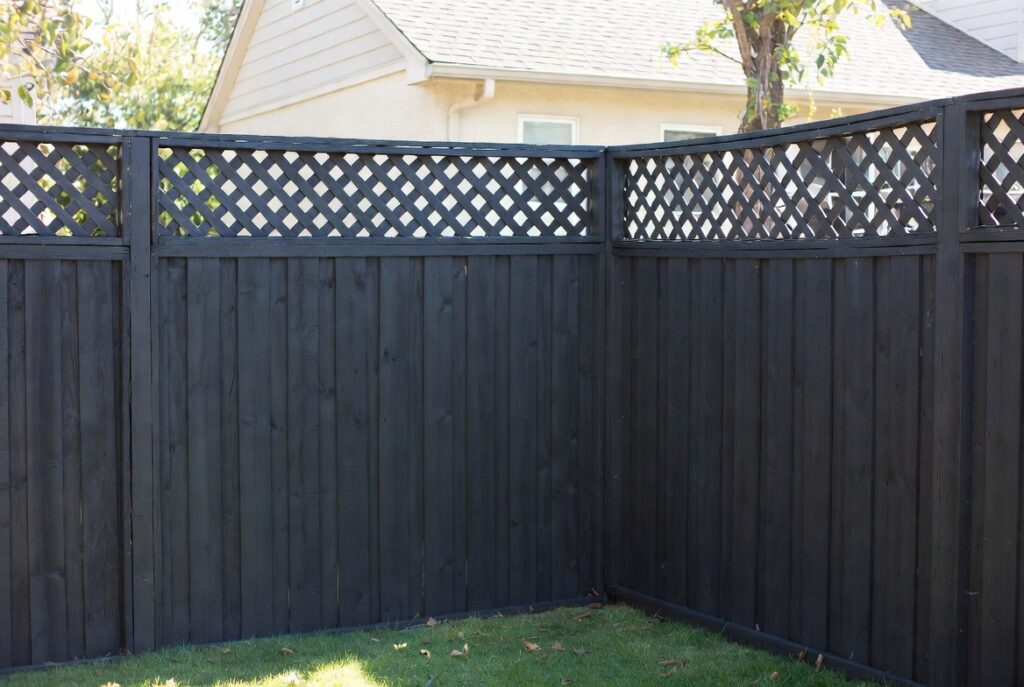
Best for: Gardens where a full privacy fence feels too enclosed — the lattice top adds height without adding oppressive solidity
A lattice top fence — a solid privacy panel at the lower section with a decorative lattice section above — provides the privacy and wind screening of a solid fence at eye level while adding height and architectural interest without the oppressive weight of a fully solid tall fence. The lattice allows light and some air through while preventing direct views into the yard from above fence height.
The lattice section also provides a support structure for climbing plants — roses, clematis, and jasmine grow through lattice beautifully, eventually covering it in seasonal growth.
Smart tip: Match the lattice size and pattern to the fence’s post and rail spacing. A lattice pattern that’s proportionally related to the fence’s structural rhythm looks designed. A mismatched lattice section — too fine or too coarse for the surrounding fence elements — looks added on rather than integrated.
Mistake to avoid: Using standard interior-grade lattice panels in an outdoor fence application. Interior lattice is manufactured from thin, unpreserved timber that deteriorates within one to two seasons in outdoor conditions. Specify exterior-grade pressure-treated or cedar lattice rated for outdoor use — the difference in lifespan justifies the premium.
13. Fence with Climbing Plants
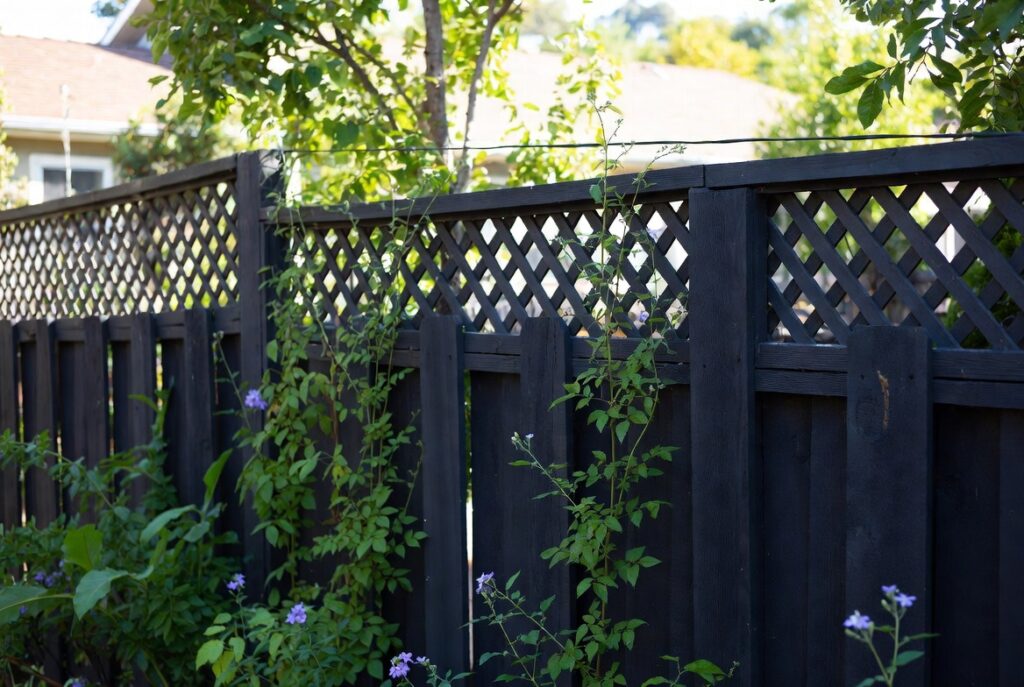
Best for: Any wood fence — climbing plants convert a boundary structure into a living garden feature
A fence covered in climbing plants becomes something that no bare fence can be — a living, seasonal element that changes with the month, attracts wildlife, and creates the layered, abundant quality of a mature garden. Roses in June, clematis in August, jasmine fragrant through summer evenings — a well-planted fence delivers experiences throughout the year that the structure alone can never provide.
The most effective approach is to choose a primary climber that covers the fence substantially, then add a secondary climbing annual for additional color in seasons when the primary plant is not in flower.
Smart tip: Plant climbers at the fence base and train them horizontally along the fence rails before allowing them to grow vertically. Horizontal training encourages more lateral branching and more flower production — a climbing rose trained horizontally along a fence rail produces significantly more flowers than one allowed to grow straight up. This technique is standard in walled garden management for exactly this reason.
Mistake to avoid: Planting vigorous climbers like wisteria against a timber fence without considering the structural implications. Mature wisteria generates sufficient force to damage fence panels and lift fence posts out of the ground. Reserve wisteria for masonry walls and robust steel structures — use less aggressive climbers like roses, clematis, and jasmine for timber fence planting.
14. Fence with Built-In Lighting
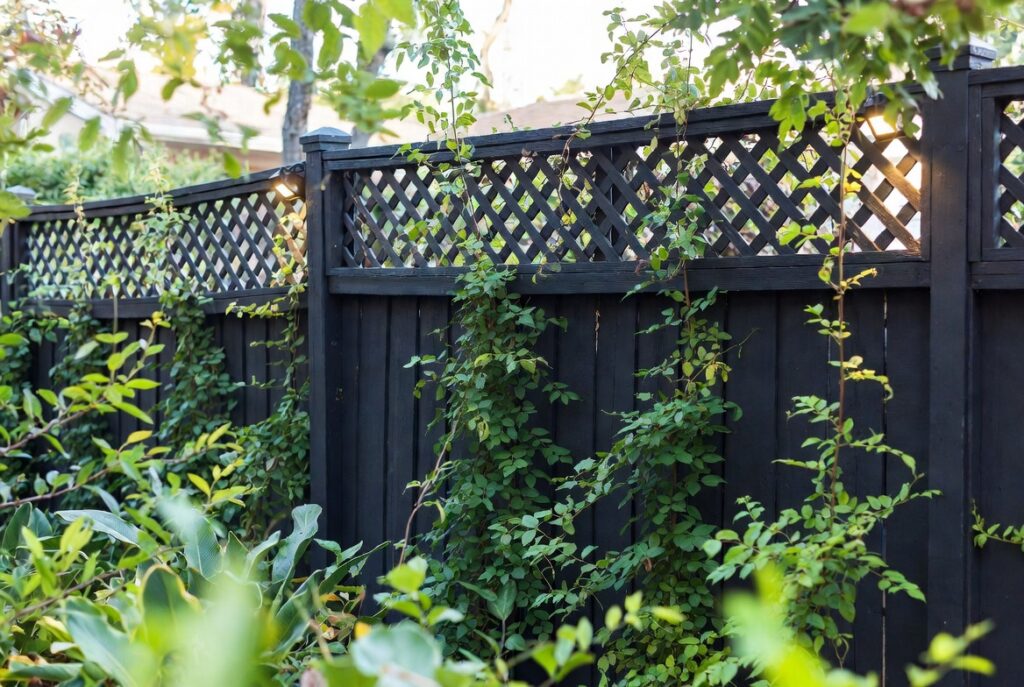
Best for: Any garden used in the evening — fence lighting transforms the nighttime garden completely
Fence-mounted lighting — low-voltage LED fixtures mounted on post caps, recessed into fence rails, or attached to the fence face — creates a completely different garden atmosphere after dark. The lit fence defines the garden boundary, creates ambient light for outdoor use, and makes the fence itself a visual element that contributes to the evening garden rather than disappearing into shadow.
Modern outdoor LED fence lights are weatherproof, energy-efficient, available in warm white tones that suit timber warmly, and can be connected to smart home systems for timer and dimmer control.
Smart tip: Mount fence lights on post tops rather than on the fence face for the most attractive light distribution. Post cap lights cast light downward and outward — illuminating both the garden and the fence line — without the direct glare that face-mounted fixtures can create when viewed from seating level.
Mistake to avoid: Using high-intensity lights on a garden fence. Garden fence lighting should be atmospheric rather than functional — enough to see by and enough to create ambience, not enough to illuminate the space as brightly as a car park. Overlit garden fences lose their atmospheric quality and create glare that makes the outdoor space less pleasant to use.
15. Sloped Yard Wood Fence
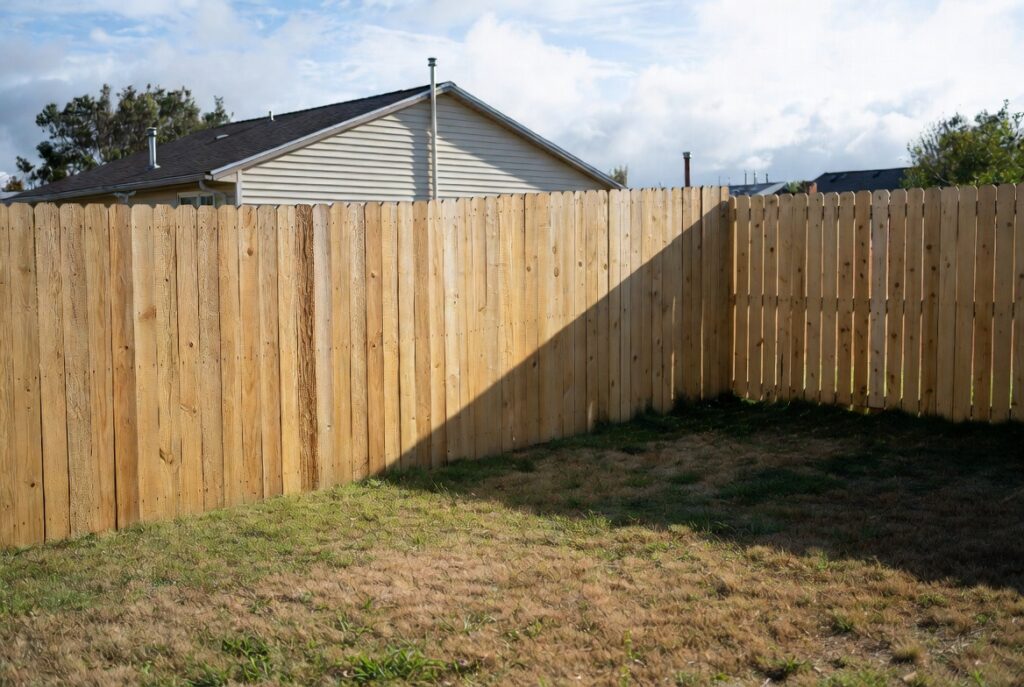
Best for: Properties on grades — any yard with significant slope requires specific fence construction approaches
A fence on a sloped yard requires one of two construction approaches: stepping (the fence follows the slope in discrete level sections, creating a staircase profile when viewed from the side) or raking (the fence follows the slope continuously, with all elements angled to match the grade). Each approach suits different fence styles and different slope gradients.
Stepping suits picket fences and horizontal slat fences — styles where the visual rhythm of the boards is horizontal and a continuous rake would fight that rhythm. Raking suits vertical board styles where the boards naturally align with the fence’s overall angle.
Smart tip: Use the stepping approach for slopes under 1 in 4 gradient and the raking approach for steeper slopes. On gentle slopes, the steps are modest and the fence looks intentional. On steep slopes, very large steps create awkward gaps at the base of each panel — raking accommodates steep grades more naturally for most fence styles.
Mistake to avoid: Leaving large gaps beneath stepped fence panels on a slope without addressing them. The gap between the bottom of a stepped panel and the sloped ground below creates a visual discontinuity and a practical opening that undermines privacy and security. Fill gaps with gravel, planting, or additional timber to complete the fence line along the slope.
16. Vertical Garden Fence
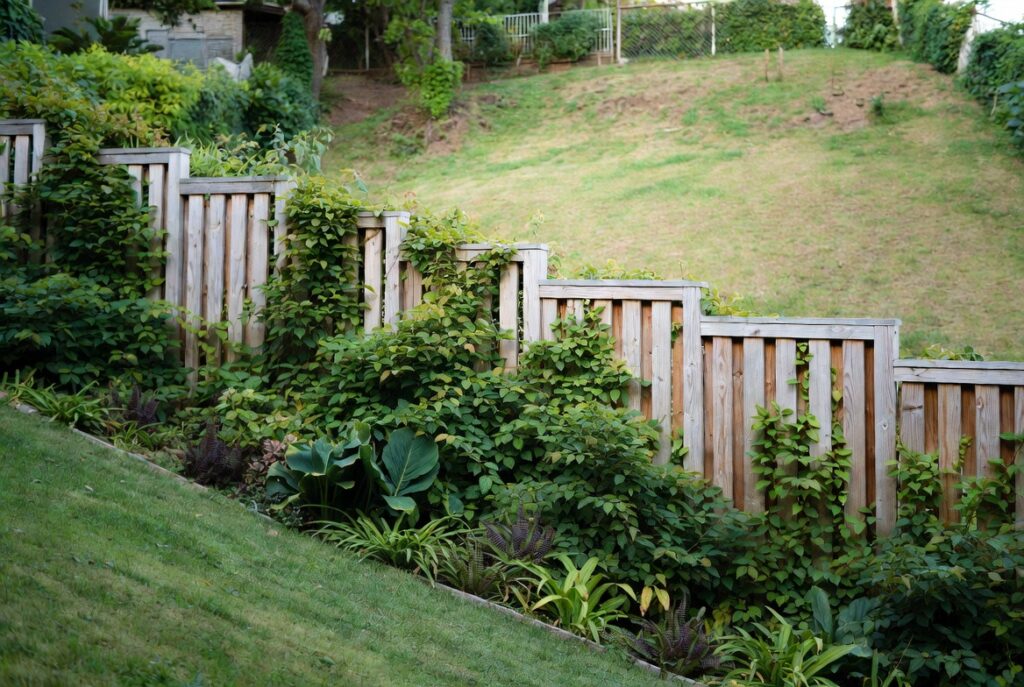
Best for: Small gardens where every vertical surface should contribute productive or decorative planting
A vertical garden fence — with wall-mounted planters, pocket systems, or modular growing panels attached to the fence face — converts a boundary structure into growing space. Herbs, trailing flowers, ferns, and succulents all work well in vertical fence gardens, creating a living wall of considerable visual impact.
This approach is particularly effective in urban gardens where ground space is limited and the fence represents the largest available planting surface after the ground itself.
Smart tip: Install a drip irrigation system in the vertical fence planting rather than relying on hand watering. Vertical planters dry out significantly faster than ground-level containers — the combination of gravity and wind exposure accelerates moisture loss. A simple drip system connected to a timer ensures consistent watering without daily attention.
Mistake to avoid: Overloading a timber fence with heavy planter systems without reinforcing the fence structure. Standard fence construction is designed to resist wind loads — not the combined weight of multiple planters filled with wet growing medium. Assess the fence’s structural capacity and reinforce posts and rails before adding substantial planter weight to any fence section.
17. Weathered Gray Fence
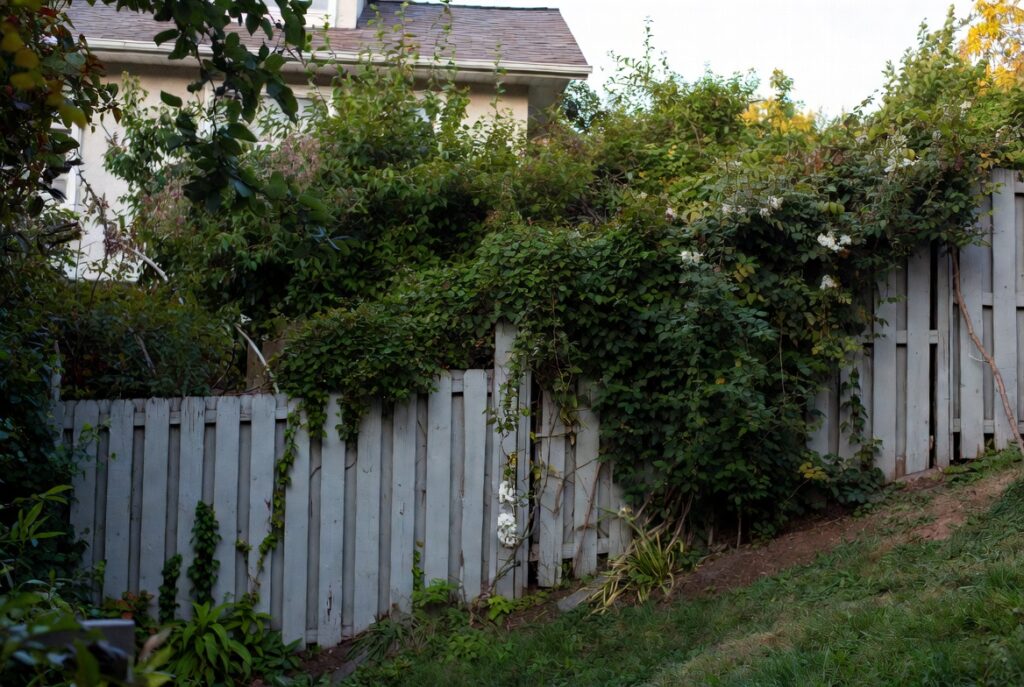
Best for: Coastal, Scandinavian, and naturalistic garden styles — the silver-grey patina suits these aesthetics perfectly
Cedar and certain other timber species weather naturally to a beautiful silver-grey when left untreated in outdoor conditions. This weathered grey tone has the quality of driftwood and aged coastal timber — relaxed, natural, and genuinely beautiful in garden settings where the organic quality of aged materials is valued.
Rather than fighting the natural weathering process with annual staining and maintenance, allowing cedar to weather to its natural grey requires no maintenance at all beyond occasional pressure washing to keep the surface clean.
Smart tip: Accelerate cedar’s weathering to the silver-grey tone by applying a diluted solution of iron acetate (steel wool dissolved in white vinegar) to the fence surface. This treatment rapidly develops the silver-grey patina that would take several years of natural weathering, creating the aged appearance from the first season.
Mistake to avoid: Confusing intentional weathered-grey cedar with neglected untreated pine. Pine weathers to an unattractive dark grey-brown with black mold staining — the weathered appearance is deterioration rather than patina. Cedar’s natural weathering to silver-grey is a genuine material quality. The distinction is species-specific: cedar weathers beautifully, most other timber species do not.
18. Scalloped Top Wood Fence
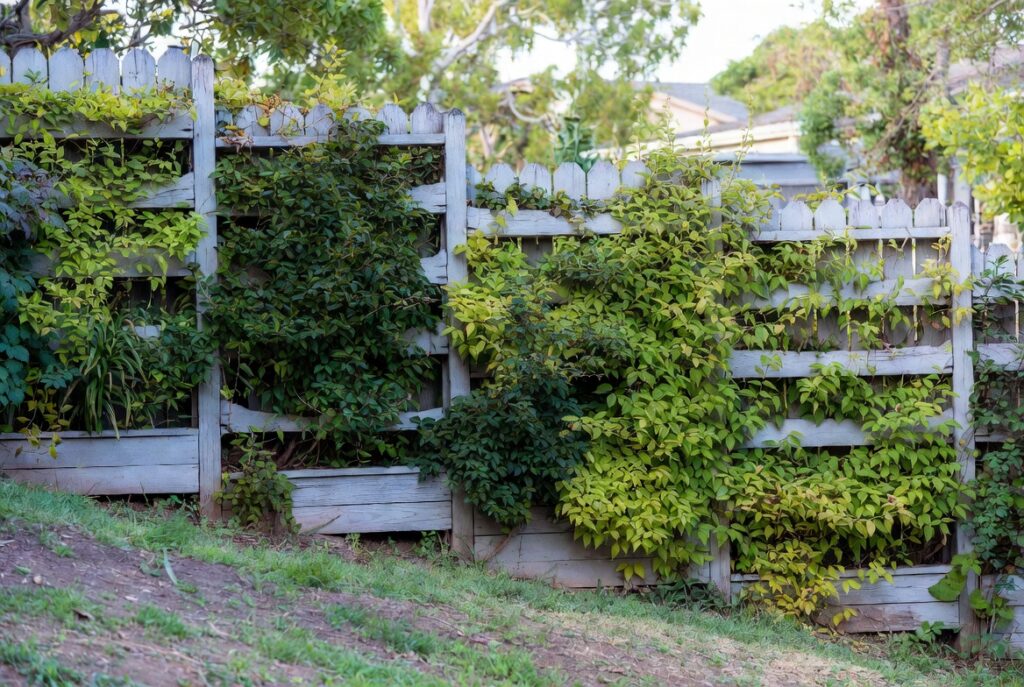
Best for: Traditional, Victorian, and decorative garden styles — the scalloped profile adds architectural interest to a standard privacy fence
A scalloped top fence — where the top profile of each fence panel follows a gentle concave curve between posts rather than running in a straight horizontal line — adds decorative character to the most functional of fence types without any structural complexity. The curved profile is achieved simply by cutting the top of each fence panel to the scalloped shape before installation.
The scalloped profile softens the fence’s appearance, references traditional garden wall design, and creates a visually dynamic fence line that suits cottage and traditional garden styles particularly well.
Smart tip: Keep the scallop’s curve relatively shallow — a rise of 4 to 6 inches from the lowest point of the curve to the post height provides adequate decorative effect without making the fence appear overworked. Deeper scallops that drop significantly between posts can make the fence look structurally inadequate or damaged from a distance.
Mistake to avoid: Attempting a scalloped cut without a template. Freehand scallop cuts produce inconsistent curves that look irregular and unplanned rather than decorative. Make a cardboard template of the exact scallop profile, use it consistently on every panel, and the resulting uniformity is what makes the decorative detail read as intentional.
19. Custom Gate and Fence Combination
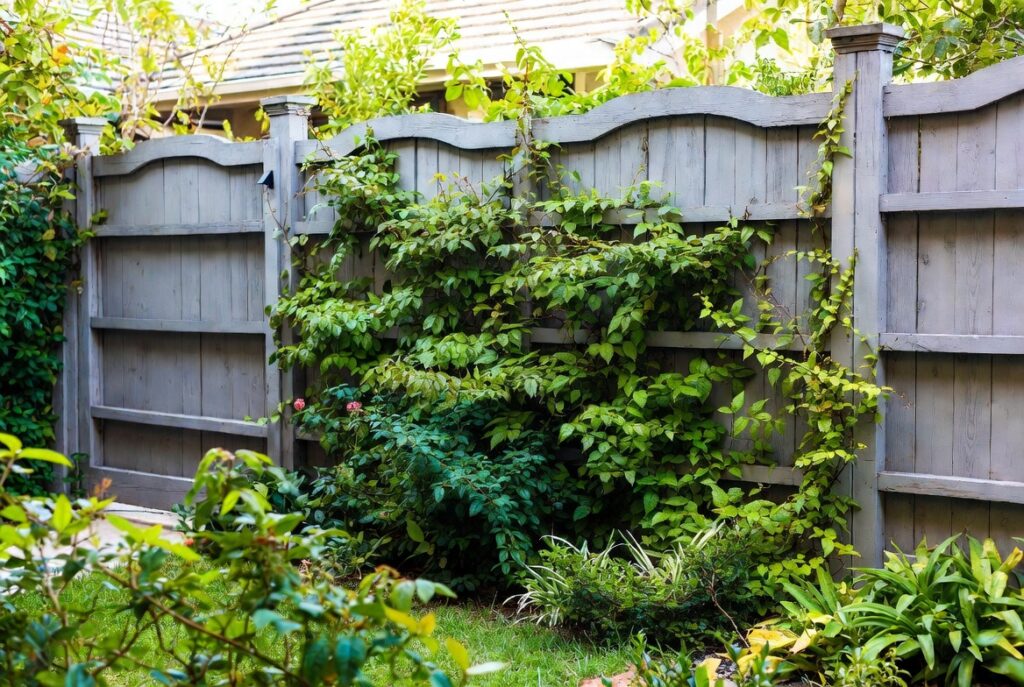
Best for: Any property where the fence entrance is a key design element — a custom gate elevates the entire fence investment
A fence without a well-designed gate is incomplete — the gate is the first element a visitor interacts with, the point of transition between public and private space, and the most visible single element of the fence from the street. A custom gate that matches the fence style in material and construction quality while adding design detail makes the whole fence feel considered and finished.
A custom gate can incorporate design elements absent from the fence itself — carved details, inset metalwork, a decorative arch, or integrated lighting — that make the entrance a genuine feature rather than simply a functional opening.
Smart tip: Hang the gate to swing inward (into the property) rather than outward toward the street. An inward-swinging gate requires visitors to step back rather than toward the property to open it — a subtle but consistent security and comfort advantage. It also prevents the gate from swinging open into foot traffic on the public path.
Mistake to avoid: Using the same hinge weight for a gate as for a standard door. Garden gates — especially wide or tall ones — are significantly heavier than interior doors and are exposed to wind loading that interior doors never experience. Use heavy-duty strap hinges or purpose-made gate hinges rated for the gate’s actual weight, with three hinges on gates over 5 feet tall.
20. How to Choose and Maintain a Wood Fence
Best for: Anyone planning a new fence or maintaining an existing one — the right decisions upfront prevent the most common and costly problems
Choosing the right wood fence involves three decisions that determine everything that follows: the right timber species for the application, the right height for the intended function, and the right construction quality for the expected lifespan.
Timber species determines natural lifespan. Cedar and redwood contain natural rot-resistant oils and provide 15 to 25 years in outdoor conditions without chemical treatment — the right choice for food gardens, children’s play areas, and anywhere chemical preservatives are undesirable. Pressure-treated pine provides 20 to 30 years in ground contact at lower cost but with chemical treatment that makes it less appropriate for some applications. Composite timber provides 30 to 50 years with minimal maintenance at higher upfront cost.
Height determines function. A 4-foot fence provides visual boundary definition and some privacy for seated adults. A 6-foot fence provides standing privacy for most adults. An 8-foot fence provides complete privacy from two-story neighboring properties. Check local regulations — most jurisdictions have maximum fence height rules for front yards (typically 4 feet) and back yards (typically 6 to 8 feet).
Smart tip: Treat fence posts at the ground contact zone specifically, regardless of the post treatment rating. The ground line — where the post transitions from soil to air — is the most vulnerable rot initiation point on any timber fence post. Apply additional penetrating timber preservative at this zone during installation and reseal it every five years. This single maintenance step more than doubles fence post lifespan.
Mistake to avoid: Skipping the concrete footings for fence posts to save time and money. Fence posts set in soil without concrete footings move with frost heave in cold climates, sink in wet soil conditions, and lean progressively under wind load. The concrete footings represent 20 to 30 percent of a fence installation’s labor cost and 100 percent of its structural stability — they’re not optional.
Before You Start
- Check local regulations and HOA rules. Most municipalities have fence height limits, setback requirements from property lines, and permit thresholds for fences over a certain height. Check before purchasing materials.
- Locate underground services. Fence post installation requires digging — underground electrical, gas, and water services must be located before any excavation. Call 811 (in the US) to have utilities marked before digging.
- Survey the property line. Fences built on the wrong side of the property line create legal disputes and potentially require costly removal and rebuilding. Verify the property boundary before installation.
- Choose the right height for the function. A fence built for privacy that’s one foot too short fails its primary purpose. Assess the actual viewing angles from neighboring properties before deciding on height.
Conclusion
A well-chosen and well-built wood fence improves a property in ways that are immediately visible and permanently valuable. It creates the outdoor privacy that makes a garden genuinely usable, provides the backdrop that makes garden planting more beautiful, and contributes significantly to curb appeal and property value. Build it on proper footings, use species appropriate to the application, and maintain it consistently — and a wood fence will serve the property as well at year twenty as it did at year one.
