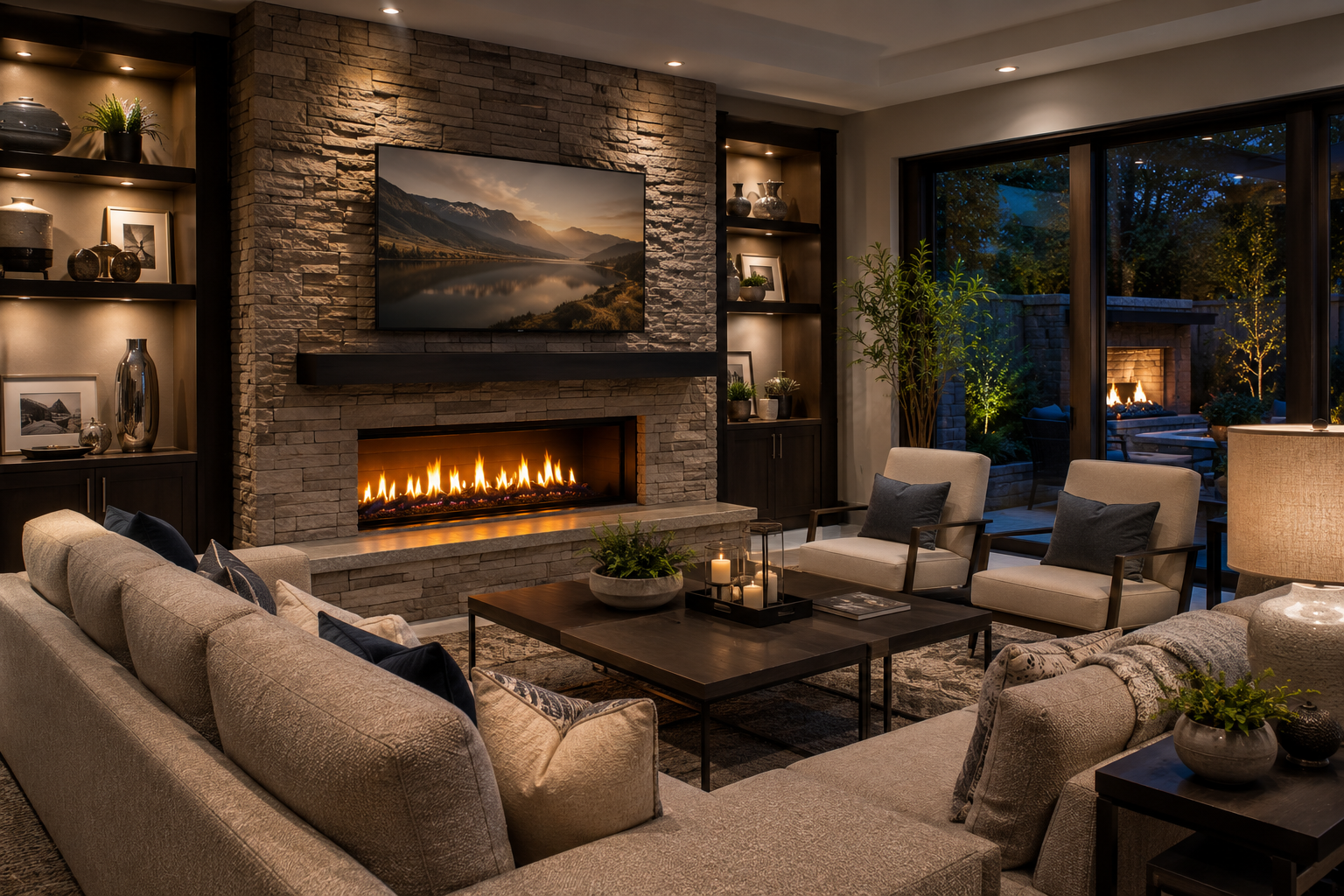
A fireplace changes a room in a way that no other single element can. It creates a focal point that every other piece of furniture orients toward, a source of warmth that changes how people feel in the space, and a visual anchor that gives the room genuine character. Whether it burns wood, gas, or electricity — whether it’s built into a stone wall or sits flush in a modern plaster surround — a well-chosen hearth elevates every room it occupies.
These 20 ideas cover every style, every budget, and every room — from a dramatic floor-to-ceiling stone statement to a simple electric fireplace that transforms an apartment living room overnight.
1. Floor-to-Ceiling Stone Hearth
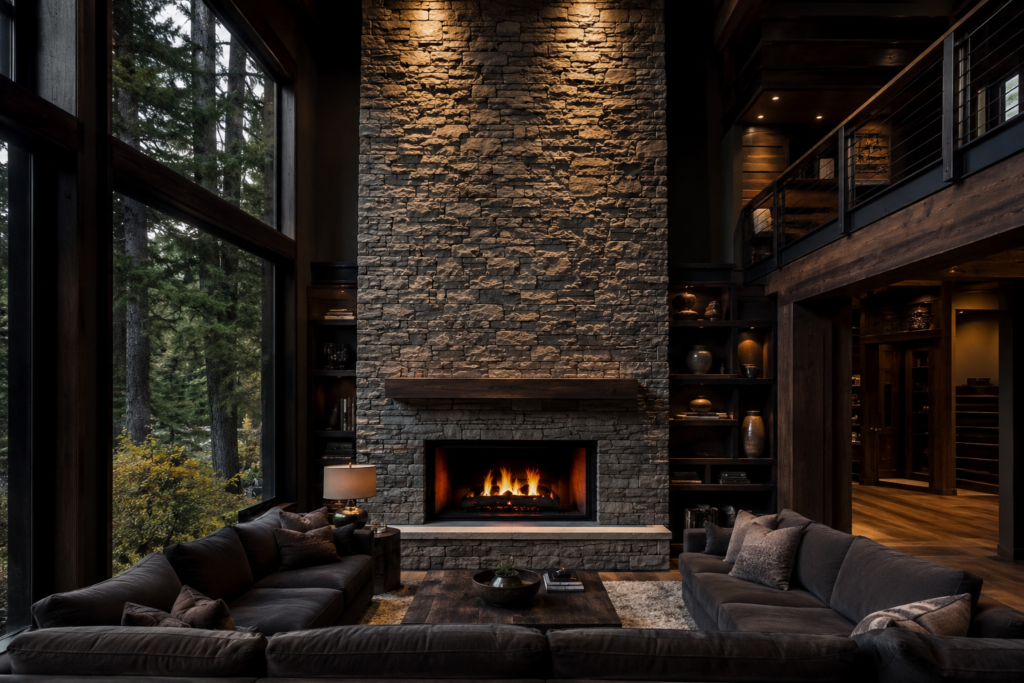
Best for: Large living rooms, great rooms, and open-plan spaces where a dramatic architectural statement is the design priority
A floor-to-ceiling stone fireplace is the most powerful single architectural element available in residential interior design. The vertical scale commands the room from every position within it, the natural texture of the stone creates warmth and depth that no painted surface achieves, and the visual weight anchors an otherwise open space with genuine permanence.
Stacked stone in grey, tan, or brown tones suits rustic, farmhouse, and transitional aesthetics. Smooth-cut limestone or travertine panels create a more refined, contemporary version of the same floor-to-ceiling impact.
Smart tip: Extend the stone horizontally as well as vertically — wrapping it to the edges of the wall rather than stopping at a defined border creates an even more architectural, immersive effect. The stone becomes the wall rather than a feature on the wall.
Mistake to avoid: Using stone that’s too dark for the room’s available light. A dark grey or charcoal stone fireplace in a room with limited natural light absorbs what little light is available and can make the space feel oppressive. In lower-light rooms, choose lighter stone tones — cream, warm beige, or pale grey — that reflect rather than absorb available light.
2. Sleek Linear Gas Mantel Design
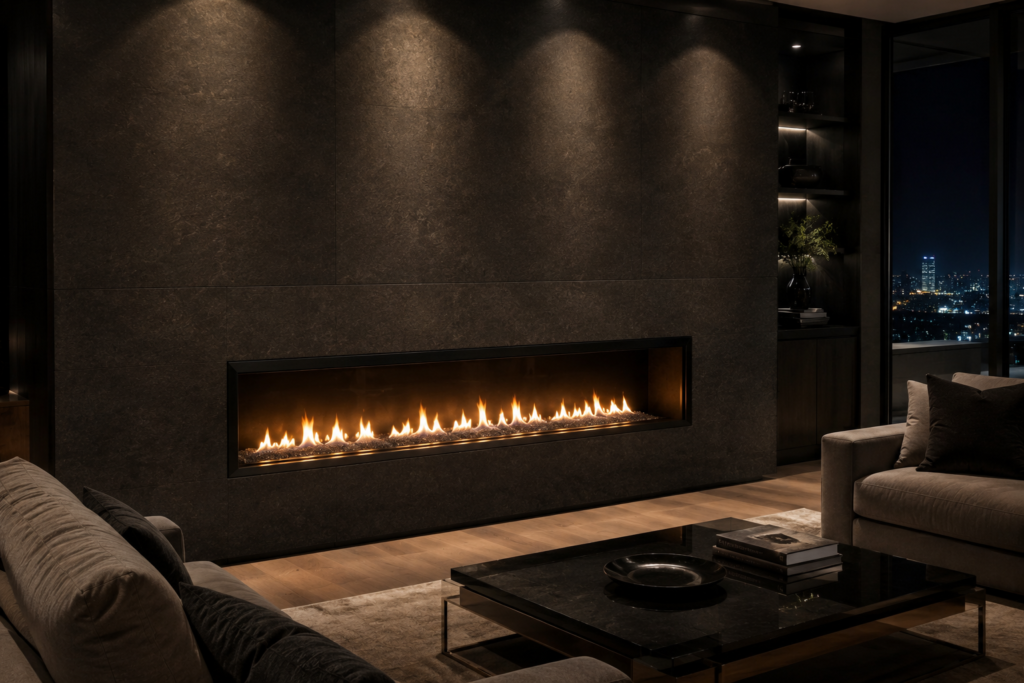
Best for: Contemporary and modern interiors — the most popular fireplace style of the current decade
A linear gas fireplace — a long, horizontal ribbon of flame set behind glass, typically built into the wall flush with the surrounding surface — is the defining wood stove aesthetic of contemporary residential design. Its clean horizontal line, absence of visible surround, and precise controllable flame create a sleek, architectural quality that suits the minimal, uncluttered aesthetic of modern interiors.
Linear fireplaces range from 36 inches to over 120 inches wide — the wider the unit, the more dramatic and hotel-lobby-like the effect in a large living room.
Smart tip: Choose a linear fireplace with colored flame or ember bed options. Many contemporary linear mantel setups offer flame color adjustment — from the standard orange to blue or violet — that allows the visual effect to be tuned to the room’s lighting and mood. The blue flame in particular creates an almost ethereal, contemporary quality unlike any traditional fireplace.
Mistake to avoid: Installing a linear gas fireplace without professional gas line assessment. Linear gas heating features require a dedicated gas supply line with specific pressure requirements and a carbon monoxide detection system. Never attempt a DIY gas line installation — professional installation by a licensed gas fitter is non-negotiable for safety and insurance validity.
3. Classic Brick Wood Stove
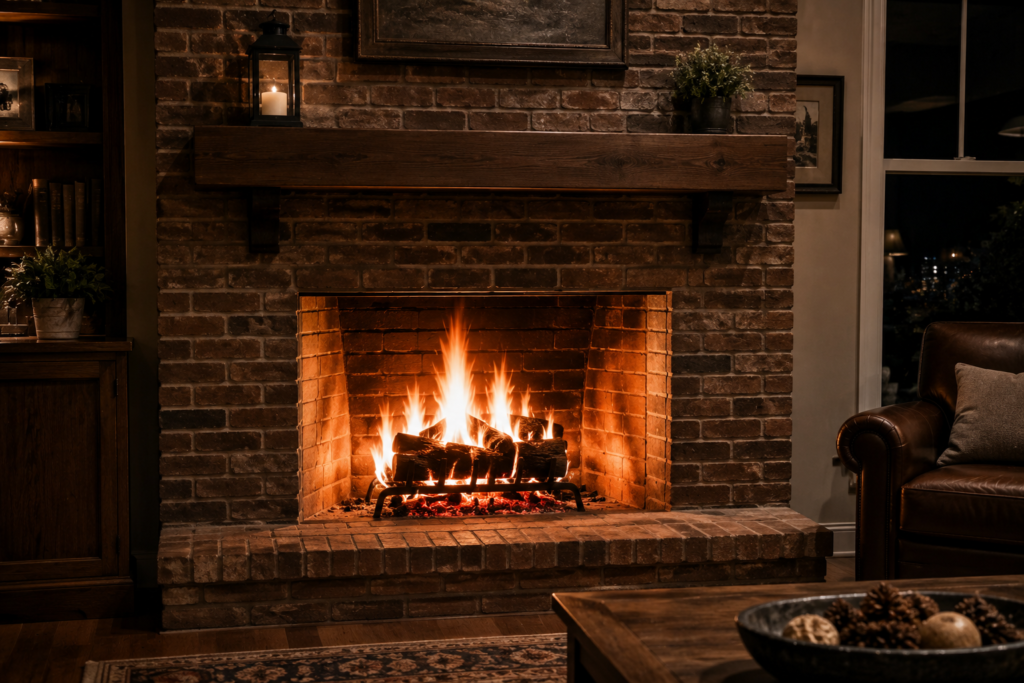
Best for: Traditional, colonial, farmhouse, and transitional homes — the most authentic and time-tested fireplace aesthetic
A brick fireplace has the quality that no other material can manufacture: genuine age. Even a recently built brick fire feature carries associations of warmth, domesticity, and permanence that newer materials imitate but never quite replicate. The variation of individual brick colors, the texture of the mortar joints, and the way the brick darkens with use all contribute to a character that improves over time rather than diminishing.
Red brick suits traditional and farmhouse aesthetics. Painted white brick creates a fresher, more contemporary take on the classic form. Buff or pale grey brick suits transitional and coastal interiors.
Smart tip: Clean and re-point aging brick fireplaces rather than covering or replacing them. A brick hearth with fresh white mortar joints and a thorough cleaning looks dramatically better than the same fireplace neglected — and the restoration cost is a fraction of replacement. Original brick wood stoves have a quality of authenticity that new installations simply can’t replicate.
Mistake to avoid: Painting brick without understanding that the process is essentially irreversible. Paint penetrates brick’s porous surface and bonds permanently — removing it later requires aggressive grinding or sandblasting that damages the brick face. Make the decision to paint with full knowledge that it’s a permanent change, not a reversible one.
Loving These Ideas? Get the Step-by-Step Guide
Grab the full 5-day eBook and turn these ideas into a finished room.




4. Built-In Cozy Feature with Shelving
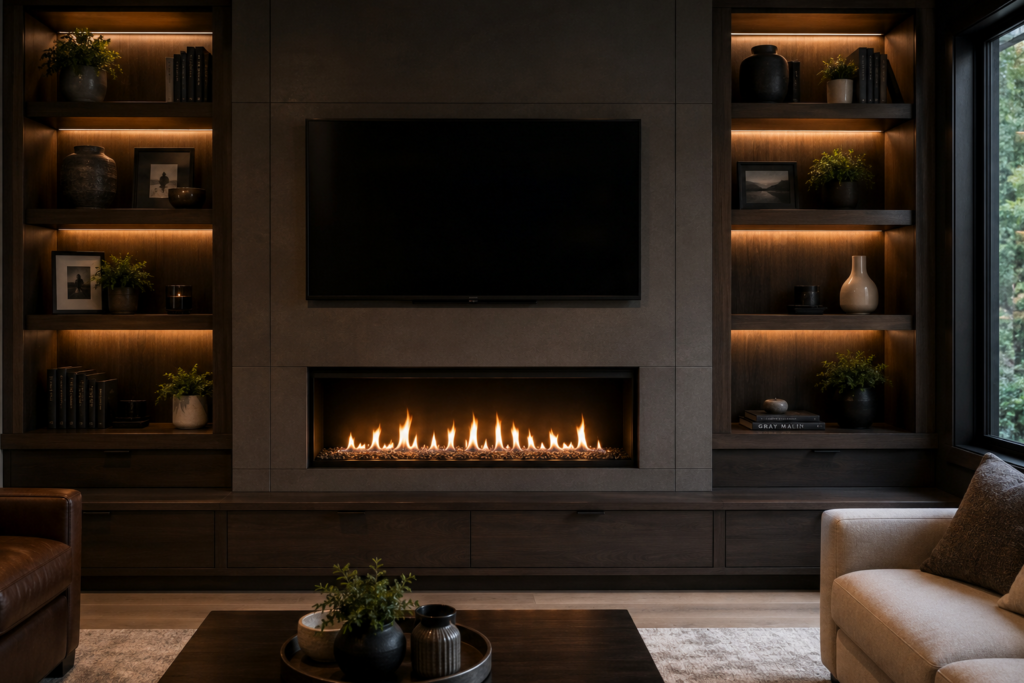
Best for: Living rooms where storage and display space are as important as the fireplace itself
A fireplace flanked by built-in shelving — bookcases, display cabinets, or a combination of open and closed storage extending to ceiling height on both sides — creates the most functional mantel setup arrangement available. The built-ins provide the books, objects, and displays that give the room personality while the fireplace provides the focal point that anchors the entire composition.
This symmetrical arrangement — equal shelving on both sides of a central fireplace — is one of the most classically balanced and most satisfying compositions in interior design. It works in traditional, transitional, and contemporary versions depending on the material and finish choices.
Smart tip: Paint the built-in shelving and the fireplace surround in the same color for a cohesive, architectural effect. When the shelving and heating feature read as a single continuous installation rather than separate elements, the composition looks custom-built and considered. A contrasting color on the back wall of each shelf section adds depth without disrupting this unity.
Mistake to avoid: Building shelving that’s too shallow for practical book storage. Shelves less than 10 inches deep can’t accommodate standard hardcover books — and a bookcase that’s filled with books turned sideways or stacked horizontally because they don’t fit properly looks poor regardless of how beautiful the fireplace beside it is. Build shelves at least 12 inches deep from the front edge.
5. Marble Surround Heating Focal Point
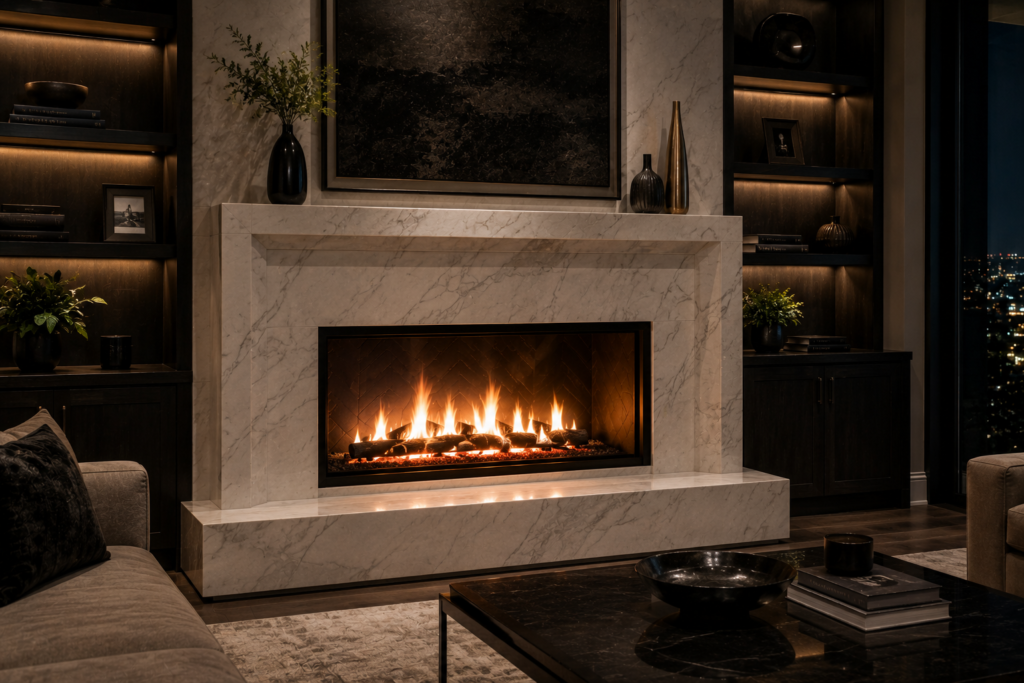
Best for: Formal living rooms, master bedrooms, and any space where a luxury material statement suits the interior
A marble fireplace surround — whether a classical carved white Carrara surround or a contemporary slab of dramatic Nero Marquina — is the most visually luxurious fire feature finish available. Marble’s depth of patterning, its slight translucency in direct light, and its association with historical grandeur all contribute to a fireplace that reads as a genuine luxury object rather than a functional installation.
The choice of marble significantly determines the aesthetic: white Carrara with grey veining suits classical and transitional interiors; pure white Statuario creates a crisp, contemporary luxury; black marble with gold veining creates the most dramatic, opulent effect available.
Smart tip: Use the same marble on the hearth as on the surround for a cohesive, custom-made quality. A marble surround with a contrasting hearth material — a different stone, ceramic tile, or slate — can look assembled from separate elements rather than designed as a whole. Matching surround and hearth creates the refined, considered quality that makes a marble fireplace feel genuinely luxurious.
Mistake to avoid: Using polished marble on the hearth surface. Polished marble is extraordinarily slippery when wet and becomes dangerously so near a fireplace where ash, water from cleaning, and foot traffic combine. Specify honed (matte) marble for any hearth hearth surface — it provides the same beautiful material with a safe, non-slip texture.
6. Corner Fireplace
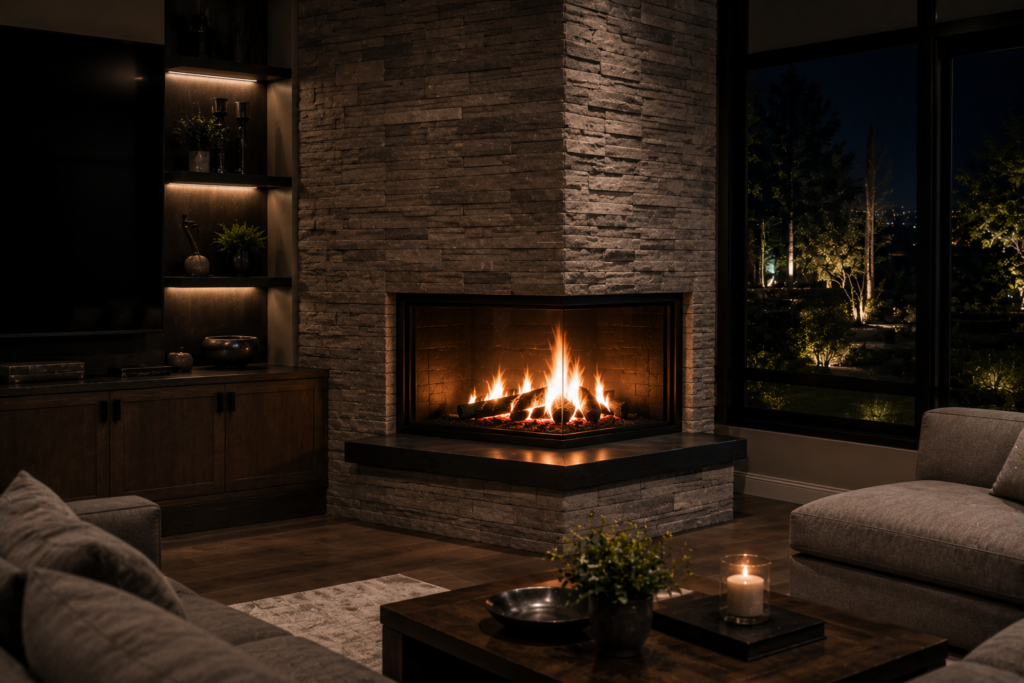
Best for: Rooms where the main walls are occupied by windows or doors — a corner fireplace uses space that’s otherwise architecturally dead
A corner fireplace — positioned diagonally across a room corner rather than centered on a wall — solves the wood stove placement problem in rooms where no wall is suitable for a traditional centered installation. The angled placement also creates a natural seating arrangement in front of it, with furniture arranged to face the corner in a V-shape that’s often more intimate and socially comfortable than furniture facing a flat wall.
Corner fireplaces suit rooms of any size — in small rooms, the corner placement leaves more wall space for furniture; in large rooms, the angled position creates a focal zone within a larger space.
Smart tip: Use the triangular alcove created on each side of a corner fireplace for built-in storage or display. The natural recesses on both sides of the angled mantel setup are ideal for log storage in a wood-burning installation, or for display shelving in any fireplace type. The corner placement creates these useful spaces automatically — incorporating them deliberately converts a spatial limitation into a design advantage.
Mistake to avoid: Ignoring the diagonal sightline that a corner fireplace creates. A corner heating feature is visible from more positions within a room than a wall-centered one — the angled installation can be seen from most seating arrangements and from the room’s entrance. This means the fireplace surround and mantel styling need to look good from multiple angles rather than from a single frontal view.
7. Double-Sided Fireplace
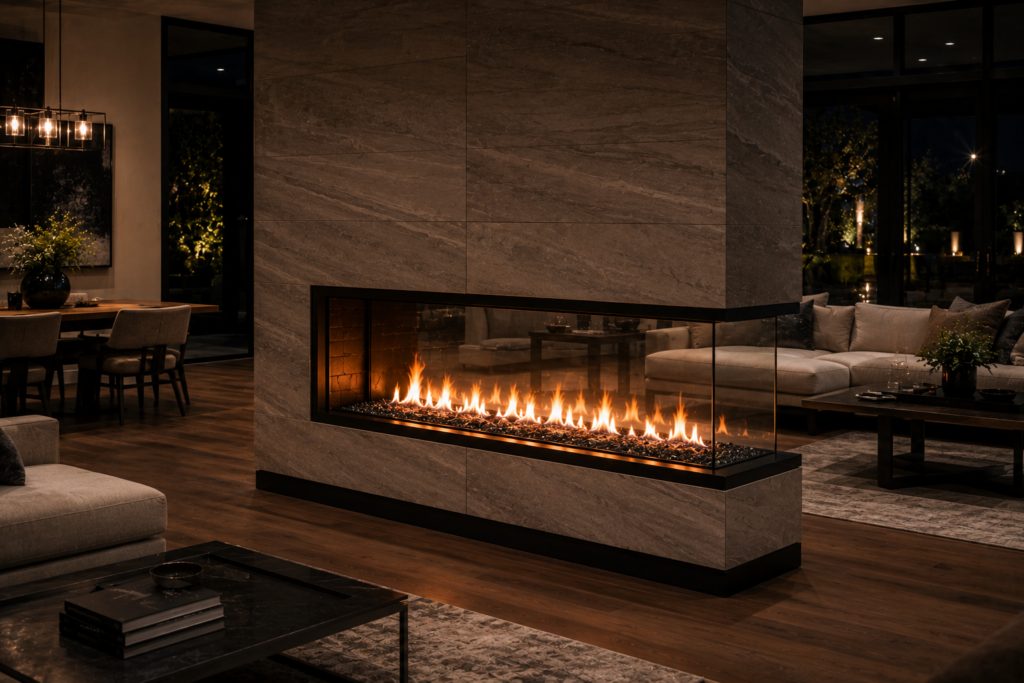
Best for: Open-plan homes where two adjacent spaces can share a single fireplace installation
A double-sided fireplace — visible from both sides, typically separating two rooms or zones — creates a dramatic visual connection between spaces while providing warmth and atmosphere to two areas simultaneously. It’s the most efficient fire feature installation in terms of visual impact per installation cost, and its transparency creates a depth and layering quality in the room that no solid wall can achieve.
The most common double-sided configurations: living room to dining room, living room to bedroom, indoor living space to covered outdoor area, and master bedroom to ensuite bathroom.
Smart tip: Coordinate the surround treatment on both sides of a double-sided fireplace — using the same material on both faces creates a cohesive installation that reads as designed. Different surround materials on each side can look unresolved — as though the hearth was installed twice rather than conceived as a single architectural element serving two spaces.
Mistake to avoid: Installing a double-sided wood-burning fireplace without professional structural assessment. A double-sided wood-burning wood stove requires a chimney system that draws smoke effectively from both openings simultaneously — a technically demanding requirement that many standard chimney designs don’t accommodate. Consult a specialist fireplace installer for any double-sided wood-burning application.
8. Electric Fireplace
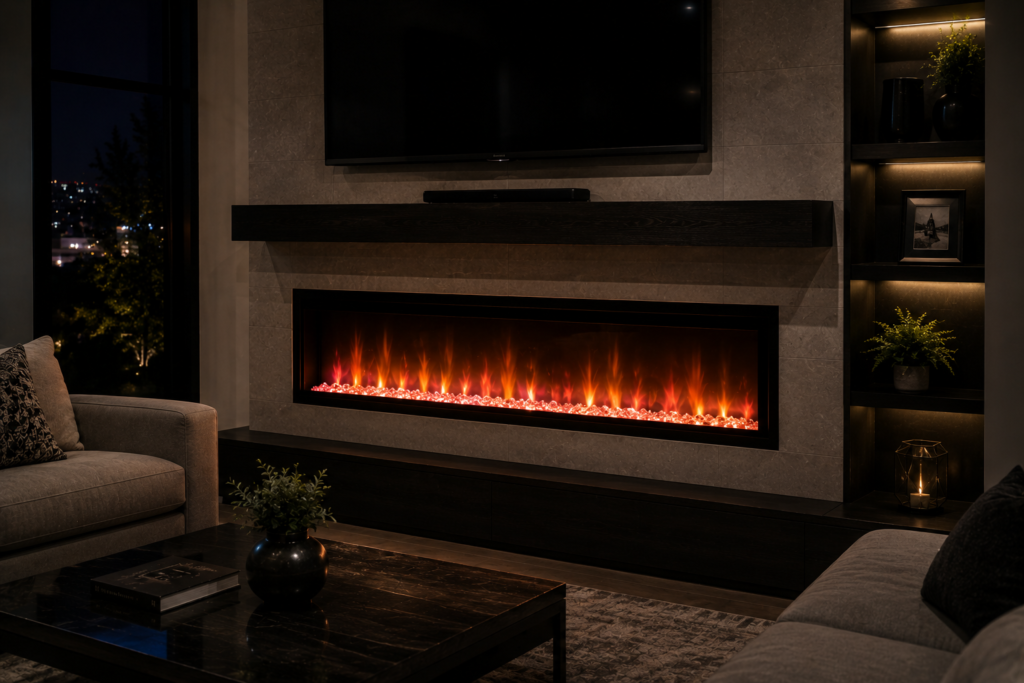
Best for: Apartments, rentals, and any space where a real fireplace isn’t possible — modern electric mantel setups provide a surprisingly convincing flame effect
Modern electric fireplaces have evolved far beyond the obviously artificial glow of early models. The best contemporary electric heating features use LED lighting with multiple layers of depth, realistic log or crystal ember beds, and adjustable flame colors and intensities that create a genuinely attractive visual effect at any viewing distance.
The practical advantages of electric fireplaces are significant: no gas line, no chimney, no ventilation requirement, installation in any room in under an hour, and complete safety for households with children and pets.
Smart tip: Install an electric fireplace insert into an existing non-functional fire feature opening. A blocked or decorative fireplace with an electric insert provides the appearance of a real, working hearth with none of the maintenance or installation complexity. The existing surround and mantel frame the electric insert exactly as they would a real flame.
Mistake to avoid: Placing an electric fireplace in a position where its cord is visible. An electric wood stove with a visible power cord running down the wall or across the floor looks improvised regardless of how attractive the unit itself is. Plan cord concealment — in-wall conduit, a recessed outlet at the exact position of the fireplace, or a cord cover painted to match the wall — as part of the installation rather than an afterthought.
9. Rustic Wood-Burning Fireplace
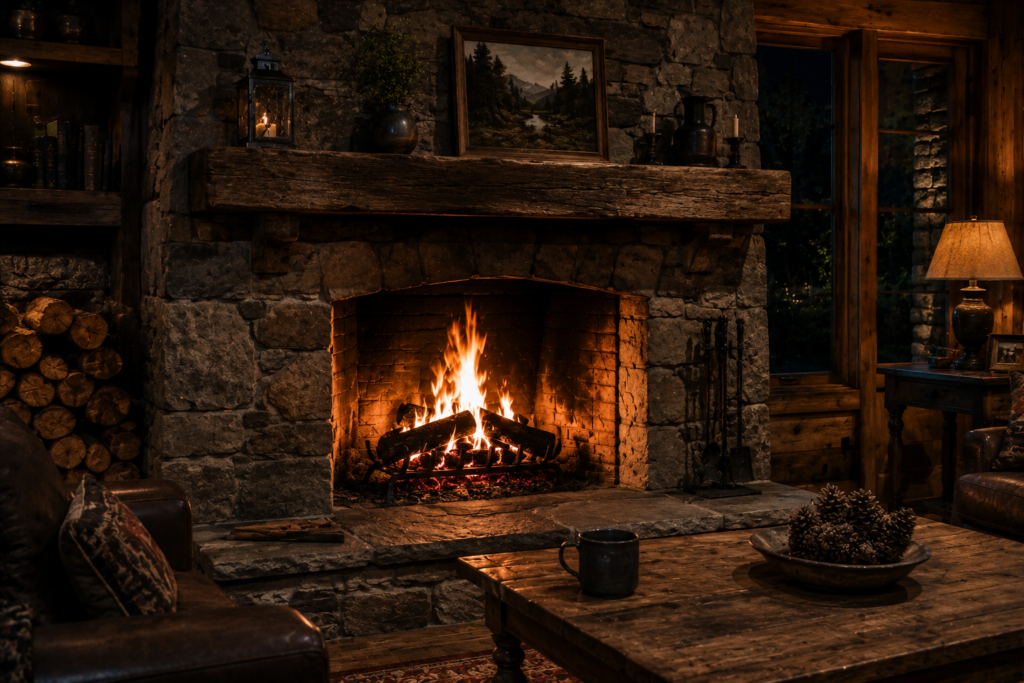
Best for: Farmhouse, cabin, and country-style interiors — the most sensory and most authentic fireplace experience available
A wood-burning fireplace provides something that no gas or electric installation can replicate: the smell of burning wood, the sound of crackling and popping, the visible process of fire consuming logs, and the particular quality of radiant heat that wood produces. For homeowners who value authenticity and are willing to accept the maintenance requirements, a wood-burning mantel setup is genuinely in a different category from every alternative.
The rustic aesthetic — rough stone or brick surround, heavy timber mantel, visible log storage beside the hearth — suits the warmth and authenticity of a wood-burning installation better than any polished contemporary surround.
Smart tip: Store firewood in a designated log alcove built into the fireplace surround rather than in a separate log basket. Built-in log storage is both more beautiful and more functional than any freestanding basket — the logs are immediately accessible, the storage looks designed, and the volume of wood available means fewer interruptions during an evening fire.
Mistake to avoid: Burning unseasoned (green) wood in a wood-burning fireplace. Green wood has a high moisture content — it produces excessive smoke, burns inefficiently, creates significant creosote buildup in the chimney, and generates much less heat than properly seasoned wood. Use only wood that has been seasoned (dried) for a minimum of one year, or kiln-dried firewood for immediate use.
10. Minimalist Concrete Fireplace
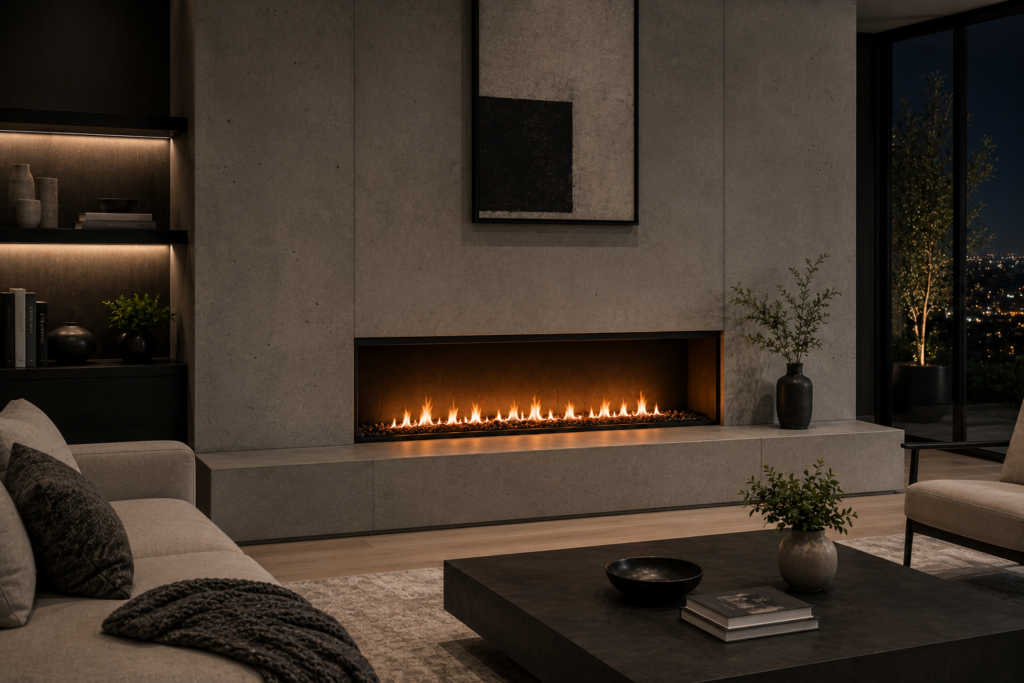
Best for: Industrial, contemporary, and Scandinavian interiors — concrete creates the most understated and architecturally pure fireplace aesthetic
A concrete fireplace surround — smooth, monolithic, and completely unornamented — creates a heating feature that reads as an architectural element rather than a decorative one. The grey tone of natural concrete suits the restrained, material-honest aesthetic of contemporary and industrial interiors, and the smooth surface provides a neutral backdrop that allows the flame to be the room’s sole visual focal point.
Concrete can be cast in place during construction or applied as a trowel-finish overlay on an existing surround — making it one of the more accessible update materials for an existing dated fireplace.
Smart tip: Apply a penetrating concrete sealer to any concrete fireplace surround after curing. Concrete is porous and readily absorbs stains from ash, cleaning products, and ambient dust — a penetrating sealer closes the surface at a microscopic level, preventing staining while maintaining the authentic matte concrete appearance. Reapply every two to three years.
Mistake to avoid: Using standard concrete mix for a fireplace surround without considering heat resistance. Standard concrete is not rated for the temperatures that fire feature surrounds experience during sustained burning. Use refractory (heat-resistant) concrete specifically formulated for fireplace applications — particularly for any element within 12 inches of the firebox opening.
11. Fireplace with Live Edge Mantel
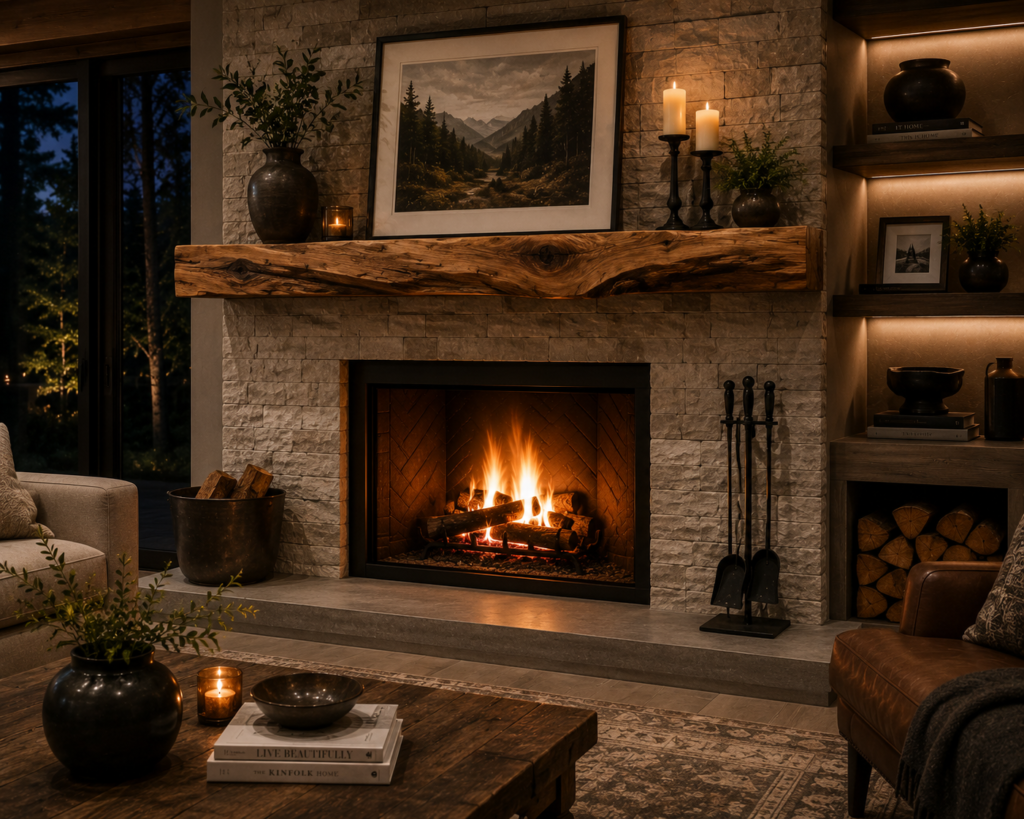
Best for: Farmhouse, Scandinavian, and organic modern interiors — a live edge mantel brings natural warmth to any fireplace style
A live edge mantel — a slab of timber with its natural, uncut edge preserved and displayed — creates the most organic and tactile fireplace mantel available. The irregular, flowing edge of the natural wood contrasts dramatically with any geometric hearth surround, creating a tension between the raw natural and the architectural built that defines the organic modern aesthetic.
Live edge mantels suit fireplaces of almost any surround material — the warm wood tone works with stone, brick, concrete, plaster, and metal surrounds with equal success, because wood’s warmth complements rather than competes with other materials.
Smart tip: Choose a timber slab for a live edge mantel with figure or grain movement visible from a standing viewing distance — straight-grained timber without visible character reads as generic. Walnut with its deep chocolate tones and flowing grain, oak with its distinctive ray fleck, and maple with its occasional curl are the most visually interesting live edge mantel species.
Mistake to avoid: Mounting a live edge mantel without adequate support for the timber’s weight. A solid timber slab 2 to 3 inches thick and 60 to 80 inches long is extremely heavy — well beyond what decorative brackets can support. Build a concealed steel or timber structural support within the wall during installation, not surface-mounted decorative brackets alone.
12. Tiled Statement Fireplace
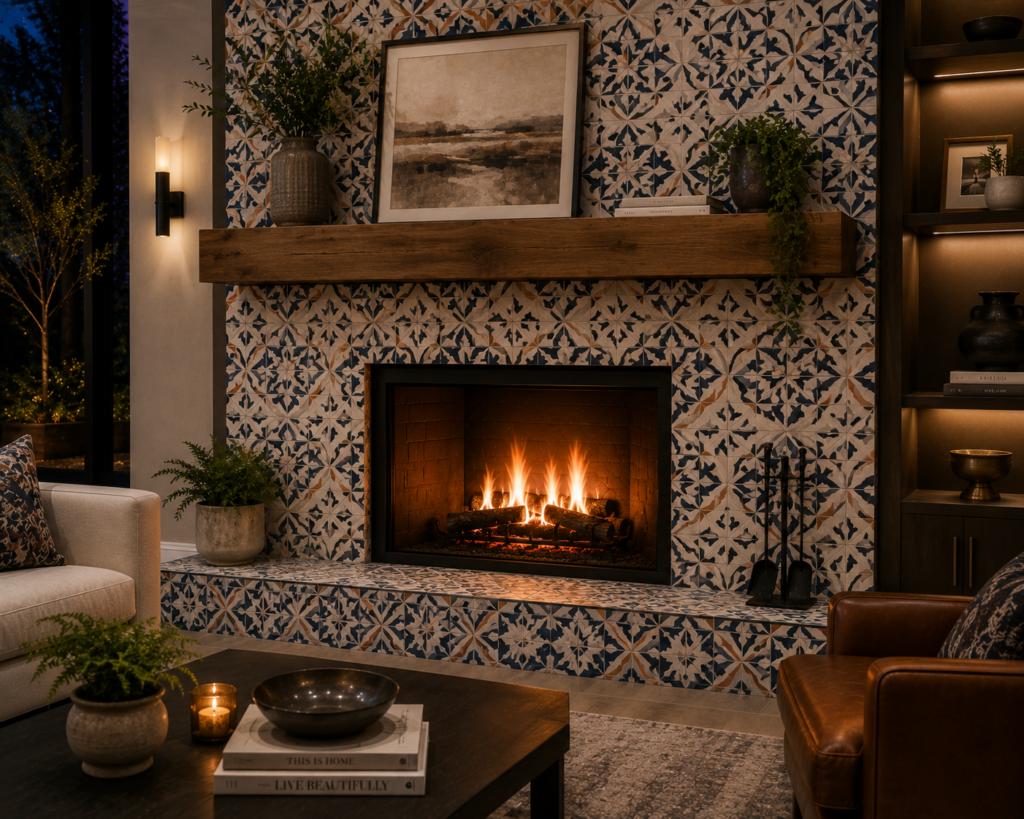
Best for: Any interior where color, pattern, and personality are the design priorities — tiles create the most decoratively expressive fireplace available
A tiled fireplace surround — encaustic tiles in geometric patterns, hand-painted ceramic tiles, mosaic glass tiles, or bold colored glossy tiles — creates the most visually expressive wood stove design available. Tiles allow color, pattern, and narrative to be built directly into the fireplace surround in a way that stone, brick, and plaster cannot accommodate.
Zellige tiles from Morocco, handmade ceramic tiles in earthy earth tones, and Art Nouveau-inspired illustrated tiles are the most consistently beautiful tile choices for fireplace surrounds in 2025.
Smart tip: Limit the tile to the immediate surround area — the band directly framing the firebox — rather than extending it to a floor-to-ceiling installation. A powerful tile pattern on the immediate surround reads as intentional and considered; the same tile extended to the entire chimney breast can overwhelm the room. The surround itself is the right scale for most decorative tile choices.
Mistake to avoid: Using tiles not rated for heat exposure near the firebox opening. Standard ceramic wall tiles are not designed for the thermal cycling (repeated heating and cooling) that tiles near a fireplace experience — they crack and the adhesive fails within seasons. Use tiles specifically rated for mantel setup proximity — typically rated to at least 300°F — within 12 inches of the firebox opening.
13. Painted Brick Fireplace Makeover
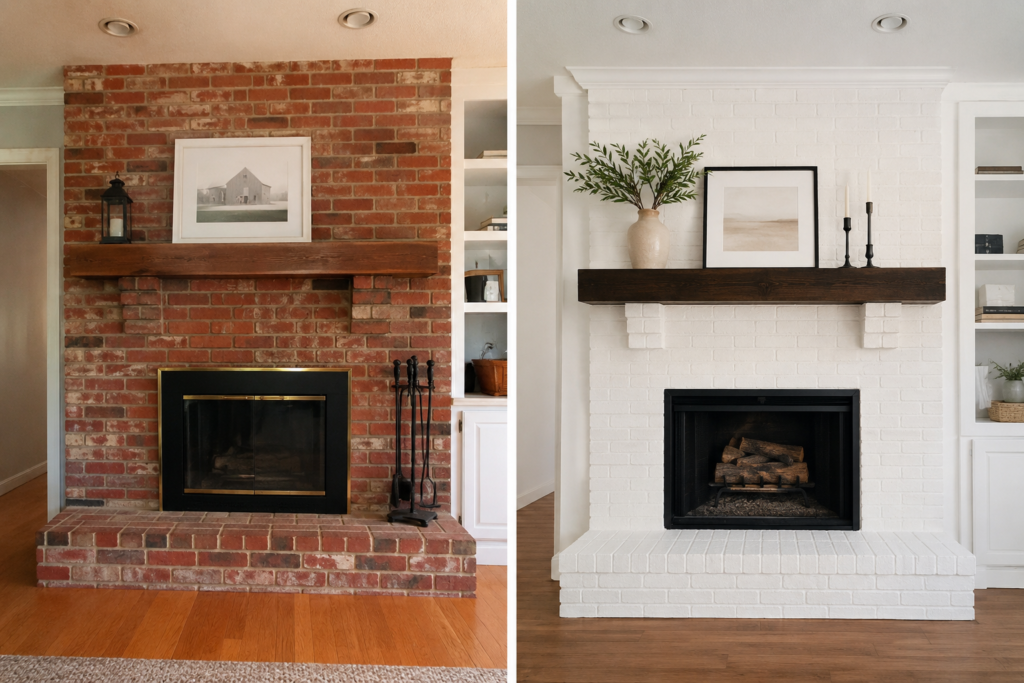
Best for: Dated or dark brick fireplaces that dominate a room negatively — paint is the most transformative and most affordable heating feature update available
A painted brick fireplace — particularly in white, off-white, or a soft warm grey — can transform a dark, heavy brick fire feature from the room’s most dominant problem into its most charming feature. The paint covers the variation and busyness of exposed brick while retaining its texture, creating a surface that reads as refined without losing the material quality of the brick beneath.
White painted brick fireplaces have become one of the most universally popular hearth aesthetics across farmhouse, coastal, and transitional interiors — the combination of clean color with rough texture suits almost every room palette.
Smart tip: Use limewash paint rather than standard exterior paint for a brick fireplace update. Limewash penetrates into the brick surface rather than forming a film on top — it creates a more authentic, slightly translucent finish that shows the brick texture more naturally than opaque paint and weathers over time into a genuinely beautiful aged appearance.
Mistake to avoid: Painting only the fireplace brick without painting the associated hearth or mantel in a coordinated palette. A white-painted brick wood stove with an unchanged dated mantel or mismatched hearth looks partially renovated rather than considered. Address the complete fireplace composition — surround, mantel, and hearth — rather than treating the brick in isolation.
14. Bedroom Fireplace
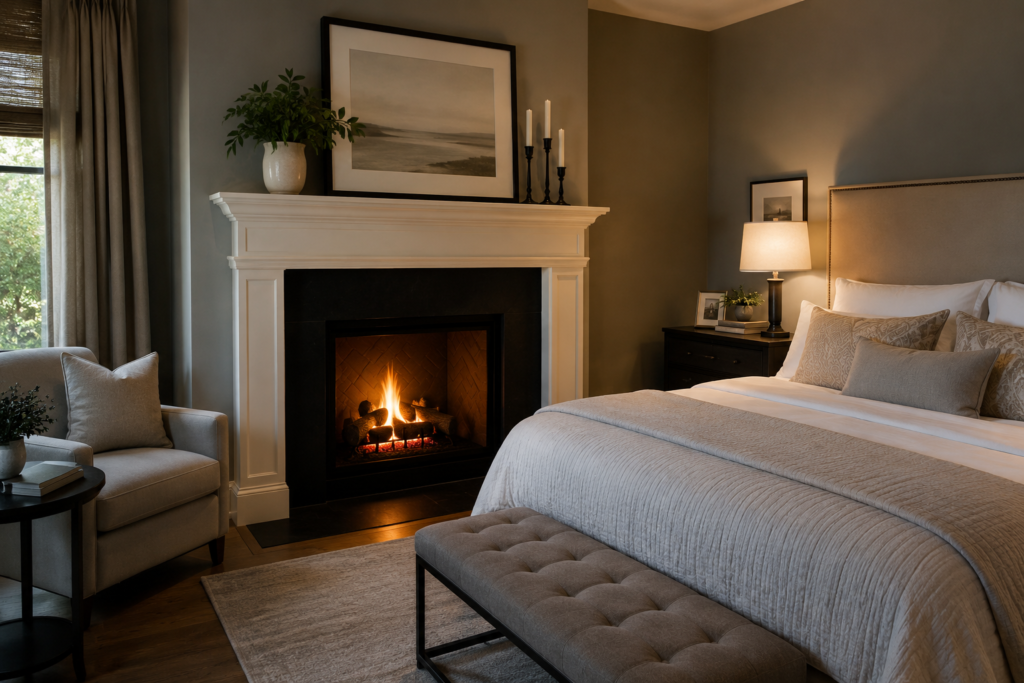
Best for: Master bedrooms — the most luxurious single addition to any bedroom, creating an atmosphere of genuine comfort and intimacy
A fireplace in the bedroom is the most indulgent domestic comfort available — the warmth, the glow, and the atmosphere that a bedroom mantel setup creates on a cold evening is genuinely incomparable to any other bedroom feature. It transforms an ordinary sleeping room into a genuine retreat, creating the quality of a luxury hotel suite in a private home.
Gas and electric fireplaces suit bedroom applications better than wood-burning — the lack of smoke, the ease of operation from bed, and the absence of ash management all make the bedroom heating feature experience genuinely effortless.
Smart tip: Position the bedroom fireplace where it’s visible from the bed — this is the fire feature’s primary viewing position in a bedroom, and the one that matters most. A fireplace visible from the bed but not from any seating in the room is still worth having; a hearth not visible from the bed loses the primary quality that makes a bedroom fireplace special.
Mistake to avoid: Installing a wood-burning fireplace in a bedroom without understanding the ventilation and safety implications. A wood-burning wood stove in a bedroom requires the same chimney and ventilation as any other room, but the enclosed sleeping environment and nighttime use create specific carbon monoxide safety concerns. Install carbon monoxide detectors in any bedroom with a combustion fireplace, and ensure adequate ventilation before sleeping with a fire burning.
15. Outdoor Fireplace
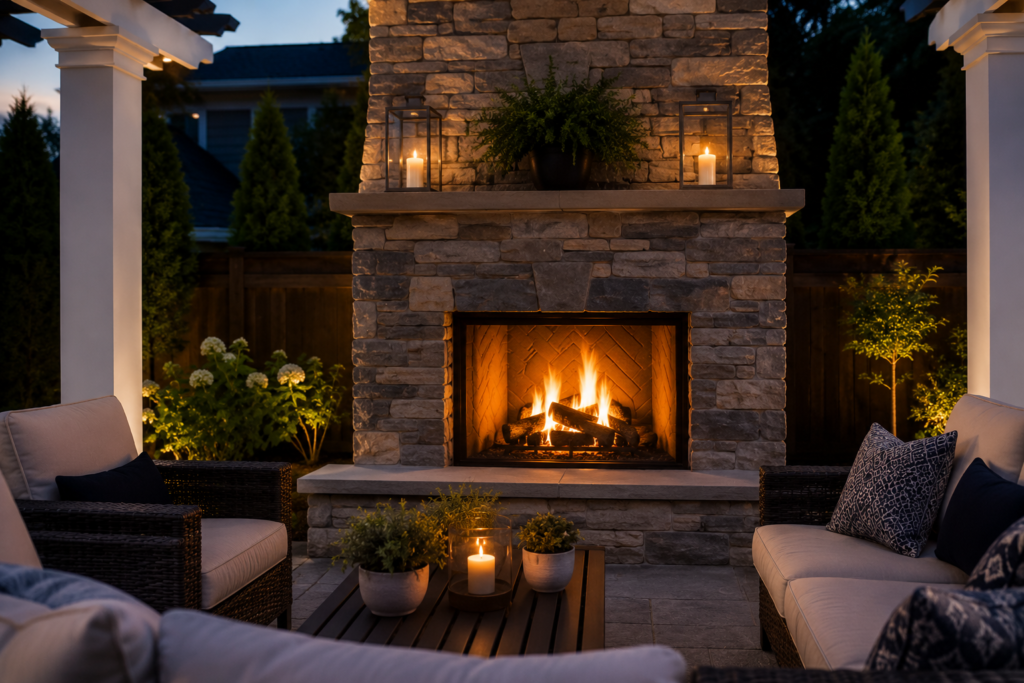
Best for: Patios, terraces, and outdoor living spaces — an outdoor fireplace extends outdoor use into cool evenings and creates the most compelling outdoor focal point available
An outdoor fireplace — built from stone, brick, or rendered masonry — creates an outdoor living room anchor that’s as powerful in an exterior space as an indoor mantel setup is in an interior room. It extends comfortable outdoor use from the warm months into autumn and early winter, provides the social focal point that fire naturally creates in any setting, and creates an architectural feature that gives the outdoor space genuine permanence.
Freestanding outdoor fireplaces in pre-built masonry kits are the most accessible version; custom-built outdoor heating features integrated into a covered patio structure are the most architectural and most durable.
Smart tip: Size the outdoor fireplace proportionally to the outdoor space — a fire feature that’s too small for a large patio looks like an afterthought. An outdoor fireplace should be at least 36 inches wide for any patio larger than 300 square feet, and proportionally larger for more expansive outdoor living areas.
Mistake to avoid: Building an outdoor fireplace too close to the primary seating area. The heat output of an outdoor wood-burning hearth is significant — seating within 6 to 8 feet of the firebox becomes uncomfortably hot during sustained burning. Position seating 8 to 12 feet from the firebox for comfortable year-round use across all burning intensities.
16. Craftsman Style Fireplace
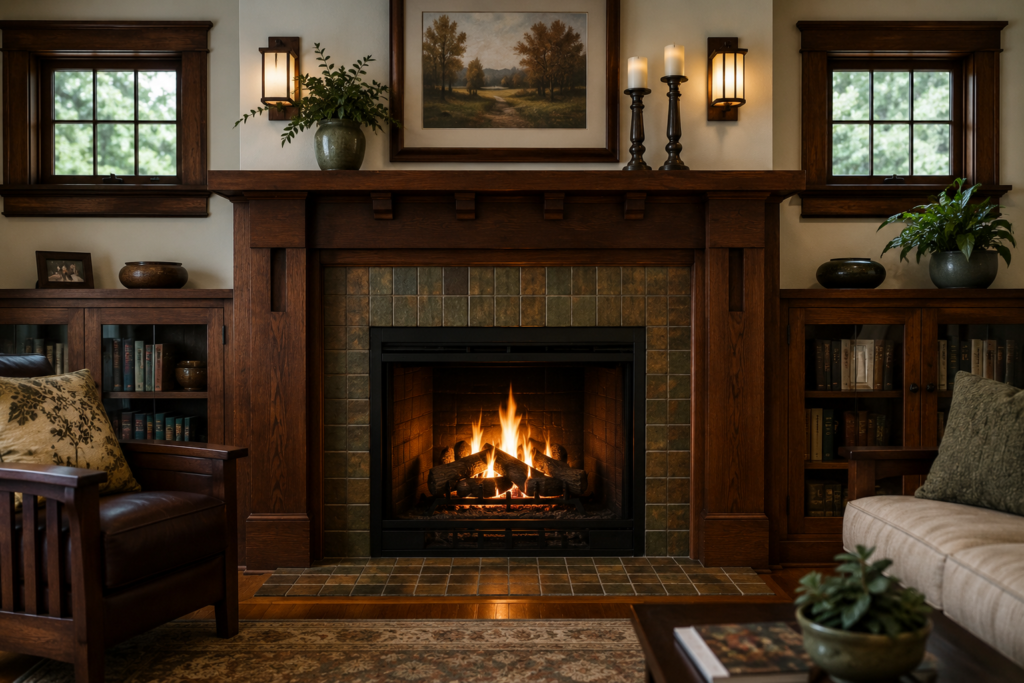
Best for: Craftsman, bungalow, and arts-and-crafts homes — the most historically appropriate fireplace aesthetic for these architectural styles
A Craftsman fireplace — typically featuring a substantial timber mantel with detailed woodwork, a ceramic tile surround in earthy tones, and a brick or stone firebox — is the defining interior feature of the American Craftsman architectural tradition. In a Craftsman-style home, the wood stove is architecturally mandatory — removing or dramatically altering it diminishes the home’s character more than any other single change.
Craftsman fireplaces feature rich dark woodwork, handmade ceramic tiles in green, brown, amber, or slate tones, and the emphasis on craft and material quality that defines the Arts and Crafts movement.
Smart tip: Restore original Craftsman fireplace tiles rather than replacing them with new tiles if the originals are intact. Original Craftsman-era tiles — particularly those from historic American tile manufacturers — have a handmade quality, color depth, and surface variation that contemporary reproductions rarely match. Even chipped or slightly damaged original tiles retain an authenticity that new tiles can’t replicate.
Mistake to avoid: Adding ornate Victorian or contemporary elements to a Craftsman fireplace in an attempt to make it more dramatic. The Craftsman aesthetic is defined by restraint and craft quality — excess ornamentation contradicts its core values. More is less in Craftsman design: the beauty is in the material quality and the proportions, not in decorative elaboration.
17. Fireplace with TV Above
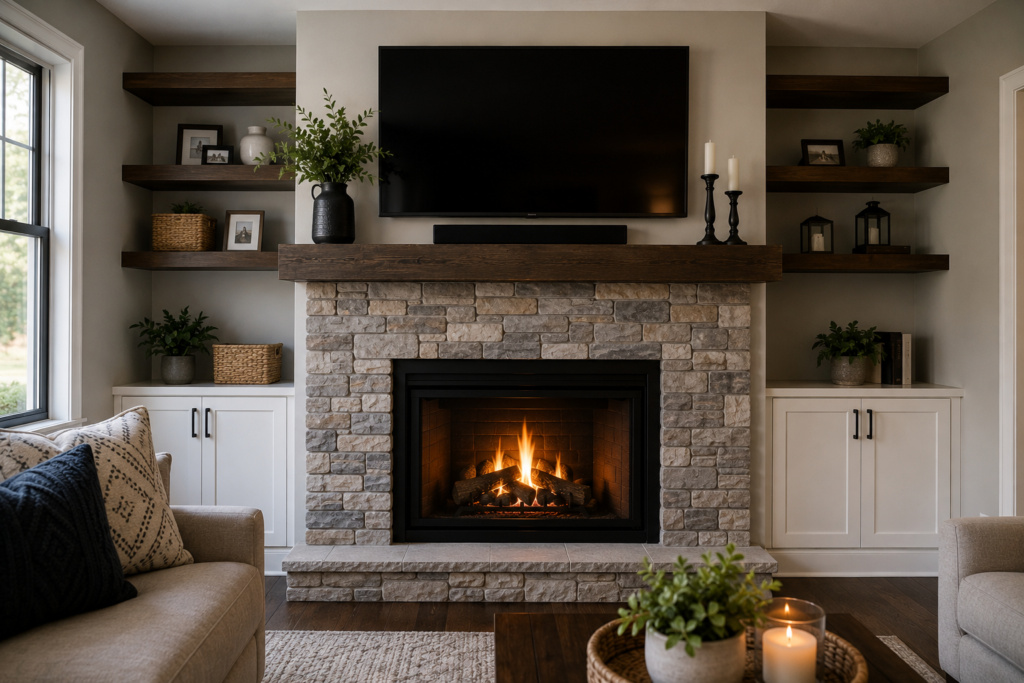
Best for: Living rooms where both a fireplace and a television are needed in the same visual zone
Mounting a television above a fireplace is one of the most debated topics in interior design — interior designers generally advise against it for ergonomic and practical reasons, while homeowners frequently choose it for practical layout reasons. The debate is worth understanding before committing to either position.
The practical argument against it: heat rises and concentrates below the TV, potentially shortening its lifespan; the viewing angle is higher than ergonomically ideal; and bright firelight makes screen viewing more difficult. The practical argument for it: it places both focal points in the same zone, freeing the rest of the room from having to accommodate both; and in rooms where no other viable wall exists for either element, the combination is genuinely the best available option.
Smart tip: If installing a TV above a fireplace, use a tilting TV mount that allows the screen to angle downward toward the seating position rather than facing directly forward. A 10 to 15-degree downward tilt significantly improves the viewing ergonomics of an above-mantel setup TV installation and reduces neck strain during extended viewing.
Mistake to avoid: Installing a TV directly above a wood-burning fireplace without a heat shield. The heat output from an active wood fire directly below an electronic device — even intermittently — creates operating temperatures that exceed the TV’s rated range. Either install a heat-rated shield between the firebox and the TV, or choose a gas or electric heating feature that generates significantly less heat above the firebox opening.
18. Reclaimed Wood Fireplace Surround
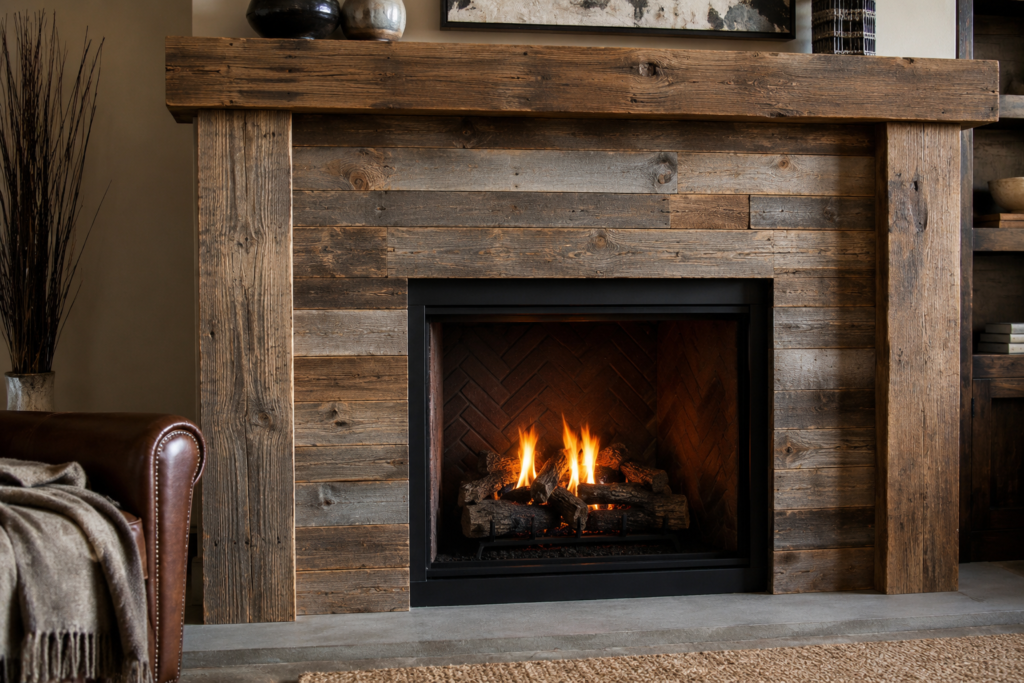
Best for: Farmhouse, rustic, and eclectic interiors — reclaimed wood brings immediate character that new materials take decades to develop
A fireplace surround built from reclaimed timber — salvaged barn wood, old railway sleepers, antique floorboards, or reclaimed structural timber — creates a fire feature with immediate history and character. The weathered surface, the nail holes, the variations in color and texture across different boards, and the aged patina all contribute to a surround that looks as though it has always been part of the room.
Reclaimed wood suits gas and electric fireplaces particularly well — the organic, aged quality of the material creates a natural visual warmth that makes the controlled, consistent flame of gas or electric more convincing.
Smart tip: Apply a clear matte wax or oil finish to reclaimed wood fireplace surrounds rather than paint or varnish. A clear finish preserves the visible character — the color variation, the grain, the marks of previous use — that makes reclaimed wood valuable. Paint covers this character completely; varnish gives it a plasticky sheen that contradicts the material’s natural quality.
Mistake to avoid: Using reclaimed wood within the immediate heat zone of the firebox opening without adequate heat-resistant backing. Reclaimed wood is combustible — any timber element within 6 inches of the firebox opening requires a heat-resistant layer between the wood and the firebox. This is a safety requirement, not an aesthetic one, and is non-negotiable regardless of fireplace type.
19. How to Style Your Fireplace Mantel
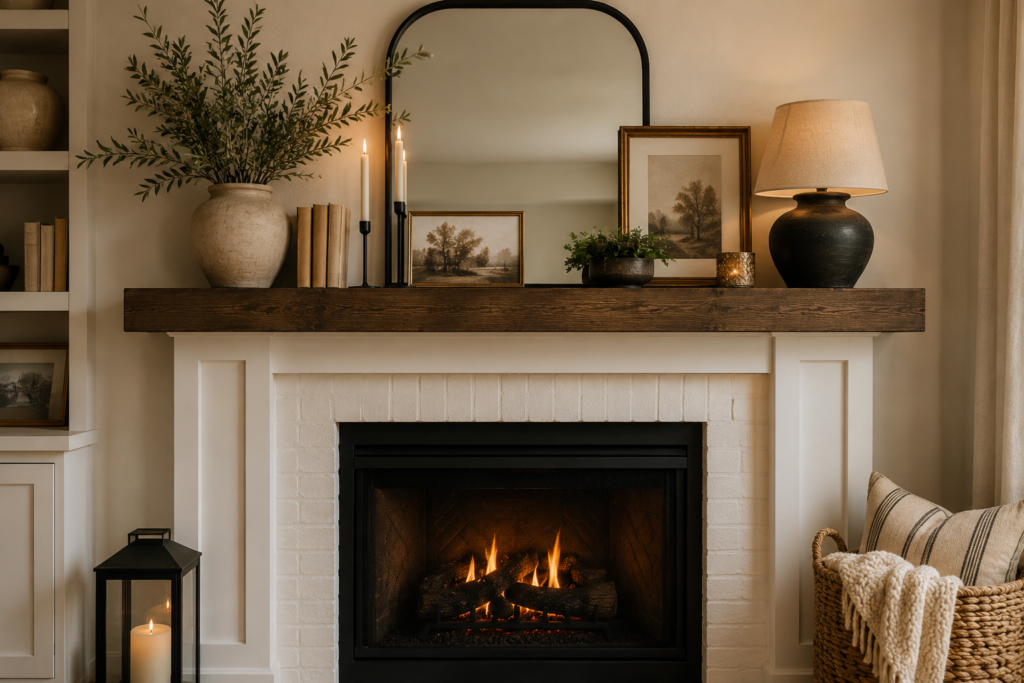
Best for: Anyone with a fireplace mantel — mantel styling determines whether the hearth reads as designed or neglected
The mantel is the most visible display surface in any room that has one — it sits at eye level, above the room’s primary focal point, and is seen from every position within the space. How it’s styled determines the fireplace’s contribution to the room’s character as significantly as the wood stove design itself.
The most effective mantel styling follows a few consistent principles. Vary the heights of objects — a composition of items at the same height looks flat and lacks visual interest. Include one larger anchor piece (a mirror, artwork, or oversized object) that establishes the composition’s scale. Use odd numbers of objects — three or five items read as more natural than two or four. Leave empty space — a mantel packed with objects looks cluttered; space between items gives each one room to be seen.
Smart tip: Change the mantel styling seasonally rather than maintaining a single permanent arrangement. A mantel that changes with the seasons — fresh green foliage in spring, warm dried botanicals in autumn, simple winter branches — creates a living quality that a static arrangement lacks and keeps the fireplace visually fresh throughout the year.
Mistake to avoid: Placing candles on a mantel above a functioning fireplace without considering the heat. Candles on a mantel directly above an active fire will melt within minutes of the fire being lit — the heat rising from the firebox reaches the mantel surface quickly. Display candles on the mantel when the fire is unlit; use non-combustible decorations (ceramic, metal, stone, glass) for display during active burning.
20. How to Choose the Right Fireplace
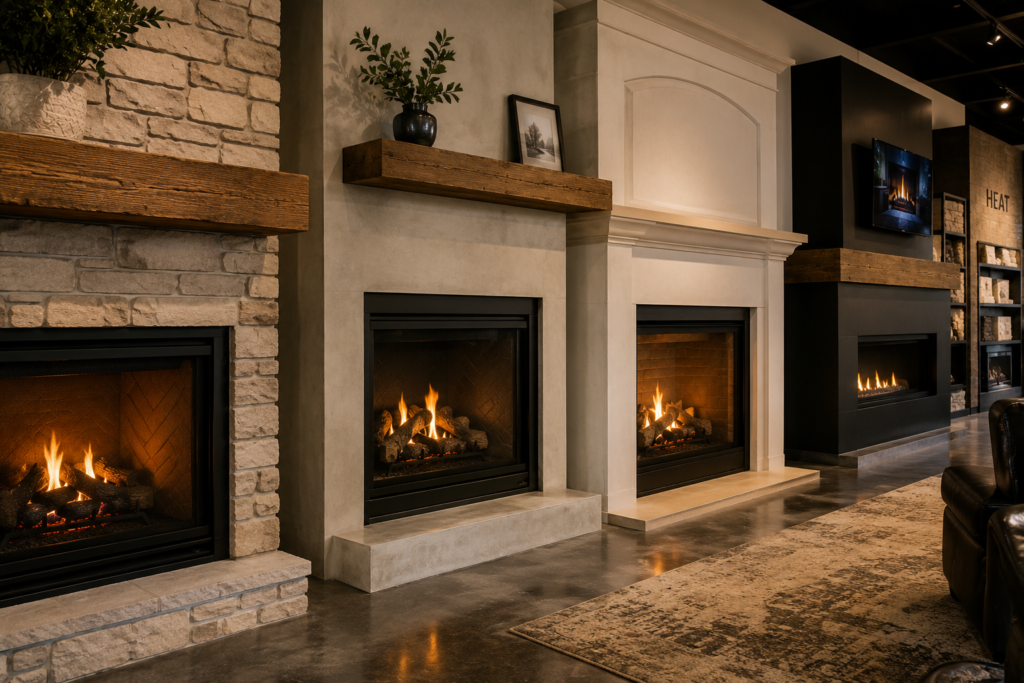
Best for: Anyone planning a new fireplace installation or a mantel setup renovation
Choosing the right fireplace requires decisions across three dimensions: fuel type, installation type, and aesthetic. Getting these three decisions right produces a heating feature that serves the household for decades. Getting any of them wrong produces a fireplace that requires expensive modification within years.
Fuel type determines the experience and the practicalities. Wood-burning provides the most authentic sensory experience but requires the most maintenance — chimney cleaning, ash removal, firewood storage and management, and smoke management. Gas provides controllable warmth at the turn of a knob with minimal maintenance but requires professional gas line installation and annual servicing. Electric requires no installation beyond a power outlet, no maintenance, and no ventilation — it’s the most accessible option with the most convincing contemporary flame technology.
Installation type determines the cost and the commitment. A built-in fireplace — constructed as part of the room’s architecture — is the most permanent and most visually integrated option. An insert — a fire feature unit inserted into an existing fireplace opening — converts a non-functional or inefficient existing hearth at moderate cost. A freestanding unit requires no permanent installation and is entirely portable.
Smart tip: Consult a certified chimney professional (CSIA certified in the US) before any wood-burning fireplace installation or renovation. A chimney professional can assess the existing flue condition, recommend appropriate wood stove specifications for the available chimney, and identify any safety issues before installation begins — saving significant cost compared to discovering problems after installation.
Mistake to avoid: Choosing a fireplace based solely on appearance without considering the room’s heat load requirements. A mantel setup that’s too small for the room it heats struggles to create adequate warmth; one that’s too large overheats the space. For any fireplace intended as a primary heat source, calculate the room’s BTU requirement and specify a heating feature rated for at least that output.
Before You Start
- Check your local building regulations. Most fireplace installations require permits, especially for gas and wood-burning types. Check requirements before purchasing any equipment or starting any work.
- Assess the existing structure. If retrofitting a fireplace into an existing room, have a structural engineer assess whether the floor can carry the weight and whether the wall can accommodate the installation.
- Plan the surround and mantel simultaneously. The fireplace, surround, and mantel function as a single composition — designing them separately produces installations that look assembled rather than designed.
- Budget for installation, not just the unit. The fireplace unit is often the smallest cost in a fireplace installation. Gas line work, chimney construction or lining, permits, and finishing materials frequently double or triple the unit cost in total project cost.
Conclusion
A fireplace is one of the few home improvements that improves a room in every condition — lit or unlit, winter or summer, new or aged. The unlit fire feature is an architectural feature and a display surface; the lit fireplace is the room’s heart. Choose the type that suits the room’s architecture and the household’s lifestyle, specify the surround and mantel as a cohesive composition, and the hearth will be the element of the room that every visitor notices first and remembers longest.
Continue Your Home Transformation
Explore the full collection of step-by-step eBooks and get the guide that fits the room you're working on.