
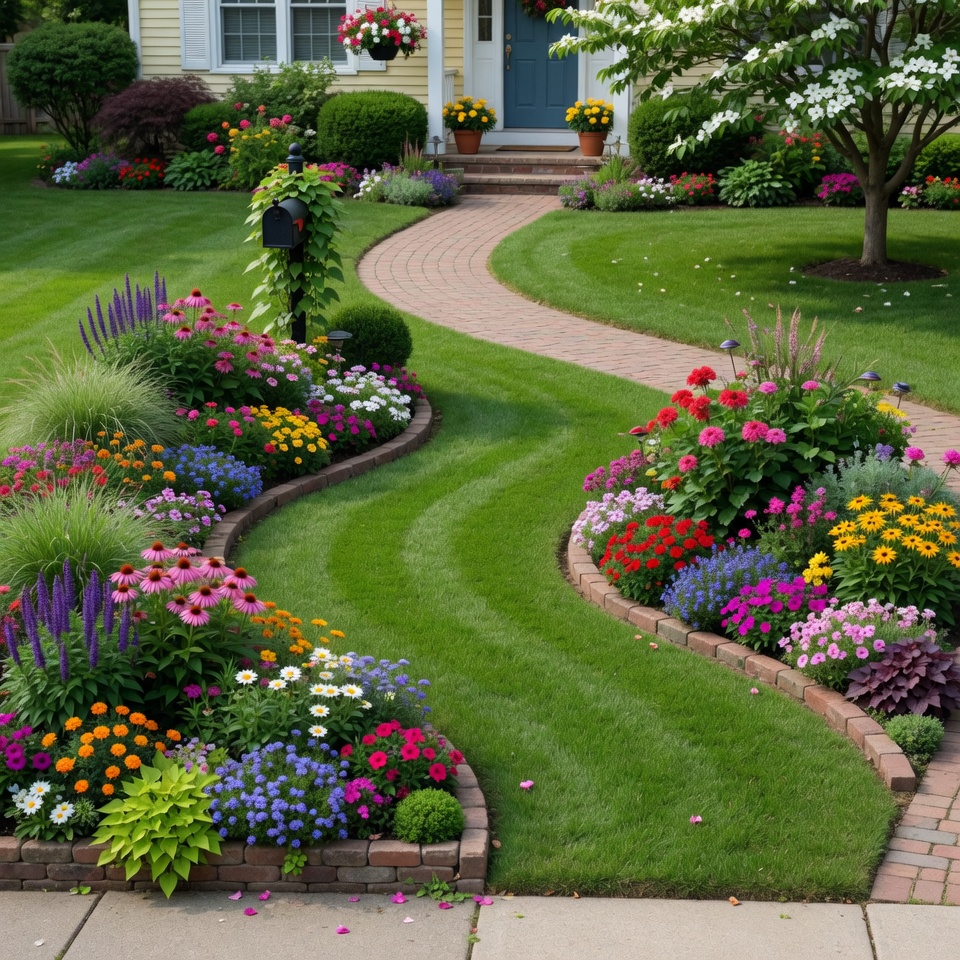
Your front yard is the first thing anyone sees — and a well-landscaped front yard adds real value to your home while making it a place you’re proud to come back to every day. The good news is that you don’t need a large budget or professional help to make a dramatic difference. Smart plant choices, clean edging, and a few well-placed features can transform any front yard from ordinary to genuinely beautiful.
These 20 backyard landscaping ideas and front yard strategies cover every style, every budget, and every level of gardening experience — from simple weekend projects to complete landscape transformations.
1. Define Your Entry with a Focal Point
Best for: Any front yard that lacks a clear visual anchor and feels scattered or undefined
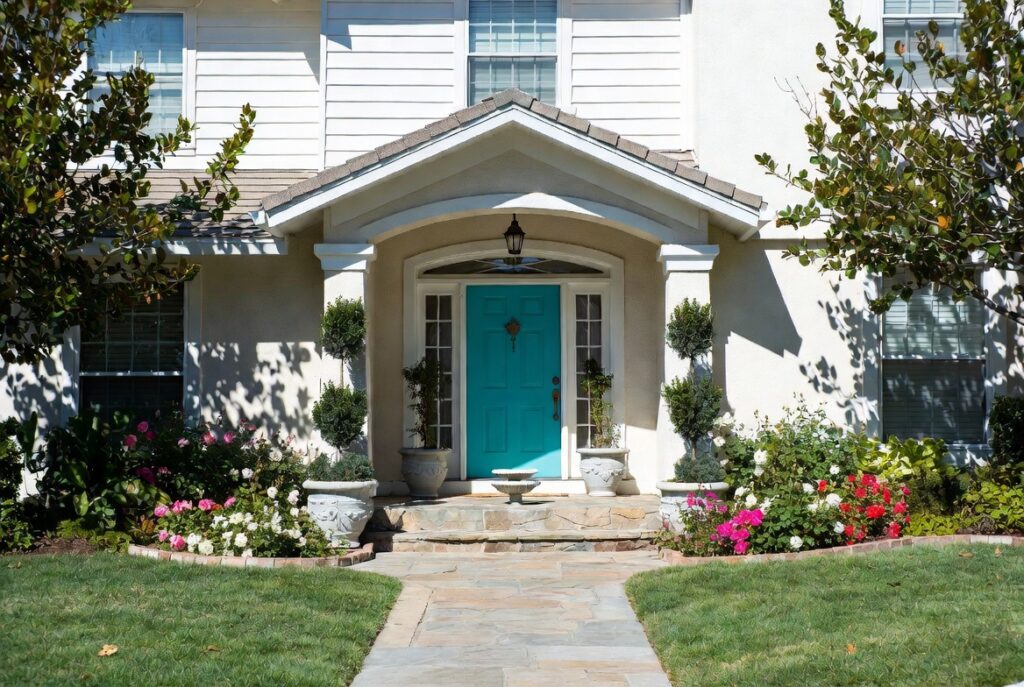
Every strong front yard landscape needs one element that draws the eye first — a focal point that gives the entire design its center of gravity. Without one, the yard feels like a collection of unrelated plants rather than a designed space. The focal point could be a flowering tree, a decorative urn with seasonal planting, an architectural feature like a pergola entry, or a beautifully maintained specimen shrub.
The focal point should sit at or near the main entry path — either flanking the front door or positioned where the eye naturally travels from the street. Everything else in the landscape should be arranged to support and complement it rather than compete with it.
Smart tip: A Japanese maple or flowering cherry tree makes one of the most effective front yard focal points available — it provides four seasons of interest (spring blossom, summer canopy, autumn color, winter structure) without growing so large it overwhelms a modest front yard.
Mistake to avoid: Placing the focal point off-center or in a corner where it doesn’t relate naturally to the entry. The focal point must connect visually and spatially to the path that leads to the front door.
2. Line the Walkway with Low Border Plants
Best for: Front yards with a clear path from the street or driveway to the front door
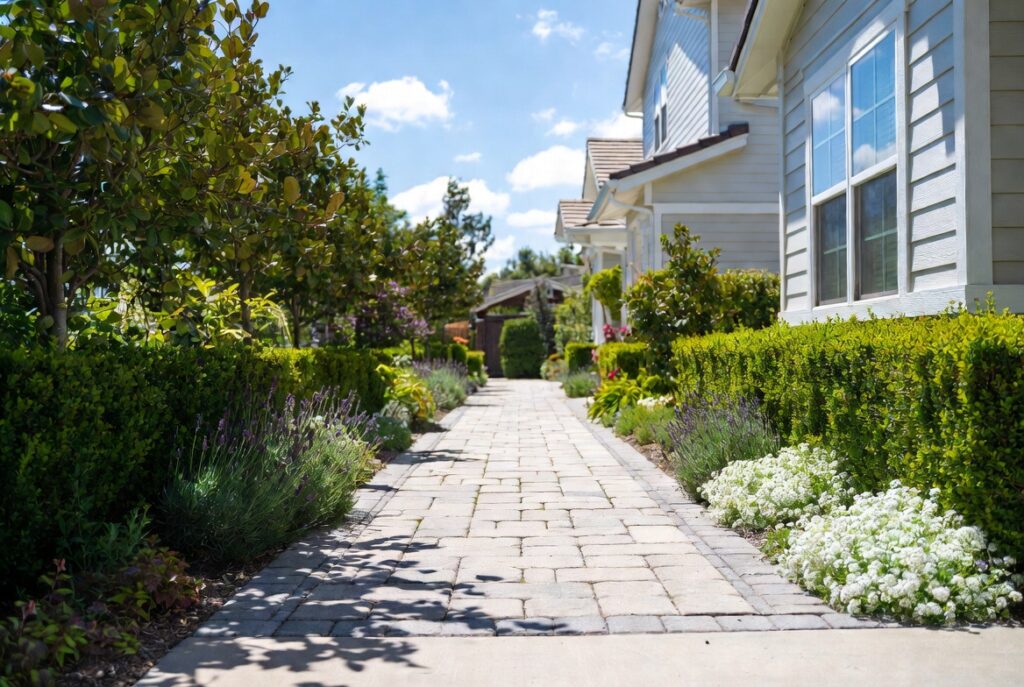
A walkway lined with low border plants is one of the simplest and most effective garden ideas for front yards — it creates a sense of arrival, guides visitors naturally to the door, and transforms a plain concrete or stone path into a welcoming, garden-framed approach.
The best border plants for this use are low-growing (under 40cm), consistently attractive, and easy to maintain — lavender, catmint, dwarf boxwood, ornamental sage, or liriope all work beautifully. Plant them in continuous drifts on one or both sides of the path rather than in alternating spots, which creates a more professional, considered look.
Smart tip: Choose border plants with fragrance — lavender and catmint release scent when brushed, creating a sensory welcome that makes every arrival feel like a small pleasure.
Mistake to avoid: Choosing plants that spread aggressively over the path or grow taller than expected. Always check the mature spread of any border plant before committing — an overgrown border quickly makes a welcoming path feel crowded and unkempt.
3. Use Curved Garden Beds
Best for: Front yards with straight edges and right angles that feel rigid or formal
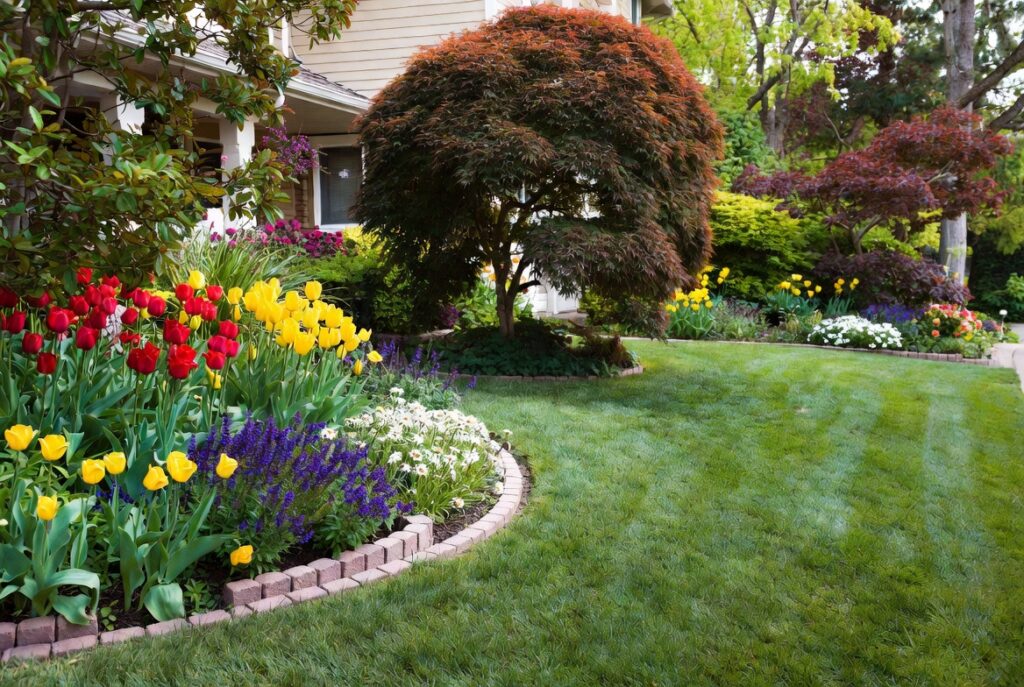
Curved garden beds soften the geometry of a front yard in a way that straight-edged beds cannot — they introduce the organic forms of the natural landscape and make the yard feel more relaxed, welcoming, and professionally designed. A single sweeping curved bed along the front of the house replaces the typical rectangular border with something that has genuine visual flow.
Create the curve with a garden hose before cutting — lay the hose in your intended shape and assess it from the street before committing to any digging. The curve should be generous rather than timid — small wiggles look indecisive, while a long, graceful sweep looks intentional and elegant.
Smart tip: Edge curved beds with steel, aluminum, or flexible plastic edging rather than brick or stone — flexible edging follows the curve precisely and creates the clean, defined edge that makes curved beds look crisp rather than ragged.
Mistake to avoid: Creating multiple small curved beds scattered across the lawn. Multiple disconnected curves read as messy. One or two large, generous curves create more impact and are easier to maintain than many small ones.
Loving These Ideas? Get the Step-by-Step Guide
Grab the full 5-day eBook and turn these ideas into a finished room.

4. Plant a Flowering Hedge for Privacy
Best for: Front yards on busy streets or with little separation from the sidewalk or neighbors
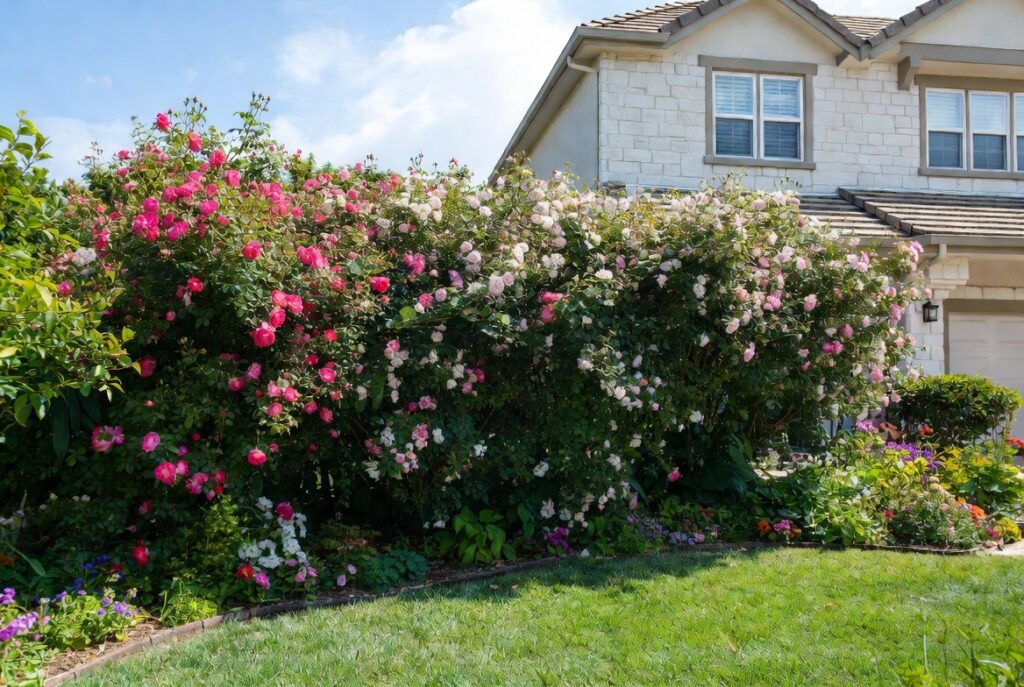
A flowering hedge provides privacy and structure while adding significant seasonal beauty that a plain fence cannot offer. Unlike solid fences, a flowering hedge softens the boundary between your property and the street — it still defines the space clearly but does so in a way that’s natural, organic, and genuinely beautiful in flower.
Excellent flowering hedges for front yards include roses (particularly rugosa and shrub varieties), escallonia, forsythia, lilac, and viburnum — all of which produce attractive flowers and maintain their structure through the year.
Smart tip: Plant the hedge at one-third to one-half of its eventual mature spread apart. This feels too sparse initially but produces a dense, healthy hedge faster than close planting — crowded plants compete for resources and often produce a thinner hedge in the long run.
Mistake to avoid: Choosing a hedge species that grows too fast and requires constant cutting to keep it in bounds. Fast-growing hedges like leylandii look great initially but become a maintenance burden within a few years. Choose a species appropriate to the final height you actually want.
5. Add Landscape Lighting Along the Path
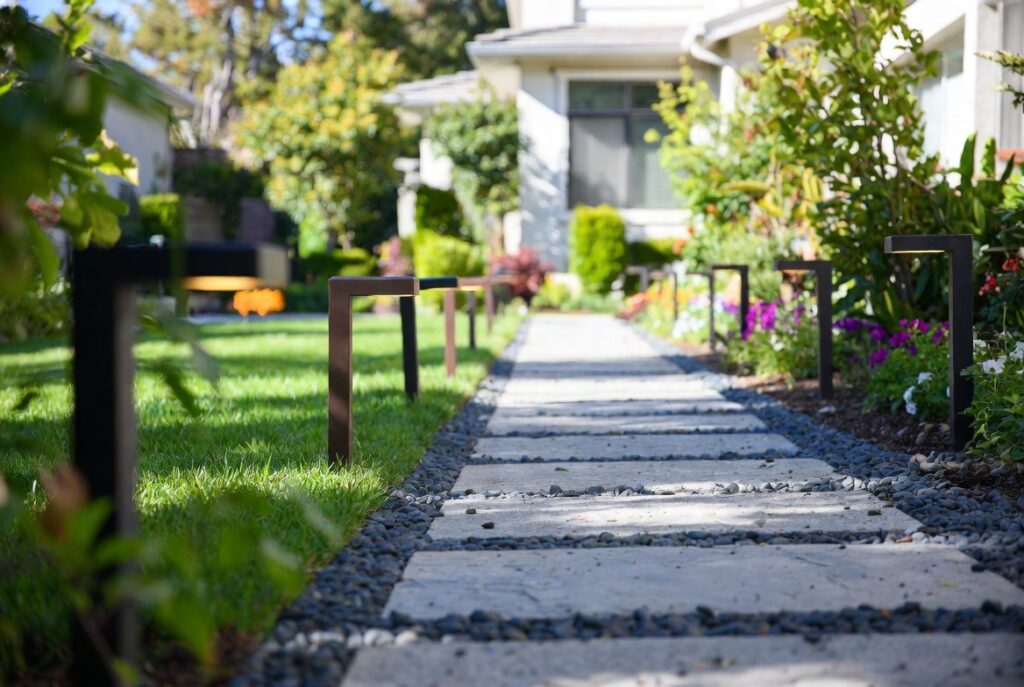
Best for: Any front yard — landscape lighting transforms the nighttime appearance and improves safety
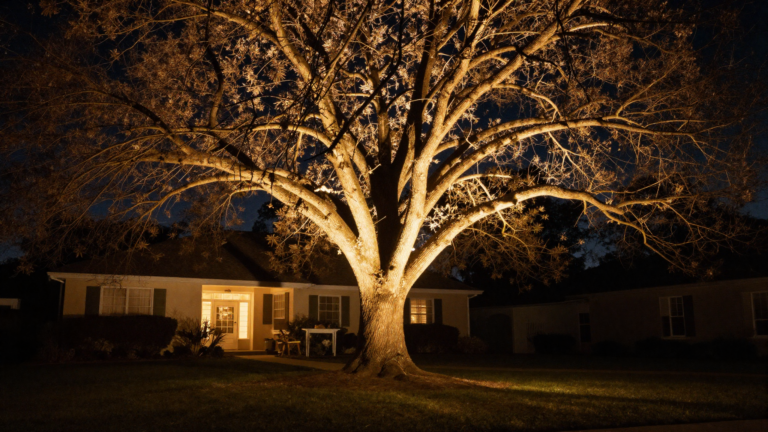
Landscape lighting along the front path is one of the highest-return investments in front yard design — it improves safety, dramatically transforms the nighttime appearance of the yard, and adds a welcoming quality that makes the house feel lived-in and cared-for after dark.
Solar path lights are the simplest entry point — no wiring required, and the technology has improved significantly. Low-voltage LED systems wired from an exterior socket create a more professional result with consistent, reliable lighting that doesn’t depend on sufficient daylight to charge.
Smart tip: Use warm white LED bulbs (2700-3000K) for landscape lighting — cool or daylight bulbs create a harsh, institutional quality that undermines the welcoming atmosphere you’re creating. Warm light makes plantings glow and creates a genuinely inviting arrival experience.
Mistake to avoid: Spacing path lights too closely together, creating a runway effect. Lights every 1.5 to 2 meters along a path create elegant illumination; lights every 50 centimeters create excessive brightness that feels more like a commercial space than a welcoming home.
6. Create a Layered Planting Design
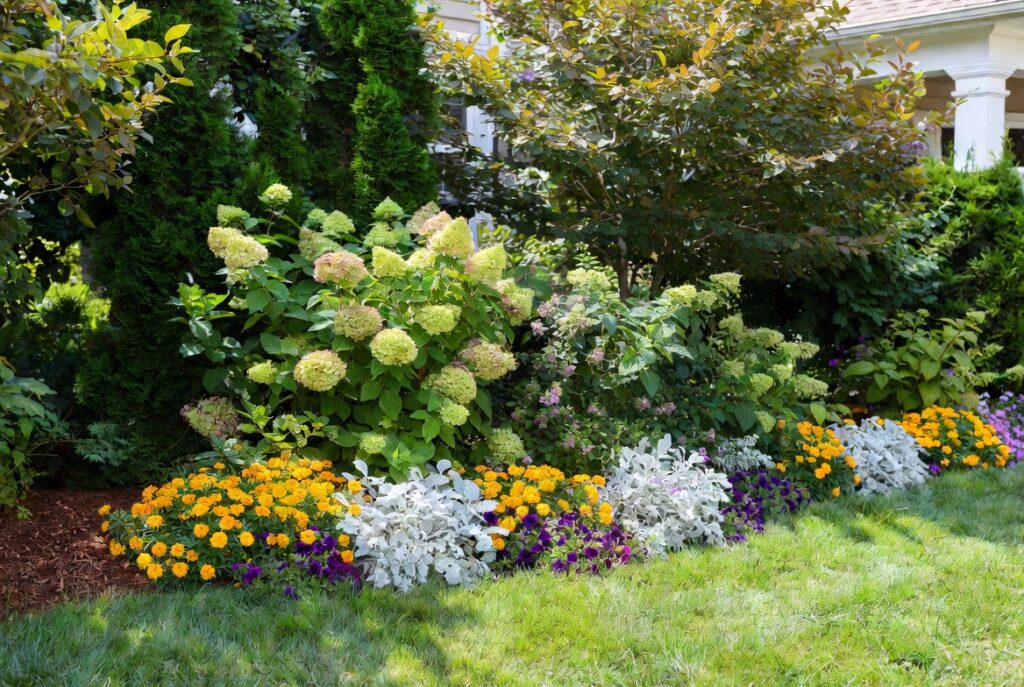
Best for: Garden beds that feel flat or one-dimensional — most commonly front beds against the house wall
Layered planting — combining plants of different heights in the same bed — creates the visual depth and complexity of a natural landscape in a managed garden setting. The classic three-layer approach: tall background plants (shrubs or ornamental trees), medium mid-ground plants (perennials and medium shrubs), and low foreground plants (ground covers, low perennials, or annuals) creates a bed with genuine three-dimensional quality.
Position tall plants at the back of the bed (closest to the house), medium plants in the middle, and low plants at the front edge. This simple principle, applied consistently, transforms even a narrow bed into something with real visual depth.
Smart tip: Include at least one plant in each layer with interesting winter structure — ornamental grasses, seed heads, or architectural evergreens — so the layered bed looks considered in every season, not just in summer.
Mistake to avoid: Planting the tallest plants in the center of the bed rather than at the back. Center-tall planting creates a mound effect that hides the plants behind it and reads as a dome rather than a layered landscape.
7. Replace Lawn with Ground Cover
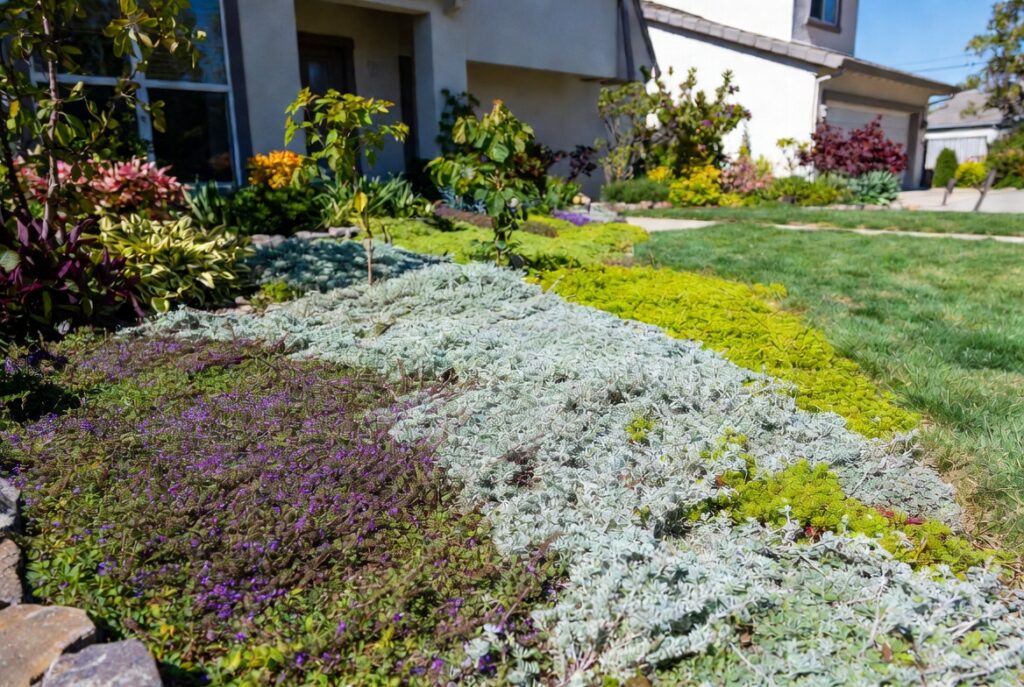
Best for: Small front lawns that are difficult to mow, shaded areas where grass struggles, or drought-prone regions
Replacing a small or problematic front lawn with attractive ground cover reduces maintenance, eliminates the need for regular mowing, and creates a lush, green appearance that can actually look better than a struggling lawn. Ground covers like creeping thyme, sedum, ajuga, vinca minor, or pachysandra form dense, weed-suppressing mats that need almost no attention once established.
For sunny front yards, creeping thyme is particularly attractive — it produces small pink or purple flowers in summer and releases fragrance when walked on. For shaded yards, ajuga (bugleweed) provides attractive purple-bronze foliage and blue flower spikes in spring.
Smart tip: Prepare the ground thoroughly before planting ground cover — remove all existing grass and weeds, amend the soil with compost, and apply a thin layer of mulch between young plants. The first season requires some weeding until the ground cover establishes; after that, maintenance is minimal.
Mistake to avoid: Choosing an invasive ground cover that spreads beyond its intended area. Some ground covers — including certain varieties of vinca and ajuga — can be quite aggressive. Research the spreading habit of any ground cover before planting near lawns, garden beds, or neighboring properties.
8. Use Ornamental Grasses
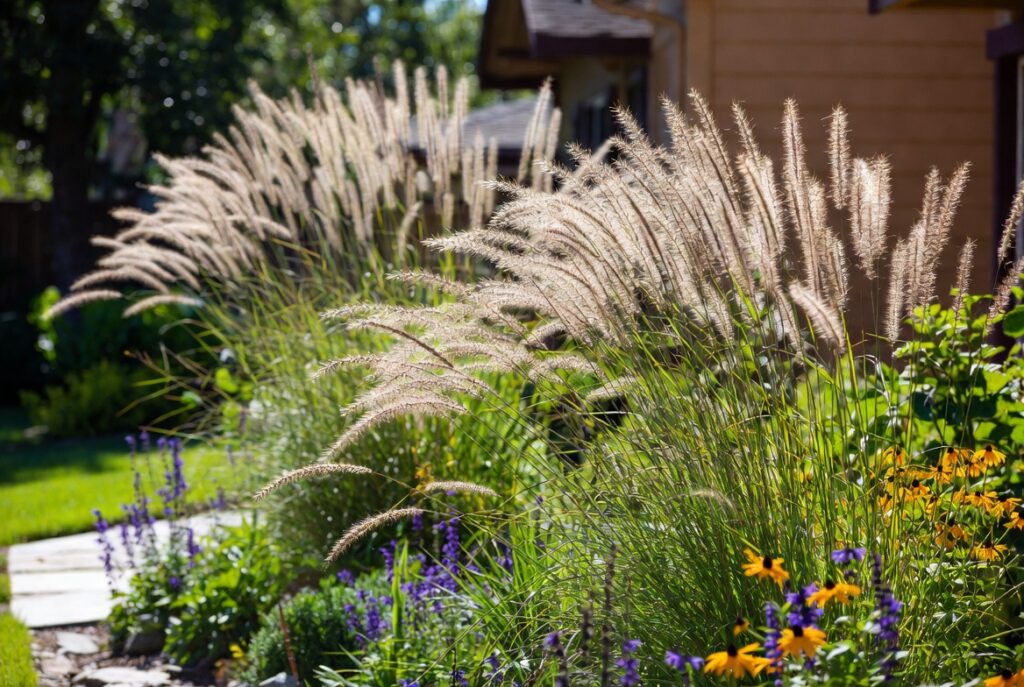
Best for: Any front yard needing low-maintenance, high-impact planting with year-round interest
Ornamental grasses are among the most useful and most underused plants in front yard landscaping. They provide movement and sound in the wind, dramatic vertical form, attractive seed heads and color through autumn and winter, and require almost no maintenance beyond an annual cut-back in late winter.
Karl Foerster feather reed grass, Mexican feather grass, blue fescue, and miscanthus varieties all suit front yard planting — choose the species based on your soil type, sun exposure, and the ultimate height you need.
Smart tip: Plant ornamental grasses in odd-numbered groups (three or five) rather than individually or in pairs. Groups of three create natural-looking drifts; single specimens look isolated and formal. Even a group of three blue fescue in the foreground of a bed adds significantly more visual impact than a single plant.
Mistake to avoid: Cutting ornamental grasses back too early in winter. The seed heads and dried stems of most ornamental grasses provide genuine beauty through autumn and winter — leave them standing until late winter or early spring before cutting back to a few centimeters above the ground.
9. Frame the Front Door with Planters
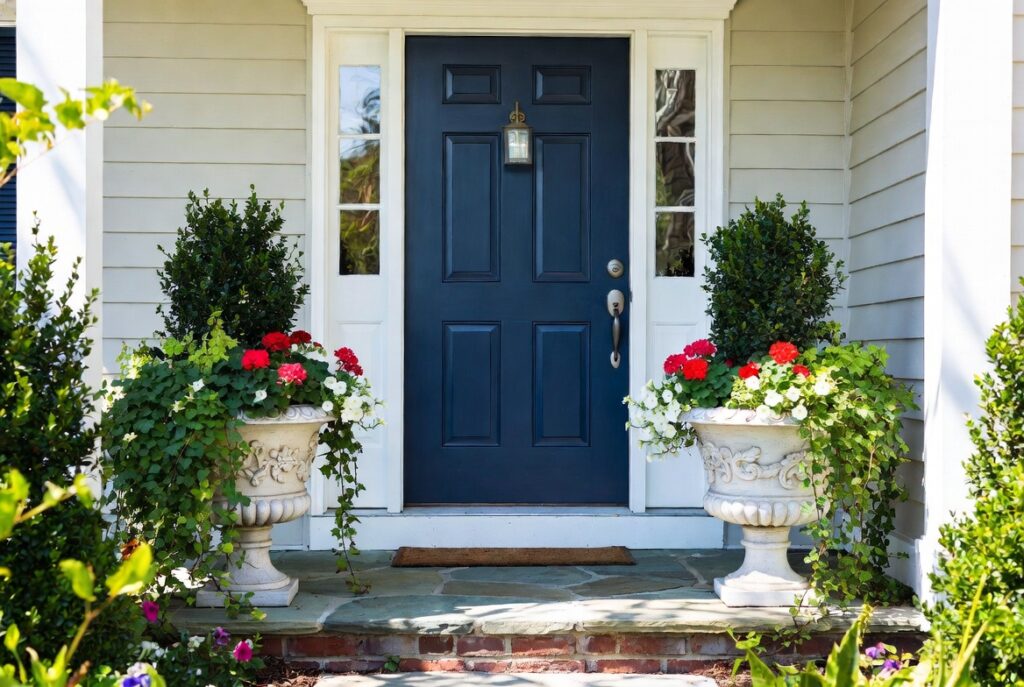
Best for: Any front door that needs more presence — particularly doors set back from the street or lacking architectural detail
A pair of large planters flanking the front door creates an instant sense of arrival and welcoming formality that transforms even the plainest entry. The planters provide a vertical punctuation at the threshold — signaling clearly that this is an important place and that the homeowner has taken care of it.
Choose planters that are proportionally significant — too small and they look afterthought; large enough to be genuinely striking. A 50-60cm diameter planter is the minimum for most front doors; 70-80cm creates a more impactful statement. Fill them with a combination of a taller thriller plant, medium filler plants, and trailing spiller plants at the edges.
Smart tip: Plant one planter with permanent evergreen structure (a clipped bay tree or boxwood ball) and use the other for seasonal color that you change with the seasons. This gives you the best of both worlds — permanent structure and seasonal freshness.
Mistake to avoid: Using mismatched planters of different sizes, styles, or materials. The power of flanking planters comes from their symmetry — two identical planters create a formal, considered entry; two different planters create a casual, accidental appearance that undermines the intended effect.
10. Install a Stone or Gravel Pathway
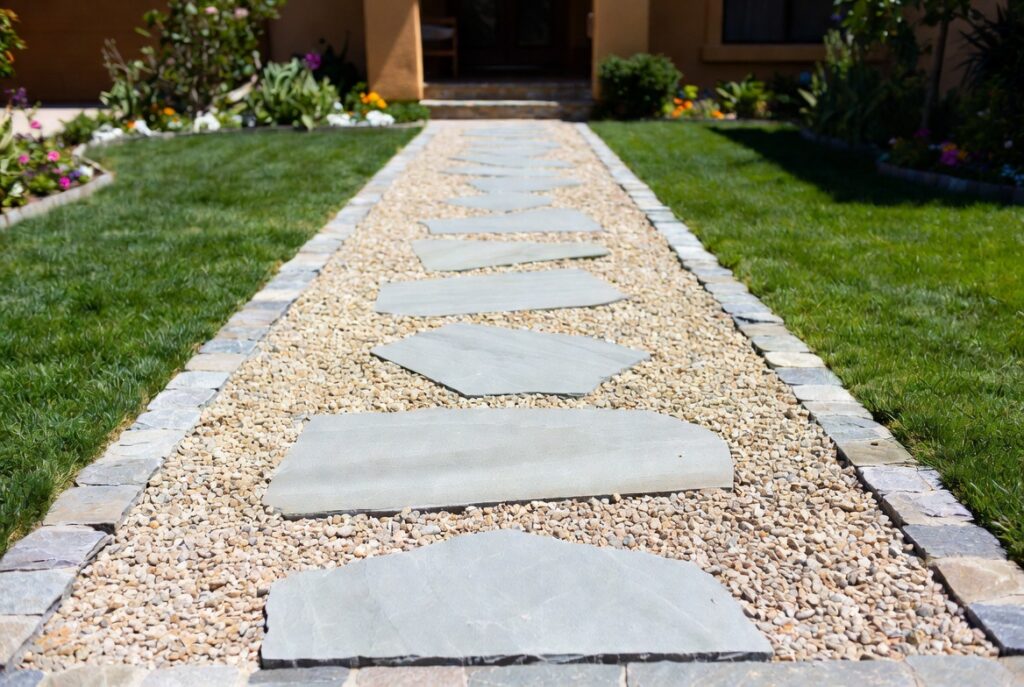
Best for: Front yards where the existing path is cracked, uninviting, or simply a plain concrete strip
A well-designed path is the most functional element in front yard landscaping — it guides people safely to the door, defines the landscape on either side, and creates the physical experience of arriving at the home. A beautiful path makes even a modest front yard feel considered and welcoming.
Natural stone (flagstone, bluestone, or sandstone), brick, and gravel are the most attractive pathway materials for residential front yards. Flagstone with low ground cover (creeping thyme or moss) growing between the joints is particularly beautiful — the plants soften the hard material and create a romantic, cottage-garden quality.
Smart tip: Make the path wider than feels strictly necessary — a minimum of 90cm for comfortable single-file walking, or 120cm for a more welcoming width that allows two people to walk side by side. A narrow path sends an unconscious message of constraint; a wide path says welcome.
Mistake to avoid: Installing a path that takes the most direct line possible from the street to the door without any gentle curve or variation. A slight curve in the path creates more visual interest, makes the approach feel longer and more considered, and allows for plantings at the inside of the curve that enhance the arrival experience.
11. Add a Mailbox Garden Bed
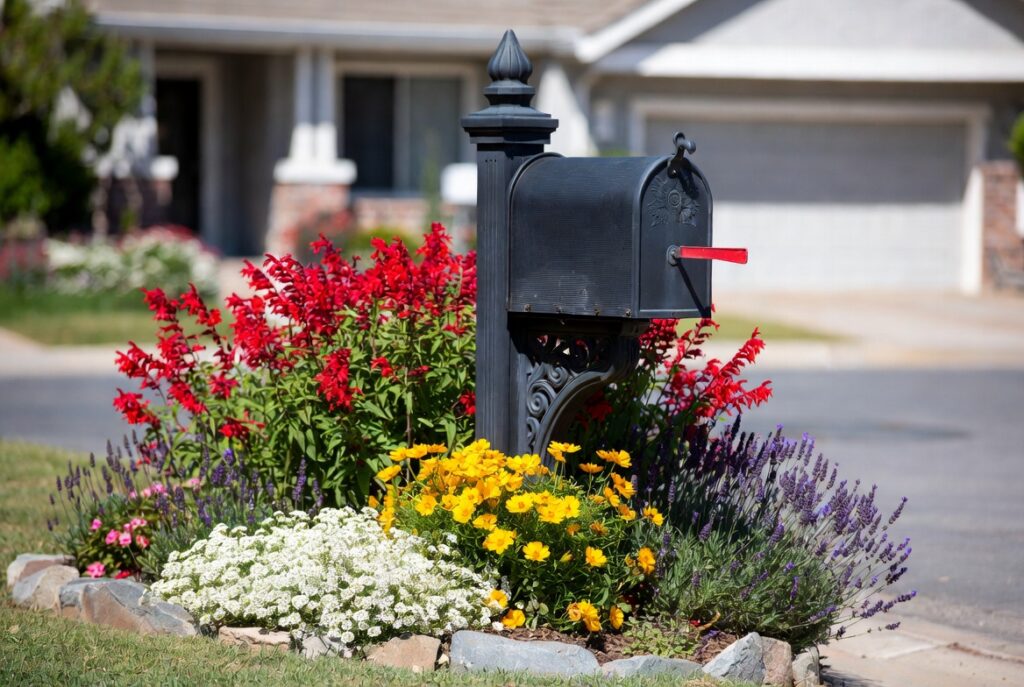
Best for: Any front yard with a mailbox — one of the most overlooked landscaping opportunities
The area around a mailbox post is a small landscaping opportunity that most homeowners ignore entirely — leaving a bare post in a patch of lawn or, worse, in a circle of compacted, plant-free soil. A small garden bed around the base of a mailbox post creates a finished, cared-for appearance that improves the entire street view of the property.
Keep the planting low to avoid obstructing mail delivery — lavender, coreopsis, black-eyed Susan, salvia, or dwarf ornamental grasses all work well. The bed should be in proportion to the mailbox post — 60-90cm in diameter is typically appropriate.
Smart tip: Repeat one or two of the plants from the mailbox bed in the main front yard planting. This visual repetition creates a sense of intentional design that connects the mailbox area to the rest of the landscape.
Mistake to avoid: Using high-maintenance plants that need frequent deadheading, dividing, or replacement in the mailbox bed. This small bed should be planted with reliable, low-maintenance species that look good through the season without constant attention.
12. Plant a Shade Tree for Structure
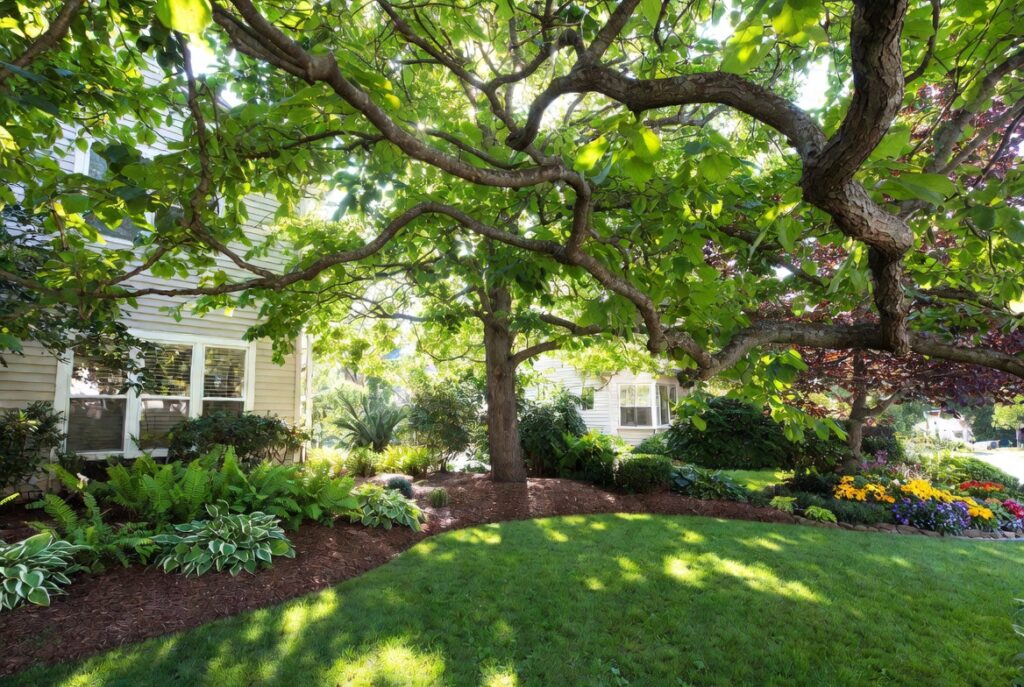
Best for: Front yards with no existing mature trees and bare, sun-exposed lawns
A well-placed shade tree is the most long-term, highest-impact investment in front yard landscaping. It provides summer shade that reduces cooling costs, creates vertical structure that gives the house scale and context, produces seasonal interest through the year, and adds significant value to the property — mature trees are among the most valued features in residential real estate.
Choose a species appropriate to your climate, soil, and the space available. For small front yards, consider Japanese maple, serviceberry, or crabapple — trees that provide four-season interest without outgrowing their space. For larger yards, red maple, flowering dogwood, or zelkova provide canopy scale with attractive seasonal display.
Smart tip: Plant the tree slightly off-center rather than directly in the middle of the front lawn — an off-center tree creates a more natural, less planned appearance while still providing the structure and shade benefits. Direct center placement tends to look overly formal.
Mistake to avoid: Planting a species that will eventually become too large for the space — roots that damage driveways and foundations, or a canopy that blocks windows and overpowers the house. Research the ultimate height and spread of any tree species before purchasing, and choose conservatively.
13. Use Mulch to Define Garden Beds
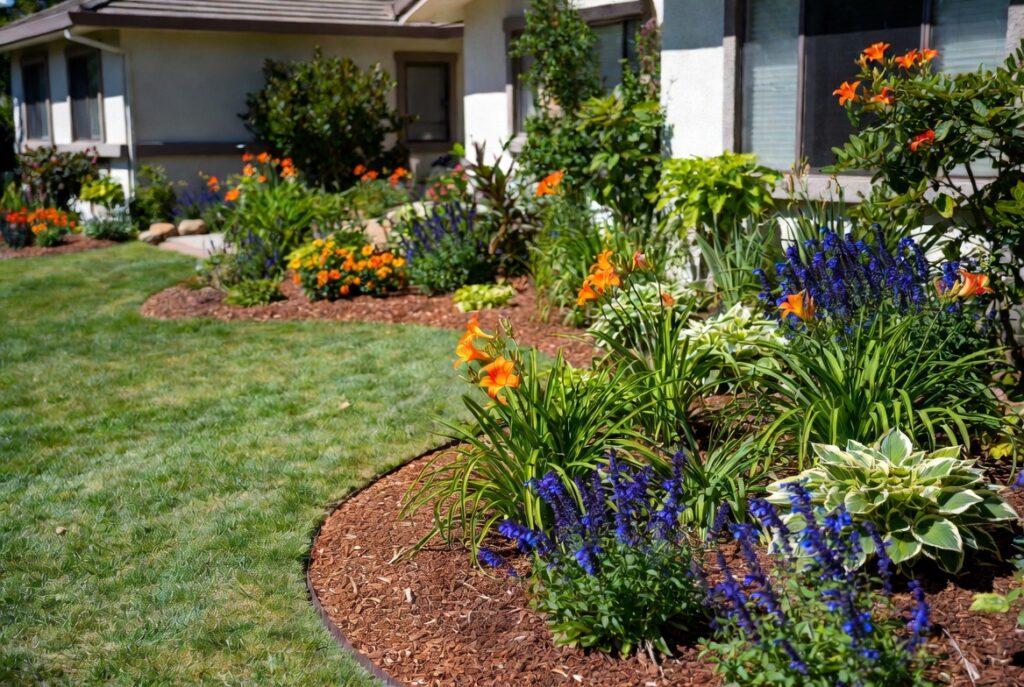
Best for: Any front yard garden bed — mulch is the single most impactful finish for any planting area
Fresh, consistent mulch transforms the appearance of any garden bed immediately — it suppresses weeds, retains soil moisture, regulates soil temperature, and creates a clean, dark backdrop that makes plants appear more vivid and the overall bed look professionally maintained. A front yard with freshly mulched beds instantly communicates care and attention.
Bark mulch, wood chip, or cocoa shell mulch all work effectively. Apply at a depth of 5-8cm for maximum weed suppression, keeping the mulch a few centimeters away from plant stems and tree trunks to prevent moisture accumulation and rot.
Smart tip: Refresh mulch every spring — existing mulch breaks down over winter and becomes thinner and less effective. A single bag of fresh mulch applied to the existing layer restores the appearance and function of the bed at minimal cost and effort.
Mistake to avoid: Piling mulch in a volcano shape against tree trunks — a common mistake that traps moisture against the bark, encourages rot and pest damage, and can kill established trees over several years. Keep mulch flat and maintain a clear gap around all stems and trunks.
14. Create a Rock Garden Corner
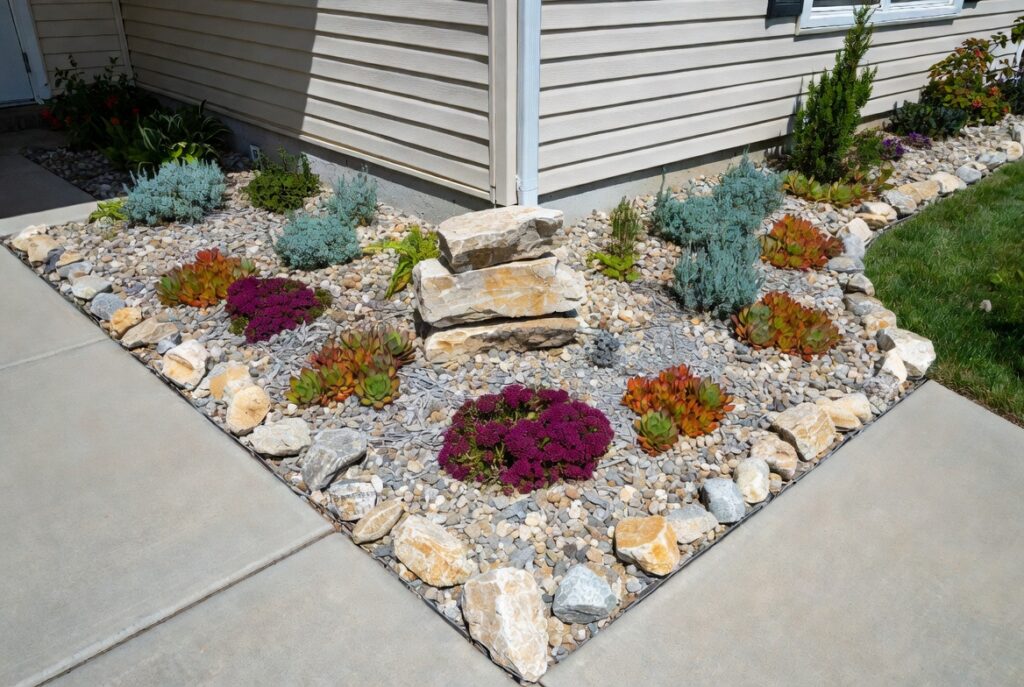
Best for: Sloped corners, dry areas, or any part of the front yard where grass or plants struggle to establish
A rock garden corner converts a difficult growing area into a deliberate, attractive feature — turning a problem into a design element. Rocks provide permanent structure, excellent drainage, and a natural backdrop for drought-tolerant plants that thrive in the free-draining conditions between stones.
Choose rocks of consistent material and varying sizes — river stone, sandstone, or slate all work well. Arrange them to look naturally placed rather than symmetrically arranged. Plant with sedums, sempervivums, creeping phlox, thyme, and dwarf conifers — plants that thrive in the sharp drainage conditions that rock gardens provide.
Smart tip: Bury one-third of each rock below the soil surface. Rocks that sit on top of the soil look placed; rocks partially buried look like they belong — as if they have always been part of the landscape.
Mistake to avoid: Using too many different types of rock in one area. A rock garden using three different materials (river pebble, sandstone, and granite, for example) looks confused and collected rather than natural. Choose one rock type and use it consistently throughout the feature.
15. Try a Cottage Garden Style
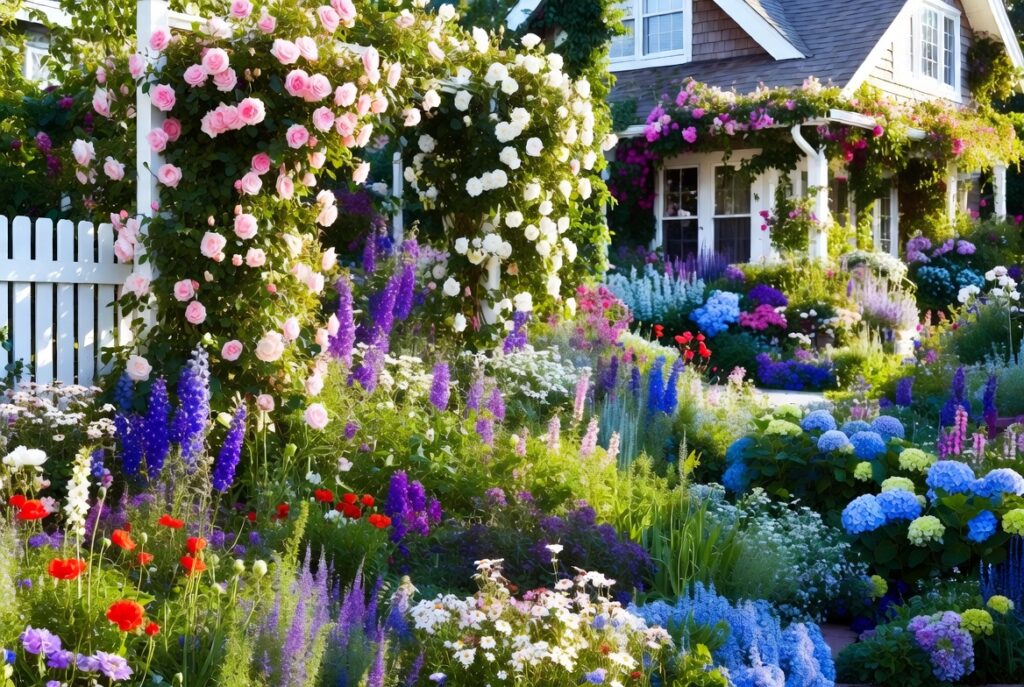
Best for: Older homes, period properties, or any front yard where a relaxed, informal, abundantly planted aesthetic suits the architecture
The cottage garden style — characterized by densely planted, slightly informal beds filled with flowering perennials, roses, herbs, and self-seeding annuals — creates one of the most beautiful and most characterful front yard appearances available. It looks effortlessly romantic while actually being quite structured in its plant combinations.
Key cottage garden plants include lavender, roses, foxgloves, delphinium, hollyhock, catmint, salvia, and echinacea — plants chosen for abundance of flower, good scent, and the ability to weave naturally together. Avoid large empty spaces of bare soil — the cottage garden is defined by generous, overlapping planting.
Smart tip: Include self-seeding plants like foxgloves, aquilegia, and verbena bonariensis in cottage garden plantings — they fill gaps, create natural-looking drifts, and produce seedlings that give the garden its characteristic spontaneous quality without requiring replanting every year.
Mistake to avoid: Applying cottage garden style to a very formal or contemporary house. The relaxed informality of a cottage garden suits period or vernacular architecture beautifully but can look incongruous against a sharply modern facade. Match the garden style to the architecture it frames.
16. Add a Low Decorative Fence
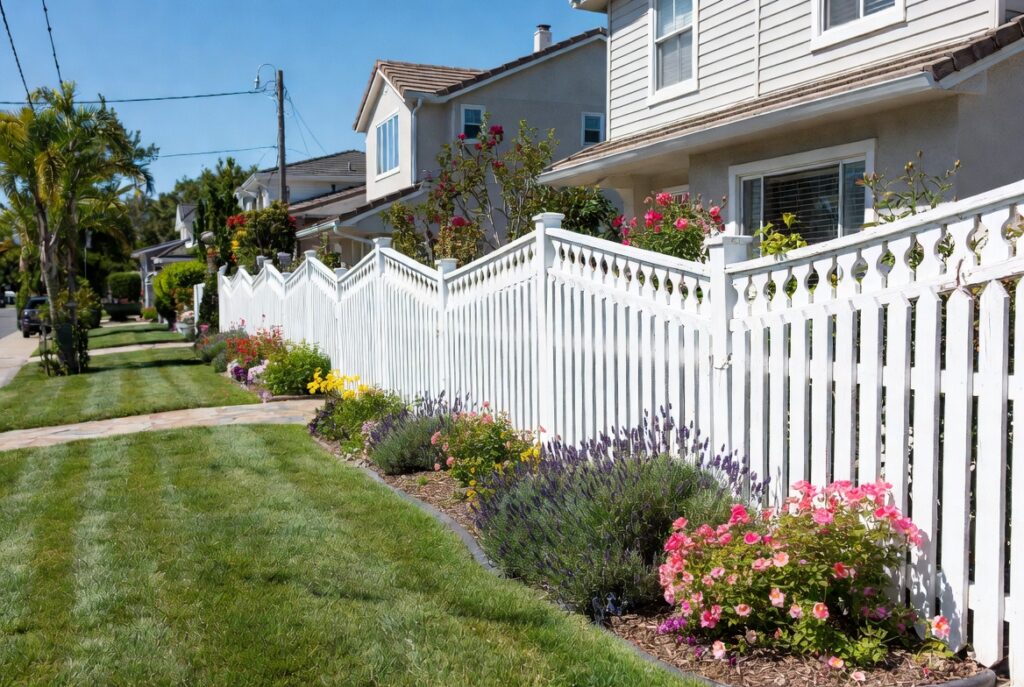
Best for: Front yards that need gentle definition without creating a strong visual barrier
A low decorative fence — picket, post and rail, or simple iron — provides a gentle boundary between the garden and the street without creating a solid barrier. It defines the property clearly, provides a structure for climbing plants or roses, and adds traditional character to the front yard design.
Low fences work best when they relate to the style of the house — a white picket fence suits a cottage or traditional home beautifully; a simple iron fence suits a period townhouse; a split-rail fence suits a rural or country style property.
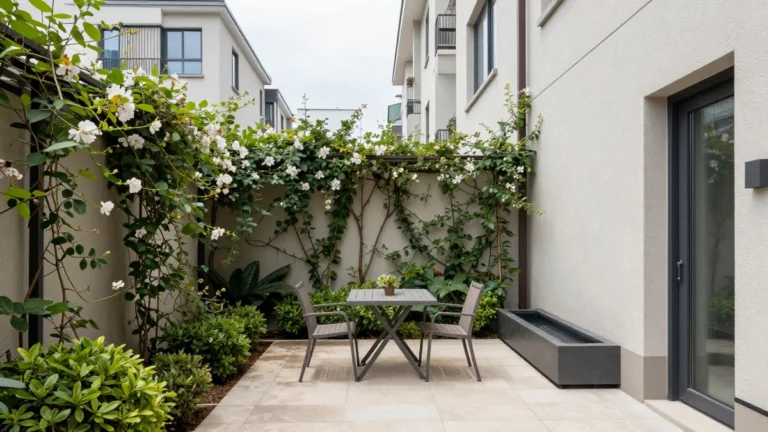
Smart tip: Plant climbing roses or clematis along a front fence rather than leaving it bare — a fence smothered in seasonal bloom becomes one of the most beautiful features in any front yard and requires minimal care beyond an annual prune.
Mistake to avoid: Installing a fence that is taller than necessary. A front yard fence above 90-100cm begins to feel like a barrier rather than a welcome feature. Keep front garden fences low — their purpose is definition and character, not enclosure.
17. Use Seasonal Color with Annuals
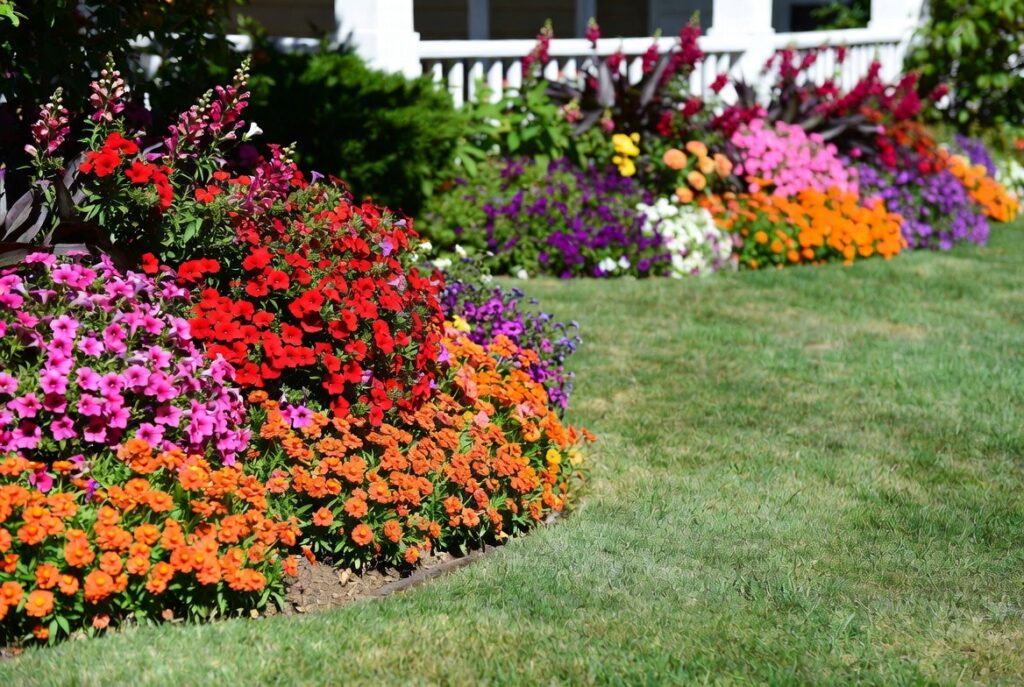
Best for: Any front yard needing quick, affordable color impact — particularly in summer and autumn
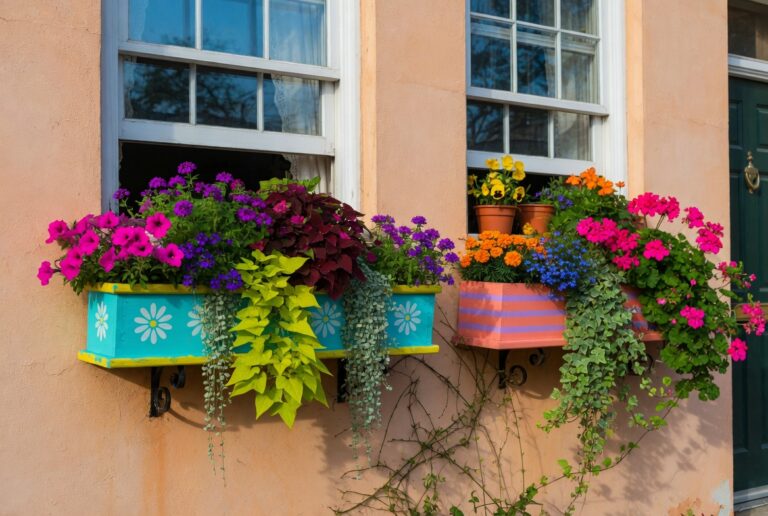
Annual plants — those that complete their life cycle in one growing season — are the most cost-effective way to introduce vibrant, fresh color into a front yard. Planted in spring, summer annuals like marigolds, petunias, zinnias, cosmos, and calibrachoa provide continuous color from early summer until the first frosts.
Use annuals to fill gaps in perennial beds, to refresh container plantings seasonally, or to create a temporary color scheme that can be changed completely next year. They are also the lowest-risk color decision available — if a color combination doesn’t work, it’s gone by autumn and you can try something different.
Smart tip: Choose annuals based on their foliage as well as their flowers — plants like coleus, ornamental kale, and caladium provide color through attractive leaves rather than flowers, extending the season of interest and reducing the need for deadheading.
Mistake to avoid: Planting annuals in small, isolated clumps scattered across the garden. Annuals need mass to be effective — a group of five to seven plants of the same variety creates real color impact; a single plant of five different varieties creates visual noise.
18. Design a Drought-Tolerant Front Yard
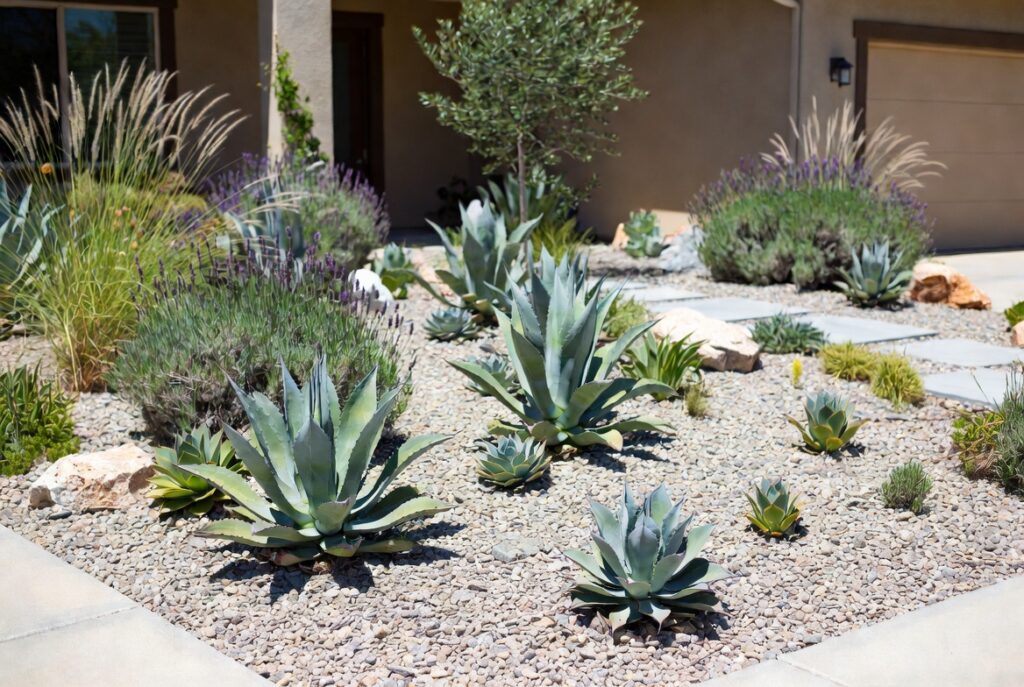
Best for: Dry climates, water-restricted areas, or any homeowner wanting to reduce irrigation needs
A drought-tolerant front yard — sometimes called a xeriscape — replaces thirsty lawns and water-dependent plants with native and drought-adapted species that look beautiful with minimal irrigation. This is both the most environmentally responsible and, increasingly, the most practical approach to front yard landscaping in regions with water restrictions or irregular rainfall.
Plants suited to drought-tolerant front yards include lavender, salvia, sedum, agave, ornamental grasses, rosemary, and native wildflowers — all of which look good, provide ecological value (particularly for pollinators), and require almost no supplemental watering once established.
Smart tip: Apply a 8-10cm layer of gravel or crushed stone mulch in drought-tolerant beds rather than organic mulch. Gravel mulch suits the aesthetic of Mediterranean and drought-adapted plantings beautifully, drains freely after rain, and does not break down and require replacement like organic mulch.
Mistake to avoid: Expecting drought-tolerant plants to be drought-proof in their first year. Most drought-adapted plants need regular watering during their first growing season while they establish deep root systems. After the first year, they can typically survive on natural rainfall — but they need support to get established.
19. Plant Evergreens for Year-Round Structure
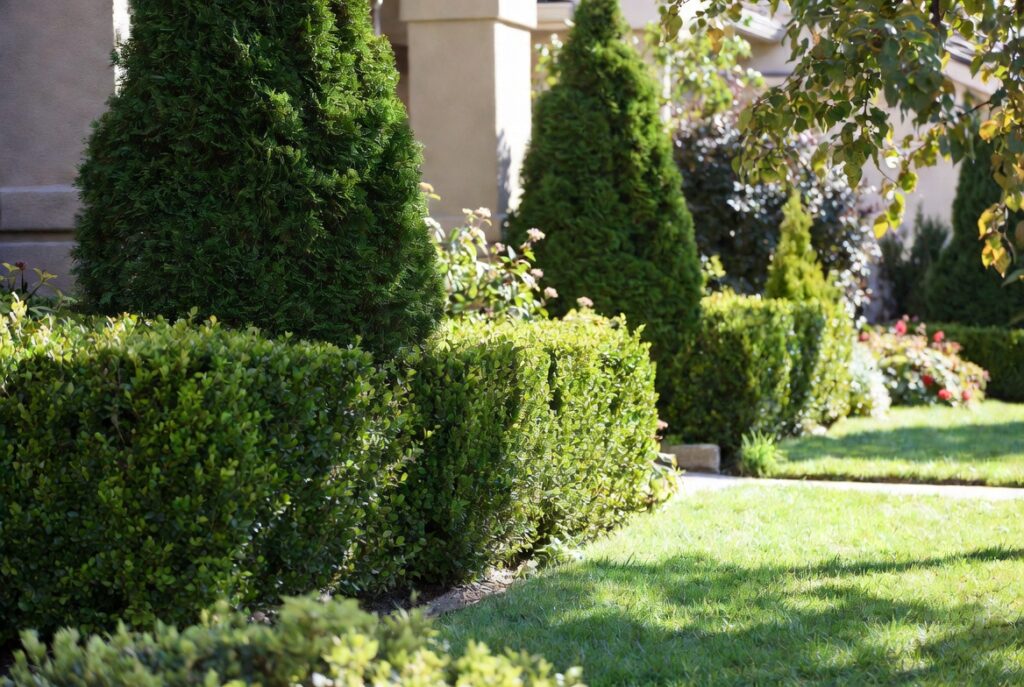
Best for: Any front yard that looks great in summer but bare and neglected in winter
Evergreen plants — those that retain their foliage through winter — are the foundation of a front yard that looks good in every season. While flowering perennials and deciduous shrubs provide seasonal highlights, evergreens provide the permanent structure, year-round color, and winter skeleton that gives the garden its backbone when everything else is dormant.
Key evergreens for front yards: boxwood (Buxus), holly (Ilex), yew (Taxus), privet (Ligustrum), photinia, pittosporum, and euonymus — all of which maintain attractive foliage through the year and can be clipped to shape if desired.
Smart tip: Use evergreens at the back of beds (as structural anchor plants) and at key positions in the design — flanking the entrance, at the corners of the house, or as specimen plants at the focal point. This ensures the garden retains its designed quality through all twelve months.
Mistake to avoid: Over-relying on evergreens at the expense of seasonal interest. A garden composed entirely of evergreens can feel static and unexciting. The best front yards balance evergreen structure with seasonal flowering plants that provide changing interest through the year.
20. How to Plan Your Front Yard Landscaping
Best for: Anyone starting a front yard project from scratch or planning a significant redesign
Effective front yard landscaping begins with a clear assessment of what you’re working with and what you want to achieve — before any plants are purchased or any soil is turned.
Start by observing: which areas receive full sun, which are shaded, where water collects after rain, and which direction the prevailing wind comes from. These conditions determine which plants will thrive — getting them wrong means plants that struggle regardless of how well they’re cared for.
Sketch a simple plan — it doesn’t need to be a professional drawing, just an outline of the yard with the house, the path, existing trees, and your intended new beds marked. Plan the focal point first, then the path framing, then the background structure, then the seasonal interest.
Choose a palette of no more than five plant species for a cohesive result. Repeat these plants in different areas of the yard — repetition creates the sense of a designed landscape rather than a collection of individual plants.
Smart tip: Visit local gardens, garden shows, and nurseries before purchasing anything. Seeing plants at their mature size, in their actual growing conditions, gives you a far more accurate impression of what they’ll look like than any photograph — and often reveals plants you’d never have discovered through online research.
Mistake to avoid: Buying plants impulsively without a plan and then finding positions for them. This is how gardens accumulate unrelated plants that never quite work together. Always plan the space first, then select plants to fill specific roles in that plan — not the reverse.
Before You Start
- Know your soil. Most front yard plants fail due to wrong soil conditions rather than wrong care. Test your soil pH and drainage before investing in plants — a simple soil test costs almost nothing and prevents expensive mistakes.
- Check local regulations. Some areas have restrictions on front yard landscaping — particularly regarding fence heights, tree removal, and paving proportions. Check with your local authority before beginning significant work.
- Start with structure. Paths, edging, and large shrubs are the hardest elements to change later — get these right before filling in with seasonal plants.
- Think about maintenance realistically. A beautiful garden that requires more time than you have will quickly become an eyesore. Choose plants and designs that match your actual maintenance capacity.
Conclusion
A well-designed front yard is one of the most satisfying projects a homeowner can undertake — the results are visible every day, enjoyed by the whole neighborhood, and genuinely improve the quality of arriving home. The key is not complexity but intention: a small number of good plants, well placed, with clean edging and consistent care, creates a front yard that looks considered and beautiful in every season. Start with one area, do it properly, and build from there.
garden ideas • backyard landscaping ideas • curb appeal ideas • outdoor garden • garden landscaping ideas • home decor ideas
Continue Your Home Transformation
Explore the full collection of step-by-step eBooks and get the guide that fits the room you're working on.


3 Comments