Bedroom laundry hamper ideas should start where clothes naturally leave the dressing routine. A beautiful basket is less useful when its lid cannot open beside the dresser or its loaded bag is difficult to carry out of the room. Compare the whole task before choosing the material.
Choose the retained laundry volume, sorting needs and route to the washing area from the household’s actual routine. A smaller manageable group can work better than a large container that encourages overfilling. Keep clean clothes and items awaiting washing in clearly separate routines.
These 24 original concepts compare hamper shapes, features and bedroom positions. They illustrate arrangements rather than tested branded products. Follow the actual hamper, liner and garment care instructions, including permitted contents, handling and cleaning; a fabric appearance does not establish that a part is machine washable.
The images are original AI-generated decor concepts, not installation diagrams or photographs of completed client projects.
Browse These 24 Bedroom Laundry Hamper Ideas
Jump to an idea
- Begin bedroom laundry hamper ideas with one clear collection point
- Compare a tall slim hamper with its actual opening
- Use a lower broader basket when the route allows it
- Let a rectangular hamper sit neatly along a wall
- Use a round open basket for a simple modest routine
- Bedroom laundry hamper ideas with a hinged lid
- Give a removable lid a deliberate resting place
- Use a removable liner that suits the exact hamper
- Choose handles for the loaded carrying route
- Compare two compartments with the sorting you actually use
- Give two separate bags a clear shared arrangement
- Use a folding bag when it genuinely needs to store away
- Choose a soft standing bag from its actual structure
- Use a woven hamper with a suitable fitted liner
- Compare a smooth shell with its cleaning requirements
- Let a fabric-covered hamper echo one bedroom textile
- Place the hamper beside the wardrobe routine
- Use an appropriate wardrobe compartment only after a full test
- Keep the dresser’s open drawer clear of the hamper
- Give a corner enough room for opening and emptying
- Keep a shared room route independent of the laundry group
- Give clean laundry a separate return container or routine
- Choose capacity from a normal collection period
- Finish bedroom laundry hamper ideas with a simple reset
Compare bedroom laundry hamper ideas through loading and carrying
Measure the complete hamper, its open lid or closure and the space needed to lift out a bag. Compare the loaded handling route with bedroom doors, furniture and the trip to the washing area. Record the exact product’s care instructions for each removable part. Keep the normal room route and access to drawers, wardrobes and other required features useful.
| What interrupts the routine | Feature to compare | Useful test |
|---|---|---|
| Clothes land on a chair | A clear suitable collection point | Is it on the normal dressing route? |
| A narrow usable position | An appropriately slim complete hamper | Can the lid open and the loaded bag come out? |
| Several laundry groups | A suitable divided interior or separate bags | Does the sorting system match actual garment guidance? |
| An awkward carry to the washing area | Manageable removable bags with suitable handles | Can the loaded group be handled normally? |
| An enclosed bedroom position | A product and location suited to the conditions | Do the actual care and storage requirements allow it? |
| Cleaning uncertainty | Clear instructions for shell and liner separately | Which parts can be washed and by which method? |
| A shared bedroom | A simple arrangement understood by both users | Can each group be returned without blocking the other? |
Read the care instructions for each part separately
Joseph Joseph’s Tota Twin 90L product page distinguishes its removable tote bags from the fabric exterior and frame. It describes the bags as machine washable according to their labels, with plastic trim removed, while the exterior is wipe-clean only. It also warns against sitting on the basket, placing heavy objects on it or allowing children to play with it. These are instructions for that product, not a cleaning rule for all fabric hampers.
A shared product-family name does not establish identical care
The current IKEA PURRPINGLA 206.142.39 laundry bag is marked not to be washed and is cleaned with lukewarm water and wiped dry. The PURRPINGLA 406.094.06 bag with stand instead lists hand washing in warm water. Check the exact article and current label rather than applying one family member’s guidance to another. Neither example supports a general assumption that a laundry bag can go into the washing machine.
Make a one-week collection-and-carry card
Record the collection point, laundry groups, complete hamper dimensions, liner removal and carrying route. During a normal week, note when clothes miss the hamper, when the bag becomes awkward and which part of emptying or returning it causes friction. Keep the exact care requirements beside the record. Change that specific problem before buying a larger or more decorative basket.
1. Begin bedroom laundry hamper ideas with one clear collection point
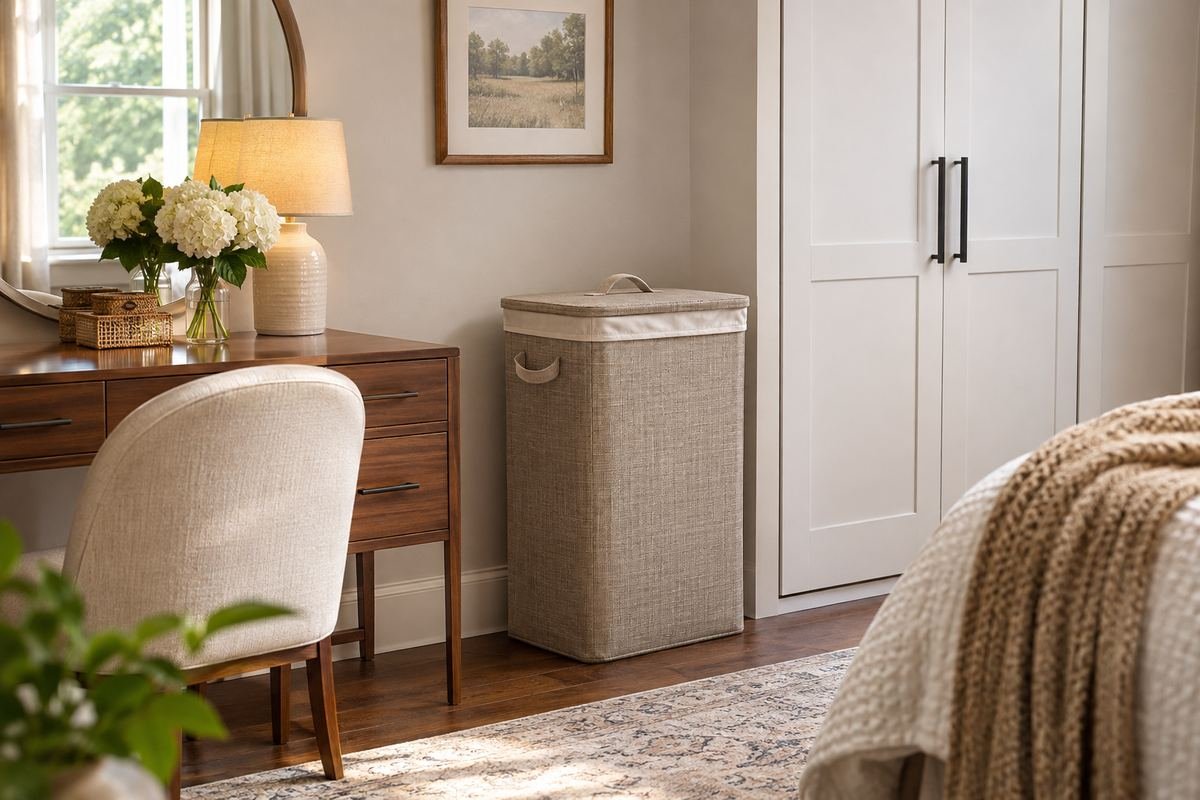
Choose one suitable place that lies naturally within the dressing routine. Compare where clothes currently land and why the existing hamper is missed. The useful collection point may be nearer the wardrobe or dresser than an empty decorative corner.
Keep the hamper’s full use and the room route practical. A basket that is easy to reach still needs room to open and empty. Review the position during ordinary use before adding a second collection point or a more elaborate sorting system.
Practical tip: Solve the missed collection point before adding another basket.
2. Compare a tall slim hamper with its actual opening

A narrow hamper may fit a constrained bedroom position while leaving more floor area visible. Measure its full body, handles and the movement needed to open it or lift out a bag. Extra height can change how the contents are reached.
Test the complete loaded routine rather than choosing from a front-view photograph. If the narrow shape makes emptying awkward, compare a different product or position. A slim footprint should support normal handling rather than merely fill the available gap.
Practical tip: Measure the lifting space above the hamper.
3. Use a lower broader basket when the route allows it
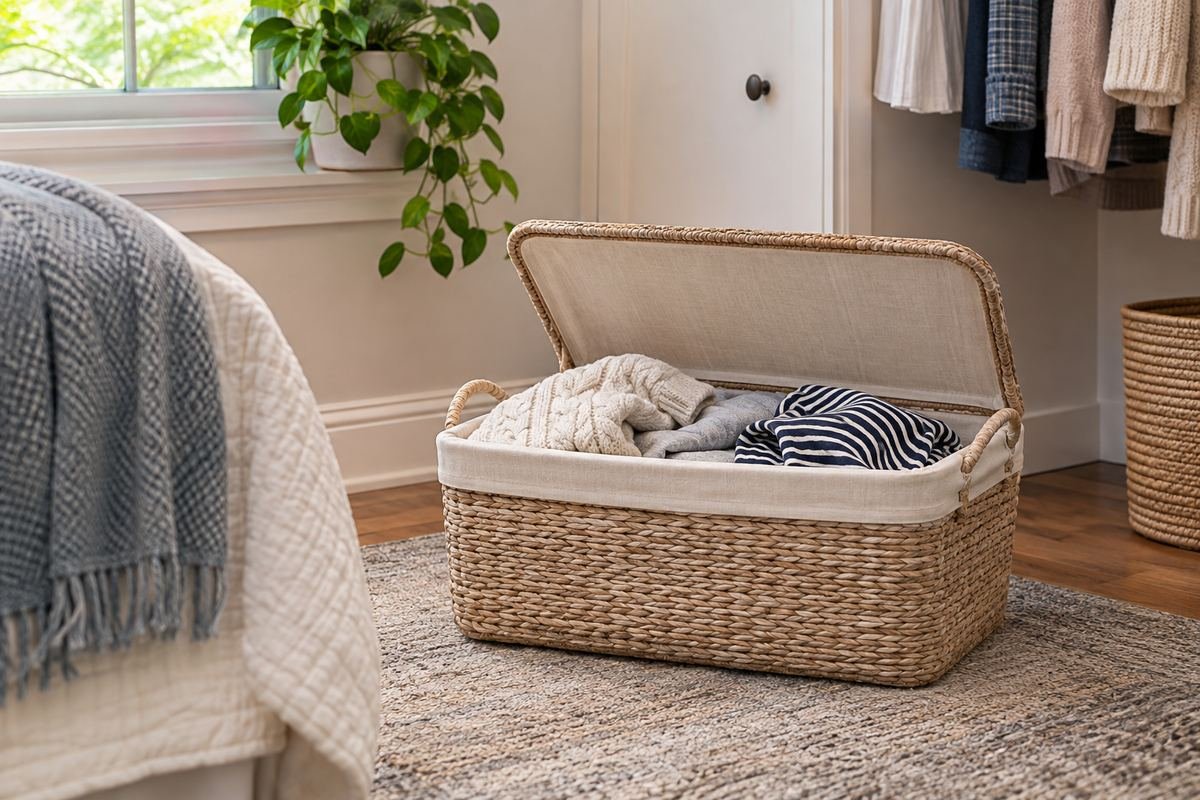
A lower basket can make the contents easy to see when its wider footprint fits the bedroom and the product suits the routine. Compare the loaded handling and the route to the washing area. The lower shape should not become an obstacle beside the bed.
Keep it within a deliberate collection area rather than letting clothes spread beyond the rim. If the wider base interrupts circulation, choose another position or a more appropriate shape. Ease of reaching the top is only one part of the decision.
Practical tip: Check floor footprint and loaded handling together.
4. Let a rectangular hamper sit neatly along a wall
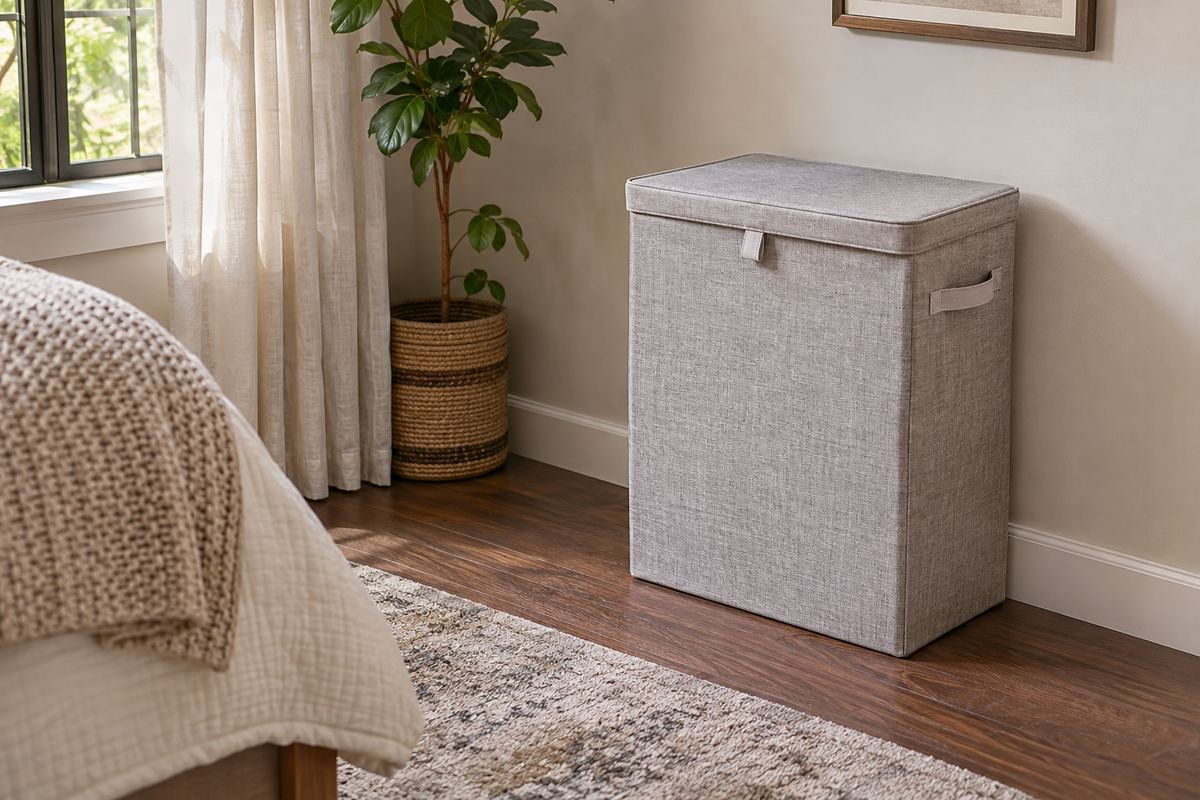
A rectangular body can relate cleanly to a wardrobe or dresser when its complete operation fits the position. Compare the actual depth and handle projections with the room route. Keep the basket independent of neighboring furniture rather than using it as a wedge between pieces.
Check that the lid or removable bag can work without striking the wall or nearby handles. A straight-sided shape can look orderly while still needing more useful space than its closed footprint suggests. Choose the position through opening and emptying.
Practical tip: Include handles when comparing the closed depth.
5. Use a round open basket for a simple modest routine
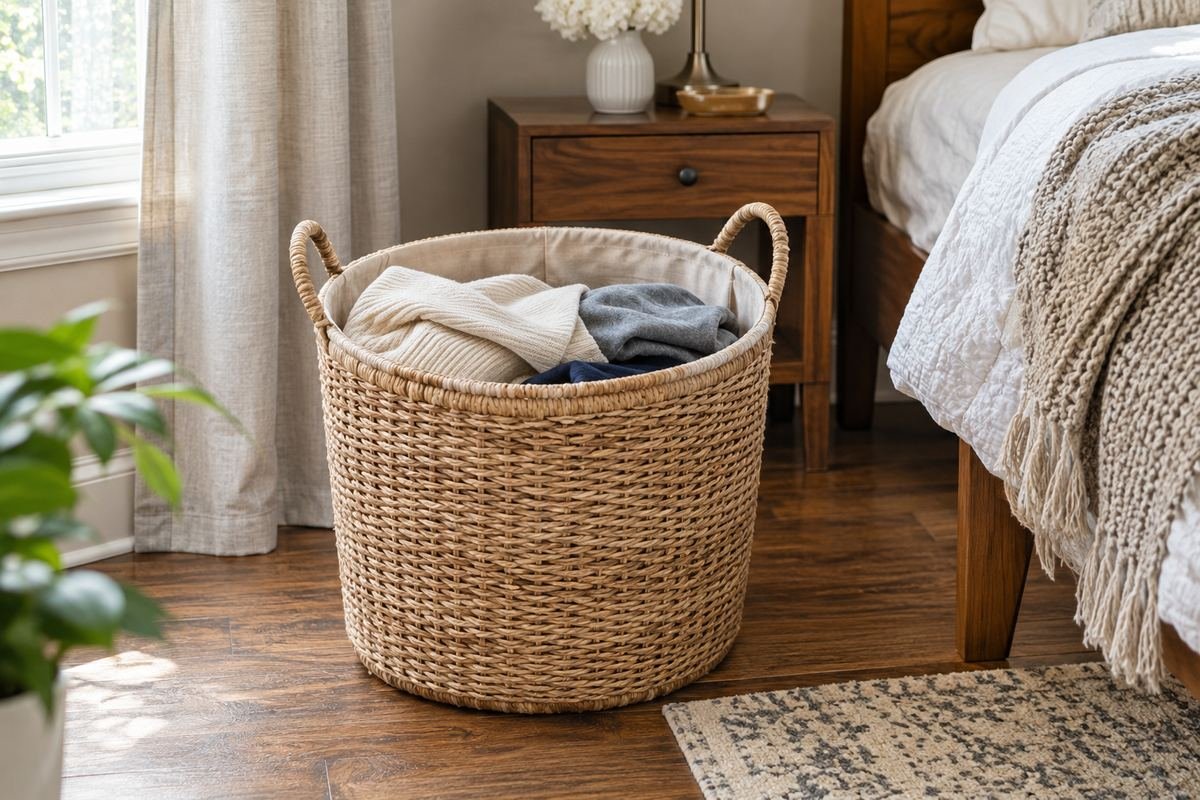
A suitable open basket can make dropping in and removing a small laundry group straightforward. Compare its diameter with the actual bedroom position rather than judging a round shape as automatically compact. Choose the product and contents from their care and handling requirements.
Keep the retained volume modest enough that the basket does not become a spreading pile. An open top is useful where the household prefers visibility and easy access. It does not replace the need for an appropriate location and regular emptying routine.
Practical tip: Compare the full diameter with the route beside it.
6. Bedroom laundry hamper ideas with a hinged lid
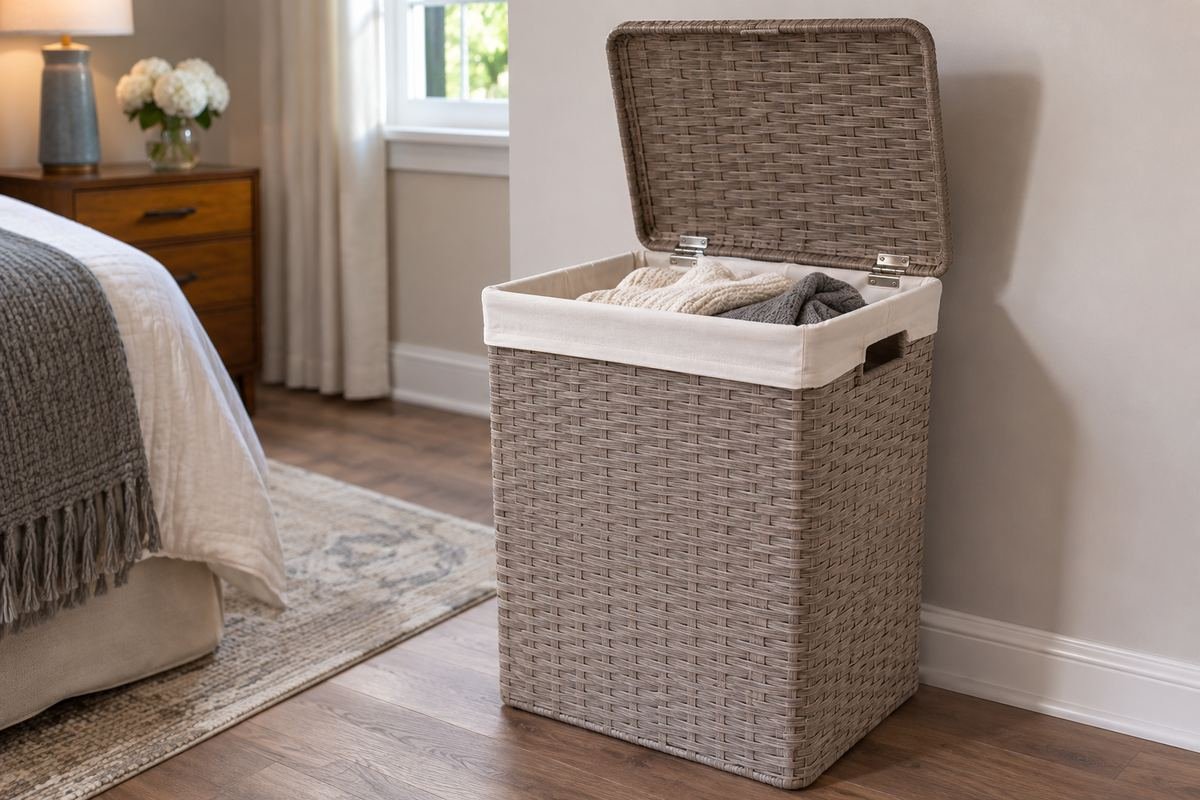
A hinged lid can give laundry a quieter appearance when the complete open position works in the bedroom. Compare the lid’s height and swing with dresser tops, shelves or nearby wall features. The closed basket alone does not show the necessary space.
Test removing the actual inner group without holding the lid in an awkward position. If the lid repeatedly catches or makes the task inconvenient, compare another suitable closure. Choose the feature from ordinary use rather than the neat closed outline.
Practical tip: Check the fully open lid before choosing the position.
7. Give a removable lid a deliberate resting place
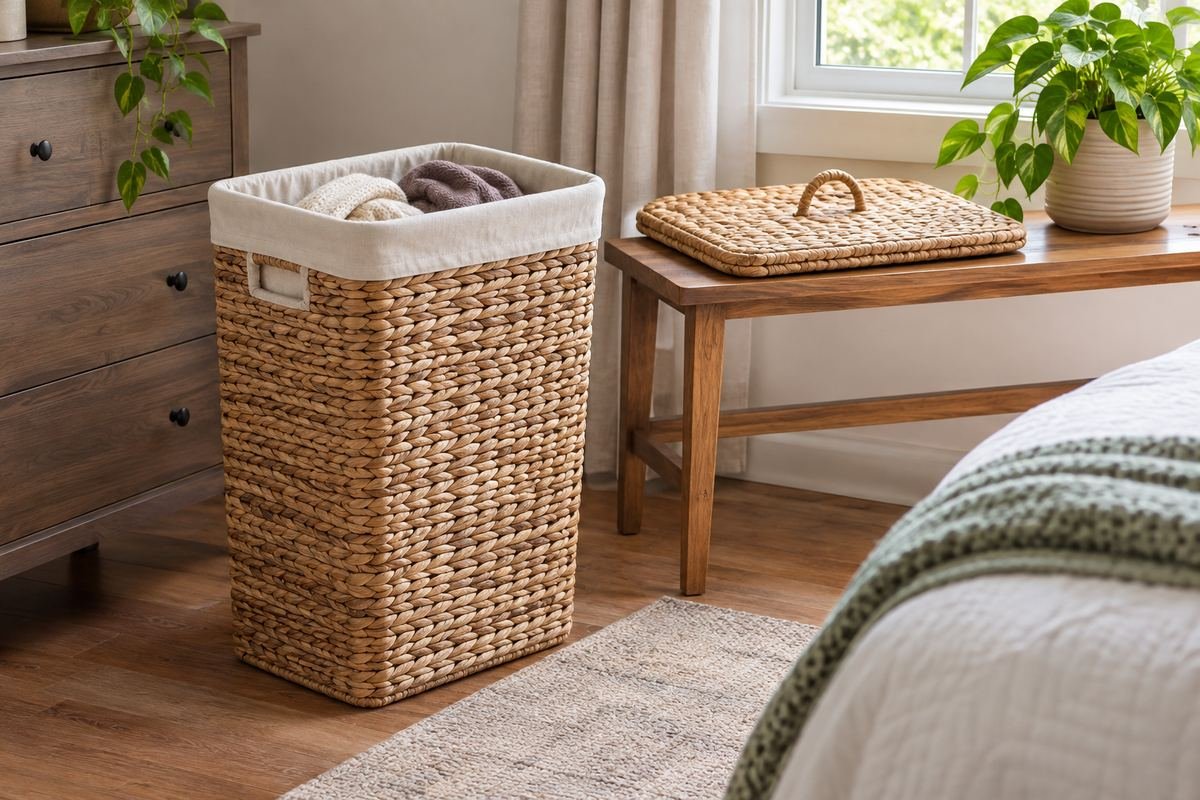
A removable lid can be practical when there is an appropriate place for it during emptying. Compare removing the lid and lifting the laundry group as one sequence. Keep the resting position clear of doors, the bed route and the container’s own opening.
Do not plan a routine that leaves the lid balanced on another object or lost among clothes. A simpler open top or another suitable product may be more useful in a constrained room. The closure should be easy to return after the task.
Practical tip: Plan where the lid goes while the bag comes out.
8. Use a removable liner that suits the exact hamper
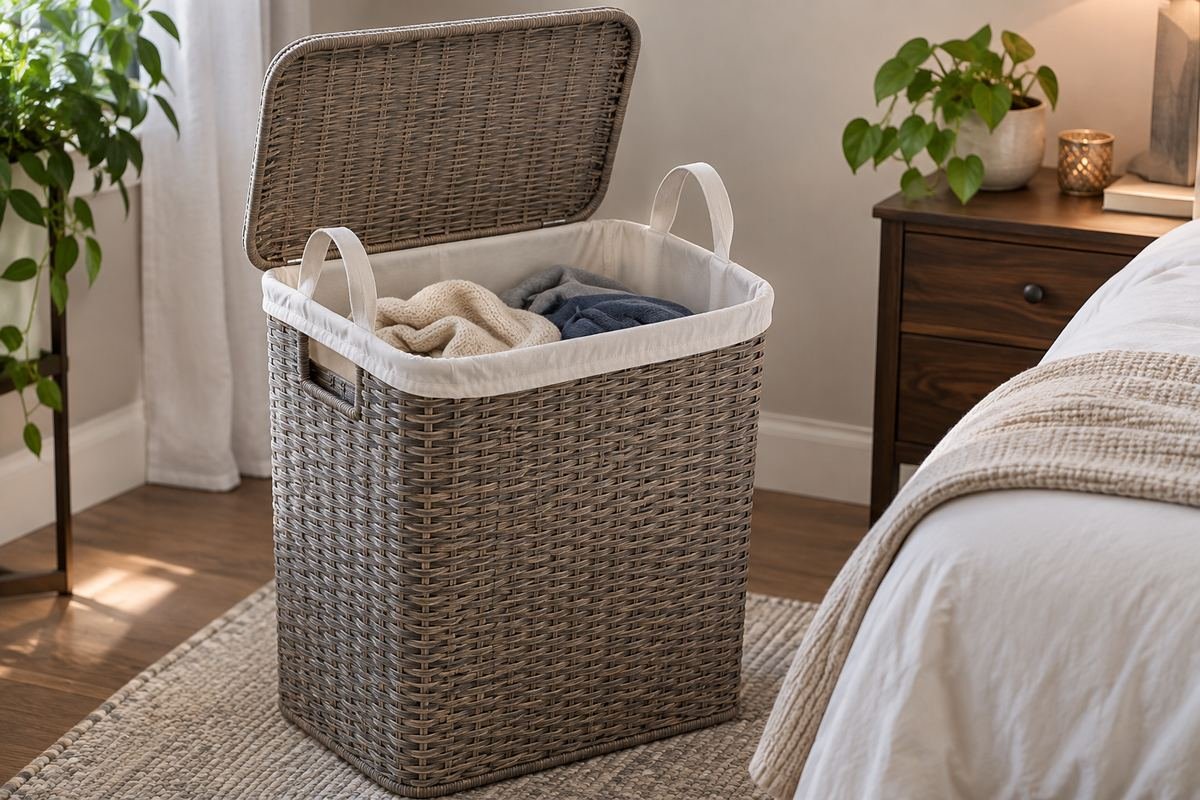
A purpose-made removable liner can separate the carried laundry group from the outer hamper. Check the attachment, handles and removal method for the actual product. A fabric bag that appears similar is not automatically a suitable replacement liner.
Compare lifting out the loaded group and returning the empty liner into its proper position. Follow each part’s care instructions separately. The liner is useful when it simplifies the route to washing without creating a difficult refitting task.
Practical tip: Test removal and return as one complete routine.
9. Choose handles for the loaded carrying route
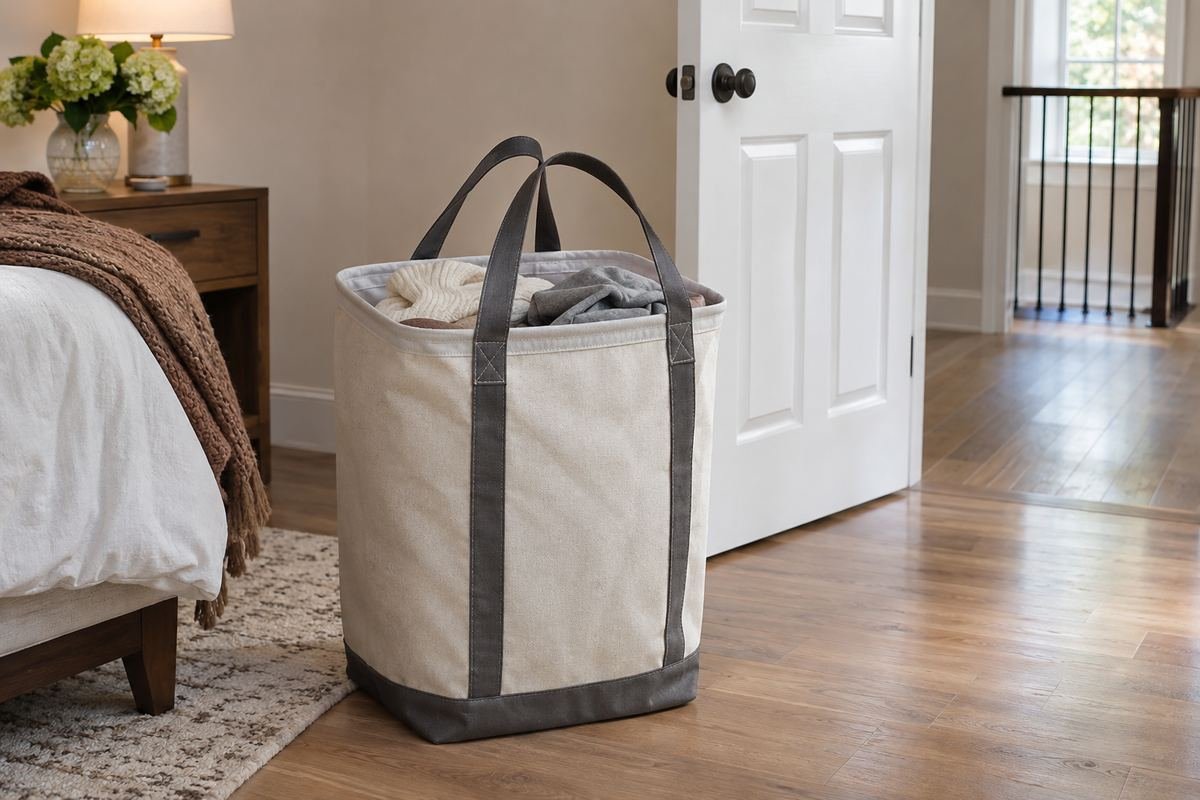
Handles can change how a hamper or inner bag is carried, but their appearance does not establish comfortable handling. Compare the actual loaded group with the product guidance and the route out of the bedroom. Include narrow doors and the place where the bag is emptied.
Choose a manageable quantity rather than filling every available part of the container. If carrying it becomes awkward, use a smaller suitable group or another appropriate routine. A large stated capacity is not a requirement to carry the full volume at once.
Practical tip: Test the route with the group you will normally carry.
10. Compare two compartments with the sorting you actually use
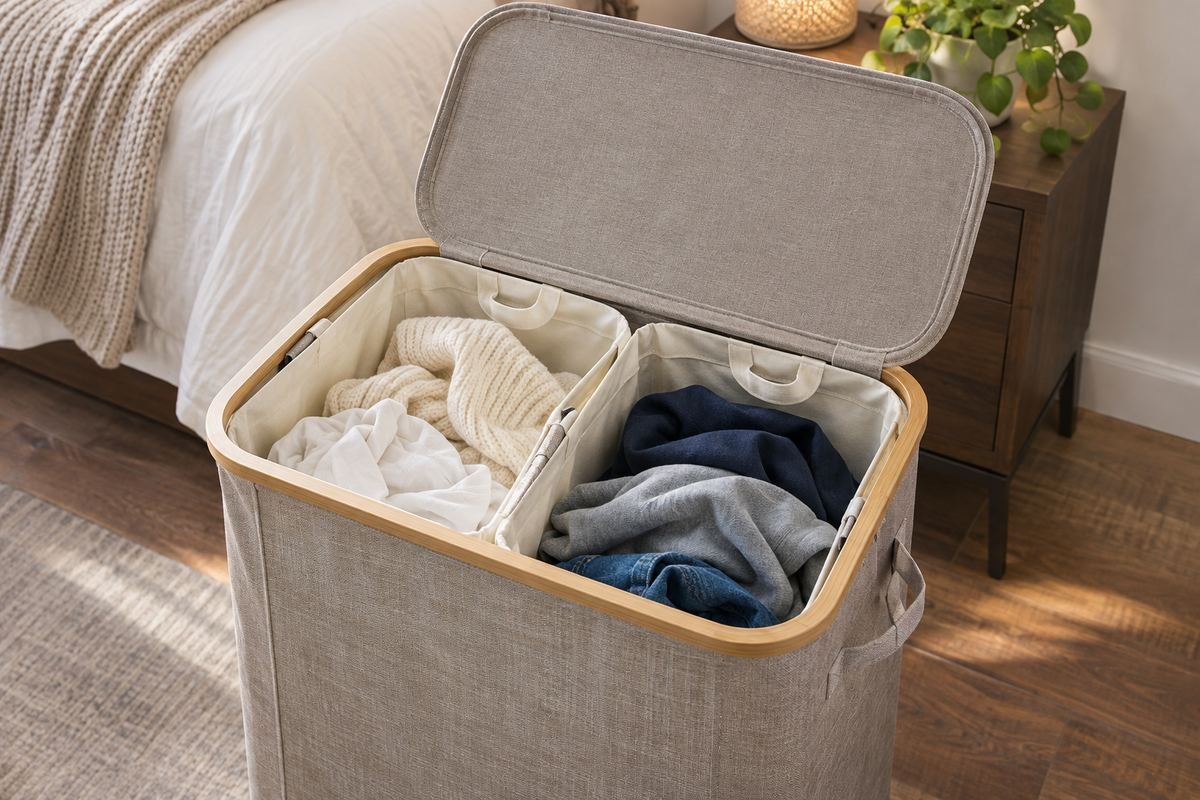
A divided hamper can keep two useful groups separate before washing. Choose the division from the garments’ actual care instructions and the household routine rather than assuming one fixed color rule suits every item. Compare each compartment’s usable size and removal method.
A divider is helpful when the people using the hamper understand and follow it. If one section repeatedly overfills while the other stays empty, change the arrangement or choose another suitable product. The system should simplify the routine rather than create a second sorting task later.
Practical tip: Use divisions that match the real laundry process.
11. Give two separate bags a clear shared arrangement
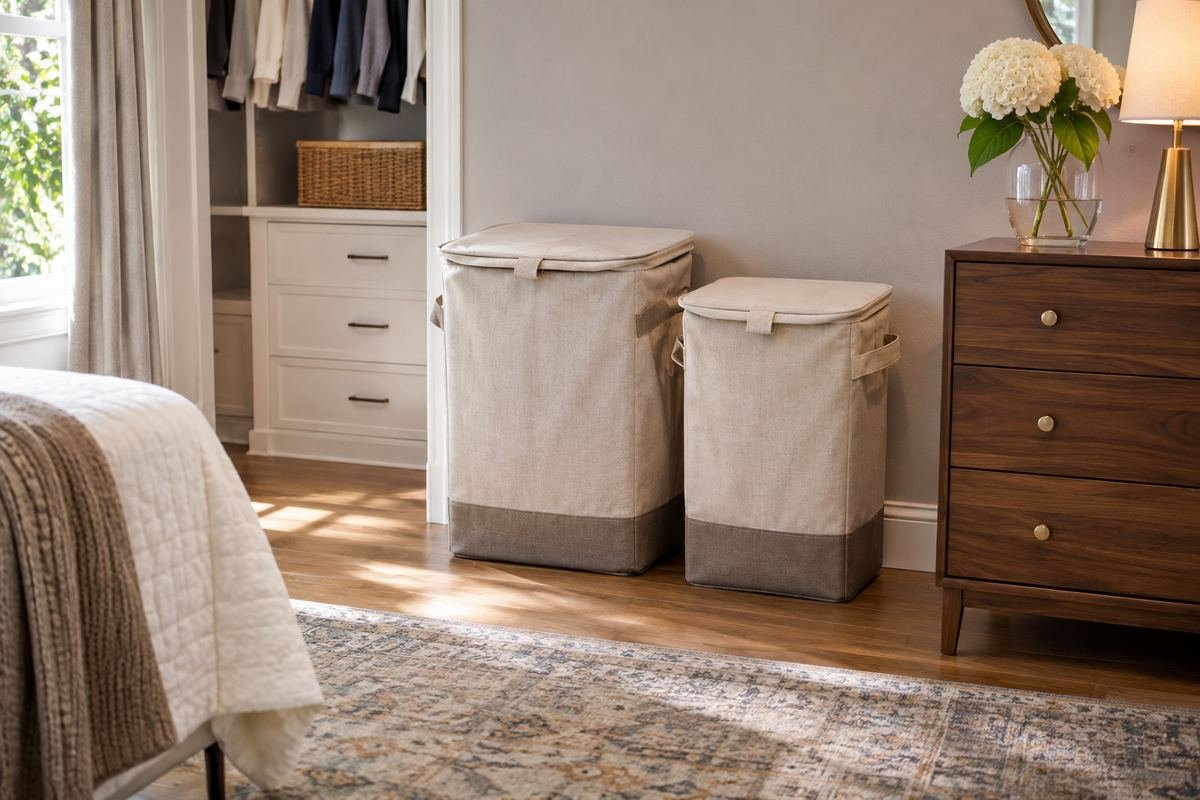
Two suitable bags can give a shared bedroom or distinct laundry groups their own collection points. Compare the total floor footprint and how each loaded bag comes out. Keep the arrangement simple enough that the correct return position is obvious.
The two containers do not need to match in capacity when the actual groups differ. Choose each from its task and care requirements, then coordinate one visual detail if the room benefits from it. Avoid adding more bags than the routine can maintain.
Practical tip: Choose each group independently before making them look coordinated.
12. Use a folding bag when it genuinely needs to store away
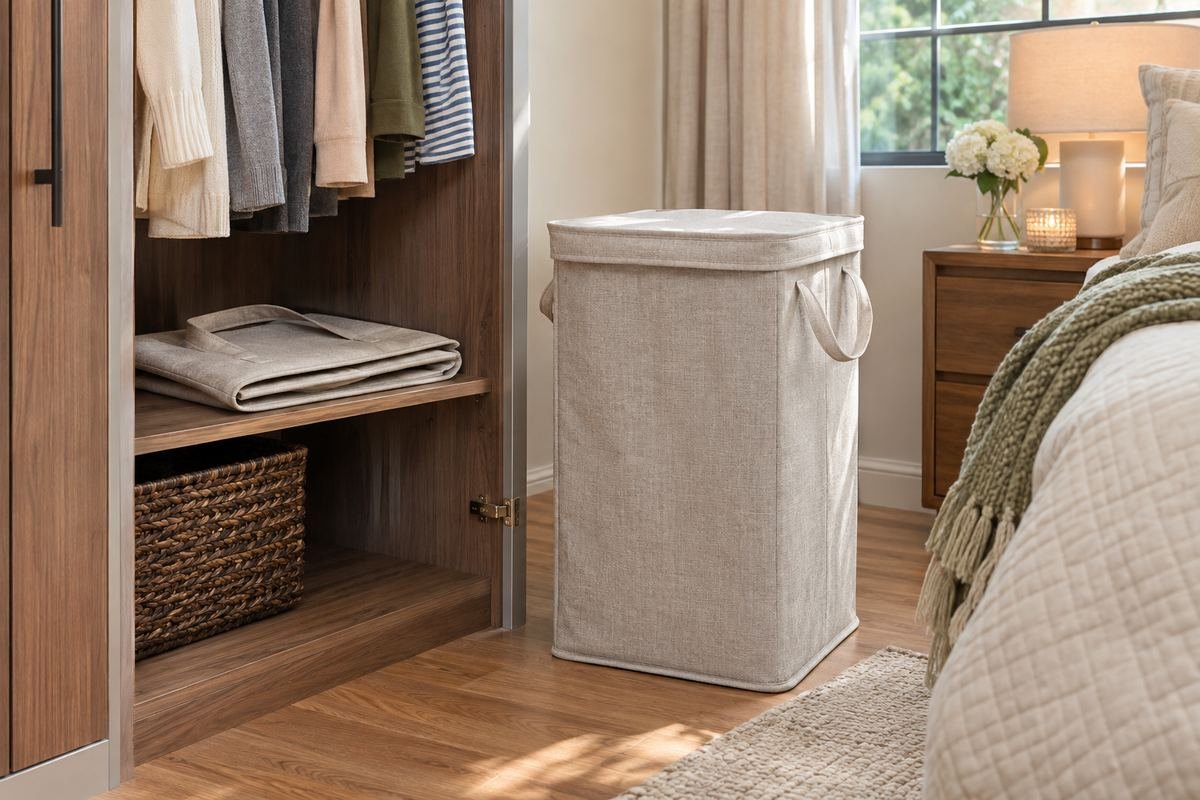
A laundry bag designed to fold can suit a routine that sometimes needs the floor area clear. Check the exact product’s folding and handling instructions, and choose an appropriate empty storage position. Do not assume a rigid hamper can collapse because another model does.
Include opening, filling, carrying and returning the bag in the comparison. A folding feature is less useful if the bag has no stable suitable position during ordinary collection. Choose it for a real change in the routine rather than as an extra feature alone.
Practical tip: Plan the empty stored position as well as the filled one.
13. Choose a soft standing bag from its actual structure
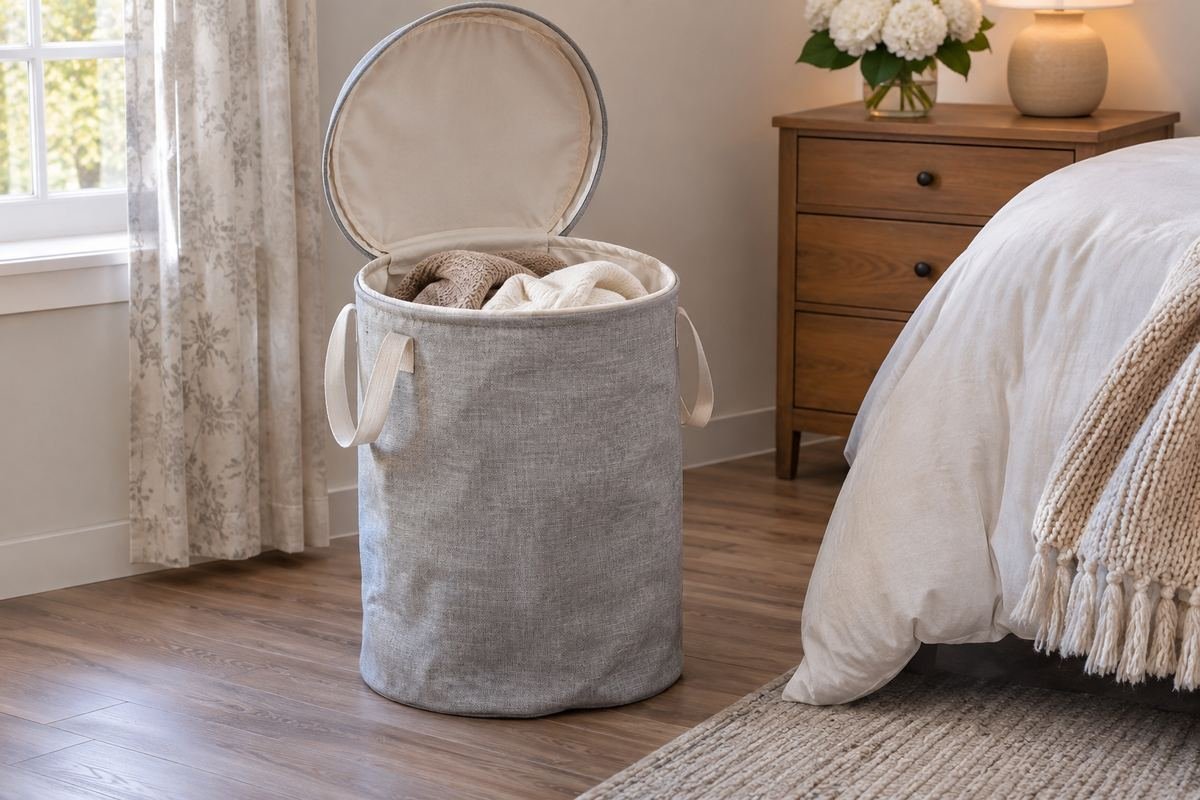
A soft-sided laundry bag can have a quieter furniture relationship than a large rigid hamper. Compare how the exact bag stands and how its opening is used, including when partly filled. A fabric appearance does not establish the support or shape in ordinary use.
Keep the bag in a suitable position with a manageable group. If it repeatedly slumps across the route or the opening becomes difficult to find, compare another product or arrangement. The soft outline should work after use rather than only during styling.
Practical tip: Check the bag when partly filled, not only when packed.
14. Use a woven hamper with a suitable fitted liner
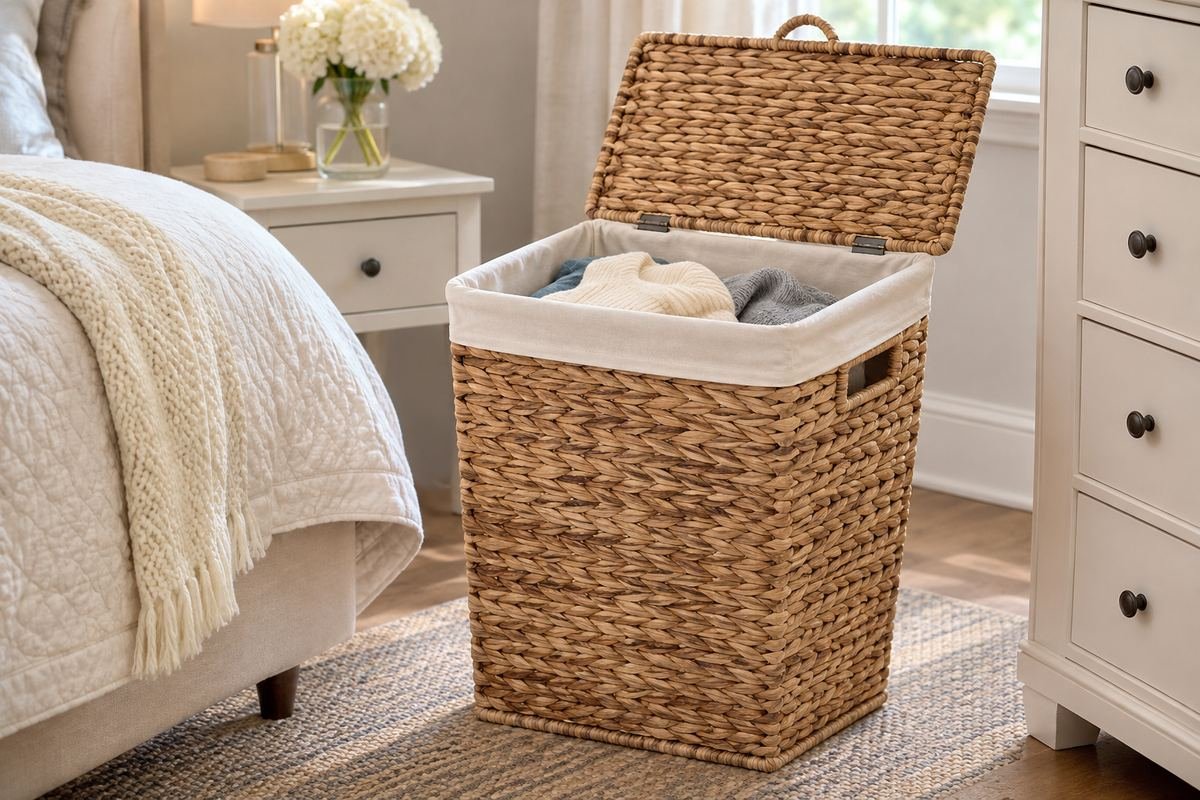
A woven outer shell can connect laundry storage to a bedroom’s natural textures when the actual material and care suit the location. Compare the product’s liner and its attachment rather than assuming the weave alone protects the garments. Follow the guidance for each part.
Keep the material appropriate to the room conditions and the contents. Review the loaded removal route before choosing a tall decorative shape. A restrained woven piece can be enough texture beside plain furniture without several extra baskets around it.
Practical tip: Check the liner and shell as separate product parts.
15. Compare a smooth shell with its cleaning requirements
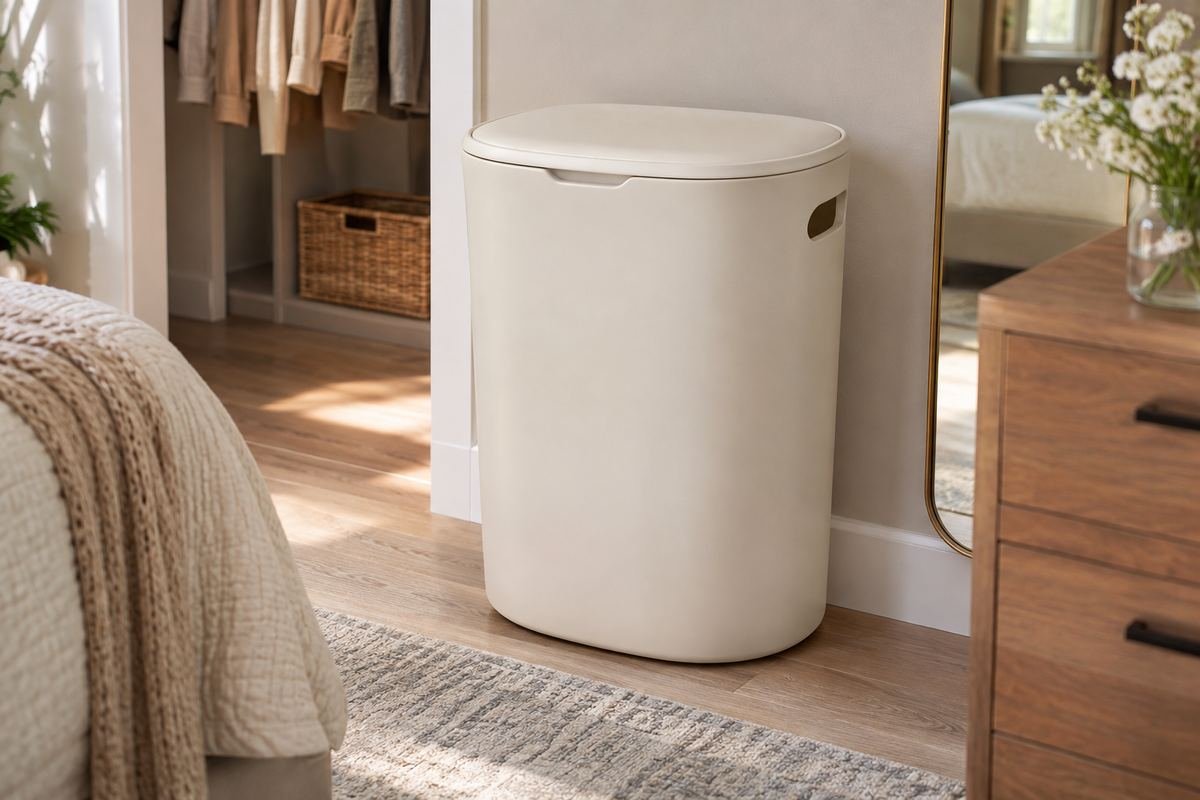
A smooth hamper body can suit a household that prefers a defined wipe-clean routine, but the exact material still determines care. Check the product instructions for the shell, lid and any inner bag. Do not choose a cleaning method from appearance alone.
Compare the body shape with the room and handling route. A smooth exterior can be simple to look at while its lid or liner remains awkward to remove. Give the product a useful opening position and retain its necessary care information.
Practical tip: Read the shell and liner care separately.
16. Let a fabric-covered hamper echo one bedroom textile
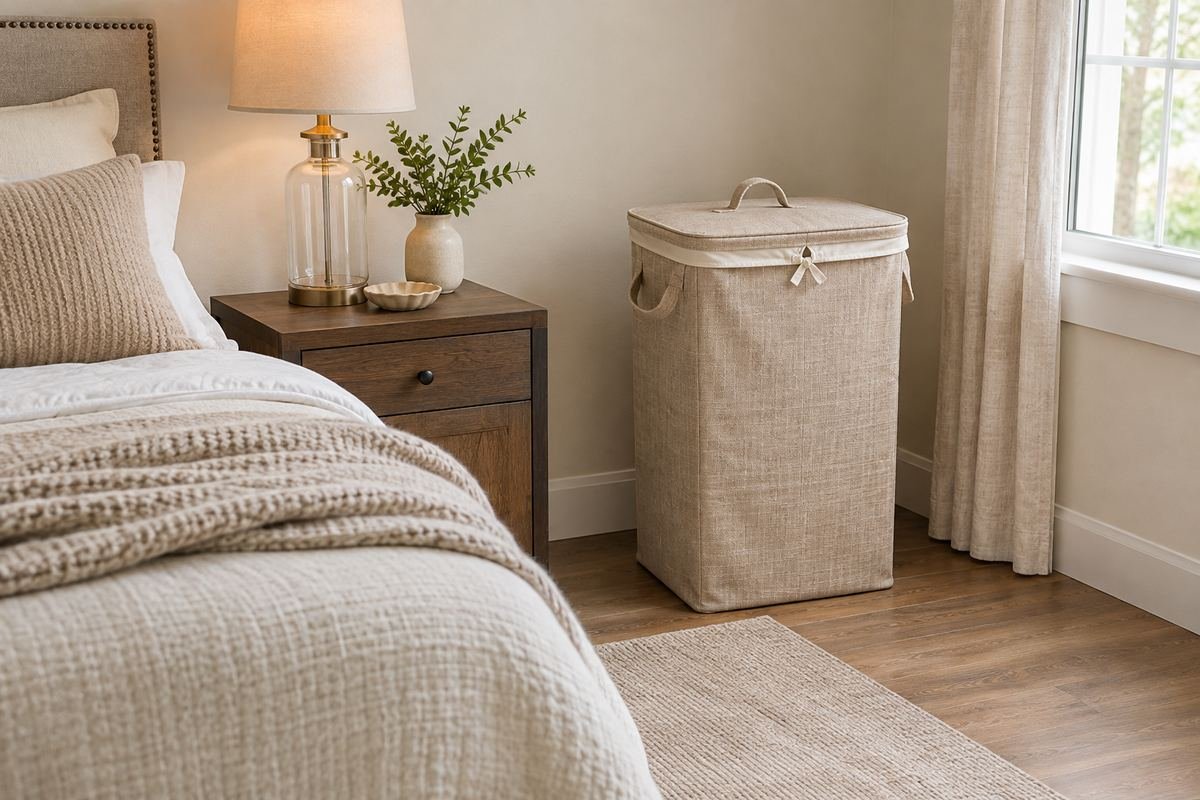
A fabric exterior can connect the hamper to a curtain, chair or bedding color without making the container the room’s main feature. Compare the actual texture and undertone in the bedroom light. Keep the repeated detail modest.
Check the care requirements before choosing a pale fabric. The exterior may need a different cleaning method from a removable inner bag. A coordinated appearance is useful when the household can maintain the surface through the product’s allowed routine.
Practical tip: Choose the care routine before the final fabric color.
17. Place the hamper beside the wardrobe routine
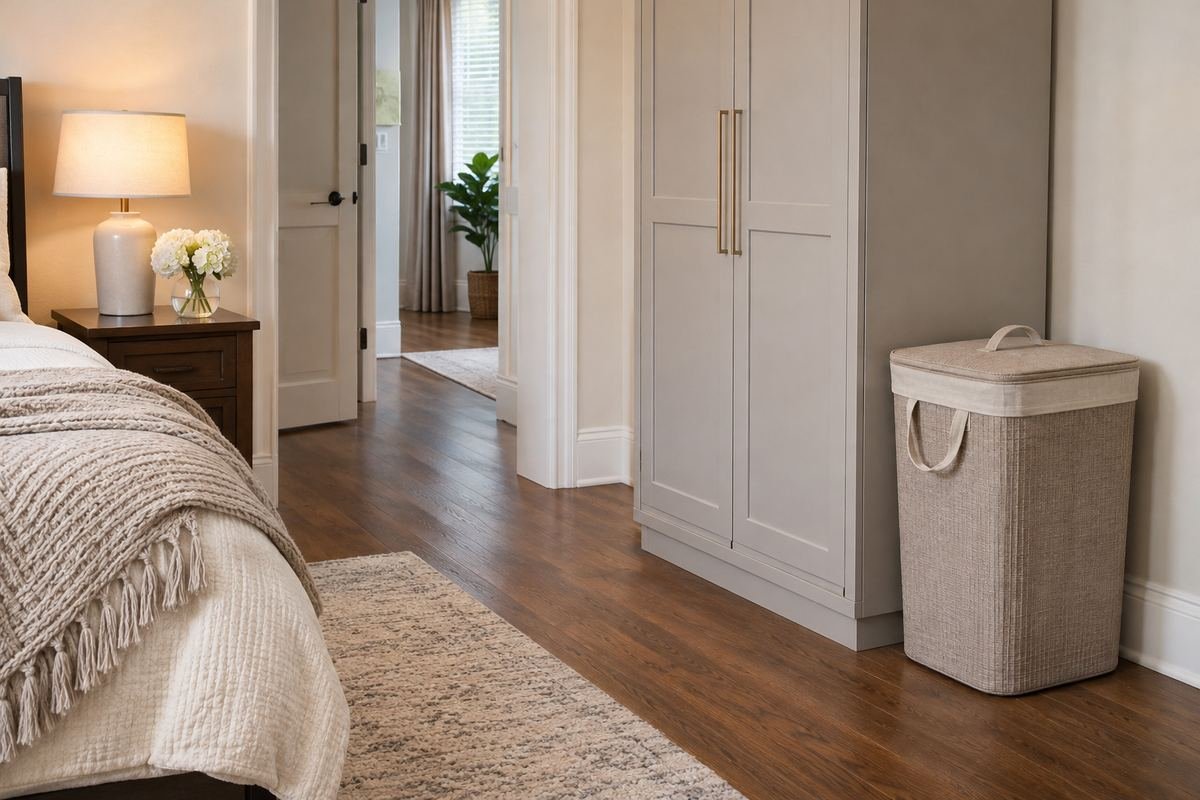
A suitable hamper near the wardrobe can collect clothes at the point where the dressing task changes. Compare the complete hamper with the wardrobe’s doors or drawers and keep both usable. The nearest empty patch of floor is useful only when the whole sequence works.
Test choosing clothes, putting a garment in the hamper and returning the room to its normal state. If the basket is repeatedly shifted to open storage, choose another position. A clear task relationship is more valuable than centering the hamper beside the furniture.
Practical tip: Check the wardrobe and hamper in the same routine.
18. Use an appropriate wardrobe compartment only after a full test
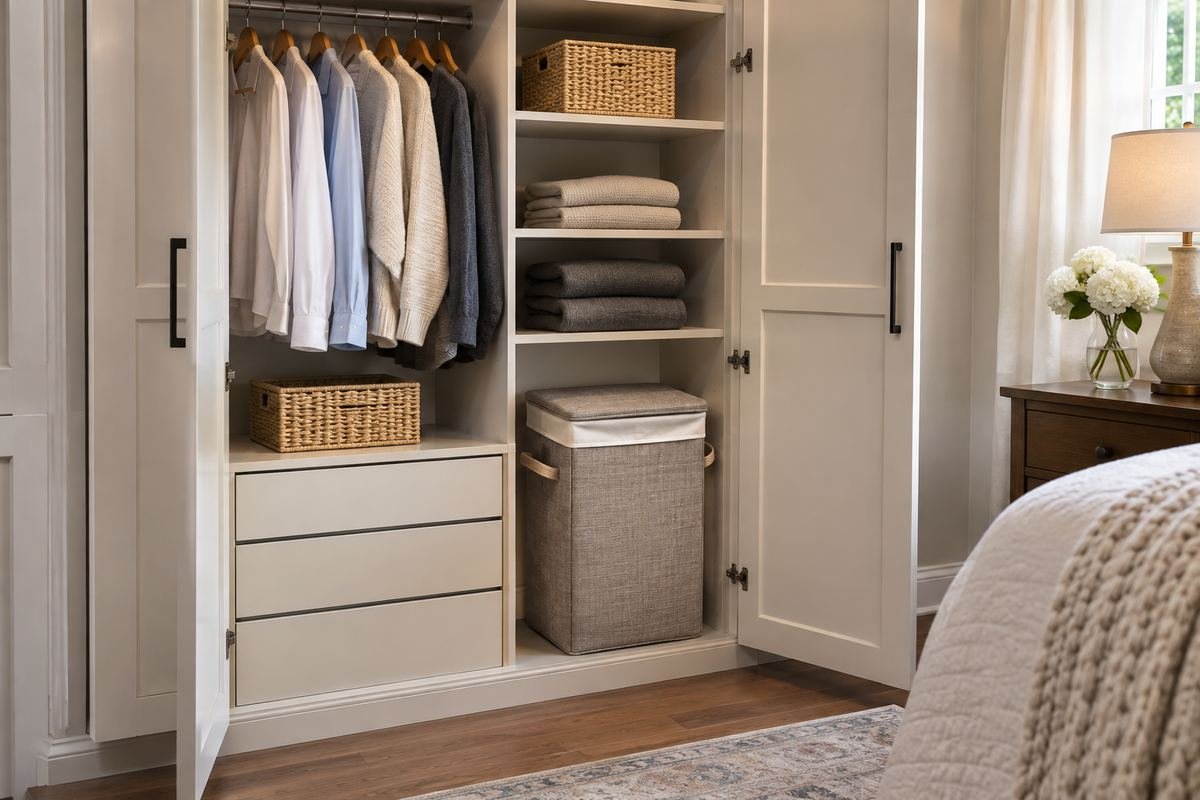
A hamper may have a useful position within a wardrobe when the product, contents and actual conditions permit it. Compare the complete body and the space needed to open or lift out the inner group. Keep the garment-storage and laundry groups clearly separate.
Follow the relevant storage and care guidance rather than assuming an enclosed compartment suits every hamper or item. If retrieving the laundry requires moving several clean clothing groups, compare another location. The concealed position should simplify the routine rather than hide an awkward task.
Practical tip: Test liner removal with the wardrobe normally loaded.
19. Keep the dresser’s open drawer clear of the hamper
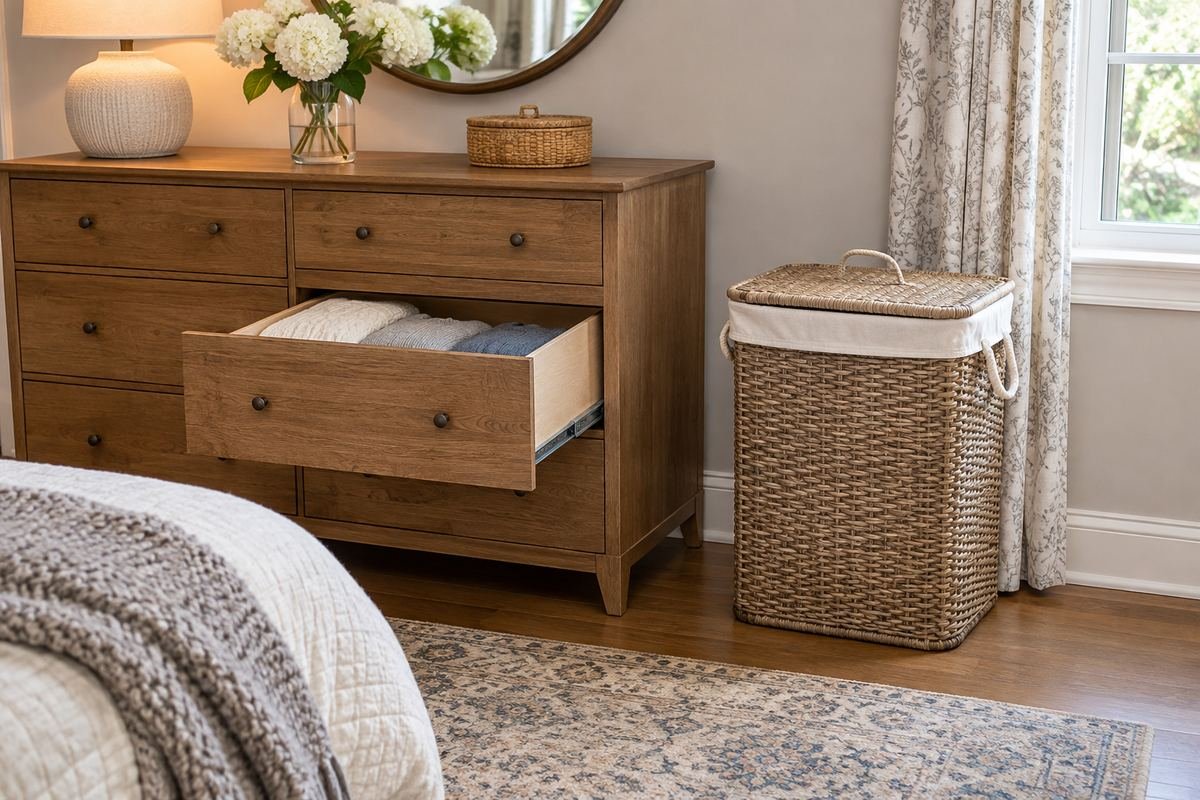
A hamper beside a dresser can serve the clothing routine without taking over the drawer’s working space. Compare the dresser with the relevant drawer fully usable and the hamper in its ordinary position. Include handles and an open lid where relevant.
Choose a different basket shape or another position when the movements conflict. Do not accept shifting a loaded hamper every time a drawer is needed as the finished arrangement. The useful location lets both objects work in the same ordinary day.
Practical tip: Test the drawer and lid before choosing the corner.
20. Give a corner enough room for opening and emptying
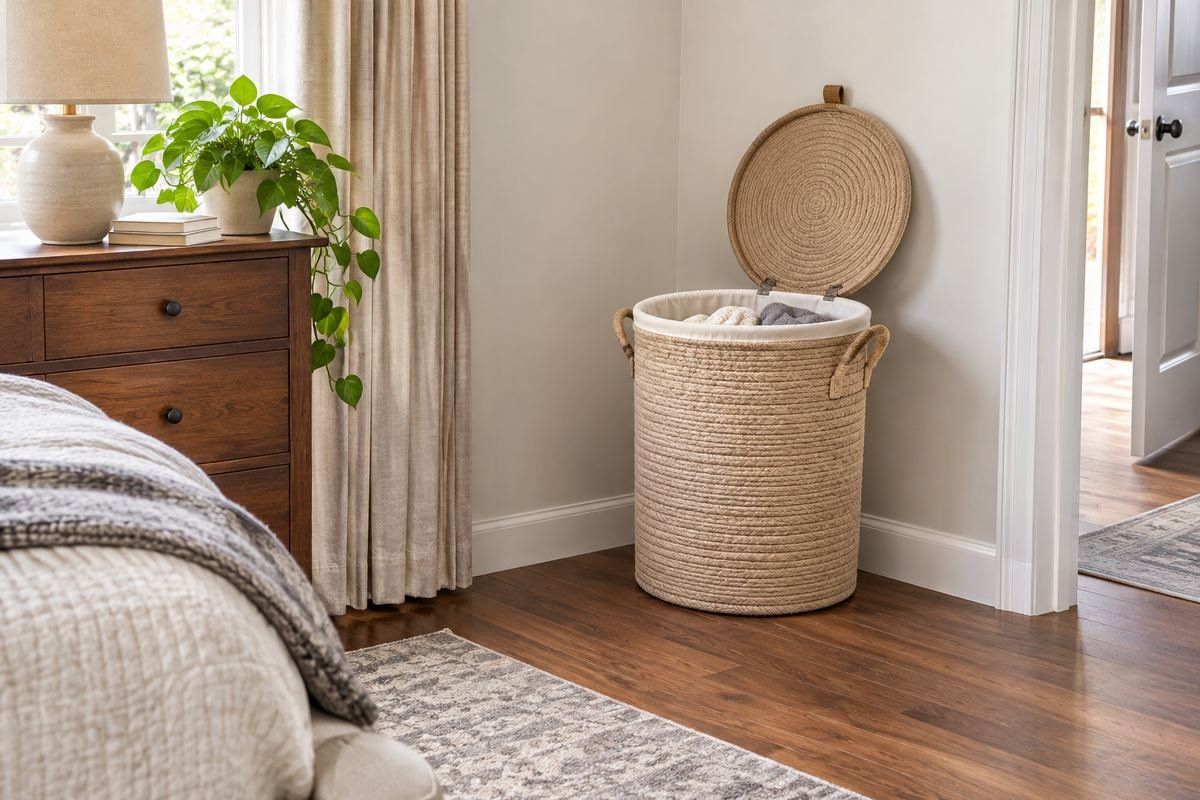
A quiet corner can suit laundry collection when the full hamper operation works there. Compare the actual wall angles, lid and bag removal rather than pushing a basket tightly into the deepest part. Keep an appropriate route for the loaded group.
A round or rectangular shape may suit different corners, but the useful choice depends on the actual product and room. If the corner makes the opening difficult to reach, choose a more accessible suitable position even when the basket looks tidier against the wall.
Practical tip: Include the emptying movement in the corner plan.
21. Keep a shared room route independent of the laundry group

A hamper should not narrow the route used to reach the bed, door or ordinary storage. Compare the complete basket with the room occupied normally, including any lid or bag in use. Keep the laundry routine within its deliberate collection area.
If clothes spread into the route before washing, review the collection volume or emptying routine. A larger basket in the same awkward position may not solve the problem. Choose the arrangement that can remain useful after the bedroom has been used.
Practical tip: Review the route with the hamper in its ordinary state.
22. Give clean laundry a separate return container or routine
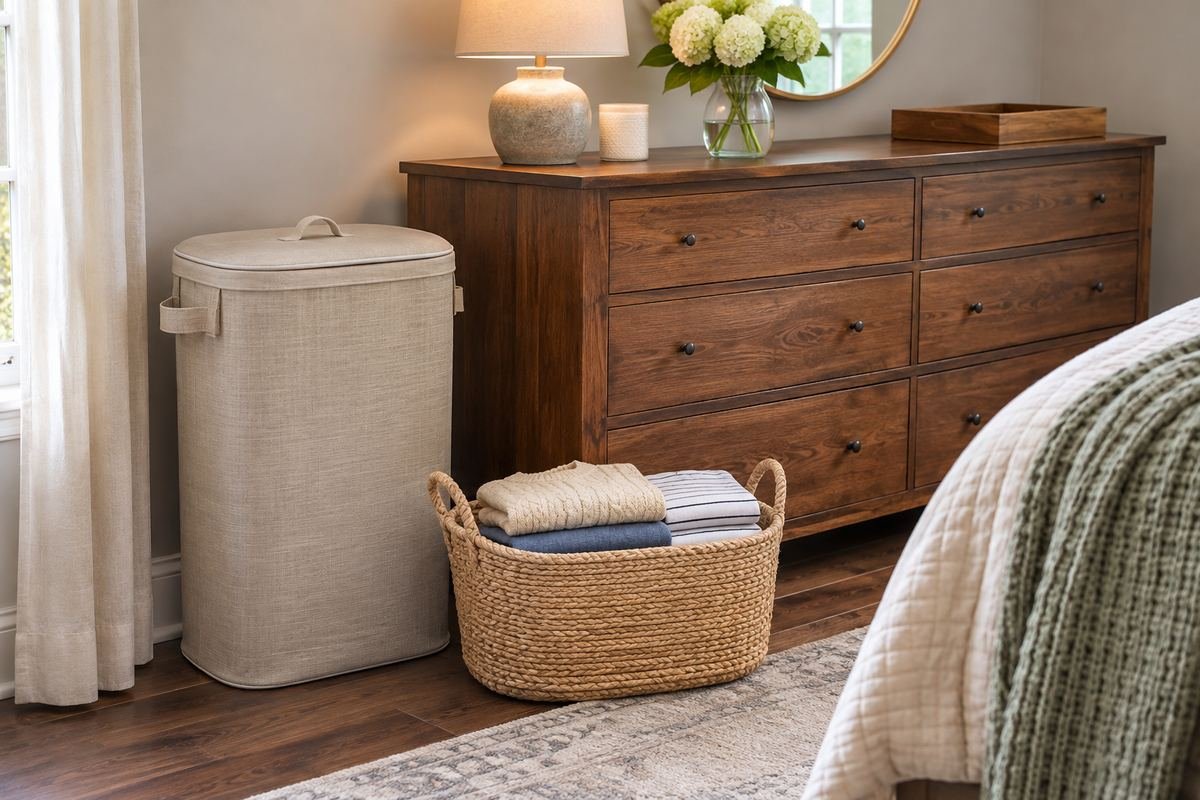
A bedroom collection hamper should have a clear role for items awaiting washing. Plan how appropriate clean dry clothes return without becoming mixed with the collected group. A separate suitable return basket or direct put-away routine can make the distinction easy to maintain.
Follow the handling and care requirements for the actual textiles and containers. Keep the clean return group modest enough to put away rather than creating another permanent bedroom pile. The useful system continues after washing is finished.
Practical tip: Plan the return step as deliberately as collection.
23. Choose capacity from a normal collection period
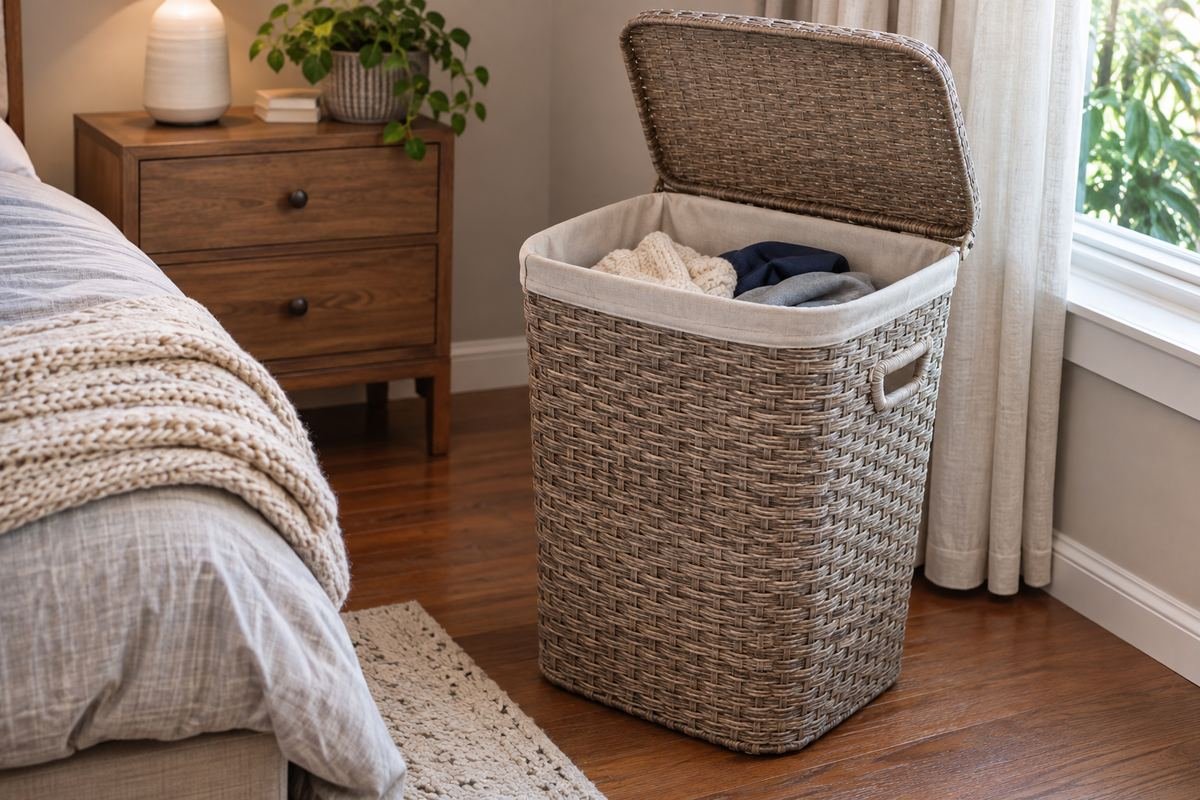
Compare the volume collected during the household’s actual washing routine before choosing a larger hamper. Include the space and handling needed when the bag contains the normal group. A nominal capacity does not establish a suitable load for every person or task.
If the existing container overfills, review why before replacing it. The collection point, sorting arrangement or timing may be the source of friction. Choose a manageable system that can be emptied and returned normally rather than storing an ever-larger pile in the bedroom.
Practical tip: Use a one-week record before increasing the container size.
24. Finish bedroom laundry hamper ideas with a simple reset
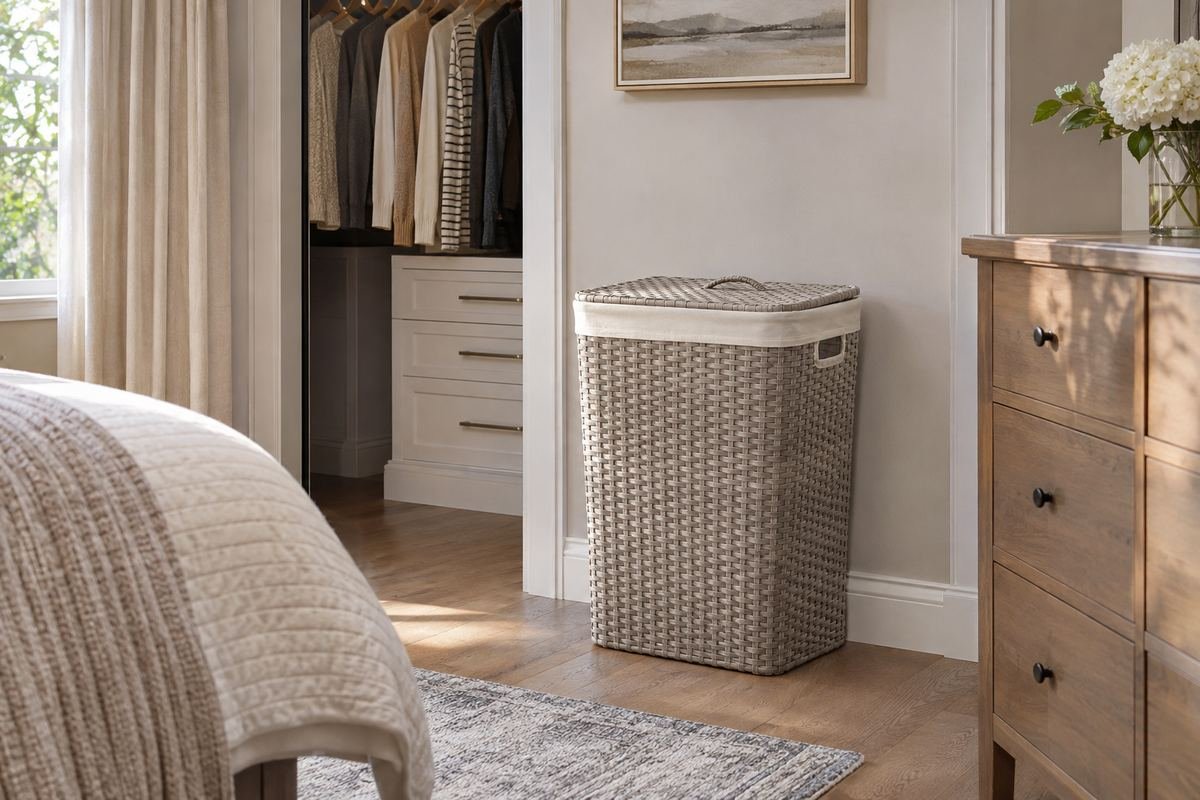
Review the hamper after ordinary use and check the repeated problem on the collection-and-carry card. Notice whether the lid is left aside, the liner is difficult to refit or clothes continue to land on a chair. Correct that part of the routine before adding another accessory.
Keep the container and removable parts cared for according to their own instructions and return them to the chosen suitable position. A useful hamper arrangement should make the next collection easy. The finished bedroom can stay simple while the laundry routine becomes clearer.
Practical tip: Improve the repeated missed step before buying more storage.
Frequently Asked Questions
Where should a laundry hamper go in a bedroom?
Compare a suitable position on the normal dressing route with the full lid movement, bag removal and carrying route. Keep wardrobes, drawers and room doors useful. The best position depends on the actual household and hamper, rather than a rule that every bedroom needs the basket in the same corner.
Should I choose a hamper with a lid?
A lid can give laundry a quieter appearance, but it adds an opening movement and care considerations. Compare the full open position and how the contents are removed. A suitable open basket or bag may be simpler where the lid repeatedly catches furniture.
Can I wash a fabric laundry bag in the machine?
Only when the exact product’s label permits it, using its stated method and preparation. The referenced Tota tote bags have machine-washing guidance, while the referenced IKEA 206.142.39 bag says not to wash. Check each part and article rather than relying on its fabric appearance.
Are two compartments better than one?
They can help when the separation matches the household’s actual laundry routine and garment care instructions. Compare the usable size and loaded handling of each group. If the division creates two awkward partly used spaces, a simpler suitable hamper may work better.
Can a hamper serve as a bedroom seat?
Do not use a hamper as seating or a support unless the exact product is explicitly designed and rated for that use. Joseph Joseph’s referenced Tota guidance warns against sitting on it or placing heavy objects on top. A flat lid is not evidence that a basket is a bench.
How large should my bedroom hamper be?
Choose from the actual collection volume, washing routine, room fit and manageable loaded handling. A stated capacity is not a recommendation to fill the hamper until it becomes difficult to carry. Review the one-week record before choosing a larger container.
Choose the Details That Work in Your Home
Choose bedroom laundry hamper ideas from the collection point, opening movement and carrying routine. Then compare the material and appearance with the room while keeping the exact product’s care requirements clear. A manageable hamper that clothes actually reach can improve the dressing area more than a larger basket placed out of the way.
For related ideas, explore bedroom storage ideas, bedroom bench ideas, laundry folding station ideas, dresser organization ideas.
Planning References
Joseph Joseph Tota Twin 90L: compartments, tote bags and separate care requirements; IKEA PURRPINGLA 206.142.39: exact laundry-bag care and handling features; IKEA PURRPINGLA 406.094.06: bag-with-stand care and divided interior. Follow the instructions for the exact products you choose.
Optional digital guide for this topic
If you prefer a structured workbook, explore this related paid guide.