Bedroom ceiling ideas can change the room even when the furniture stays in place. A quiet painted surface, a warm plank finish or a restrained trim detail gives the view above the bed a deliberate role in the design.
Begin with the ceiling you actually have. Record its height, slopes, existing fixtures, vents and any access panels. Decide whether you want a finish change or a more involved project before choosing an inspiration image with a different room shape.
The 24 original concepts below separate color, surface pattern and existing architectural features. The AI-generated images are visual references rather than installation plans, verified products or evidence that a structural change is suitable for your home.
The images are original AI-generated decor concepts, not installation diagrams or photographs of completed client projects.
Browse These 24 Bedroom Ceiling Ideas
Jump to an idea
- Start with quiet white bedroom ceiling ideas
- Choose warm cream above natural materials
- Try a pale blue ceiling with restrained walls
- Explore soft green bedroom ceiling ideas
- Use pale clay above cream bedding
- Keep a mushroom-toned ceiling in a neutral room
- Carry one muted color across walls and ceiling
- Use a deeper blue ceiling with light bedding
- Try charcoal bedroom ceiling ideas with clear contrast
- Add a narrow painted border to a plain ceiling
- Use a restrained stripe pattern overhead
- Choose a small repeated stencil-like detail
- Consider wallpapered bedroom ceiling ideas with a suitable product
- Use a mural-like ceiling as the only major pattern
- Explore pale wood-look ceiling planks
- Choose a white beadboard-like ceiling texture
- Use warm timber tones as bedroom ceiling ideas
- Let existing beams remain the main ceiling detail
- Try restrained decorative beam-like accents as a designed system
- Use a quiet coffered appearance in a proportionate room
- Highlight an existing tray with a controlled color change
- Keep sloped bedroom ceiling ideas connected to the room
- Coordinate the ceiling with a suitably chosen fixture
- Finish by editing the view above the bed
Compare bedroom ceiling ideas with the whole room in view
Choose the level of change first: paint, an appropriate applied finish or work involving the ceiling assembly. For a plank system, read the exact instructions before planning the appearance. Armstrong’s WOODHAVEN guidance includes room-condition requirements, movement allowances and coordination with fixtures; those details belong to that product and should not be replaced by a generic glue-on approach. Evaluate a physical color or finish sample in the room before ordering.
| Approach | Resolve first | Useful visual comparison |
|---|---|---|
| Paint color | Existing surface condition and suitable coating | Ceiling sample beside walls and bedding |
| Wallpaper or decorative finish | Product approval for the surface and application | Full repeat and seams across the ceiling |
| Plank system | Complete product, room conditions and installation method | Board direction, borders and actual sample |
| Applied trim detail | Suitable material and secure fixing plan | Measured layout around existing fixtures |
| Existing tray, slope or beams | What is already present and what must remain accessible | Where each finish starts and stops |
| New architectural work | Assessment of the actual building and services | A design based on the real room rather than a photograph |
Check the ceiling from three ordinary positions
Look from the doorway, from beside the bed and from the usual resting position. A pattern that is attractive at the entrance may feel too active directly overhead. Compare the proposed finish under the room’s daytime and evening lighting before making the whole ceiling the strongest feature.
Estimate surface area without treating it as a complete order
An illustrative flat rectangular ceiling 12 feet by 14 feet has an area of 168 square feet. A sloped or shaped ceiling needs its actual surfaces measured. Paint coverage, number of coats, plank cuts, pattern repeat and product allowances change quantities. Use the measured design and supplier instructions to prepare the real order.
Keep the plan for fixtures and access visible
Mark lights, fans, vents, detectors and service access before drawing a border or repeated panel pattern. A ceiling treatment should be coordinated with the equipment rather than covering or obstructing it. Have electrical and building work assessed appropriately for the actual room. Decorative trim and imitation beams should not be treated as structural elements.
1. Start with quiet white bedroom ceiling ideas
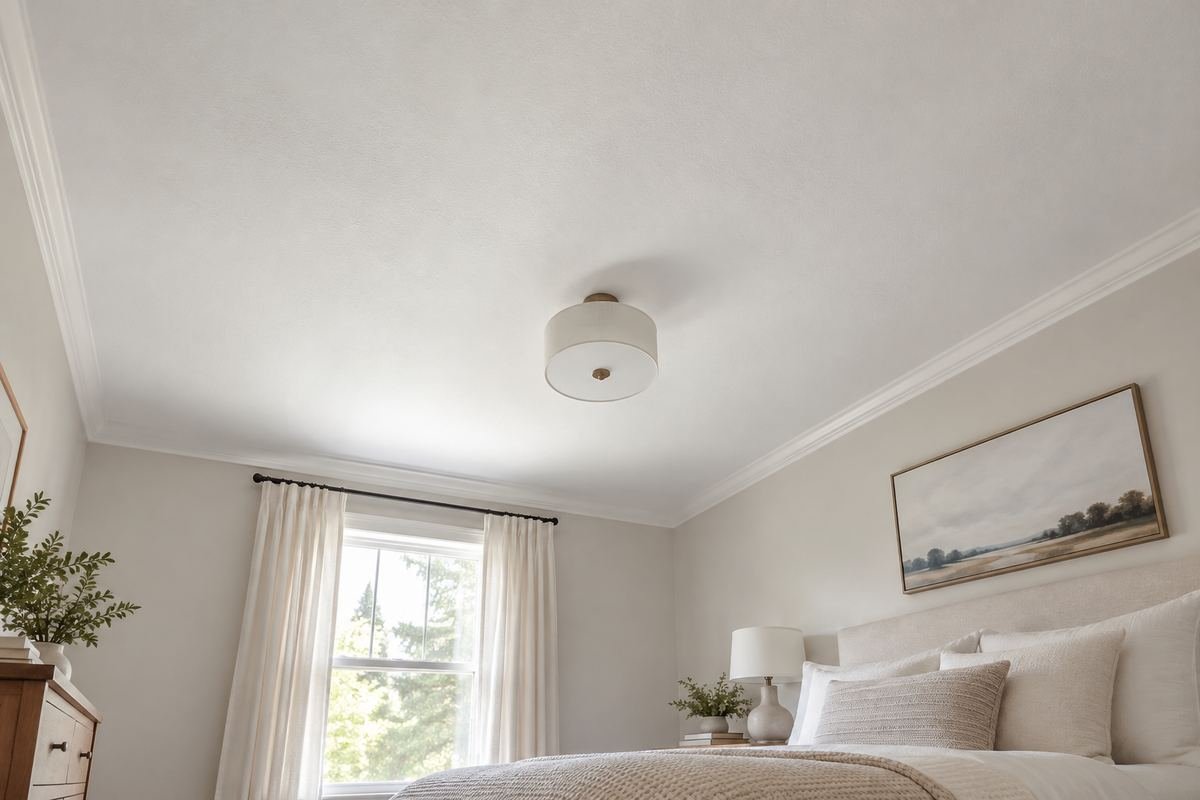
A simple white ceiling gives the room a calm upper surface when the bedding or headboard already supplies the strongest detail. The effect comes from the relationship with the walls rather than the color name alone.
Compare the chosen white beside the existing trim and wall paint. Two whites that look nearly identical on screen can create a visible difference once they meet along the ceiling line.
Practical tip: Test the junction with the actual room finishes.
2. Choose warm cream above natural materials

A warm cream ceiling can connect with linen, pale timber and woven details. It gives the overhead surface a deliberate color while keeping the room relatively quiet.
Use a physical sample with the actual bedding and evening lamps. A creamy tone can appear different when warm artificial light replaces daylight.
Practical tip: Compare the sample during normal evening use.
3. Try a pale blue ceiling with restrained walls

Pale blue introduces a gentle overhead color without needing a patterned surface. Plain warm-neutral walls let the ceiling remain a separate field.
Check the blue with both white trim and the main textile colors. A subtle color relationship is easier to judge when the samples are placed where the finishes will actually meet.
Practical tip: Use the real wall and trim colors in the comparison.
4. Explore soft green bedroom ceiling ideas
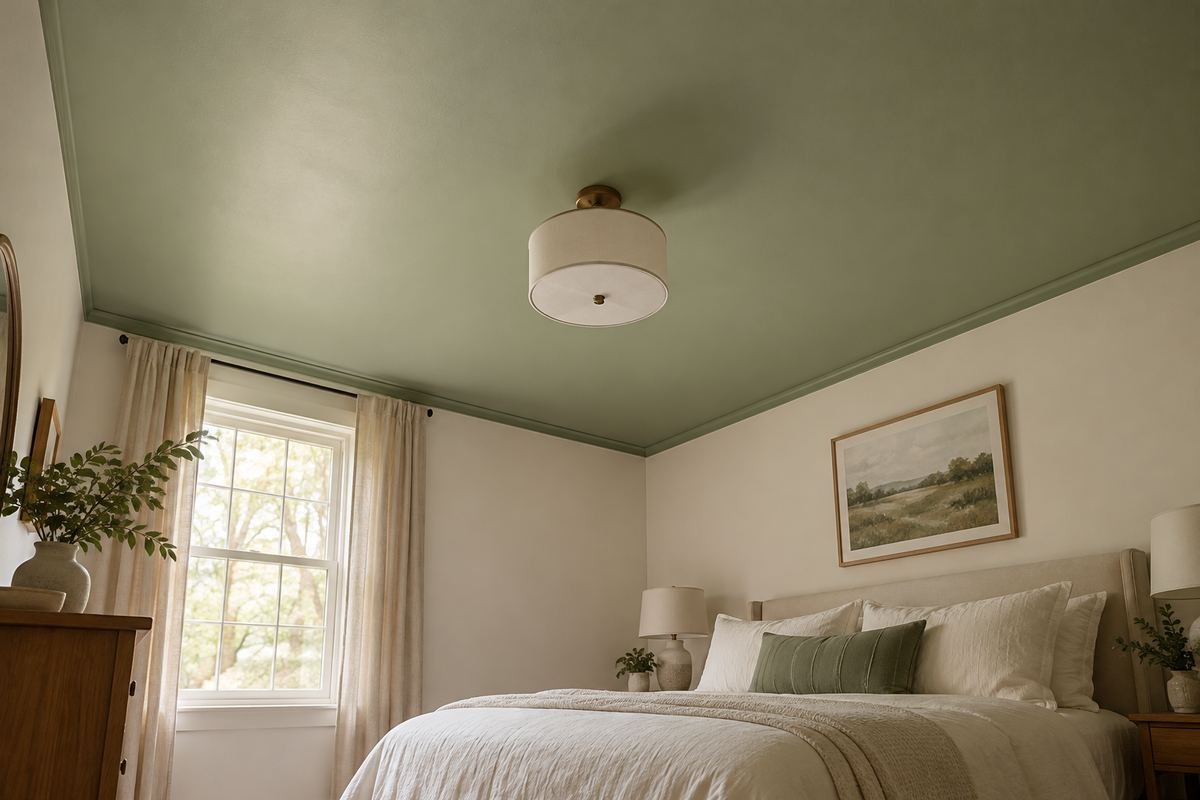
A muted green ceiling can connect a room with botanical artwork or a quiet patterned cushion. A limited number of related details keeps the palette deliberate.
Do not add green to every surface simply to repeat the ceiling. A small echo in the bedding may provide enough connection while the walls and furniture stay restrained.
Practical tip: Choose one or two useful color repeats.
5. Use pale clay above cream bedding
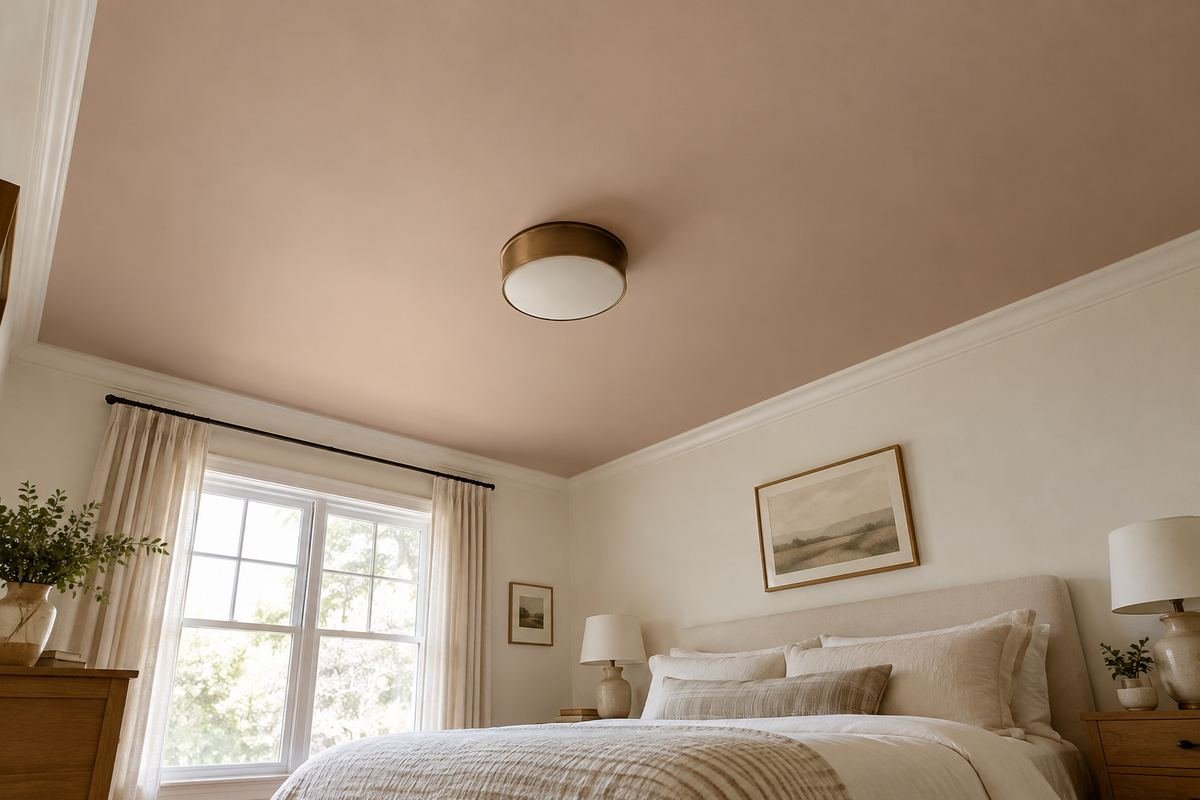
Pale clay gives the ceiling a warmer colored field that can relate to terracotta or muted rose accessories. Cream bedding keeps the larger lower surface visually quiet.
Compare the actual color with any red or yellow tones in the floor and wood furniture. The room’s existing materials should be part of the choice rather than added after painting.
Practical tip: Bring existing wood tones into the sample comparison.
6. Keep a mushroom-toned ceiling in a neutral room
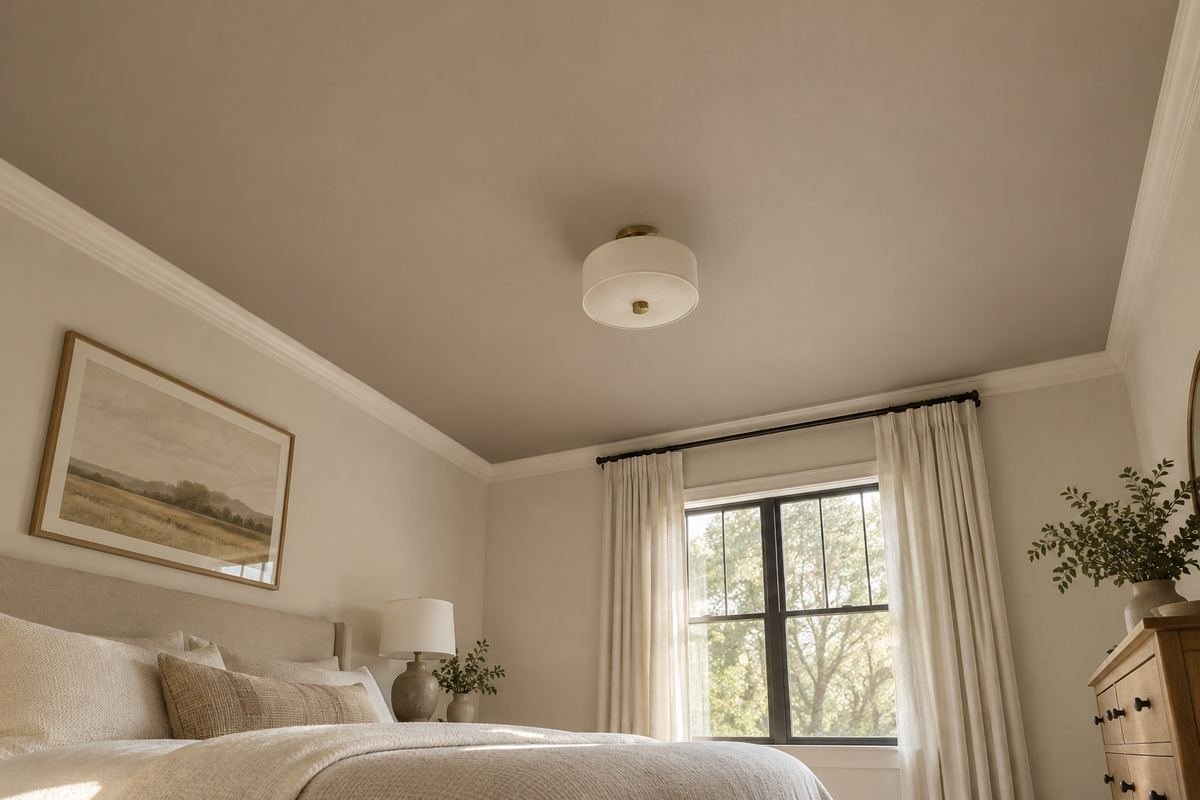
A mushroom or soft taupe ceiling can create a gentle distinction from lighter walls. It introduces depth without needing a decorative pattern.
Check whether the selected sample leans warm, gray or pink in the actual room. A broad neutral label does not describe every paint color sold under a similar name.
Practical tip: Judge the sample instead of the color-family label.
7. Carry one muted color across walls and ceiling
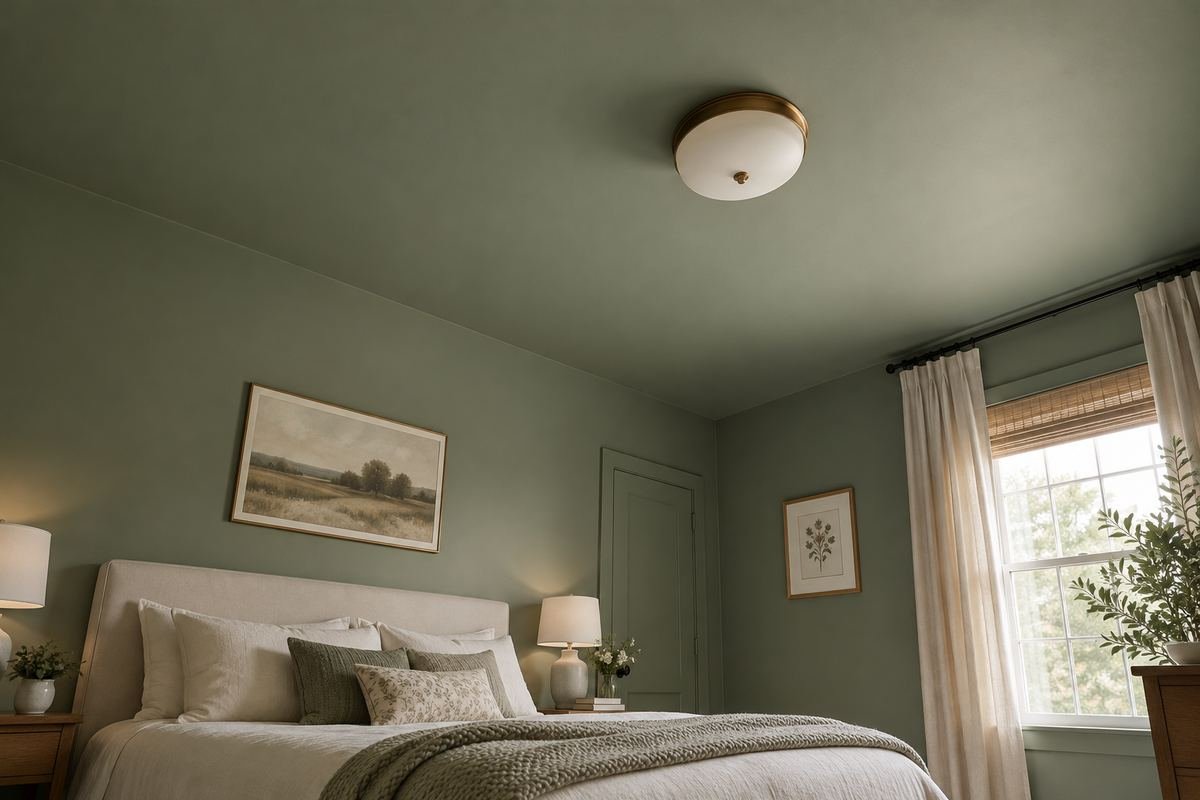
Using one related color across walls and ceiling can make the room read as a connected envelope. The bed and furniture then provide the main contrasting shapes.
Choose appropriate products and sheens for each surface. A coordinated color effect does not require using one coating regardless of its intended application.
Practical tip: Separate the color plan from the product specification.
8. Use a deeper blue ceiling with light bedding
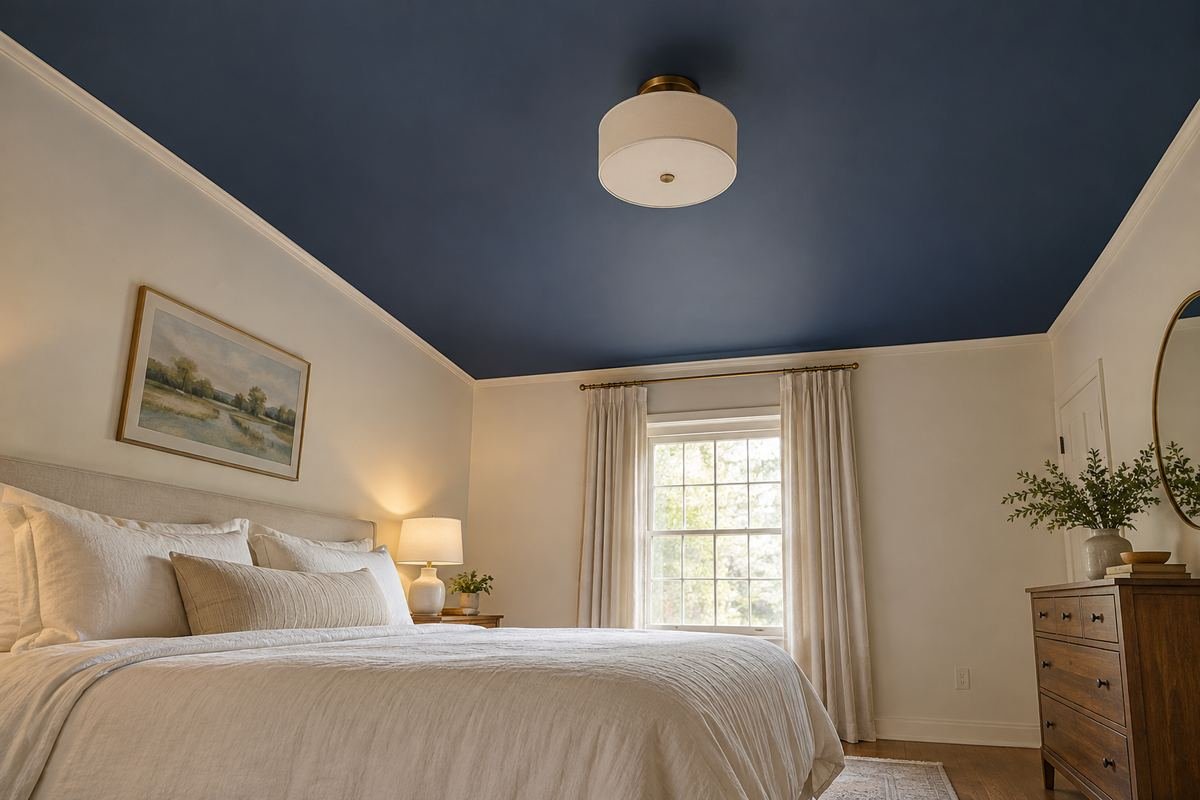
A deeper blue overhead surface can become the main visual gesture in a simple bedroom. Light bedding gives the room a clear contrasting area below it.
Test the relationship from the bed before committing. The ceiling occupies a large part of the resting view, and a small handheld swatch cannot show the whole effect.
Practical tip: Compare a useful sample in the overhead position.
9. Try charcoal bedroom ceiling ideas with clear contrast

Charcoal creates a defined overhead plane above a relatively pale room. A simple fixture can remain distinct without competing with a patterned ceiling.
Consider the existing room light and proportions together. A dark surface in a bright inspiration image may have a different effect in a bedroom with a smaller window.
Practical tip: Review the actual room under ordinary lighting.
10. Add a narrow painted border to a plain ceiling
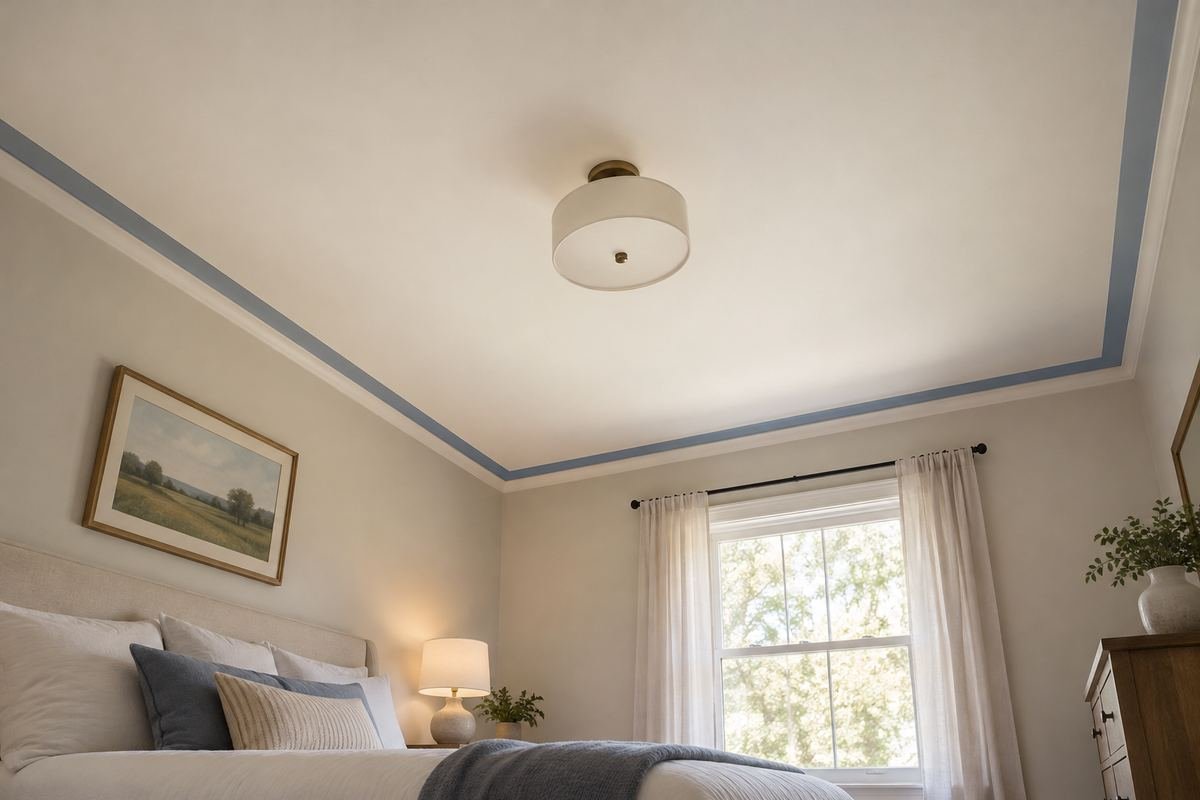
A narrow color border can give a simple ceiling a deliberate outline. It introduces a measured detail without covering the whole surface with pattern.
Draw the border around the actual room and existing fixtures. Keep its relationship with cornices and door views clear rather than selecting a width from a photograph.
Practical tip: Mock up the border at the real room scale.
11. Use a restrained stripe pattern overhead

Broad quiet stripes can make a ceiling the main patterned surface in the room. Plain bedding and simple walls help the repeated bands remain readable.
Plan the stripe layout and where it finishes at each wall. The measured starting point matters when the room width does not divide neatly into the proposed repeat.
Practical tip: Draw the full repeat before choosing the final spacing.
12. Choose a small repeated stencil-like detail

A small repeated motif can add decoration without using a large literal mural. Keep the color contrast restrained if the ceiling should remain a quieter background.
Compare the repeat from the bed and the doorway. A pattern that looks delicate close up can merge into a different texture when viewed from across the room.
Practical tip: Check the pattern at ordinary viewing distance.
13. Consider wallpapered bedroom ceiling ideas with a suitable product
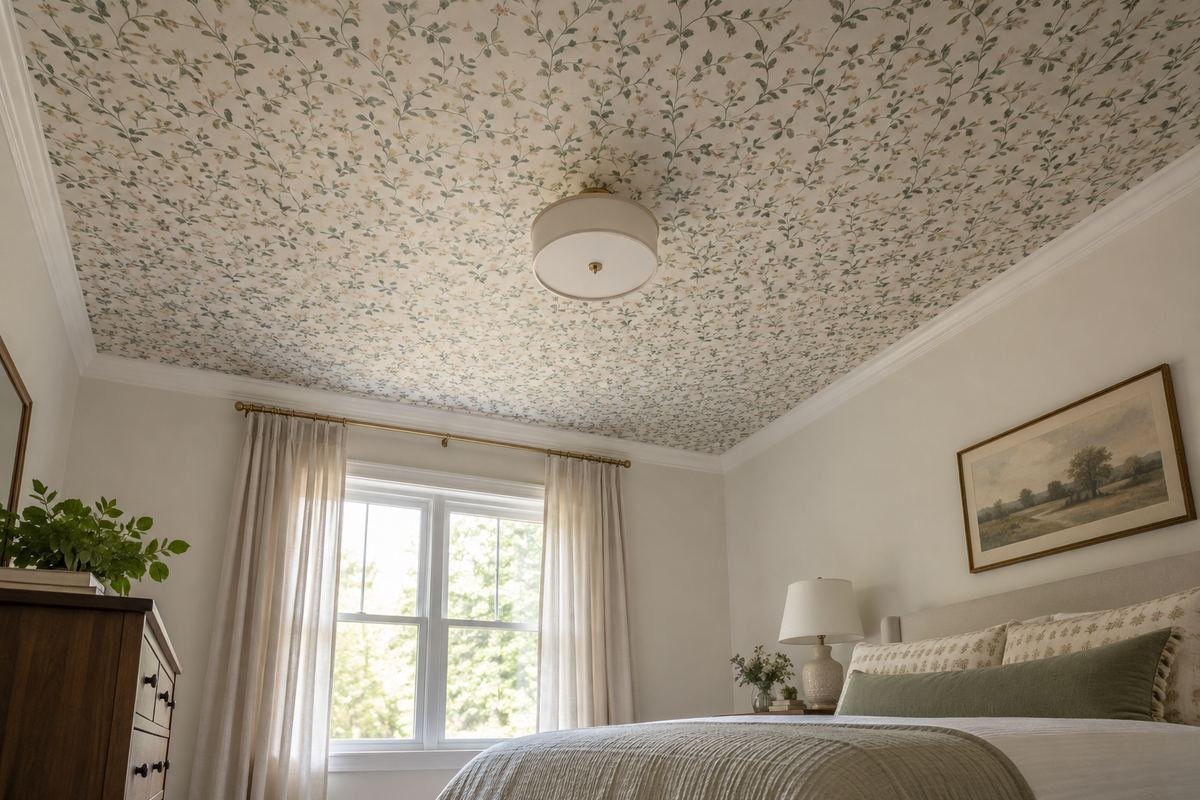
Wallpaper can introduce a repeated print above a room whose walls remain plain. A quiet botanical or geometric design can connect with a single textile detail below.
Confirm that the actual product and installation method suit an overhead application. Plan preparation, seams and repeat before ordering rather than transferring a wall installation assumption to the ceiling.
Practical tip: Ask the supplier about the exact surface and application.
14. Use a mural-like ceiling as the only major pattern
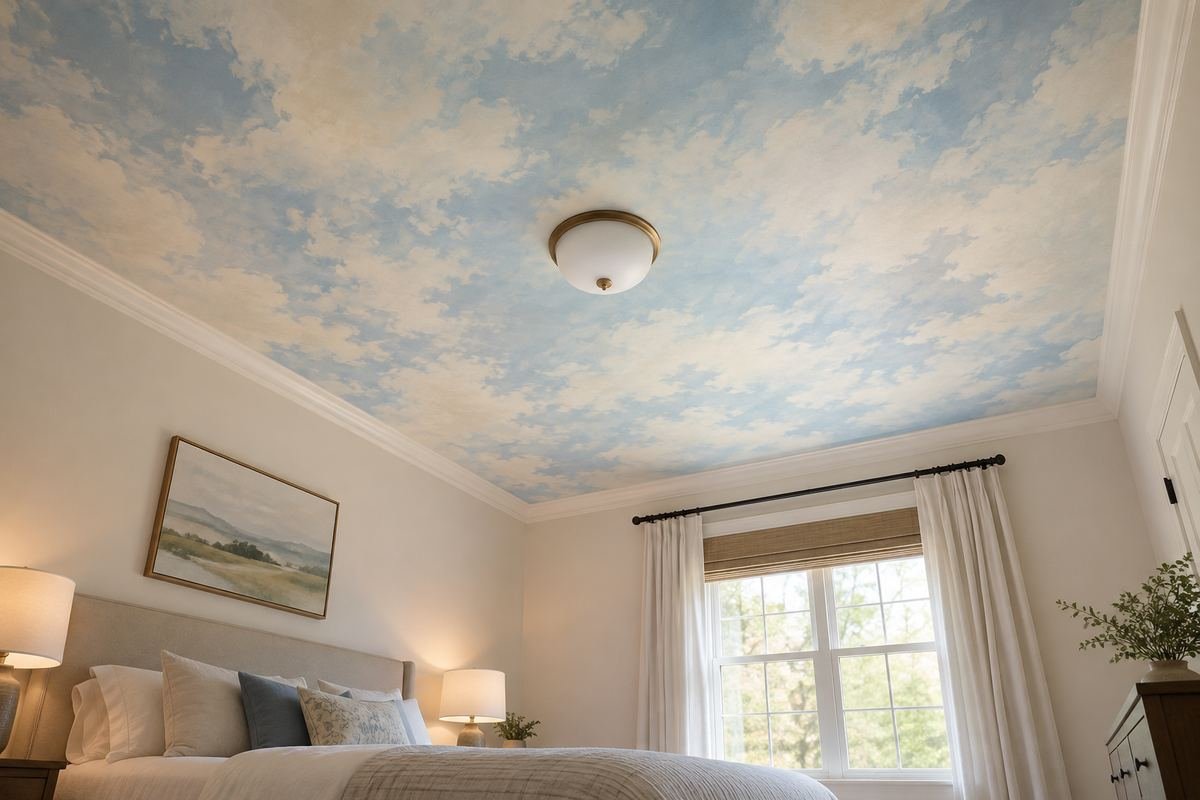
An abstract cloud-like or softly painted field can make the ceiling feel distinct without a tight repeat. Quiet furniture lets the broad color movement remain visible.
Choose an original design and compare its color across the full room. Avoid pairing a strong overhead image with several competing patterned surfaces unless the combined effect has been considered carefully.
Practical tip: Keep the surrounding palette deliberate.
15. Explore pale wood-look ceiling planks

Pale wood-look planks introduce a repeated linear texture above a quiet room. They can relate to timber furniture without copying every finish exactly.
Choose the actual ceiling system before finalizing board direction and borders. Confirm room conditions, movement and fixture details in its instructions rather than treating the image as an installation plan.
Practical tip: Review the complete product with the installer.
16. Choose a white beadboard-like ceiling texture
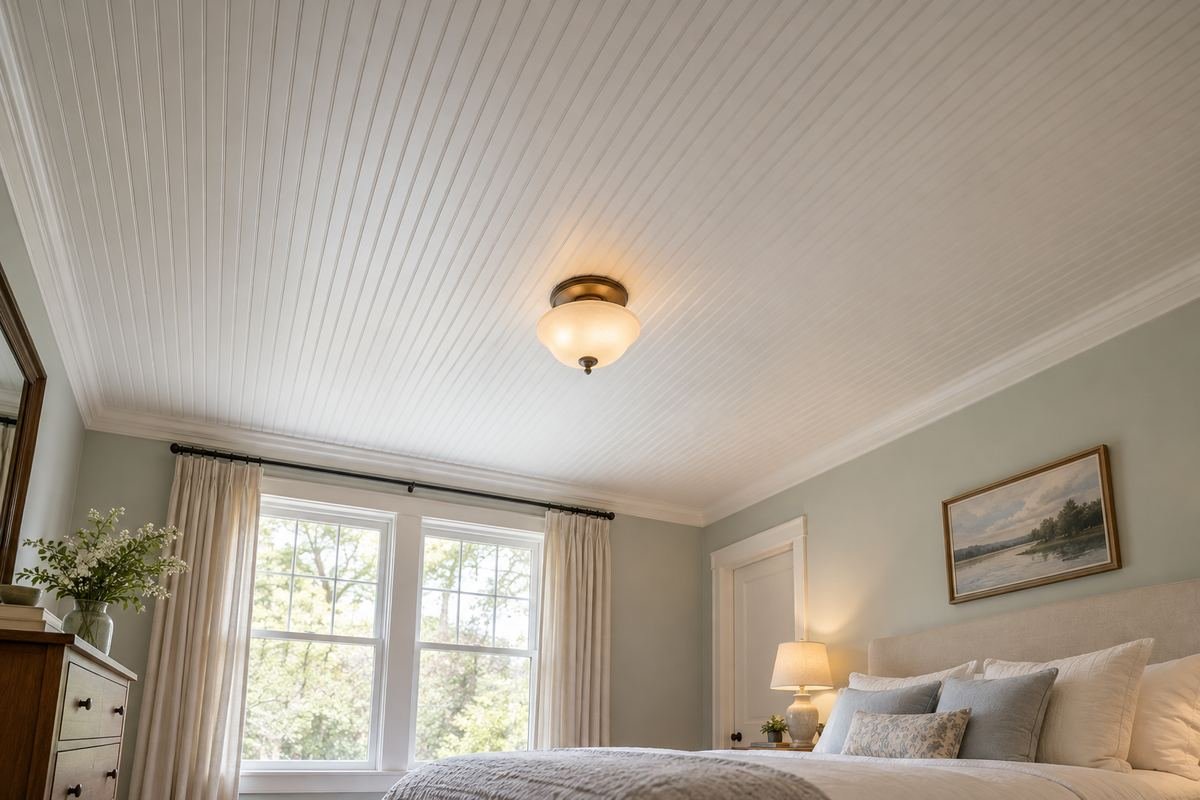
Fine bead detail gives the ceiling a subtle repeated rhythm while staying within a pale palette. It can relate to simple traditional trim and restrained furniture.
Compare the real product’s profile and intended ceiling use. Similar-looking wall panels and ceiling systems may have different installation requirements and should not be treated as interchangeable.
Practical tip: Check the actual product application.
17. Use warm timber tones as bedroom ceiling ideas

A warm timber appearance can make the upper surface a clear material feature. Cream walls and plain bedding allow the grain and board rhythm to remain distinct.
Limit unrelated wood tones elsewhere in the room. Compare a real ceiling sample with the floor and furniture to decide whether the materials should coordinate closely or contrast deliberately.
Practical tip: Review all existing timber surfaces together.
18. Let existing beams remain the main ceiling detail
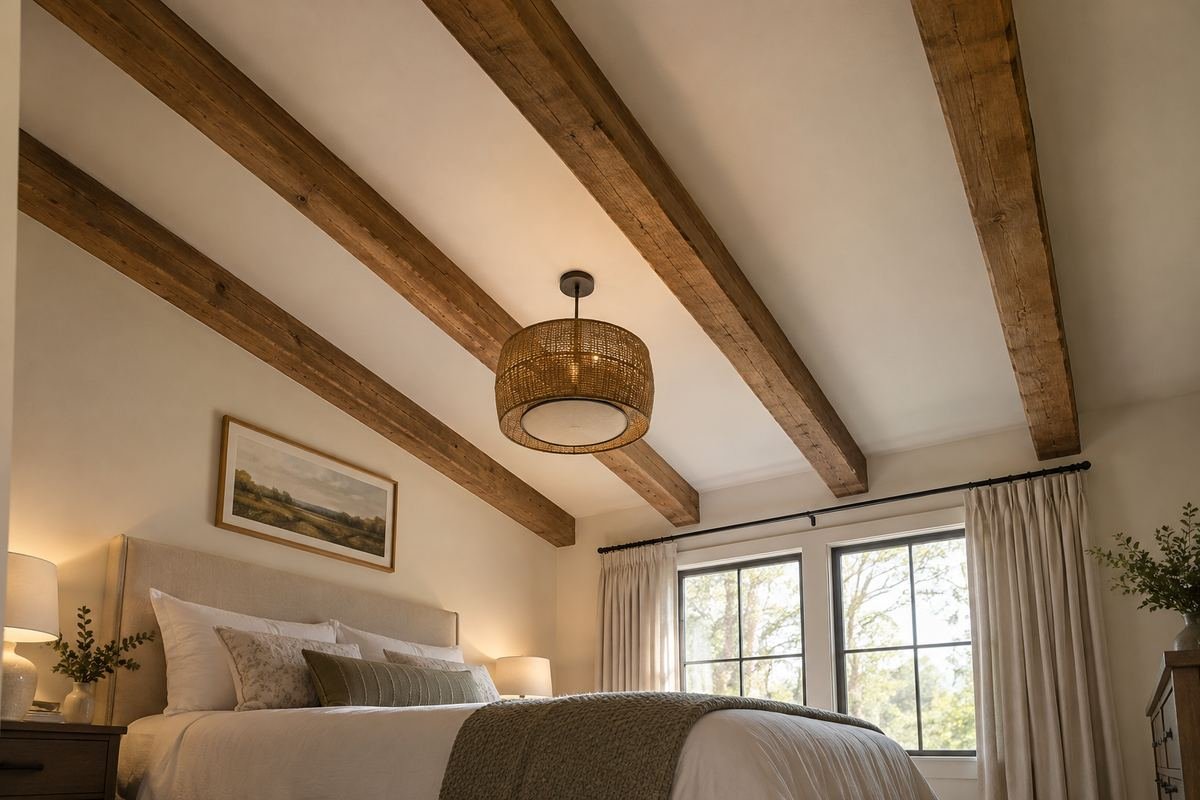
Existing beams can give a room a strong repeated structure without adding another decorative pattern. Quiet infill surfaces keep their shape easy to see.
Confirm what is existing and structural before changing a finish or adding cladding. A decorative imitation beam and an actual building member require different decisions.
Practical tip: Identify the existing assembly before redesigning its appearance.
19. Try restrained decorative beam-like accents as a designed system
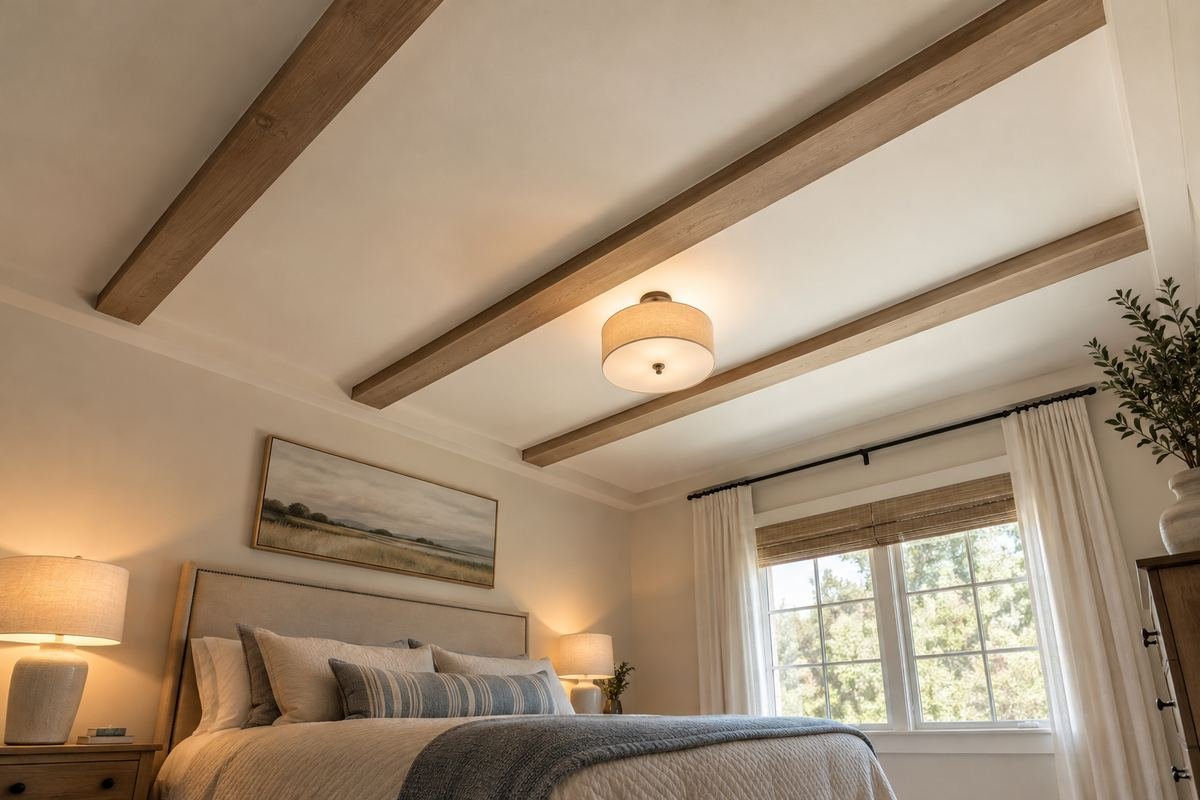
A small number of beam-like accents can introduce rhythm where an appropriate applied system is suitable. Their scale should relate to the room rather than imitate a much larger space.
Have the actual material and secure fixing arrangement assessed. The concept describes an appearance and does not show structural capacity or a universal method for attaching overhead elements.
Practical tip: Confirm the complete applied system before ordering.
20. Use a quiet coffered appearance in a proportionate room

A coffered-looking grid can organize a ceiling into clear fields. A restrained profile and one pale color can keep the pattern from overwhelming the bedroom.
Draw the grid around the real ceiling dimensions and fixture locations. Avoid forcing symmetry that creates awkward partial fields at the walls or conflicts with necessary services.
Practical tip: Approve a measured full-ceiling layout.
21. Highlight an existing tray with a controlled color change

An existing tray ceiling provides a natural place to change color or emphasize one plane. Keeping the rest of the room simple lets that existing shape remain clear.
Decide exactly where the color starts and stops. A small physical mock-up at a corner can be more useful than several unrelated swatches viewed on a flat table.
Practical tip: Mark the finish boundaries on the room drawing.
22. Keep sloped bedroom ceiling ideas connected to the room
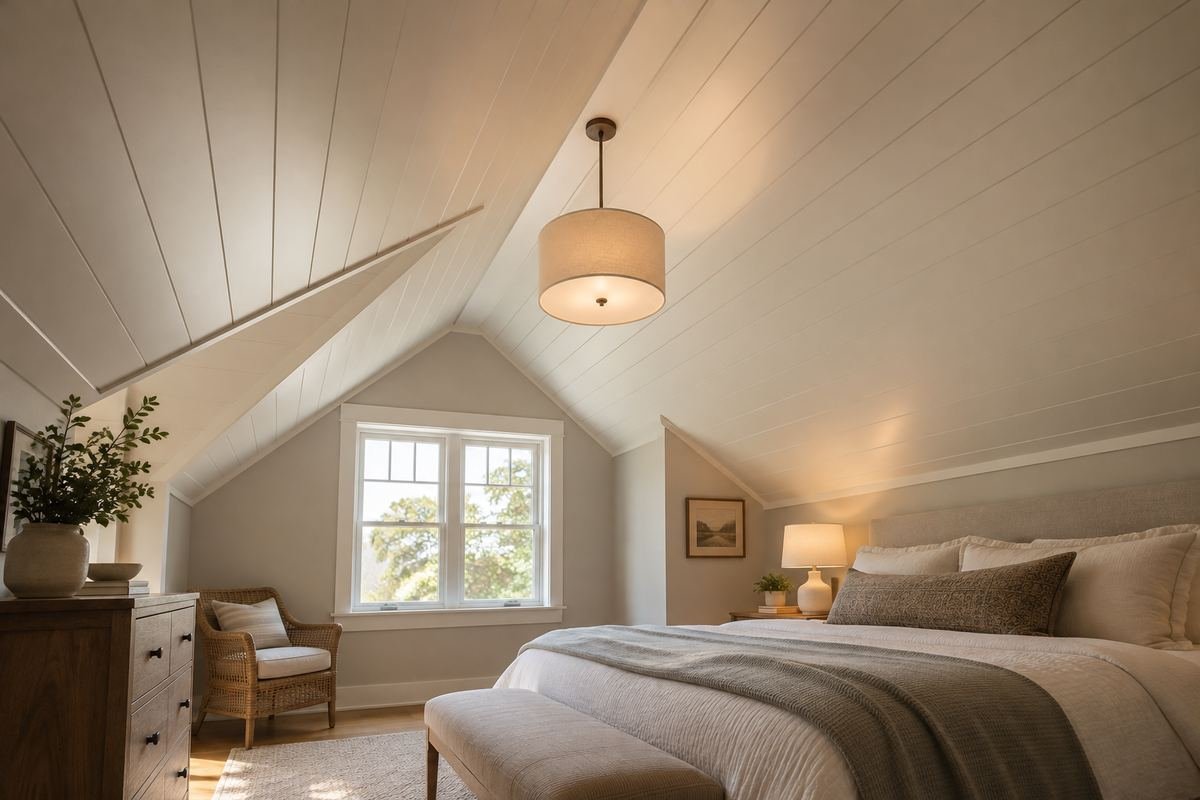
A sloped ceiling can remain visually calm when the finish relates to the adjoining walls. A simple repeated palette lets the room’s existing shape do the work.
Use the measured slopes and actual headroom in the plan. Do not assume that a flat-ceiling product or installation detail is suitable on an angled surface.
Practical tip: Confirm the product instructions for the actual slope.
23. Coordinate the ceiling with a suitably chosen fixture
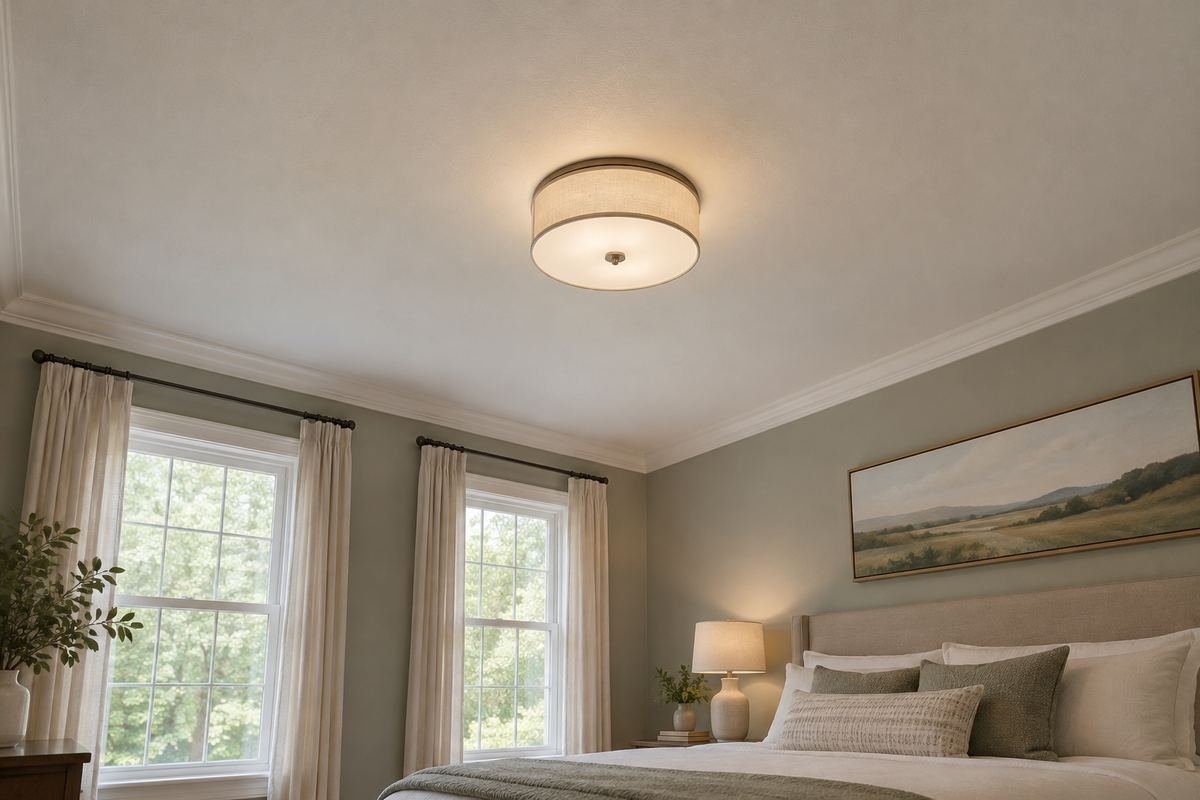
A quiet ceiling can give a well-proportioned light fixture a clear setting. Its shape may echo a curved headboard or another restrained detail in the room.
Review fixture position, support and the room’s practical needs together. A decorative ceiling treatment should be coordinated with electrical equipment and access rather than used to conceal unresolved details.
Practical tip: Choose the actual fixture with the ceiling plan.
24. Finish by editing the view above the bed

The final ceiling design may need fewer details than the first mood board. A clear color or material can be enough when the rest of the room already has a strong character.
Look from the resting position after placing the main bedding and lamps. Keep the elements that connect the room and remove an extra pattern if it makes the overhead view feel unnecessarily busy.
Practical tip: Review the ceiling as part of everyday use.
Frequently Asked Questions
What is the simplest way to change a bedroom ceiling?
A suitable paint finish can change the appearance without adding a new surface system. Assess the existing condition and product requirements first, then compare color samples with the walls, bedding and lighting.
Should a ceiling always be white?
White is one useful option, but the choice depends on the whole room and the effect you want. Compare a restrained color, a related wall tone and a neutral sample in the actual overhead position.
Can I attach decorative planks like ordinary wall paneling?
Use the instructions for the exact ceiling system. For example, WOODHAVEN is designed around a particular installation arrangement and movement requirements. Do not assume a different panel or adhesive can be substituted.
Will a dark ceiling make the room feel smaller?
The visual result depends on the room’s proportions, light and surrounding colors. A dark concept image is not a reliable prediction for every bedroom. Test the proposed relationship at useful sample scale.
Can wallpaper be used on a bedroom ceiling?
Only choose a product and installation method suitable for that surface and application. Confirm preparation, adhesive, repeat and seam planning with the supplier or installer. Not every wallcovering is appropriate overhead.
Choose the Details That Work in Your Home
Choose the ceiling treatment around the room you already use: its proportions, light, bedding and existing features. Confirm the physical sample and practical details, then keep the strongest design gesture clear enough to appreciate from the bed as well as the doorway.
For related ideas, explore bedroom paint colors, bedroom lighting ideas, bedroom wallpaper ideas.
Planning References
Armstrong Ceilings: WOODHAVEN installation instructions; Sherwin-Williams: physical paint color samples. Follow the instructions for the exact products you choose.
Optional digital guide for this topic
If you prefer a structured workbook, explore this related paid guide.