Office Halloween door decorating works best when one clear idea is readable from the hallway. Choose a few repeated shapes or colors and compare their scale against the actual permitted display area.
Check workplace and facilities rules first. Use permitted materials and attachments, preserve normal door operation, and keep required signs, visibility, hardware and routes clear. Use a separate display board wherever a door cannot be decorated.
Images are illustrative design concepts, including AI-generated replacement images. They are not installation drawings.
Compare Office Halloween Door Decorating From Both Approaches
Make a small paper layout before cutting the complete set. View it from both directions in the corridor, then open the door and repeat the check with its normal signs and glazing visible. For example, a central moon and tree silhouette may read clearly where small printed labels disappear. If the main door cannot carry the group, move the same design to a permitted separate board rather than expanding around the hardware.
1. Suggest a Lounge With Office Halloween Door Decorating
A dark palette and a few themed paper details can suggest a seasonal lounge. Keep the design focused on a permitted panel or nearby display surface. Any furniture shown in the reference is a styling concept, not a reason to reduce the available hallway route.
Try this: Sketch the composition within the permitted display area.
2. Use Spreadsheet-Inspired Paper Panels
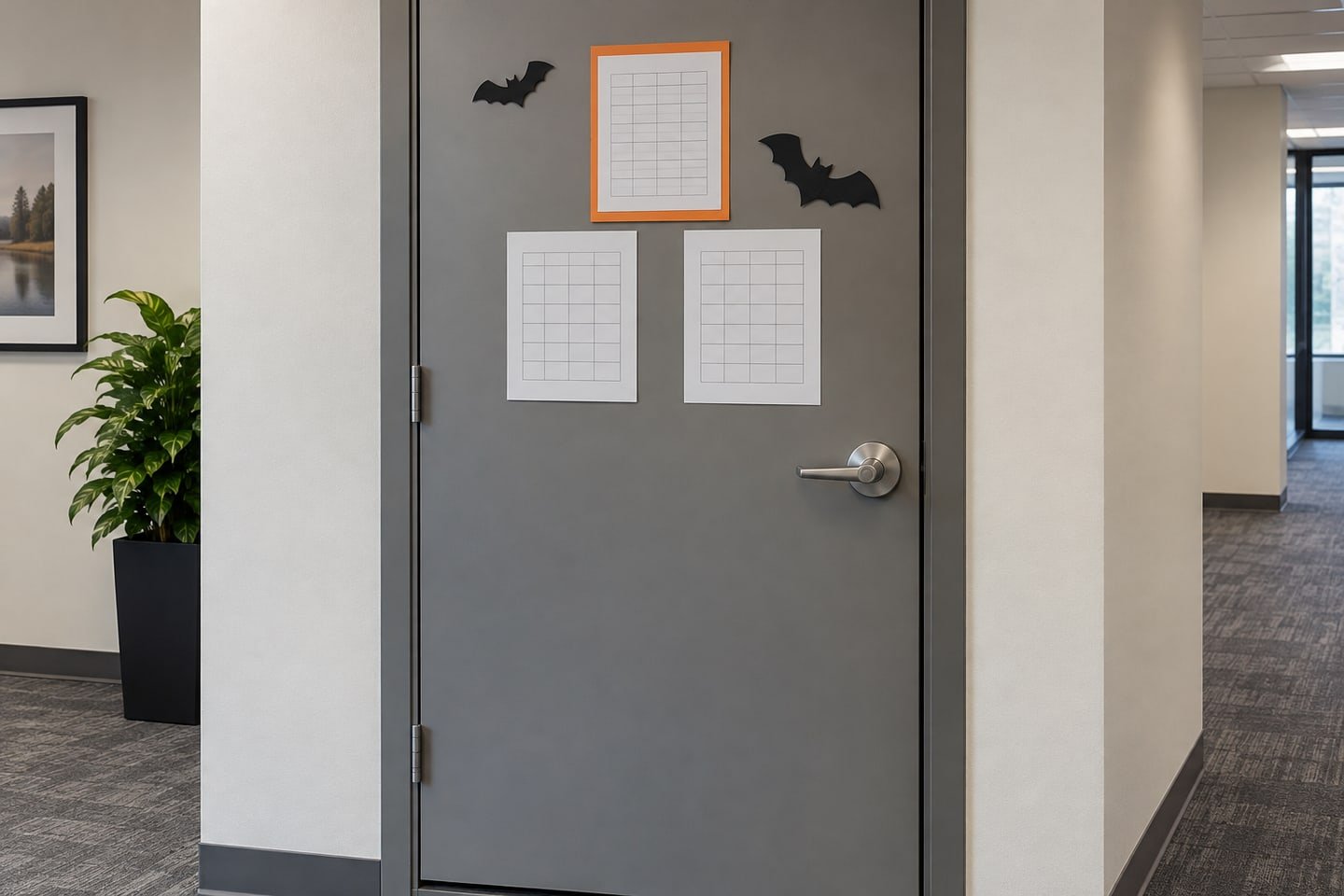
Blank grid-paper panels can suggest an office spreadsheet theme without displaying real work documents. Repeat a few simple cells, colors or bat shapes rather than relying on tiny writing. Use a suitable attachment method and keep the handle, hinges, visibility and normal door operation clear. Check the workplace rules before choosing the display area.
Try this: Judge the design from the normal hallway approach.
3. Try a Black-and-Green Geometric Door
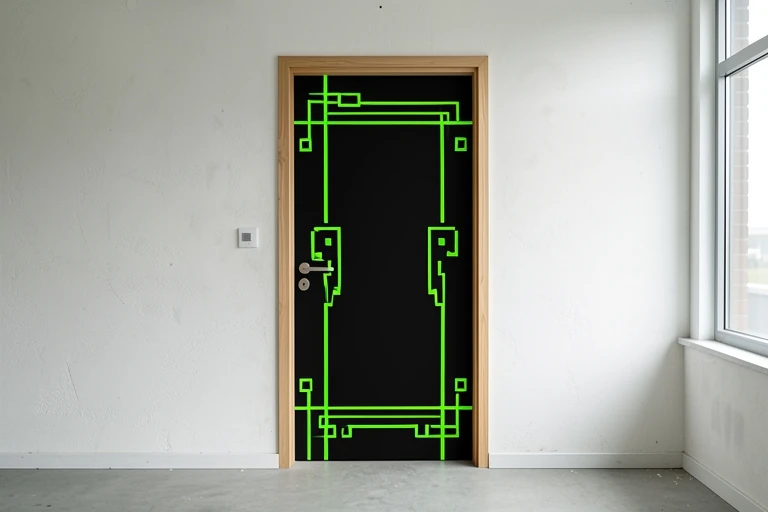
Simple green lines on a dark background can create a graphic technology-inspired pattern. Keep the shapes broad enough to read from the approach. This image illustrates geometric color blocking rather than a written error message.
Try this: Choose a few connected lines instead of many tiny details.
4. Borrow the Palette of a Gothic Library
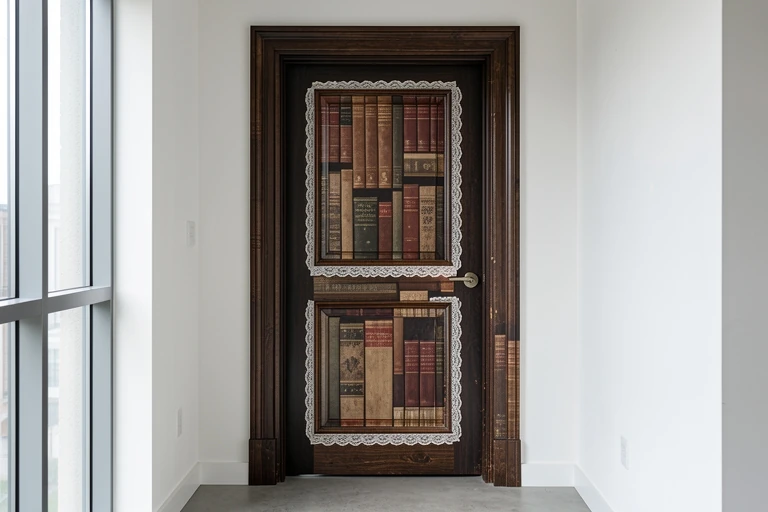
Dark wood tones, a few printed book shapes and a restrained warm accent can suggest a library theme. Keep the construction lightweight and supported within the permitted area. Real shelves and heavy objects need their own suitable installation.
Try this: Use printed or flat details when a physical prop does not fit.
5. Create a Decorative Bottle Motif

A few printed bottle silhouettes can suggest an apothecary without displaying real chemicals or misleading containers. Use clearly decorative materials and keep the composition separate from work supplies. A limited palette helps the shapes read together.
Try this: Avoid using actual medicine or cleaning containers as props.
6. Use a Monster Face as a Graphic Panel
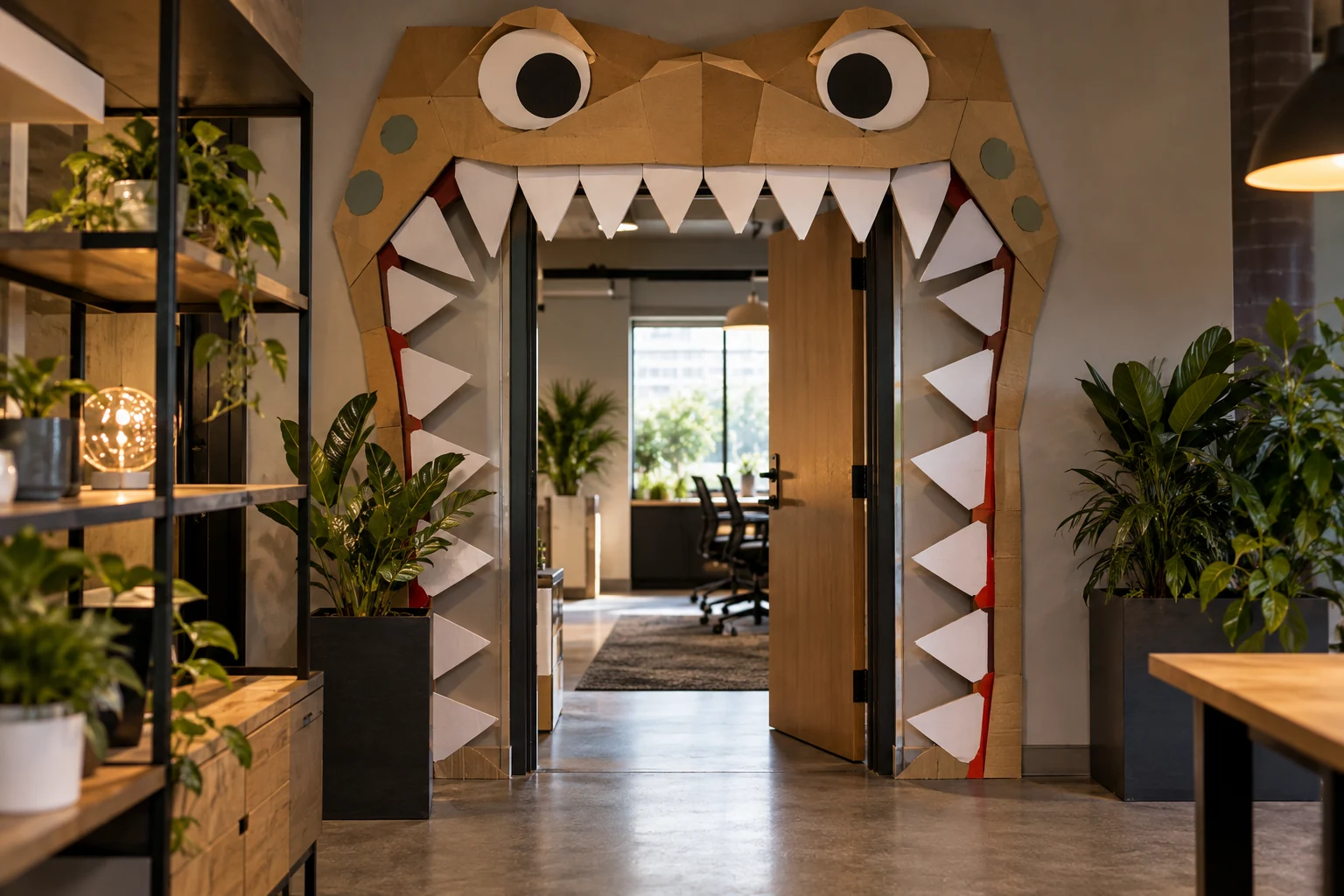
Large paper eyes and a mouth shape can give the display a clear playful character. Keep all pieces within a permitted panel rather than projecting into the opening. Leave the frame, hardware and normal door movement unaffected.
Try this: Check the complete door swing before keeping the arrangement.
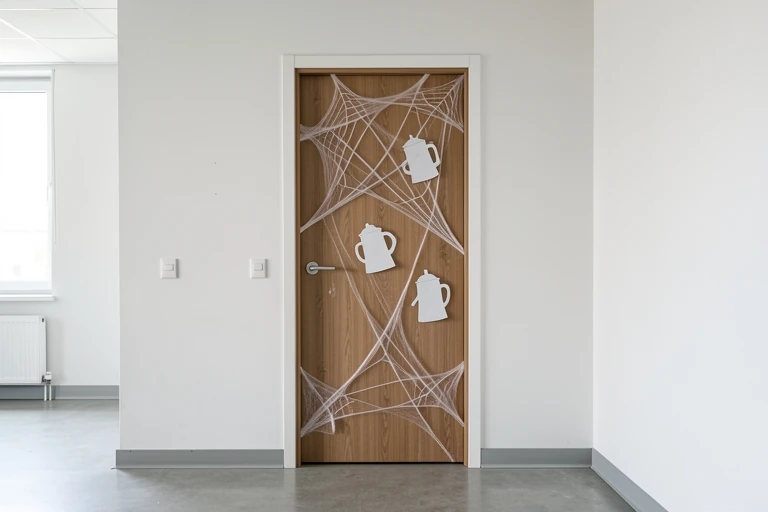
7. Keep Office Halloween Door Decorating Webs Flat
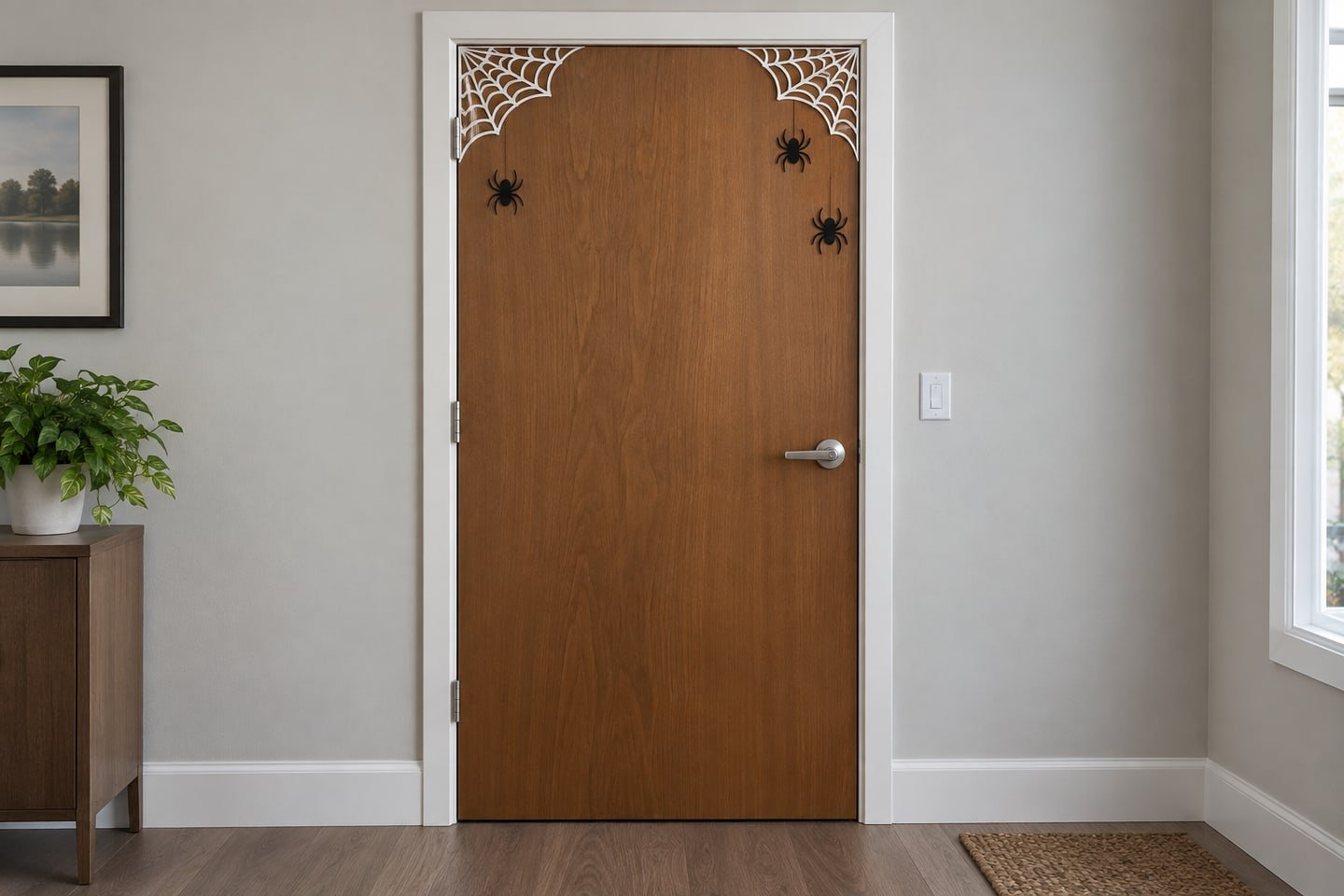
A few flat paper web shapes can carry the spider theme without filling the opening with protruding props. Keep the design on a suitable surface where it does not interfere with the door. Choose attachment products for the actual finish and leave required signs, hardware and access unobstructed. Use a simpler panel when a doorway cannot support decoration practically.
Try this: Open and close the door fully before keeping the display.
8. Make a Mummy-Inspired Paper Pattern

Overlapping pale paper strips on a dark backing can suggest wrapped fabric through a flat graphic arrangement. Keep the pieces contained on the display surface, with no loose tails crossing the opening. Choose attachment methods for the actual finish.
Try this: Let a few dark gaps provide the visual contrast.
9. Frame an Autumn Pumpkin Motif

Orange pumpkin shapes and a few leaf colors can provide a seasonal option without an elaborate horror theme. Choose flat details or properly supported lightweight components for the permitted area. Do not rely on a generic removable hook claim to protect every finish.
Try this: Repeat the same pumpkin shape in several sizes.
10. Use Black-and-Yellow Graphic Trim
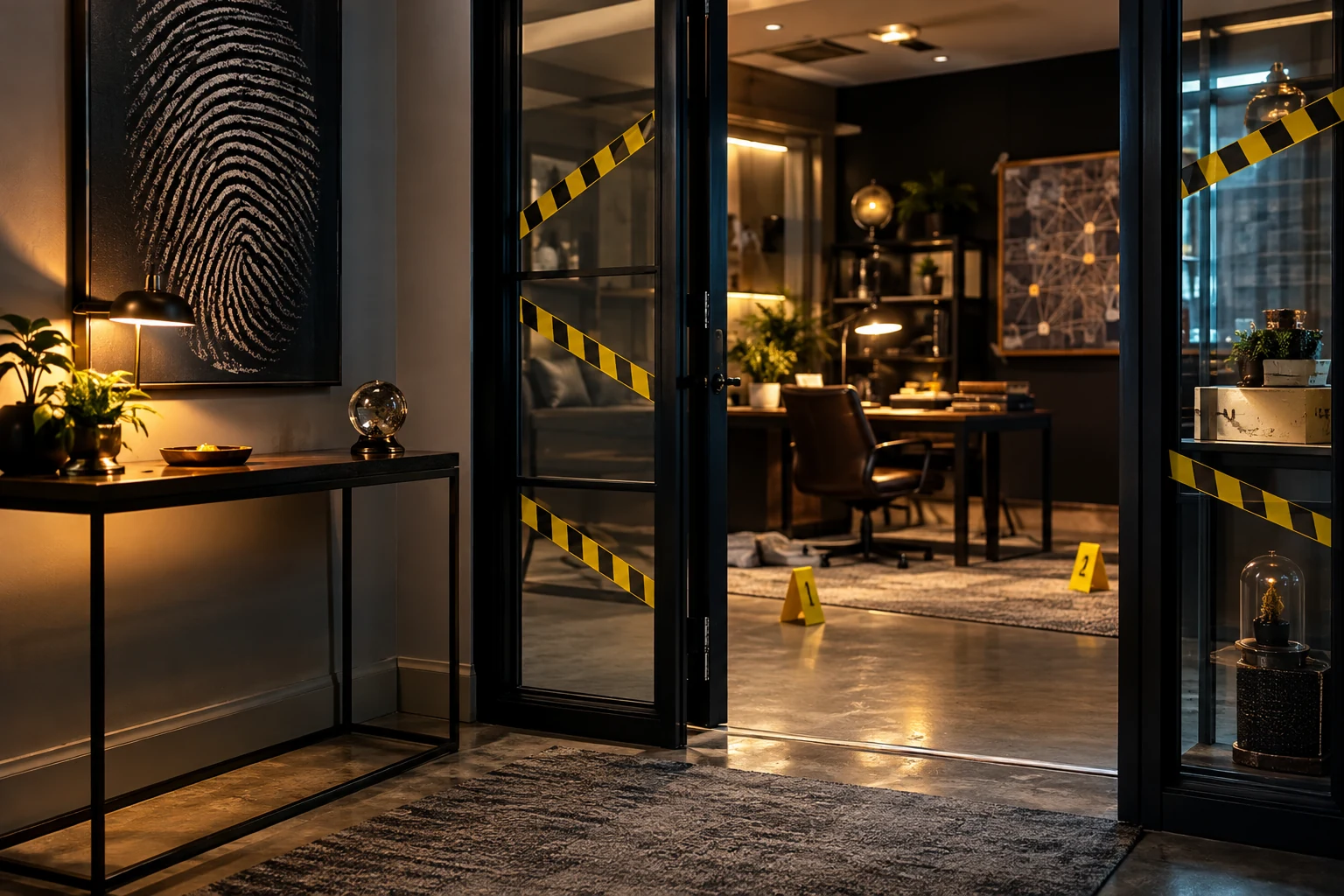
High-contrast diagonal lines can provide a bold border for a themed display. Keep the pattern on an approved panel and distinct from real emergency information or access controls. Do not run tape across an opening or over working hardware.
Try this: Use a display board if the doorway cannot carry decorative trim.
11. Build a Paper Laboratory Panel
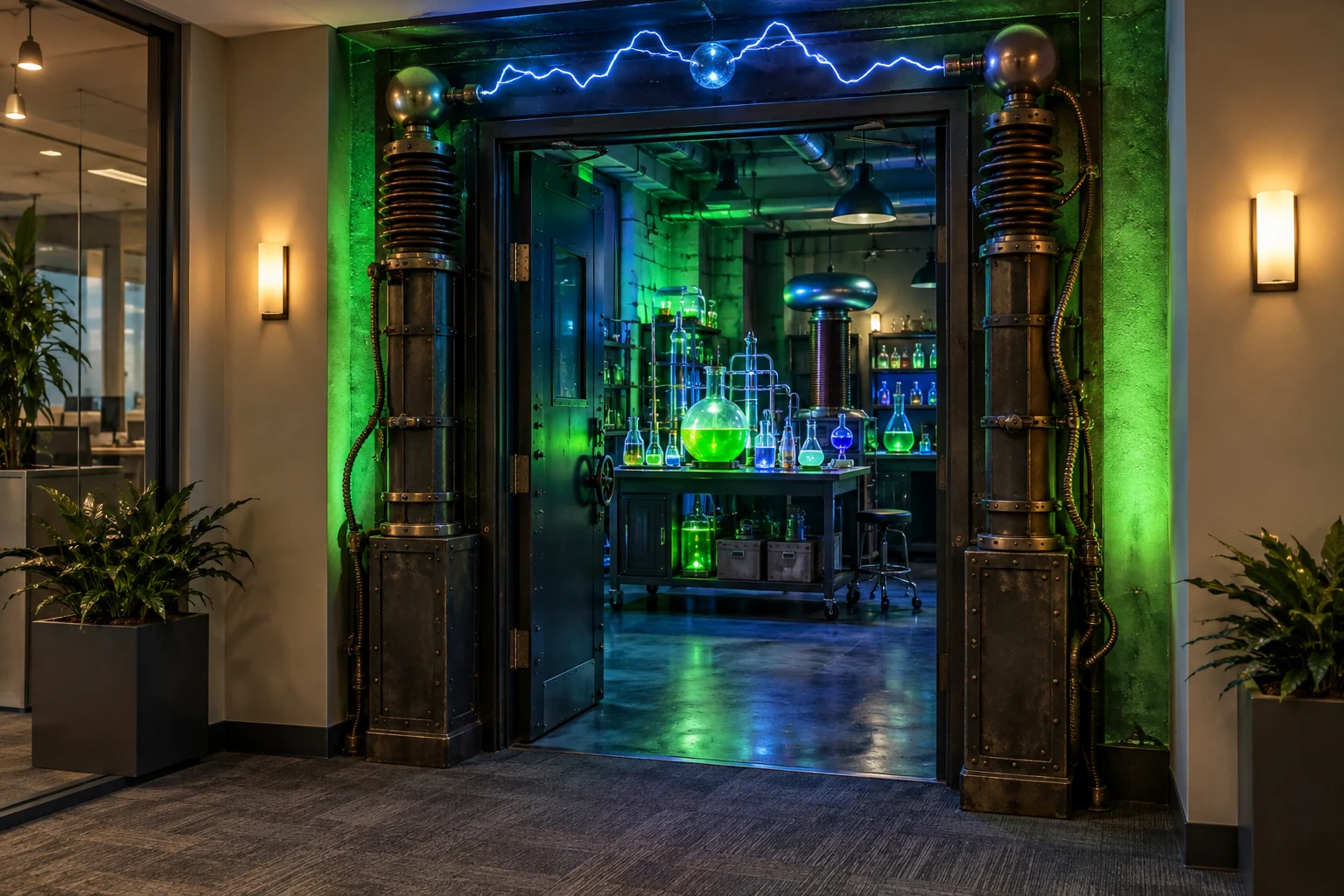
Flat gauge circles and simple metallic-colored paper shapes can suggest an imaginary laboratory. Keep the materials visibly decorative, with no connections to working electrical equipment. A few clear graphic elements read more easily than a crowded field of tiny markings.
Try this: Use repeated circles and lines to unify the panel.
12. Make a Small Cauldron-Inspired Display
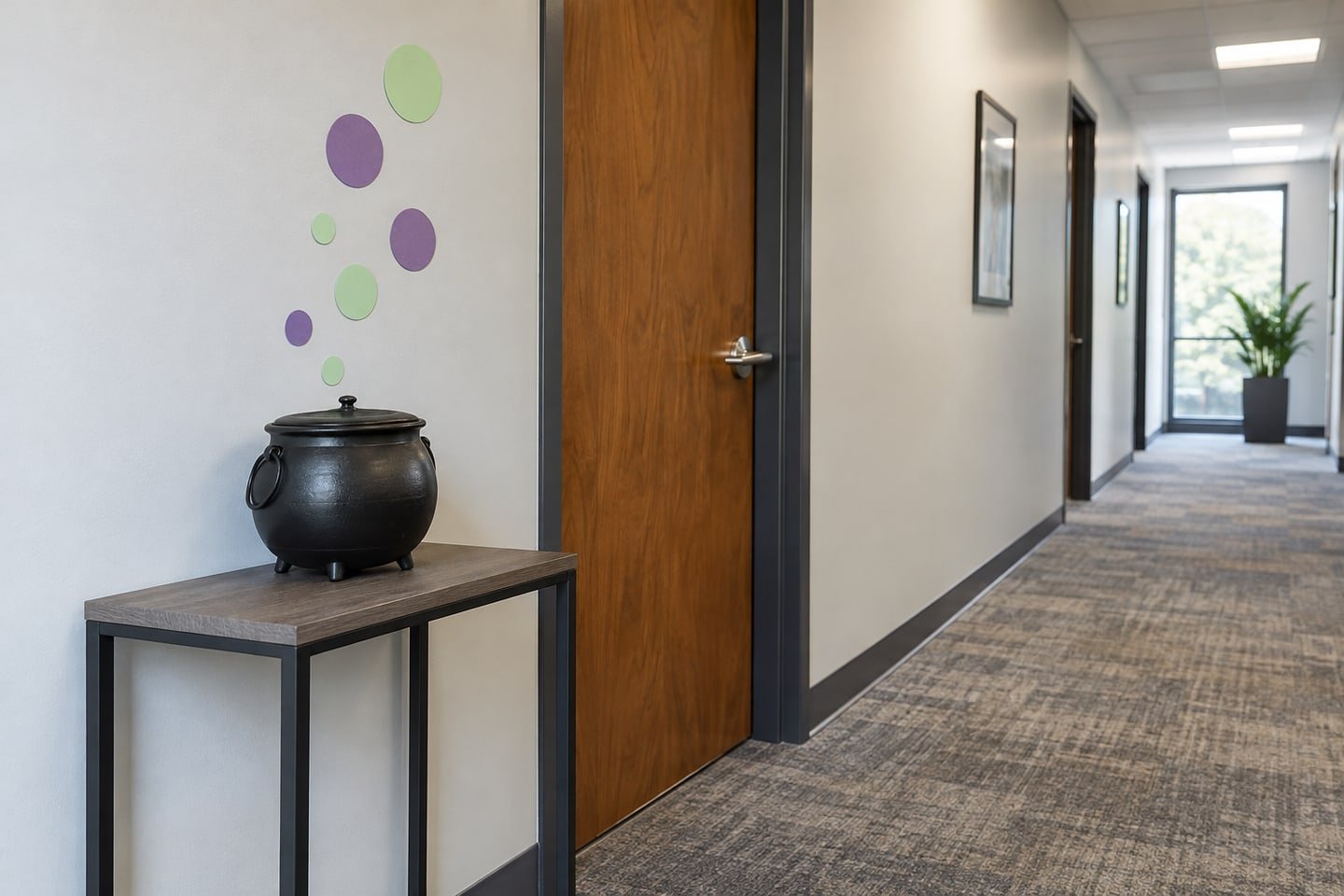
A small prop and a few paper bubble shapes can suggest a cauldron theme without creating fog across a walking route. Keep the display confined to a stable surface outside the door operation. Use materials allowed in the workplace and keep the area easy to inspect and remove. A flat wall panel is another option when there is no suitable place for a prop.
Try this: Check the display from both directions along the corridor.
13. Layer a Forest in Office Halloween Door Decorating

Dark tree cutouts against a twilight-colored background can provide a clear woodland scene. Vary the tree heights and keep their bases aligned within the panel. The composition can work as a flat arrangement without loose branches or projecting props.
Try this: Check that the moon and tallest trees remain visible from the hall.
14. Use Ghost Shapes on a Separate Backing

Pale and dark ghost silhouettes can create a simple graphic group on a permitted opaque panel. Keep required glazing and visibility clear rather than assuming a glass door can be covered. Use a nearby board when the door finish or function limits decoration.
Try this: Test the arrangement in the lighting normally used at work.
15. Borrow a Carnival Stripe Pattern

Alternating red and white stripes can suggest a fairground theme through color alone. Keep the design flat and within the permitted display area. An illustrated awning is a reference for a graphic motif, not a universal clearance or mounting specification.
Try this: Use broad stripes that remain readable at hallway distance.
16. Suggest an Imaginary Machine With Paper Shapes

Large flat bolt and switch silhouettes can suggest a fictional laboratory machine. Use permitted lightweight craft material and keep it separate from real controls, wiring and equipment. Avoid a bulky frame if it would reduce access or make the door awkward to use.
Try this: Keep the most detailed shapes near the center of the panel.
17. Compose a Raven-and-Branch Panel

Black bird and branch silhouettes can provide a restrained literary mood. Give the birds enough contrasting background to make their outlines clear. Keep the pieces supported within the permitted display area rather than extending them into the route.
Try this: Repeat one bird shape in a few positions.
18. Try a Space-Themed Paper Door Panel

A flat rocket, moon and star composition can provide a clear science-fiction reference through ordinary craft materials. Keep the pieces lightweight and within a suitable display area. Choose a permitted attachment method and preserve the door’s normal function. The effect comes from the graphic arrangement rather than simulated damage or a complicated floor display.
Try this: Repeat one color from the panel in a small adjoining detail.
19. Arrange Colorful Paper Flowers
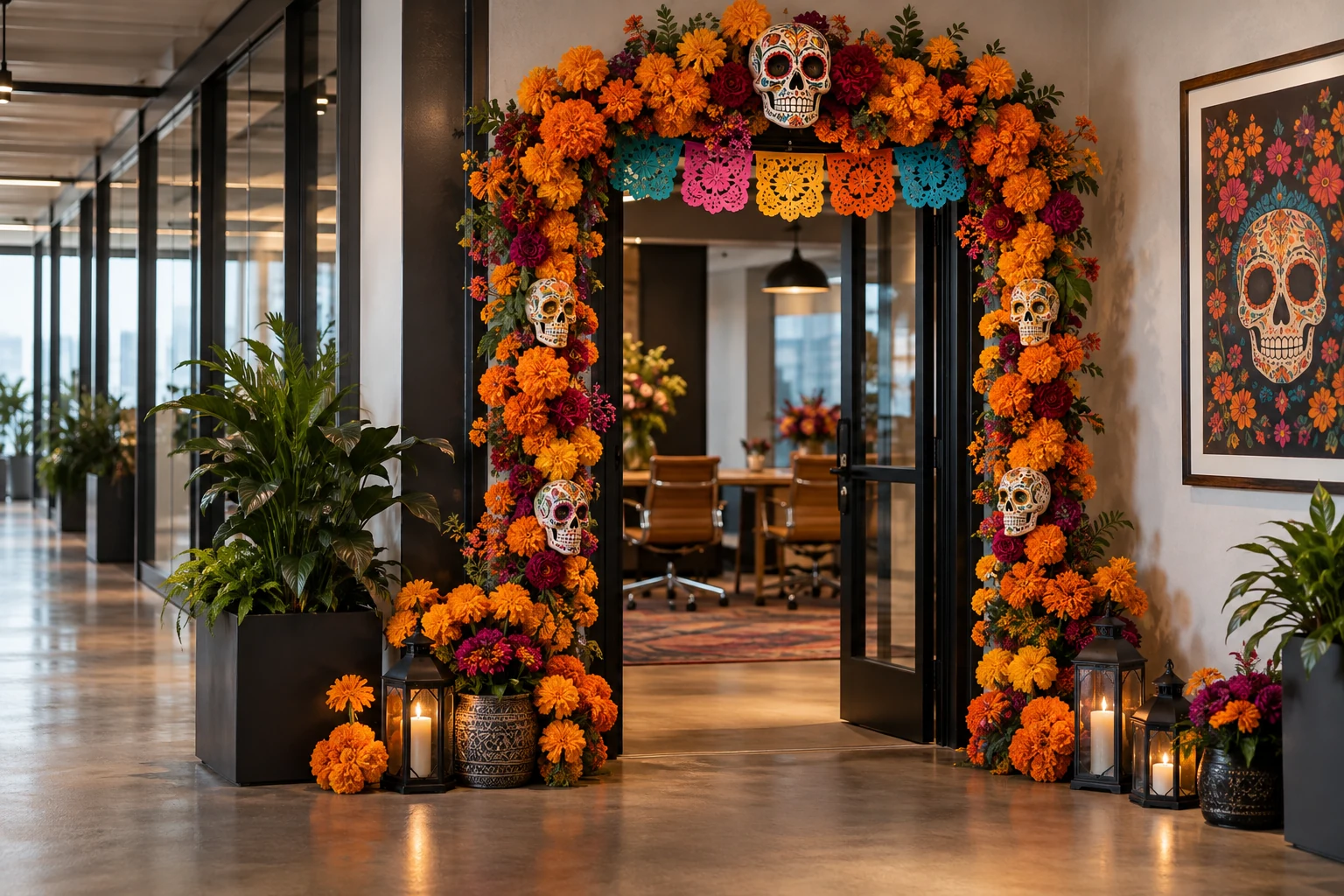
A few vivid paper flowers can frame a seasonal composition. If using Day of the Dead references, learn the meaning of the elements and present them thoughtfully rather than treating them as interchangeable horror props. Choose a permitted position and practical scale.
Try this: Use fewer larger flowers when the display must read from a distance.
20. Use Printed Planks for Office Halloween Door Decorating
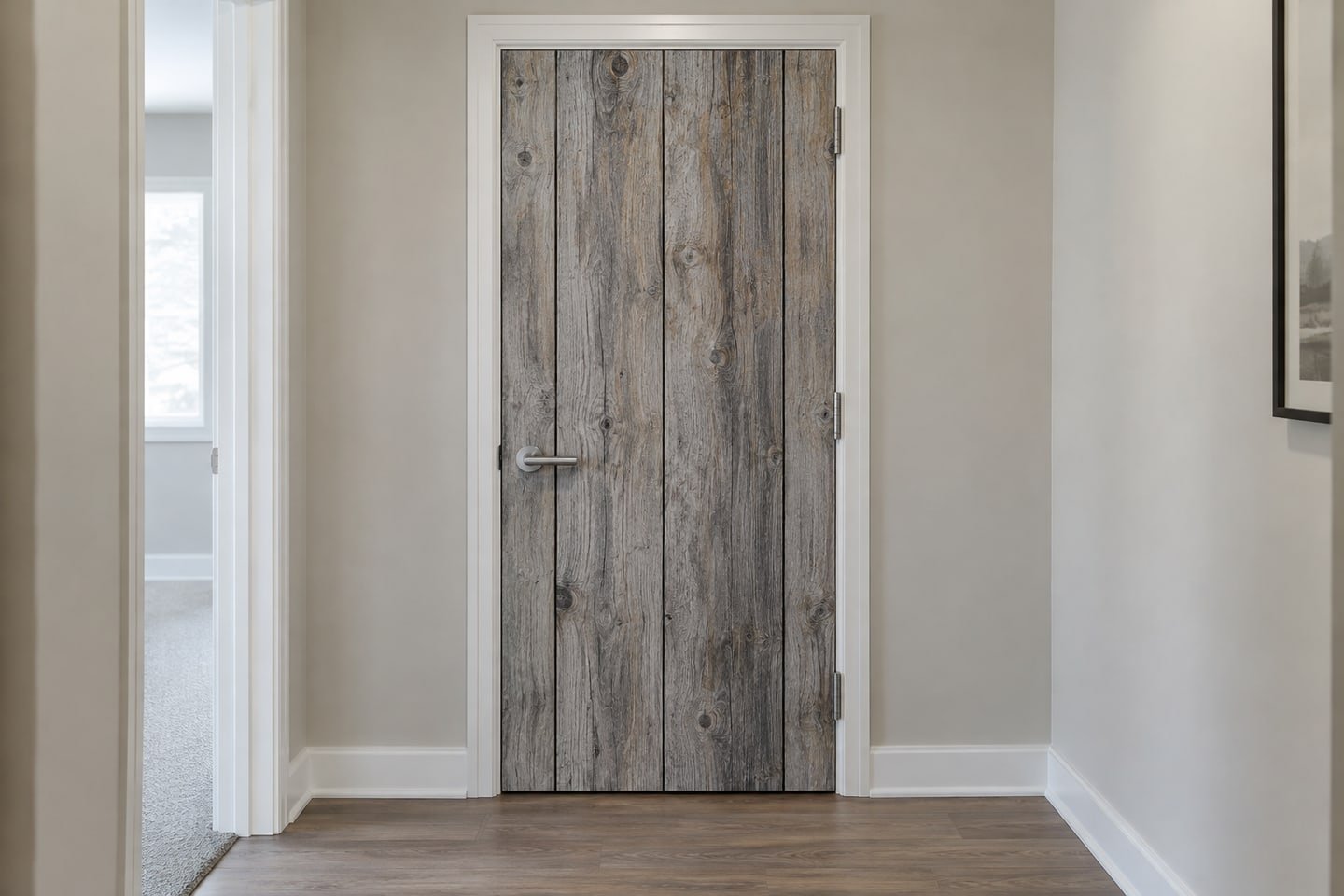
A printed plank pattern can suggest a weathered door without fastening timber across the opening. Keep the material flat, lightweight and appropriate to the workplace’s display rules. Leave the handle, hinges, signs and full door movement clear. Do not use a decorative theme as a reason to obstruct required access or alter door hardware.
Try this: Use the graphic on a nearby display board if the door must remain undecorated.
21. Use Three Simple Candy-Corn Colors

Blocks of yellow, orange and white can provide a clear seasonal color pattern with little small-detail work. Plan their proportions against the display area before cutting material. Keep the backing flat and use attachment products appropriate to the actual surface.
Try this: Compare the color blocks from the normal hallway approach.
22. Arrange Hat Shapes Within a Permitted Display
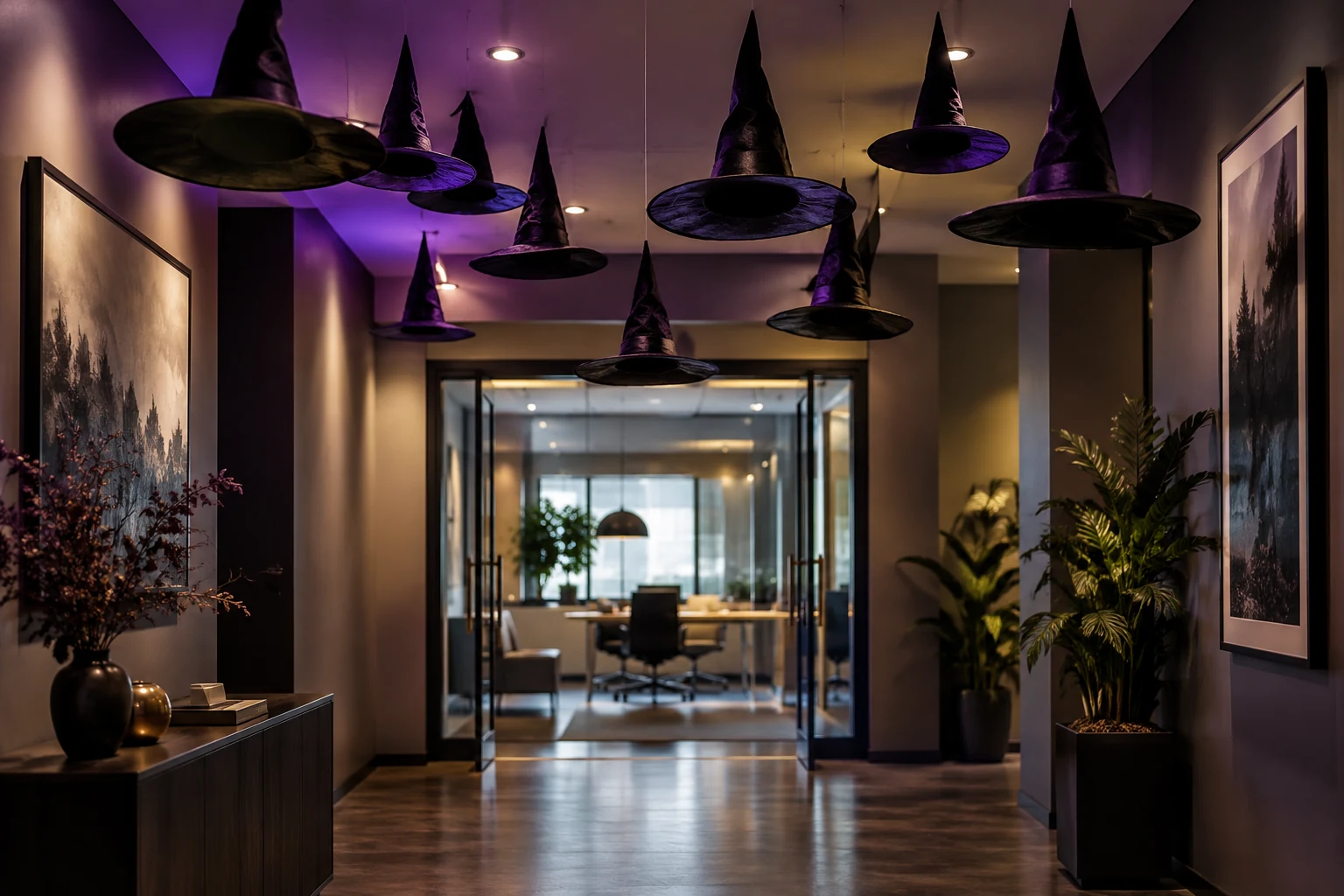
A few witch-hat silhouettes can carry the theme on a dark panel. Use a flat arrangement where overhead support or clearance is unsuitable. Do not hang lines from fixtures or assume a fixed height makes every workplace installation acceptable.
Try this: Choose the mounting position before making the hats.
23. Contrast Black-and-White Stripes With One Color
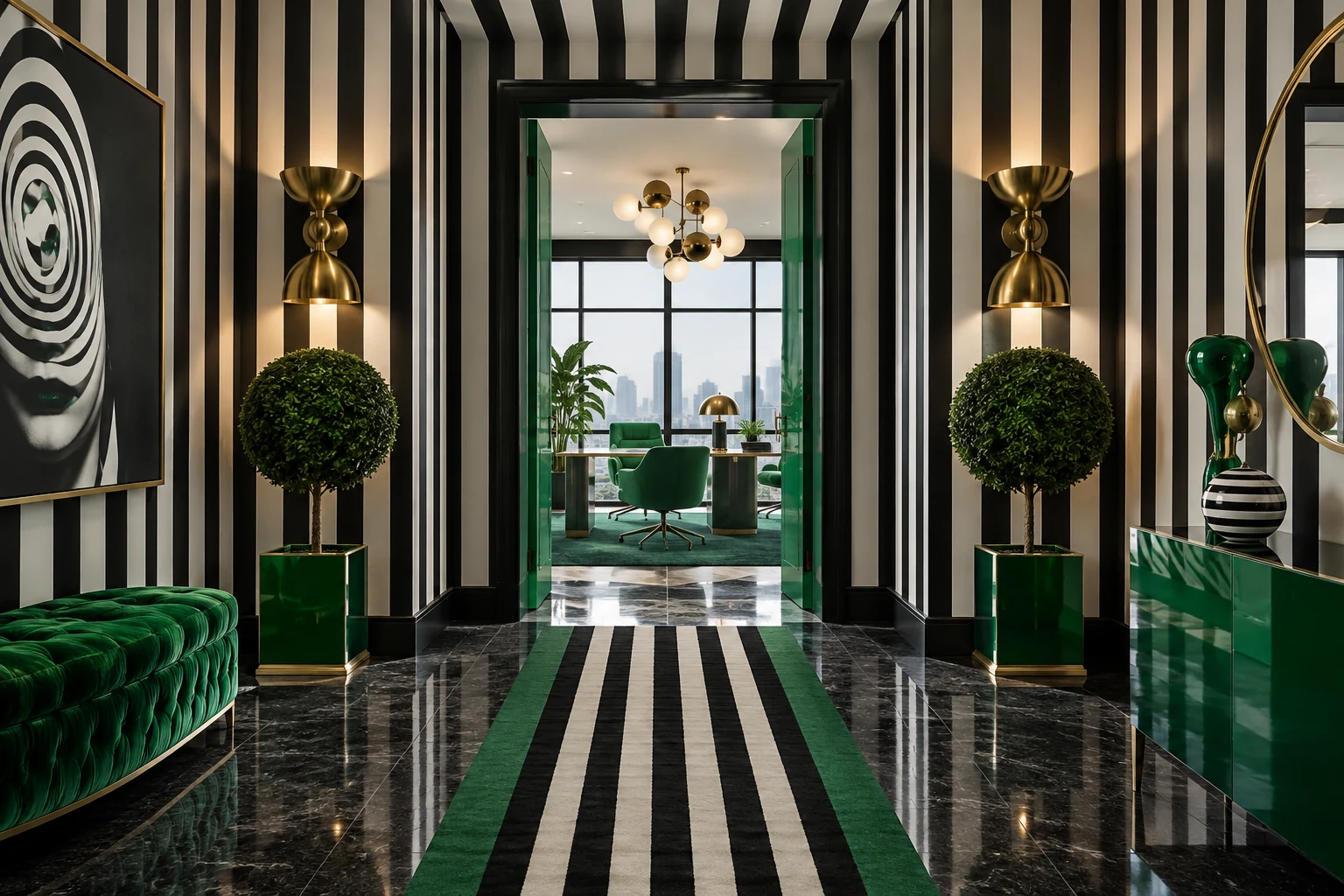
Broad alternating stripes can provide a strong background for a purple or green accent. Align the pattern with the display panel and keep individual pieces easy to remove as directed. Leave working hardware and required information fully visible.
Try this: Use one accent color to keep the overall pattern clear.
24. Check Materials, Access and Removal

Review the finished display with the workplace facilities team where required. Check full door movement, visibility, hardware, signs and the surrounding route. Clearance and material requirements depend on the actual location; generic measurements and tape recommendations cannot establish compliance.
Try this: Use an approved separate board if any part of the doorway must stay clear.
Choose Your First Change
Choose the theme that fits the permitted display area, then simplify it until the main shape is readable. Check normal access and removal before considering the decoration finished.
Related Guides
- Halloween cubicle decor for practical workspaces
- 20 Indoor Halloween Decor Ideas for Everyday Rooms
- 23 Fun 90’s Halloween Decor Ideas for Nostalgic Homes
Seasonal Display Reference
Review seasonal decoration precautions together with the actual workplace and facilities requirements before assembling the display. NFPA: Halloween decoration precautions.
Optional digital guide for this topic
If you prefer a structured workbook, explore this related paid guide.