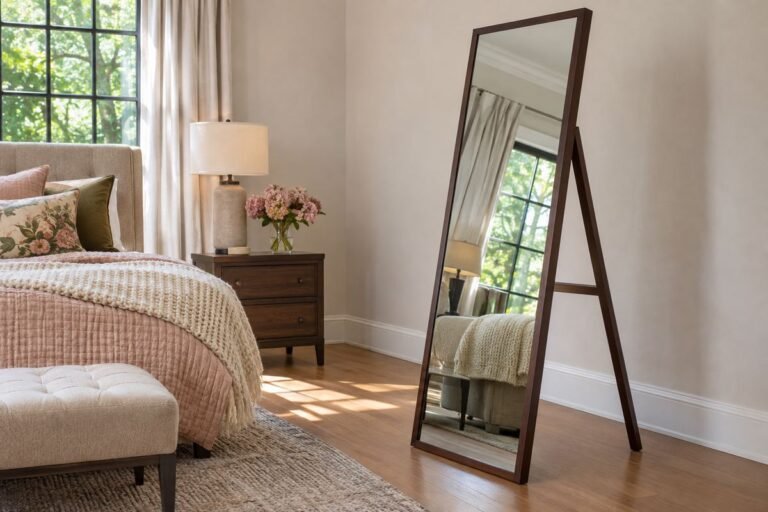
Jewelry storage is easier to maintain when each shape has a suitable place. A long chain needs a different arrangement from a pair of studs, and a decorative dish does not offer the same separation as a fitted case. Begin with what you actually wear, then choose storage around size, material and the way pieces are returned.
The arrangements here organize ordinary dressing routines. They do not establish theft protection or a universal care method for valuable pieces. Keep the jeweler's or maker's instructions for individual items, especially unusual materials, treated gems and delicate finishes.
Contents
- 1. Give everyday pieces a small divided tray
- 2. Use fitted ring rolls for suitable bands
- 3. Keep stud earrings in visible pairs
- 4. Give long necklaces their full hanging space
- 5. Lay delicate chains in separate long compartments
- 6. Separate bracelets around their real width
- 7. Use a watch cushion that fits the strap
- 8. Give brooches a supported flat compartment
- 9. Keep delicate materials in their own suitable pouch
- 10. Choose silver storage around its own care guidance
- 11. Give pearls a soft separate case
- 12. Keep original cases for pieces that need them
- 13. Use a travel roll for a selected small group
- 14. Prepare one outfit's pieces in a divided return tray
- 15. Use a shallow drawer for a visible overview
- 16. Keep the vanity's main surface useful
- 17. Use a wall organizer only for compatible pieces
- 18. Check the complete movement of a jewelry cabinet
- 19. Give small pendants room around their settings
- 20. Separate occasional statement pieces
- 21. Keep spare backs in a small contained section
- 22. Leave wide earrings their own footprint
- 23. Use a hard outer case with suitable inner separation
- 24. Keep stacked trays individually accessible
- 25. Use a cover for a limited display group
- 26. Keep jewelry separate from the bathroom routine
- 27. Keep a simple care note for unusual pieces
- 28. Finish with a one-piece return test
Sort by shape and care before buying an organizer
Separate necklaces, rings, earrings, bracelets and pieces needing individual care. GIA advises protecting jewelry from contact that can scratch or damage it and describes different requirements for different materials. Its pearl guidance recommends a soft pouch or case and avoiding harsh chemicals and unsuitable hot dry conditions. A single storage treatment, cleaner or drying packet should not be assumed appropriate for an entire mixed collection.
Compare the storage or placement options
- Fine chain: Separate suitable hanging or flat support chosen around construction and full length.
- Raised ring or pendant: A roomy section with adequate closed height and no pressure from neighboring pieces.
- Pearls or unusual material: Individual care guidance and a suitable soft enclosure; avoid universal treatments.
- Everyday selection: A small accessible divided group with a defined return place.
1. Give everyday pieces a small divided tray
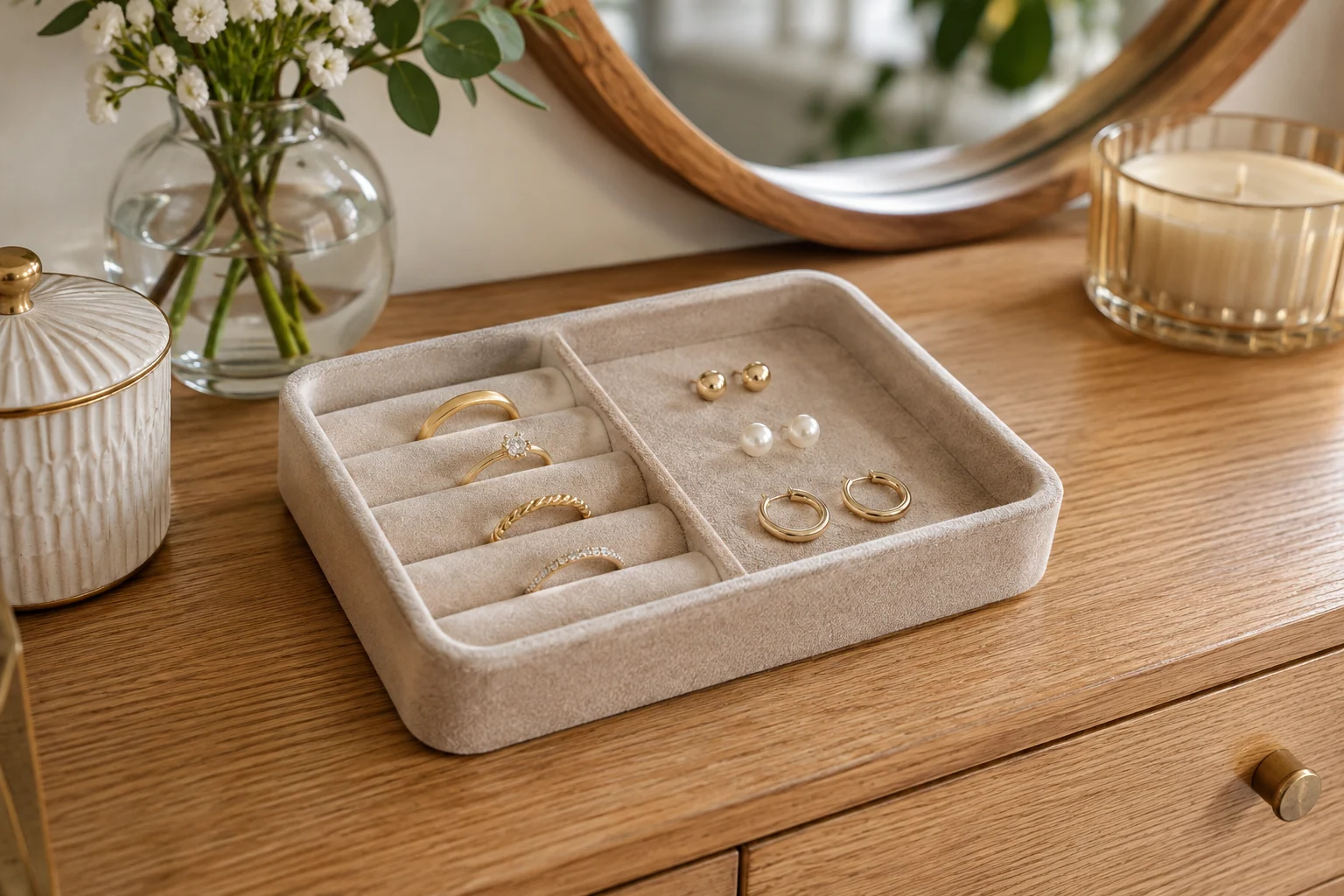
A shallow tray can make the daily group easy to see without spreading it across the dresser. Choose separate suitable sections rather than one hard dish where everything touches. Keep the group small enough that each piece has a clear return position. Move occasional jewelry into its own storage instead of expanding the tray until it occupies the whole dressing surface.
2. Use fitted ring rolls for suitable bands
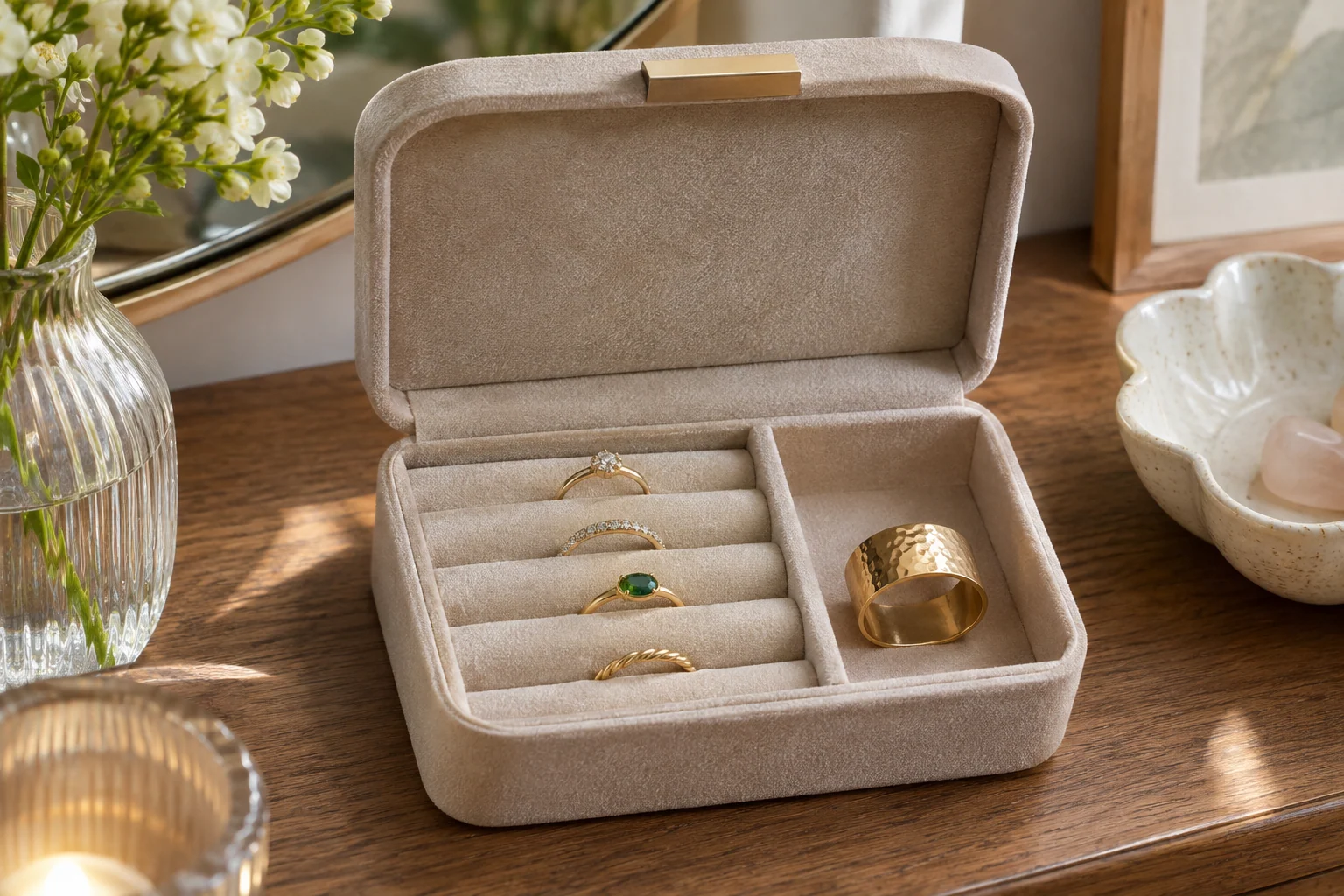
A purpose-designed ring section can hold individual rings upright while keeping neighboring pieces apart. Check the fit around wide bands, raised settings and unusual shapes. Avoid forcing a ring into a narrow slot because the organizer has the right overall count. A broader padded compartment may suit a substantial piece better than a uniform row of tight rolls.
3. Keep stud earrings in visible pairs
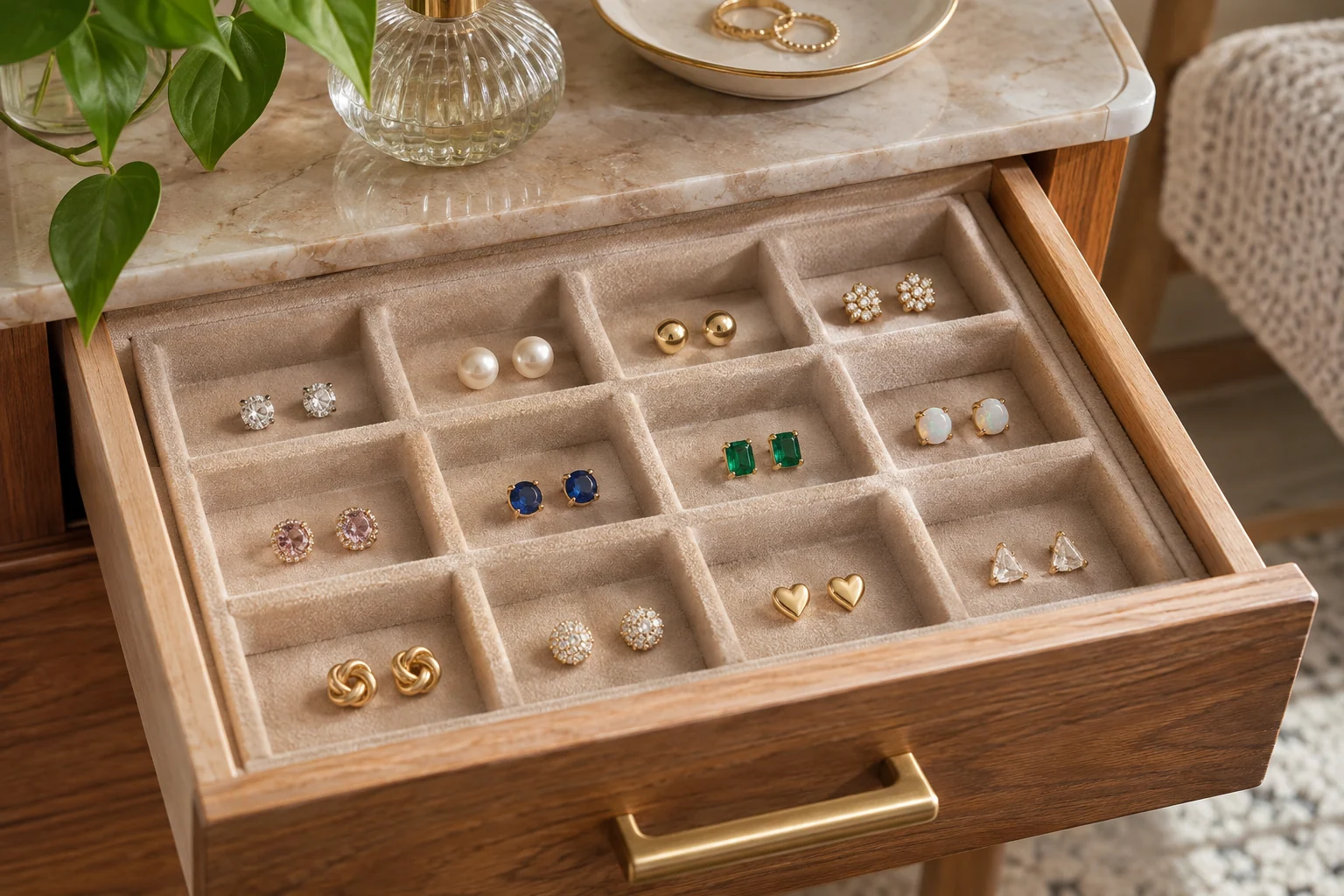
Small divided sections can make matching studs easier to find than a deep pouch of loose pieces. Keep the pair and its intended backs together in a suitable arrangement. Compare the compartment with the actual post length and setting. The useful organizer lets you see a pair without emptying neighboring sections or pressing delicate parts into the lining.
4. Give long necklaces their full hanging space
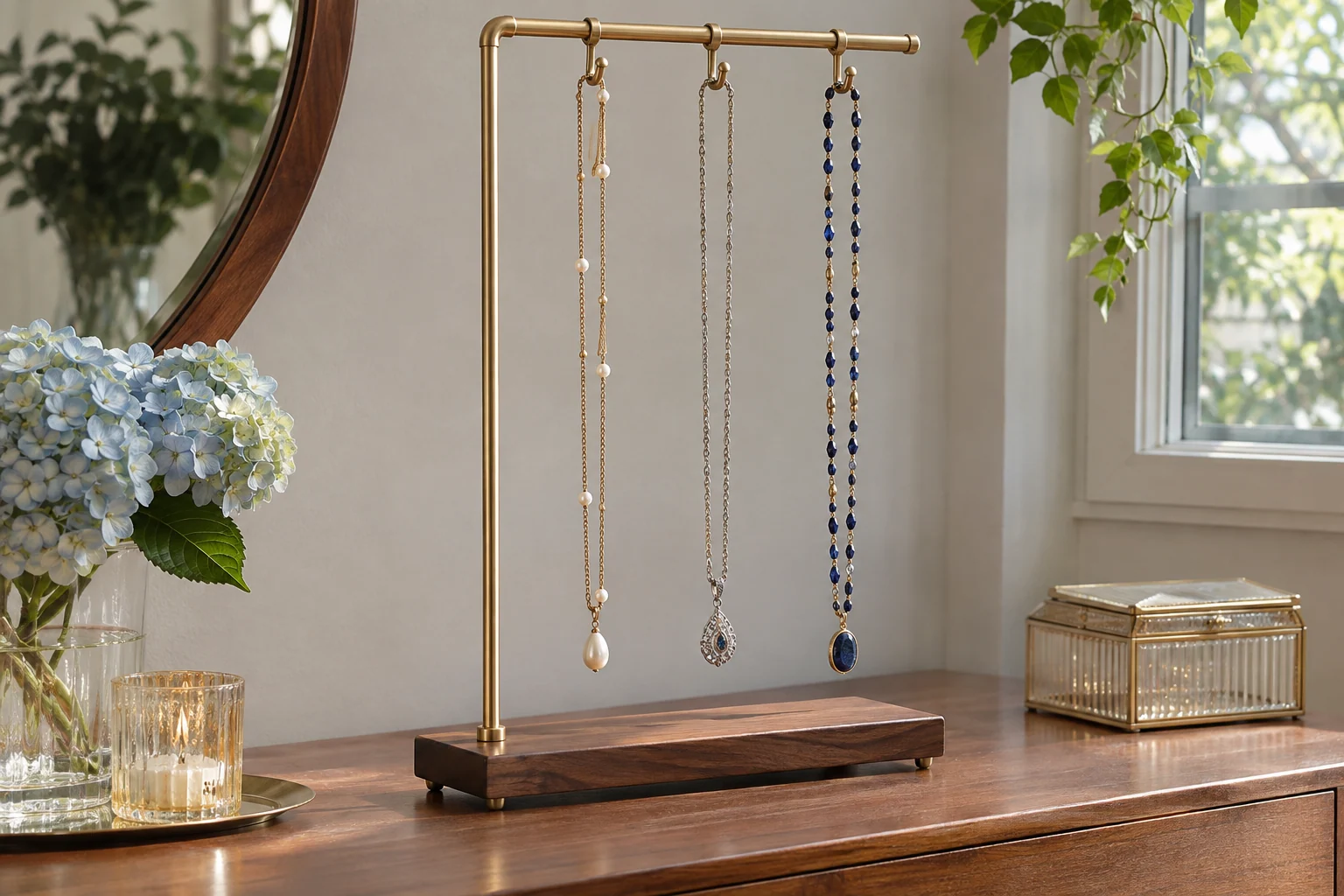
A purpose-designed holder can separate suitable necklaces when its hooks and support fit the collection. Check the chain's full drop and the space around pendants so they do not collide at the bottom. Follow the holder's mounting or stability guidance. Not every delicate or unusually constructed necklace belongs hanging; keep piece-specific instructions as the deciding factor.
5. Lay delicate chains in separate long compartments
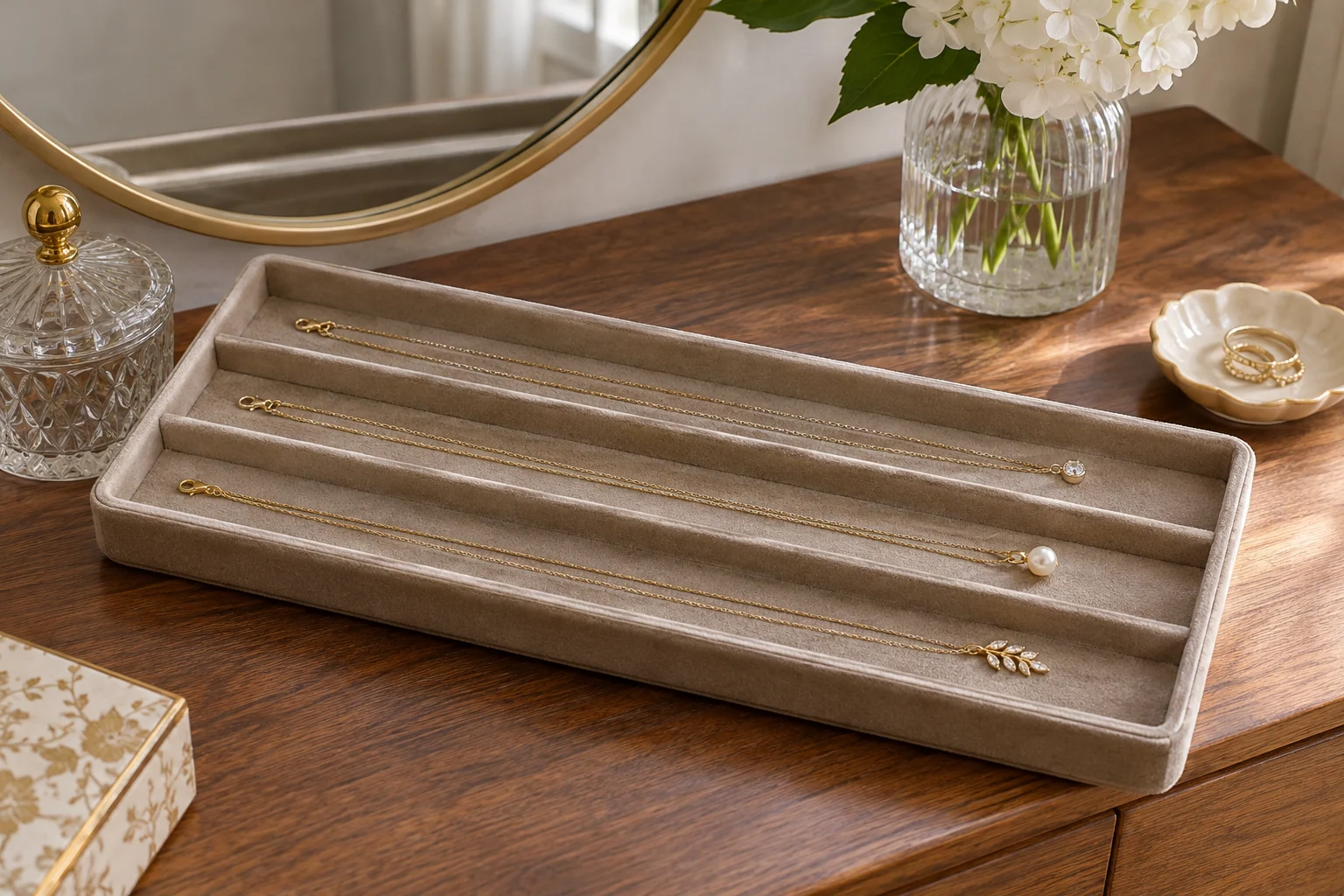
A flat compartment can give a suitable chain its own supported position without another necklace crossing it. Choose a smooth interior that suits the material and does not catch fine links. Keep the closure and pendant visible so retrieval is straightforward. Avoid piling several chains into a single narrow channel simply because there is spare length at one end.
6. Separate bracelets around their real width

A bracelet's clasp, links or projecting details can need more room than its resting outline suggests. Give each suitable piece a compartment that avoids pressing it against its neighbor. Keep flexible bracelets supported according to their own care guidance. A varied collection may work better in several different section sizes than in one repeated grid.
7. Use a watch cushion that fits the strap
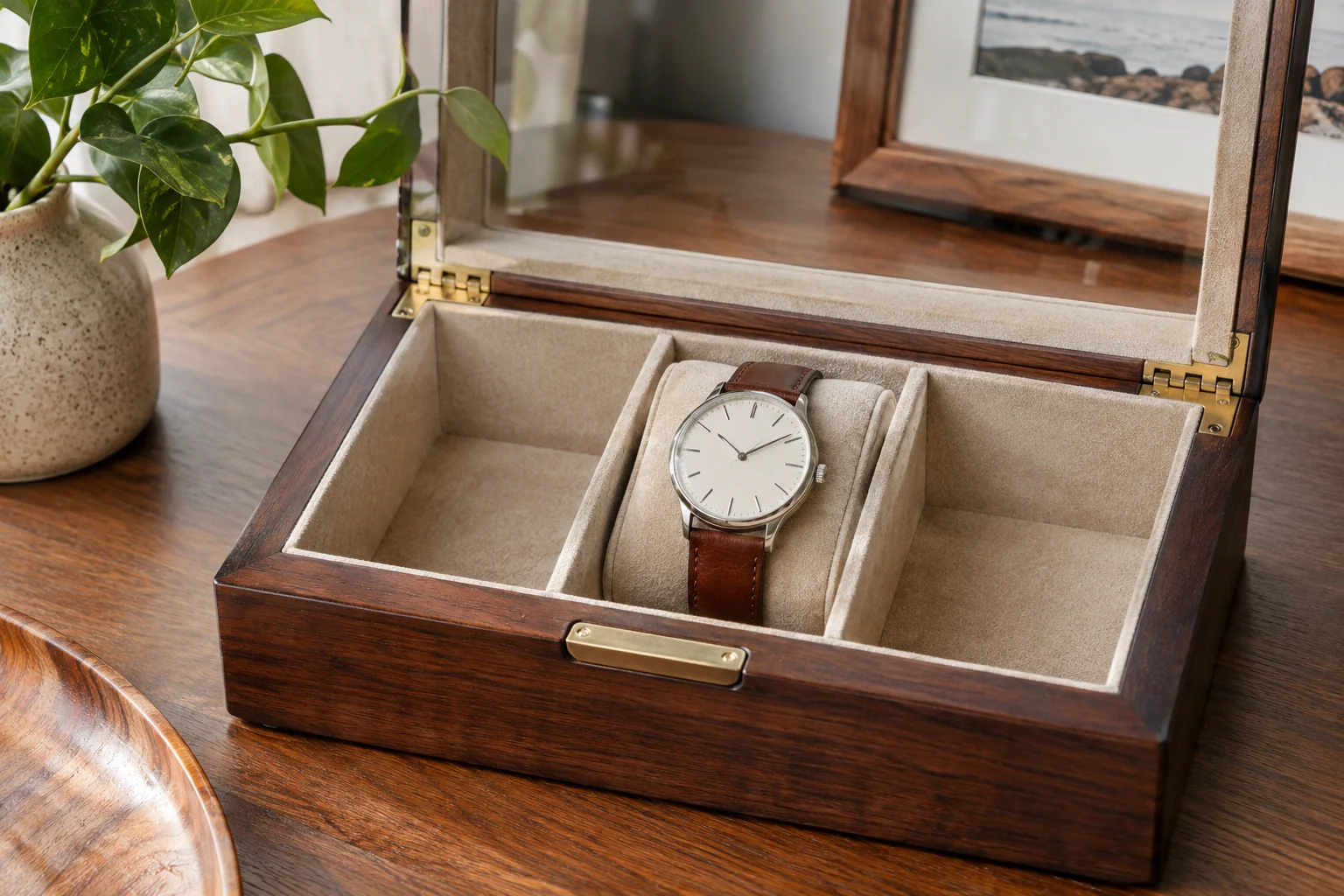
A purpose-designed watch section can keep a watch separate from loose jewelry when the cushion suits its strap and closure. Avoid forcing a small strap around an oversized support. Follow the watch maker's storage guidance, including any specific requirements. Keep other metal pieces from being added into the same compartment merely because the watch does not fill its width.
8. Give brooches a supported flat compartment
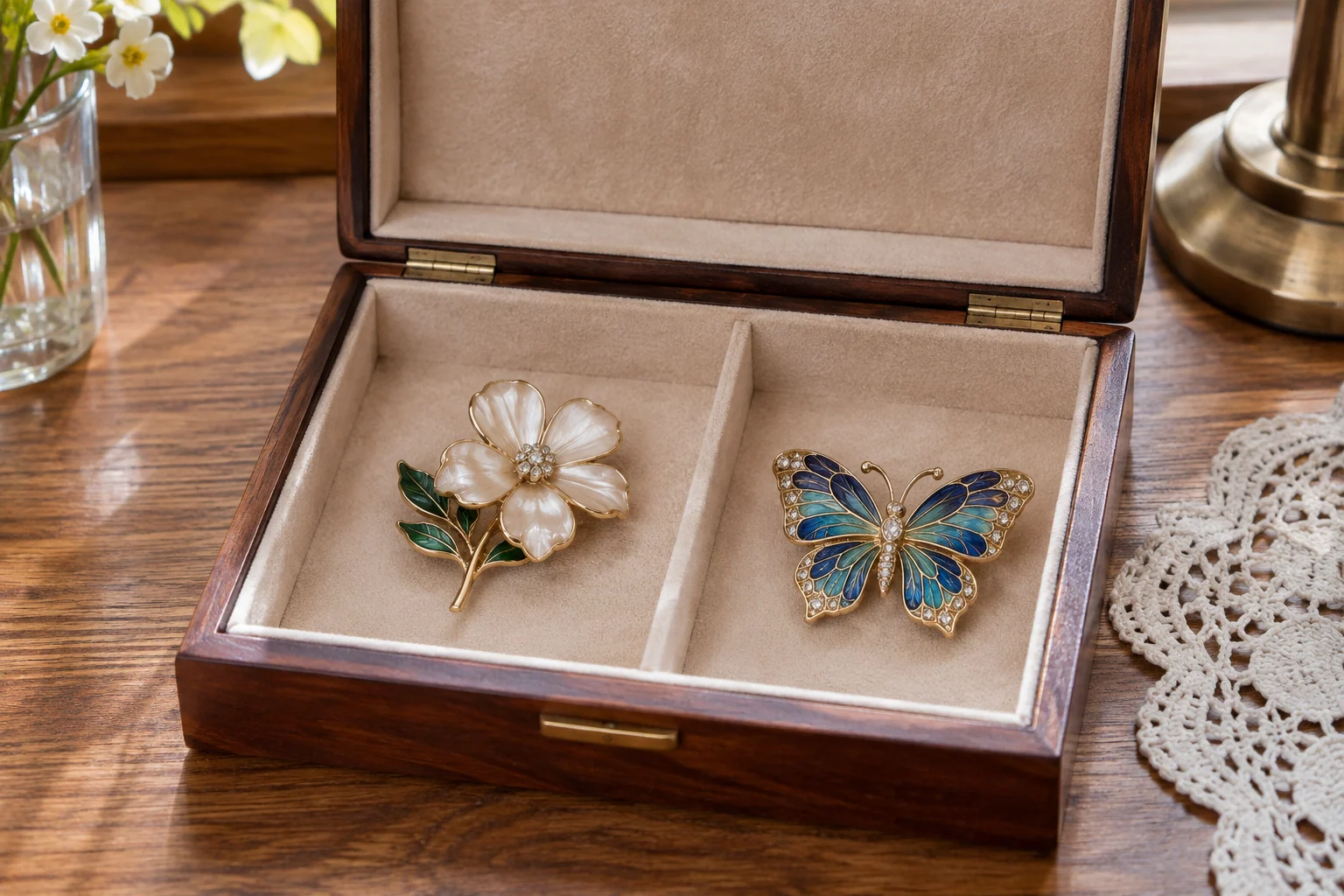
A brooch can have projecting details and a fastening that need a little room around them. Store it in a suitable padded section without placing heavy pieces on top. Check how it lifts out before choosing a deep box. An individual compartment can make the piece visible without using the front of a storage pouch as an improvised display board.
9. Keep delicate materials in their own suitable pouch
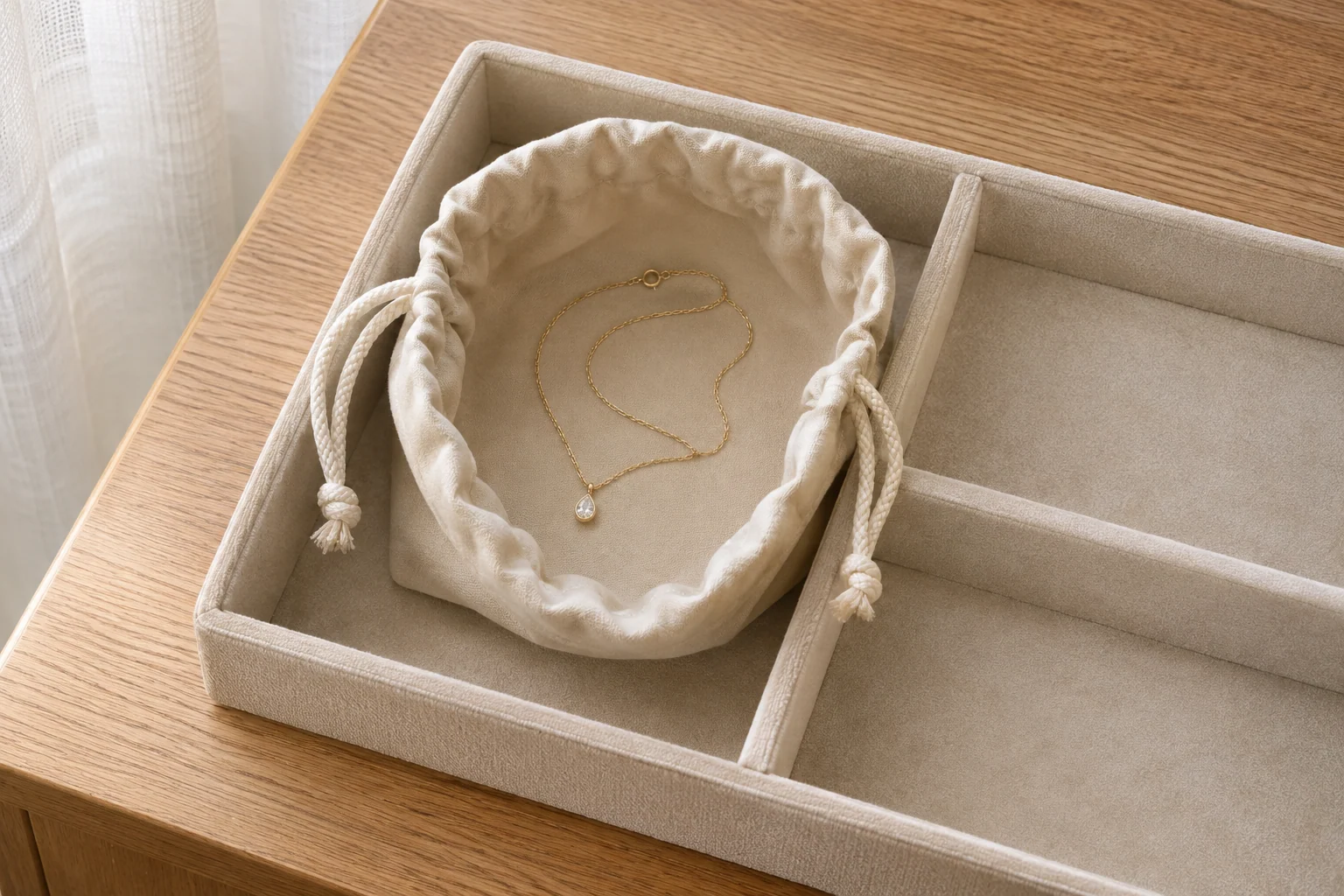
A soft individual pouch can separate a piece from harder neighbors when that enclosure suits its material. Use the guidance supplied with the jewelry instead of assuming any fabric bag offers the same protection. Keep the pouch identifiable in a larger case so it does not become an unknown bundle at the back of a drawer.
10. Choose silver storage around its own care guidance
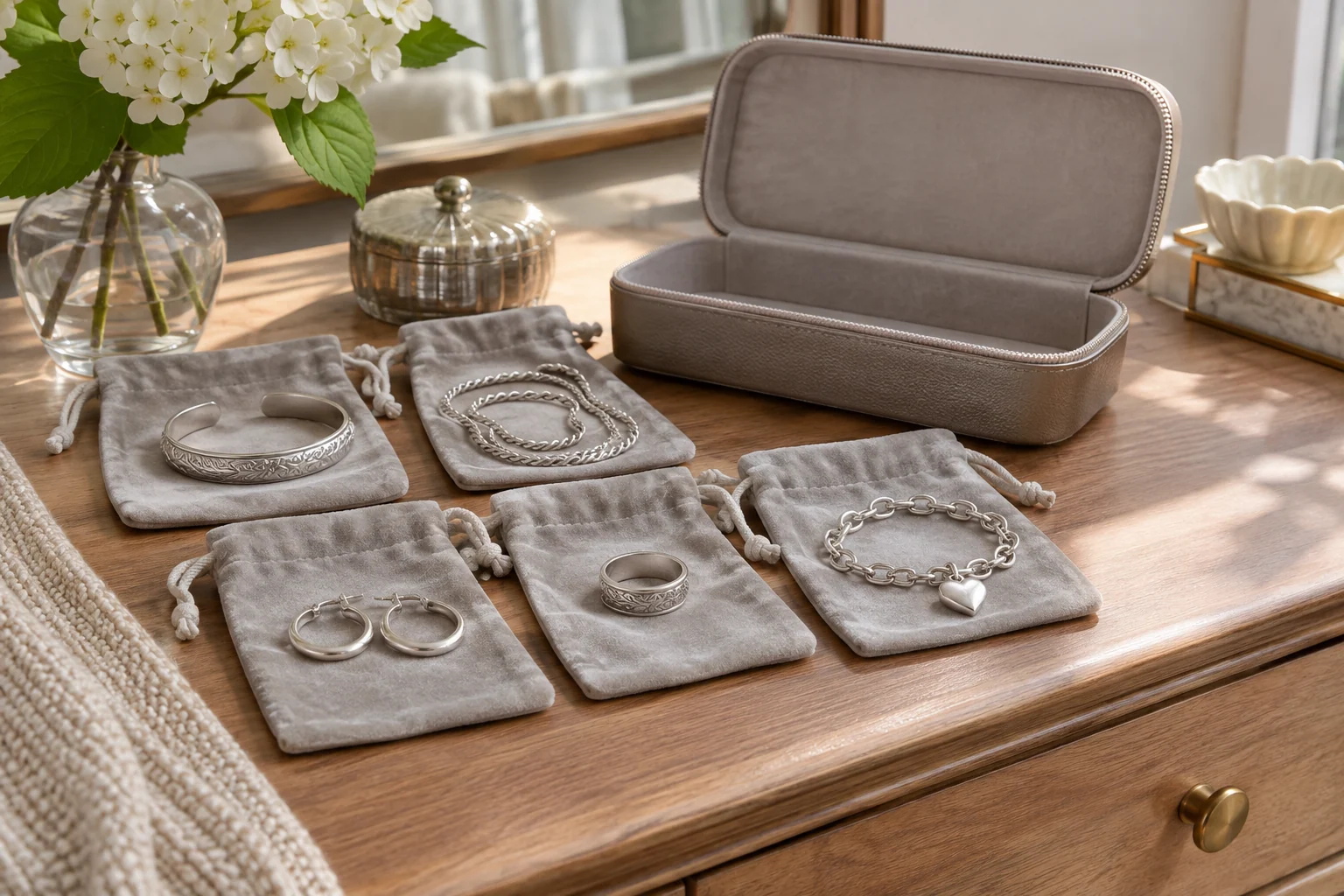
GIA identifies anti-tarnish bags or cloths as an option for sterling silver. Use a suitable product as directed for the actual item rather than applying one treatment to every metal or gem. Keep silver pieces separated where appropriate. A storage choice can support a care routine without promising that a particular finish will never change.
11. Give pearls a soft separate case
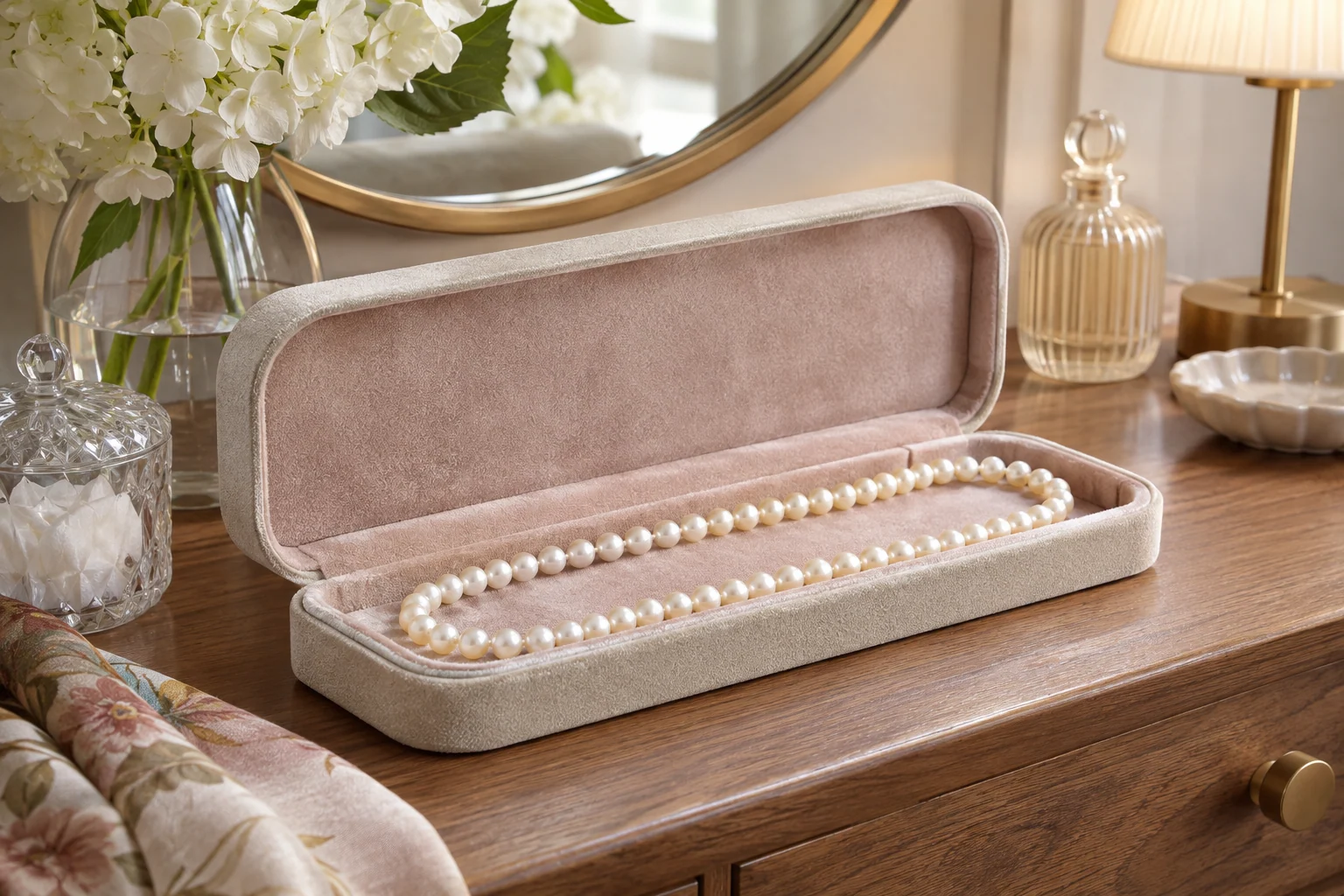
Pearls should not share a crowded hard compartment with rough or sharp jewelry. Choose a suitable soft pouch or lined case, and follow the piece's care instructions. GIA also cautions against unsuitable hot dry storage for pearls. Keep them separate without assuming that the strongest drying treatment used elsewhere in the collection is helpful here.
12. Keep original cases for pieces that need them
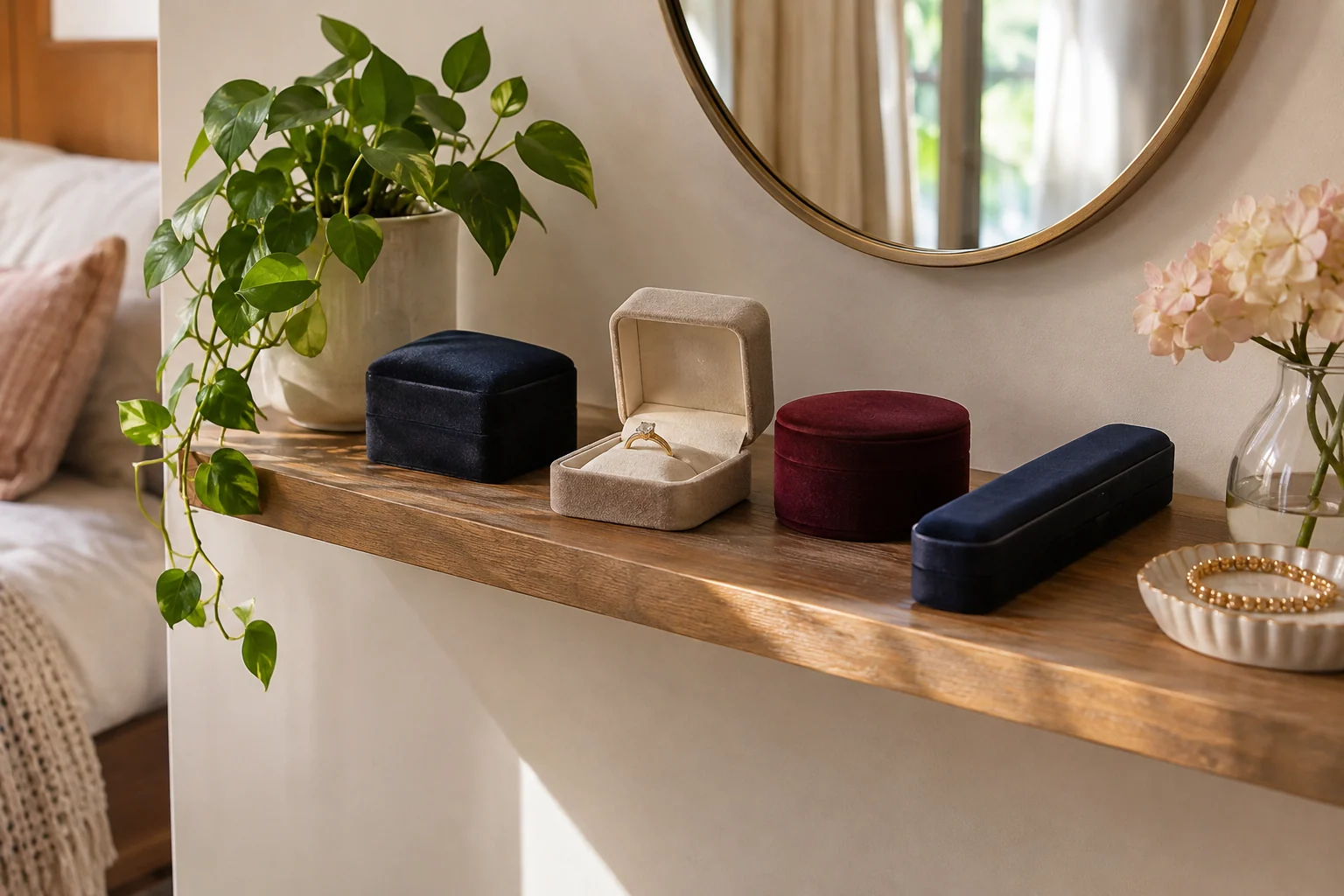
A fitted case supplied with an item may offer an appropriate shape and separation that a generic organizer lacks. Keep it when it remains useful, and record what belongs inside if several cases look alike. Store the cases in a defined area rather than stacking them so tightly that the lowest one cannot be retrieved comfortably.
13. Use a travel roll for a selected small group
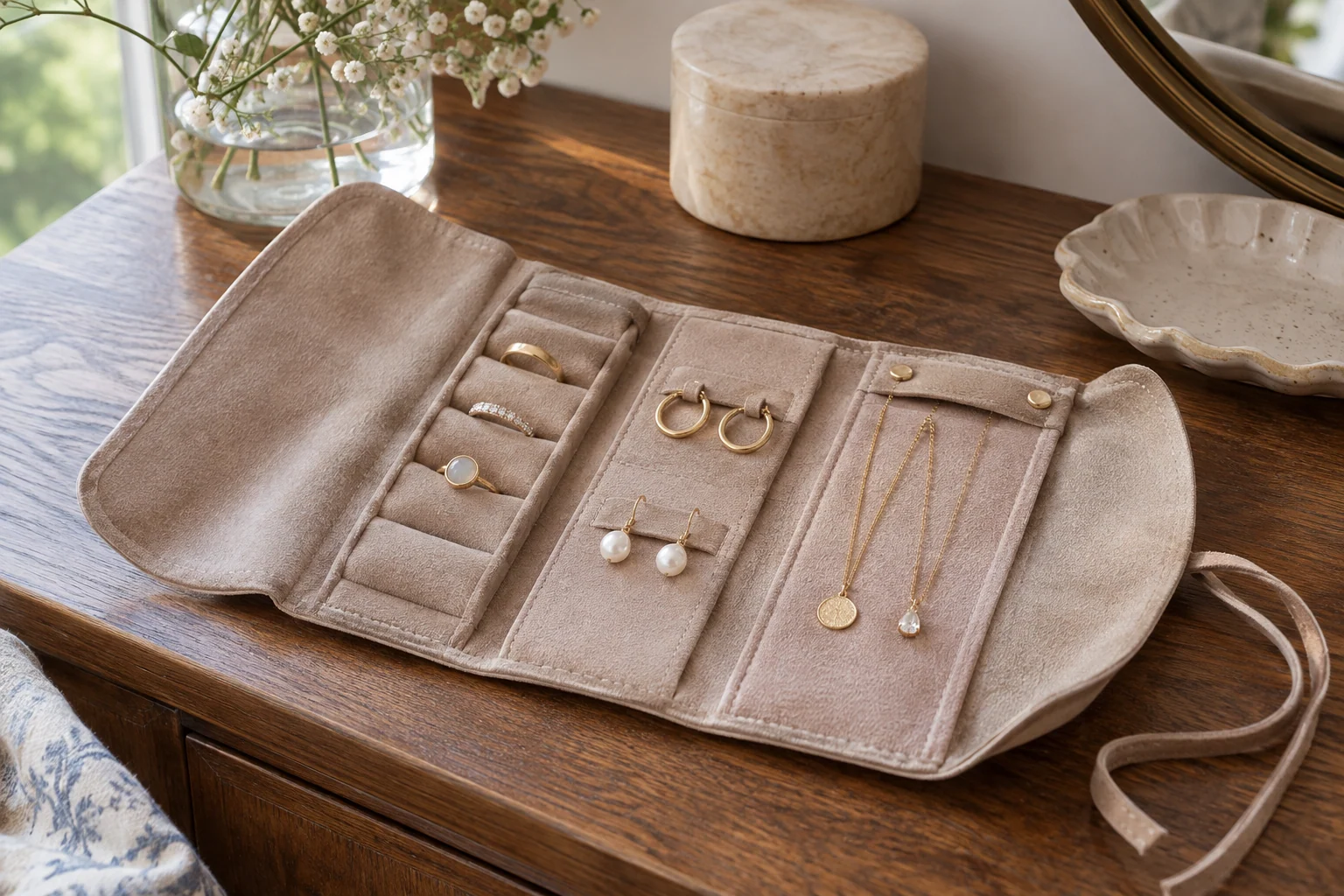
A travel organizer can simplify a short selection when its compartments fit the pieces and keep them separate. Check the closed arrangement before packing it; a roll that looks roomy when open may press raised settings together. Follow the jewelry's care requirements as well as the organizer instructions. Pack around the actual planned use instead of taking the whole collection by default.
14. Prepare one outfit's pieces in a divided return tray
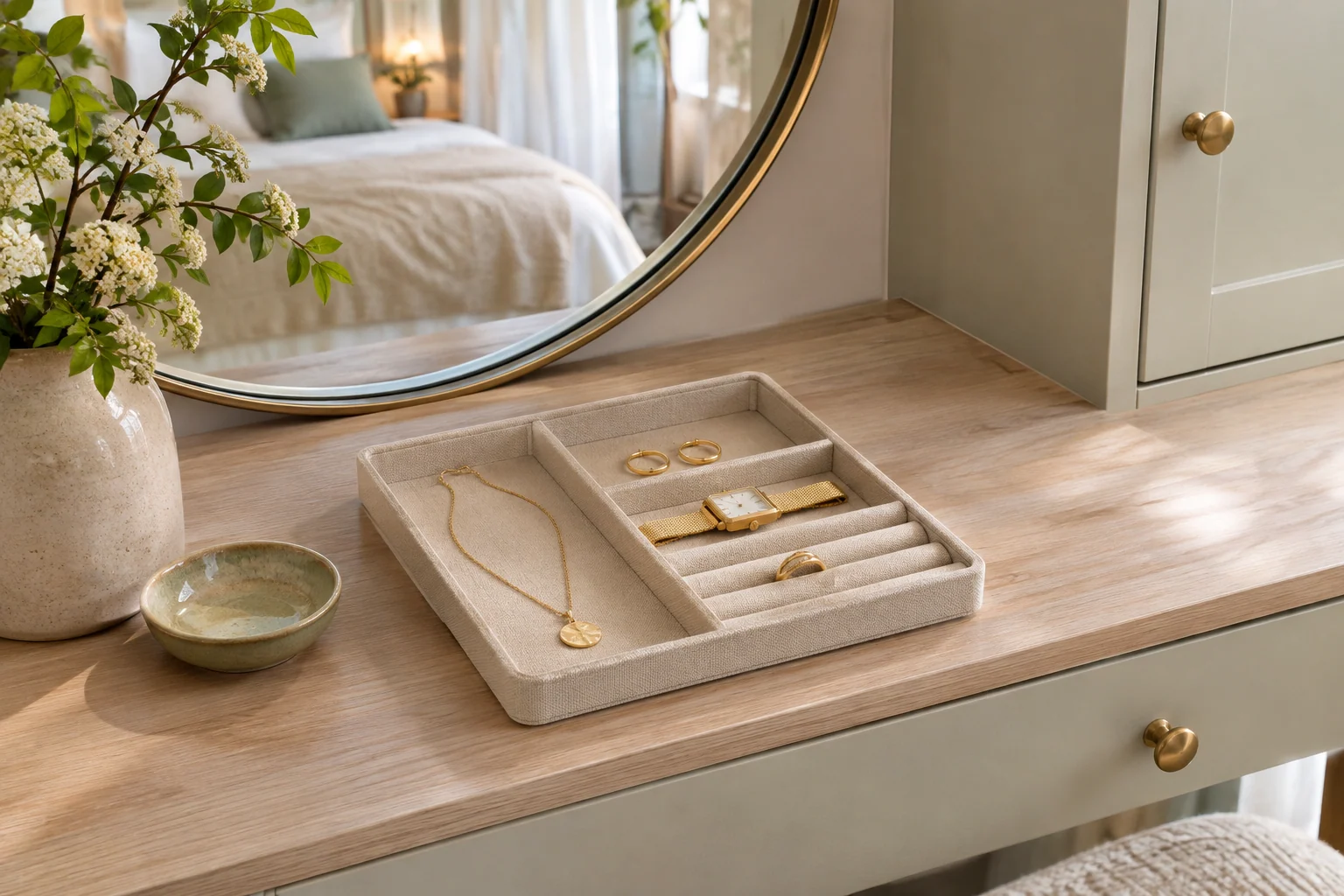
A small temporary selection can make the next dressing routine simpler. Keep the pieces in suitable separate sections and return them to their usual storage after use. Avoid mixing this selection with cosmetics or perfume. A temporary tray should have a clear purpose, rather than gradually become the place where every undecided item lands.
15. Use a shallow drawer for a visible overview
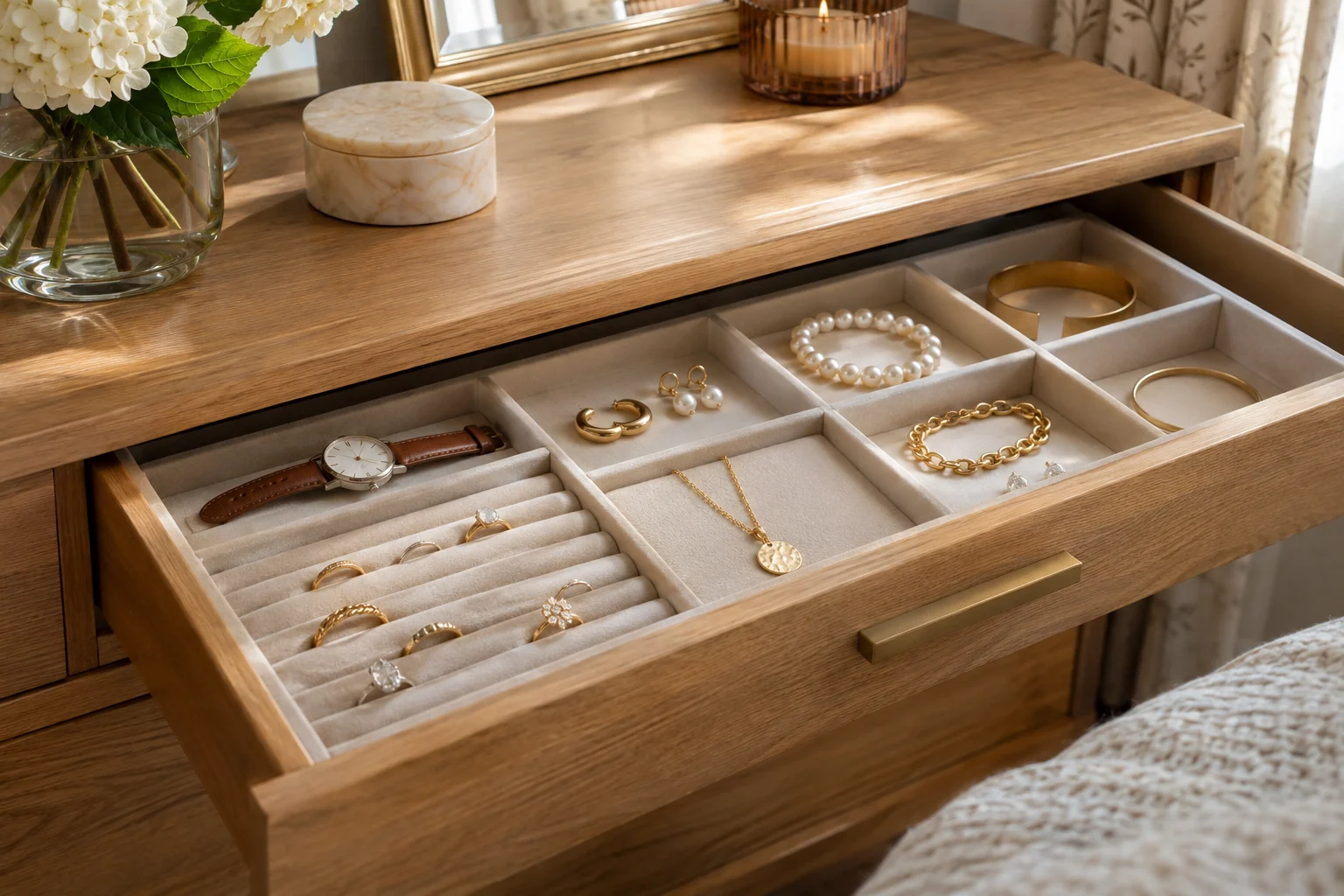
A shallow drawer can show several suitable compartments at once. Check the internal dimensions and opening movement before buying an insert, including the height of raised settings. Keep the organizer from shifting as directed for the actual system. A tightly fitted outside rectangle is not enough if the jewelry cannot be removed without catching the drawer above it.
16. Keep the vanity's main surface useful
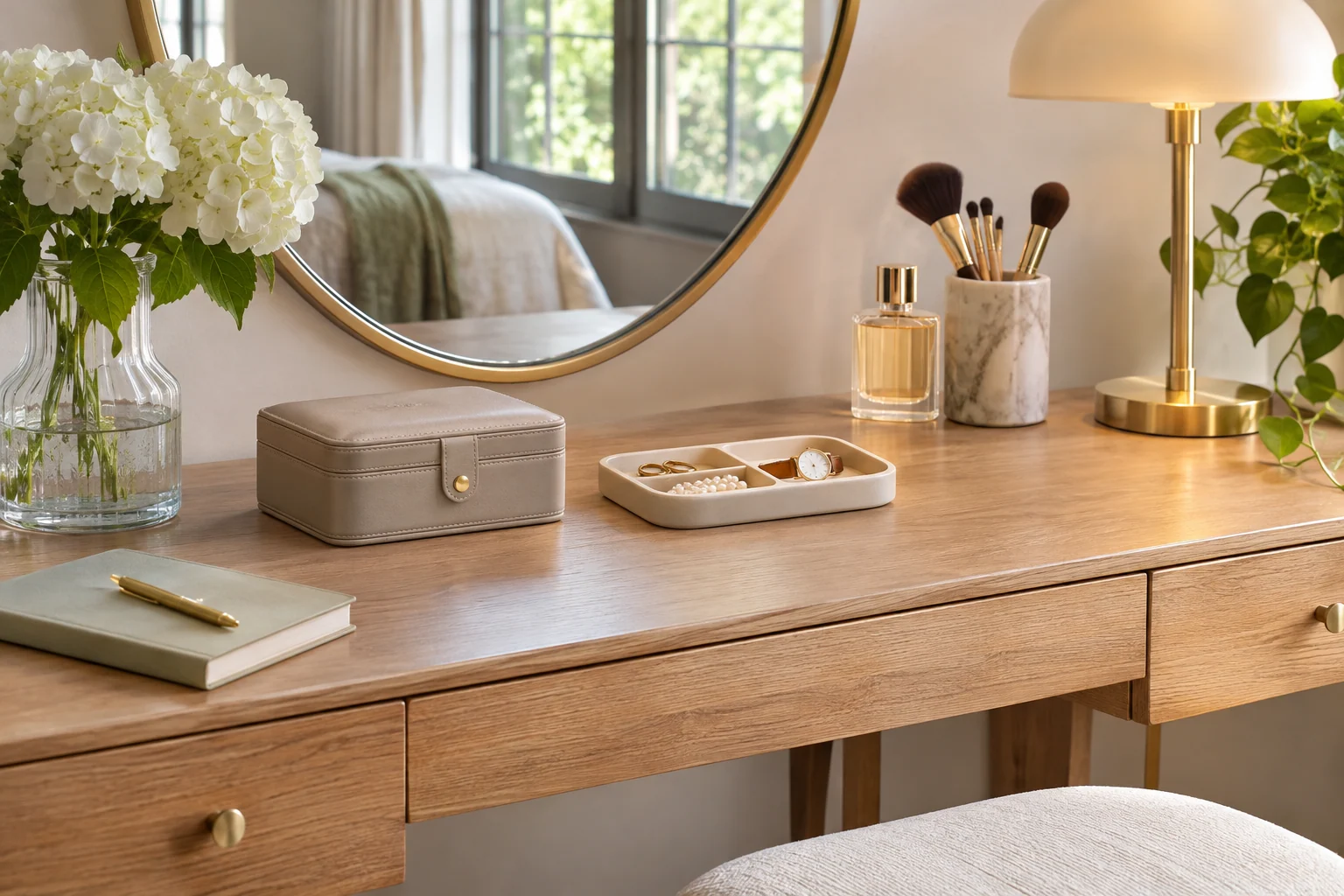
A compact case or tray can suit a vanity when it leaves space for the routine performed there. Choose the jewelry group first, then give the remaining items another suitable home. Avoid surrounding the organizer with several large decorative objects. The case should open fully without moving a mirror, lamp or the entire contents of the table.
17. Use a wall organizer only for compatible pieces
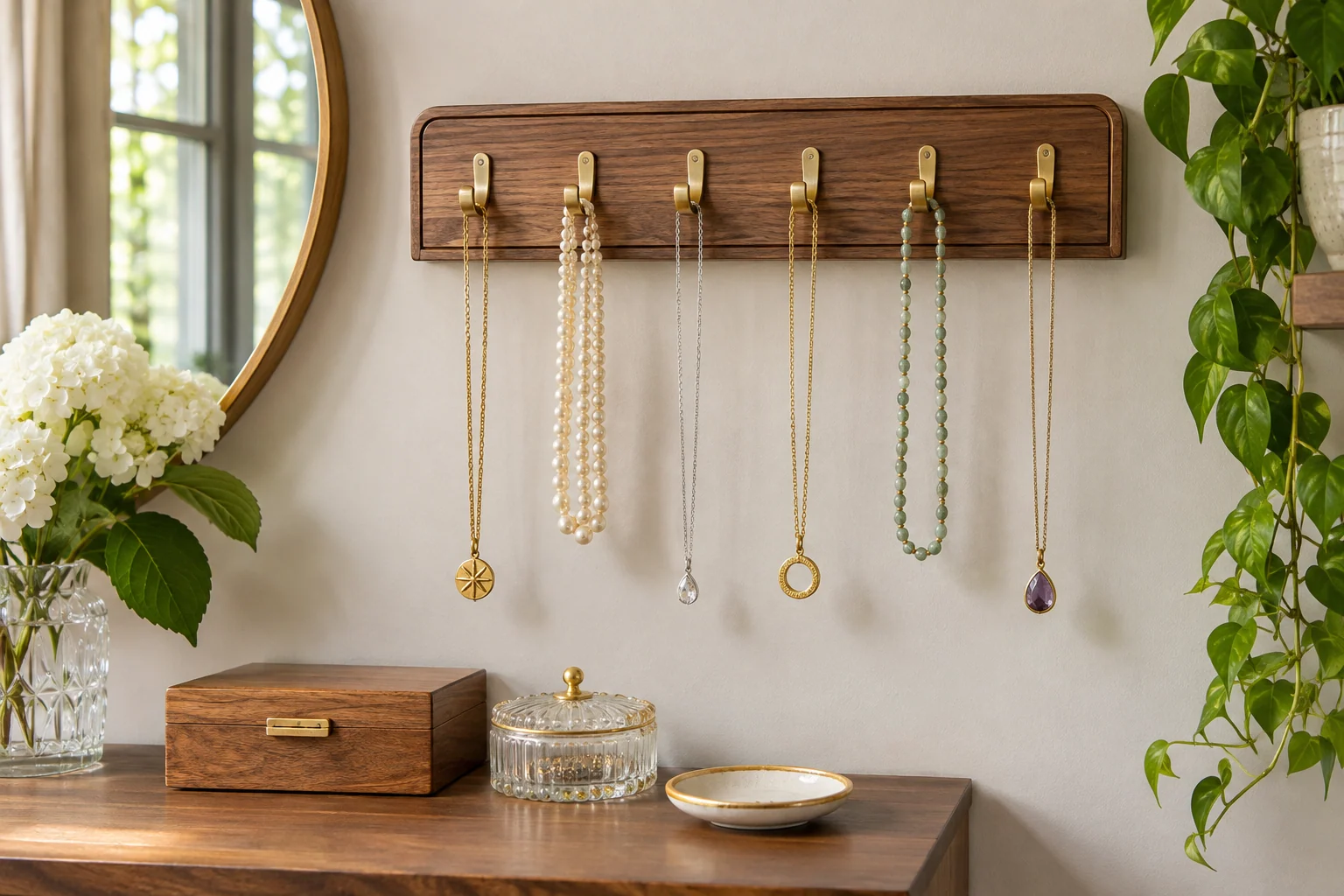
A wall arrangement can keep suitable necklaces visible without occupying a drawer. Check the actual mounting method, hook spacing and complete hanging drop. Do not attach delicate pieces to improvised sharp hardware. Keep a separate enclosed option for items whose material or construction needs another form of storage.
18. Check the complete movement of a jewelry cabinet
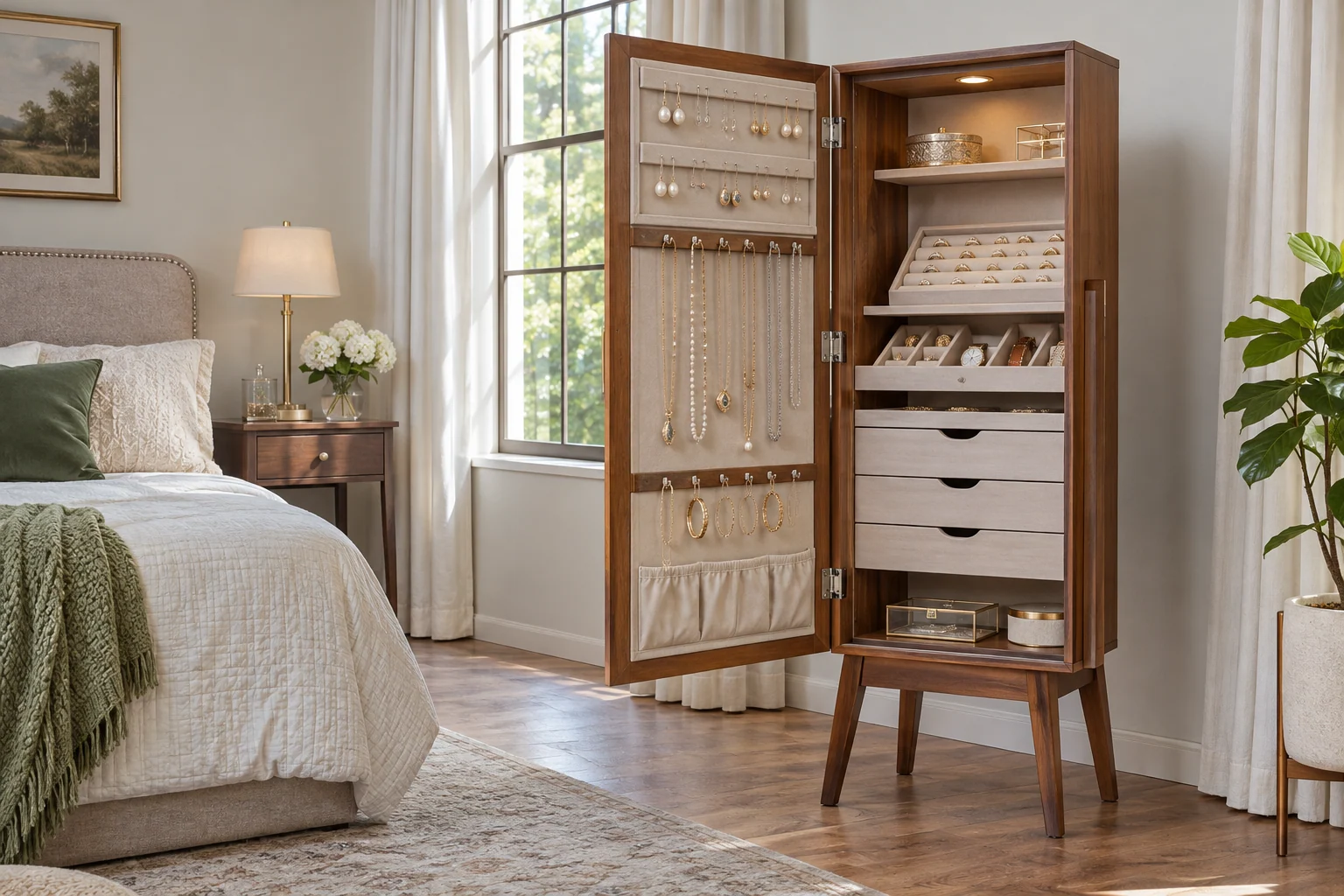
A freestanding or wall-mounted jewelry cabinet needs room for its doors and the pieces inside. Follow its assembly, loading and restraint instructions as applicable. Test the open position against the bed, dresser and ordinary passage. A mirror front may look compact while the cabinet needs much more space when actually used.
19. Give small pendants room around their settings

A pendant may need a larger compartment than the thin chain suggests. Keep the chain and pendant supported without another piece resting on the setting. Choose the section around the widest or most projecting part. This can be especially useful for a mixed collection in which an apparently small necklace has an unusually deep decorative element.
20. Separate occasional statement pieces
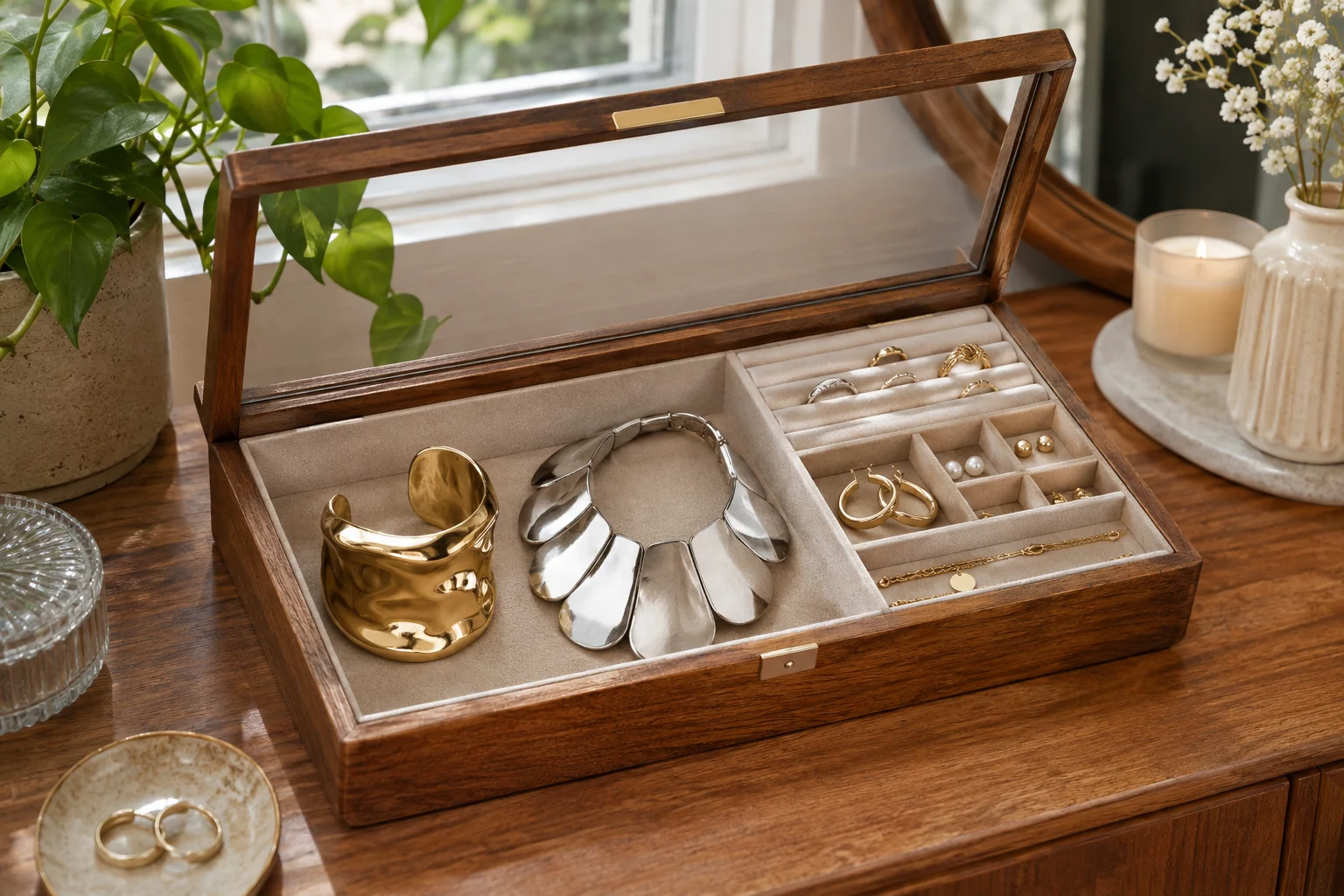
Large earrings or sculptural necklaces can crowd the everyday group. Give them compartments shaped around the actual pieces and keep them identifiable. They should remain straightforward to retrieve without spreading the entire collection over the bed. A separate occasional section can free the daily tray while preserving a deliberate home for the items worn less often.
21. Keep spare backs in a small contained section
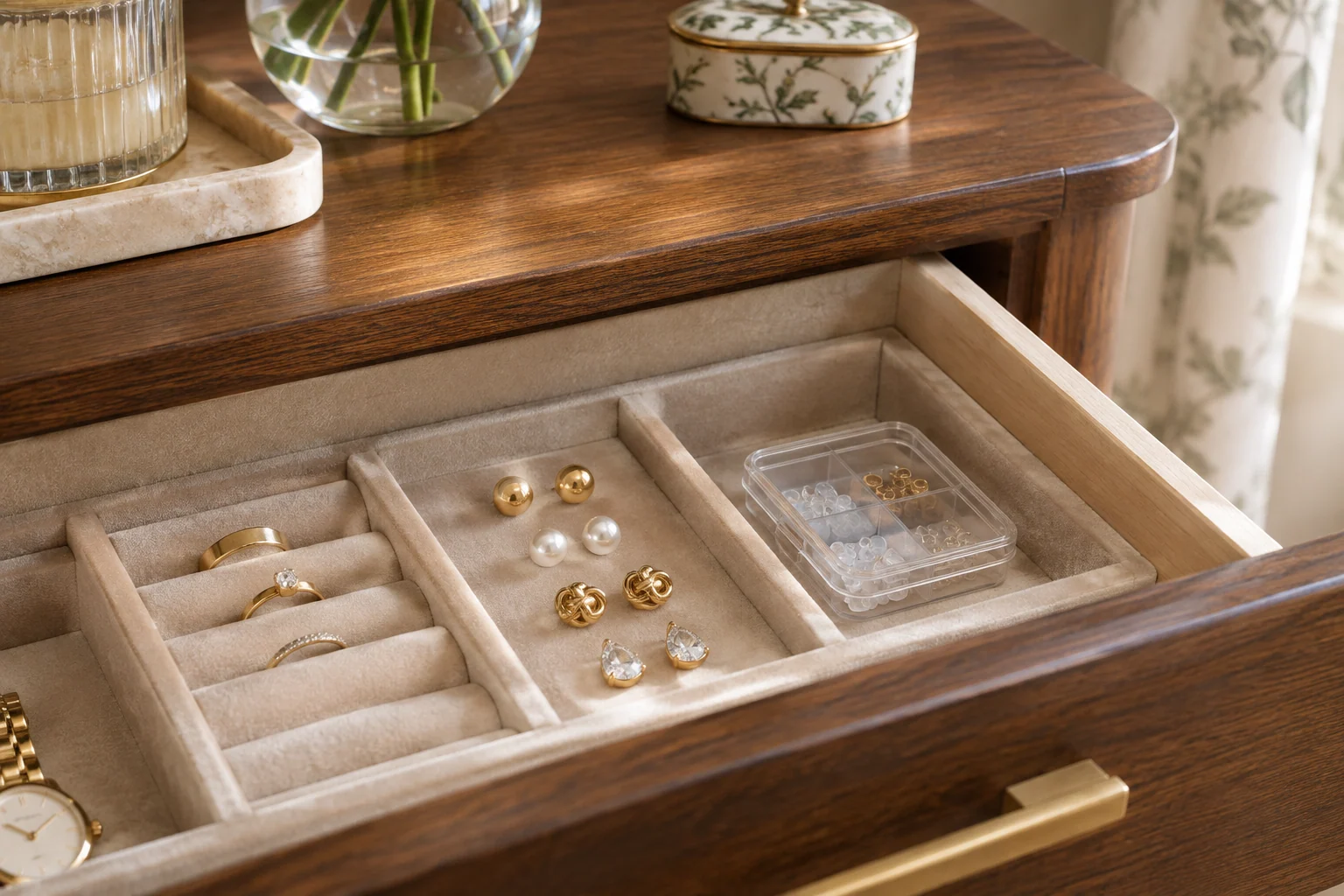
A suitable closed compartment can keep small matching components from disappearing beneath the drawer insert. Group them in a way that identifies which pieces they fit. Avoid assuming that similar-looking parts are interchangeable. Keep the container appropriate for the household and return it to its defined position rather than leaving loose components on the dressing surface.
22. Leave wide earrings their own footprint
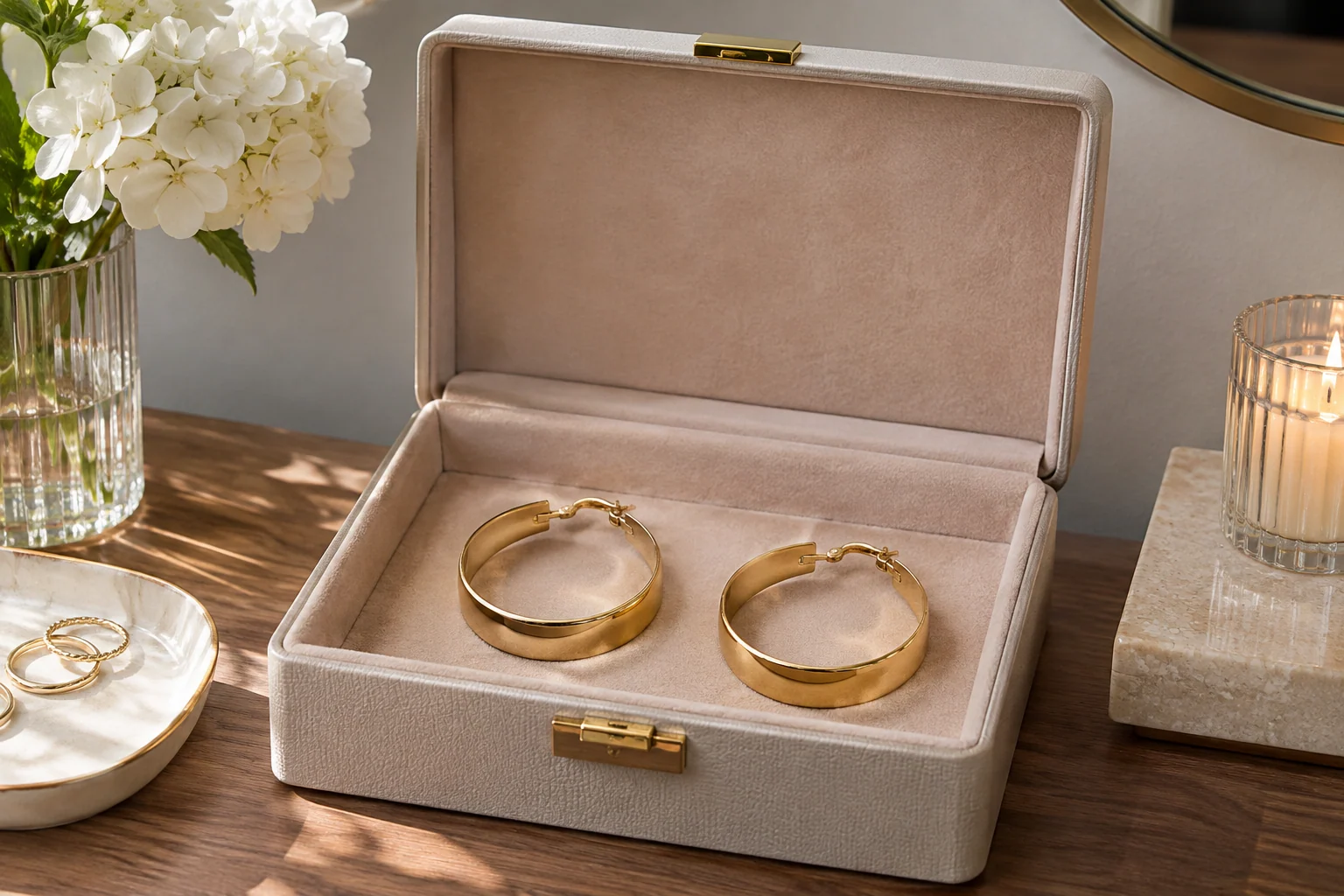
A broad hoop or drop earring can need more horizontal space than a stud compartment provides. Keep each pair in a suitable roomy section without forcing the fastening or decorative parts into a tight angle. Compare the closed case as well as the open tray. Extra lid pressure can be hidden until an organizer is shut.
23. Use a hard outer case with suitable inner separation
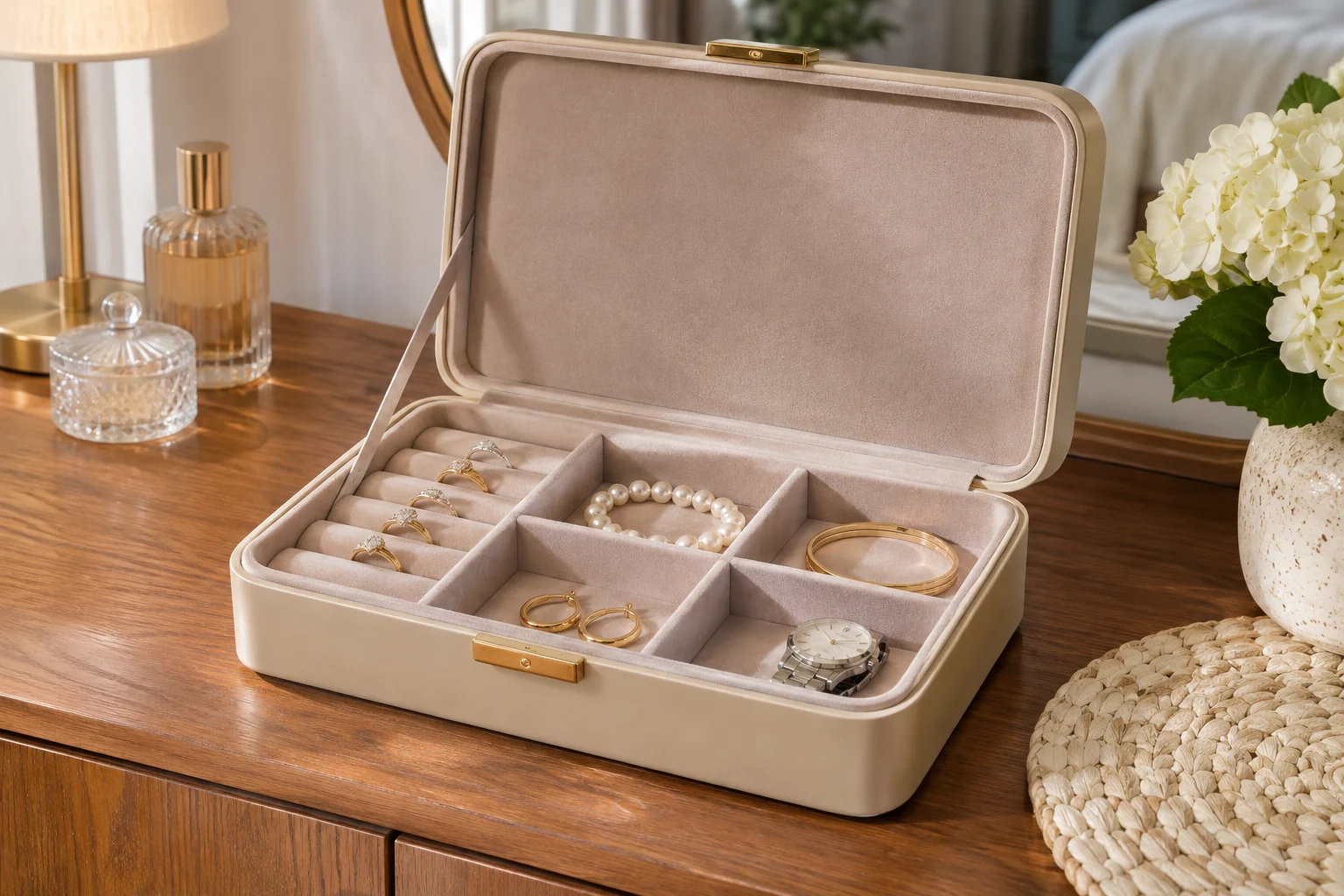
A rigid shell can protect an organizer's overall shape, but the interior still needs to suit the jewelry. Check the lining, divisions and closed height. A strong outer box does not prevent pieces from rubbing together if they share one loose compartment. Choose the inner arrangement around the collection before deciding that the case's exterior looks durable enough.
24. Keep stacked trays individually accessible
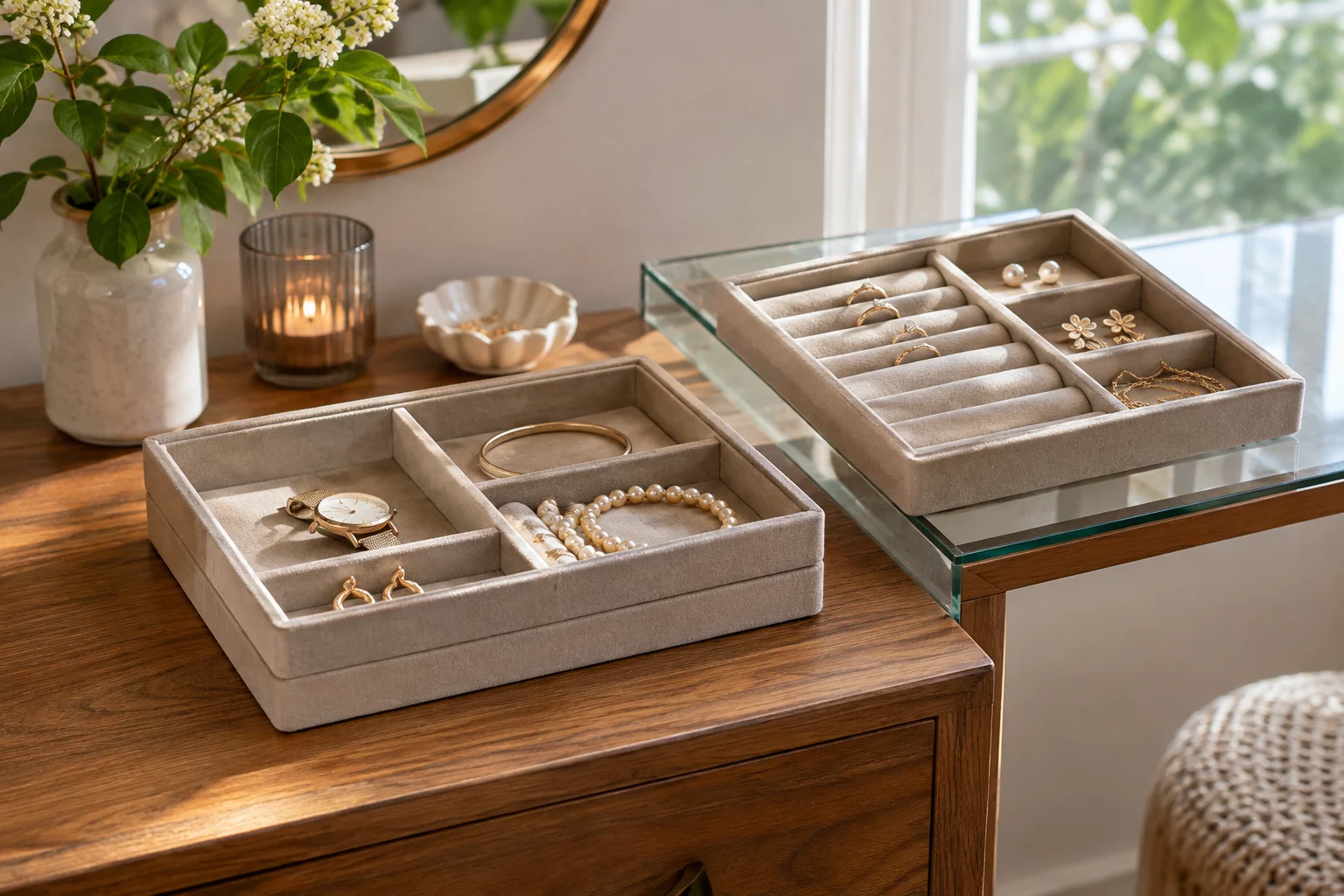
Stacking organizers can suit a collection when each layer is intended for the system and lifts comfortably. Put frequently used pieces in an accessible layer and check that the closed stack does not press on raised items. Keep the number manageable. If retrieving a daily pair requires placing several full trays on the floor, reconsider the order or storage type.
25. Use a cover for a limited display group
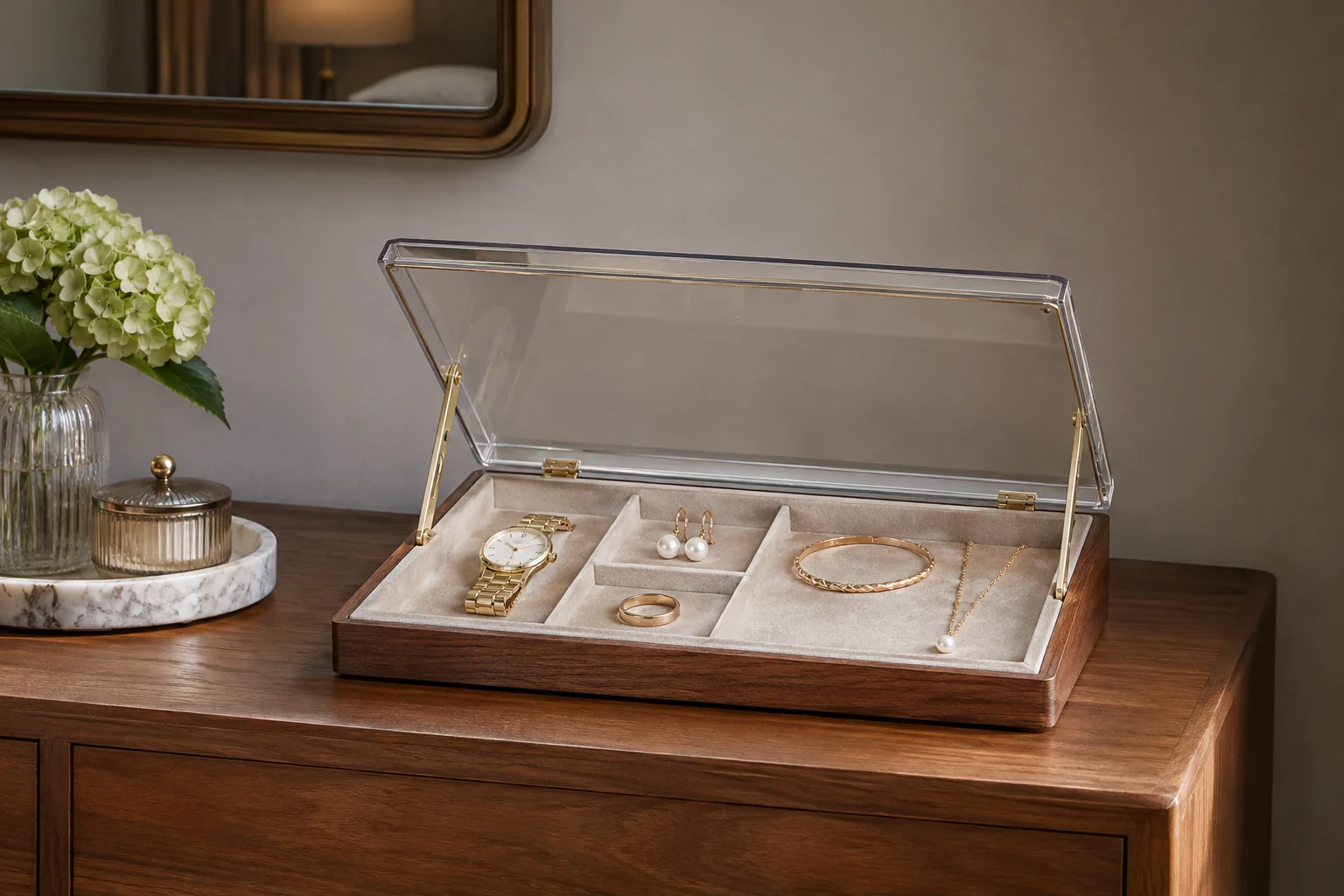
A covered tray can keep a small suitable selection visually calm while allowing a quick overview. Check that its height clears every piece and that the cover opens without disturbing the contents. Follow care guidance about light and environment for what is displayed. Transparency is a convenience feature, not a universal preservation or security guarantee.
26. Keep jewelry separate from the bathroom routine
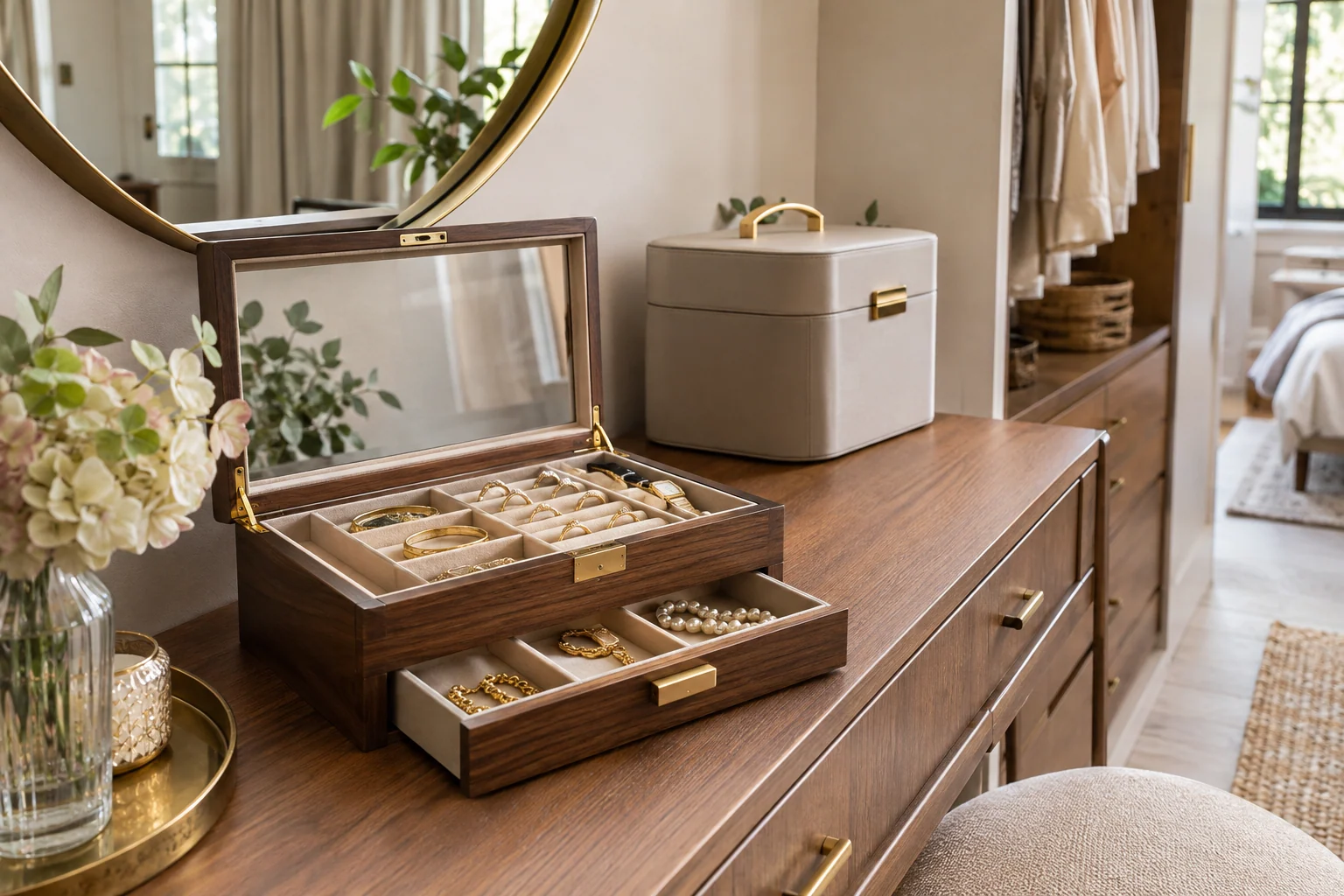
A bedroom dressing area can provide a defined return place away from products used at a sink. Choose a location suited to the materials in the collection, rather than assuming every cabinet has the same environment. Keep perfume and household cleaning products in their own appropriate storage. The jewelry organizer should remain a distinct home rather than share a mixed toiletries drawer.
27. Keep a simple care note for unusual pieces
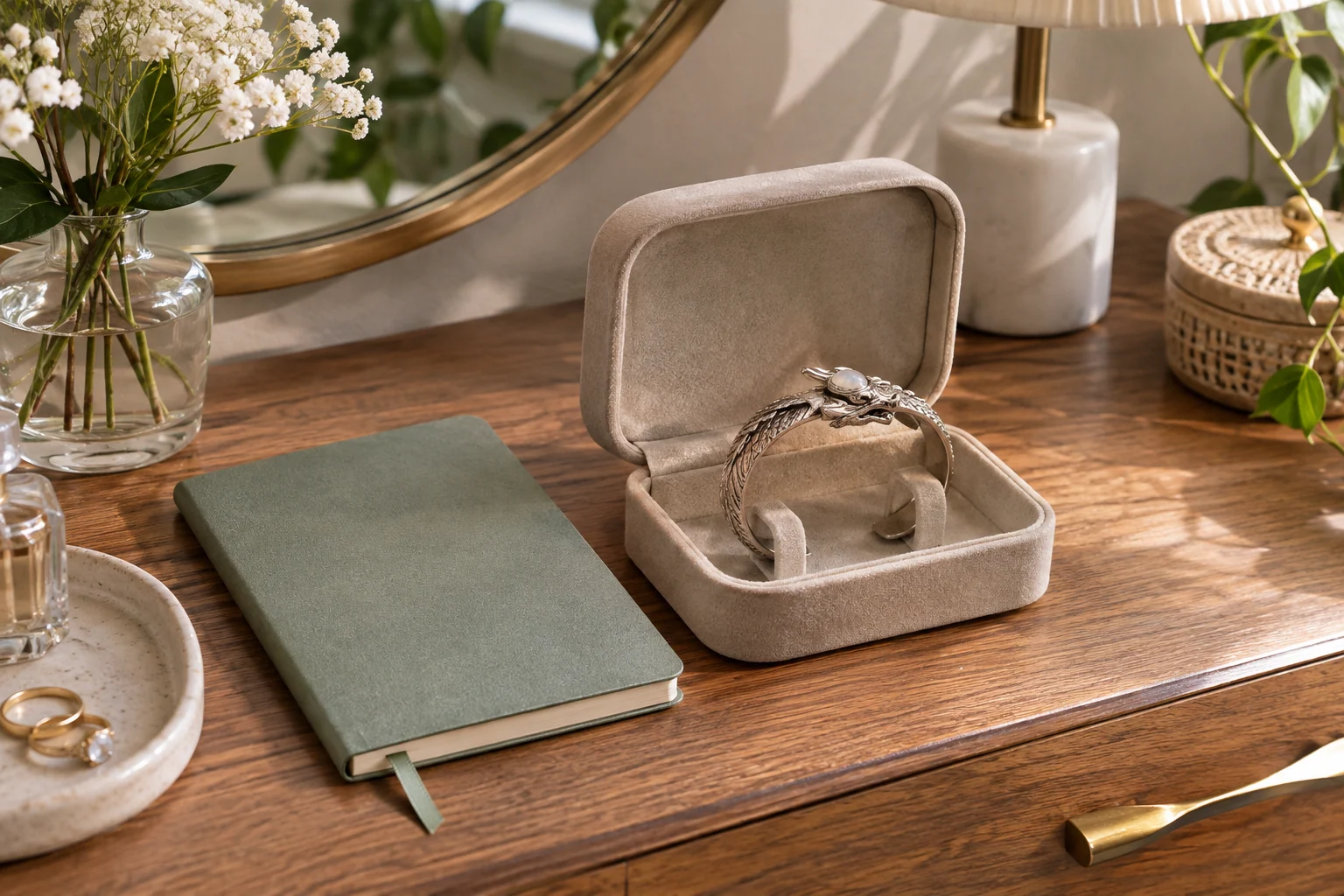
A short note can record the item, its materials as provided by the maker, and where its actual care instructions are kept. Avoid guessing a gem or treatment from appearance alone. If the material is uncertain, ask an appropriate jeweler before choosing a cleaning or storage treatment. The note's job is to preserve real information, not invent a detailed history.
28. Finish with a one-piece return test
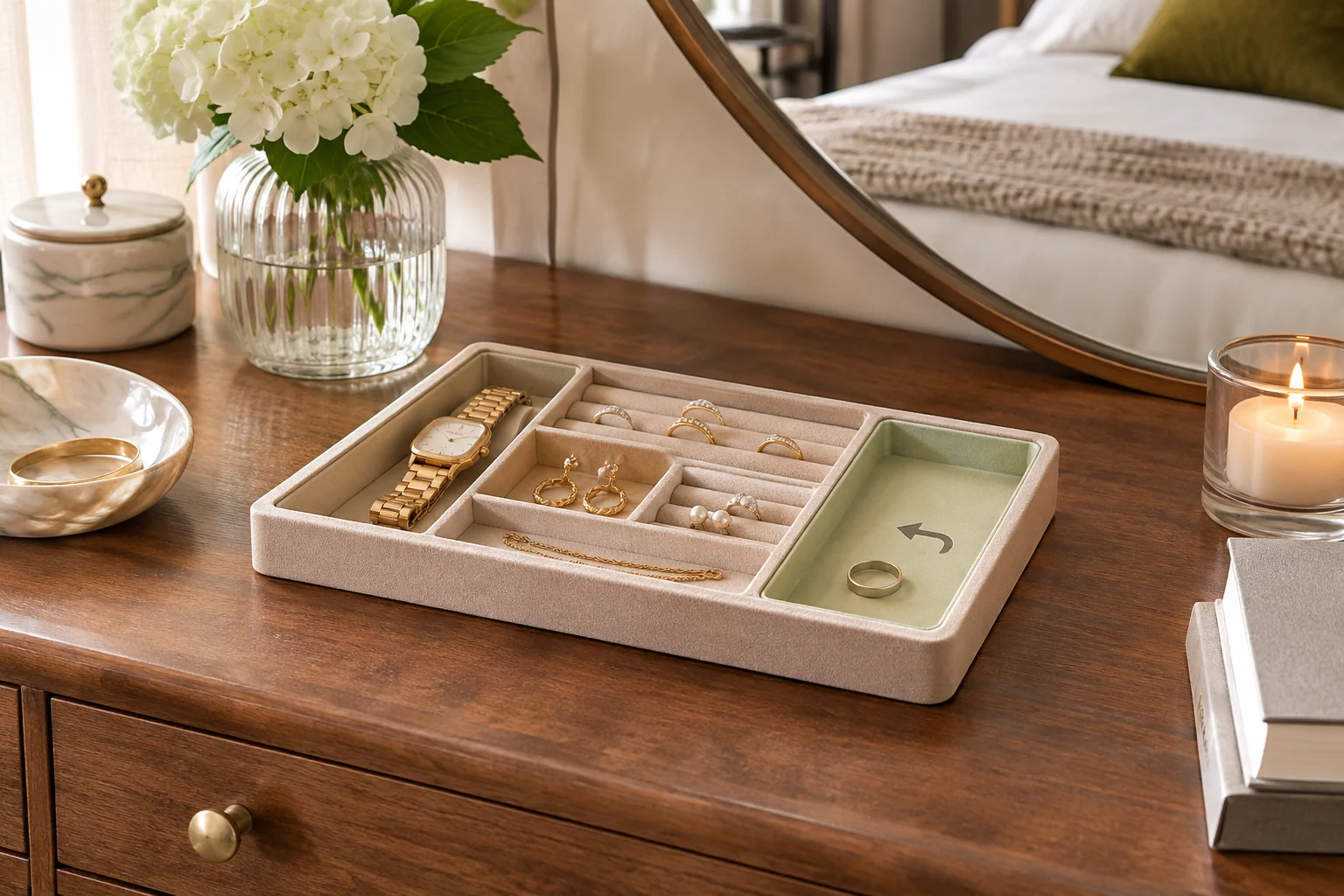
Pick up a commonly worn item and return it with the neighboring sections occupied. Notice whether a chain catches, a lid presses down or a pair disappears behind another piece. Correct that repeated difficulty before expanding the organizer. A useful storage system makes one ordinary return simple while retaining the separation and care requirements of the collection.
A jewelry organizer fit and care card
For each group, record shape, largest width, raised height, hanging drop if relevant, material information actually supplied, and its own care guidance. Then note the organizer's internal dimensions and closed-lid clearance. Four hypothetical 3-inch compartments occupy 12 inches before the frame and dividers; a 12-inch-wide outer case therefore does not automatically provide that layout. Compare the actual usable sections rather than the outside box.
A practical next step
Build the organizer around the pieces you own and the care they actually need. A few well-sized sections and a simple daily return routine can make the collection easier to use without turning the dresser into a crowded display.
The images are original AI-generated design concepts. They illustrate arrangements rather than tested products, installations or measured performance.
Sources and care references
Related reading on Nestroxe
Optional digital guide for this topic
If you prefer a structured workbook, explore this related paid guide.