
Effective outdoor fall decor does more than place pumpkins beside the door. It creates a clear arrival point, complements the home’s materials, and remains manageable through rain, wind, fallen leaves, and changing temperatures.
These outdoor fall decor ideas cover porches, patios, apartment entries, garden paths, and outdoor dining areas. Each approach includes a practical choice about scale, placement, durability, or upkeep. Before buying anything, photograph your space from the street or main approach. The image will reveal empty zones, clutter, and awkward proportions more clearly than standing at the door. Then choose one focal point and build outward rather than decorating every available surface.
1. Build a Layered Pumpkin Arrangement
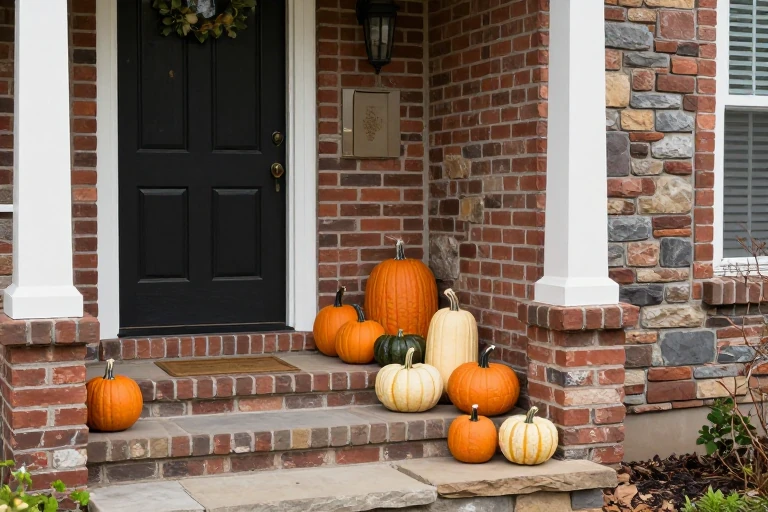
Start with the area beside the door or at one end of the steps, not the center of the walking route. Combine broad, squat pumpkins with taller varieties so the arrangement has a visible outline instead of reading as a loose pile.
Use fewer colors for a tailored look or mix orange, green, cream, and striped varieties for a garden-inspired display. Place imperfect sides toward the wall.
Keep pumpkins off persistently wet soil or wood by setting them on dry pavers, saucers, or a ventilated crate. Check the undersides after rain and remove soft fruit promptly.
2. Frame the Door With Balanced Planters
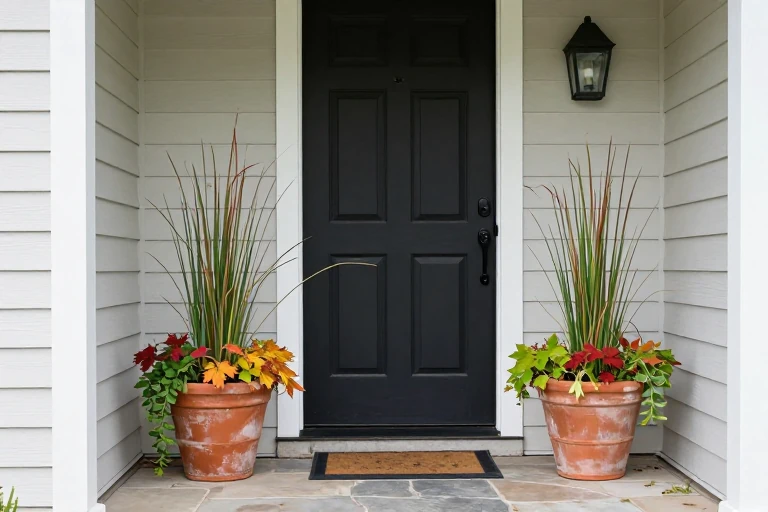
Matching containers create formality, while mismatched vessels feel collected and casual. In either case, relate the planter height to the entry: undersized pots disappear beside a tall door, but oversized branches can obstruct lights, handles, or sightlines.
Build each arrangement with an upright element, a rounded middle, and something that trails. Ornamental grasses, durable foliage, and clipped evergreen material can provide structure after delicate flowers decline.
Confirm that drainage holes remain open. A decorative cachepot without drainage can hold rainwater, damage roots, and become unnecessarily heavy to move.
Loving These Ideas? Get the Step-by-Step Guide
Grab the full 5-day eBook and turn these ideas into a finished room.



3. Choose a Wreath That Fits the Door
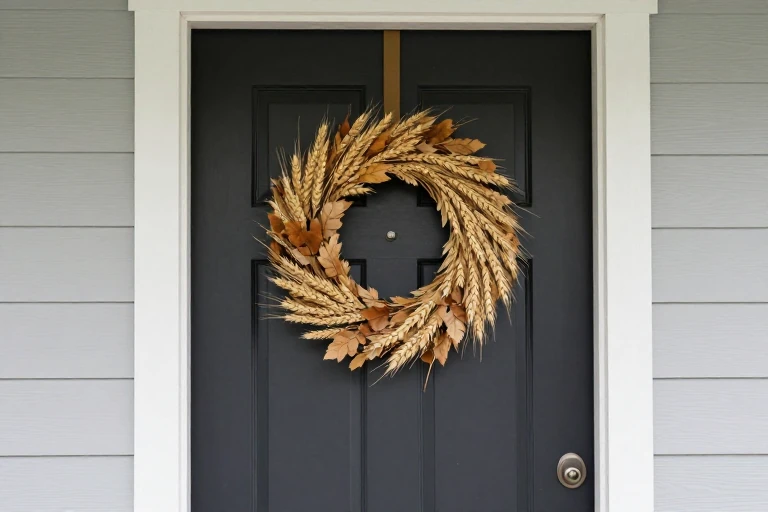
Measure the visible door panel before choosing a wreath. The goal is enough contrast to be noticed without covering hardware, windows, or decorative molding. A pale wheat or leaf wreath stands out against a dark door; deeper foliage works better against a light finish.
Protected entries can handle dried materials, while exposed doors benefit from flexible faux foliage or other weather-tolerant components. Natural wreaths may shed or fade sooner.
Renters can use an over-door hanger or removable system approved for the surface. Test door clearance and confirm the wreath does not strike adjacent glass.
4. Turn a Bench Into a Seasonal Anchor
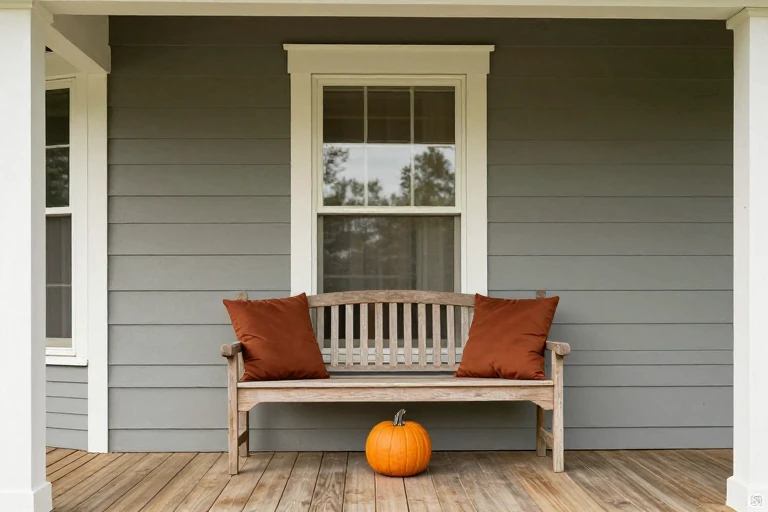
A porch bench can hold a complete fall composition without scattering decorations across the floor. Place one weather-resistant cushion at each end, then add a basket or pumpkin cluster below to connect the seat with the porch surface.
Preserve enough open seating for actual use. If the entire bench becomes a display shelf, the porch may appear staged but function poorly.
Choose removable, washable covers and quick-drying inserts when the bench is exposed. Bring blankets inside between uses; even outdoor fabric can stay damp when folded against a wet seat.
5. Use Lanterns Without Blocking the Route
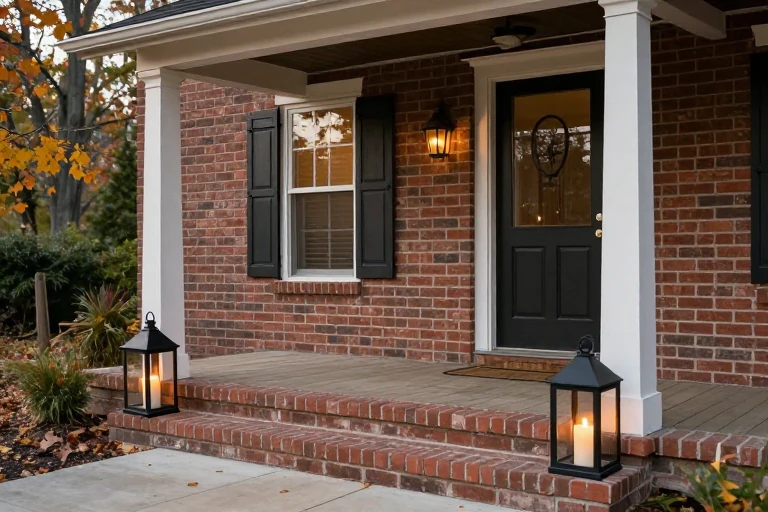
Lanterns work best as edge markers beside a step, column, or seating group. Keep them out of the door swing and away from the center of stairs, where even a low object can become a nighttime obstacle.
Battery-operated candles provide atmosphere without an exposed flame. Select products intended for the conditions they will encounter, and follow the manufacturer’s placement and battery guidance.
Vary lantern heights, but repeat one finish—black metal, aged brass, or wood—to prevent visual clutter. Clean glass panels regularly because condensation, dust, and leaf fragments quickly dull the effect.
6. Define the Entry With a Layered Mat
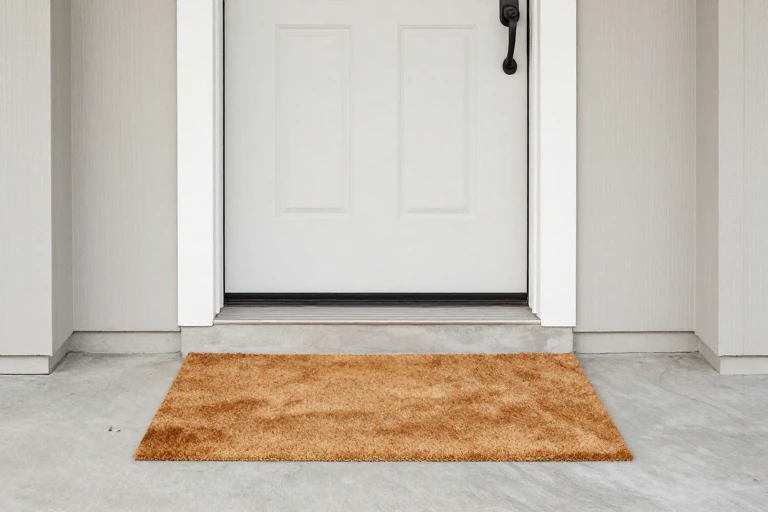
Place a larger flat-weave outdoor rug beneath a smaller coir or rubber-backed doormat to add pattern around a plain entry. The lower layer should extend visibly on each side so the combination looks intentional rather than misaligned.
Check the total thickness against the door sweep and threshold. A beautiful arrangement becomes frustrating if the door catches or the rug edge curls.
Use materials rated for outdoor exposure and lift both layers after heavy rain. Trapped moisture can stain the porch, encourage odors, or shorten the life of natural fibers.
7. Create a Harvest Basket for a Small Porch
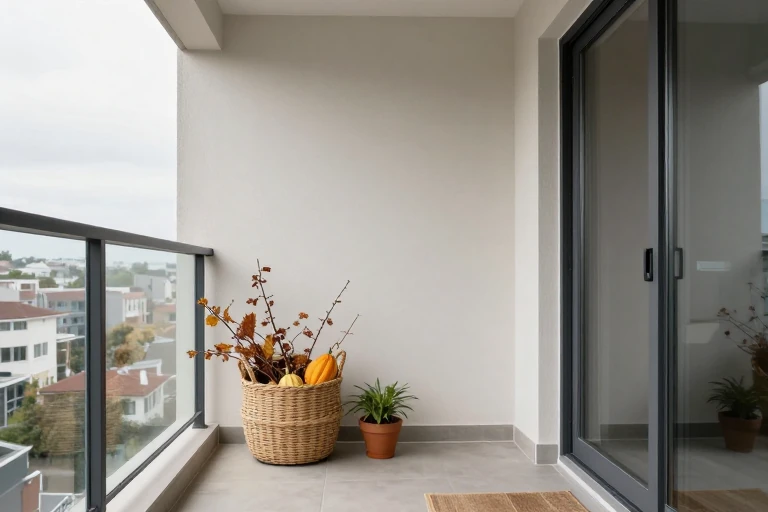
When floor space is limited, gather several seasonal elements inside one handled basket. A combination of clipped branches, small gourds, and a compact pot provides varied texture without spreading into the circulation zone.
Choose a stable, wide-bottomed basket or place a weighted container inside it. Tall, lightweight arrangements can tip when the door opens or wind funnels through an apartment corridor.
Protect natural wicker from direct rain and line the interior if it holds a watered plant. A synthetic woven basket requires less shelter but may not deliver the same organic texture.
8. Style Steps With an Asymmetrical Sweep
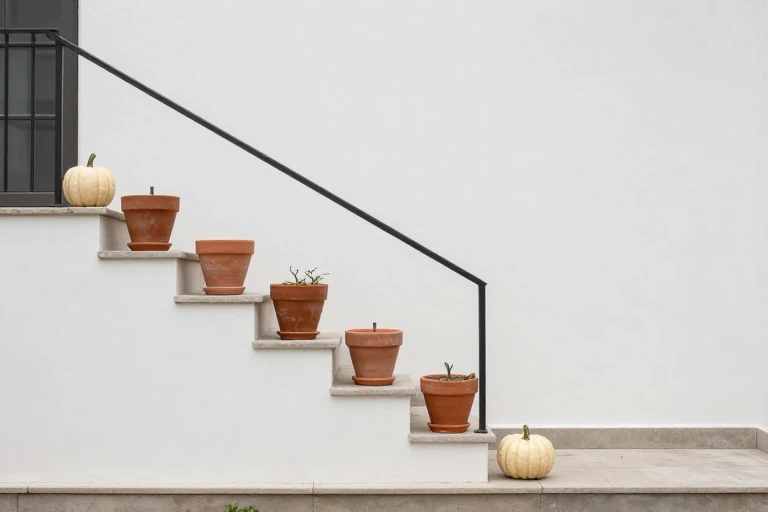
Instead of placing identical objects on every tread, begin with a fuller cluster near the door and taper the display down one side. This creates movement while leaving the opposite side available for feet, packages, and handrail access.
Repeat a color or material at intervals—such as cream pumpkins or terracotta pots—to connect the levels. Avoid tiny objects that disappear from the street and become easy to kick.
View the arrangement from below before finishing. Adjust any item that hides a tread edge, narrows the usable stair width, or makes the route difficult to read after dark.
9. Add Height With Cornstalk Bundles
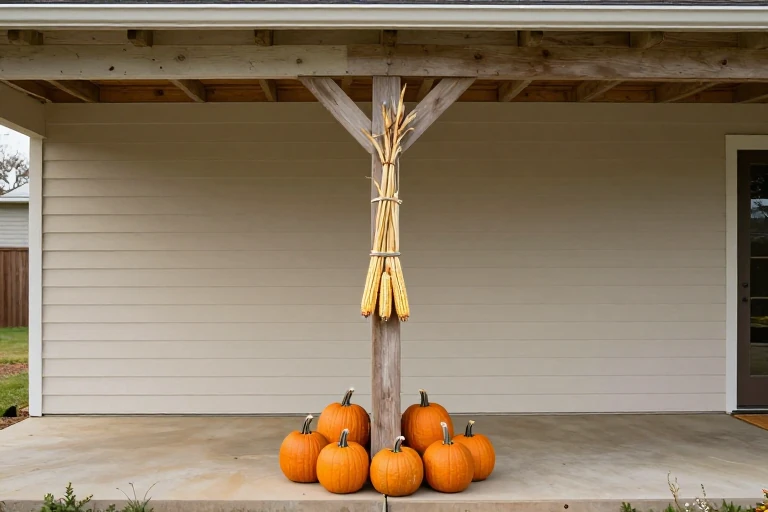
Cornstalks can balance a tall facade or porch column, but loose bundles become untidy quickly. Tie stalks securely around a post or support them in a heavy container, keeping brittle leaves away from door hinges and walking areas.
Use one bundle as a vertical accent rather than automatically flanking the entire entry. The restrained approach works especially well when pumpkins or planters already supply weight at ground level.
Dried plant material is combustible. Keep it well away from grills, fire features, candles, heaters, and other ignition sources, and remove damaged material rather than letting it collect around the base.
10. Refresh Summer Containers for Fall
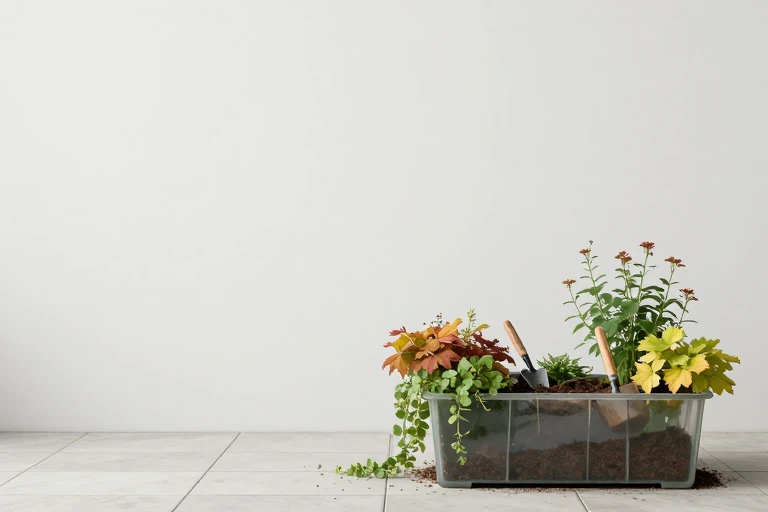
Do not discard a healthy container simply because one summer plant has declined. Remove exhausted annuals, retain sound foliage, and fill the gaps with cool-season plants suited to your local conditions or with decorative branches for temporary structure.
Inspect roots, drainage, and soil level before adding anything. A crowded root ball may need division or a larger pot rather than another plant squeezed into the surface.
This transition saves storage and preserves mature texture, but mixed plantings can have different watering needs. Group compatible plants and check the soil instead of watering solely by schedule.
11. Set Up a Cozy Conversation Corner
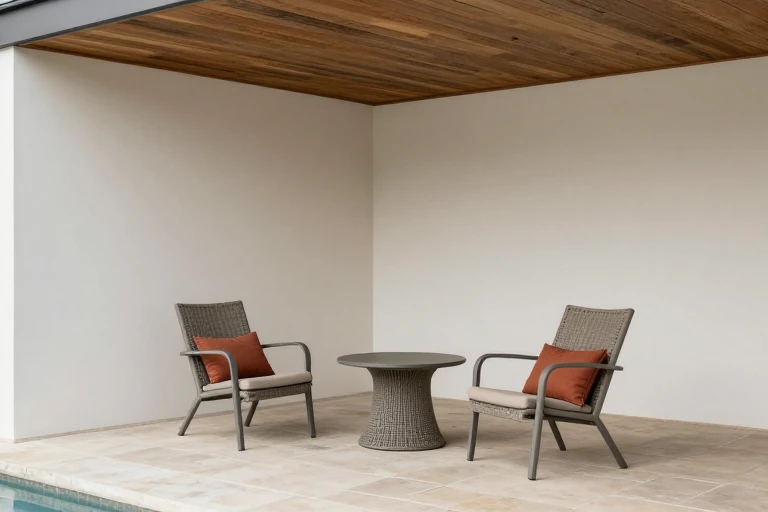
Angle two outdoor chairs toward each other with a small table within reach. This arrangement supports conversation better than pushing every seat flat against the house, and it creates a natural location for one lantern or compact pumpkin.
Add warmth through color and texture, not piles of accessories. A weather-resistant cushion and one throw brought out during use can be enough.
Maintain comfortable access around the chairs and do not obstruct doors or grill zones. Outdoor spaces increasingly serve several functions, so a movable arrangement is more adaptable than a seasonal display that takes over the patio.
12. Dress an Outdoor Dining Table Simply
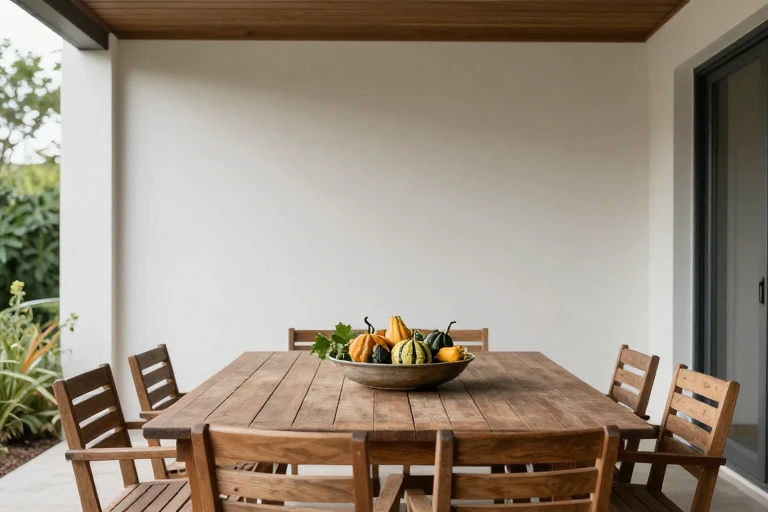
Build the centerpiece low enough for diners to see across the table. A shallow bowl of gourds, clipped foliage, or weathered terracotta creates seasonal focus without requiring a tall arrangement that must be moved before every meal.
Use washable napkins or placemats only when dining rather than leaving textiles outside continuously. Wind, moisture, pollen, and falling leaves make a permanently dressed table labor-intensive.
Leave room for serving dishes and keep decorations away from grills and heat sources. If the table is small, decorate one end or use a single vessel instead of forcing symmetry.
13. Hang a Natural Garland Under Cover
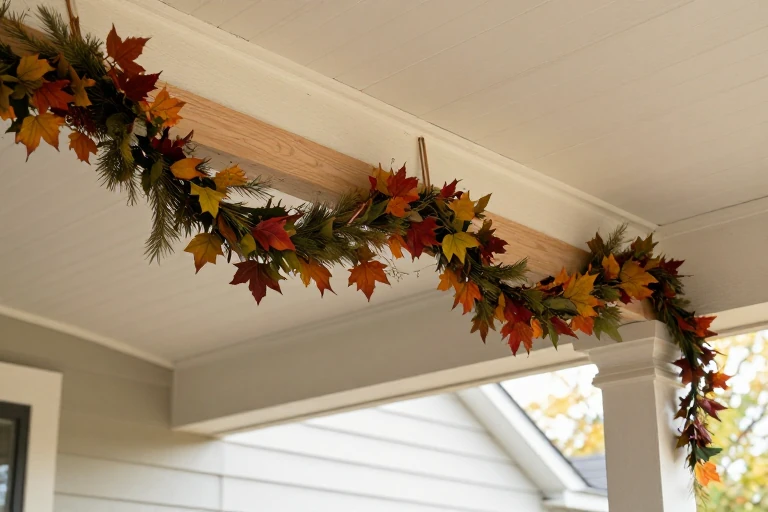
A garland can trace a door frame, porch beam, or railing without using floor space. Choose one architectural line and follow it cleanly; draping several unrelated edges can make a small entry feel crowded.
Dried leaves and natural stems provide nuanced color but may shed and deteriorate in wet conditions. Faux foliage lasts longer and is easier to reshape, though glossy materials can look conspicuous in daylight.
Use fasteners appropriate for the surface and anticipated load. Do not puncture waterproofing or conceal damage; site conditions, lease rules, and local requirements should guide any permanent attachment.
14. Decorate a Window Box in Layers
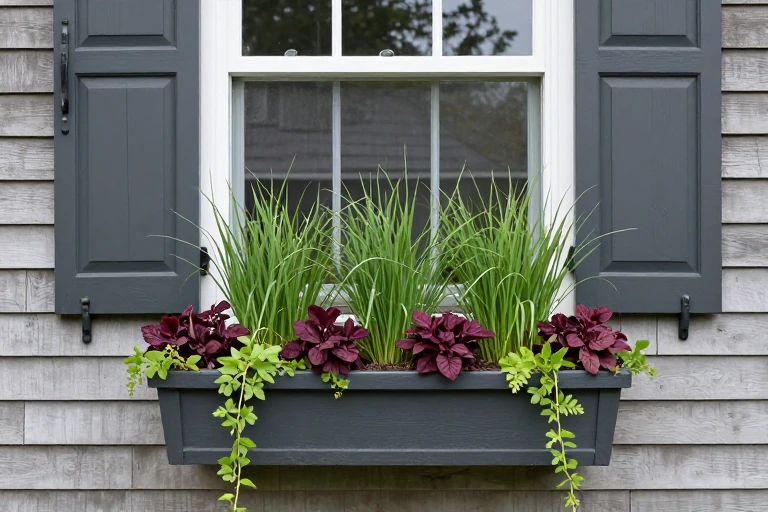
Use the same three-part structure as a planter: upright grasses or branches at the back, rounded foliage through the middle, and trailing material over the front. Keep the arrangement below operable windows and away from shutters.
Because window boxes have limited soil volume, they can dry faster than ground beds. Check moisture directly and ensure excess water can escape without staining the wall below.
For a no-plant option, arrange clipped branches in secured containers inside the box. Avoid loose miniature gourds or lightweight fillers that can roll or blow onto the path.
15. Guide the Eye Along a Garden Path
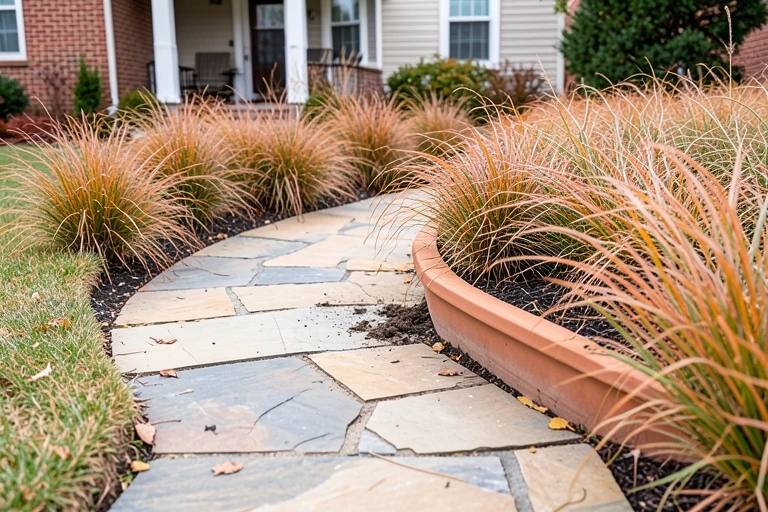
Repeat one fall element at widely spaced points along the path rather than lining every edge. Small groupings of grasses, pumpkins, or warm-toned containers can guide attention toward the entrance while preserving the landscape as the main feature.
Place decorations beyond the path surface and outside the natural turning radius. Consider how the route functions when carrying groceries, rolling a stroller, or navigating wet leaves.
After dark, walk the path from both directions. Remove anything that merges visually with a step, edging stone, or change in grade.
16. Introduce Fall Color Without Orange
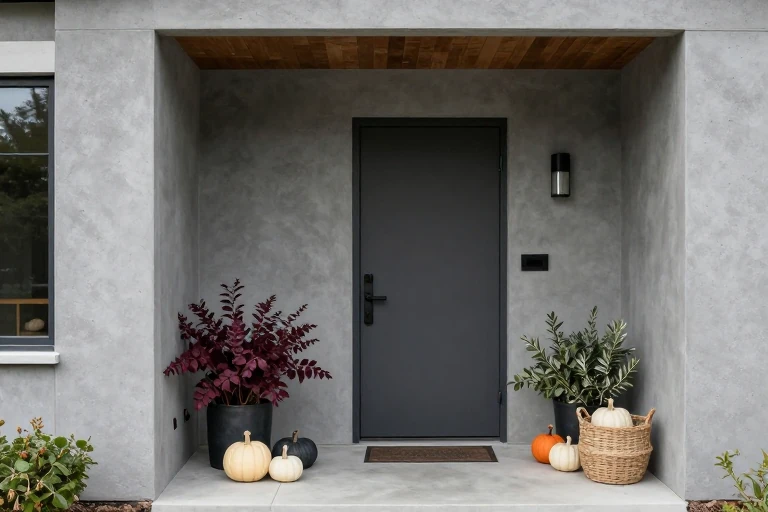
Autumn palettes can come from burgundy foliage, olive greenery, weathered wood, charcoal metal, and creamy pumpkins. This approach suits homes where bright orange competes with the exterior paint, brick, or stone.
Begin with the fixed materials. Pull one dark tone from the roof or hardware, one midtone from masonry or siding, and one pale accent for contrast. The result will feel connected to the house rather than imposed on it.
Texture prevents a neutral palette from appearing flat. Combine matte ceramics, rough stems, woven fibers, and smooth gourds while limiting the number of colors.
17. Make a Renter-Friendly Door Display
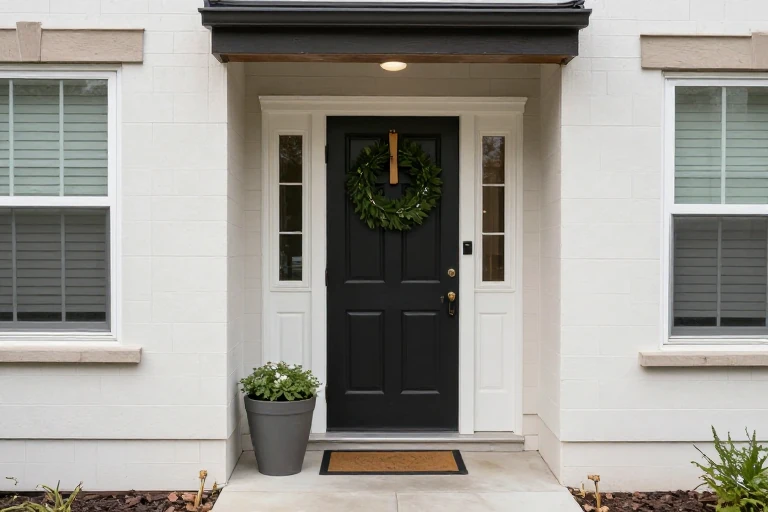
Concentrate decor on movable pieces: a weighted planter, freestanding wreath hanger, basket, and outdoor mat. This creates a complete entry composition without drilling into siding, masonry, railings, or the door.
Check your lease and building rules before placing objects in shared corridors, stairs, or landings. Fire and egress requirements vary, and common areas may need to remain entirely clear.
Choose a setup that can be moved quickly for cleaning or severe weather. Photograph the original condition of surfaces, and test any removable adhesive in an inconspicuous place before relying on it.
18. Add Warm Outdoor Lighting Carefully
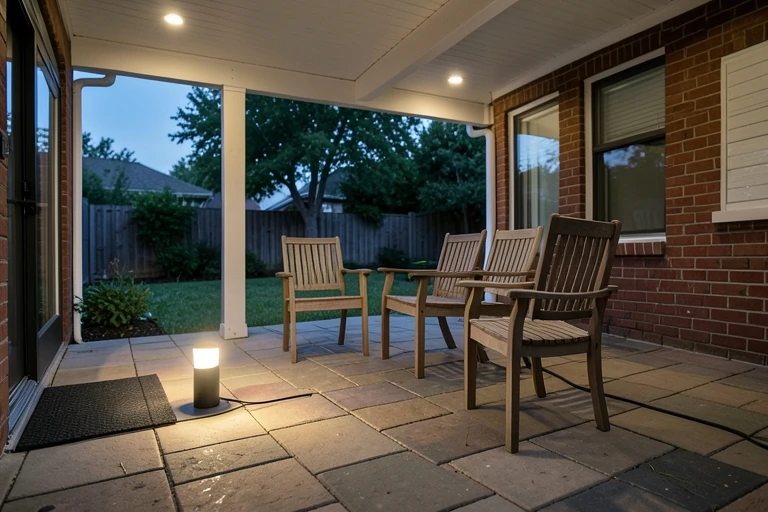
Use existing exterior fixtures as the lighting foundation, then add portable accent lighting only where it improves visibility or atmosphere. Aim for an even glow around seating and transitions rather than a bright decorative cluster surrounded by darkness.
Any electrical product and connection must be suitable for its location and exposure. Protect cords from traffic and standing water, and never route them through doorways where they can be crushed.
Permanent wiring or new fixtures require site-specific planning; actual requirements depend on the property and local code. Hire a qualified professional when electrical work extends beyond approved plug-in products.
19. Repurpose Garden Materials as Decor
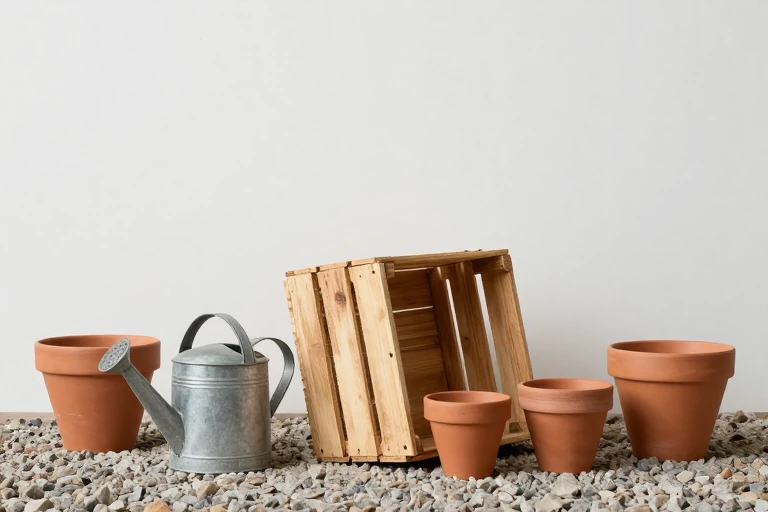
Terracotta pots, wooden crates, watering cans, and galvanized containers can form the structure of a fall display before you buy seasonal objects. Select pieces with compatible finishes and arrange them by height rather than using every spare item.
Confirm that repurposed containers are stable and free of sharp edges. Turn crates so they cannot collect water, and avoid placing rust-prone metal directly on a surface it may stain.
The benefit is flexibility: after fall, the pieces return to garden duty. The tradeoff is that genuine working materials need cleaning and may show wear more readily than decorative replicas.
20. Create a Weather-Ready Patio Display
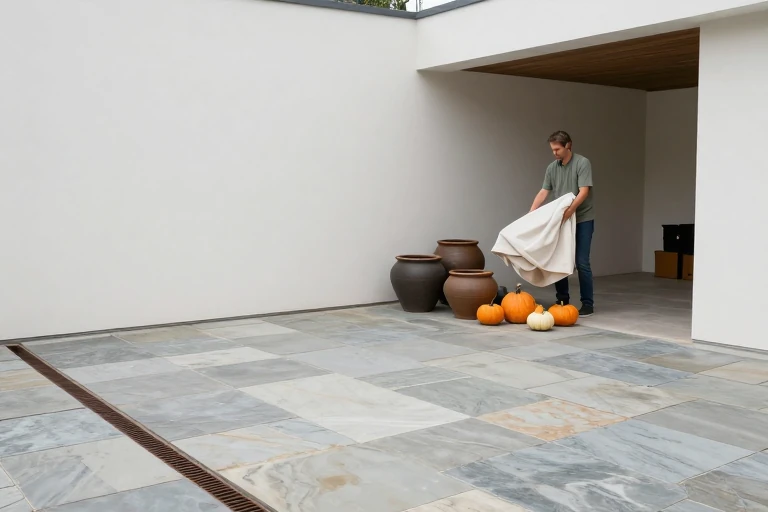
For an uncovered patio, favor heavy containers, low arrangements, and materials that can drain or dry. Reserve paper, untreated fabric, brittle dried leaves, and lightweight decorative fillers for sheltered locations or short-term use.
Group objects near a wall or substantial planter without blocking drainage paths. A compact composition is easier to secure than small accessories distributed around the patio.
Create a weather plan before the forecast changes: identify what comes indoors, what can remain, and where wet items will dry. This prevents hurried stacking that damages furniture or traps moisture in storage.
21. Plan Storage Before Buying More Decor
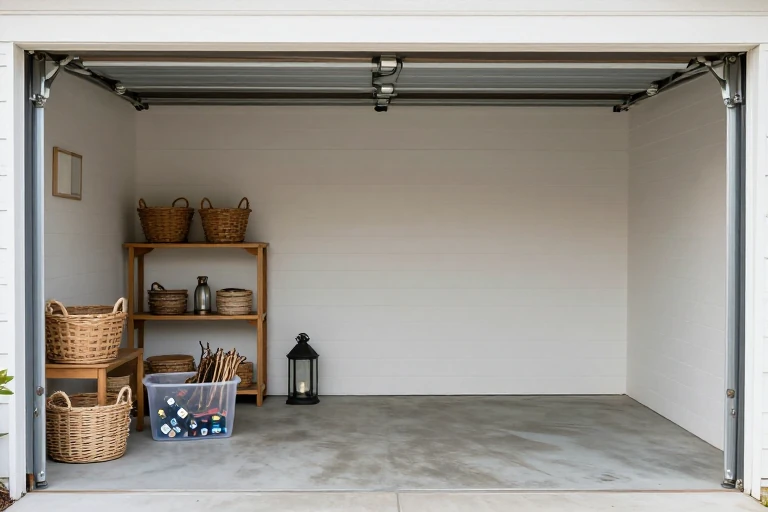
Measure available shelf, closet, or bin space before adding bulky wreaths, lanterns, or faux pumpkins. Seasonal pieces often occupy more room in storage than they do in a styled display because they cannot always nest safely.
Prioritize collapsible baskets, stackable containers, washable covers, and neutral lanterns that work beyond fall. Natural pumpkins and clipped foliage avoid long-term storage but require composting or disposal when they decline.
Dry reusable items completely before packing them. Remove batteries, brush off soil, and separate fragile materials so moisture, corrosion, or crushing does not shorten their useful life.
22. Common Outdoor Fall Decor Mistakes
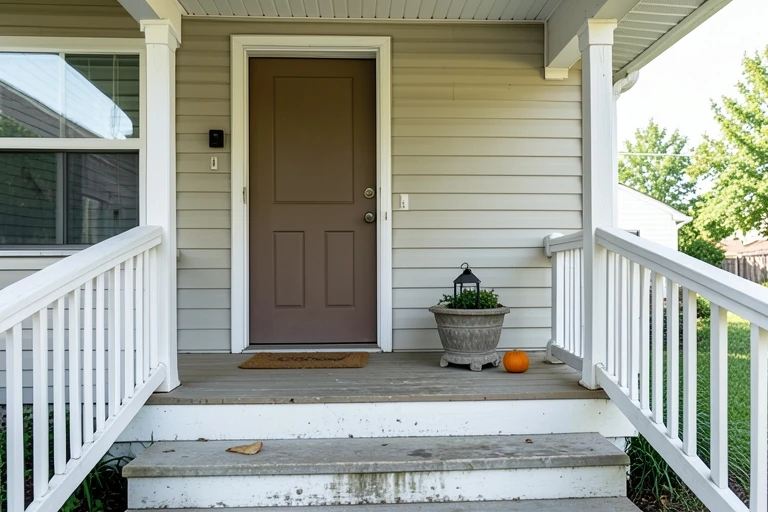
The most frequent mistake is decorating before checking circulation. Door swings, stairs, handrails, gates, and paths should function normally. Walk the route in daylight and after dark, then remove anything that creates uncertainty underfoot.
Another problem is using indoor materials outside. Unrated textiles, electrical products, adhesives, and finishes may deteriorate when exposed to moisture, sunlight, or temperature changes. Match every material to its actual location.
Finally, avoid too many isolated accents. One substantial focal point supported by repeated colors or materials usually looks more intentional and requires less cleaning, storage, and weather management.
Effort & Cost Snapshot
| Topic | Effort | Cost Note |
|---|---|---|
| 1. Build a Layered Pumpkin Arrangement | Low | Often achievable with existing furnishings or simple updates |
| 2. Frame the Door With Balanced Planters | Low | Often achievable with existing furnishings or simple updates |
| 3. Choose a Wreath That Fits the Door | Low | Often achievable with existing furnishings or simple updates |
| 4. Turn a Bench Into a Seasonal Anchor | Low | Often achievable with existing furnishings or simple updates |
| 5. Use Lanterns Without Blocking the Route | Low | Often achievable with existing furnishings or simple updates |
| 6. Define the Entry With a Layered Mat | Low | Often achievable with existing furnishings or simple updates |
| 7. Create a Harvest Basket for a Small Porch | Low | Often achievable with existing furnishings or simple updates |
| 8. Style Steps With an Asymmetrical Sweep | Low | Often achievable with existing furnishings or simple updates |
| 9. Add Height With Cornstalk Bundles | Low | Often achievable with existing furnishings or simple updates |
| 10. Refresh Summer Containers for Fall | Low | Often achievable with existing furnishings or simple updates |
| 11. Set Up a Cozy Conversation Corner | Low | Often achievable with existing furnishings or simple updates |
| 12. Dress an Outdoor Dining Table Simply | Medium | Varies by materials, scope, and local labor |
| 13. Hang a Natural Garland Under Cover | High | Get a project-specific professional quote |
| 14. Decorate a Window Box in Layers | Low | Often achievable with existing furnishings or simple updates |
| 15. Guide the Eye Along a Garden Path | Low | Often achievable with existing furnishings or simple updates |
| 16. Introduce Fall Color Without Orange | Medium | Varies by materials, scope, and local labor |
| 17. Make a Renter-Friendly Door Display | Low | Often achievable with existing furnishings or simple updates |
| 18. Add Warm Outdoor Lighting Carefully | High | Get a project-specific professional quote |
| 19. Repurpose Garden Materials as Decor | Low | Often achievable with existing furnishings or simple updates |
| 20. Create a Weather-Ready Patio Display | Low | Often achievable with existing furnishings or simple updates |
| 21. Plan Storage Before Buying More Decor | Low | Often achievable with existing furnishings or simple updates |
| 22. Common Outdoor Fall Decor Mistakes | High | Get a project-specific professional quote |
Frequently Asked Questions
When should I put up outdoor fall decor?
Start when local weather and plant availability support the look, rather than following a fixed date. Transition summer containers first, then add pumpkins and dried materials as temperatures moderate. Delay moisture-sensitive pieces if your area remains hot, humid, or stormy.
How do I keep pumpkins from rotting outside?
Choose firm pumpkins without soft spots, keep them off wet soil, and provide airflow beneath them. Avoid waterlogged planters and check contact points after rain. Move pumpkins out of prolonged heat when practical, and promptly compost or discard any that soften or leak.
What outdoor fall decor works in windy locations?
Use low, broad arrangements and heavy containers. Secure tall branches inside weighted pots, tie cornstalks to stable supports, and avoid loose leaves or miniature accessories. Bring lightweight textiles and baskets inside before strong wind rather than relying on improvised weights.
How can I decorate a small porch without making it crowded?
Choose one vertical feature, such as a wreath, and one compact floor arrangement. Keep the door swing and walking path clear. A basket containing several textures usually consumes less usable space than separate pumpkins, lanterns, and pots spread across the landing.
The best fall outdoor decor begins with the way the space is used. Protect the walking route, choose a focal point that suits the home’s scale, and select materials for the amount of shelter they will actually receive.
Then make the display easier to live with. Keep natural materials dry and ventilated, bring vulnerable textiles inside, secure lightweight pieces, and plan storage before accumulating seasonal items. Whether you decorate a broad porch or a rental landing, a restrained combination of color, texture, and practical placement will feel more welcoming than a crowded collection that constantly needs attention.
Sources & Further Reading
- Happening in the Hub: Outdoor Living Trends – NKBA
- 21 Amazingly Cozy Outdoor Fall Decor Ideas You'll Want To Copy
- countryliving.com/home-design/decorating-ideas/g1536/fall…
Continue Your Home Transformation
Explore the full collection of step-by-step eBooks and get the guide that fits the room you're working on.