Getting the coastal decor right makes the biggest difference in how the space actually feels day to day. A well-planned coastal decor balances function and style, and even small tweaks to your coastal decor can transform the whole area.
When in doubt, add less coastal decor rather than more — restraint is what makes coastal decor feel expensive instead of themed.
Good coastal decor never feels like a theme park. The best coastal decor borrows a light palette and natural textures, then lets the room breathe. Keep your coastal decor simple and it will age well for years.
A great coastal decor also helps define how the space is used day to day, so keep the coastal decor basics in mind before you commit to a plan.
Choosing the right coastal decor approach is one of the easiest ways to upgrade a space without a full remodel. When your coastal decor is planned correctly, everything else feels intentional rather than accidental.
Most coastal homes make the same mistake: they announce themselves. Anchors, ropes, shells on every surface, navy stripes on everything — and somehow the result feels less like the beach and more like a souvenir shop. The coast as a design inspiration is one of the most beautiful available, but only when interpreted with restraint.In 2026, coastal design has grown up. It’s moved from literal nautical themes toward something more sophisticated — warm neutrals, organic textures, quiet luxury, and a calm that genuinely mirrors the feeling of standing near water. By the end of this article, you’ll know exactly how to bring that feeling into your home without a single anchor in sight.
1. Why the All-White Coastal Look Is Finally Over
The stark all-white, nautical-themed coastal interior that dominated for a decade has clearly had its moment. Coastal design in 2026 is shifting toward something warmer, richer, and more sophisticated — earthy palettes, organic materials, curved forms, and quiet luxury that honor the natural environment without turning a home into a literal seaside souvenir. The biggest shift is away from the very safe, very pale version of coastal toward rooms with more personality and contrast. In my experience, a well-done modern coastal room doesn’t announce its inspiration at all.
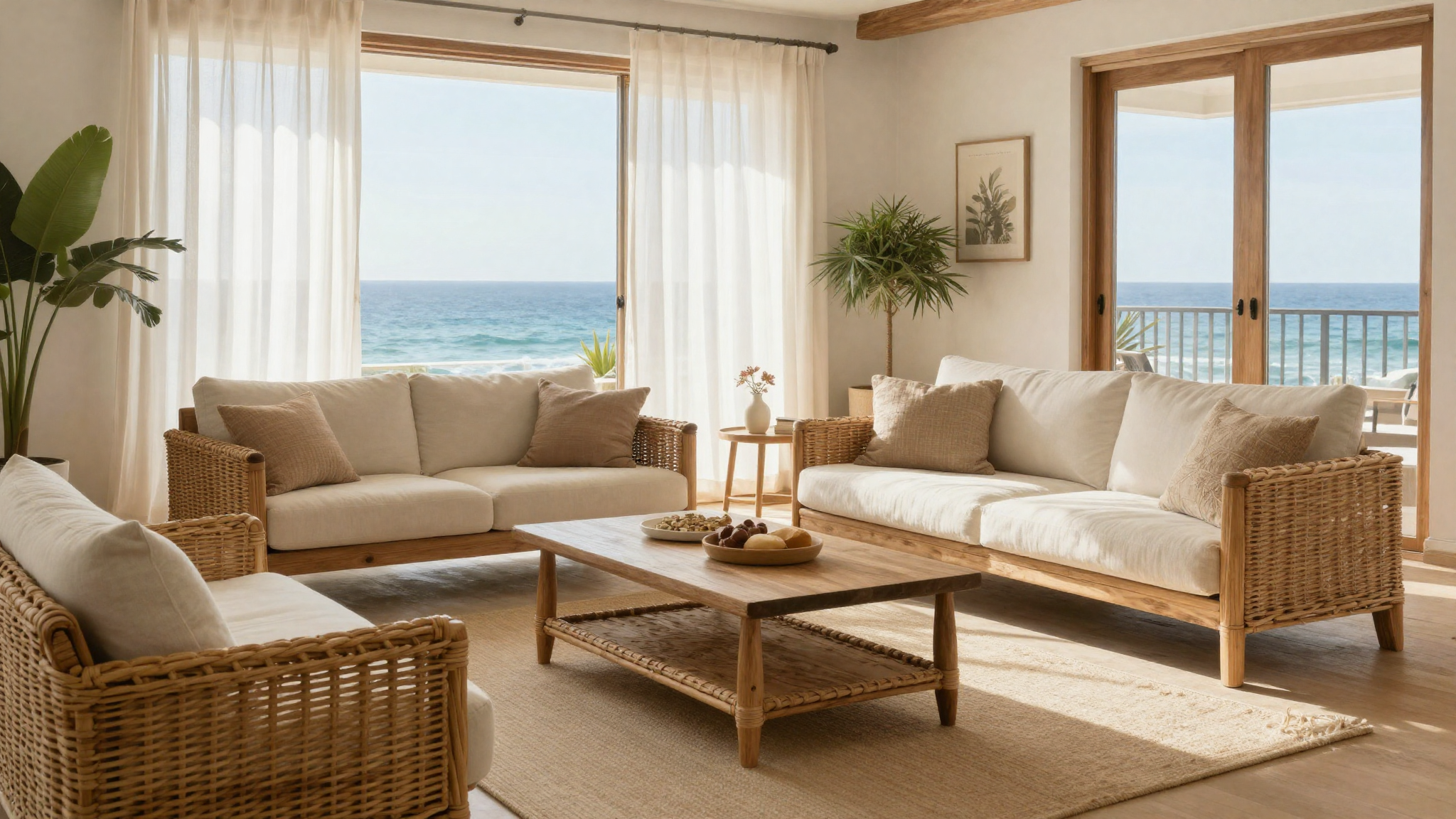
Smart tip: Remove any obviously nautical accessories — anchors, ropes, driftwood signs — and notice how the room immediately feels more sophisticated without them.
Mistake to avoid: Don’t announce the coastal theme through accessories. Let texture, light, and palette carry the feeling instead.
2. The New Coastal Color Palette That Actually Works
The coastal palette of 2026 is built from nature’s actual colors at the shore — warm whites, sandy beiges, driftwood grays, watery blues, and seafoam greens. These are the tones that reflect light and create the open, horizon-like quality that makes a space feel coastal without stating it. We found that using these as the base palette, with just two or three tones in varying intensities across walls, textiles, and furniture, creates the most convincing and sophisticated coastal atmosphere available.
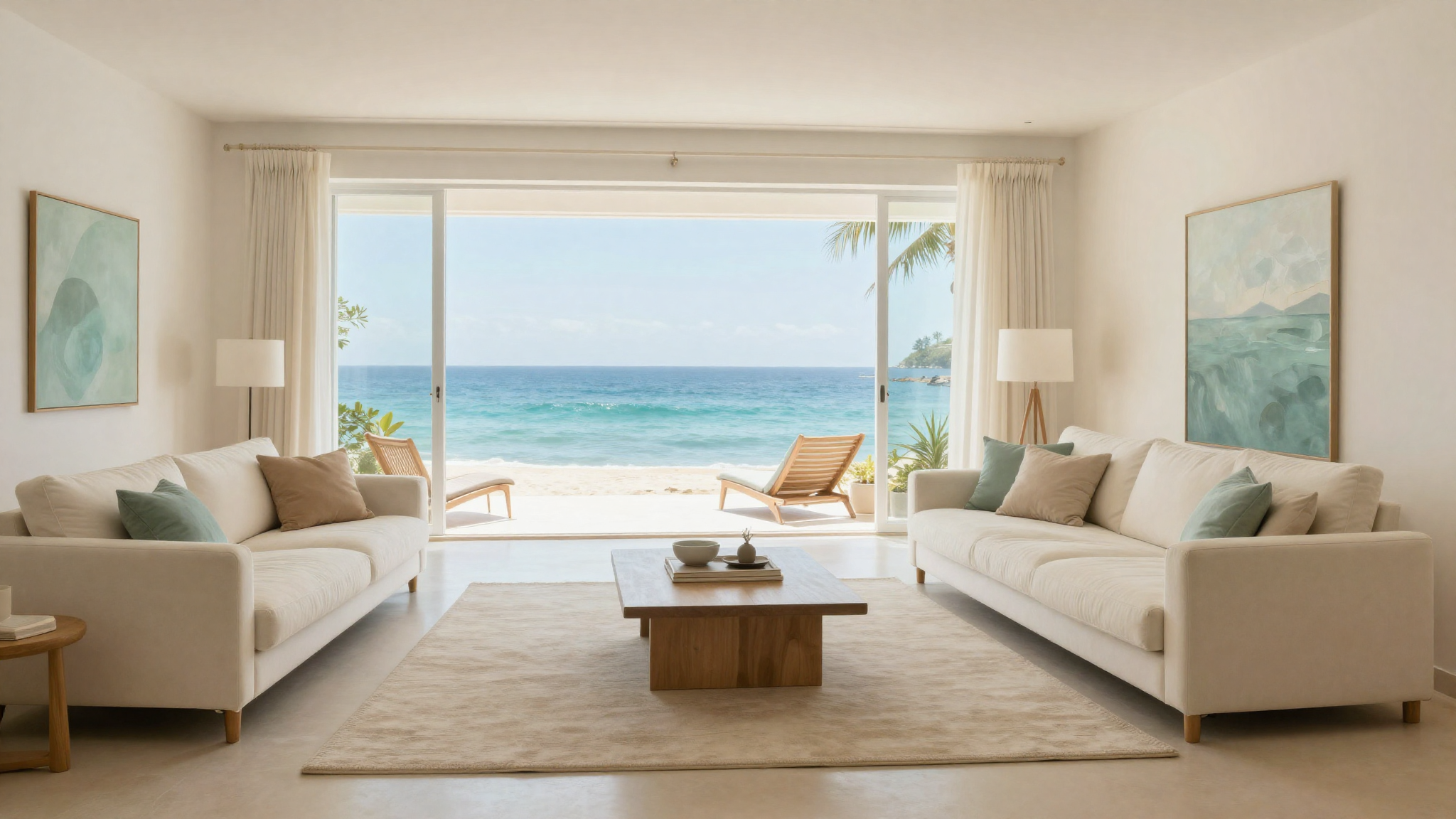
Smart tip: Use warm white walls with sandy linen upholstery and two seafoam or watery blue accents — a foolproof coastal palette base.
Mistake to avoid: Don’t use bright, saturated blue in large quantities. Jarring cobalt blue was the old coastal look; muted, watery tones are where the modern version lives.
3. Organic Textures That Bring the Shore Indoors
The coastal feel comes more from texture than color. Jute rugs, woven rattan furniture, seagrass baskets, linen upholstery, reclaimed wood accents, and bamboo details all carry the organic quality of the natural shoreline. These materials breathe, age gracefully, and develop character over time — which is exactly what a genuine coastal interior feels like. Layering several of these natural textures together creates the depth and tactile richness that makes a coastal room feel collected rather than decorated.
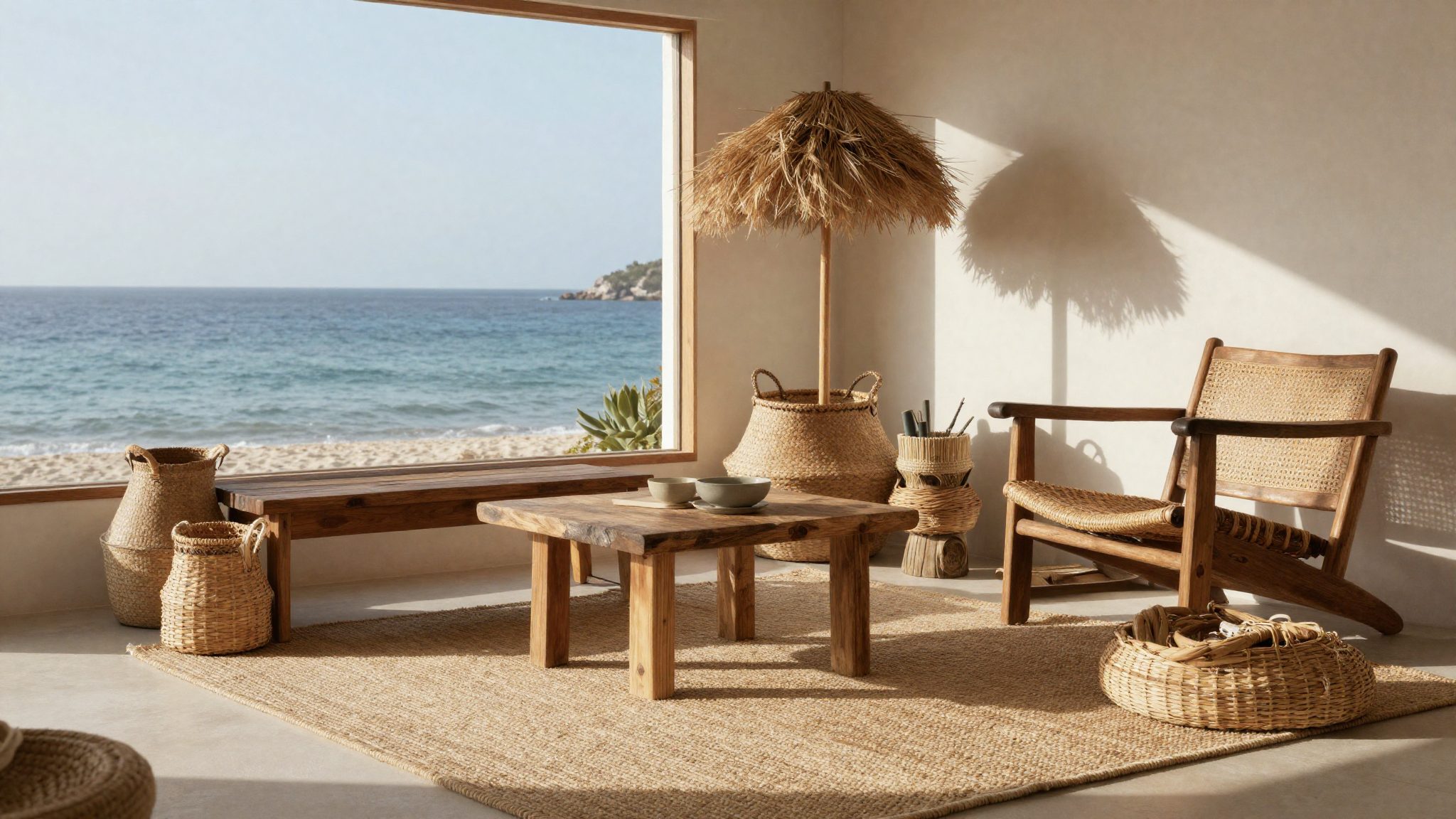
Smart tip: Add one jute or sisal rug and one rattan piece to a room — two natural materials are enough to establish a coastal texture foundation.
Mistake to avoid: Don’t mix too many competing natural textures without a unifying color palette. The materials should feel like they come from the same shoreline.
Loving These Ideas? Get the Step-by-Step Guide
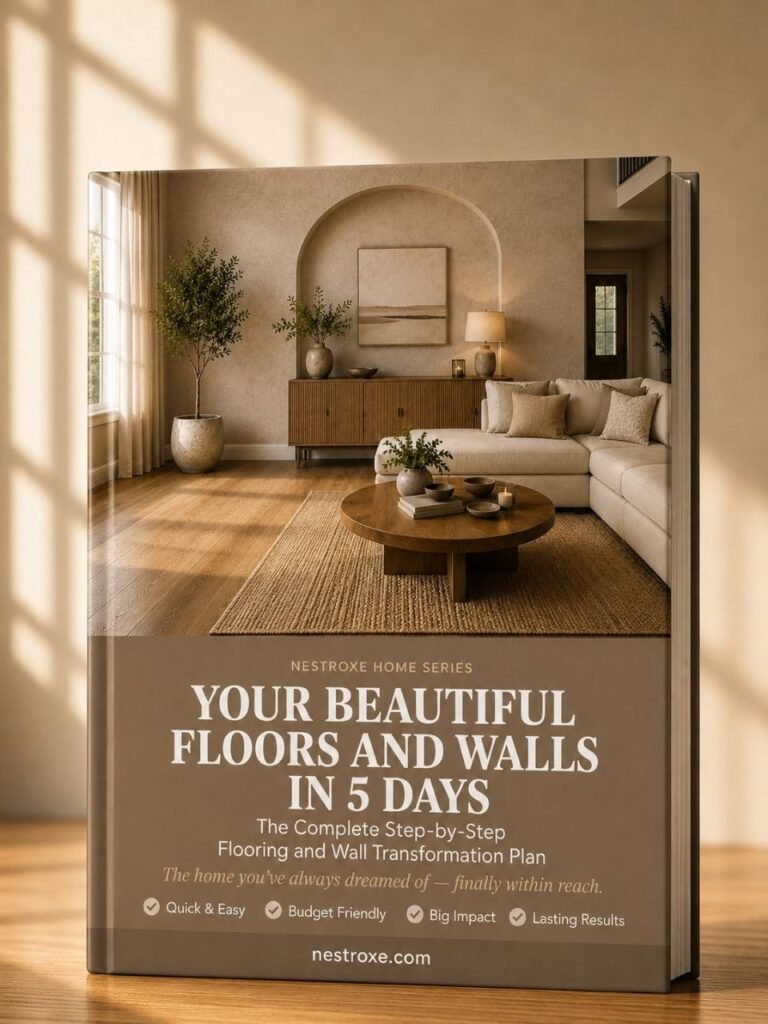
Grab the full 5-day eBook and turn these ideas into a finished room.




4. Maximizing Natural Light for a Coastal Feel
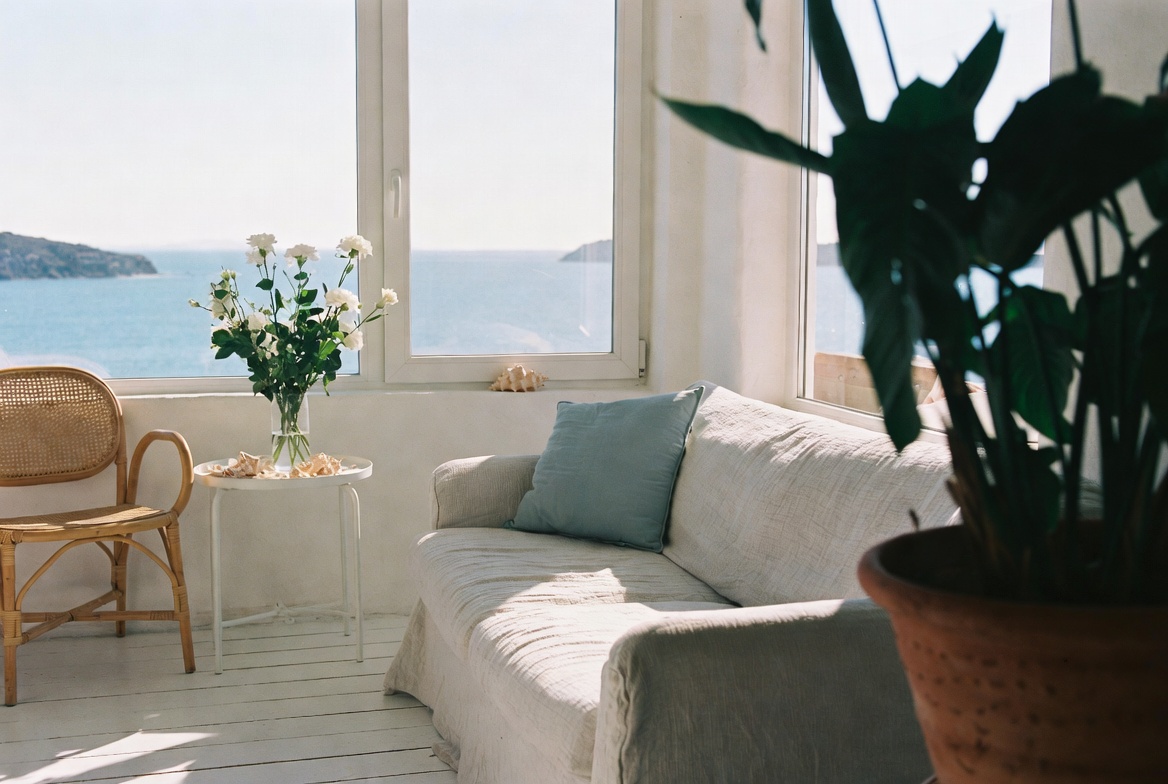
Natural light is the single most powerful tool in creating a coastal atmosphere. A room flooded with soft, natural light feels coastal before a single piece of furniture arrives. Sheer white or linen curtains hung high and wide, clear windows kept free of heavy treatments, and furniture arranged to keep light pathways open all serve the coastal imperative of openness and brightness. One of the most common mistakes I see in coastal-inspired homes is heavy window treatments that block the very thing that makes the look work.
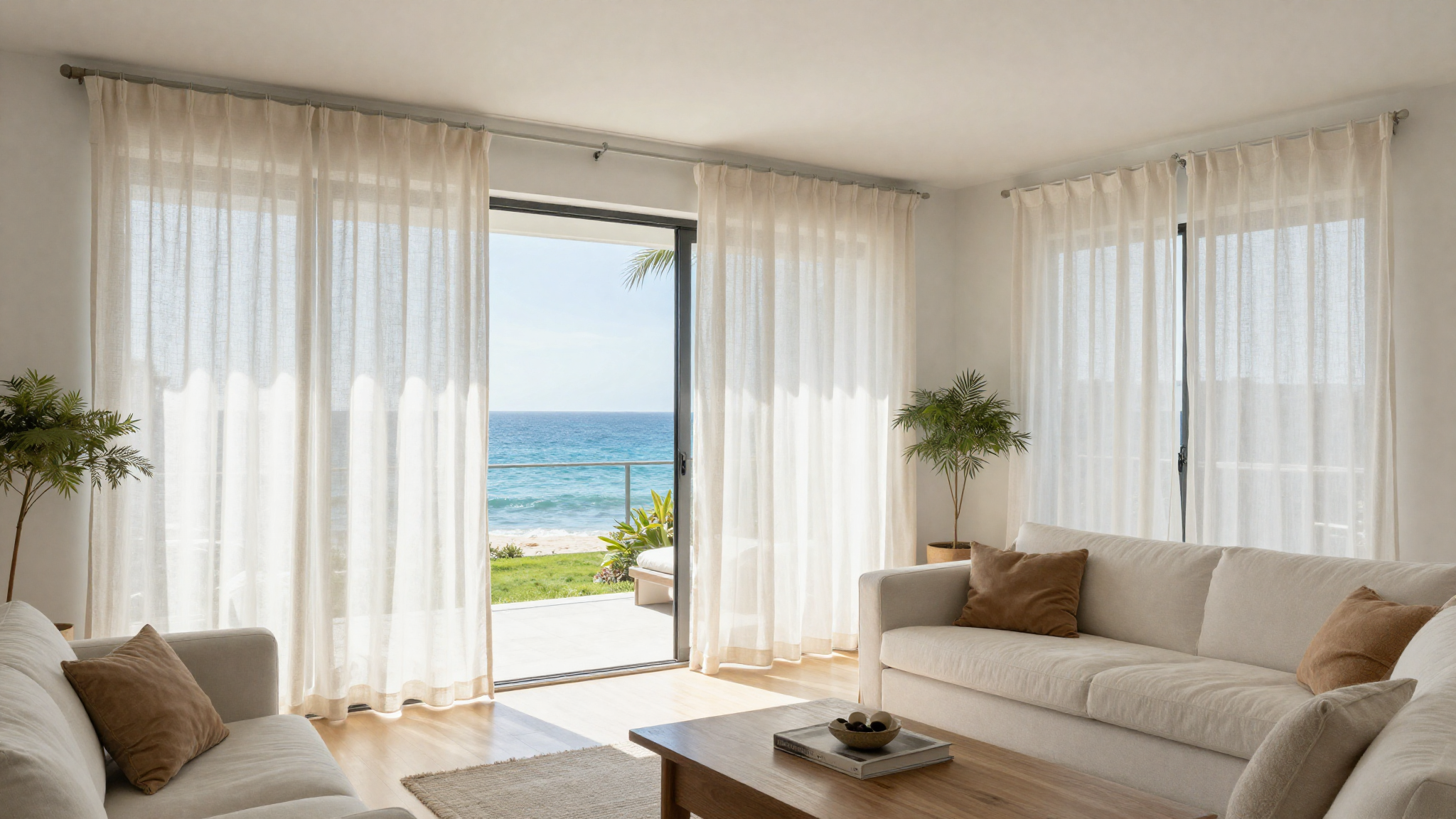
Smart tip: Swap heavy curtains for sheer linen panels — the single most effective change for creating a coastal atmosphere on a minimal budget.
Mistake to avoid: Don’t use blackout curtains in a coastal-inspired room. The darkness they create works directly against the open, airy quality the style requires.
5. Relaxed Furniture That Makes You Want to Stay
Coastal living is fundamentally about ease, and the furniture that best communicates that is slipcovered, generously proportioned, and arranged for relaxed gatherings rather than formal presentation. Slipcovered linen sofas, barrel-backed chairs, curved forms that invite touch — these pieces create the casual, welcoming quality that makes coastal spaces feel like permanent vacations. Coastal design in 2026 is moving increasingly toward curved silhouettes that soften rectilinear rooms and create more human, organic flow.
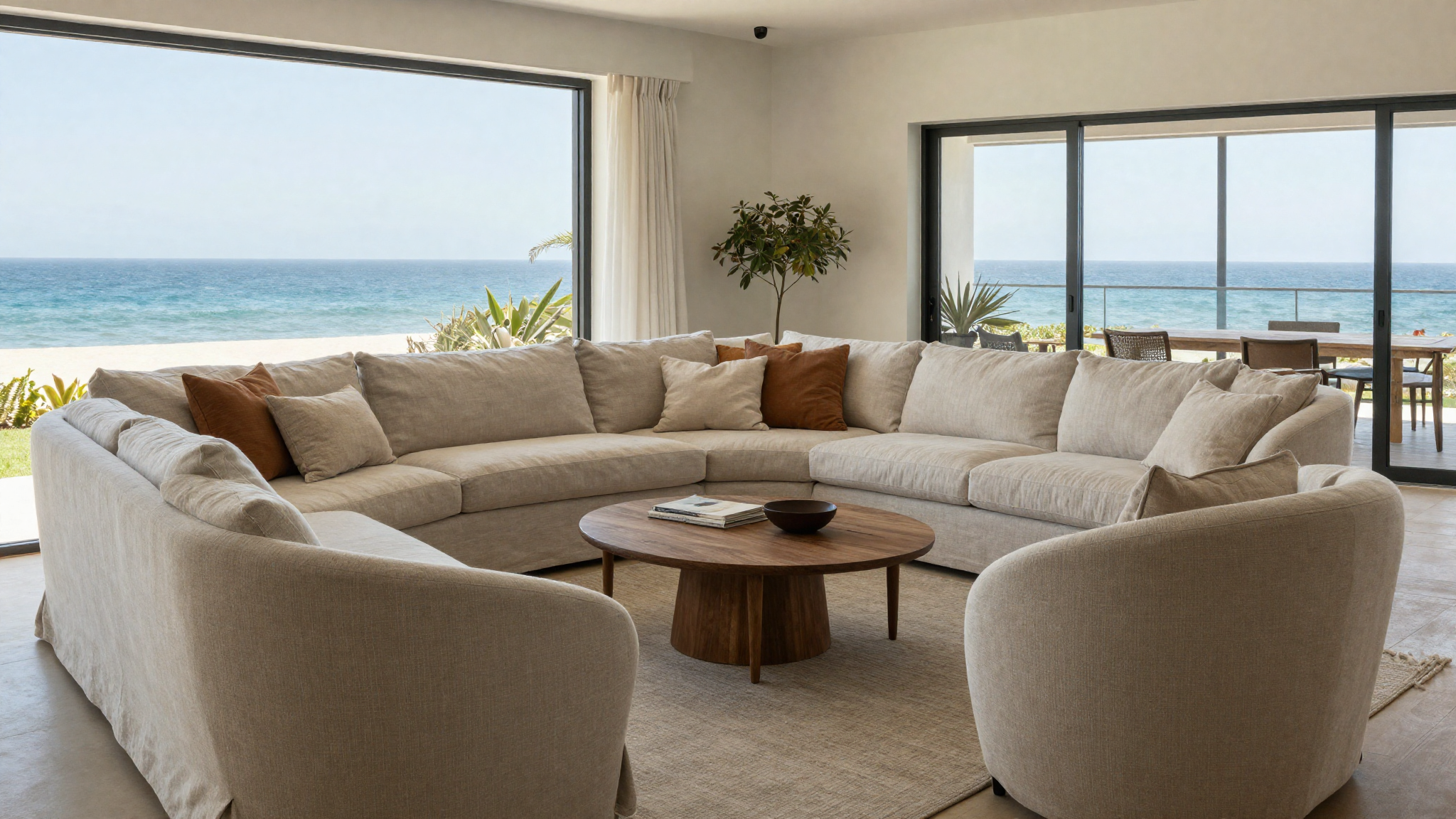
Smart tip: Choose furniture with washable slipcovers in natural linen — they communicate ease and practicality, exactly the spirit of coastal living.
Mistake to avoid: Don’t furnish a coastal space with formal, stiff pieces. A sofa that looks too precious to sit on defeats the entire coastal philosophy.
6. The Coastal Bedroom as a True Sanctuary
The coastal bedroom in 2026 is being designed as a genuine sanctuary — a serene retreat that brings the calm of the water indoors. White or soft linen bedding, a woven pendant light, sea blue accent pillows, windows kept as clear as possible, and natural wood or rattan furniture create the resort-like quality that makes waking up feel like a privilege. We found that the coastal bedroom works best when it’s the quietest room in the house — restrained, calm, and focused entirely on rest.
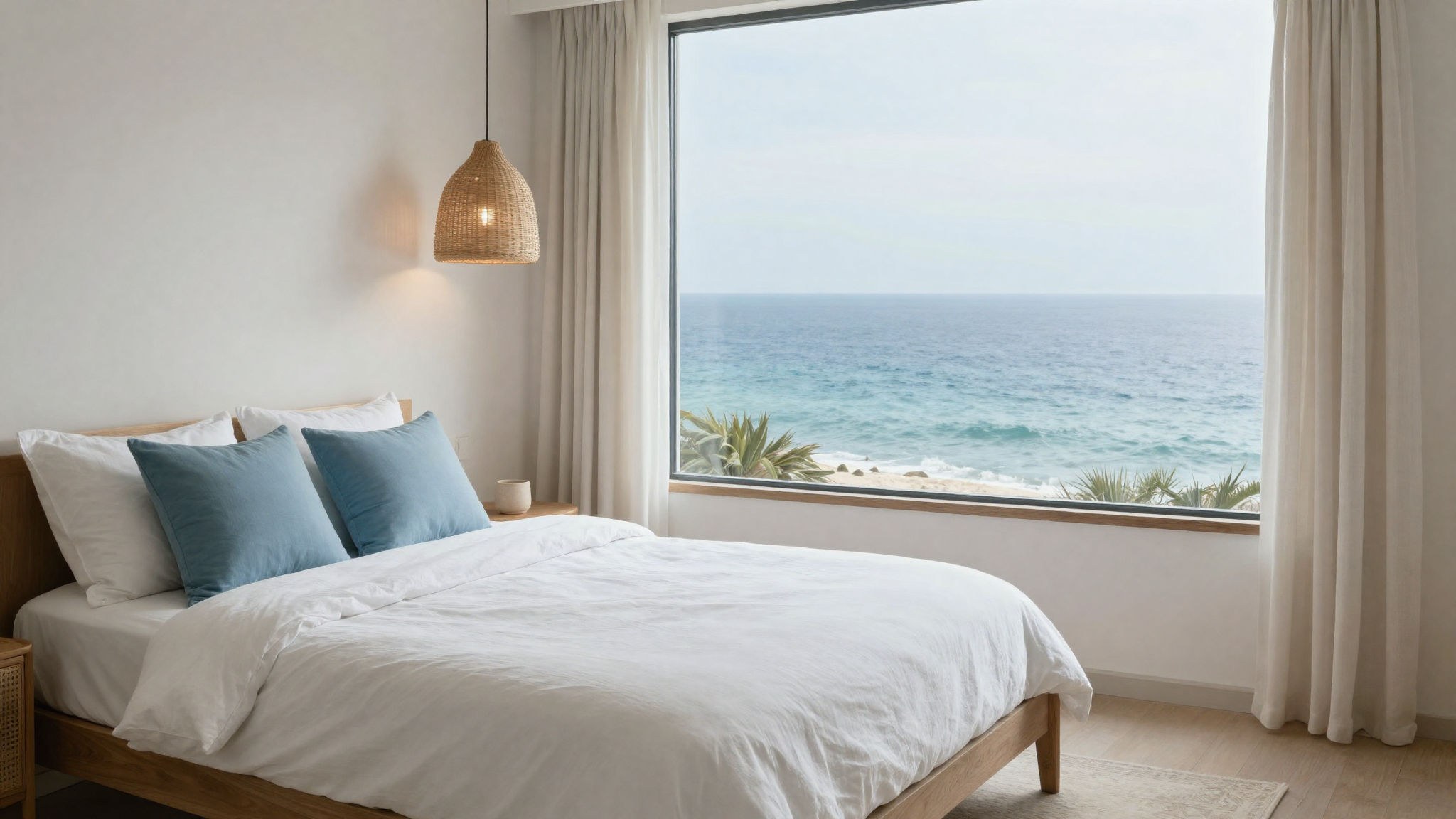
Smart tip: Add a woven pendant light and switch bedding to crisp white linen — two changes that immediately give any bedroom a coastal resort quality.
Mistake to avoid: Don’t overcrowd a coastal bedroom with accessories. The serene quality comes from what’s left out as much as what’s brought in.
7. The Outdoor Extension Every Coastal Home Needs
Coastal living is fundamentally about being outside, which means the outdoor living space is non-negotiable — whether it’s a deck, a patio, a balcony, or a small terrace. Weather-resistant sofas, outdoor rugs that echo interior materials, string lights, and a simple side table turn any outdoor surface into a room worth spending time in. This indoor-outdoor flow is a defining principle of the coastal aesthetic that extends naturally from what we explored in our screened porch ideas for a cozy outdoor living space.
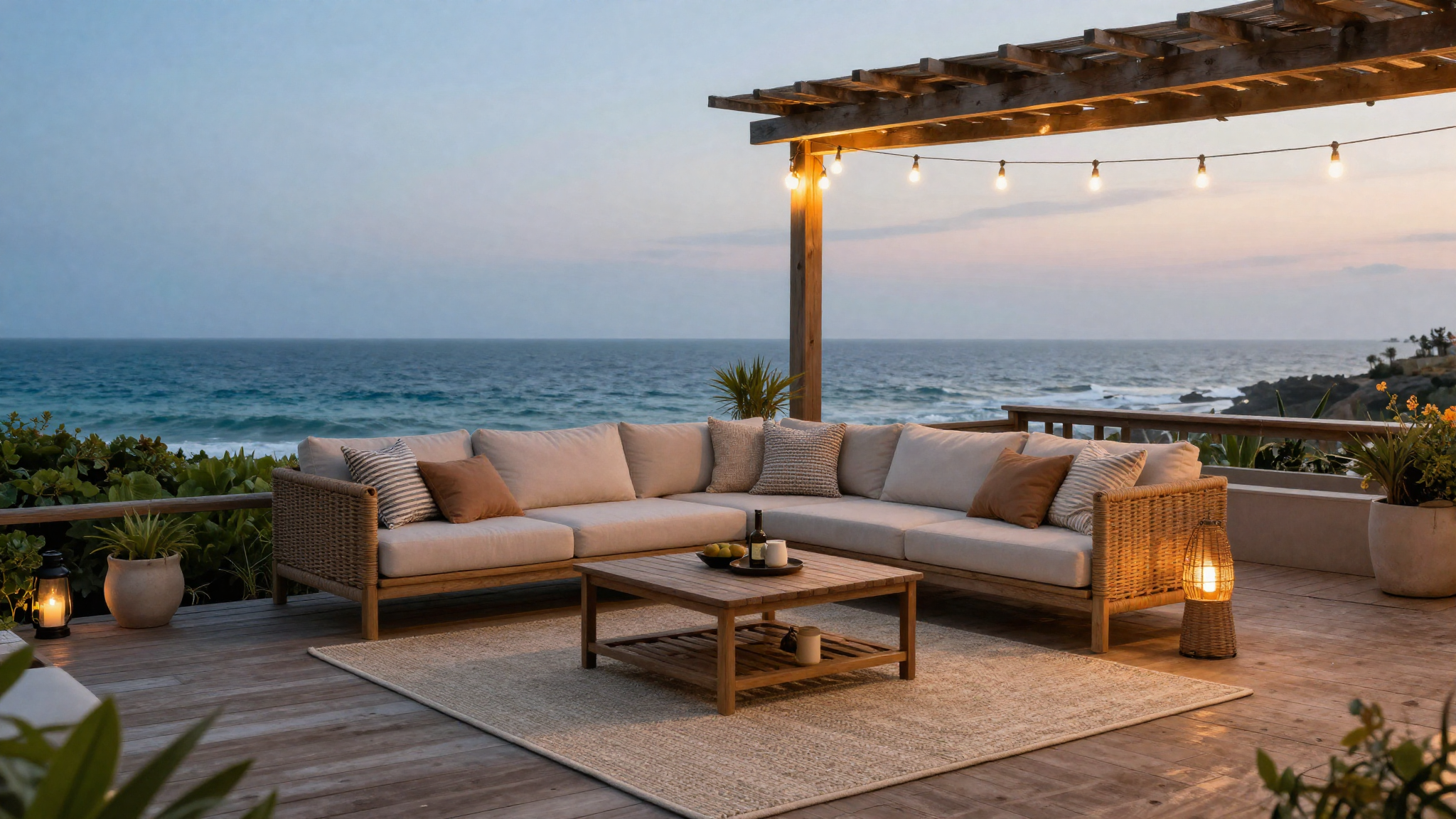
Smart tip: Add an outdoor rug and two all-weather cushions first — the minimum investment that transforms any outdoor surface into a genuine room.
Mistake to avoid: Don’t choose outdoor furniture in jarring colors. Coastal outdoor furniture should echo the interior’s natural palette — sand, white, natural wood.
8. The Coastal Kitchen That Feels Light and Alive
A coastal kitchen is bright, practical, and genuinely inviting — white or light-colored cabinetry, natural wood counters or light stone, a glass tile backsplash that catches and reflects light, and rattan or wooden bar stools at the island. The coastal kitchen is a room where meals are relaxed affairs that blur into conversations. Sea glass tile backsplashes in frosted blue or green are particularly popular for giving a kitchen a literal wink at the coast without overdoing it.
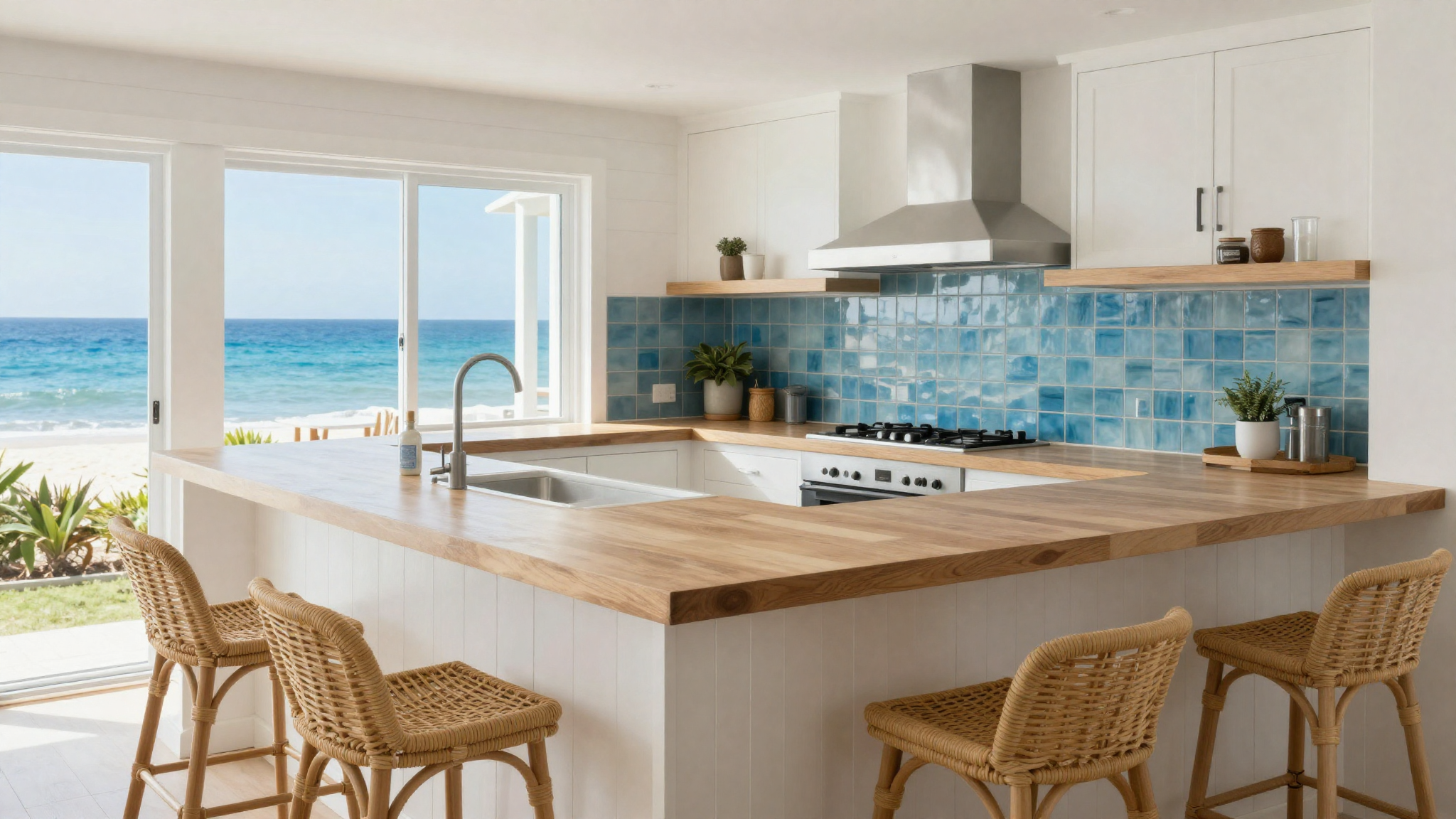
Smart tip: Swap a standard backsplash for glass tile in frosted blue or sea green — a single affordable change that brings the coast into the kitchen.
Mistake to avoid: Don’t overcrowd a coastal kitchen countertop. Clear, open surfaces are essential to the light, airy quality the style requires.
9. A Spa-Like Coastal Bathroom in Any Size
The coastal bathroom in 2026 is evolving into a genuine spa sanctuary — travertine sinks, tumbled stone or pebble floors in the shower, white subway tiles, arched mirrors, warm wood accents like a teak stool, and curved brass fixtures. Even a standard apartment bathroom can be moved toward this aesthetic with a few targeted changes. The goal is a room that feels like the best room at a beachside resort — calm, clean, and luxurious in a way that’s effortless rather than opulent.
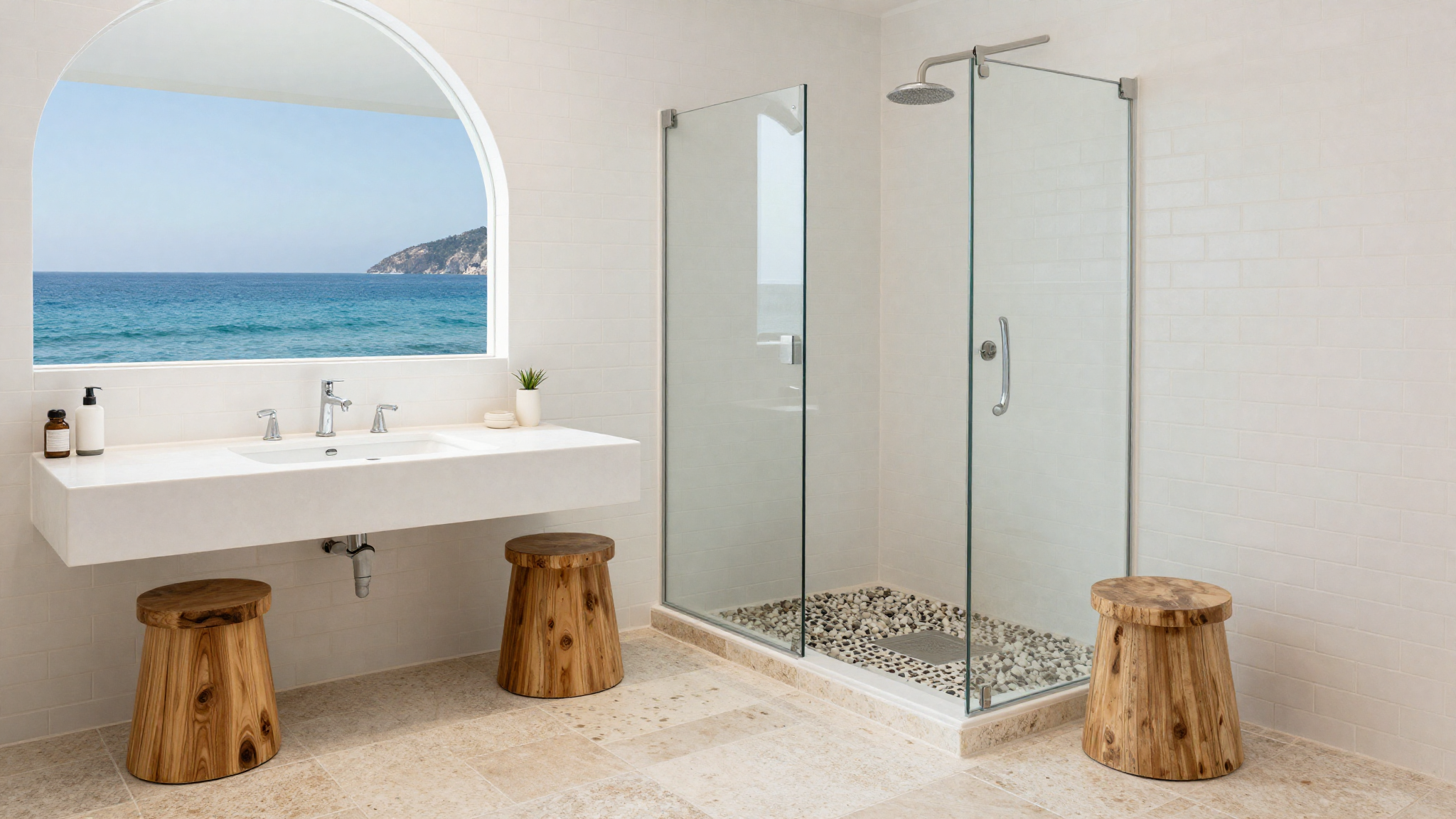
Smart tip: Add a teak stool and an arched mirror — two additions that immediately give any bathroom a coastal spa quality without renovation.
Mistake to avoid: Don’t use plastic accessories in a coastal bathroom. Natural materials — wood, stone, ceramic — are what make the difference between a bathroom that looks coastal and one that feels it.
10. Sea Glass: Understated Coastal Accent Done Right
Sea glass done well is one of the most elegant coastal accents available — frosted glass bottles, vases, and jars in blues, greens, and aquas clustered on a windowsill where light shines through them. This captures the colors of the ocean without resorting to literal seashells or coral. The key is clustering rather than scattering: three or five sea glass pieces together on one windowsill make a considered design statement; the same pieces spread across multiple surfaces feel random and unintentional.
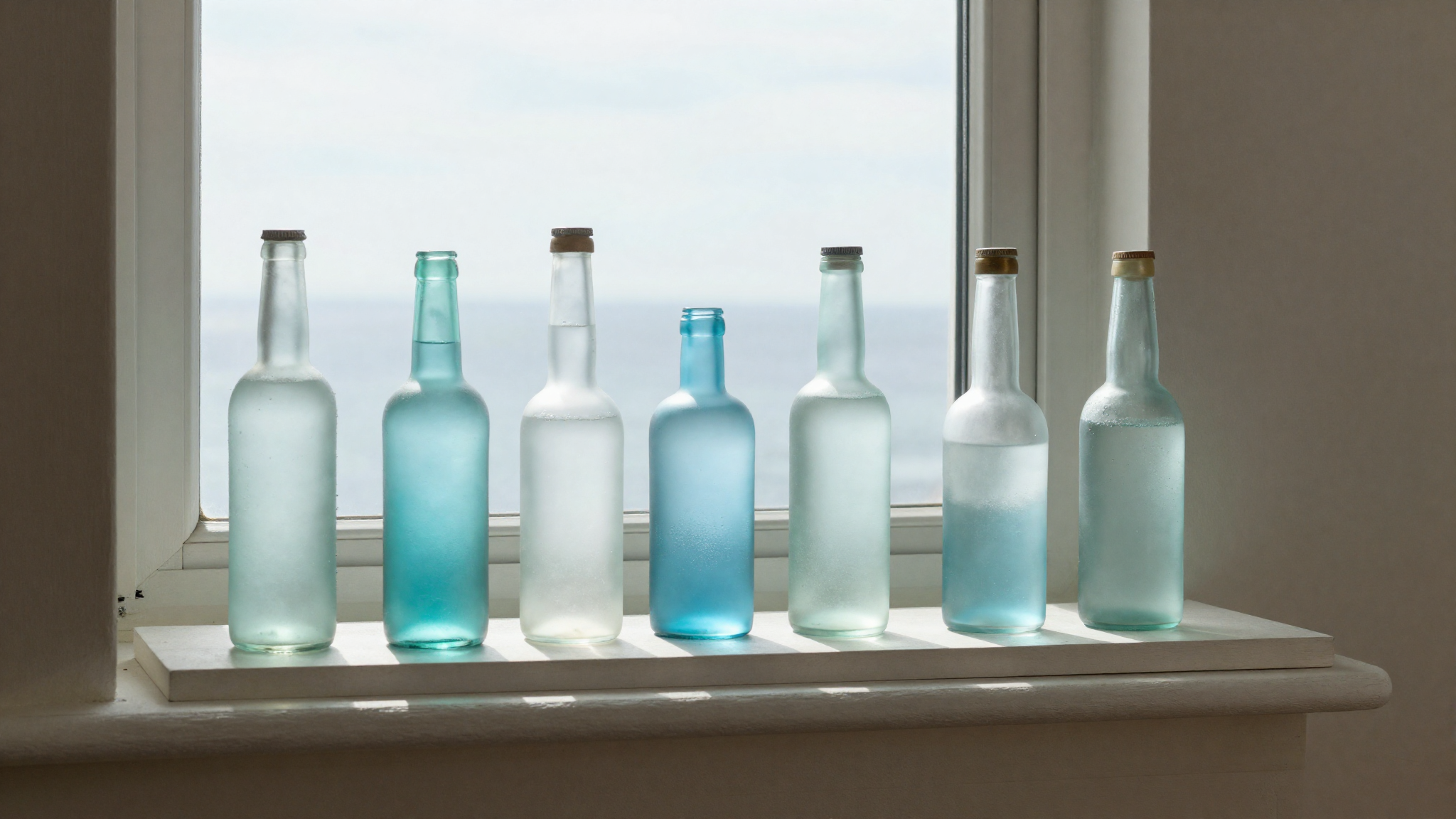
Smart tip: Cluster three or five frosted glass pieces in blue or green tones on a window ledge — an instant, cost-effective coastal accent that catches the light beautifully.
Mistake to avoid: Don’t scatter sea glass accessories across every surface. The effect only works when they’re grouped deliberately where light can interact with them.
11. Nature Art Instead of Nautical Motifs
The most thoughtful coastal homes of 2026 use nature-inspired art — botanical prints, bird illustrations, abstract watercolors, organic forms — to suggest the natural world without making a literal declaration of it. This approach works at a more abstract level than classic nautical accessories, giving a room the feeling of the coast through mood and imagery rather than obvious references. A single large botanical print or a collection of organic abstract works does more for a coastal interior than any anchor print ever could.
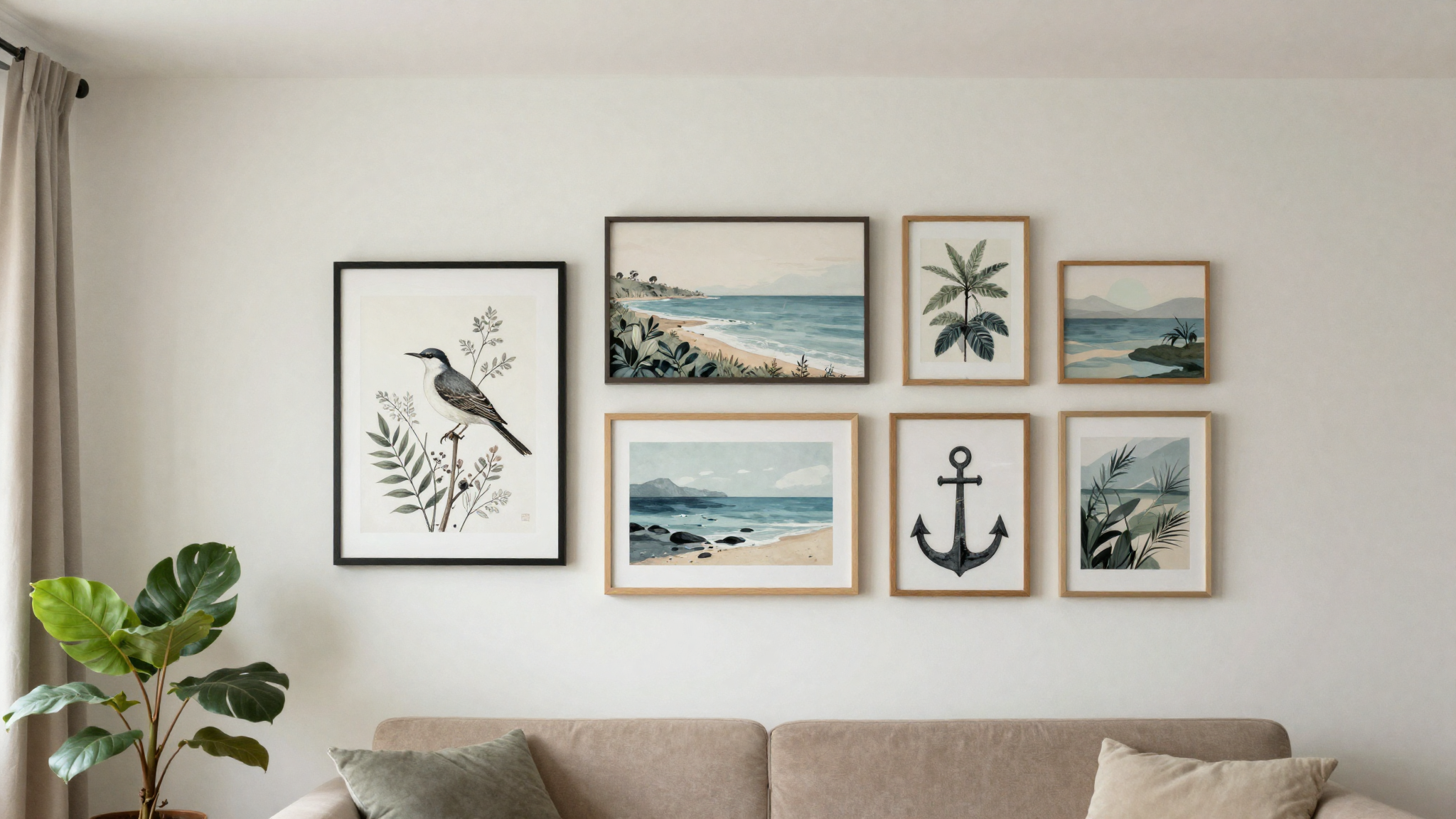
Smart tip: Replace any literal nautical art with one large botanical print or abstract coastal watercolor — the mood is preserved without the obvious reference.
Mistake to avoid: Don’t hang multiple pieces of literal coastal art (ships, anchors, nautical maps) in one room. The effect becomes cartoonish; nature-inspired abstraction is far more sophisticated.
12. Tropical Plants That Complete the Coastal Picture
Large, leafy tropical plants — an Areca Palm, a Bird of Paradise, a Fiddle Leaf Fig — bring life, vibrant green color, and a genuinely tropical quality to the neutral coastal palette in a way that smaller plants can’t achieve. These plants create the sense of living near the ocean or tropics without requiring any literal coastal reference. We found that one large tropical plant positioned near the room’s best natural light source does more for the coastal atmosphere than any collection of smaller decorative pieces. For low-light rooms, our best indoor plants that thrive without direct sunlight include several options that work beautifully in coastal palettes.
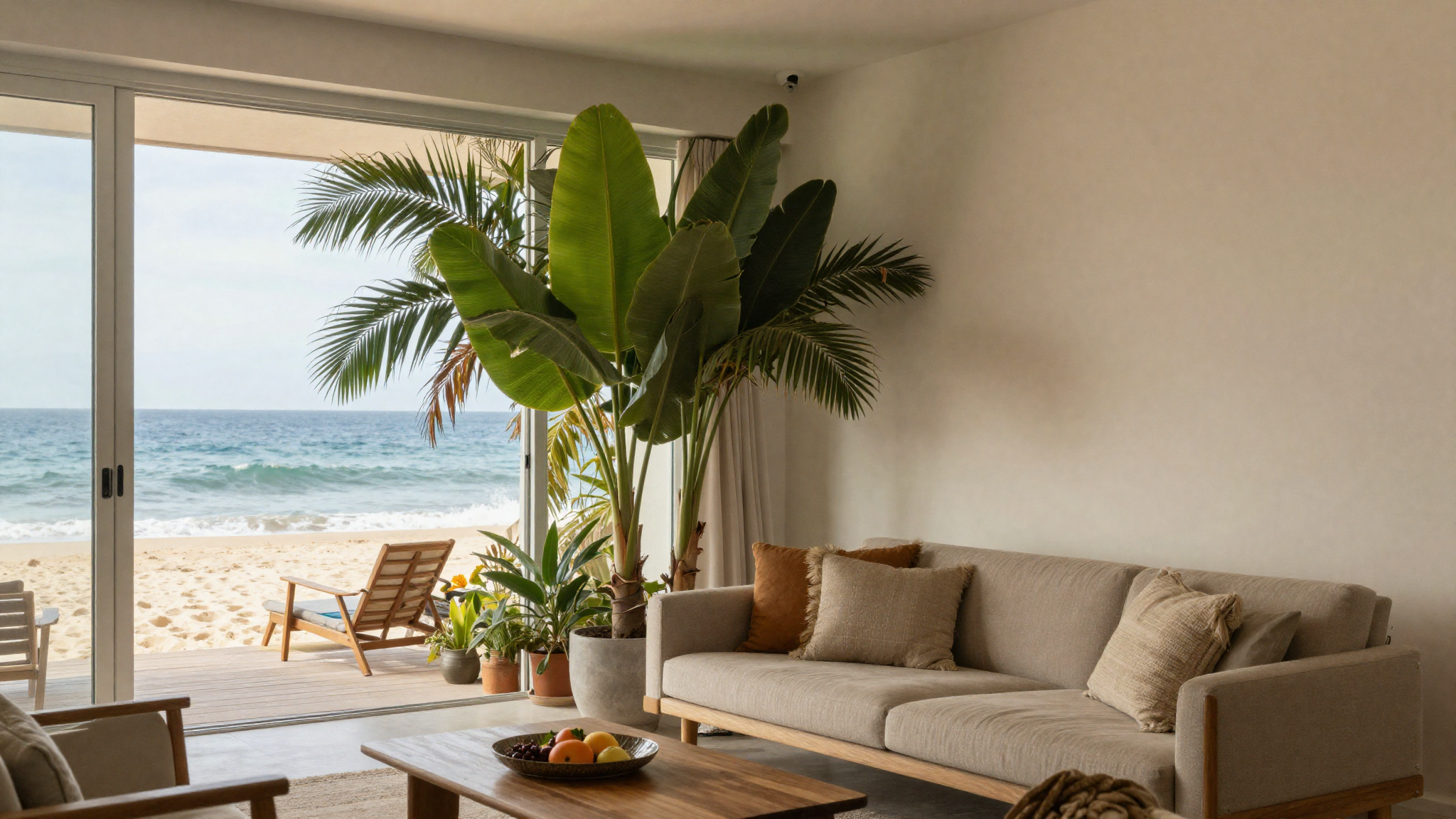
Smart tip: Choose one large tropical plant and position it near your brightest window — more visual impact than five small plants scattered around the room.
Mistake to avoid: Don’t choose high-maintenance tropical plants if your light is limited. A struggling plant undermines the effortless quality coastal living is meant to convey.
13. Quiet Luxury and Artisan Craft for Coastal Spaces
The defining undercurrent of 2026 coastal design is quiet luxury — quality, longevity, and understated elegance over trend-driven decor. This means choosing one custom rattan pendant over a cheap alternative, investing in handmade ceramic vessels, selecting a real driftwood piece over a manufactured one. The coastal aesthetic in 2026 is defined by thoughtful restraint and artisan craftsmanship that ages gracefully with the sea air rather than pieces that show their origins in a chain store the moment you look closely.
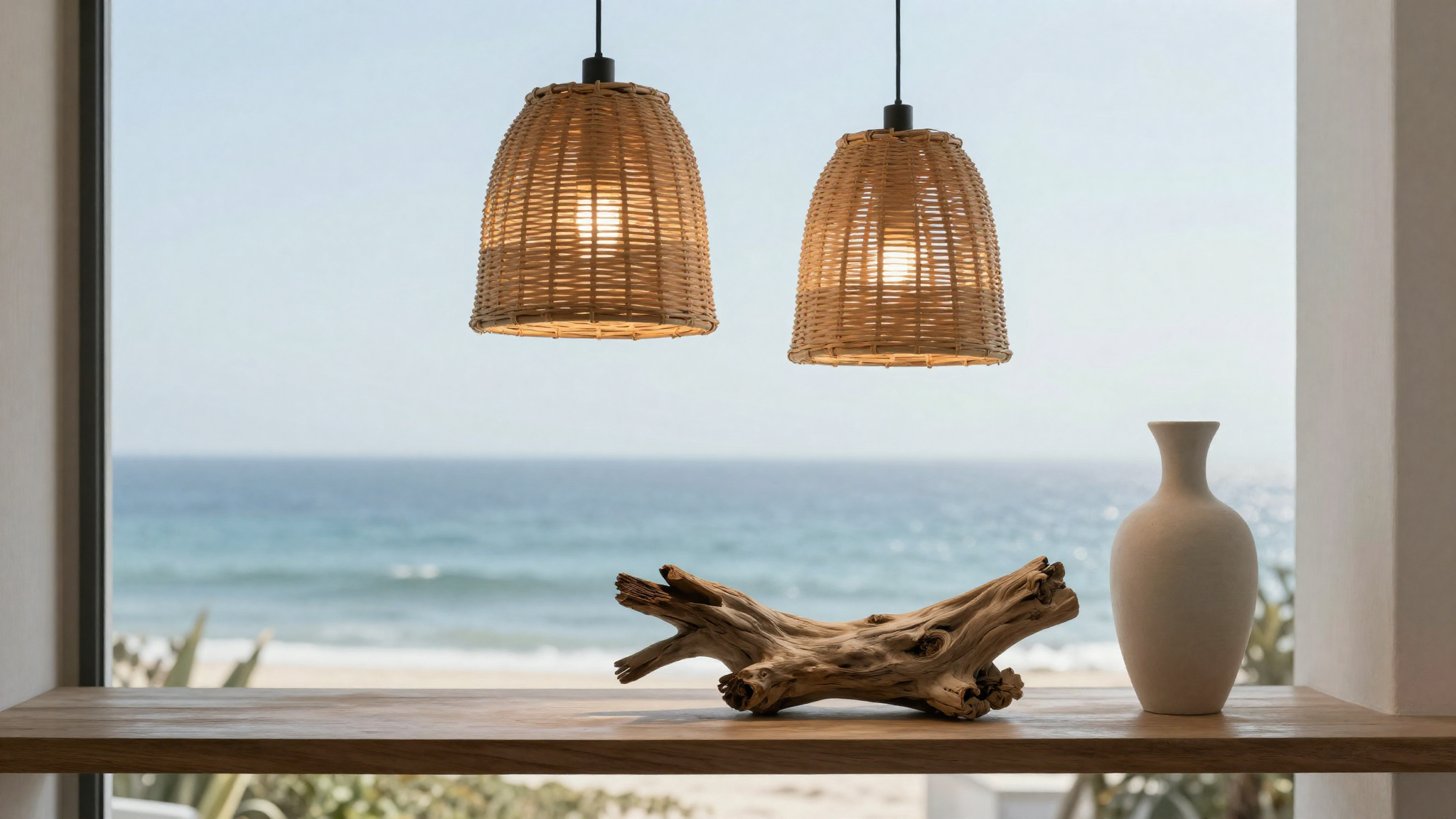
Smart tip: Replace one mass-produced coastal accessory with one handmade piece — a ceramic, a woven basket, a rattan light — and notice how the whole room reads differently.
Mistake to avoid: Don’t fill a coastal home with fast furniture and decorative objects that will look dated in two years. Quiet luxury is about choosing fewer, better things that last.
The most beautiful coastal interiors don’t look like the beach — they feel like it. That feeling comes from light, texture, organic materials, and a sense of ease that no anchor print or shell collection can manufacture. Start with one idea from this list and let the coast come to you gradually, one considered choice at a time.
Continue Your Home Transformation
Explore the full collection of step-by-step eBooks and get the guide that fits the room you're working on.