
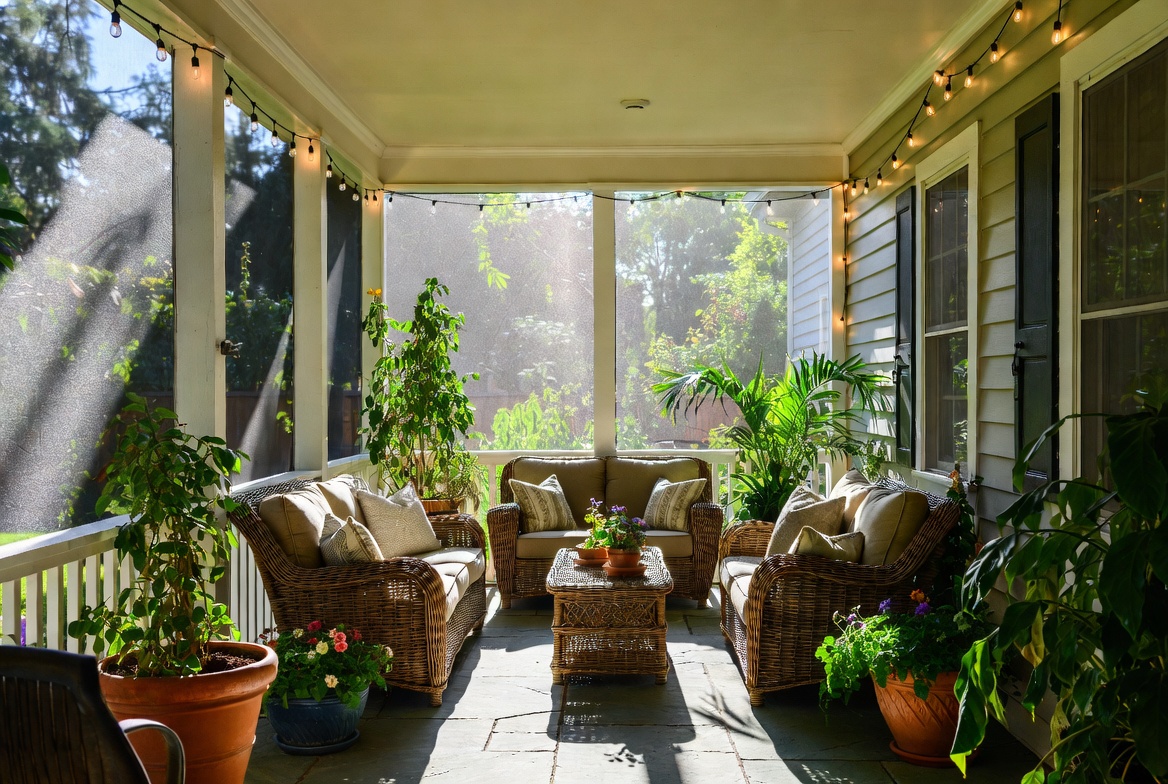
A screened porch occupies a special place in the home — it is neither fully inside nor fully outside, and that in-between quality is exactly what makes it so beloved. You get the fresh air, the garden views, and the sound of rain on the roof without the insects, the wind, and the weather that make an open porch less comfortable for half the year. Done well, a screened porch becomes the room the whole family gravitates toward — the morning coffee spot, the evening reading corner, the rainy afternoon retreat.
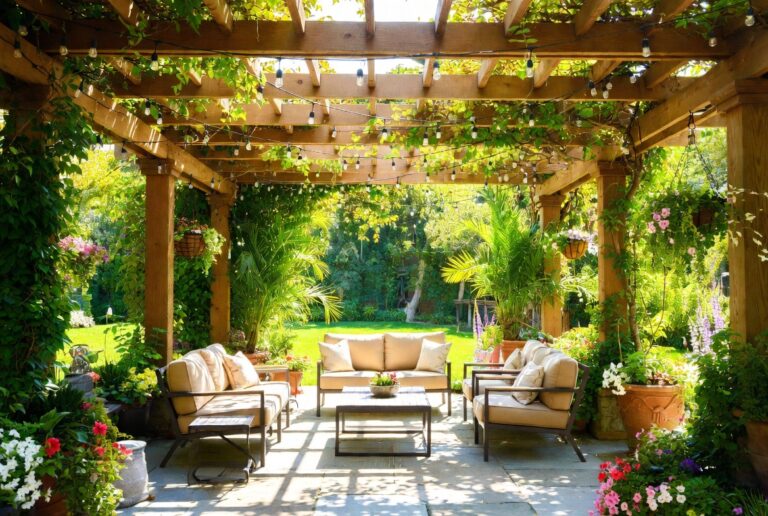
These 20 screened porch ideas cover every aspect of making this space as comfortable, beautiful, and personal as any room indoors.
1. Furnish It Like an Indoor Living Room
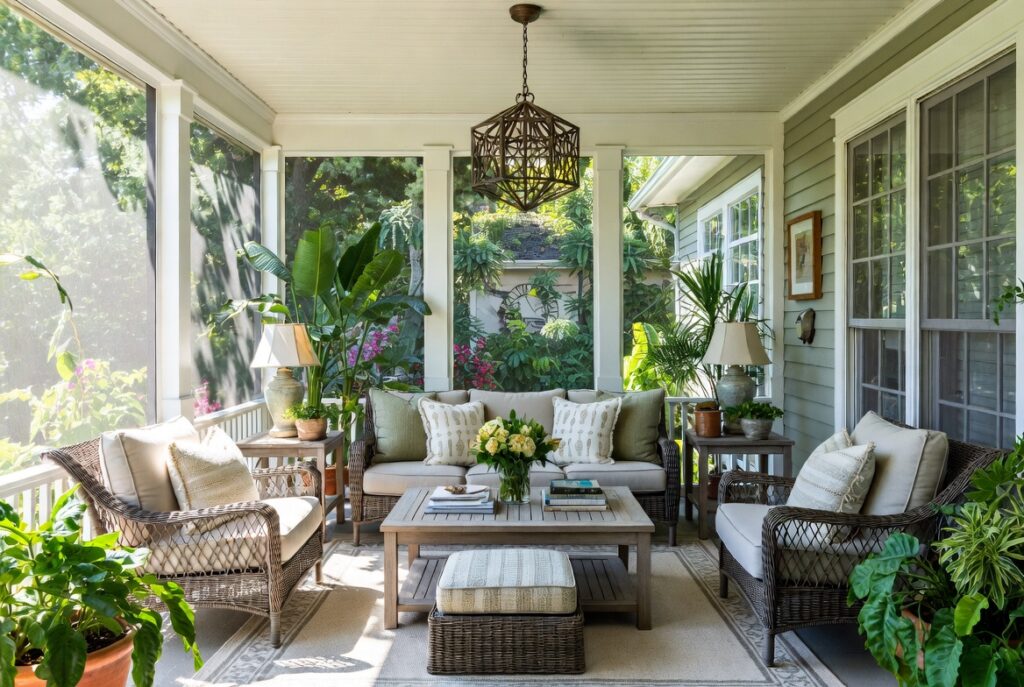
Best for: Any screened porch that currently feels like outdoor furniture in an outdoor space rather than a genuine room
The single most transformative decision in screened porch design is to treat it as a proper room rather than an outdoor area. This means a sofa — not two chairs and a table — a coffee table at the right height, side tables within reach of every seat, and layers of soft furnishing that create genuine comfort. A screened porch furnished like a living room feels like a living room, and gets used like one.
Choose outdoor-rated furniture in styles that would look at home inside — deep sofas with thick cushions, side tables with actual surfaces, and a rug that defines the seating zone. The screen provides enough weather protection that furniture can be more comfort-focused than purely weatherproof.
Smart tip: Include one piece of furniture that would look equally appropriate indoors — a painted side table, a ceramic lamp base, or a linen-covered ottoman. This crossover piece blurs the line between inside and outside and gives the porch its room-like quality.
Mistake to avoid: Furnishing the screened porch with whatever outdoor furniture was surplus from elsewhere in the garden. Mismatched, worn, or purely functional furniture signals that the porch is a secondary space. It deserves the same intentional furnishing choices as any indoor room.
2. Add a Porch Swing or Hanging Chair
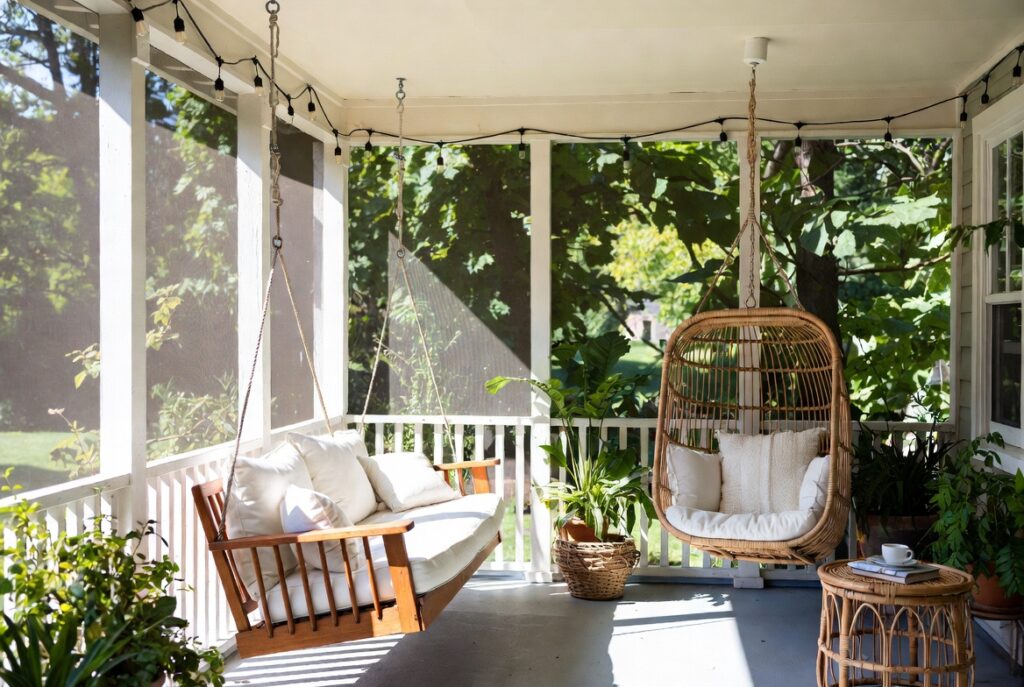
Best for: Any screened porch with adequate ceiling height and structural beams to support hanging furniture
A porch swing or hanging chair is the most characterful single piece of furniture a screened porch can have — it creates movement, a sense of gentle relaxation, and a quality of unhurried ease that static furniture doesn’t provide. Sitting in a slowly swinging porch chair while rain falls outside is one of the small domestic pleasures that makes a home genuinely enjoyable.
Porch swings hang from the ceiling joists and suit a more traditional porch aesthetic; hanging egg chairs or hammock chairs suit a more contemporary or tropical style. Both require secure fixing into structural members — never hang swings or chairs from the screening frame alone.
Smart tip: Position the swing or hanging chair where it faces the best view the porch offers — garden, trees, or sky. The view from a swinging seat is more important than the view from a static one because the gentle motion makes looking outward a natural, restful activity.
Mistake to avoid: Hanging a swing too close to the adjacent wall or furniture. A swing needs clear space in front of and behind it — a minimum of 60cm clearance from any fixed object in the arc of the swing. Insufficient clearance means the swing can’t move freely and becomes a static piece that defeats its purpose.
3. Hang String Lights for Warm Evening Glow
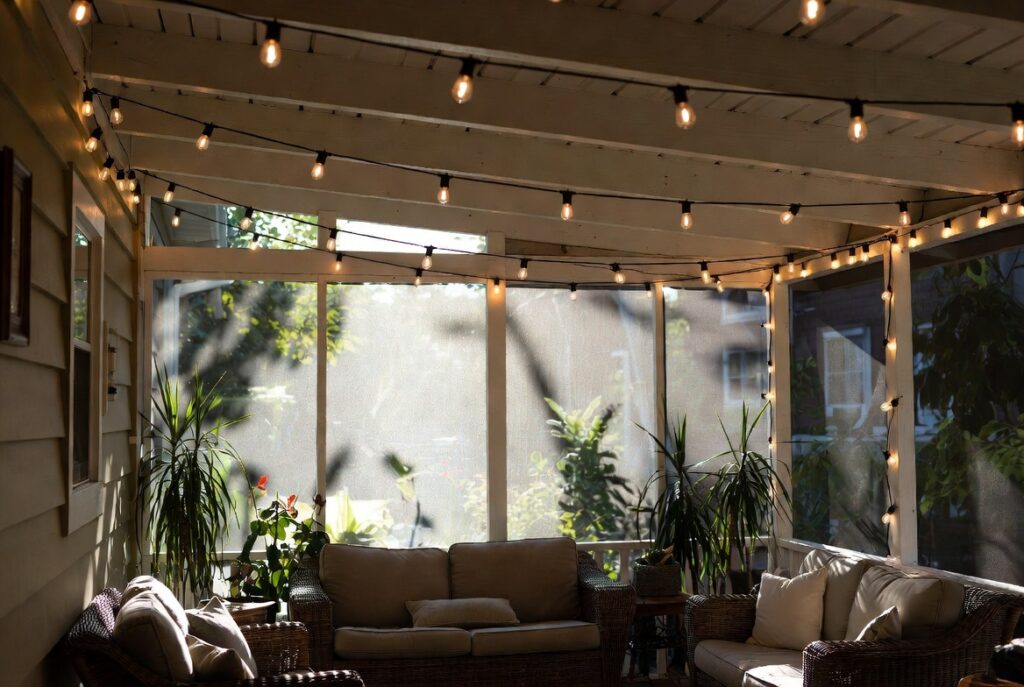
Best for: Any screened porch used in the evenings — string lights are the most impactful single evening accessory
String lights on a screened porch create a quality of evening atmosphere that no other lighting source matches — the warm, distributed glow fills the space softly, makes the surrounding garden feel more present and beautiful, and creates the feeling of being in a lantern-lit room suspended between the house and the night garden.
Drape them across the ceiling in parallel runs, cluster them in the corners, or wind them around the structural posts — any arrangement works as long as the coverage is generous and the bulbs are warm white. Edison-style or globe bulbs at 2700K create the most beautiful warm amber glow.
Smart tip: Put string lights on a dimmer switch rather than a standard on-off control. The ability to adjust the light level — bright enough for conversation and games, dim enough for quiet evenings — makes the porch more versatile and the atmosphere more controllable.
Mistake to avoid: Using cool white or daylight bulbs. On a screened porch, the purpose of string lights is atmosphere and warmth — cool white bulbs create a harsh, clinical quality that completely undermines the cozy, intimate effect you’re creating. Warm white only.
Loving These Ideas? Get the Step-by-Step Guide
Grab the full 5-day eBook and turn these ideas into a finished room.




4. Use an Outdoor Rug to Define the Space
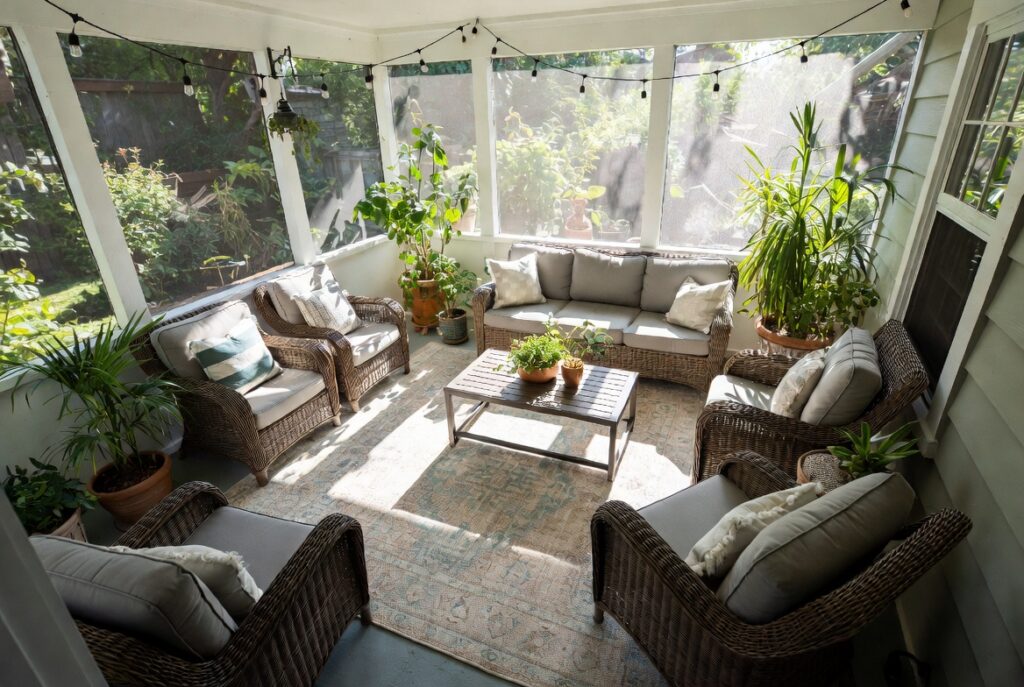
Best for: Screened porches with plain concrete, composite decking, or painted wood floors that need warmth and definition
An outdoor rug is to a screened porch what a rug is to any living room — it defines the seating zone, adds warmth and color, reduces the hard echo of sound on a hard floor, and makes the space feel furnished rather than merely floored. A screened porch without a rug almost always looks unfinished regardless of how well the furniture is chosen.
Choose a rug sized to accommodate all the main furniture pieces — ideally with the front legs of all seating pieces on the rug. Outdoor rugs in natural fiber-look polypropylene or recycled plastic are both weather-resistant and genuinely attractive.
Smart tip: Choose a rug with pattern rather than a plain color for a screened porch — pattern hides the dirt and debris that inevitably accumulates on outdoor surfaces between cleanings, and maintains its appearance better through heavy use than a plain rug of equivalent quality.
Mistake to avoid: Using a rug that’s too small for the furniture arrangement. A rug that only the coffee table sits on — with sofa and chairs on bare floor — creates a disconnected, unanchored appearance. Size up rather than down when choosing a screened porch rug.
5. Fill Every Corner with Potted Plants
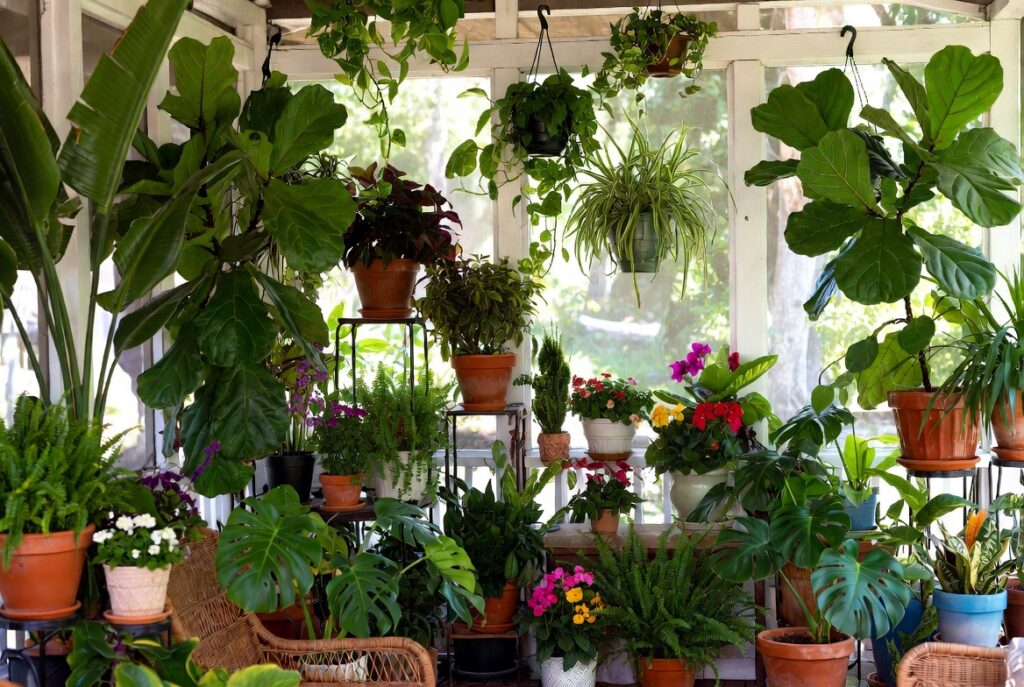
Best for: Any screened porch — plants are the element that most distinctly separates a screened porch from an indoor room
Plants bring the screened porch fully into relationship with the garden it overlooks — they create a living, breathing quality that furniture alone cannot achieve and they make the transition between inside and outside feel natural rather than abrupt. A screened porch generously planted with potted ferns, trailing pothos, peace lilies, and flowering seasonal plants feels like a genuine garden room.
The screened porch environment suits plants that prefer bright indirect light and moderate humidity — ferns, palms, fiddle leaf figs, philodendrons, and peace lilies all thrive in the conditions a screened porch typically provides.
Smart tip: Group plants in clusters of three or five at different heights — a tall floor plant, a medium plant on a stand, and a small plant on a surface — rather than spacing individual plants evenly around the perimeter. Grouped plants create the lush, abundant quality of a proper garden room; evenly spaced individuals look like exhibits.
Mistake to avoid: Choosing plants that drop leaves or flowers heavily onto furniture and rugs. Some plants — gardenias, certain ferns, and seasonal flowering plants — shed significantly when they bloom or when conditions aren’t perfect. On a screened porch where the mess lands on furniture and rugs, heavy-shedding plants require constant cleaning.
6. Install a Ceiling Fan for Year-Round Comfort
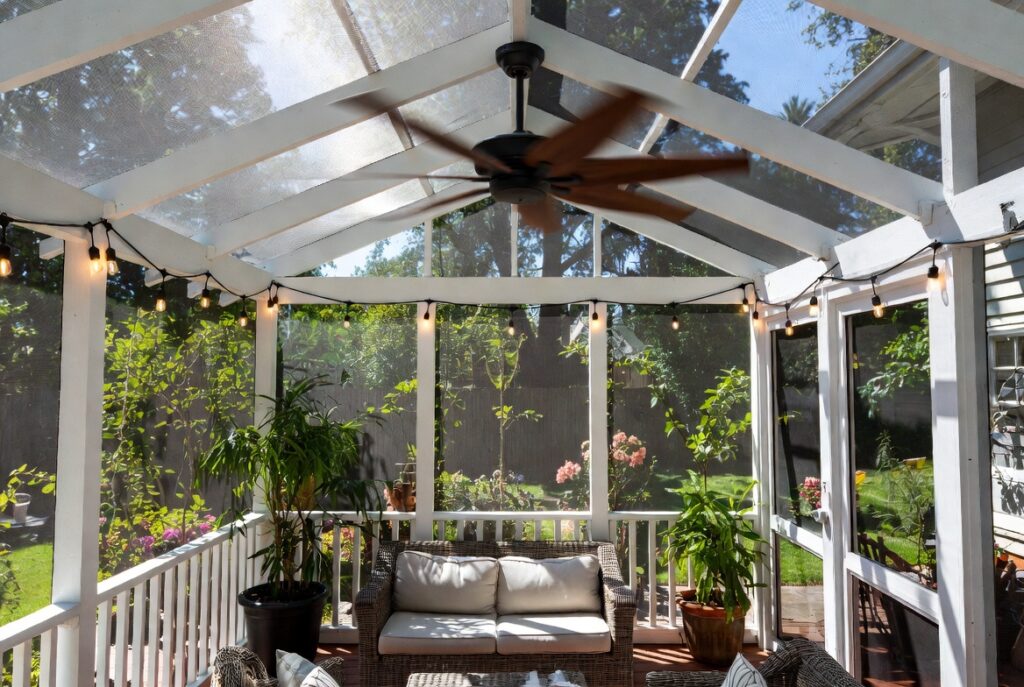
Best for: Screened porches in any climate — ceiling fans improve comfort in both summer and winter
A ceiling fan is the most functional single addition to a screened porch. In summer it moves air and reduces perceived temperature, making the porch comfortable through the warmest weather. In winter, running it in reverse at low speed pushes warm air that has risen to the ceiling back down, extending the season the porch can be comfortably used into cooler months.
Choose an outdoor-rated fan — one specifically designed for damp or outdoor locations, with moisture-resistant motor housing and sealed bearings. Indoor fans in an outdoor or semi-outdoor location will fail quickly and present a safety hazard.
Smart tip: Choose a fan with a light kit integrated into the fixture — this combines two functional elements in one ceiling mounting point and reduces the visual clutter of separate light fittings and fan hardware on a porch ceiling.
Mistake to avoid: Installing a fan with insufficient blade clearance above head height. The minimum safe clearance between fan blades and the floor is 210cm — measure your porch ceiling height before purchasing a fan and confirm adequate clearance with the specific fan model you choose.
7. Create a Screened Porch Dining Area
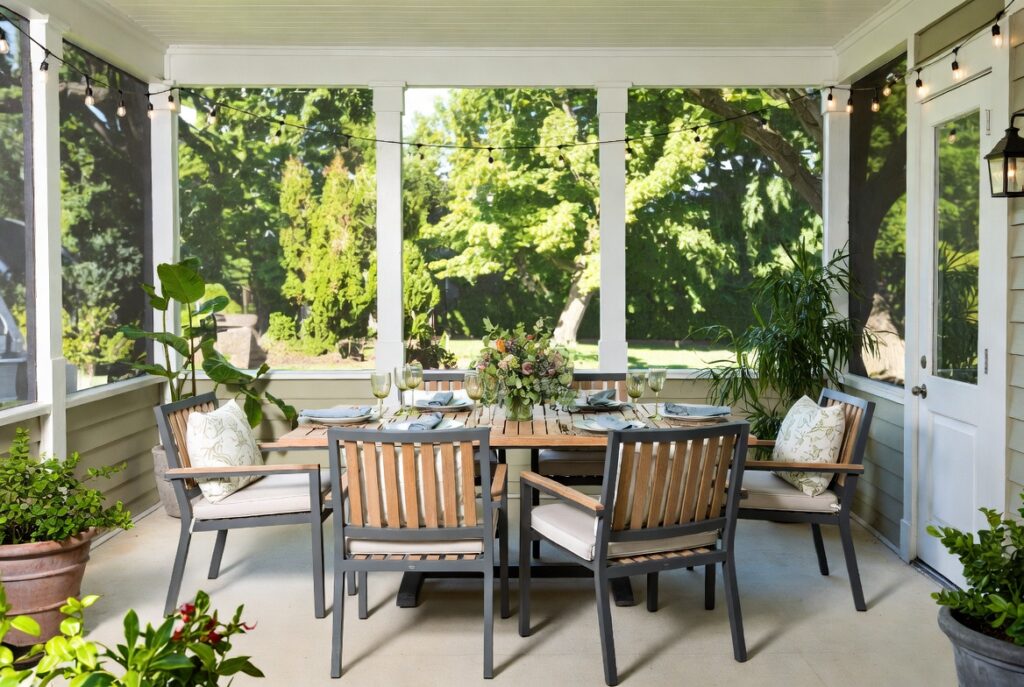
Best for: Screened porches large enough to accommodate a dining table — typically 3m x 3.5m minimum for a four-person arrangement
A screened porch dining area is one of the most enjoyable places to eat in any home — you have the experience of dining outdoors without the insects, wind, and unpredictable weather that make open-air dining less reliable. The sound of the garden, the fresh air, and the garden views create an atmosphere that no indoor dining room can replicate.
Size the dining table proportionally to the porch — allow 90cm of clearance on all sides of the table for comfortable chair movement. A table for four requires approximately 120cm x 80cm; for six, 180cm x 90cm.
Smart tip: Use a round or oval table rather than a rectangular one if the porch proportions allow — round tables fit more comfortably into square or near-square porch spaces, create better conversation among diners, and have no head-of-table dynamics that can feel formal or hierarchical in a relaxed outdoor setting.
Mistake to avoid: Choosing a dining table that dominates the porch at the expense of any other use. If the dining table takes up the entire porch, the space becomes a single-purpose dining room rather than a versatile living space. If size allows, maintain a small seating area alongside the dining zone.
8. Paint the Ceiling Haint Blue
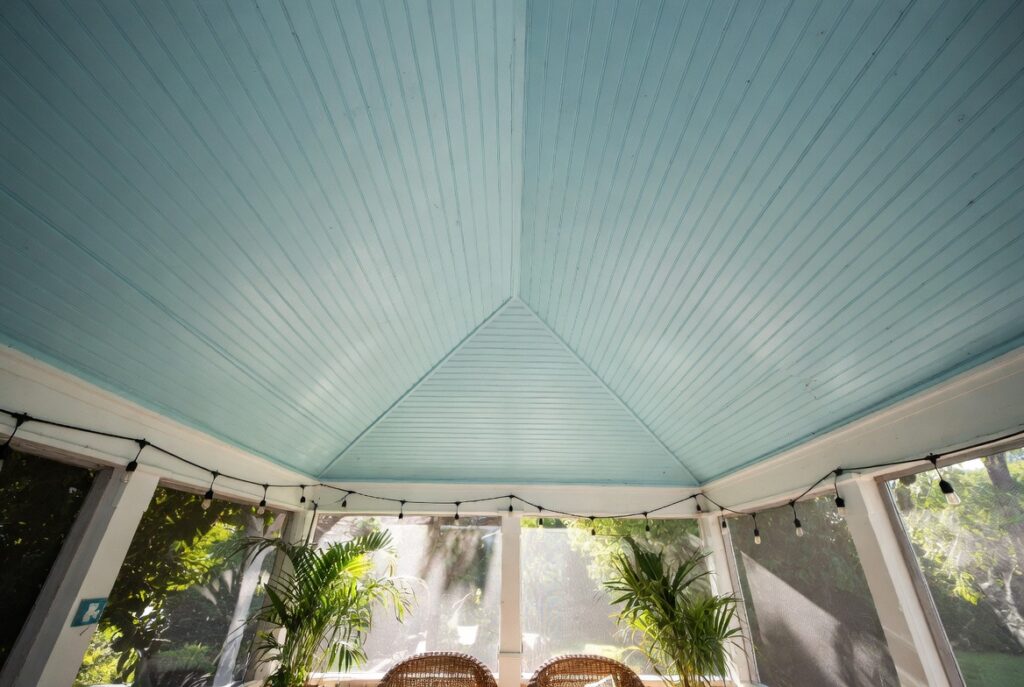
Best for: Traditional, farmhouse, or Southern-style screened porches
Haint blue — a pale, grey-toned blue-green — is the traditional color for porch ceilings in Southern American architecture, where it was historically believed to ward off insects and spirits. Whether or not you subscribe to the folklore, the color has a genuinely beautiful effect on a porch ceiling — it reflects the sky, creates a soft ambient light beneath it, and gives the porch an unmistakable character that a plain white ceiling simply doesn’t have.
The color works because it evokes the sky — a haint blue ceiling makes the porch feel more open, more connected to the outdoors, and more spacious than the same space with a white ceiling.
Smart tip: Extend the haint blue from the ceiling down onto the upper portion of the structural posts — painting the ceiling and the top 30cm of the posts in the same color creates a sky-like effect that makes the ceiling feel higher and the space more open.
Mistake to avoid: Choosing a haint blue that reads as too green or too saturated in your specific light conditions. The traditional haint blue is pale and slightly greyed — vivid teal or bright sky blue creates a very different, less atmospheric effect. Test the color in your specific porch light before committing.
9. Add a Daybed or Outdoor Sofa Bed
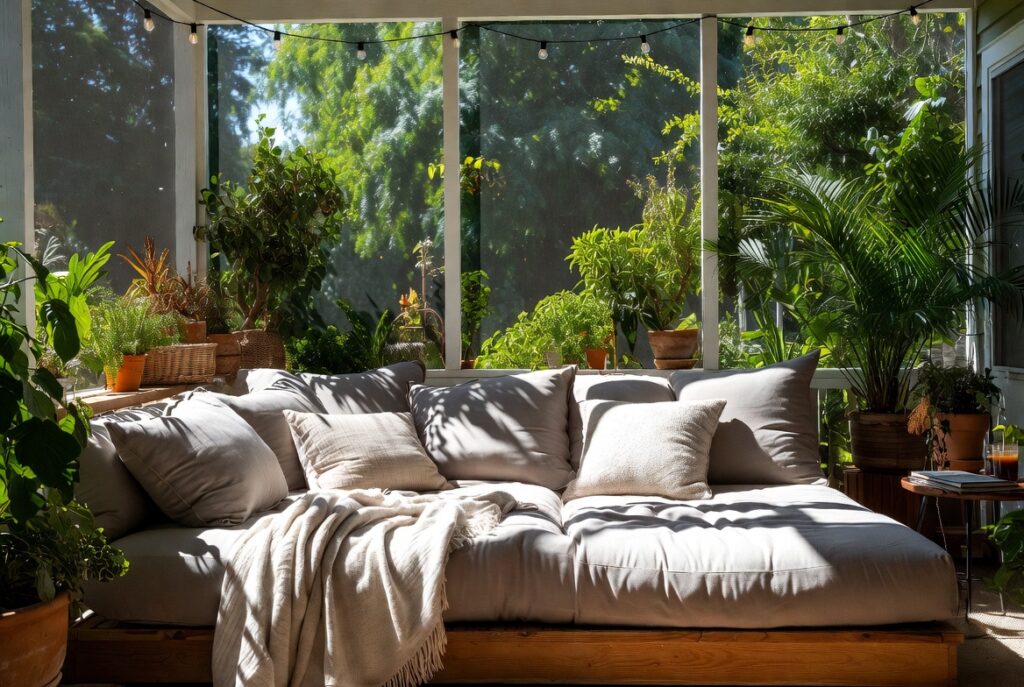
Best for: Screened porches used for relaxation, afternoon naps, or casual lounging rather than primarily dining or entertaining
A daybed on a screened porch is the ultimate relaxation furniture — it provides a surface for lying down fully, reading stretched out, or simply resting in the garden air without being fully outdoors. On a warm afternoon or a rainy morning, a daybed on a screened porch is one of the most restorative places in any home.
Choose a daybed or sofa bed with a thick, comfortable mattress or cushion — the quality of the surface determines how much the daybed is actually used. Outdoor foam cushions in UV-resistant fabric hold up well in the screened porch environment.
Smart tip: Hang a simple canopy or drape a piece of sheer fabric above the daybed — even a lightweight canopy creates a sense of enclosure and privacy that makes the daybed feel like a genuine retreat within the porch rather than just another piece of furniture.
Mistake to avoid: Positioning the daybed where it receives direct afternoon sun through the screen. Even through screening, direct afternoon sun makes lying down hot and uncomfortable. Position the daybed in the shadiest part of the porch, ideally where it receives gentle morning light or dappled shade throughout the day.
10. Decorate with Wicker and Rattan Furniture
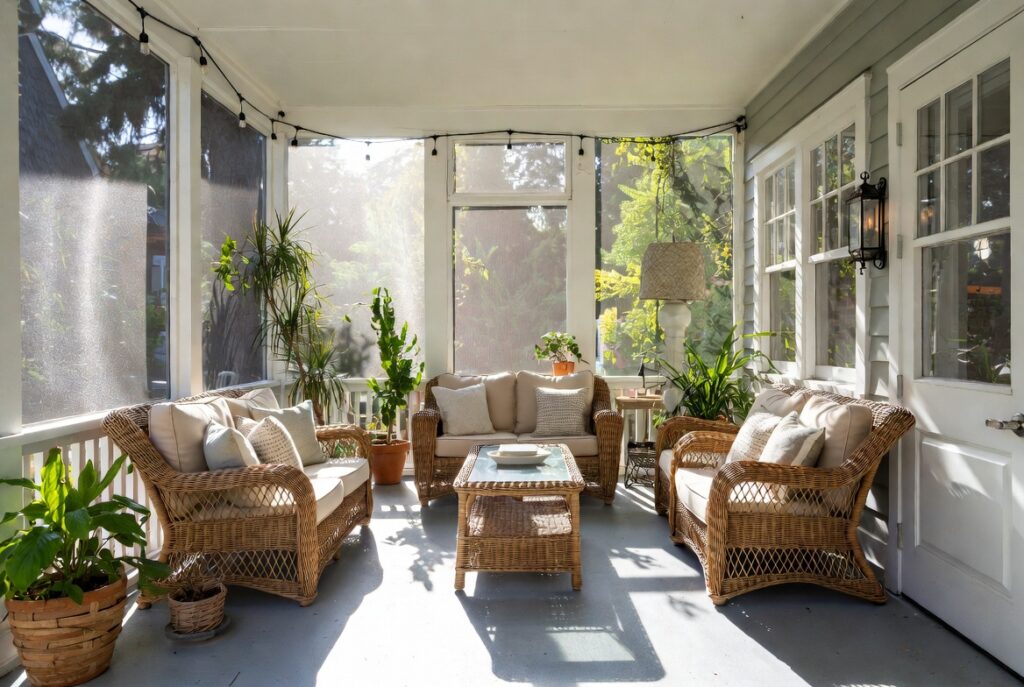
Best for: Any screened porch — wicker and rattan are the materials most closely associated with porch living
Wicker and rattan furniture have an organic warmth and visual lightness that suits screened porch design particularly well — they look natural against garden views, age beautifully, and create the relaxed, slightly vintage quality that makes a screened porch feel like a genuine retreat rather than a showroom. Natural rattan weathers over time to a warm honey color; synthetic wicker maintains its appearance with minimal care.
Natural rattan is beautiful but requires protection from heavy rain and prolonged moisture — it suits screened porches better than open porches because the screening provides meaningful weather protection. Synthetic wicker (resin wicker) is more durable in exposed conditions.
Smart tip: Mix wicker and rattan with one or two pieces in a contrasting material — a painted wood side table, a ceramic garden stool, or a metal floor lamp. The contrast between the organic texture of wicker and a smoother material adds visual interest and prevents the porch from feeling uniformly textured.
Mistake to avoid: Using very dark wicker or rattan in a small screened porch. Dark furniture absorbs light and can make a small porch feel cramped. In smaller spaces, choose lighter honey, natural, or white-washed finishes that reflect light and maintain the sense of openness.
11. Hang Curtains Along the Screen Panels
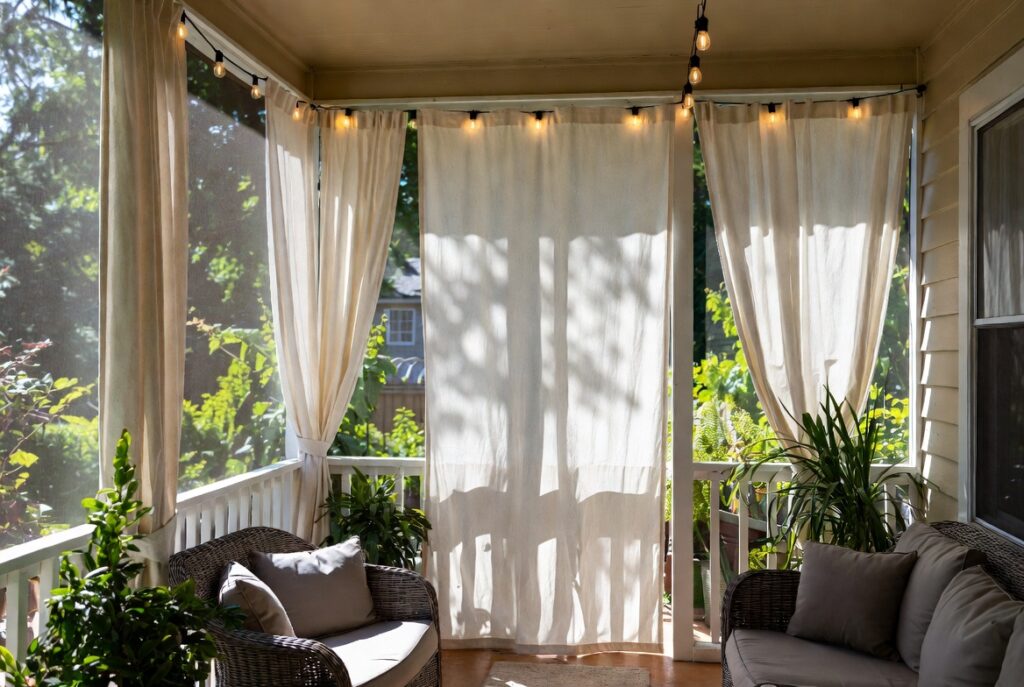
Best for: Screened porches where additional privacy, wind protection, or a cozier atmosphere is desired
Curtains hung inside a screened porch — along the interior face of the screen panels — add a layer of soft texture, color, and privacy that transforms the atmosphere of the space. Drawn partially or fully, they create a more enclosed, intimate feeling; open, they simply add fabric softness and frame the garden view without blocking it.
Use outdoor-rated linen, canvas, or Sunbrella fabric — materials that handle moisture and humidity well and won’t mildew or fade quickly. Natural linen looks beautiful but requires more care; synthetic outdoor fabrics maintain their appearance more reliably.
Smart tip: Hang the curtain rod as high as possible — ideally at ceiling height — and let the curtains pool slightly on the floor. Floor-to-ceiling curtains make the porch feel taller and more room-like, reinforcing the indoor-outdoor quality that is the screened porch’s defining characteristic.
Mistake to avoid: Using curtains that are too heavy for the porch environment. Heavy curtains on a screened porch become damp, difficult to dry, and prone to mildew. Choose lightweight fabrics that move in a breeze and dry quickly after any moisture exposure.
12. Build a Cozy Reading Nook
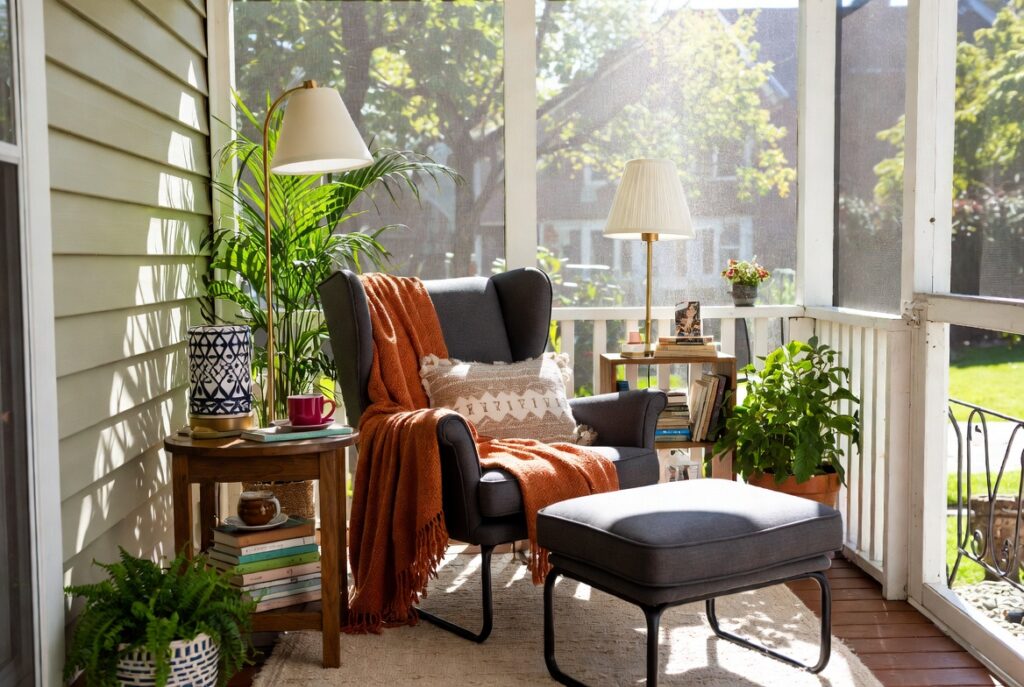
Best for: Screened porches with a corner or alcove that can be dedicated to a quiet, individual activity
A reading nook in a screened porch corner — a comfortable chair or small loveseat, a side table for books and drinks, a floor lamp for evening reading, and a plant or two for company — creates the most perfect reading environment imaginable. The sounds of the garden, the fresh air, and the partial shelter combine to make outdoor reading more comfortable and more pleasurable than reading indoors.
The nook works best when it feels slightly separated from the main seating area — around a corner, slightly recessed, or simply turned to face a different direction. This small degree of separation creates the psychological sense of a private space within the shared porch.
Smart tip: Include a small footstool or ottoman in the reading nook — the ability to put your feet up is what converts a comfortable chair into a genuine reading retreat. A footstool also provides a secondary surface for a drink and a stack of books.
Mistake to avoid: Locating the reading nook in the sunniest part of the porch. Afternoon sun through screening creates glare that makes reading difficult and the space too warm for extended use. Position the reading nook in the shadiest corner, ideally with a view of the garden.
13. Use a Neutral Color Palette for Calm
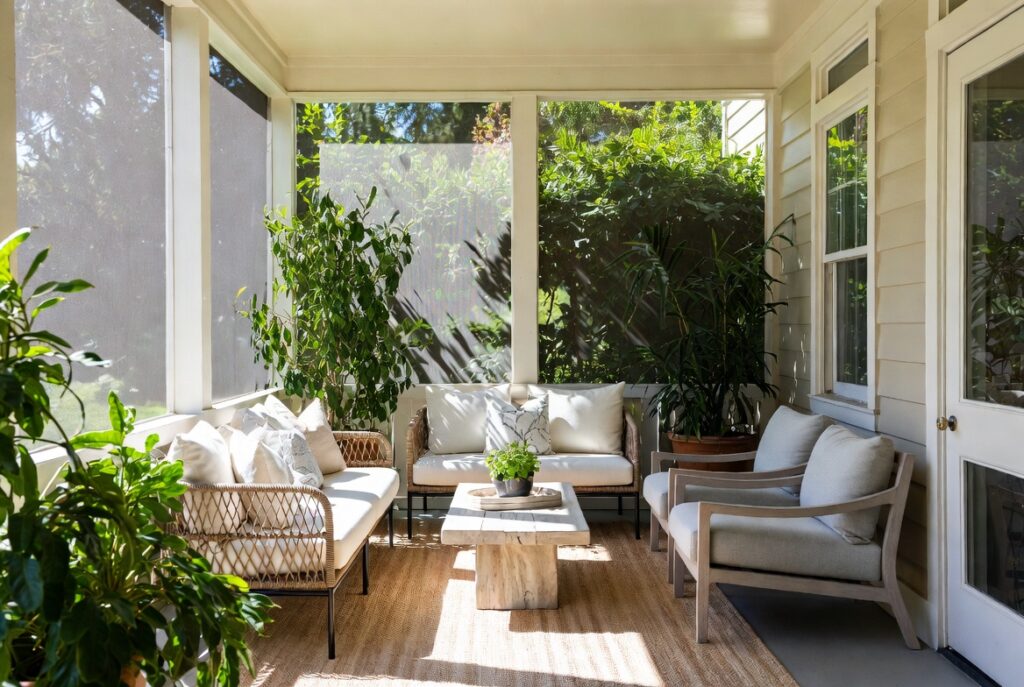
Best for: Screened porches where the primary purpose is relaxation and the garden view is the main decorative feature
A neutral color palette — warm whites, natural linens, soft greiges, and warm wood tones — creates the calmest and most timeless screened porch aesthetic. When the palette is neutral, the garden view through the screen becomes the room’s primary visual feature, and the porch itself becomes a quiet, restful backdrop rather than a competing visual statement.
Neutral porches also photograph beautifully and age gracefully — they look equally appealing with different seasonal planting visible through the screen and don’t date the way bolder color choices can.
Smart tip: Introduce color through living plants rather than furniture or textiles. A neutral porch filled with green plants in terracotta pots has all the warmth and visual interest of a colored scheme but with the additional benefit of the plants’ living quality — something paint and fabric cannot replicate.
Mistake to avoid: Choosing a neutral palette that reads as grey rather than warm. Cool greys on a screened porch feel clinical and cold, particularly in shade. All neutrals should have warm undertones — cream, linen, warm white, and greige — to create the welcoming, restful quality the screened porch requires.
14. Add a Small Water Feature
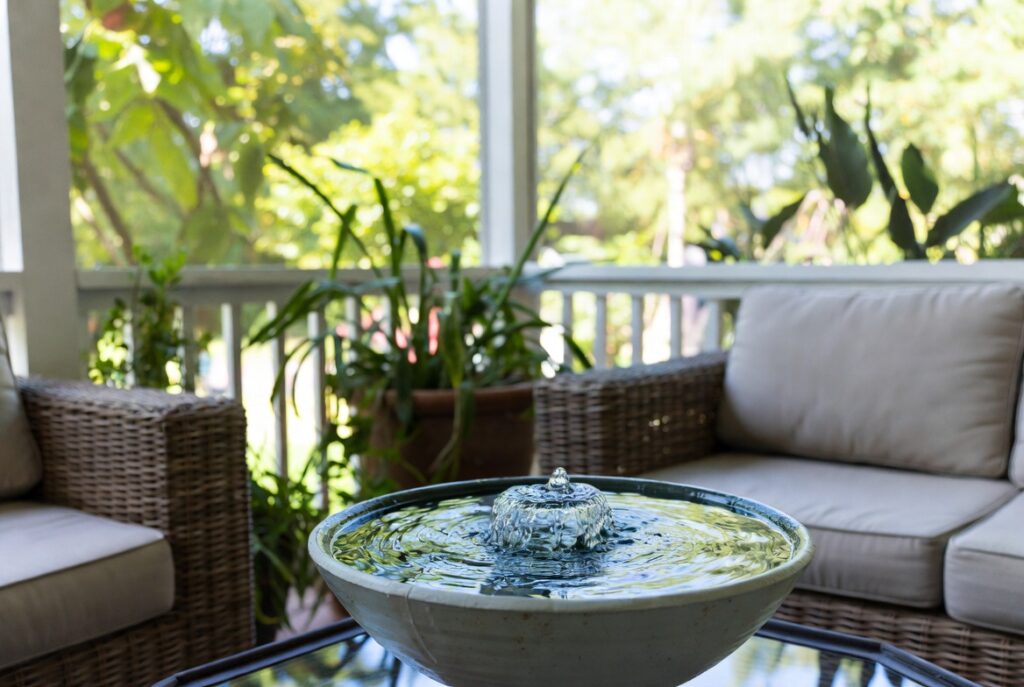
Best for: Screened porches where the sound environment — road noise, neighbor activity — benefits from a natural masking sound
A small tabletop or freestanding water feature on a screened porch introduces the sound of moving water — one of the most universally calming natural sounds — and creates a sensory experience that makes the porch feel more connected to the natural world. Even a modest fountain with a small pump creates enough sound to mask background noise and shift the acoustic atmosphere of the space significantly.
Tabletop fountains are self-contained and require only a nearby power outlet. Freestanding fountains are larger statements that work better in spacious porches. Both benefit from being positioned where the sound reaches the main seating area.
Smart tip: Choose a fountain with an adjustable flow rate — the ideal water sound is audible and pleasant without being loud enough to interfere with conversation. Most tabletop fountains include a simple adjustment; larger freestanding units may require a flow valve on the pump line.
Mistake to avoid: Placing a water feature where its splash or spray can reach furniture, cushions, or electrical fixtures. Even a small fountain creates a zone of moisture around it — position it away from upholstered furniture and ensure no electrical outlets or lighting are within the spray radius.
15. Install a Wood-Burning Fireplace or Stove
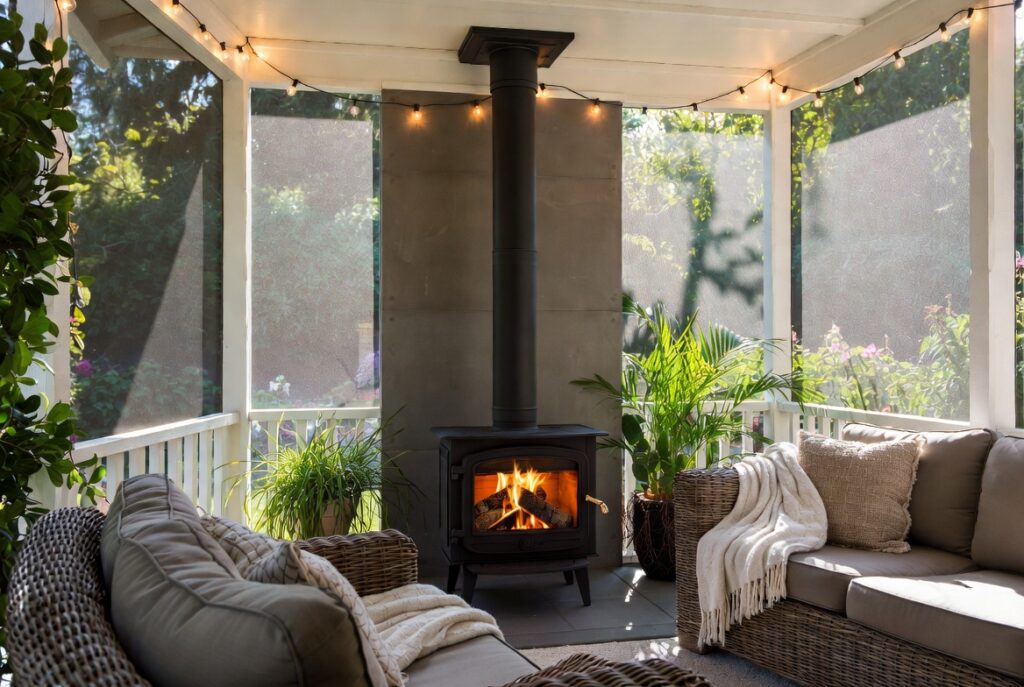
Best for: Screened porches in cooler climates where extending the season into autumn and early winter is the goal
A wood-burning fireplace or stove on a screened porch is the most significant single investment in extending the seasonal usefulness of the space — it allows the porch to be comfortably used well into autumn and on cool spring evenings when an unheated porch would be too cold. The fireplace also creates a genuine focal point and the most atmospheric evening environment possible.
A proper masonry fireplace requires planning and professional installation but creates a permanent, beautiful feature. A freestanding cast-iron stove is a more affordable alternative that can be installed more easily and provides excellent heat output for a screened porch space.
Smart tip: Position the fireplace or stove on the wall opposite the main seating arrangement — the seating faces the fire, which becomes the natural focal point of the porch in the same way it would be in an indoor living room.
Mistake to avoid: Installing any fuel-burning heating appliance in a screened porch without confirming adequate ventilation. While screened porches are not sealed spaces, a large fire in a small porch can accumulate smoke and carbon monoxide — particularly if curtains or blinds are drawn. Ensure there is always clear ventilation above the fire level.
16. Layer Throw Pillows and Blankets
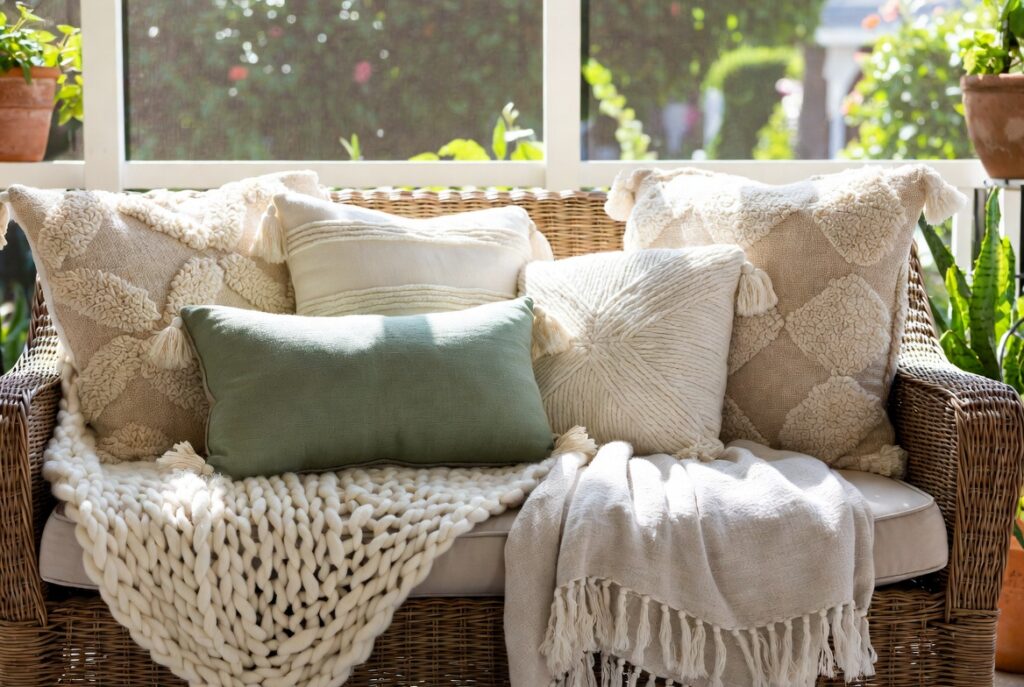
Best for: Any screened porch — layered textiles are the fastest and most affordable way to add coziness
The layering of throw pillows and blankets on a screened porch sofa and chairs creates the tactile warmth that transforms a space from merely furnished to genuinely cozy. Cushions in different sizes, throws in different weights, and textures that invite touch — woven cotton, knitted wool, soft linen — make the porch seating feel inviting in a way that plain, uncushioned furniture never does.
Use outdoor-rated cushion covers for anything likely to get damp — Sunbrella and similar outdoor fabrics resist moisture and UV well. Throws can be indoor-quality if they’re brought in during rain; outdoor-rated if they’ll be left out regularly.
Smart tip: Store throws and extra cushions in a weatherproof basket or ottoman on the porch itself — accessible without going inside but protected from rain. This keeps the cozy layering materials where they’re actually used rather than disappearing inside the house and never making it back out.
Mistake to avoid: Using too many different patterns in the same space. Three or more competing patterns — striped cushions, floral throws, and a patterned rug — create visual noise that works against the calm atmosphere a screened porch is meant to provide. Keep patterns to one or two and use solid colors for the rest.
17. Create a Bar or Beverage Station
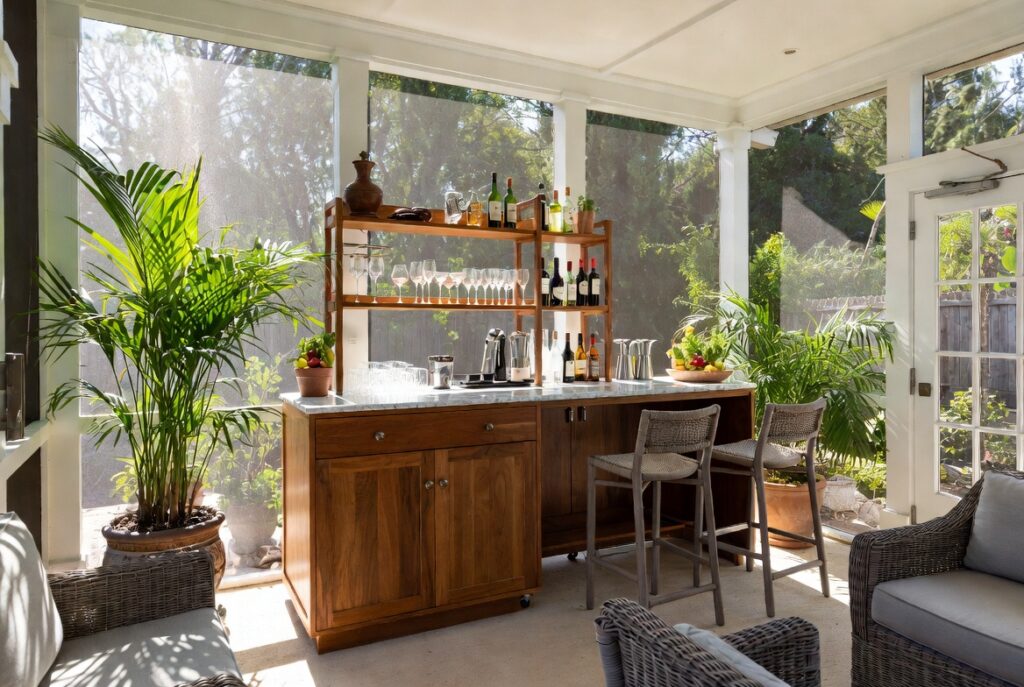
Best for: Screened porches used for entertaining — a dedicated drinks station removes the need to go inside for every refill
A small bar cart, a dedicated side table, or a built-in bar cabinet on the screened porch creates a drinks station that makes the space more self-sufficient and more genuinely hospitable. It removes the repeated journey inside for glasses, ice, and refills that interrupts the relaxed flow of outdoor entertaining.
Even a simple bar cart with a tray, a few glasses, a small ice bucket, and a selection of drinks creates the feeling of a fully equipped outdoor room. A more permanent built-in station with a small wine fridge elevates the entertainment capability significantly.
Smart tip: Include a small lamp on or near the bar station — a well-lit drinks area makes evening entertaining easier and creates an additional warm light source that adds to the overall atmosphere of the porch after dark.
Mistake to avoid: Positioning the bar station where it creates a bottleneck in the porch’s main circulation path. People gathering around a drinks station need space to stand, pour, and move — ensure at least 90cm of clear space in front of the bar area for comfortable use during entertaining.
18. Use Shiplap or Tongue-and-Groove Walls
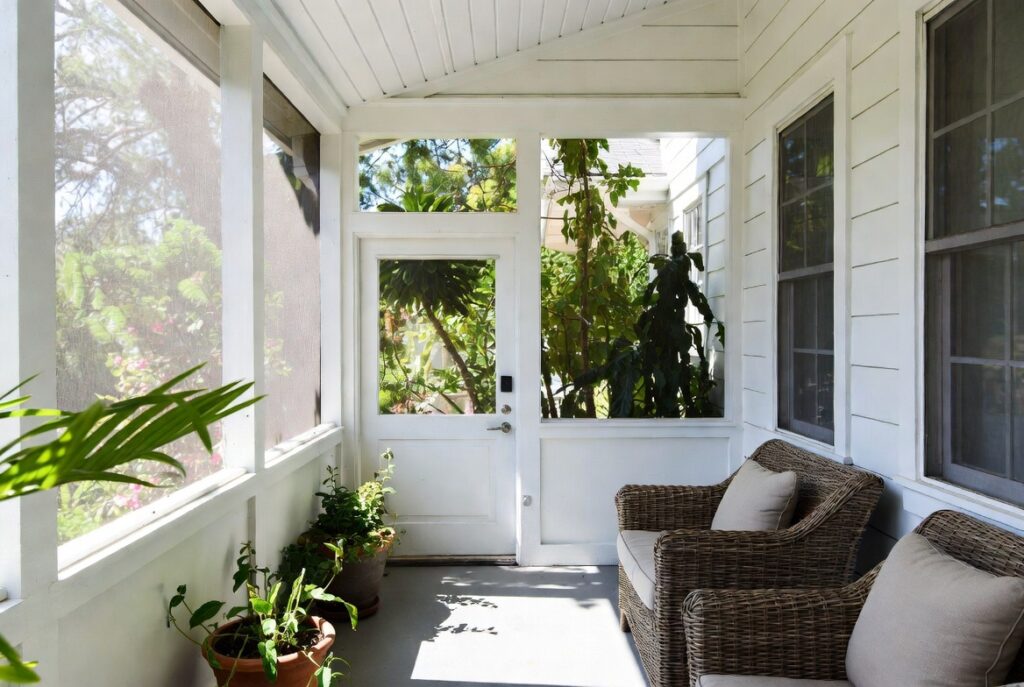
Best for: Screened porches with plain drywall or unfinished wall sections that feel incomplete or too interior-like
Shiplap or tongue-and-groove timber cladding on the lower portion of screened porch walls — below the screen panels — creates warmth, character, and a quality of craftsmanship that makes the porch feel genuinely designed rather than simply enclosed. The natural timber texture bridges the gap between the house interior and the garden exterior beautifully.
White-painted shiplap creates a classic, clean farmhouse aesthetic; natural or stained timber creates a warmer, more rustic quality. Either suits a screened porch environment well, as the boarding is protected from direct weather by the roof and screening above.
Smart tip: Run the shiplap horizontally rather than vertically — horizontal boarding makes the porch feel wider and more expansive, which suits the typical proportions of a screened porch better than vertical boarding, which emphasizes height at the expense of perceived width.
Mistake to avoid: Using shiplap on every wall surface including the ceiling. All-over shiplap can feel overwhelming in a small porch space. Use it on the lower walls and leave the ceiling in a clean painted finish — the contrast between the textured lower walls and the clean ceiling is more visually interesting than unbroken boarding throughout.
19. Extend the Season with a Space Heater
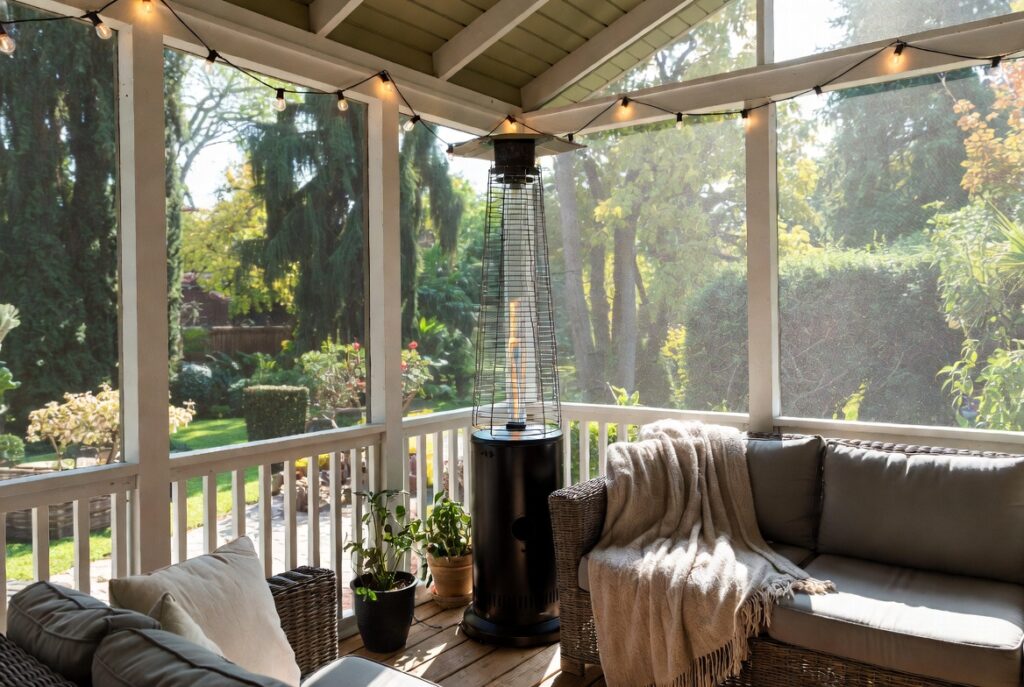
Best for: Screened porches in temperate or cool climates where the unheated porch season is limited
An outdoor-rated space heater — electric infrared or propane — extends the usable season of a screened porch into the cooler months without the installation requirements of a permanent fireplace. Infrared heaters provide instant radiant warmth that heats people and surfaces directly rather than the air; propane heaters provide more heat output and suit larger porches.
Electric infrared heaters mounted to the ceiling or wall are the most convenient option for a screened porch — they take up no floor space, are out of the way of furniture arrangement, and are controlled by a wall switch or remote.
Smart tip: Install the ceiling heater directly above the main seating area rather than in the center of the porch. Radiant heat works best when it’s aimed at the people using the space — a heater positioned over the seating makes the sitting area warm while leaving the rest of the porch at ambient temperature.
Mistake to avoid: Using an indoor electric heater outdoors. Indoor heaters are not rated for the moisture and temperature variation of outdoor conditions, present a significant safety risk, and will fail quickly. Always use heaters specifically rated for outdoor use.
20. How to Design a Screened Porch from Scratch
Best for: Anyone planning a new screened porch addition or a complete renovation of an existing one
Designing a screened porch from scratch begins with the most fundamental question: what is this space primarily for? A porch designed primarily for dining has different size, orientation, and furniture requirements than one designed for lounging, reading, or entertaining. Define the primary use first — everything else follows from it.
Size is the most commonly underestimated element. A porch that feels adequate when empty feels cramped when furnished. For a lounging porch with a sofa, two chairs, and a coffee table, budget a minimum of 3m x 4m. For a combined dining and lounging porch, 4m x 5m or larger. The incremental cost of building slightly larger is always less than the cost of rebuilding a porch that proves too small.
Consider orientation carefully. A porch facing west receives afternoon sun and wonderful sunset light but can become too hot in summer afternoons. A porch facing east catches morning sun and stays cooler in the afternoon. A porch facing north receives the least direct sun — ideal in hot climates, potentially too shaded in cooler ones.
Smart tip: Visit completed screened porches before finalizing your design — neighbors, show homes, or design studio examples. Seeing actual spaces at scale gives you a far more accurate sense of proportion, ceiling height, and furniture fit than any floor plan drawing. One site visit is worth dozens of planning hours.
Mistake to avoid: Designing the porch without considering its visual relationship to the interior rooms it connects to. A screened porch visible from the kitchen, dining room, or living room needs to look good from inside the house as well as from within the porch itself — the view into the porch from inside is part of the daily living experience of the home.
Before You Start
- Check building permits. Screened porches typically require permits — contact your local authority before beginning any construction.
- Consider drainage. Ensure the porch floor slopes slightly away from the house to prevent water pooling during heavy rain.
- Plan electrical early. Outlets, lighting, and fan wiring are far easier to install during construction than to add afterward. Plan for more circuits than you think you need.
- Choose screen mesh carefully. Fiberglass mesh is the most common and most affordable; aluminum mesh is more durable; no-see-um mesh has finer weave that excludes tiny insects but reduces airflow slightly.
Conclusion
A screened porch, designed and furnished with the same care as an indoor room, becomes one of the most used and most loved spaces in any home. It offers something that no other room provides — the experience of being genuinely outside, in the air and the garden, without the limitations that make open outdoor spaces seasonal and weather-dependent. The investment in getting it right — the right furniture, the right lighting, the right plants, the right details — pays back every time you sit down in it.
outdoor living space • cozy home decor • outdoor living room ideas • cozy room decor • home decor ideas • outdoor patio ideas • backyard ideas
Continue Your Home Transformation
Explore the full collection of step-by-step eBooks and get the guide that fits the room you're working on.





2 Comments