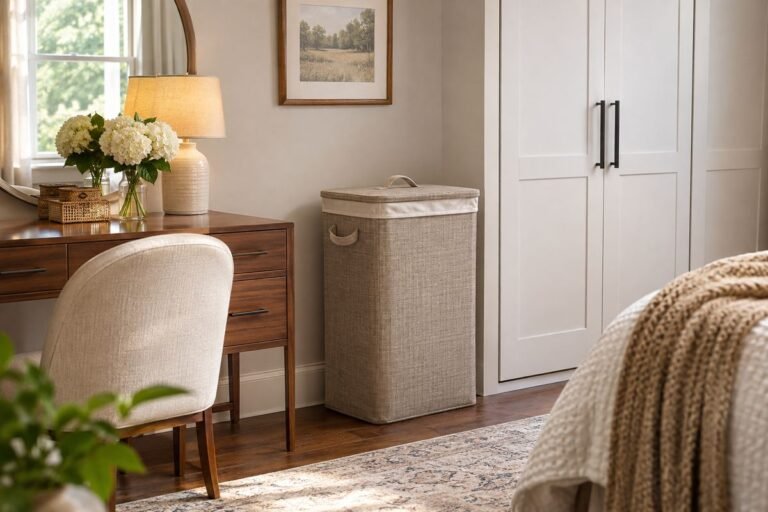
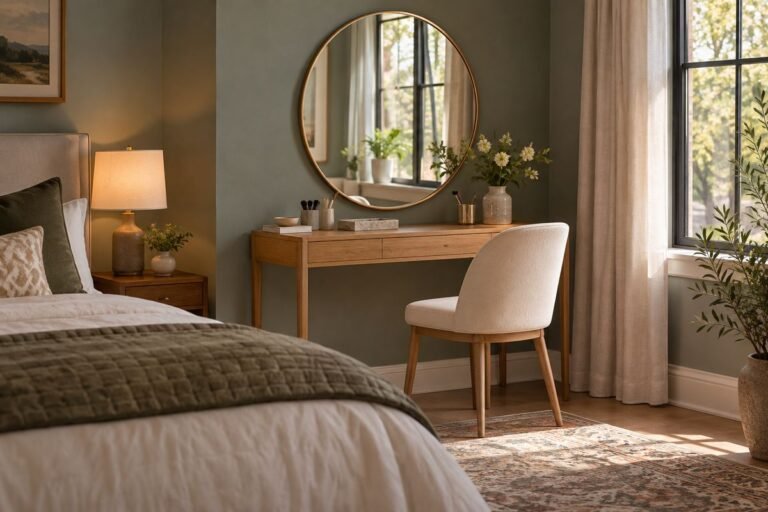
Bedroom floor mirror ideas should begin with the whole mirror, including the support behind it and the place where you will stand. A narrow glass panel can still have a deep base. Choose a useful dressing position before treating the frame as another decorative object.
Compare the mirror with the wardrobe routine, room doors, drawers and the view it reflects. Check the actual product’s intended position, support and fixing requirements before planning the arrangement. A mirror photographed against a wall is not proof that it can be left loose there.
These 25 original concepts focus on bedroom dressing mirrors with complete suitable supports or the fixing required for the exact product. They are design illustrations, not installation diagrams, tested product reviews or evidence of hidden fastenings. Use the manufacturer’s instructions and appropriate installation help for the actual mirror, wall and household.
The images are original AI-generated decor concepts, not installation diagrams or photographs of completed client projects.
Browse These 25 Bedroom Floor Mirror Ideas
Jump to an idea
- Begin bedroom floor mirror ideas with the complete support
- Use a pale wood frame beside quiet natural furniture
- Let a darker wood frame become one warm accent
- Use a slim dark frame to define the glass
- Choose a softly rounded frame for a rectangular room
- Compare an oval shape through the actual dressing view
- Use a broader frame when the room needs a stronger outline
- Choose a narrower mirror only when the view still works
- Compare a wider mirror with the room it reflects
- Use an arched top as one controlled shape
- Place the mirror beside the wardrobe sequence
- Keep dresser drawers separate from the mirror footprint
- Compare side window light through the dressing view
- Reflect a quiet wall when the room is already busy
- Give a patterned wall a simpler mirror frame
- Let paneling remain a backdrop rather than an obstacle
- Keep a pale frame quiet in a low-contrast room
- Give a dark wall one clear frame relationship
- Plan a shared mirror position through both routines
- Keep a dressing bench separate from the mirror base
- Use a nearby chair only when the room can serve both
- Choose an integrated clothes rail from the exact product design
- Keep the complete base on an appropriate even surface
- Review the reflection with the bedroom’s evening light
- Finish bedroom floor mirror ideas with a clear dressing reset
Test bedroom floor mirror ideas through the whole dressing routine
Record the mirror’s overall width, height and full supported depth, including any rear leg or rail. Map its intended position and the place you will stand, then check room-door movement, wardrobe access and open drawers. Compare the reflected view in daylight and after dark. Choose the support and fixing arrangement from the exact product documents rather than recreating a concept photograph.
| What the room needs | Detail to compare | Practical check |
|---|---|---|
| A compact dressing position | A mirror with a suitable complete footprint | The stand and standing place both fit |
| Wardrobe access nearby | A position outside the opening movement | Use the wardrobe and mirror in the normal sequence |
| A quiet bedroom view | A deliberate reflected wall or room detail | Look from the dressing place and the bed |
| A strong frame accent | One material connected to the room | Compare the frame with furniture and bedding |
| Darker morning use | Suitable existing room light | Check reflections and glare after dark |
| A floor-supported tilted design | The exact permitted fixing arrangement | Follow the manufacturer’s anchoring requirements |
| A mirror with an integrated clothes rail | The product’s complete use and support | Check the loaded arrangement and access behind it |
A floor mirror’s listed depth can be significant
IKEA lists the IKORNNES 905.240.42 floor mirror as 20½ inches wide, 65¾ inches high and 20½ inches deep. Its rear clothes-hanging feature is part of that product’s intended design. The dimensions illustrate why a standing mirror needs more planning than the glass width alone; they are not a universal size recommendation or evidence that a different stand can be adjusted to the same footprint.
A tilted floor position can still require anchoring
For the HOVET 405.071.96 mirror, IKEA permits a wall-hung position or a floor position tilted against and anchored to the wall. Its safety guidance requires the enclosed fittings when it stands on the floor and suitable fasteners for the actual wall material. Do not generalize that arrangement to other mirrors or substitute a loose lean for the specified fixing. Consult the current exact product instructions.
Make a mirror-position comparison card
For each proposed position, note the exact mirror, complete supported dimensions, permitted setup, nearby openings, standing place and view reflected by day and night. Record one useful reason to keep or reject the position before moving or installing the actual mirror. This turns an attractive reference image into a clear brief for selecting the right product and arranging the room.
1. Begin bedroom floor mirror ideas with the complete support
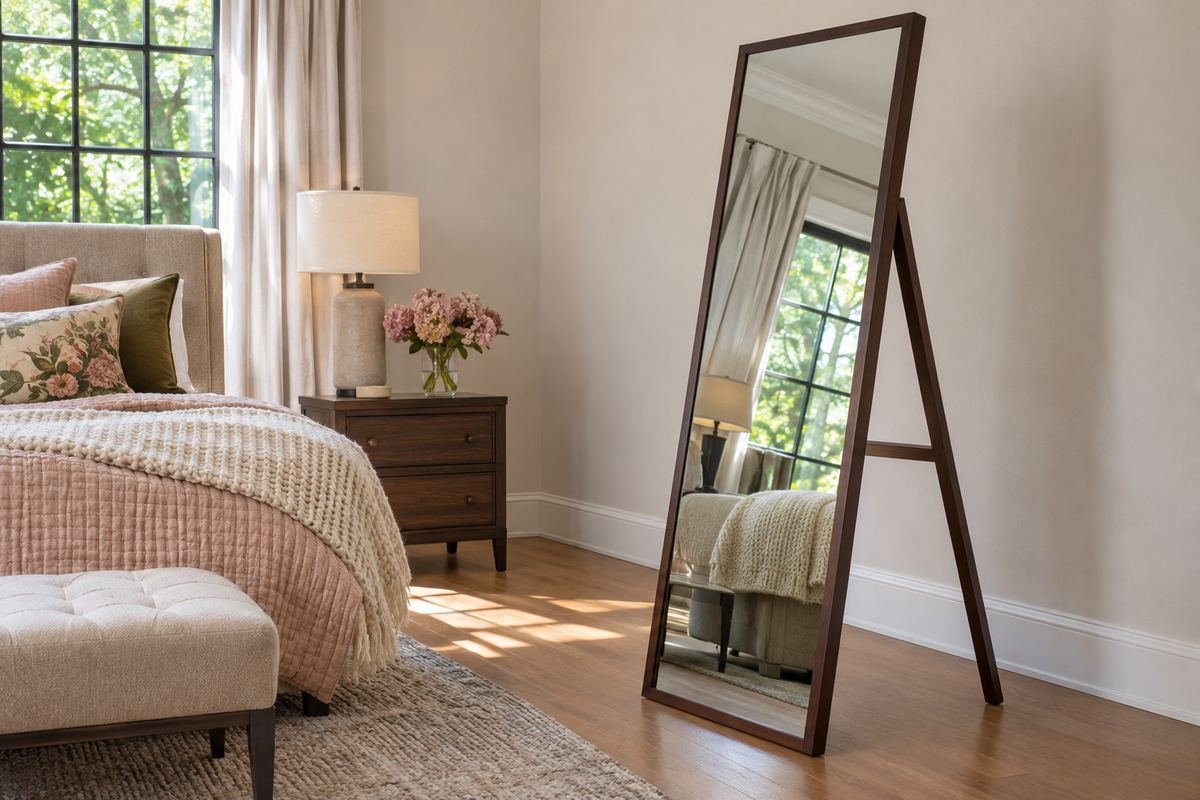
A mirror’s rear leg, base or other support is part of the object you are placing. Map its full intended footprint before choosing the corner or wall. Keep the support as the manufacturer specifies rather than folding it closer to the glass simply to fit the room.
Compare the whole arrangement with the standing place used for dressing. A mirror that occupies a narrow strip at the front may extend into a route behind it. Choose another position or a different suitable product when the complete footprint does not work.
Practical tip: Measure the support as well as the visible frame.
2. Use a pale wood frame beside quiet natural furniture
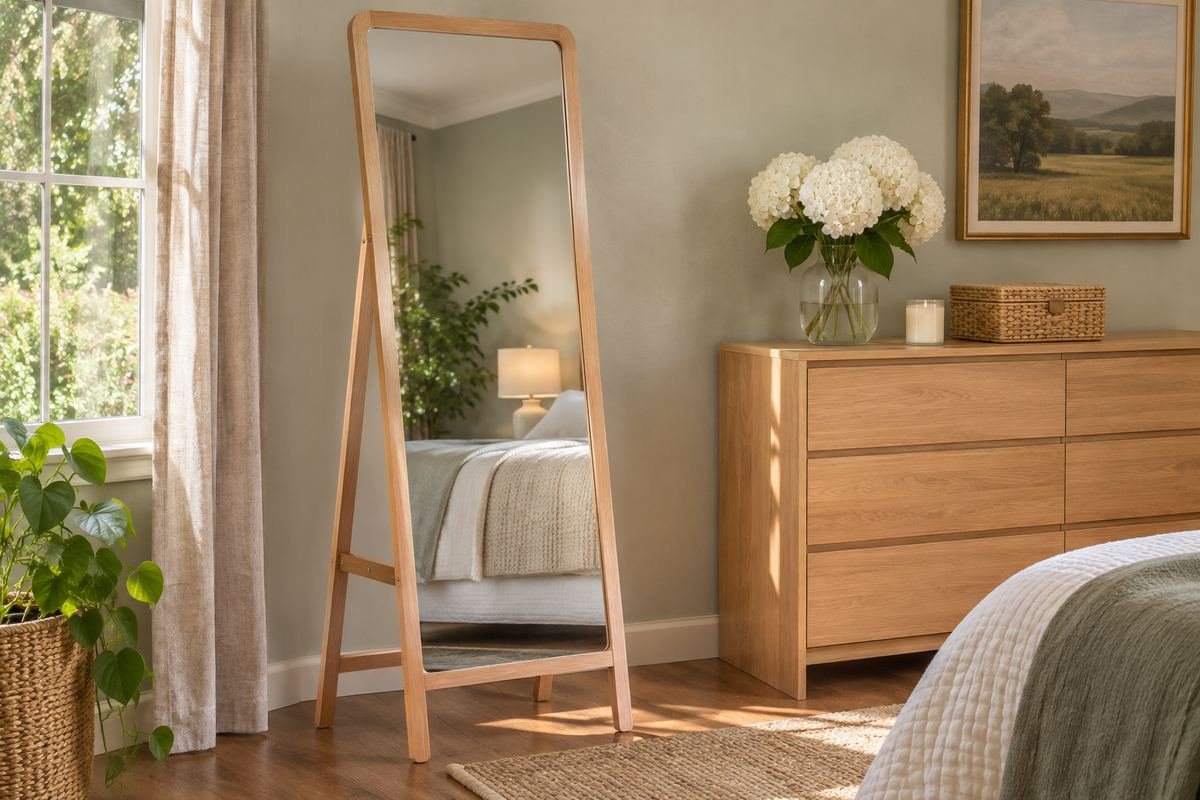
A pale wood frame can connect a dressing mirror to simple bedside furniture or a wardrobe finish. Compare the actual undertone and grain beside the room’s existing materials. The mirror does not need to match every timber surface exactly.
Keep the surrounding wall quiet while judging the frame, since the reflection adds another layer of pattern. A restrained natural frame can be enough decoration when the reflected view is considered. Choose the complete supported product before refining those material relationships.
Practical tip: Compare the wood beside the room’s real finishes.
3. Let a darker wood frame become one warm accent
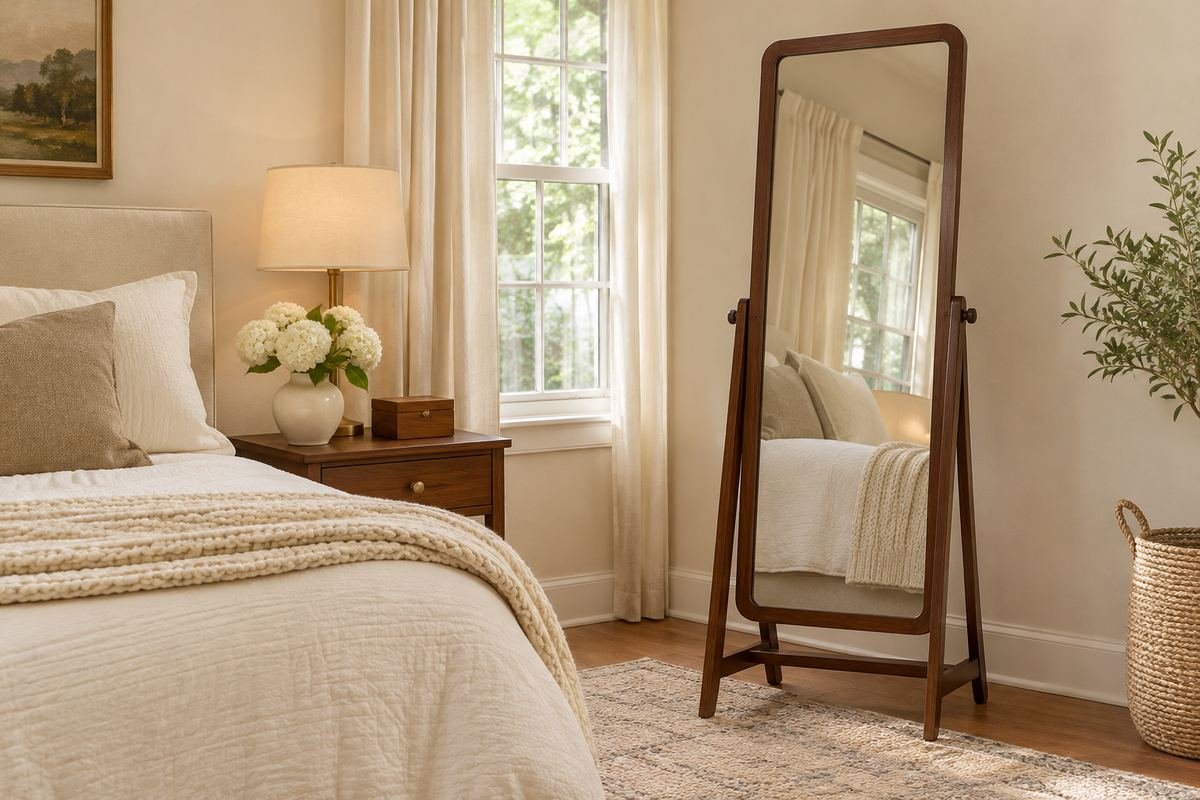
A dark wood frame can give a pale bedroom a defined dressing feature without changing the whole furniture set. Connect it to one existing warm detail, such as a small table or a textile tone. Keep the number of competing wood finishes deliberate.
Judge the mirror with the reflected wall as well as its front frame. If both become visually busy, simplify the surrounding objects before adding another accent. The darker border should clarify the arrangement while the support and standing space remain practical.
Practical tip: Let one dark wood detail repeat elsewhere.
4. Use a slim dark frame to define the glass
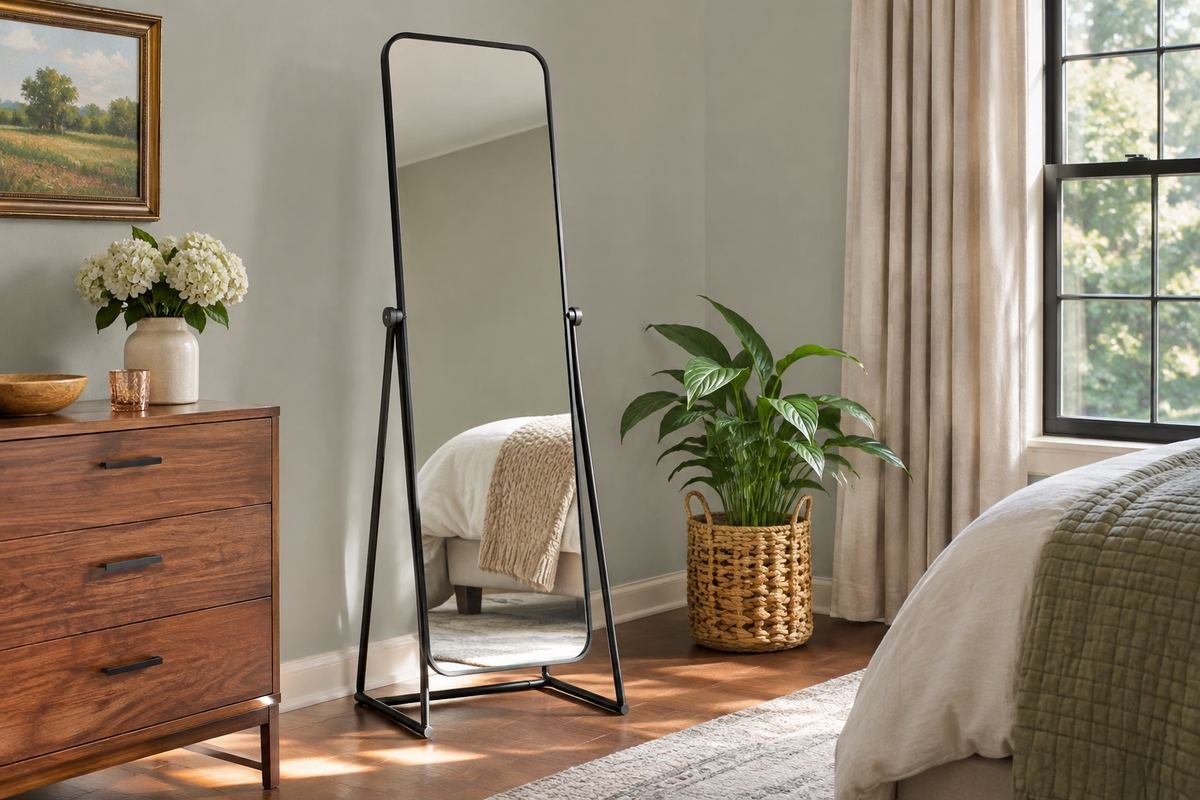
A narrow dark frame can make the mirror’s edge precise in a bedroom with simple furniture. Compare the visible border with existing hardware or a lamp finish rather than introducing several different metals. The reflected scene should remain the main view.
Check the entire frame and support dimensions, because a slim visual outline does not establish a small floor footprint. Keep the ordinary dressing area clear and compare the mirror at the actual distance from which it will be used.
Practical tip: Do not confuse a thin border with a shallow stand.
5. Choose a softly rounded frame for a rectangular room
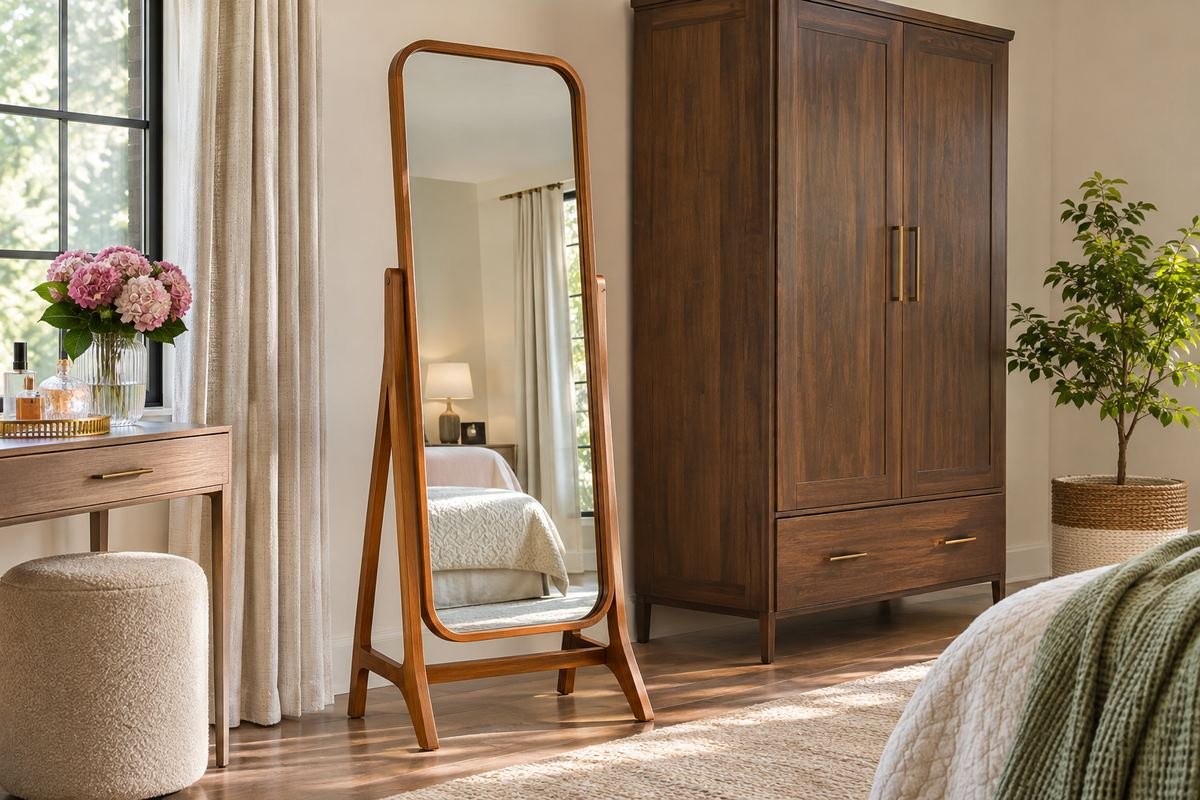
A rounded frame can soften the outline of a dressing mirror beside straight wardrobe doors or a plain rectangular dresser. Compare its shape with the room’s other curves so the detail feels intentional. One repeated curve may be enough.
Check the useful glass area rather than measuring only the outer frame. A curved border can reduce the view near the corners. Choose a shape that serves the dressing task and has a complete appropriate support, then refine the surrounding wall arrangement.
Practical tip: Compare useful reflection area inside the frame.
6. Compare an oval shape through the actual dressing view
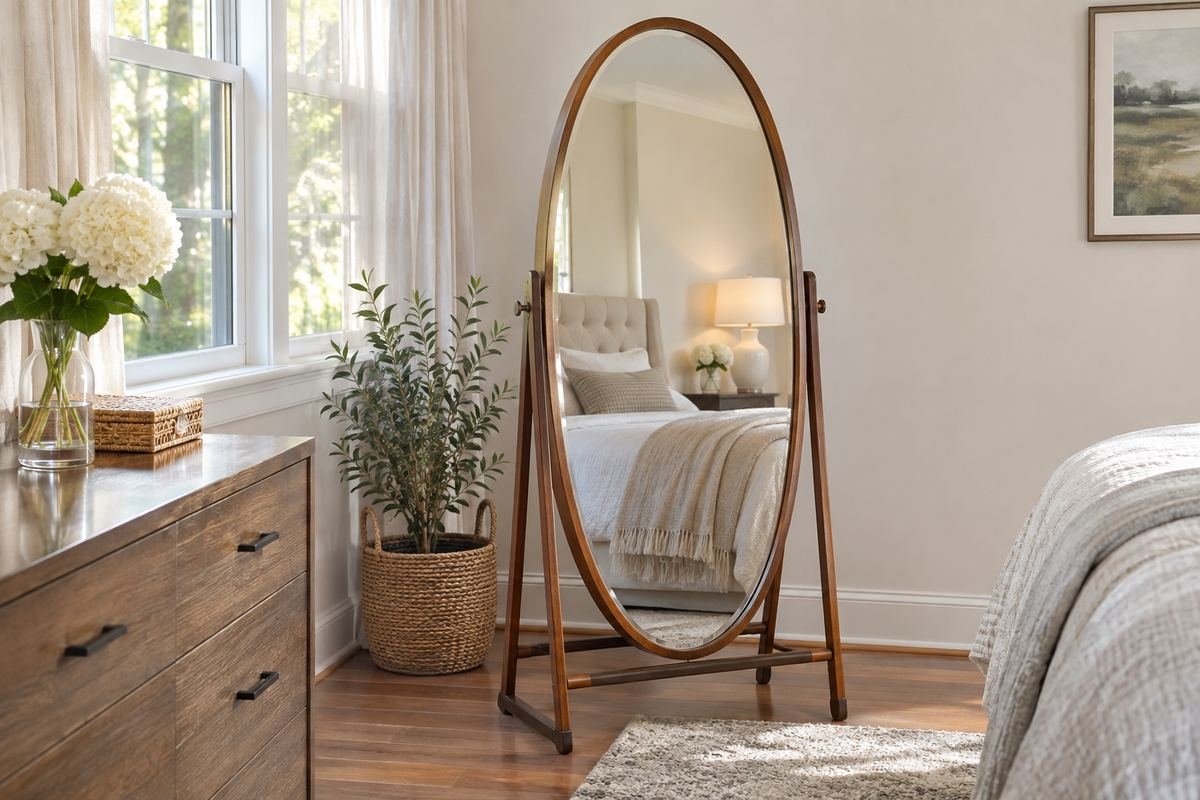
An oval full-length mirror can give a bedroom a softer vertical shape, but its narrower ends change the useful view. Compare the actual reflected area from the intended standing place. The outer dimensions alone may not show whether the mirror suits the task.
Keep the surrounding arrangement restrained so the oval has a clear role. If the mirror’s useful view is too limited, compare another width or shape rather than moving into an awkward standing position. A decorative silhouette should still support ordinary use.
Practical tip: Test the reflection from the place you will stand.
7. Use a broader frame when the room needs a stronger outline
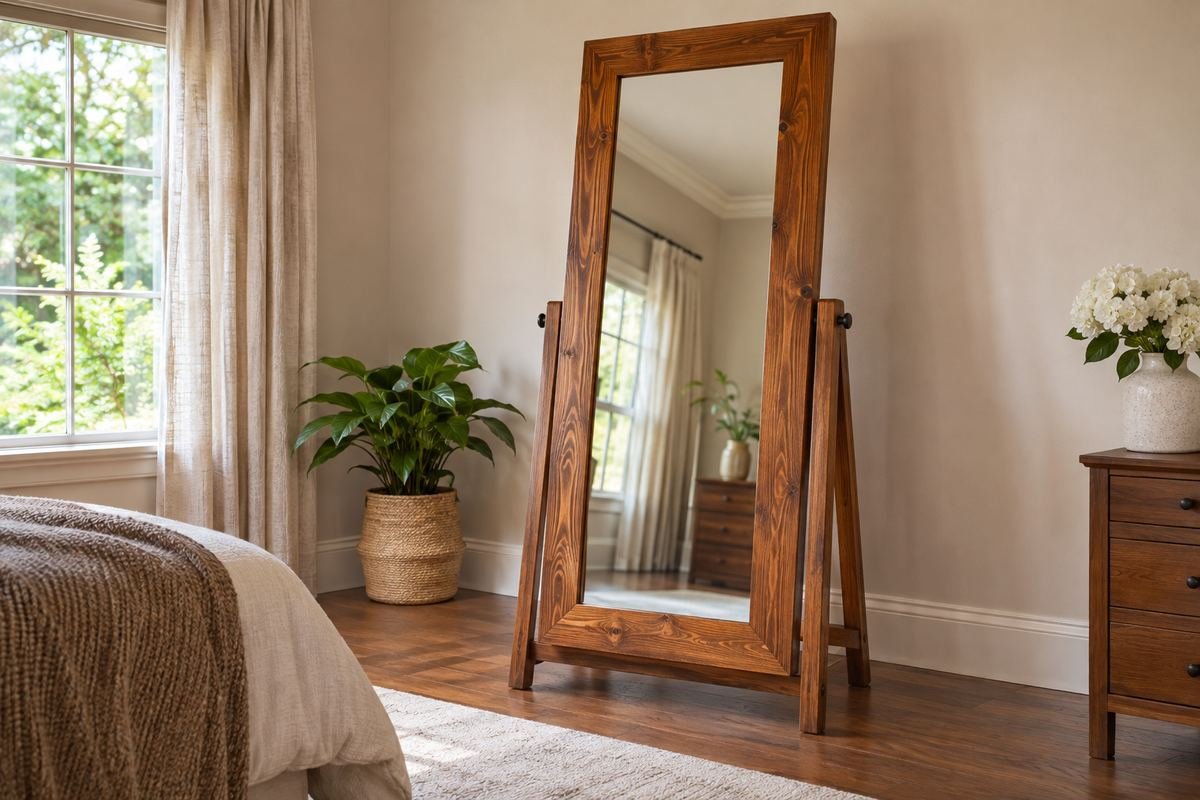
A substantial frame can make a mirror feel like a deliberate furniture piece in a simple bedroom. Compare the border with the bed and wardrobe proportions, not only with the empty wall. Keep its material connected to a restrained part of the room.
A broader frame can also reduce the glass available within the same overall width. Check the complete supported dimensions and useful view before choosing. Avoid filling the surrounding area with additional large objects simply to balance the frame.
Practical tip: Measure the glass separately from the overall border.
8. Choose a narrower mirror only when the view still works
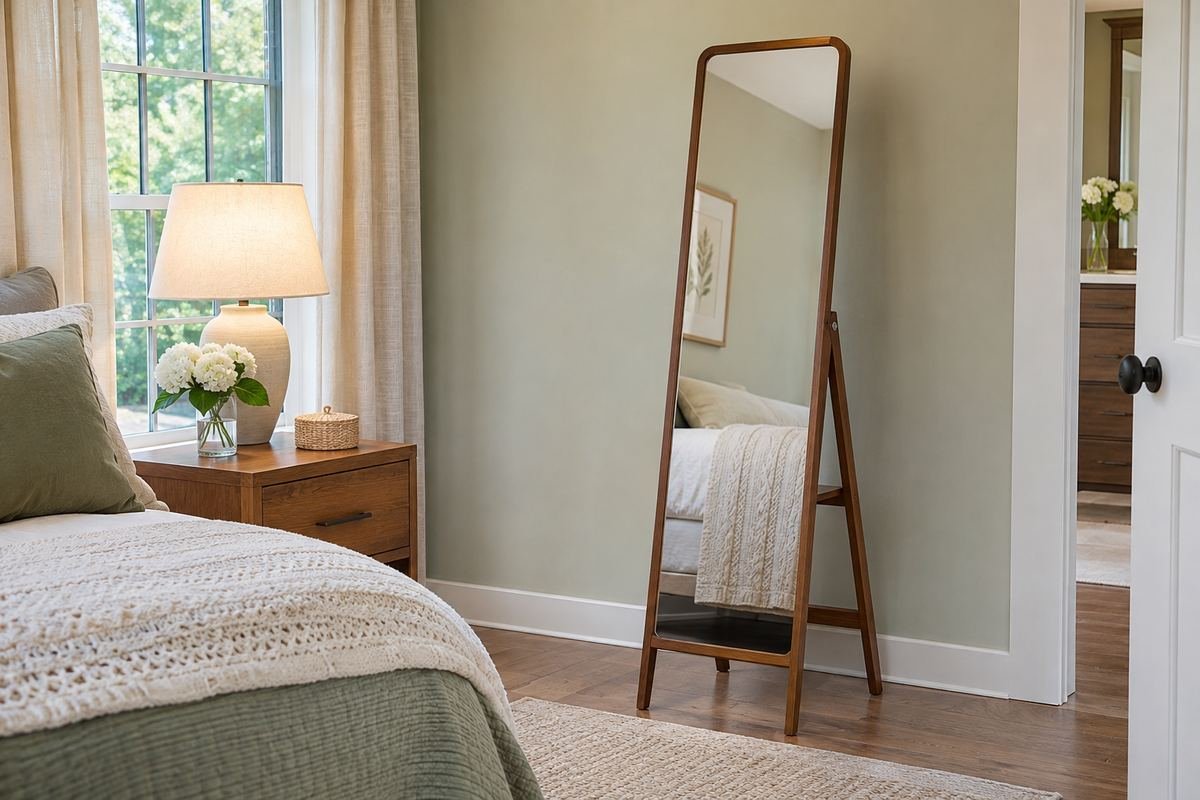
A narrow standing mirror may fit a constrained bedroom position, but it still needs a complete support and useful dressing view. Compare the actual mirror with the standing space rather than selecting from the wall gap alone. Include any rear projection.
Keep the person’s normal route in mind when comparing the reflection. If the view requires standing in a doorway or moving furniture each time, choose another position. A compact product should make the routine simpler rather than merely occupy the available strip.
Practical tip: Test the dressing place before choosing the narrowest option.
9. Compare a wider mirror with the room it reflects

A wider full-length mirror can give a dressing area a more generous view when the complete product and support fit the room. Compare its effect from the bed and doorway as well as from the dressing place. The reflected scene becomes a substantial part of the bedroom composition.
Keep the surrounding objects restrained while testing the larger view. A wide mirror is less useful when its footprint blocks a drawer or its reflection repeatedly shows an unwanted cluttered area. Choose the width from the task and the actual room together.
Practical tip: Judge the larger reflected scene before choosing the widest frame.
10. Use an arched top as one controlled shape
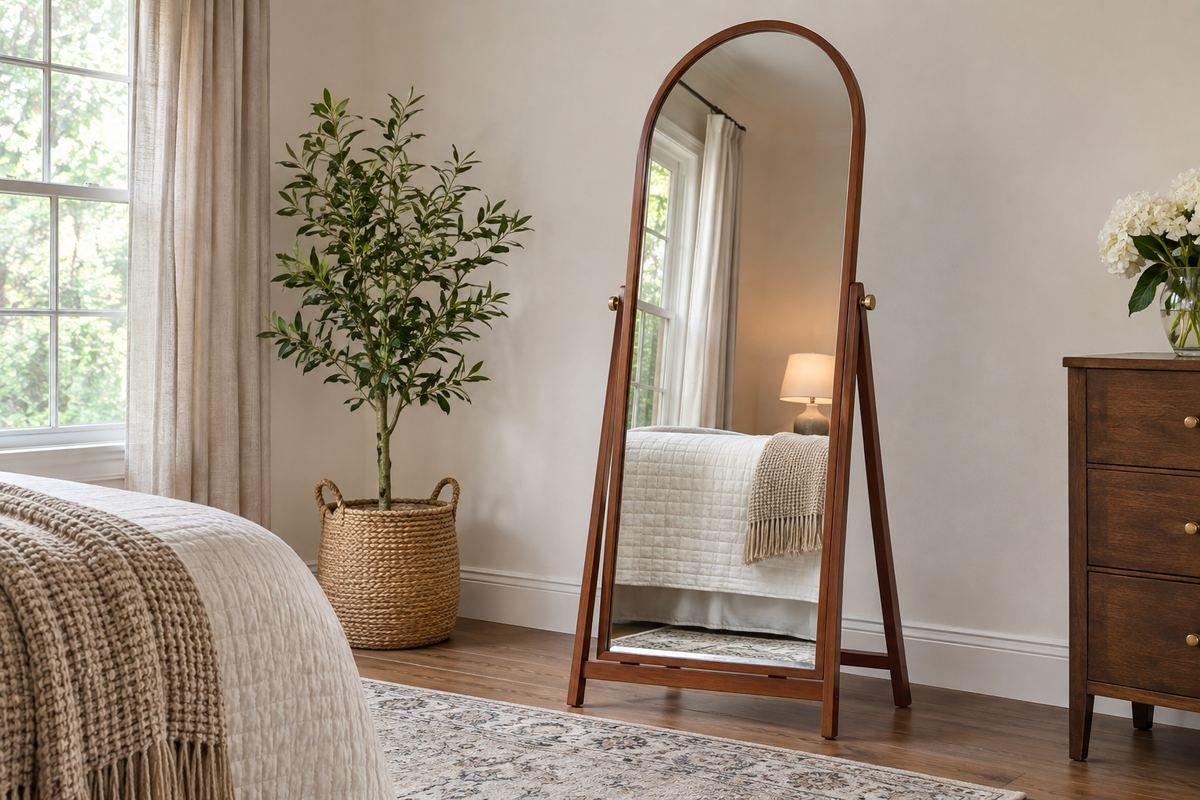
An arched full-length mirror can add a taller softer outline beside straight bedroom furniture. Keep the surrounding wall simple so the arch has a clear role. Compare its useful glass area rather than assuming the curved top improves the dressing view.
Choose a product designed for the intended support and position. Do not adapt a wall-only mirror into a standing one because an arched reference image looks attractive. The finished outline should come after the setup requirements and room fit have been established.
Practical tip: Choose the permitted mirror type before choosing the arch.
11. Place the mirror beside the wardrobe sequence
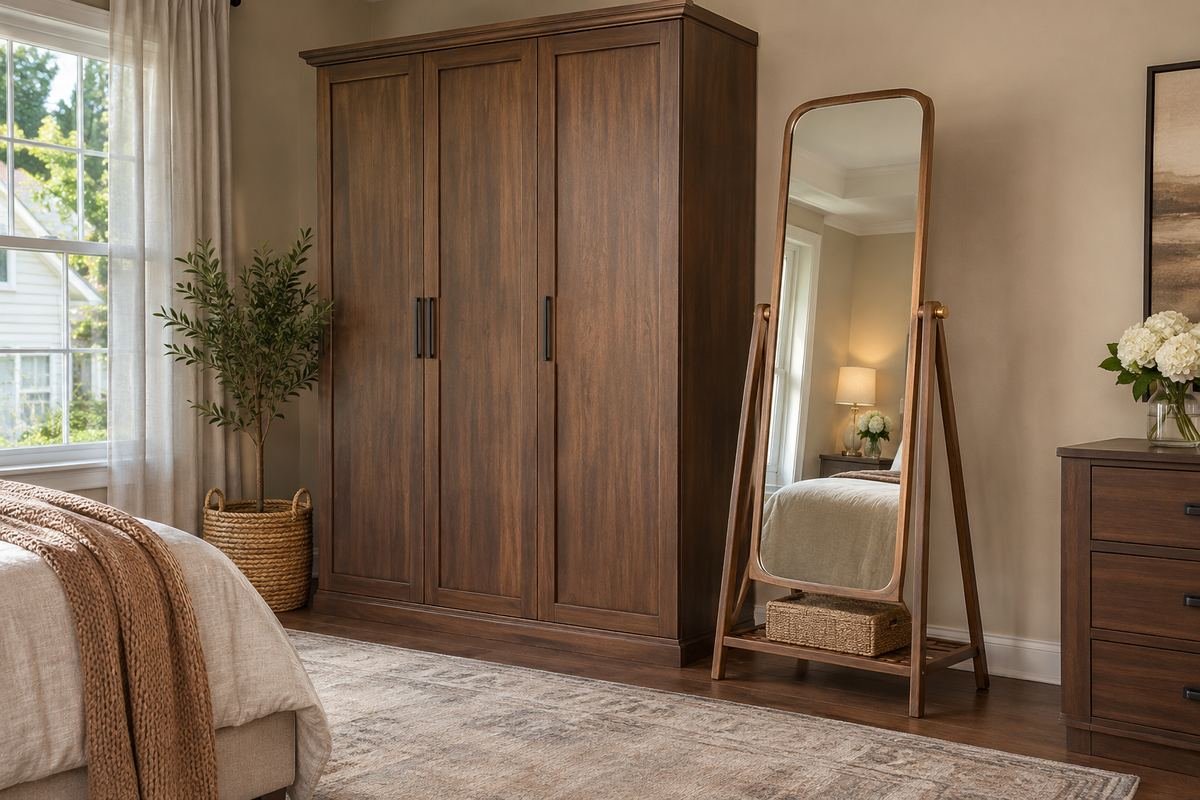
A standing mirror can support dressing when it is reached naturally after choosing clothes. Compare a position beside the wardrobe with the full opening movement of its doors or drawers. Include the mirror’s rear support and the person’s standing place.
Keep the two tasks from occupying the same space at the same moment. If the wardrobe must remain partly open during dressing, the mirror arrangement needs to accommodate that ordinary routine. Closeness is useful only when the whole sequence works.
Practical tip: Test choosing clothes and checking the mirror in order.
12. Keep dresser drawers separate from the mirror footprint
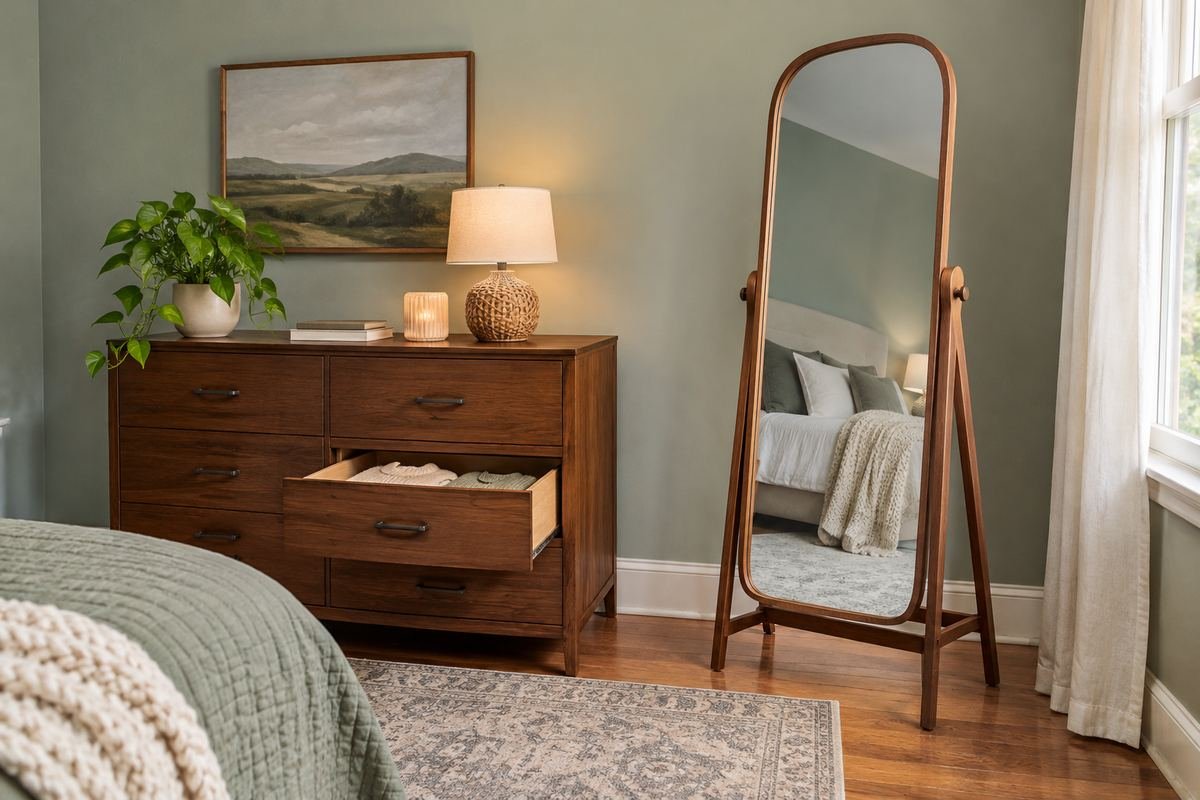
A mirror beside a dresser can connect the clothing routine without occupying the dresser top. Compare the complete mirror base with the drawer’s intended open position. The two pieces should remain useful without shifting the mirror for ordinary access.
Keep any projecting frame or stand clear of the route used to retrieve clothes. If the arrangement is too tight, move one piece or compare a smaller suitable mirror rather than accepting a repeated awkward maneuver. Review both the furniture fronts and their full movement.
Practical tip: Include the open drawer when testing the position.
13. Compare side window light through the dressing view
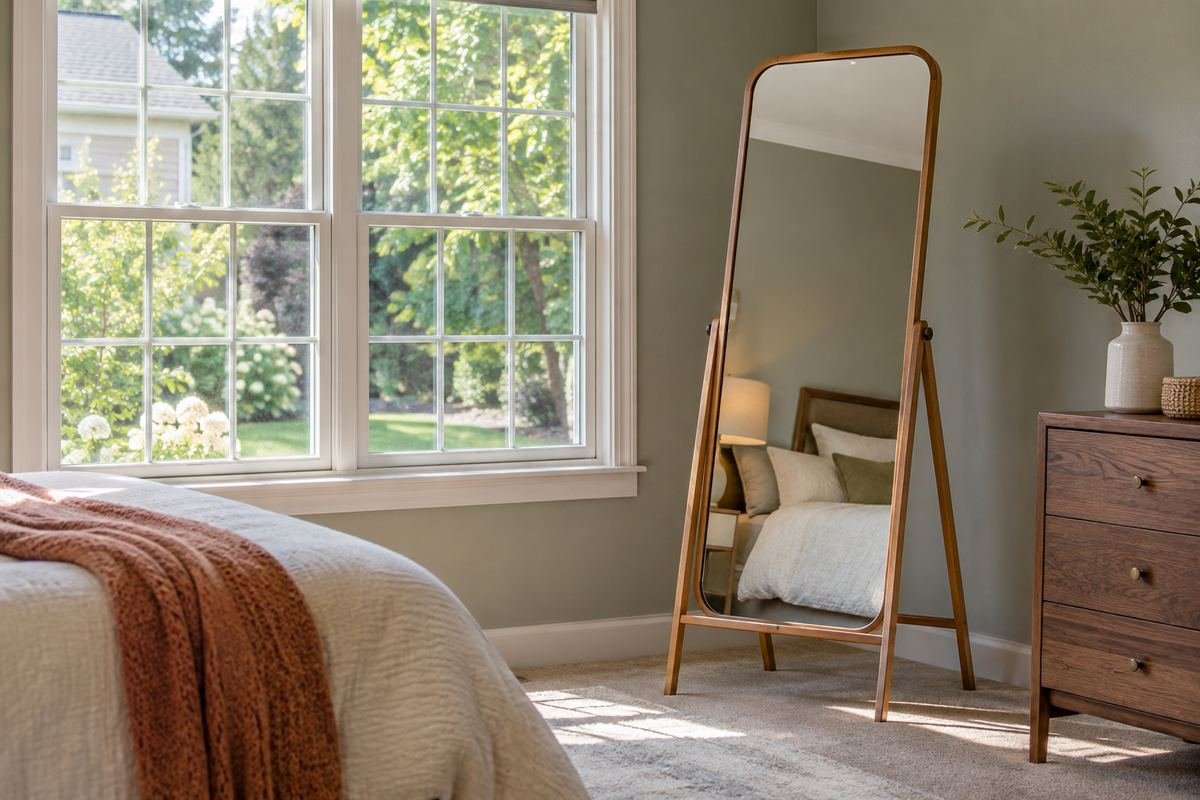
A mirror near a window can offer a useful daytime dressing position when the actual light and reflection work there. Compare the view at the time the room is normally used, including the window treatment. The brightest-looking reference image may not match the room’s real conditions.
Keep the mirror support and curtains clear of each other’s normal movement. Check for glare and an unwanted view from outside where relevant to the actual room. Choose the position through use rather than assuming every mirror should face a window directly.
Practical tip: Check the position during the normal morning routine.
14. Reflect a quiet wall when the room is already busy
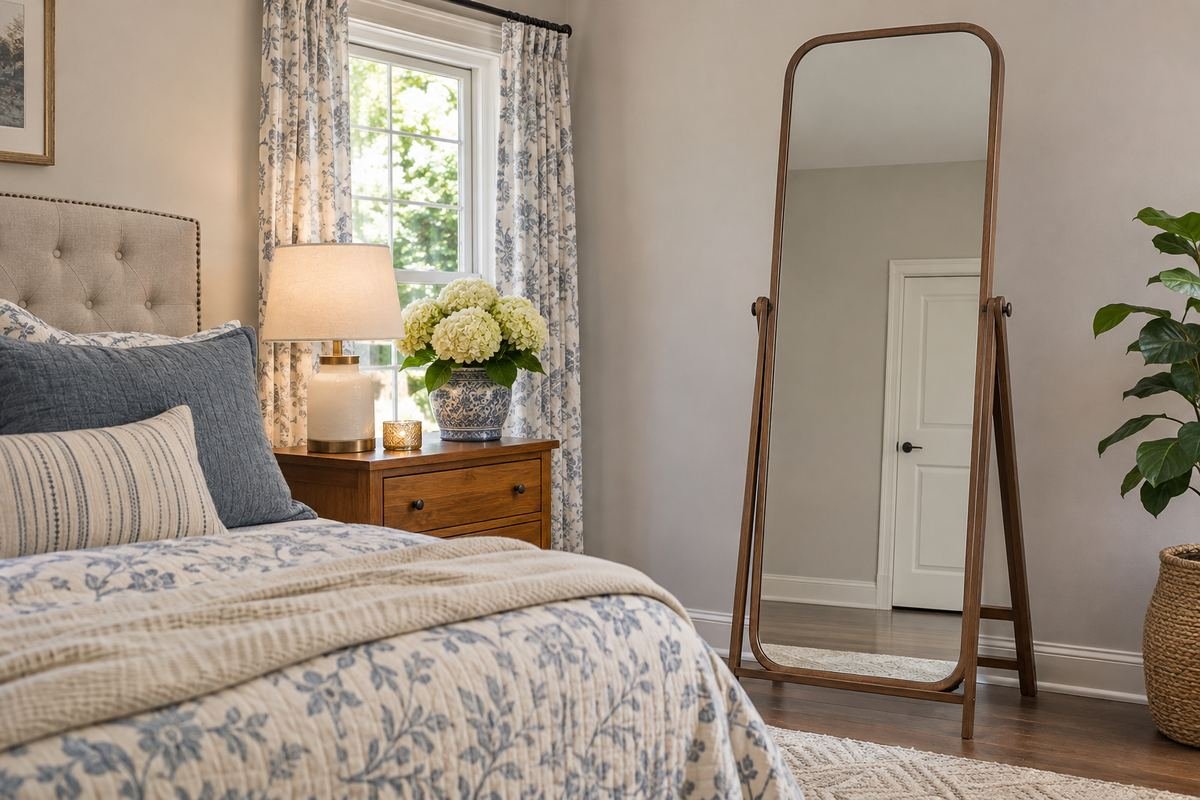
A mirror can repeat the visual activity in front of it. In a bedroom with patterned bedding or several furniture details, compare a position reflecting a calmer part of the room. The reflected wall can become the quiet background that lets the frame feel considered.
Look from the dressing place and the bed because they may show different reflections. Avoid adding several objects around the mirror to compensate for a distracting view. Changing the proposed position can be more effective than decorating the frame’s surroundings.
Practical tip: Include the reflected wall in the composition.
15. Give a patterned wall a simpler mirror frame
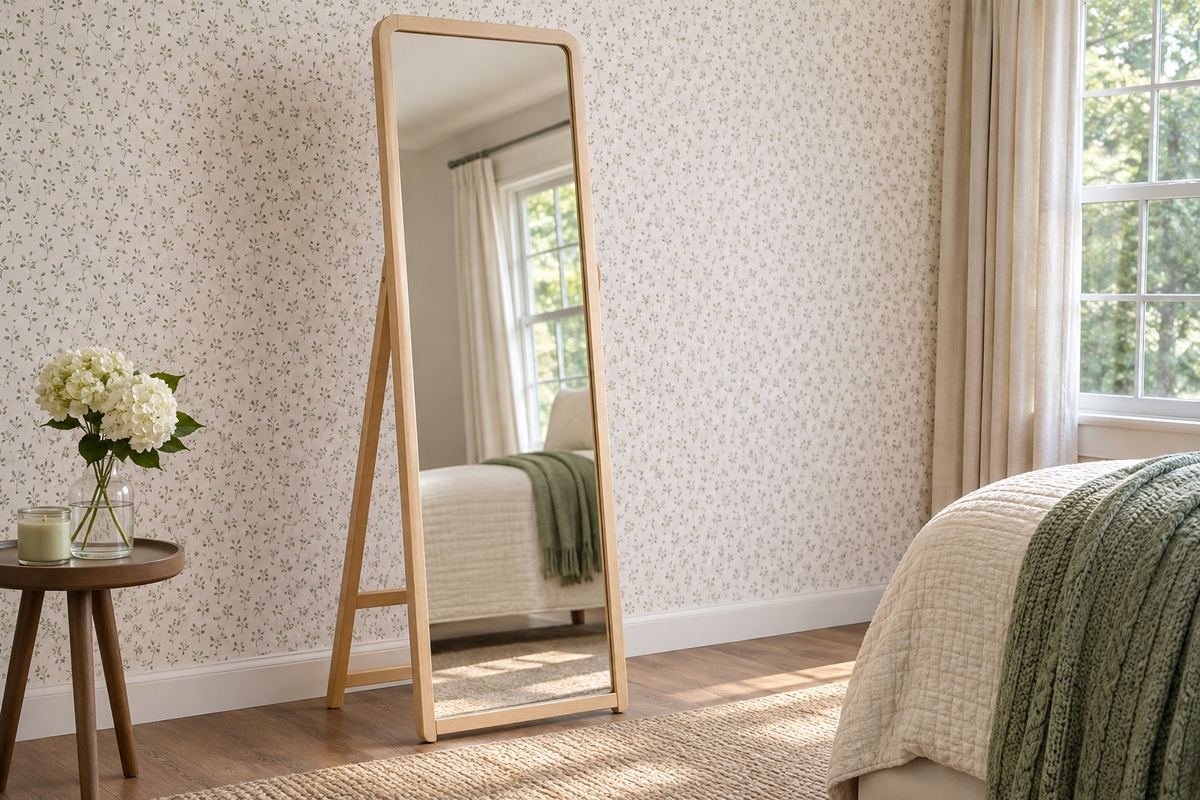
A bedroom wall with a visible pattern can work with a restrained mirror frame that does not compete for attention. Compare the pattern beside the frame and within the reflected view. Keep one clear hierarchy rather than making every edge decorative.
Check that the actual support can occupy the chosen position without altering wall features or furniture access. A quiet frame can let an existing wallpaper remain the main texture while the mirror serves the dressing task. Choose from the real materials in the room.
Practical tip: Keep either the wall or the frame visually quieter.
16. Let paneling remain a backdrop rather than an obstacle
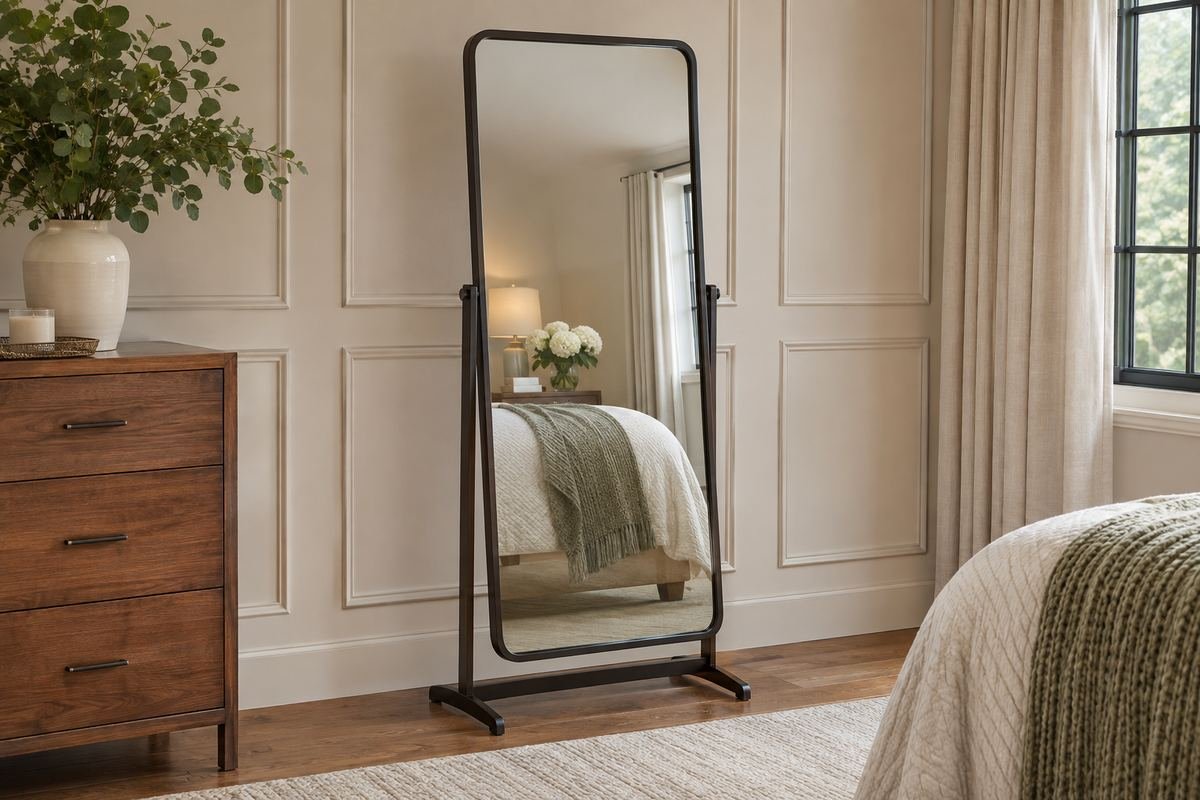
A standing mirror can sit near a paneled bedroom wall when its complete base and any required fixing are appropriate to the actual product and wall. Compare the position with projecting trim and the floor edge. Do not assume a flat photograph establishes the necessary contact or clearance.
Keep the frame simple if the paneling is the main wall detail. Have any required fixing assessed for the actual construction rather than attaching hardware to decorative trim by appearance. The room arrangement should respect both the mirror instructions and the existing wall.
Practical tip: Check projecting trim before deciding the position.
17. Keep a pale frame quiet in a low-contrast room
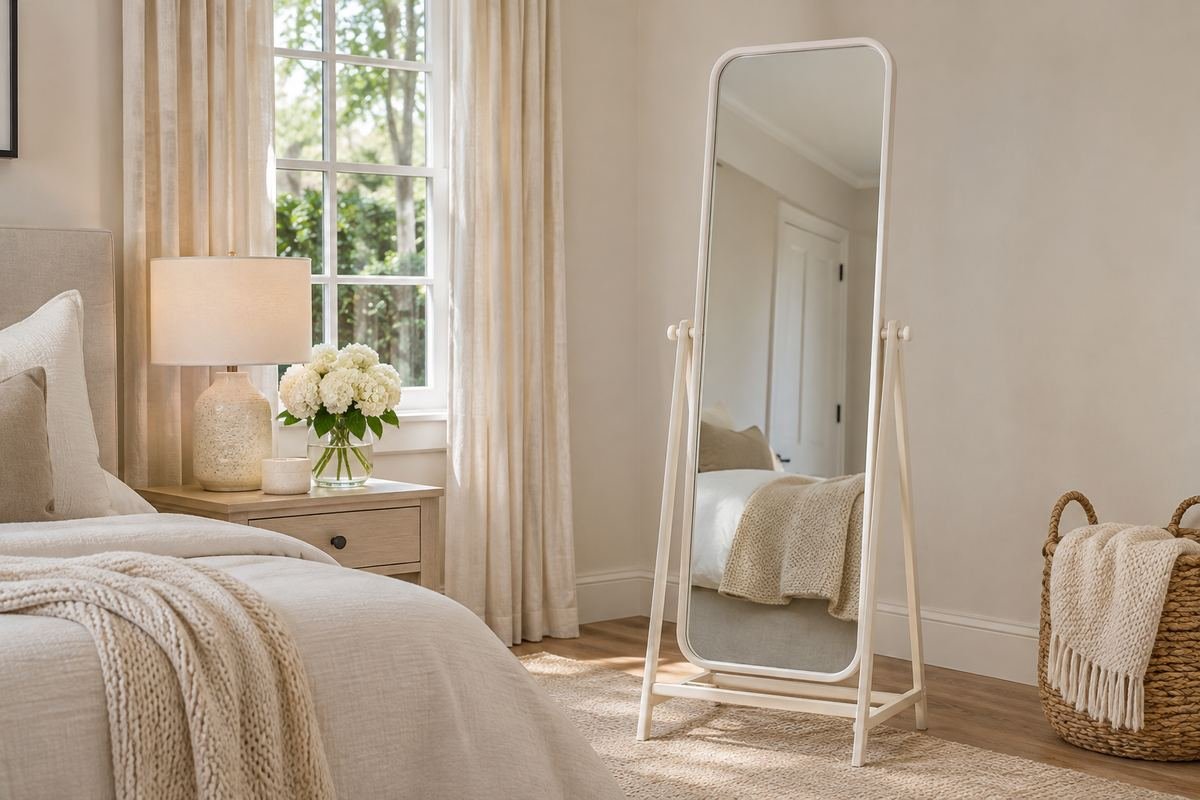
A pale frame can let a standing mirror blend into a bedroom with soft similar tones. Compare its edge against the wall and bedding in the actual light. The mirror can remain useful without becoming the strongest visual feature in the room.
Use a considered reflected view to give the arrangement depth. Avoid adding several contrasting objects just to make the mirror stand out. A quiet piece still needs the complete appropriate support and a useful standing place for the dressing routine.
Practical tip: Let the reflected view carry some of the composition.
18. Give a dark wall one clear frame relationship
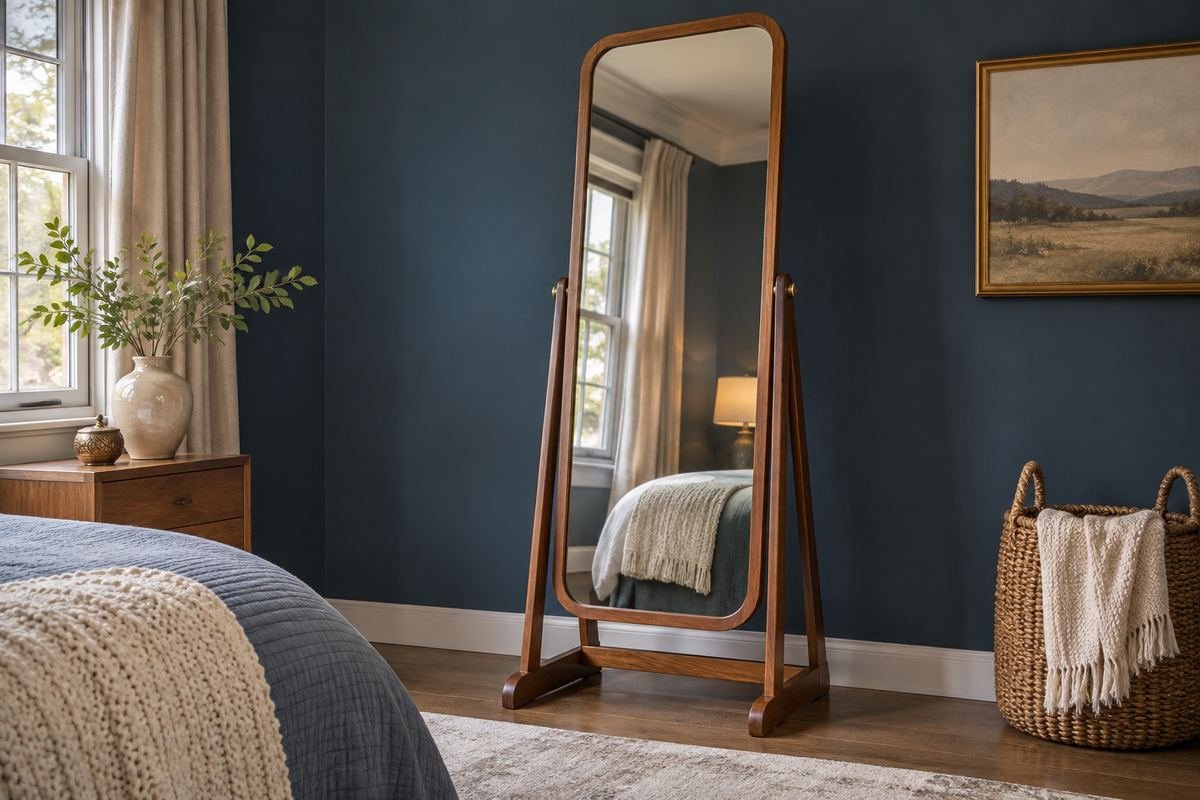
A mirror against a deeper wall color can create a defined dressing feature. Compare a frame that either relates closely to the wall or introduces one deliberate material contrast. Judge it alongside the bedroom’s existing furniture rather than choosing the contrast in isolation.
Keep the reflected scene simple while testing the stronger backdrop. Check the appearance with the room’s evening light because the frame and wall relationship may change. The color choice should remain useful during ordinary bedroom use.
Practical tip: Compare the wall and frame after dark as well as by day.
19. Plan a shared mirror position through both routines
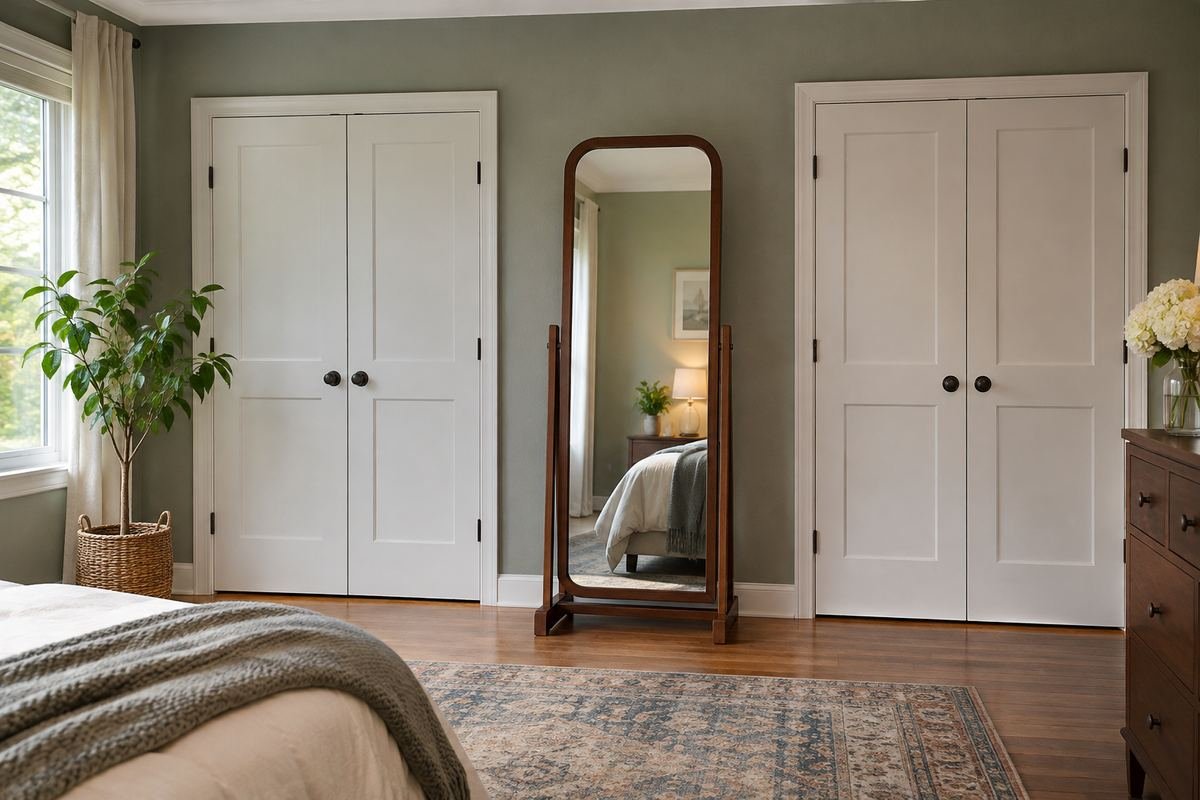
A shared bedroom may need a mirror position that works for more than one person. Compare the route from each clothing-storage area and the standing place used for dressing. Keep the complete support out of the other person’s ordinary movement.
Review the arrangement through use rather than centering the mirror only for symmetry. A position can be visually balanced while making one routine awkward. Choose a workable shared location or another suitable mirror arrangement when the room requires it.
Practical tip: Test each user’s normal route independently.
20. Keep a dressing bench separate from the mirror base
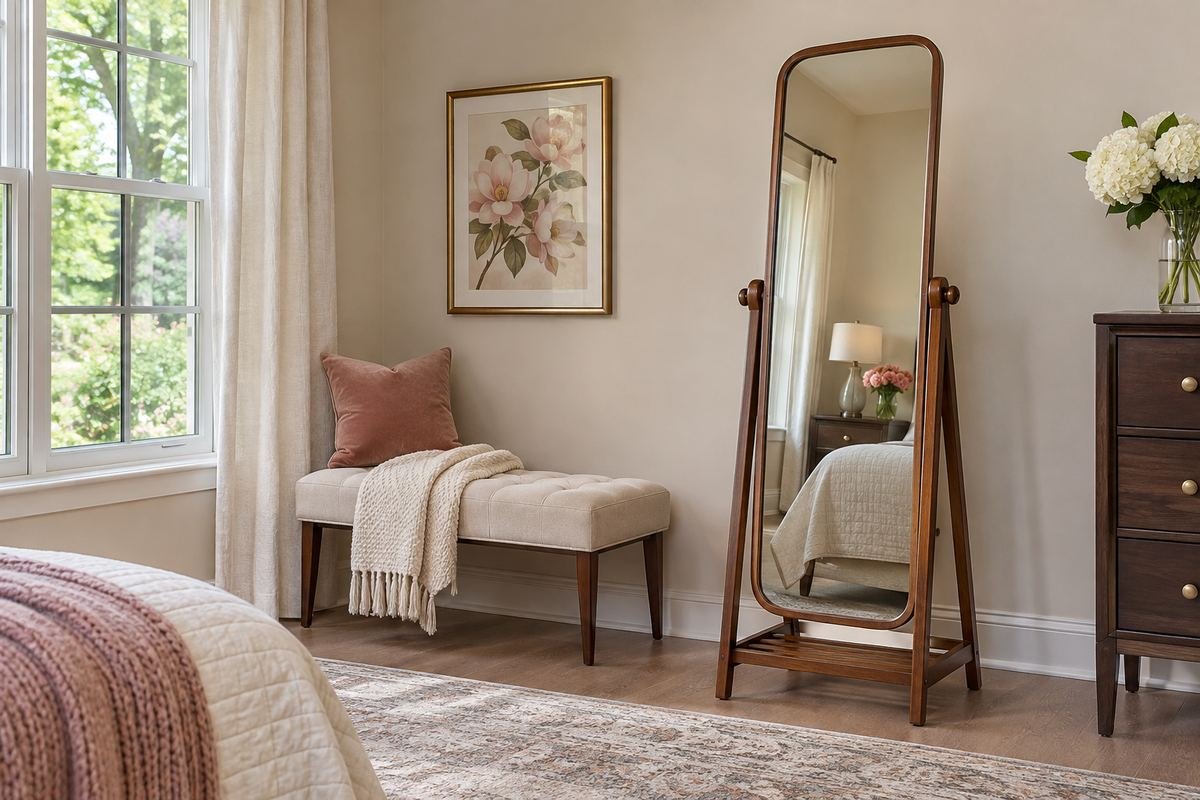
A small suitable bench can complement a mirror when the two support different parts of the dressing routine. Compare the bench’s position with the mirror stand and the route used to sit and stand. Keep the glass and support outside contact with normal movement.
Do not use the bench as an improvised support for the mirror or wedge its legs into the mirror base. If the area becomes crowded, keep the more useful piece and choose another position for the other. The arrangement should work without careful repeated repositioning.
Practical tip: Treat the bench and mirror as separate complete objects.
21. Use a nearby chair only when the room can serve both
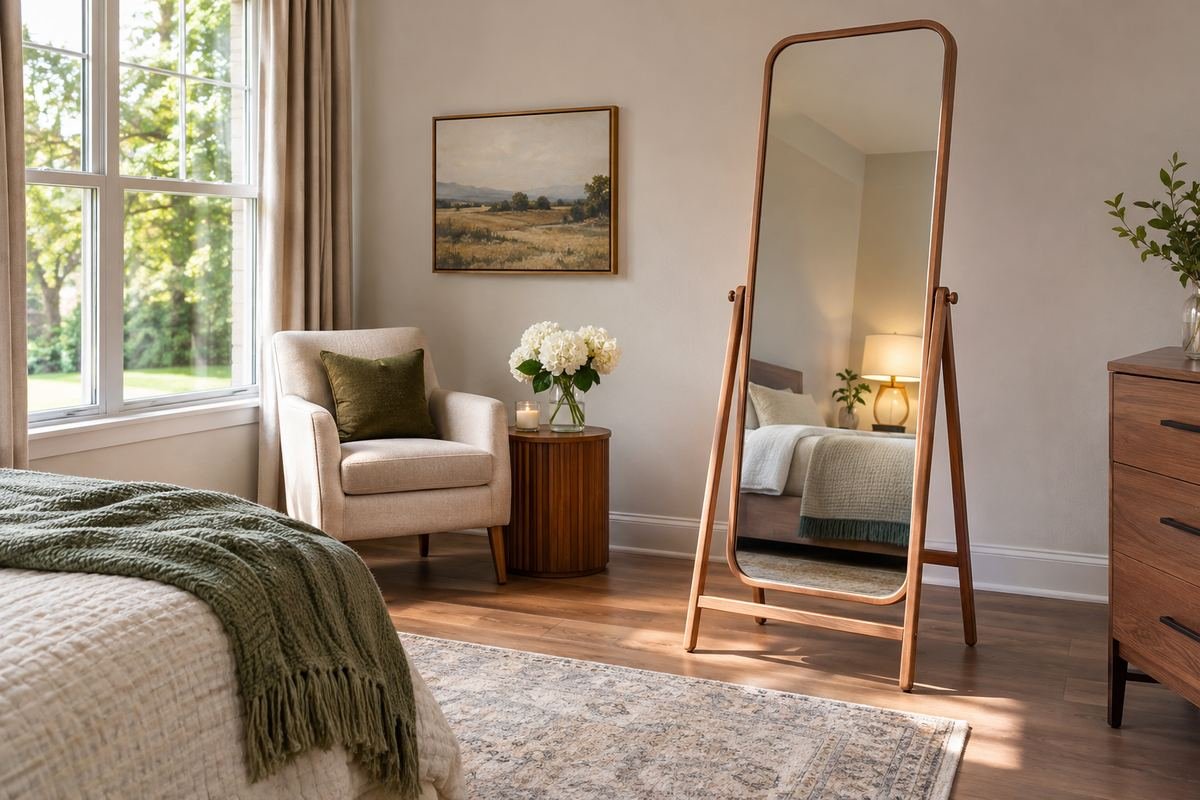
A suitable bedroom chair can sit near the dressing area when its complete use remains clear of the mirror. Compare the chair’s occupied position and movement with the mirror base and standing place. The two objects do not need to form a tightly styled vignette.
Keep the chair’s actual purpose visible in the plan. If it becomes a permanent clothes pile that obstructs the mirror, review the routine rather than adding another basket beside it. A smaller clearer arrangement can be the more useful finished choice.
Practical tip: Test the occupied chair rather than only its tucked position.
22. Choose an integrated clothes rail from the exact product design
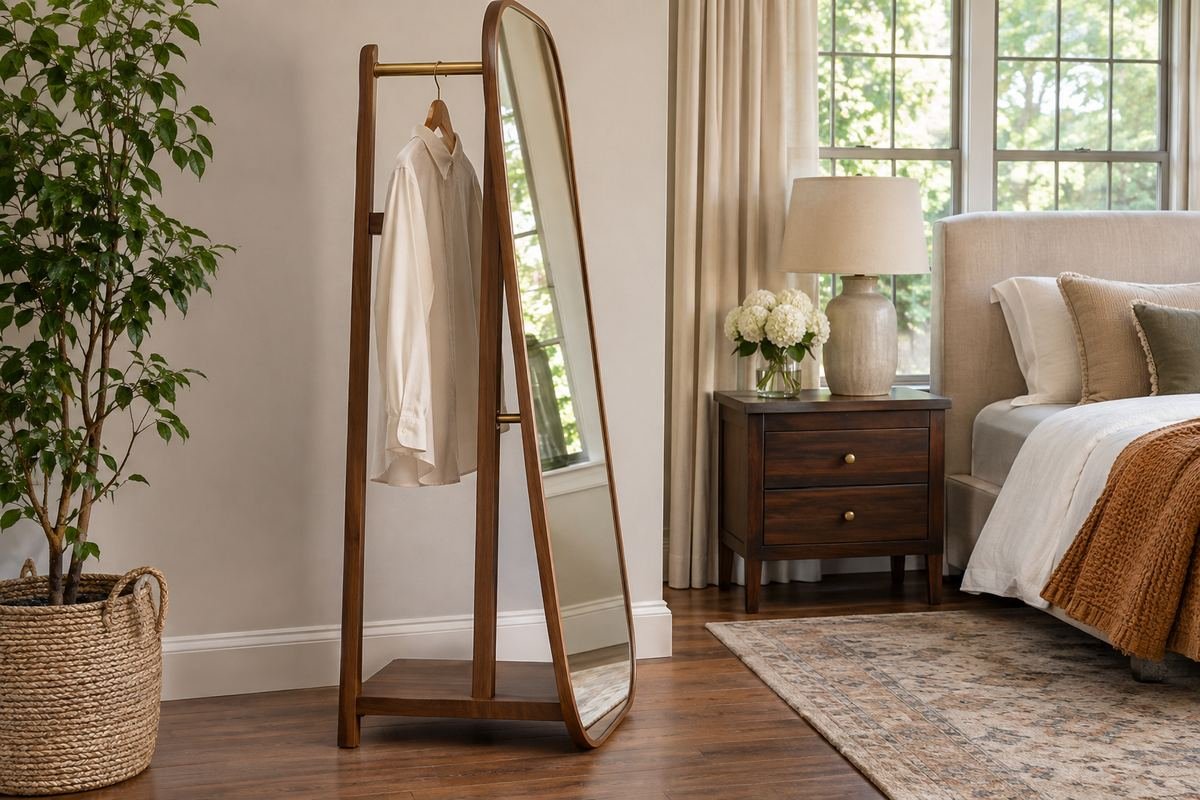
A floor mirror designed with a rear clothes-hanging feature can serve a dressing routine when the full product fits the room. Check the manufacturer’s intended use and keep any retained clothing group within its guidance. Do not add an improvised rail to another mirror.
Include access to the rear feature when comparing the footprint. Hanging tomorrow’s suitable outfit should not obstruct a doorway or prevent the mirror from remaining in its specified setup. Keep the group modest and review whether the integrated feature is actually useful.
Practical tip: Measure the loaded rear arrangement as part of the product.
23. Keep the complete base on an appropriate even surface
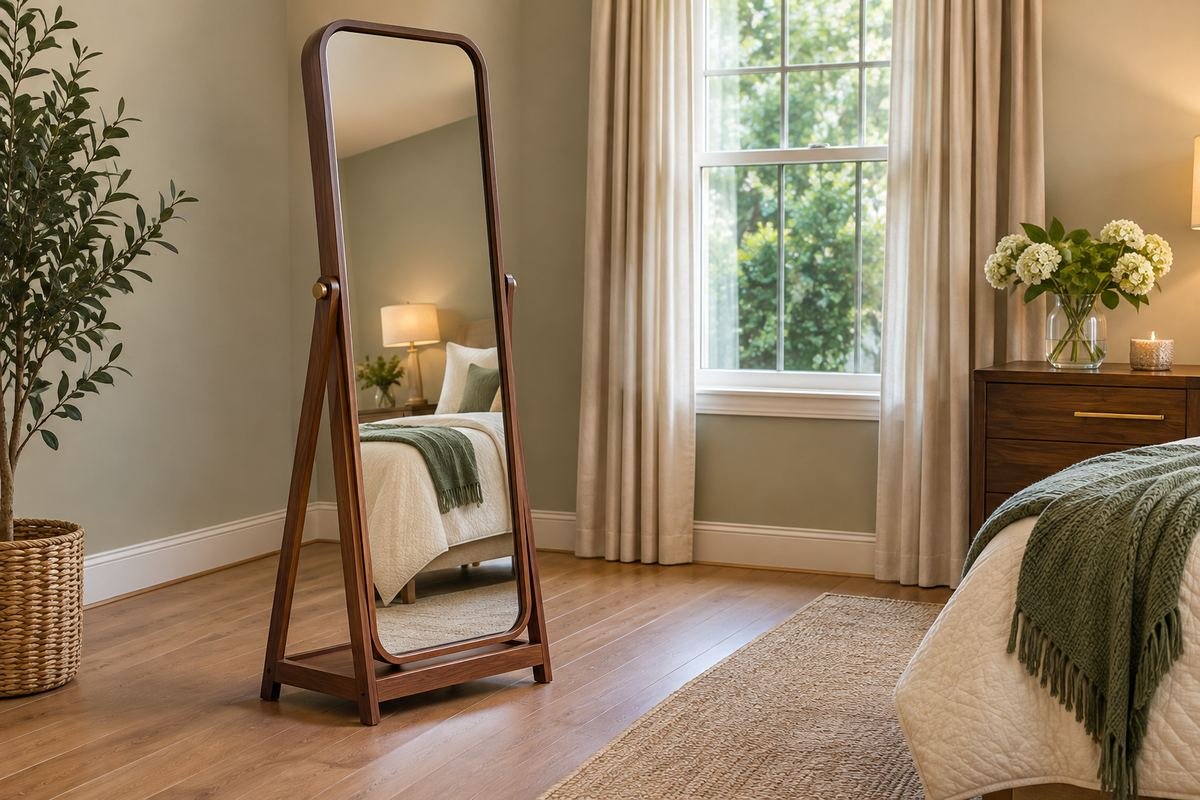
A mirror’s stand needs the surface and setup required by the actual product. Compare the entire base with the floor and nearby rug edge rather than judging only the front feet. Do not balance different supports across an uneven edge to make the frame look centered.
Choose another suitable position when the surface or surrounding movement does not work. Keep all required fixing and support in place during the arrangement. A decorative rug should be coordinated around the mirror’s proper setup rather than used to conceal an unstable base.
Practical tip: Check every support point against the actual product guidance.
24. Review the reflection with the bedroom’s evening light
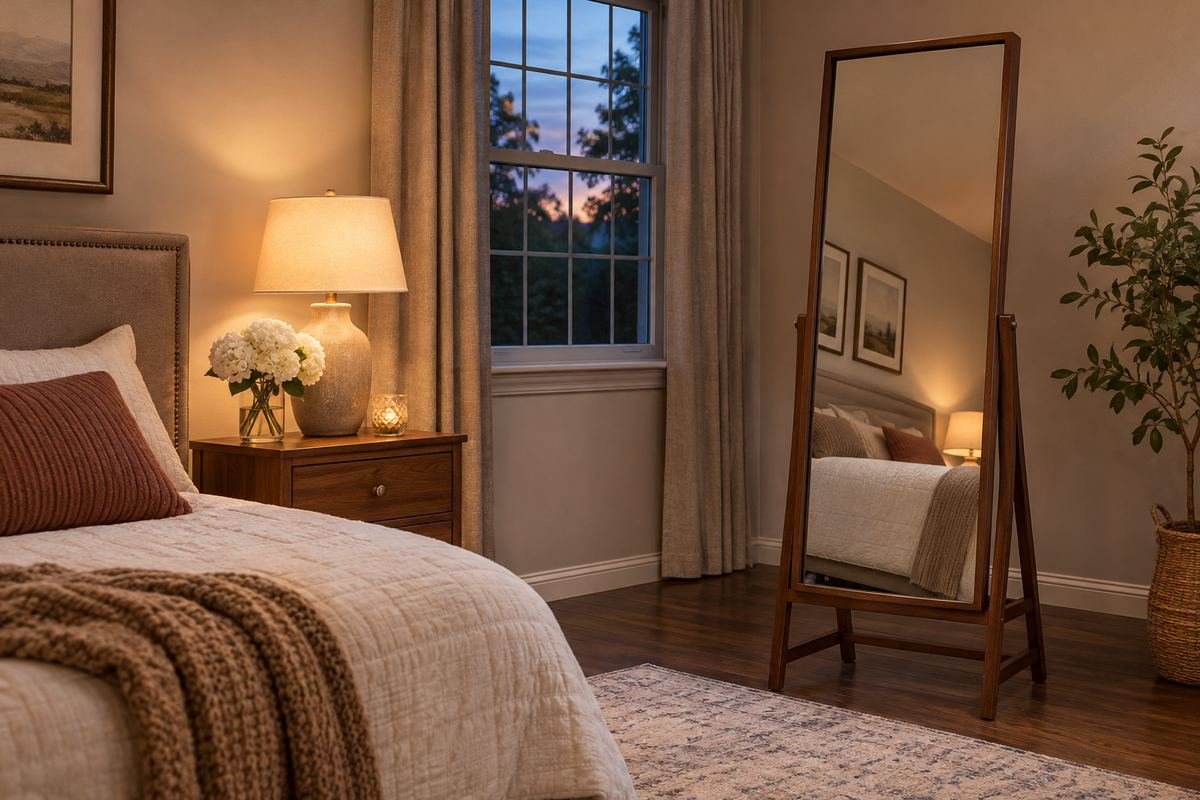
The mirror may show a comfortable view in daylight and a distracting lamp reflection after dark. Compare it from the dressing place and from the bed with the room’s normal lights in use. A mirror reflects the available scene rather than creating its own useful task light.
Choose a different proposed position or an appropriate lighting arrangement when glare interrupts the routine. Follow the lighting product guidance and obtain suitable help for any electrical change. Do not add an improvised light or cable to the mirror frame.
Practical tip: Test the reflection at the time you normally use the room.
25. Finish bedroom floor mirror ideas with a clear dressing reset
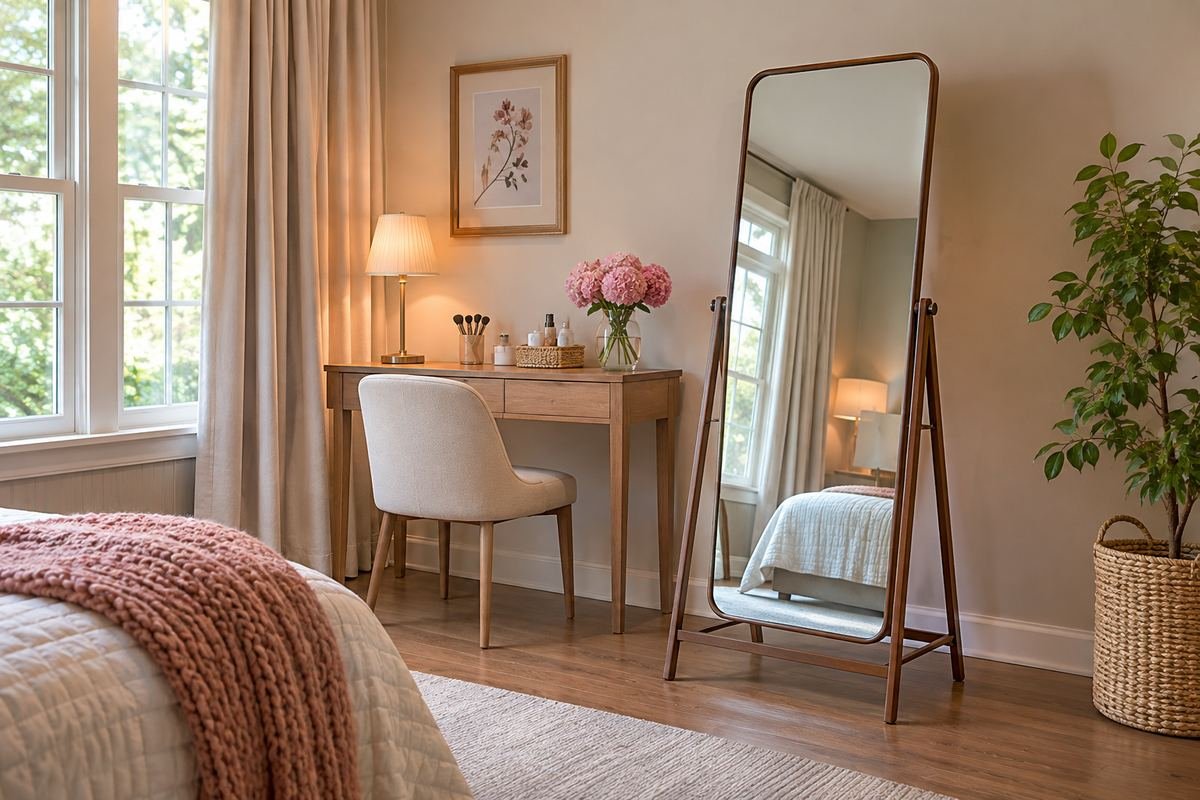
Review the arrangement after the bedroom has served its ordinary routine. Notice anything left in front of the glass, clothing that spreads around the base or a door that cannot open normally. Use the position card to identify the repeated source of friction.
Correct the storage or furniture relationship before adding more objects around the frame. Keep the mirror in its required setup and preserve appropriate access for cleaning and inspection. The finished dressing area should remain understandable after the room has been used.
Practical tip: Keep the useful standing place as clear as the mirror itself.
Frequently Asked Questions
Where should a floor mirror go in a bedroom?
Choose a position that supports the dressing routine while keeping doors, drawers and normal circulation useful. Include the mirror’s complete stand and the place where you will look into it. Compare the reflected view by day and after dark, then follow the exact product’s setup and fixing requirements.
Can I simply lean a full-length mirror against the wall?
Do not assume that a loose lean is allowed. Follow the exact mirror instructions. IKEA’s referenced HOVET product permits a floor-supported tilted position only with the specified wall anchoring. Other mirrors have different supports or mounting requirements, so appearance alone does not establish a suitable setup.
How much space does a standing mirror need?
Measure the complete supported product, including rear legs, rails or other projections, together with a useful standing position and nearby opening movements. The required arrangement depends on the exact mirror and room. Glass width or a front-view photograph is insufficient.
Will a mirror make my bedroom brighter?
A mirror reflects the light and view available in its position; it does not replace suitable room lighting. Compare the actual reflected scene in daylight and at night. Choose another position when the reflection produces distracting glare or an unwanted view.
Should the mirror frame match the bedroom furniture?
It can coordinate without matching every finish. Compare undertones, frame width and one repeated room detail, then judge the reflected view as part of the composition. Keep the support and dressing function useful before choosing the final frame appearance.
How should a floor mirror be cleaned?
Use the guidance for the exact frame and glass rather than assuming one cleaning product suits both. For example, the referenced IKORNNES care document gives separate instructions for its wood frame and glass. Keep access for appropriate cleaning without improvising changes to the support.
Choose the Details That Work in Your Home
Choose bedroom floor mirror ideas from the complete support, useful dressing position and reflected view. Then use frame shape, material and the surrounding wall to connect the mirror to the bedroom. A considered arrangement works during the ordinary routine and follows the exact product’s setup requirements.
For related ideas, explore bedroom vanity ideas, bedroom dresser decor ideas, dresser organization ideas, small reading nook ideas.
Planning References
IKEA IKORNNES 905.240.42: full dimensions, rear feature and care; IKEA HOVET 405.071.96: permitted positions and required anchoring; IKEA IKORNNES: manufacturer frame and glass care instructions. Follow the instructions for the exact products you choose.
Optional digital guide for this topic
If you prefer a structured workbook, explore this related paid guide.