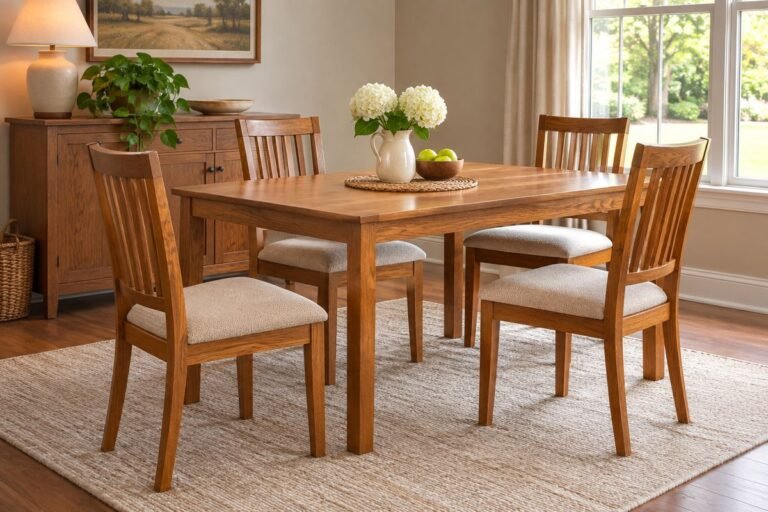
Dining room storage ideas should make setting and clearing the table easier. Begin with the dishes, linens and serving pieces that actually travel through the room. A cabinet earns its place when its interior suits those objects and its doors can open during the normal dining routine.
Separate everyday tableware from occasional pieces and from the other activities that share the room. Then choose storage from the real groups rather than purchasing a large sideboard and filling it afterward. A modest useful collection can need much less furniture than an unreviewed assortment.
These 26 original concepts compare cabinet forms, interior groups and simple return routines. The illustrations are planning concepts rather than installation diagrams. Follow the exact furniture’s assembly, anchoring, load and care instructions, and use suitable help for the actual wall and furniture when required.
The images are original AI-generated decor concepts, not installation diagrams or photographs of completed client projects.
Browse These 26 Dining Room Storage Ideas
Jump to an idea
- Begin dining room storage ideas with one reviewed collection
- Use one sideboard with a genuinely useful interior
- Choose a shallower cabinet when the collection fits it
- Let glass doors frame a restrained tableware group
- Use solid doors for a mixed practical collection
- Combine a small open display with closed storage
- Dining room storage ideas with shallow organized drawers
- Give large platters a suitable supported position
- Keep everyday plates in manageable separate stacks
- Nest bowls only into a group that stays useful
- Give glasses their own uncluttered shelf area
- Separate mugs from the delicate glass group
- Use a divided drawer for ordinary flatware
- Keep serving utensils separate from daily flatware
- Dining room storage ideas for clean folded napkins
- Give placemats a position that respects their material
- Separate table runners from the daily napkin group
- Give tablecloths a fold that fits the real shelf
- Collect small dining accessories in one shallow group
- Use a removable table-setting caddy for a modest group
- Keep an occasional guest set separate and identifiable
- Give a shared-room project a defined storage compartment
- Use a small game group that can return after play
- Protect the useful serving area on the sideboard top
- Check dining room storage ideas with doors fully usable
- Finish dining room storage ideas with a one-week return review
Compare dining room storage ideas with occupied chairs
List the retained groups, then measure the largest plates, trays and folded textiles before choosing the cabinet. Include the furniture’s complete dimensions, handles, open doors or drawers and the space used by dining chairs. Test setting the table, taking out a serving piece and returning clean items. Keep the normal room route and required access to doors, heating and other features usable.
| Retained group | Storage arrangement to compare | Useful test |
|---|---|---|
| Everyday plates and bowls | Modest stable groups on suitable shelves | Remove the regular piece without a heavy mixed stack |
| Table napkins and runners | A suitable clean dry drawer or compartment | See the group and return the correct fold |
| Large trays and platters | A correctly supported shelf or suitable divider | The complete piece passes through the opening |
| Glasses and cups | A modest group with appropriate support | Grip one item without disturbing its neighbors |
| Flatware and serving utensils | A suitable divided drawer or removable caddy | The actual shapes fit without overcrowding |
| Occasional meal supplies | A separate reviewed group | Identify what belongs without opening several boxes |
| A shared room activity | A removable task box in a defined compartment | Clear the dining table before the meal |
Let furniture instructions remain part of the plan
The U.S. Consumer Product Safety Commission’s Anchor It guidance calls for securing furniture according to the manufacturer’s instructions and removing tempting objects that could encourage children to climb. Apply the relevant guidance to the actual piece and household. A low silhouette, a heavy dish collection or a neat photograph does not replace proper assembly and anchoring.
Use storage close to the task without blocking its movement
IKEA’s dining-room storage guide discusses cabinets near the table, small grouped containers and portable storage. Treat those as arrangement options to compare with the real room. The useful position still needs working cabinet doors, occupied chair space and a practical route for carrying the group; closeness alone does not establish a successful fit.
Make a dining-storage inventory and return card
Create one row for each retained group: its items, largest dimensions, usual task, chosen compartment and return step after cleaning. Add the exact furniture’s load and care requirements where relevant. During one normal week, record anything left on the table because its storage is difficult. Fix that specific problem before adding more containers or another cabinet.
1. Begin dining room storage ideas with one reviewed collection
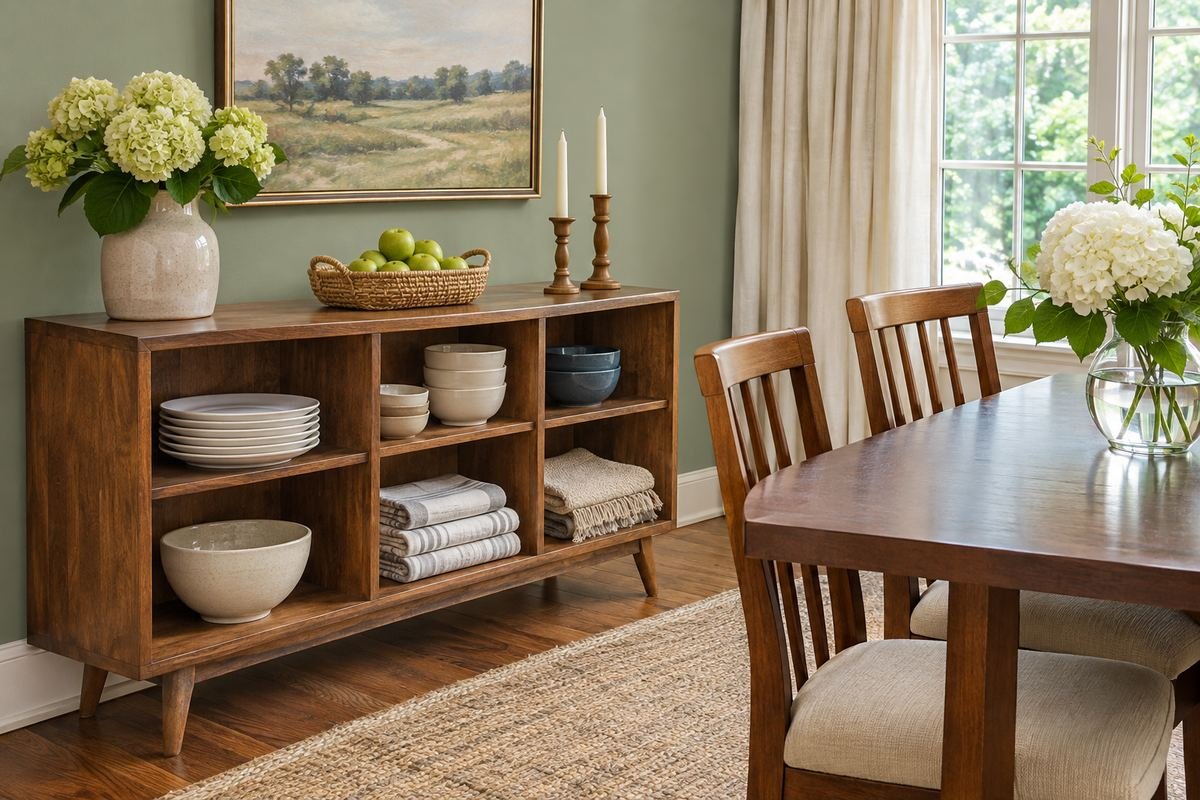
Gather the items that need a home before choosing another cabinet. Separate regular plates, glasses and linens from pieces that have not served the household for a long time. Review the occasional group through the meals you actually host rather than keeping everything by default.
Lay out the retained groups so their sizes and quantities are visible. This gives the storage decision a concrete brief and prevents a large empty cabinet from becoming a reason to collect more. Keep an appropriate destination for items that belong in another room.
Practical tip: Count retained groups before choosing furniture width.
2. Use one sideboard with a genuinely useful interior
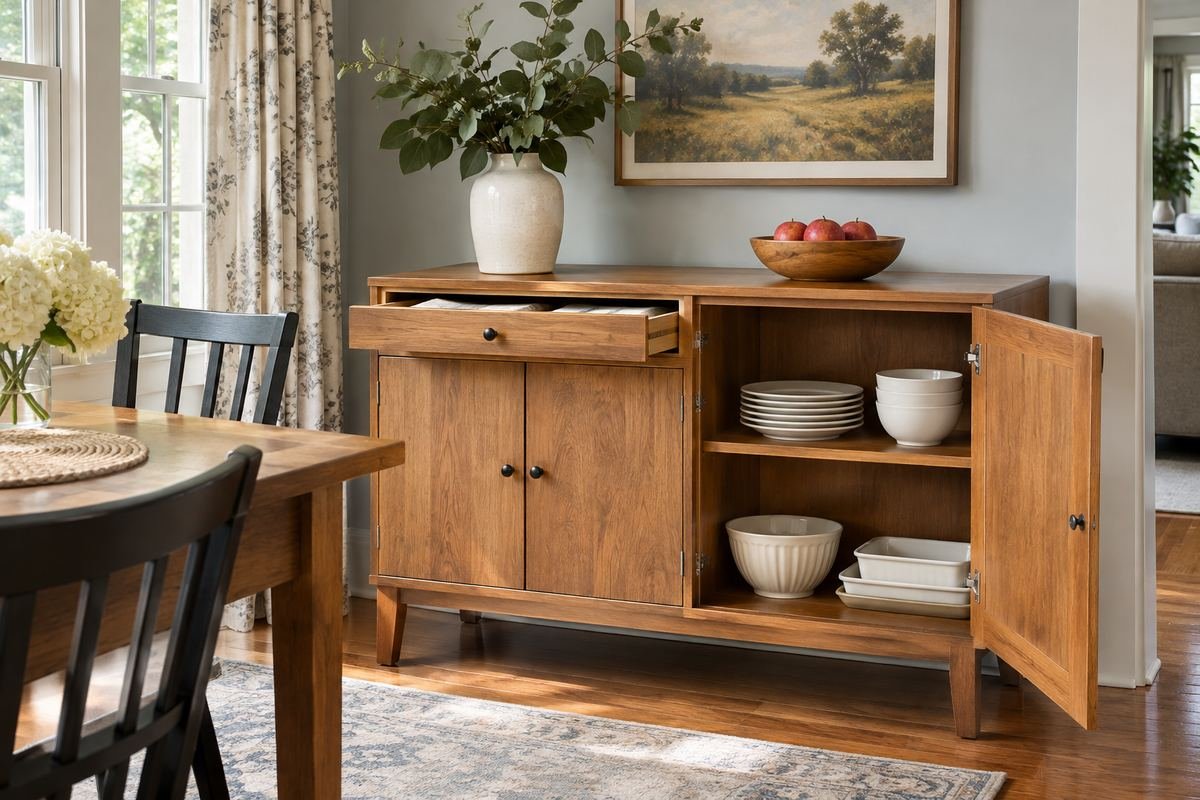
A sideboard can combine a serving surface with closed storage when its compartments match the actual belongings. Compare the usable shelf and drawer dimensions with the largest retained pieces. The outside width tells little about an interior divided by panels or hinges.
Open the doors and drawers through the movement needed during a meal. Check the occupied chair position and leave the top usable for the task you intend. A simple cabinet can be a complete solution when its interior works without several additional organizers.
Practical tip: Check the interior layout before judging the front.
3. Choose a shallower cabinet when the collection fits it
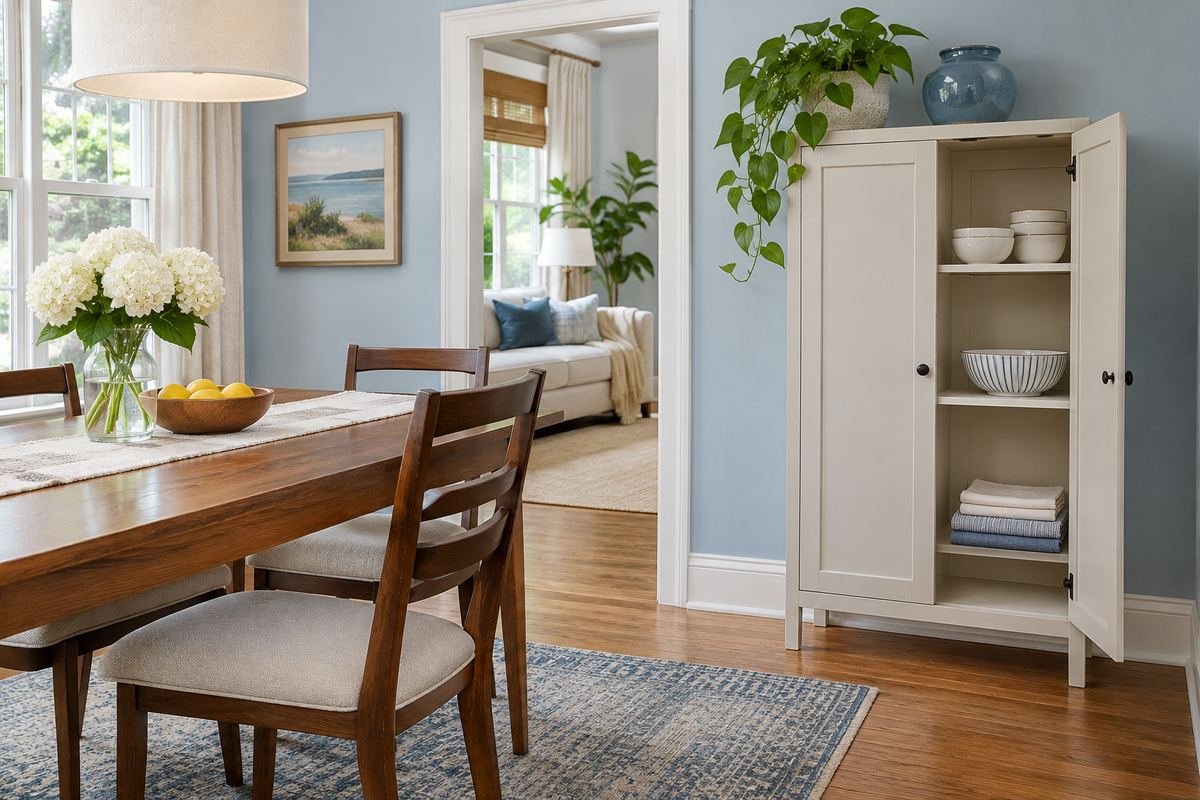
A shallow cabinet may preserve more of the room when the retained dishes and textiles fit its real interior depth. Measure complete items rather than assuming a cabinet described as slim will accept dinner plates or trays. Include handles and door movement in the room test.
Reduce the collection or choose another suitable position if the proposed depth does not serve it. Avoid buying a shallow piece and compensating with awkward angled stacks. A smaller furniture footprint is useful only when the belongings can be retrieved normally.
Practical tip: Compare the deepest retained piece with the usable shelf.
4. Let glass doors frame a restrained tableware group
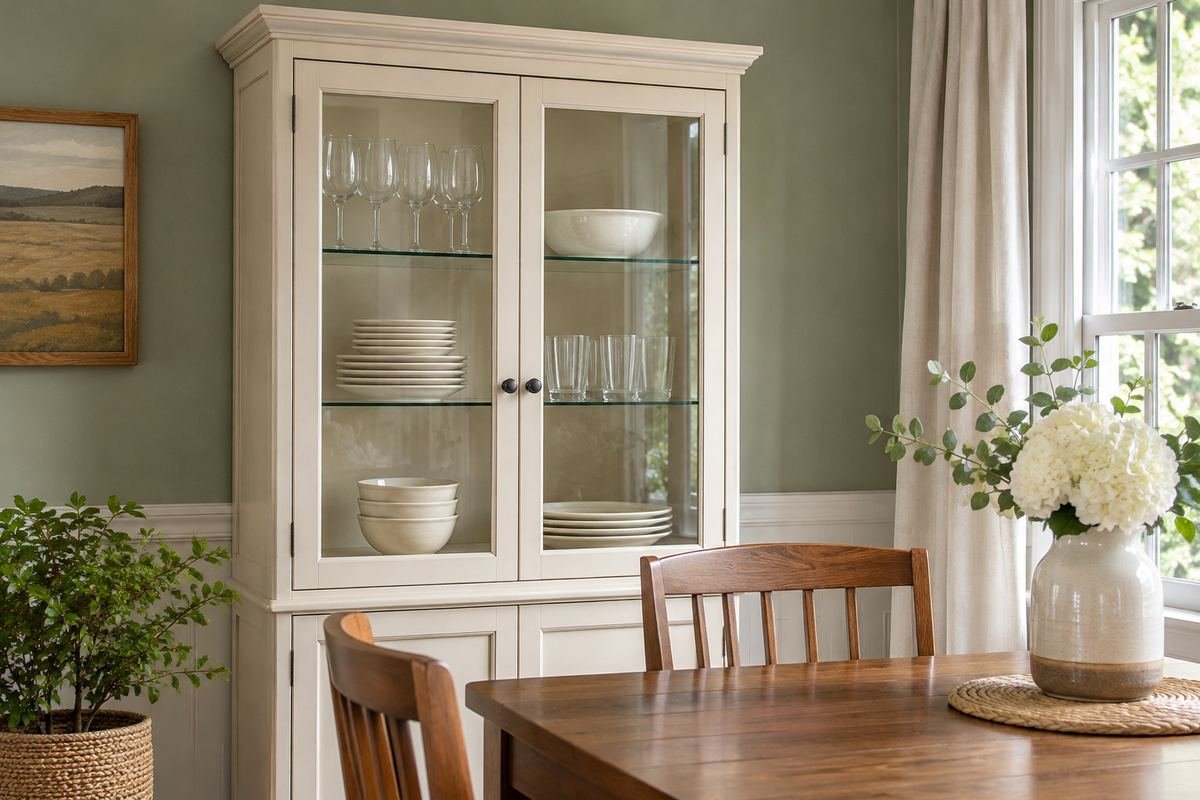
A glass-front cabinet can make everyday tableware part of the room’s appearance. Keep the group modest and compare the visible shapes as well as the shelf requirements. Repeated plates and simple bowls can create a clearer composition than a crowded mix of unrelated display objects.
Leave enough appropriate space to grip and return each piece. Follow the exact cabinet guidance for shelves, glazing and anchoring. The collection should remain practical when a plate is missing during dinner rather than depending on a perfectly symmetrical display.
Practical tip: Review the cabinet with its regular items in use.
5. Use solid doors for a mixed practical collection

Closed fronts can give varied tableware and meal supplies a quieter presence in the dining room. Choose the cabinet’s interior from the real groups and reserve a clear position for each. A simple exterior does not need an elaborate arrangement behind every door.
Keep the frequently used group identifiable when the cabinet opens. If supplies disappear into deep boxes, compare shallower groups or fewer items. The purpose of the door is to close over a useful interior, not conceal a routine that remains difficult.
Practical tip: Make the first view inside easy to understand.
6. Combine a small open display with closed storage
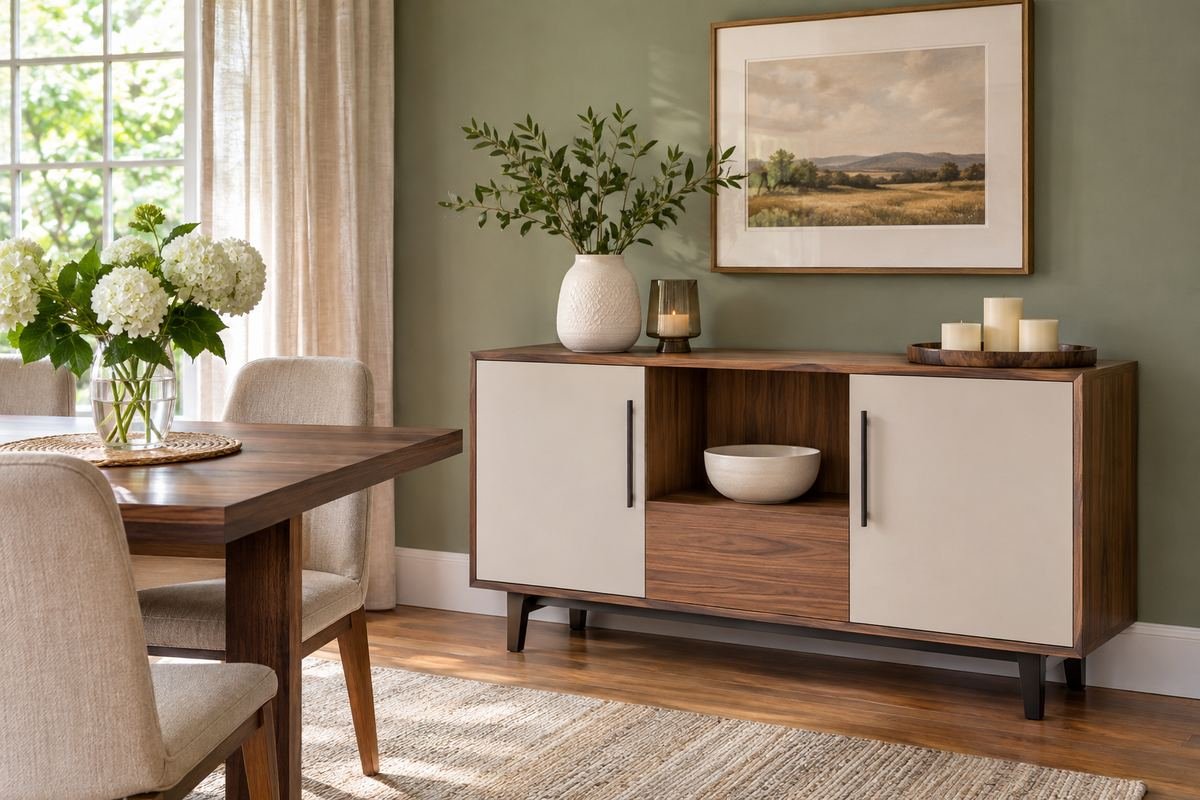
An open-and-closed cabinet can separate a few objects worth seeing from the less uniform supplies used during meals. Give the visible section a deliberate limit, then use the closed part for groups that benefit from a quieter background. Keep all shelves within their stated use.
Do not move useful daily items into an awkward position merely to perfect the open display. Compare the actual retrieval route and keep the collection manageable. A single bowl or small repeated group may provide enough visible character.
Practical tip: Choose the visible group after the practical interior works.
7. Dining room storage ideas with shallow organized drawers
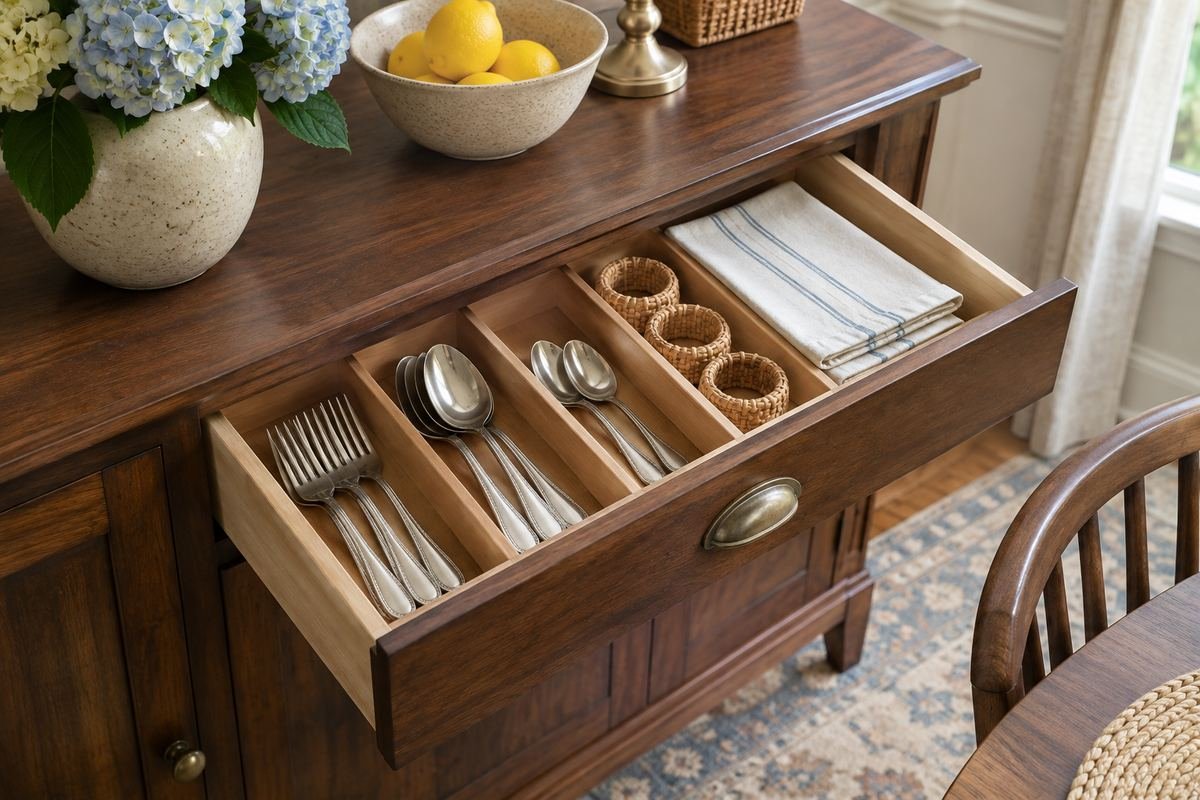
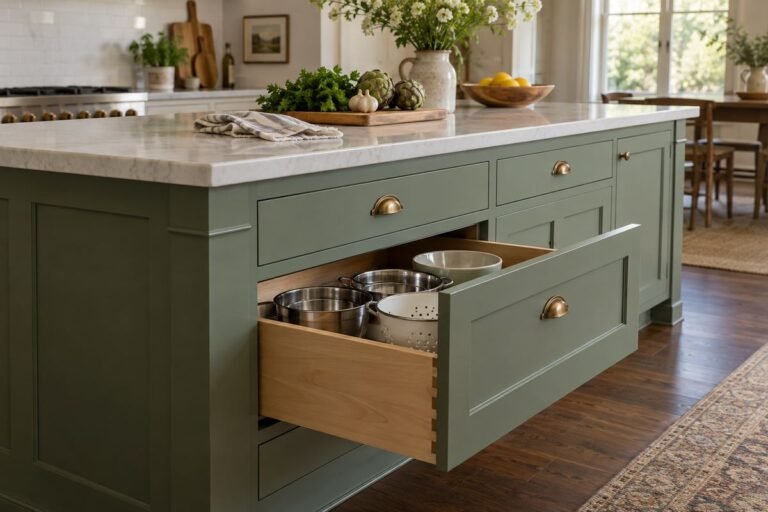
A shallow drawer can make flatware or small dining accessories easy to see without a deep layered box. Compare its usable height and the position of the runners with the actual items. A suitable divided insert should fit the drawer and serve the shapes being stored.
Keep the compartments modest rather than turning every spare space into another category. Test opening the drawer during the normal table-setting routine and returning one group after cleaning. A drawer that is easy to scan can reduce repeated searching.
Practical tip: Measure the drawer interior with the largest utensil.
8. Give large platters a suitable supported position
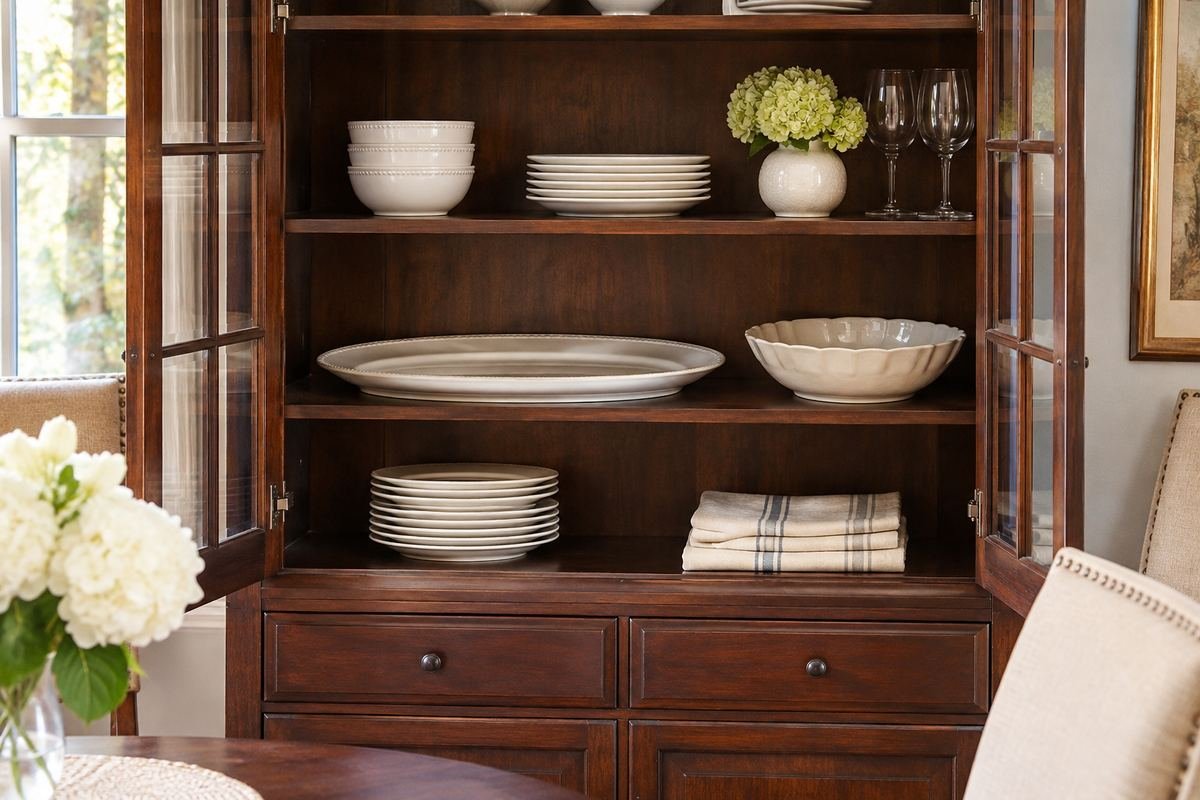
A broad serving platter may need a different shelf arrangement from ordinary plates. Compare storing it flat with a suitable purpose-made divider, following the relevant product guidance. Check the complete piece through the cabinet opening and leave a practical way to grasp it.
Avoid wedging the platter behind other stacks or leaning it loose against a hinge. If the interior cannot support a useful retrieval route, choose another appropriate storage position. An occasional piece still needs to come out and return without an awkward maneuver.
Practical tip: Test the actual platter through the open door.
9. Keep everyday plates in manageable separate stacks

Separate the plates used for ordinary meals from occasional serving pieces. Compare a modest stack on a suitable shelf with the way one plate is gripped and returned. Keep within the furniture’s stated use and load rather than filling every available inch vertically.
Avoid putting the regular plate beneath a mixed pile of bowls and platters. If the retained quantity becomes awkward, divide it between appropriate positions or reduce the group. Consistent plate sizes can make the interior easier to read without needing another bin.
Practical tip: Test taking one plate with the neighbors in place.
10. Nest bowls only into a group that stays useful

Nested bowls can conserve shelf space when the group remains manageable and the pieces are appropriate for that storage method. Compare the whole stack’s weight and height with the person using it and the actual shelf. Keep any required material protection suitable for the bowls.
A regular cereal bowl should not disappear beneath a collection of large occasional pieces. Split incompatible sizes into separate modest groups when that improves retrieval. The useful arrangement is the one that can be returned after washing without rebuilding a complicated stack.
Practical tip: Separate the frequently used bowl from occasional serving pieces.
11. Give glasses their own uncluttered shelf area
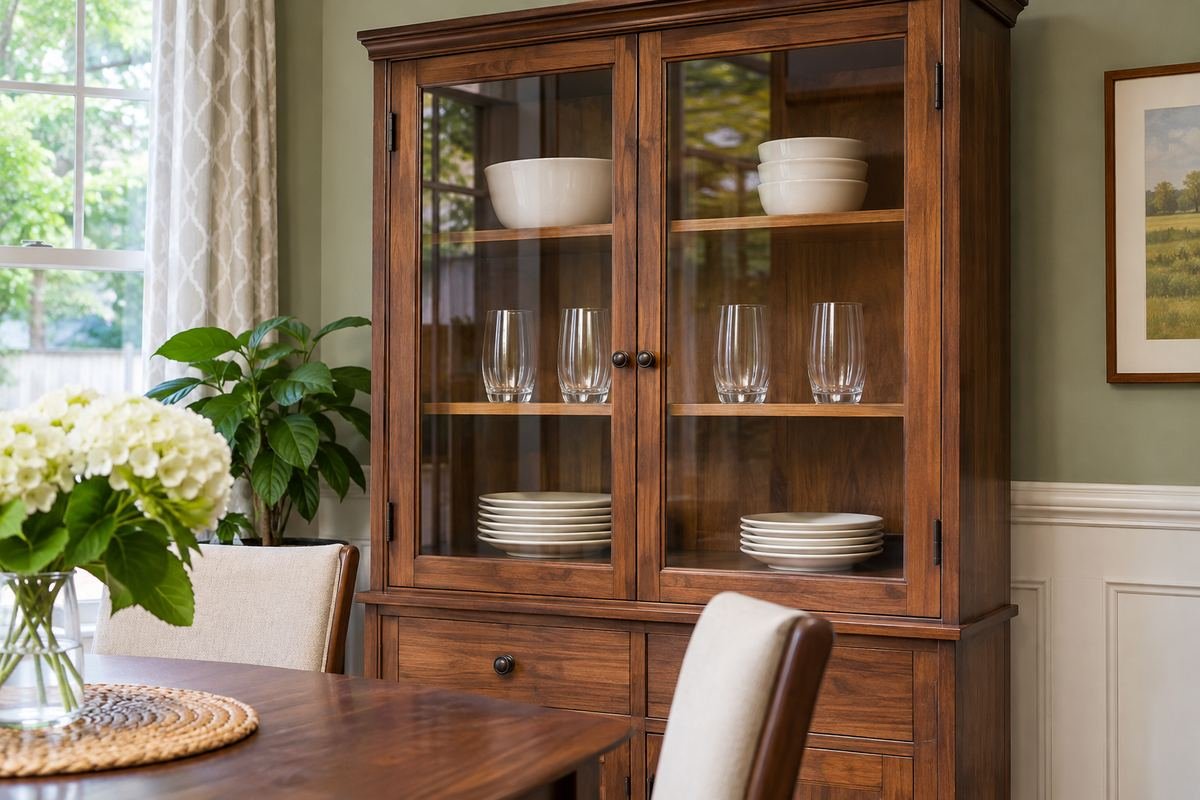
A modest group of drinking glasses can be easier to use when it has a clear area within the cabinet. Compare the complete height and the space needed to grip one glass. Follow the requirements of the glasses and shelf rather than stacking shapes that are not intended to nest.
Keep only the quantity that serves the household and appropriate gatherings. A crowded shelf can make the final glass difficult to return even when the group looks orderly when full. Review the arrangement with some pieces in use at the table.
Practical tip: Check the return of the final clean glass.
12. Separate mugs from the delicate glass group
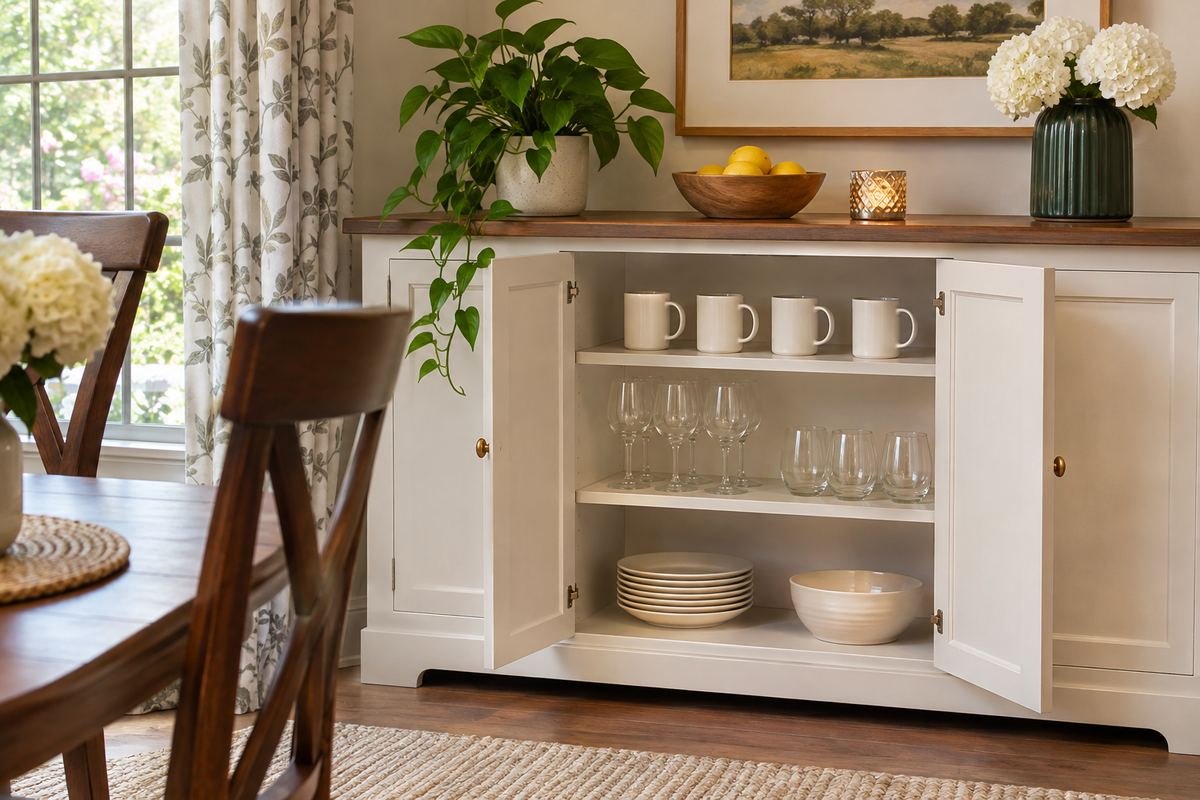
Mug handles can make a mixed shelf harder to use than the outer dimensions suggest. Give a small regular mug group its own suitable area and compare the handles with the opening and neighboring pieces. A clear row may be more useful than several mugs nested without guidance.
Choose the number from real use, and keep the handles easy to grasp. Avoid hiding the favorite mug behind rarely used cups merely to create a color pattern. The shelf should remain understandable when different household members put the group away.
Practical tip: Include each handle in the fit test.
13. Use a divided drawer for ordinary flatware

A suitable drawer insert can separate the utensils used to set the table. Compare the longest pieces with the usable compartments and keep the groups modest enough to see. Choose the insert for the actual drawer rather than trimming or forcing a mismatched organizer into place.
Return clean dry pieces according to their care requirements and keep serving tools in another suitable position if they crowd the daily group. A simple division by use can be easier to maintain than a compartment for every occasional accessory.
Practical tip: Keep the daily place-setting group easy to scan.
14. Keep serving utensils separate from daily flatware
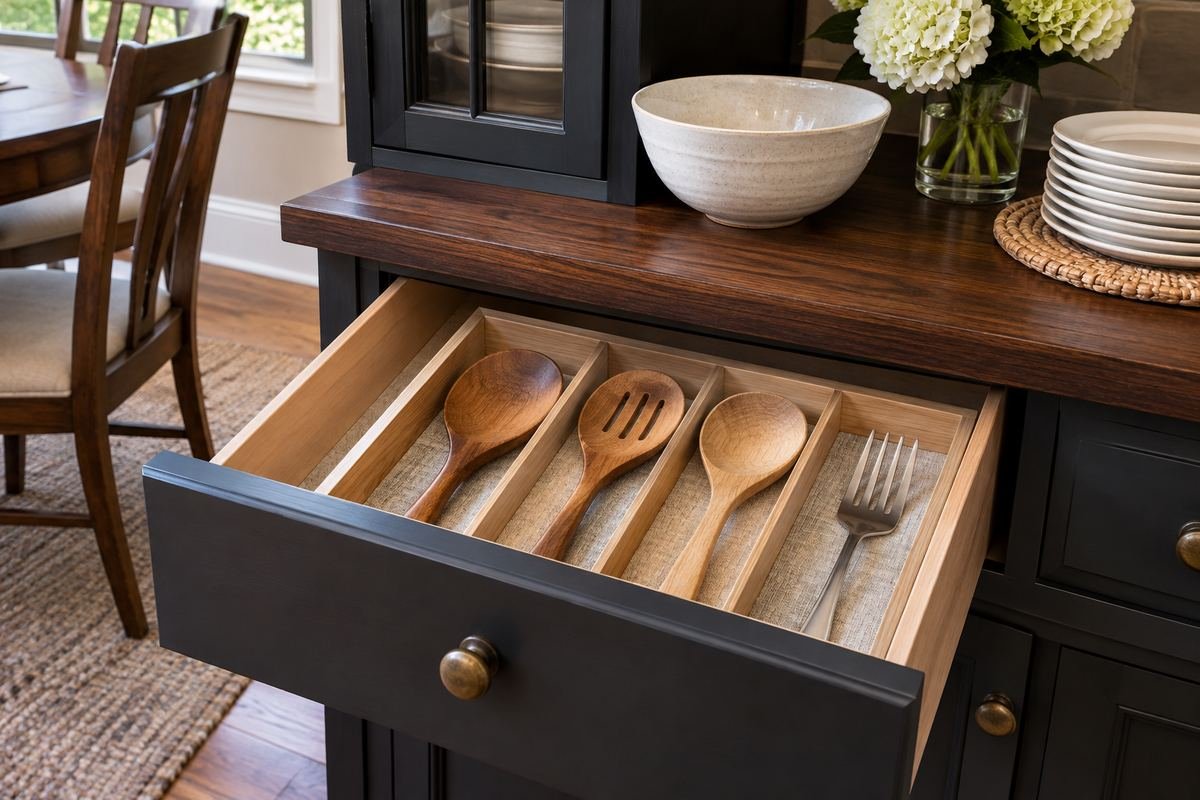
Large serving spoons and similar pieces can overwhelm an insert made for ordinary place settings. Compare a suitable separate drawer area or a shallow container inside a compartment. The longest item should fit without crossing a hinge or catching the drawer above.
Choose the group from the dishes you actually serve. Keep the regular serving piece near a practical retrieval point and review duplicates that repeatedly remain unused. A clear smaller group can be more useful than a drawer packed with nearly identical utensils.
Practical tip: Measure the longest retained serving tool first.
15. Dining room storage ideas for clean folded napkins
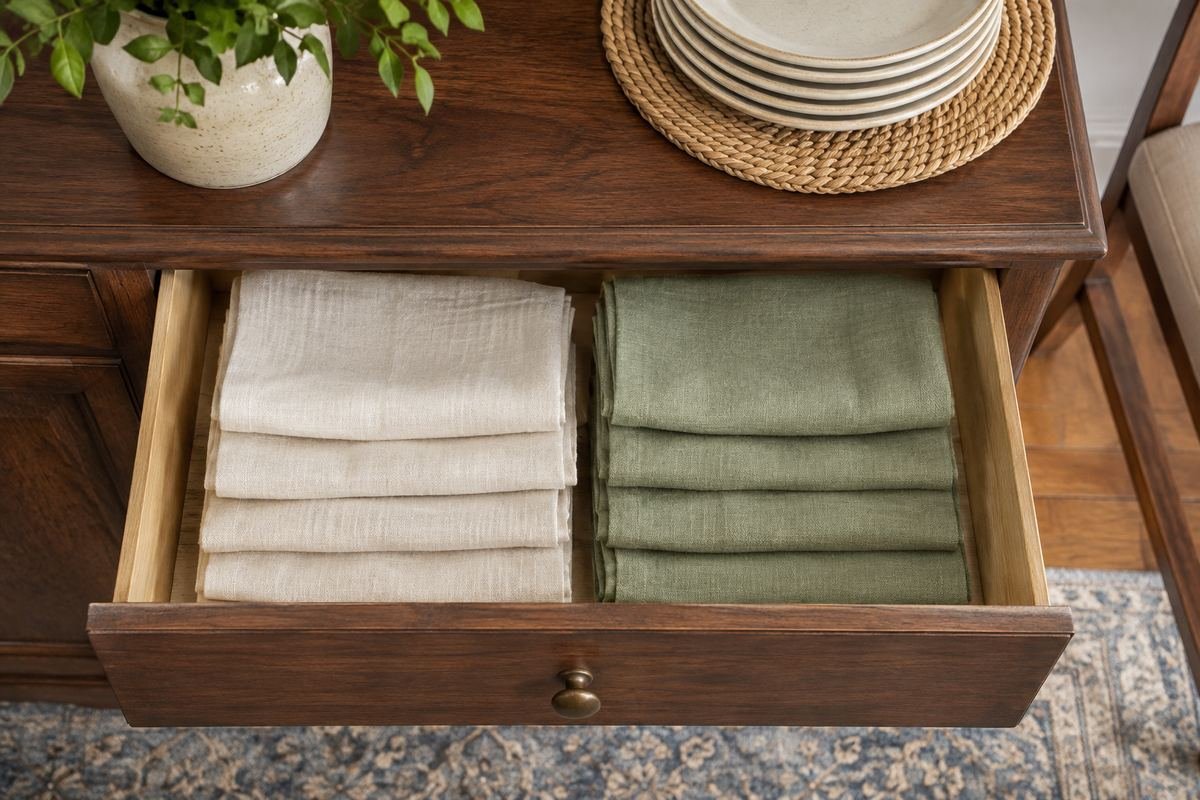
Fold appropriate clean dry napkins to fit the actual compartment rather than forcing a decorative fold into a narrow drawer. Compare a short visible row with a low stack and choose the version that lets one piece come out easily. Follow the textile’s care instructions before storage.
Separate the ordinary meal group from occasional colors or sets if that makes selection easier. Keep the folds simple enough to repeat after laundry. Storage should support the household routine rather than require every napkin to look identical each time.
Practical tip: Choose a repeatable fold that fits the drawer.
16. Give placemats a position that respects their material
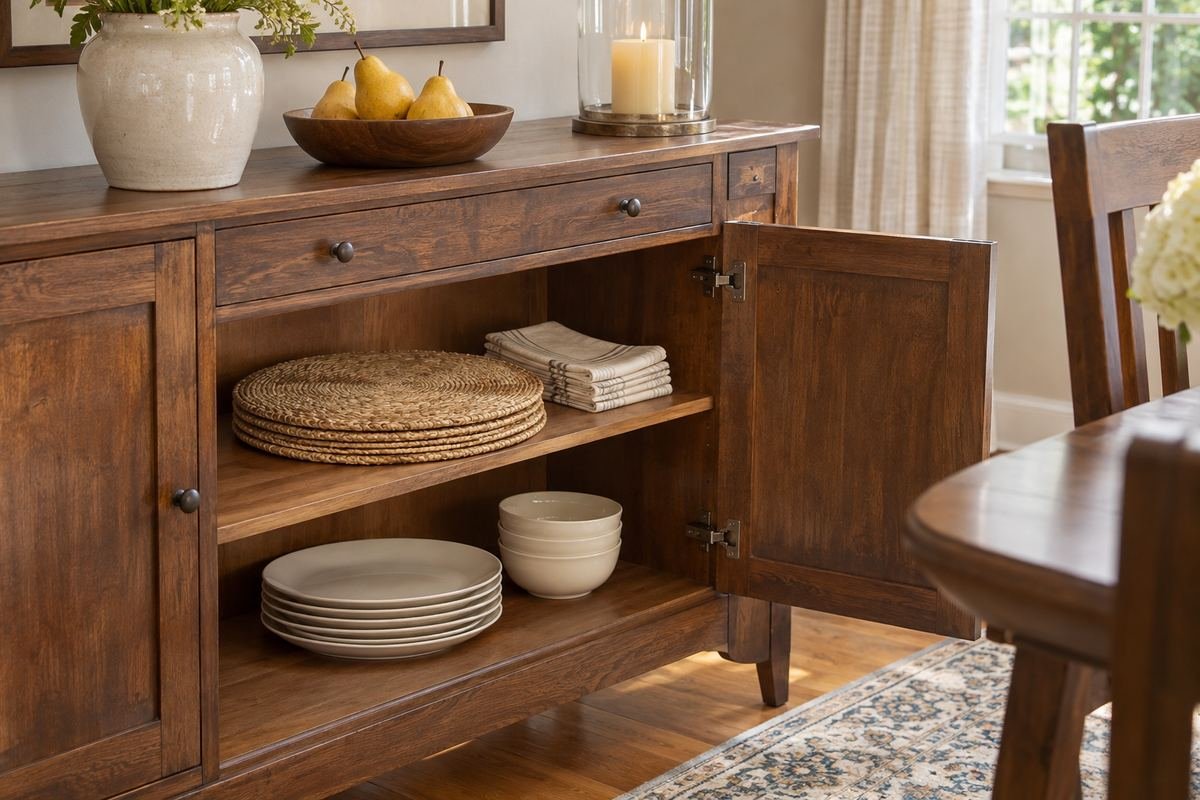
Rigid mats, flexible woven pieces and fabric placemats may need different storage arrangements. Compare the exact care guidance with a flat shelf, suitable drawer or other supported position. Measure the largest piece and avoid bending an item that is not intended to fold.
Keep the regular set together without burying it beneath several unrelated supplies. If the mats distort or catch during retrieval, revise the position rather than pressing them into the available gap. A smaller appropriate collection can make the drawer easier to use.
Practical tip: Match the storage shape to the actual placemat.
17. Separate table runners from the daily napkin group
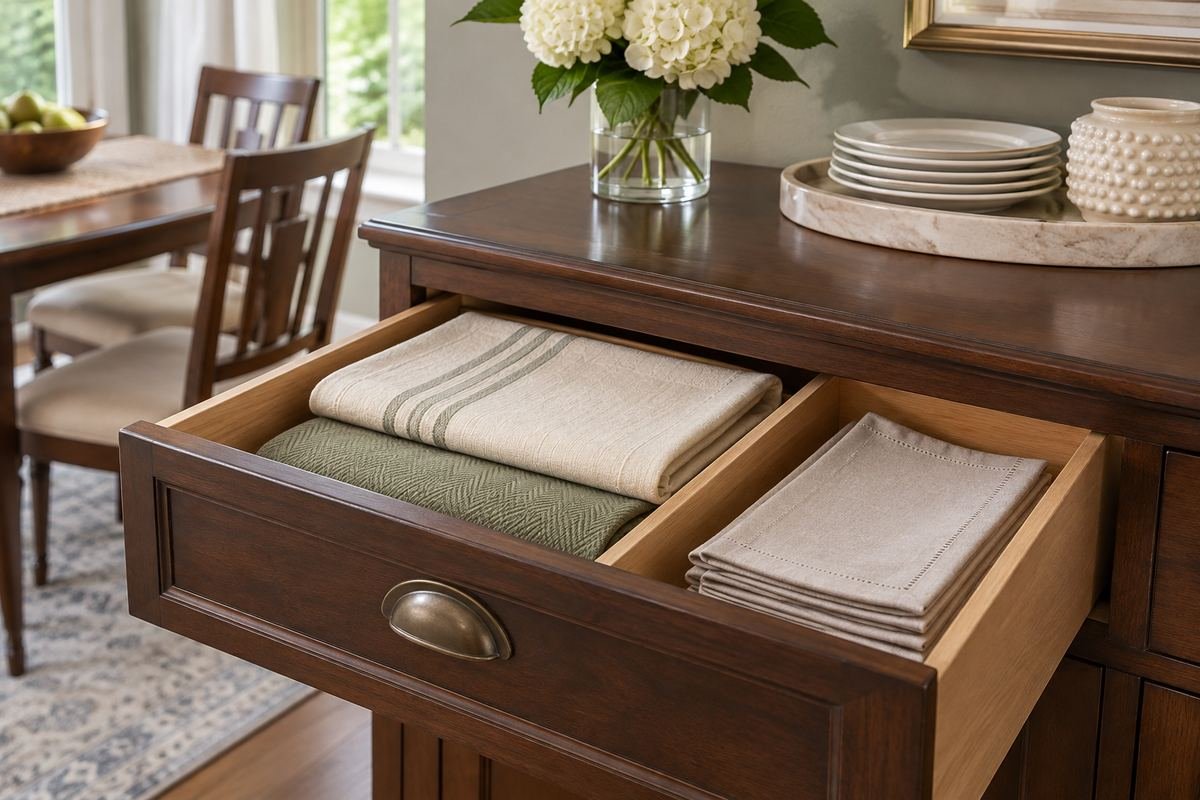
A runner can become difficult to find when it is folded beneath several tablecloths. Give the retained runners a small appropriate section and choose a fold that respects their care guidance. Compare the finished fold with the usable drawer or shelf before adding a box.
Keep occasional colors separate from the runner used during ordinary meals if that helps the household choose. Avoid storing damp textiles or compressing a decorative detail that needs another form of support. The group should remain easy to review after laundry.
Practical tip: Keep the regular runner visible without lifting the whole linen stack.
18. Give tablecloths a fold that fits the real shelf
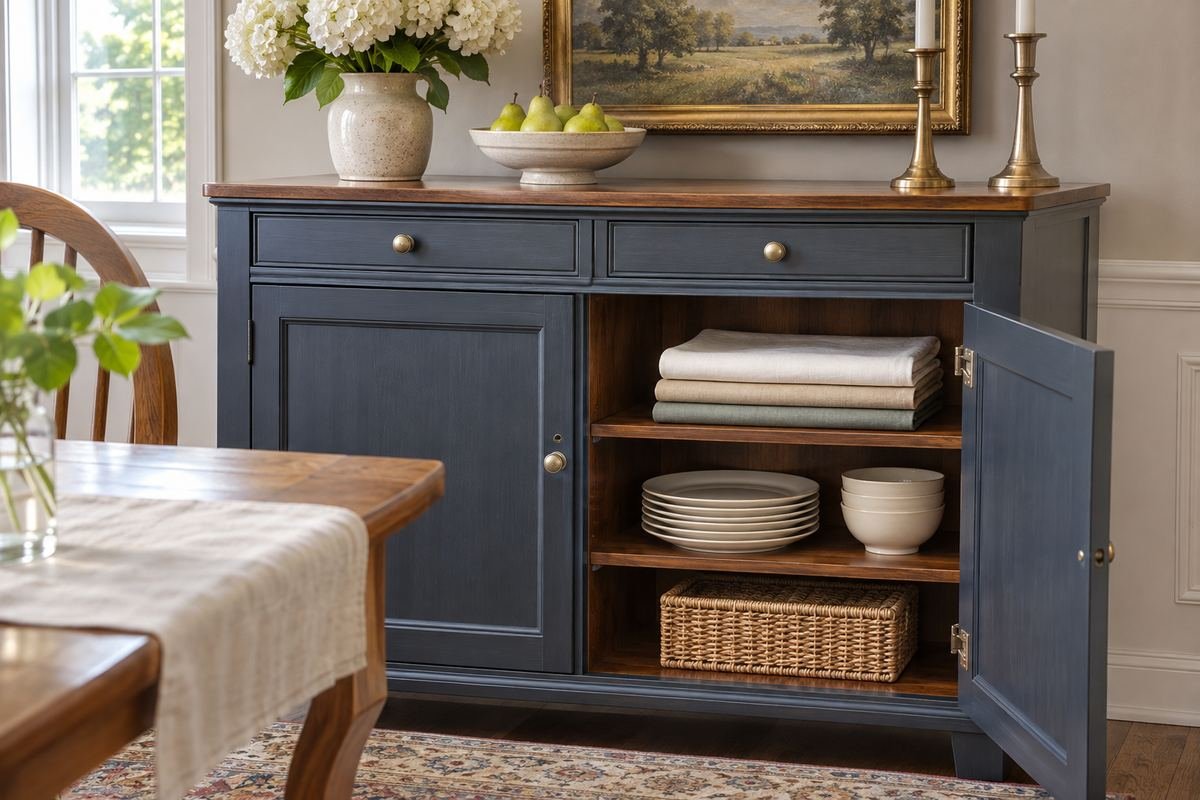
Measure the usable shelf or drawer and compare a simple fold for each retained tablecloth. Keep the textiles appropriately clean and dry according to their care requirements. A fold that fits the storage can be more useful than matching every cloth to a decorative box size.
Leave enough room to remove one piece without pulling out the entire pile. If several large cloths make the compartment awkward, review their actual use or choose another suitable position. Keep the return step simple enough to repeat after washing.
Practical tip: Fit the fold to the compartment instead of adding another container first.
19. Collect small dining accessories in one shallow group
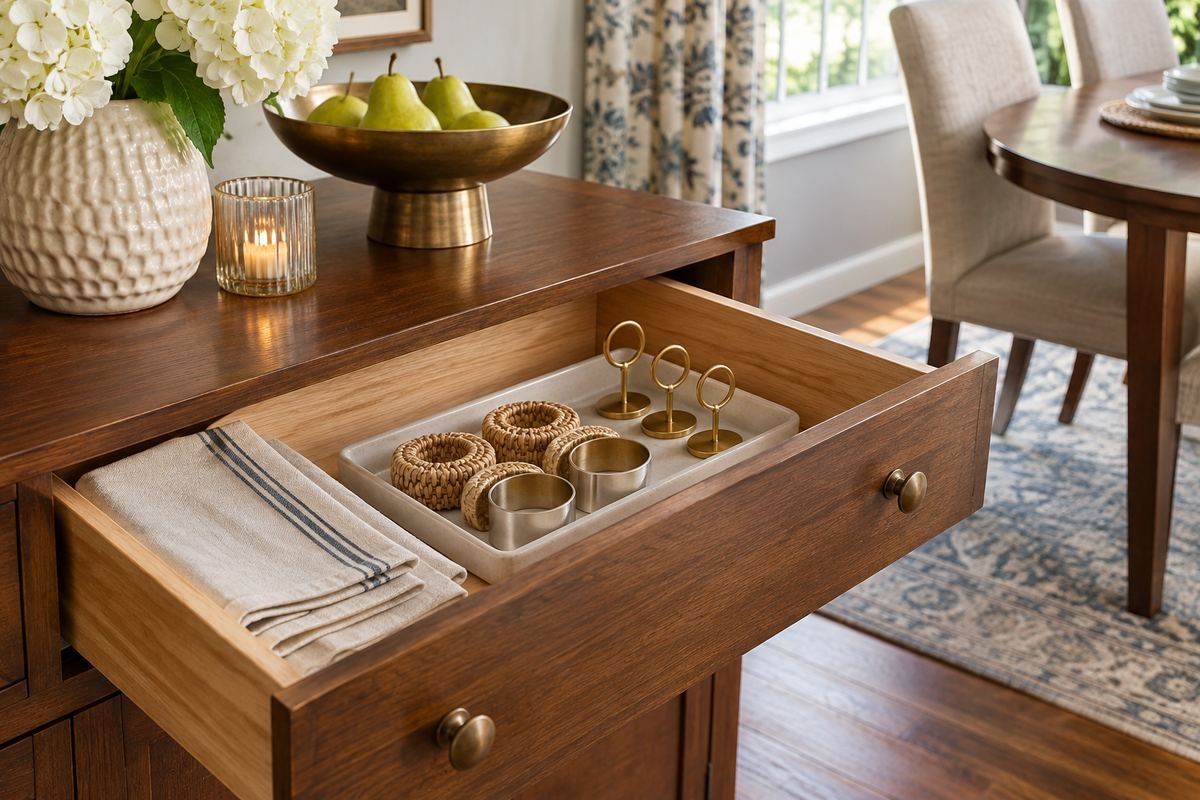
Napkin rings and similar small meal accessories can become scattered across several drawers. Compare a shallow suitable tray that keeps the retained group together without several layers. Choose compartments from the actual objects rather than buying a large divided organizer in advance.
Keep delicate pieces appropriately supported and remove anything that belongs to another task. If one accessory is used only with an occasional linen set, store the related groups in nearby suitable positions. The arrangement should make a complete table setting easy to find.
Practical tip: Use a shallow group you can understand at a glance.
20. Use a removable table-setting caddy for a modest group
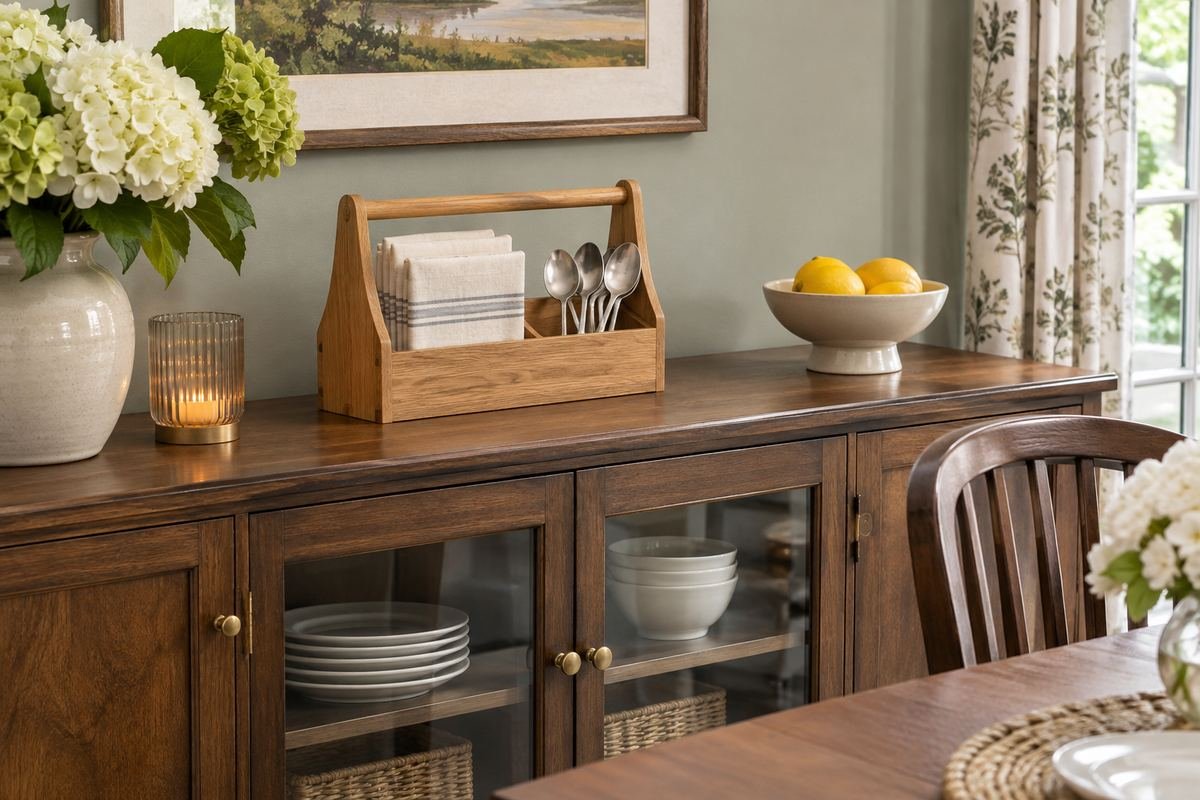
A suitable removable caddy can bring a few ordinary supplies to the table together. Compare the complete loaded group with the container’s use and your handling route. Keep it manageable and choose the actual contents from the table-setting task.
Do not turn the caddy into a permanent tabletop catchall. Give it a clear storage position and return its suitable clean contents after use. If carrying the group becomes awkward, split the task rather than choosing a larger container automatically.
Practical tip: Test carrying the loaded group before filling every section.
21. Keep an occasional guest set separate and identifiable

A modest occasional set can have its own suitable cabinet area when the household uses it for gatherings. Compare the complete retained group with the interior and keep it easy to identify. Store each material as its guidance requires rather than packing unlike pieces into one deep box.
Review the group before and after use so missing or unsuitable items do not become a surprise at the next meal. Do not let the occasional collection take the easiest position away from daily supplies without a practical reason.
Practical tip: Review the guest group as one planned task.
22. Give a shared-room project a defined storage compartment
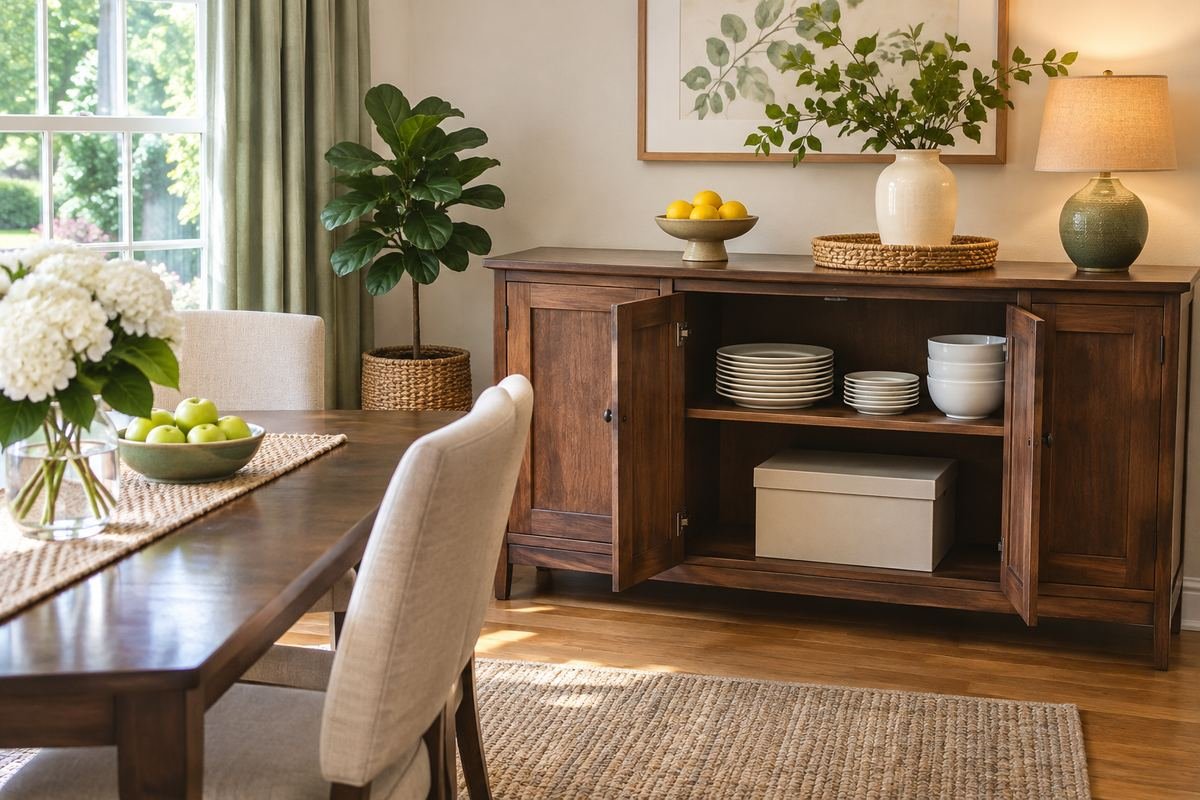
When the dining table also serves a work or craft task, choose a separate suitable compartment for the project supplies. A manageable removable box can help the task leave the table for meals. Keep the contents appropriate to the household and furniture rather than mixing them with dining items.
Plan the return step before starting the task. If the project cannot fit in its defined group, reduce it or choose another suitable location rather than letting supplies spread across several tableware shelves. Keep any sensitive work material stored appropriately.
Practical tip: Include clearing the table in the project routine.
23. Use a small game group that can return after play

A shared dining room may need room for a few tabletop games. Compare the actual boxes with a suitable shelf and keep the group separate from tableware. Choose a modest collection that can be retrieved without emptying the cabinet.
Include returning the pieces and closing the boxes in the normal reset. Avoid putting a tempting display high on furniture where it could encourage climbing, and follow the furniture’s anchoring guidance. The game group should leave the meal surface ready for its next use.
Practical tip: Choose a practical reachable position for the household.
24. Protect the useful serving area on the sideboard top
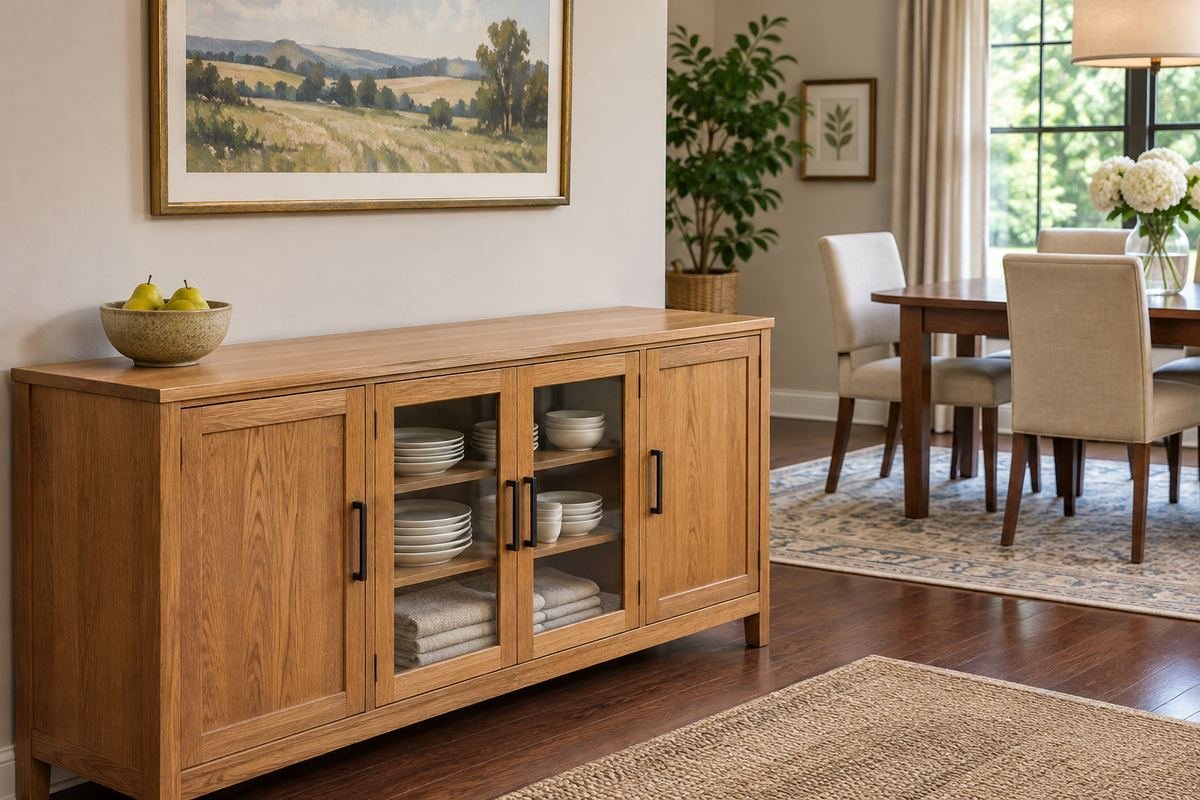
A sideboard top can support a meal task only when some of it stays available. Decide whether the surface is for setting down suitable dishes, holding a modest display or another purpose allowed by the furniture. Follow the material’s care and protection requirements.
Keep decorative objects within a deliberate limited area and test the real serving piece in the space left over. Do not use the cabinet top for heat or other conditions it is not intended to tolerate. The useful surface should not require unloading several ornaments for each meal.
Practical tip: Choose the task first and decorate the space that remains.
25. Check dining room storage ideas with doors fully usable
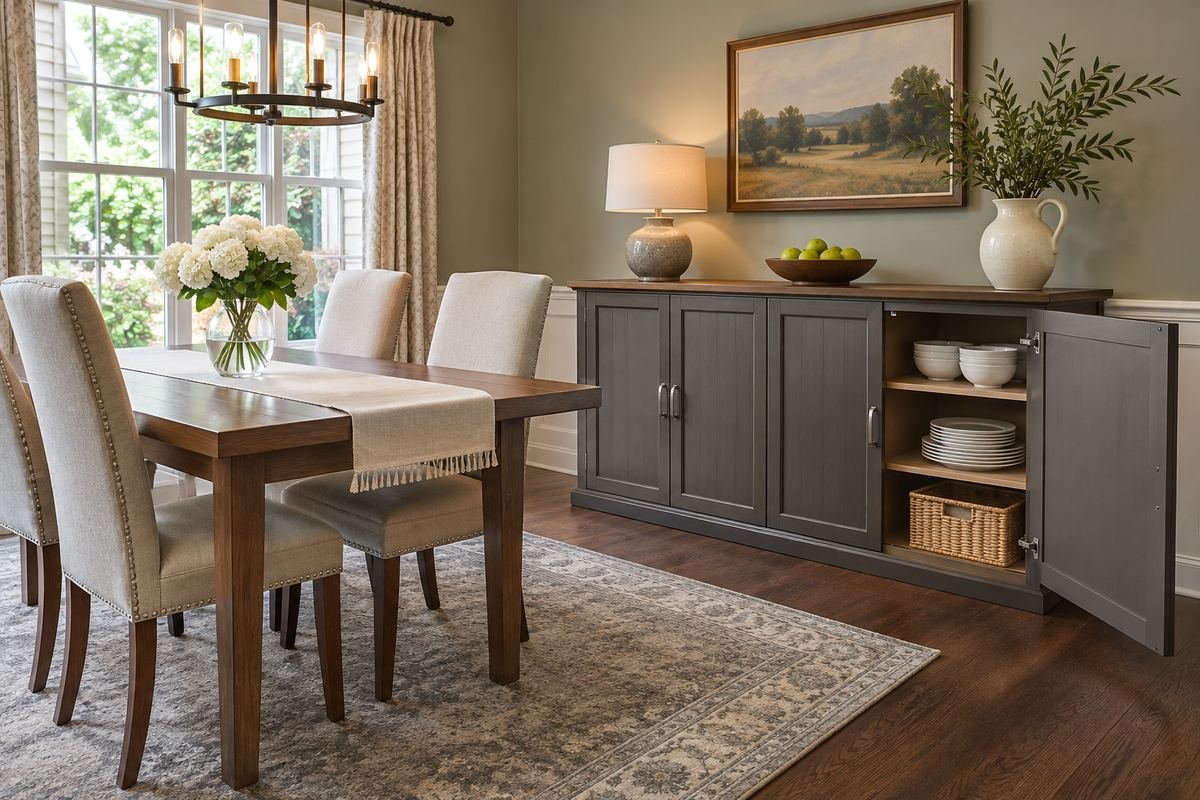
The cabinet footprint is only part of the room arrangement. Open the relevant door or drawer through its intended movement with the chair in its normal dining position. Include projecting handles and the space needed to remove the actual stored piece.
If the movements conflict, compare another cabinet position, a different opening arrangement or less furniture. Do not treat a closed-door photograph as proof that the storage works. The best position serves the meal routine and keeps normal room circulation useful.
Practical tip: Test the occupied room rather than only tucked-in chairs.
26. Finish dining room storage ideas with a one-week return review
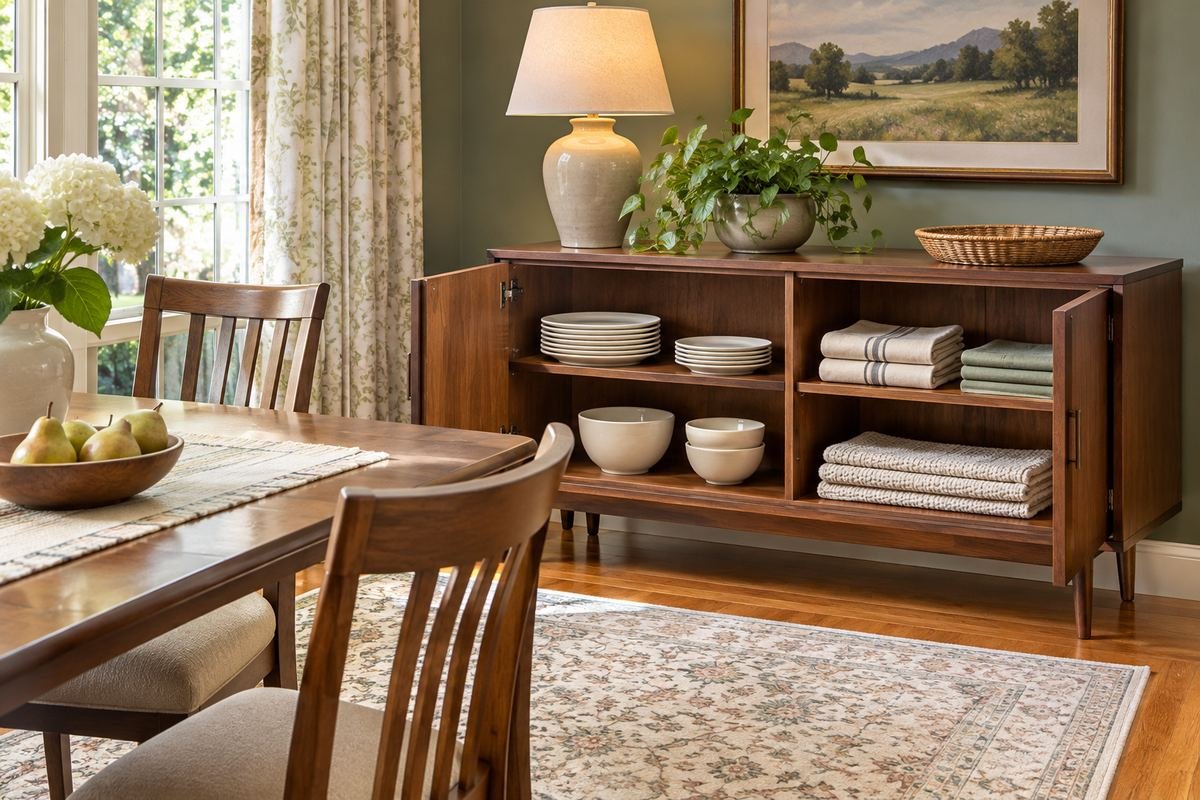
Watch what remains on the table after ordinary use during one normal week. A runner that has no suitable fold, a tray that catches the cabinet opening or a project box that cannot return can reveal the real storage problem. Record that observation on the inventory card.
Change one difficult group before buying more furniture. Simplify the retained collection, revise the compartment or choose a more suitable container where it helps. A useful dining room is one that can return to its regular state without a long styling session.
Practical tip: Fix the recurring item left out before adding another cabinet.
Frequently Asked Questions
What should I store in a dining room sideboard?
Start with tableware, linens and serving pieces that are genuinely used in or near the room. Compare each retained group with the actual interior and the furniture’s load and care requirements. Give shared-room work or hobby supplies a separate defined compartment so they can leave the table for meals.
How close should storage be to the dining table?
Choose a position that makes the task practical while preserving the occupied chairs, open cabinet doors or drawers and normal circulation. Test the real meal routine rather than relying on a generic distance. The usable cabinet can be farther away when the nearest position causes interference.
Are glass doors better than solid cabinet doors?
Glass doors make a retained collection visible, while solid doors can give mixed supplies a quieter appearance. Choose from the real contents, care and fit. Both require suitable shelves, manageable groups and a practical door opening; neither automatically improves the storage routine.
How should dining linens be organized?
Store appropriate clean dry textiles according to their care instructions in a suitable compartment. Compare folds with the usable drawer or shelf dimensions and separate ordinary meal supplies from occasional sets. Keep the group visible enough to remove and return one piece without disturbing everything else.
Does a sideboard need anchoring?
Follow the instructions for the exact furniture and the appropriate anchoring method for the actual wall. CPSC’s Anchor It guidance emphasizes securing furniture correctly. Do not infer that a piece is protected from tipping because it looks low, heavy or stable in a concept photograph.
What if the dining room also serves as a workspace?
Give the non-dining task a defined removable group and a suitable storage position. Include clearing the table and returning the supplies in the routine. If the project cannot be stored without blocking dining items, reduce the group or choose another appropriate location.
Choose the Details That Work in Your Home
Choose dining room storage ideas from the objects and movements you need to support. Fit the interior to the retained collection, keep furniture access useful and make returning clean supplies straightforward. A cabinet that helps the table clear after an ordinary day is a more convincing result than a larger piece filled without a plan.
For related ideas, explore dining chair ideas, dining table centerpiece ideas, small dining room ideas, dining room wall decor ideas.
Planning References
IKEA: dining-room cabinets, grouped supplies and portable storage; U.S. CPSC Anchor It: furniture anchoring and manufacturer instructions. Follow the instructions for the exact products you choose.
Optional digital guide for this topic
If you prefer a structured workbook, explore this related paid guide.