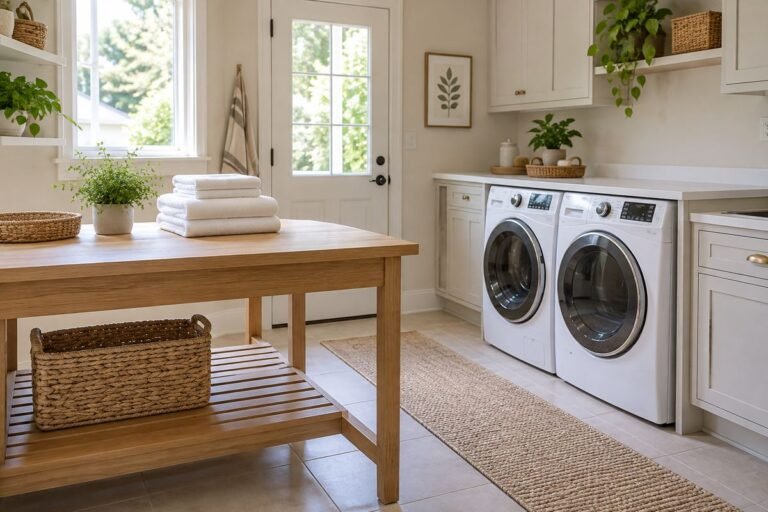
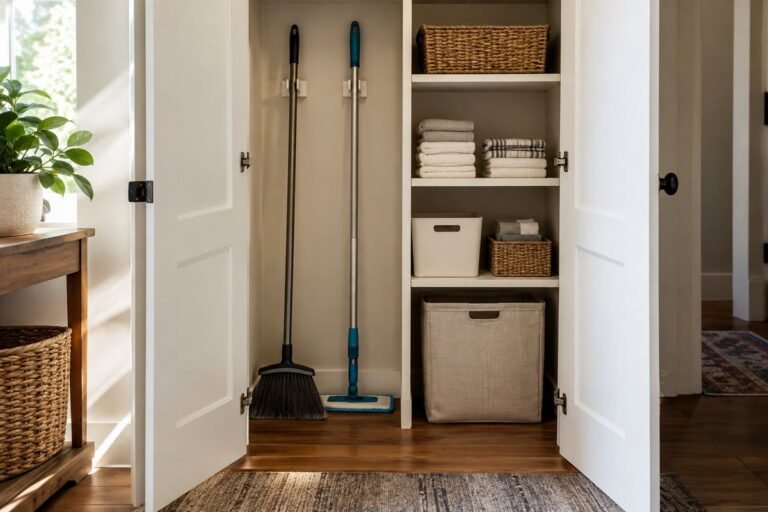
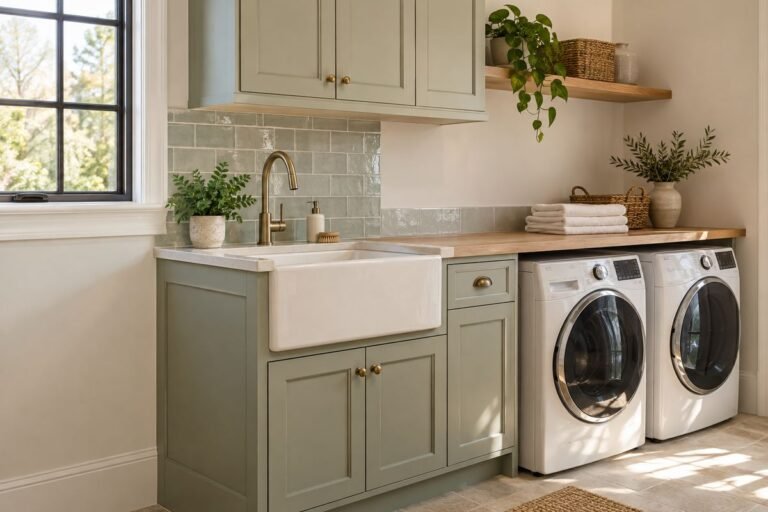
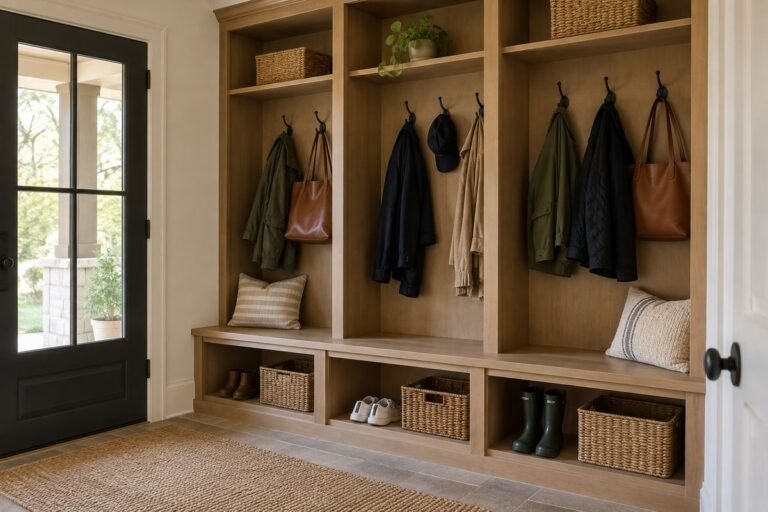
Small laundry room organization begins with room to load machines, set down a basket and move clean clothes out. Storage helps when it supports those tasks rather than filling every spare space.
These 20 small laundry room organization ideas compare cabinets, shelves, hampers, and drying options, with one original image for each idea. Measure your room with appliance doors open, follow equipment instructions, and start with the part of your routine that creates the most clutter.
The original images are AI-generated design concepts, not measured installations or tested product recommendations.
Test Small Laundry Room Organization Through a Complete Load
Begin with the full carrying basket and move through sorting, loading, unloading and the return of clean clothes. Next, open the storage and drying equipment needed at each stage. For example, a hamper drawer may fit when closed but occupy the place needed to stand at the washer. Choose the arrangement that reduces repeated moving, and retain the equipment access and secure product storage required for the actual household.
Plan Storage Around the Way You Wash
Measure with the machine doors or lids open and a carrying basket in the room. Check the equipment’s installation instructions before placing a cabinet, shelf, or cart near it. Test the full extension of a hamper drawer or drying rack, as well as the place it will occupy when stored.
- Supplies covering the counter: consider suitable closed storage first.
- Baskets covering the floor: give each hamper and carrying basket a defined home.
- Small accessories going missing: use a divided drawer or a modest dry-accessory basket.
- Drying space taking over: compare a fold-away rack with a portable option that has a storage place.
1. Build Small Laundry Room Organization Around the Work
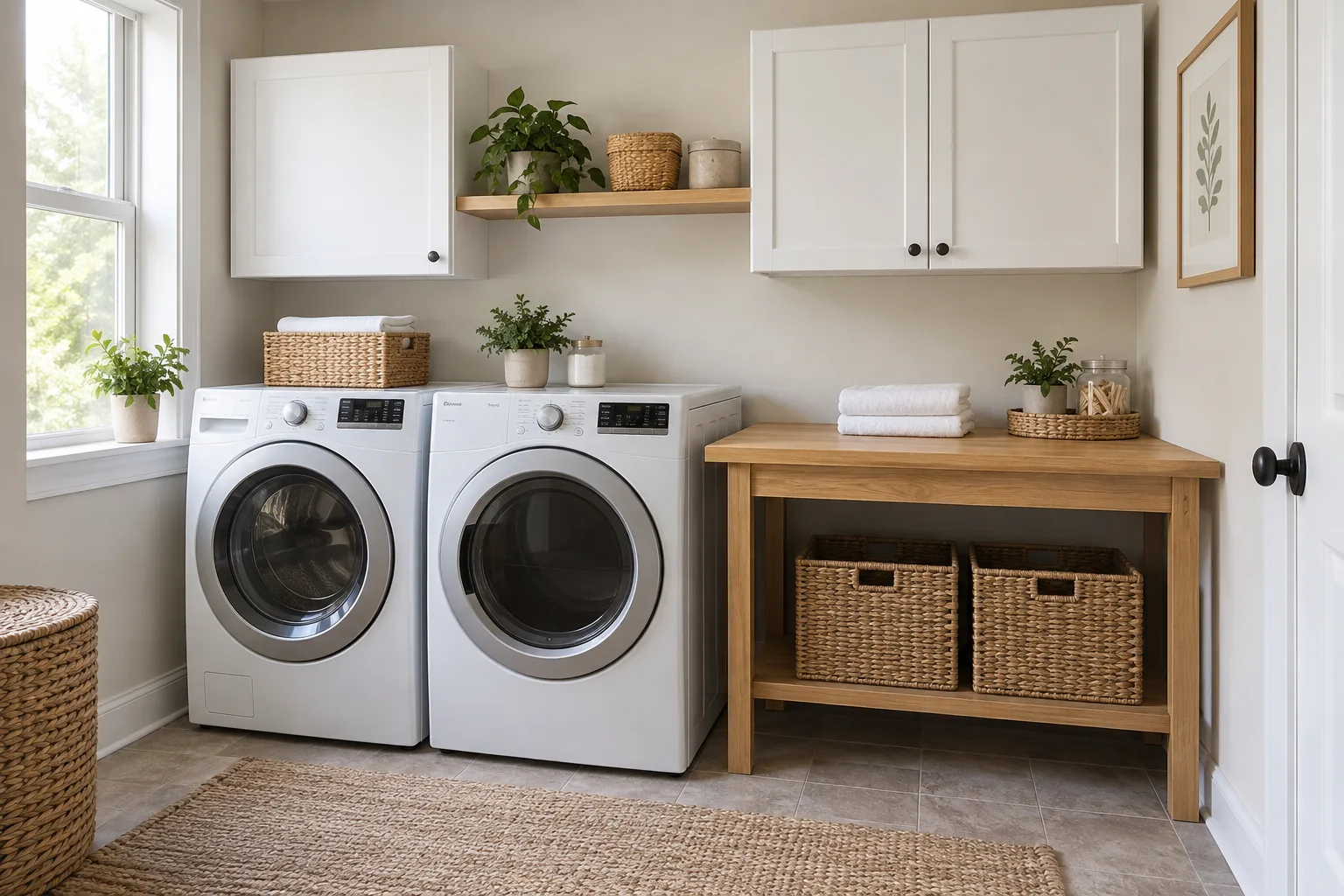
Start with the work you do: loading, unloading, sorting, and folding. Keep the storage around those movements rather than choosing cabinets first. A small room can feel much easier when the basket has a place to land and the machine doors open without moving furniture.
Measure the appliances in use, including their door or lid movement, and follow their installation clearances. Keep connections and service access available. Do not squeeze storage into a gap that the equipment needs for safe operation or maintenance.
2. Use Upper Cabinets for Supplies You Want Hidden
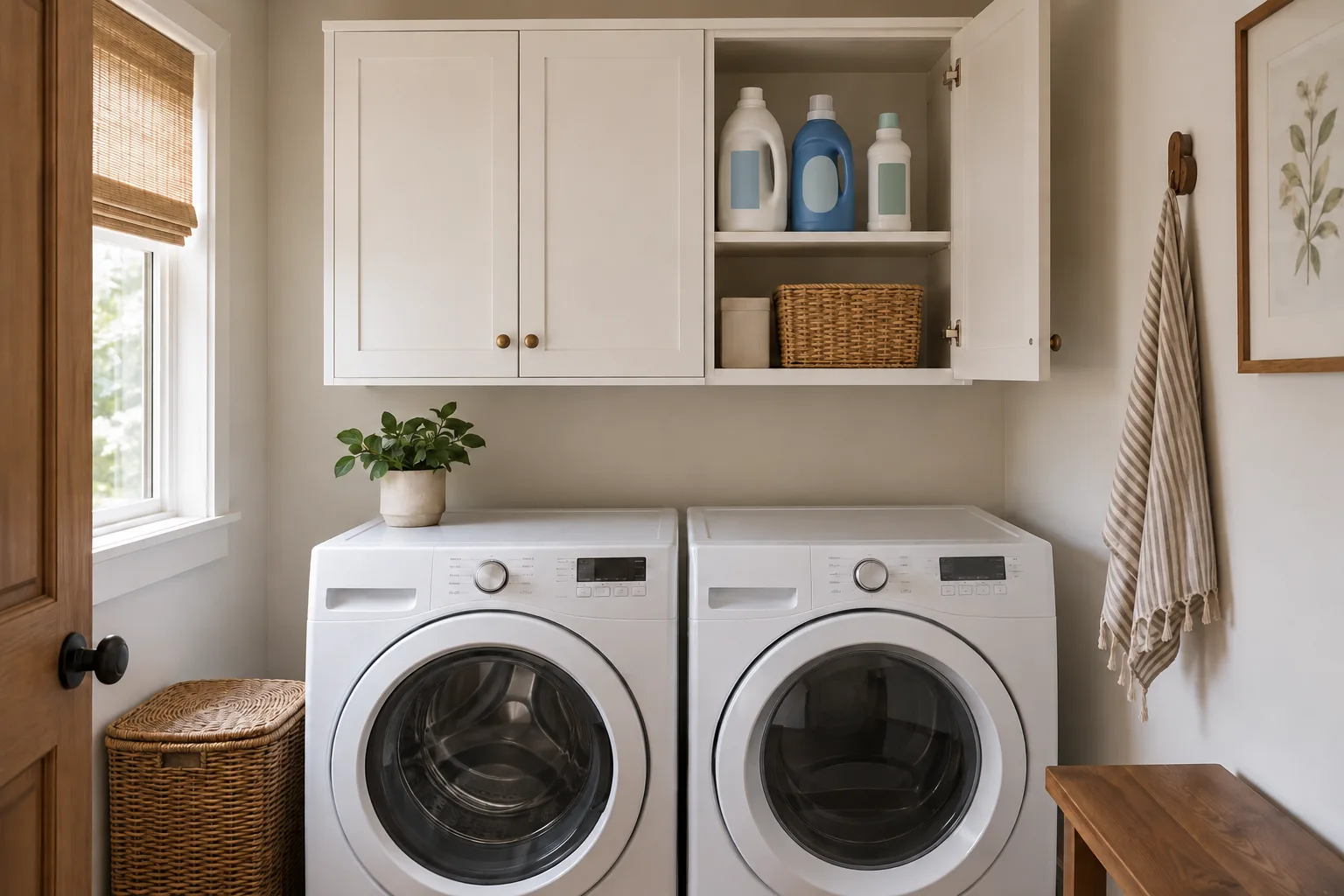
Upper cabinets can keep everyday supplies from filling the folding surface. Group products by task and give each group a consistent place. Closed doors also make a small room look calmer, especially when the useful packaging is not visually coordinated.
Keep laundry products in their original containers with labels intact, and store them according to the label, out of children’s and pets’ reach. A high cabinet alone is not a complete child-safety measure. Use appropriate secure storage for your household.
3. Choose One Open Shelf for Baskets and Linens

An open shelf works well for clean cloths, spare towels, or a small basket of empty laundry bags. Limit it to things that benefit from quick access. A restrained shelf gives the room useful storage without asking you to style a whole wall of supplies.
Use appropriate fixings and follow the shelf’s load limit. Leave enough height to lift each basket comfortably. Keep laundry chemicals in the secure storage their labels and your household require rather than treating the open shelf as their default home.
4. Fit a Narrow Cart Beside the Work Surface
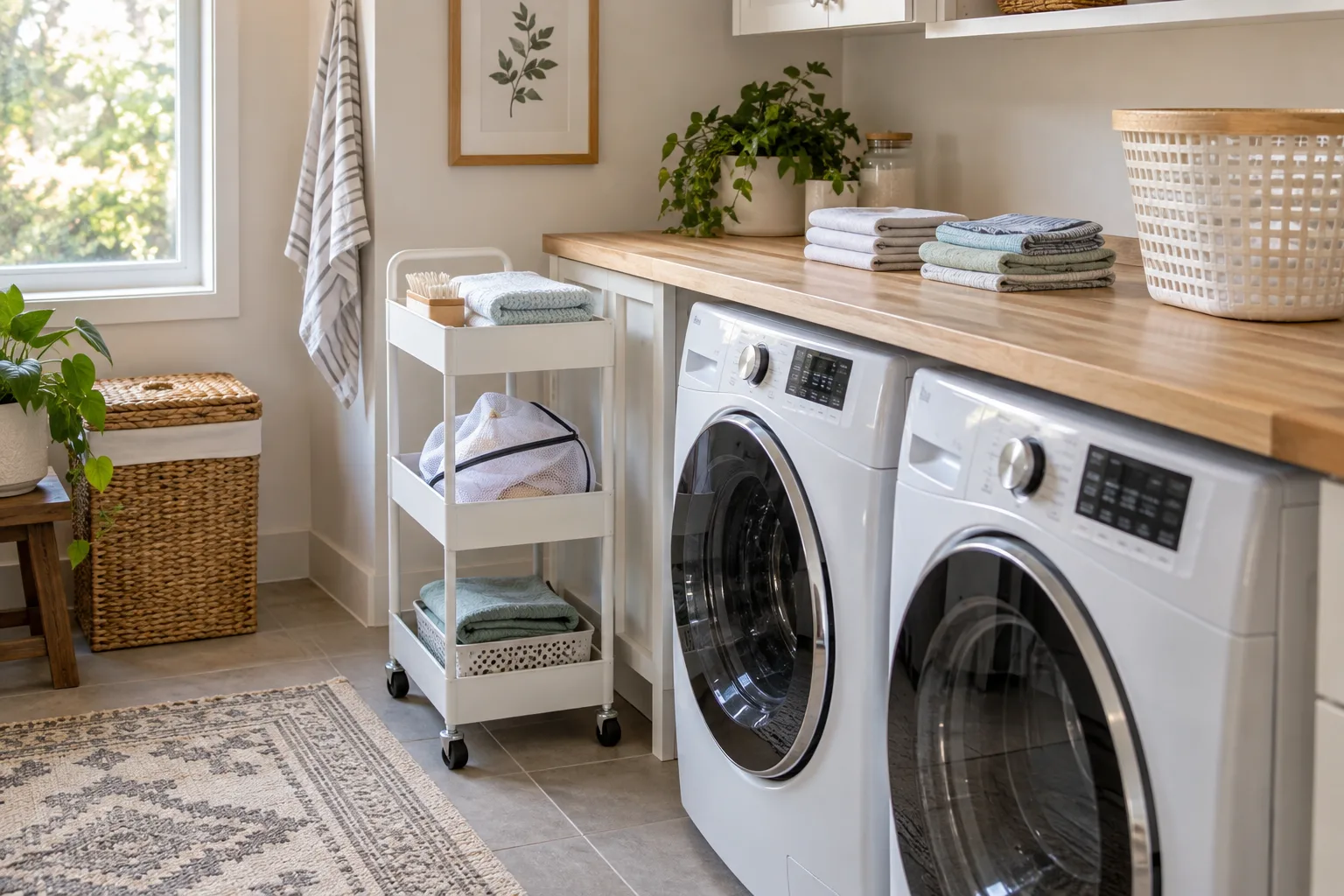
A narrow cart can use a genuine spare strip beside a folding counter. Keep it for light accessories such as mesh bags, cloths, and an empty collection basket. It is easy to move out when you need to clean the floor or change the room arrangement.
Measure the cart with its handles and wheels included, and keep it out of appliance ventilation or service spaces. Check the loaded cart’s stability and instructions. A gap behind a machine is often part of the installation, not spare storage.
5. Sort Laundry With Two Removable Hampers
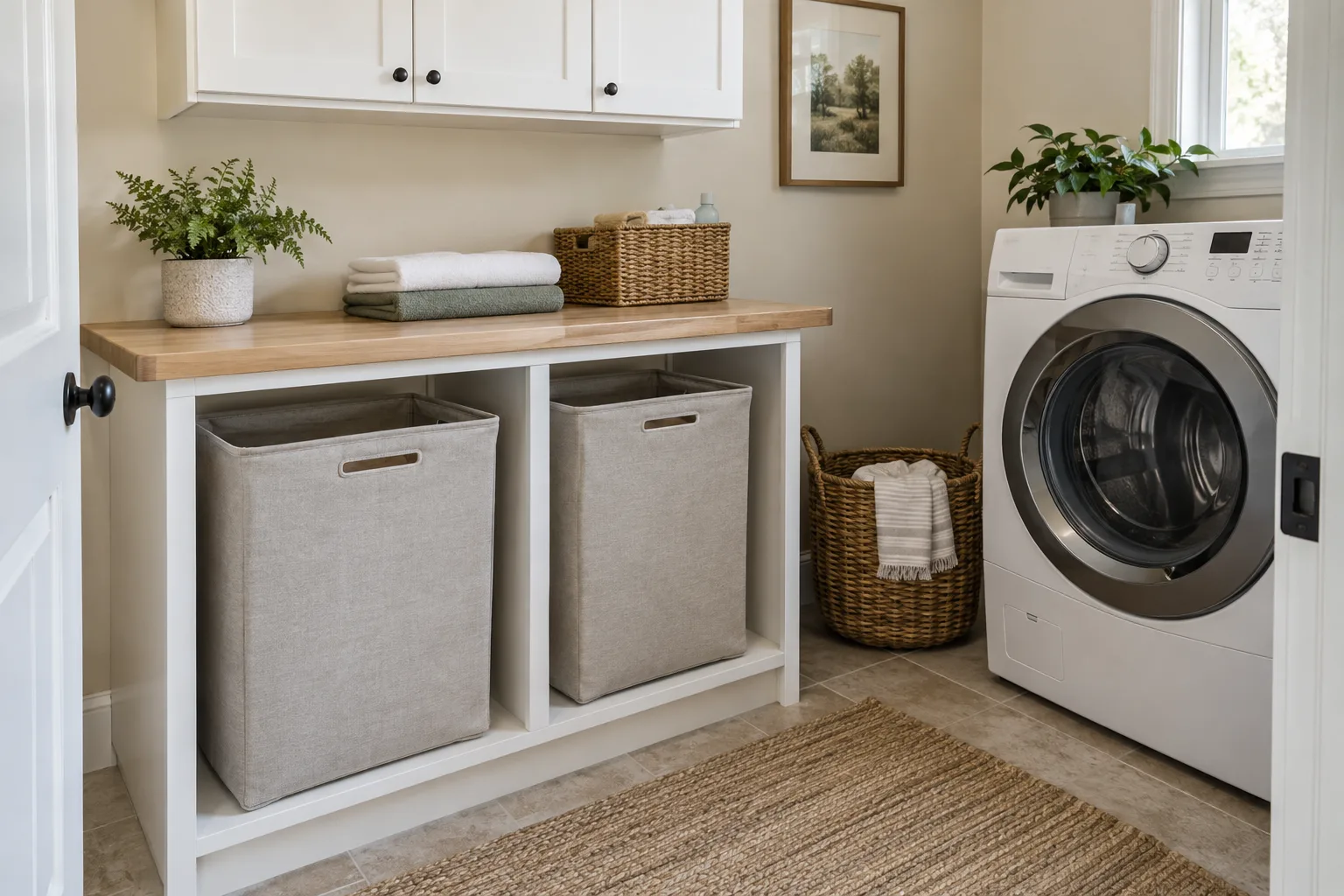
Two removable hampers can create a clear sorting routine without a row of oversized baskets. Choose categories that match how your household washes clothes. Open cubbies under an independent counter keep the hampers accessible and the walking route clearer.
Measure the hamper handles and test removal when it is full. Keep damp items from sitting without appropriate ventilation, and follow care labels when sorting. Leave enough room at the machine to transfer laundry without juggling an open cabinet door.
6. Plan Vertical Small Laundry Room Organization
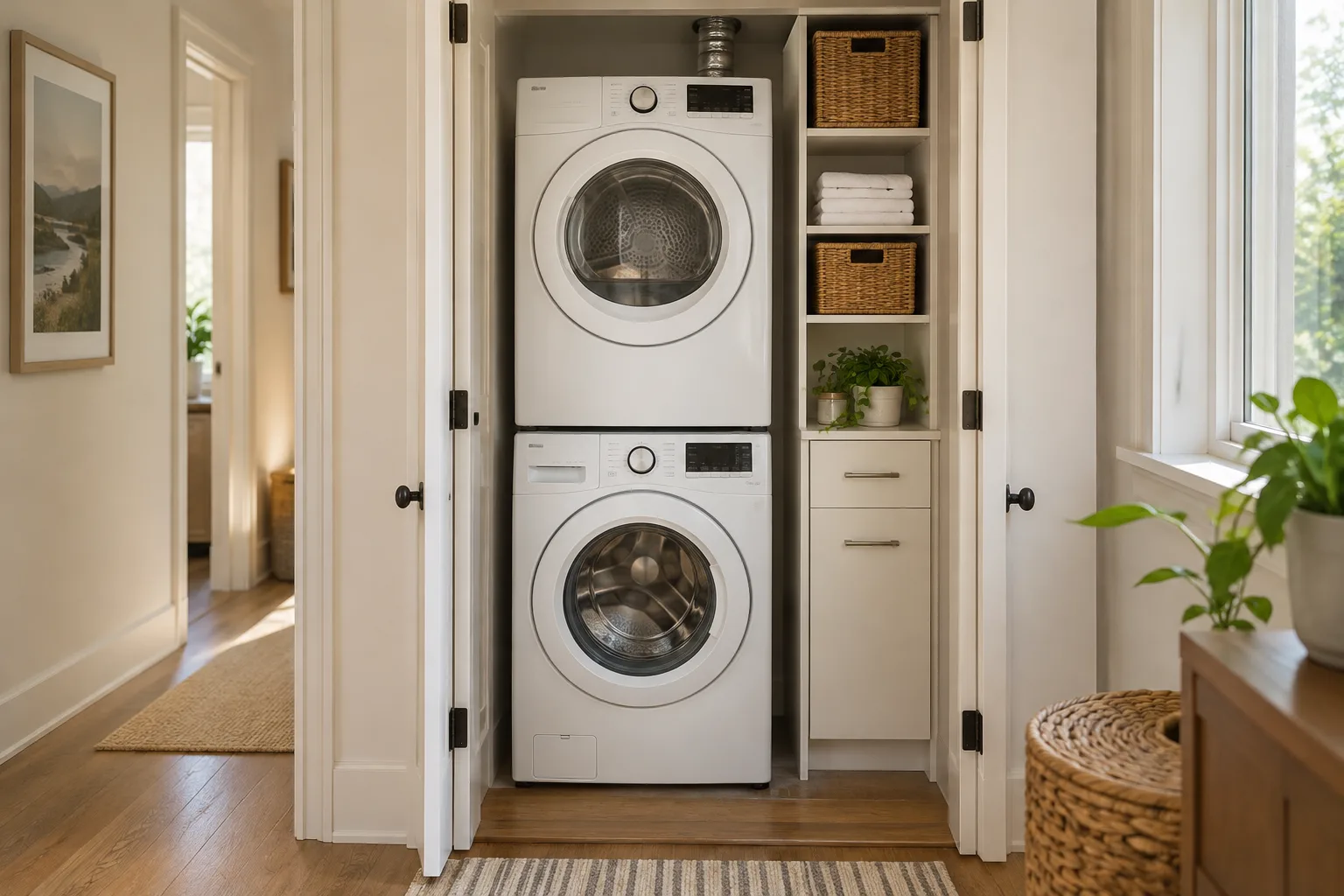
A laundry closet can use vertical space when the appliances and installation are suited to a stacked arrangement. Pair it with a modest side cabinet or shelf for accessories, keeping the opening free enough for loading and taking a basket out.
Only stack appliances that are approved for that arrangement with the manufacturer’s required kit and instructions. Check closet ventilation, door movement, and access to controls and connections. This is a planning idea, not permission to stack any two machines.
7. Fold a Wall Drying Rack Away After Use
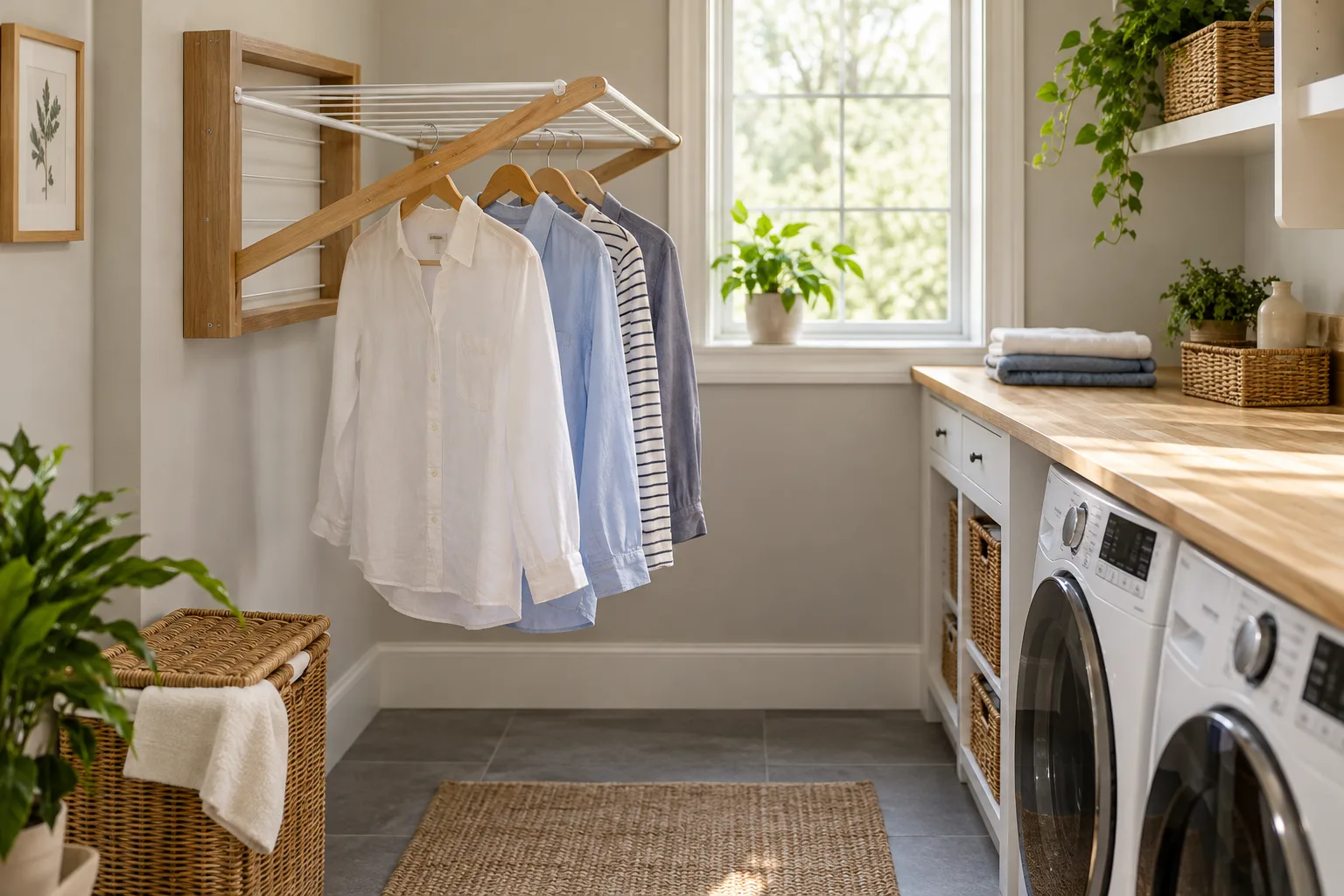
A fold-down drying rack can provide a temporary place for items whose care labels call for air drying. Put it on a suitable wall where it can open without blocking the room’s normal movement. Fold it away after the garments are dry.
Follow its fixing and load instructions, allow airflow between items, and keep the rack clear of appliance doors and ventilation. Check the open rack’s projection before installation. The empty wall is useful only if the extended rack also fits.
8. Use a Short Hanging Rail for Finished Clothes

A short hanging rail gives clean shirts a waiting place before you put them away. It can also help keep freshly steamed or pressed pieces organized when the location and fabric care instructions suit the task. Keep the collection small so the room stays workable.
Measure with actual hangers and garments, not just the rail. Mount it appropriately and follow its load limit. Keep hanging fabric away from appliances, heat sources, and anything it would obstruct; the rail should serve finished clothes rather than become permanent overflow.
9. Give Small Accessories a Divided Drawer
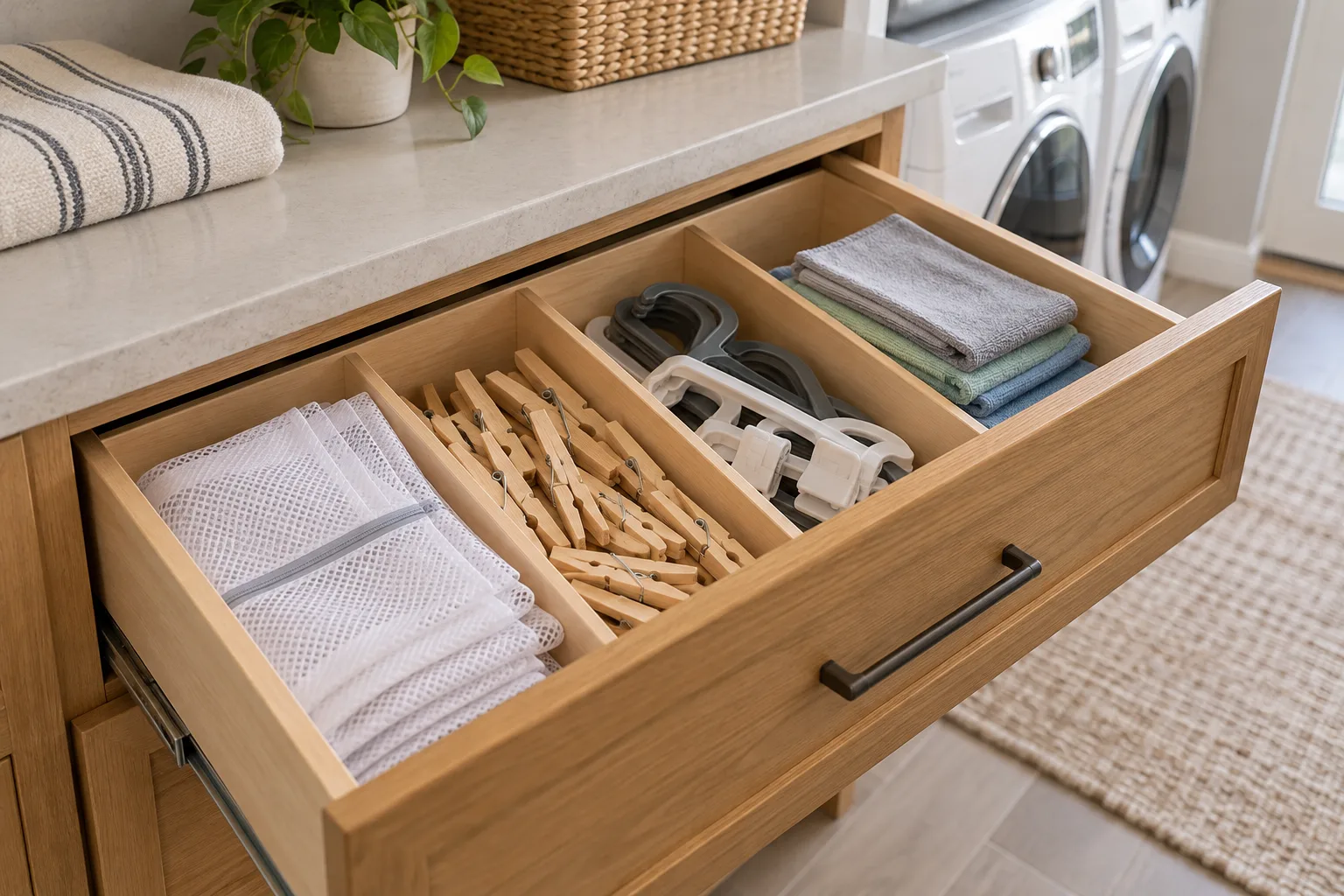
A divided drawer keeps the tiny pieces of the laundry routine together. Give mesh bags, clothespins, and clean cloths their own compartments. This is often more useful than placing several little baskets on a surface you need for folding.
Choose inserts that fit the internal drawer dimensions and leave room to remove items. Keep chemicals and products requiring secure storage elsewhere. Review the drawer occasionally so spare parts and unrelated household objects do not take over the system.
10. Use Door Storage for Light, Dry Accessories
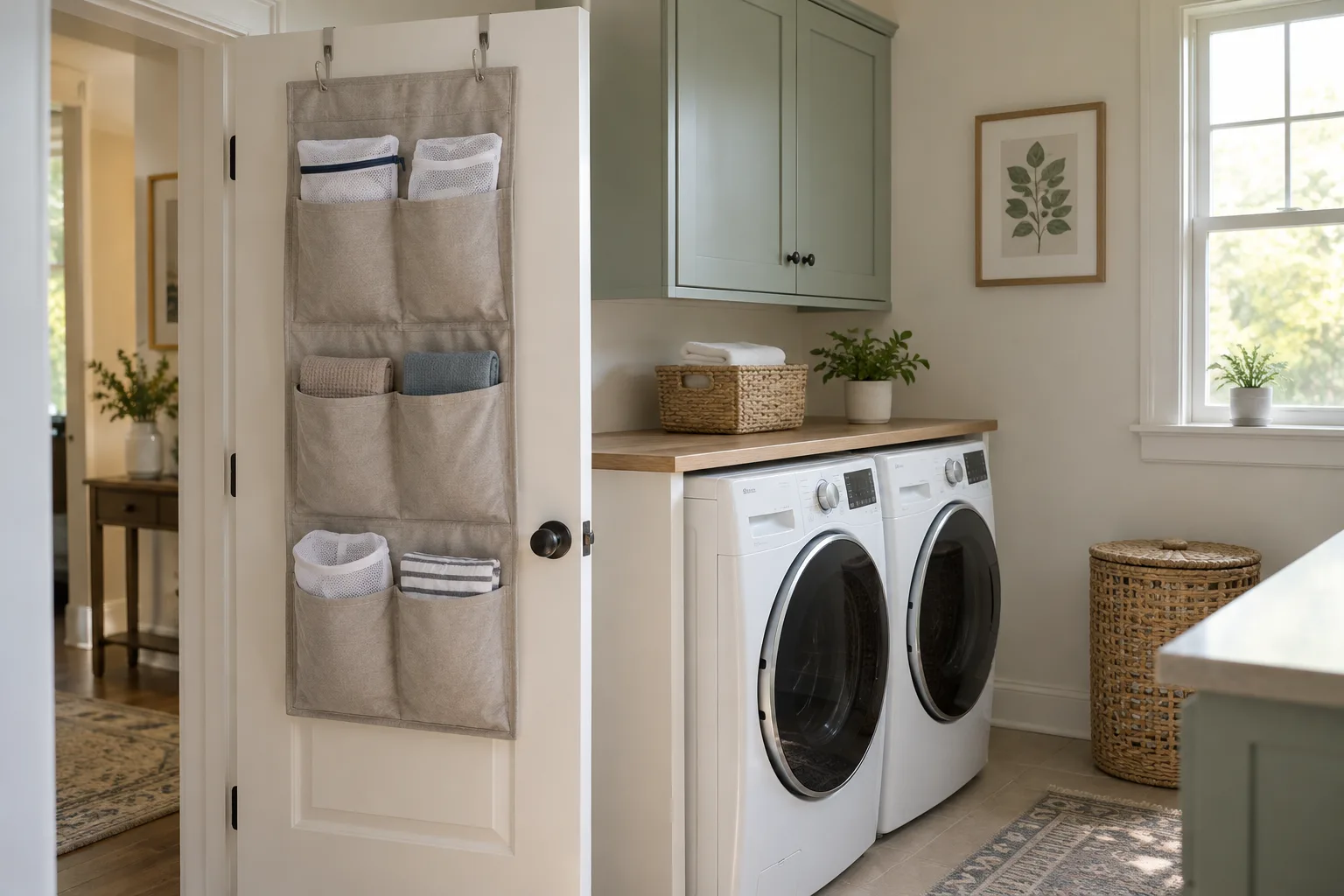
A shallow door organizer can hold dry, light accessories such as empty mesh laundry bags. It can be useful in a small room that has little spare wall area. Choose a design that suits the door and keeps its contents easy to see.
Check the loaded organizer’s depth, hook fit, weight limit, and full door closure. Keep it off any door where it would interfere with ventilation or access. Store laundry products in appropriate secure storage, rather than in reachable fabric pockets.
11. Store a Collapsible Basket Between Uses
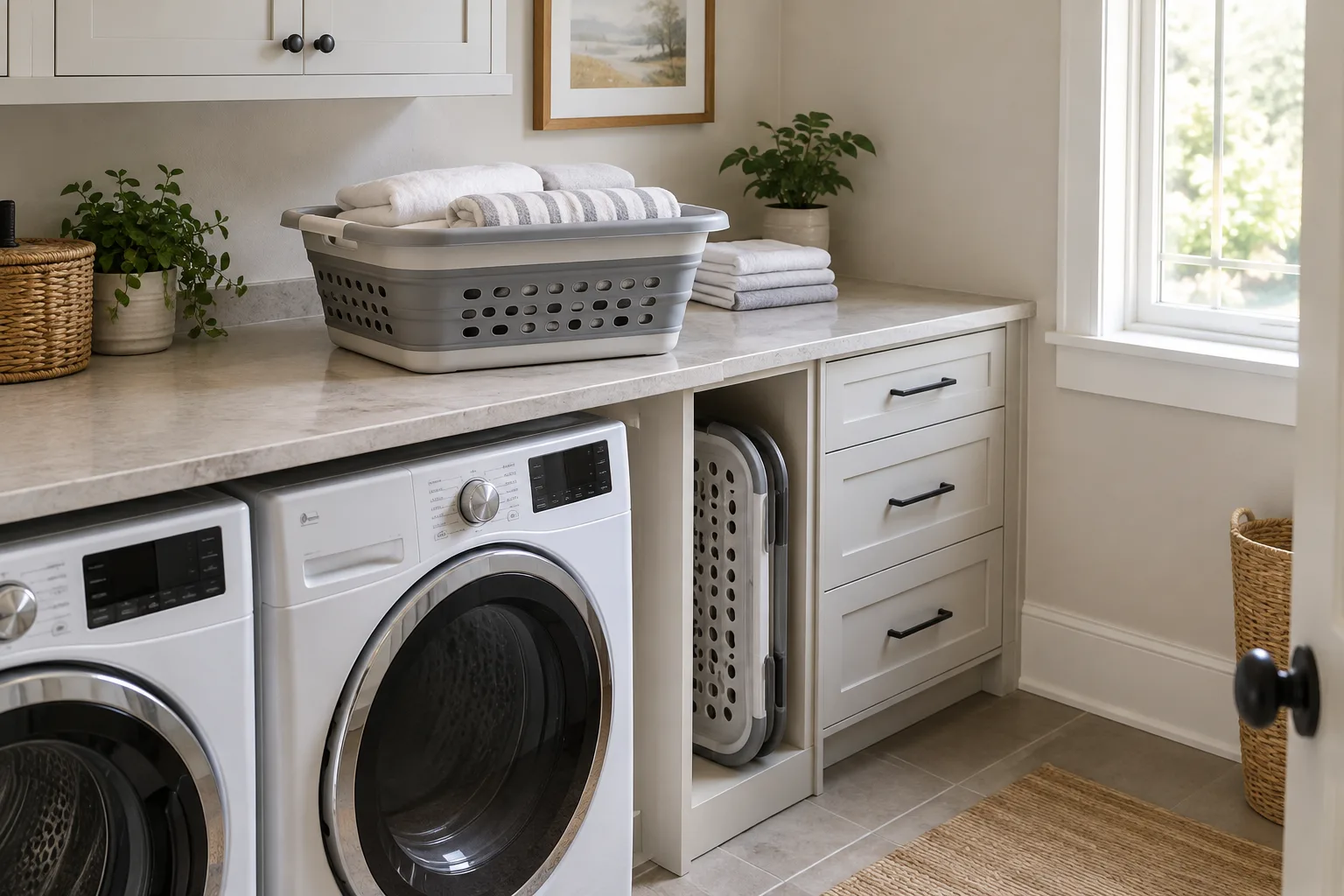
A collapsible basket earns its space when you need it for carrying laundry but not for storing a permanent pile. Give it a specific cupboard slot or cubby after use. That makes the empty basket less likely to stay in the middle of the room.
Test how easily it opens, locks into shape, and carries your usual load. Store it clean and dry, following its care instructions. Keep the slot in a genuine storage area, with no intrusion into appliance clearance or connection access.
12. Keep Small Laundry Room Organization Counters Useful
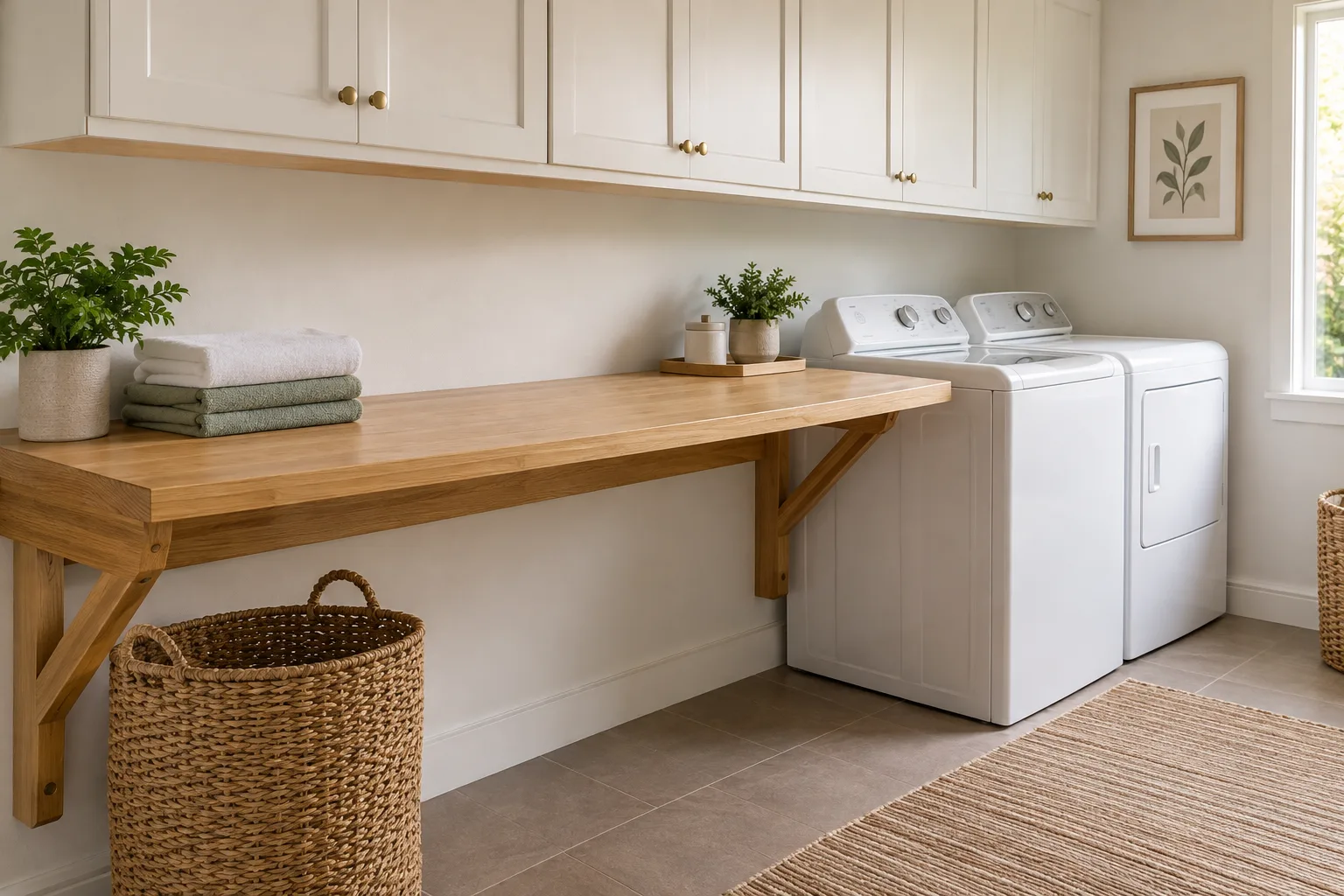
A clear folding surface is part of the storage plan. Keep everyday products in cabinets or a drawer so the counter is ready when a load finishes. Even a modest surface can help if you do not have to move decorations and bottles before every use.
Use a counter with suitable support and follow its installation and care instructions. Do not bridge appliance tops with a board unless the arrangement is appropriate for the equipment and clearances. Leave maintenance access and machine movement requirements intact.
13. Give Items Waiting for Care a Small Basket
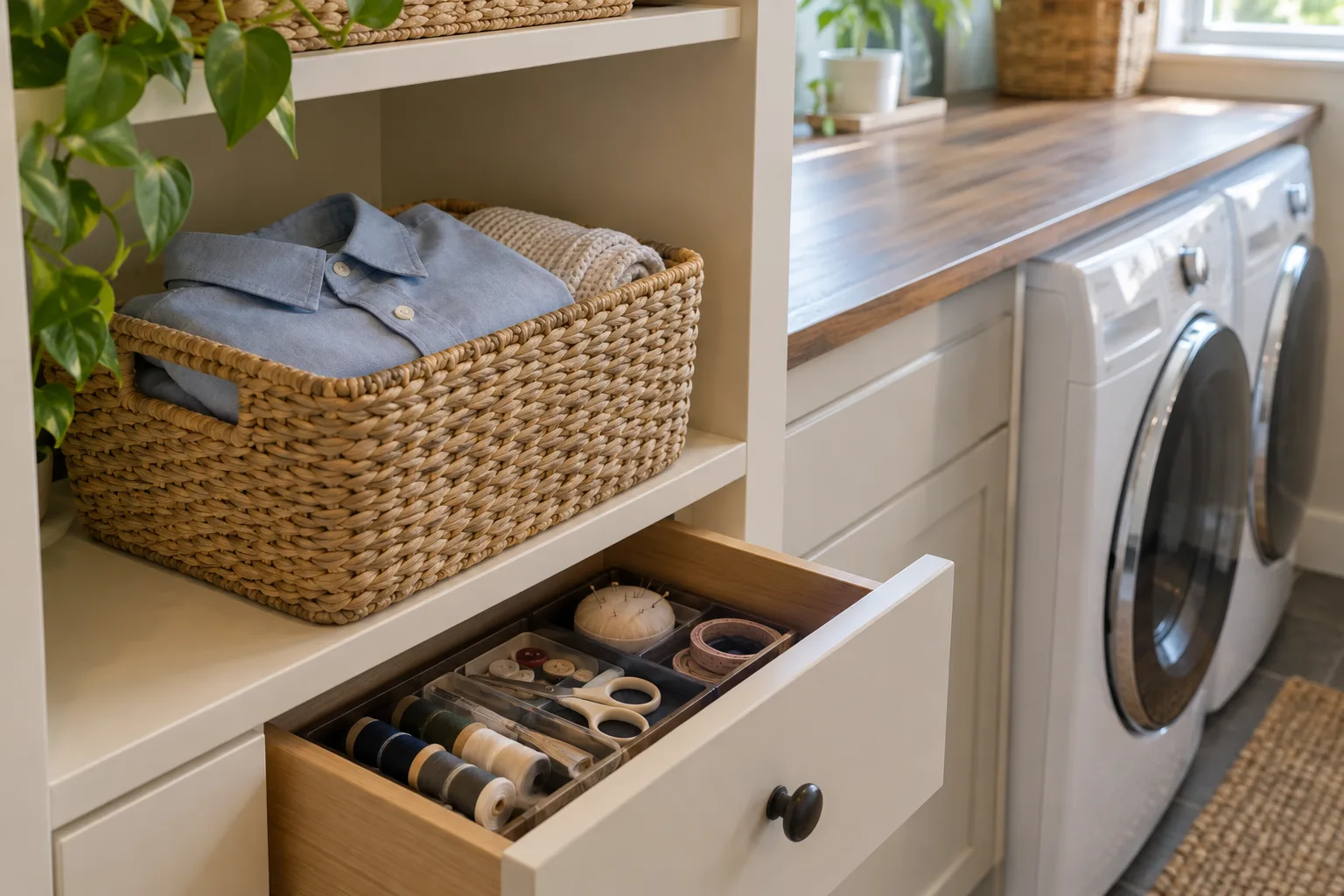
A small basket can collect clean items waiting for a button, a care decision, or another specific task. It keeps them from mixing back into the normal laundry queue. Set a modest size and clear it regularly so it does not become a permanent backlog.
Keep repair tools and anything requiring secure storage in an appropriate separate place. Check garment care labels before deciding what to do next. This basket works best when it represents a short task list, rather than everything you cannot categorize.
14. Keep Laundry Bags Together on a Small Peg Rail

A small peg rail gives empty laundry bags a visible place to dry and wait for the next load. It can free a drawer when those bags are part of your regular routine. Keep the rail for a few light accessories instead of hanging heavy, full baskets from it.
Use fixings suited to the wall and the rail’s stated load. Place it where hanging items do not brush the machine controls or obstruct a door. In a rental where mounting is restricted, group the dry bags in a drawer or removable basket.
15. Put Clean Linens in a Separate Shallow Cabinet

A shallow cabinet can hold clean linens without making them disappear behind deep piles. Separate them from dirty laundry and from products that belong in their own secure storage. Keep the items you use most often at a comfortable retrieval height.
Store linens clean and fully dry, and leave enough room to take out one stack without disturbing the others. Check cabinet stability and follow its installation instructions. A simple, visible collection is easier to maintain than a shelf packed with extras.
16. Use a Small Freestanding Shelf for Empty Baskets
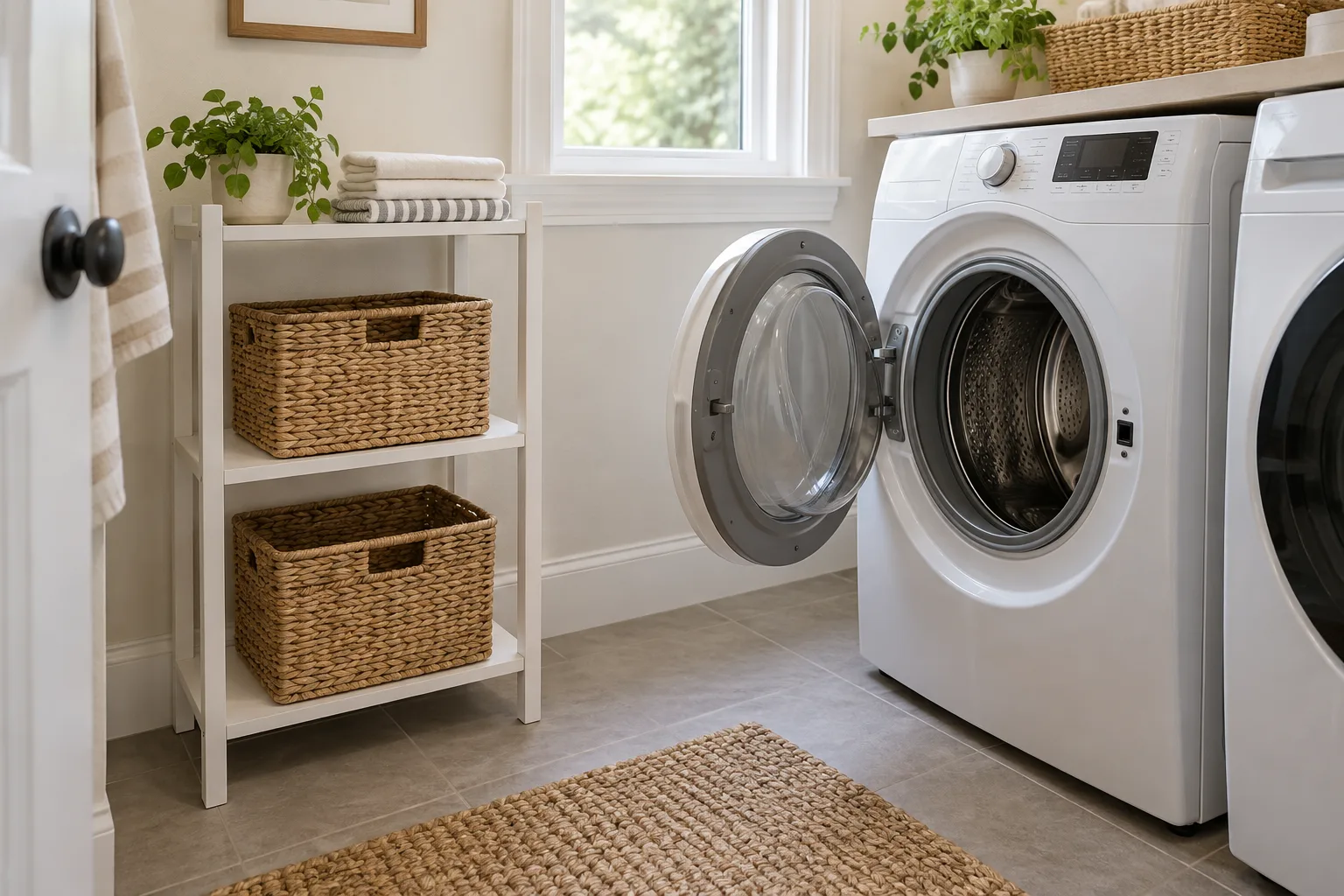
A small freestanding shelf is an option when permanent cabinetry is not practical. Use it for empty baskets and clean accessories that fit comfortably on its shelves. The shelves should be useful at the depth available, without reaching into the walking route.
Follow the furniture’s stability, load, and anchoring instructions. Keep the unit away from required appliance spaces and protect it from conditions its materials cannot tolerate. Test access with the machines open before treating the corner as available storage.
17. Use One Shelf for the Supplies You Refill
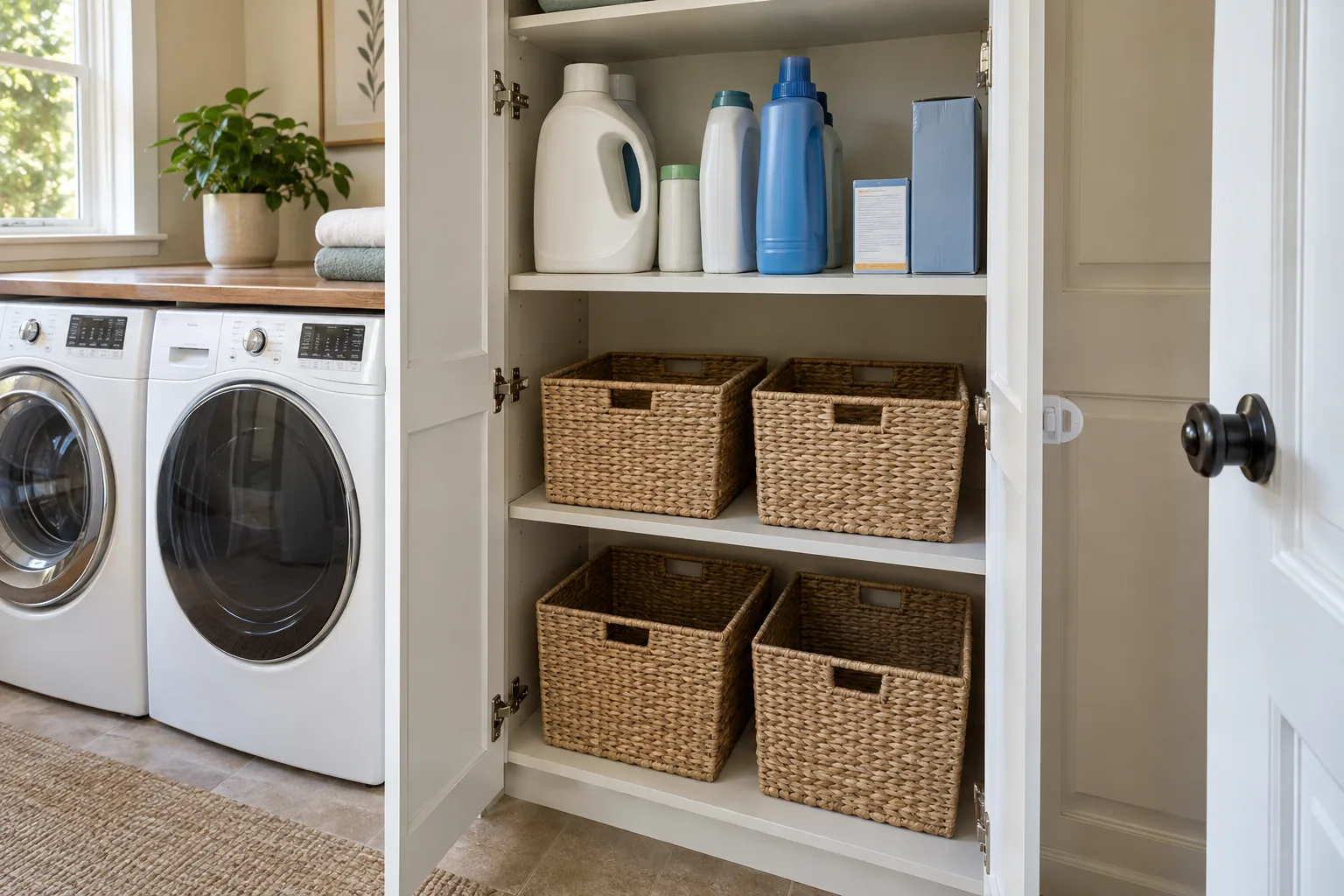
Backstock needs a defined place so you can see what is already available before buying another bottle. Keep refill products in their original containers with labels intact, grouped by task inside appropriate secure storage. Avoid spreading extras across every cabinet in the room.
Follow each product’s storage directions and your household’s safety needs. Do not assume a decorative bin makes chemicals safe or mix products together. Keep the quantity manageable and leave room to retrieve containers without tipping the items beside them.
18. Slide a Hamper Out of a Purpose-Built Cabinet

A pull-out hamper can hide sorting while keeping the basket easy to reach. It suits a purpose-built cabinet when the drawer, basket, and room opening fit together. Check that you can lift the hamper out and carry it to the machine without an awkward twist.
Measure the fully extended drawer and test the walking space it leaves. Follow hardware and load instructions, and keep damp laundry from sitting in poorly ventilated storage. The concealed look is only worthwhile if the daily routine remains straightforward.
19. Use a Portable Rack That Has a Storage Home

A portable drying rack can be a better choice when you cannot mount anything to the wall. Plan where it will stand while in use and where it will go afterward. A defined storage home keeps the folded rack from leaning across the laundry-room entrance.
Choose a stable rack suitable for its load, follow garment care labels, and leave airflow around the items. Keep it clear of heat sources, appliances, and the normal walking route. If the open rack does not fit here, dry garments in another appropriate space.
20. Reset Small Laundry Room Organization for the Next Load
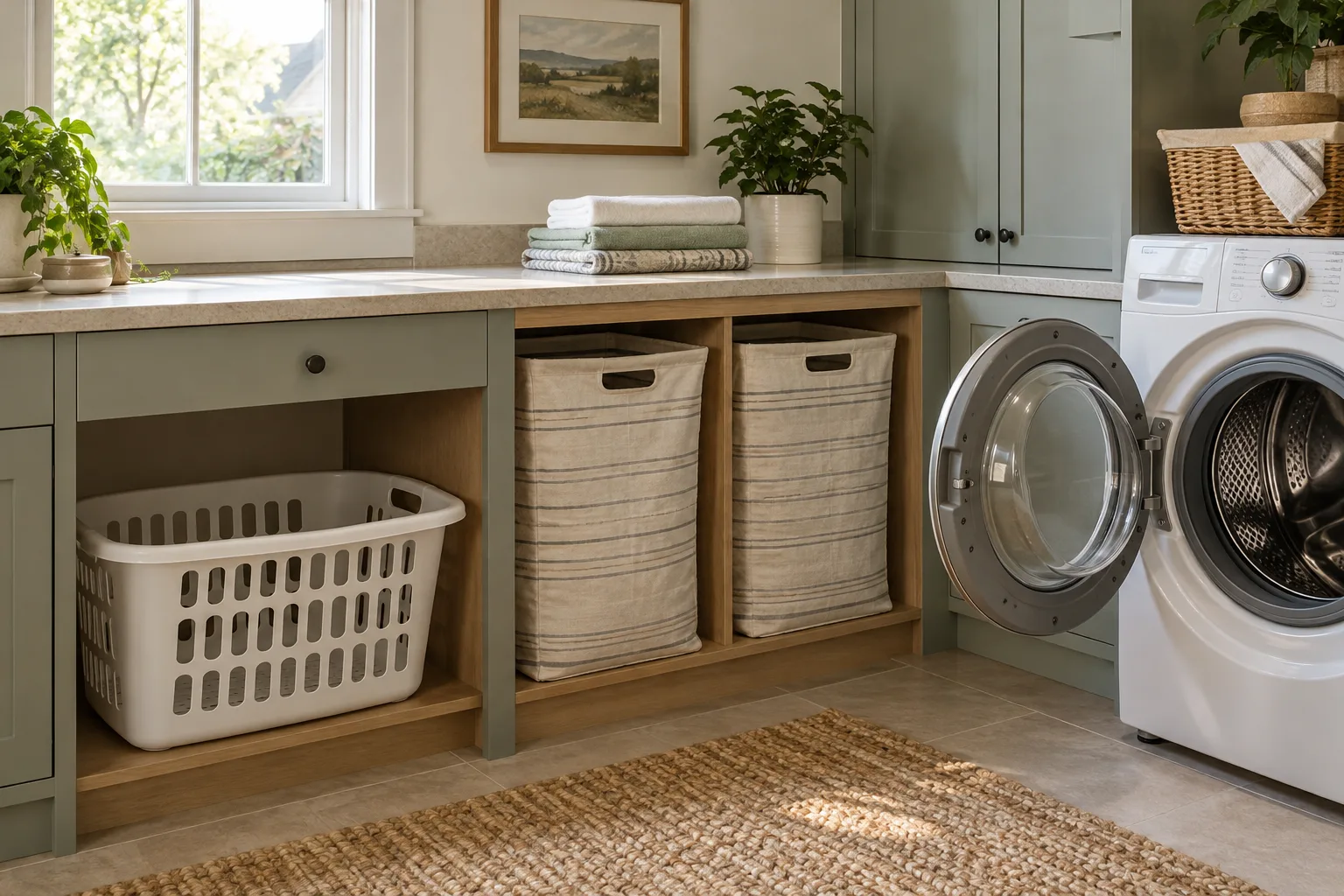
Finish the layout with a clear place for the next load and the empty carrying basket. That small reset keeps the room ready without requiring a full organizing session. Return dry accessories to their drawer, clear the counter, and move finished clothes out of the room.
Use the setup through several ordinary wash cycles before adding more storage. Keep the arrangements that reduce moving and searching, and change anything that blocks a door or working surface. The best small laundry room storage makes the routine easier to repeat.
Start With One Change
Choose the storage change that removes your biggest daily obstacle, then test it through ordinary wash cycles. Keep the counter and appliance openings available, and adjust the layout before adding more furniture.
For related ideas, explore home storage ideas for small spaces and home organization ideas.
For product storage, the American Cleaning Institute’s laundry safety guidance explains why original containers, intact labels, and secure storage matter. For stacked equipment, consult your specific appliance manuals and approved kit instructions.
Optional digital guide for this topic
If you prefer a structured workbook, explore this related paid guide.