Small nightstand ideas begin with the essentials reached from the mattress and the route beside the bed. Choose furniture and storage for that routine before adding a lamp or decorative group.
The 25 illustrated options are alternatives to choose from, not a shopping list for one room. Start with the width, depth, and height available beside your bed, then decide whether you need a drawer, an open shelf, or simply a landing place for a book and glasses.
Images are original AI-generated design concepts. They illustrate arrangements and styling rather than tested products, exact dimensions, or mounting instructions.
Test Small Nightstand Ideas From the Mattress
Place the book, glasses and other nightly essentials on a paper template at the proposed height. Next, sit up, reach for them and open nearby drawers with the bed dressed normally. For example, a small cabinet can fit the gap while a handle catches the bedding. Retain the useful route into bed and choose suitable wall support where a mounted option is being considered.
Measure the Bedside Area Before Choosing Furniture
Measure with the mattress and bedding in place. Open nearby doors, wardrobes, and under-bed drawers, and test how you enter and leave the bed. Compare the proposed tabletop height with your comfortable reach. Follow the exact furniture and lighting instructions, including wall fixing and anti-tip requirements; never use a nightstand or shelf as a support for standing up.
1. Begin Small Nightstand Ideas With One Useful Drawer
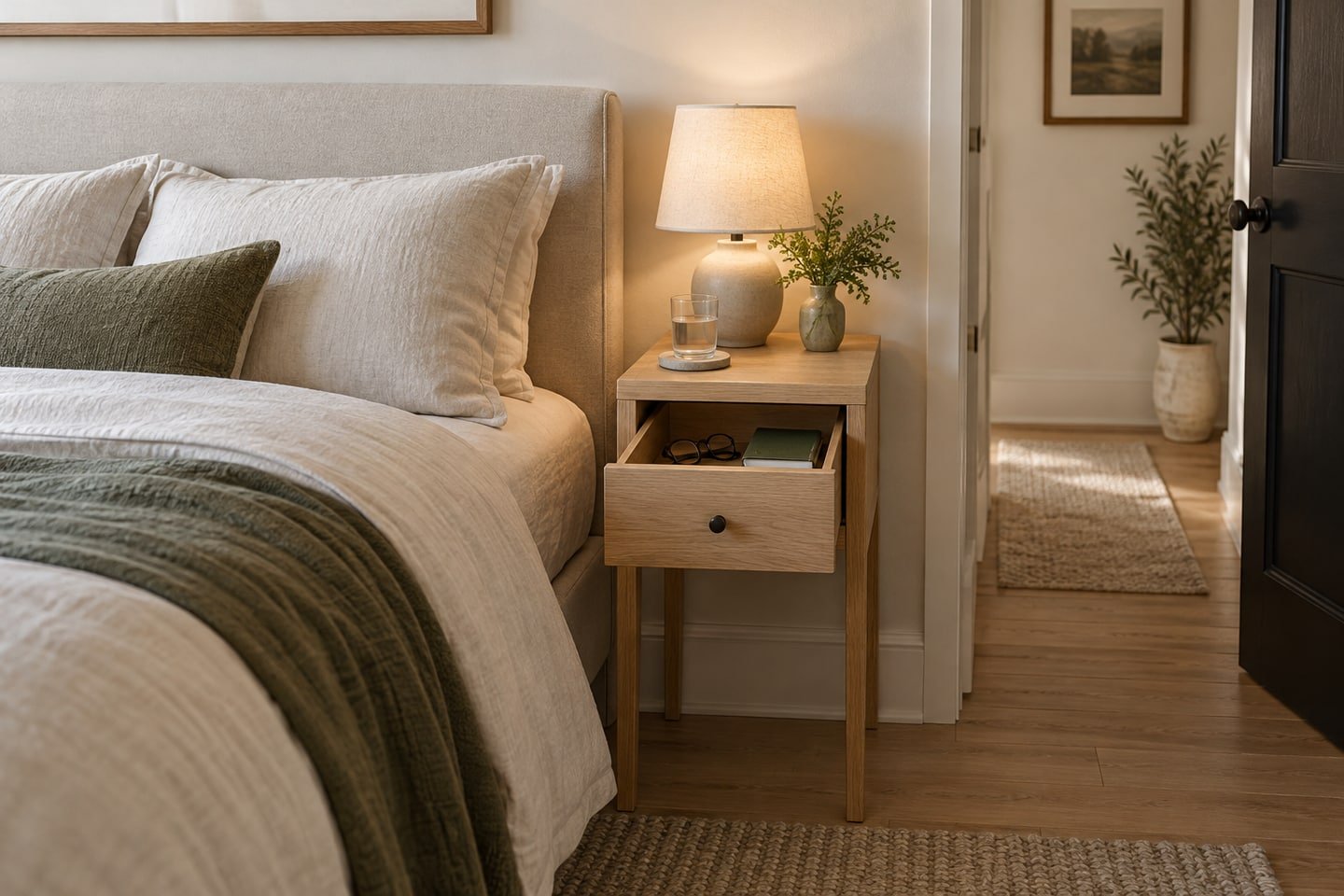
A narrow bedside cabinet earns its footprint when its drawer holds the things that otherwise spread across the top. Look for enough surface for your nightly essentials rather than the largest cabinet that fits the gap.
Test the drawer with the bed dressed and the bedding hanging normally. A shallow drawer may suit glasses and a notebook, while deeper storage is better handled elsewhere.
Practical tip: Measure the drawer opening beside the bed frame, not only the cabinet width.
2. Use a Floating Drawer to Keep the Floor Open

A wall-mounted drawer offers a small concealed compartment without legs reaching into the bedside area. The exposed floor can make cleaning easier and can keep a compact room from looking crowded.
Mount only to a suitable wall using the support and hardware specified for the exact cabinet. A decorative photograph cannot determine its load limit or a safe fixing method.
Practical tip: Set the mounting height with the mattress in place.
3. Choose a Shallow Bedside Ledge
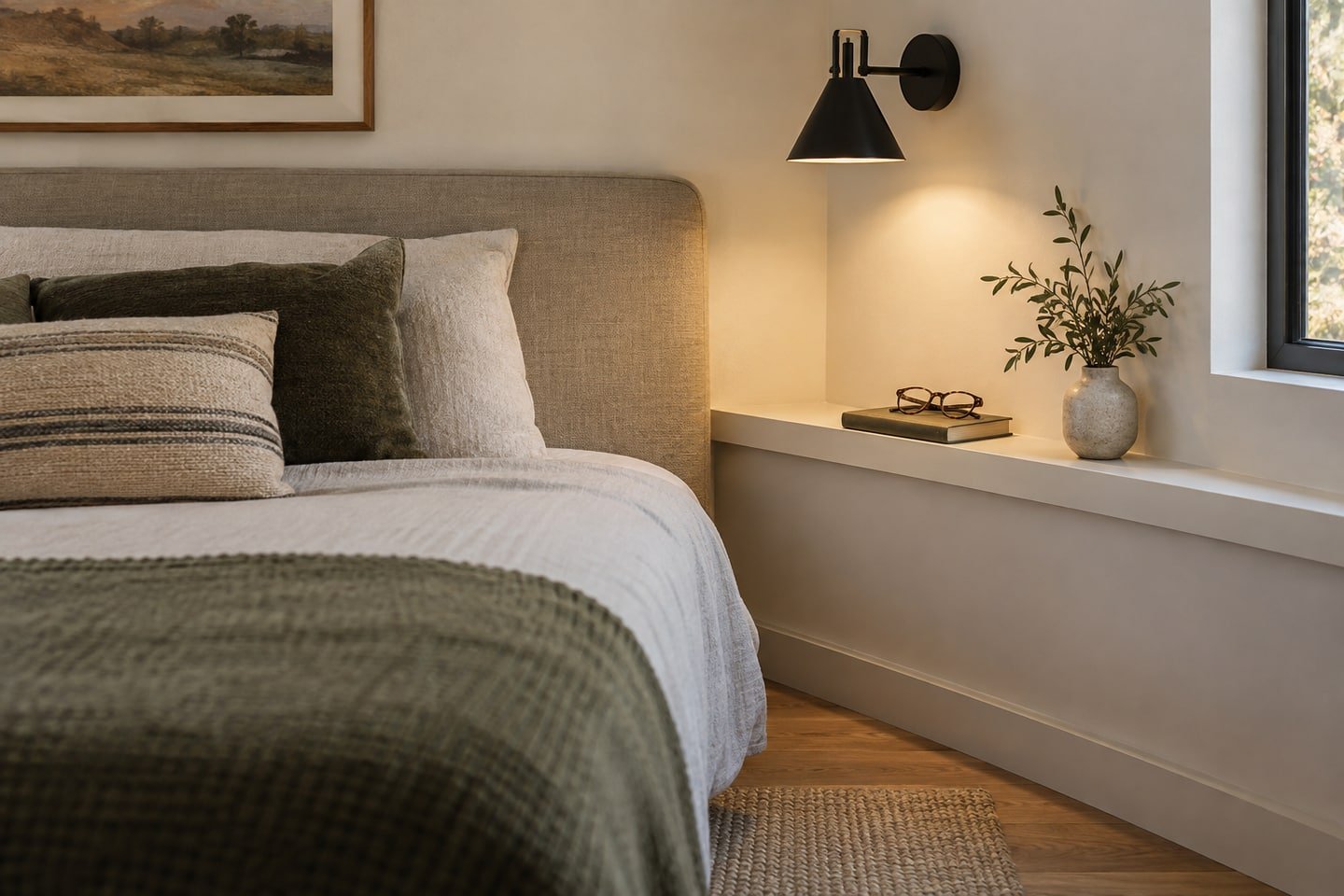
When you need a place for a phone and glasses, a shallow ledge may be enough. It keeps the bedside arrangement visually quiet and avoids the depth of a conventional table.
Choose a proper shelf with a load rating and fixings suitable for the wall. Keep objects within its surface and away from the sleeping area; do not treat it as a handhold for getting up.
Practical tip: Lay out your usual items on a paper shelf template first.
4. Try a Wall Cubby With an Open Compartment
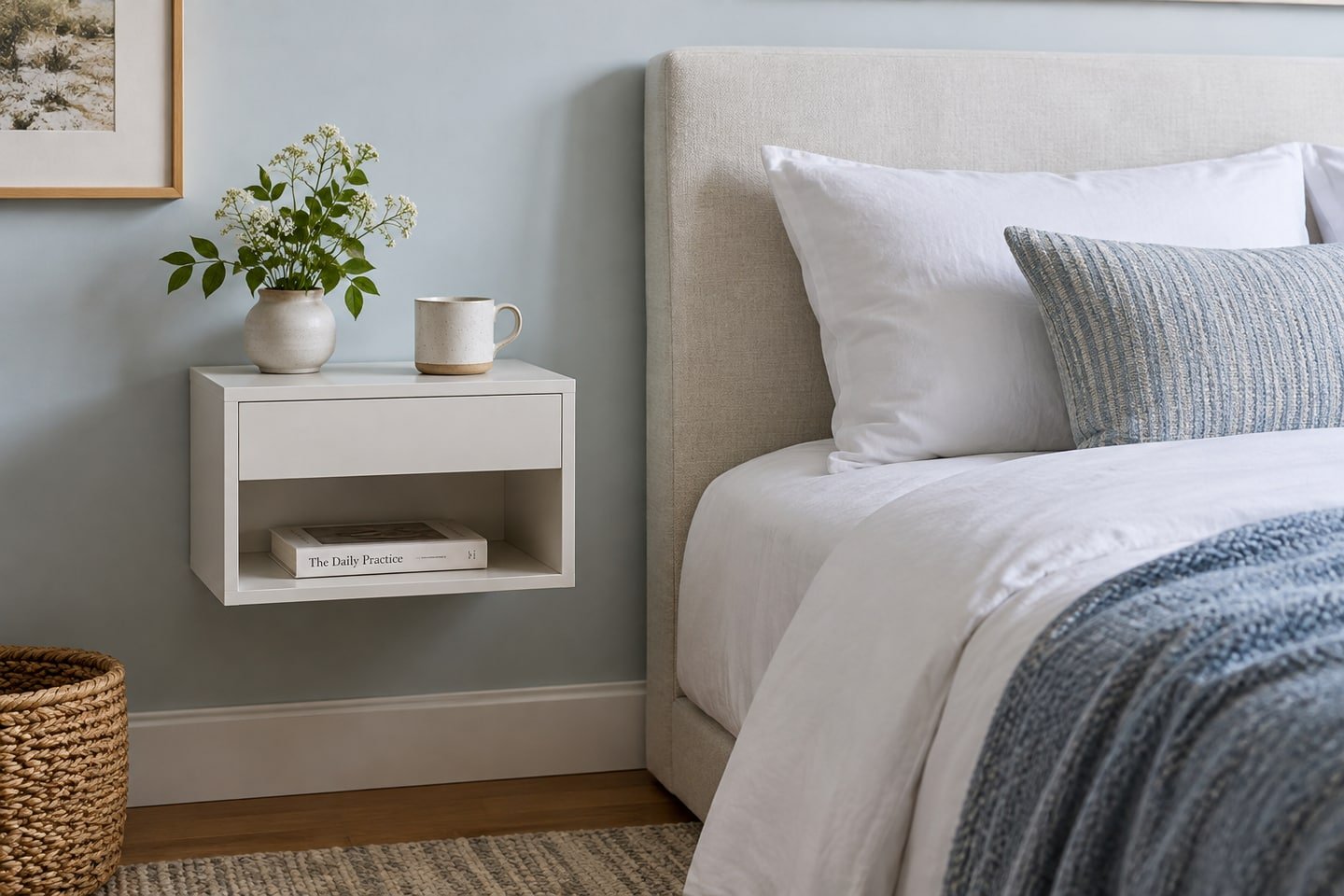
An open wall cubby separates the top from a small storage pocket. It is useful when you want a book within reach without exposing a pile of miscellaneous items.
Position the cubby where its corner will not meet your shoulder as you sit up. Follow its mounting instructions and leave the compartment lightly filled so it stays useful.
Practical tip: Check reach while sitting in bed instead of positioning it by eye.
5. Soften a Tight Corner With a Round Pedestal Table

A small round side table can make a cramped bedside corner feel less angular. Its shape works particularly well where the bed and a nearby wall create an awkward junction.
Check the size of the base as well as the top. A wide pedestal foot can take more floor space than expected, and a decorative occasional table still needs to be stable for bedside use.
Practical tip: Compare the usable tabletop with your actual glass, book, and lighting needs.
6. Slide a Compatible C-Table Beside the Mattress

A C-shaped side table can bring a small surface closer when the bed has the right clearance beneath it. The offset base may suit a room where a normal four-leg table feels awkward.
Measure under the bed before buying. Storage drawers, platform bases, and low frames can prevent the foot from sliding in, and the table should stand level in the intended position.
Practical tip: Check that the base will not trip you on the way into bed.
7. Compare Nesting Small Nightstand Ideas in Use
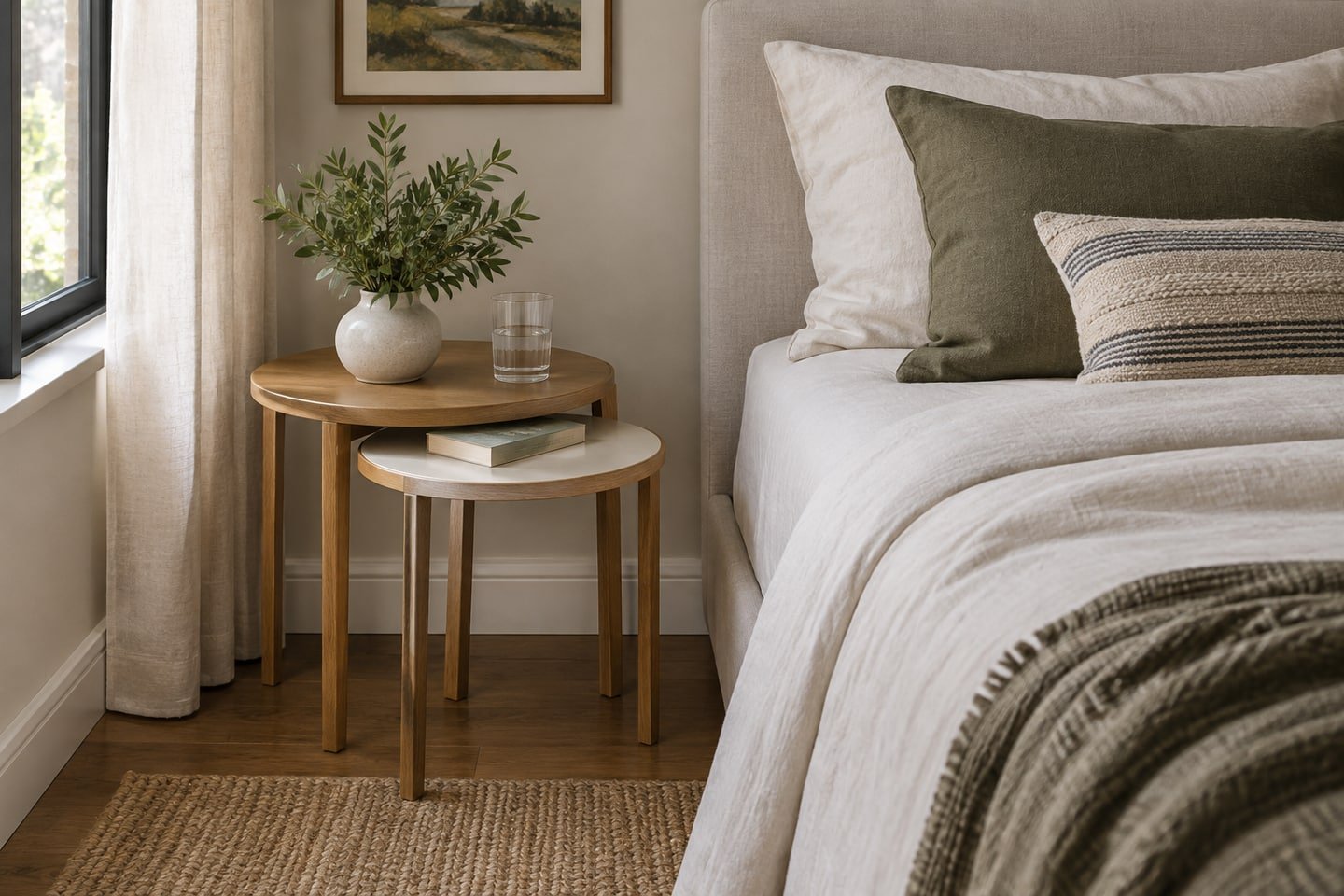
Two nesting tables can offer an occasional landing place without keeping both fully spread out. This can suit a guest bedroom where the smaller table has a clear purpose.
Check the combined footprint when the tables are separated. Nesting furniture does not create extra floor area; tuck the second table back when it makes the route less comfortable.
Practical tip: Avoid stacking everyday items on the smaller table if it must stay movable.
8. Make a Proper Folding Tray Table the Flexible Option
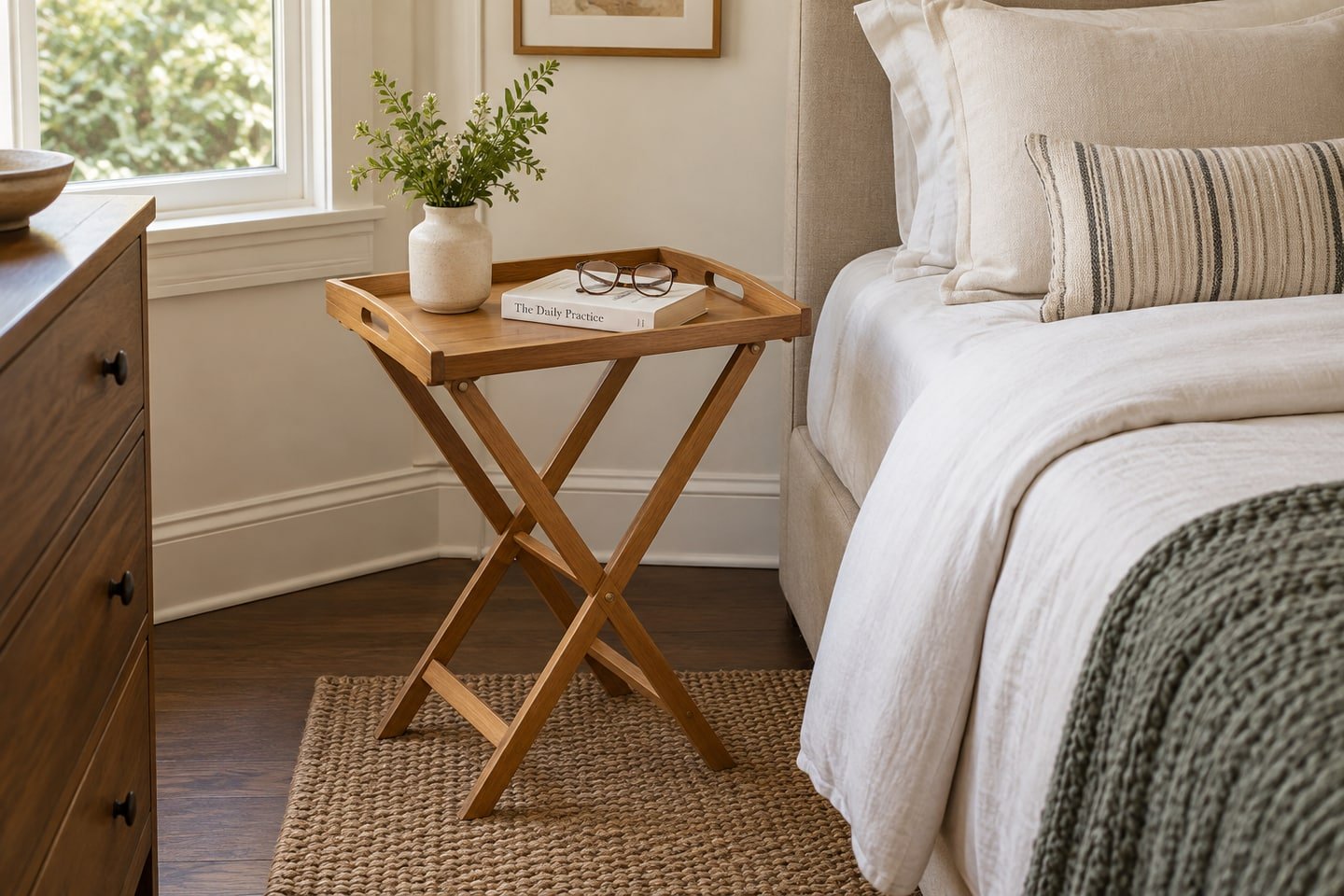
A folding tray table can work as an occasional bedside surface in a guest room or temporary layout. It is useful when you need to put the furniture away between visits.
Choose a stable table whose legs lock as designed, and follow its load instructions. Do not use an unsecured serving tray on an improvised support or leave a wobbly surface beside the bed.
Practical tip: Test stability on the actual floor before placing a drink on it.
9. Choose a Narrow Cabinet With Vertical Storage

A slim cabinet can provide more enclosed storage without growing very wide. It suits a bedside area that has vertical room but only a modest gap next to the frame.
Check the height against comfortable reach and follow any required furniture anchoring instructions. Keep heavier stored items low and avoid making the top a display for heavy objects.
Practical tip: Measure where the handle and door move before committing to the cabinet.
10. Keep an Open Shelf Useful With One Fitted Basket

An open shelf works well when the contents have a defined home. A single fitted basket can hold a small collection of soft accessories while leaving the top easy to reset.
Measure the clear shelf opening rather than the cabinet exterior. Choose a basket you can pull out comfortably without rubbing the frame, and keep essentials from disappearing beneath unrelated storage.
Practical tip: Assign the basket one category, such as spare reading supplies.
11. Use a Small Cart With Locking Wheels

A compact cart may work beside a bed when occasional movement matters more than enclosed storage. A rimmed upper tray can keep a few lightweight items together.
Check that the cart is stable and its wheels lock securely for daily use. Keep cords free of the wheels and leave the walking route clear when you move it.
Practical tip: Avoid filling a movable cart with objects that are difficult to carry safely.
12. Let a Small Dresser Serve Two Jobs
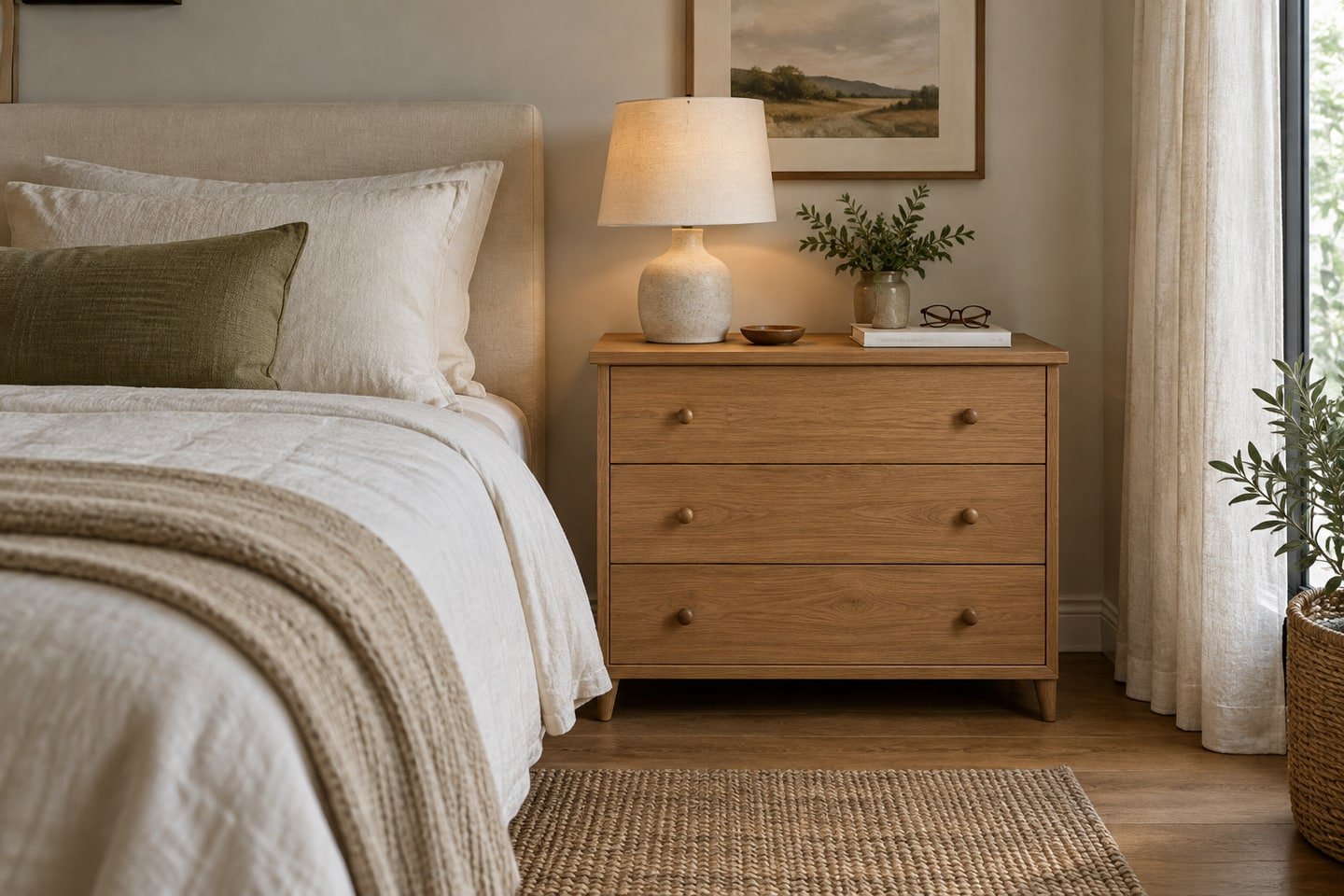
A compact dresser beside the bed can replace a separate nightstand when the room already needs clothing storage. One useful piece can simplify the layout more than squeezing in two.
Check the reach from the mattress and the full drawer travel. Follow the dresser instructions and appropriate furniture anchoring guidance; a chest should not be treated as a ladder or a support rail.
Practical tip: Keep the area nearest the pillow reserved for nighttime essentials.
13. Allow Different Tables on Each Side

Matching nightstands are optional when the room has unequal space beside the bed. A drawer cabinet on the wider side and a small table on the tighter side can meet different needs.
Connect the pair through one wood tone, color, or lighting detail. Check that each sleeper has a usable surface and route rather than forcing visual symmetry at the cost of comfort.
Practical tip: Balance the overall arrangement before matching individual dimensions.
14. Fit Integrated-Shelf Small Nightstand Ideas to the Bed

A headboard designed with a small shelf can combine the bed backdrop and a landing place. It works best when the integrated surface is reachable from the sleeping position.
Check the overall width of the full headboard, not only the mattress. Follow the product mounting and loading instructions, and avoid placing heavy decor over the pillow.
Practical tip: Try the reach with the pillow and mattress at their normal height.
15. Use a Bedside Pocket for Soft Essentials
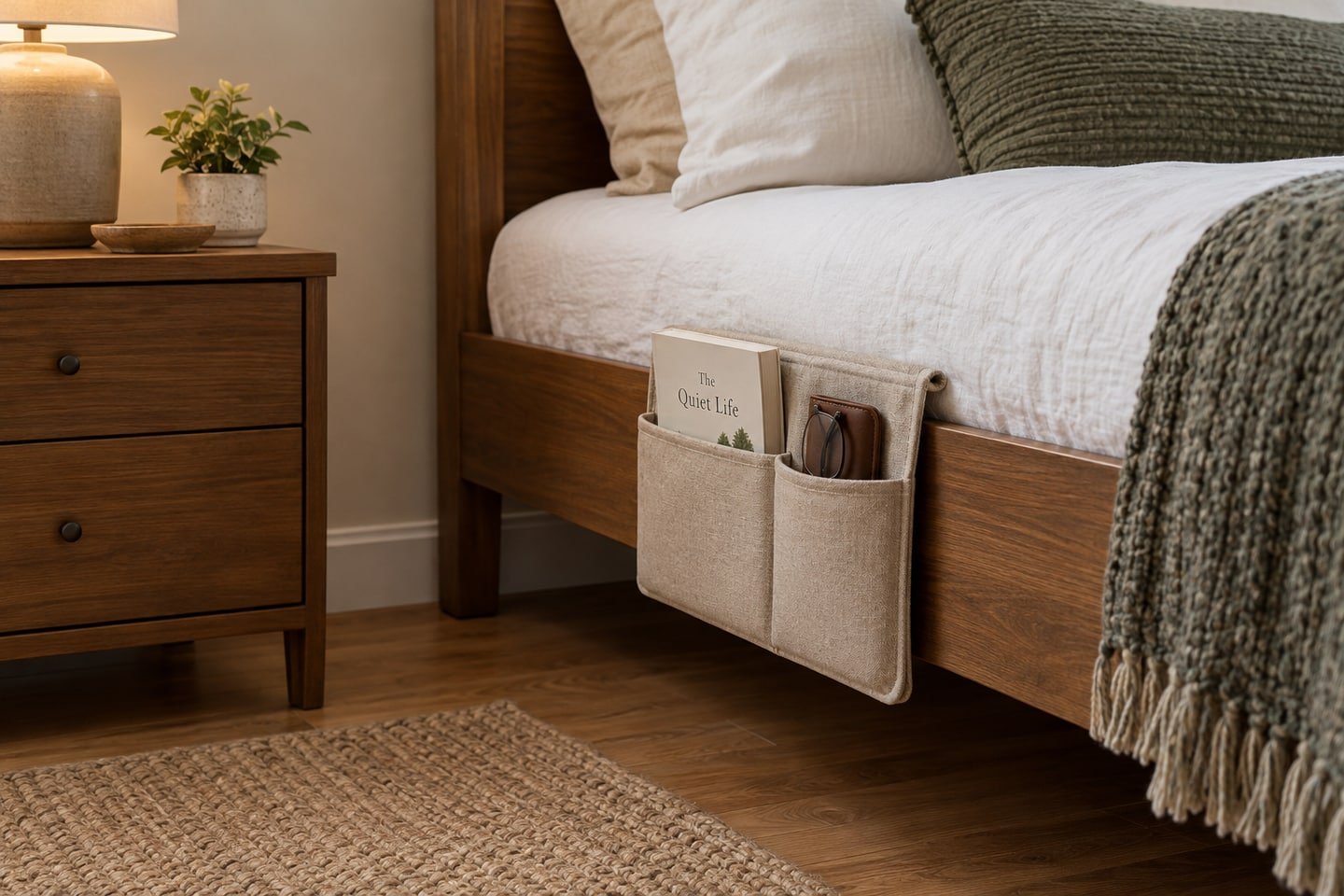
A compatible bedside pocket can hold a paperback or reading glasses when the floor gap is too tight for furniture. It is most useful for lightweight things that do not need a flat surface.
Choose a pocket intended for the exact bed arrangement and fit it according to its instructions. Keep drinks, chargers, and loose electrical items out of a fabric pocket.
Practical tip: Check that changing the sheets will not loosen the pocket attachment.
16. Move Reading Light to the Wall
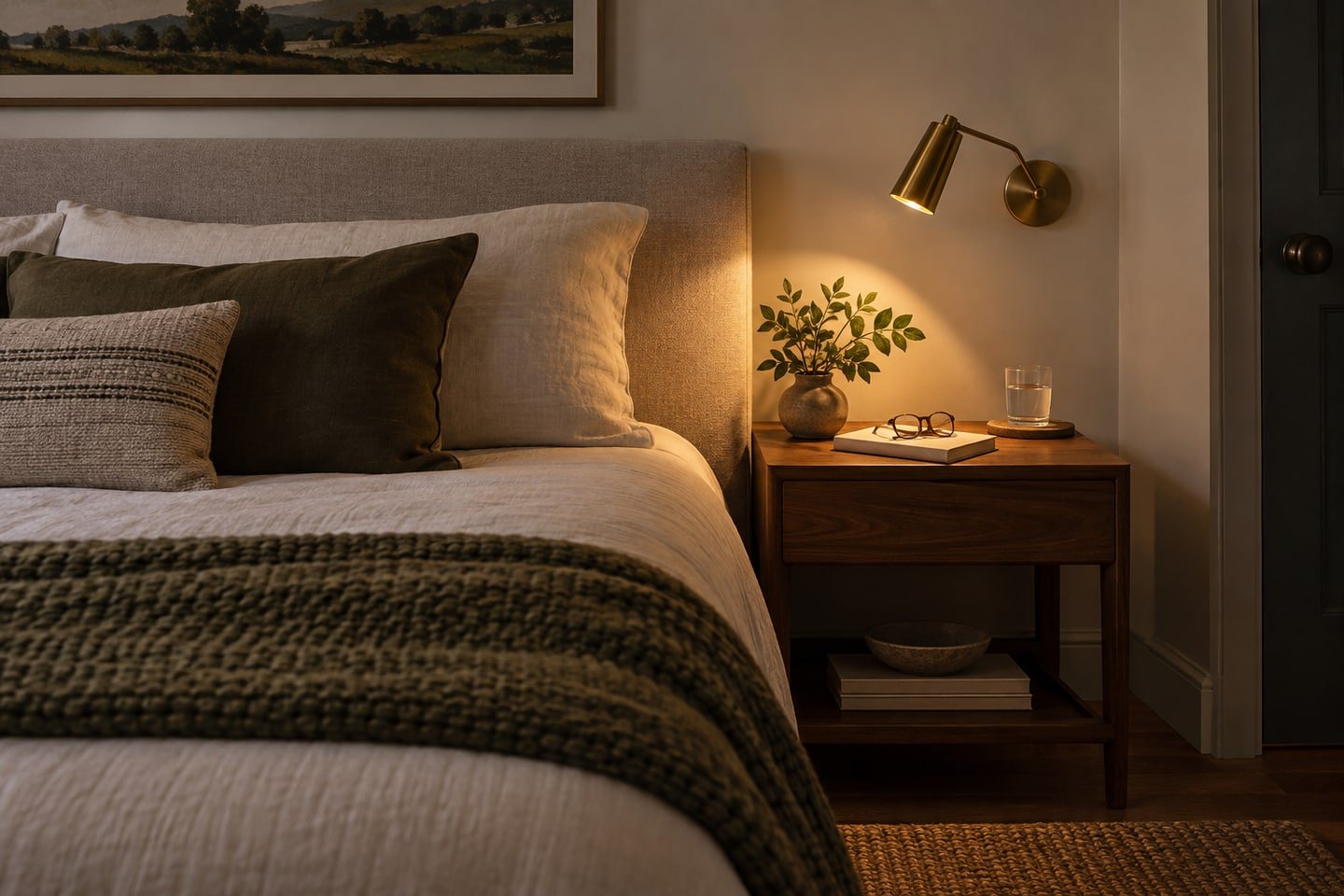
A wall sconce frees the tabletop for the objects you actually reach for. It can also keep a small bedside surface from being dominated by a wide lamp base.
Choose lighting intended for the setting and follow installation requirements. Position its controls within comfortable reach and manage any cord along the wall, clear of bedding and traffic.
Practical tip: Check the beam and glare from both sitting and lying positions.
17. Choose a Lamp With a Small Base
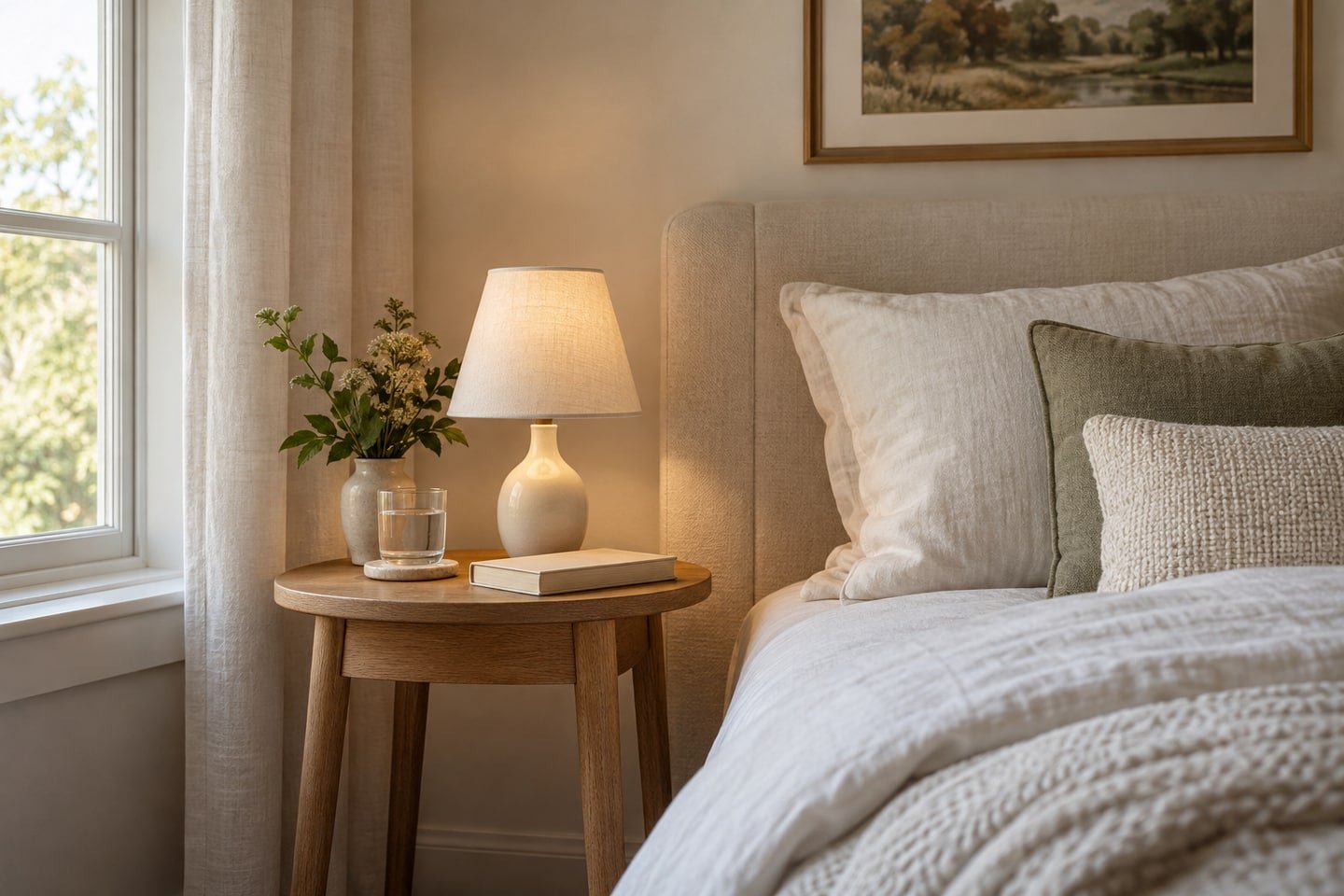
A compact lamp base can make an existing nightstand easier to use without changing the furniture. A narrow footprint leaves a more useful landing area beside the light.
Compare the shade with the room as well as the base with the tabletop. Keep the fixture stable and use the bulb type and rating required by its manufacturer.
Practical tip: Set your nightly essentials on the table before choosing the lamp size.
18. Give Charging Cables a Clear Route

One controlled cable route can make the bedside area easier to clean and use. Guide the ordinary charging lead toward the back of the surface instead of letting it fall into the walking space.
Use compatible cable guides and undamaged charging equipment according to their instructions. Keep chargers ventilated, away from liquids, and out from beneath pillows or bedding.
Practical tip: Keep enough slack to unplug the phone without pulling on the socket.
19. Corral Small Objects in a Shallow Valet Tray
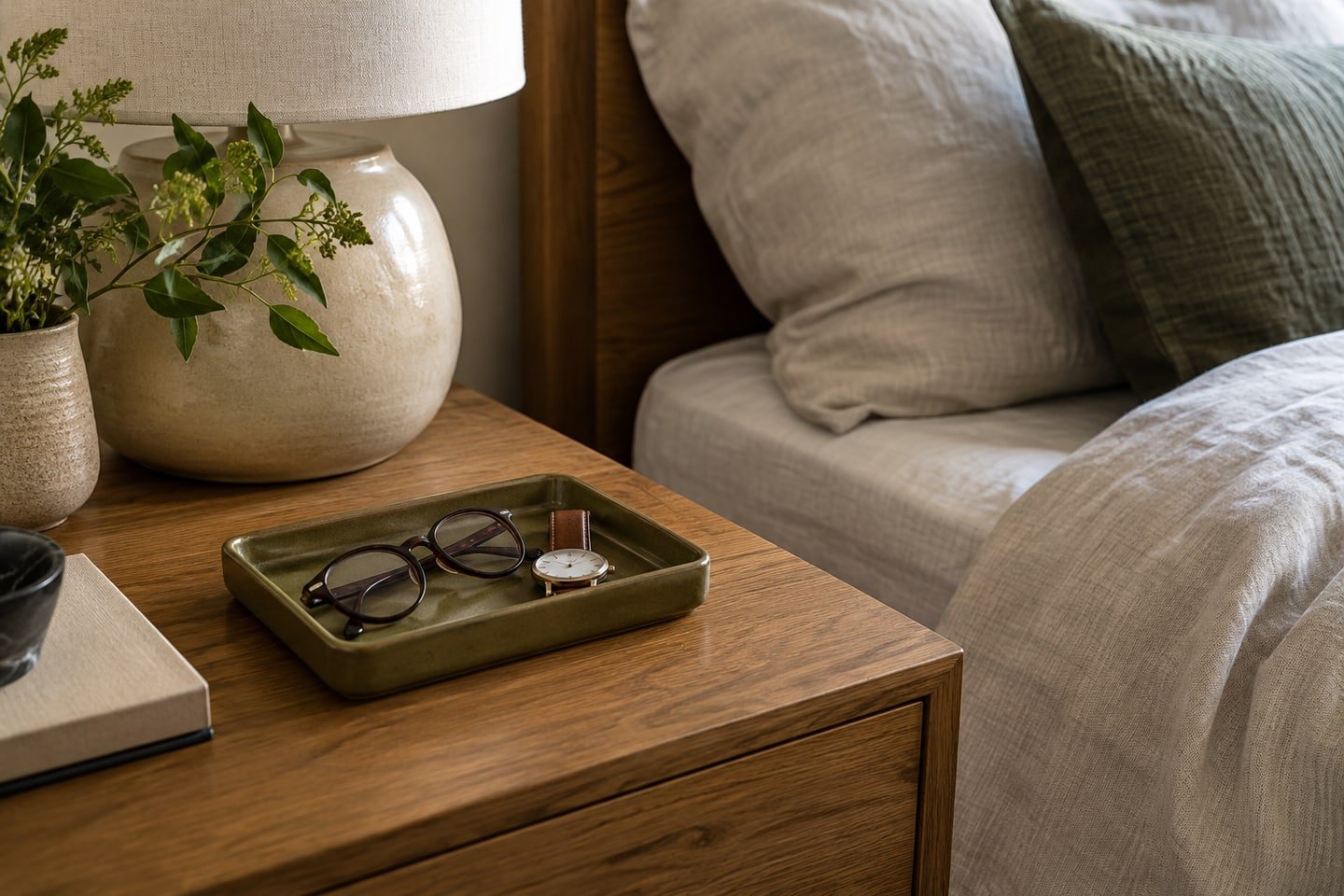
A small tray gives glasses and jewelry a predictable landing place. It is useful when tiny items spread across the surface even though you do not need a larger table.
Choose a tray that leaves room for the other essentials. A tall decorative bowl can be harder to reach into and may hide the very items you want to find easily.
Practical tip: Leave some empty surface around the tray so the table still works.
20. Store the Current Books Upright in a Lower Slot
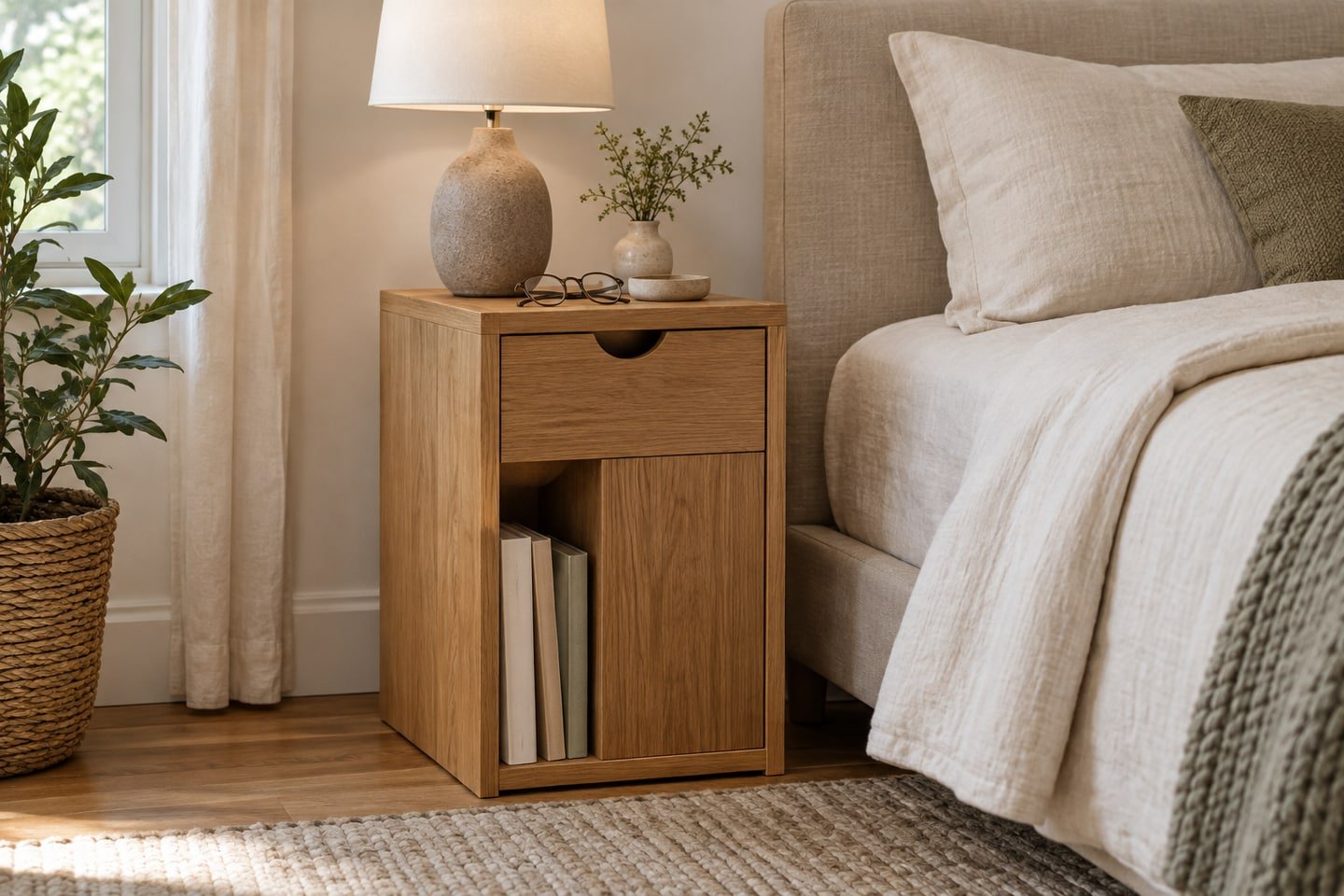
A short upright book compartment can be easier to use than a growing stack on top. Keep only the books you are actively reading beside the bed.
Check that the shelf supports the books without pushing the cabinet out of balance. Move the overflow to a bookcase so the bedside compartment remains easy to reach and clean.
Practical tip: Leave a little space to remove a book without pulling out the entire row.
21. Put Loose Supplies in One Lidded Box

A low lidded box can keep small non-electrical supplies out of sight on an open nightstand. It is useful when the furniture has a shelf but no drawer.
Choose a box that opens comfortably in the available space. Keep only a small defined category inside, and use appropriate secure storage elsewhere for items that should not be accessible to children.
Practical tip: Measure the height with the lid open as well as closed.
22. Check Rounded Small Nightstand Ideas Along the Route
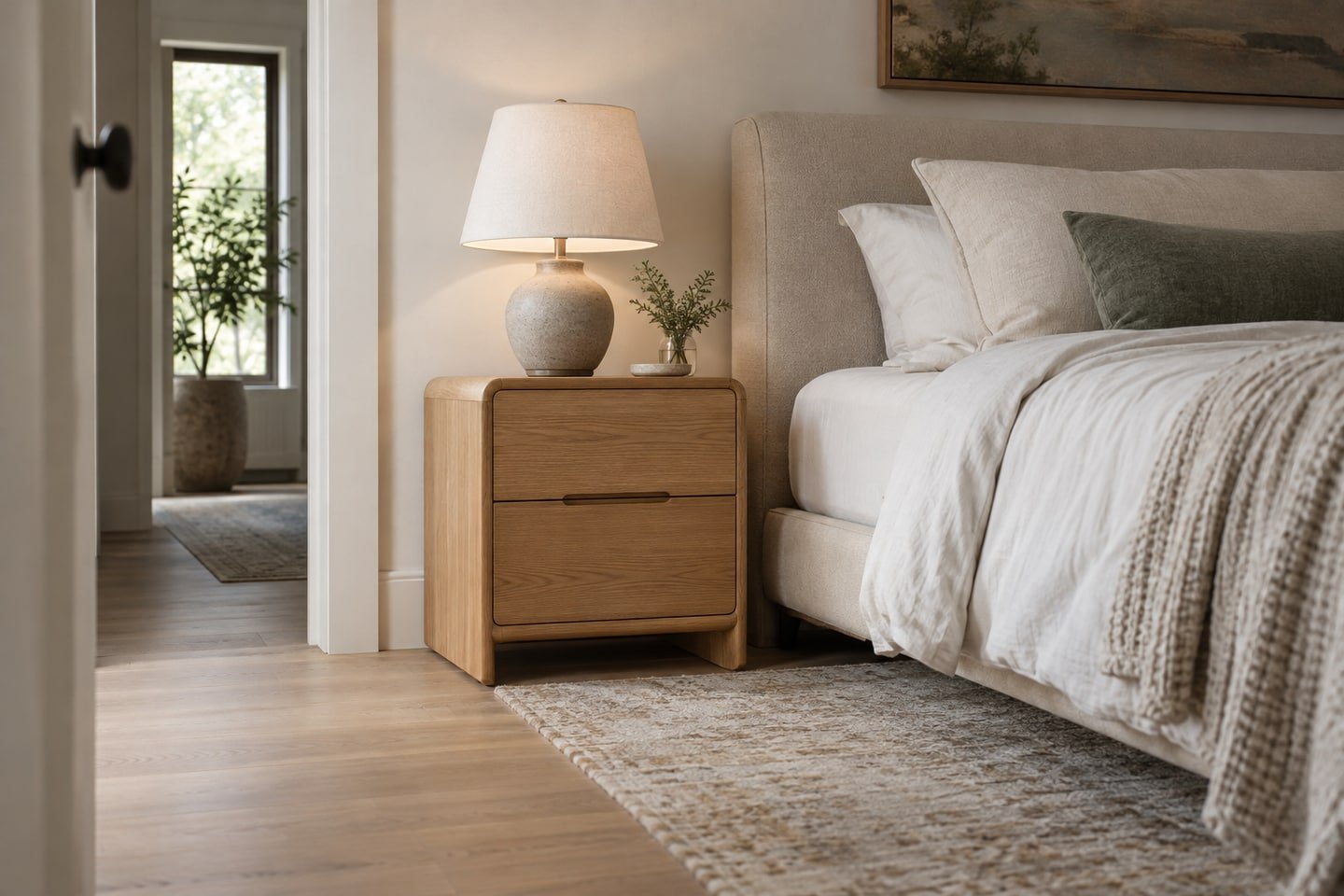
Rounded front edges can make a small bedside cabinet feel less abrupt beside a tight route. The detail is most useful at the corner you pass every day.
Shape does not replace enough room to move. Check the furniture footprint with the bedding in place, and avoid filling a cramped gap just because the cabinet has a curved edge.
Practical tip: Try the route carrying a laundry basket before settling on the layout.
23. Use an Open-Leg Design for a Lighter Look
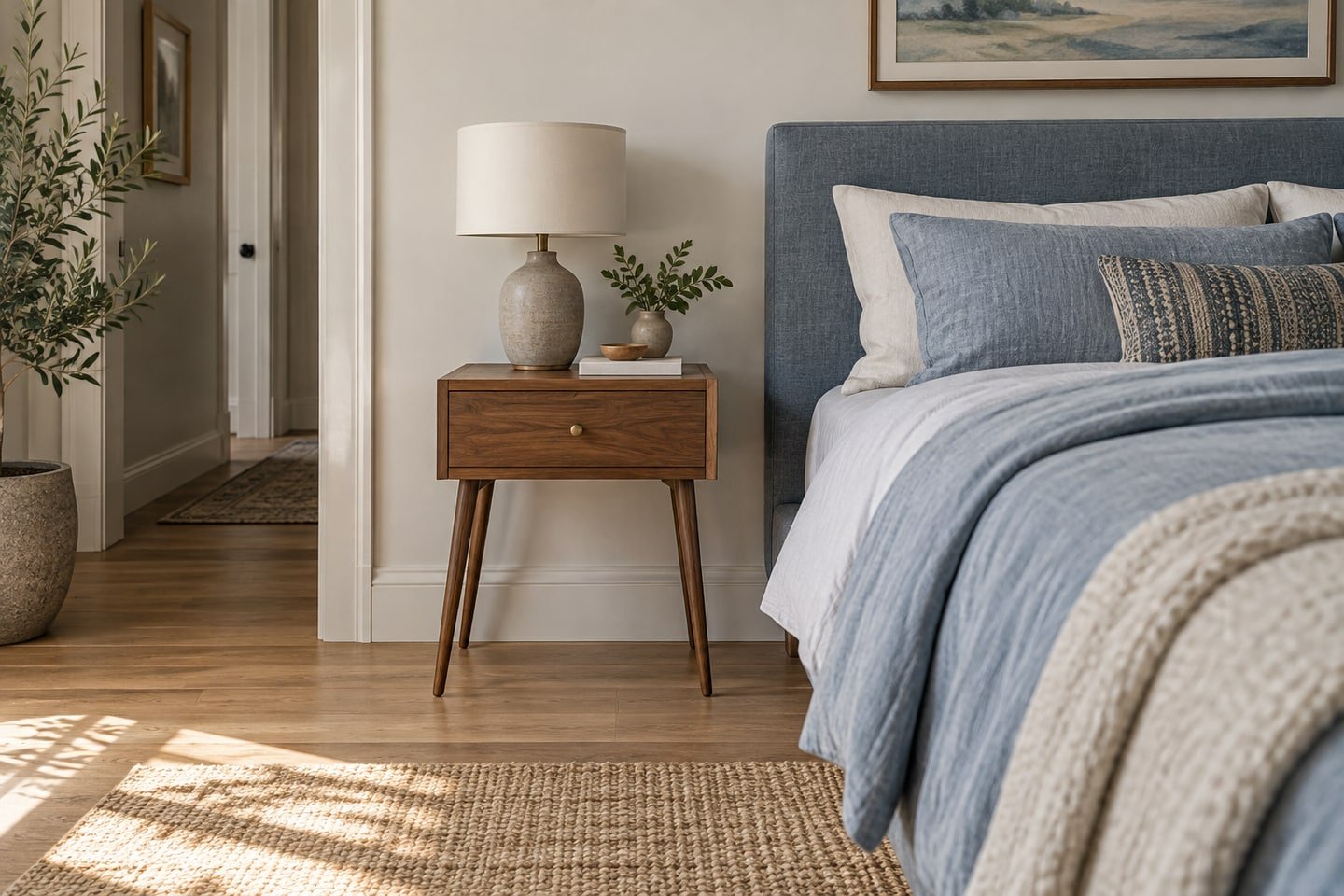
A bedside table on slim legs can show more of the floor and make a compact bedroom feel visually lighter. It suits a room where closed storage is already handled elsewhere.
Check stability, foot placement, and any required wall restraint. Open space beneath the table is useful only if it does not become another pile of shoes and bags.
Practical tip: Keep the visible floor below the table clear.
24. Blend a Plain Nightstand With the Wall Color
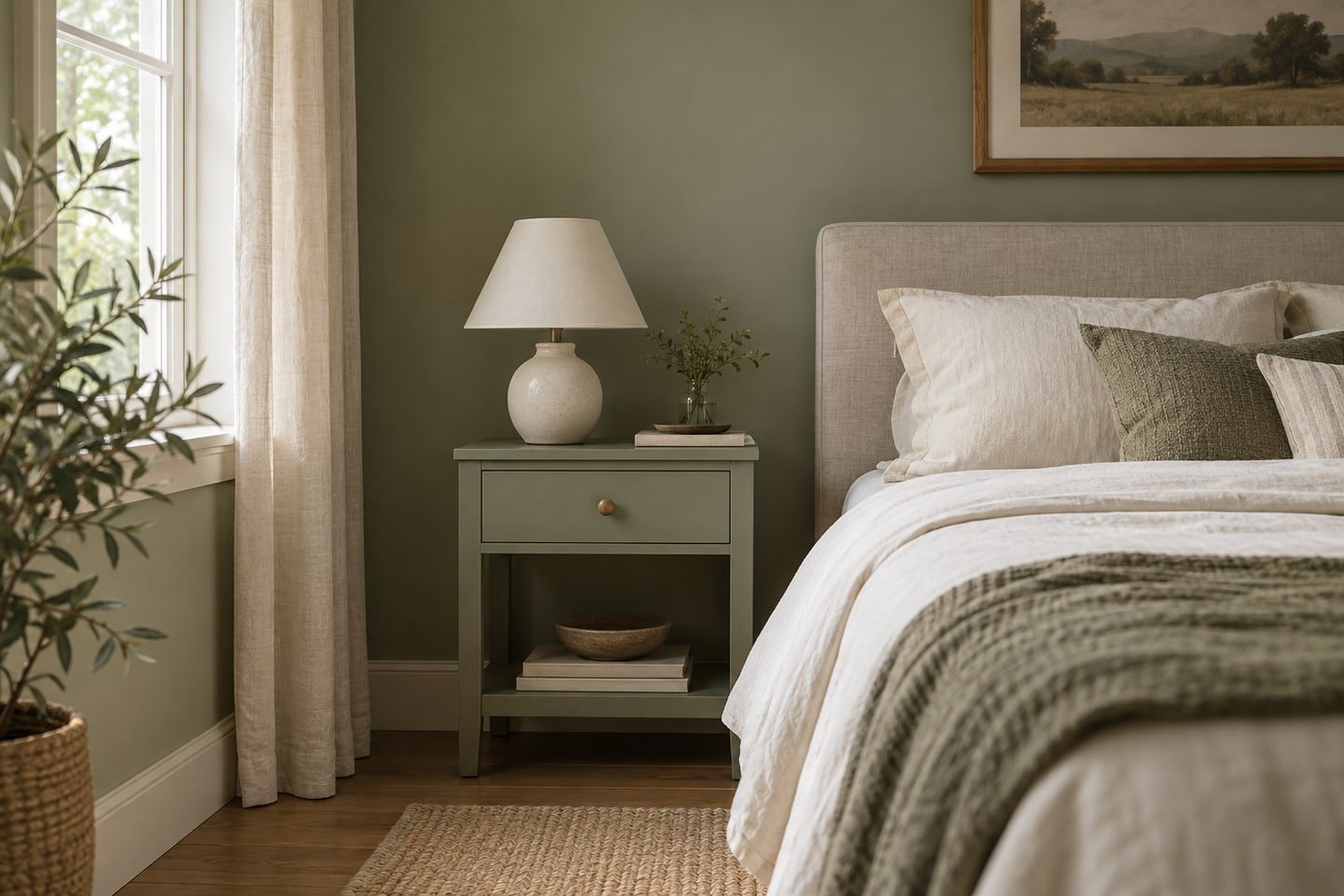
Painting or selecting a plain cabinet close to the wall color can reduce visual contrast in a small room. Texture, a simple handle, and the bedding can provide the detail instead.
Check color samples in the room before changing furniture. If refinishing an existing piece, follow the finish and product instructions and preserve the hardware, stability, and ventilation it needs.
Practical tip: Use one contrasting object rather than covering the top with accents.
25. Try a Clear Table When Storage Is Already Covered
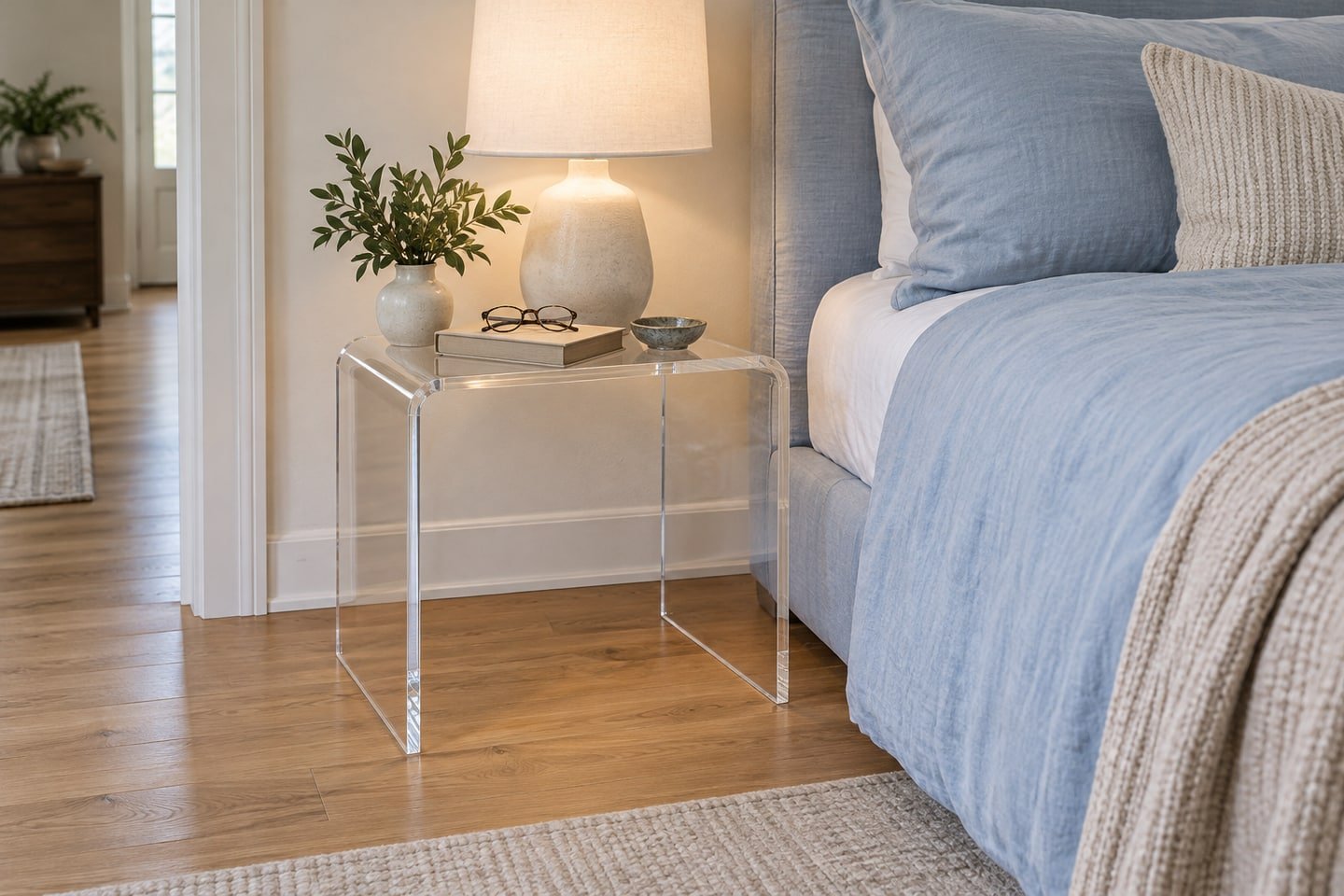
A clear acrylic bedside table can keep sightlines open in a small bedroom. It suits a reader who needs only a modest landing surface and has storage elsewhere.
Check its load instructions, stability, and edge visibility in the actual room. Clear furniture still occupies space, and it needs a usable route around it just like an opaque table.
Practical tip: Keep styling simple so the transparent surface stays easy to see and clean.
Choose the Arrangement That Works Every Day
Choose the smallest arrangement that comfortably holds what you use at night. Keep the route clear, check drawers and doors before buying, and let storage elsewhere handle the overflow. One useful surface and a well-placed light can be enough.
For related planning, explore small-bedroom desk layouts and shoe storage for small spaces.
Planning References
IKEA: Nightstand shapes and storage formats; IKEA: Example of purpose-designed wall-mounted bedside furniture; CPSC Anchor It!: Furniture tip-over prevention. Follow the instructions for the exact furniture and fixtures you select.
Optional digital guide for this topic
If you prefer a structured workbook, explore this related paid guide.