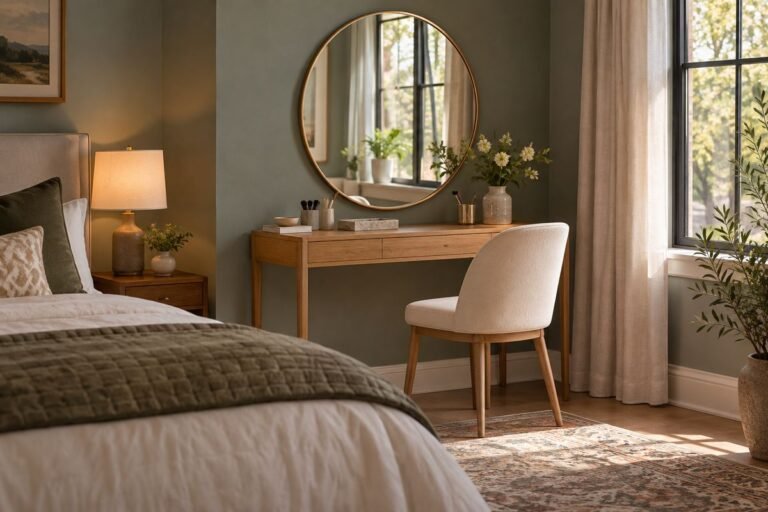
Bedroom wall art ideas should add something you want to see at the beginning and end of the day. The most useful starting point is a wall you actually notice from the bed or doorway, rather than an empty space that simply seems to need filling.
Choose the artwork with the furniture, bedding and lighting in view. A quiet landscape, an original abstract or a small collection can each work, but they create different rhythms. These 25 concepts cover several subjects, shapes and placements without requiring a completely new bedroom.
Plan how the work will be supported before deciding on its final location. The images are original AI-generated room and artwork concepts, not mounting instructions. Follow the exact frame, wall and hardware requirements; use professional help when the construction or suitable fixing method is uncertain.
The images are original AI-generated decor concepts, not installation diagrams or photographs of completed client projects.
Browse These 25 Bedroom Wall Art Ideas
Jump to an idea
- Place a quiet landscape above the dresser
- Use a vertical abstract on a narrow side wall
- Try bedroom wall art ideas in a related pair
- Choose one broad abstract for a long dresser
- Use botanical line work in a reading corner
- Frame a personal photograph with a generous mat
- Build a small gallery around one subject
- Let one original textile become wall art
- Use a painted mural as the bed-wall artwork
- Choose a tonal abstract for a calm palette
- Connect muted blue art to warm wood
- Use earthy art with pale linen
- Give a dark wall a pale artwork
- Use darker line work on a light wall
- Try a loose grid with consistent frames
- Let a single portrait-shaped composition stand alone
- Use an original architectural drawing
- Place a small artwork near the dressing area
- Use bedroom wall art ideas to soften a desk corner
- Choose a diptych with two different shapes
- Let the frame echo one room material
- Use unglazed texture where reflections distract
- Keep a patterned wall and artwork deliberately separate
- Choose one personal color accent
- Leave one wall clear after choosing the art
Compare bedroom wall art ideas from the bed and doorway
Sketch the visible wall with the bed, dresser, doors and windows. Use paper outlines to compare complete frame sizes, including any mat. View the outlines from the bed and the normal entrance. Keep the reading light and opening doors in the plan, then confirm a suitable mounting method for the actual wall and framed work. Choose original, personal or properly licensed imagery you will enjoy living with.
| Wall or furniture condition | A useful composition | What to compare |
|---|---|---|
| Broad dresser | One horizontal work or a related pair | Complete outer frame dimensions |
| Narrow side wall | One vertical picture | Door swing and the seated view |
| Patterned bedding | A quiet subject or limited palette | Physical fabric and artwork samples |
| A reading corner | A small focused collection | The lamp and seated eye line |
| Space above the bed | A considered mural or appropriately assessed artwork plan | Location-specific support and mounting requirements |
Choose mounting for the actual location
Do not assume an adhesive picture strip is suitable everywhere. For example, 3M specifically excludes using its Command Picture Hanging Strips over beds or on wallpaper and directs users to follow the product instructions. A hardware choice also depends on the complete framed weight, wall construction and intended location. Have the appropriate method established before hanging; do not infer hidden supports from a concept image.
Let the art relate without matching every textile
A shared color can connect a picture to the bedding, but exact repetition is optional. Consider whether the room needs a quiet subject, a clear graphic shape or a personal detail. Compare one strong artwork with several smaller pieces before buying more frames. Empty wall space can help a chosen piece feel intentional.
1. Place a quiet landscape above the dresser
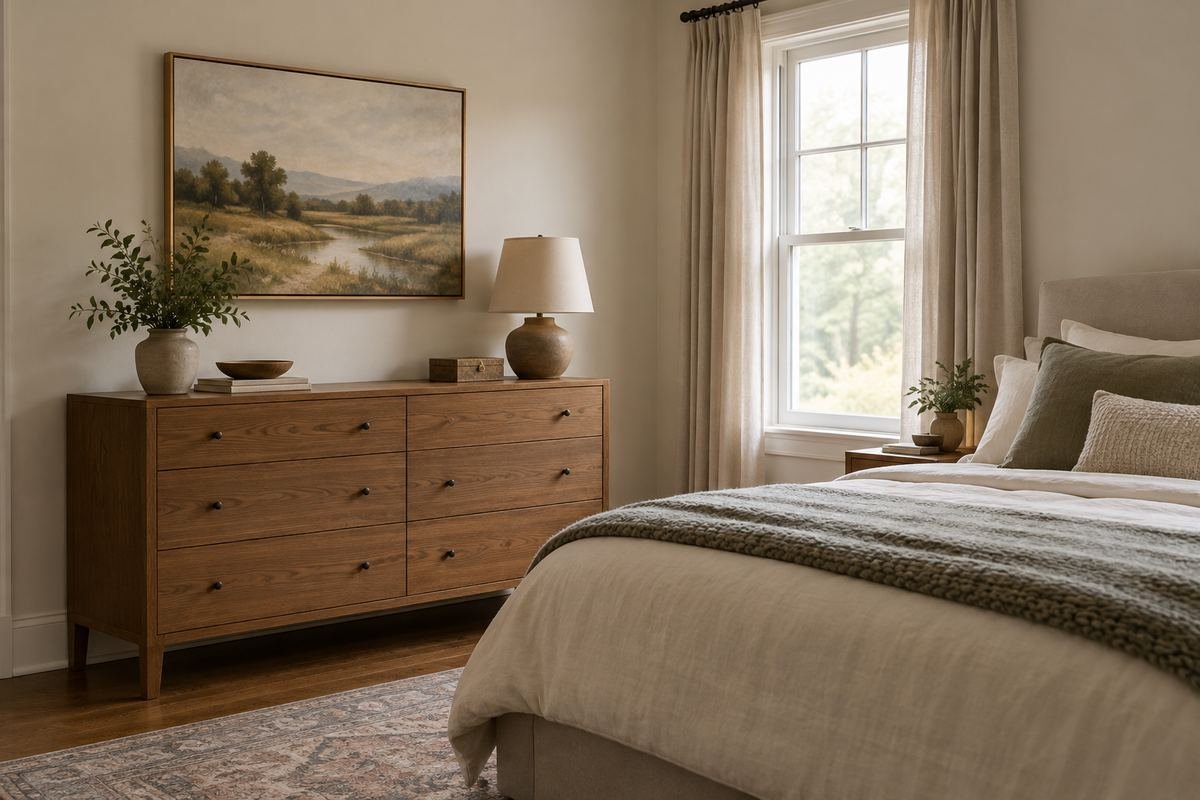
A landscape above the dresser gives the room a separate focal area from the bed. Muted colors can connect to bedding and wood while keeping the furniture surface useful.
Compare the complete frame with the dresser and adjacent openings. Keep lamps and daily objects in the view so the picture is not judged against an artificially empty surface. Confirm suitable wall mounting before the display is arranged.
Practical tip: Test the frame outline with the dresser in daily use.
2. Use a vertical abstract on a narrow side wall
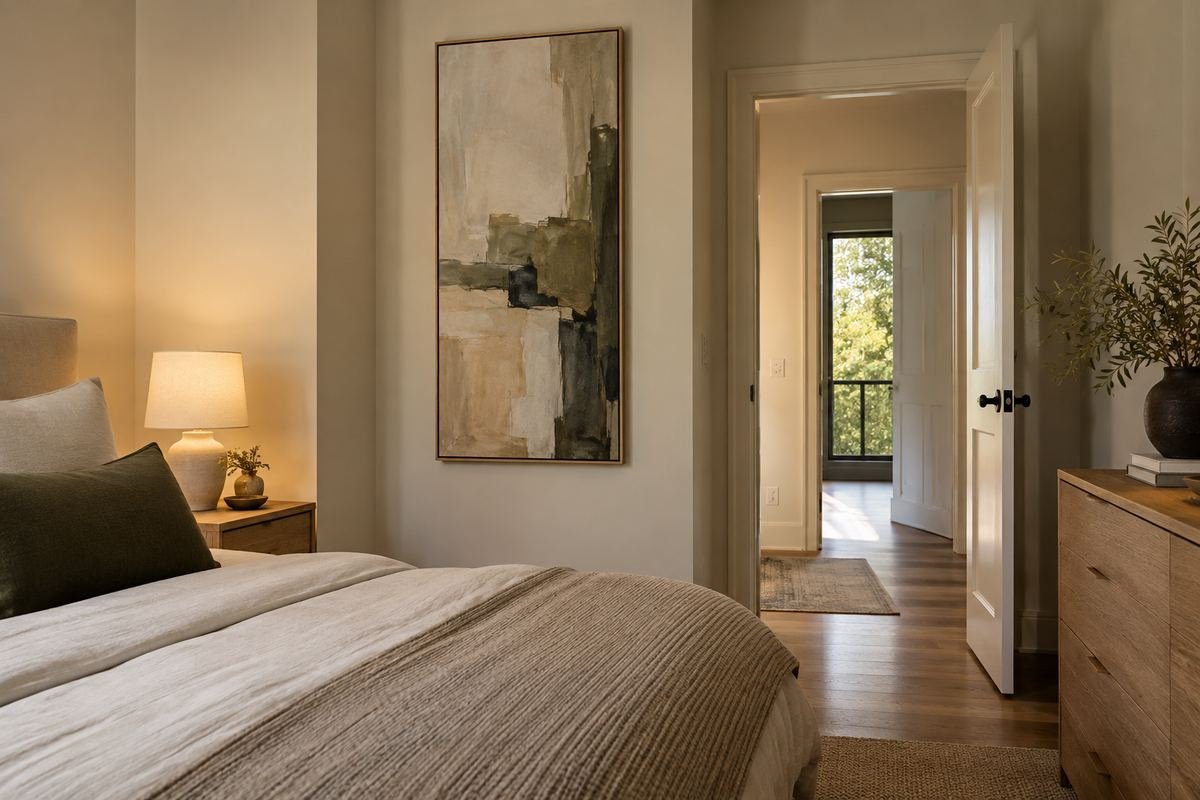
A narrow wall can suit a vertical artwork that would feel lost over a broad piece of furniture. The shape adds a clear accent without filling the entire bedroom.
Check the door swing and the normal walking route. Choose a complete frame size that leaves the architecture readable. Compare it from the bed as well as from directly in front, where a narrow composition may appear quite different.
Practical tip: Keep the door and walking route in the outline plan.
3. Try bedroom wall art ideas in a related pair
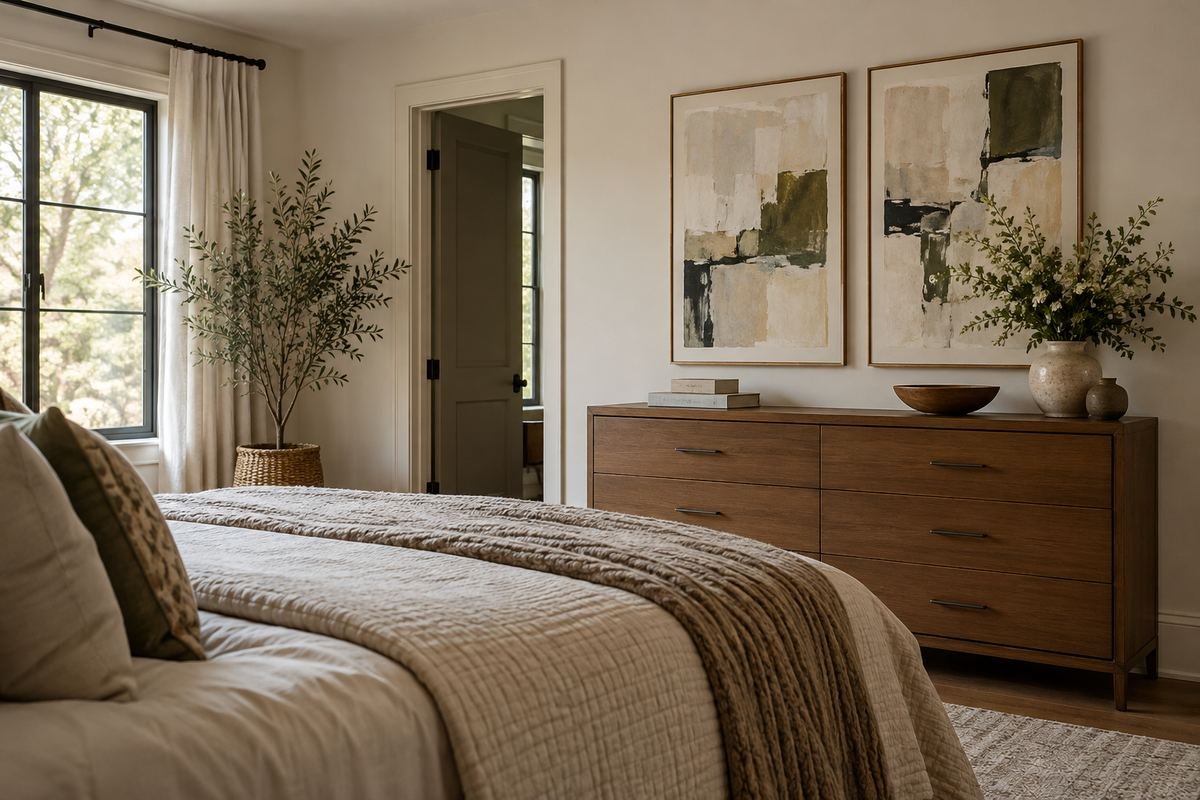
Two related pictures create a small rhythm without a large gallery. Their subject or palette can connect them while each retains a distinct composition.
Plan the pair as one group, including the gap between frames. Compare the total width with the furniture below it. Matching outer frames can keep the arrangement calm when the images themselves contain different details.
Practical tip: Measure the whole pair rather than each picture alone.
4. Choose one broad abstract for a long dresser

A broad abstract can respond to a long dresser and a horizontal wall area. Its larger shapes may read more clearly from the bed than several tiny pictures.
Use a paper outline to compare the width with the entire furniture group. Keep the art clear of an opening door or window treatment. Choose the work for its composition, not simply because its colors match the bedding.
Practical tip: View the broad shapes from the usual pillow position.
5. Use botanical line work in a reading corner
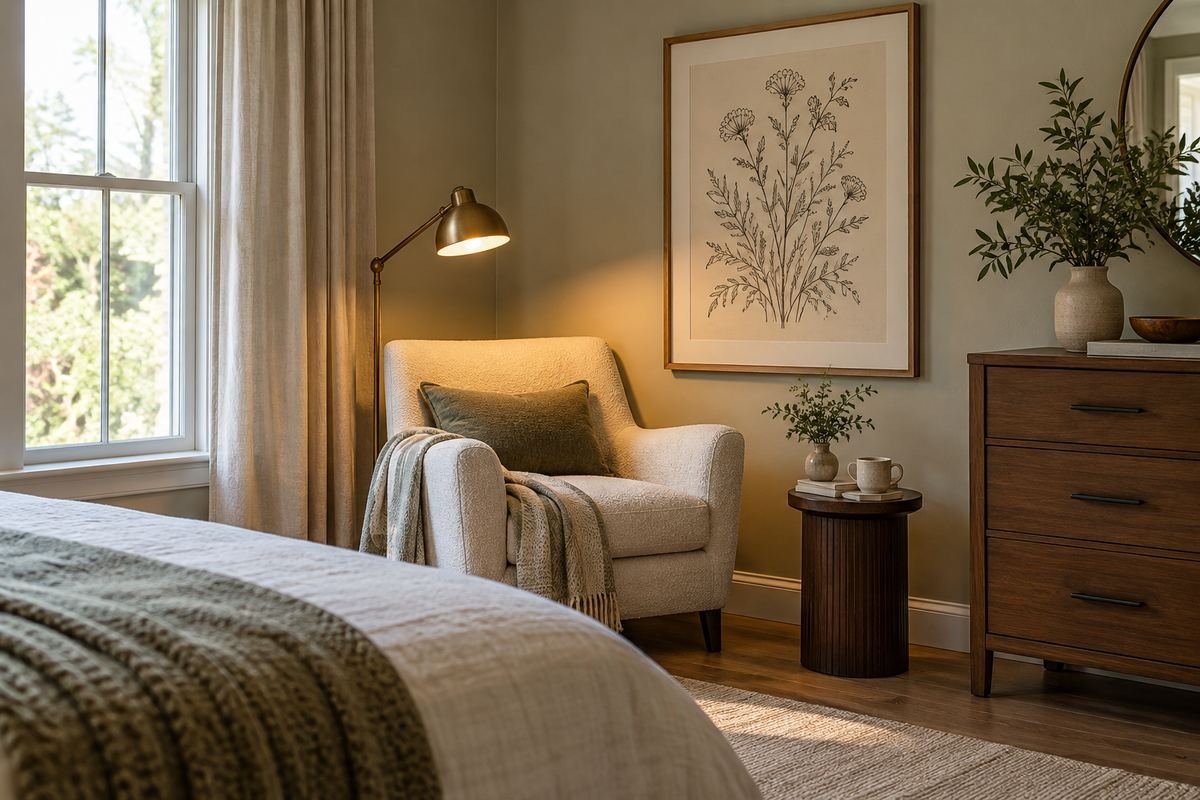
A botanical drawing can add delicate detail beside a reading chair. It gives the corner a focus without requiring a whole themed bedroom.
Compare the line weight with the actual viewing distance. Very fine marks can disappear across the room, while a stronger drawing remains visible. Keep the reading lamp and chair position in the placement plan.
Practical tip: Test whether the lines remain visible from the chair.
6. Frame a personal photograph with a generous mat
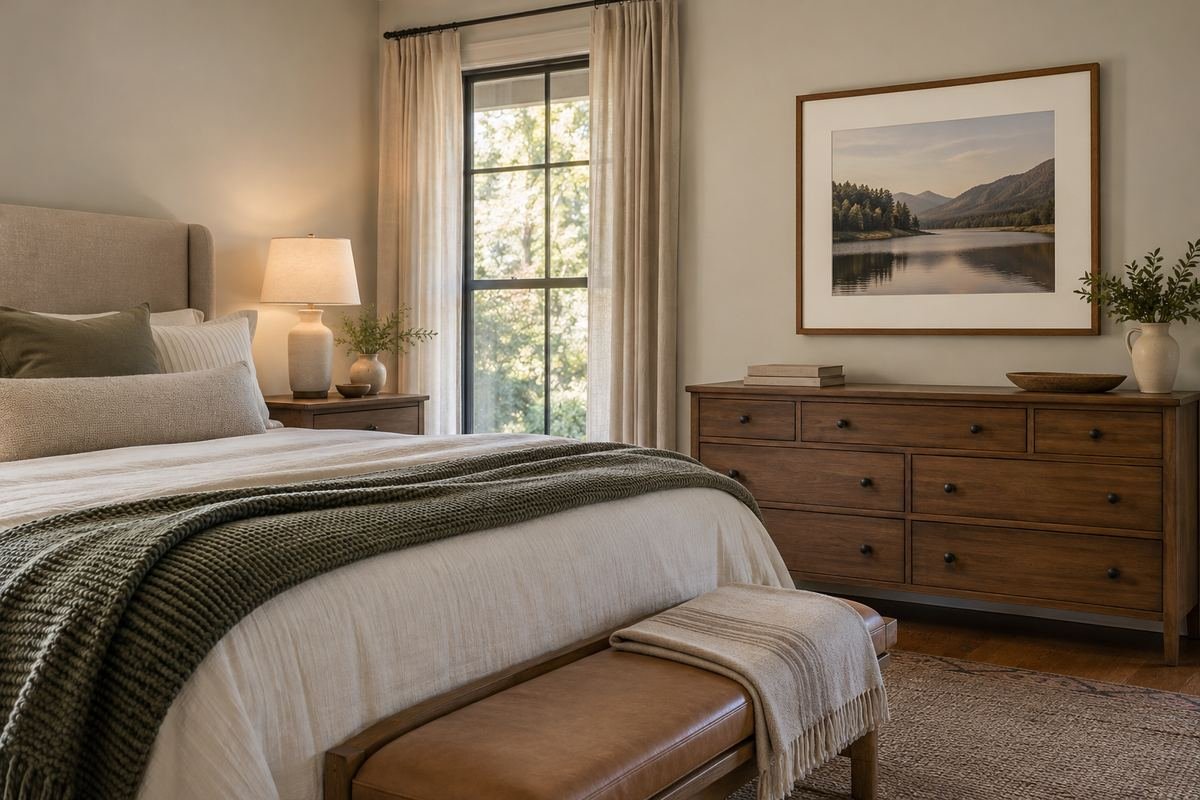
A personal photograph can become a deliberate bedroom artwork when its presentation has enough space around it. A quiet mat gives the image a clear boundary.
Choose a copy you are comfortable displaying and a suitable frame for the print. Compare the full outer dimensions with the wall. Keep irreplaceable originals stored appropriately if the room’s light or conditions make the display unsuitable.
Practical tip: Choose the frame from the complete matted size.
7. Build a small gallery around one subject
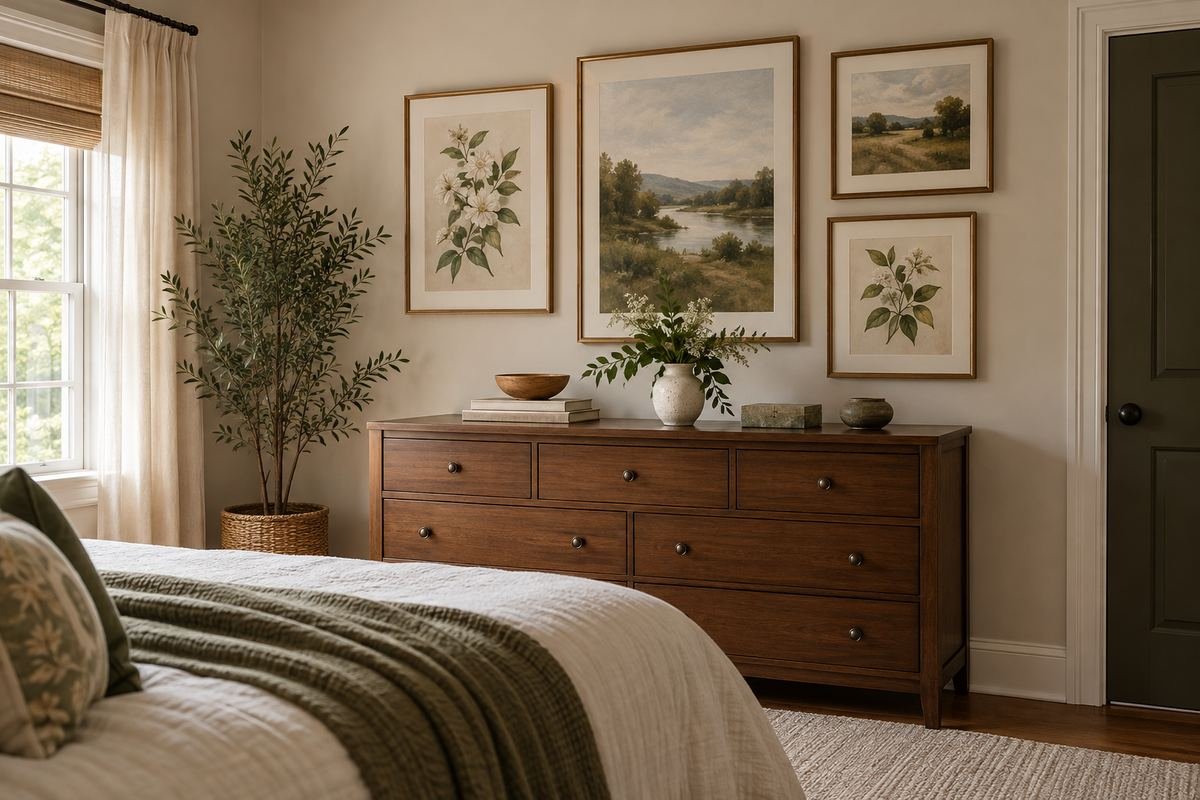
A small collection of landscapes, line drawings or abstract shapes can feel coherent without matching every image. The subject gives the group a useful connection.
Arrange paper outlines before hanging and compare the complete group with the furniture. Keep the spacing deliberate rather than adding each new piece wherever a gap remains. Settle the suitable support for every frame.
Practical tip: Plan the complete group on paper first.
8. Let one original textile become wall art
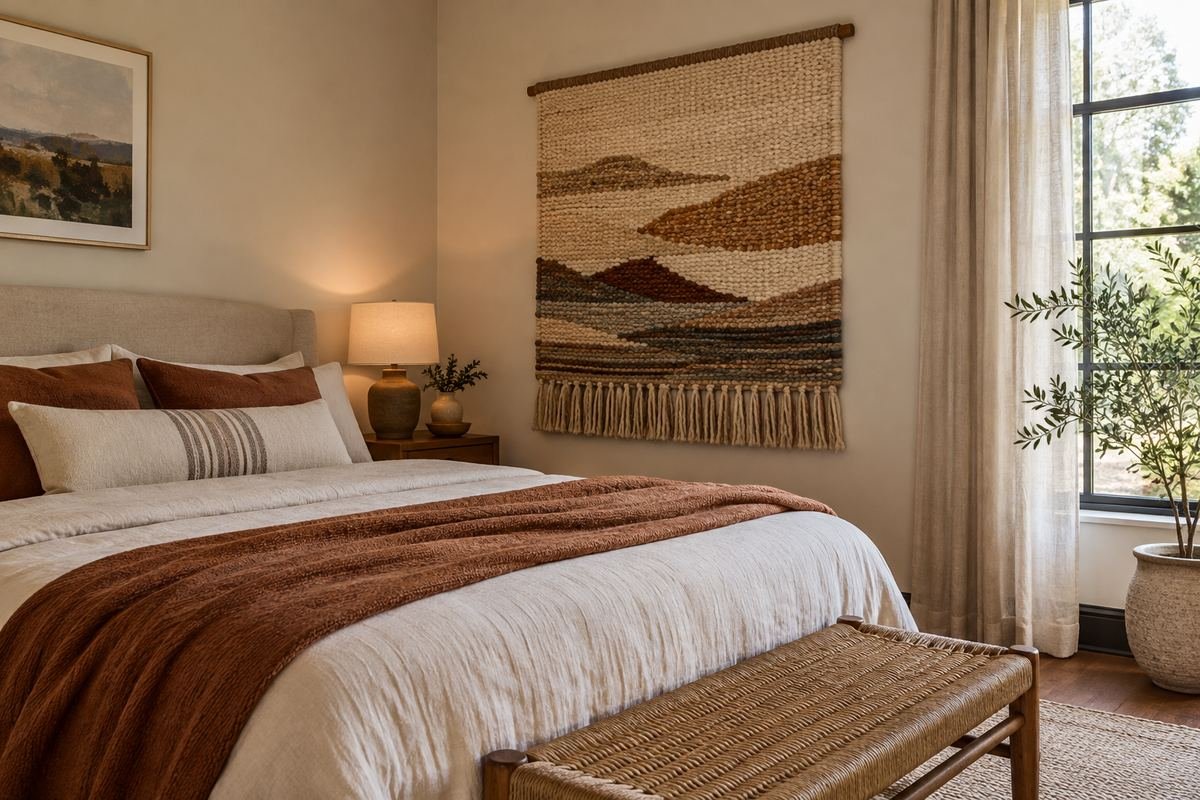
A properly supported textile can add softness and texture to a bedroom wall. Its surface offers a different effect from a glazed picture or painted canvas.
Choose a suitable hanging system for the actual textile and wall. Keep it away from unsuitable heat sources and places where doors or furniture rub against it. Compare the texture with existing bedding so the room keeps a clear balance.
Practical tip: Confirm support and care for the textile itself.
9. Use a painted mural as the bed-wall artwork

A painted mural can give the bed wall a complete composition without a freestanding frame. A soft landscape-like design can remain quiet around the headboard.
Plan the visible crop with the actual bed and reading lights. The most interesting part should remain visible above or beside the furniture. Use suitable preparation and coating guidance for the wall rather than copying a concept image as a painting specification.
Practical tip: Draw the headboard over the proposed mural composition.
10. Choose a tonal abstract for a calm palette
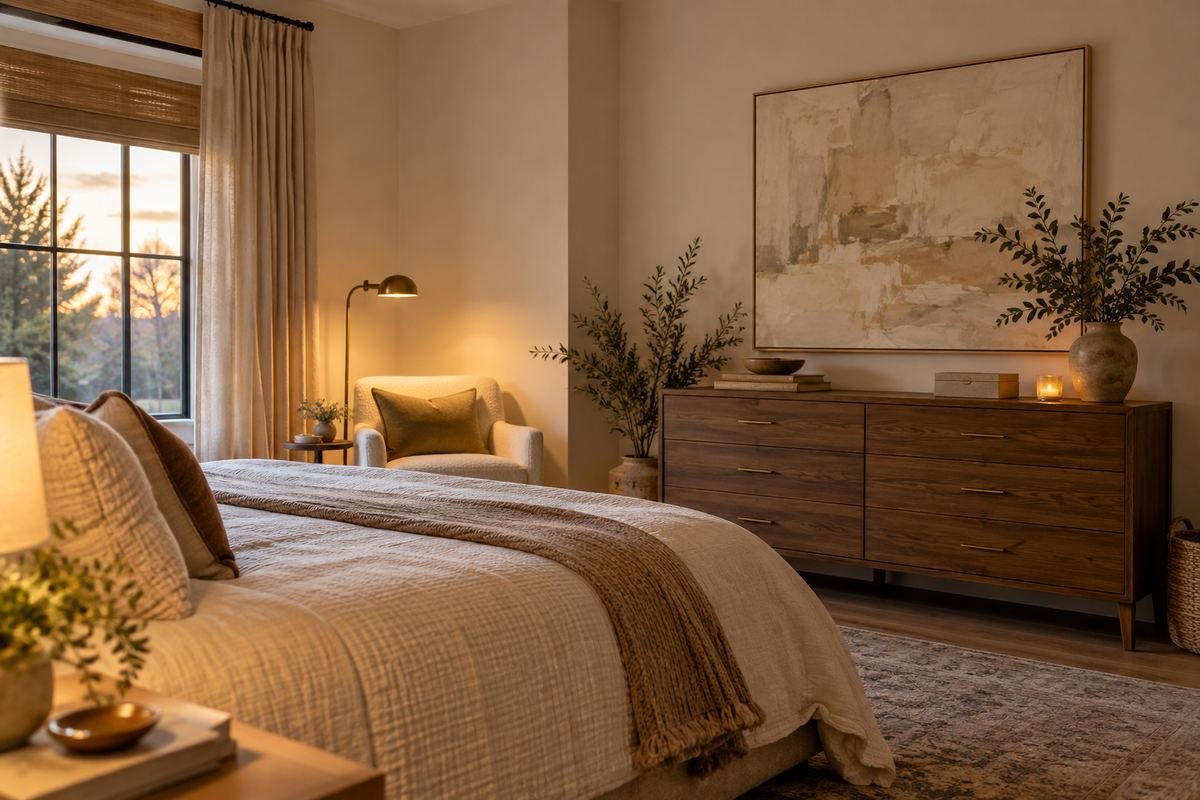
A tonal artwork uses differences in depth and shape rather than several strong colors. It can give a quiet bedroom detail without becoming the loudest surface.
Compare the work with the wall and bedding in normal evening light. If all the tones merge, a clearer frame or a slightly deeper shape may help. Add definition thoughtfully before introducing a completely new accent color.
Practical tip: Check the tonal contrast under normal lamplight.
11. Connect muted blue art to warm wood
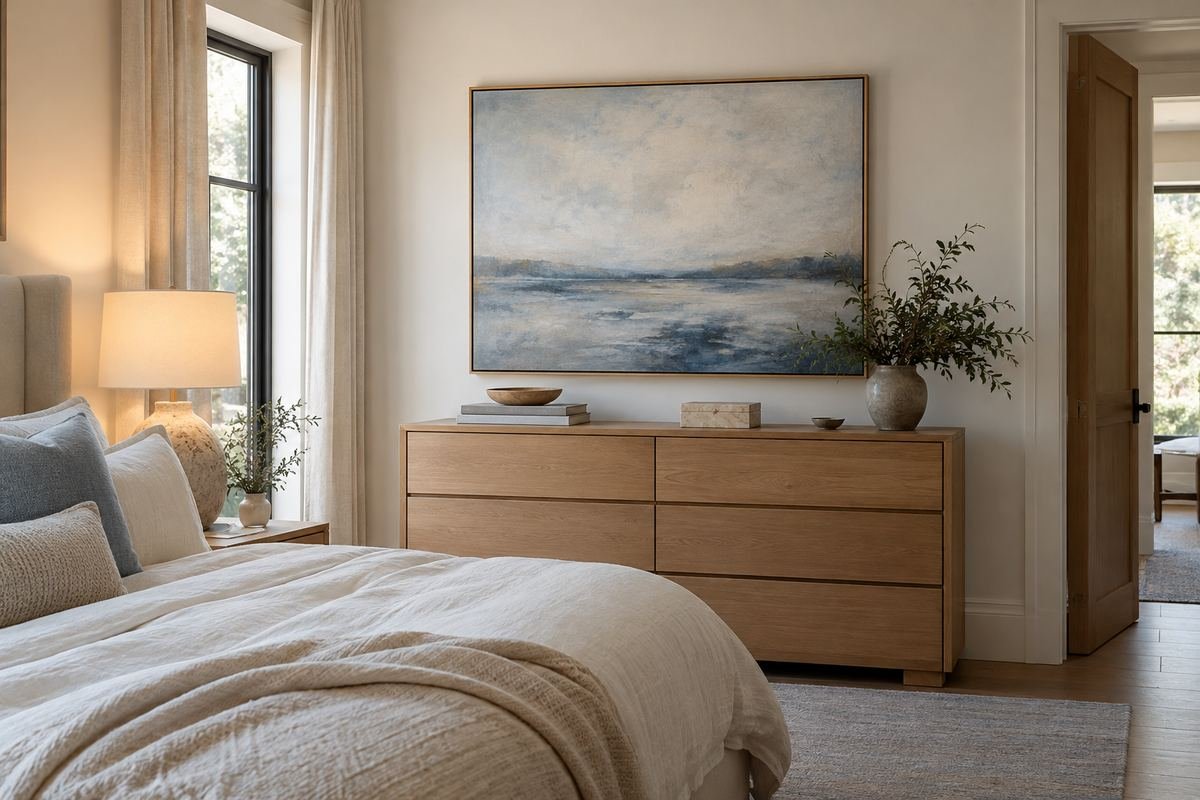
Muted blue can give warm wood furniture a gentle cool partner. An artwork containing a few pale neutral areas keeps the relationship open rather than heavy.
Compare the blue with the actual wood, floor and curtain fabric. Keep the frame simple so it does not become a fourth competing finish. One color connection in the bedding may be enough to bring the art into the room.
Practical tip: Review the art beside the wood and curtain samples.
12. Use earthy art with pale linen

Clay, sand and brown notes in an artwork can give pale linen bedding a grounded companion. The work supplies color while the textiles remain comparatively plain.
Compare the warmer notes with the floor and any reddish wood. A restrained palette does not require every warm surface to match. Choose a deliberate difference in depth so each material still has its own identity.
Practical tip: Compare several existing warm finishes together.
13. Give a dark wall a pale artwork
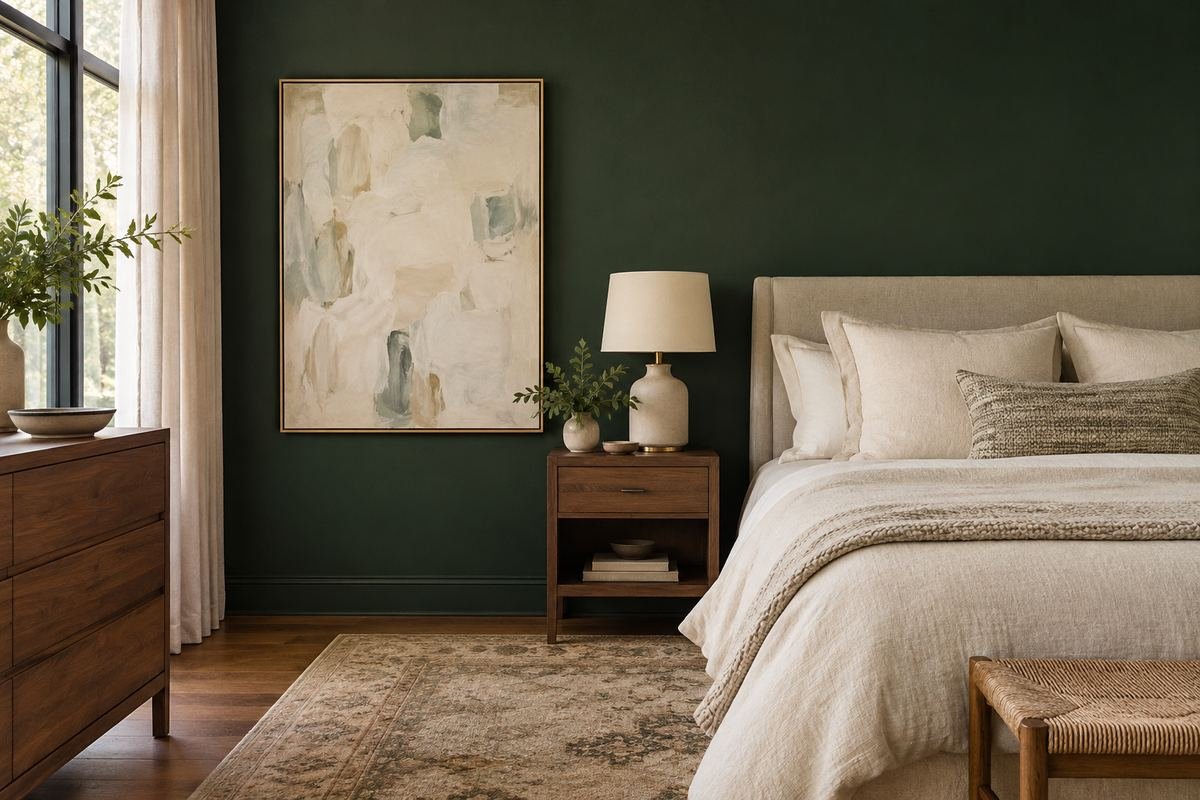
A pale picture can stand clearly against a deep wall color. It creates a focal shape without needing several bright accessories around the room.
Compare the frame and mat with the trim white. A very cool white may look unexpectedly stark against a warm dark wall. Keep the mounting appropriate for the wall construction and make the contrast deliberate.
Practical tip: Include the actual trim white in the art comparison.
14. Use darker line work on a light wall

A dark drawing can provide a crisp detail against a pale bedroom wall. The limited palette works when bedding or a rug already carries more color.
Check the drawing from the bed to judge how much detail remains visible. A simple subject with a clear outline may work better than a dense group of tiny marks. Choose the frame with the other dark room details in view.
Practical tip: Favor a readable outline over unnecessary tiny detail.
15. Try a loose grid with consistent frames
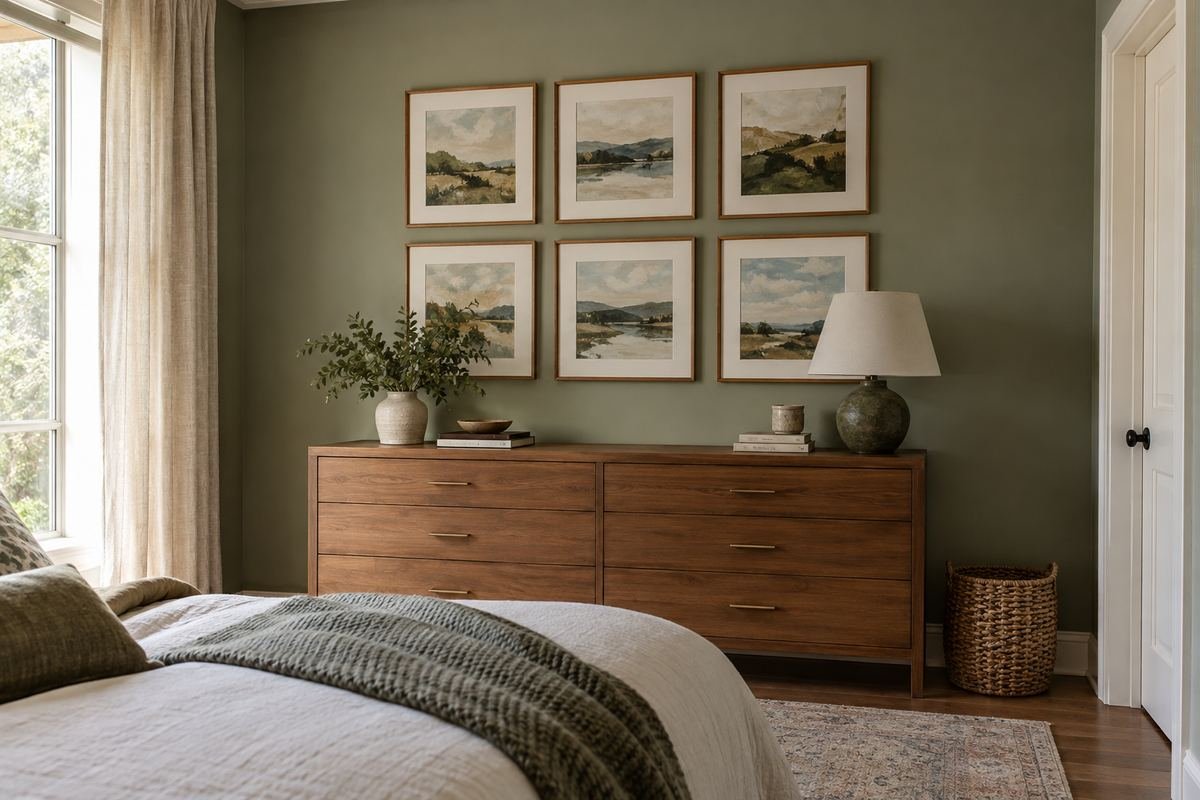
A small grid can give several images an orderly structure. Consistent frames and outer dimensions let the pictures differ without making the wall feel disjointed.
Plan all the positions together and compare the grid with nearby furniture. The arrangement should fit the wall’s real boundaries rather than spreading into the door or curtain area. Use suitable individual supports for each frame.
Practical tip: Approve the outer rectangle of the complete grid.
16. Let a single portrait-shaped composition stand alone
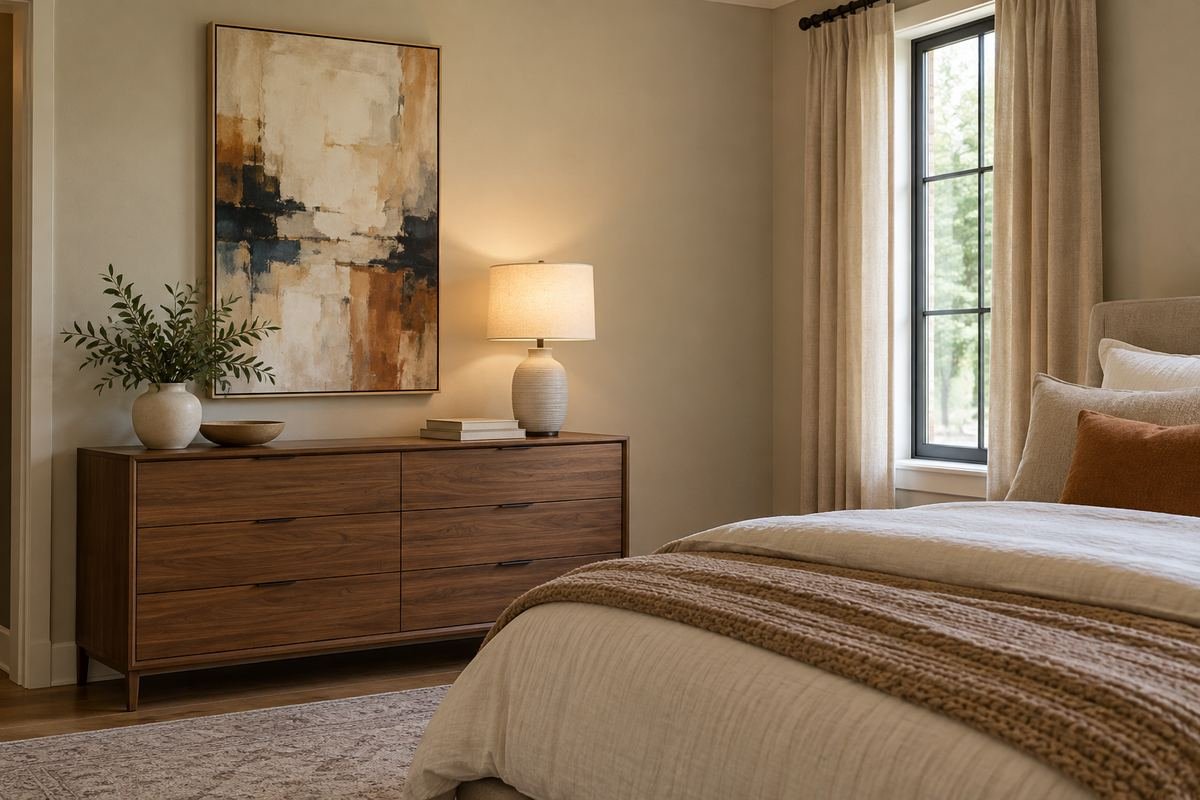
A portrait-shaped abstract can add height beside lower furniture. Leaving it alone gives the image enough visual space without building a gallery around it.
Compare its outer dimensions with the wall and adjacent lamp. If the artwork feels disconnected, adjust the placement or scale before adding more objects. The relationship to furniture is more useful than filling every available area.
Practical tip: Change the scale before adding another picture.
17. Use an original architectural drawing
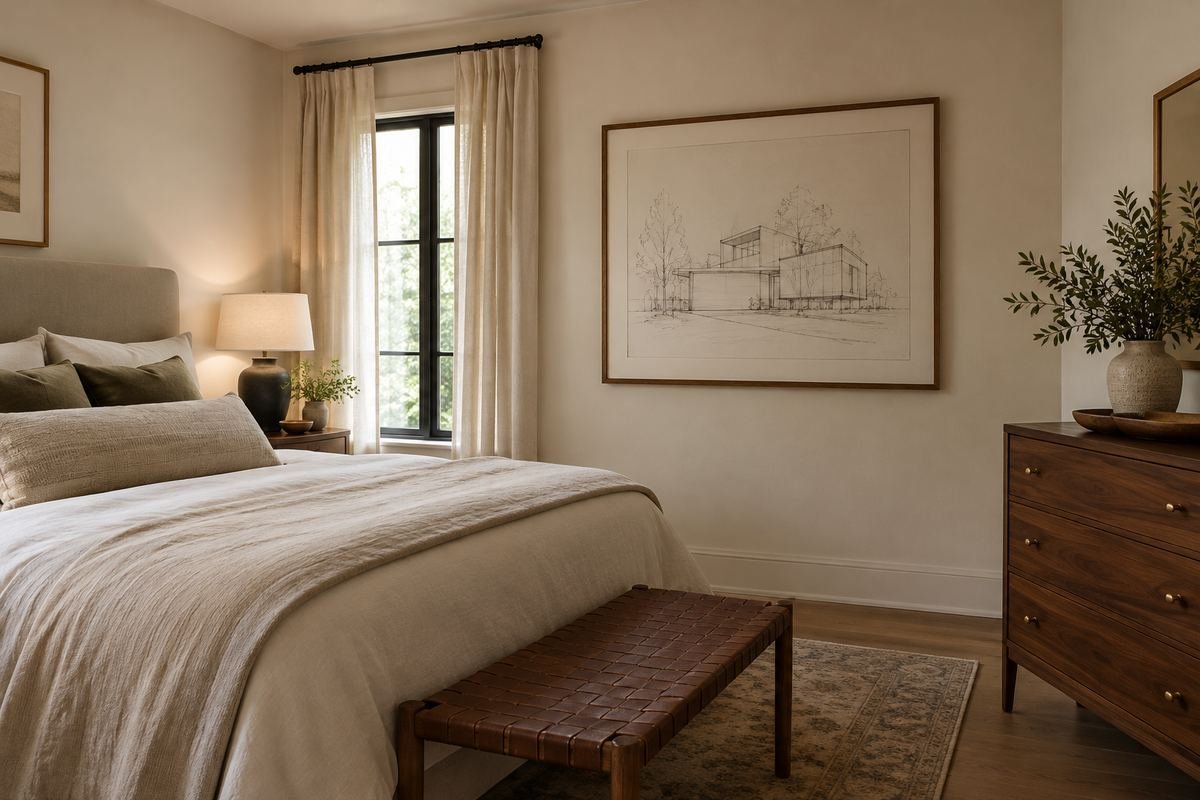
An architectural drawing can add a precise, personal-looking subject to the bedroom. A simple frame lets the lines carry the detail without a decorative border.
Choose an original or properly licensed image rather than copying a known artwork. Compare fine lines at the actual viewing distance and keep any printed information visually quiet. The concept here uses an invented architectural subject without lettering.
Practical tip: Check the line work from across the room.
18. Place a small artwork near the dressing area
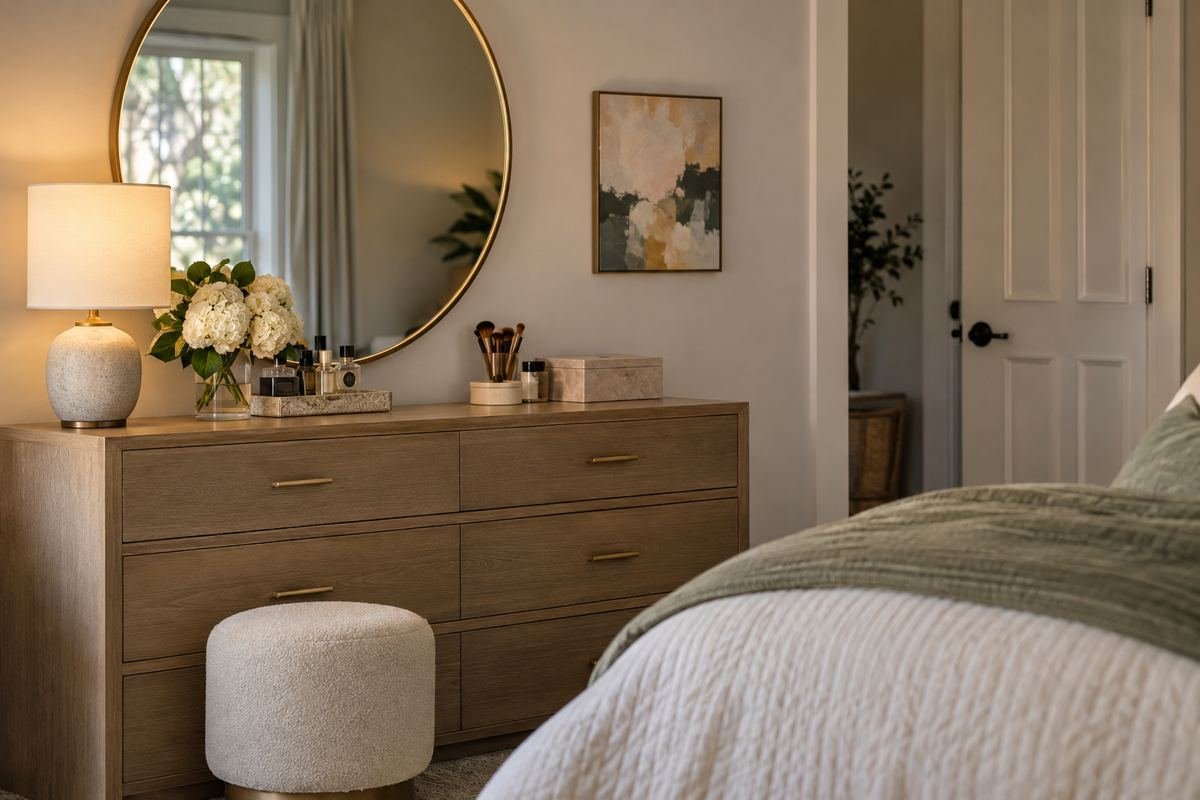
A compact picture can give a dressing area a finished detail without occupying the mirror’s useful wall space. It helps the corner feel connected to the rest of the bedroom.
Keep the mirror, stool and daily items in the placement plan. Do not let the frame interfere with drawers or lighting. A focused small composition is often more useful here than a broad statement piece.
Practical tip: Plan the picture beside the actual dressing routine.
19. Use bedroom wall art ideas to soften a desk corner
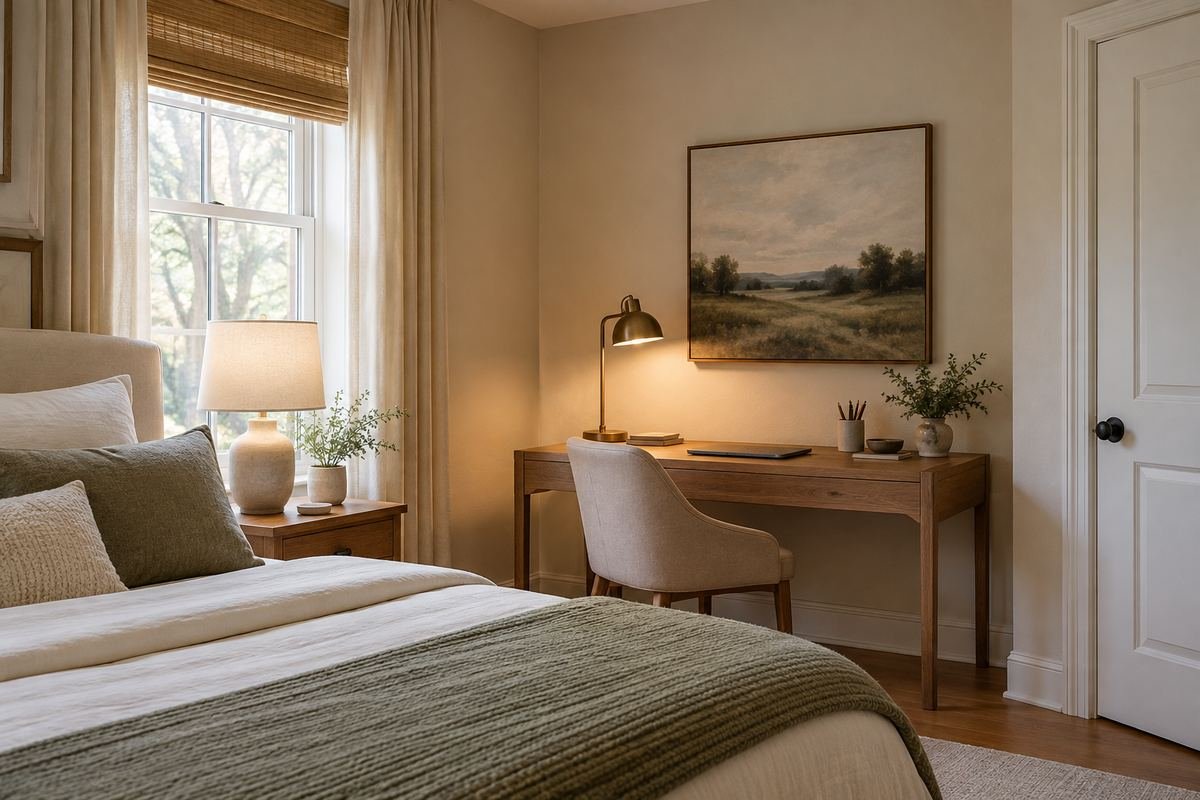
Artwork beside a guest-bedroom desk can make the work area feel part of the room. A quiet subject gives the wall personality without a busy video-call background.
Compare the picture from the bed and the desk chair. The work should still belong to the bedroom when the laptop is closed. Keep the desk’s useful surface and lamp area clear rather than replacing them with a leaning frame.
Practical tip: Check both the bed view and the seated work view.
20. Choose a diptych with two different shapes
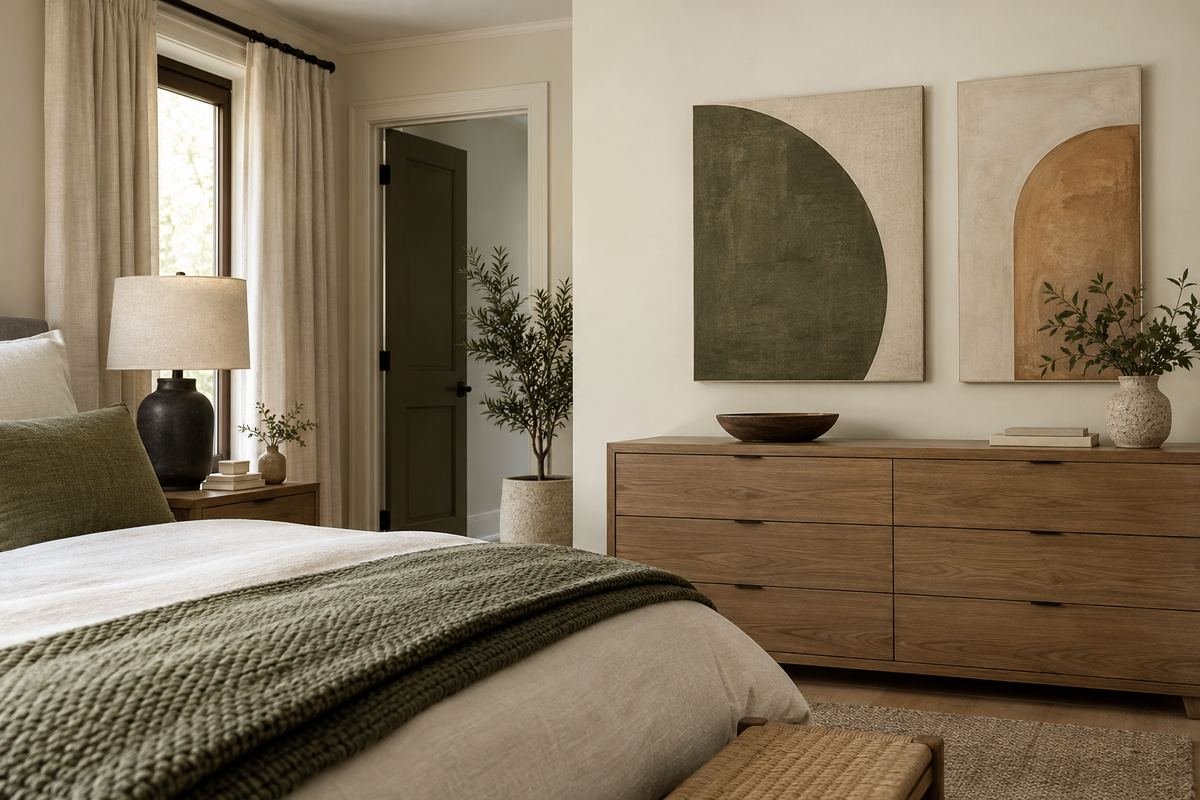
Two abstract pictures can relate through color while using different shapes. The difference keeps the pair interesting without requiring several frame styles.
Test the spacing and complete width with paper outlines. Keep the relationship clear enough that the pair reads as a deliberate choice. If one work is much visually heavier, adjust the arrangement before assuming the frames must be identical sizes.
Practical tip: Compare visual weight as well as outer dimensions.
21. Let the frame echo one room material
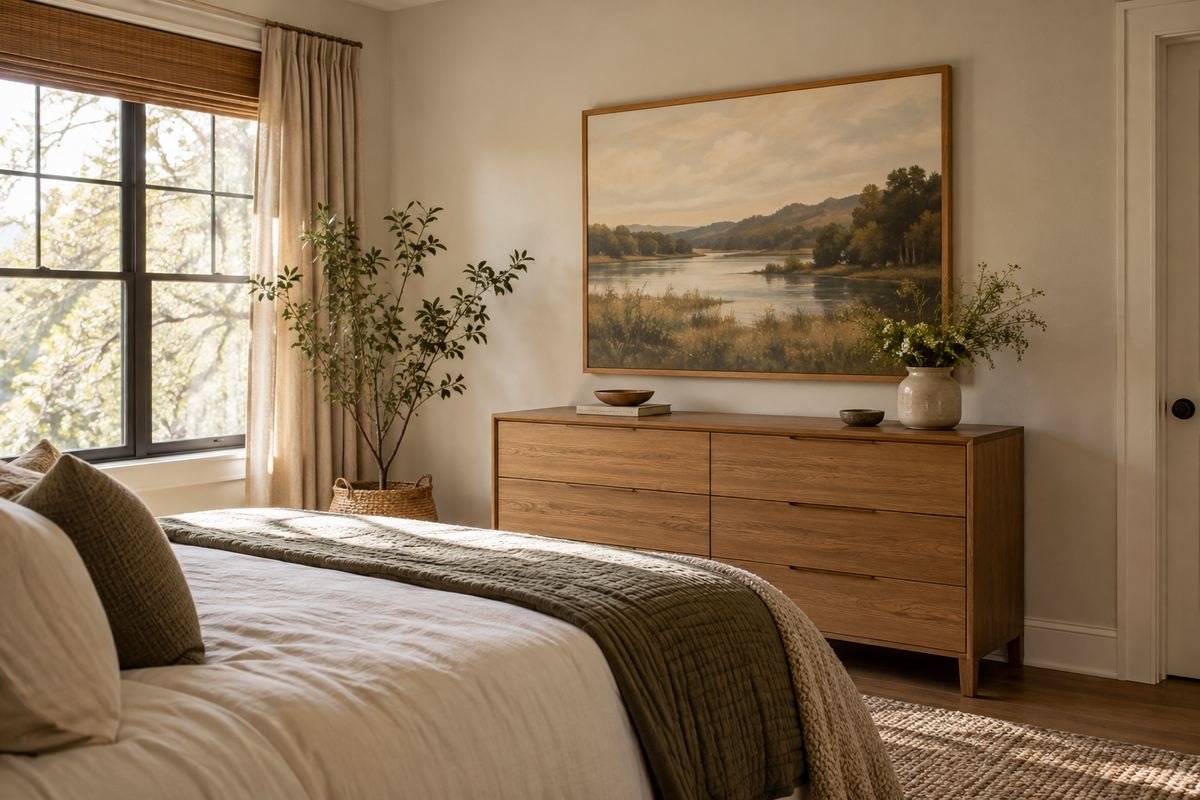
A frame can connect an artwork to an existing wood or metal detail. One clear connection may be enough without matching every bedside table and lamp.
Compare a real frame sample with the furniture. A deliberate difference in wood depth can work better than an uncertain near-match. Keep the frame subordinate to the image unless its shape is an intentional part of the composition.
Practical tip: Review the frame and image as one object.
22. Use unglazed texture where reflections distract
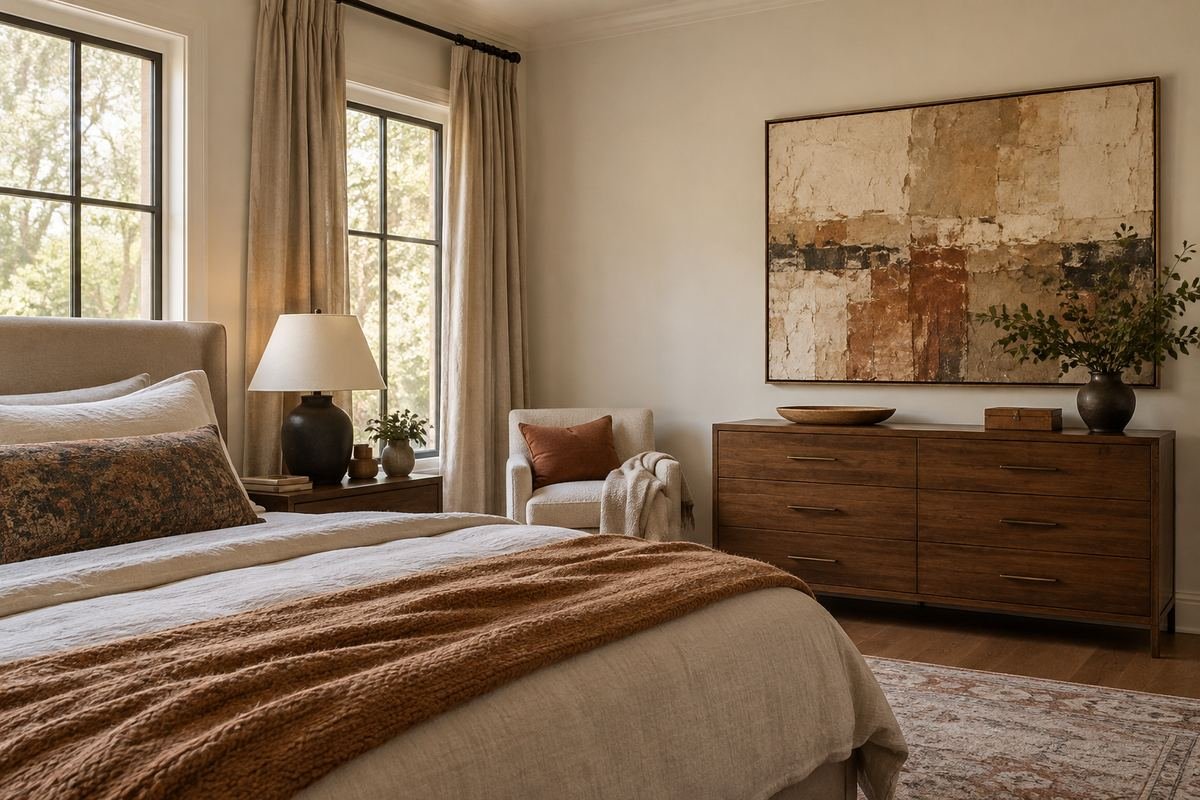
A textured artwork or suitable unglazed medium can offer a different appearance from a reflective glazed print. The surface may remain easier to see from some room angles.
Compare the actual work with the window and lamp in view. Material care and protection vary, so choose the appropriate presentation for the medium. Do not assume every unglazed picture can tolerate the same light or cleaning method.
Practical tip: Check reflections from the actual bed position.
23. Keep a patterned wall and artwork deliberately separate
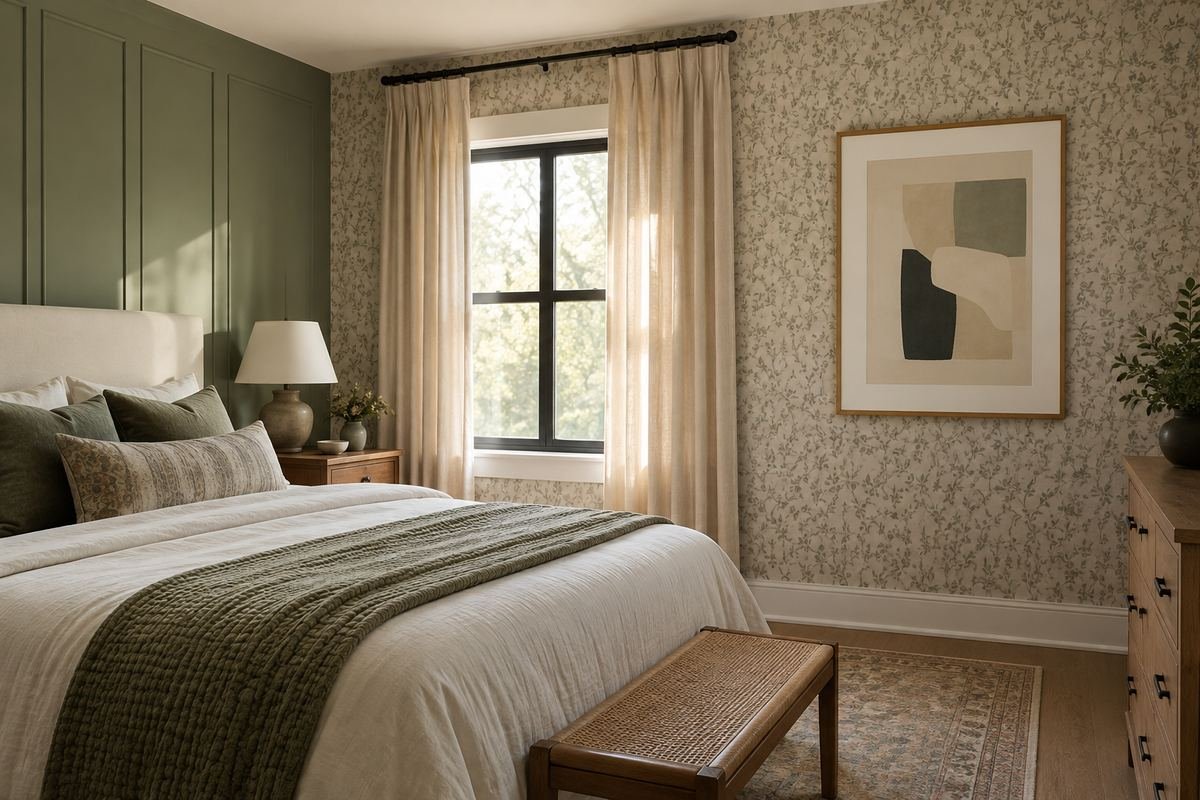
Artwork can work with patterned walls when its outline and scale remain clear. A simple frame or generous mat may help the image stand apart from the background.
Compare the actual wallcovering and art together. Choose mounting suitable for that wall and location; do not assume ordinary adhesive strips are permitted on wallpaper. If the image disappears, move it to a quieter wall instead of adding a more elaborate frame.
Practical tip: Confirm the mounting method for the actual wallcovering.
24. Choose one personal color accent
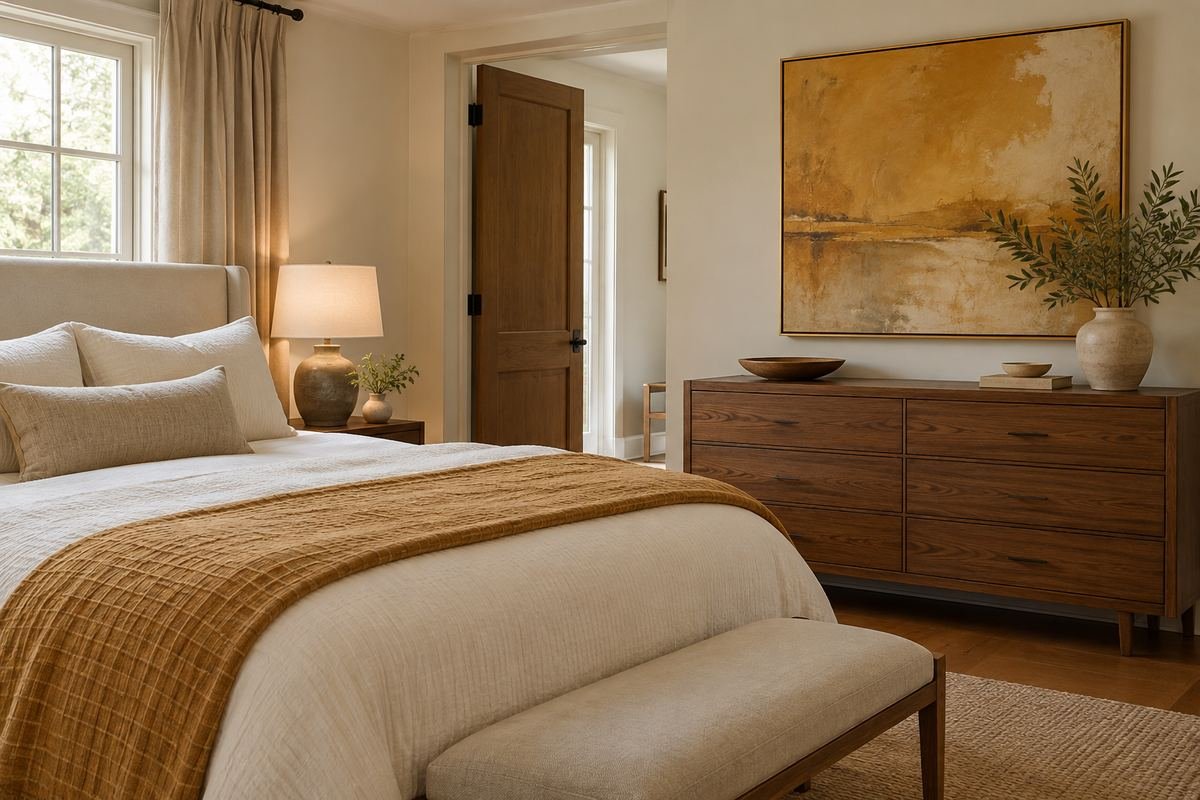
A small artwork can introduce a color you enjoy without changing the bedding or paint. It becomes a deliberate personal note within a quiet room.
Repeat the accent only if it improves the composition. Compare the picture with the existing palette first, then decide whether a small textile connection is useful. The artwork does not need a matching object on every surface.
Practical tip: Let one accent remain distinctive.
25. Leave one wall clear after choosing the art
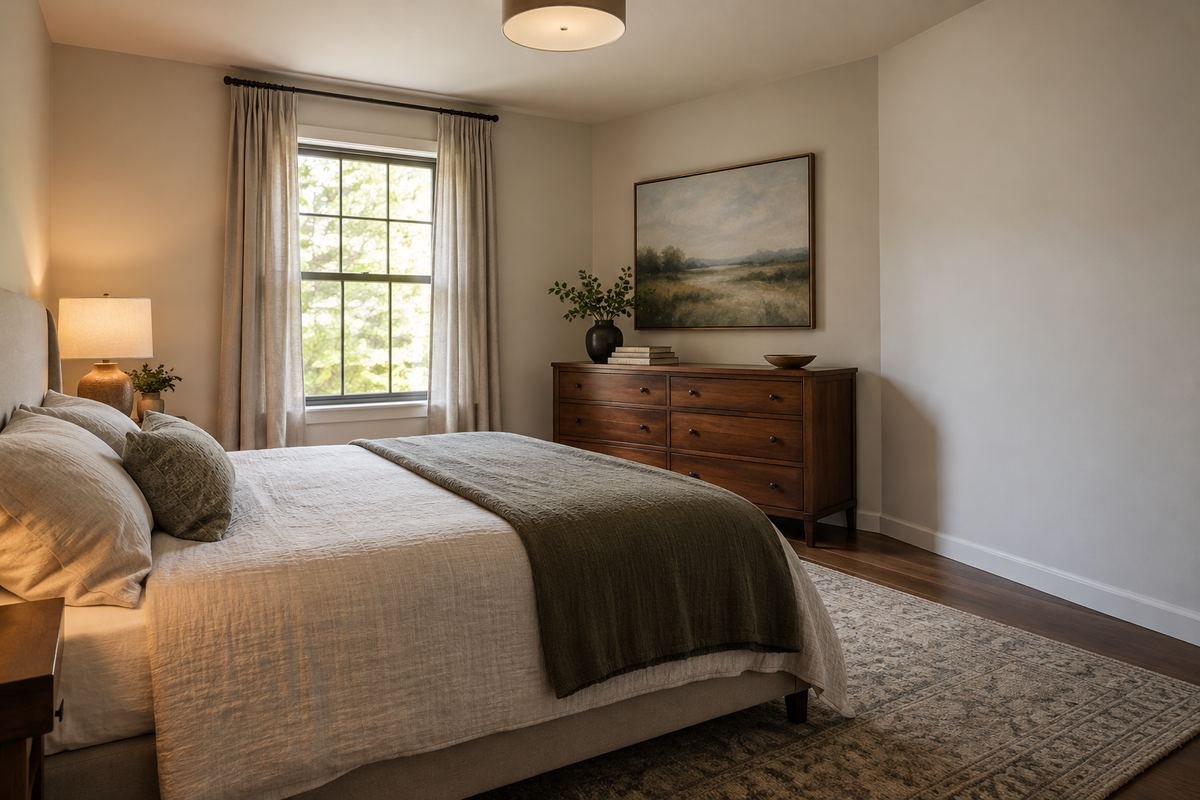
A finished bedroom does not need artwork on every wall. Clear space can help the chosen picture, furniture and light feel more comfortable together.
Review the complete room after hanging the main work. Remove a competing piece before buying another. The strongest bedroom wall art ideas often come from choosing a clear place for one meaningful composition and letting the remaining surfaces breathe.
Practical tip: Judge the whole room before filling another gap.
Frequently Asked Questions
How large should bedroom artwork be?
Compare the complete outer frame with the actual wall and furniture. Paper outlines are more useful than relying on a universal proportion, because windows, headboards and viewing distances vary.
Which bedroom wall art ideas work with patterned bedding?
A quiet landscape, simple line work or a limited-color abstract can provide a pause. Compare the actual bedding and art together and decide which should carry the stronger pattern.
Must bedroom wall art ideas be centered over the bed?
No. A dresser wall, reading corner or narrow side wall may provide a better view. Choose the location from the room arrangement and suitable mounting conditions.
Can I use adhesive strips over the bed?
Do not assume so. 3M specifically says not to use Command Picture Hanging Strips over beds. Follow the exact product limitations and have an appropriate location-specific support plan assessed.
How can I plan a small gallery wall?
Arrange paper outlines first, compare the complete group with the nearby furniture and keep a clear frame or subject relationship. Settle suitable supports for every piece before hanging.
Choose the Details That Work in Your Home
Choose bedroom wall art ideas from the views and objects that already shape the room. A piece you enjoy, a considered scale and a suitable mounting plan matter more than filling every empty wall. Start with one useful composition and let the rest of the bedroom remain comfortable.
For related ideas, explore bedroom wallpaper ideas, bedroom lighting ideas, bedroom dresser decor ideas.
Planning References
3M Command: picture-strip instructions and exclusions, including over beds and wallpaper. Follow the instructions for the exact products you choose.
Optional digital guide for this topic
If you prefer a structured workbook, explore this related paid guide.