The best entryway table decor makes arriving home a little easier. It gives keys and everyday essentials a predictable place, adds a welcoming detail, and leaves the route through the entrance comfortable.
These 23 illustrated ideas are alternatives to adapt to your own entry. Begin with the furniture that fits and the items you use, then choose a few decorative elements. You do not need to combine every suggestion on one console.
Images are original AI-generated design concepts. They illustrate styling and arrangements rather than tested products, exact dimensions, or installation instructions.
Test Entryway Table Decor During the Arrival Routine
Arrive with the bag, mail or shopping normally carried and set down the items that need a temporary place. Next, open the door and any nearby drawer before judging the decorative group. For example, a tall stem arrangement may look balanced from the front while catching a coat from the side. Retain one clear landing area and give long-term belongings a separate home instead of extending the display across the whole table.
Plan the Table Around Your Everyday Route
Open the front door and nearby cupboards, then test the route with a bag in your hand. Measure the table’s full depth, legs, and projecting handles. Check furniture-restraint and wall-mounting instructions for the exact pieces you choose. Start with a useful landing area before filling the remaining space with decor.
1. Begin Entryway Table Decor With a Clear Landing Area
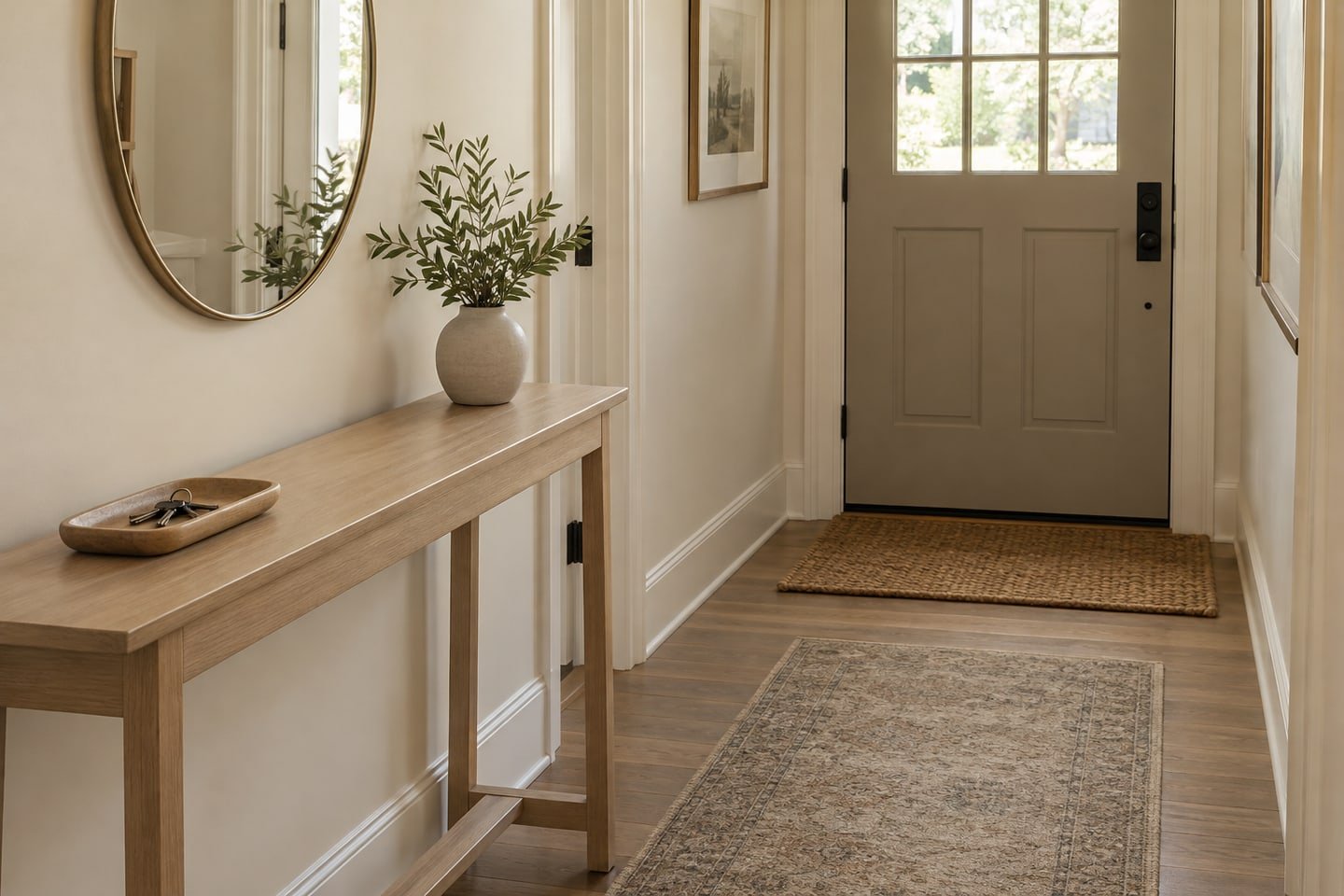
An entry table works best when it leaves somewhere to put down what you are carrying. Start with a shallow console and reserve a small landing zone near the end you reach first. Keep the middle open rather than filling the whole surface with a display.
Check the door swing and walk past the table with a bag or laundry basket. A narrower piece with useful surface space can be a better choice than a larger table that makes the daily route awkward.
Practical tip: Mark the proposed footprint on the floor before choosing the table.
2. Pair a Round Mirror With a Rectangular Table

A round mirror brings a curved outline above the straight edge of a console. It can also provide a useful last check before leaving home. Choose its position by the reflection you will actually see, including what sits on the opposite wall.
Compare the mirror and table together with paper templates before mounting. Follow the mirror instructions for its weight and your wall construction; a photograph cannot establish suitable fixings. Keep the tabletop quiet enough that the reflection does not double a busy display.
Practical tip: Check the reflection from both the front door and the next room.
3. Use Framed Art When a Mirror Adds Little
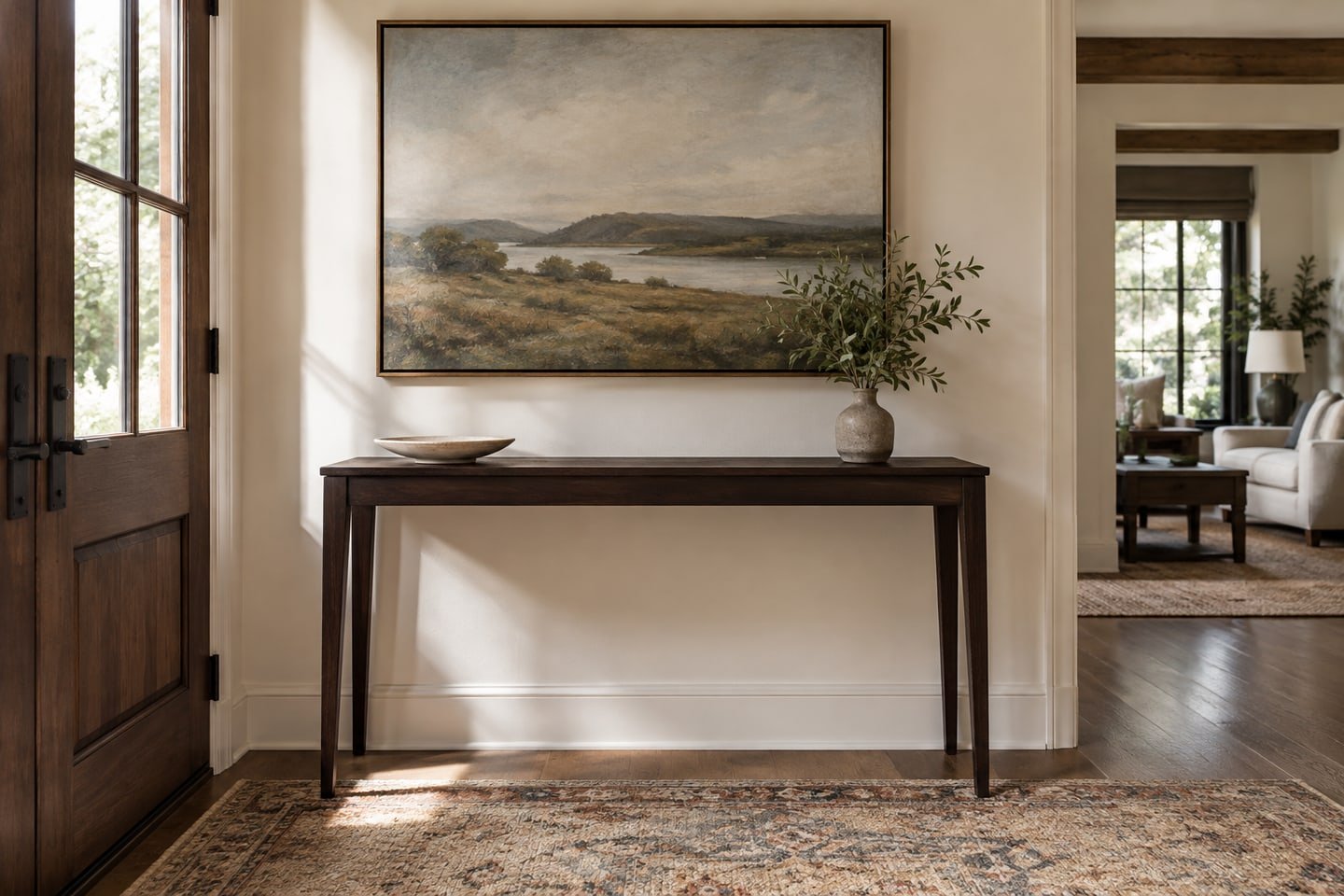
Framed artwork can give the entry a focal point when a mirror would reflect a blank doorway or an untidy utility area. A landscape, abstract print, or small collection can introduce the palette you want to carry into the home.
Use the table and wall as one composition. A substantial picture with a low bowl beneath it often feels more settled than several unrelated objects competing at the same height. Hang it securely and retain enough blank wall around the frame.
Practical tip: Try the artwork at the proposed height before making new holes.
4. Create a Small Catchall Tray for Everyday Essentials
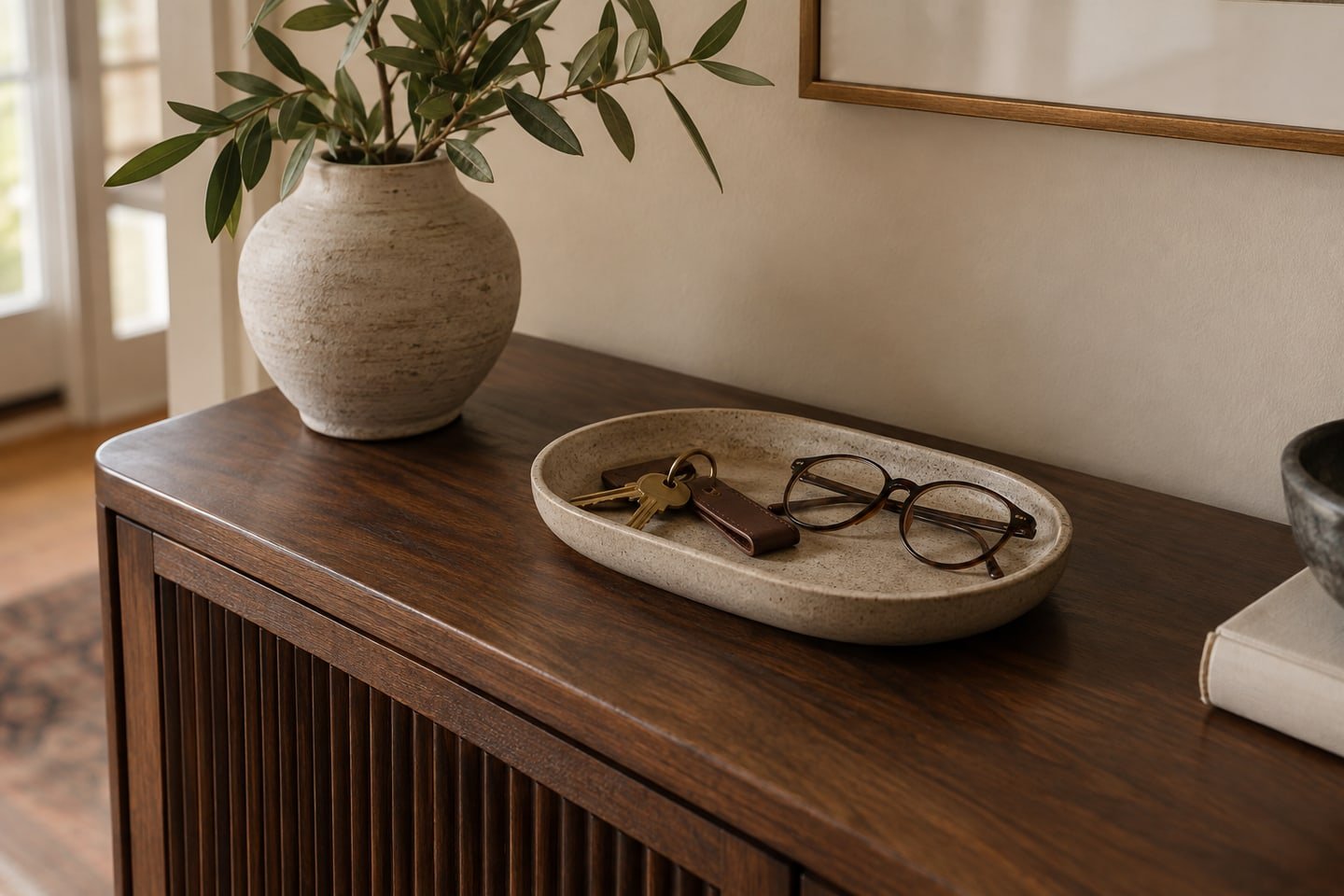
A catchall tray defines a small home for keys, glasses, or another item you need on the way out. A shallow tray lets you see the contents without emptying a bowl and gives the rest of the table a clear boundary.
Choose the tray around the objects it must hold. If it is always overflowing, remove unrelated items or give them storage elsewhere rather than buying a larger tray that takes over the tabletop.
Practical tip: Keep daily keys separate from spare sets that belong in secure storage.
5. Add a Compact Lamp Where a Socket Is Nearby
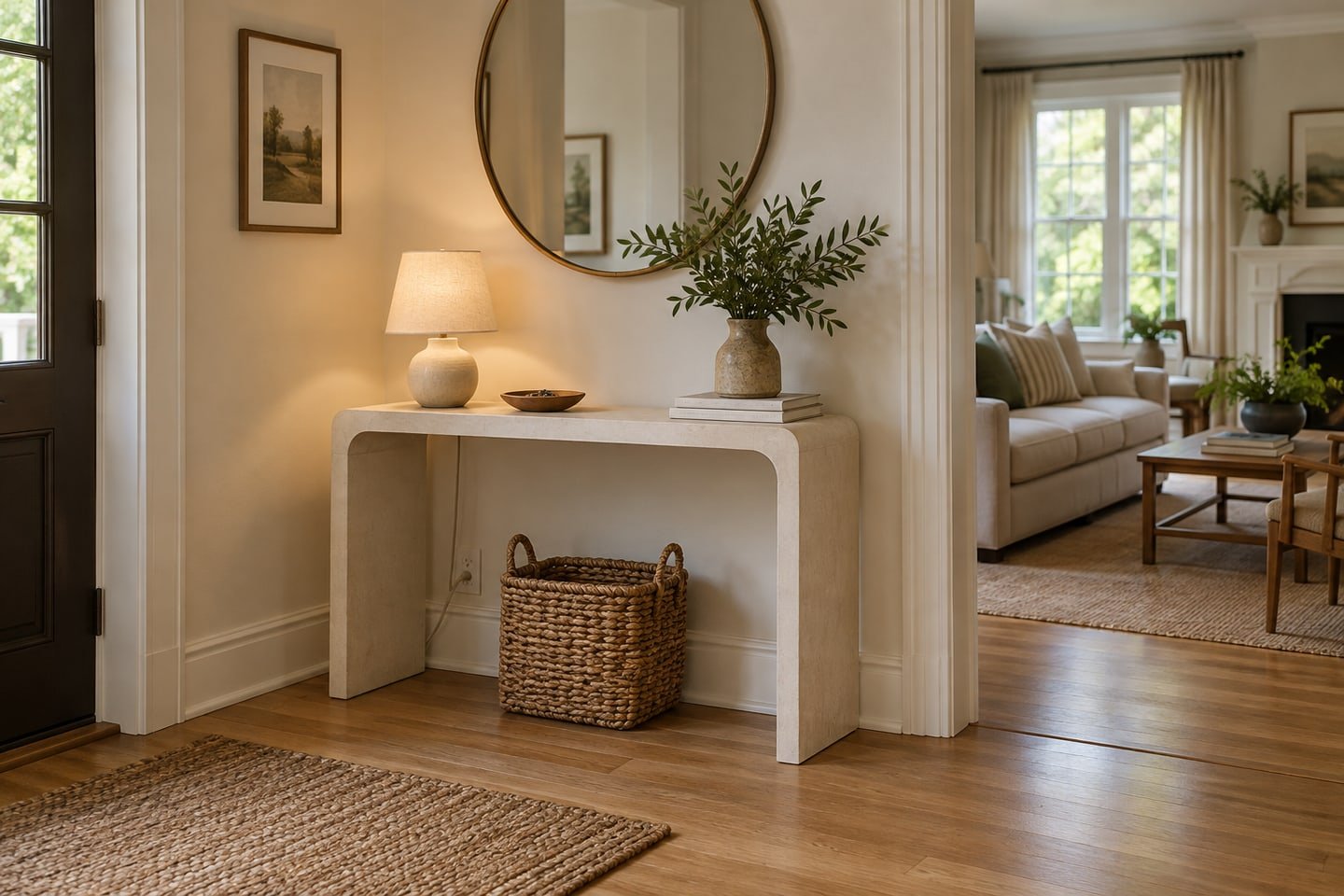
A compact table lamp can make an entry feel welcoming after dark and provide useful light near the front door. Consider the shade as well as the base: an oversized shade may project into the route even when the lamp itself fits.
Place it where the cable can reach an appropriate socket without crossing the floor or being pinched by furniture. Test the light from the doorway and the next room, especially if the bulb is visible when you approach.
Practical tip: Choose a switch you can reach without moving the decorative objects.
6. Balance Tall and Low Entryway Table Decor
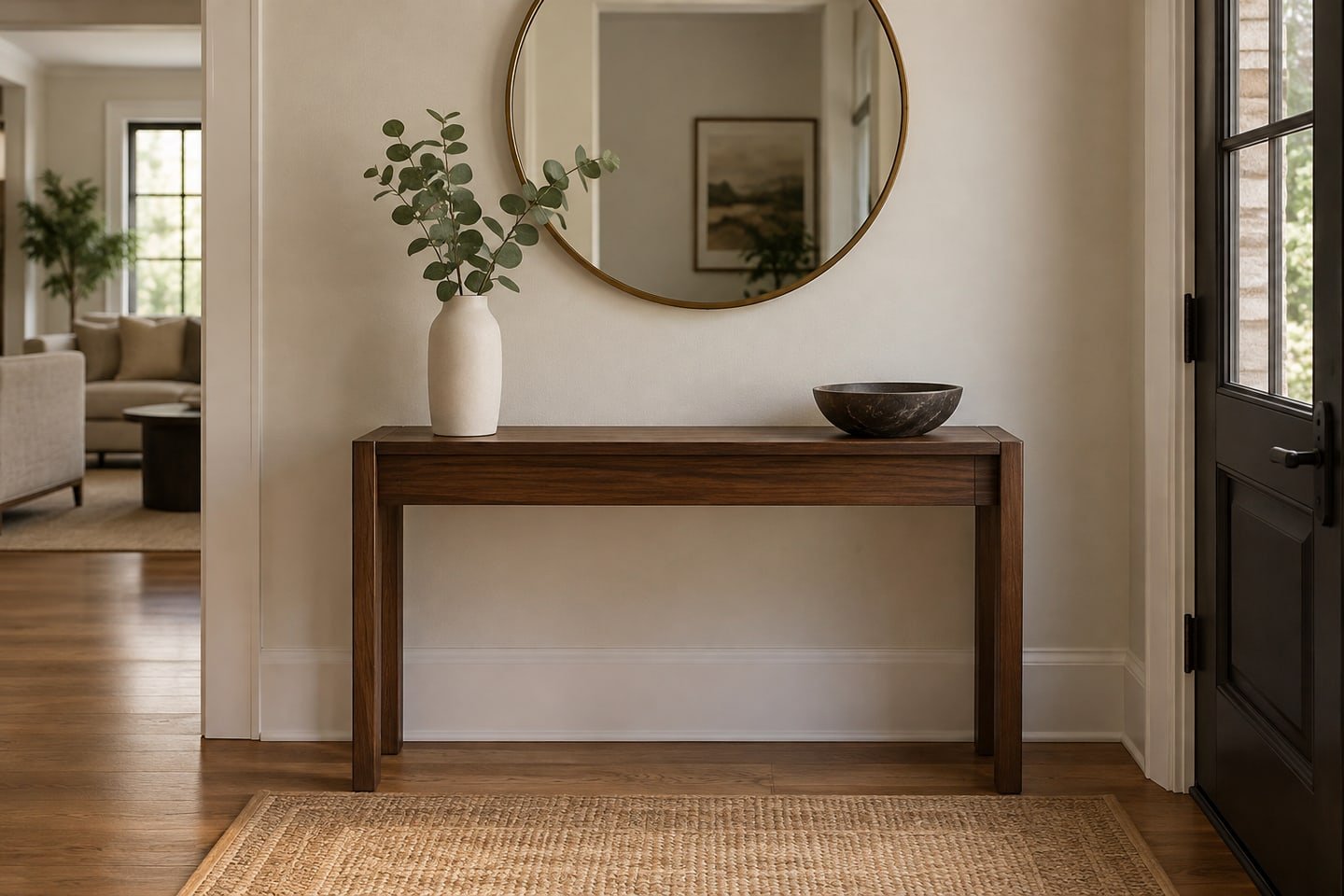
One upright element and one low useful object create variation without requiring a matching pair. A vase can supply the height, while a bowl handles keys or a small tray provides a landing place. Leave a comfortable area between them.
Keep the tall piece proportionate to the table and the actual route beside it. A few shorter stems are often easier to live with than a wide arrangement that catches coats or covers the wall art.
Practical tip: View the arrangement from the side as well as straight on.
7. Store Soft Accessories in a Basket Underneath
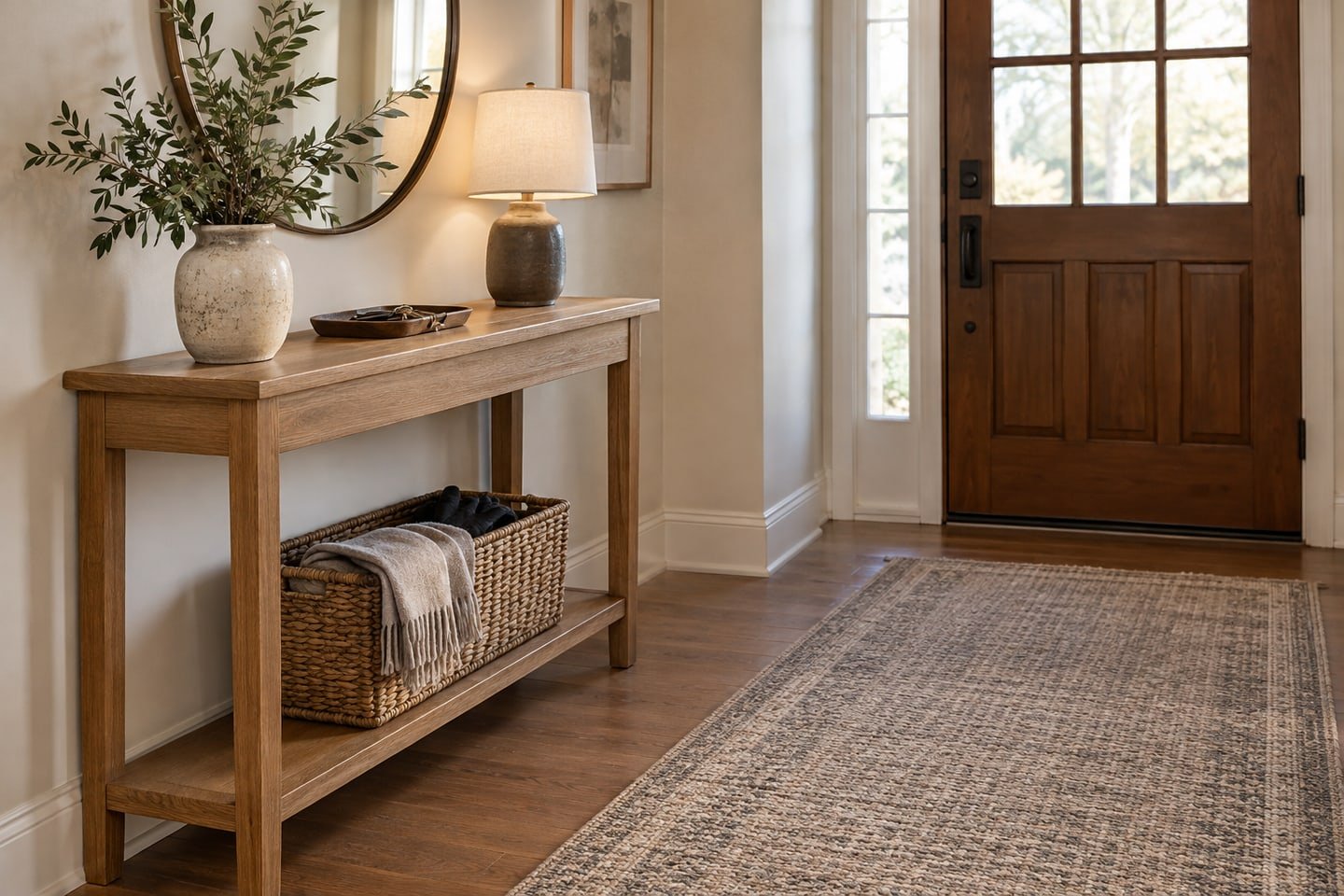
A basket on a lower shelf can turn an open console into useful storage for gloves, scarves, or another light category. It adds texture while keeping loose fabric from spreading across the top or the hallway floor.
Measure the shelf opening and the space needed to pull the basket forward. A basket that catches the frame or projects into the route will be less convenient than one that fits with room for your hand.
Practical tip: Give the basket one category so small essentials stay easy to find.
8. Give Mail One Upright Holder
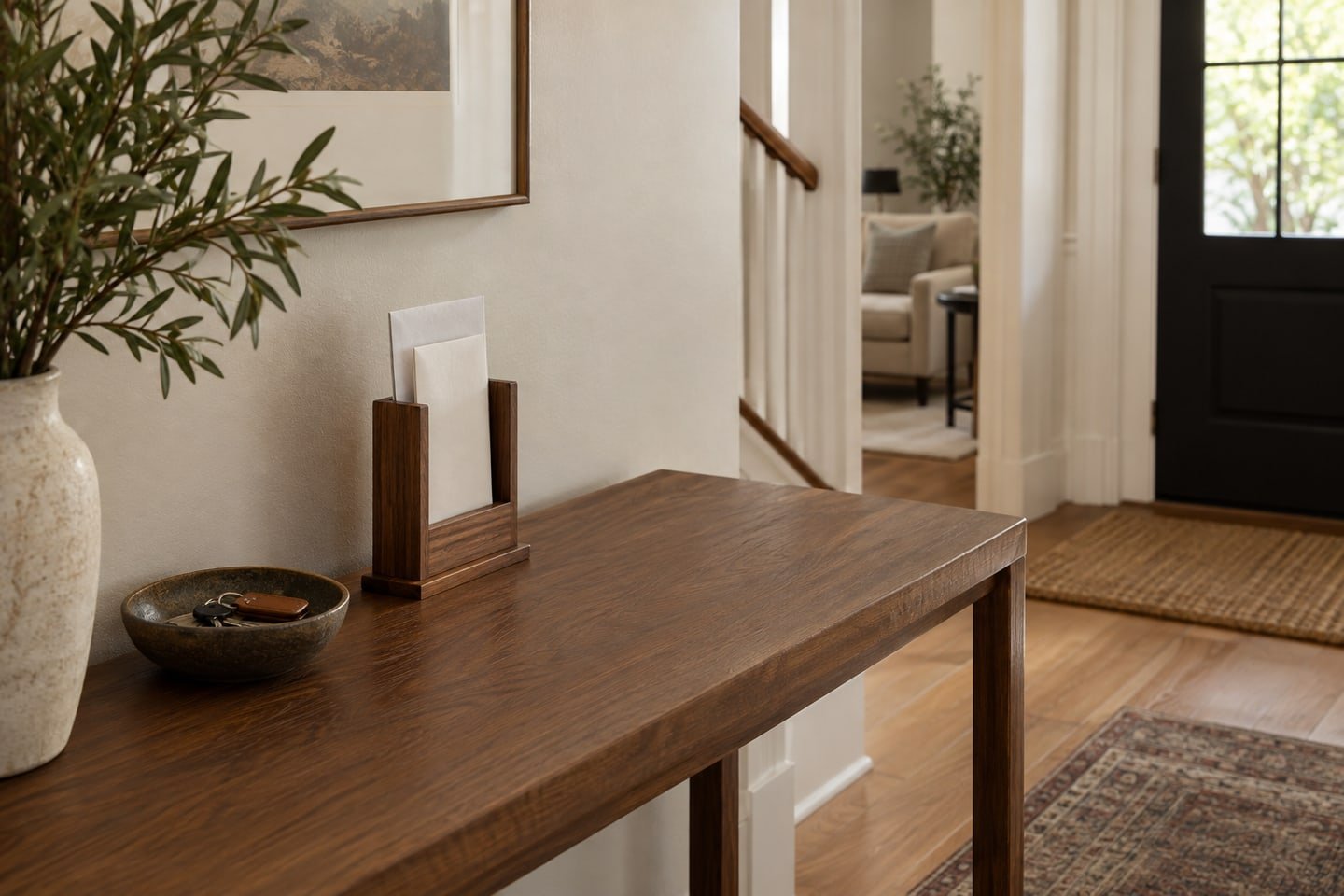
Mail becomes easier to manage when it has a clear, limited destination. A small upright holder takes less tabletop depth than a spreading paper pile and makes it obvious when the entry needs a quick reset.
Keep only mail awaiting a specific action here. Move documents needing private or long-term storage elsewhere. A plain holder beside a key dish can look intentional without treating everyday paperwork as permanent decoration.
Practical tip: Choose a holder you can empty in one easy motion.
9. Use the Drawer for Small Everyday Items

A shallow drawer can hold small items you need regularly but prefer not to display. Simple dividers keep sunglasses, keys, and loose accessories from forming a single jumble, while the tabletop stays available for arriving home.
Open the drawer fully with nearby doors and furniture in their normal positions. Make sure its handle does not catch clothing as you walk past. Avoid filling it with household overflow simply because it closes out of sight.
Practical tip: Review the drawer contents when you notice the top becoming crowded again.
10. Soften a Narrow Hall With Rounded Front Corners
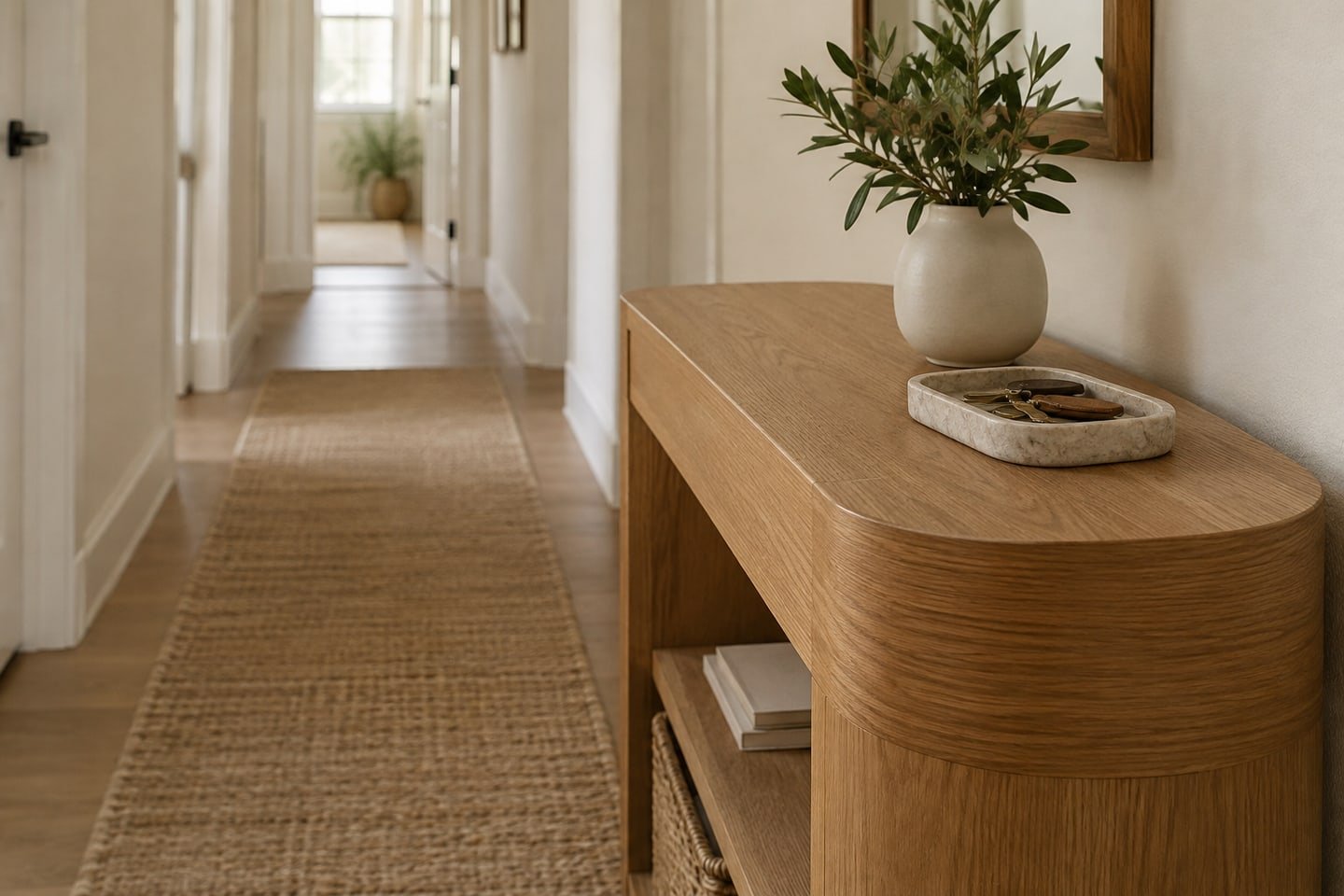
Rounded front corners can make a shallow console feel less abrupt in a tight hall. The detail is especially useful at the edge you pass most often, where a square corner can look or feel intrusive.
The shape does not compensate for insufficient room. Compare the full depth, legs, and handle projection, and test the route with the things you normally carry. Choose the piece that fits comfortably before considering its styling.
Practical tip: Include handles and overhanging tops when measuring the total footprint.
11. Try a Half-Round Table for a Short Wall

A half-round table can suit a short wall that feels overwhelmed by a rectangular console. Its curved front provides a compact display area while its straight back sits neatly against the wall. Keep the accessories similarly restrained.
Look at the legs and base before deciding that the smaller top guarantees a better fit. A low bowl and a compact lamp may be enough; a broad arrangement can quickly extend beyond the semicircular surface.
Practical tip: Check that every object sits fully on the tabletop.
12. Anchor Entryway Table Decor With a Dark Console

A charcoal, dark brown, or black console can give a pale entry a clear visual anchor. Contrast allows the furniture itself to provide much of the interest, so you may need only one pale bowl or a small vase above it.
Compare the finish with the floor and adjoining rooms. Repeat the dark tone in one small detail, such as a frame, if the table feels isolated. Leave the display modest so the strong furniture outline remains visible.
Practical tip: Check dark finish samples in daylight and with the entry lighting on.
13. Keep the Table Close to the Wall Color
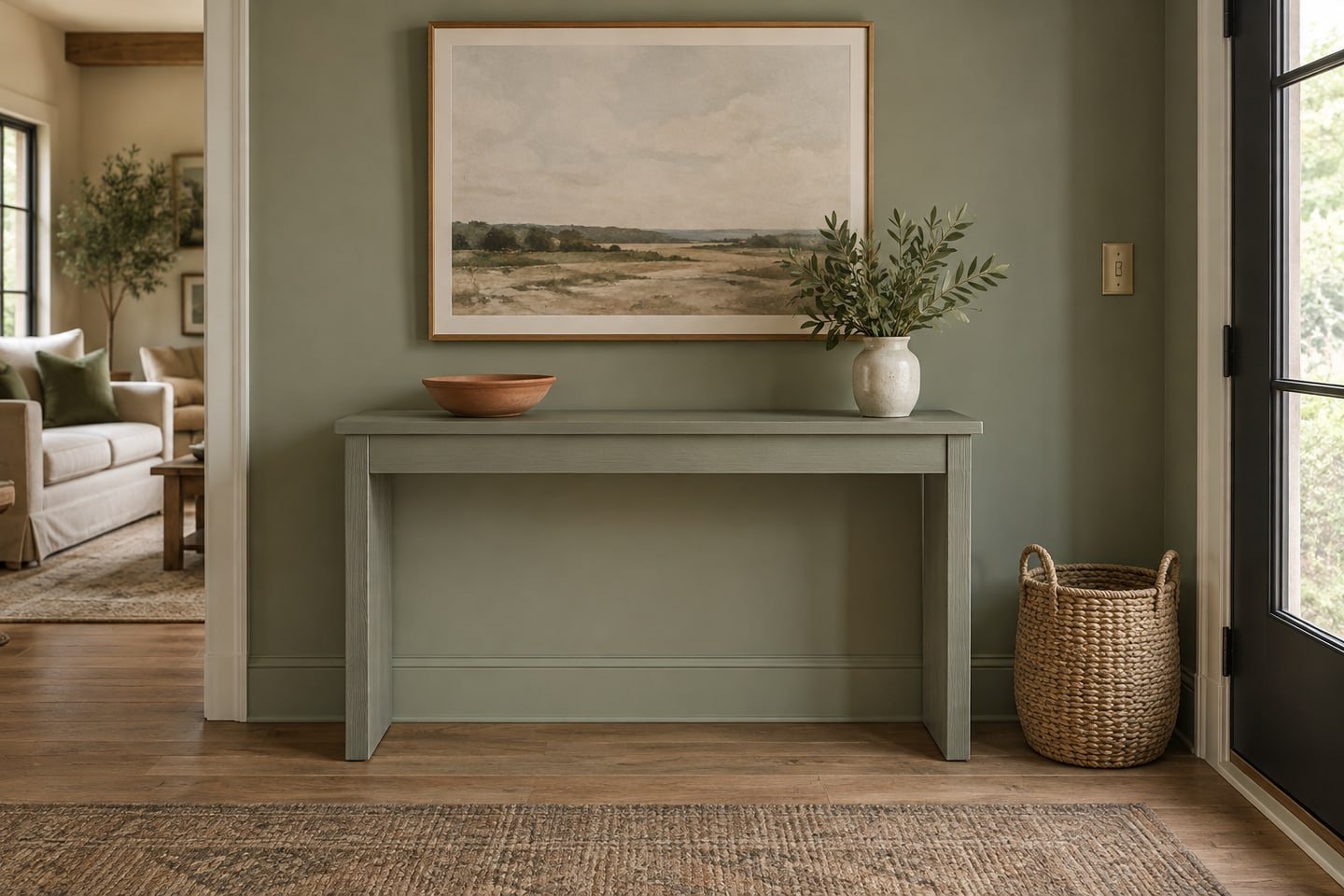
A console close to the wall color can make a small entry feel more continuous. Texture and shape supply the interest, while a useful bowl in a different material gives your everyday items a visible home.
This approach can work with a purchased finish or a suitable existing piece. Before refinishing furniture, check the material and the coating instructions. Test the colors together instead of assuming two finishes with the same name will match.
Practical tip: Use one contrasting accessory to keep the landing zone easy to spot.
14. Repeat One Wood Tone From the Next Room

An entry connects to the rest of the home, so repeating one nearby wood tone can help the transition feel settled. The console does not need to match every chair, door, or floorboard to share a useful visual connection.
Look through the actual doorway when comparing finishes. A similar undertone or level of warmth may be enough. Add a simple tray in another material so the arrangement does not become a row of matching wood objects.
Practical tip: Compare a sample beside the neighboring furniture before buying.
15. Introduce Texture With One Woven Detail
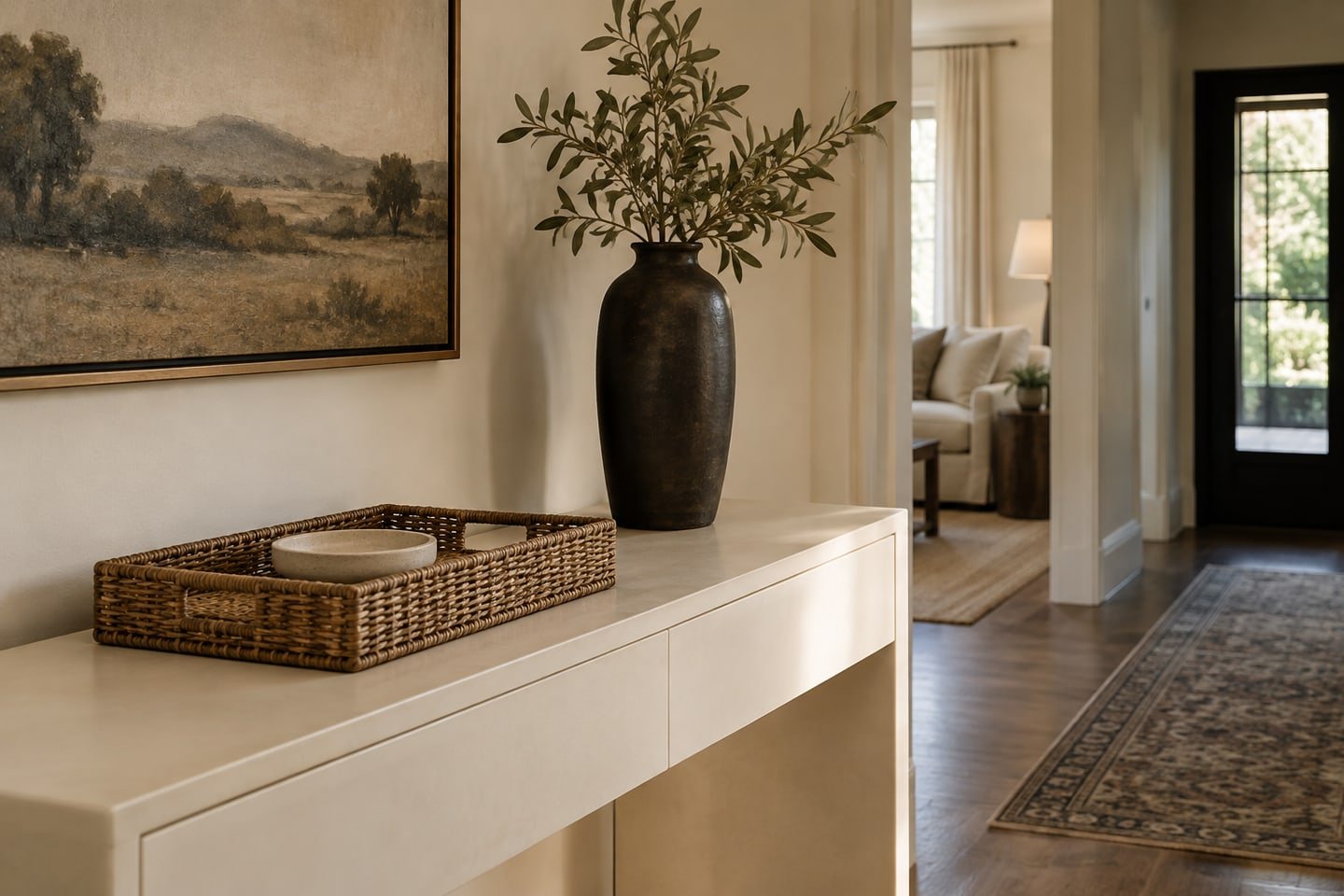
A woven tray or one small basket introduces texture to a smooth painted table. Limiting the woven material to a defined area keeps the console useful and makes its surface easier to wipe around.
Choose a weave and shape suited to what it will hold. Small keys can disappear through an open weave, so a solid dish inside a tray may be more practical. Keep the edges within the table rather than letting them overhang.
Practical tip: Test your smallest everyday item against the tray weave.
16. Use a Short Stack of Books as a Base
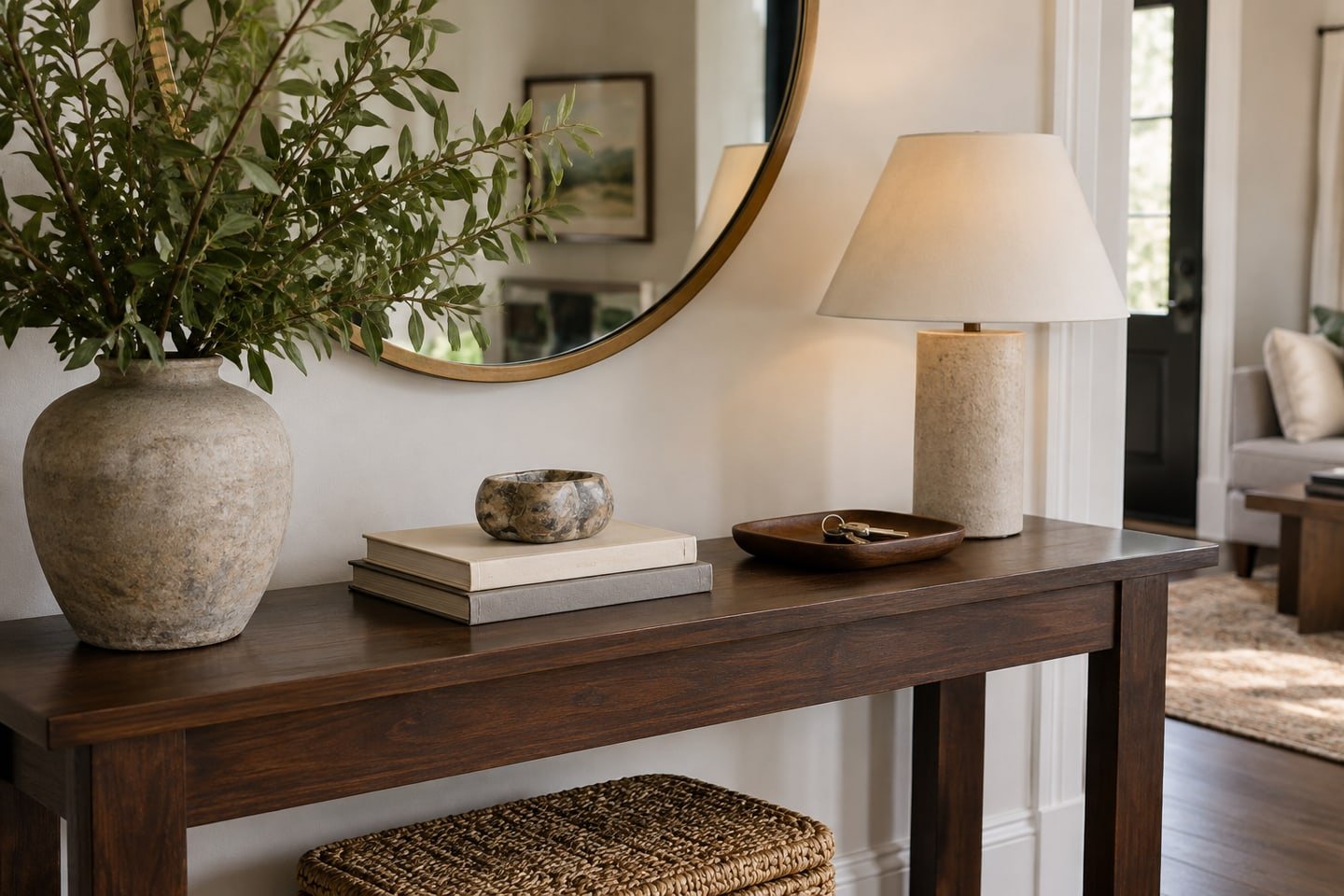
Two closed books can make a low base for a small decorative object and create a different height beside a tray. Use books you enjoy rather than building a tall pile solely to fill space.
Keep the stack stable and away from the edge. If you often need to move it to put down a bag or pick up your keys, reduce the display. Leave a useful portion of the table at its original height.
Practical tip: Use a low object on the stack so the arrangement remains steady.
17. Give One Sculptural Object Room to Stand Out
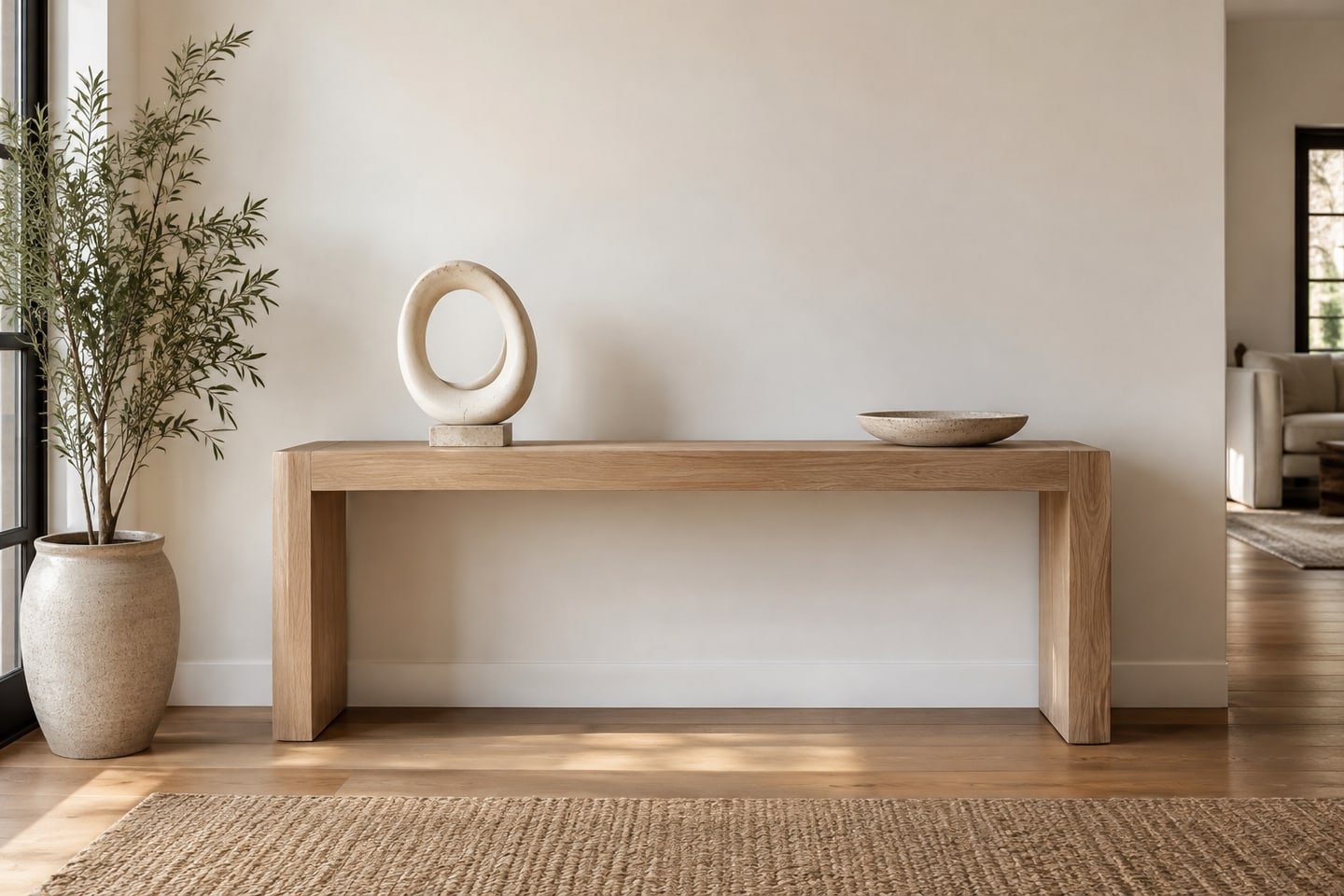
A single sculptural object can provide enough character when the table, wall, and everyday tray are already doing their jobs. A small ceramic form or an interesting vessel works best when there is space around its outline.
Choose a stable piece with a footprint suitable for the tabletop. Place it outside the area you reach across every day. Leaving the center relatively open can make the object easier to appreciate and the console easier to use.
Practical tip: Remove one accessory before deciding the display needs another.
18. Choose Entryway Table Decor Greenery for Actual Light
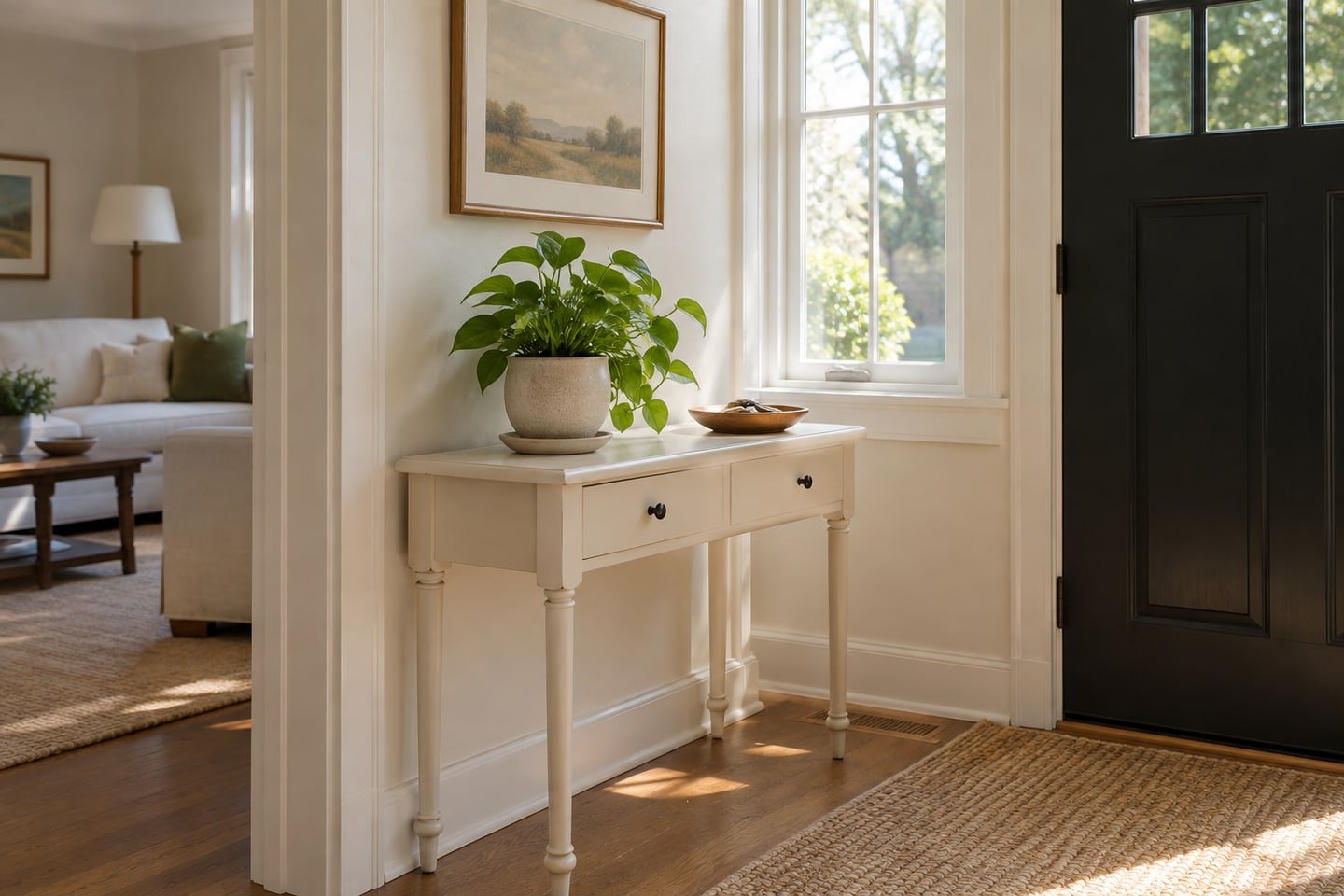
Greenery can bring a softer shape into an entry, but the available light should guide the choice. A real plant needs conditions suited to its species; a convincing reusable stem can be more practical in a dim hallway.
Use a suitable saucer or protective base, and check the surface after watering. Keep leaves out of the door swing and away from the route. Consider the suitability of any plant for the people and pets in the home.
Practical tip: Observe the entry light at several times before selecting a plant.
19. Let a Wall Light Free the Tabletop
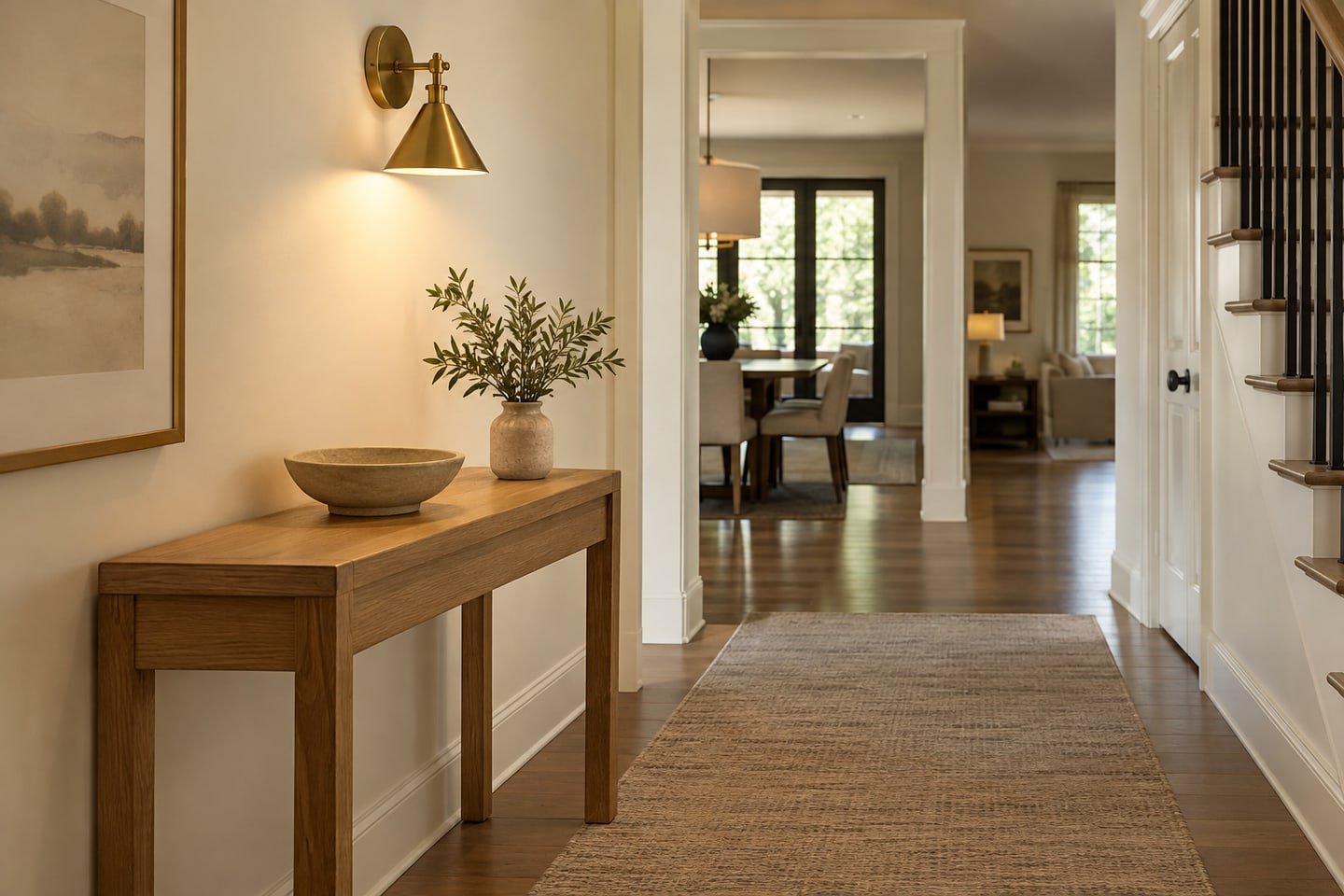
A wall light can provide illumination without occupying the landing surface. It is a useful option when the console is especially shallow or when the tabletop already needs to hold a tray and a small mail holder.
Plan the position around the furniture and nearby artwork. Check the projection of the fitting and how it looks as you walk through the hall. Choose an appropriate fixture and have its wiring and installation handled as required.
Practical tip: Check the shade projection before selecting a wall light for a narrow route.
20. Hide One Category in a Lidded Box
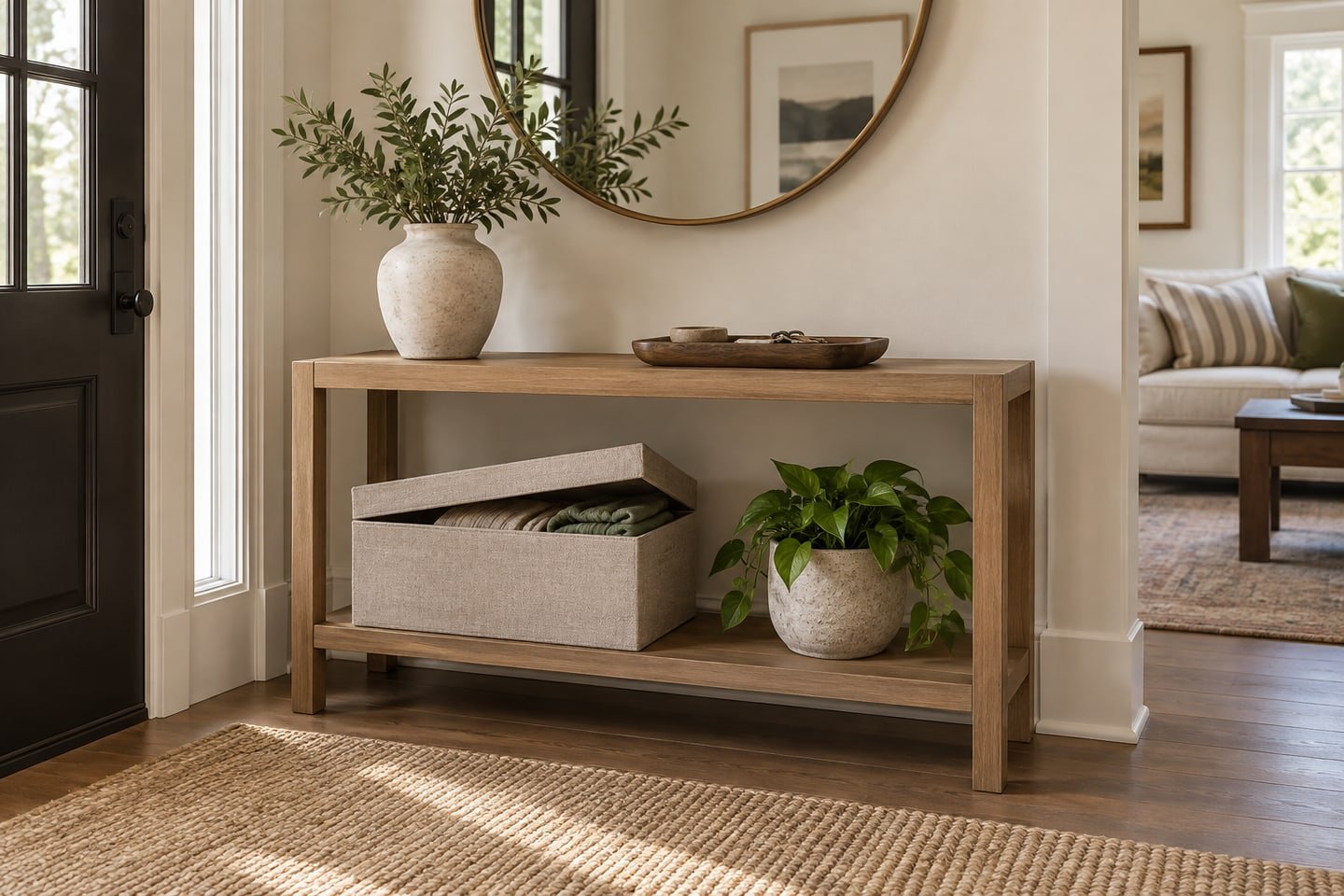
A low lidded box can keep one light category out of sight on an open shelf. Folded reusable bags, spare soft accessories, or another defined group can live here without turning the top into a storage zone.
Measure with the lid open as well as closed. If the box has to be dragged across the floor or emptied to reach one item, choose a more accessible format. Keep everyday keys in their visible landing place.
Practical tip: Label the category discreetly inside the lid if the contents are not obvious.
21. Choose a Small Gallery Arrangement Above the Table

A compact group of prints can make the wall above a console feel personal. Connect the pictures through a palette, subject, or frame treatment, and treat them as one arrangement rather than several unrelated purchases.
Lay out the group before mounting so the spacing relates to the console below. Keep tabletop accessories low enough to leave the pictures visible. Secure the frames instead of relying on a precarious leaning arrangement beside a busy route.
Practical tip: Use paper templates to test the group from the doorway.
22. Change a Few Seasonal Details on the Same Base
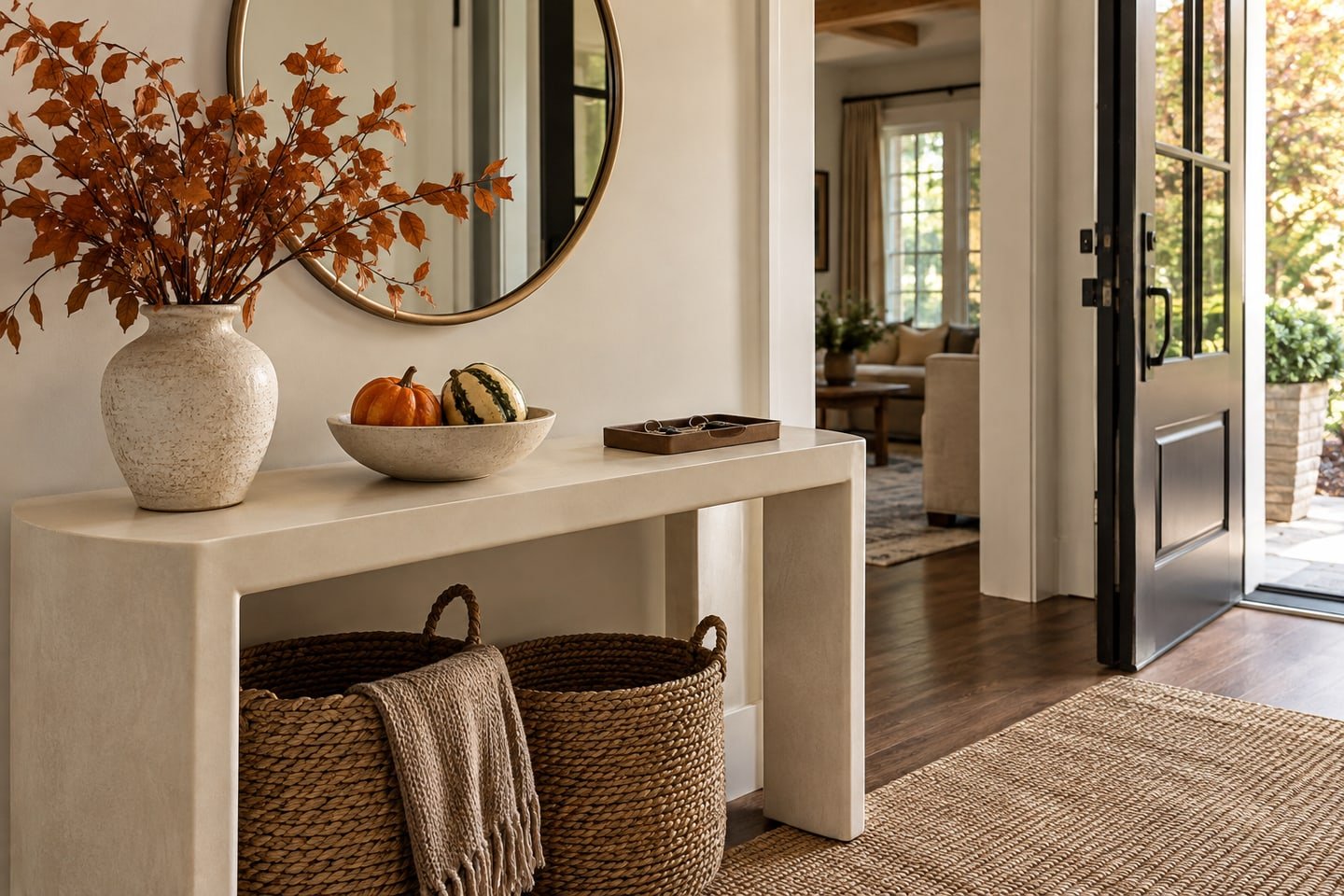
Seasonal styling is easier to maintain when the useful base stays the same. Keep the key tray and lamp in their familiar places, then exchange a few stems, a small textile, or one low decorative object.
Choose accents that fit within the space you already have. A restrained bowl of autumn shapes or a different print can change the mood without covering the landing area. Store the previous accents together rather than accumulating both seasons on the table.
Practical tip: Set aside one small storage box for the accents you rotate.
23. Keep Entryway Table Decor Useful Above Closed Storage
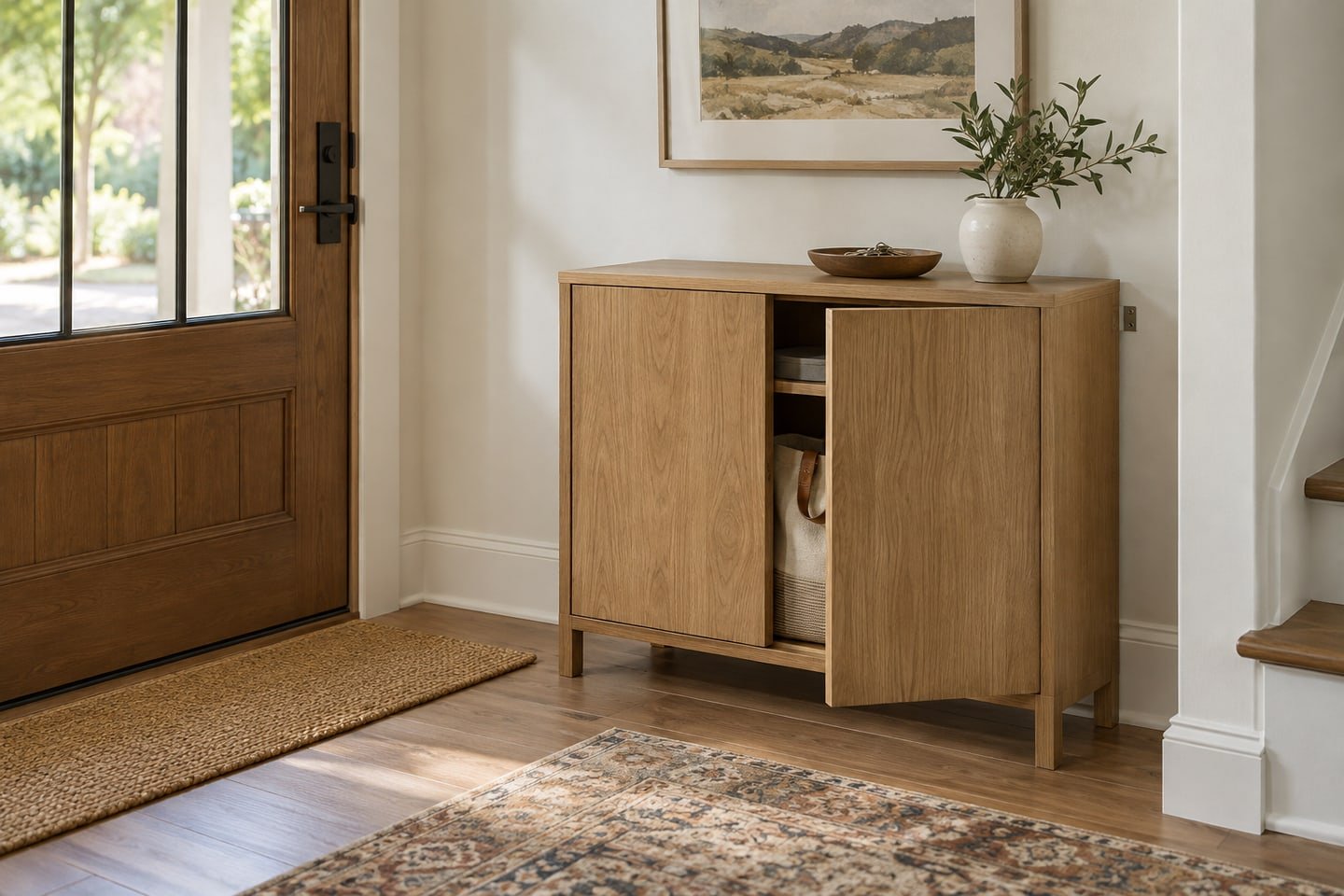
A shallow cabinet can be a better starting point than an open console when the entry needs concealed storage. Its top still supports a simple display, while doors keep selected supplies from becoming part of the visible arrangement.
Check the opening path of the cabinet doors and follow its assembly and restraint instructions. Give the interior defined categories instead of treating it as an overflow cupboard. A key dish and one small vase may be all the top needs.
Practical tip: Choose storage by what you need to put away before choosing the display.
Choose the Details That Work in Your Home
Choose one useful landing place, one source of visual interest, and only the storage the entry needs. Live with that arrangement before adding more. A table that stays easy to use will usually feel more welcoming than a display you must move around every day.
For related ideas, explore shoe storage for small spaces and mudroom organization ideas.
Planning References
Pottery Barn: Entryway accessories; Pottery Barn: Example of product-specific mirror mounting instructions; CPSC Anchor It!: Furniture restraint guidance. Follow the instructions for the exact products you choose.
Optional digital guide for this topic
If you prefer a structured workbook, explore this related paid guide.