Entryway mirror ideas are most useful when the mirror reflects something you enjoy and sits where you can actually use it. Before choosing a frame, stand in the doorway and look at the wall from the position where you normally arrive or leave.
A round mirror over a shallow console can soften a tight entrance, while a tall wall-mounted mirror can help with a last clothing check. Neither shape automatically makes a room brighter: the result depends on the light, the reflected view and the rest of the wall.
Use these options as a selection of different looks and routines rather than a shopping list. Every mirror needs mounting appropriate to its weight, fittings and wall construction. Follow the exact manufacturer instructions, and avoid relying on furniture or a casually leaned mirror for secure support.
The images are original AI-generated decor concepts, not installation diagrams or photographs of completed client projects.
Test Entryway Mirror Ideas During Arrivals and Departures
Mark the full outside frame and stand where the mirror will actually be used. Next, approach from the door and neighboring room while checking the reflected scene. For example, a tall mirror can fit a narrow wall while the place needed to stand is occupied by shoes. Keep that approach clear and choose the installation and permitted orientation from the exact mirror instructions.
Jump to an idea
- A round mirror over a shallow console
- An arched mirror for a simple rectangular wall
- A tall wall-mounted mirror for the leaving routine
- A mirror without a console in a narrow hall
- A compact mirror with an integrated shelf
- A black frame to connect dark hardware
- A warm wood frame beside painted trim
- A thin metal frame over a substantial console
- A horizontal mirror across a wide console
- A vertical mirror beside a bench
- A mirror centered on the console rather than the whole wall
- A mirror that reflects a light wall
- A mirror that catches a side window view
- A curved frame against paneled walls
- A rectangular mirror above a textured console
- A small mirror over a key-drop station
- A single mirror on a colored wall
- An oval mirror for a softly shaped entrance
- A mirror with a quiet surrounding wall
- A pair of mirrors for two defined stations
- A framed mirror beside existing artwork
- A mirror over closed entry storage
- A slim mirror on the side of an open-plan entrance
- A mirror arrangement with a clear everyday reset
Check the reflection, the wall and the door before the frame
Make a paper template of the mirror’s outside dimensions, including the frame. As a visual example, a 30-inch-wide mirror over a 42-inch console leaves 12 inches of combined width difference, or 6 inches on each side if centered. That arithmetic does not establish a mounting height or fixing method. View the template from the door and the walking route, then check the actual reflected scene, user eye levels, switches and the full door swing.
| Situation | An option to test | What matters most |
|---|---|---|
| Short wall over a console | A round or horizontal mirror | Outside frame size and reflected view |
| A clothing check before leaving | A tall wall-mounted mirror | Useful view of the user and secure mounting |
| No room for a console | A mirror with a small compatible shelf | Projection into the route and product load limits |
| A wide open foyer | A larger framed mirror | Scale from several approach angles |
Orientation and fixings are product-specific
A mirror advertised for vertical and horizontal use may offer both orientations, but do not assume that every frame does. IKEA’s NISSEDAL product page, for example, specifies both orientations for that model. Its assembly instructions explain that different wall materials need suitable fittings. Use the supplied instructions for the mirror you actually choose and seek qualified help when the wall or fixing is uncertain.
1. Begin Entryway Mirror Ideas Above a Shallow Console
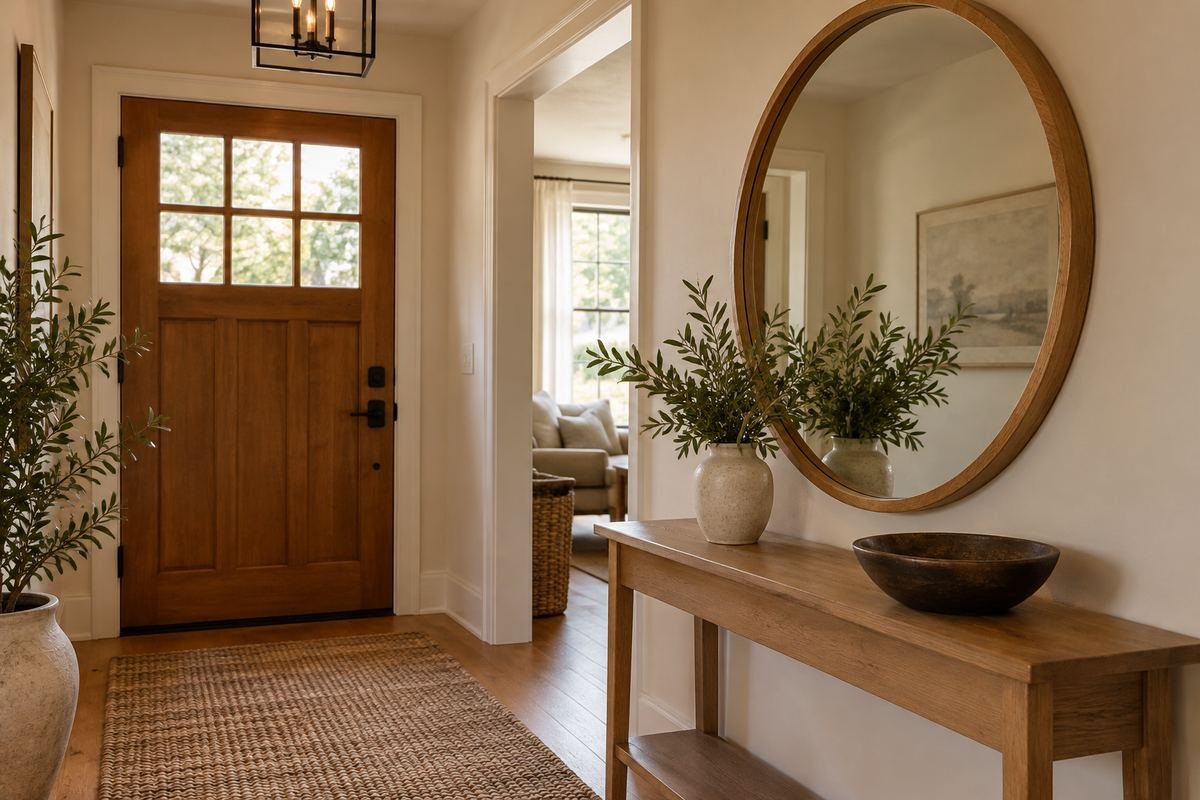
A circular frame can soften the straight lines of a slim entry table. Keep the table group low enough that the mirror remains useful for a quick check before leaving.
Try the arrangement from the front door and from the hallway. A wide decorative frame changes the outside size, so compare the whole piece with the console rather than measuring only the reflective glass.
Practical tip: Use a paper circle that includes the frame.
2. An arched mirror for a simple rectangular wall

An arched top can give a plain entrance a distinct focal point without adding several small wall objects. A narrow frame keeps the outline clear.
Check how the arch relates to nearby door trim and ceiling height. The mirror can echo a curved detail elsewhere, but it does not need to match every architectural shape in the room.
Practical tip: Leave the top outline room to read clearly.
3. A tall wall-mounted mirror for the leaving routine
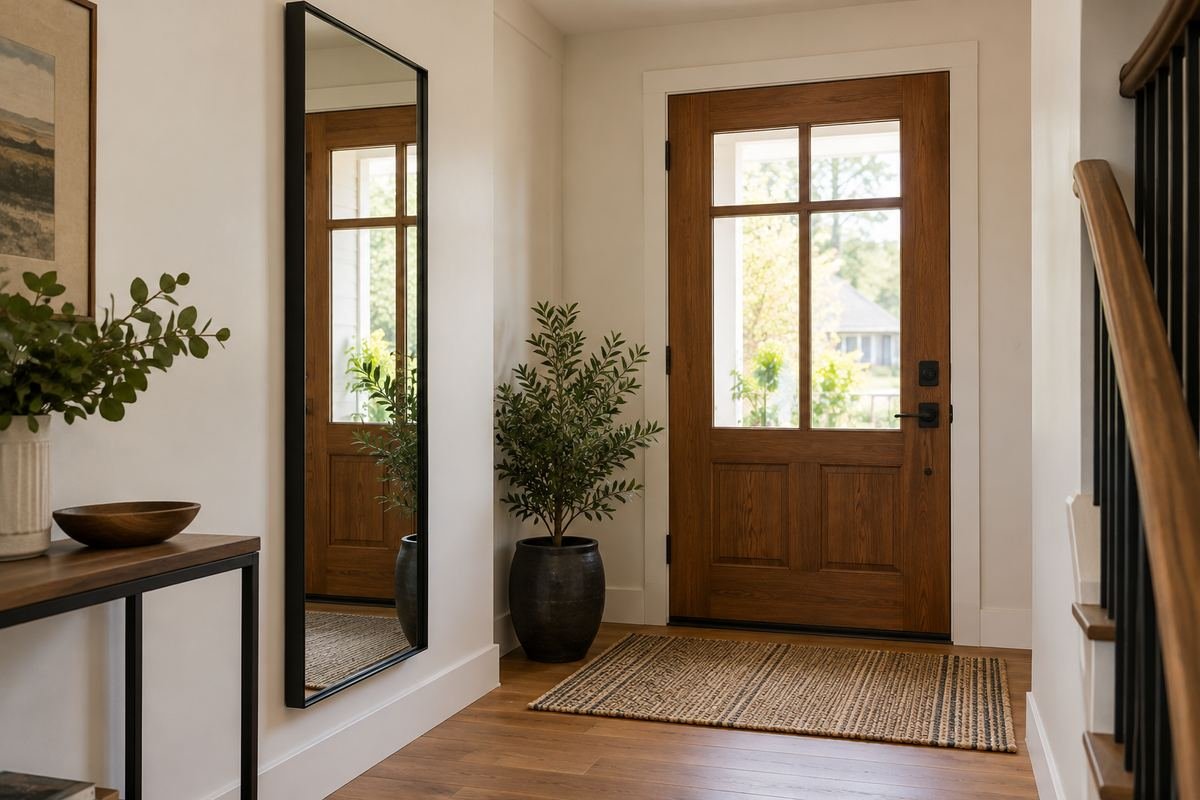
A tall mirror can support a final clothing check near the door. Place it where the user can stand far enough back to see the useful reflection.
Test the position with the real approach path and the people who use it. Follow the mounting instructions and keep bags or shoes from collecting in the standing space.
Practical tip: Reserve a usable place to stand.
4. A mirror without a console in a narrow hall
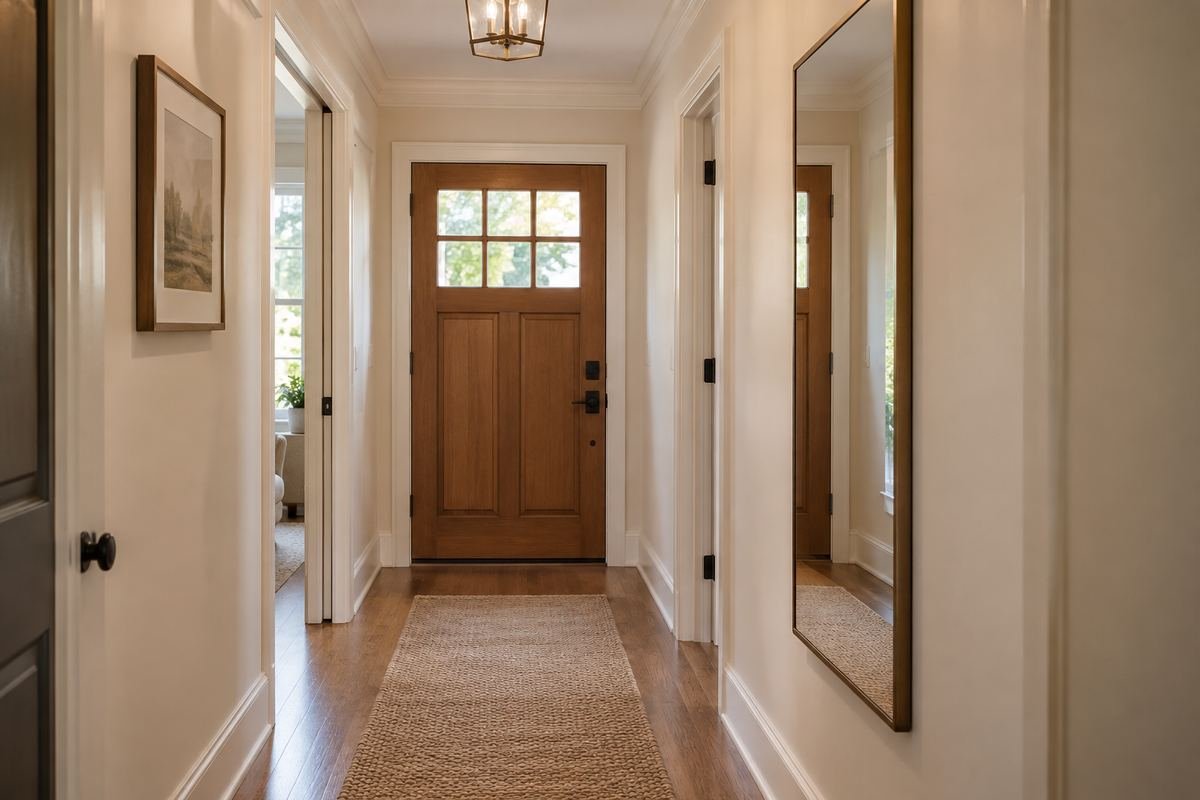
When furniture would pinch the route, let the mirror stand alone on the wall. The entrance can still feel considered through the frame and wall color.
Check frame projection, door swing and the route used while carrying bags. A very thin-looking frame can still have brackets or a rear stand that affect installation.
Practical tip: Measure the complete installed depth.
5. A compact mirror with an integrated shelf
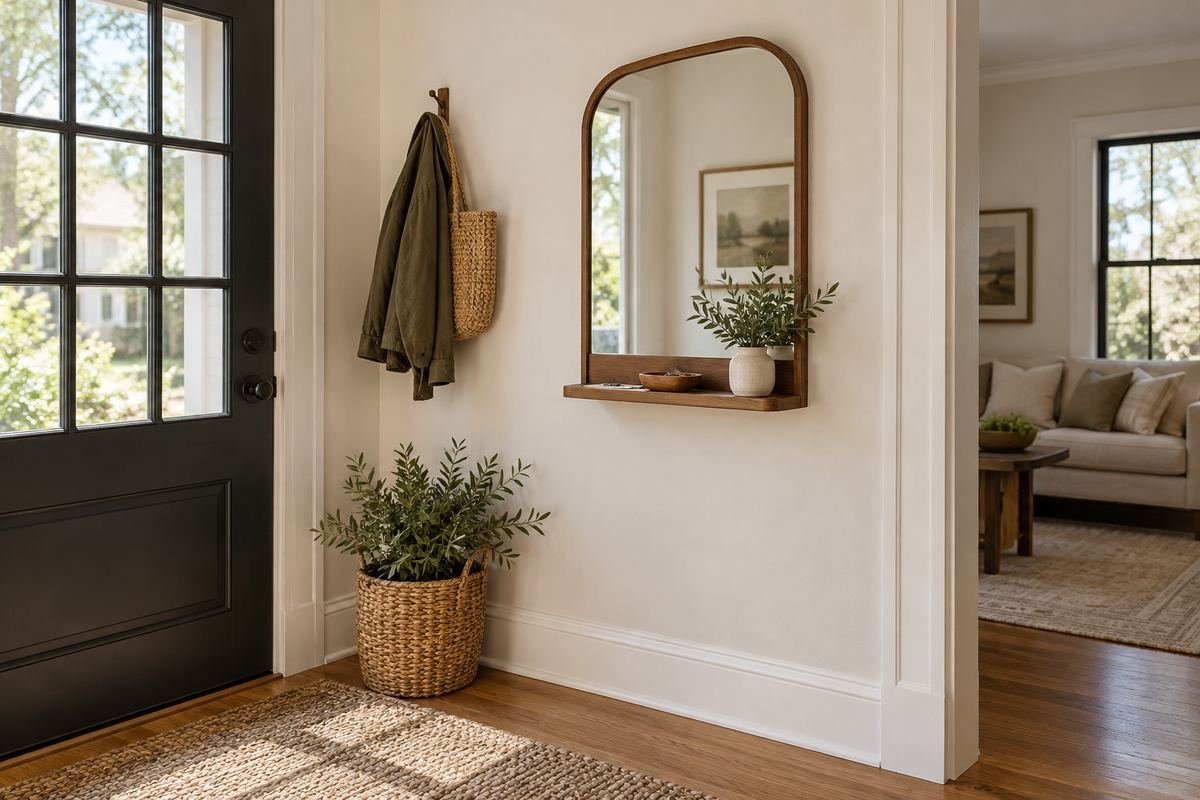
A purpose-made mirror-and-shelf combination can offer a small landing place where a full console will not fit. Keep the shelf contents light and limited to its intended use.
Check the product’s stated load and mounting method, including the shelf projection. Do not attach an improvised ledge to the frame or assume mirror fixings are designed for extra hanging weight.
Practical tip: Treat the shelf limit as part of the choice.
6. Connect Dark-Framed Entryway Mirror Ideas With Existing Hardware
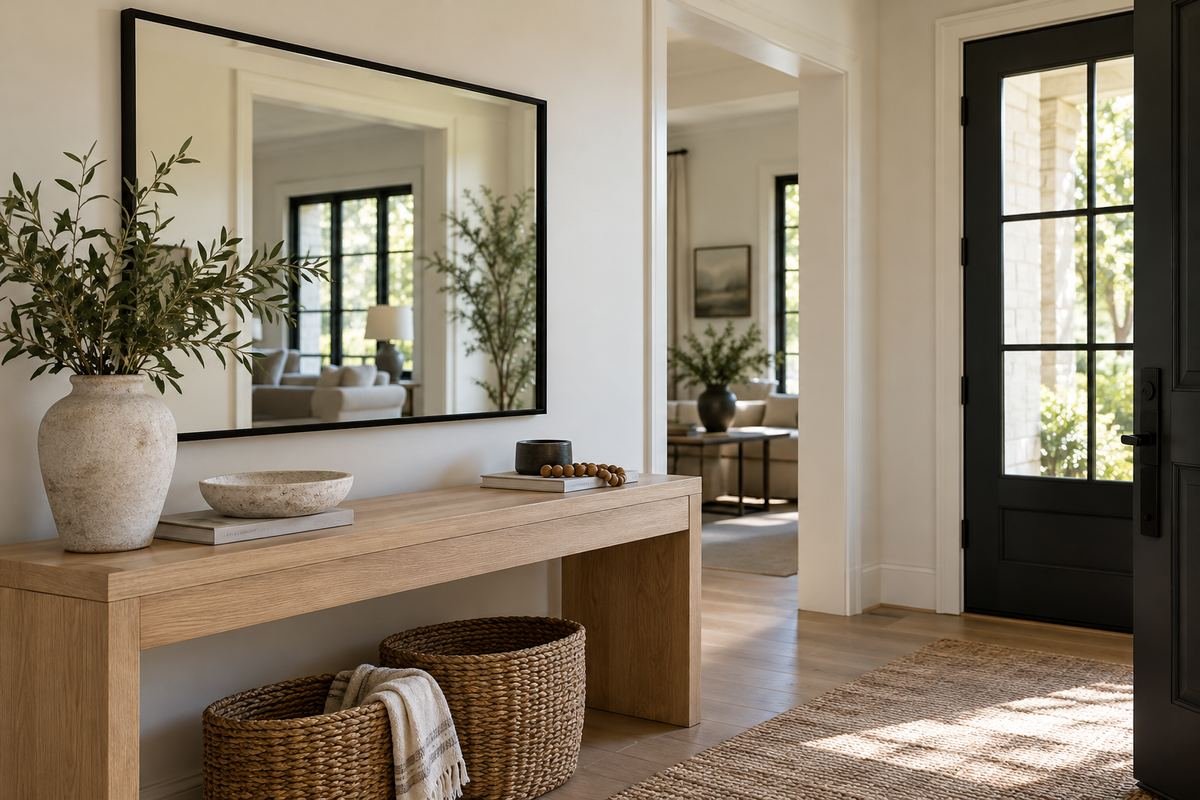
A simple black mirror frame can repeat the door handle or a nearby light fitting. This gives the entrance a connection without making every item dark.
View it against the actual wall color in daylight and at night. Keep the remaining objects restrained so the frame has a clear shape rather than disappearing into a busy cluster.
Practical tip: Repeat one existing finish instead of adding several.
7. A warm wood frame beside painted trim
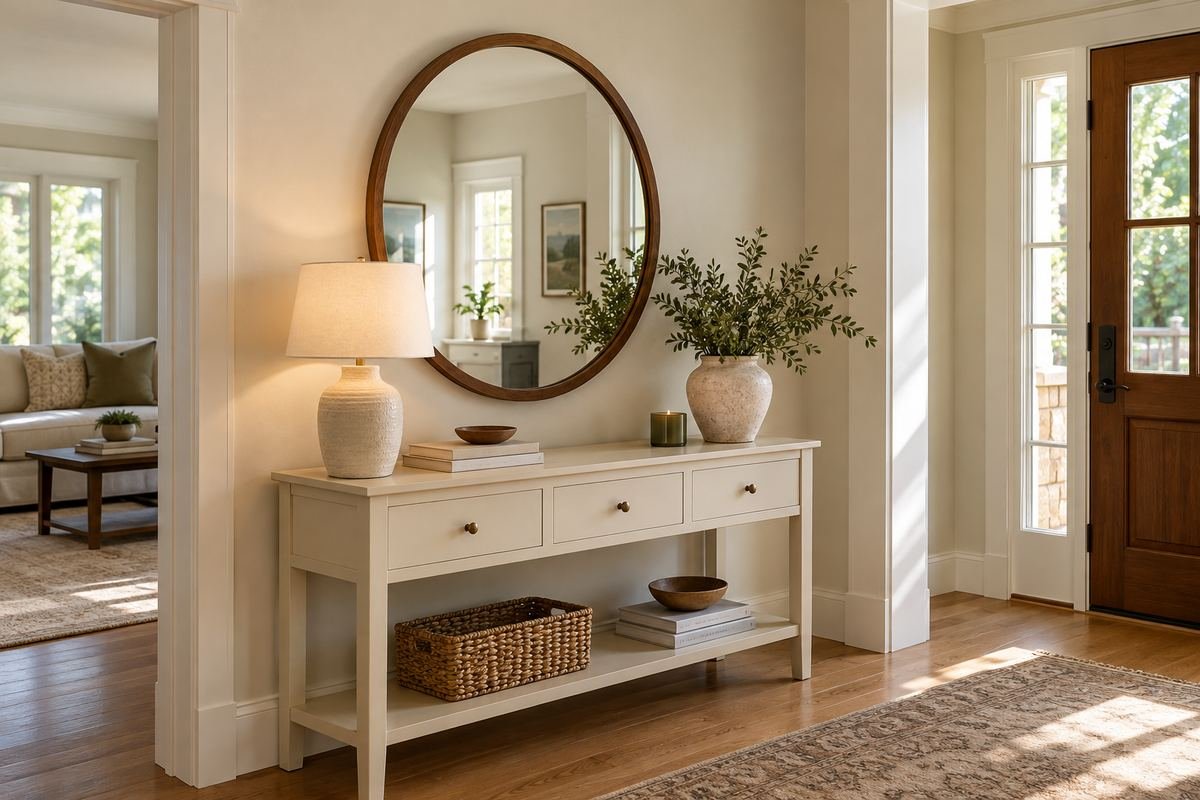
Wood can introduce a softer material against painted doors and white trim. Choose its tone alongside the existing floor or console so the group feels deliberate.
The woods do not have to match exactly. Compare undertones and the amount of each material, then keep the mirror’s frame profile simple if the console already has a strong grain.
Practical tip: Compare real finish samples where possible.
8. A thin metal frame over a substantial console
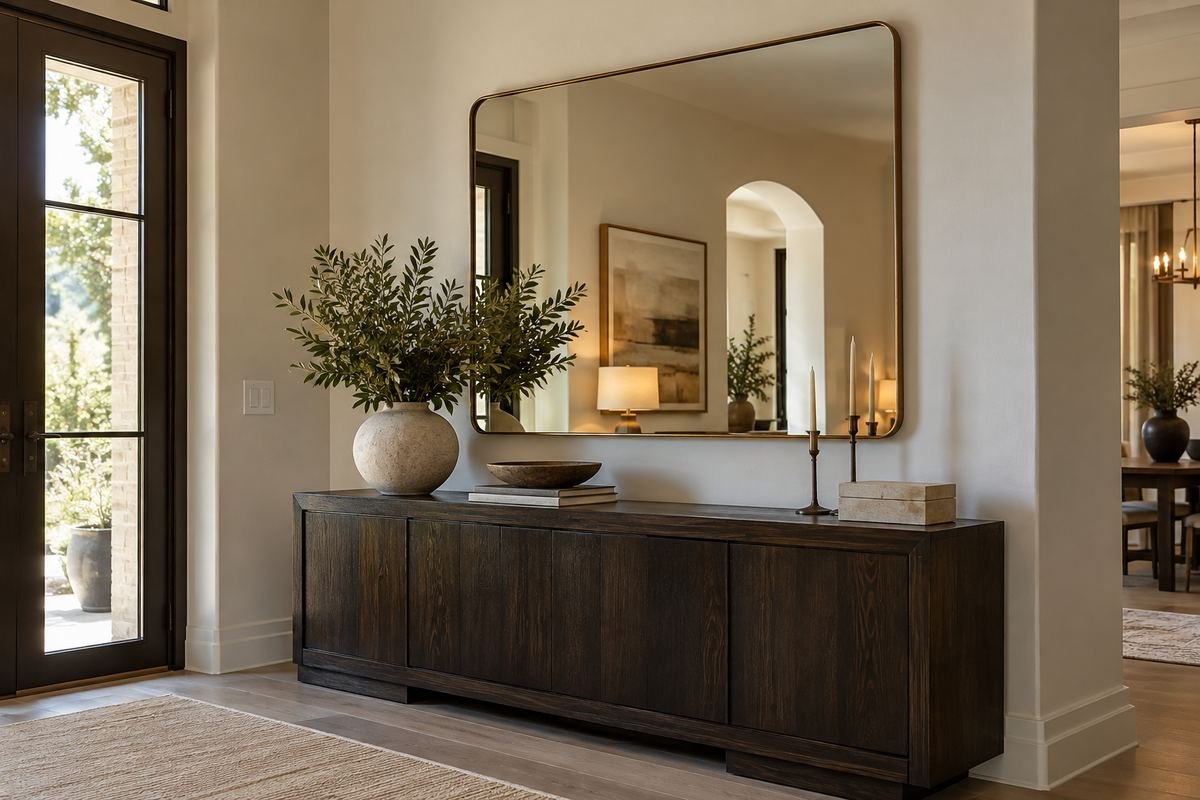
A fine metal edge can balance a console with thick legs or heavy doors. The mirror remains a clear reflective shape without adding another bulky object.
Check that the fine appearance does not tempt you to underestimate the weight. The glass and backing still need suitable support even when the visible frame is narrow.
Practical tip: Choose fixings from weight and construction.
9. A horizontal mirror across a wide console
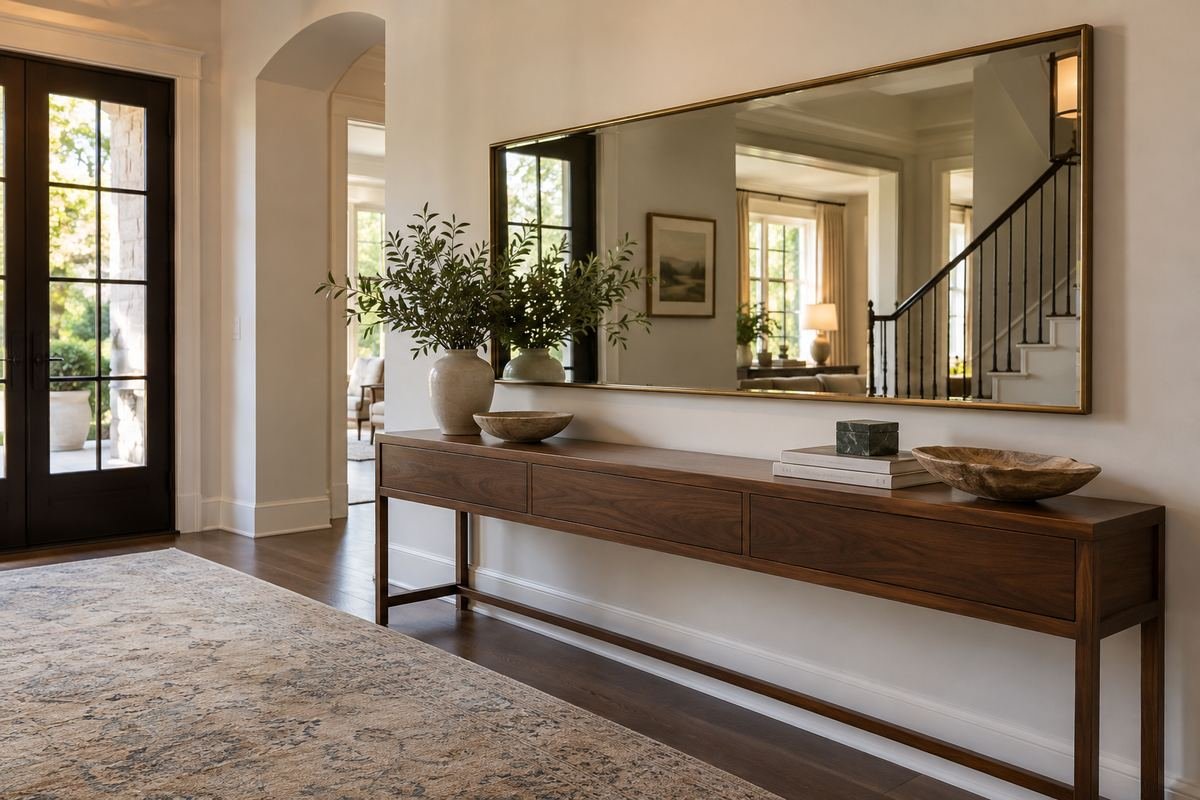
A broad horizontal mirror can suit a long entry table and a wide wall. Keep the objects beneath it arranged in a few useful groups rather than filling the entire width.
Check that the model is designed for horizontal mounting. Stand at the main approach angles to see whether the reflected doorways and furniture form a calm view.
Practical tip: Verify orientation before ordering.
10. A vertical mirror beside a bench
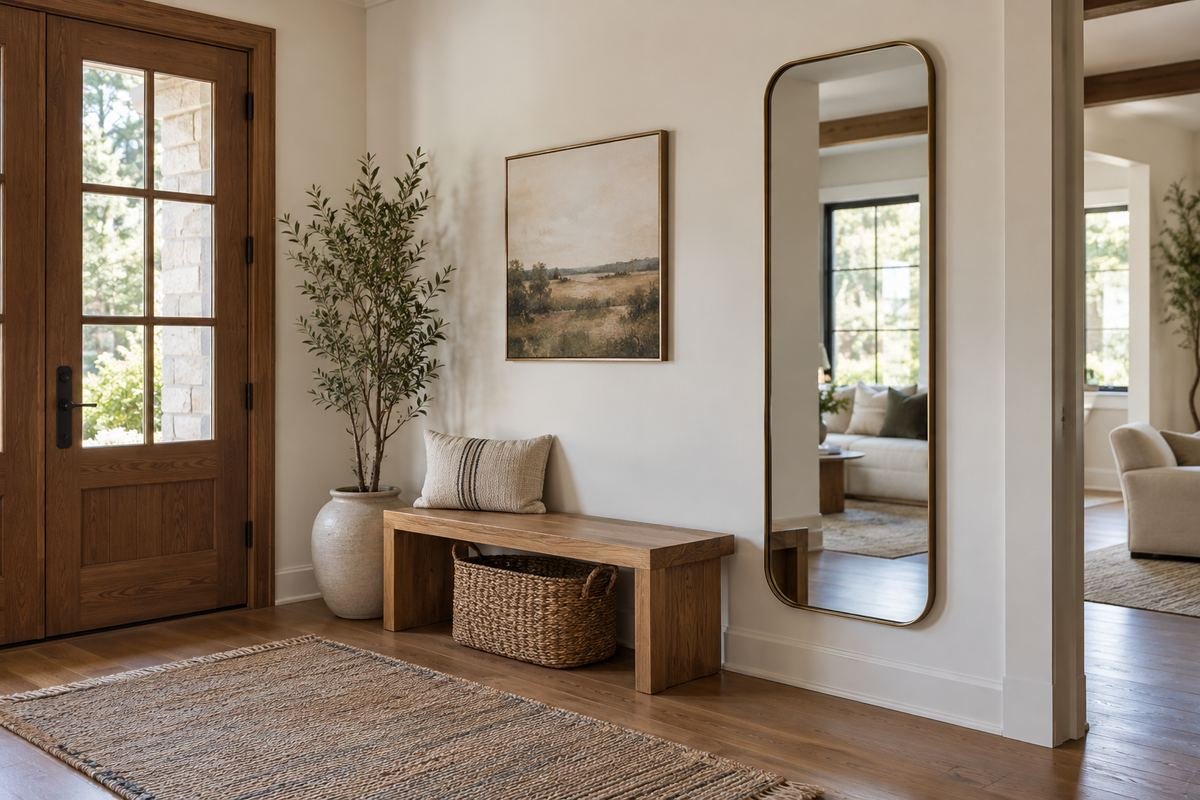
A mirror beside the seating area lets one person check an outfit while another uses the bench. It also separates the dressing function from the shoe-changing space.
Leave enough room to sit down and stand up without touching the frame. Check the reflection of any storage baskets so the mirror does not multiply an arrangement you already find busy.
Practical tip: Keep the bench movement clear.
11. A mirror centered on the console rather than the whole wall
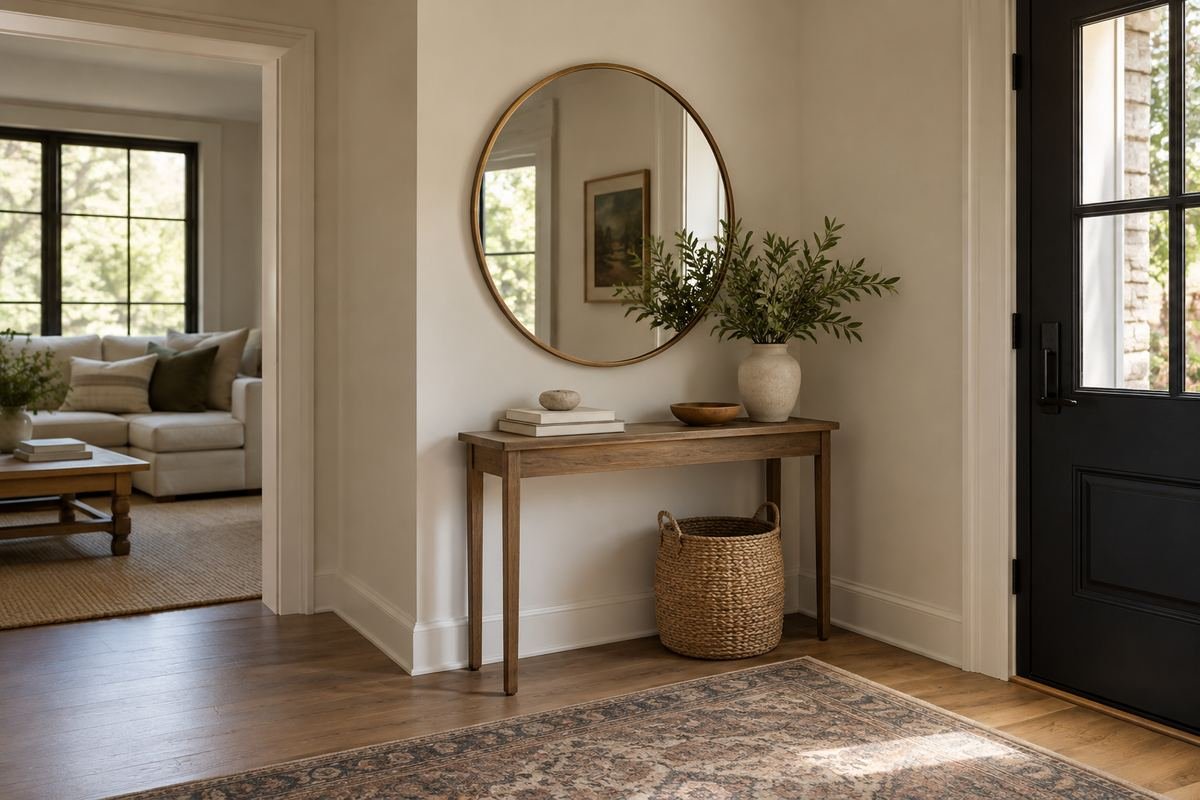
When a console sits between a door and a corner, centering the mirror above that furniture can make the small group feel settled. The surrounding wall need not be symmetrical.
Use the furniture position only after checking the walking route and door movement. A balanced wall composition should not force the console into an inconvenient location.
Practical tip: Place the furniture for use before centering the mirror.
12. Compare Entryway Mirror Ideas Through the Reflected Wall
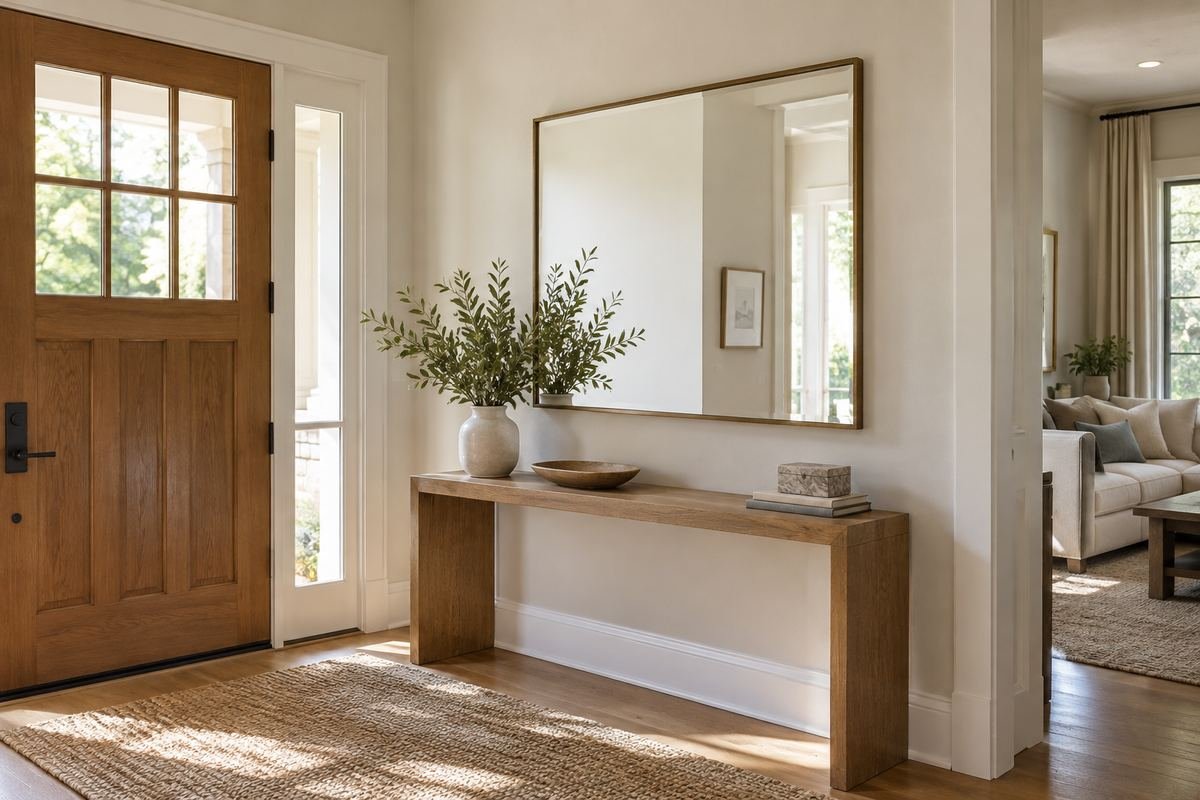
If the opposite view is simple, a mirror can reflect that quiet surface and make the entrance feel less visually crowded. The effect comes from the view rather than the mirror alone.
Check what enters the reflection when doors are open. A pleasing straight-on photograph can hide a cluttered view seen from the normal walking direction.
Practical tip: Inspect the reflection from more than one angle.
13. A mirror that catches a side window view
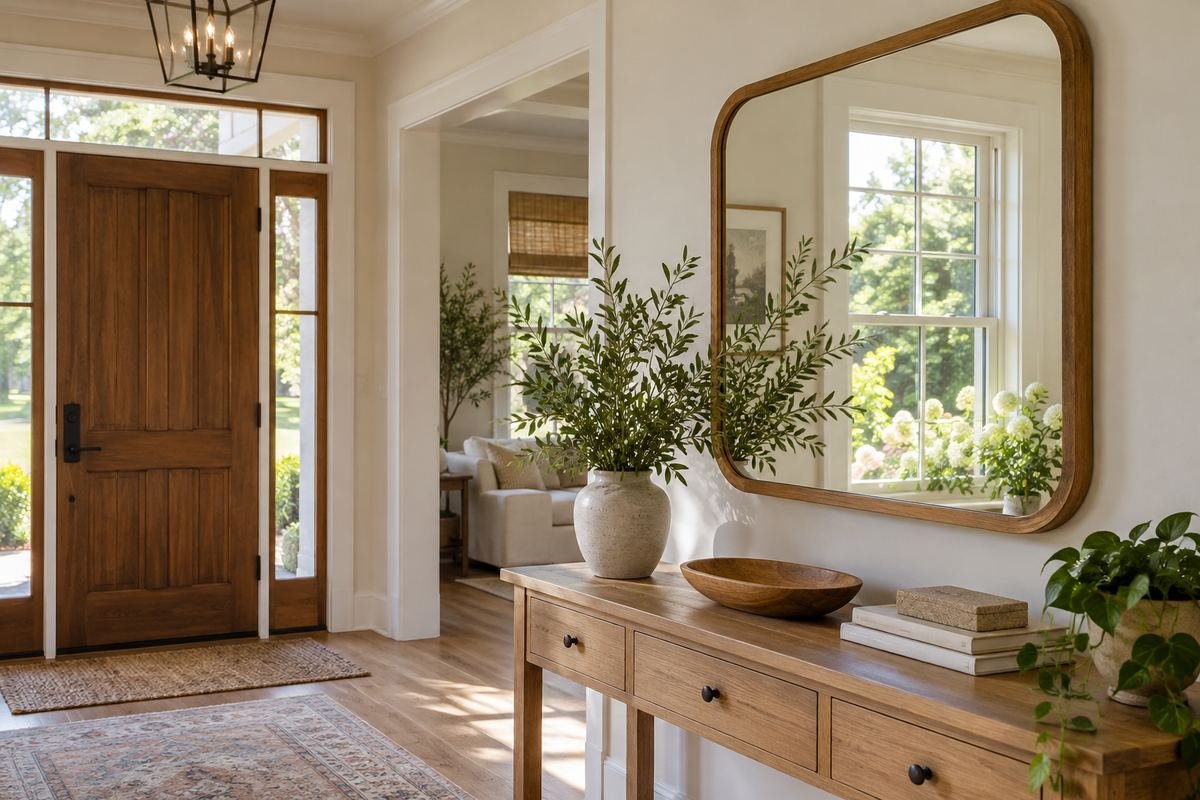
A mirror positioned with a view toward a window may reflect daylight and part of the outdoor scene. Test it during the times the entrance is actually used.
Check glare and direct sun as well as the attractive view. A different wall or angle may be more comfortable when low afternoon light reaches the door.
Practical tip: Look at it in changing light before committing.
14. A curved frame against paneled walls
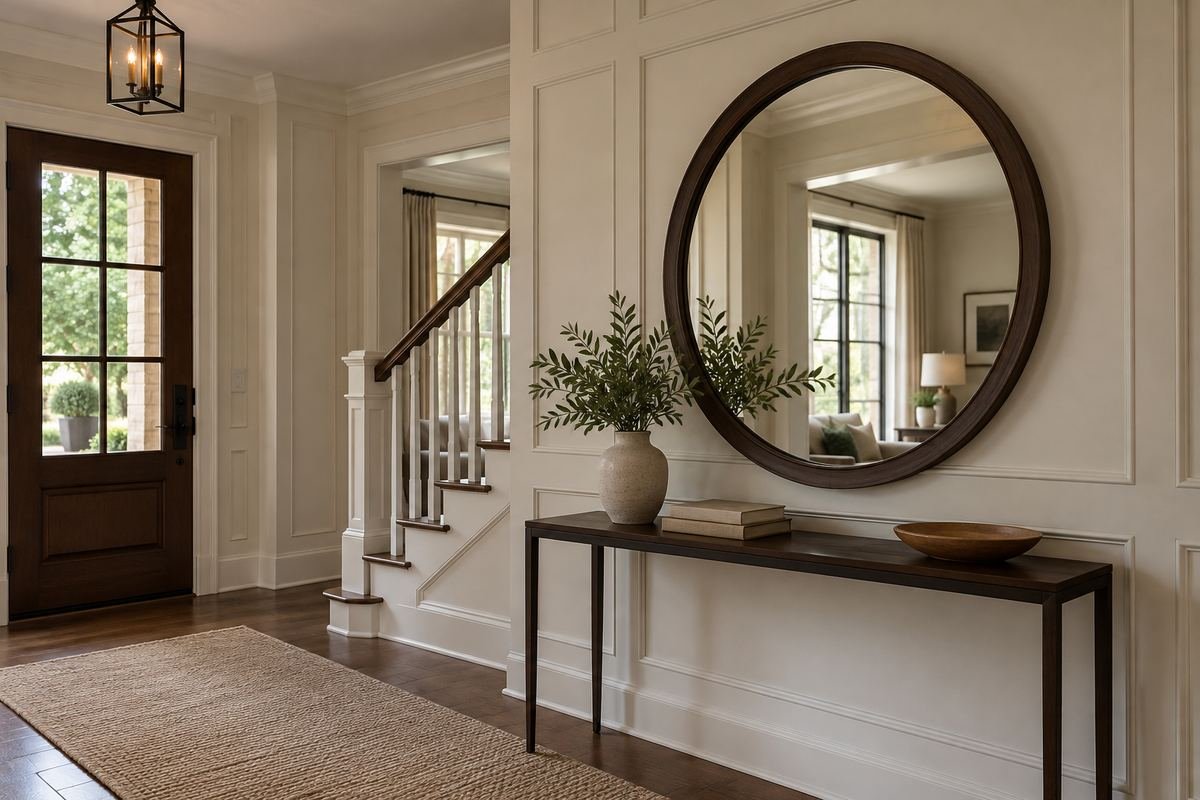
A round or softly curved mirror can stand apart from the grid of wall paneling. Keep the frame simple so the two patterns remain legible.
Map its outside dimensions against the panel rails before installation. Check what lies behind the wall finish and use the appropriate mounting method rather than fastening into decorative trim alone.
Practical tip: Plan the fixing independently of the panel pattern.
15. A rectangular mirror above a textured console
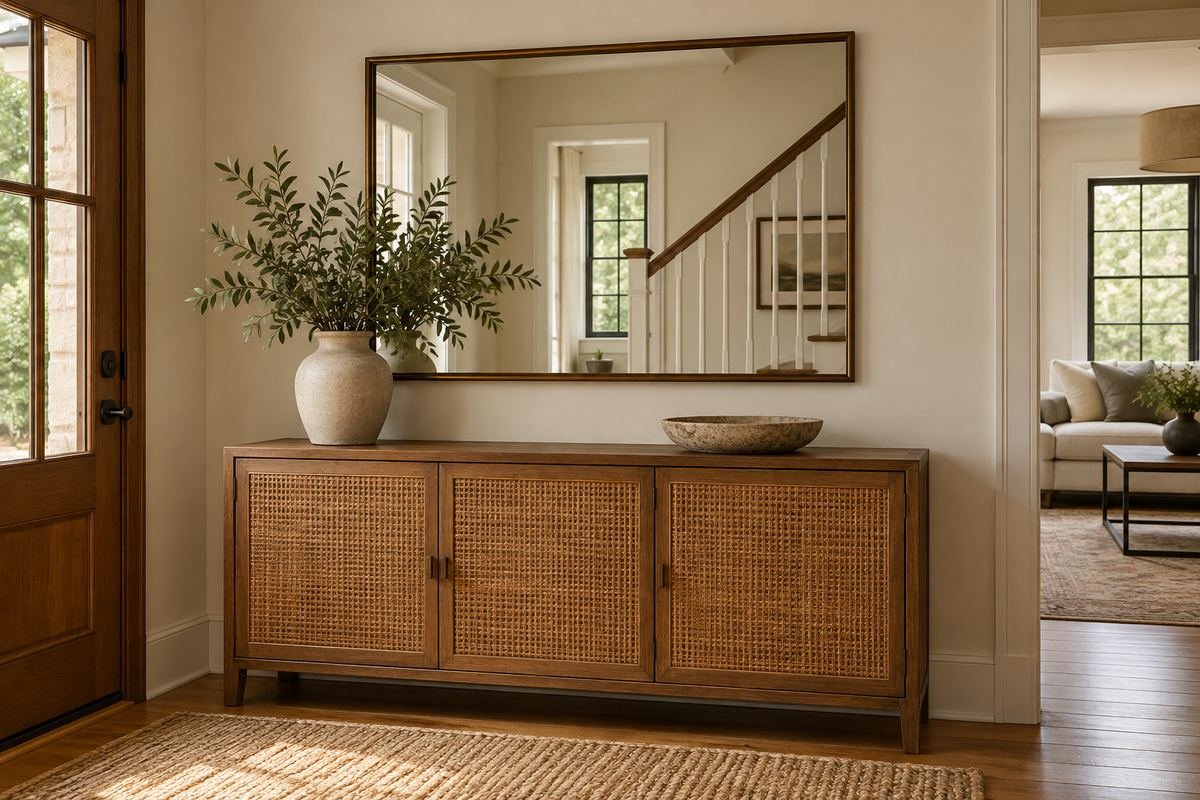
A straightforward rectangular shape can balance cane doors, fluted timber or another textured furniture front. It keeps the eye from having to follow too many competing outlines.
Choose one prominent texture and let the other pieces support it. Low objects beneath the mirror preserve the useful reflective area and keep the counter easy to use.
Practical tip: Let one texture do most of the work.
16. A small mirror over a key-drop station
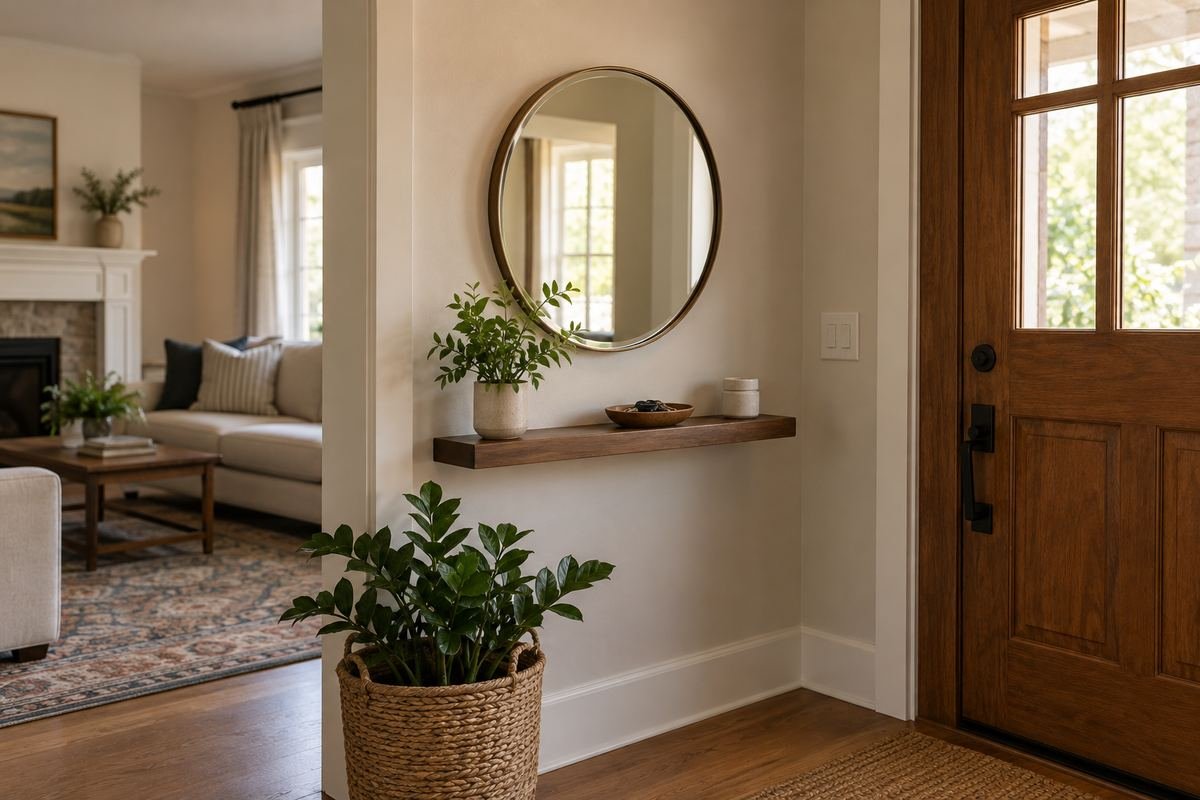
A small entrance may need only a face-level check and a place for keys. A compact mirror can serve that routine without taking over the wall.
Test the height for the users rather than copying a decorative vignette. If a shelf is used below, check its separate mounting requirements and leave space for hands to reach it.
Practical tip: Choose the useful reflected area before the frame.
17. A single mirror on a colored wall
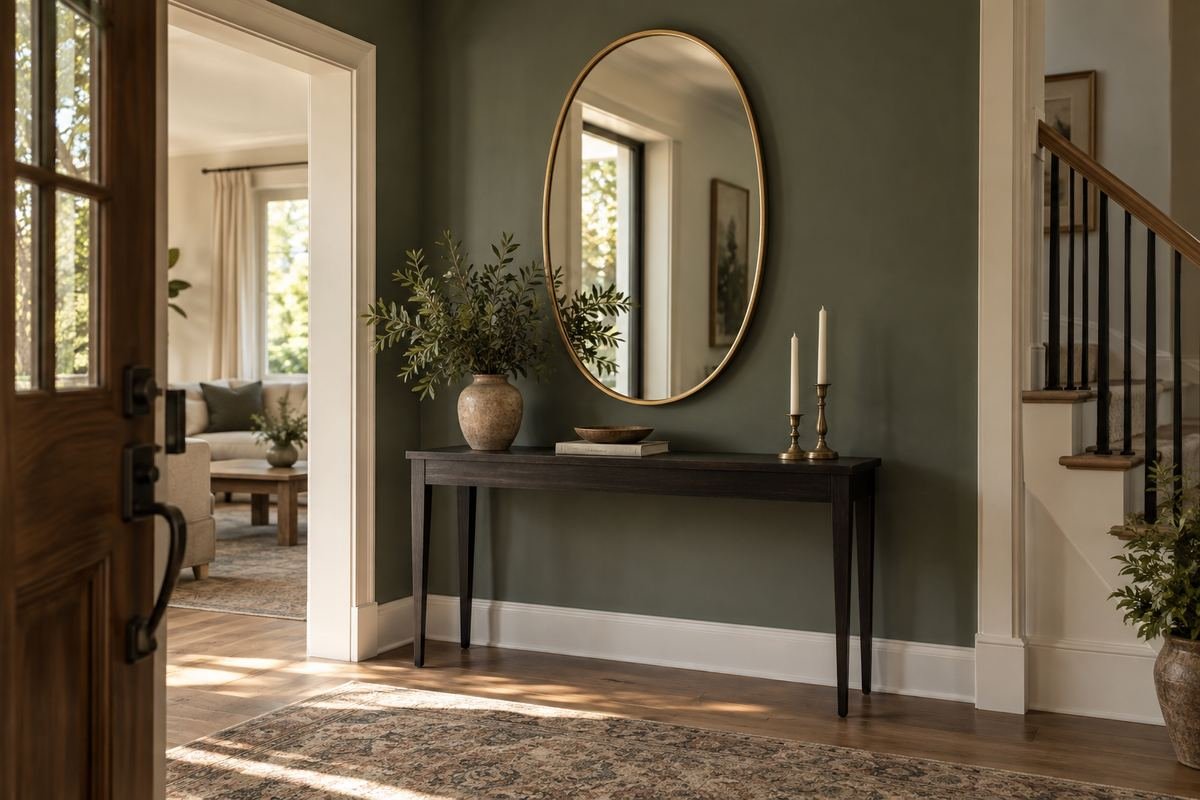
A simple mirror can be enough wall decoration when the entrance already has a strong paint color. A restrained frame helps the wall remain the main backdrop.
Test the frame finish beside the paint in the room’s actual light. Avoid adding several unrelated metal finishes just to make the arrangement feel complete.
Practical tip: Use fewer objects on an expressive wall.
18. Check Oval Entryway Mirror Ideas for Useful Glass Area
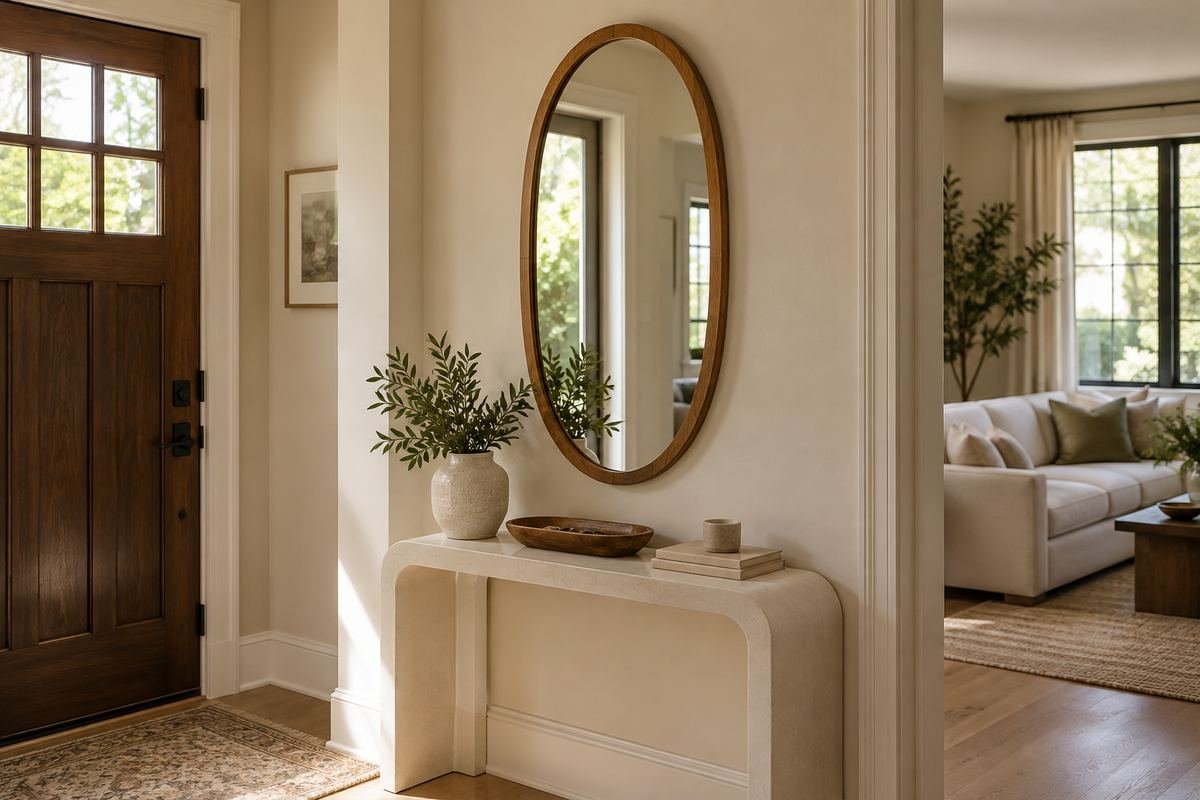
An oval offers a longer reflective area than a small circle while keeping a curved outline. It can suit a wall that feels too narrow for a broad round mirror.
Check the actual glass area and the people who will use it. A decorative oval with a wide frame can offer less useful reflection than its overall dimensions suggest.
Practical tip: Compare glass size as well as outside size.
19. A mirror with a quiet surrounding wall
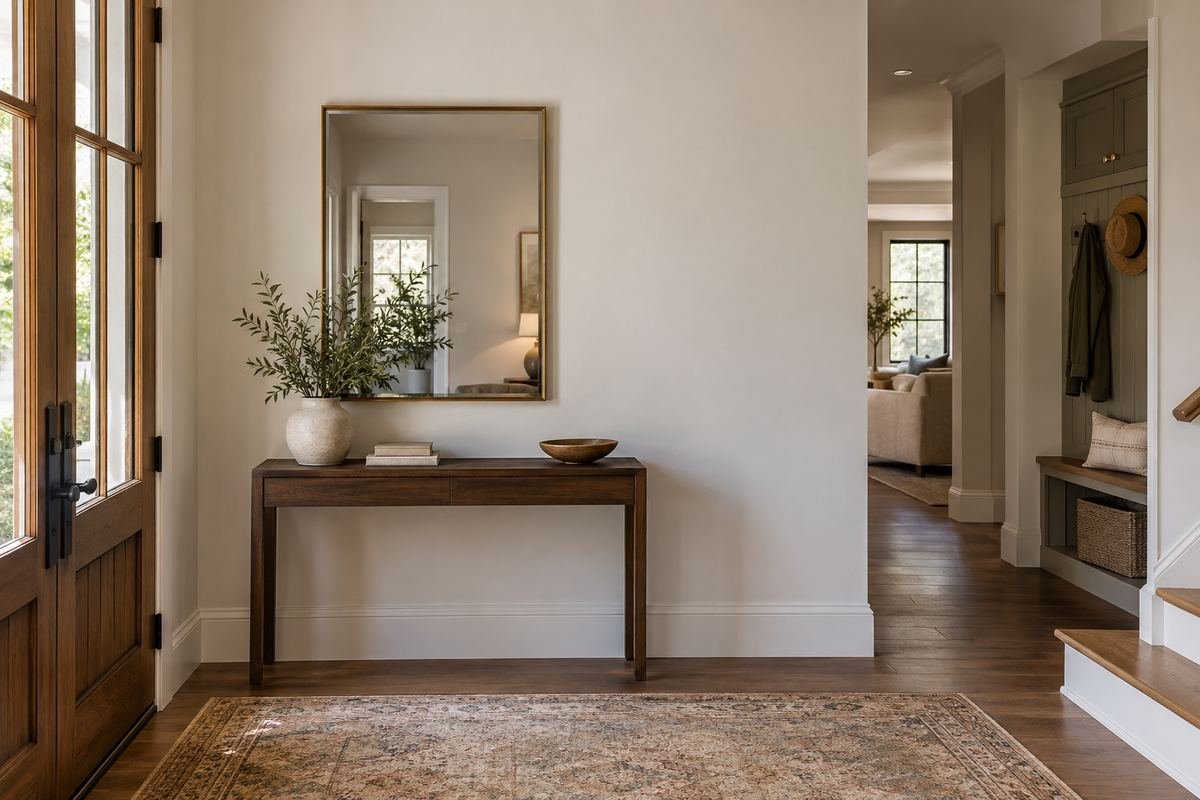
Leaving open wall around the mirror can make it easier to notice and use. This is particularly helpful when the entrance already contains coat hooks, doorways and switches.
Edit nearby objects before choosing a bigger mirror. A clear perimeter may solve visual crowding more effectively than replacing every item with a larger version.
Practical tip: Remove one competing wall object before adding another.
20. A pair of mirrors for two defined stations
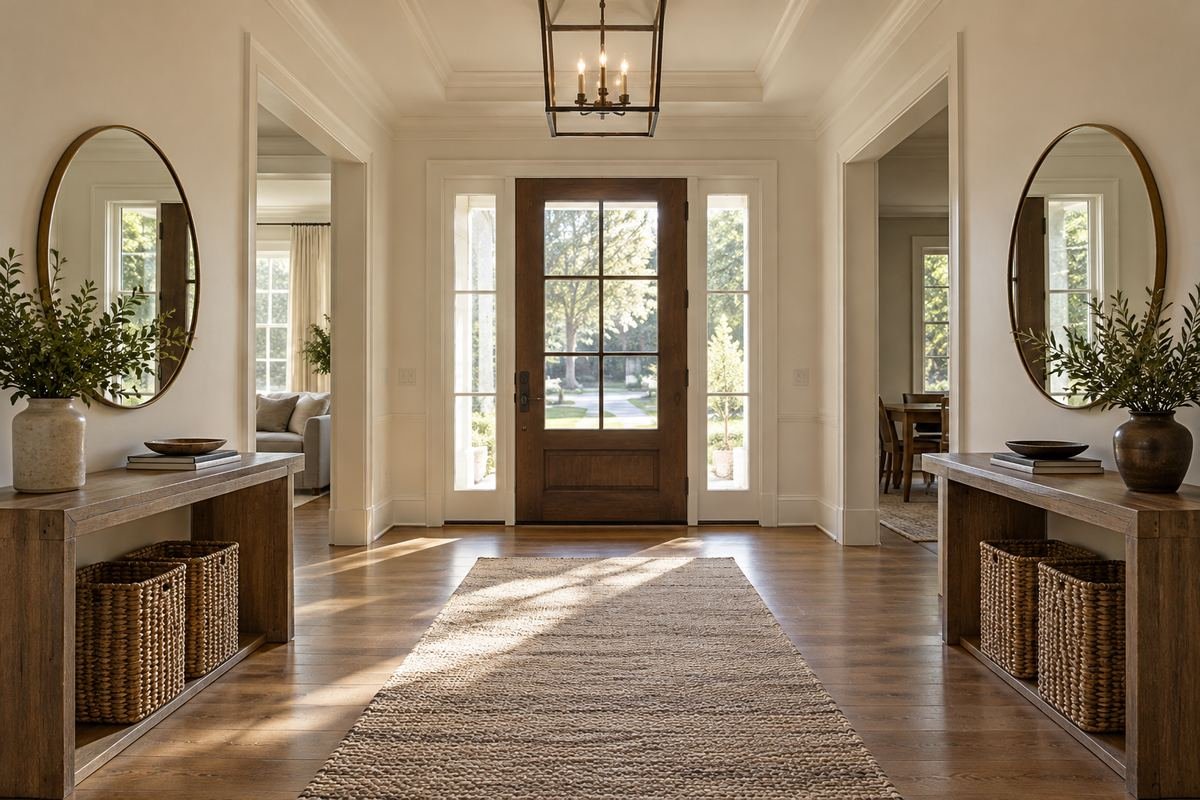
Two matching mirrors can work over two distinct landing zones in a wide foyer. Use the pair when the routine and available wall support the repetition.
Avoid squeezing two small mirrors into a wall simply for symmetry. Check each reflected view and mount each piece properly rather than treating the pair as one lightweight decoration.
Practical tip: Make both stations independently usable.
21. A framed mirror beside existing artwork
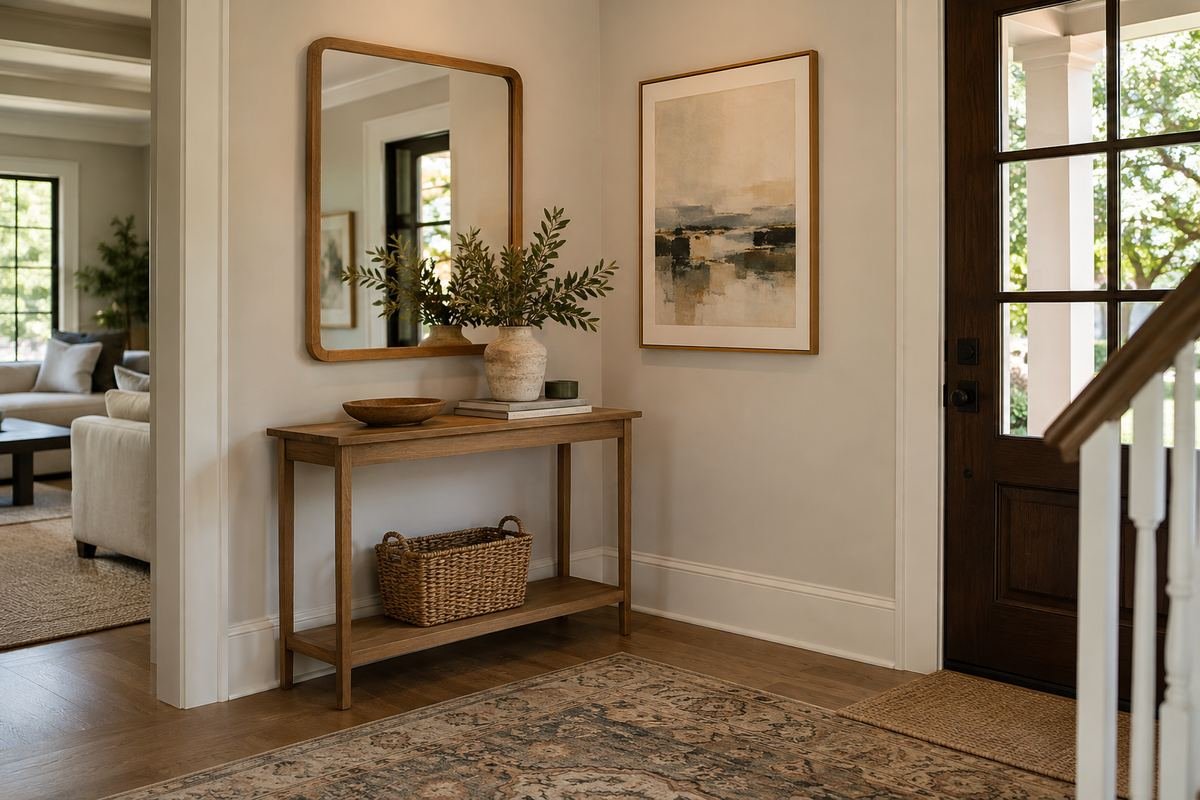
A mirror can sit on the adjacent wall to a favorite picture, giving each item a clear role. This can be calmer than mixing both into a dense gallery over the console.
View the pair from the main doorway. If the mirror reflects the artwork, check that its angle produces an intentional view rather than an awkward cropped duplicate.
Practical tip: Give the mirror and picture separate visual space.
22. A mirror over closed entry storage
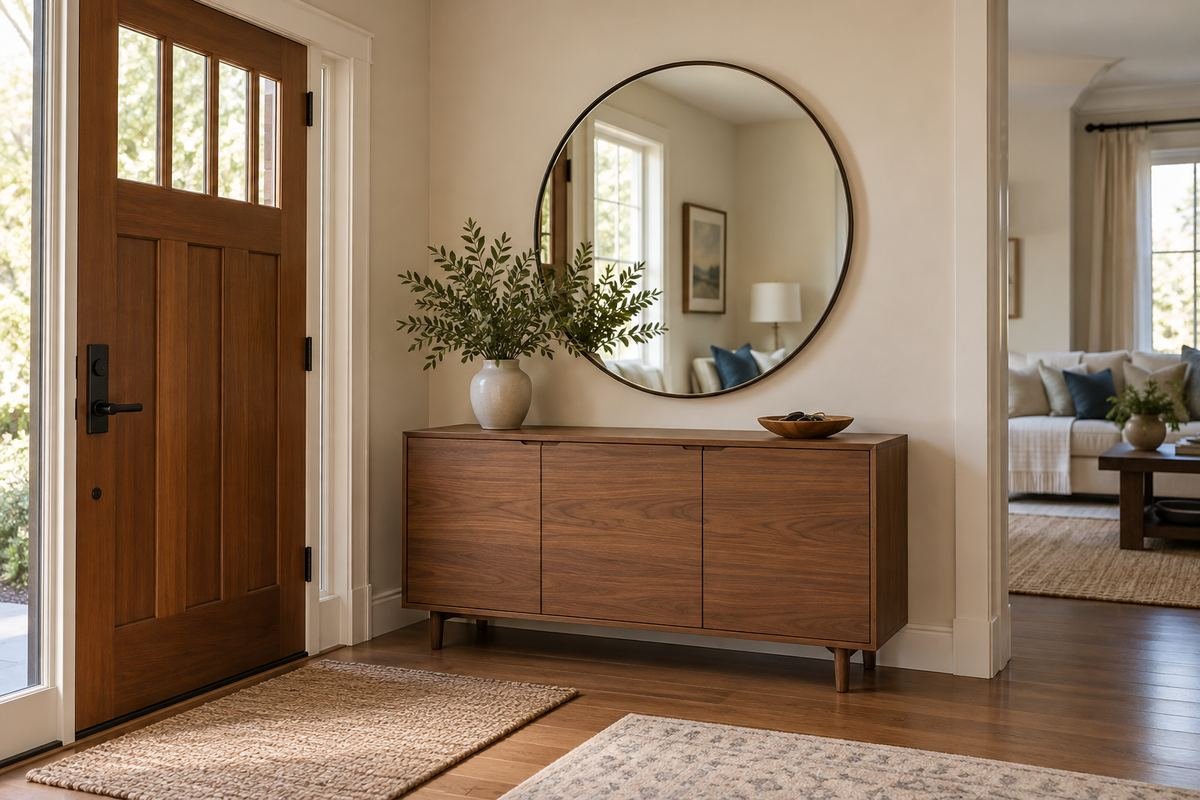
Closed storage below the mirror can hide the small items that otherwise crowd the reflected scene. Keep only the daily landing items on the top.
Check that doors and drawers open without hitting the walking route. Tall storage furniture may need its own anti-tip installation according to the manufacturer; mirror mounting is a separate task.
Practical tip: Check furniture anchoring instructions too.
23. A slim mirror on the side of an open-plan entrance
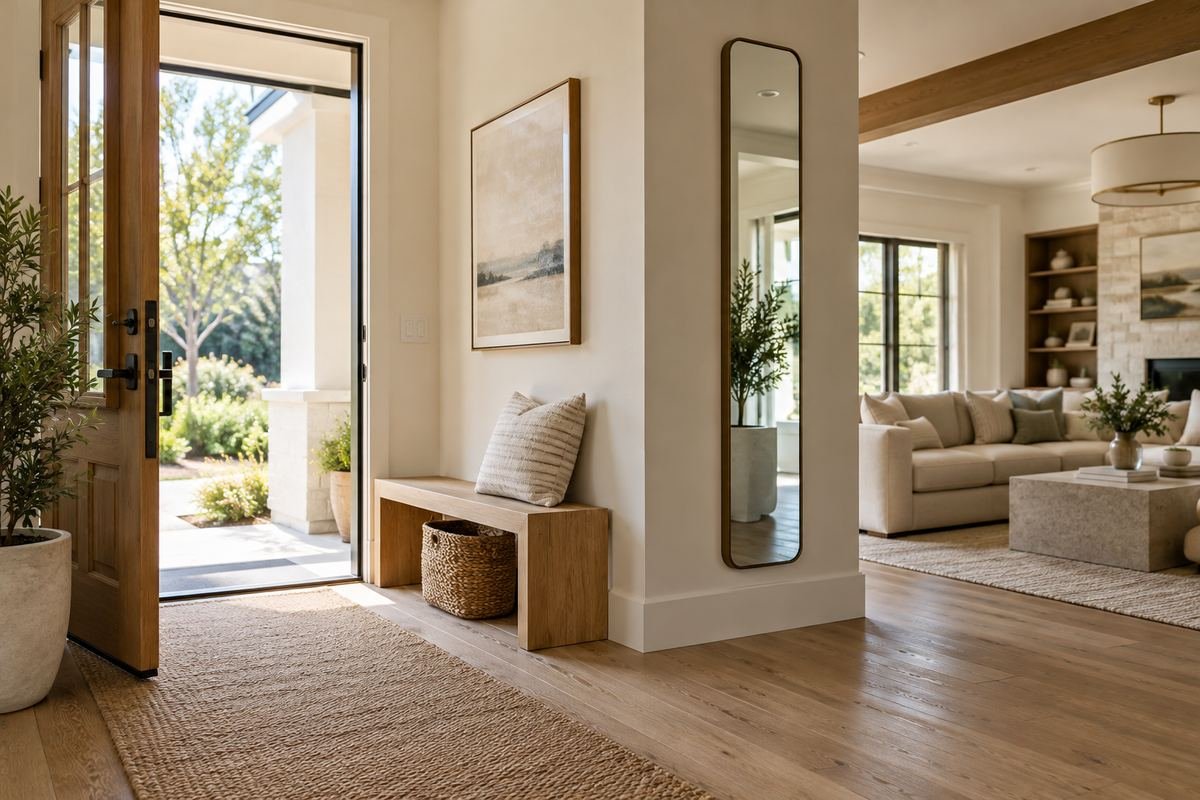
In an entrance that opens directly into the living room, a side-wall mirror can define the arrival zone gently. Its frame can echo a finish already used in the seating area.
Check the reflection from the sofa as well as the door. A mirror useful to the entrance should not create distracting glare in the room beyond.
Practical tip: Test the view from the neighboring room.
24. Keep Entryway Mirror Ideas Standing Space Clear
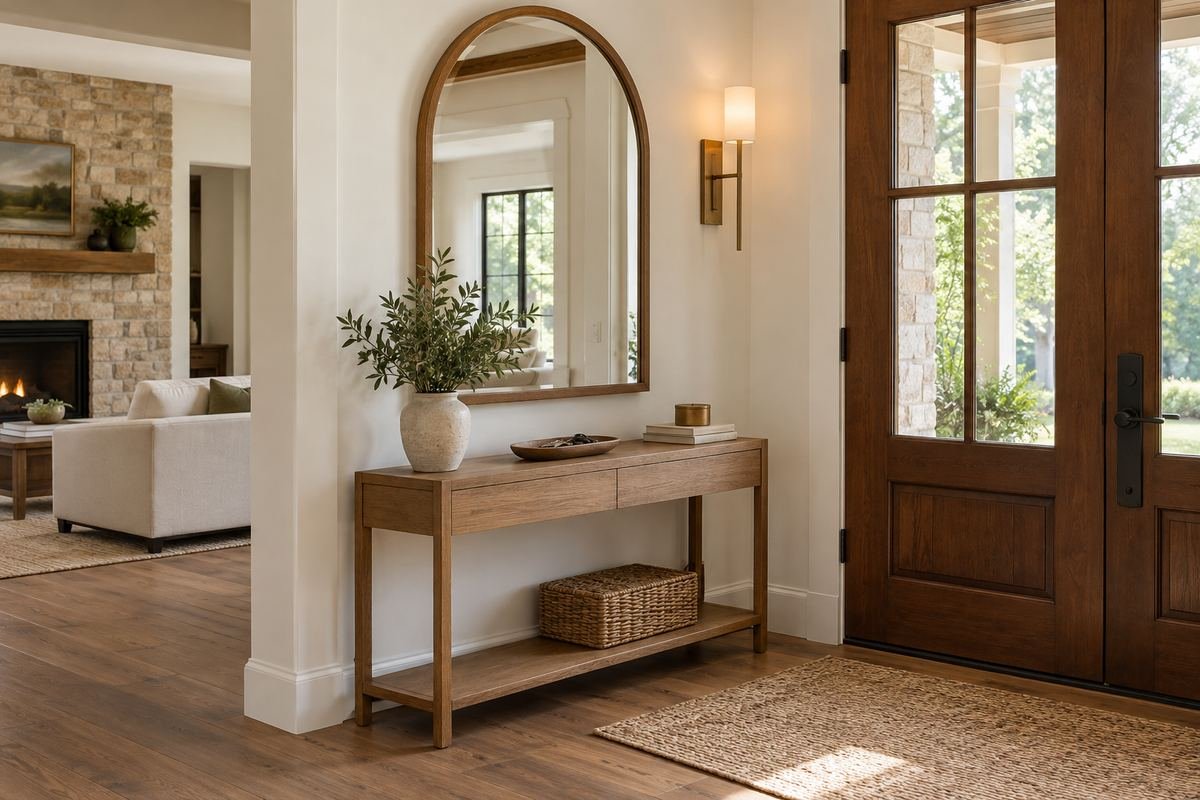
Keep the surface beneath the mirror limited to a few useful objects that can be returned quickly. The reflection looks calmer when the underlying routine is easy to maintain.
Use the arrangement for several arrivals and departures before buying more decor. If bags accumulate in front of the mirror, solve their storage first so the useful standing space stays available.
Practical tip: Protect the place where you stand to use it.
Frequently Asked Questions
What size mirror should I put above an entryway console?
Start with the outside dimensions of the console and the available wall rather than a universal ratio. Try a paper template, leave a visually comfortable border and check the view from the door. The frame thickness, lamps and neighboring doors can change what feels balanced.
Can I use a mirror in a very narrow entryway?
Yes, if its frame and any shelf leave the circulation route clear. A wall-mounted mirror without a console may suit the space better than a deep furniture arrangement. Check door movement and secure mounting; a narrow room is not a reason to improvise the fixings.
Does an entryway mirror need to face the front door?
No. Choose the position from the reflected view and how you use the entrance. A side wall can offer a useful clothing check without reflecting an unfinished storage area. Test the view at the actual user heights before deciding.
Choose the Details That Work in Your Home
Choose the mirror from the view and routine first, then settle the frame and surrounding decor. A well-placed, securely mounted mirror with a clear approach can serve the entrance even when the rest of the styling is very simple.
For related ideas, explore Entryway table decor ideas, Entryway bench ideas, Mudroom organization ideas.
Planning References
IKEA NISSEDAL: orientation and product details; IKEA NISSEDAL assembly instructions. Follow the instructions for the exact products you choose.
Optional digital guide for this topic
If you prefer a structured workbook, explore this related paid guide.