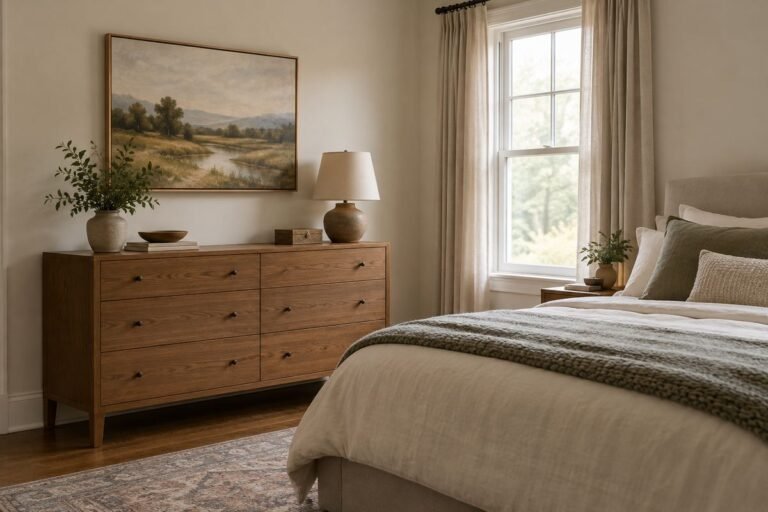
The most useful bedroom vanity ideas begin with the routine you want to support. A quick place for jewelry needs a different surface from a dressing table used for a long makeup routine. Decide what happens here before choosing the mirror, drawers or decorative finish.
A bedroom vanity is a seated dressing space, so the chair and reflection deserve as much attention as the furniture front. Look at the table with the seat pulled out, the drawers open and the lighting switched on. That occupied arrangement reveals more than a photograph of a perfectly closed cabinet.
These 29 ideas combine practical layouts with distinct furniture and material choices. Use the concepts to compare options for your own bedroom, then check the dimensions, support and instructions of the exact products. The styling should make the routine easier to begin and easier to put away.
The images are original AI-generated decor concepts, not installation diagrams or photographs of completed client projects.
Browse These 29 Bedroom Vanity Ideas
Jump to an idea
- Begin with a simple table and a separate wall mirror
- Choose an integrated mirror for a unified outline
- Use a shallow table along a narrow wall
- Give a corner a deliberate dressing role
- Place the vanity beside the wardrobe sequence
- Use window light with a plan for darker mornings
- Compare balanced lights beside the mirror
- Choose a face-lit mirror when surface space is limited
- Try a pair of compact table lamps
- Keep a comfortable supported chair for longer use
- Use a tucked stool for a shorter routine
- Divide a shallow drawer by the daily categories
- Give taller bottles one upright compartment
- Use a removable tray for the everyday kit
- Keep occasional items in a closed box
- Give jewelry a separate lined landing place
- Separate a shared desk from the grooming kit
- Use a freestanding vintage-style table thoughtfully
- Choose pale oak for a quieter furniture relationship
- Use walnut as a defined warm accent
- Try a painted vanity linked to an existing textile
- Let a dark metal frame keep the outline precise
- Use a rounded table edge in a compact corner
- Use reeded detail as one controlled texture
- Connect a woven chair with plain furniture
- Give the vanity a subtle wallpaper backdrop
- Keep the cord route out of the chair movement
- Give two users separate removable kits
- Finish with one useful object and a clear surface
Plan bedroom vanity ideas around an actual seated routine
List the items used here each day, the items stored elsewhere and anything that needs power. Mark the table, pulled-out seat and drawer openings on a room sketch. Sit at a proposed table height and check the mirror view before fixing anything to the wall. Compare daylight at the usual time of use with a controllable light source for darker mornings.
| Your priority | Compare first | Check in the room |
|---|---|---|
| A small footprint | Shallower table with a separate wall mirror | Legroom and the seat when pulled out |
| A longer daily routine | Comfortable seat and accessible drawers | Reflection and light from the seated position |
| A shared work surface | A removable grooming kit | A realistic changeover and separate power needs |
| Many small items | Divided shallow storage | Actual container sizes and full drawer travel |
| A quiet bedroom view | Closed storage and restrained materials | What remains on top after the routine |
| A difficult lighting position | Adjustable task lighting | Glare, shadows and comfortable brightness |
Separate the reflection from the furniture silhouette
The mirror should show the view you need while seated. Check a temporary outline on the wall and compare it with a freestanding mirror before buying. A tall decorative mirror can look balanced above a table yet leave the useful reflection too high for the person sitting there.
Compare face lighting with room lighting
Philips Hue’s makeup-lighting guide discusses the direction and balance of light near the face. Test a candidate setup from the seat, including uncomfortable glare and uneven shadows. General room lighting and a decorative glow behind a mirror do not automatically provide useful light for a close routine.
Give every stored category a reachable place
IKEA’s dressing-table guide compares integrated drawers, separate containers and different mirror arrangements. Use those choices to plan your own categories rather than copying a display. Decide which items need to be visible, which belong in a drawer and which do not need to live in the bedroom.
Check the actual furniture and mounting instructions
Follow the table and mirror manufacturer’s instructions for assembly, support and any wall anchoring. A visually light table still needs to be appropriate for its intended load. Confirm the wall construction before choosing mounted furniture or a heavy mirror; get suitable installation help when needed.
1. Begin with a simple table and a separate wall mirror

A restrained dressing table and wall mirror let you choose the two pieces independently. A clear tabletop makes the setup easy to read, while the mirror can be positioned for the person using the seat. Repeat one finish between the frame and nearby furniture to connect the arrangement.
Check the reflection while sitting at the actual table height. Do not set the mirror solely by its relationship to the wall or ceiling. Confirm its mounting requirements and keep the useful surface free from objects that interrupt the view or the working area.
Practical tip: Mark the mirror outline before choosing its final position.
2. Choose an integrated mirror for a unified outline
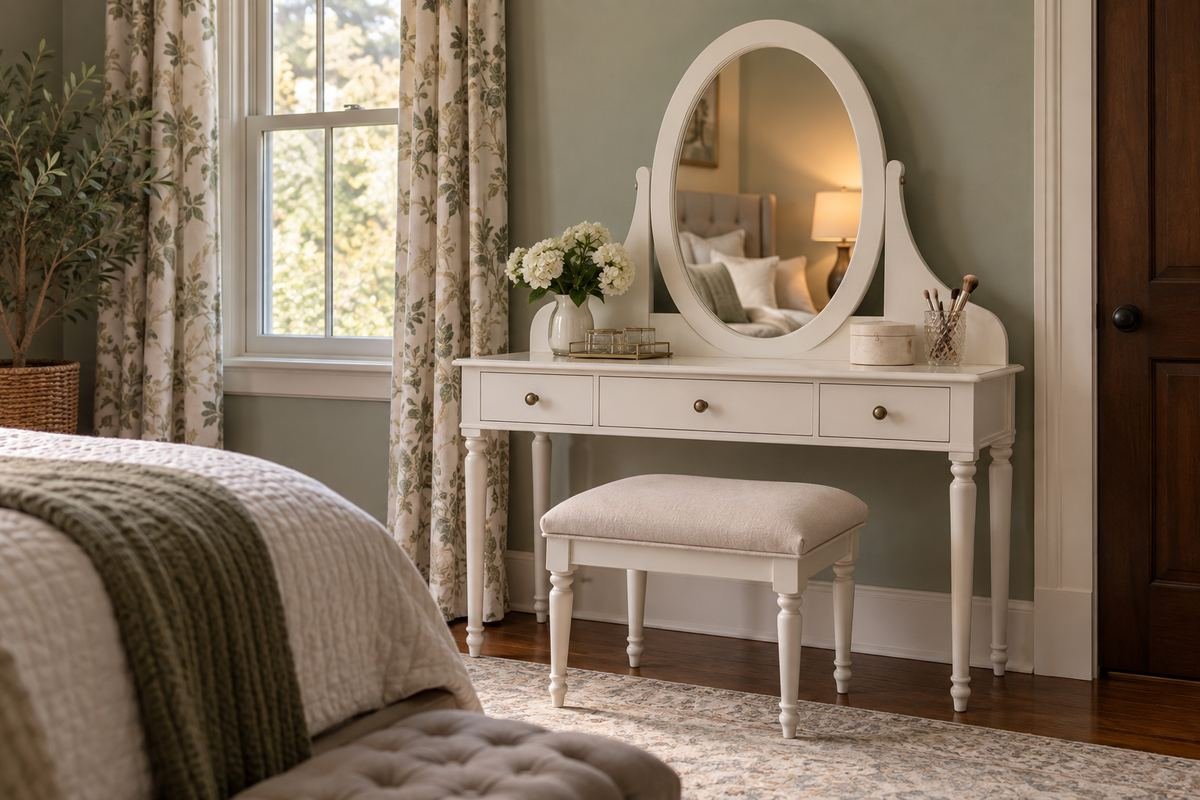
A dressing table with an attached mirror can create a single furniture composition. It is useful when you prefer the mirror and base to share the same character. Keep neighboring pieces quieter so the integrated shape has room to be seen.
Confirm the mirror adjustment and the view from the intended seat. The convenient matched appearance does not establish that it suits every user. Compare assembly, support and any anchoring instructions for the complete furniture unit rather than treating the mirror as a separate decoration.
Practical tip: Try the intended seat with the complete unit.
3. Use a shallow table along a narrow wall
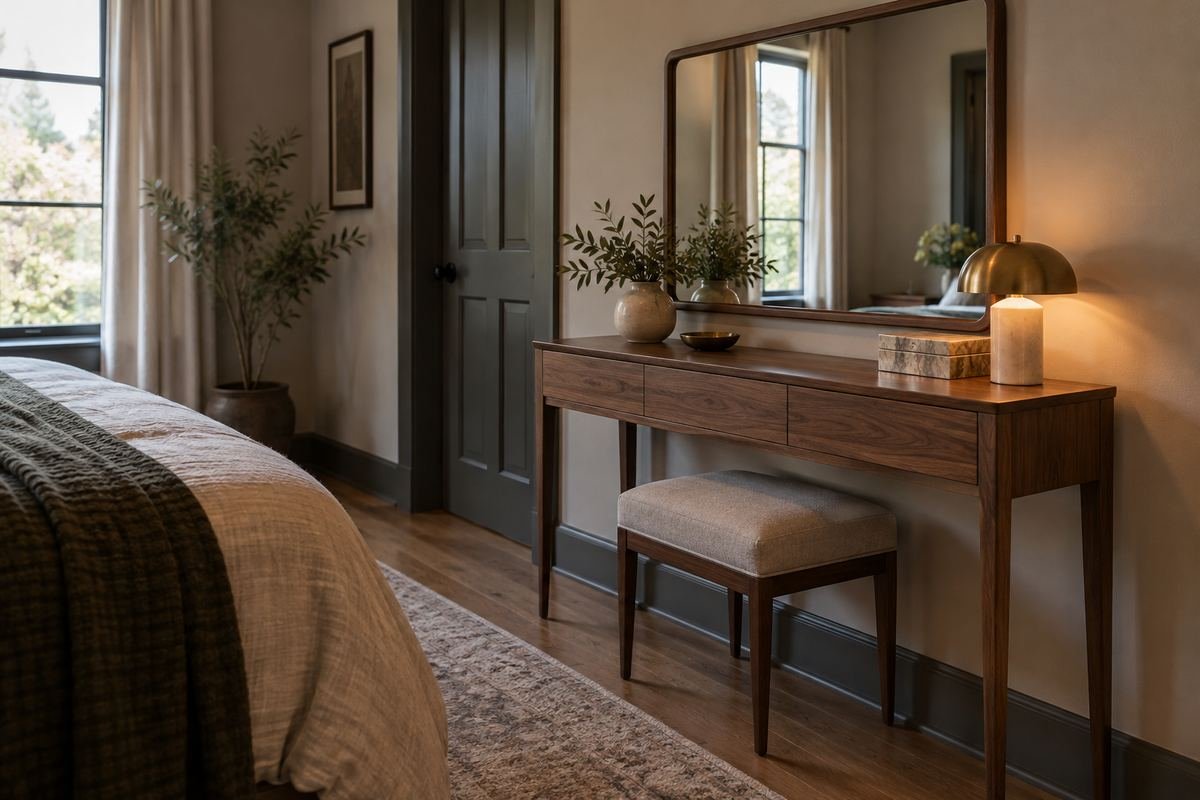
A shallower vanity can provide a useful surface where a deep desk would project too far. A wall mirror can leave the limited top available for the daily kit. Keep the frame simple and choose storage according to the small footprint.
Check knee room and the working distance to the mirror. Reducing depth too far can make the table inconvenient, especially with projecting drawers or a large tabletop mirror. Include the seat when pulled out, not only when tucked underneath for the photograph.
Practical tip: Compare the table in its occupied position.
4. Give a corner a deliberate dressing role
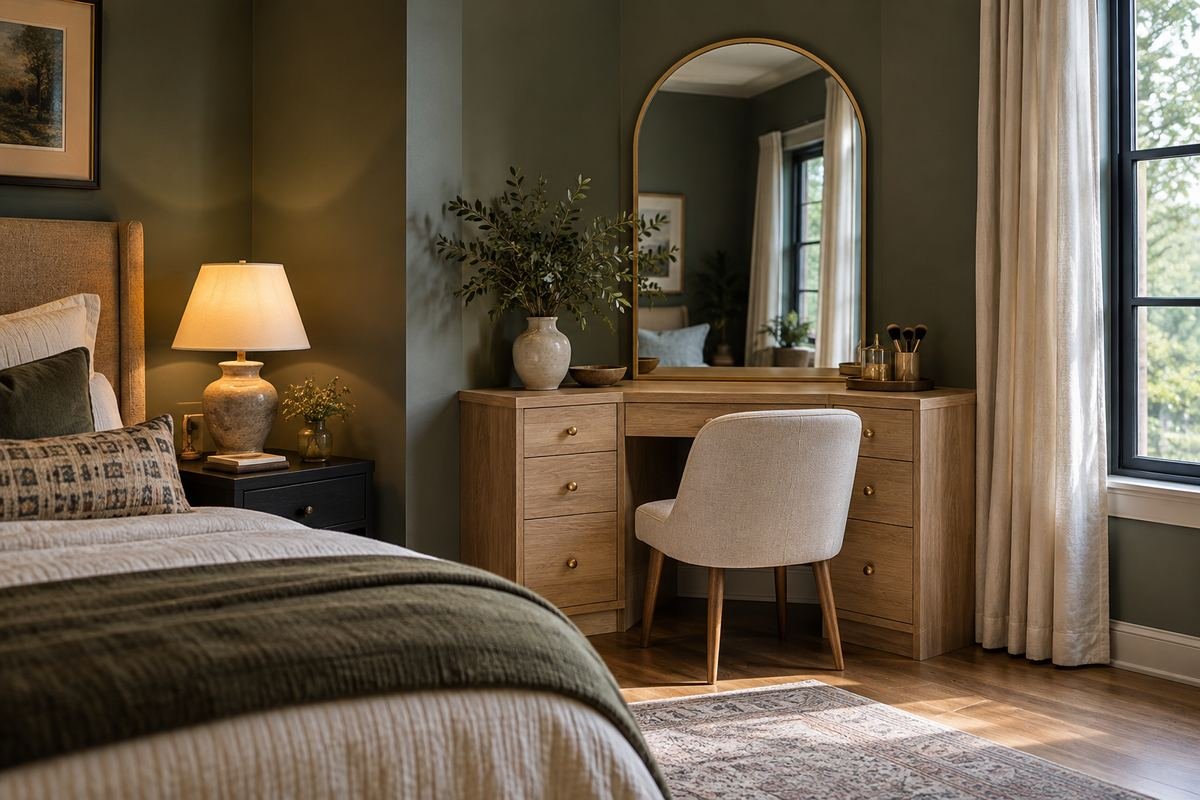
A corner can support a vanity when it connects naturally with the wardrobe and does not interrupt the bedroom route. A purpose-made corner form or a small straight table can give the area a clear identity. Use the second wall carefully rather than filling both sides with shelves.
Check the mirror angle and the place for the seat to move. A corner can feel enclosed once drawers and nearby doors are open. Compare the complete routine with a straight wall location before assuming the unused angle is the best place.
Practical tip: Check both neighboring doors from the seated position.
5. Place the vanity beside the wardrobe sequence
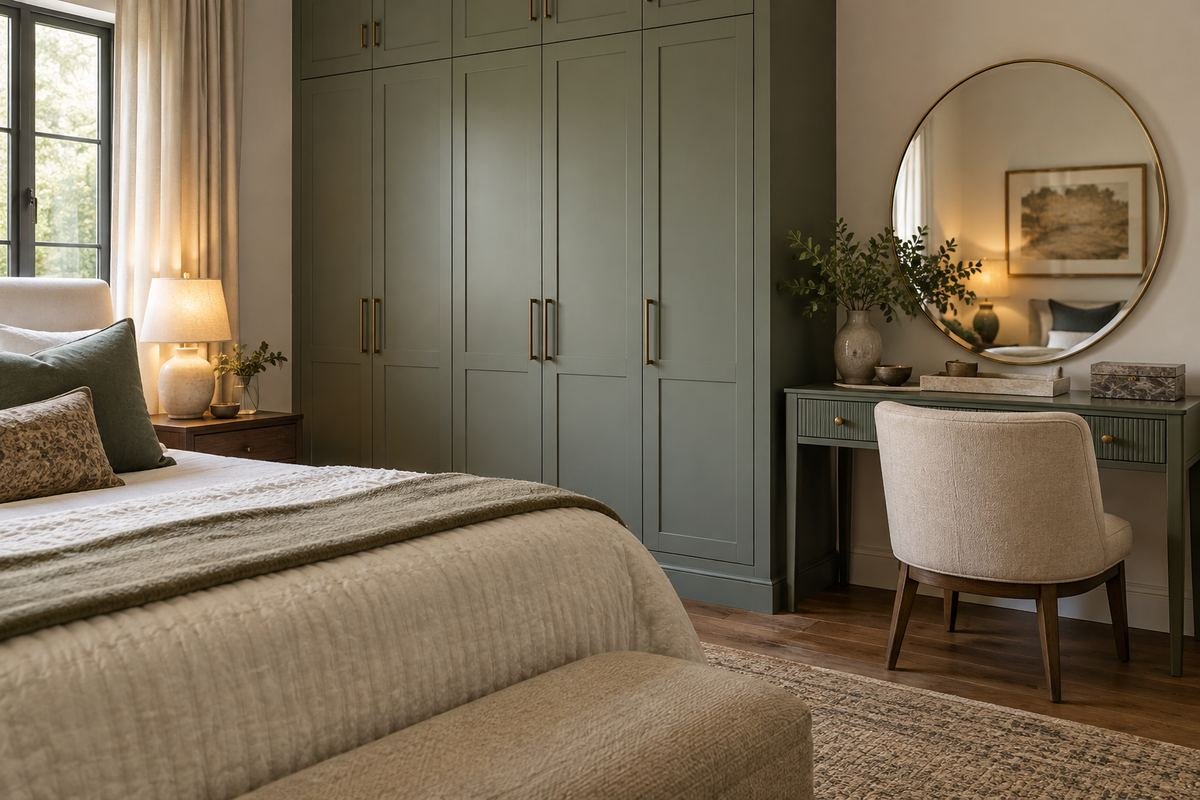
A dressing table near the wardrobe can keep related activities in one part of the room. Give the seat its own place beside the doors rather than directly in their opening path. A restrained front can help it read as part of the larger storage arrangement.
Review the order of dressing, selecting accessories and returning items. The shortest furniture-to-furniture distance is not always the most convenient route. Compare the open wardrobe and the pulled-out chair together so the two uses can coexist.
Practical tip: Sketch the dressing sequence as well as the furniture.
6. Use window light with a plan for darker mornings

A position near a window can give the dressing area a pleasant connection to the room. Check how the light reaches the seated face at the time the table is normally used. Curtains or blinds can help manage direct sun and privacy.
Daylight varies with weather and time, so compare a suitable controllable light source too. Keep stored products according to their own instructions rather than leaving every bottle in a sunny display. Preserve access to the window and the movement of its covering.
Practical tip: Review the light at the actual time of your routine.
7. Compare balanced lights beside the mirror

Two restrained lights near the mirror can give the face a more balanced source than a single overhead fitting. Choose fixtures that suit the scale of the table and allow the mirror to remain the focus. The setup can look quiet without a large theatrical bulb frame.
Evaluate the result from the seat with the room in its normal evening condition. Check brightness, glare and the distribution across the reflection. Follow the fixture instructions and use appropriate installation help for any fixed wiring.
Practical tip: Test the light from the seat rather than the doorway.
8. Choose a face-lit mirror when surface space is limited

An illuminated mirror designed to light the face can reduce the need for separate lamps on a small table. Its clear outline can suit a restrained modern bedroom. Compare its useful reflection with the furniture width instead of choosing the largest mirror available.
Look at the exact lighting design and controls. A halo behind the glass may be mainly decorative, and brightness alone does not establish comfort. Check power, cord access and any mounting instructions before making the mirror the center of the plan.
Practical tip: Compare front illumination with decorative backlighting.
9. Try a pair of compact table lamps

Small lamps can give a freestanding vanity a familiar furniture character. A pair beside the mirror can form a balanced composition when the table has enough width. Choose a modest base and shade so the lights leave room for the daily routine.
Compare the actual light on the face, not only the symmetry of the objects. Shade shape and lamp height change the result. Keep the power route deliberate and accessible without allowing cords to cross the chair’s movement or a main walking route.
Practical tip: Check the usable surface left between the lamp bases.
10. Keep a comfortable supported chair for longer use

A chair with a useful back can suit a dressing routine that takes more time. Let its upholstery add a softer material beside a simple wood table. The seat can become part of the bedroom composition without requiring an elaborate vanity base.
Check table clearance with the chair occupied and moved in. Arms, a deep apron or low drawers can interfere even when the pieces look compatible. Try the actual seat where possible and compare its support with the length of the usual routine.
Practical tip: Check the chair arms and table apron together.
11. Use a tucked stool for a shorter routine
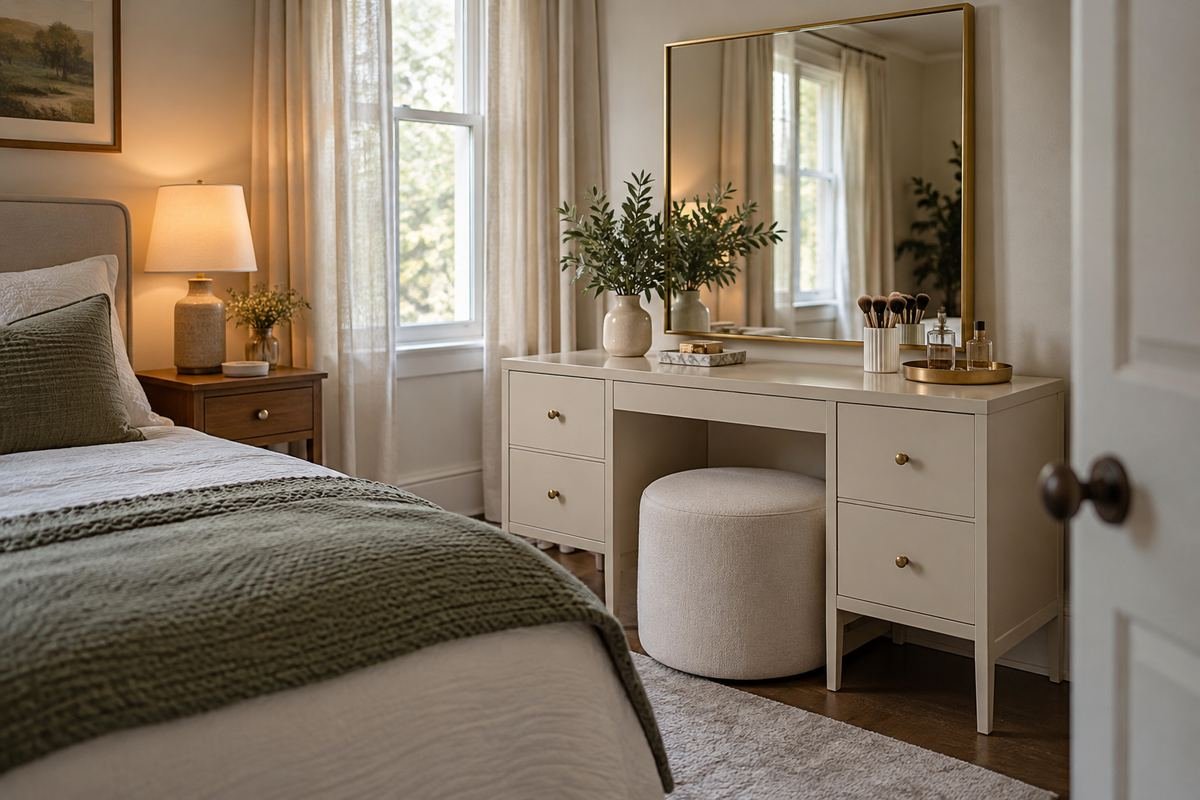
A compact stool can keep the dressing area visually open when it is not in use. It may suit a quick jewelry or grooming routine. Choose a stable seat that relates to the table without making the entire arrangement a matching set.
Check the seat’s specification and the experience of sitting at the table. A backless stool is a particular choice, not an automatic improvement for a small room. Leave somewhere to place it when pulled out without obstructing the route around the bed.
Practical tip: Test the pulled-out stool as well as its tucked position.
12. Divide a shallow drawer by the daily categories
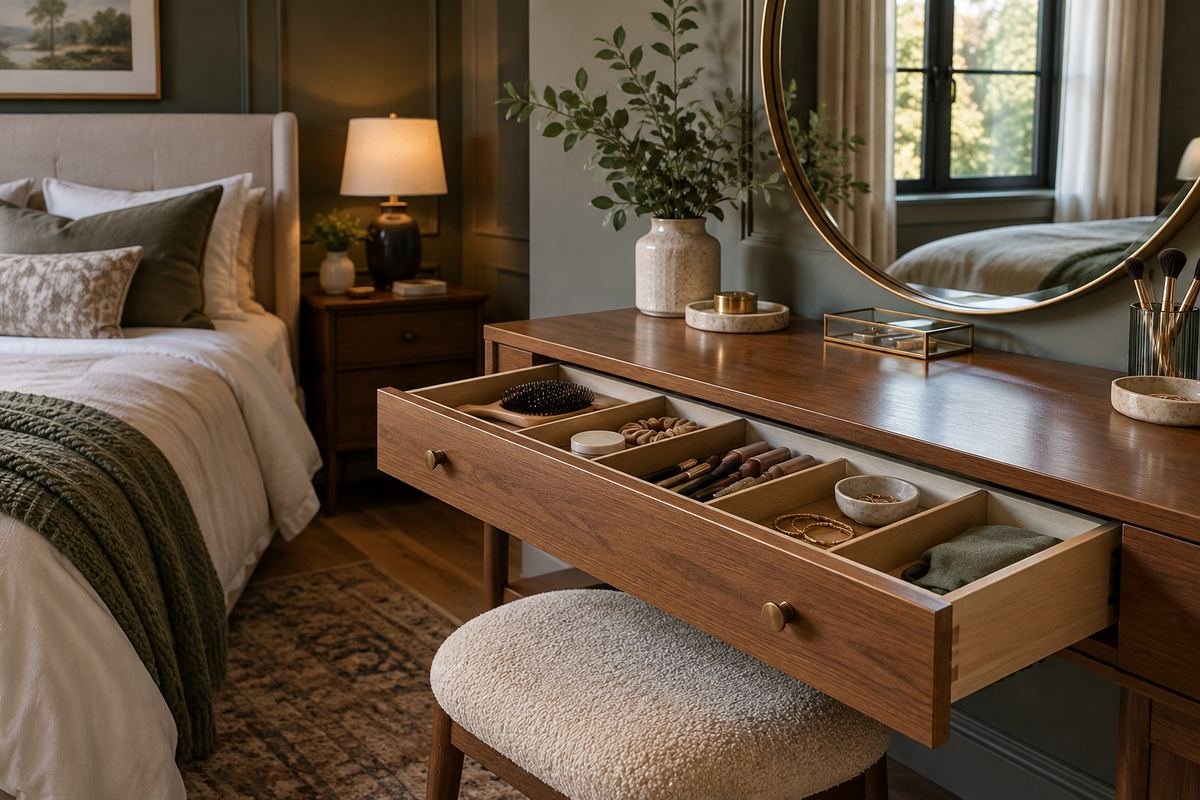
A divided shallow drawer can make small items easier to return after use. Group the contents by the steps of the routine rather than by decorative color. A restrained table front can keep the storage visually quiet when the drawer is closed.
Measure the drawer’s usable interior and the products that will sit there. Dividers consume some of the opening, and tall items may need another home. Leave enough room to remove and replace the kit without rearranging the entire drawer.
Practical tip: Measure the interior after allowing for the divider.
13. Give taller bottles one upright compartment

A separate upright storage area can keep taller containers from spreading across the work surface. One side cabinet or a nearby closed shelf may suit the role. Choose the location according to what is reached for daily, not the desire to display a complete collection.
Check the actual bottle height with any tray or liner included. Follow product storage directions and keep the cabinet easy to use from the dressing area. Avoid fitting everything so tightly that returning one item becomes a small organizing project.
Practical tip: Include the container or tray when checking the height.
14. Use a removable tray for the everyday kit
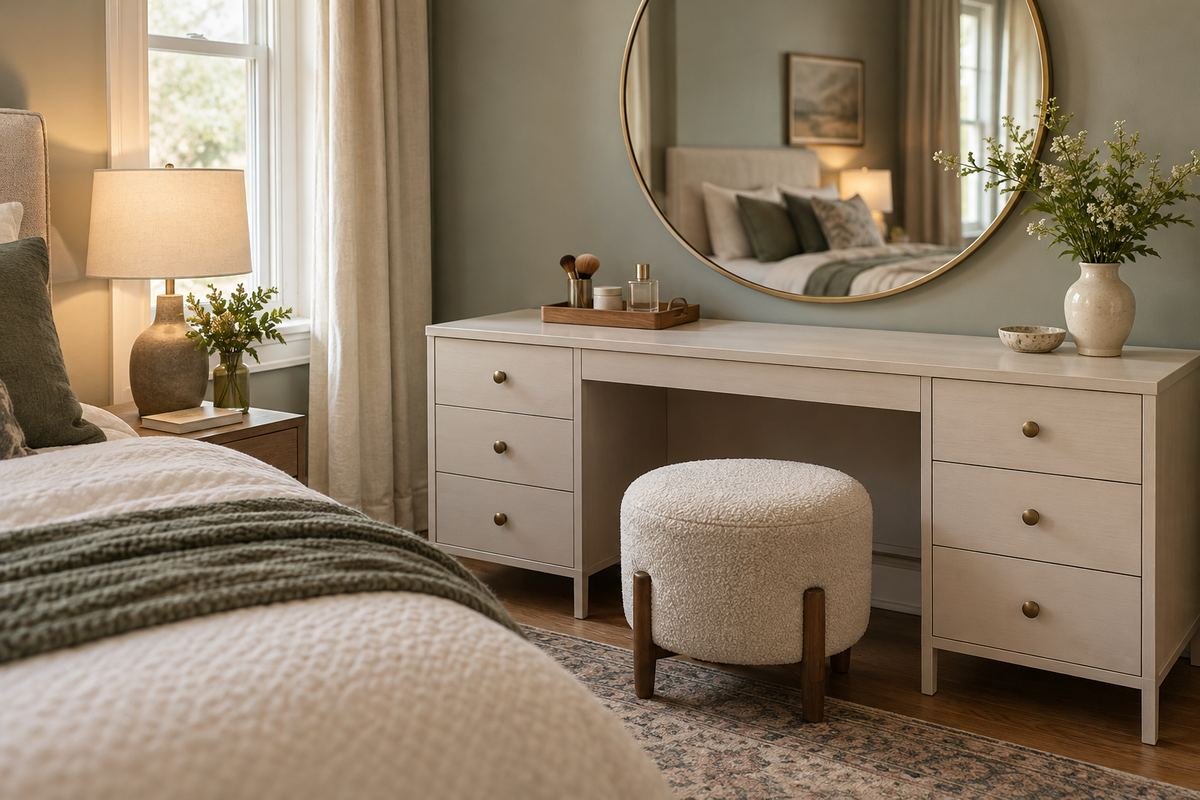
A small removable tray can define the items used at each sitting. It creates a clear starting point and makes it easier to clear the table for cleaning or another activity. Choose the tray around the real kit rather than adding objects to fill it.
Keep the tray modest enough to lift comfortably when loaded. A large decorative platform can use most of the available surface. Compare a simpler closed container if the collection needs protection from dust or if a visible display distracts from the room.
Practical tip: Choose the tray after grouping the daily items.
15. Keep occasional items in a closed box

A closed box can give occasional accessories a clear home without requiring a larger table. Use it for a named category that does not need to remain on display. A simple material can connect the container with the vanity rather than adding another competing finish.
Check that the box remains easy to reach and open. Several stacked boxes can turn a tidy-looking display into inconvenient storage. If the category keeps growing, compare a drawer or another location rather than covering more of the working surface.
Practical tip: Avoid stacking anything on the box you use regularly.
16. Give jewelry a separate lined landing place
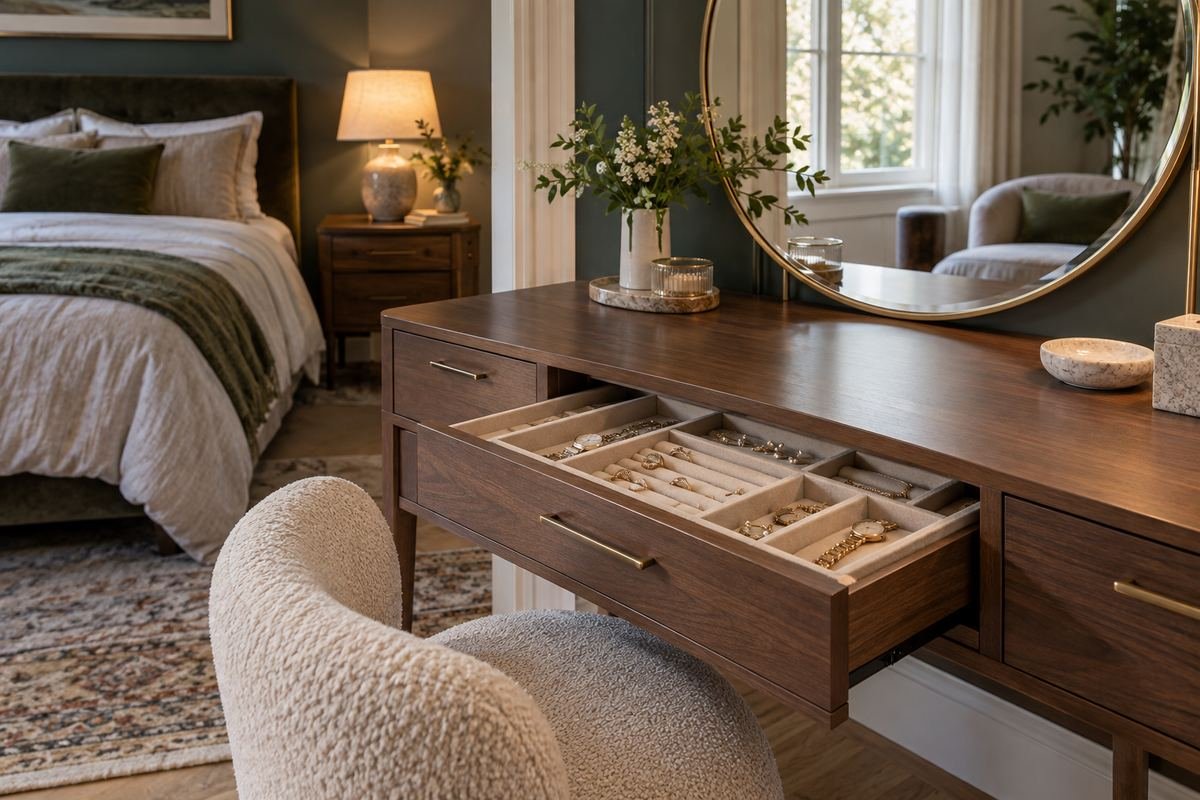
A small lined compartment can keep jewelry separate from the main grooming kit. Position it where items can be set down and retrieved easily. Keep the arrangement restrained so the dressing area serves the household rather than presenting a store-like display.
Choose storage for the shapes actually owned: long pieces, small pairs and larger accessories need different space. Avoid treating a decorative open dish as the answer for everything. Follow material care advice for the particular jewelry and storage lining.
Practical tip: Match the divisions to the collection rather than its color.
17. Separate a shared desk from the grooming kit

A small desk can serve as an occasional vanity when the two activities have a realistic changeover. A portable mirror and a removable kit can make the switch straightforward. Let the furniture remain suitable for both roles instead of permanently covering the work surface.
Name the storage location for the mirror and kit when work begins. Check the seat, light and power needs of each use. If changing the setup requires moving many objects every day, separate smaller surfaces may serve the room more effectively.
Practical tip: Rehearse the complete changeover before buying organizers.
18. Use a freestanding vintage-style table thoughtfully
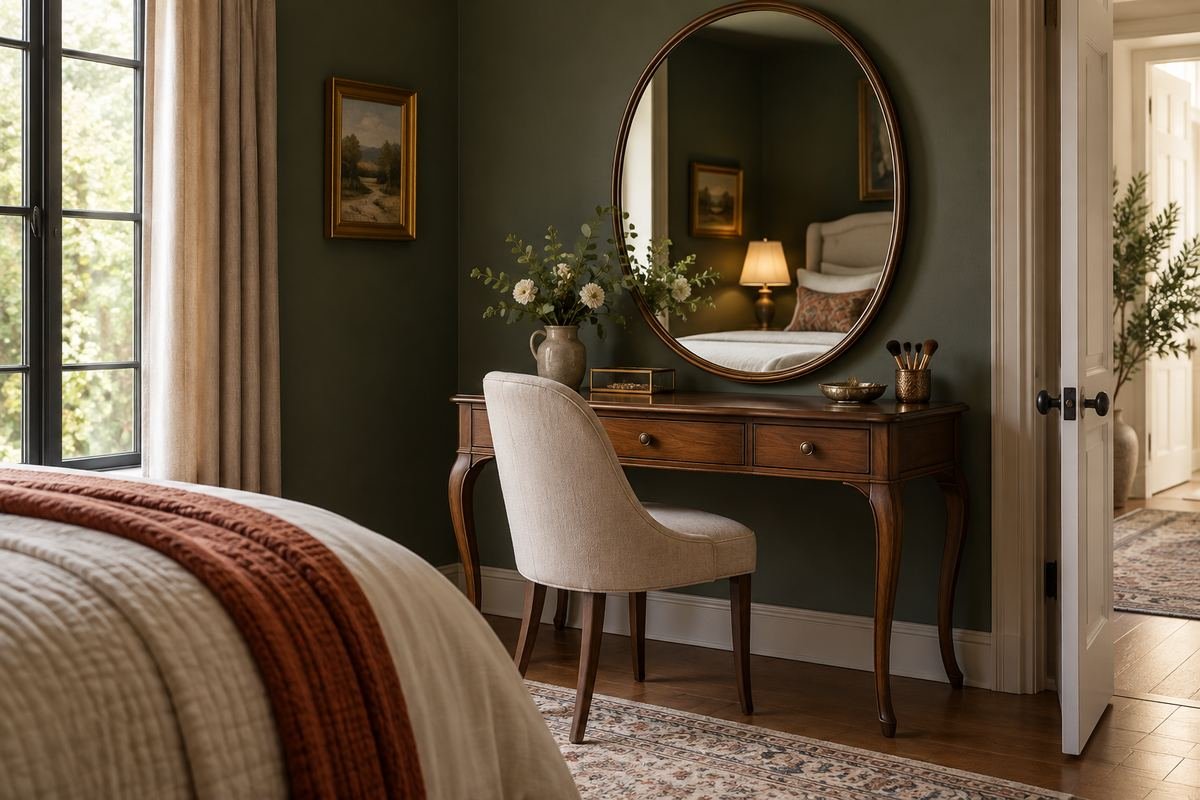
A vintage-style dressing table can give the bedroom a more individual furniture character. A simple mirror and quiet upholstery allow the table’s proportions to be seen. Repeat one warm wood detail elsewhere so the piece has a connection to the room.
For an older piece, inspect its condition, stability and intended use rather than assuming age establishes quality. Confirm any required repairs or anchoring before using it. A romantic silhouette still needs convenient drawers, useful legroom and an appropriate seat.
Practical tip: Inspect the whole piece beyond its decorative front.
19. Choose pale oak for a quieter furniture relationship

Pale oak can connect a dressing table with light flooring or an existing wood bed. A plain front keeps the grain visible and allows the mirror to supply the main shape. Use a slightly different textile on the chair to avoid making the corner feel like a catalog suite.
Compare actual finish samples together. Similar wood names can hide different undertones, grain and surface coatings. Check the care instructions for the tabletop and decide how the daily kit will sit there without covering the wood entirely.
Practical tip: Compare the finish in the bedroom’s normal light.
20. Use walnut as a defined warm accent

A walnut-tone vanity can anchor a pale bedroom with one deeper furniture surface. A modest mirror frame and quiet chair keep the contrast focused. This can work when the room needs depth but a dark bed or wardrobe would become too dominant.
Compare the finish with the largest existing wood surface before committing. The table can look warmer or darker in the room than it did on a screen. Keep small accessories restrained so the warm furniture shape remains clear.
Practical tip: Judge the table beside the floor and bed together.
21. Try a painted vanity linked to an existing textile

A muted painted table can bring color into the dressing area without changing the room’s larger furniture. Connect the shade with a small existing detail in the bedding or curtain. Let the paint do the decorative work and keep the tabletop simple.
Test the actual finish or a generous color sample near the proposed position. Window light and adjacent wood affect its appearance. Check that the selected furniture finish is appropriate for the table’s expected use and follow its care directions.
Practical tip: Borrow one color relationship from the existing room.
22. Let a dark metal frame keep the outline precise

A slender dark frame can give the vanity a clear outline beside soft bedding. Pair it with a useful solid top and a quiet chair. Repeat the metal in a small existing light or handle so the piece belongs to the room.
Check the actual frame, table surface and support rather than choosing by a visually thin profile alone. Keep the underside open only when the room does not need substantial hidden storage. A light appearance does not excuse an inconvenient or unstable table.
Practical tip: Compare the open frame with the storage you really need.
23. Use a rounded table edge in a compact corner

A table with softly rounded corners can give a compact dressing area a less rigid outline. The shape may relate well to a curved mirror or upholstered seat. Keep the other elements simple so the composition does not rely on several competing sculptural forms.
Measure the whole curve and usable surface. A rounded top can reduce the area available at its ends, and its base may still project. Compare the actual table with the route and the containers it needs to hold.
Practical tip: Check usable tabletop area as well as outside dimensions.
24. Use reeded detail as one controlled texture
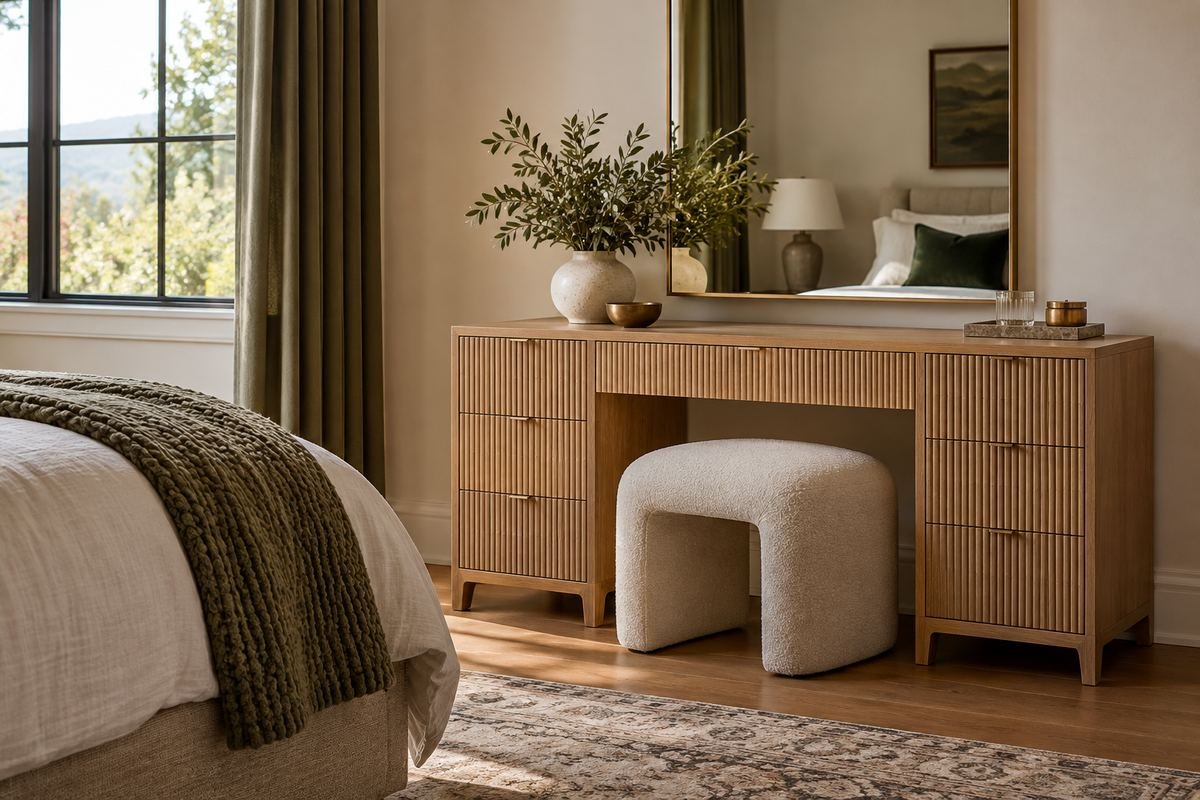
A restrained reeded drawer front can give a plain table a visible texture. Smooth surrounding surfaces keep the detail legible. Let the mirror and chair remain quiet so the dressing area does not compete with a patterned headboard or rug.
Compare the texture with its cleaning requirements and the actual drawer operation. A decorative front should still be convenient to handle. Keep similar grooved details elsewhere limited unless the bedroom already has a deliberate relationship between them.
Practical tip: Choose one main textured surface in the corner.
25. Connect a woven chair with plain furniture
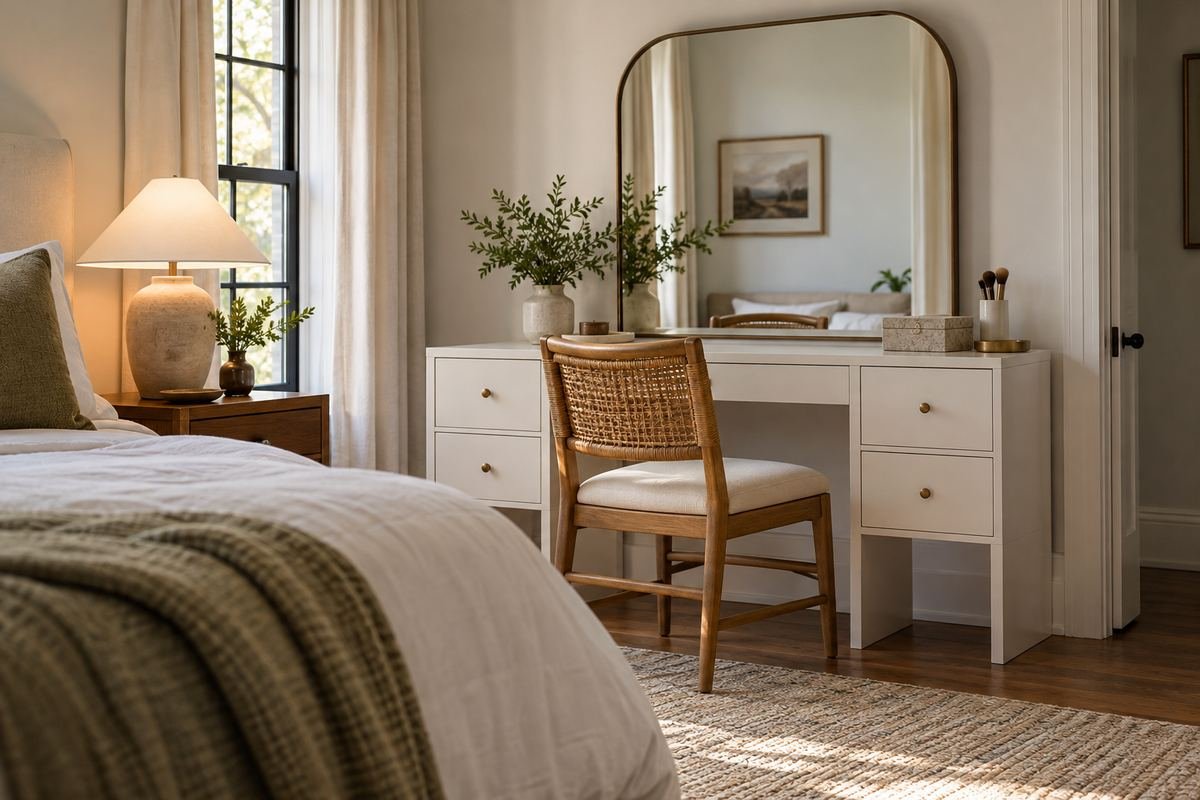
A woven-detail chair can bring texture to a simple dressing table without changing the table itself. A restrained wood frame can connect the seat with the floor or mirror. Keep the work surface plain enough that the chair’s material remains visible.
Confirm the chair’s seating specification and compare its height and feel with the table. A decorative woven form is not automatically comfortable for a longer routine. Follow the material care instructions and check that the base moves easily in the available space.
Practical tip: Test the actual chair against the table height.
26. Give the vanity a subtle wallpaper backdrop

A small wallpapered section can define the dressing area within a larger bedroom. Choose a restrained repeat that leaves the mirror edge easy to see. A plain table and quiet chair help the wall become a backdrop rather than one more competing pattern.
Compare a generous sample with the full mirror and nearby bedding. The repeat will reflect differently from a small catalog swatch. Follow the wallcovering instructions and avoid treating a decorative finish as a substitute for a suitable mounting surface.
Practical tip: View the paper and mirror outline together.
27. Keep the cord route out of the chair movement
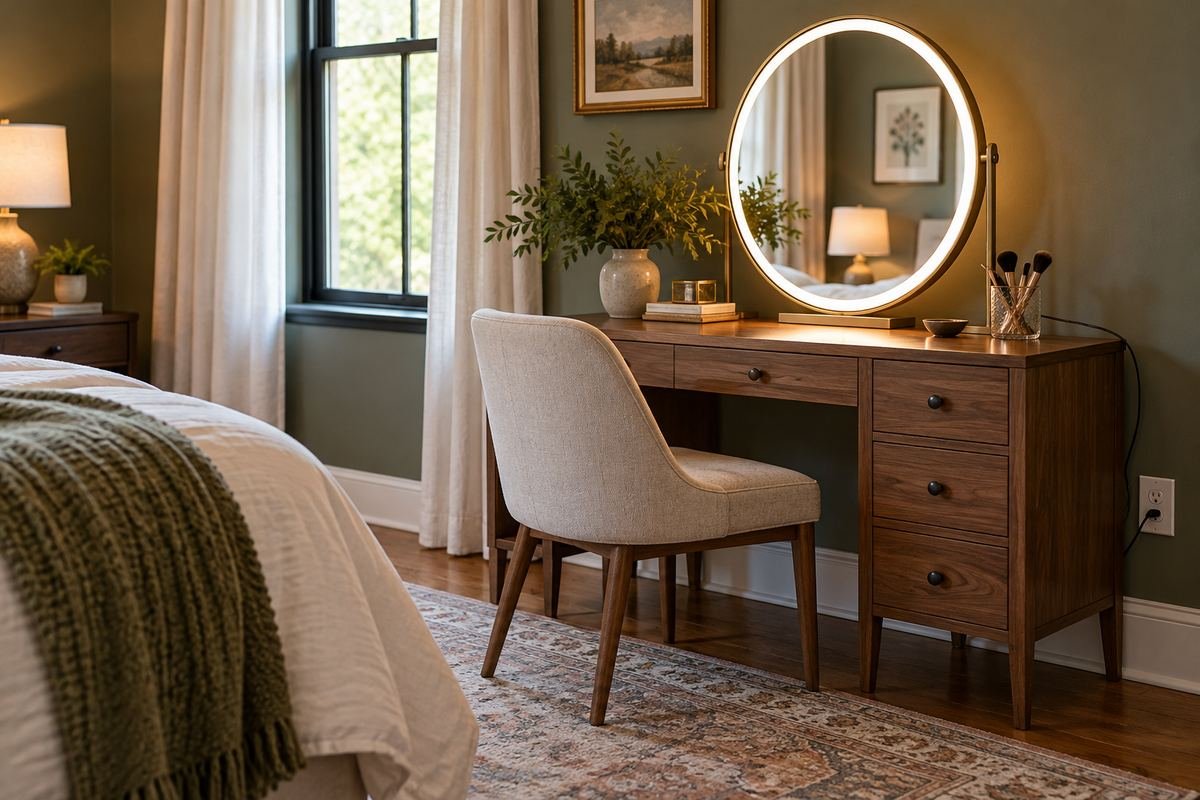
A planned power route can make the dressing area look calmer and work more conveniently. Choose an arrangement where approved cords remain accessible without crossing the chair’s normal movement. A quiet tabletop is easier to maintain when the power plan exists before styling.
Follow the instructions for the exact electrical products and avoid improvised hidden connections or overloaded outlets. Fixed wiring belongs with appropriate professional help. Plan a separate suitable resting and cooling location for any heated device according to its instructions.
Practical tip: Check power needs before choosing the final table position.
28. Give two users separate removable kits

A shared vanity can remain simple when each user has a separate kit. A clear central surface and one useful mirror may serve better than doubling every decorative object. Choose storage that makes the handover straightforward and keeps personal categories easy to recognize.
Compare the mirror and seat with both users’ actual routines. A single fixed height or crowded shared drawer may suit one person more than the other. Keep occasional items elsewhere so the shared surface does not become permanent storage for two complete collections.
Practical tip: Plan the handover as carefully as the storage.
29. Finish with one useful object and a clear surface
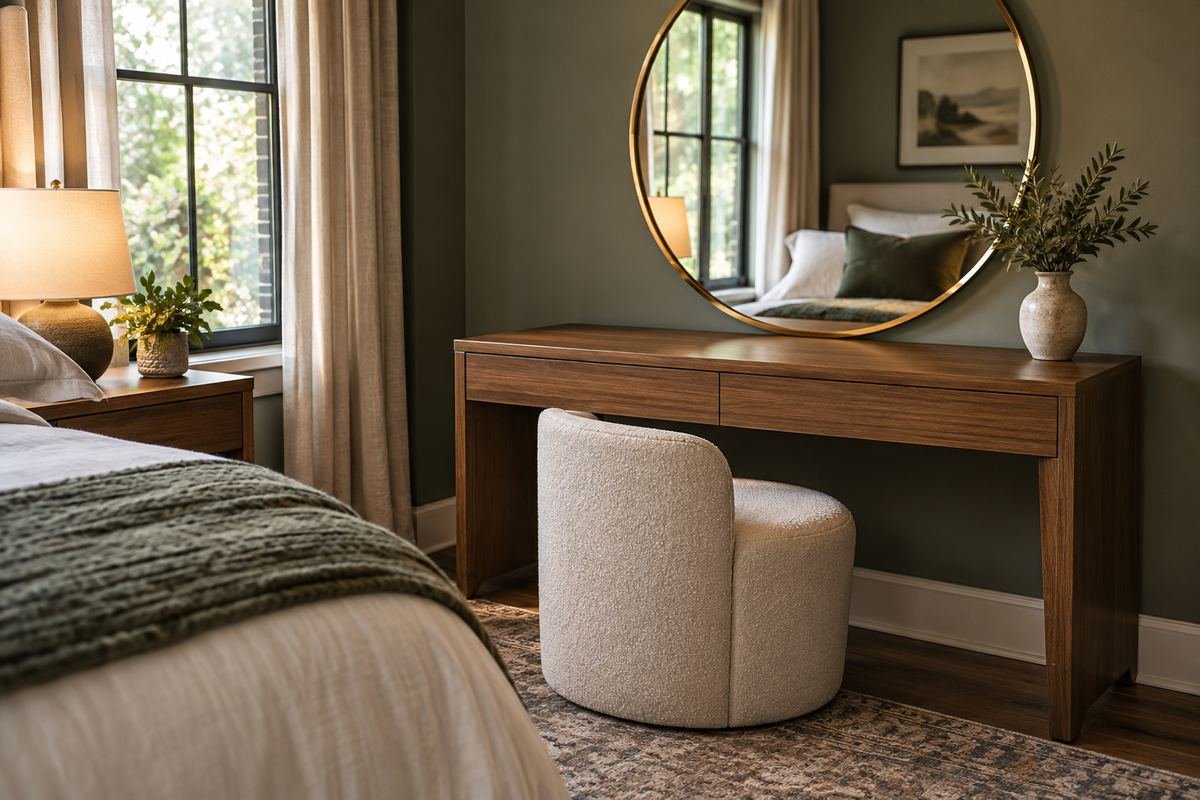
A vanity can look finished with a mirror, useful lighting and one small personal object. Leave the working area obvious so the daily kit has somewhere to go. The restrained arrangement can connect naturally with a bedroom intended for rest.
Review what remains on the table after an ordinary morning. If the routine creates a pile, adjust the storage before adding more decorative containers. Keep the useful space visible so the table feels ready for the next use rather than prepared only for a photograph.
Practical tip: Use the after-routine view as the final styling test.
Frequently Asked Questions
Where should a vanity go in a bedroom?
Choose a position that supports the routine without blocking a useful route, wardrobe or window. Check daylight at the usual time of use and plan suitable light for darker periods. Include the pulled-out chair and open drawers when comparing locations.
Can a small desk become a bedroom vanity?
It may work if the surface, support, seat space and care suit the intended use. Compare a separate mirror and removable grooming kit. A desk with a deep apron or inaccessible drawer can look appropriate while being awkward from a seated position.
Is a wall mirror better than a tabletop mirror?
A wall mirror leaves more of the table available, while a tabletop model may offer convenient adjustment. Compare the actual seated reflection, stability and installation requirements. Neither arrangement is automatically better in every room.
Does a bedroom vanity need a special chair?
It needs a seat that works with the table and the person using it. Compare height, support, arms and the space available below the surface. A compact stool can tuck away neatly but may not suit a longer seated routine.
How do I keep a dressing table tidy?
Keep the daily kit close and give occasional items a separate home. Use divisions that fit the actual products and leave room to return things easily. If the top remains crowded, reduce the permanent display before adding more containers.
Are illuminated mirrors enough for makeup?
It depends on the light’s direction, output and the surrounding room. Compare the seated view with the mirror lit, then check for glare or uneven light. A backlit decorative mirror can behave differently from a product designed to illuminate the face.
Choose the Details That Work in Your Home
Choose bedroom vanity ideas that make your own routine straightforward. Once the seat, reflection, lighting and storage work together, the wood, paint and smaller details can give the space its character. A successful dressing table should remain useful after the photograph is taken.
For related ideas, explore bedroom bench ideas, bedroom dresser decor ideas, bedroom curtain ideas.
Planning References
IKEA: dressing tables, mirrors and storage arrangements; Philips Hue: planning lighting for a makeup station. Follow the instructions for the exact products you choose.
Optional digital guide for this topic
If you prefer a structured workbook, explore this related paid guide.