You mow the lawn, you wash the windows, you sweep the porch — and your house still doesn’t stop anyone walking by. I used to think curb appeal meant doing more. It actually means doing the right few things well.
The homes that genuinely turn heads aren’t the most expensive ones on the block — they’re the ones where a handful of details, from the front door to the lighting to the materials, work together intentionally. By the end of this article, you’ll know exactly which upgrades create real impact, and which ones you can skip entirely.
1. The Front Door Upgrade With the Highest Return
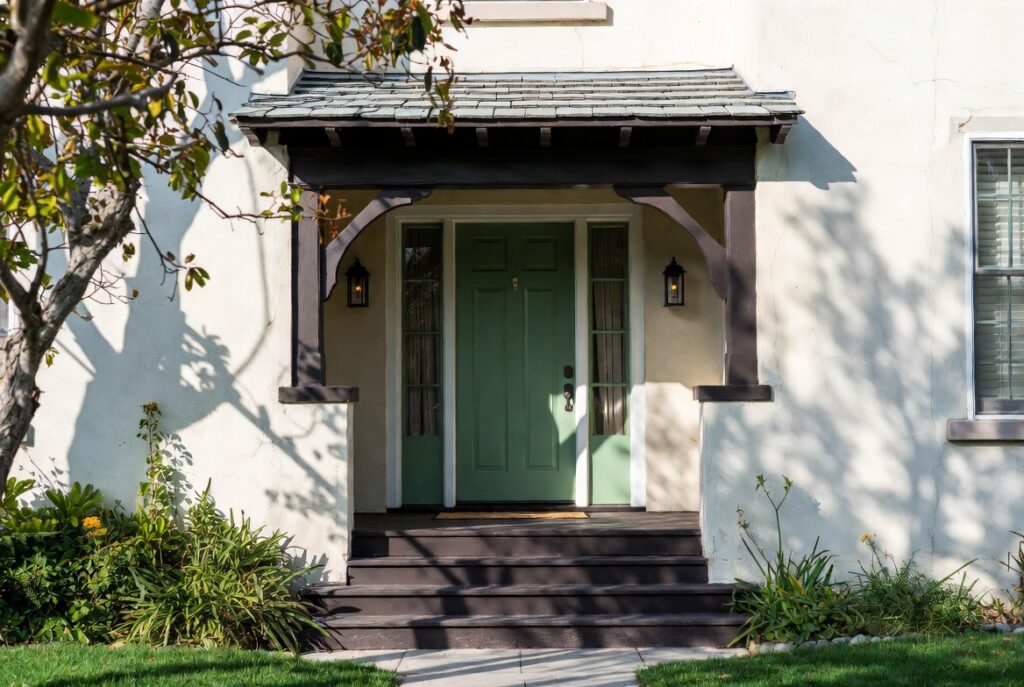
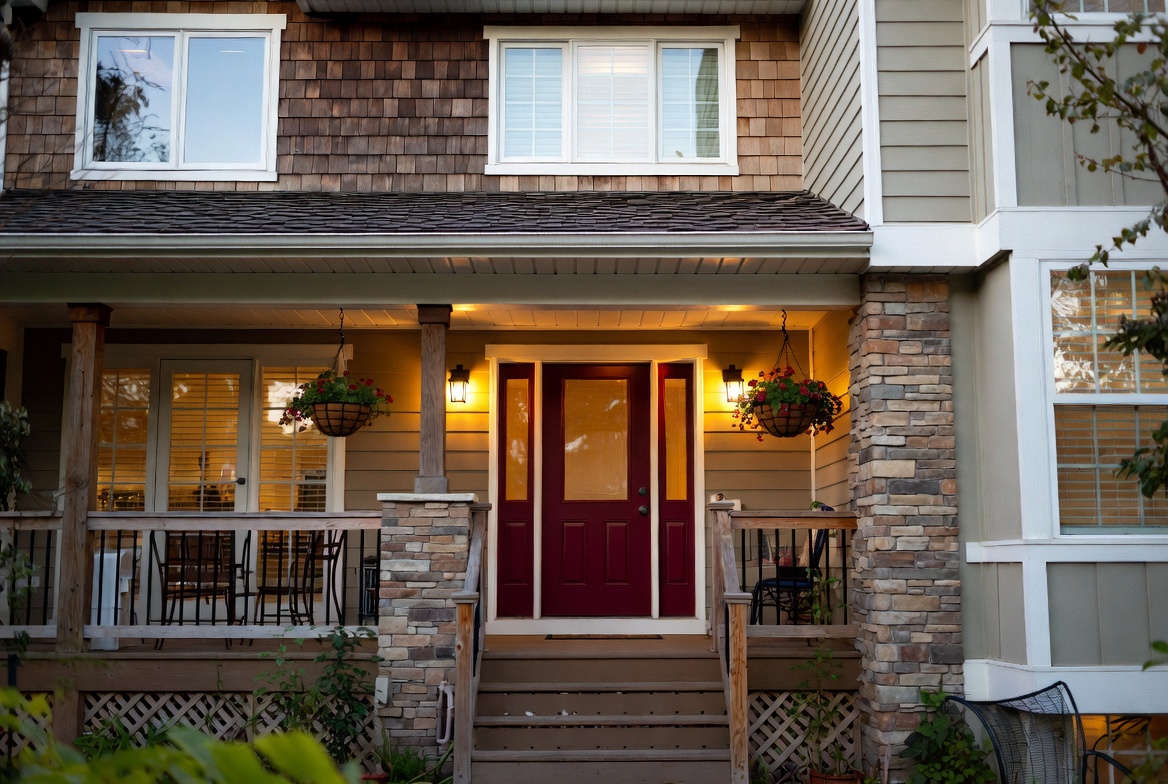
If you do nothing else from this list, do this: paint or replace your front door. It’s consistently the single highest-return curb appeal investment because the entry is the visual anchor of the entire facade. A bold, intentional color — deep moody tones, warm earthy shades, or soft coastal hues — instantly makes a home feel designed. In my experience, this one change does more in an afternoon than weeks of other small fixes combined.
Smart tip: Choose a door color that complements your roof and brick or stone, not just what looks good on its own.
Mistake to avoid: Don’t pick a trendy color in isolation. A door that clashes with your home’s existing materials looks like an afterthought, not a choice.
2. Why Hardware Is the Jewelry of Your Entry
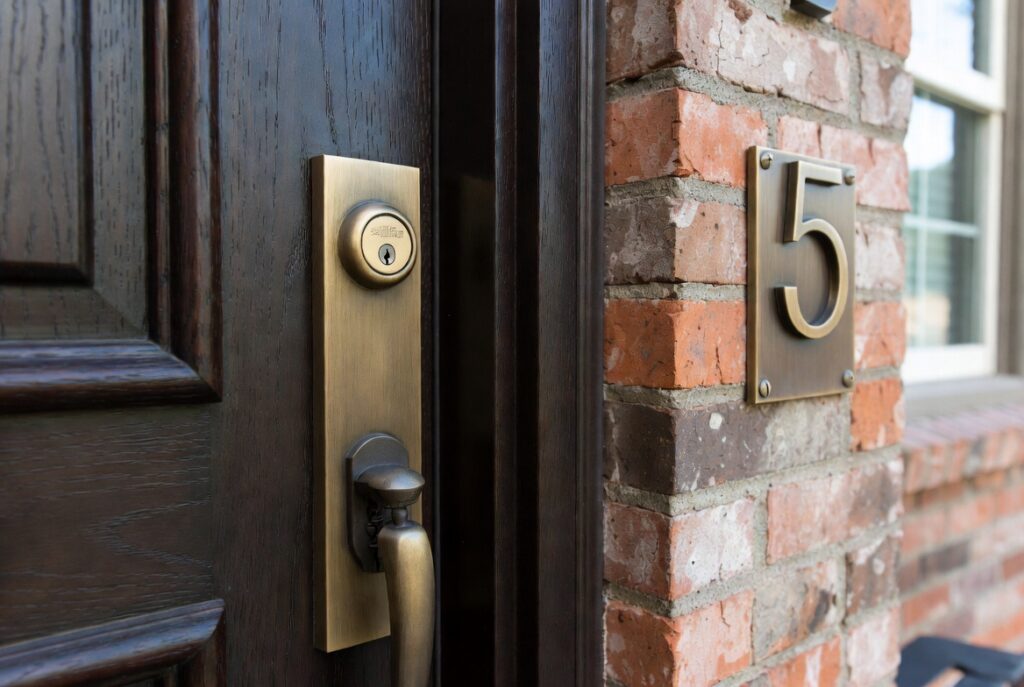
Door hardware functions exactly like jewelry — small, but impossible to ignore up close. Brushed brass and warm bronze finishes are replacing the matte black that dominated for years, especially paired with woodgrain doors and natural stone accents. A larger handleset with clean, streamlined lines instantly elevates how solid and intentional an entry feels. We found that hardware is one of the cheapest upgrades with the most noticeable, tactile impact.
Smart tip: Swap your door handle and kick plate to a finish that matches your house numbers and light fixtures for a cohesive look.
Mistake to avoid: Don’t mix three or more different metal finishes across your entry. Pick one and repeat it across hardware, numbers, and lighting.
3. Mixing Materials Without Making It Messy
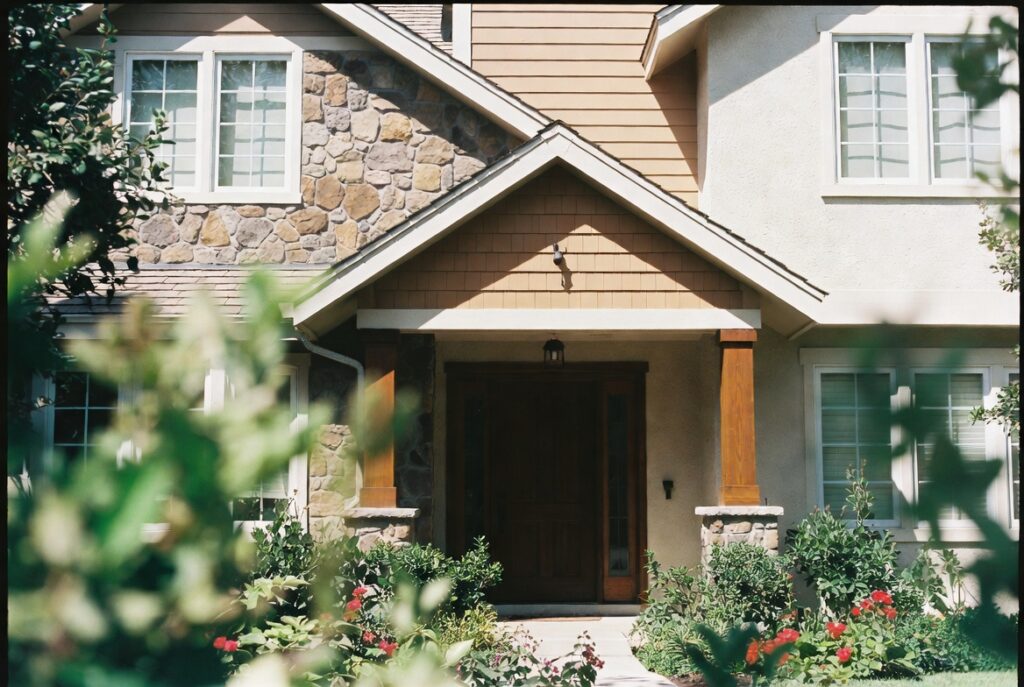
A facade built from a single material — all siding, all brick, all render — tends to look flat no matter how well it’s maintained. The homes that genuinely stop people on the street almost always combine two or three materials: fiber cement siding, a natural stone accent, and warm wood detailing at the entry or gable end. You don’t need to reclad the whole house; one stone veneer panel or wood feature section is often enough.
Smart tip: Add a single stone veneer accent around your entry or garage — instant texture without a full exterior renovation.
Mistake to avoid: Don’t mix more than three materials on one facade. Beyond that, the combination starts to look chaotic instead of layered.
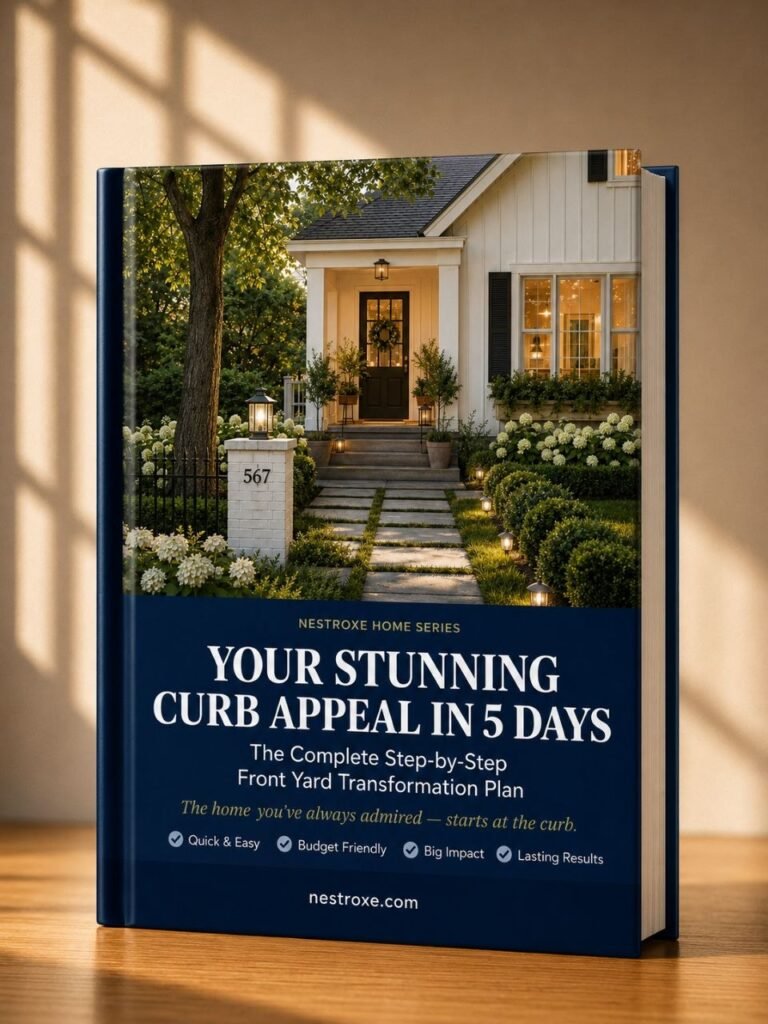
Loving These Ideas? Get the Step-by-Step Guide
Grab the full 5-day eBook and turn these ideas into a finished room.




4. The Porch Setup That Turns Walk-By Into Invitation
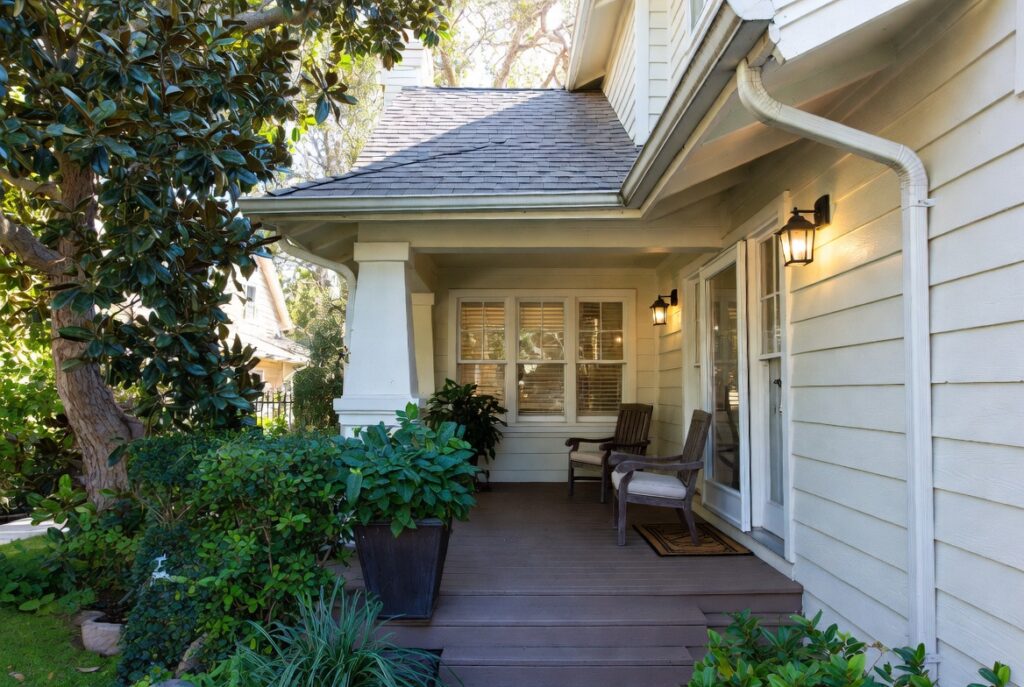
A porch with nothing on it reads as unused space, not an entrance. Two simple chairs, a potted plant, a clean doormat, and a proper porch light are genuinely all it takes to turn a porch from an afterthought into a real invitation. One of the most common mistakes I see is homeowners investing in landscaping while leaving the porch itself completely bare.
Smart tip: Add two chairs and one large potted plant flanking the door — an affordable styling move that instantly looks intentional.
Mistake to avoid: Don’t leave a porch empty even if it’s small. An empty porch always reads as neglected, regardless of how nice the rest of the home looks.
5. Layered Lighting That Works After Sundown
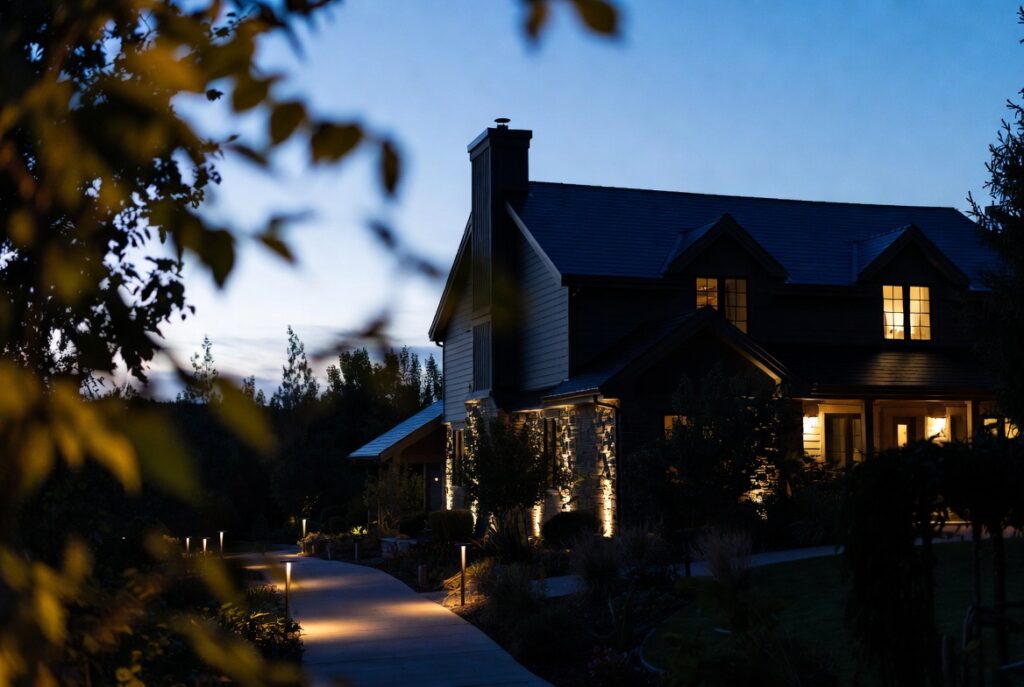
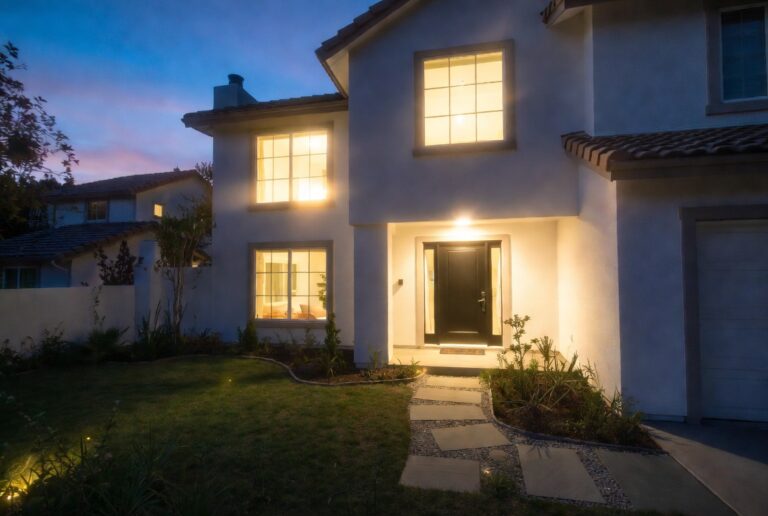
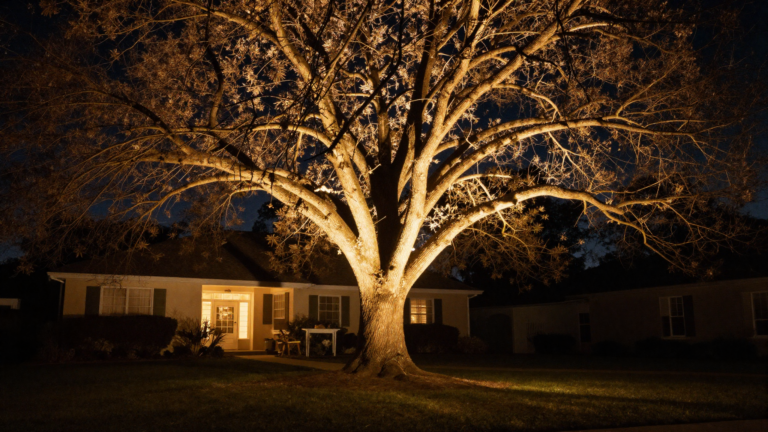
Exterior lighting is consistently underdesigned. A single porch fixture leaves most of the facade in darkness, while layered lighting — path lights, facade uplighting, and accent fixtures — transforms a home after dark in ways daytime improvements simply can’t replicate. Good lighting has also shifted from purely utilitarian to a real design feature that highlights architecture at night.
Smart tip: Add two uplights aimed at your home’s most architectural feature — a gable, a stone accent, a specimen tree — for dramatic evening impact.
Mistake to avoid: Don’t rely on a single porch light to illuminate your whole facade. One source leaves the rest of the home looking flat and uninviting at night.
6. The Garage Door Problem Nobody Talks About
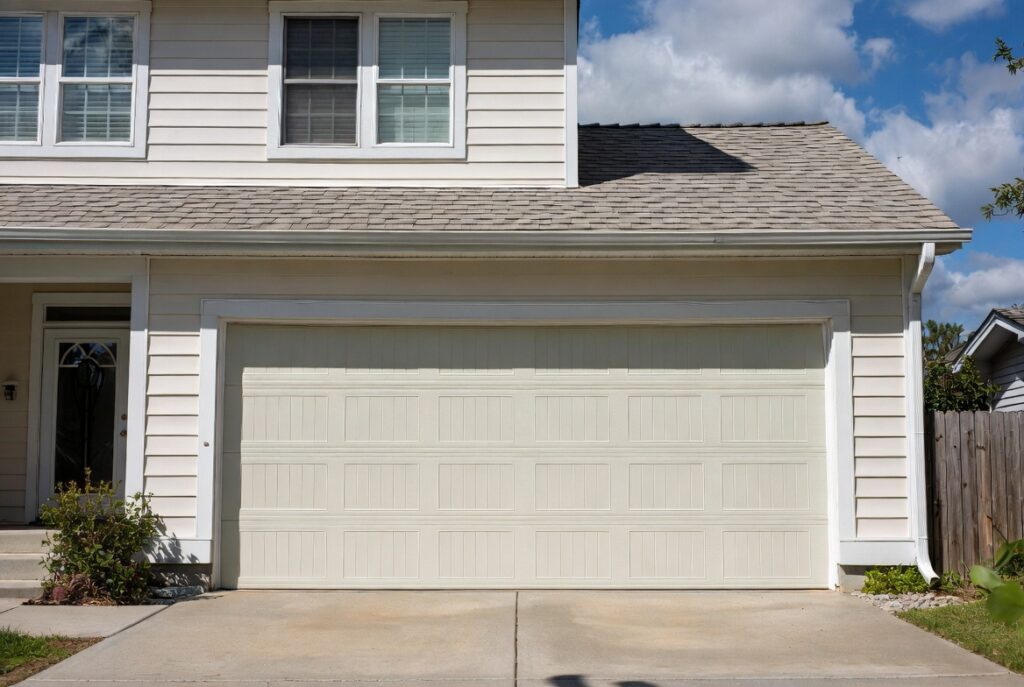
In most homes, the garage door takes up 30% or more of the visible facade — and it’s almost always the most neglected surface. An old, dented, or mismatched garage door quietly undermines every other curb appeal effort you make. Repainting it to match your trim, or upgrading to a style with more architectural detail, closes a gap most homeowners never think to address.
Smart tip: Repaint your garage door in the same trim color as your house — instant cohesion without replacing the door itself.
Mistake to avoid: Don’t let your garage door clash with your siding or trim color. It’s the largest single surface on most facades; it can’t be an afterthought.
7. Earthy Color Palettes That Read as Designed
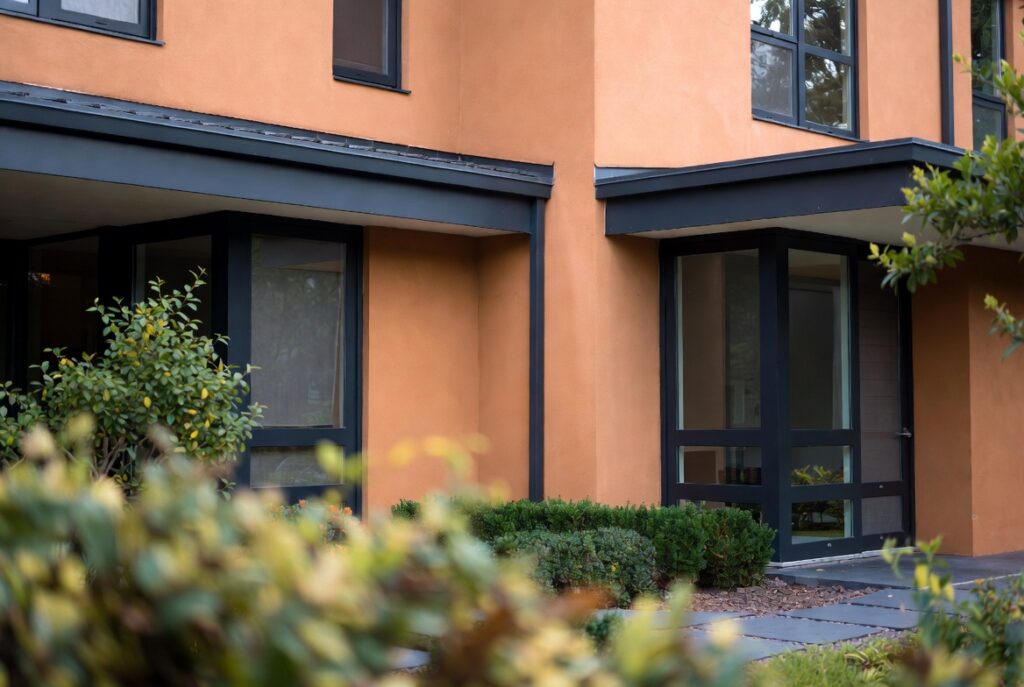
The stark white-and-grey combinations that dominated for years have clearly had their moment. Warm mid-tone bodies — aged linen, clay, dusty sage, warm greige — paired with deep, crisp trim like charcoal or near-black read as intentional rather than trendy. The first time I saw a home repainted from cool grey to warm clay, the difference in how “designed” it looked was immediate.
Smart tip: Test a warm earthy body color with a charcoal or deep brown trim on one section before committing to the full facade.
Mistake to avoid: Don’t default to white and grey because it feels safe. Warm, earthy palettes now read as far more current and considered.
8. Why a Covered Entry Changes Everything
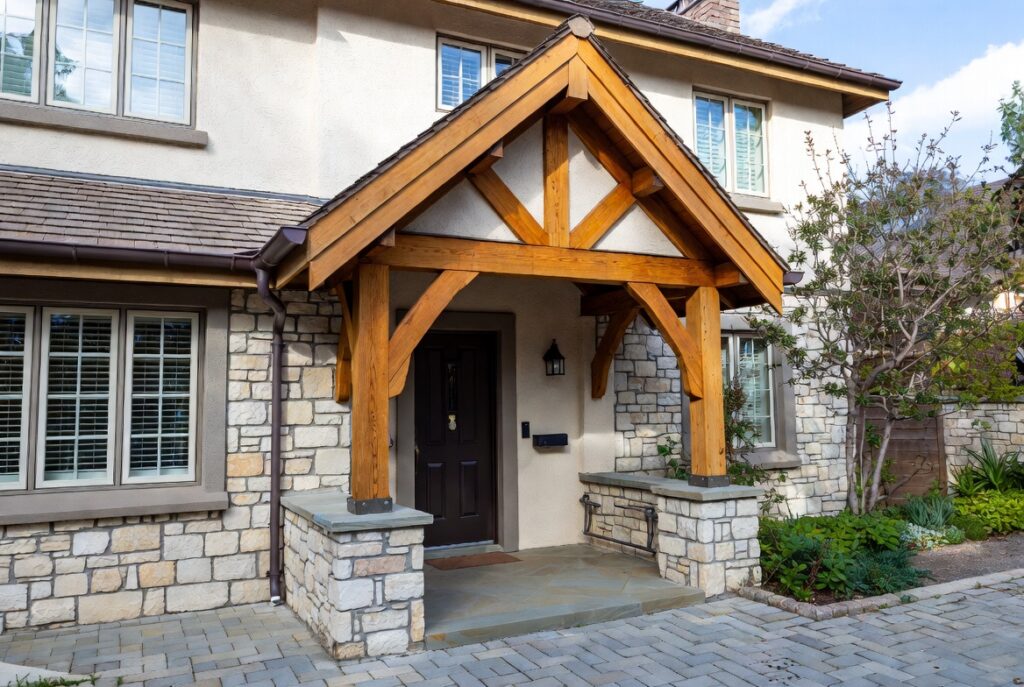
Of all curb appeal upgrades, a covered entry structure arguably has the most dramatic architectural impact. It transforms a flat facade into something with depth, shadow, and genuine character, creating a transition moment between the street and the front door. Even a simple timber canopy projecting above the entry adds shelter and presence that changes how the whole facade reads.
Smart tip: If a full porch isn’t feasible, add a small timber canopy above just the front door for an affordable taste of the same effect.
Mistake to avoid: Don’t assume a covered entry only matters for large homes. Even modest facades benefit dramatically from a defined entry moment.
9. The Brick Path That Outlasts Every Trend
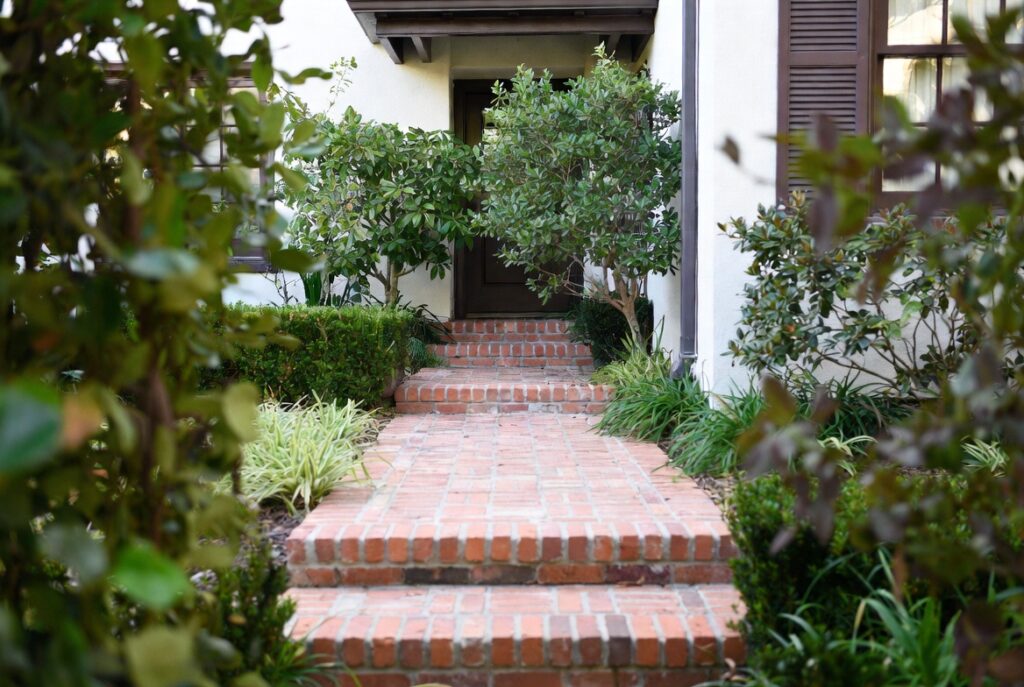
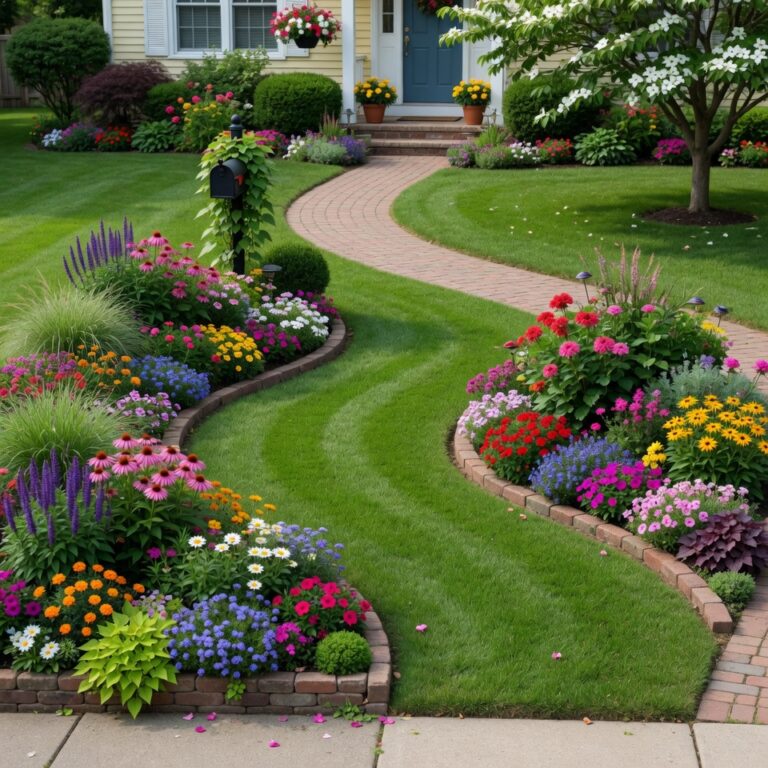
Brick adds a classic aesthetic to patios, foundation borders, and walkways that rarely goes out of style. On the higher end, a full brick sidewalk makes a real statement; on a tighter budget, brick-look stepping stones achieve a similar feel for a fraction of the cost. Brick’s main requirement is ongoing maintenance — but that upkeep is what gives it long-term value.
Smart tip: Use brick-style stepping stones for a front walkway section — classic texture without a full hardscaping budget.
Mistake to avoid: Don’t install brick without a maintenance plan. Left unmaintained, brick paths can shift, crack, or grow weeds between joints.
10. Roofline Details Most Homeowners Forget
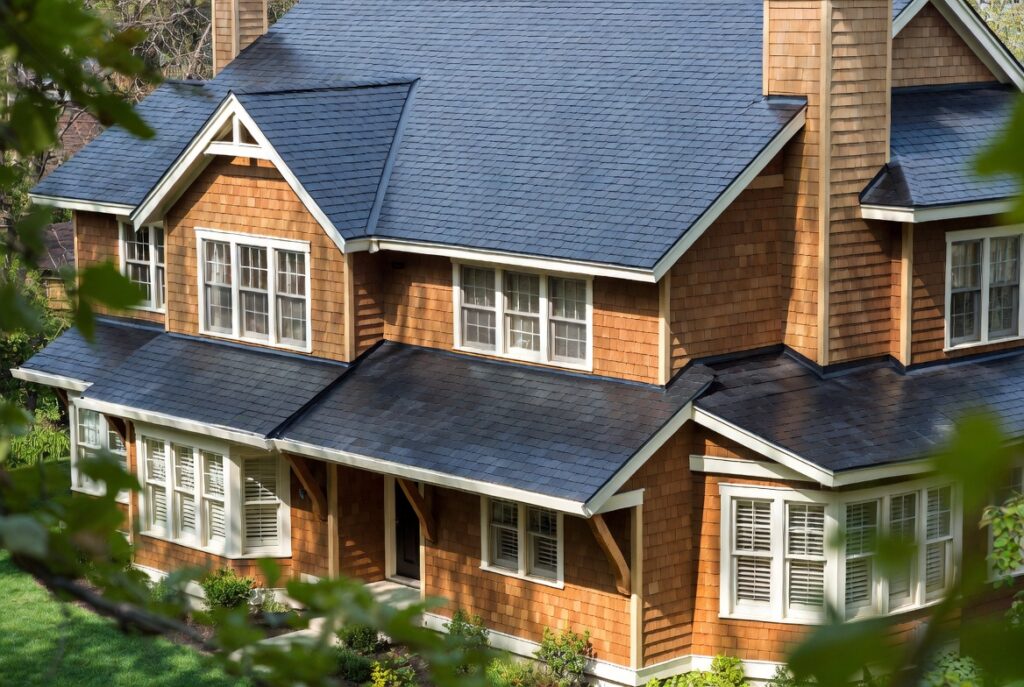
Your roof covers more surface area than any other part of your exterior, yet most homeowners never think about it for curb appeal. A tired, moss-covered, or mismatched roof quietly undermines everything else you do. Dark charcoal roofing paired with warm contemporary siding is one of the most impactful color combinations available, and architectural shingles add depth and texture at the roofline that flat shingles can’t.
Smart tip: Schedule a roof moss and debris cleaning even if replacement isn’t due — an affordable refresh that’s easy to overlook.
Mistake to avoid: Don’t ignore your roof when planning exterior updates. It’s the largest visible surface and shapes the whole color story.
11. Native Planting That Looks Effortlessly at Home
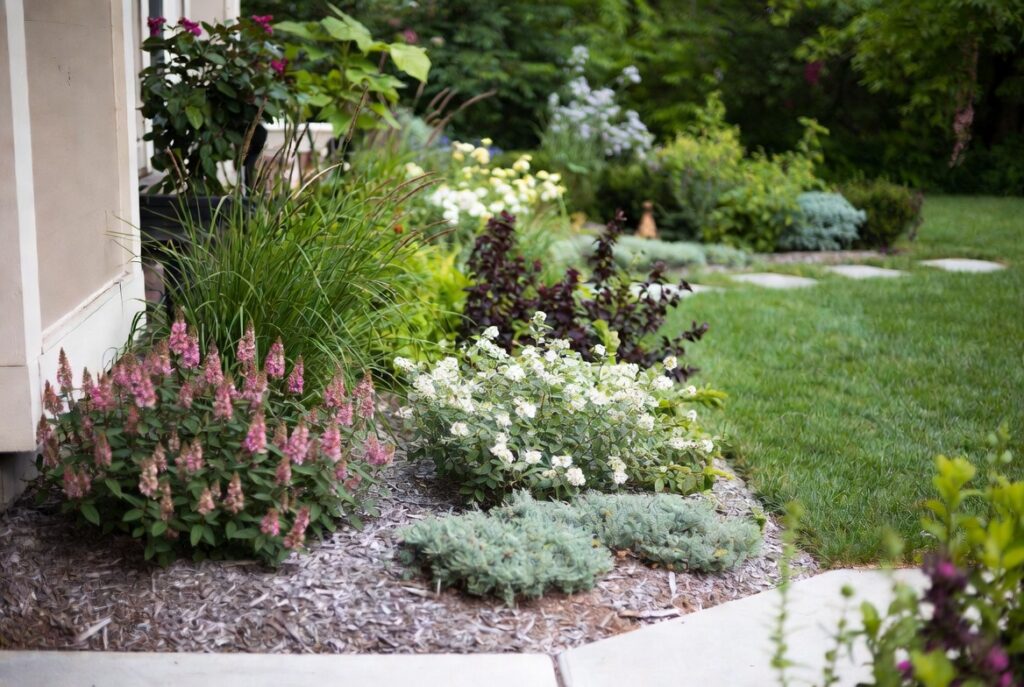
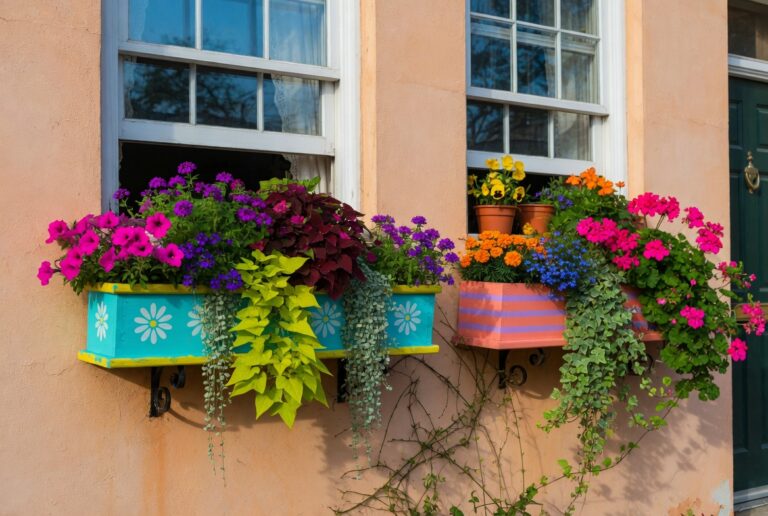
An untended front garden undermines every other curb appeal effort, no matter how perfect your door color or lighting. Native plants suited to your local climate need less water and maintenance while looking naturally at home in a way imported species rarely achieve. Greenery always adds life and freshness, and our front yard landscaping ideas to boost your curb appeal cover even more ways to make planting work harder for you.
Smart tip: Swap one high-maintenance foundation plant for a native alternative suited to your climate — less work, more consistent beauty.
Mistake to avoid: Don’t let foundation beds go untended. An overgrown or patchy garden drags down even the most beautifully painted facade.
12. Glass Details That Add Light Without Losing Privacy
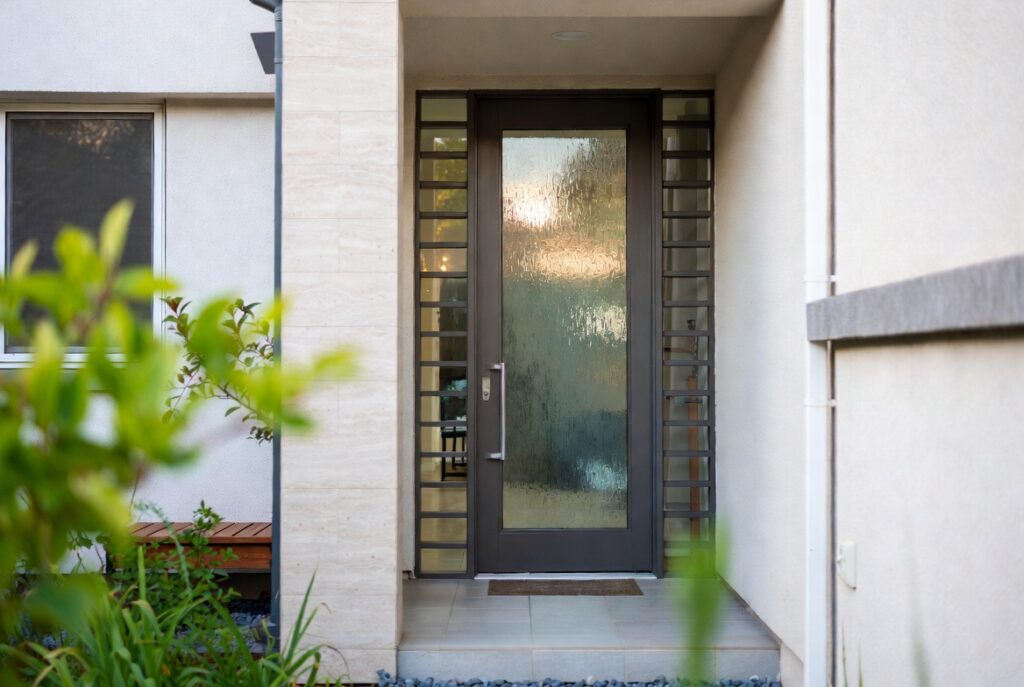
Decorative glass inserts on front doors are increasingly architectural rather than purely functional — frosted or ribbed glass that lets light through while maintaining privacy, paired with modern grille patterns that make a plain door look intentional. The right glass detail signals craftsmanship without creating a fishbowl effect for whoever’s inside.
Smart tip: Choose frosted or textured glass panels over clear glass for entry doors — privacy and natural light in one detail.
Mistake to avoid: Don’t choose clear glass inserts purely for looks if privacy matters to your household. Frosted and ribbed options offer the same visual interest.
13. The Welcome Mat Detail People Underestimate
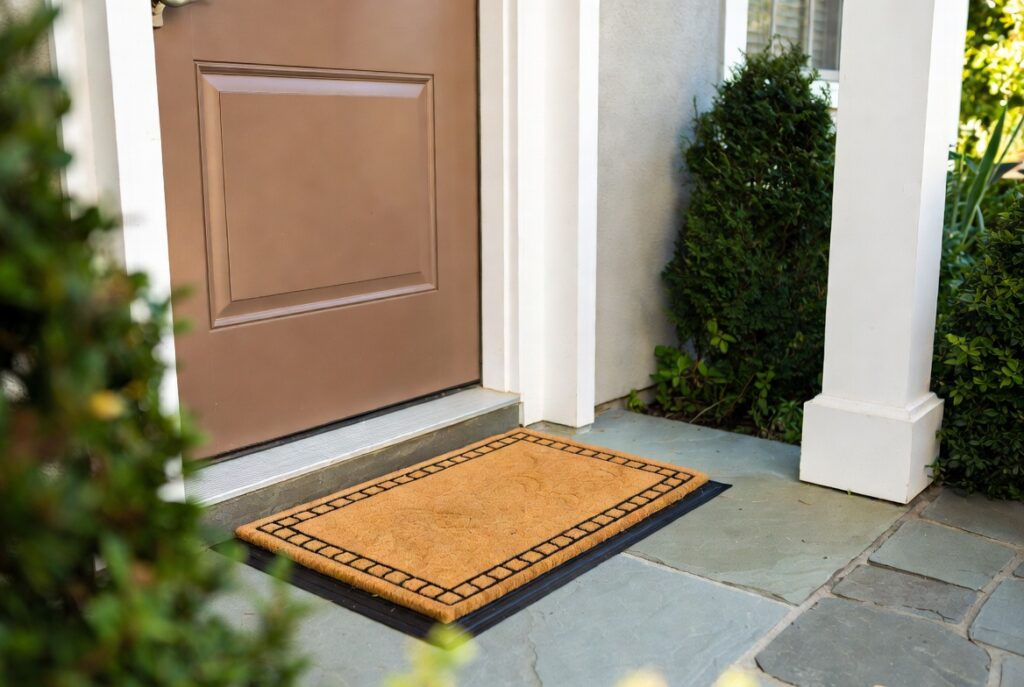
It sounds almost too simple, but a clean, well-chosen doormat is part of the formula that makes a porch feel cared for rather than overlooked. Paired with a potted plant and proper lighting, it completes the small set of details that genuinely turn a porch from afterthought into invitation. It’s the kind of detail that costs almost nothing yet gets noticed immediately.
Smart tip: Replace a worn doormat with a natural fiber option in a color that complements your door — a five-minute fix with real visual payoff.
Mistake to avoid: Don’t overlook a stained or fraying doormat. It’s a small detail, but a worn one undercuts an otherwise polished entry.
14. Smart Security That Doesn’t Look Like Security
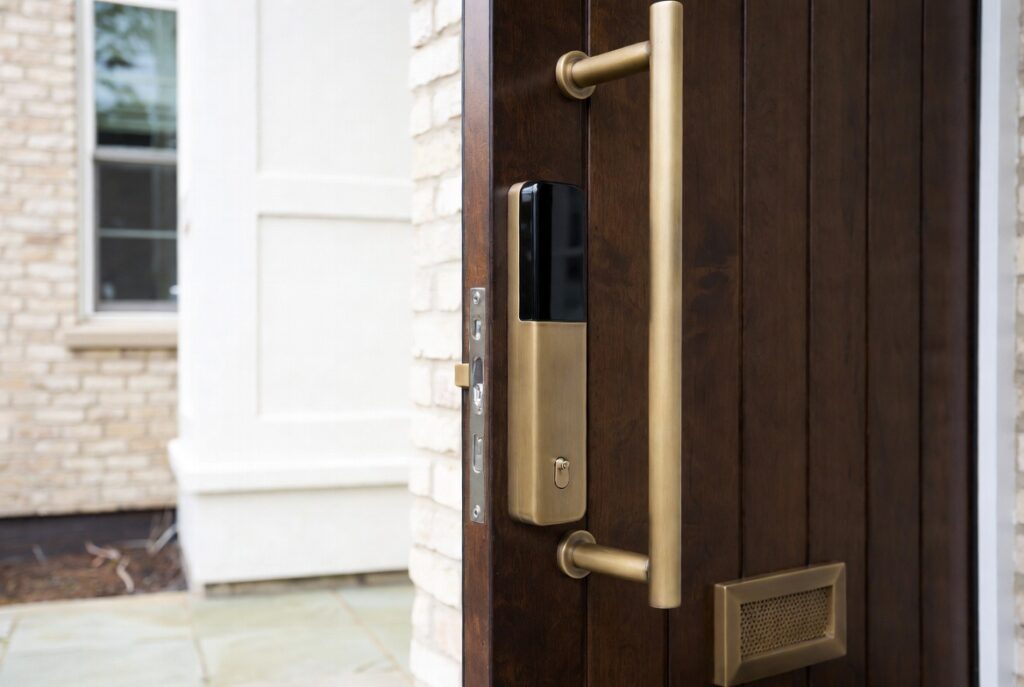
Smart locks, keyless entry, and biometric access are moving into the mainstream, and the best versions integrate so seamlessly into hardware design that they read as style rather than security tech. Choosing a smart lock that matches your existing hardware finish means upgrading function without disrupting the visual story of your entry.
Smart tip: Choose a smart lock in the same finish as your door handle — modern function that still looks cohesive, not bolted-on.
Mistake to avoid: Don’t install mismatched, bulky security hardware that clashes with an otherwise considered entry design.
15. The Maintenance Habit That Protects It All
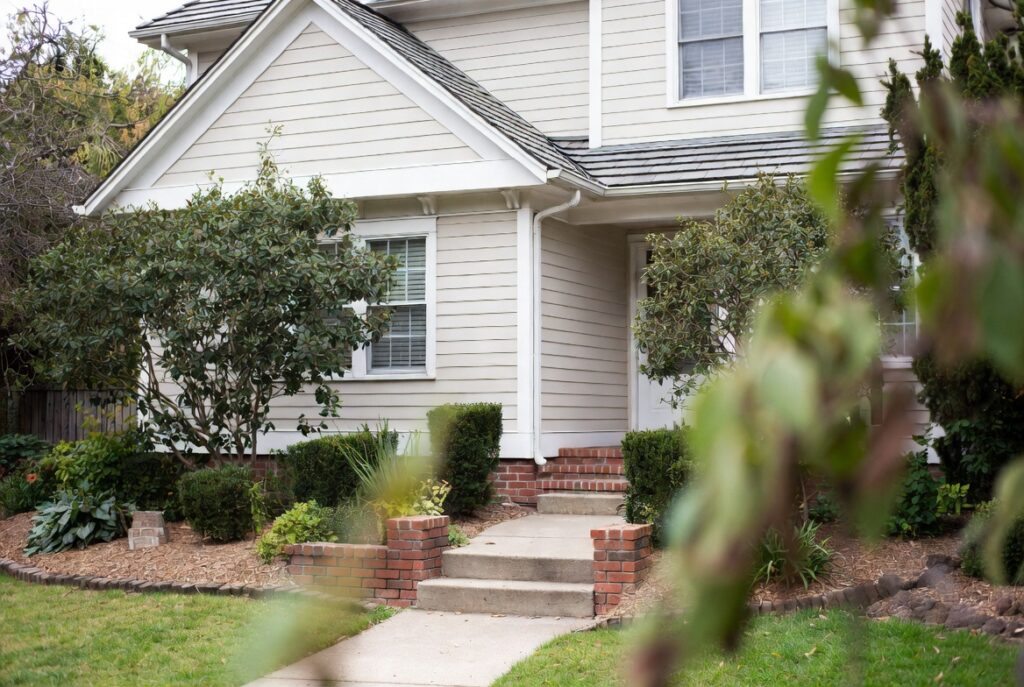
Every upgrade on this list depends on one unglamorous habit: regular maintenance. Power-washing siding, resealing brick, cleaning gutters, and touching up paint before it visibly peels keeps a home looking cared for year-round, not just right after a renovation. A tidy lawn, trimmed shrubs, and fresh mulch often do more for curb appeal than a complicated yard that’s hard to maintain consistently.
Smart tip: Set a seasonal reminder to power-wash your siding and walkway — maintenance that protects every other investment on this list.
Mistake to avoid: Don’t treat curb appeal as a one-time project. Without ongoing maintenance, even the best upgrades fade in visual impact within a year or two.
Real curb appeal doesn’t come from doing everything at once — it comes from a handful of intentional choices, maintained consistently over time. Start with the front door, work through the list at your own pace, and watch your home become the one people actually notice on the street.
Continue Your Home Transformation
Explore the full collection of step-by-step eBooks and get the guide that fits the room you're working on.