Improve curb appeal in the order a visitor experiences the house: finding the address, reaching the entrance and recognizing the door. Repair and clean the existing surfaces first, then coordinate color, lighting and planting. These 20 ideas focus on the entrance and exterior details; use the linked front-yard guide for the broader planting plan.
Images are illustrative design concepts, including AI-generated scenes.
Which curb-appeal change should come first?
Take one daytime photo from the normal approach and one view after dark. Mark the detail that makes arrival harder, the repair that interrupts the elevation and the fixed material that will guide the color palette. This creates a practical priority list before shopping.
| What you notice | First action | Decoration can follow when |
|---|---|---|
| The entrance is hard to identify | Check readable numbers and the route | A first-time visitor can find the door |
| Surfaces look neglected | Assess repairs and suitable cleaning | The substrate is ready for its finish |
| Colors compete | Compare samples with roof, brick and paving | The fixed materials work together |
| Plants obscure the entry | Assess mature size and site conditions | Planting frames a usable route |
1. Choose a Door Color From the Fixed Palette

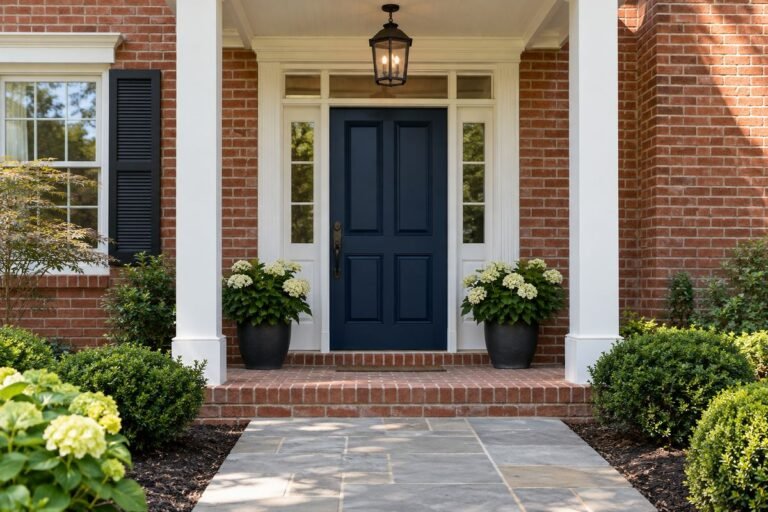
Place the door-color sample beside the brick, roof, trim and paving that will remain. View it on the entrance plane in daylight and shade rather than selecting it on a phone. Choose one focal point; a strong door color may need quieter planters and trim to remain coherent.
Try this: View the sample in sun and shade.
2. Make House Numbers Easy to Read
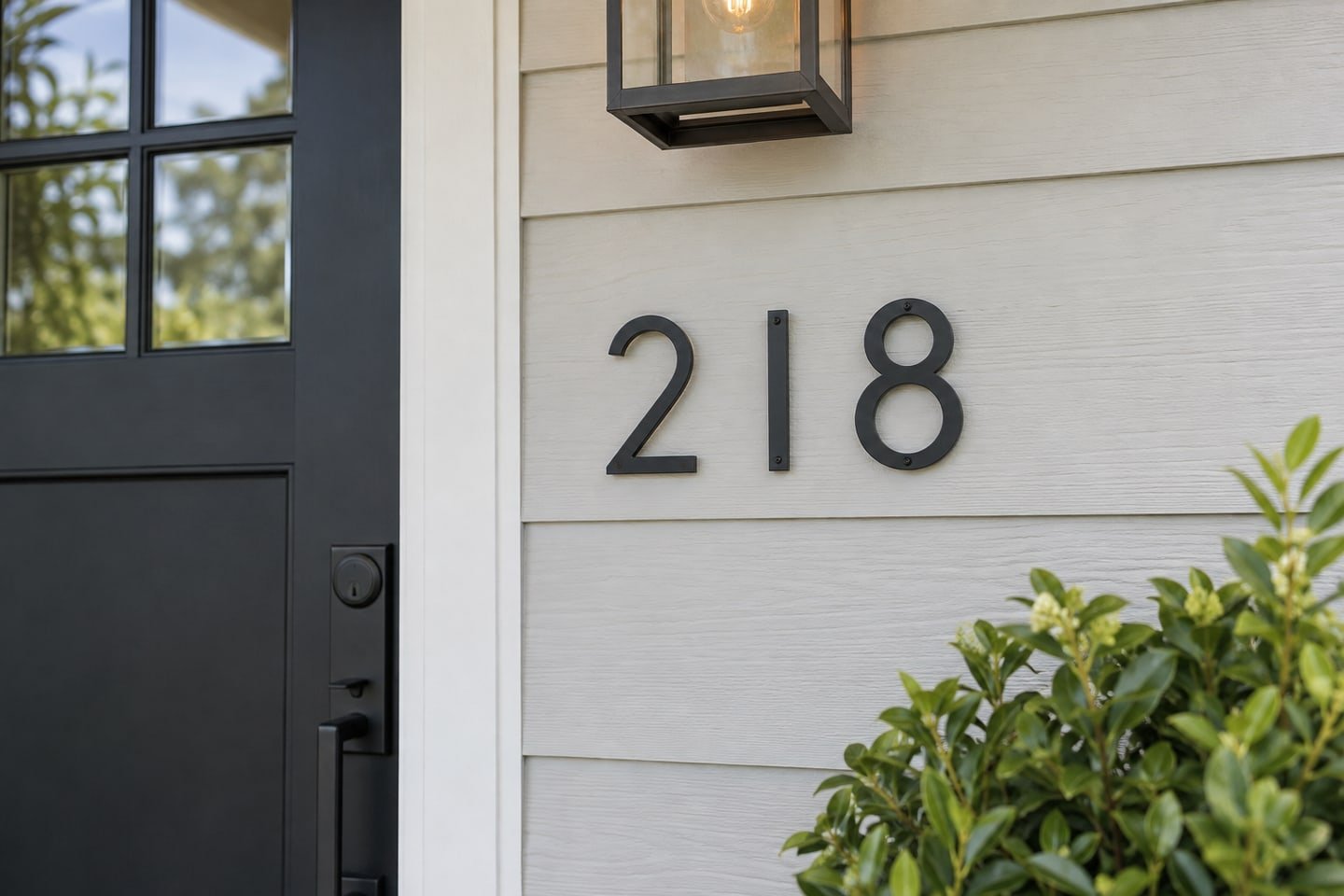
Test the house number from the actual approach, including the direction a visitor or delivery driver travels. Check contrast against its background and whether plants or parked vehicles obscure it. Treat postal mailbox identification separately, using the mailbox guidance linked below where applicable.
Try this: Follow any local placement requirements.
3. Give the Porch One Useful Role

A small seat, parcel landing area or pair of pots can support the entrance without filling it. Keep the door swing and walking route clear. Choose pieces that suit outdoor exposure and the space available.
Try this: Try the arrangement with the door fully open.
4. Make Entrance Lighting Serve Arrival Tasks

Stand at the step, lock and approach after dark and note which task is difficult. Aim to see the route and operate the door without an exposed source glaring into the eyes. Select equipment for the actual exterior location and have the installation requirements resolved before choosing by appearance alone.
Try this: Assess the entrance after dark.
5. Clean Surfaces With the Appropriate Method

Identify the surface and finish before selecting a cleaning method. Start with the manufacturer’s guidance and a discreet test area where appropriate. Strong pressure or chemicals are not a substitute for diagnosing a damaged coating, loose joint or leak, and can turn a cosmetic job into a repair.
Try this: Have damaged joints or finishes assessed before cleaning.
6. Connect Exterior Materials Through Color or Scale

Different materials can work together when their proportions and undertones relate. Keep the entrance readable rather than adding another finish to every plane. Existing masonry or siding may provide enough variation already.
Try this: Compare real samples beside the materials that will remain.
7. Keep the Mailbox Practical and Legible

Check access, weather exposure and any postal requirements before changing the mailbox. Choose a finish that relates to the entrance. Repair a loose or damaged support before focusing on decorative details.
Try this: Keep the delivery route unobstructed.
8. Use Window Boxes Where Support and Care Work

A planted box needs appropriate fixing, drainage and access for watering. Choose plants for the window’s actual exposure. Keep water away from vulnerable building surfaces and leave the window functional.
Try this: Account for the weight when the box is watered.
9. Leave Room Around Foundation Planting

Choose plants for mature spread and maintainable access near the building. Keep important openings and services accessible. A dense row pressed against the wall can obscure the architecture and make care difficult.
Try this: Draw mature plant outlines before planting.
10. Repair Arrival Surfaces Before Decorating

Walk the complete arrival route and record uneven areas, damaged edges and places where water collects. Have the cause and suitable repair assessed before covering the area with pots or a new finish. Keep a decorative border outside the space people actually need when carrying shopping to the door.
Try this: Prioritize the route people actually walk.
11. Treat a Covered Entry as a Building Project

A canopy or porch changes structure, drainage and the elevation. Have the proposal designed for the site and local requirements. Keep the form related to the house rather than choosing an isolated inspiration detail.
Try this: Resolve roof and water detailing before finishes.
12. Size Shutters in Relation to the Window

Compare the proposed proportions with the opening and existing architecture. Choose materials and fixings for the exposure. Decorative shutters can be omitted if they make the elevation look crowded or implausible.
Try this: Test the outline before ordering.
13. Use a Planter to Mark the Door

One substantial pot or a restrained pair can clarify the entrance. Leave the approach wide enough and choose a stable container with practical drainage. Match planting to the light rather than symmetry alone.
Try this: Check the view with the door open.
14. Investigate Roof Problems Before Cosmetic Changes

Visible wear, leaks or damaged details need appropriate assessment. A new trim color cannot resolve a roof defect. Keep the roof material and tone in the palette when selecting other exterior finishes.
Try this: Use a qualified professional for roof access and repairs.
15. Choose Trim to Relate the Openings

A consistent trim tone can connect doors and windows across an elevation. Compare contrast levels with the siding and fixed materials. Avoid emphasizing every small edge when one clear hierarchy would read better.
Try this: Test trim and siding colors together.
16. Keep Lawn Where It Serves a Purpose

A useful lawn area can remain while planting or another suitable surface replaces an awkward unused strip. Consider water, maintenance and access. Avoid removing healthy landscape simply to follow a universal curb-appeal rule.
Try this: Plan the boundary from the entrance view.
17. Give a Fence a Clear Practical Line

A fence can define an edge or provide privacy when it suits local rules and sightlines. Consider gates, maintenance and the neighboring context. Keep the entrance easy to identify rather than hiding it behind competing barriers.
Try this: Check property boundaries before commissioning work.
18. Keep Door Hardware and the Mat Useful

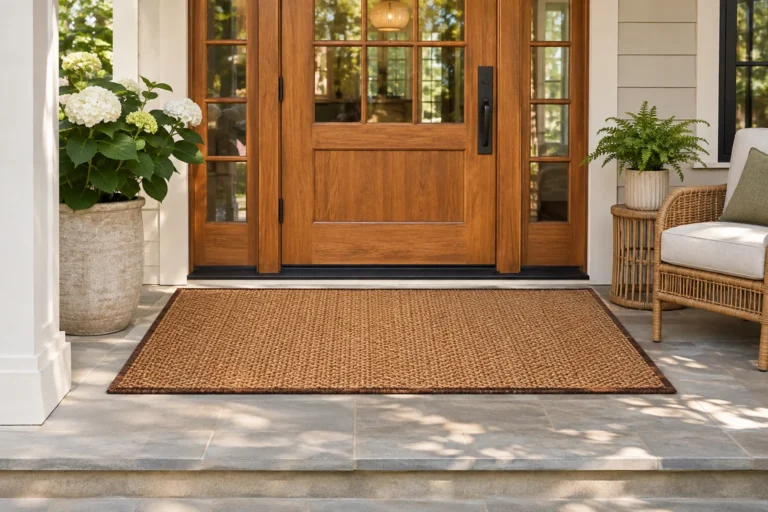
Choose hardware for the actual door and a mat that stays flat and clear of the swing. Coordinate finishes if it helps the entrance feel connected. Replace worn functional parts before adding small decorative objects.
Try this: Test the mat with the door fully opened.
19. Assess the Garage Door as Part of the Elevation

A garage door occupies a large visual area, so compare its finish with the house palette. Address operation and condition through suitable servicing first. A quieter color may help the main entrance remain the focal point.
Try this: Avoid choosing the finish independently of the roof and trim.
20. Review the Entrance in Ordinary Use

Repeat the first photo in similar light after the main change, then check the entrance in ordinary use. Bring a parcel to the door, open it with the mat in place and see whether the planter or seasonal display obstructs the movement. Keep the improvements that work in that routine.
Try this: Photograph the same approach before and after changes.
Choose Your First Change
Start with condition, access and a readable entrance. Then choose a small set of exterior colors and details that connect the house and garden without crowding the approach.
A three-stage curb-appeal plan with a stopping point
Stage one is an arrival audit: readable address, visible door and a usable route. List the repairs or investigations needed before cosmetic work. Stage two is coordination: take samples to the existing roof, masonry, paving and trim. Resolve that small palette before adding a second strong finish.
Stage three is one deliberate accent, such as a door color or a pair of appropriately sized containers. Decide who will water, clean or store it and where it goes off-season. For planting, EPA WaterSense recommends considering site conditions and grouping plants by water needs; appearance alone is an incomplete selection method.
Set a review point after each stage rather than treating twenty ideas as a twenty-item shopping list. If the entrance is clear and the fixed materials already work together, fewer new elements may produce the more coherent result. Keep the original reference photo so progress can be judged against the same view.
Which small change has the most curb appeal?
Choose the weakness visible at your entrance. A readable number, a repaired arrival surface or a tested door color may be more useful than another decorative object, depending on the existing condition.
How is curb appeal different from a front-yard planting plan?
This guide prioritizes arrival and exterior details. A planting plan considers the wider ground, growing conditions, mature sizes, maintenance and how the garden supports the approach.
Continue with the front-yard landscaping plan when the planting is the next project. For curbside delivery, check USPS mailbox height and placement before changing the post or surrounding border.
References: EPA WaterSense: site conditions and plant water needs.
Related Guides
- 13 Front Yard Landscaping Ideas for a Clear Welcome
- 12 Exterior Color Ideas to Test With Your Home’s Fixed Materials
- 18 Landscaping Ideas for a More Coherent and Useful Yard
Optional digital guide for this topic
If you prefer a structured workbook, explore this related paid guide.