A breakfast tray should make a small meal easier to arrange, carry and clear. The most useful choice depends on where it will rest, how its handles feel and where it goes afterward. Start with a modest place setting rather than buying a large tray to accommodate a photograph full of extras.
These layouts are illustrative. A raised rim or a pair of folding legs does not make a tray spill-proof or establish that it is stable on every mattress. Follow the actual tray's use, loading and care instructions, and test its intended position unloaded before arranging a meal.
Contents
- 1. Choose handles that suit a balanced carry
- 2. Use a folding-leg tray when the actual design fits
- 3. Keep one simple place setting on the tray
- 4. Use a lipped edge as a boundary
- 5. Let pale wood connect to a relaxed bedroom
- 6. Use a quiet white tray in a patterned room
- 7. Choose a darker finish for a defined outline
- 8. Use a small napkin without hiding the support
- 9. Keep a little color in the dishes
- 10. Compare the plate with the useful inner area
- 11. Give two people separate compact trays
- 12. Keep a nearby bedside surface clear for landing
- 13. Use a bedroom bench as a separate return station
- 14. Plan a dry storage slot for a folding tray
- 15. Keep ordinary serving trays in their own group
- 16. Use a small carafe only when the setting remains manageable
- 17. Keep reading material apart from the meal surface
- 18. Choose a finish you can maintain after ordinary use
- 19. Keep bedside textiles out of the tray's moving parts
- 20. Use a restrained arrangement for a guest room
- 21. Check the clearing route before adding accessories
- 22. Return the tray clean and completely dry as directed
Choose the support before the styling
Compare an ordinary handled serving tray with a purpose-designed bed tray. IKEA's KLIPSK is one manufacturer example with folding legs and its own care and use limits; those features do not describe every bed tray. Measure the full opened footprint, useful surface, leg position and stored size. Keep a suitable off-bed landing place available for setting the tray down and clearing it afterward.
Compare the storage or placement options
- Simple serving tray: Check its intended support and carrying use; do not assume it becomes a bed table.
- Folding-leg bed tray: Check complete opened and stored dimensions plus the actual support instructions.
- Compact bedroom: Choose a realistic off-bed landing and return space before increasing tray size.
- Decorative finish: Follow the exact care guidance rather than a material-wide cleaning rule.
1. Choose handles that suit a balanced carry
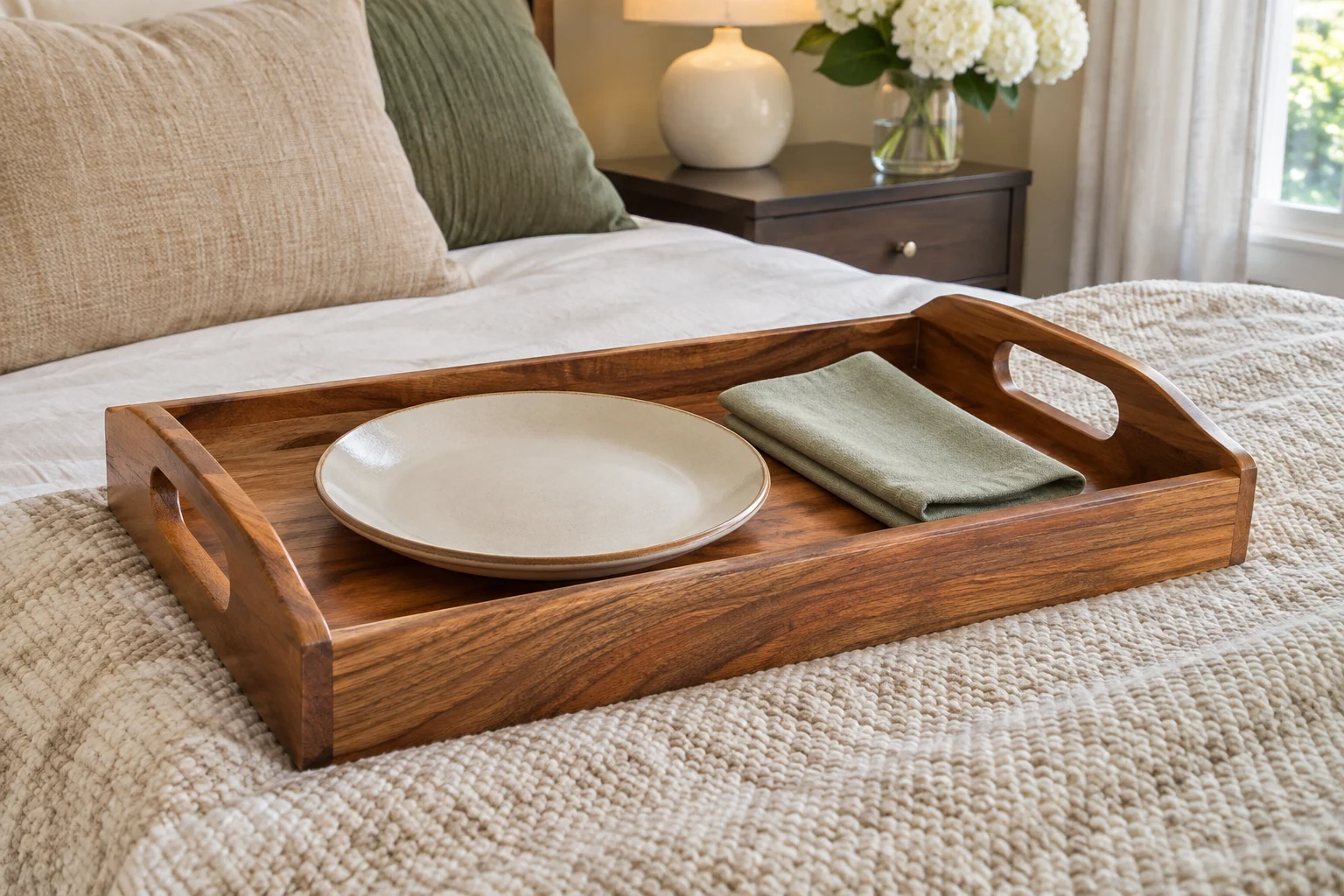
A tray's handles need to work with the actual load and the person carrying it. Compare their opening, position and the usable area around them before choosing by finish. Keep the setting modest enough that the handles remain clear. A pair of attractive cutouts is less useful when a large plate or loose napkin blocks the grip during an ordinary trip from the kitchen.
2. Use a folding-leg tray when the actual design fits
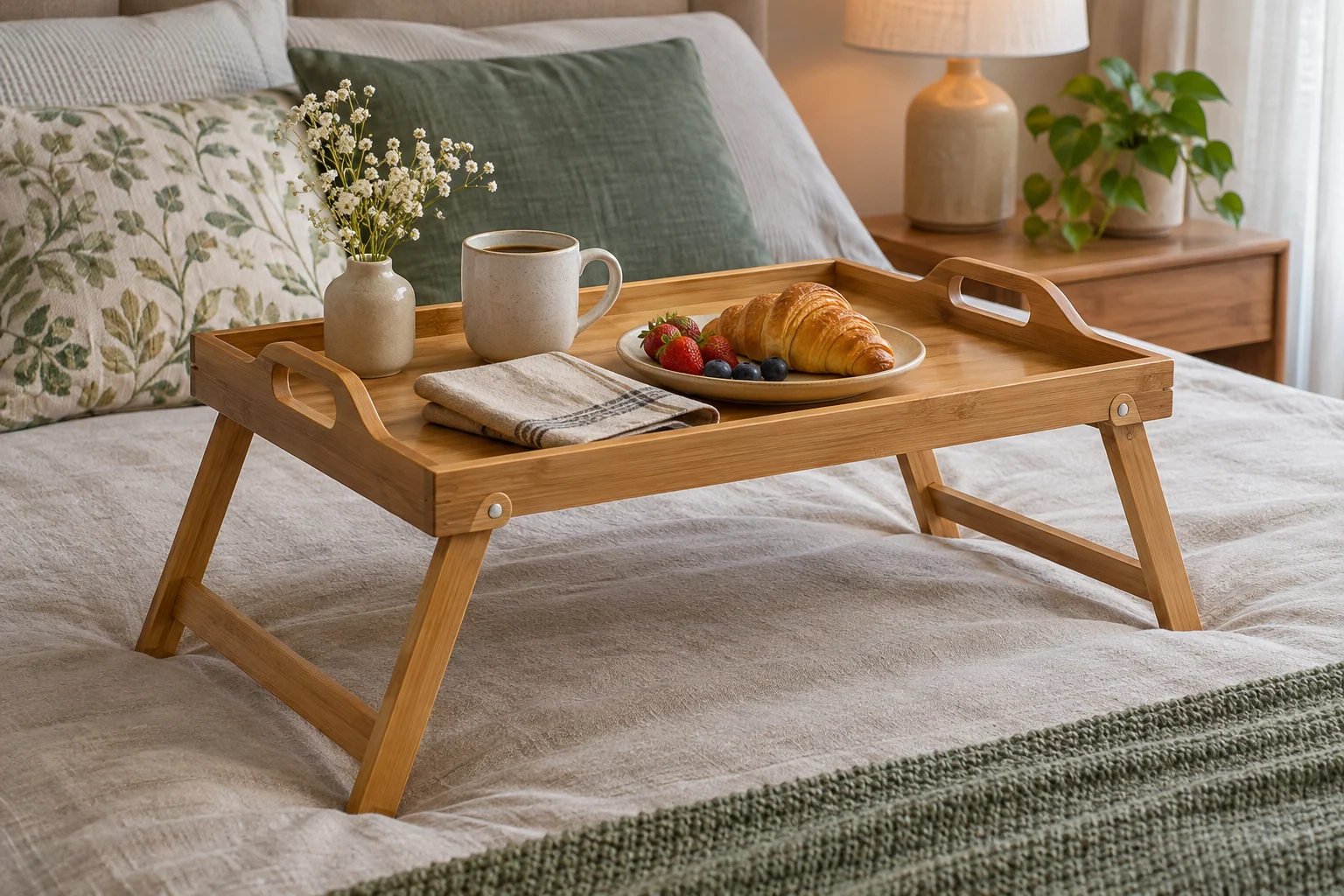
A purpose-designed folding-leg tray can provide a different support arrangement from a flat serving tray. Follow its opening and locking instructions where applicable, and check the complete footprint in the intended position. Keep bedding clear of the moving parts. Do not infer stability from height alone or add improvised supports to make an unsuitable tray stand differently.
3. Keep one simple place setting on the tray
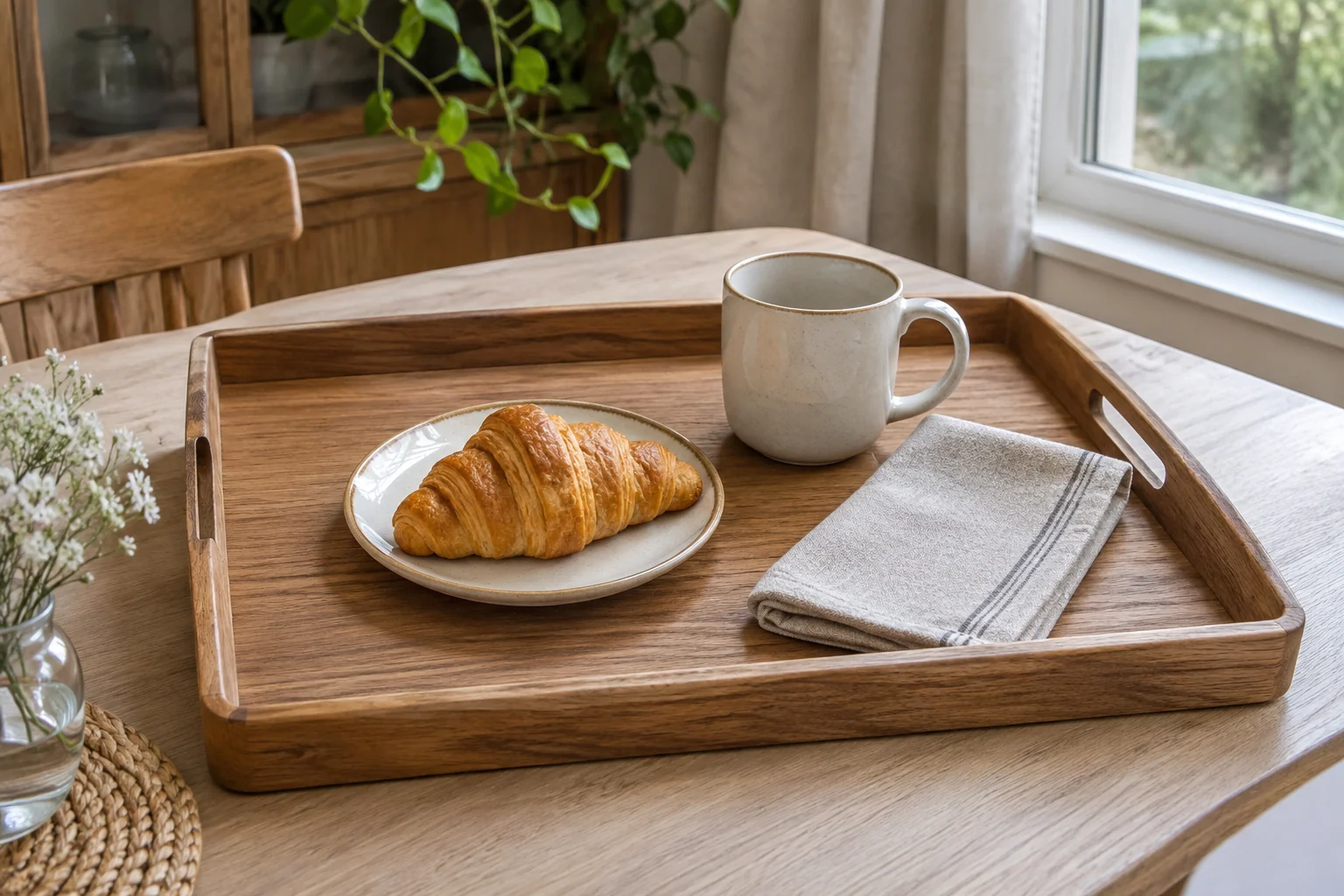
A small plate, one drink and a napkin can leave enough useful space to handle the tray comfortably. Arrange the items around the tray's actual dimensions rather than adding every breakfast component at once. Keep serving dishes elsewhere when they crowd the working surface. A restrained setting can look inviting while making the ordinary clearing routine more straightforward.
4. Use a lipped edge as a boundary
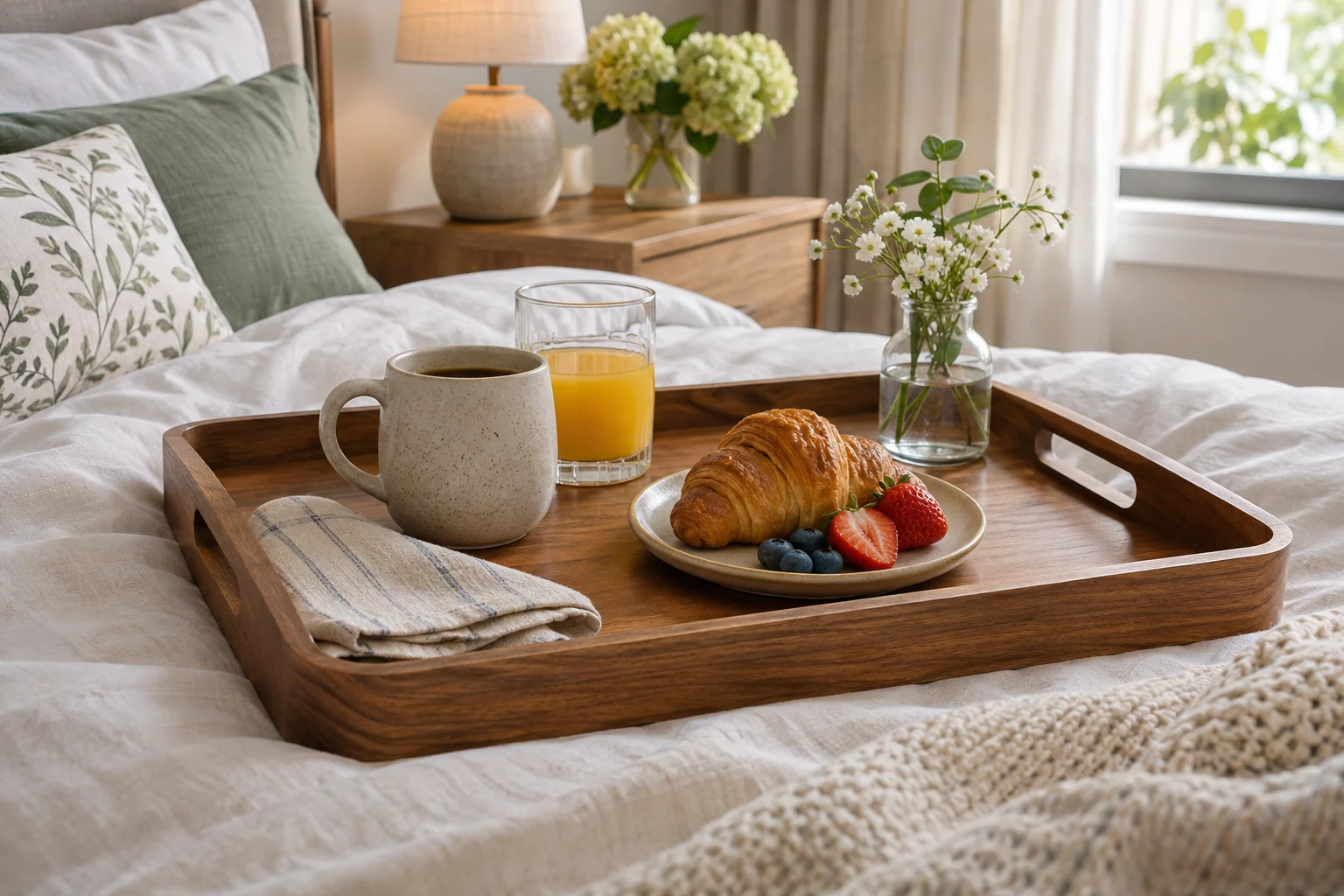
A raised edge can define the arrangement and help you see where objects belong, but it is not a guarantee against spills. Keep items comfortably within the useful surface instead of balancing them against the rim. Check the tray's intended use and care instructions. Choose a smaller place setting when the lip reduces the available area more than the outside dimensions suggest.
5. Let pale wood connect to a relaxed bedroom
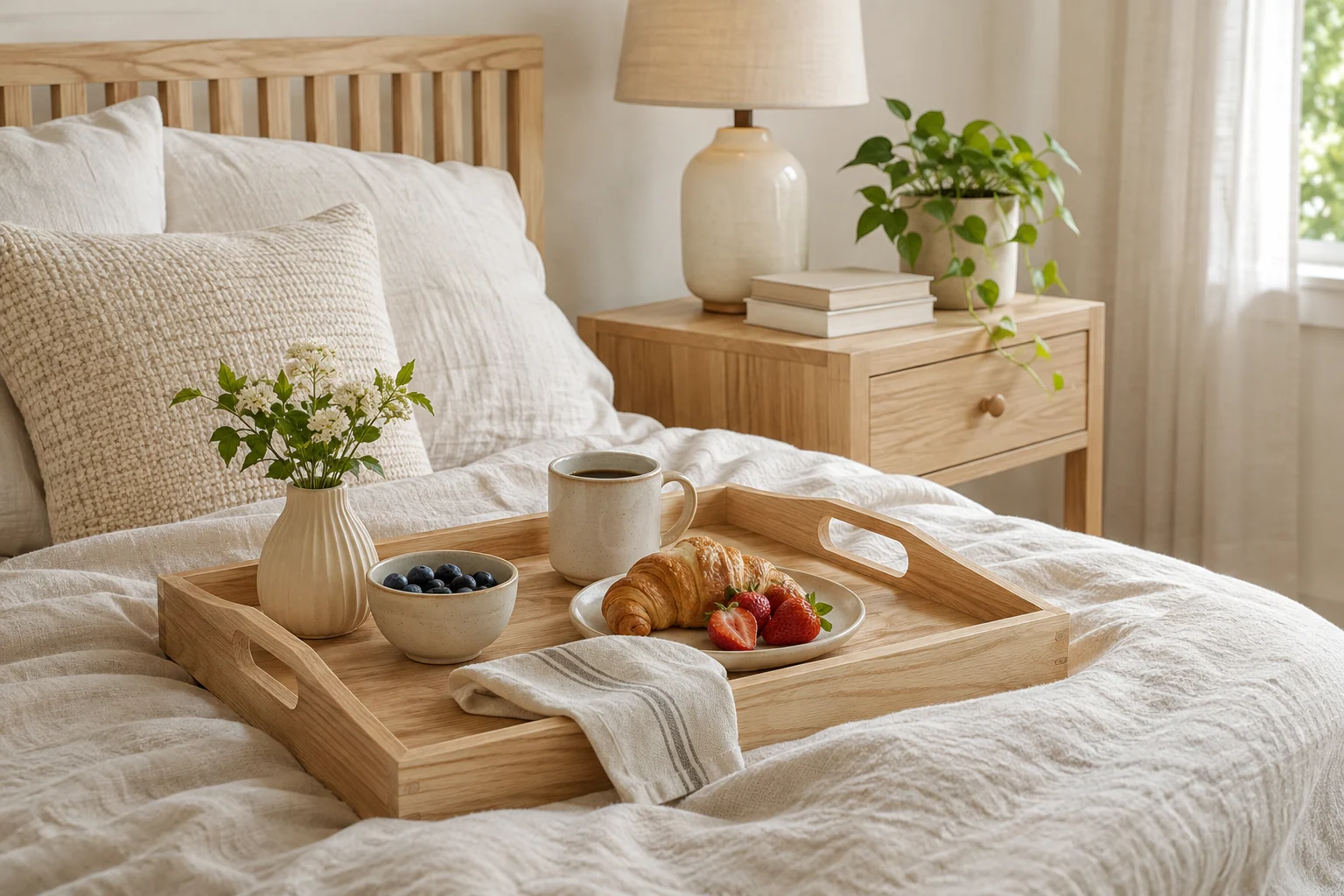
A light wood tray can relate to a bedside table or woven detail without requiring matching furniture. Keep the breakfast setting simple so the grain remains visible. Check the actual finish's care guidance and protect it as directed. A decorative wood appearance does not establish that the surface tolerates every spill, cleaning method or utensil.
6. Use a quiet white tray in a patterned room
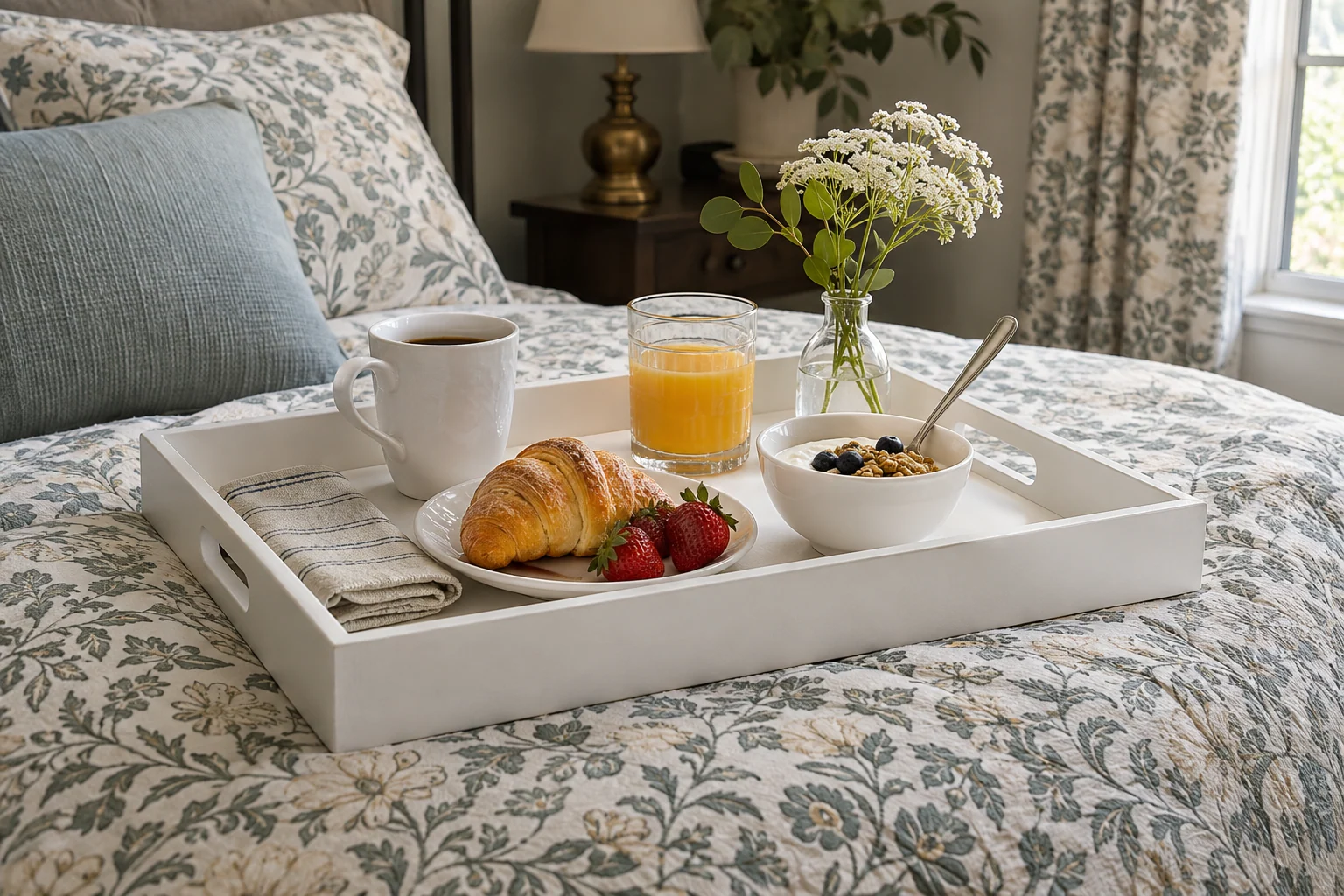
A plain white tray can provide a clear background when the bedding already has a strong pattern. Choose a small number of dish shapes and let the surrounding textile provide the color. Check the tray with the full setting before deciding it needs more decoration. The useful surface should remain easy to clear rather than become a second patterned display.
7. Choose a darker finish for a defined outline
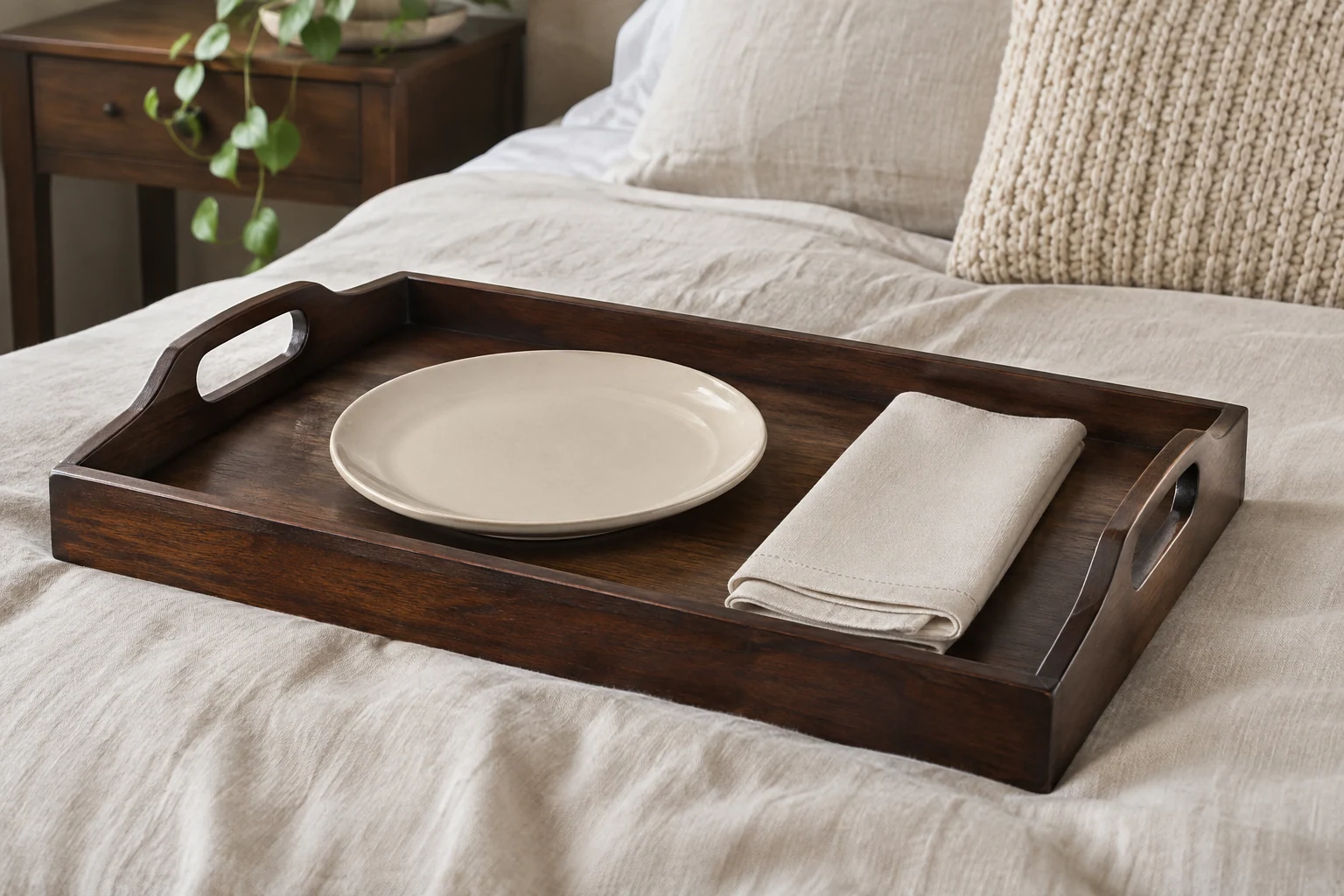
A darker tray can make the place setting readable against pale bedding. Repeat one existing dark detail if the room needs a connection, such as a lamp or picture frame. Keep the handles and support visible instead of covering the tray with a large cloth. The contrast should help the arrangement feel clear, without adding unnecessary objects around the meal.
8. Use a small napkin without hiding the support
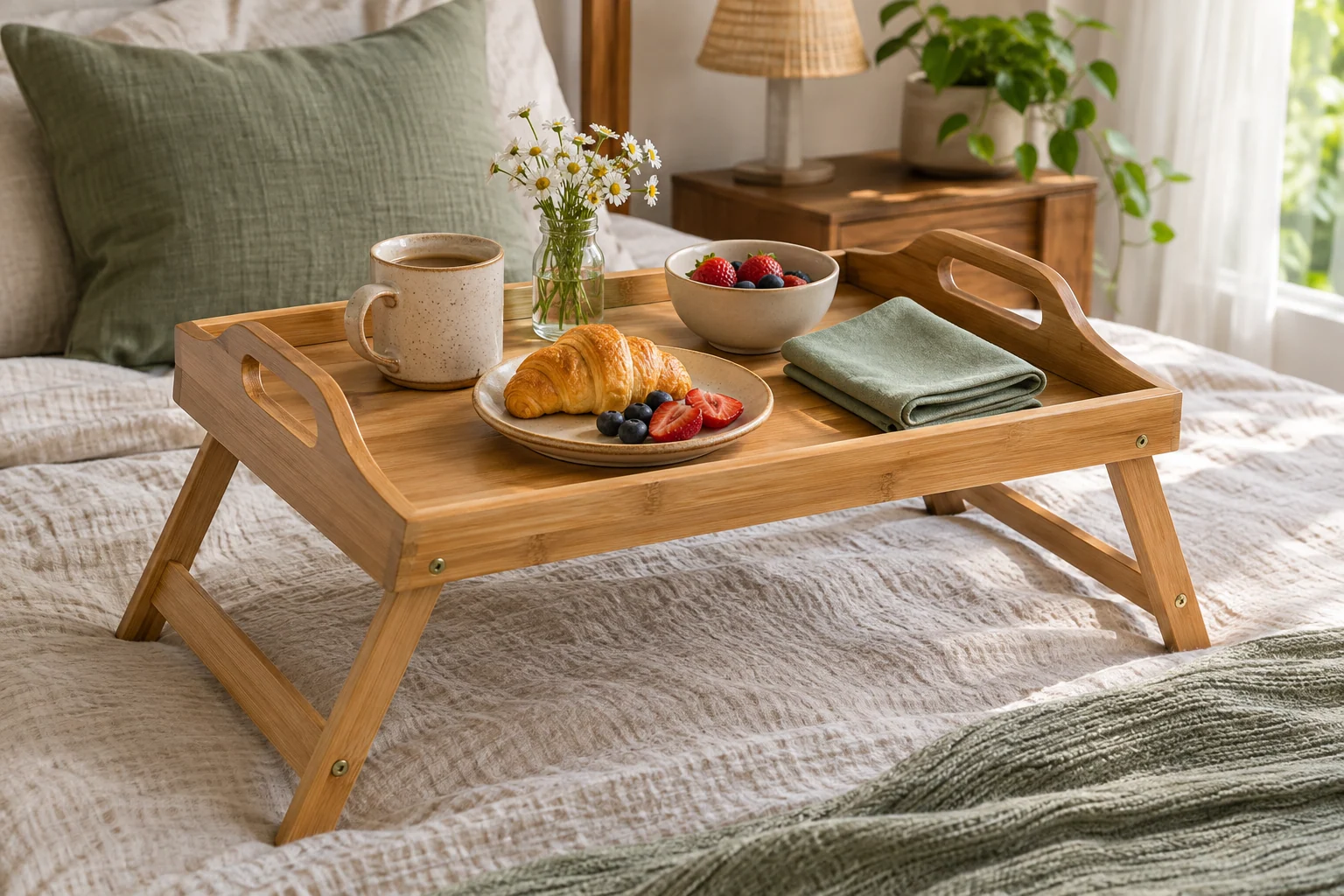
A folded napkin can add a soft color or texture while leaving most of the tray available. Keep loose fabric away from handles and folding parts. Choose the napkin's care around the actual fabric rather than treating every linen-like textile identically. A smaller fold can be more practical than covering the entire tray with material that moves whenever an item is lifted.
9. Keep a little color in the dishes

One colored mug or plate can make an otherwise quiet tray feel intentional. Repeat a tone from the room loosely rather than creating an exact matching set. Keep the number of dishes based on the meal. A useful arrangement should not require carrying extra decorative tableware simply to complete the palette.
10. Compare the plate with the useful inner area
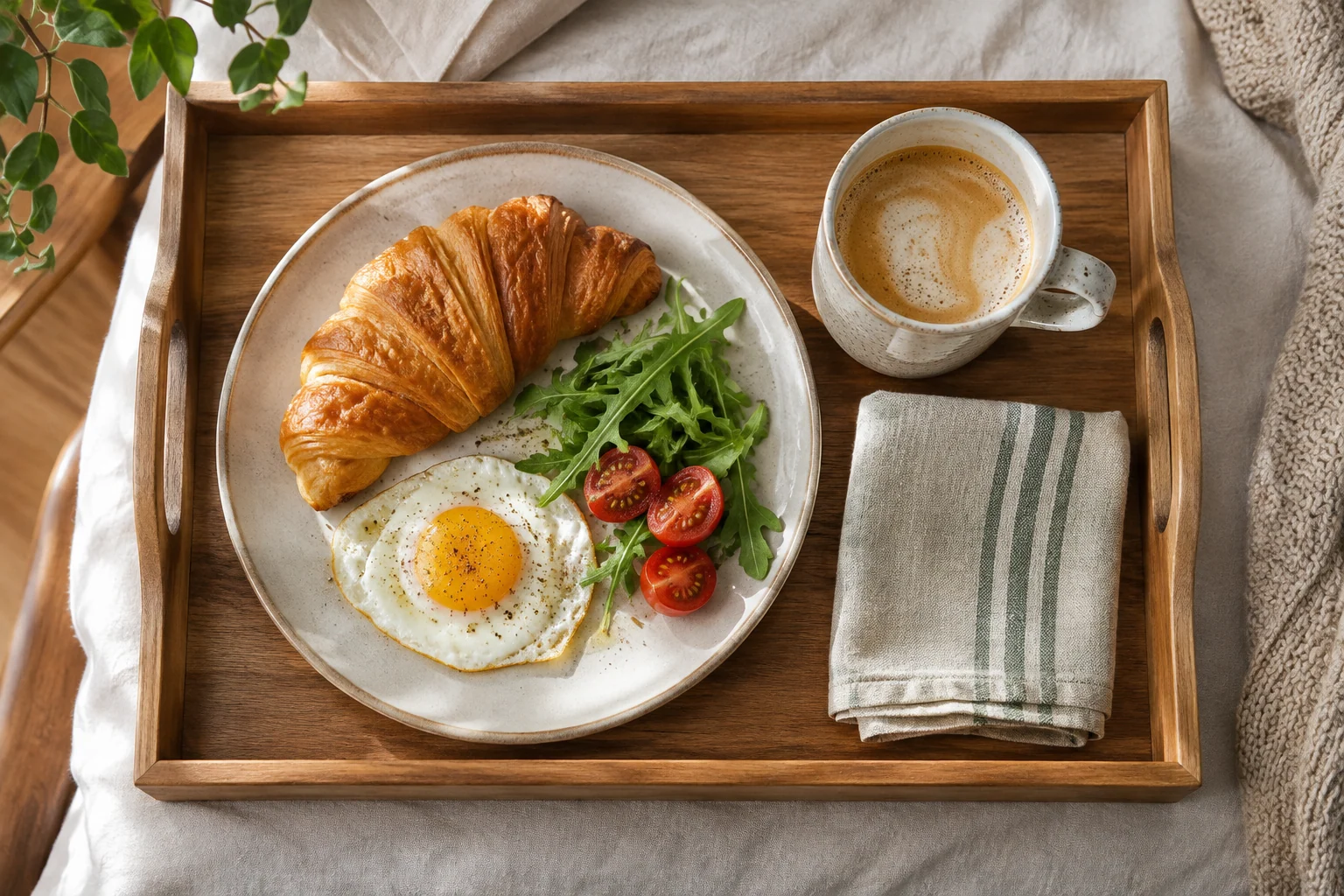
A tray can have generous outside dimensions while thick sides leave less room for the setting. Measure the inner area and place the actual plate within it. Check whether the remaining space suits the drink and grip. If the plate dominates the surface, choose a more suitable tray or a smaller appropriate setting instead of pushing the cup against an edge.
11. Give two people separate compact trays
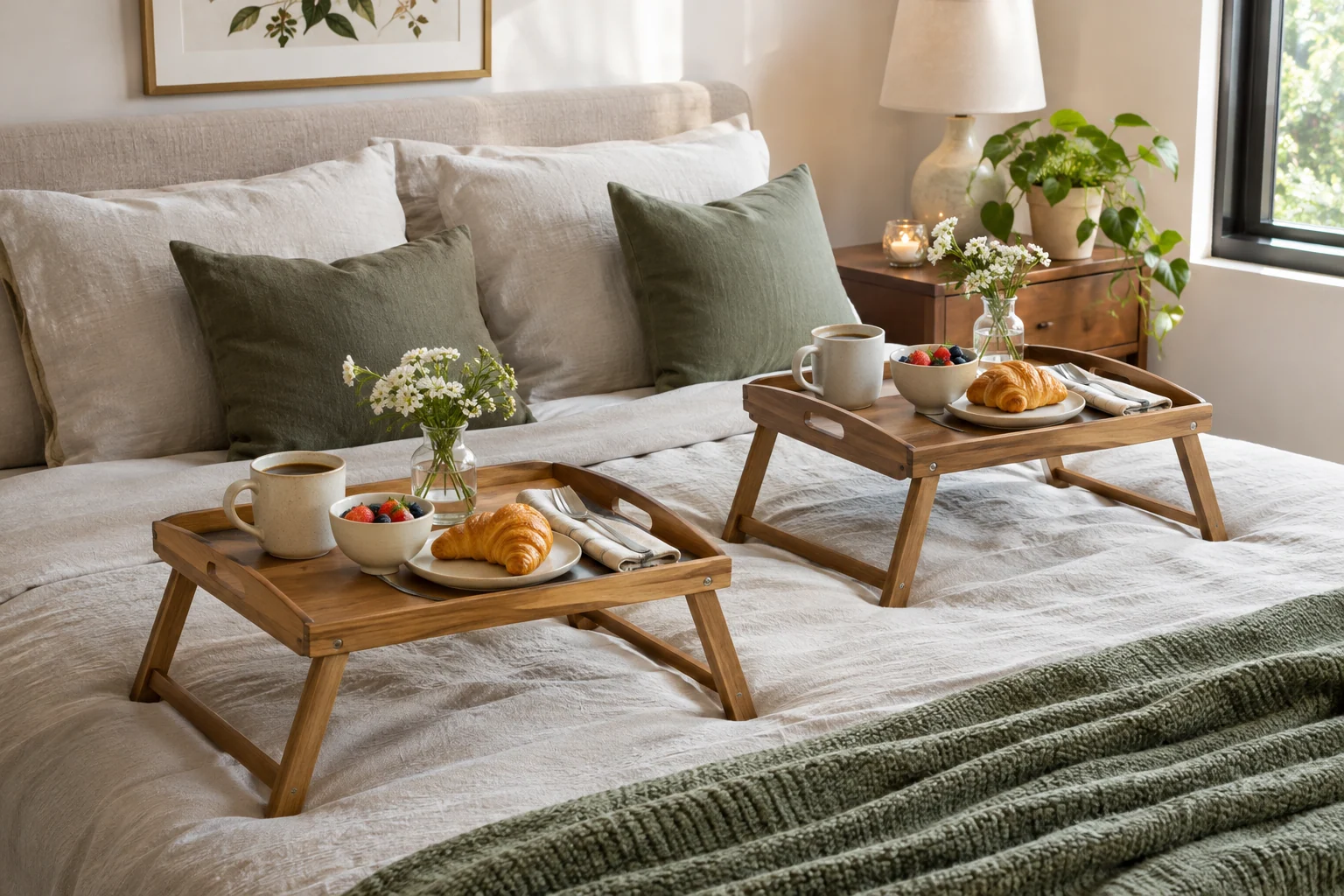
Two suitable smaller trays can let each setting be carried and cleared independently when the room and users prefer that arrangement. Check the complete footprint of both rather than assuming two small pieces always take less space. Keep an off-bed position available for each. The choice should make the routine easier, not require a larger collection of trays with no storage home.
12. Keep a nearby bedside surface clear for landing
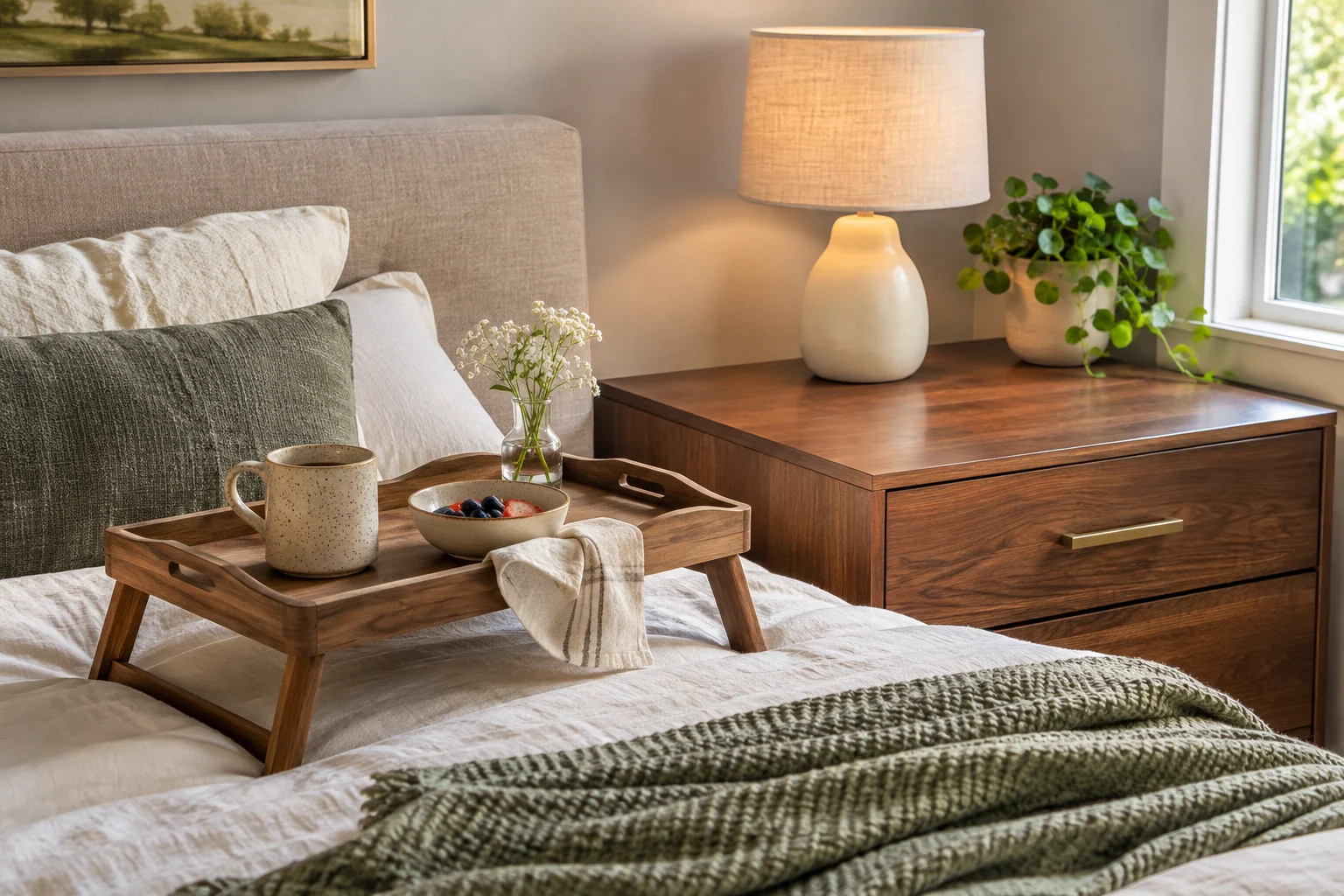
A tray needs a suitable place to go when someone wants to move. Check the bedside surface's usable dimensions and keep its normal lamp or personal items out of the landing area. Do not balance an oversized tray across an undersized table. Another stable furniture surface may be a better temporary home when the nightstand is compact.
13. Use a bedroom bench as a separate return station
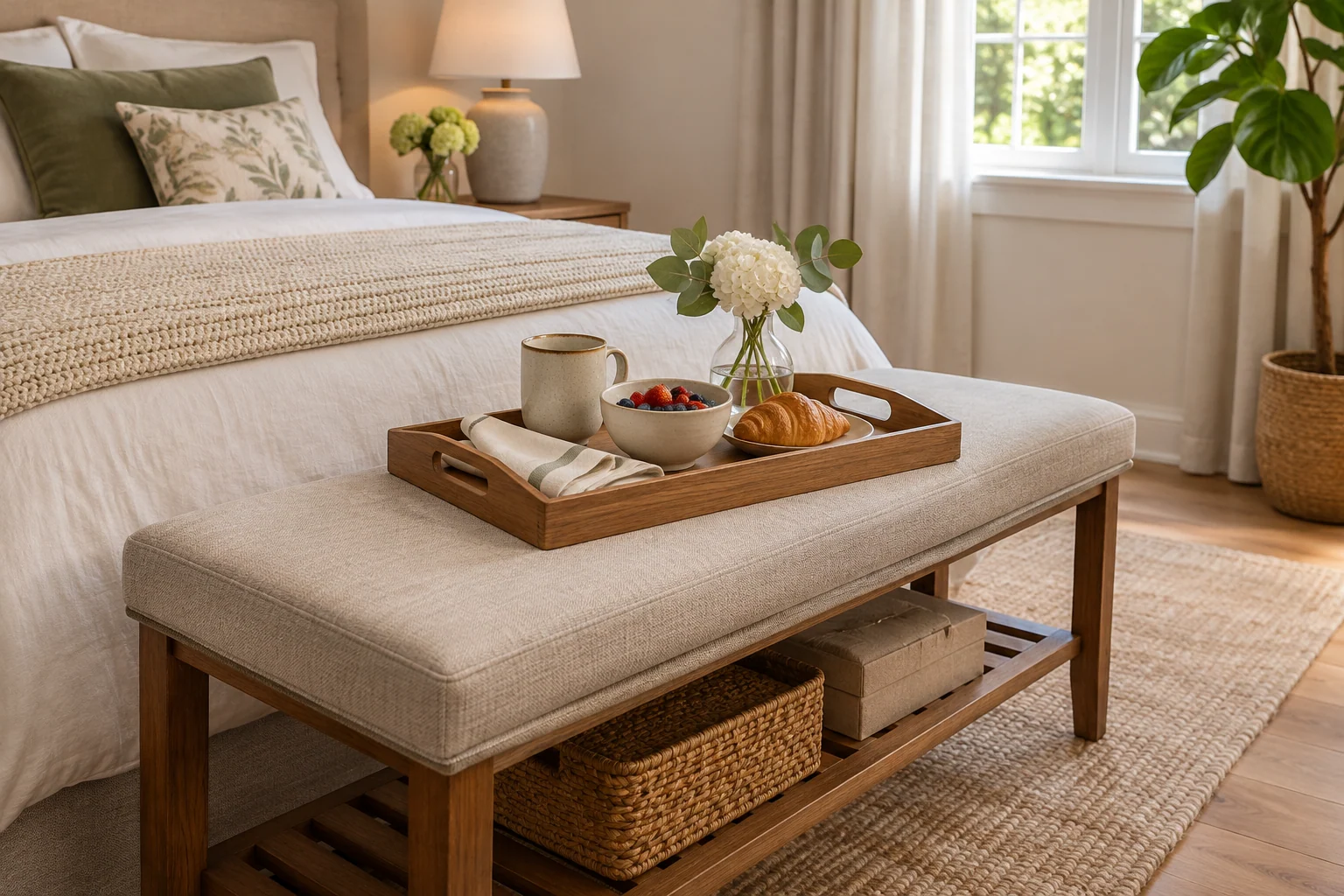
A suitable bench or cabinet can offer an off-bed return area if its surface and intended use suit the tray. Keep the complete tray supported and do not let it occupy the main route around the bed. Follow the furniture and tray guidance. This is a temporary clearing position, not an invitation to leave used dishes in the bedroom indefinitely.
14. Plan a dry storage slot for a folding tray
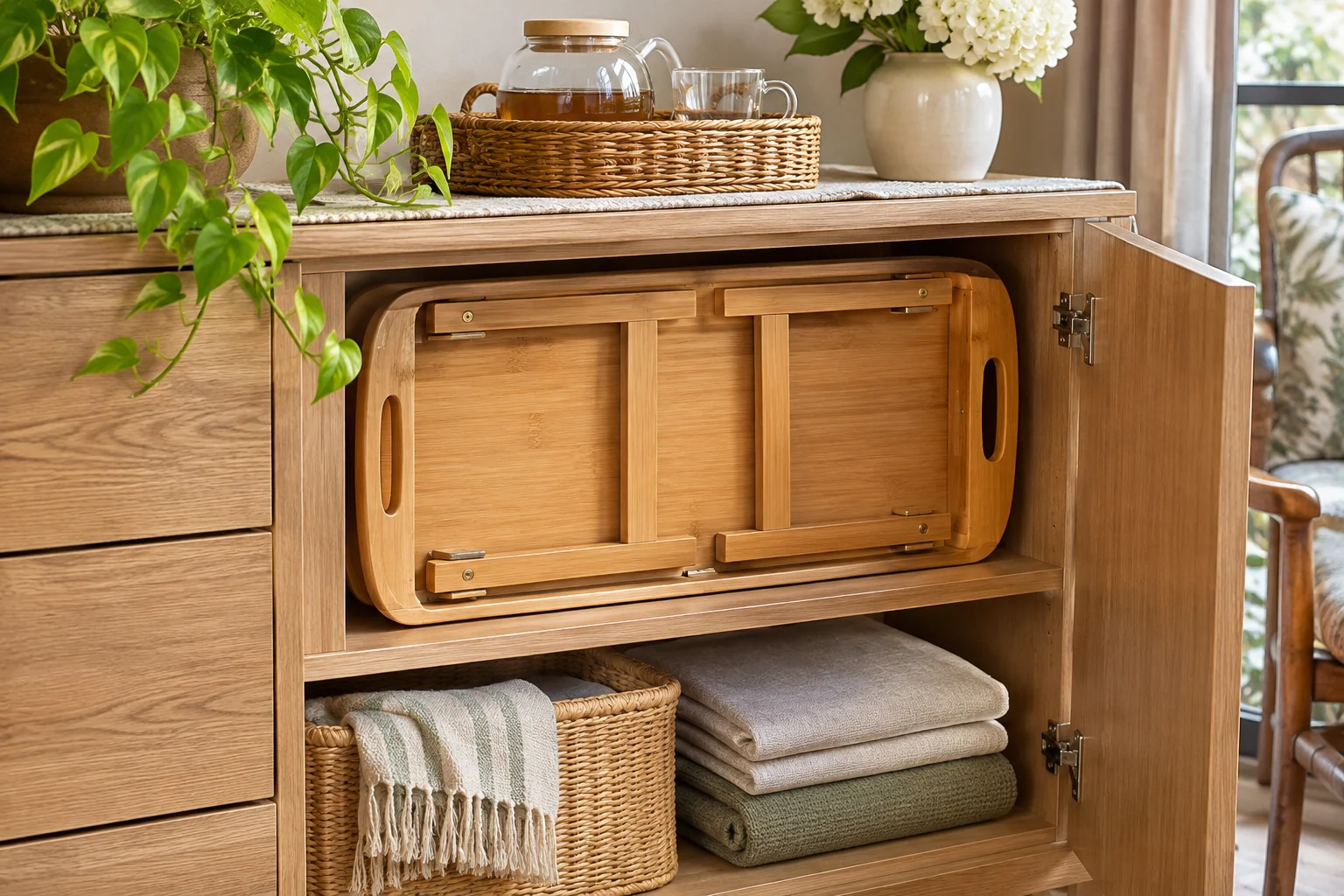
A folded tray can fit an appropriate upright or flat storage space according to its design. Measure the folded thickness, including handles and hinges. Keep it dry and easy to retrieve without pulling against delicate bedding. A dedicated slot can be more useful than repeatedly sliding it into whichever gap is available that morning.
15. Keep ordinary serving trays in their own group
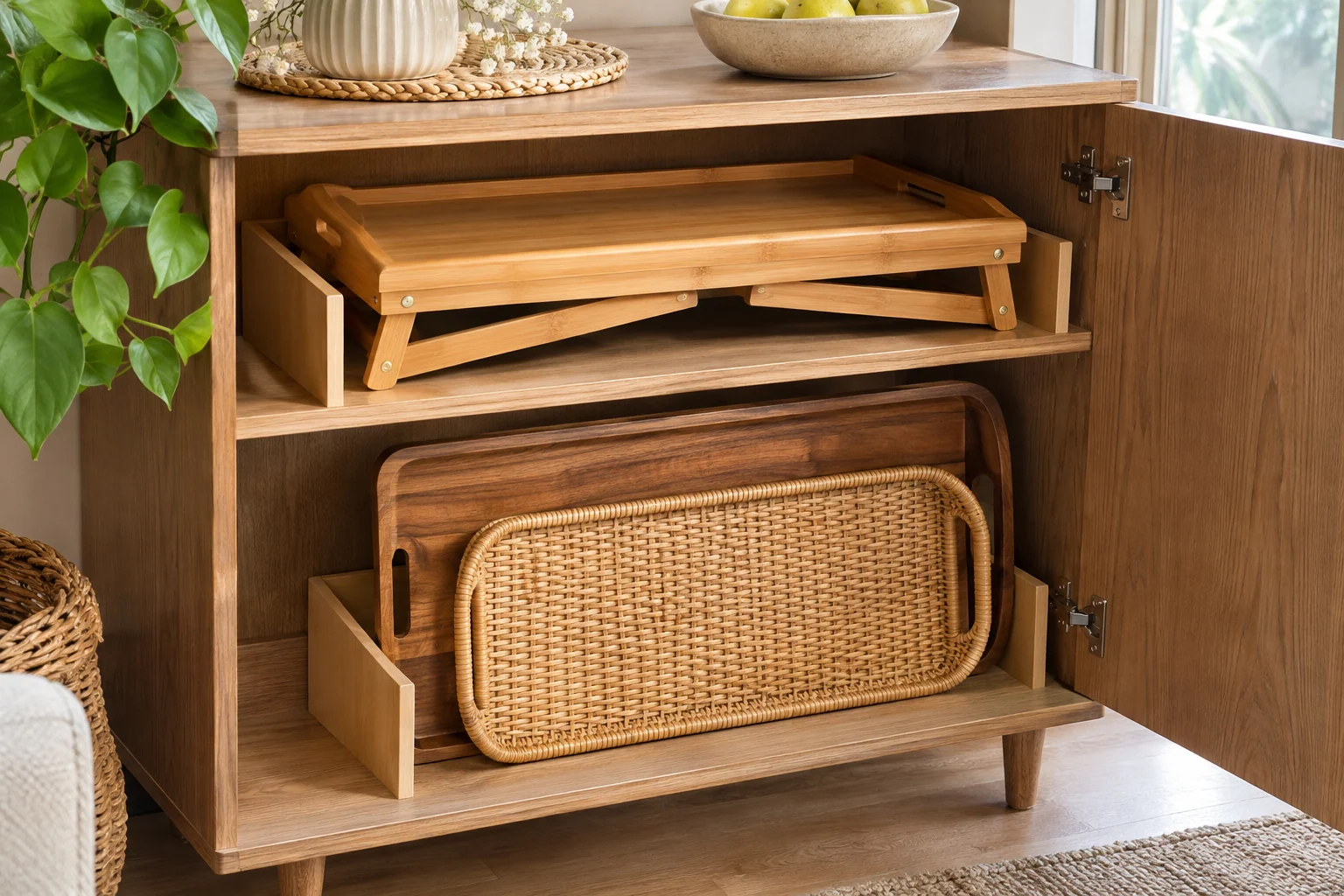
If several trays serve different jobs, store the bed tray where its support parts remain protected and identifiable. Do not assume every decorative serving piece can replace it. Keep the everyday kitchen tray and the occasional bedroom tray distinct when their instructions or geometry differ. A small grouped storage area can still make both easy to find.
16. Use a small carafe only when the setting remains manageable
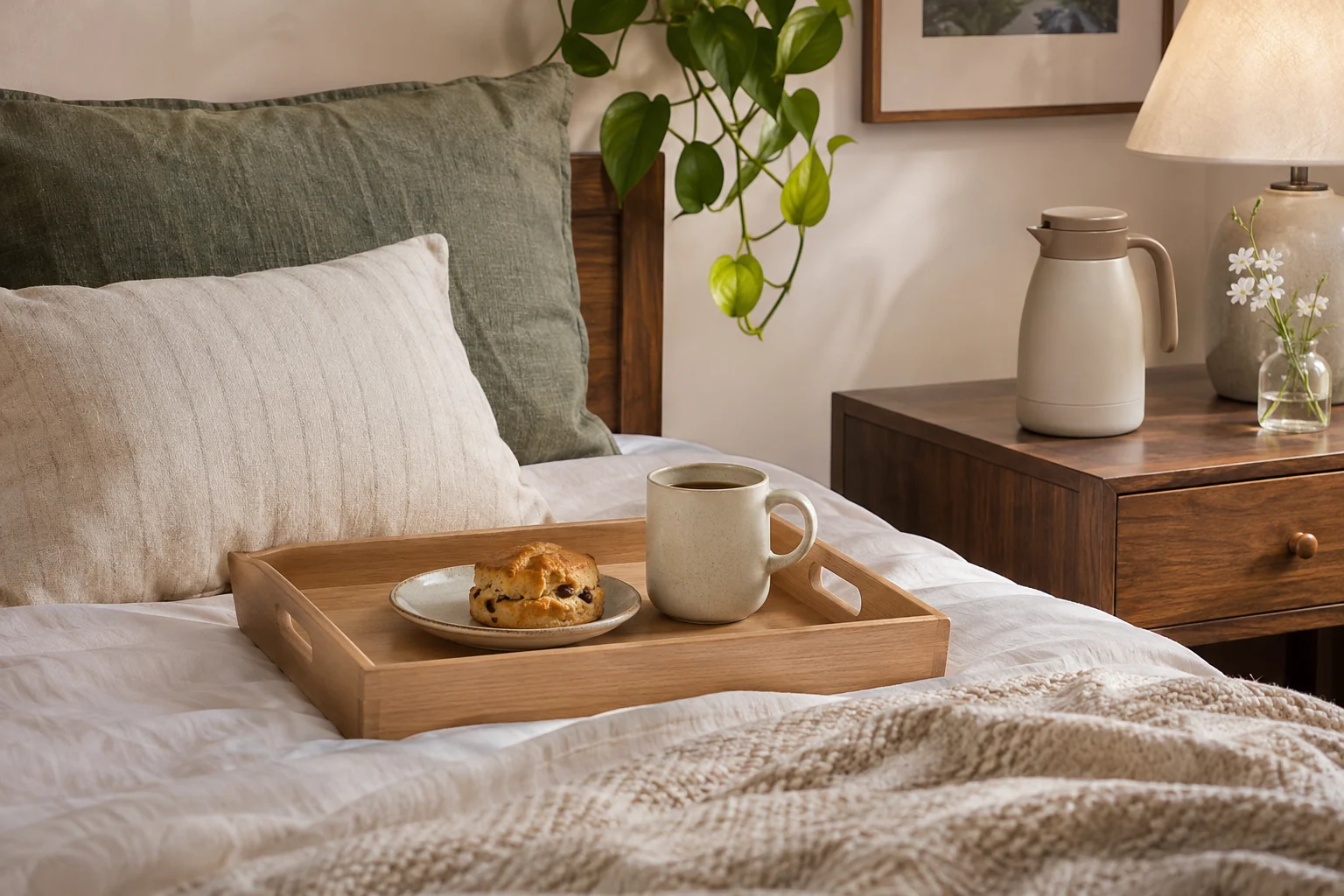
A separate serving vessel can be attractive, but it also adds weight and occupies space. Compare the complete meal setup with the tray's actual instructions and comfortable handling. Leave extra serving items on an appropriate nearby surface when the tray becomes crowded. A lighter, simpler arrangement can serve the same breakfast without turning the tray into a large portable buffet.
17. Keep reading material apart from the meal surface
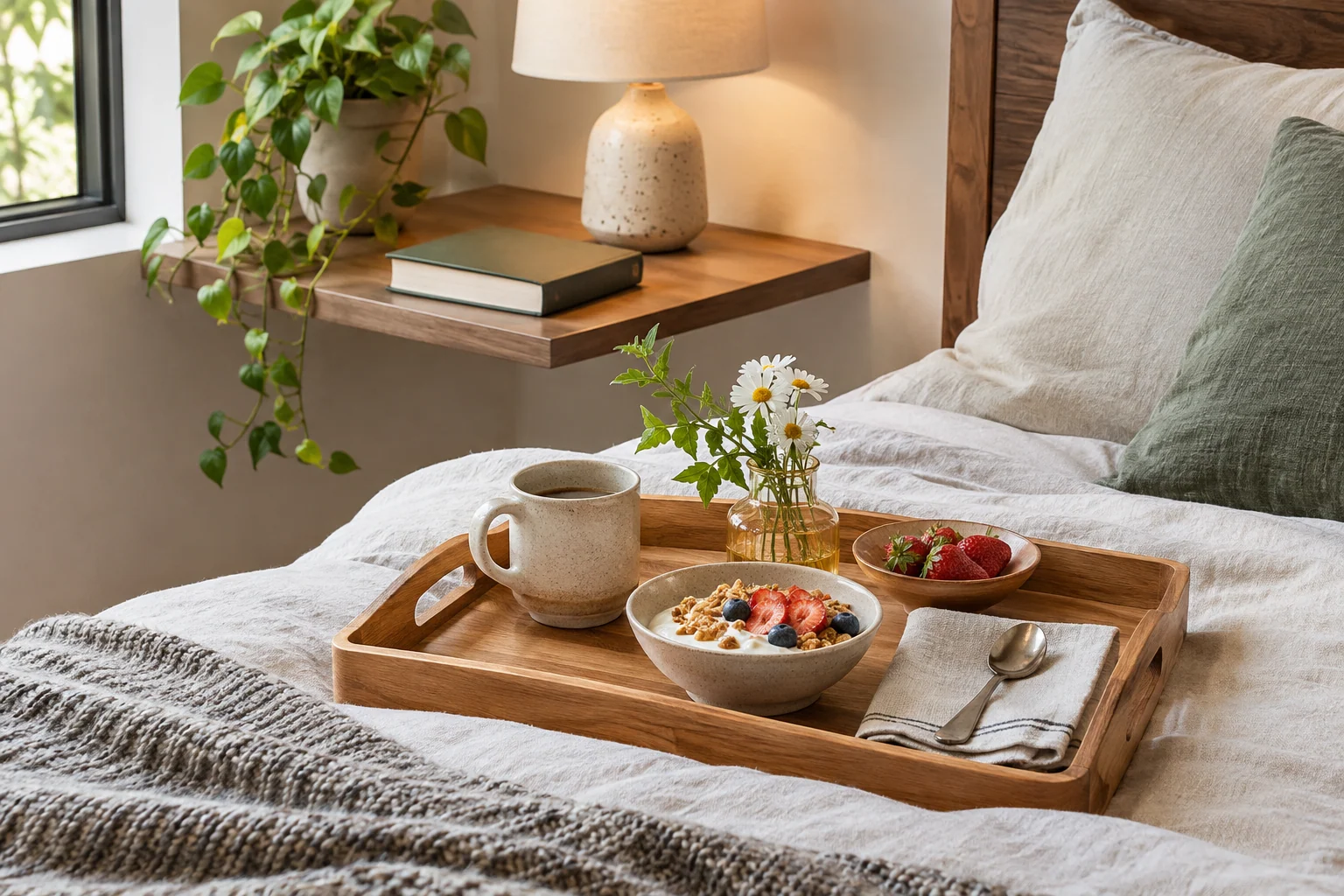
A book or magazine can share the moment without sitting beneath a plate or open drink. Give it a separate suitable position or use a purpose-designed feature only as intended. Avoid making the meal surface so full that moving a page means shifting tableware. The same principle applies to personal devices: the tray's usefulness comes from a clear arrangement, not the largest number of objects.
18. Choose a finish you can maintain after ordinary use
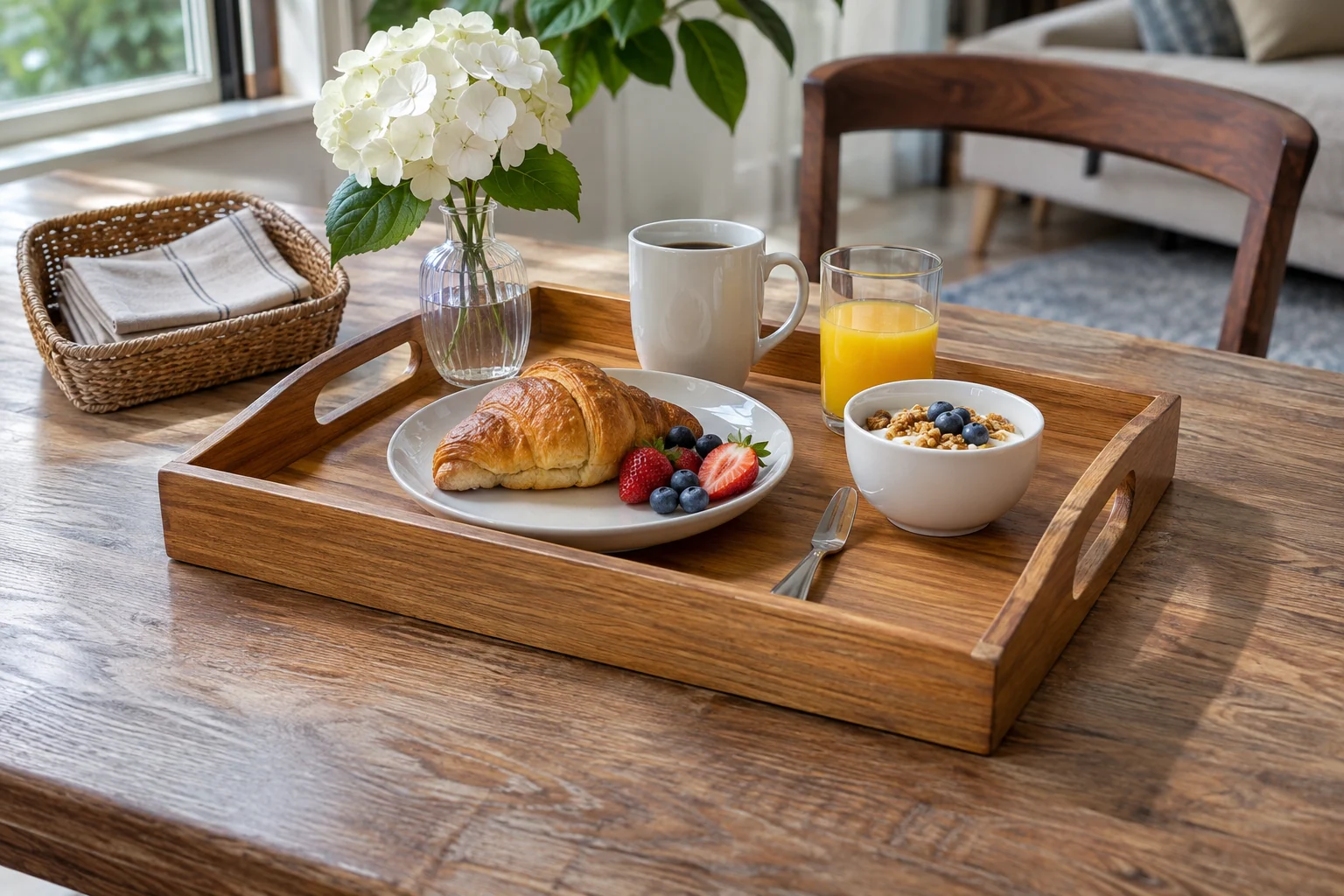
Read the actual tray's care instructions before deciding that a woven, wood, painted or plastic finish is easier to maintain. Different materials and constructions can have different limits. Choose a care routine that fits the household rather than a universal cleaning shortcut. Keep the instructions with the tray information so the finish is not treated by guesswork later.
19. Keep bedside textiles out of the tray's moving parts
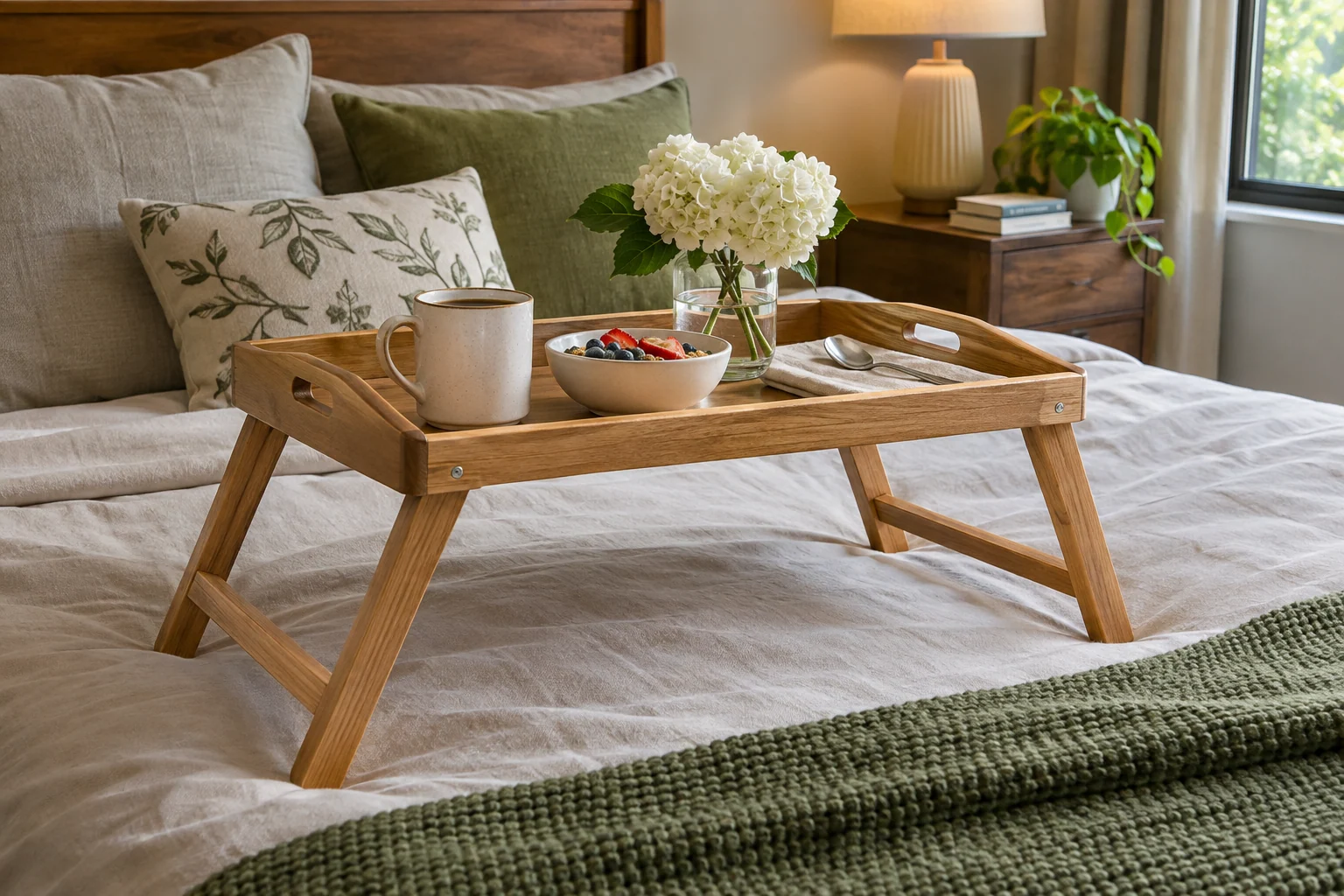
A folded blanket or loose sheet can change the space around a leg or handle. Arrange the intended surface before placing the tray, following its guidance. Keep fabric from catching when the tray is lifted away. The position should be easy to clear in an ordinary movement rather than depend on a carefully balanced mound of pillows.
20. Use a restrained arrangement for a guest room

A simple tray stored visibly in a suitable place can be a welcoming option when the guest knows how it is intended to be used. Keep the room's ordinary table or seating available as an alternative. Avoid leaving a large staged meal setup on a bed before someone has chosen it. A useful room gives the guest clear options without occupying their personal space.
21. Check the clearing route before adding accessories
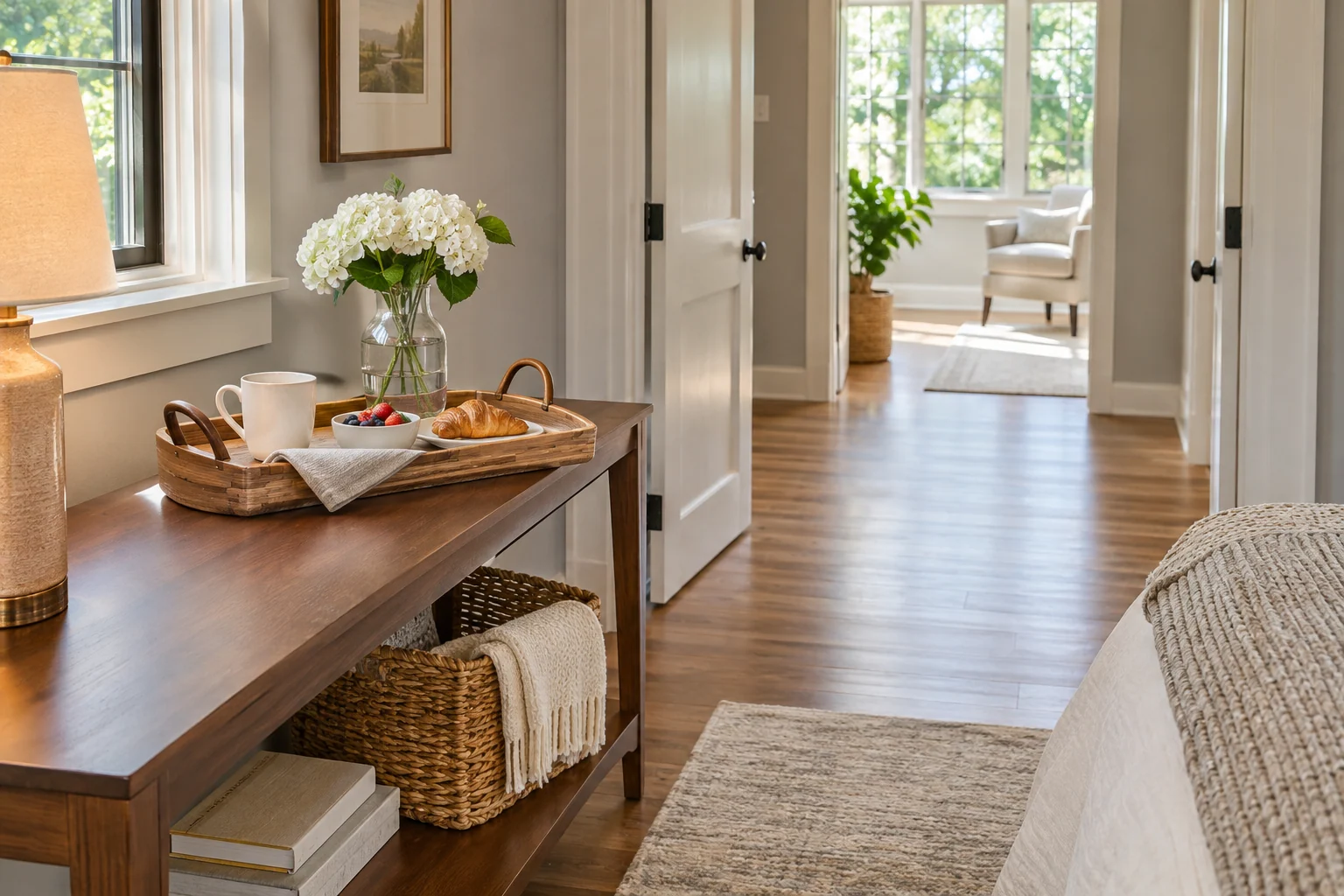
Try the unloaded tray through the route between the kitchen and bedroom, including the doorway and the off-bed landing place. Notice any turn that requires awkward handling. Choose the size and setting around that real movement. A small decorative addition is worthwhile only if the tray still works comfortably as something that must be carried and cleared.
22. Return the tray clean and completely dry as directed
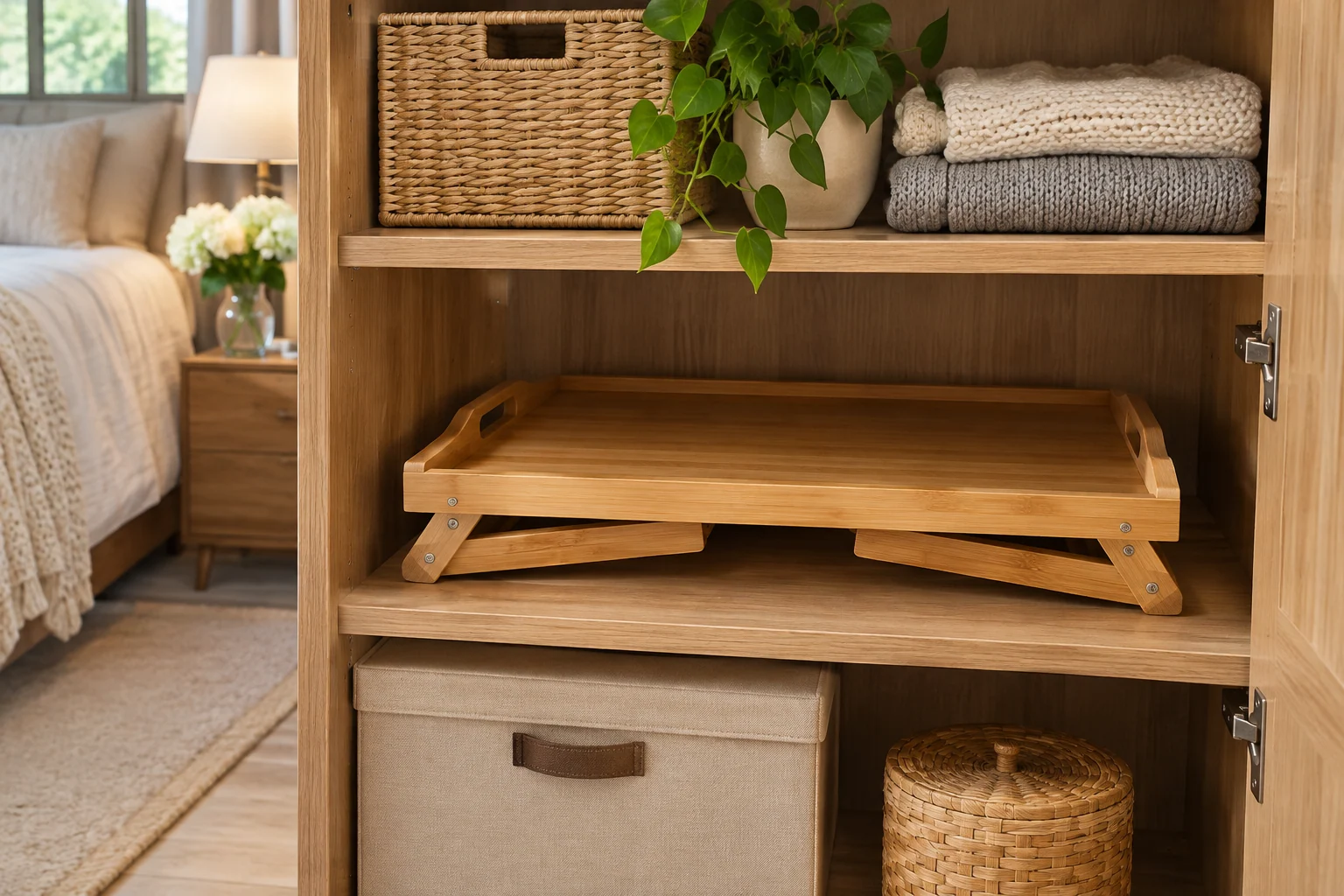
Finish the routine by clearing the setting, caring for the tray according to its own instructions and returning it to the defined storage place. Keep any condition or damage concerns separate from the question of styling it again. When the return process feels awkward, simplify the setting or change the storage position before buying another decorative version.
A breakfast-tray setup card
Record the inner top size; full opened footprint; folded size; handle access; intended support position; manufacturer use and care limits; and the off-bed landing place. A hypothetical 18-inch-wide inner surface holding an 11-inch plate leaves 7 inches across the remaining width, but that does not prove a mug and comfortable grip will fit. Lay out the actual objects on a flat surface before choosing the tray.
A practical next step
Choose the tray around the complete breakfast routine: arrange, carry, use, clear and store. A modest setting with a realistic landing place can feel more welcoming than a larger display that is difficult to handle.
The images are original AI-generated design concepts. They illustrate arrangements rather than tested products, installations or measured performance.
Sources and care references
Related reading on Nestroxe
Optional digital guide for this topic
If you prefer a structured workbook, explore this related paid guide.