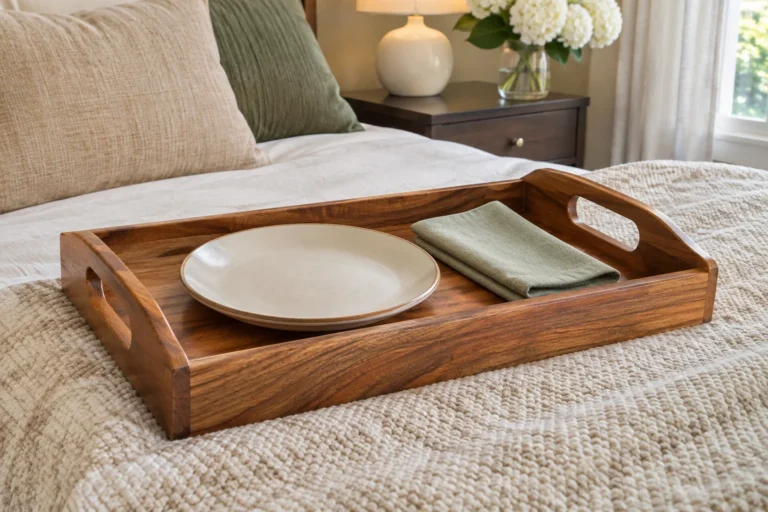
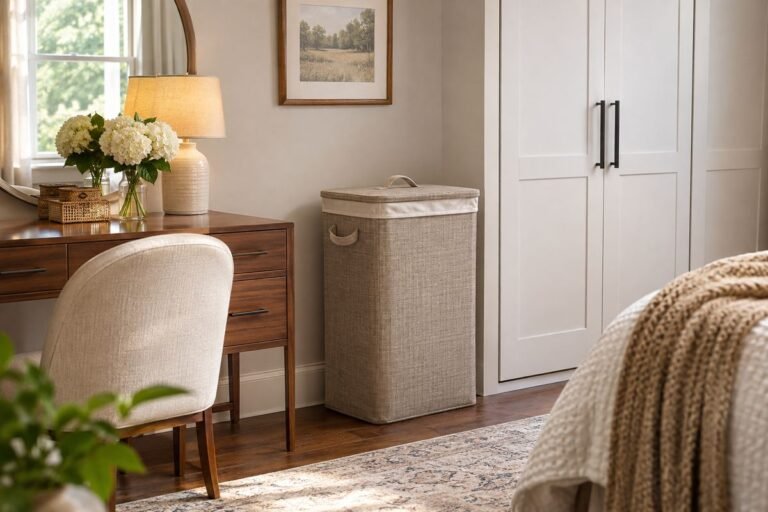
A bedroom book collection needs a different plan from the one or two books being read at bedtime. The working pile should stay small, while the rest of the collection needs supported shelves, a way to find a title and a place to return it. Begin by separating those jobs instead of asking the nightstand to hold everything.
These bedroom book storage ideas focus on a collection that belongs in the room. Choose furniture around the books and normal movement, and follow its assembly, loading and restraint instructions. The concept images do not certify shelving, installation or capacity.
Contents
- 1. Use one dedicated bookcase for the main collection
- 2. Choose a low bookcase beneath an interior wall
- 3. Give oversized books a flat supported shelf
- 4. Separate the current read from the stored collection
- 5. Use the side of a wardrobe area thoughtfully
- 6. Choose a shallow case for smaller books
- 7. Adjust supported shelves around different heights
- 8. Keep short rows upright with appropriate support
- 9. Use closed cabinet bays for visual calm
- 10. Keep a glass-front collection away from harsh light
- 11. Use a bed frame with intended book storage
- 12. Choose a storage headboard for its access
- 13. Use a reading bench with appropriate book bays
- 14. Keep bedroom work references in a separate section
- 15. Store a selected paperback group in a fitted box
- 16. Use under-bed space only when the environment and enclosure suit it
- 17. Group a series so the next volume is easy to find
- 18. Separate borrowed books from the permanent collection
- 19. Use a quiet wall color behind a mixed collection
- 20. Keep the top of a low case mostly available
- 21. Place the case where doors remain independent
- 22. Keep a small return shelf within the main case
- 23. Give fragile bindings their own suitable enclosure
- 24. Record the location of occasional books
- 25. Review the collection before adding another case
Measure the books before the empty space
The Library of Congress recommends appropriate shelf support, upright books kept straight and separate treatment for books too large for an ordinary upright bay. It also highlights protection from unsuitable heat, light and environmental conditions. Record the largest book's height and depth along with the collection's measured shelf length. Leave practical retrieval room rather than treating every empty inch as usable book capacity.
Compare the storage or placement options
- Ordinary working collection: Supported upright groups in accessible bays with a consistent return rule.
- Oversized volume: A suitable fully supporting flat position or another appropriately sized bay.
- Current bedtime book: A small separate working position, not the entire collection on the nightstand.
- Fragile or valued material: Appropriate conservation advice, enclosure and environment.
1. Use one dedicated bookcase for the main collection

A defined bookcase can stop books spreading across the dresser, bench and every bedside surface. Choose its actual shelf size and loading guidance around the collection. Keep the most-used titles in comfortable reach. Follow the furniture's restraint requirements rather than assuming a full row of books makes the unit stable. The aim is one understandable home, not the largest possible tower in the room.
2. Choose a low bookcase beneath an interior wall

A lower unit can keep the bedroom's upper walls visually quiet while supplying useful shelf length. Check the room's actual floor area and the complete access route. Keep books fully supported within each bay, and follow the unit's loading and restraint instructions. A low silhouette does not remove those requirements or establish that the top can support any decorative arrangement.
3. Give oversized books a flat supported shelf

A large art or photography book may not suit the upright bays used for smaller volumes. Keep it fully supported in an appropriate flat position instead of bending it under a low shelf. Leave the group modest enough to retrieve comfortably. Follow preservation advice for valuable bindings and avoid turning large books into the base for heavy ornaments.
4. Separate the current read from the stored collection

Keep the book in use on a suitable bedside surface or small supported holder, then return completed titles to the main shelves. A clear limit on the working group can preserve the nightstand for its ordinary purpose. The bookcase and nightstand do not need identical arrangements. They serve different stages of the reading routine.
5. Use the side of a wardrobe area thoughtfully
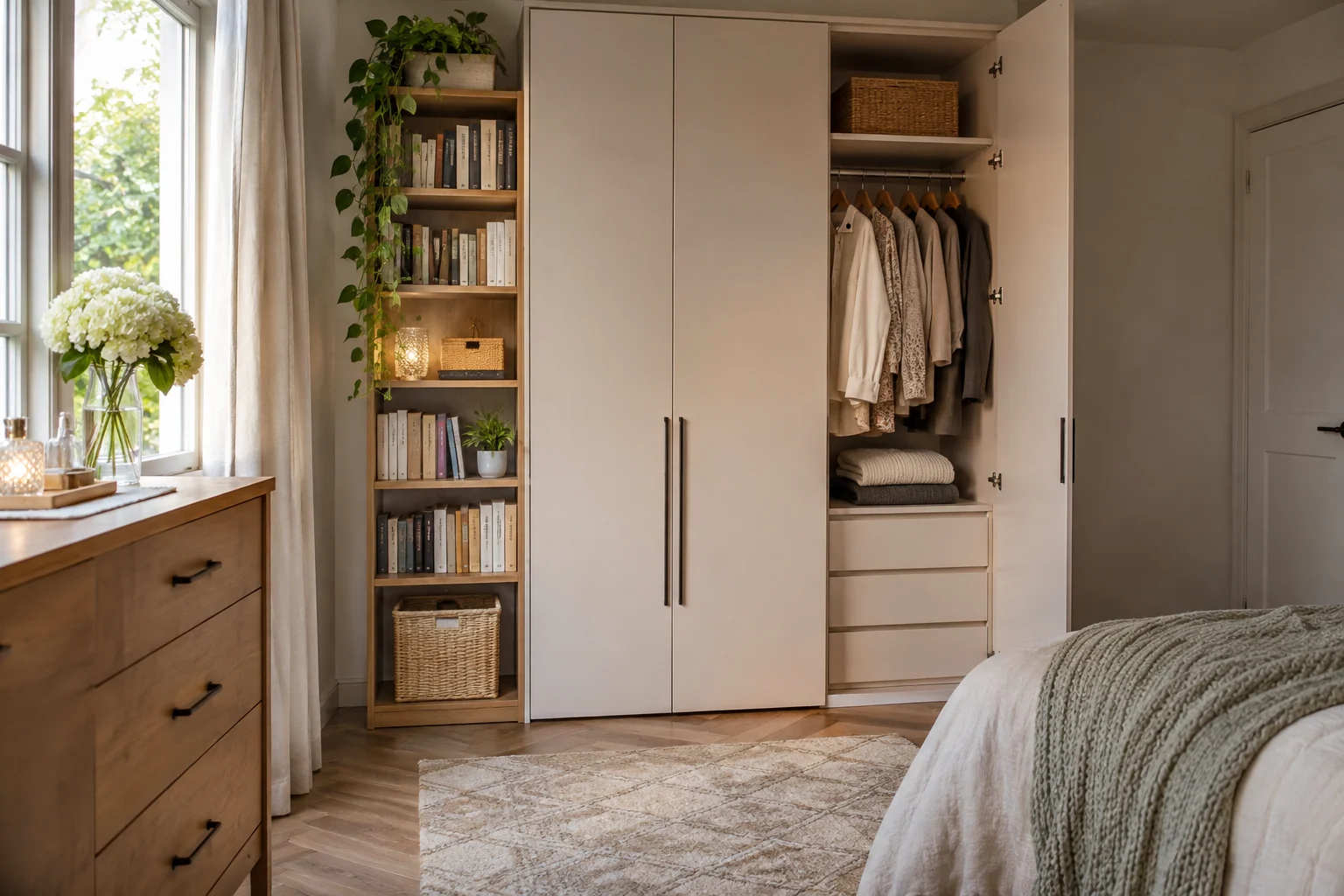
A narrow furniture position beside a wardrobe may suit a correctly sized bookcase if it does not interfere with doors, drawers or dressing space. Measure the opening with the wardrobe in use. Check shelf depth as well as the outside width. A thin-looking tower can still occupy the route needed to reach hanging clothes or open a full drawer.
6. Choose a shallow case for smaller books
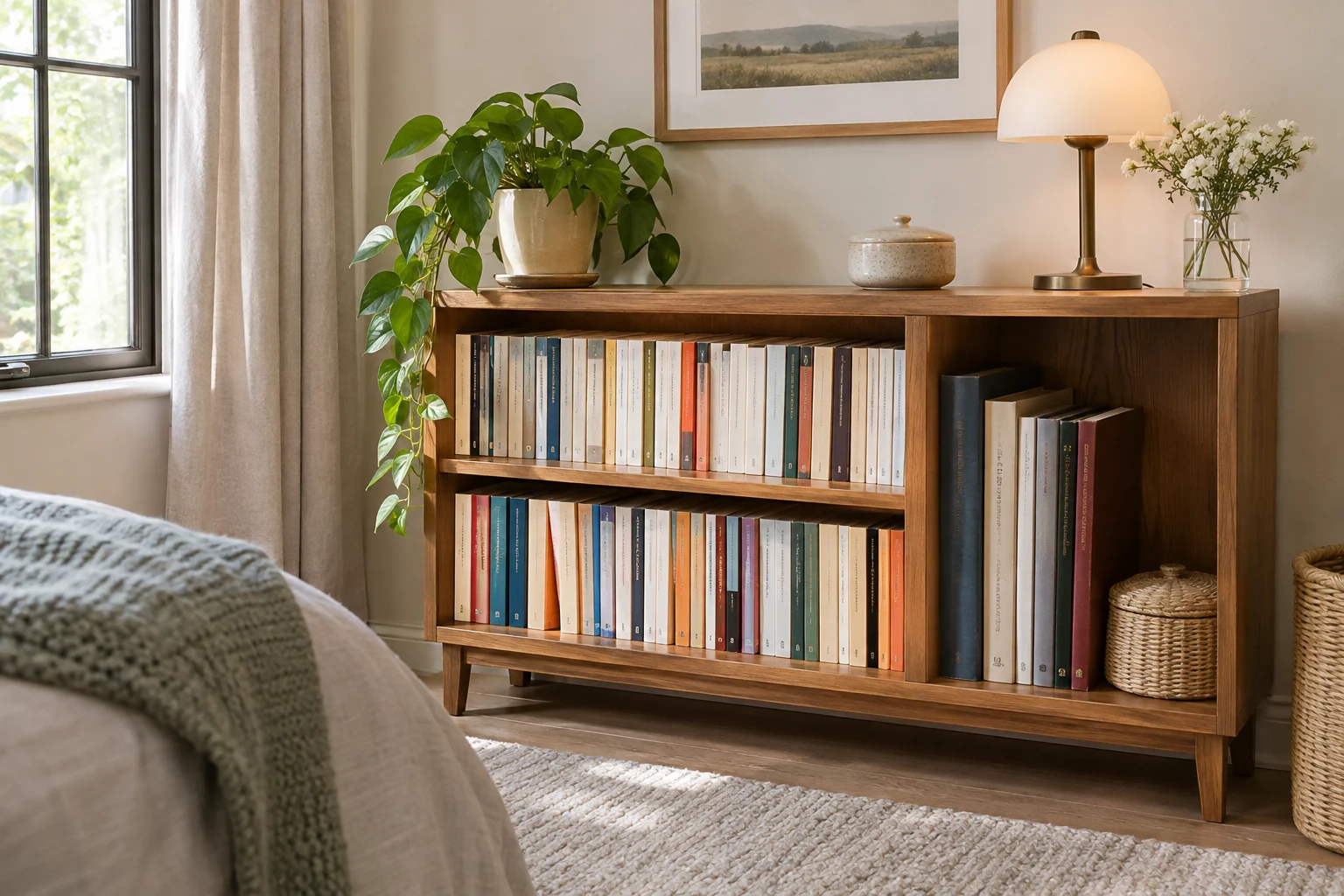
A shallow unit can keep paperbacks visible without consuming the depth of a larger cabinet. Compare the actual book sizes with the clear shelf depth and support. Keep larger volumes in another suitable area instead of letting them protrude. The smaller footprint is useful only when it fits the collection you intend to put there.
7. Adjust supported shelves around different heights

Adjustable shelving can divide a case around tall and short books when the product permits those positions. Check the shelf supports and loading instructions before changing the arrangement. Leave enough space to grip and remove a book without scraping the shelf above. Planning both resulting bays can prevent a useful change for one group from making another awkward.
8. Keep short rows upright with appropriate support
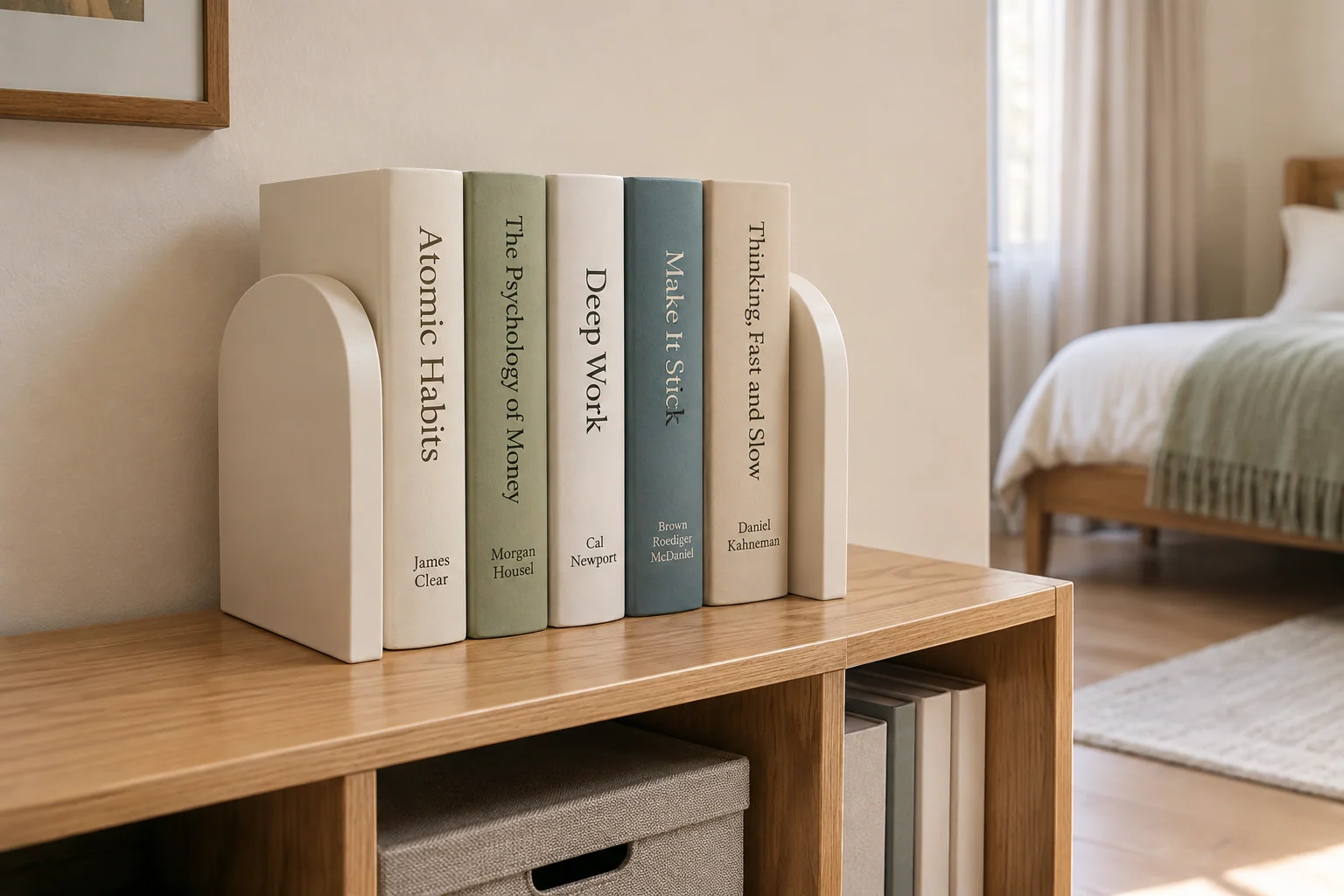
A partly filled shelf needs an arrangement that keeps books straight instead of allowing them to lean heavily. Choose suitable supports that do not have sharp edges or press unnecessarily against the bindings. Keep the furniture itself appropriate for the load. A short supported row can look considered without filling the remaining space with books bought only for display.
9. Use closed cabinet bays for visual calm
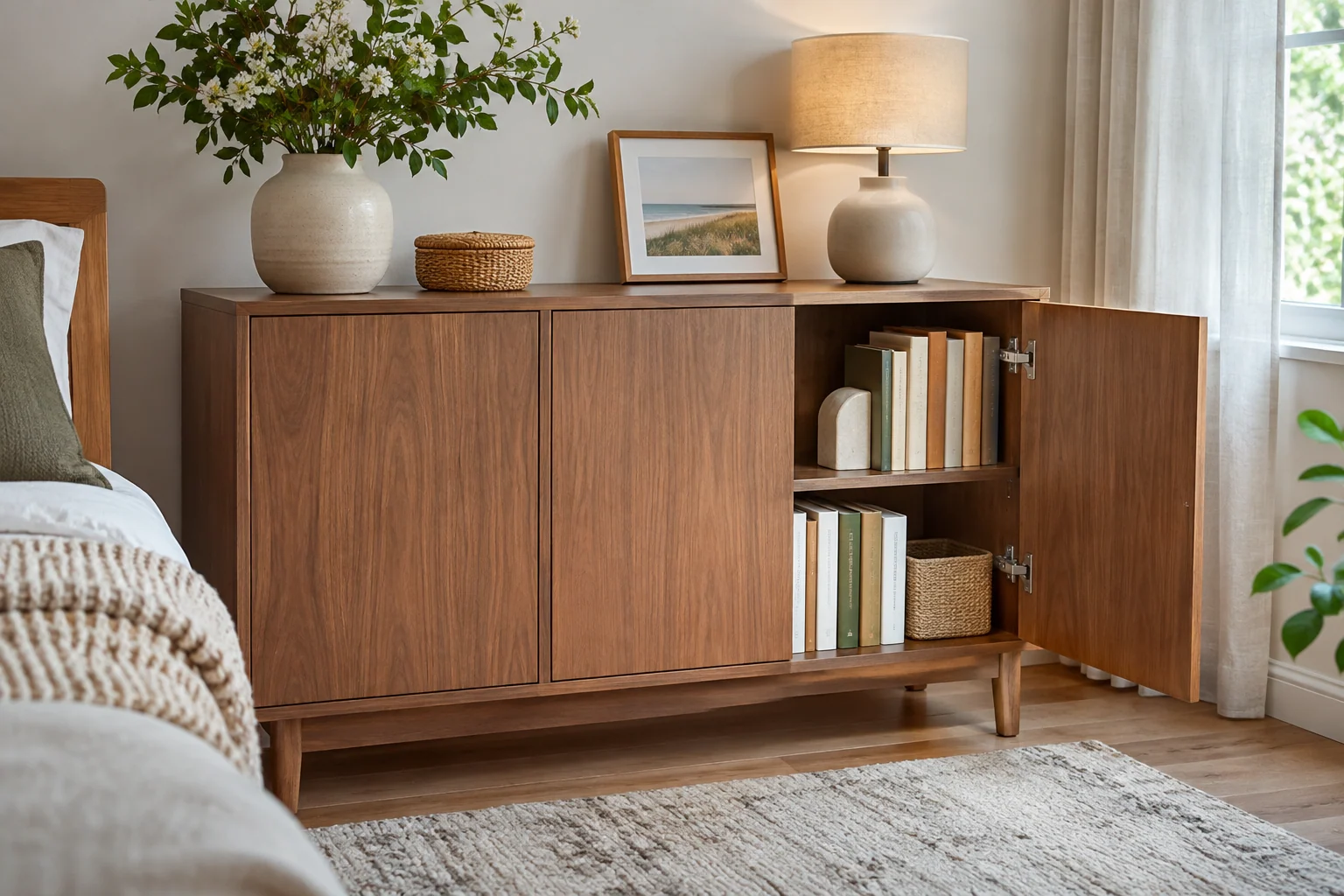
Doors can make a collection feel quieter in a bedroom, especially when the room already has open clothing or work storage. Keep the interior grouped and supported so the books remain easy to find. Check the hinges and complete door movement. A closed front should simplify the room's appearance without making retrieval depend on unloading a crowded shelf.
10. Keep a glass-front collection away from harsh light
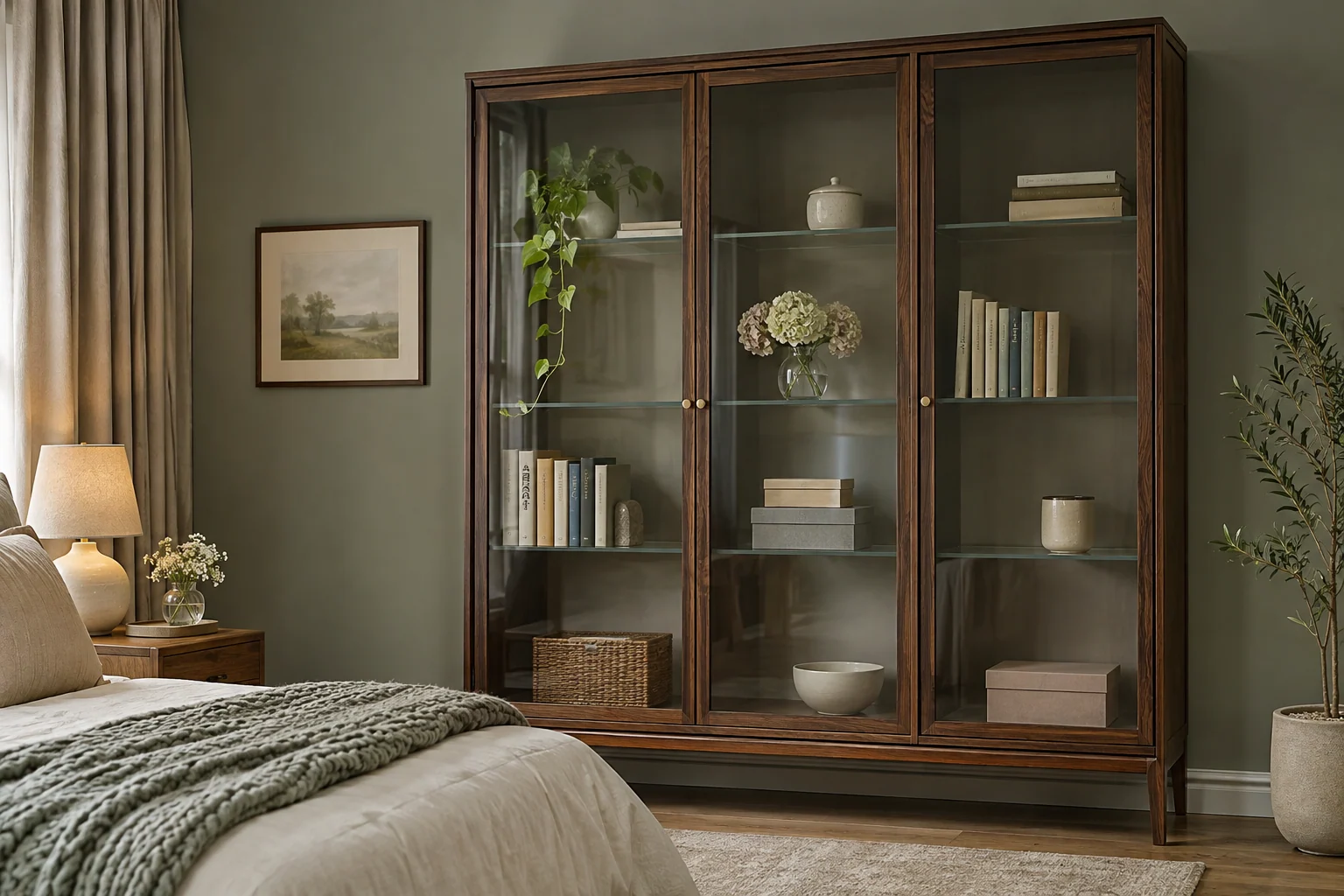
A glass-front cabinet can display books while giving the room a deliberate furniture element. It does not remove the need to consider light and environment. Choose a position suited to the collection, particularly for valued covers. Keep the grouping based on readable access and support instead of packing every visible bay for a perfectly symmetrical display.
11. Use a bed frame with intended book storage
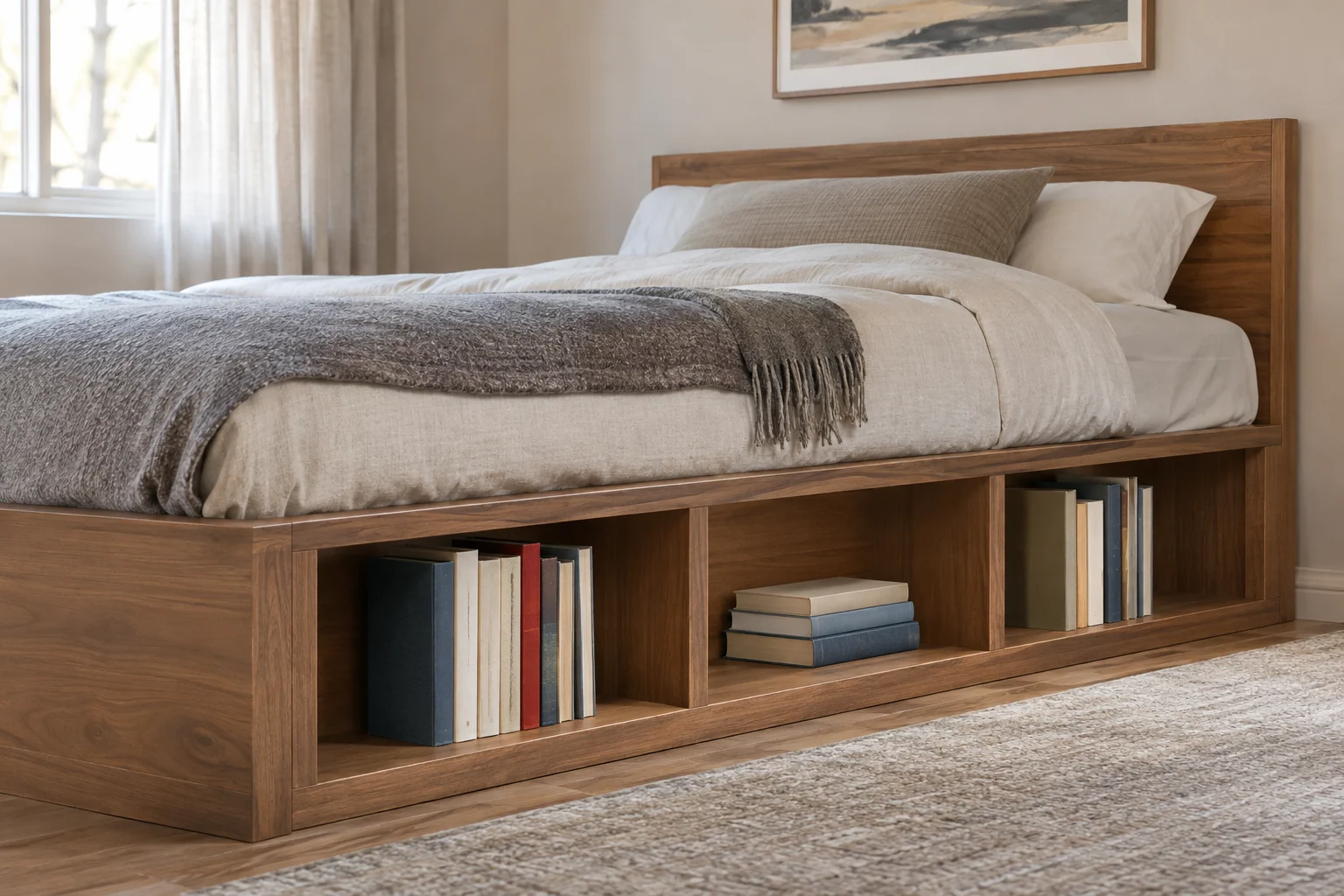
A purpose-designed frame may include accessible storage suitable for books, but the actual construction and instructions decide its use. Check the opening with bedding in its normal position. Keep books clear of any moving mechanism. Avoid creating heavy improvised shelving above the sleeping area simply because the headboard leaves a visually empty wall.
12. Choose a storage headboard for its access

A purpose-designed storage headboard can hold a limited suitable group when its compartments serve the room's normal movement. Check how a book is lifted out from each side of the bed. Follow the product's loading and installation guidance. A display niche that is difficult to reach should not become the main home for a large collection.
13. Use a reading bench with appropriate book bays
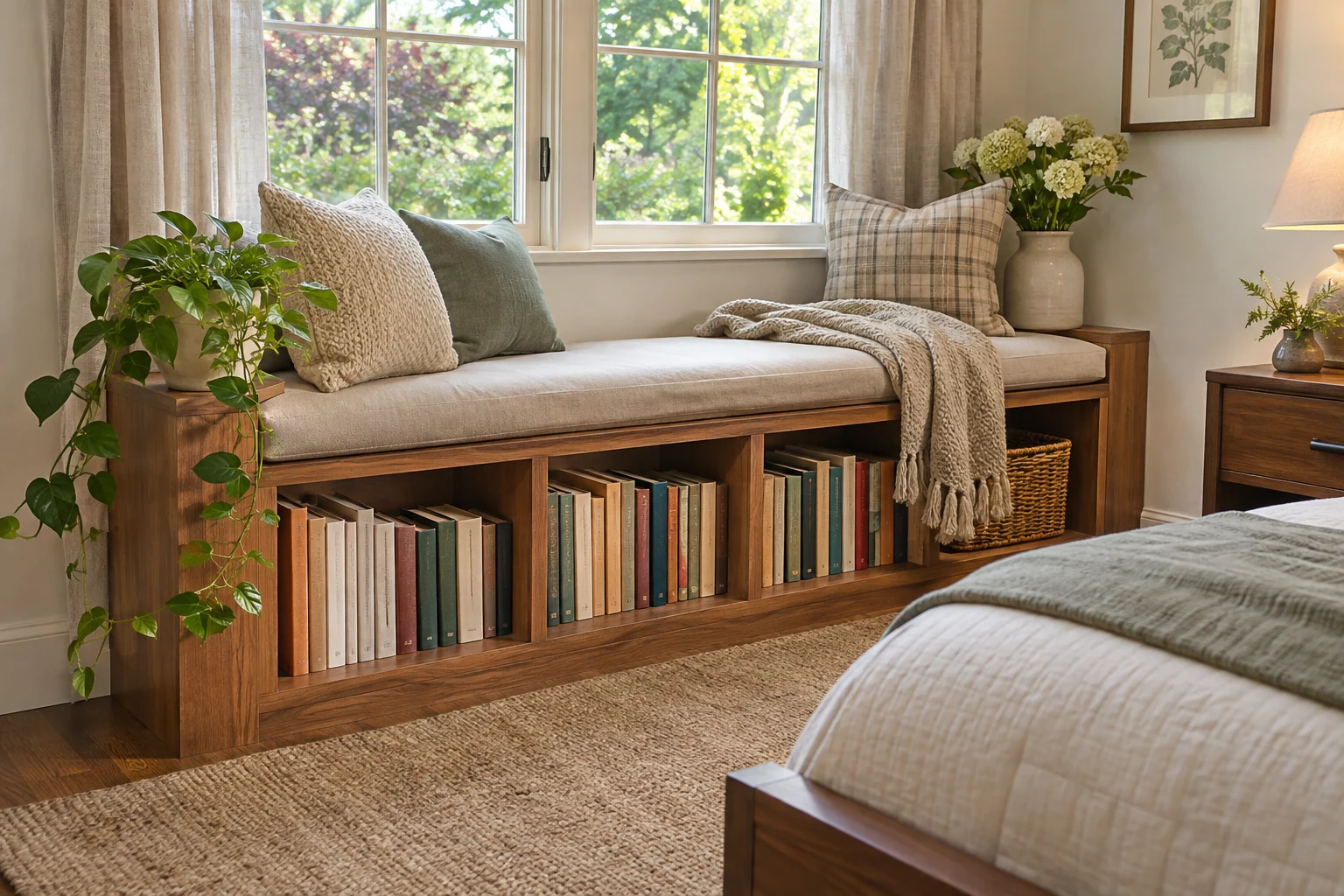
A bench designed for seating and storage can connect books to a bedroom reading area. Confirm both functions in the product guidance rather than treating an ordinary shelf unit as a bench. Keep the book openings reachable and fully supported. A removable cushion should not conceal a handle or turn each book return into a furniture rearrangement.
14. Keep bedroom work references in a separate section
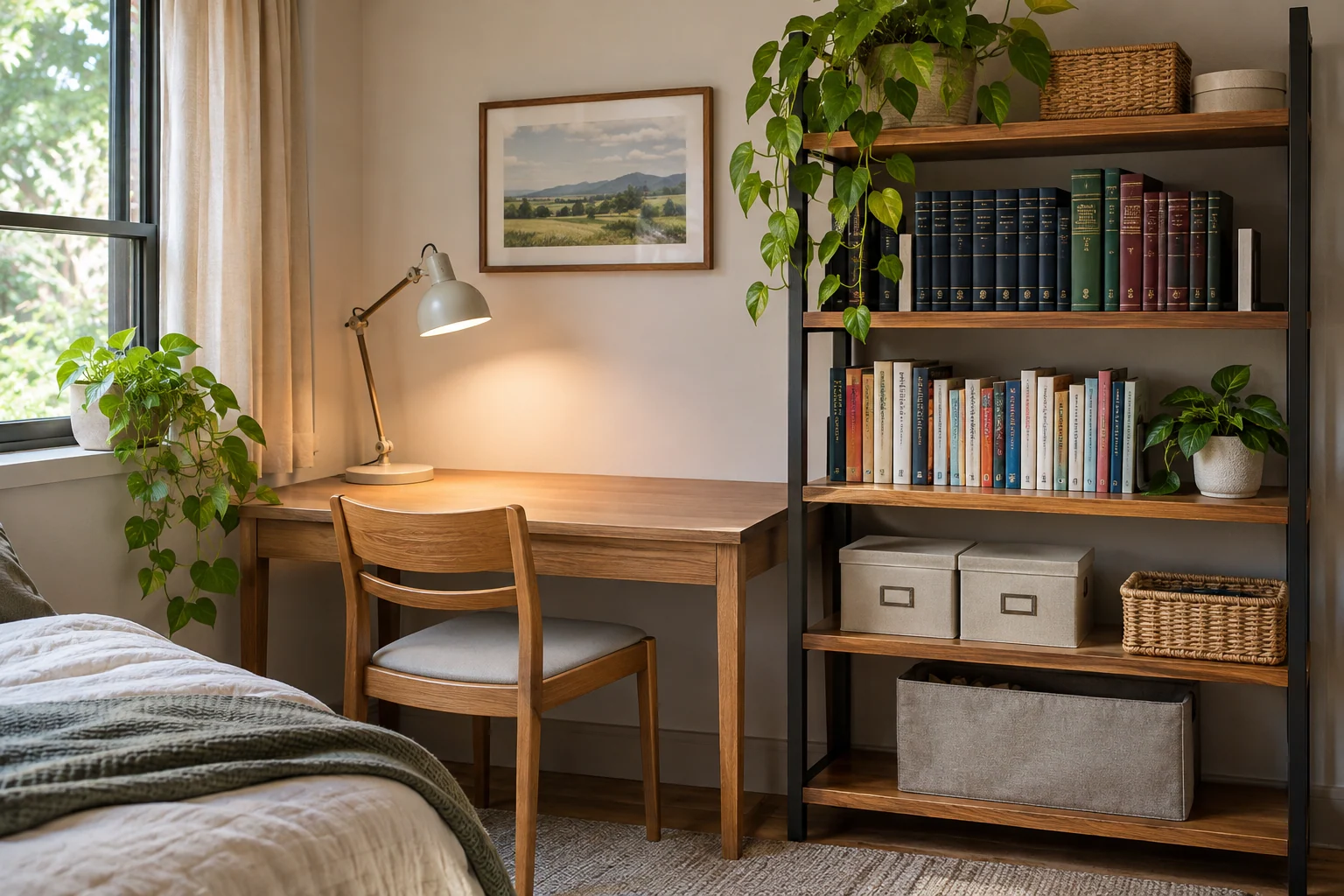
A bedroom desk may need a few working books without making the entire room feel like office storage. Give those titles one defined supported section near the desk, then keep leisure reading elsewhere in the same case if needed. Choose the division around use. Color grouping alone may hide the reference you need behind unrelated decorative books.
15. Store a selected paperback group in a fitted box

A suitable box can contain a defined group when its dimensions and materials fit the books and intended storage period. Keep volumes supported rather than compressed at an angle. Use appropriate conservation-quality enclosures for valuable or fragile material. Keep the box accessible enough that it remains part of the usable collection instead of becoming an unknown object beneath other storage.
16. Use under-bed space only when the environment and enclosure suit it
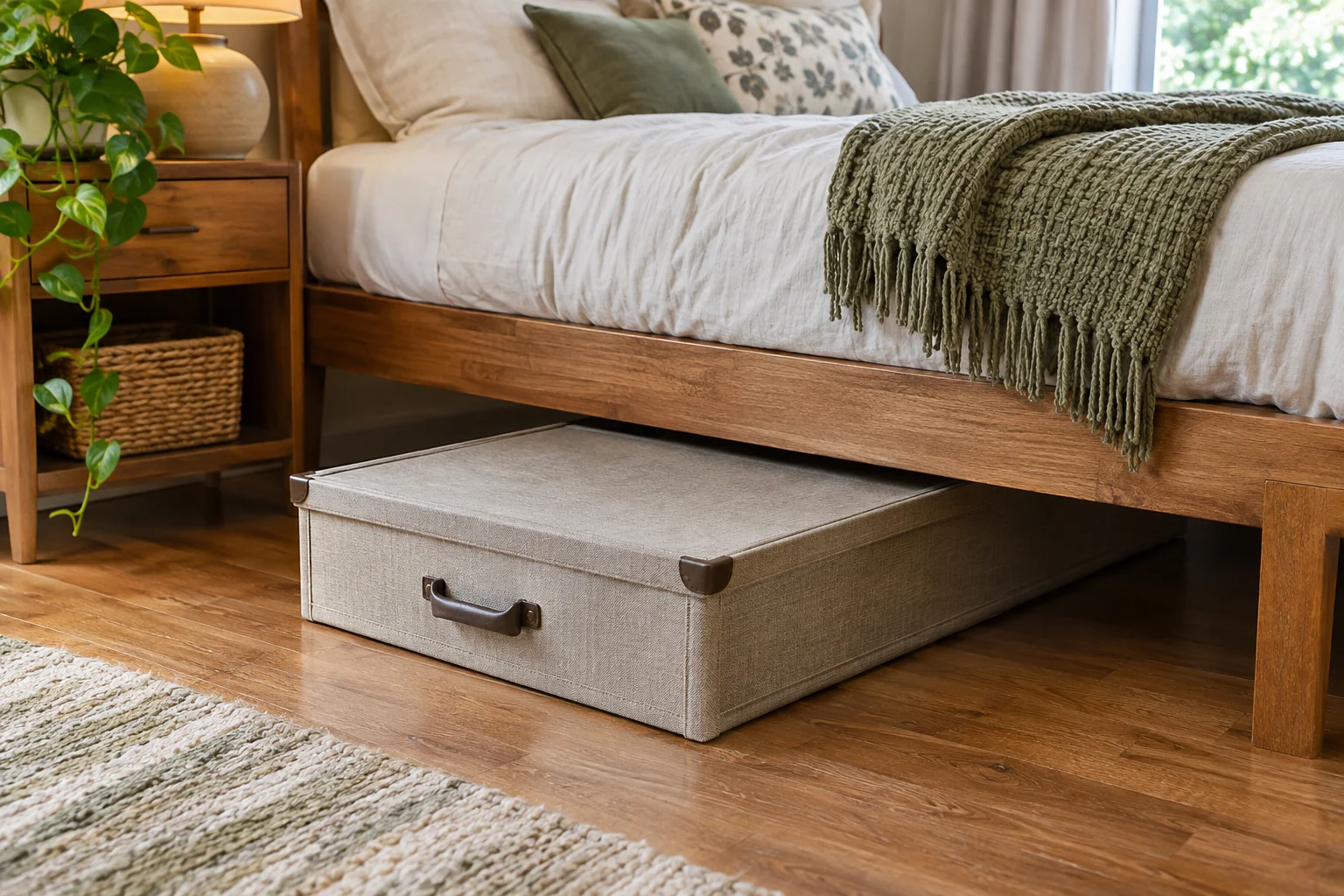
A suitable under-bed container can hold selected books if its support, height and environment are appropriate. Check the bed's mechanisms, floor conditions and container instructions before choosing it. Keep valuable material away from unsuitable damp or temperature conditions. This can serve an occasional group, while frequently used books may be easier to manage on an accessible shelf.
17. Group a series so the next volume is easy to find

A series can have its own supported shelf group, especially when it is read in order or shared. Keep the sequence understandable without covering titles with decorative objects. Leave appropriate room for the volumes actually expected, rather than a large speculative gap. A practical grouping can preserve a mixed collection's character while making one repeated search straightforward.
18. Separate borrowed books from the permanent collection

A small return position can keep library and borrowed books from disappearing into the long-term shelves. Use a suitable supported holder or defined shelf area and keep a private reminder of the return destination. Keep it distinct from books leaving the collection permanently. The routine should make returns obvious without creating a large administrative system beside the bed.
19. Use a quiet wall color behind a mixed collection
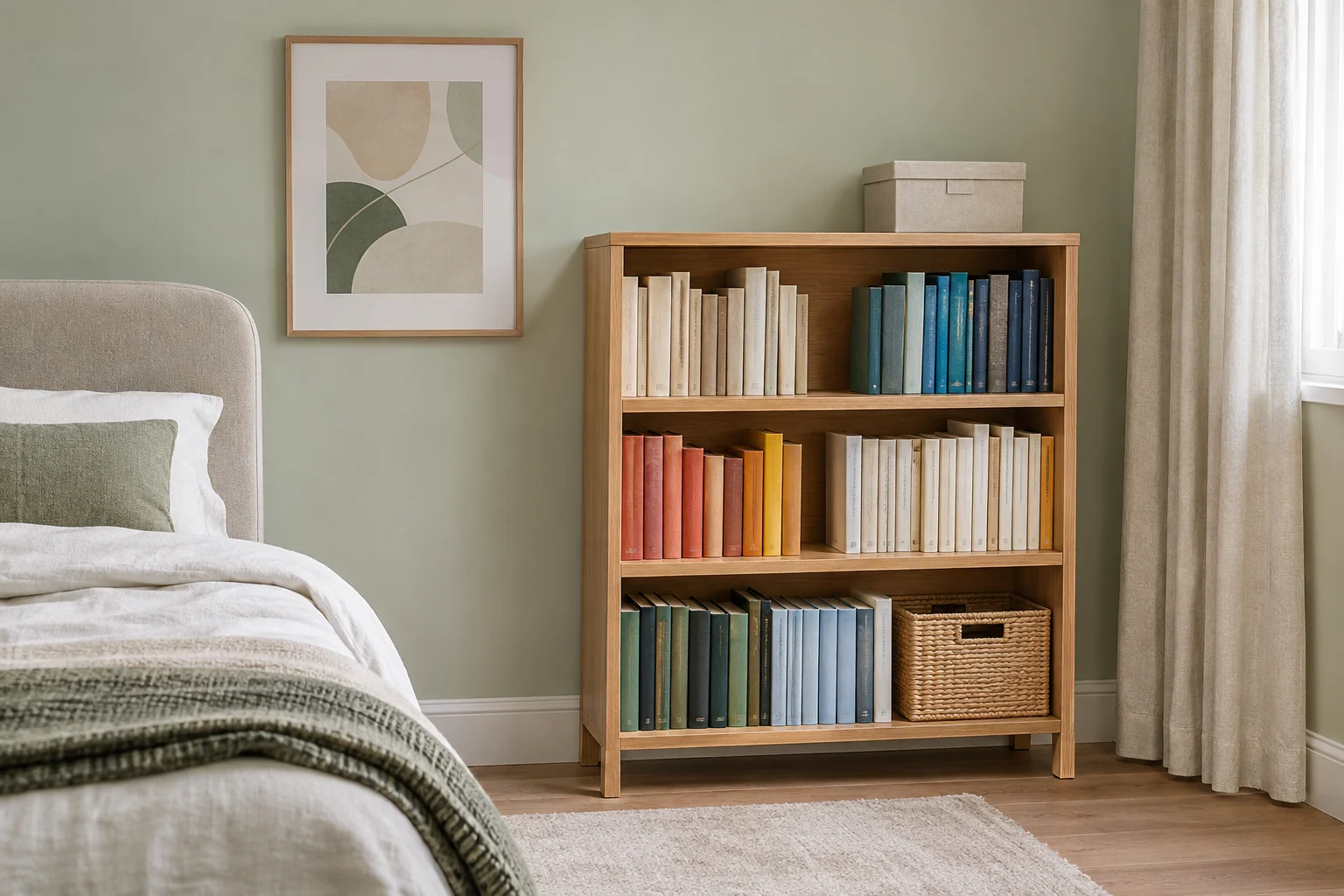
A restrained backdrop can make varied bindings feel considered without sorting the books by color. Let the arrangement follow reading and retrieval first, then use the case or wall to provide visual calm. Choose a finish suited to the actual shelving system and its care. Avoid adding decorative liners or treatments without checking their suitability around stored material.
20. Keep the top of a low case mostly available

A clear top can let the bookcase serve the bedroom without becoming another crowded display surface. Add only what has a real place there and suits the furniture's guidance. Keep plants and liquids in separate appropriate positions rather than directly above valuable books. The collection should remain straightforward to inspect and reach.
21. Place the case where doors remain independent

Check bedroom, closet and cabinet doors with the bookcase in its proposed position. Include the room's ordinary furniture, not just the empty floor plan. Books should not be the item moved every time someone opens storage. Shift the case or choose a different depth when a visually neat alignment creates that repeated conflict.
22. Keep a small return shelf within the main case

A defined return area can hold finished books briefly until they are put back into their normal groups. Keep the area supported and limited in size. Clear it as part of the reading routine rather than letting it become an additional unsorted collection. This can be useful when more than one person uses the shelves.
23. Give fragile bindings their own suitable enclosure
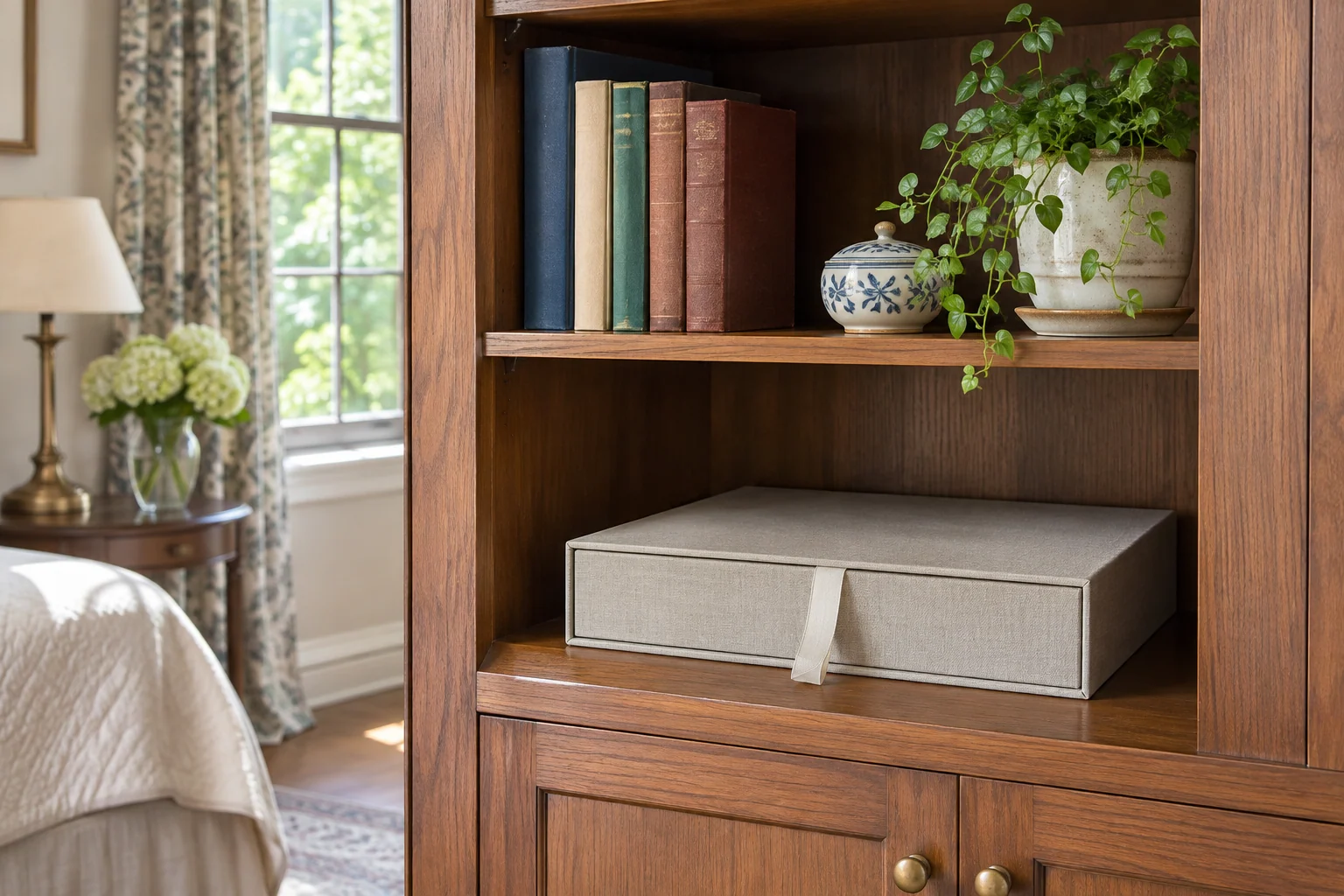
An older or damaged book may need a different arrangement from everyday paperbacks. Consult appropriate conservation guidance rather than tightening a decorative bookend around it. Keep the enclosure supported and the location identifiable. A valued book can belong in the bedroom collection without being exposed continuously as a styling object.
24. Record the location of occasional books

A short note can identify which bay or container holds a rarely used subject or collection. Record only information that helps you find the book. Keep the note consistent with actual moves instead of building a complicated catalog for a small shelf. This is particularly useful when some books are stored flat or inside opaque boxes.
25. Review the collection before adding another case

When the room begins to fill, compare what is kept with how the bedroom is used. Retain the books that matter, then give outgoing copies an intentional destination. Choose more suitable storage when the collection genuinely needs it. The decision should preserve room to sleep, dress and move comfortably rather than turn every spare gap into another book pile.
A shelf-location card for a bedroom collection
Record the largest book's height and depth, the measured length of each group, shelf dimensions, product loading guidance and the intended retrieval route. A hypothetical book 13 inches deep extends 1 inch beyond a 12-inch-deep shelf; width alone does not make that bay suitable. Choose a more appropriate fully supporting arrangement rather than treating protrusion as free storage. Note where oversized, borrowed and fragile items belong.
A practical next step
Choose one clear home for the collection, then keep the current read and borrowed books easy to return. Supported shelves and understandable groups can make a bedroom library feel like a useful part of the room rather than a series of piles.
The images are original AI-generated design concepts. They illustrate arrangements rather than tested products, installations or measured performance.
Sources and care references
- Library of Congress: Storing Your Books
- NEDCC: Storage and Handling for Books and Artifacts on Paper
- CPSC Anchor It: Furniture Tip-Over Prevention
Related reading on Nestroxe
Optional digital guide for this topic
If you prefer a structured workbook, explore this related paid guide.