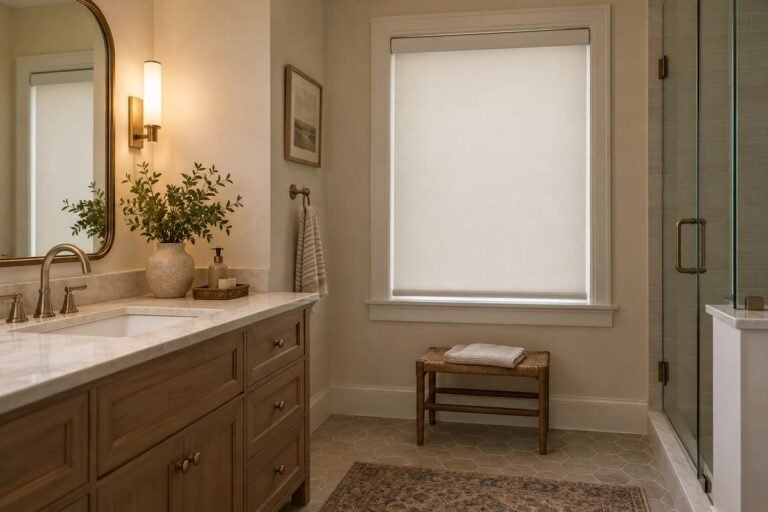
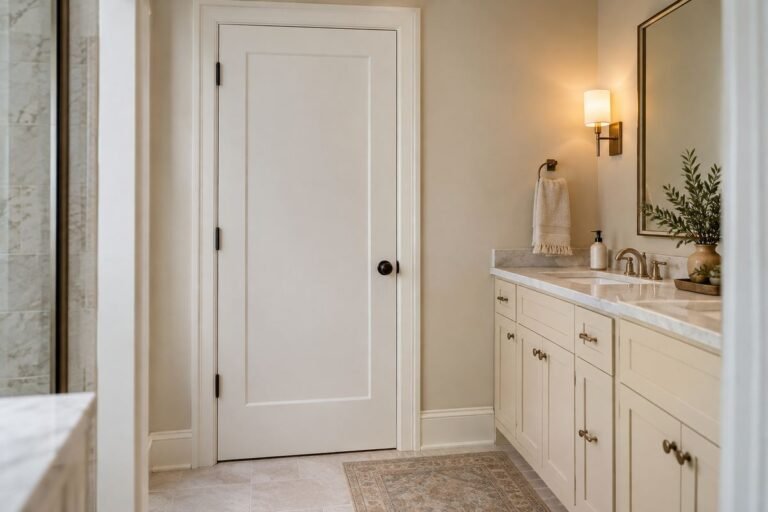
Bathroom lighting ideas need to solve more than the appearance of a fixture. You need useful light at the mirror, enough general light to move around the room and controls that suit the way the bathroom is used. A decorative fitting can be part of that plan without doing every job.
Start by recording what the current lighting gets wrong. Is your face shadowed at the mirror? Is an exposed bulb reflected at eye level? Does the ceiling light make the whole room too bright for an evening visit? Choose an arrangement that addresses the actual problem.
These are design concepts, not electrical installation drawings. Bathroom fixture suitability depends on the exact location, moisture exposure, product listing and local requirements. Have a qualified electrician confirm the complete layout, installation and controls before purchasing fixed fittings.
The images are original AI-generated decor concepts, not installation diagrams or photographs of completed client projects.
Compare Bathroom Lighting Ideas During the Actual Mirror Task
Compare bathroom lighting ideas by recording the shadow, reflection or control problem that needs attention before selecting another fixture. Next, view the proposed arrangement from the sink and the doorway after dark. For example, a bright halo can emphasize the wall while useful forward light is still needed at the face. Compare actual output, distribution and controls with a qualified installer rather than inferring task performance or location suitability from the decorative shape.
Jump to an idea
- Vertical lights beside a single mirror
- A wide diffused light above the mirror
- A mirror with integrated forward lighting
- A backlit mirror with separate task light
- An opal globe pair
- Slim cylinder sconces for a narrow wall
- Black fixtures against a pale wall
- Warm metal with a quiet diffuser
- White fixtures that blend into the wall
- A shaded traditional sconce
- Three sconces across a double vanity
- A separate light group for each sink
- A wide mirror with one continuous bar
- An offset mirror with balanced light
- A compact light for a small powder room
- A low-profile ceiling light
- A restrained semi-flush fitting
- Recessed general light with face lighting
- Separate zones in a larger bathroom
- A gentle under-vanity accent
- Light in a dry display niche
- Daylight supported by controllable light
- A calm evening scene
- Controls placed for an understandable routine
- A small bathroom with two clear layers
Plan bathroom lighting around the mirror and the room
Sketch the actual vanity, mirror, doors and wall space. For an illustrative fit check, a 48-inch-wide wall area with a 30-inch mirror leaves 18 inches total, or 9 inches on each side if centered. Two 4-inch-wide sconces may fit visually, but their required mounting space, projection and the mirror door swing still need checking. Example dimensions are not installation clearances. Test proposed outlines at full size and check them from your normal standing position.
| Problem | Design direction | Check |
|---|---|---|
| Shadows at the mirror | Diffused light beside the face | Fixture position and actual mirror use |
| Glare in the reflection | Shielded or diffused source | Seated and standing sightlines |
| Low ceiling | Low-profile general fitting | Product suitability and room clearance |
| Harsh evening light | Separate lower-output layer | Compatible controls and a usable walking route |
| Large double vanity | A layout serving both stations | Each user position, not only visual symmetry |
Read the bulb and fixture information separately
Lumens describe light output; Kelvin describes the appearance of white light, not its brightness. If you want dimming, check the bulb or integrated fixture and the control for compatibility. For a coordinated look, compare the selected light color across the mirror and ceiling layers rather than mixing products by the vague label “warm white.” Manufacturer bathroom guidance is useful background, but a product’s rating does not automatically make it suitable everywhere in a bathroom.
1. Begin Bathroom Lighting Ideas Beside the Actual Mirror

A pair of diffused vertical fixtures can frame a mirror while bringing light closer to the face. This is worth considering when an overhead fitting creates shadows during ordinary grooming.
Check the actual mirror width and the space beside it. The fixture should not collide with a cabinet door or be chosen by symmetry alone.
Practical tip: Review the arrangement from your usual standing position.
2. A wide diffused light above the mirror
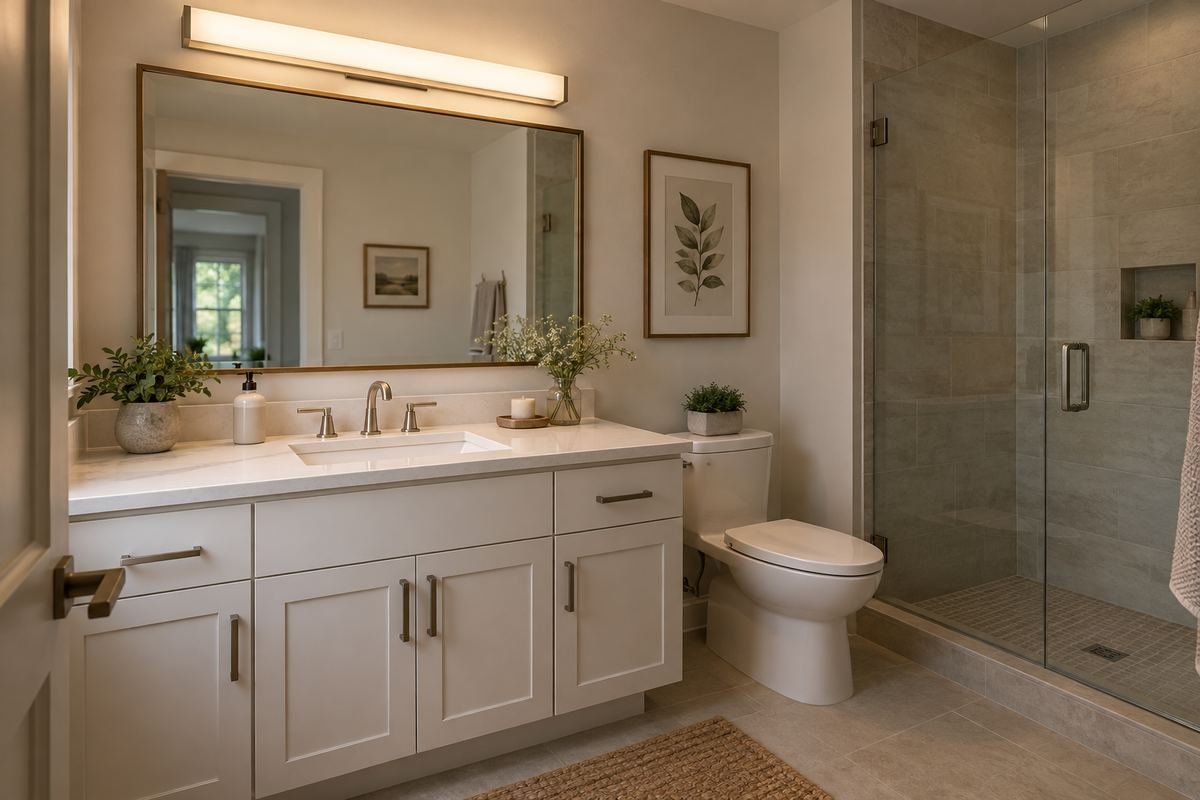
An above-mirror bar can suit a vanity where side wall space is limited. A broad diffuser gives a calmer appearance than a row of fully exposed bright bulbs.
Check how the light reaches your face and whether the housing projects into the reflection. Keep the fitting scaled to the mirror rather than filling the wall automatically.
Practical tip: Compare a full-size paper outline before choosing the bar length.
3. A mirror with integrated forward lighting

A mirror with designed forward light can simplify a narrow vanity wall. The illuminated edge becomes part of the mirror rather than a separate fixture on each side.
Look for actual task-light information, controls and service requirements. An illuminated border is not proof that the mirror produces enough useful light for the whole bathroom.
Practical tip: Plan a separate general-light layer if the room needs one.
4. A backlit mirror with separate task light

A wall halo can make the mirror feel lighter while separate diffused sconces provide useful face light. This treats the halo as an accent rather than asking it to perform every task.
Keep the combination restrained so the wall does not become a cluster of glowing outlines. Compare the light colors while both layers are on.
Practical tip: Check the face light with the halo turned off as well.
5. An opal globe pair

Opal-style globes add a simple rounded shape beside a mirror. Their soft-looking surface can work with square tile and straight cabinetry without another patterned material.
Compare the complete fixture projection and actual diffusion. A globe that looks gentle in a product photo can still feel bright in a mirror at close range.
Practical tip: Check the view from both the sink and doorway.
6. Compare Narrow Bathroom Lighting Ideas Through Distribution
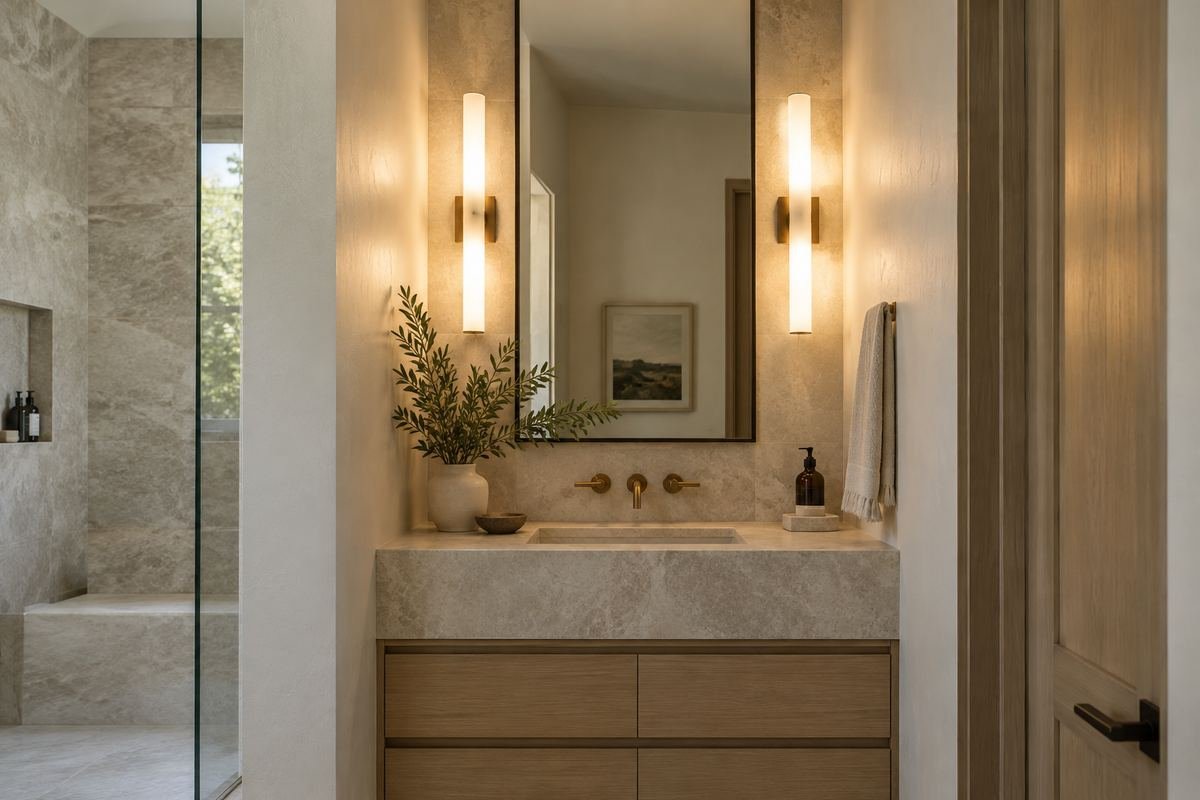
Tall narrow cylinders can define the mirror area without using much horizontal space. They suit a restrained room where larger shades would crowd the wall.
Check the illuminated area and the direction of light, not just the silhouette. Some cylinders send most light upward or downward rather than toward the face.
Practical tip: Choose the distribution that serves the mirror task.
7. Black fixtures against a pale wall
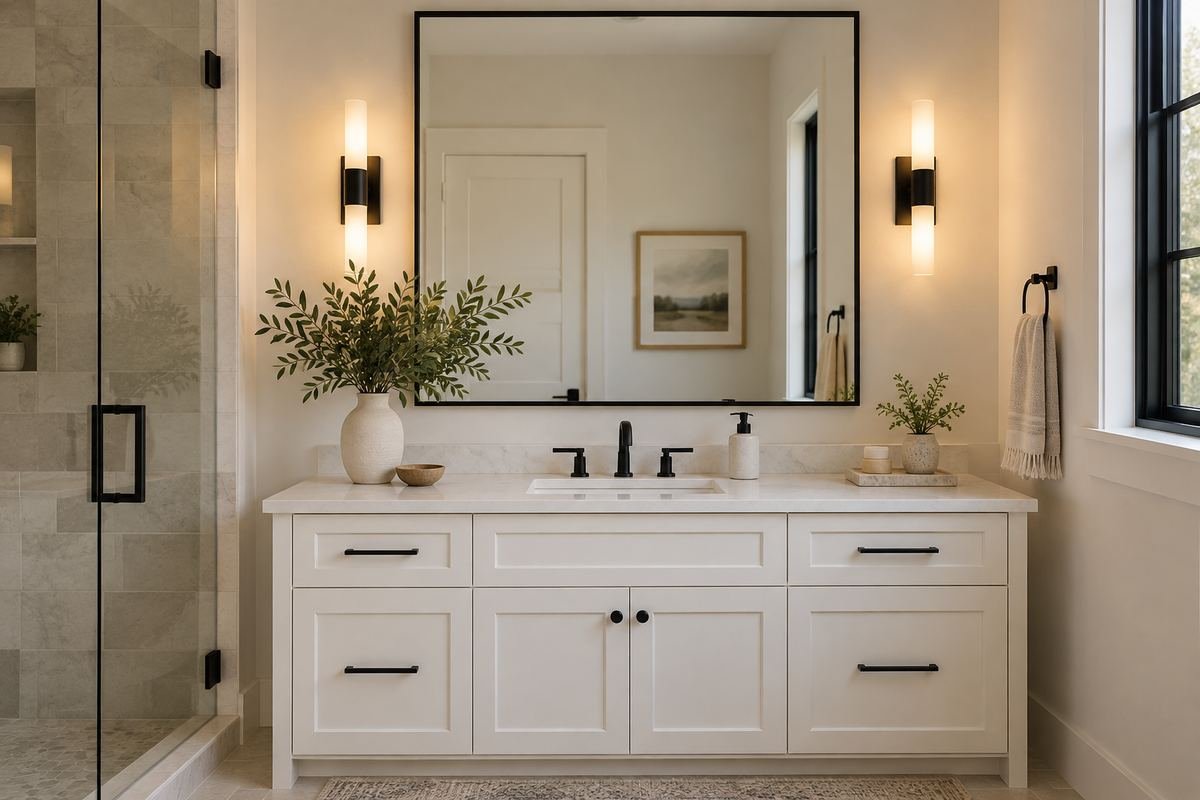
A dark fixture can provide a crisp outline in a light bathroom. Repeat the finish in a limited nearby detail, such as a mirror frame, to make the contrast feel connected.
The dark housing is a visual choice; it does not determine light quality. Keep the source comfortably diffused and check the fitting’s exact bathroom suitability.
Practical tip: Avoid adding black to every small accessory just to match.
8. Warm metal with a quiet diffuser

A brass-toned fixture can warm a bathroom with gray tile or white cabinetry. A simple diffuser lets the finish provide the decorative detail.
Compare the finish beside taps and hardware in the room’s actual light. Coordinated tones can work without buying an exact matching set for every metal surface.
Practical tip: Check whether the finish needs a special cleaning method.
9. White fixtures that blend into the wall

A pale fixture can keep attention on a textured tile or a distinctive mirror shape. This is useful when the wall already has enough contrast.
Choose a visible form that looks intentional even when the light is off. Check the white finish against the tile; two near matches can read differently under evening light.
Practical tip: View a finish sample beside the wall before ordering.
10. Choose Shaded Bathroom Lighting Ideas for the Actual Location

A fixture designed for the proposed bathroom location can bring a softer traditional outline to a vanity. It can sit comfortably with framed mirrors and paneled cabinetry.
Do not substitute an ordinary living-room fabric-shade light just because the shape looks right. Check the complete product listing, materials and placement requirements.
Practical tip: Keep the shade proportionate to the available wall area.
11. Three sconces across a double vanity

An outer fixture on each side and one between the mirrors can give a double vanity a clear rhythm. It is an option when the wall can support three fittings without crowding the mirrors.
Check both user positions separately. Equal spacing on paper may not align with the sinks, cabinet divisions or the practical standing areas.
Practical tip: Mark the mirror and sink centerlines on the planning sketch.
12. Give Shared Bathroom Lighting Ideas Two Useful Stations

Two independent mirror-and-light groups can make a broad vanity easier to organize. The fixtures can repeat while each station remains visually distinct.
Keep controls and storage understandable for both users. Check that the light from one station does not create an uncomfortable reflection at the other.
Practical tip: Choose the overall arrangement around the actual sink positions.
13. A wide mirror with one continuous bar

A long mirror can pair with a restrained linear fitting above it. This keeps a double vanity wall simpler when several separate sconces would compete with cabinetry.
Compare the actual spread of light across both standing areas. A long fixture is not automatically an evenly lit fixture.
Practical tip: Review output and distribution as well as the bar’s length.
14. An offset mirror with balanced light

A vanity near a side wall may need an offset arrangement. A light layout that responds to the usable wall can feel more deliberate than forcing a centered mirror into a cramped opening.
Check where you stand at the basin and what the mirror reflects. The composition should serve that position even if the wall is asymmetrical.
Practical tip: Draw the door trim and cabinet swing on the same sketch.
15. A compact light for a small powder room

A small powder room can benefit from one clear vanity light and a quiet general layer. Keeping fixture shapes simple prevents the tight wall from feeling overfilled.
Compare fixture depth near the door and mirror. A small diameter can still project too far into a narrow space.
Practical tip: Measure projection in addition to width and height.
16. A low-profile ceiling light

A broad low-profile fitting can provide general light without adding a hanging object to a low room. It works as a background layer beside more focused mirror lighting.
Choose it for the exact room and location, and check how it looks reflected in the mirror. Low profile describes shape, not bathroom suitability.
Practical tip: Test the ceiling fixture and vanity light together.
17. A restrained semi-flush fitting

A bathroom-appropriate semi-flush fixture can add a little shape when a flat ceiling disk feels too plain. A diffused lower surface can keep the view calmer.
Check the room height, door operation and actual location requirements. The decorative ceiling layer still needs to work with the mirror lighting.
Practical tip: Compare the fixture’s complete drop before buying.
18. Pair Recessed Bathroom Lighting Ideas With Face Light

Recessed fixtures can make the ceiling visually quiet while separate vanity lights serve the mirror. This avoids relying on a downlight directly over the head for grooming.
Have the layout and fixture selection planned for the actual room. More recessed fittings do not automatically mean more comfortable light.
Practical tip: Review reflected glare before adding another downlight.
19. Separate zones in a larger bathroom
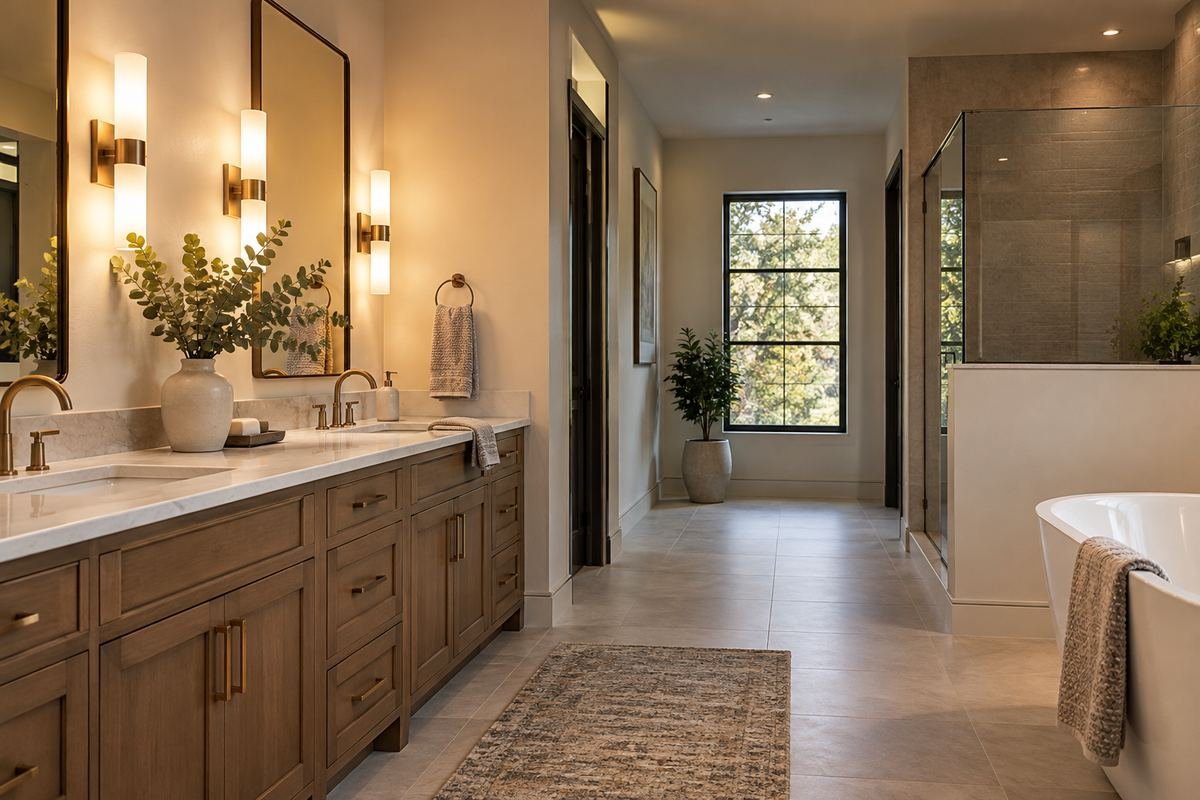
A large room can need more than one general-light zone. Lighting the vanity and circulation areas separately can make the space useful without operating every fitting at once.
Map the bath or shower areas with a qualified electrician and select the exact appropriate fixtures. Keep the decorative plan connected through restrained shapes and light color.
Practical tip: Organize controls by the activities people actually use.
20. Keep Under-Vanity Bathroom Lighting Ideas a Supporting Accent

A designed concealed light beneath a floating vanity can give the cabinetry a lighter appearance. It can also be part of a lower-output evening scene when properly specified.
Keep the source shielded from normal sightlines and choose a suitable installed system. This accent does not replace the light needed to use the room safely.
Practical tip: Check for bright reflections on glossy floor tile.
21. Light in a dry display niche

A small illuminated niche can highlight a simple display outside wet areas. It can add depth to a plain bathroom wall without another visible wall fixture.
Keep the niche contents minimal and choose a system appropriate to its exact location. Do not treat a decorative image as a guide to wiring or moisture protection.
Practical tip: Keep the accent dimmer than the main task area.
22. Daylight supported by controllable light
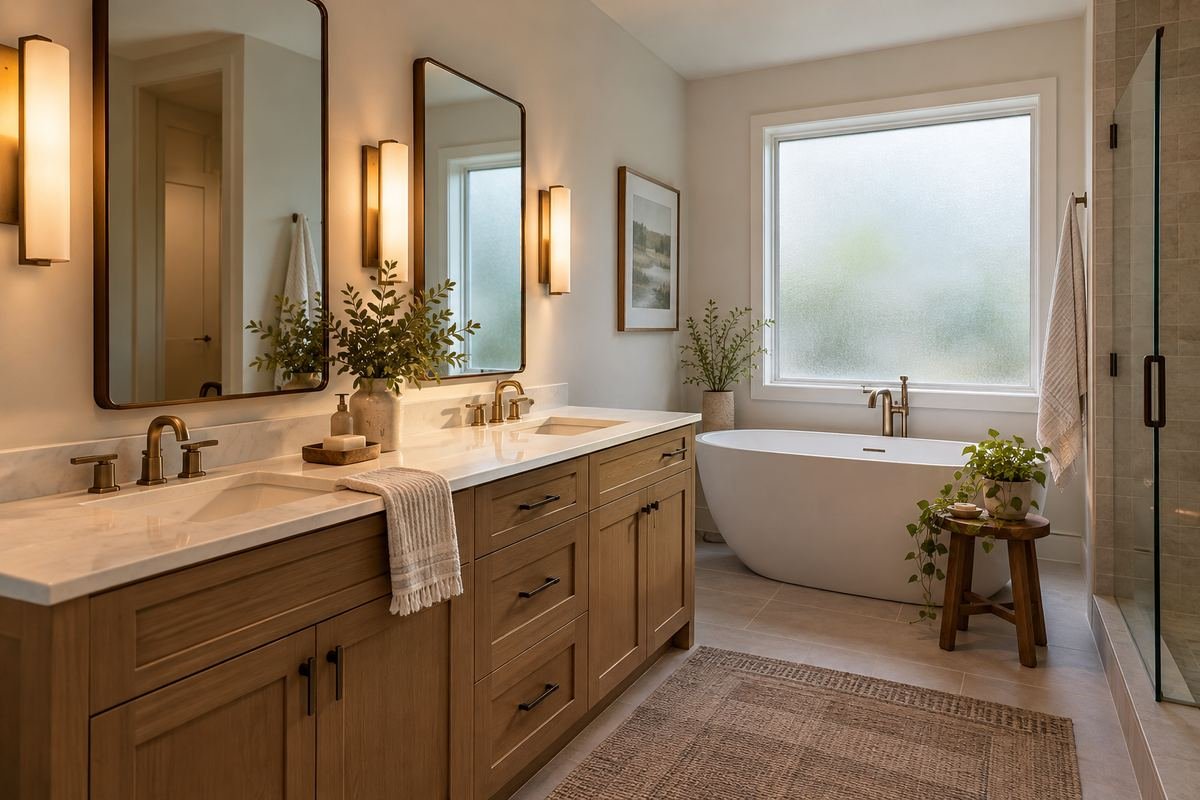
A window may provide lovely daytime light while leaving the mirror uneven after sunset. Coordinate the electric layers so the room works under both conditions.
Check the window’s reflection and privacy treatment before placing fixtures. Avoid assuming a bright daytime photograph represents the bathroom’s usual morning or evening conditions.
Practical tip: Evaluate the proposed arrangement after dark too.
23. A calm evening scene

An evening setting can use a lower-output layer while preserving a clear route through the bathroom. Separate controls make that easier than trying to use one bright ceiling light for every visit.
Check dimmer and fixture compatibility. The lowest setting must still be useful, and a decorative glow alone may be insufficient for the room’s activities.
Practical tip: Test the actual low setting before treating it as the nightly scene.
24. Make Bathroom Lighting Ideas Controls Easy to Understand
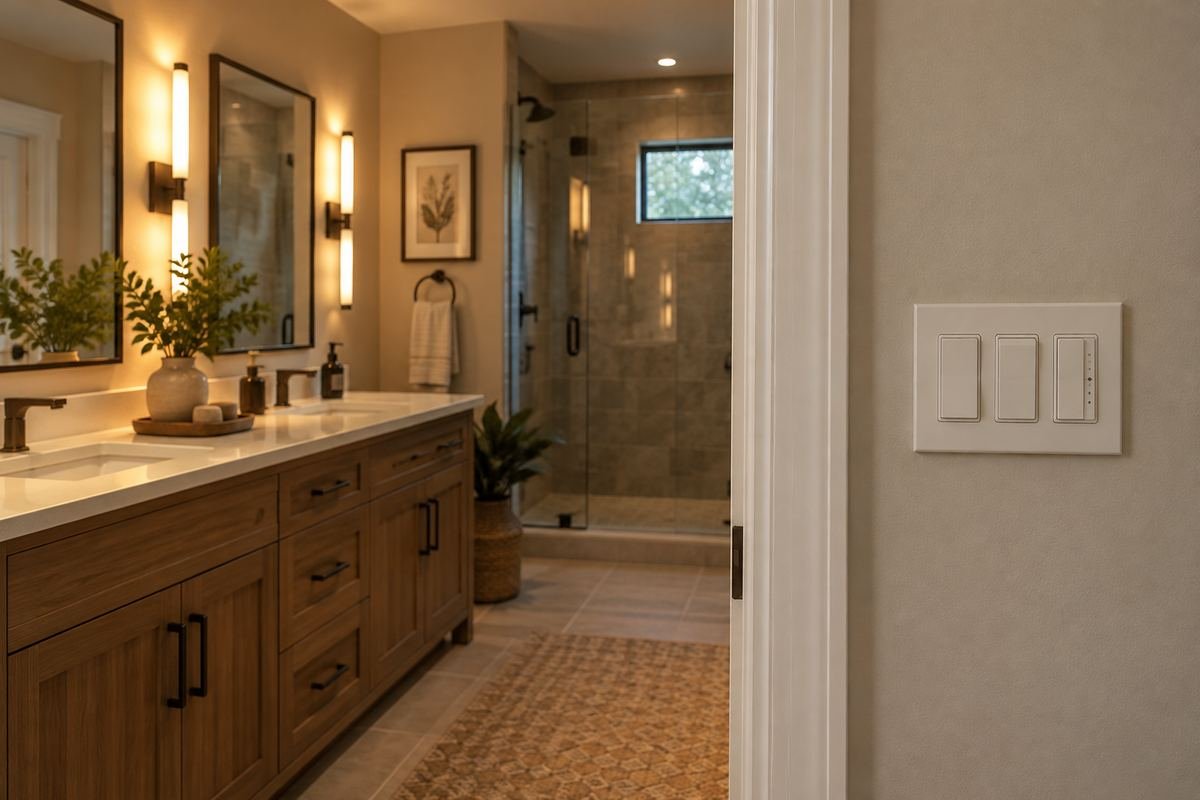
A lighting plan includes how it is operated. Clearly grouped controls can make the vanity, general light and evening layer easier to use without trial and error.
Discuss suitable locations and accessibility needs with the installer. App control can be an addition, but consider whether guests can operate the ordinary room lighting easily.
Practical tip: Keep the normal entry action simple.
25. A small bathroom with two clear layers

A compact room often needs fewer well-chosen layers than a dramatic showroom arrangement. One useful mirror-light solution and one quiet general fitting can be a complete starting plan.
Check shadows and reflections before adding accents. If both existing tasks are served, leaving the remaining surfaces unlit can make the room feel calmer.
Practical tip: Solve the main lighting problem before buying decorative extras.
Frequently Asked Questions
Is a backlit mirror enough to light a bathroom?
Not necessarily. A backlit mirror may mainly illuminate the wall around it, and different products provide very different forward light. Check its intended task-light performance and plan separate general lighting where needed. Evaluate your face at the mirror rather than judging the halo alone.
Should all bathroom lights have the same color temperature?
A consistent white-light appearance is a useful starting point, especially when layers operate together. Different scenes can be intentional, but compare actual product specifications and samples. A Kelvin number describes color appearance and does not tell you whether the light output is sufficient.
Can I use an ordinary decorative light in a bathroom?
Only if the exact product is appropriate for the proposed location and installed according to applicable requirements. Do not infer bathroom suitability from a photograph, style name or a generic IP number. Ask a qualified electrician to confirm the fixture, position and circuit arrangement.
Choose the Details That Work in Your Home
Choose useful mirror light first, then add general and evening layers that suit the room. Check glare, product information and full-size fixture outlines before ordering. A coordinated plan makes the bathroom easier to use than a collection of attractive fittings chosen separately.
For related ideas, explore Bathroom mirror ideas, Bathroom vanity ideas, Bathroom shelf ideas.
Planning References
US Department of Energy: Energy101, lumens; US Department of Energy: bulb output, color and dimming information; Philips Hue: bathroom lighting design considerations. Follow the instructions for the exact products you choose.
Optional digital guide for this topic
If you prefer a structured workbook, explore this related paid guide.