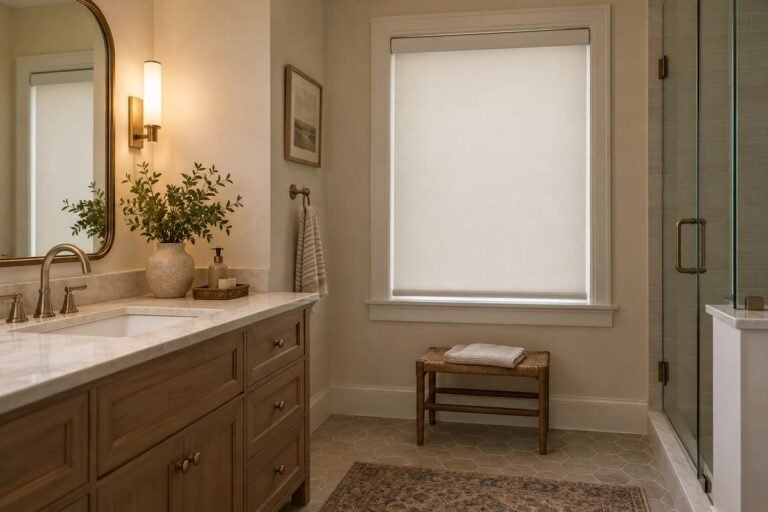
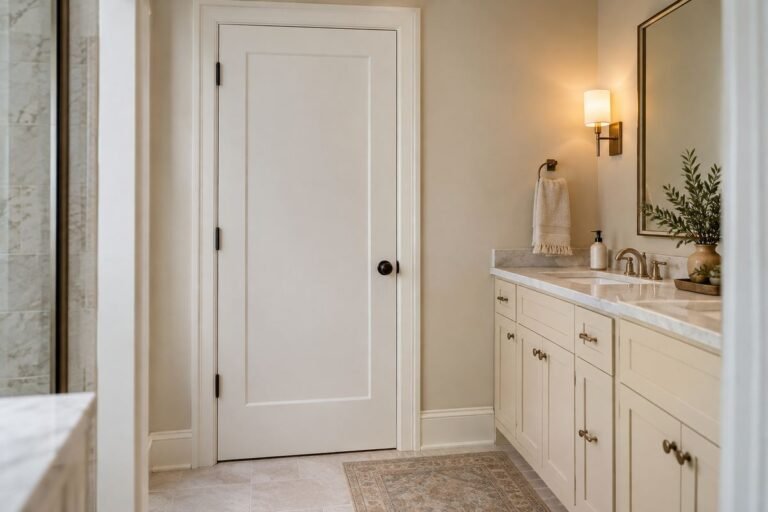
Bathroom mirror ideas work best when they begin with the person standing at the sink. A beautiful frame still needs a useful reflection, room around the faucet, and a position that makes everyday grooming comfortable. Start with those needs, then use shape and finish to connect the mirror to the rest of the room.
This collection separates decisions that are easy to blur together: one mirror or two, a decorative frame or concealed storage, a quiet outline or an expressive shape. Some choices suit an existing bathroom without moving fixtures; others belong in a planned renovation. The images illustrate the design direction, while the measurements and installation details must come from your actual room and chosen product.
Before ordering, measure the vanity and the clear wall between the faucet, lights, ceiling and side walls. Try a paper outline at the proposed size and check it from the doorway as well as from the sink. A mirror can reflect an attractive view, but it can also repeat clutter or put a bright window directly behind your reflection.
The images are original AI-generated decor concepts, not installation diagrams or photographs of completed client projects.
Test Bathroom Mirror Ideas From the Sink Position
Use full-size paper outlines to compare the outside frame and actual glass opening. Next, stand at the sink as each regular user would and check the view with the lights on. For example, a curved lower edge may fit the faucet well while narrowing the reflection where it is needed. Compare any cabinet in its open position too, and choose the mounting and electrical requirements from the actual complete product.
Choose the useful outline before the finish
Mark the mirror outline with paper, check the view for the people who use the bathroom, and open nearby doors or cabinet fronts. Measure the complete product, including its frame and mounting hardware. Follow its wall-fixing instructions; heavy mirrors and electrical features need appropriate professional assessment rather than a generic decorating rule.
1. Try Round Wood-Framed Bathroom Mirror Ideas
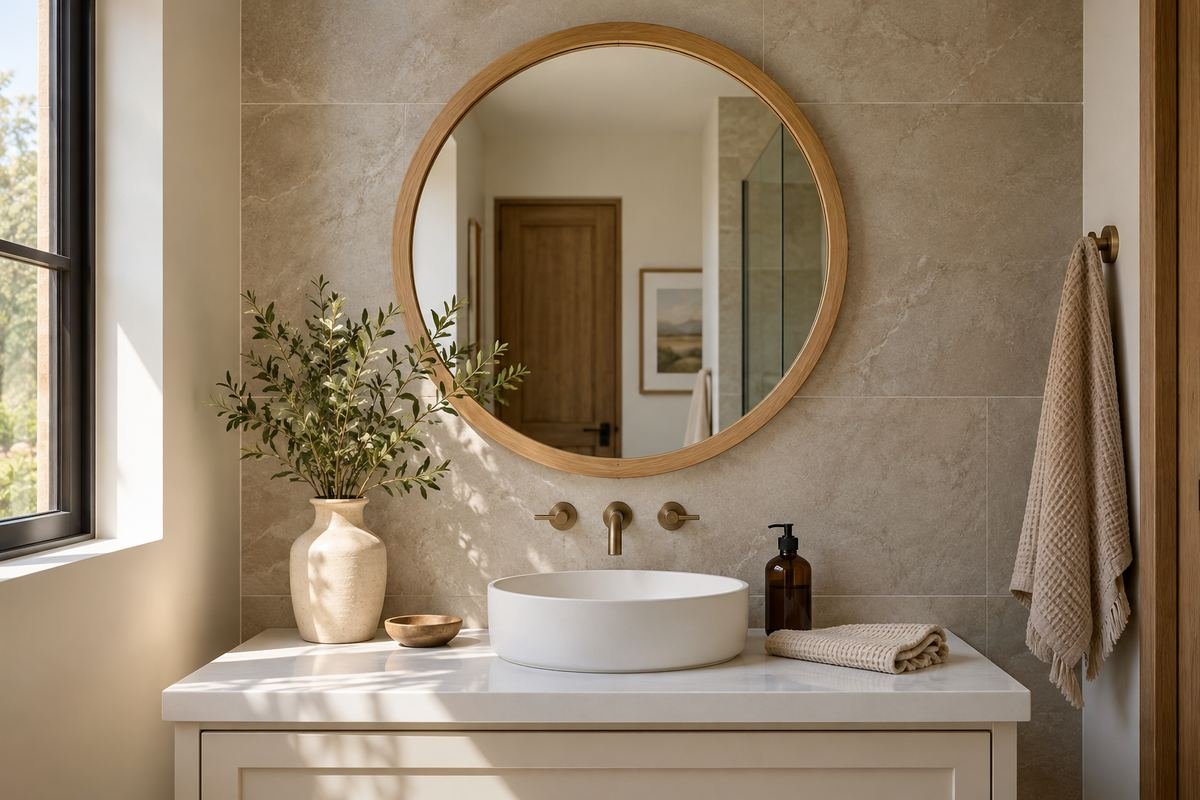
A circular mirror softens a room filled with rectangular tile, drawers and a straight-edged basin. Repeat the wood tone in one other small detail, such as a stool or cabinet handle, rather than adding several competing timber finishes.
Keep the circle large enough to provide a useful reflection at the sink. A deep frame can reduce the reflective area more than the overall dimensions suggest, so compare the glass opening as well as the outside measurement.
Practical tip: Check the clear glass size, not just the frame diameter.
2. A tall capsule mirror for a narrow wall

A capsule shape brings a vertical line to a slim vanity without the sharp corners of a rectangle. Its straight sides can relate neatly to the cabinet below while the rounded ends keep a small bathroom from feeling overly rigid.
Trace the top and bottom curves before buying. The widest portion may sit well above the faucet, but the lower curve still needs to show the user comfortably and leave access for cleaning around the basin.
Practical tip: Test the outline while standing at the sink.
3. An arched mirror that follows a gentle focal line
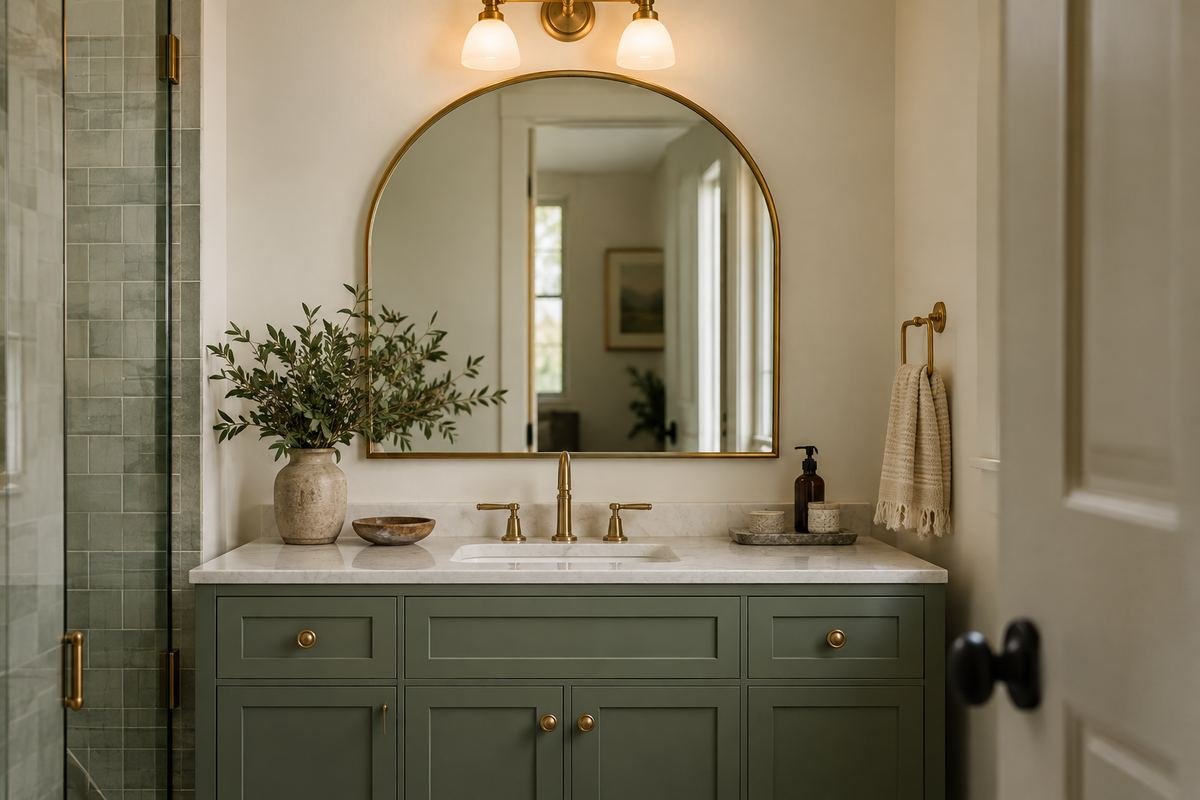
An arch adds character without needing patterned tile or a busy wall. Use it against a simple backdrop so the top curve can be read clearly from the entrance, especially when the vanity sits at the end of a short hallway.
Plan the light position with the shape rather than treating it as an afterthought. A light fixed too close to the arch can crowd the outline or create an awkward reflection; existing electrical locations may limit the sizes that fit.
Practical tip: Keep the arch and the light visually separate.
4. One horizontal mirror across a double vanity

A broad horizontal mirror gives a double vanity a continuous upper edge. It can suit a room where two separate mirrors would interrupt a tile pattern or make an already busy wall feel divided.
Check both sink positions and the reflected room before committing to a large sheet. Specify the actual wall dimensions and mounting arrangement with the supplier; a large mirror is a product and installation decision, not simply an enlarged version of a small hanging frame.
Practical tip: Check the view from both basins.
5. Two rectangles that give each basin its own zone

A pair of matching rectangular mirrors makes the double-vanity arrangement easy to understand. Align them to the basin positions, then repeat their frame finish in a restrained way so the wall feels deliberate rather than assembled from unrelated pieces.
Compare the space between the mirrors with the room available for lights. Equal gaps on a drawing can look different beside a door frame or a cabinet, so judge the entire wall instead of measuring only the center section.
Practical tip: Tape up both outlines at the same time.
6. Compare Frameless Bathroom Mirror Ideas With Detailed Tile
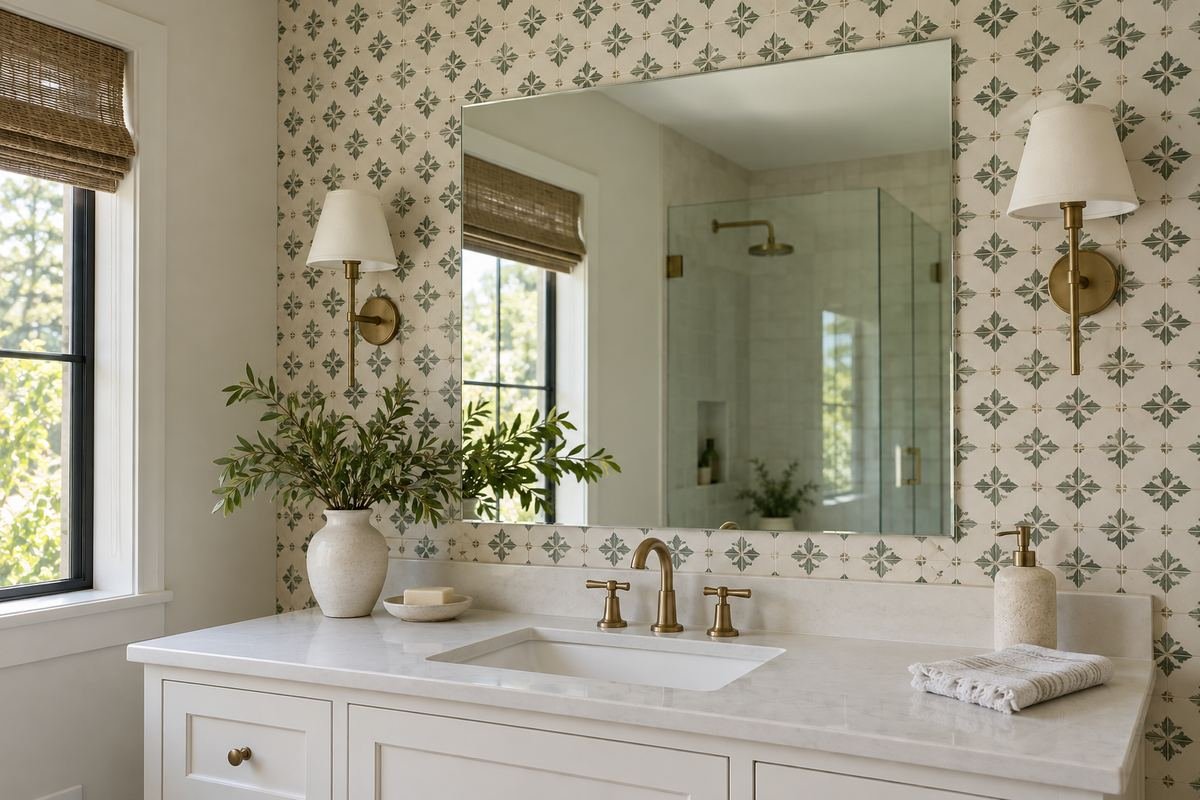
When the wall already carries a strong pattern, a frameless mirror lets the tile provide the decoration. The simple edge works particularly well where a thick frame would interrupt a small-scale mosaic or cover an important border.
Confirm how the mirror will be supported and finished at its edges. Frameless does not mean invisible hardware, and the fixing method should suit the mirror, substrate and bathroom conditions specified by the manufacturer.
Practical tip: Review the edge finish in a sample or product detail.
7. A black outline in a pale bathroom
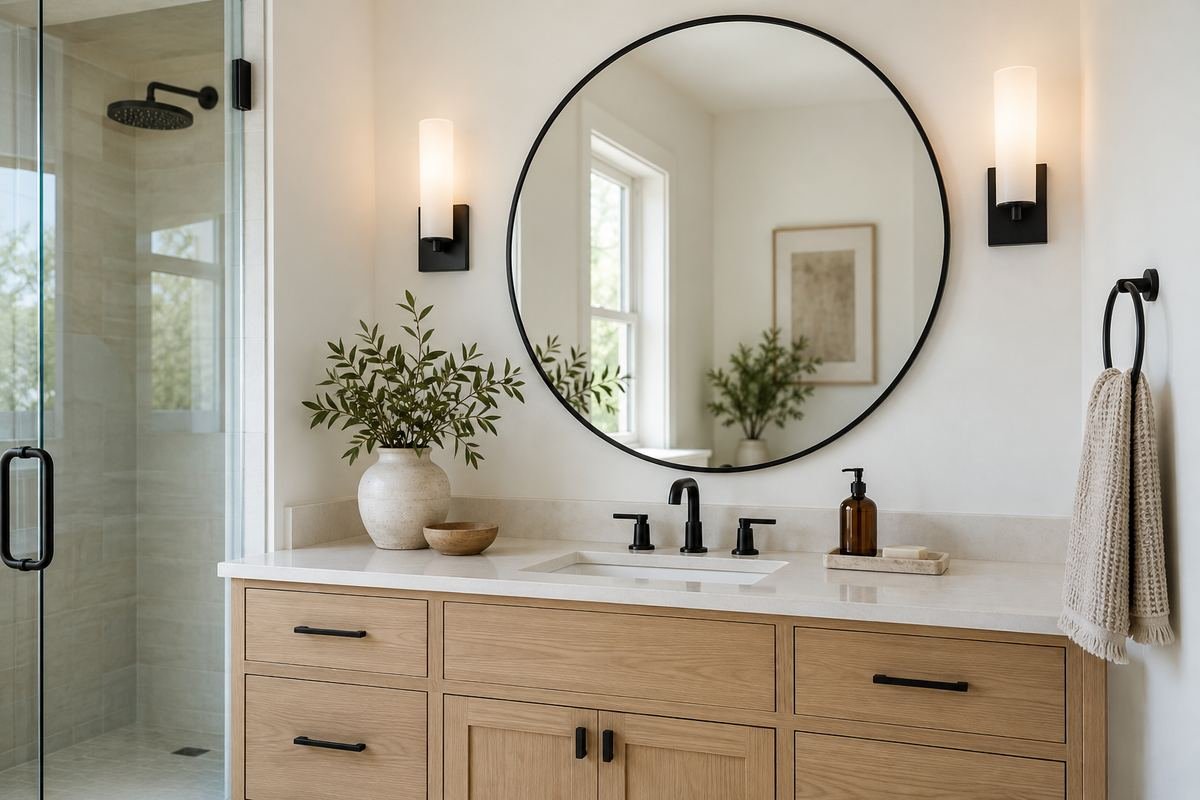
A narrow black frame creates definition against light walls without adding another large color area. It can relate to dark cabinet pulls or a window frame while allowing the vanity material to remain the main source of texture.
Keep the rest of the outlines selective. Black framing, black lighting, dark grout and dark accessories used together can become visually heavy, especially when the bathroom has little natural light.
Practical tip: Repeat the finish in a few places, not every detail.
8. Brushed brass with warm neutral materials
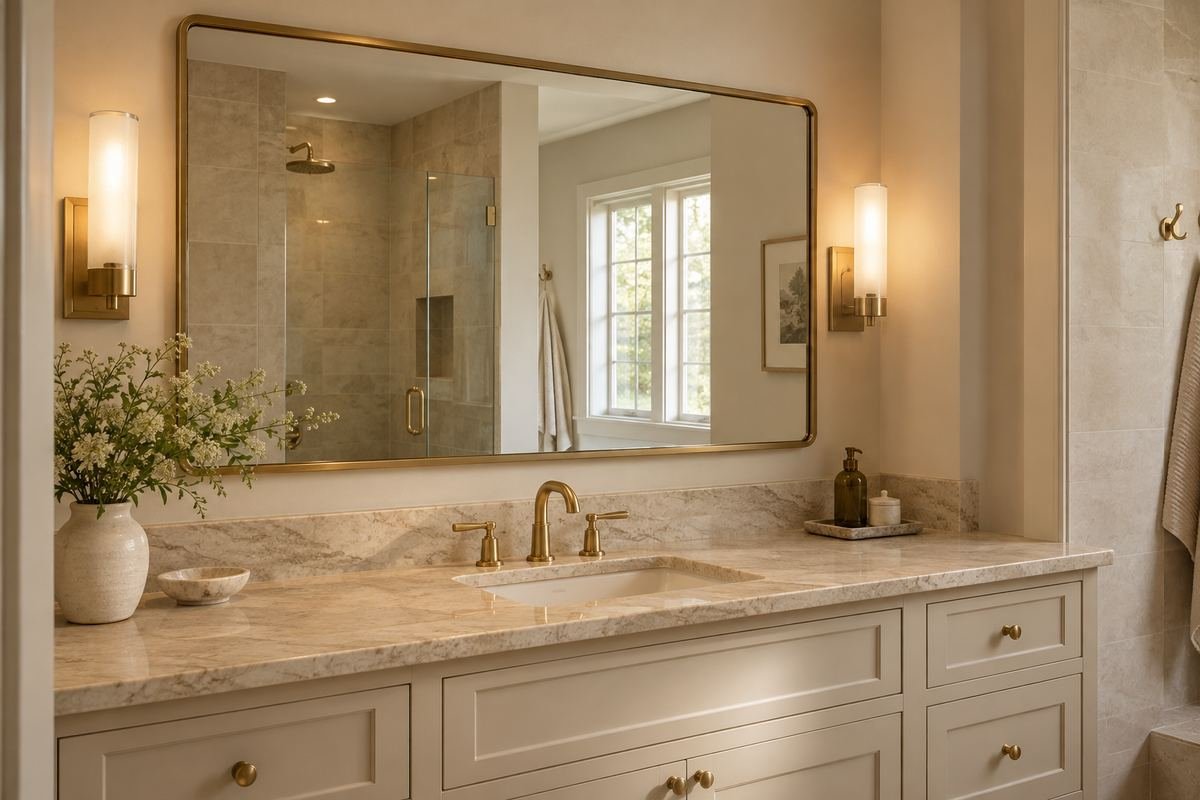
A brushed brass frame can add a warm note beside cream tile, oak and soft white paint. The quieter surface often feels easier to combine with everyday water spots and fingerprints than a highly reflective decorative finish.
Look at the actual finish beside the faucet before ordering. Brass tones vary between manufacturers, so either coordinate closely or choose an intentional contrast instead of assuming two products with the same color name will match.
Practical tip: Compare physical finish samples in the room.
9. A textured timber frame in a quiet room

A ribbed or carved wood frame gives a plain bathroom a tactile focal point. Keep the surrounding wall and counter relatively simple so the texture reads as one clear feature instead of competing with patterned baskets and small ornaments.
Choose a frame made and finished for its intended bathroom setting. Decorative grooves also collect dust, so consider whether the shape is practical to wipe and whether it sits close to a splash-prone basin.
Practical tip: Read the frame care instructions before choosing texture.
10. An oval mirror with side lighting

An oval can give side-mounted lights a softer companion than a large rectangle. Leave enough visible wall around the curved edge for the mirror and fixtures to look like distinct objects rather than one crowded cluster.
Test the reflection with the lights on as well as in daylight. The arrangement should help the actual grooming routine, and the selected fixtures must suit their bathroom location; decorative symmetry alone does not establish suitable lighting.
Practical tip: Judge the light at the sink, not only from the doorway.
11. A surface-mounted mirrored cabinet for daily storage
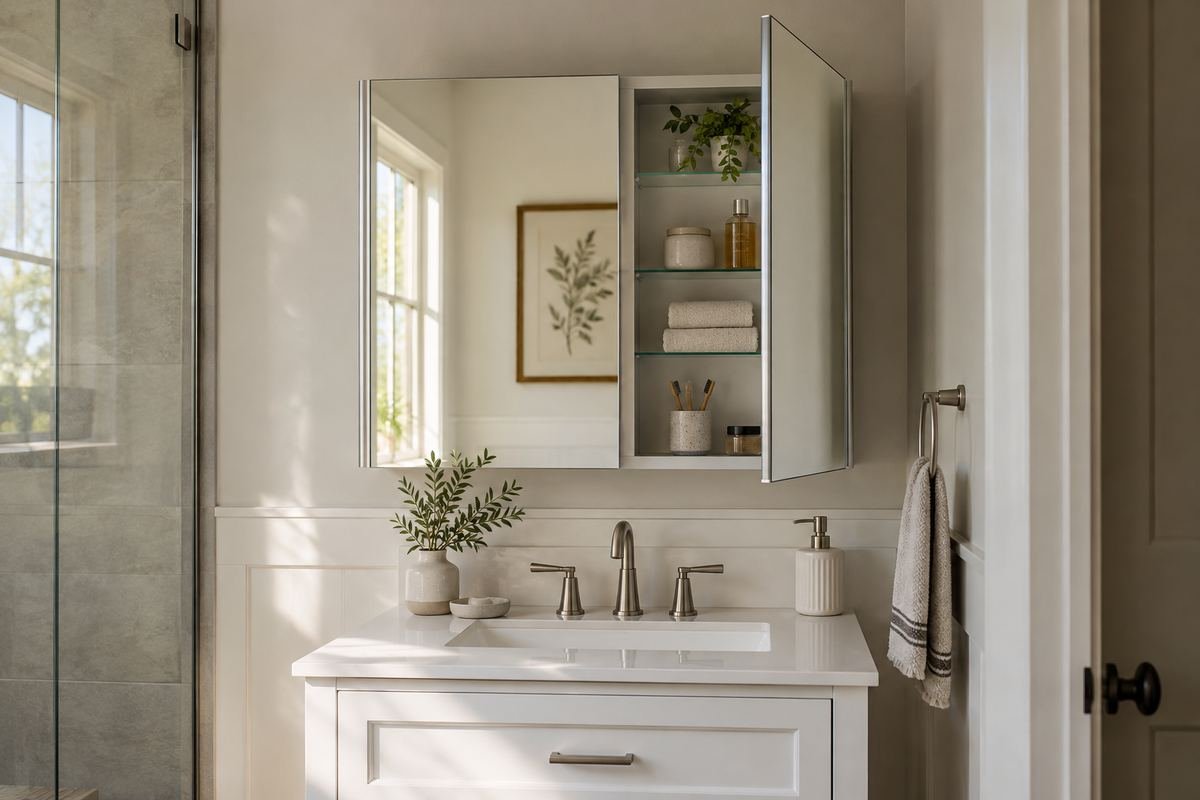
A mirrored cabinet can move frequently used small items off the counter. A surface-mounted version may fit a refresh where opening the wall is not part of the project, provided its depth and door movement work in the room.
Open the cabinet fully in your plan. Check nearby lights, side walls and faucet clearance, then place the items used most often where they are easy to reach. Keep product storage instructions in mind rather than assuming the bathroom is suitable for everything.
Practical tip: Measure the open door as well as the closed cabinet.
12. Assess Recessed-Cabinet Bathroom Mirror Ideas Before Building
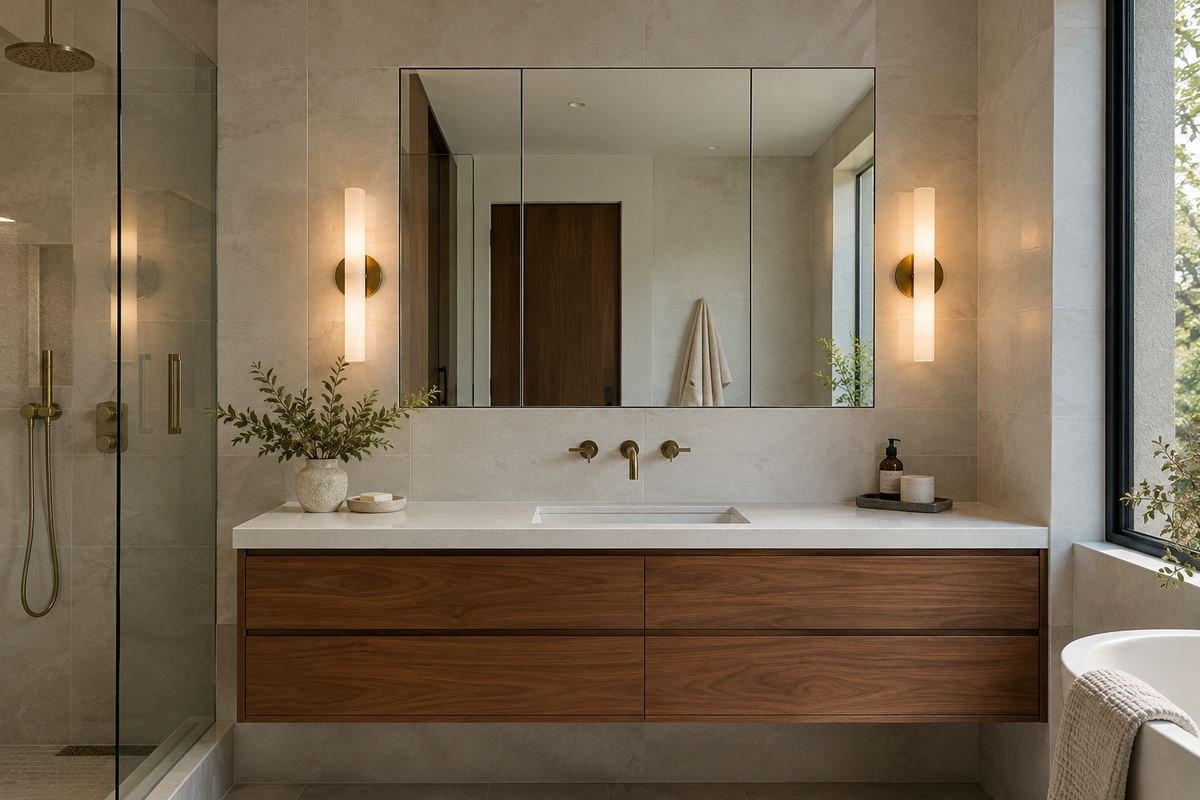
A recessed mirrored cabinet can keep the wall visually calm while retaining useful storage. It is a good discussion point during a planned bathroom renovation when the wall construction and services can be assessed before the finish is installed.
Do not assume an existing wall has an empty cavity of the required depth. Plumbing, wiring, framing and structural conditions can affect the project. Confirm feasibility with the appropriate professional before choosing the cabinet size.
Practical tip: Treat recessing as a construction decision.
13. A mirror within a shallow wall alcove
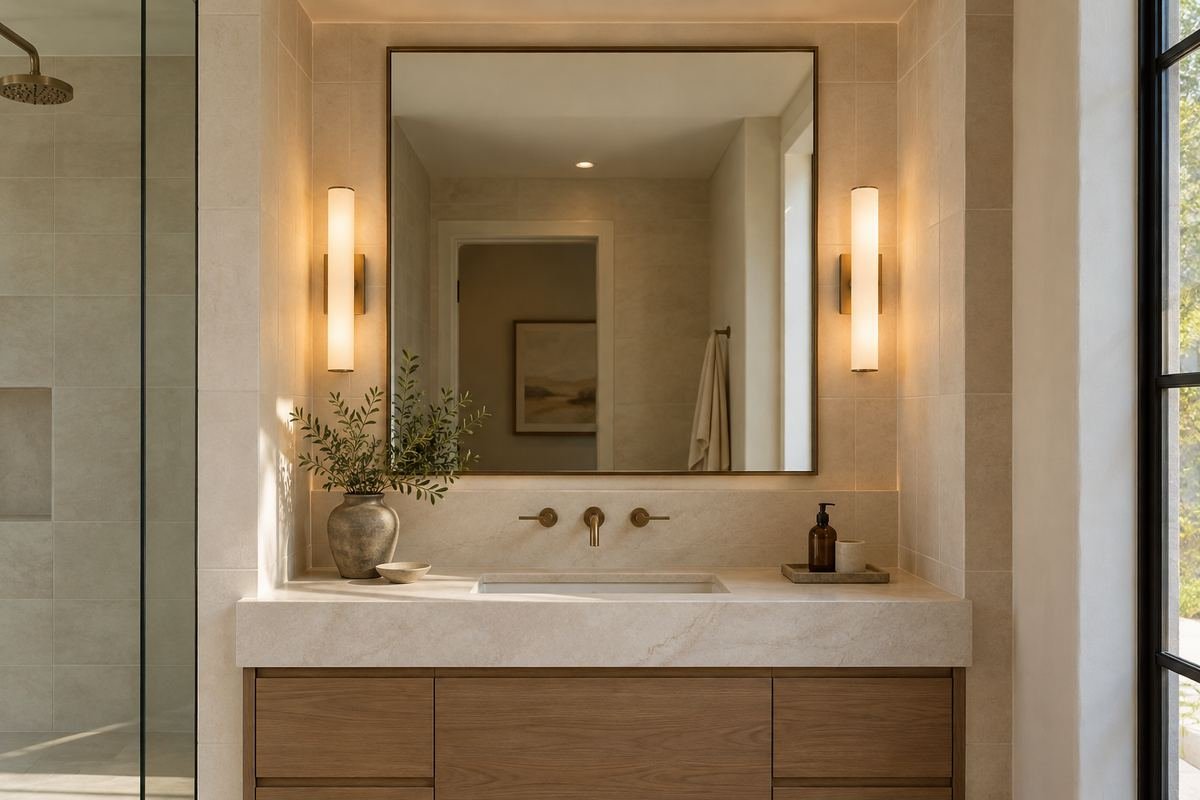
A mirror placed within an existing vanity alcove can make the basin area feel intentionally framed by the architecture. A restrained frame or a simple edge lets the wall returns provide most of the depth and definition.
Measure the alcove at several points and check how the side walls affect the reflection and lighting. Older surfaces may not be square, so a close fit should be specified from actual dimensions rather than a nominal room plan.
Practical tip: Measure the opening at the top, middle and bottom.
14. A pivot mirror with visible brackets
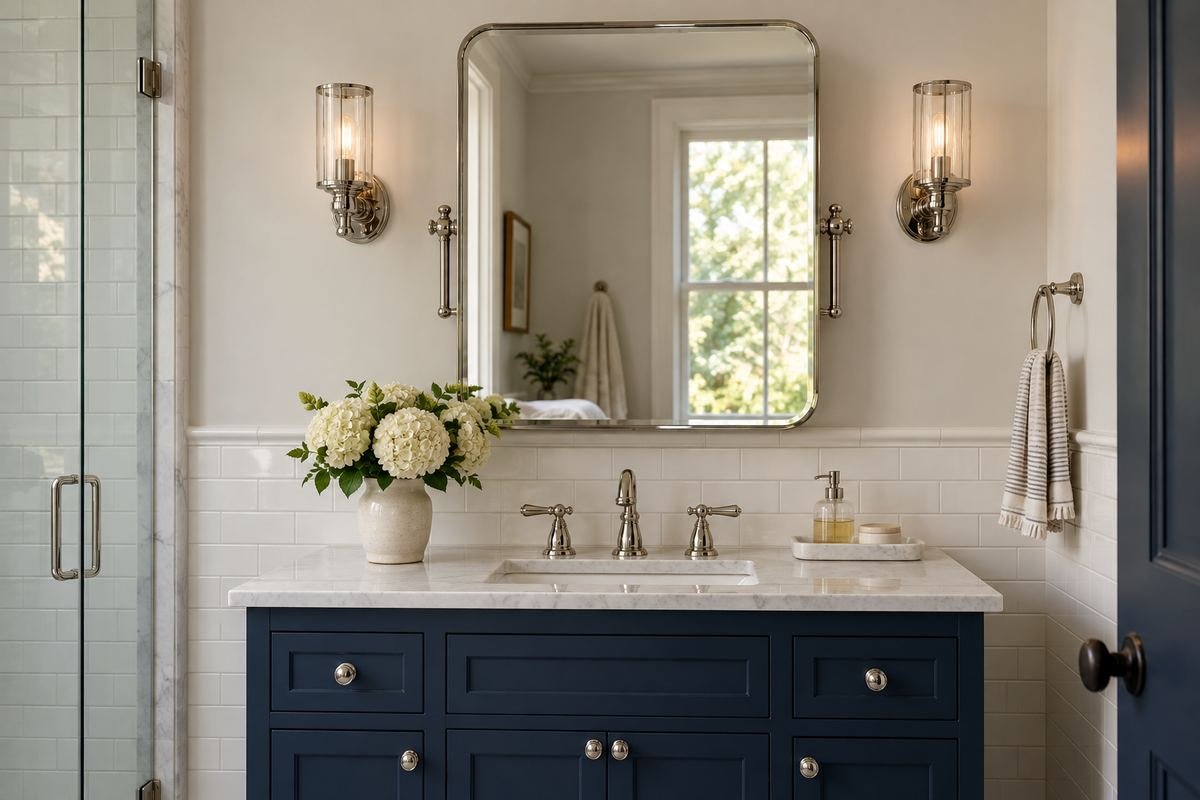
A pivoting mirror brings a small piece of useful hardware into the design. The side brackets can suit a classic bathroom and may offer an adjustable view when the chosen product is designed to move.
Check the mirror’s movement range against the faucet and surrounding wall. Use the supplied mounting method and consider who will adjust it; the decorative brackets should never be mistaken for general-purpose handles or supports.
Practical tip: Confirm the usable movement before placing nearby fixtures.
15. Two small mirrors that respect a corner
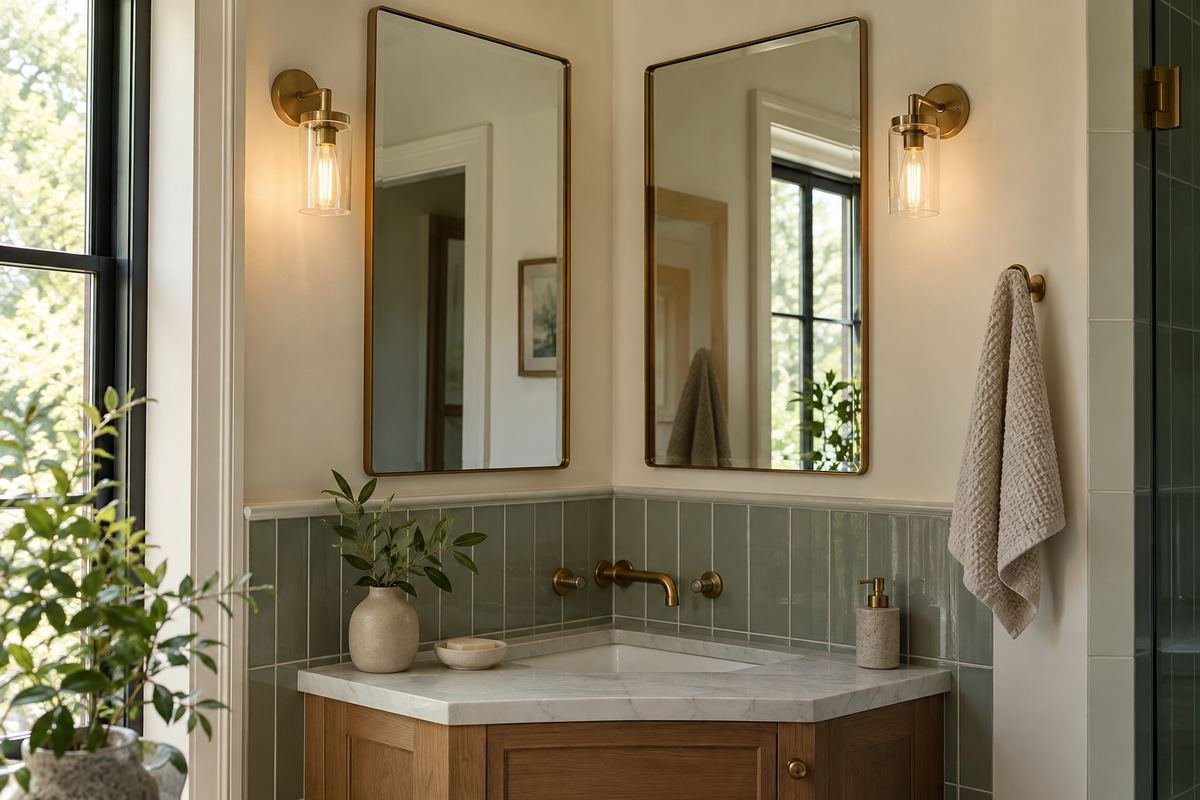
In a corner bathroom, two separate mirrors can follow the available wall planes without pretending the room is a standard straight vanity wall. Keep the frames slim so their meeting point does not become bulky.
Think carefully about what each mirror reflects. A corner can create repeating views and glare, so trial the arrangement with temporary panels or paper outlines before asking a supplier about a permanent installation.
Practical tip: Check the reflected view from the normal standing position.
16. A low horizontal mirror beneath a sloped ceiling

A sloped ceiling may leave more useful wall width than height. A horizontal mirror can work with that shape while keeping the basin area visually open, provided it still serves the people using the room.
Check the standing position, ceiling clearance and lighting together. Do not choose a decorative proportion that forces the user to bend or stand off-center just to see a useful reflection.
Practical tip: Start with the user’s sightline, then choose the shape.
17. A mirror above a deliberate backsplash strip

A short backsplash and a separate mirror can create two clean horizontal layers. This works when the counter material deserves a little vertical presence without continuing the same surface across the entire wall.
Check the transition between the two pieces for cleaning access and a considered finish. The mirror should not simply conceal an unfinished gap or interfere with the faucet’s normal operation.
Practical tip: Plan the joint between backsplash and mirror explicitly.
18. Choose Illuminated Bathroom Mirror Ideas for Actual Tasks

A mirror with integrated perimeter lighting can reduce the number of visible objects on the vanity wall. Choose it because its actual light output and controls suit your routine, rather than assuming every glowing border provides the same task lighting.
Read the product’s electrical, mounting and bathroom-location requirements. Have qualified help assess the installation, and check how the controls will be reached with the counter in everyday use.
Practical tip: Compare function and specifications before decorative glow.
19. A traditional picture frame with simple surroundings

A substantial picture-style frame can make a powder room feel collected and personal. Give it room to stand on its own by keeping the counter objects minimal and repeating only one of its colors elsewhere.
Assess the frame’s weight, finish and suitability for the room. A decorative mirror designed for a living room may not tolerate the same conditions as a bathroom product, even when it looks perfect in the photograph.
Practical tip: Check intended use as carefully as appearance.
20. A scalloped edge as the only playful detail

A scalloped mirror introduces rhythm to a powder room without requiring a busy color scheme. A solid painted frame can feel crisp against a plain wall, particularly when the vanity and faucet have simpler lines.
Let the outline provide the personality. Mixing several scalloped, fluted and heavily patterned objects in a small room can make the mirror harder to read and leave little visual rest around the sink.
Practical tip: Use one expressive outline as the focal point.
21. An organic shape in a restrained contemporary bathroom

An asymmetrical mirror can act like a piece of wall art while still serving the sink. Use a generous glass area and a quiet background so the unusual edge feels intentional rather than like an awkwardly cropped rectangle.
Check its useful reflective area with a full-size outline. An interesting silhouette may narrow exactly where the user needs the mirror, so function should decide the final placement.
Practical tip: Evaluate the usable center, not just the outline.
22. A simple mirror against a painted color block
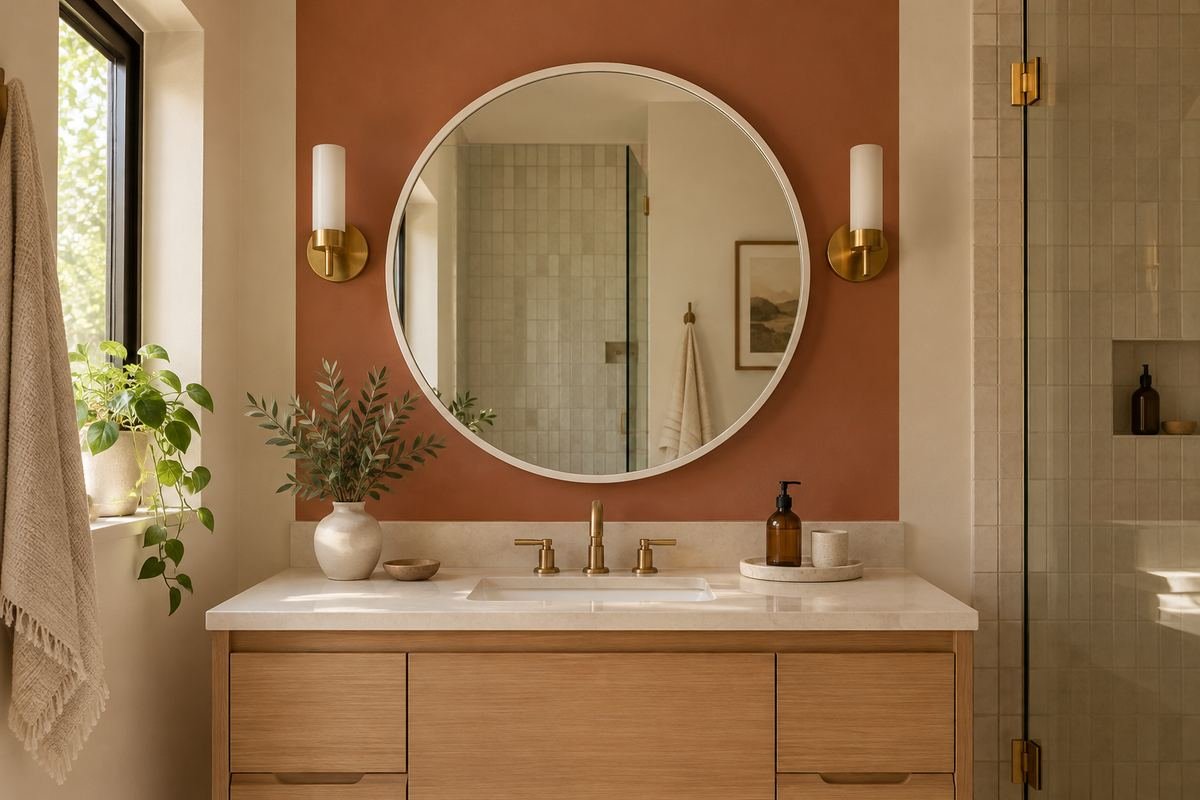
A painted area behind a plain mirror can define the vanity zone without buying a more ornate frame. Keep the block related to the cabinet width or another existing line so it feels connected to the room.
Choose paint and preparation appropriate to the surface and conditions. If the space is rented, confirm permission before changing finishes; a color block is a design option, not a promise of damage-free reversal.
Practical tip: Make the painted shape relate to the vanity below.
23. Pair Bathroom Mirror Ideas With a Separate Shallow Shelf

A narrow shelf below the mirror can hold a few daily items when a vanity offers little landing space. Treat it as a small functional addition, with the mirror kept visually simple above it.
Check the shelf depth against the faucet, basin and the user’s movement. Choose suitable fixings and a surface that can be maintained in the room; keep heavy and easily knocked objects out of this tight working zone.
Practical tip: Test the projection with a cardboard mock-up.
Frequently Asked Questions
Should a bathroom mirror be wider than the vanity?
There is no single proportion for every room. A mirror within the vanity width is a useful starting point, but a planned wall-wide installation is a different design. Check the faucet, lights, side walls and the usable reflection together instead of applying a fixed percentage.
Can I use any decorative mirror in a bathroom?
Check the manufacturer’s intended use and care instructions. Frame materials, backing, fixings and electrical components differ. A mirror that works in a dry powder room is not automatically suitable beside a shower or in a persistently damp bathroom.
Will a mirror make a dark bathroom bright?
A mirror reflects the light already available; it does not replace suitable lighting. Evaluate the room with its usual lights on, look for glare, and plan task lighting separately when the existing setup is uncomfortable.
Choose the Details That Work in Your Home
Choose two or three shapes that suit the measured wall, then compare their storage, cleaning and lighting implications. The strongest choice is the mirror that makes the sink easy to use every day while giving the room a clear, considered focal point.
For related ideas, explore Bathroom vanity sizing checks, Bathroom under-sink storage ideas, Small bathroom wall ideas.
Planning References
KOHLER mirror buying guide; KOHLER mirrors and medicine cabinets. Follow the instructions for the exact products you choose.
Optional digital guide for this topic
If you prefer a structured workbook, explore this related paid guide.