A bathroom vanity stool works best at a dedicated dry dressing surface with genuine knee room. A pretty seat pushed beneath a sink cabinet does not create a usable makeup station if plumbing, drawers or a high counter occupy the space.
These ideas focus on furniture for seated grooming in a dry nook. They are not shower seats, step stools or mobility equipment. Choose a seat made for its intended environment, then coordinate its shape, finish and storage position with the room.
The images are original AI-generated decor concepts, not installation diagrams or photographs of completed client projects.
Browse These 22 Bathroom Vanity Stool
Jump to an idea
- Tuck a round backless seat into a clear niche
- Use a slim rectangular cushion
- Bring warmth with a simple oak frame
- Choose walnut for a darker furniture accent
- Keep white painted seating quiet
- Define the nook with a black frame
- Echo a warm metal finish
- Use chrome tones in a cooler palette
- Add muted blue through the seat
- Connect sage upholstery to a quiet room accent
- Use a narrow stripe for subtle pattern
- Try a small check on an otherwise plain seat
- Choose a removable cushion when the design allows
- Keep a molded seat deliberately simple
- Use a low back when support is preferred
- Choose an armless profile for a narrower opening
- Consider a suitable adjustable seat
- Keep a swivel seat clear of surrounding drawers
- Use a woven detail away from splashes
- Fit a short bench to a wide dressing bay
- Coordinate a paired dressing wall with one seat each
- Give the seat a clear parked position
Fit the Bathroom Vanity Stool to the Actual Opening
Measure the opening beneath the dressing surface at its narrowest point, including drawer aprons and supports. Record seat height separately from overall height when a stool has a back. IKEA’s RUDSTORP specification illustrates why the actual adjustment range matters; it does not establish a universal bathroom seating height. Some products, such as IBBARBO, explicitly allow damp indoor areas. Do not assume the same suitability for another material or upholstered seat.
| Dimension | Where to measure | What it resolves |
|---|---|---|
| Opening width | Between the nearest fixed supports | Whether the complete seat and legs tuck in |
| Underside height | Floor to lowest drawer or apron | Available thigh space when seated |
| Seat and overall heights | Actual product specification | Sitting position versus storage fit |
| Depth and pull-out route | Front of nook to nearest obstruction | Whether the seat can be used and returned |
A Seat-Fit Example Without a Universal Height Rule
Suppose the clear opening is 24 inches wide and 25 inches high beneath a drawer. A backless stool measuring 17 inches wide and 18 inches high leaves 7 inches of width and 7 inches above its seat. That arithmetic only describes the empty furniture: the person’s legs, seat compression, foot position and pull-out route still need a real trial. A 22-inch-tall low back might fit the opening while a wider splayed leg base does not.
Copy This Five-Line Vanity Seat Card
Write the narrowest opening width; the lowest underside height; seat height and complete footprint; fabric or finish care instructions; and the parked position after use. Sit at an existing surface of similar height if possible, with the mirror at the intended viewing position. Record what actually feels useful before ordering. If the seat cannot pull out without blocking the bathroom door, move the dressing task to another location rather than squeezing in more furniture.
1. Tuck a round backless seat into a clear niche

A round backless stool gives a dry dressing niche a simple center point without adding a chair back above the counter. Its curved outline can soften a wall of straight cabinet fronts.
Measure the full diameter and any wider leg spread before assuming the round shape saves space. Keep the seat slightly forward for use and return it fully beneath the opening afterward. The nook needs to work with a person seated, not only with the stool hidden.
Practical tip: Trace the complete base footprint on paper before buying.
2. Use a slim rectangular cushion

A rectangular seat can echo the straight lines of a built-in dressing counter. A restrained cushion supplies a soft surface while the narrower form leaves the cabinetry easy to read.
Choose its width from the opening between supports and its depth from the seated position. A cushion that projects beyond the frame may change both dimensions. Keep decorative welting subtle if the nearby tile already has a strong pattern.
Practical tip: Include the upholstered edge in the width measurement.
3. Bring warmth with a simple oak frame

A pale oak stool can connect a white dressing nook to natural materials elsewhere in the room. An open frame keeps the small seat from looking like another storage cabinet.
Confirm the finish and environment suitability for the exact piece. Place it away from the splash zone and follow its care instructions rather than treating all sealed wood as waterproof. A small amount of visible grain can be enough to warm the whole nook.
Practical tip: Repeat the oak in one restrained accessory rather than every surface.
4. Choose walnut for a darker furniture accent

Walnut tones can provide a defined accent beneath pale cabinetry. The darker base gives a small seat visual presence without requiring dark paint across the entire wall.
Relate the tone to a mirror frame or another existing wood detail. Avoid choosing from color names alone because real wood and imitation finishes vary. Keep the counter surface light and uncluttered so the small dark seat remains a deliberate furniture element.
Practical tip: Compare a finish sample beside the cabinet in daylight.
5. Keep white painted seating quiet

A white painted stool can blend into a pale dressing nook and leave the mirror as the main feature. A simple frame works well when surrounding cabinet fronts already have detailed molding.
Compare the white against the cabinetry instead of assuming the two finishes match. An intentionally softer white can work, while an almost identical undertone may look accidental. Follow the seat’s cleaning guidance and keep products that can stain away from the cushion.
Practical tip: Choose the white in the actual room light.
6. Define the nook with a black frame

A slim black frame can connect a vanity seat to existing dark hardware. Its outline is especially useful against a light floor where a pale stool might disappear.
Keep the cushion quieter than the frame if the aim is a clear graphic shape. Check the entire base width, including angled legs. A visually thin frame still needs to be a suitable, stable seat with the manufacturer’s stated use and assembly followed.
Practical tip: Repeat black at two small existing details for a coherent accent.
7. Echo a warm metal finish
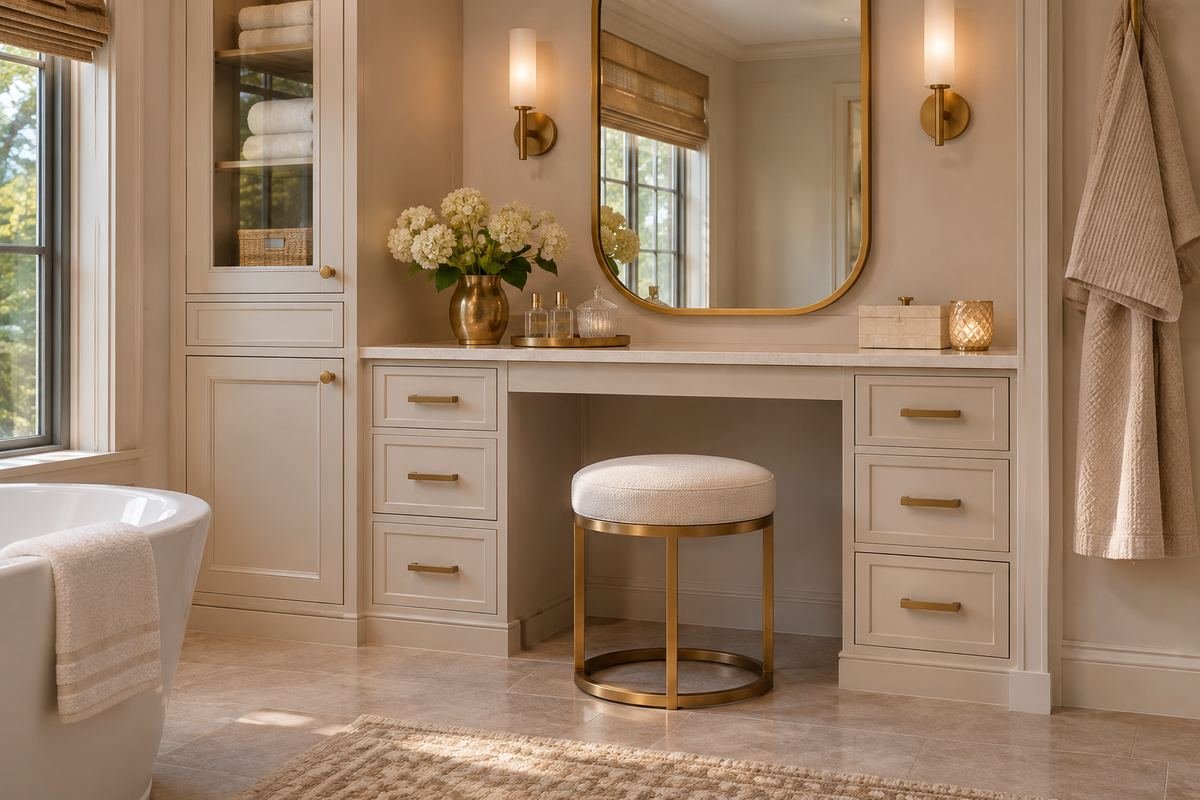
A warm metal base can relate a seat to brass-colored cabinet pulls or a mirror. The connection works through a similar visual tone without requiring every item to come from one collection.
Compare sheen as well as color: a highly polished base reads differently from a brushed pull. Check product care for the actual finish and avoid abrasive cleaning by assumption. Keep the larger room surfaces calm so the small metallic accent has a clear role.
Practical tip: Match the general warmth and sheen before chasing an exact finish name.
8. Use chrome tones in a cooler palette
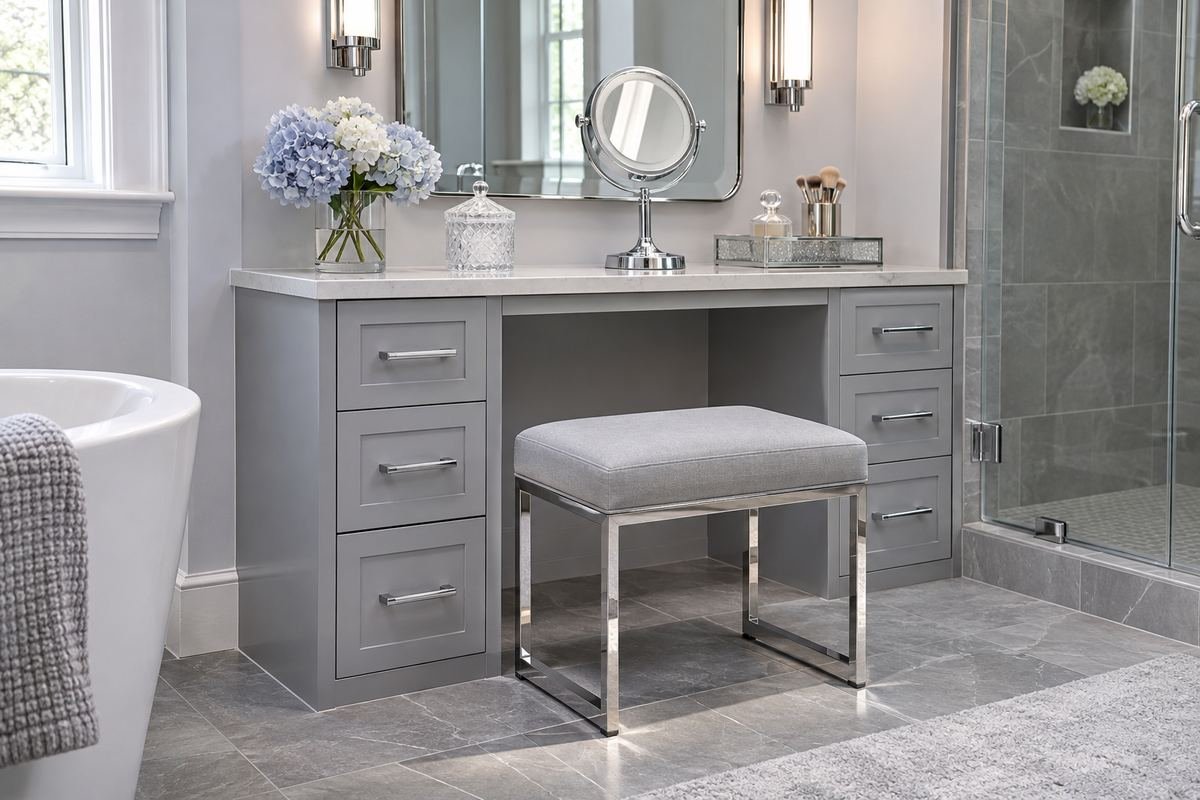
A polished silver-tone base can sit comfortably with cool gray tile and existing chrome fixtures. A plain seat keeps the combination from becoming visually busy.
Reflective legs reveal their surroundings, so examine the stool from the doorway and while seated. The finish should belong with nearby hardware but need not duplicate every curve. Keep the seat outside the wet zone and follow the exact material care instructions.
Practical tip: Use the reflective base as the accent and simplify the upholstery.
9. Add muted blue through the seat
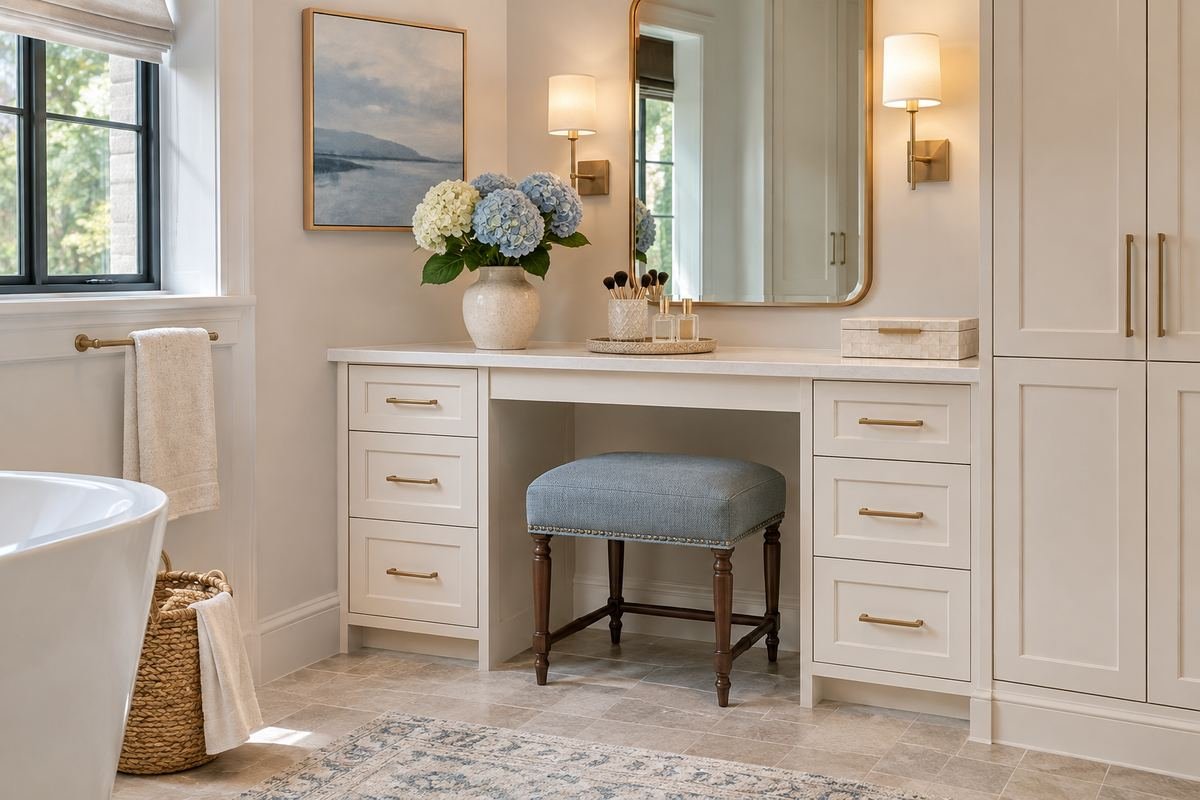
A muted blue cushion can supply color within a mostly neutral dressing space. Because the seat is small, the accent is easier to change than a cabinet finish.
Pull the blue from an existing towel or artwork rather than introducing several unrelated shades. Consider whether cosmetics and ordinary cleaning make the chosen fabric practical. Keep a small material sample in the room before committing to a more saturated blue.
Practical tip: Let one blue seat be enough color for the nook.
10. Connect sage upholstery to a quiet room accent

Soft sage can give a vanity stool a gentle relationship to green details elsewhere in the bathroom. A plain cushion works particularly well when the floor already has pattern.
Choose a green that sits comfortably against the cabinet undertone and avoid multiplying small green accessories. Keep the silhouette straightforward so the color carries the idea. The fabric still needs a suitable cleaning method for the exact product.
Practical tip: Compare sage against the actual tile before adding matching textiles.
11. Use a narrow stripe for subtle pattern

A restrained stripe can give a simple vanity seat some detail without changing the whole room palette. The line direction can relate to the counter or cabinet proportions.
Choose a repeat that remains legible on the small cushion and along its front edge. A strong nearby floor pattern may call for a finer stripe. Avoid adding another competing print at the same eye level simply to make the nook feel decorated.
Practical tip: Inspect how the stripe meets the cushion seam.
12. Try a small check on an otherwise plain seat

A small checked cushion can soften a formal dressing nook. Plain cabinetry and a simple frame allow the modest pattern to become the focal detail.
View the fabric from the doorway, where a fine check may read as texture. Relate one of its colors to an existing finish. If the bathroom already contains a bold tile grid, choose a check with a clearly different scale or keep the upholstery solid.
Practical tip: Compare the check with the largest nearby pattern.
13. Choose a removable cushion when the design allows

A seat designed with a removable cushion can make its care routine clearer than a permanently upholstered form. The benefit depends on the exact cover and insert instructions.
Check how the cushion attaches and whether the cover is actually removable and washable; those are separate claims. Keep the fastening secure as intended. Do not add a loose improvised pad that shifts simply because it looks like a coordinated cushion.
Practical tip: Read both cover and insert care before selecting the fabric.
14. Keep a molded seat deliberately simple

A molded indoor seat can suit a bathroom dressing area when its manufacturer allows the intended environment. A quiet solid color lets nearby materials provide the visual interest.
Confirm its seat size, load guidance and floor contact rather than treating a small molded object as interchangeable furniture. Damp indoor use does not imply shower suitability. Leave enough room to place feet naturally while sitting at the dressing surface.
Practical tip: Use the exact product’s environment statement instead of a material guess.
15. Use a low back when support is preferred
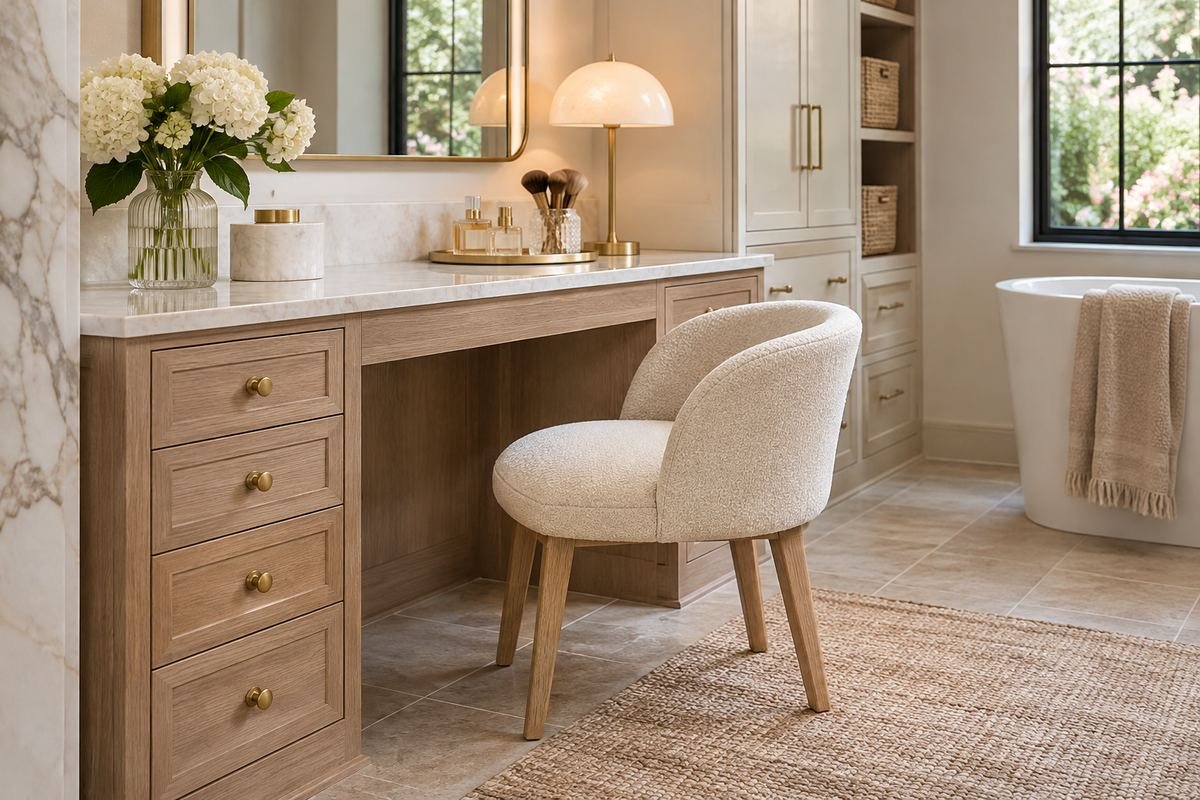
A low-backed vanity seat can feel more chair-like while keeping the mirror mostly visible. Its back adds a shape above the cushion that a backless stool does not have.
Record seat height and overall back height separately. The back may prevent the seat from tucking fully beneath the counter even when the cushion fits. Test the parked position and pull-out route before choosing a decorative curved back.
Practical tip: Draw both the seated and parked outline on the floor plan.
16. Choose an armless profile for a narrower opening

An armless seat can avoid the extra width and height of chair arms at a modest dressing niche. Its simple outline also leaves the counter edge visible.
Measure the base as well as the cushion, because legs may spread wider than the upper seat. The absence of arms does not by itself establish comfortable access for every person. A real seated trial is more useful than relying on a styled product image.
Practical tip: Check the widest part at the exact height of the cabinet supports.
17. Consider a suitable adjustable seat
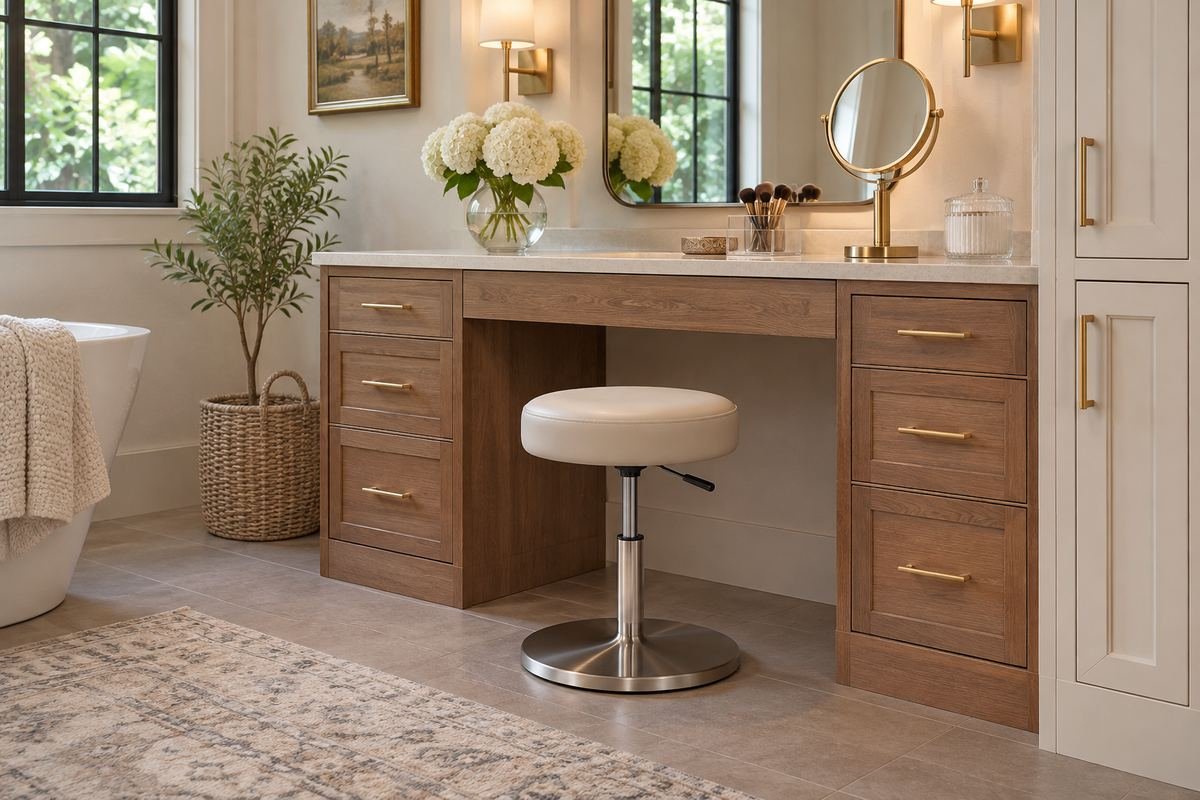
An adjustable stool can help when a dedicated dressing surface is used by people with different preferences. The stated minimum and maximum seat heights should cover the actual useful position.
Check the base diameter, adjustment instructions and whether the model is intended for the environment. Adjustment does not fix a counter with insufficient knee space. Keep any controls accessible and use the seat within the maker’s guidance.
Practical tip: Record the adjustment range on the five-line fit card.
18. Keep a swivel seat clear of surrounding drawers

A swivel can make turning away from a dressing mirror easier for some routines. It also introduces movement that must be considered beside drawers and cabinet edges.
Allow for the complete seat turning envelope and the person using it. Check that the seat cannot strike a nearby handle during ordinary movement. Choose the feature because it helps the routine, then verify the manufacturer’s use and care instructions.
Practical tip: Turn a paper outline through the intended movement before ordering.
19. Use a woven detail away from splashes
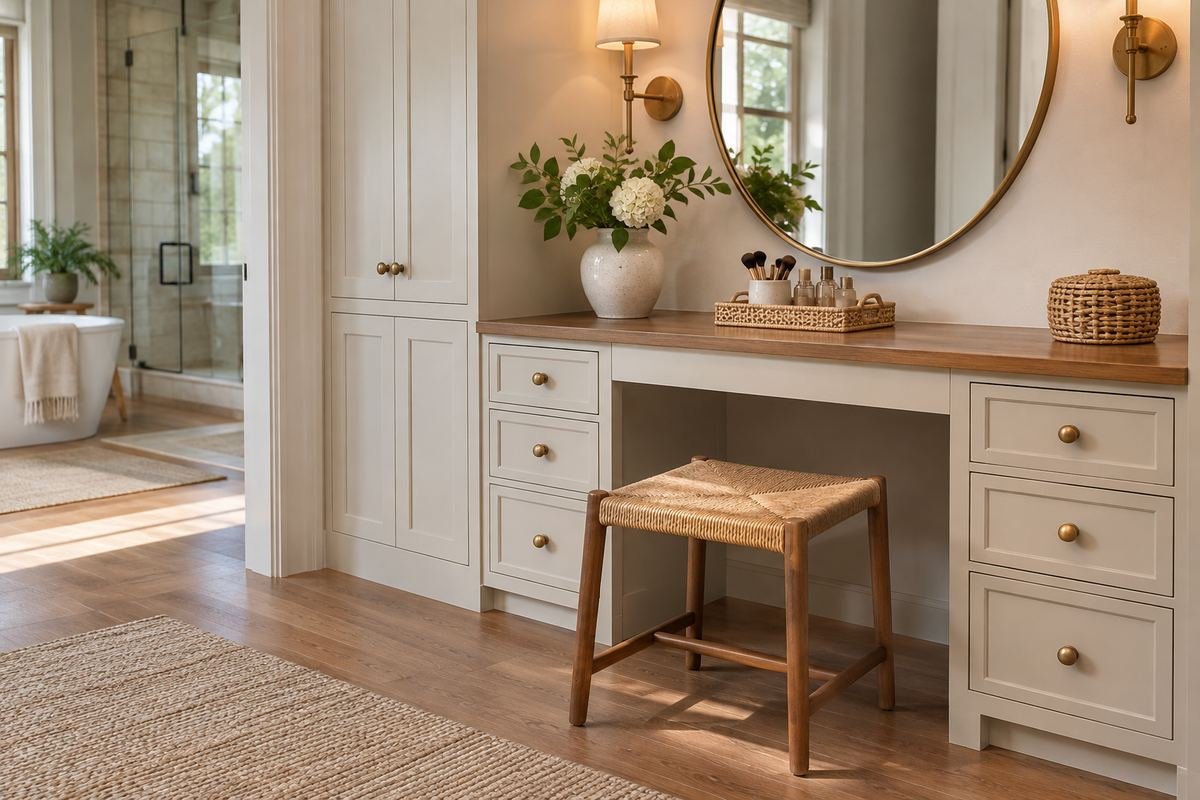
A small woven seat detail can connect a bathroom dressing area to warmer natural textures. A simple frame and restrained weave keep the piece from overwhelming the nook.
Check the exact construction and care rather than assuming a woven surface tolerates moisture. Place it in a genuinely dry position and keep loose fibers or damaged areas out of ordinary use. Pair it with smooth cabinetry to make the texture visible.
Practical tip: Choose one woven detail instead of layering several competing baskets.
20. Fit a short bench to a wide dressing bay
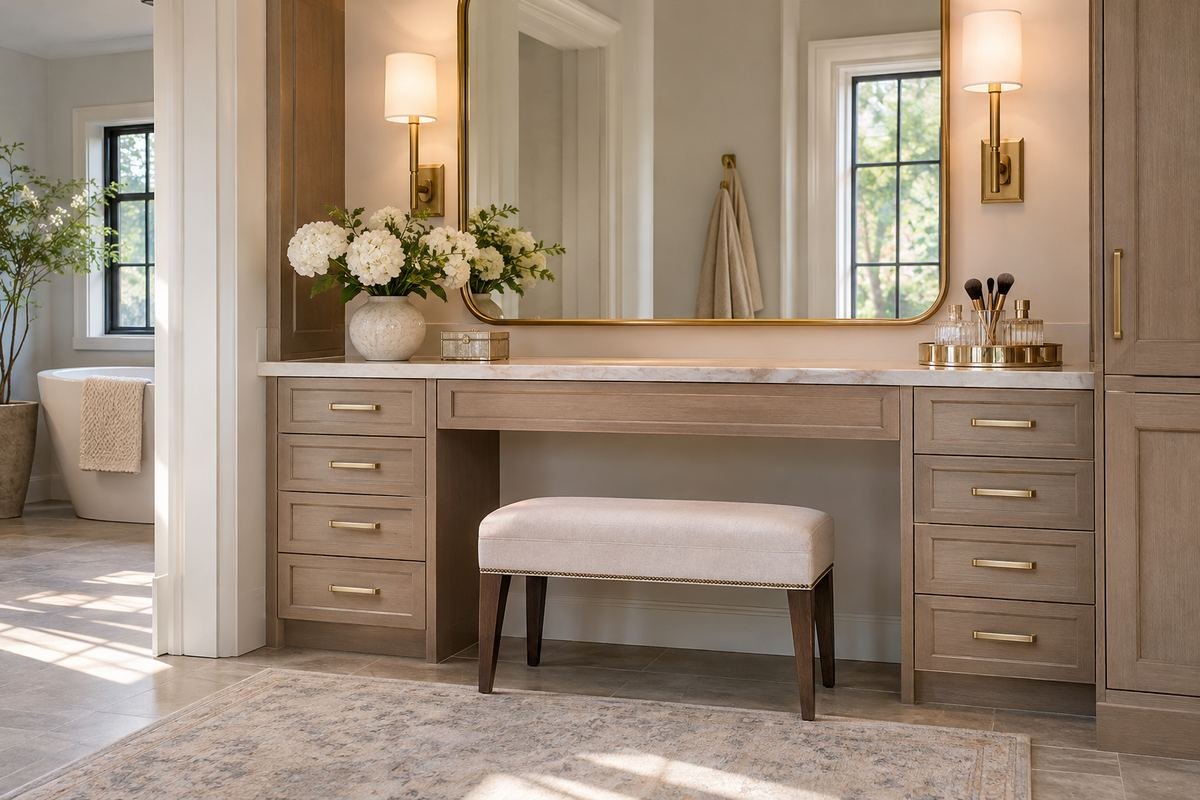
A short single-person bench can balance a broader makeup opening. Its long cushion creates a horizontal line beneath the mirror without the height of a chair back.
Confirm the complete bench width fits between fixed supports and leaves a useful return path. A larger seat does not create extra usable knee space beyond the opening. Keep the bench clear for sitting rather than turning it into a permanent display shelf.
Practical tip: Size the bench from the opening, not the full counter width.
21. Coordinate a paired dressing wall with one seat each

Two separate dry dressing bays can use related stools to make the wall feel balanced. The seats may share a frame finish while their dimensions respond to each actual opening.
Give each person a workable pull-out route and do not let the paired arrangement crowd the central circulation space. Choose matching seats only after both bays have been measured. A visual pair should still function independently during an ordinary morning.
Practical tip: Measure both openings instead of assuming mirrored cabinetry is identical.
22. Give the seat a clear parked position

A successful dressing seat has somewhere to return after use. A fully tucked stool can leave a narrow room easier to move through while keeping the nook visually finished.
Test the bathroom door, cabinet drawers and usual walking route with the seat in both positions. Keep a clear floor rather than relying on a photograph taken with the seat removed. If the furniture only works when constantly shifted elsewhere, simplify the arrangement.
Practical tip: Make the parked position part of the purchase decision.
Frequently Asked Questions
Can I place a stool beneath any bathroom sink?
Only if the furniture is actually designed with a suitable seated opening and the chosen setup works for the user. Pipes, drawers, cabinet doors and counter height can make an ordinary sink vanity unsuitable. A dedicated dry makeup nook is usually a clearer furniture-planning task.
Is every wooden or upholstered stool suitable for a bathroom?
No. Check the exact product’s intended environment and care instructions. A seat in a dry dressing zone still needs protection from splashes and a practical cleaning routine. Damp-area suitability does not turn ordinary furniture into shower seating.
Should the stool match the vanity cabinet?
It can repeat one material or finish without matching every detail. A wood tone, quiet upholstery color or related metal can connect the seat to the room. Fit and the ability to pull the seat out matter before an exact decorative match.
Choose the Details That Work in Your Home
Choose the bathroom vanity stool from the opening and the person using it, then refine its shape and finish. A clear dry position, useful mirror view and easy return route make the seat feel like part of the room rather than an obstacle.
For related ideas, explore bathroom lighting ideas, bathroom drawer organization ideas, bedroom vanity ideas.
Planning References
IKEA RUDSTORP: specified seat adjustment range and care; IKEA IBBARBO: stated suitability for damp indoor areas; IKEA HEMNES: dressing furniture dimensions and product-specific care. Follow the instructions for the exact products you choose.
Optional digital guide for this topic
If you prefer a structured workbook, explore this related paid guide.