Outdoor cushion storage succeeds when the complete cushion set fits, stays appropriately protected and can be returned without a long furniture shuffle. A large capacity number on a box does not tell you whether a long lounge pad will pass through its opening.
Plan daily storage and seasonal storage separately. A convenient patio chest can serve an evening reset, while the same cushions may need a different dry sheltered location for a long unused period. Start with the actual cushions and their care instructions before selecting the container.
The images are original AI-generated decor concepts, not installation diagrams or photographs of completed client projects.
Browse These 23 Outdoor Cushion Storage
Jump to an idea
- Place a low chest beside the seating group
- Use a front-opening cabinet for accessible shelves
- Choose a bench designed with storage inside
- Use separate drawers beneath a suitable covered bench
- Keep a long compartment for lounge pads
- Group thin dining pads in a shallow cabinet
- Divide a tall cabinet into upright cushion bays
- Use broad shelves for gentle flat stacks
- Split two furniture groups between matching boxes
- Keep sectional modules together in one assigned group
- Give small bolsters their own compartment
- Store a complete sofa set near its access end
- Use a wall-side position away from the main doorway
- Use a covered porch cabinet for short daily returns
- Reserve a clean garage shelf for the off-season
- Use an indoor closet when the set is small
- Keep cushions separate from gardening supplies
- Create a separate drying position before storage
- Keep removable covers with their correct inserts
- Choose a light-looking finish for a modest patio
- Use a darker unit as a deliberate edge
- Trial-pack the dry set before the first long storage
- Finish with a simple return order
Plan Outdoor Cushion Storage from the Largest Piece
Measure each cushion including piping, ties and its uncompressed thickness. Record the storage unit’s usable internal dimensions and opening separately from its exterior size. RH’s cushion care sheet requires cushions to be completely clean and dry before storage; Jensen Outdoor similarly emphasizes complete drying and a cool dry sheltered seasonal location for its cushions. Follow the exact cover and insert instructions because cleaning, drying and bagging requirements vary by product.
| Task | Useful storage approach | Confirm before choosing |
|---|---|---|
| Frequent evening reset | Nearby suitable chest or cabinet | Whole-set fit and easy access |
| Long lounge cushion | Long internal compartment or appropriate shelf | Unfolded length and permitted storage position |
| Small dining pads | Shallow grouped compartment | Ties and pad count |
| Seasonal storage | Clean dry sheltered indoor position | Product care, packaging and local conditions |
A Packing Example That Volume Alone Misses
Four cushions measuring 24 by 24 by 5 inches form a nominal flat stack 20 inches high. A box with a usable interior of 48 by 24 by 18 inches cannot hold that four-high stack in that orientation. Two stacks might work on paper, but actual seams, the opening, lid hardware and lifting room still have to fit. Arrange the real dry cushions inside a taped floor outline before buying; do not force the lid down or assume compression is permitted.
Copy This Six-Entry Cushion Storage Card
Record the furniture group; cushion count; largest length, width and thickness; intended packing orientation; care-label or maker reference; and assigned storage location. Add a photograph of the complete dry set in its planned arrangement. Keep a separate note for pieces waiting to dry, so they do not disappear into the ready-to-store group. This simple record also helps you identify a missing back cushion at the start of the next season.
1. Place a low chest beside the seating group

A low cushion chest near the main seats can shorten the evening reset. Its horizontal shape can relate to the sofa without adding a tall storage wall to the patio.
Choose the chest from its internal space and the full cushion set. Leave the lid clear of branches, rails and furniture arms throughout its movement. A nearby position is useful only if the box can be opened without moving the chairs every time.
Practical tip: Tape both the closed footprint and the open lid envelope.
2. Use a front-opening cabinet for accessible shelves

A suitable outdoor cabinet can make individual cushions easier to retrieve without lifting a whole stack from above. Shallow groups on shelves can remain visually orderly.
Check the usable width between hinges and the space needed to swing the doors. The cabinet must be designed for its actual outdoor exposure. Avoid treating a decorative indoor cupboard beneath an open sky as a weatherproof enclosure.
Practical tip: Measure the clear door opening, not just the shelf width.
3. Choose a bench designed with storage inside

A storage bench can combine two useful patio functions when the product is designed for both seating and storage. It may work along a modest wall where a separate chest would crowd the layout.
Confirm the seating specification and usable storage dimensions independently. Remove people and loose objects before opening as directed by the product instructions. Do not assume every deck box is a seat simply because its lid is flat.
Practical tip: Check the stated seating use before counting the unit as a bench.
4. Use separate drawers beneath a suitable covered bench

Front drawers can provide cushion storage without lifting the bench seat. They can suit thin pads or small accessories when their depth and opening are adequate.
Plan the drawers fully extended with the nearest chair in its ordinary position. Use furniture designed for the setting and keep the interiors dry. Large sofa cushions may require a different compartment rather than being squeezed into a visually attractive shallow drawer.
Practical tip: Test the full drawer extension on the patio plan.
5. Keep a long compartment for lounge pads
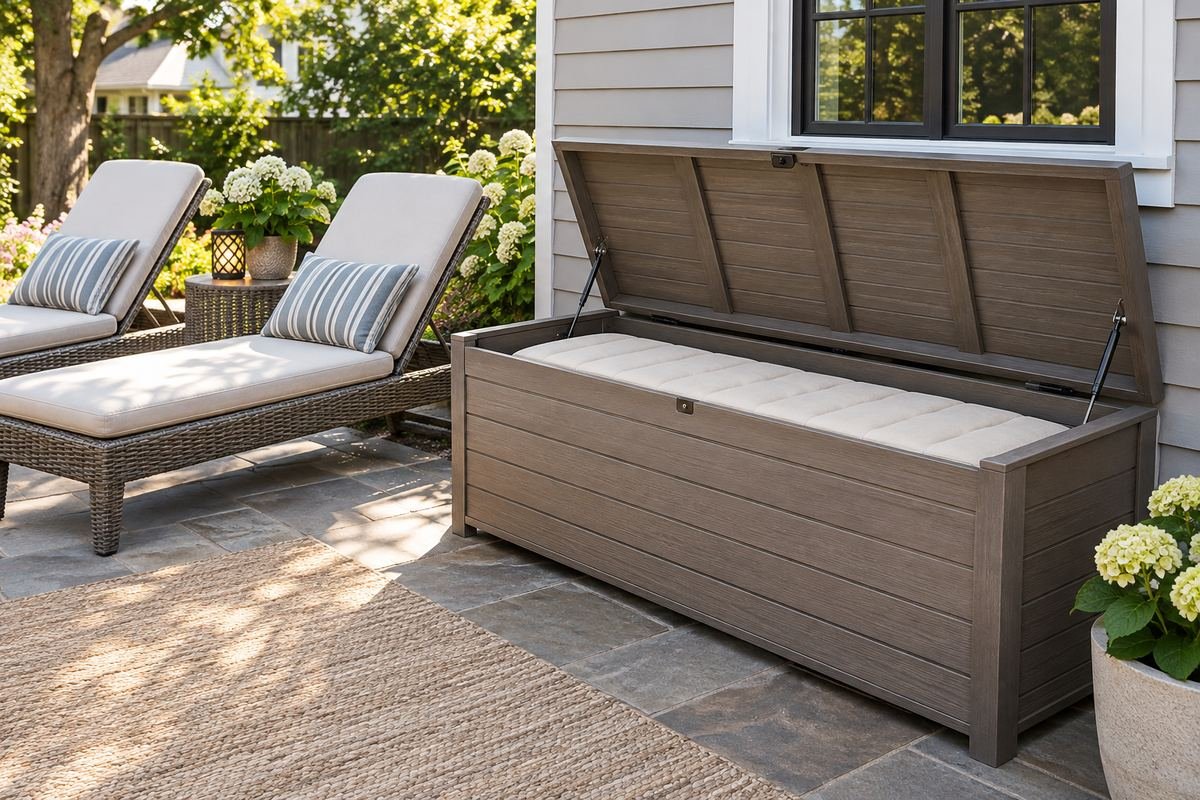
A long lounge cushion may set the minimum useful length for the entire storage plan. A dedicated long compartment can prevent daily folding that the product was not designed to tolerate.
Measure the cushion including its head section, piping and ties. Compare the full opening as well as the internal length, since the pad must pass through without forced bending. Keep the actual storage orientation within the maker’s guidance.
Practical tip: Measure the longest cushion before selecting any box size.
6. Group thin dining pads in a shallow cabinet

Thin dining-chair pads often need less height than deep lounge cushions. A shallow shelf or drawer can keep them together without consuming the whole cushion chest.
Count every pad and contain ties so they do not catch in the closure. Keep dining pads separate from damp cleaning cloths and gardening items. The storage group should be easy to take to the table in one ordinary trip.
Practical tip: Use the complete chair count when planning the shelf.
7. Divide a tall cabinet into upright cushion bays
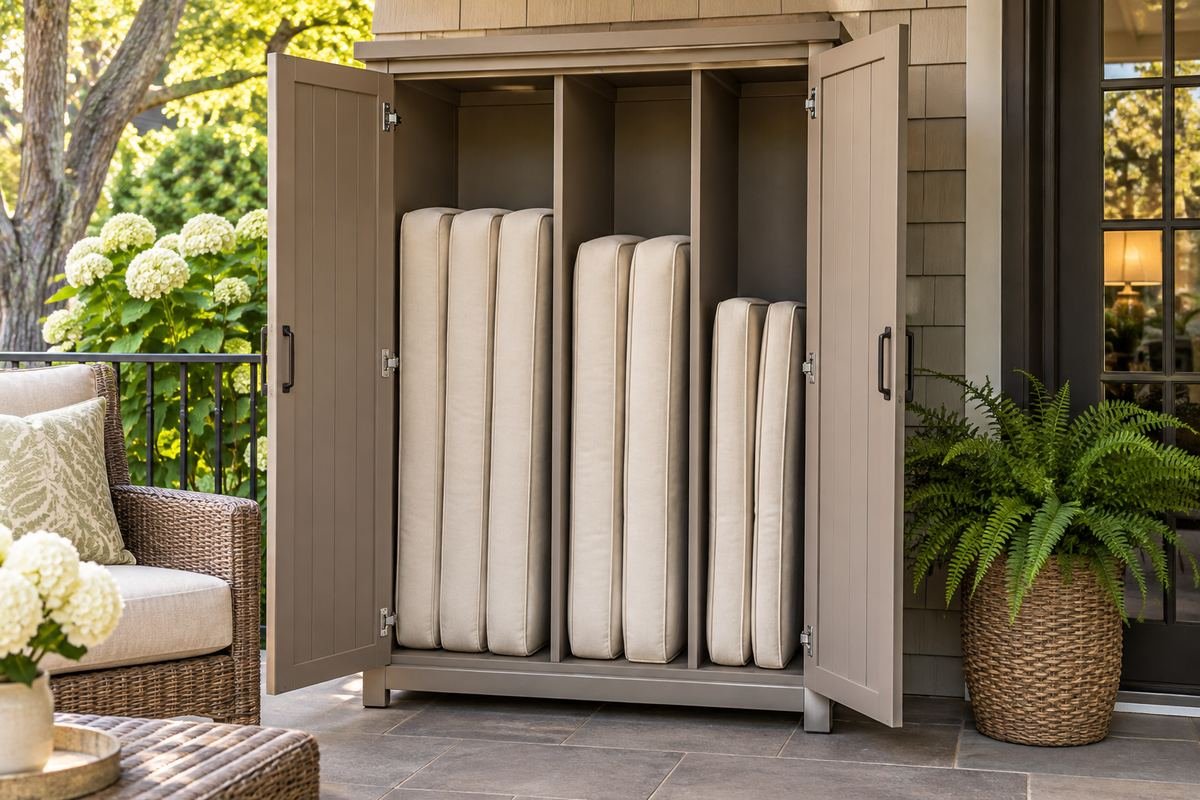
An appropriate divider system can help broad cushions remain in separate upright groups. It can make a particular seat pad easier to find than a mixed pile.
Use the orientation allowed for the exact insert and avoid crushing edges against a narrow bay. The divider must be part of a suitable stable storage arrangement. Allow enough hand room to remove a cushion without dragging it across sharp hardware.
Practical tip: Leave retrieval space beside the widest cushion.
8. Use broad shelves for gentle flat stacks
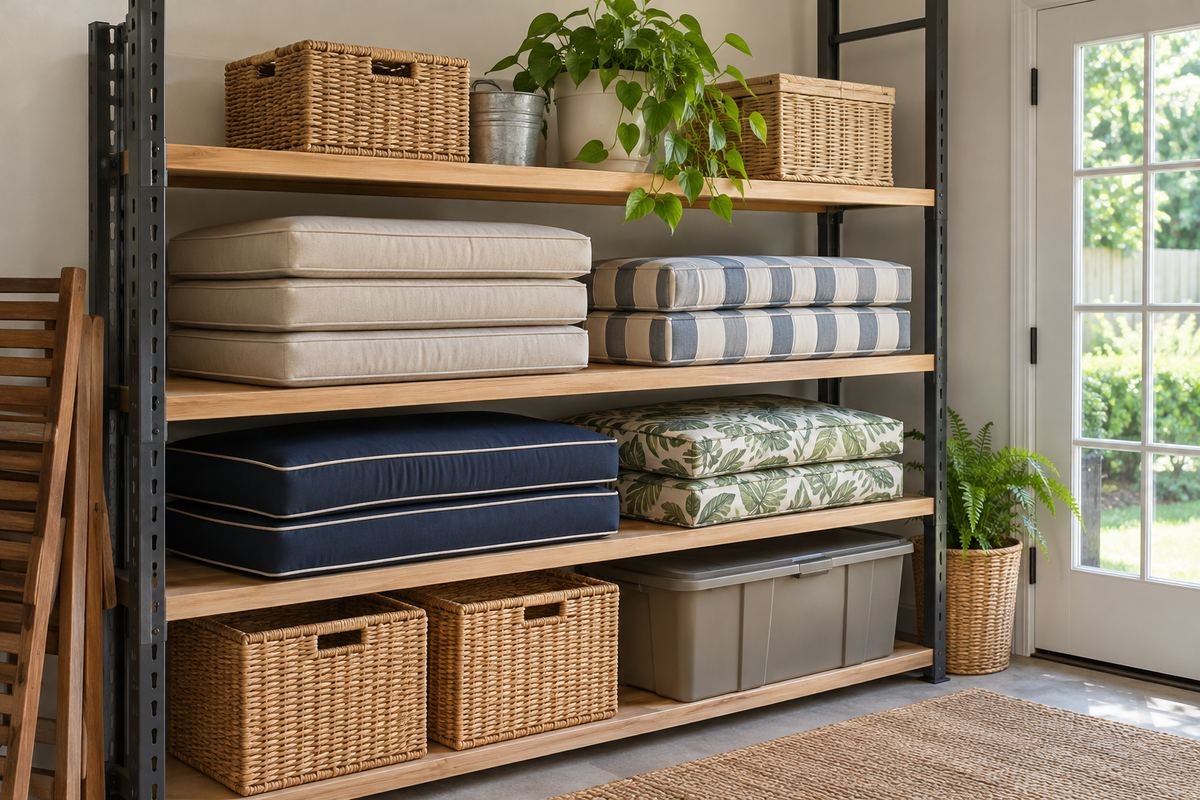
Broad shelves can hold permitted flat cushion stacks in a clean sheltered storage space. A modest stack keeps each group easier to move and reduces the temptation to bury a small pad beneath many large ones.
Confirm shelf capacity and the cushion maker’s storage guidance. Use the entire shelf surface rather than letting a cushion hang over a narrow edge. Keep the arrangement low enough that ordinary retrieval does not become a heavy overhead lift.
Practical tip: Place the largest frequently used group at an easy reachable height.
9. Split two furniture groups between matching boxes
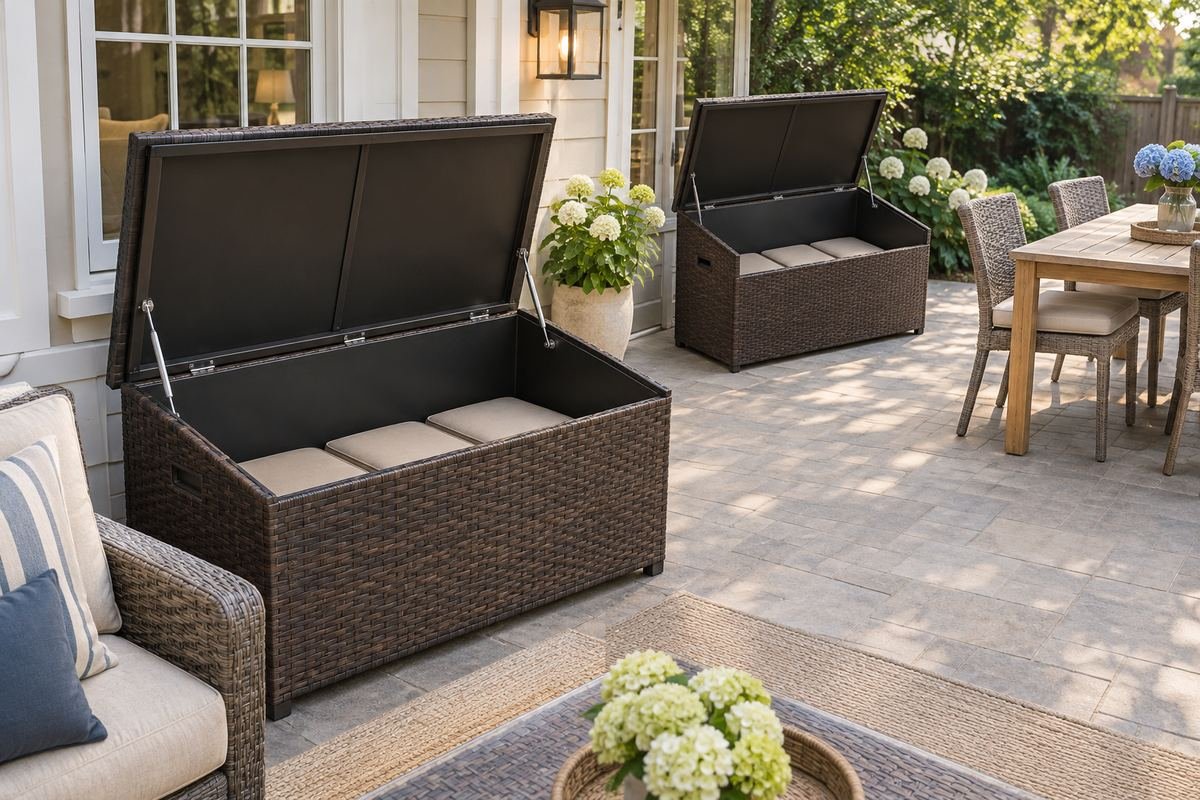
Two smaller boxes can suit separate dining and lounge groups better than one enormous chest. Matching finishes can keep the arrangement visually connected across the patio.
Assign each box a complete set and compare the combined footprints with the walking route. Two containers introduce two opening areas and maintenance routines. Choose the split for actual access rather than assuming more boxes automatically create more useful storage.
Practical tip: Assign the cushion groups before choosing the container pair.
10. Keep sectional modules together in one assigned group
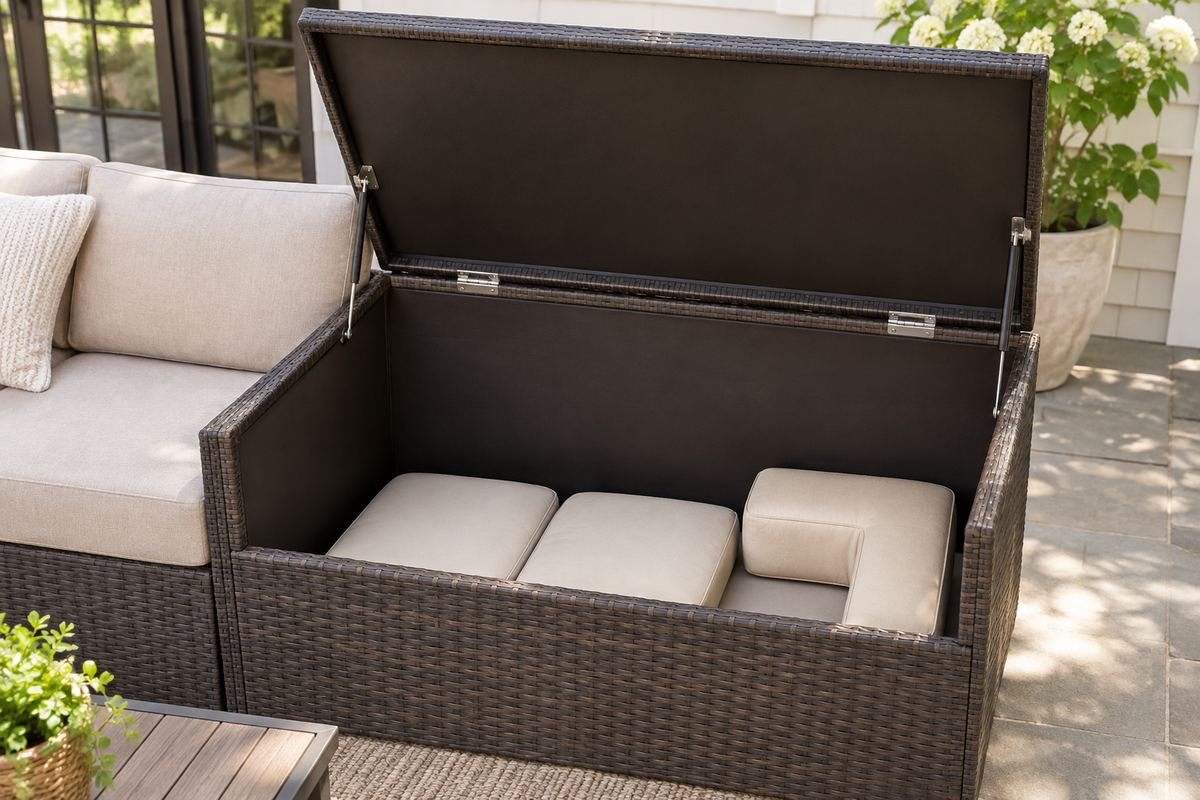
A sectional may have similar cushions that belong to different corners or modules. Keeping each small group together can make the return arrangement more straightforward.
Use the storage card and a photograph of the actual seating layout. Any bag or wrap should follow the cushion maker’s guidance and contain only clean dry pieces. Do not force a corner cushion into the same rectangle used for an ordinary seat pad.
Practical tip: Photograph the sectional before removing its cushions.
11. Give small bolsters their own compartment

Small bolster cushions can disappear beneath large seat pads. A separate smooth-sided compartment keeps them visible and helps preserve the intended arrangement.
Choose a size that accommodates the full bolster without forcing its shape. Keep the compartment separate from hinges and other rough hardware. A basket or bin is an organizer inside a suitable sheltered location, not a claim that the container itself protects from rain.
Practical tip: Count decorative cushions separately from the main seating pads.
12. Store a complete sofa set near its access end

Placing storage at the accessible end of a patio sofa can shorten the route while preserving the main conversation area. The box becomes part of the layout rather than a barrier behind every seat.
Open the chest and walk from the house door to the far chair. Include the space occupied by a person carrying a broad cushion. Avoid a position that requires stepping over the lid or squeezing behind a heavy furniture frame.
Practical tip: Walk the route while holding a cushion before fixing the position.
13. Use a wall-side position away from the main doorway
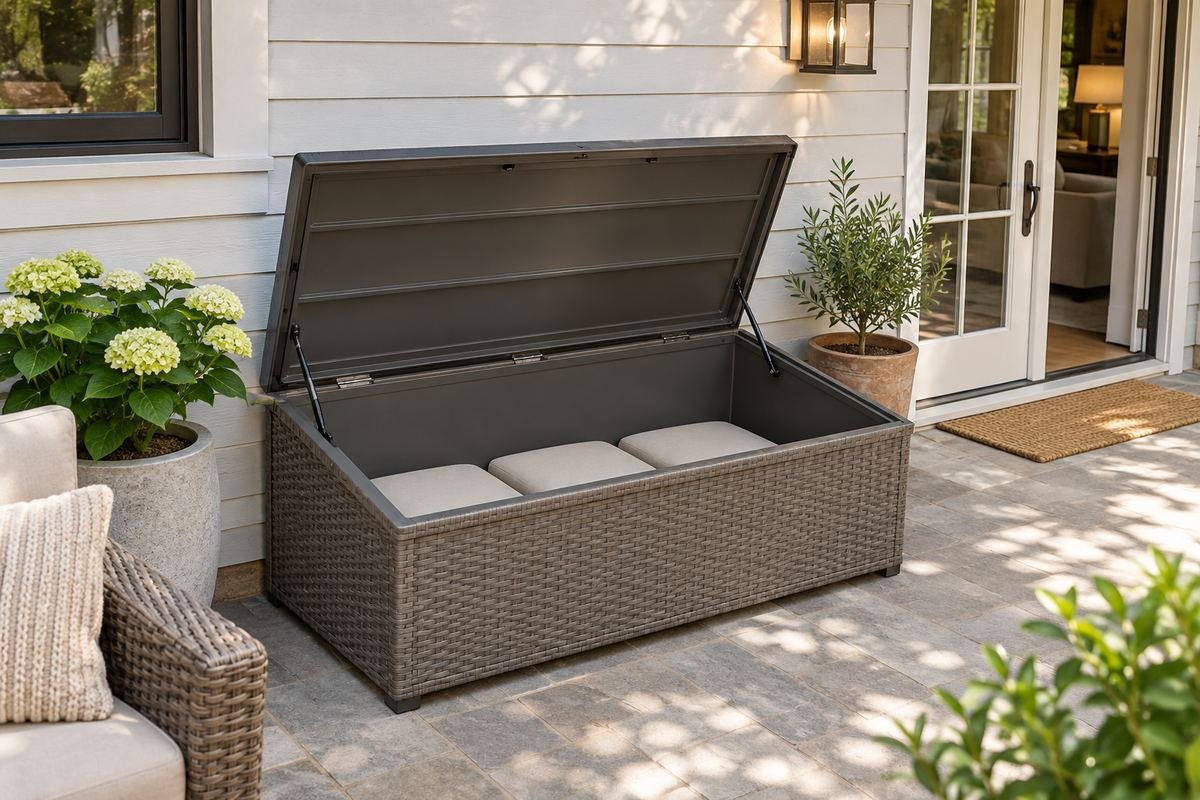
A suitable wall-side storage unit can leave the center of the patio open. Its finish may relate to the house trim or outdoor furniture without becoming the main focal point.
Keep doors, windows, utilities and required access available. Check the lid against the actual wall detail rather than placing the unit flush by habit. An apparently empty corner may still be part of the everyday entrance route.
Practical tip: Include the house door in its fully open position on the plan.
14. Use a covered porch cabinet for short daily returns

A covered porch can offer a convenient location for a suitable cushion cabinet. A taller form may work against a solid wall while the seating area remains open.
A roof does not eliminate wind-driven rain or humidity. Select furniture for the real exposure and inspect its interior before using it for cushions. Keep the complete set dry and follow seasonal instructions if the porch will remain unused for a long period.
Practical tip: Check the cabinet after local weather before filling it permanently.
15. Reserve a clean garage shelf for the off-season
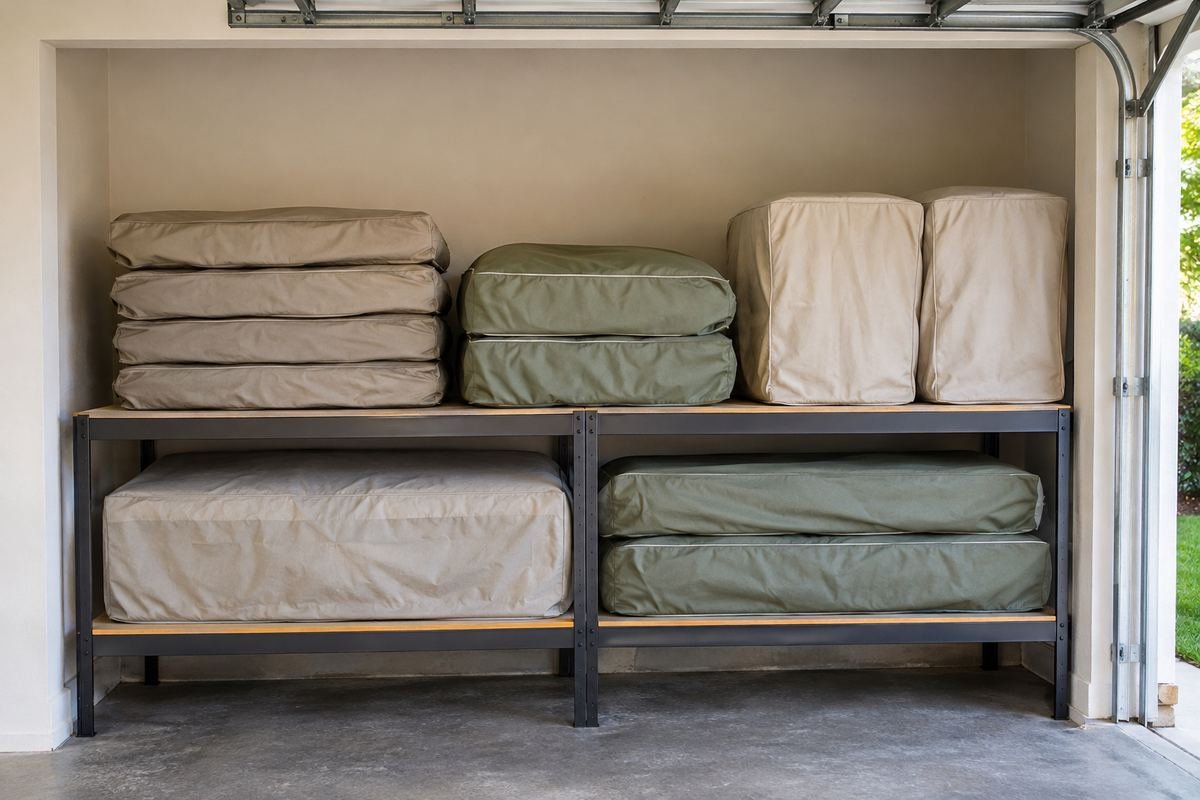
A clean dry garage area may provide seasonal storage when it matches the cushions’ care requirements. A broad reachable shelf can separate the set from the floor and everyday workshop clutter.
Keep it away from fuel, paint, sharp tools and other items that can soil or damage fabric. Check the actual conditions rather than assuming every garage is dry. Use the manufacturer’s recommended packaging for the specific cushion construction.
Practical tip: Choose a dedicated clean shelf instead of an incidental gap.
16. Use an indoor closet when the set is small
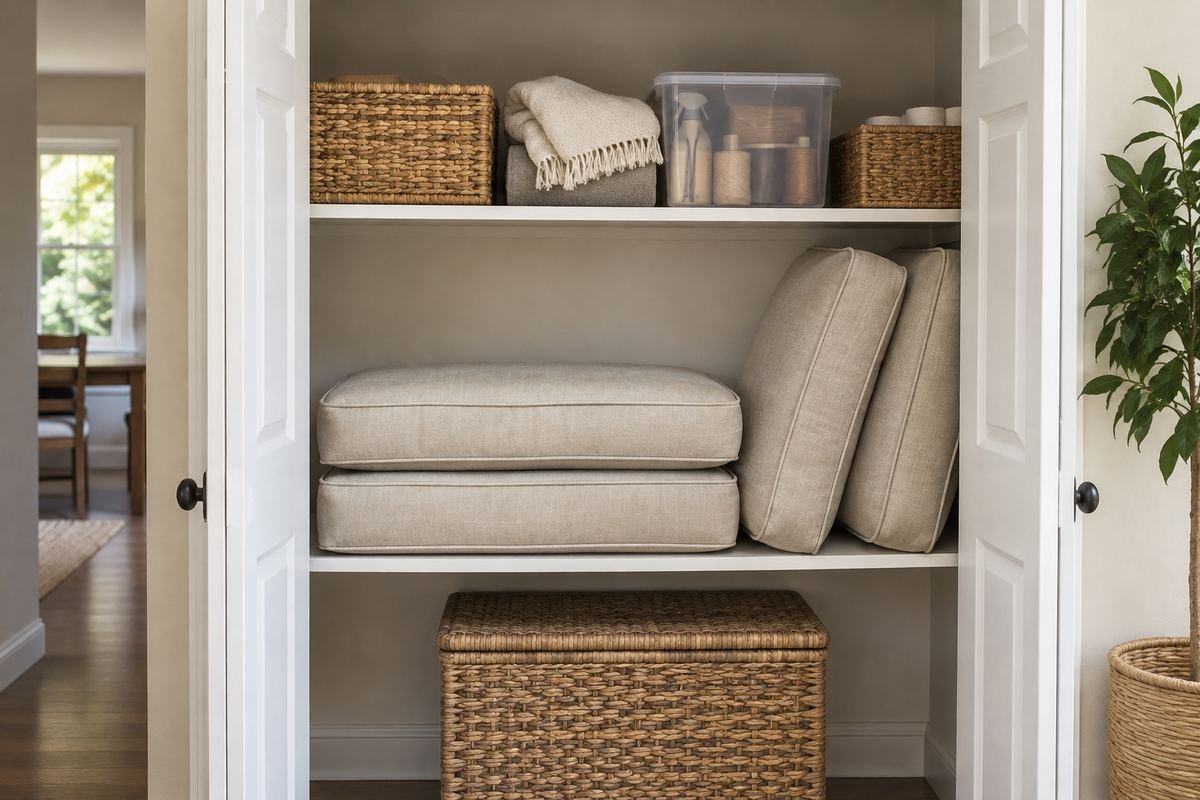
A small patio set can sometimes fit a clean indoor closet during a long unused period. The location can make seasonal storage possible without adding another outdoor enclosure.
Measure the closet opening and the remaining space for its ordinary contents. Keep cushions in their permitted storage shape and avoid compressing them behind a closing door. Make sure returning the set does not require dismantling unrelated household storage.
Practical tip: Test the complete set in the proposed closet before buying another container.
17. Keep cushions separate from gardening supplies

A combined outdoor cabinet can become less useful when clean cushions share a compartment with soil, wet tools or fertilizers. Separate the functions into suitable distinct storage positions.
A dividing line in a photograph is insufficient if dirt and moisture can readily transfer. Choose another enclosure or a genuinely separate clean compartment as appropriate. Keep the cushion area simple enough that its condition is easy to inspect.
Practical tip: Assign a cushion-only compartment before filling a multipurpose cabinet.
18. Create a separate drying position before storage
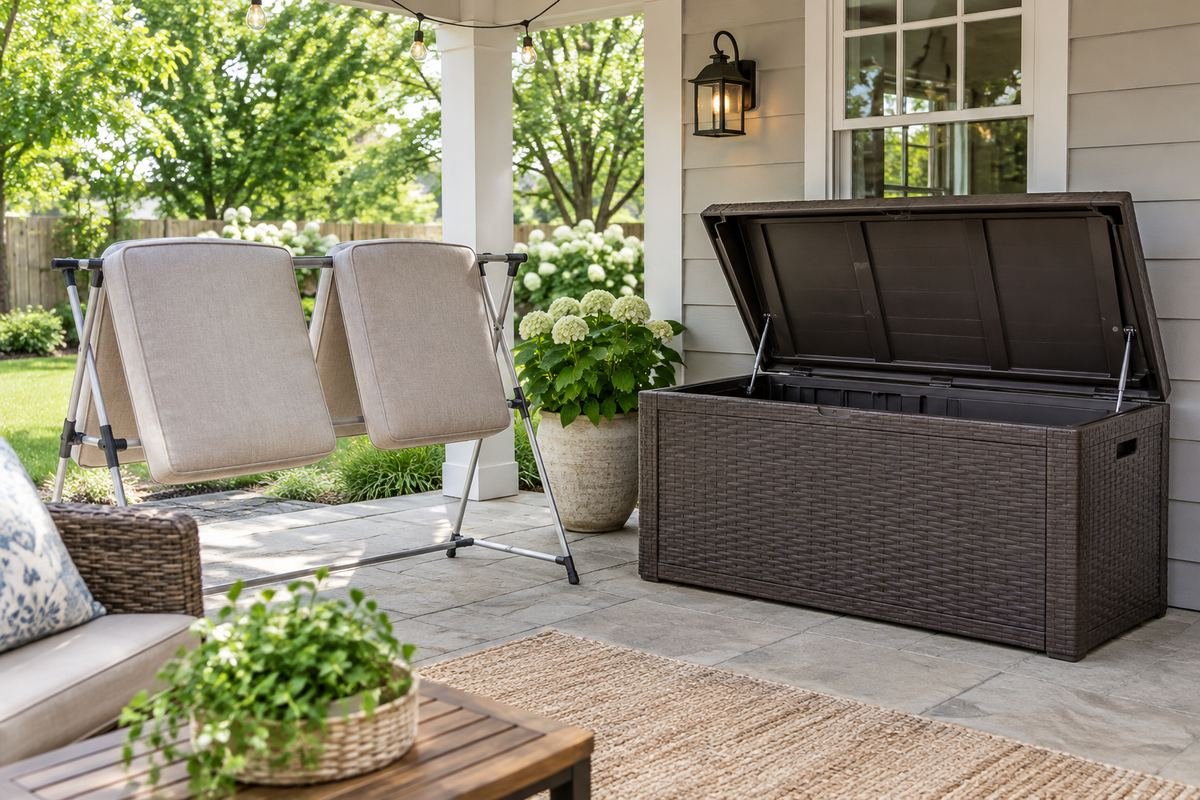
A storage routine needs a place for cushions that are not ready to be enclosed. A suitable open drying position prevents them from being mistaken for the clean dry set.
Follow the exact cushion instructions for drainage and drying orientation. Leave the storage chest empty or reserved for dry pieces while waiting. Do not close a damp cushion into a box merely because the patio needs to look tidy before evening.
Practical tip: Treat drying as a separate stage from putting away.
19. Keep removable covers with their correct inserts
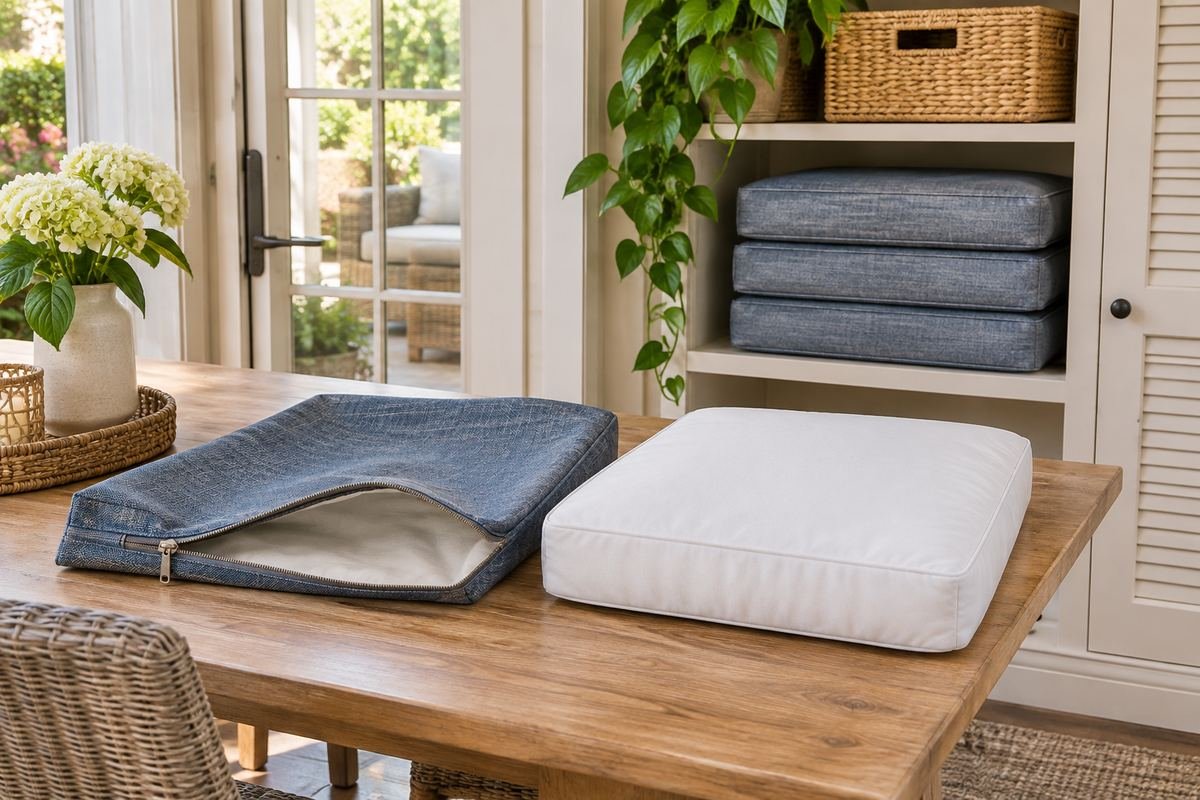
Covers that are designed to be removed can become confusing when several similar cushions are cleaned together. Keep a simple photograph and care reference for each matched set.
Do not remove covers solely because a zipper is present; the maker may recommend a different cleaning method. Store the parts only as directed and only after they are dry. Keep small ties and permitted fittings with their correct cushion group.
Practical tip: Read the care instruction before separating any cover and insert.
20. Choose a light-looking finish for a modest patio

A pale or warm neutral storage finish can make a necessary chest sit quietly beside light outdoor furniture. The color decision can help the unit feel connected to the space.
Settle the internal fit and exposure suitability first. A visually light box can still occupy a large footprint, so compare its complete closed and open outline. Repeat the finish in one existing detail rather than adding several decorative objects to the lid.
Practical tip: Leave the storage lid clear enough to use immediately.
21. Use a darker unit as a deliberate edge

A darker storage cabinet can define the edge of a pale patio. It may relate to dark window frames or furniture legs while keeping cushion storage visually contained.
Compare the full silhouette from inside the house and from the seating area. Choose a product suited to the actual conditions and follow its maintenance guidance. Avoid adding objects on top that must be cleared every time the storage is needed.
Practical tip: Judge the cabinet from the main indoor view as well as outdoors.
22. Trial-pack the dry set before the first long storage

A trial pack reveals problems that a volume calculation can miss. Arrange the actual dry cushions in the intended orientation and confirm that every piece can be inserted and removed easily.
Look for pressure at the lid, pinched ties and a hidden cushion beneath hardware. Adjust the container or grouping before relying on it for a season. This is a practical planning exercise, not a guarantee of weather protection from a photograph.
Practical tip: Close the empty lid first to understand its internal hardware path.
23. Finish with a simple return order
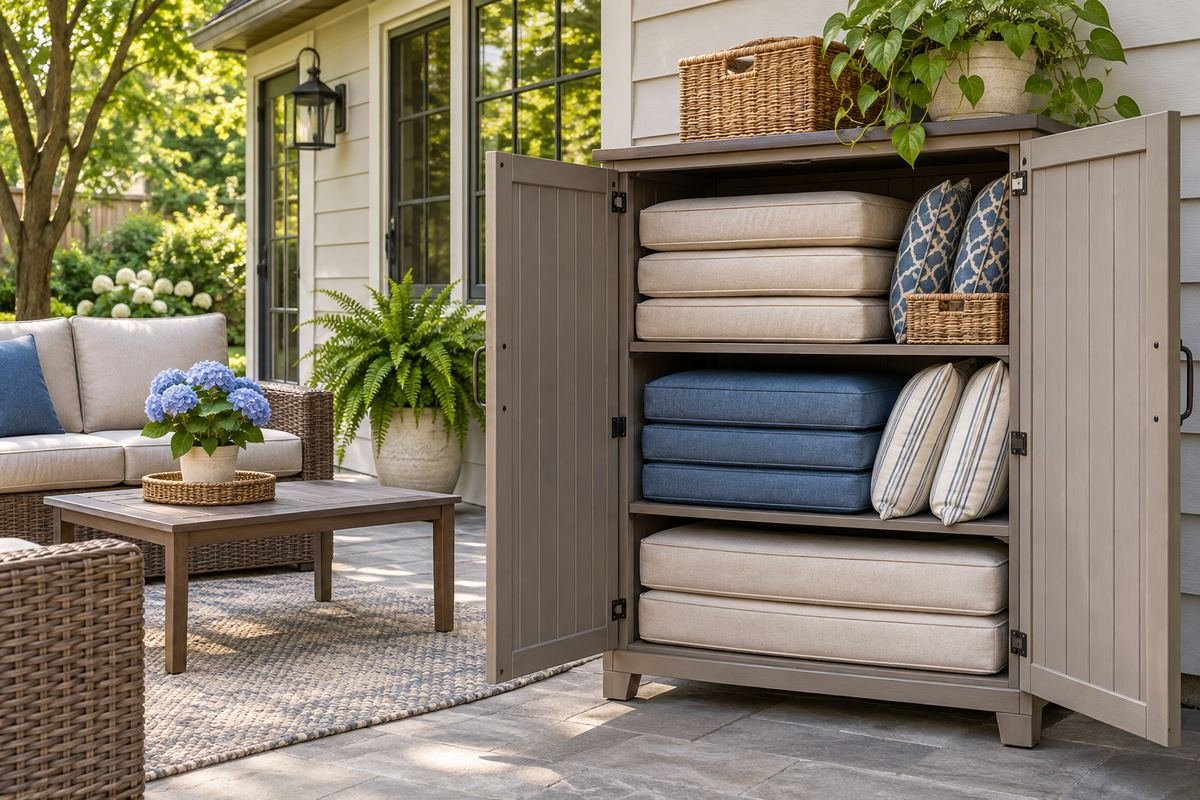
A consistent return order can make the patio reset quicker without adding more containers. Keep the larger seating pads and smaller accents in assigned groups that suit the storage shape.
Take a photograph of the final dry arrangement for your own reference and keep the storage card nearby indoors. Revisit the plan after several ordinary uses. Outdoor cushion storage is most useful when someone can retrieve one set without emptying everything else onto the patio.
Practical tip: Use the easiest frequently used group nearest the opening.
Frequently Asked Questions
Can outdoor cushions go into storage while slightly damp?
Wait until the complete cushion is dry as directed by its maker. A surface that feels dry can conceal moisture in the insert or seams. A storage box or bag is not a substitute for the required drying step.
Does a water-resistant deck box guarantee dry cushions?
No. Check the exact enclosure’s specification, intended location and maintenance, and inspect the interior after local weather exposure before trusting it with cushions. Water-resistant language does not by itself address every seal, condensation or flooding condition.
Should I vacuum-pack patio cushions?
Only if the exact cushion manufacturer allows that treatment. Compression can be unsuitable for some inserts and shapes. Plan a container around the cushions’ permitted storage form rather than relying on a smaller compressed volume.
Choose the Details That Work in Your Home
Make outdoor cushion storage part of the patio layout rather than an afterthought. A measured packing plan, a genuinely dry set and a storage position suited to the period of use can keep both the seating and the route around it easier to manage.
For related ideas, explore patio side table ideas, outdoor dining area ideas, patio rug ideas.
Planning References
RH: outdoor upholstery and cushion insert care, including storage; Jensen Outdoor: cushion care and product-specific winter storage guidance. Follow the instructions for the exact products you choose.
Optional digital guide for this topic
If you prefer a structured workbook, explore this related paid guide.