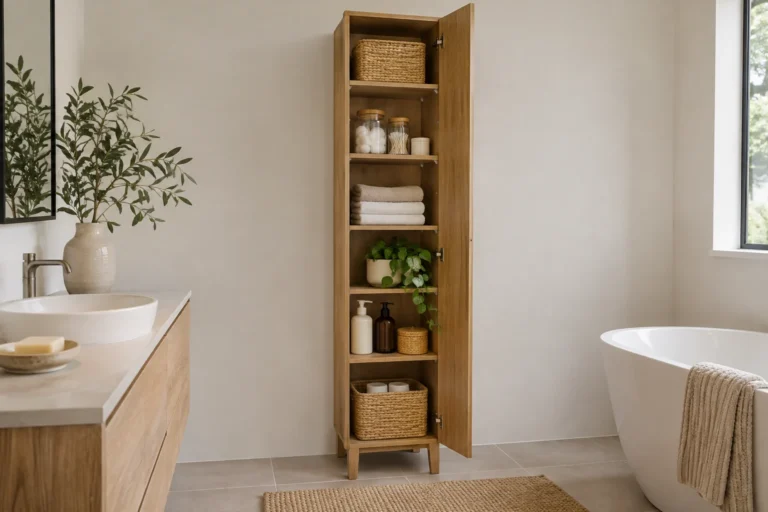
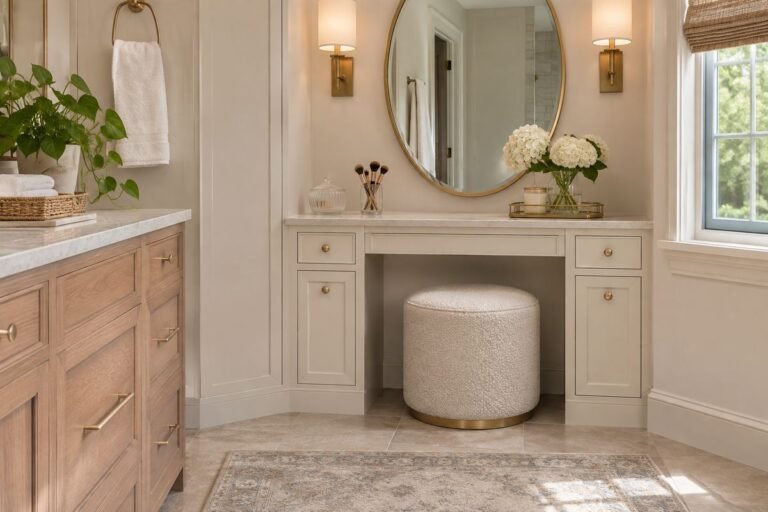
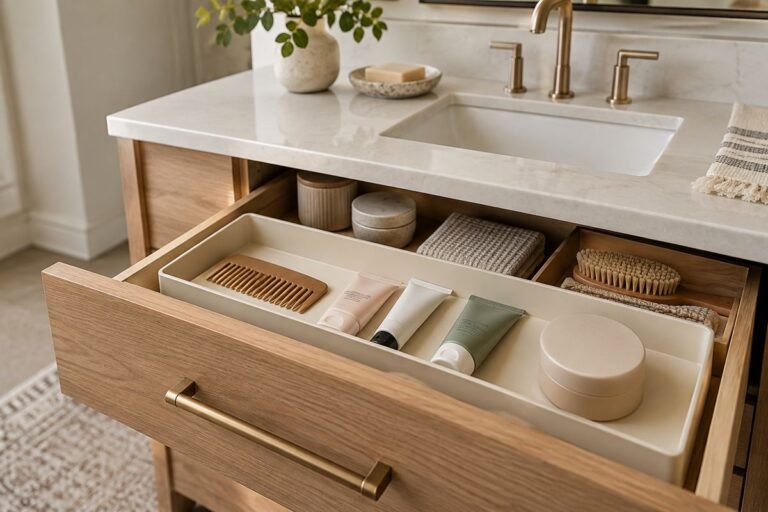
A bath mat needs to work in a room that changes through the day: doors open, feet bring water onto the floor, and the textile needs an appropriate care and drying routine. Begin with the actual place where it will be used, then choose its color and texture. A mat that photographs neatly beneath a vanity can still obstruct a door or be awkward to maintain.
These ideas illustrate layout and styling, not tested slip resistance. Choose the actual mat and any compatible underlay around the floor, setting and manufacturer's guidance. Keep an in-shower product's purpose separate from that of a textile intended for the floor outside it.
Contents
- 1. Start with a modest rectangle at the intended step-out area
- 2. Use two separate mats for two distinct routines
- 3. Compare a long mat with a double vanity
- 4. Try a round shape in a roomy open area
- 5. Use an oval to echo curved fixtures
- 6. Choose a quiet neutral beside patterned tile
- 7. Repeat one color from the towels
- 8. Use contrast to make the textile boundary visible
- 9. Choose a restrained stripe for a simple room
- 10. Let texture provide interest in a monochrome palette
- 11. Check pile height beneath an opening door
- 12. Leave vanity drawers independent from the mat
- 13. Keep the mat clear of a pedestal's awkward shape
- 14. Use a smaller mat in a compact bathroom
- 15. Give the drying position a real place
- 16. Keep a clean spare in a defined cabinet space
- 17. Choose a care routine suited to the actual construction
- 18. Keep indoor and outdoor textiles distinct
- 19. Use a quiet pairing with a patterned shower curtain
- 20. Keep separate pieces from overlapping
- 21. Check the floor underneath during the ordinary reset
- 22. Choose a guest-room set with simple instructions
- 23. Review the mat with every door in normal use
Read the complete care label before choosing
Measure the useful floor area with doors in their normal positions and check how the mat is stored or dried between uses. Care differs by product: IKEA's listed TOFTBO model, for example, has specific wash and drying instructions. That is not permission to wash every backed, woven or decorative mat the same way. Check compatibility with the actual floor and the instructions for any backing or underlay.
Compare the storage or placement options
- One step-out position: A suitable single mat sized around the actual opening and movement.
- Two separate vanity positions: Compare two smaller pieces with one suitable longer textile; keep edges independent.
- Low door or drawer: Check the complete mat, backing and any permitted underlay in normal use.
- Frequent care needed: Choose a product-specific routine and a real drying and spare-storage position.
1. Start with a modest rectangle at the intended step-out area
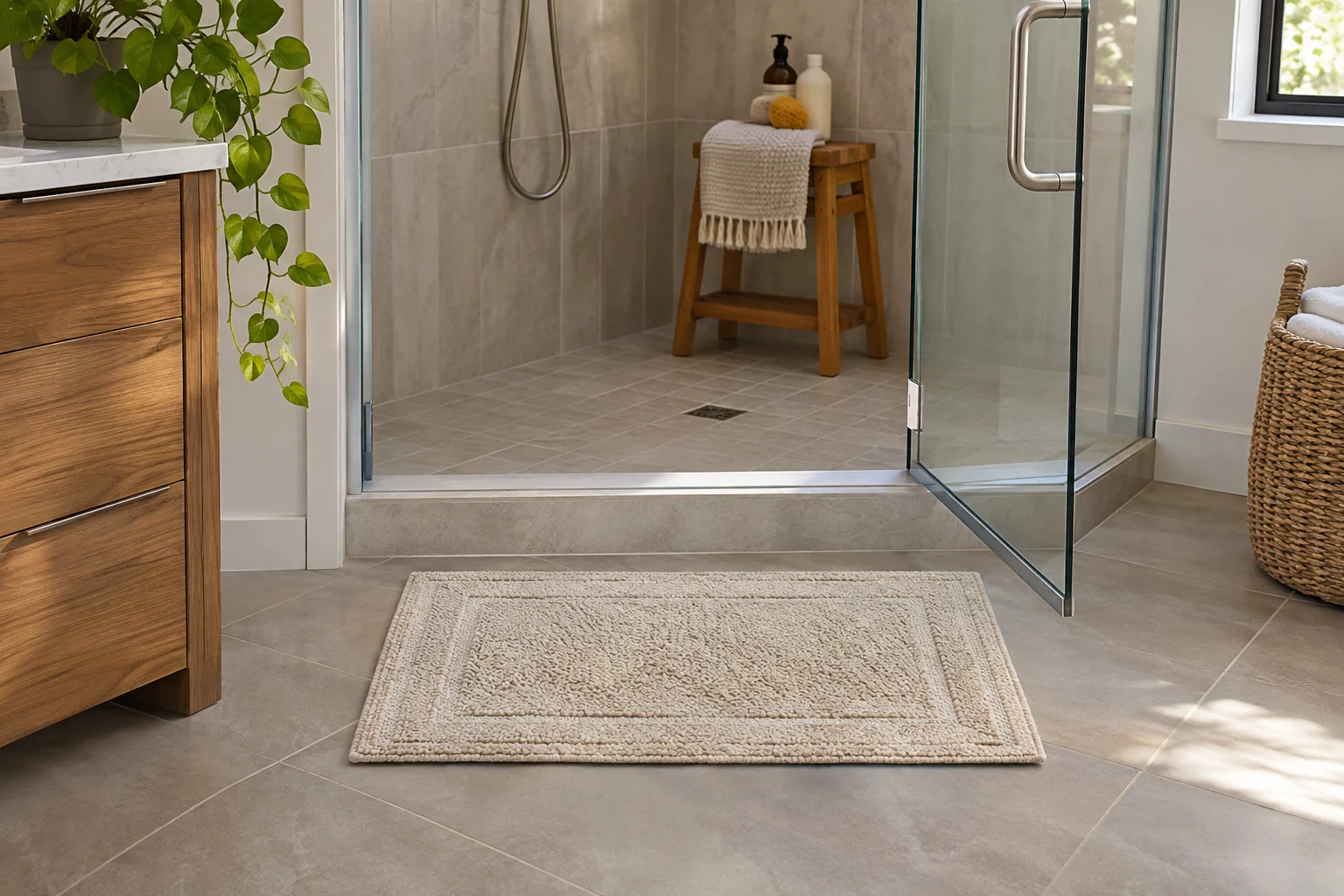
A simple rectangle can define one useful standing area without covering every open patch of floor. Check the position with the shower or bath opening in use, following the actual mat's guidance. Keep the shape comfortably within the available area. Choose around the movement it needs to serve rather than the width of the bathtub alone.
2. Use two separate mats for two distinct routines
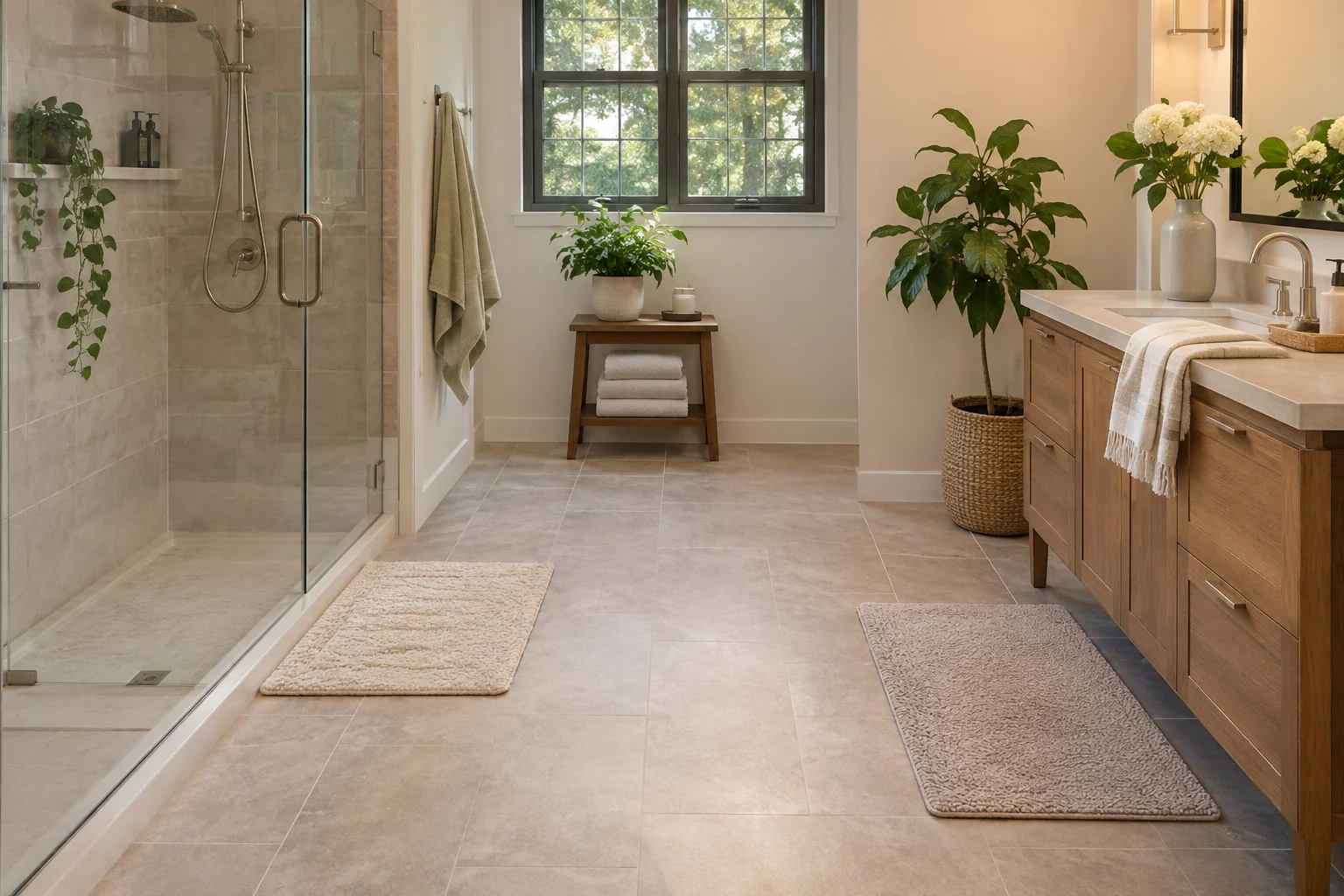
A shower exit and a vanity may need different positions, and two suitable smaller mats can keep those functions distinct. Check that the pair does not overlap or occupy the main route through a compact room. Give each its own care and drying routine. More textiles are useful only when the household can maintain them and the actual layout supports the arrangement.
3. Compare a long mat with a double vanity
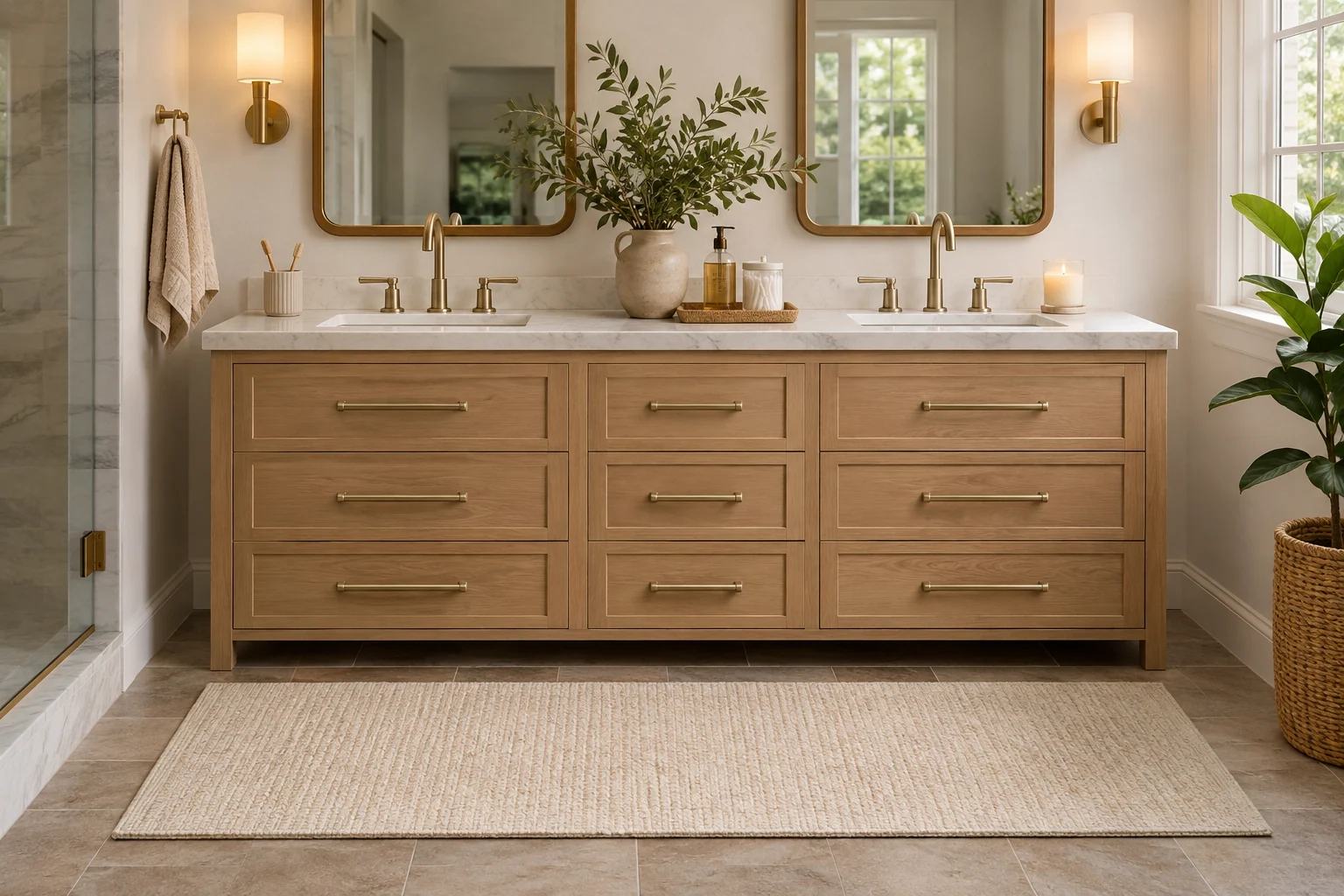
A longer textile can connect a double vanity visually when it fits the floor and intended use. Test the position against both standing areas and all opening drawers or doors. Keep its edges clear of the room's circulation. A pair of shorter mats may be simpler when the two positions need different access or the long piece is awkward to care for.
4. Try a round shape in a roomy open area
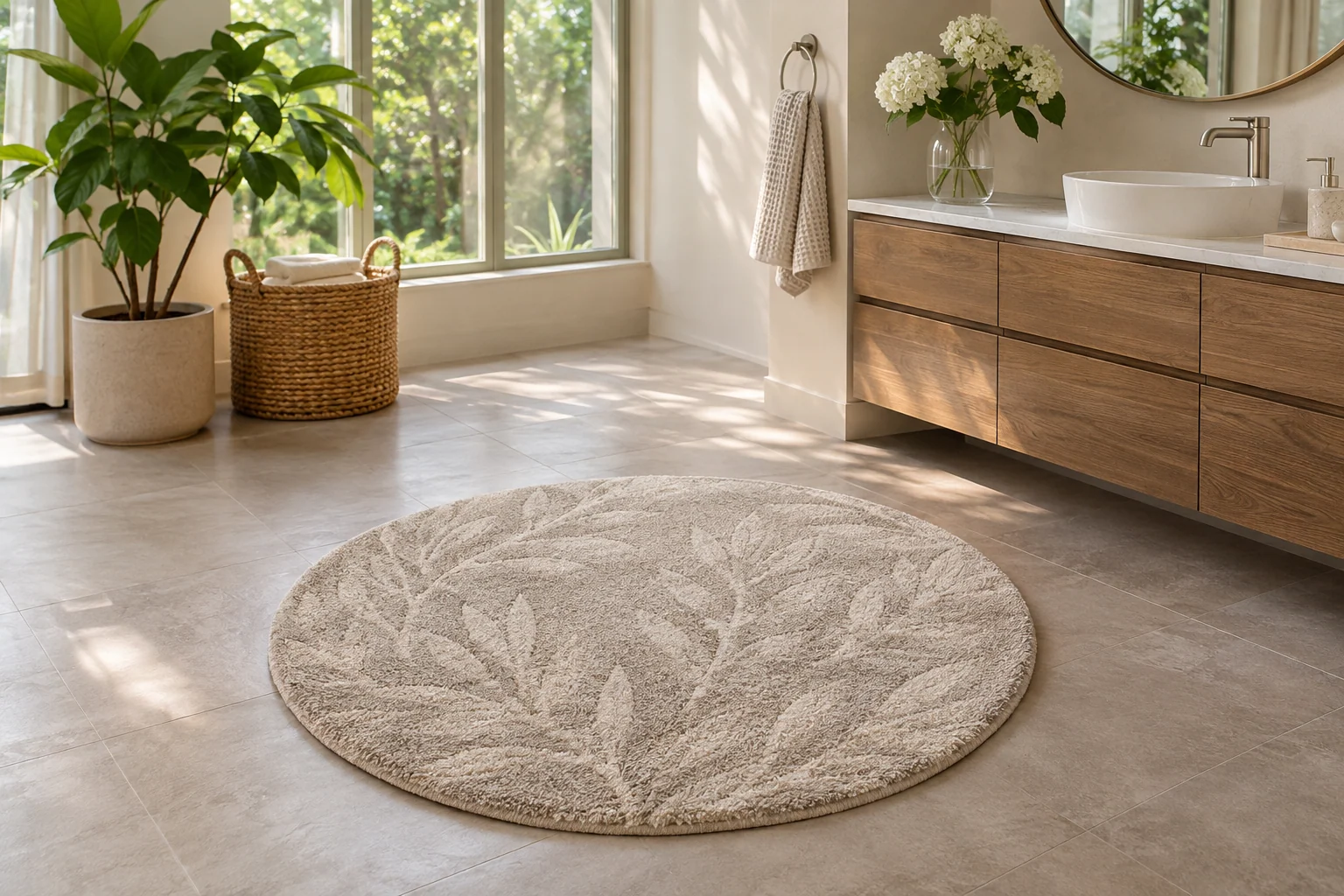
A round mat can soften the straight lines of a vanity or tile layout. Compare its full diameter with the useful floor area, not just its visual center. Keep the edges out of door movement and narrow passages. Choose the shape because it serves the position, rather than accepting a cramped arrangement simply because a circle looks attractive beside a rectangular cabinet.
5. Use an oval to echo curved fixtures
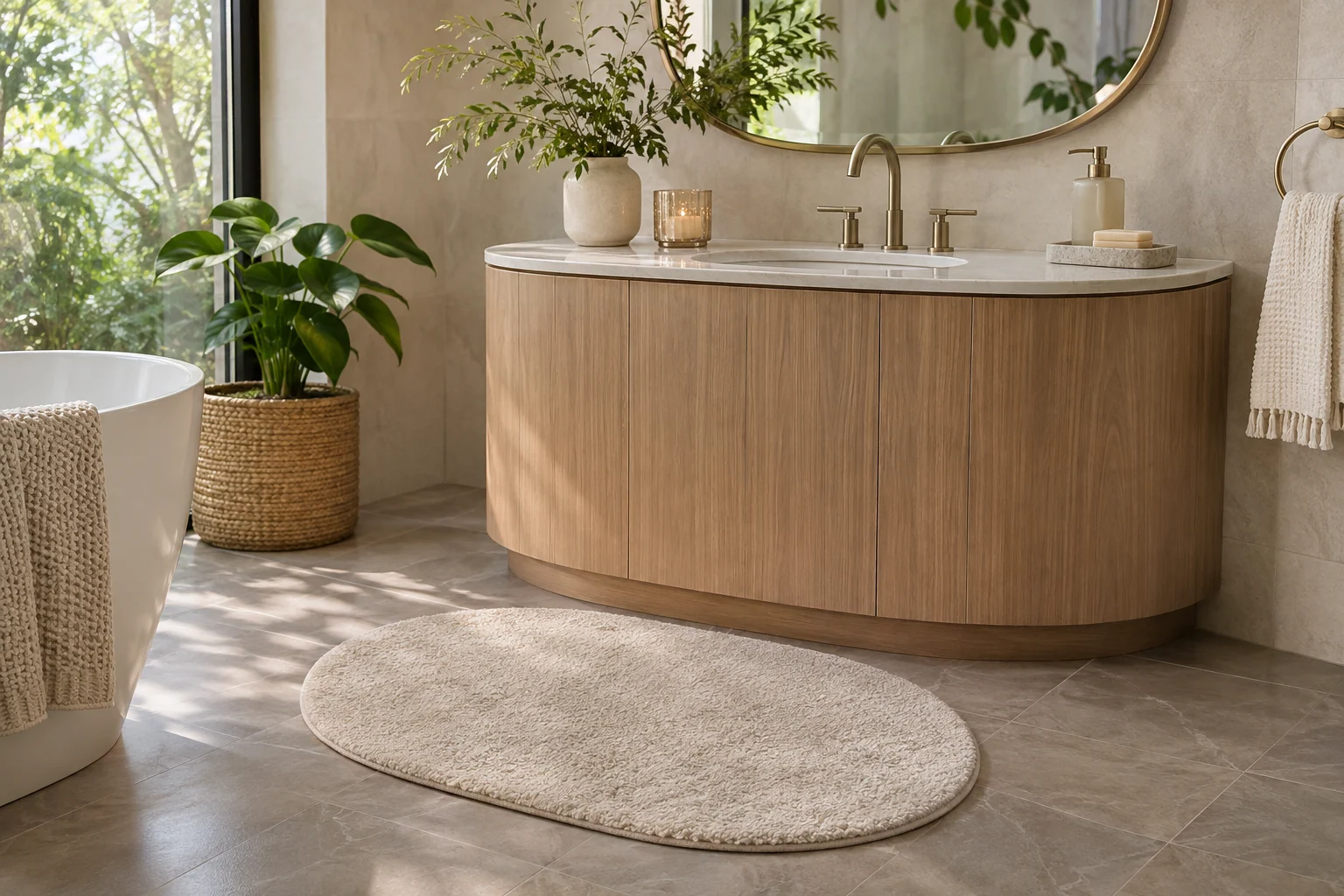
An oval can relate to a curved basin, mirror or bath while offering a different footprint from a round mat. Check the long and short dimensions separately. Place the useful standing area where it belongs and let the curve support the design. The shape should not encourage an edge to curl around a cabinet leg or be forced against a door.
6. Choose a quiet neutral beside patterned tile
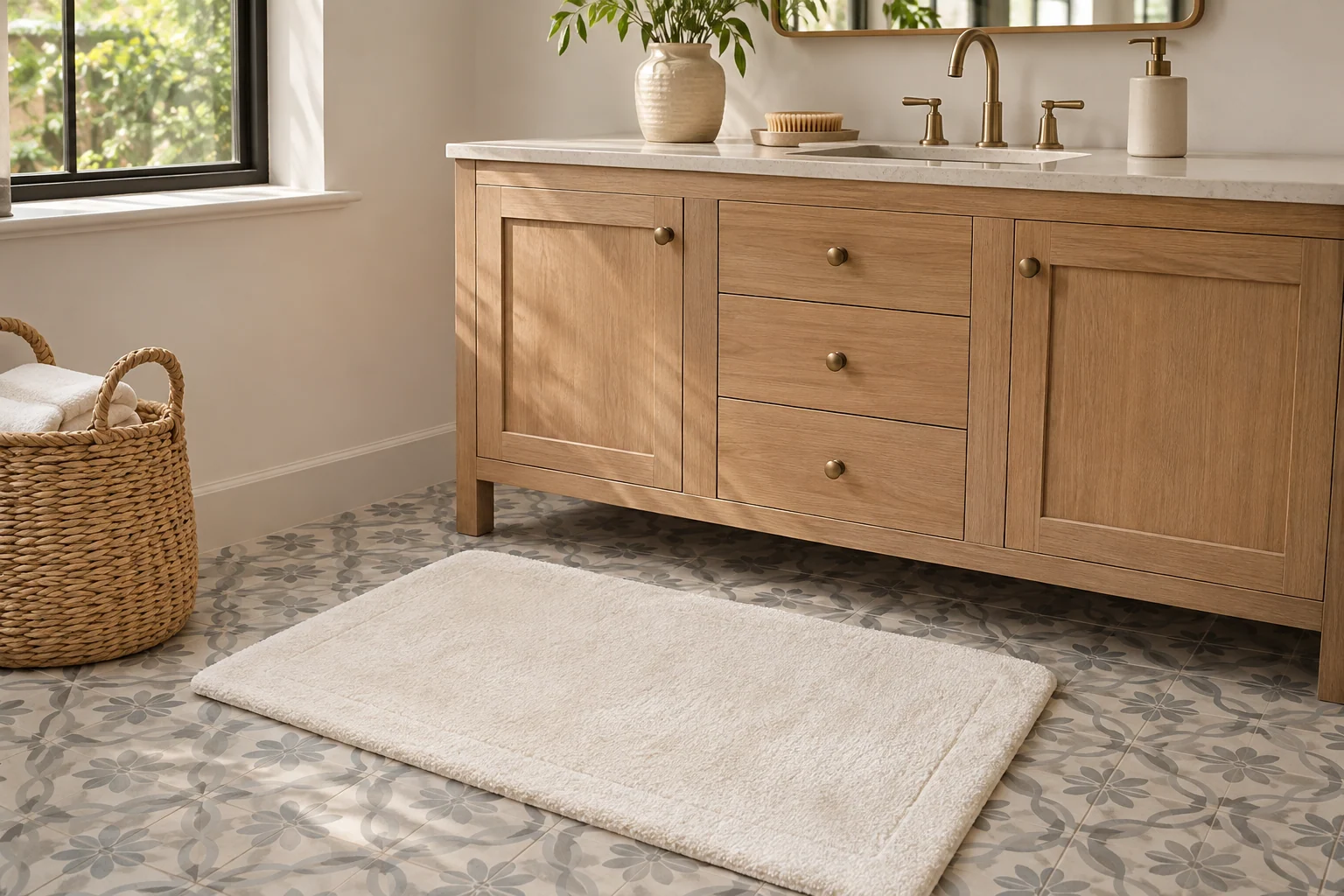
A plain mat can let a strong tile pattern remain the room's feature. Compare several related neutral tones against the actual floor in ordinary light. Keep the texture and care requirements part of the decision. A pale color that creates a pleasing photograph may need a maintenance routine different from the one the household wants.
7. Repeat one color from the towels
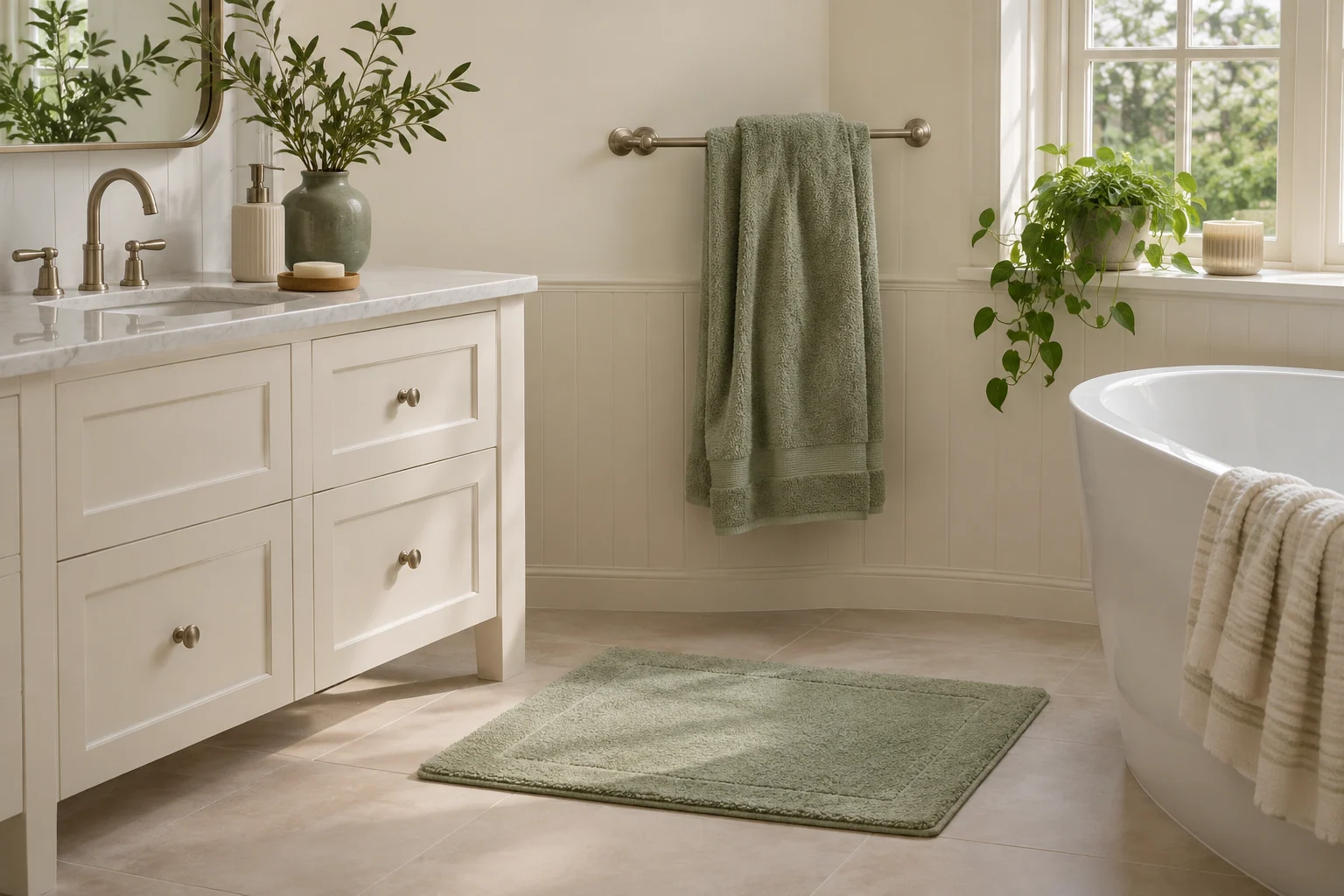
A shared color can connect the mat and towels without requiring identical sets. Choose one tone and let the other textiles vary quietly. Keep the mat's size and suitability independent from that color match. The right shade is not a reason to use a decorative textile whose backing or intended placement does not suit the actual bathroom floor.
8. Use contrast to make the textile boundary visible
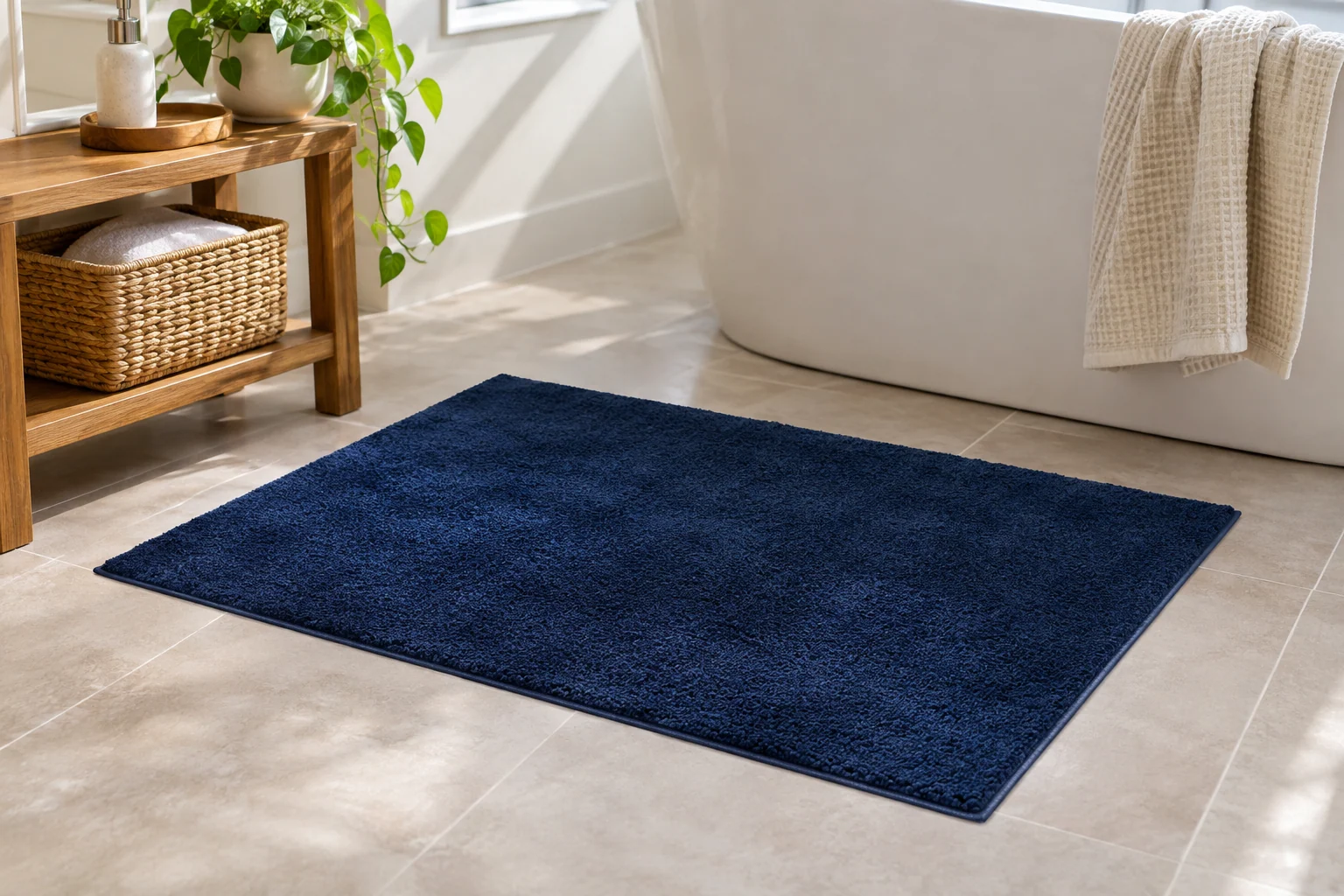
A different tone from the floor can make the mat's outline easier to read as part of the room. Check the contrast in the bathroom's normal lighting rather than only under a bright product photograph. This is a visual arrangement, not a claim about preventing falls. The actual product's suitability and care remain separate checks.
9. Choose a restrained stripe for a simple room
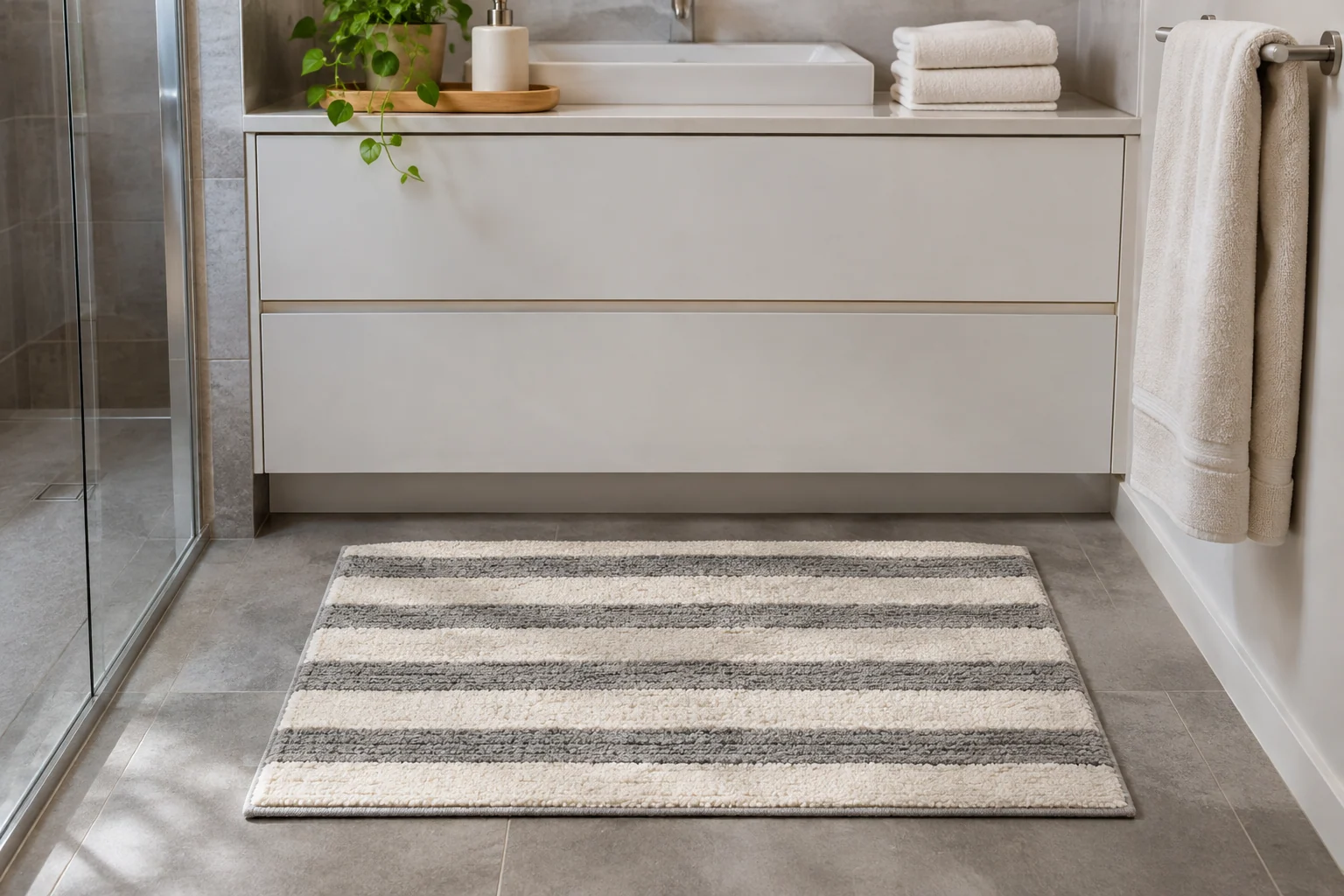
A striped mat can introduce direction and texture without adding another piece of decor. View it alongside tile lines and cabinet fronts to see whether the combination feels calm. Keep the stripe scale appropriate to the actual mat size. A strong graphic pattern can be the single textile feature rather than something repeated across every towel and accessory.
10. Let texture provide interest in a monochrome palette
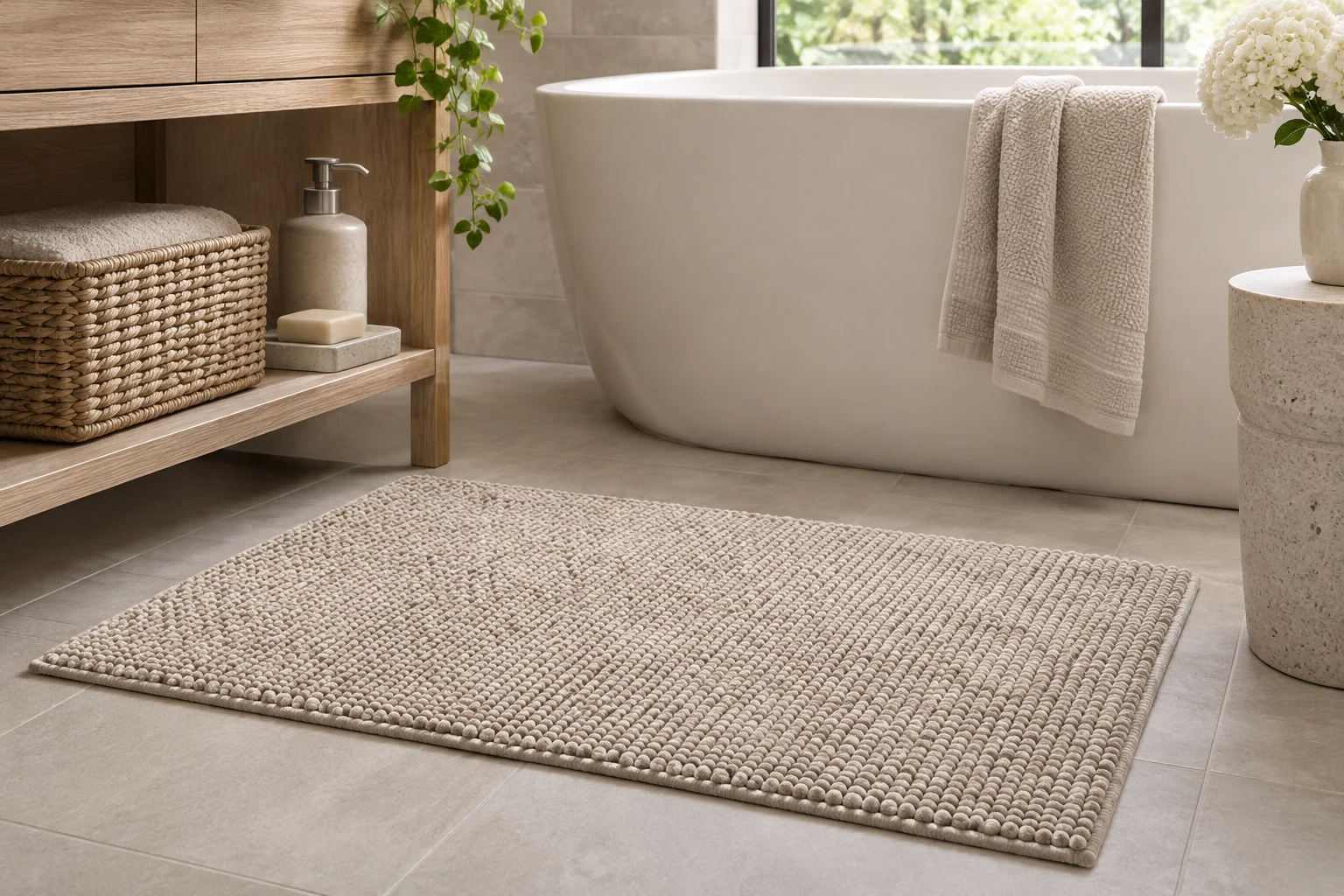
A textured mat can add depth when the bathroom uses a small color range. Compare how the complete textile feels and how its instructions fit the care routine. Surface texture alone does not tell you about its backing, drying or floor compatibility. Keep those practical decisions alongside the visual one rather than assuming a thick-looking mat is automatically more suitable.
11. Check pile height beneath an opening door
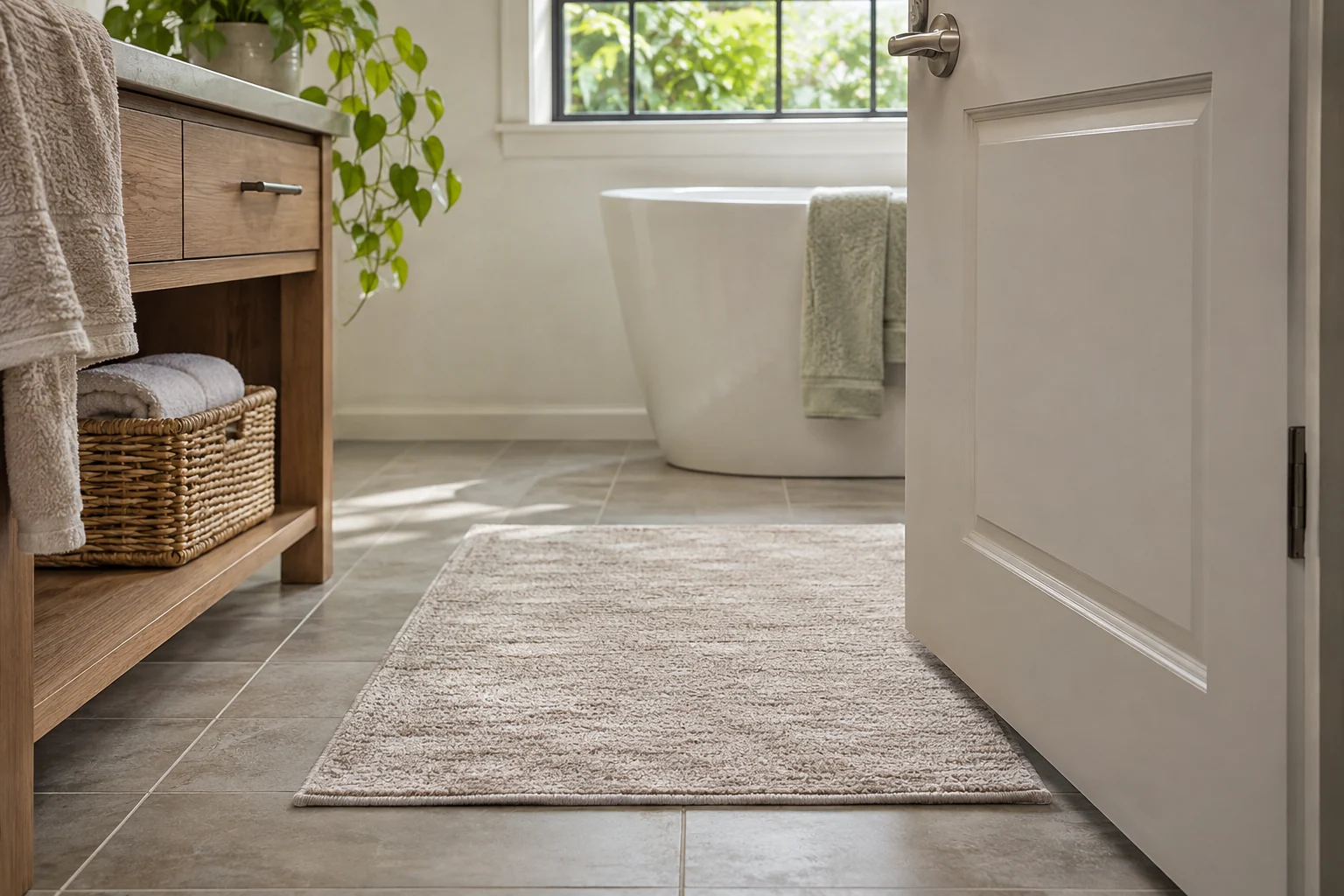
A mat needs to fit with the actual door movement, including its backing and any permitted underlay. Test the complete intended arrangement rather than measuring the fabric's thickness alone. Do not force the door across a mat that bunches or catches. A different suitable position or product profile may serve the room better.
12. Leave vanity drawers independent from the mat
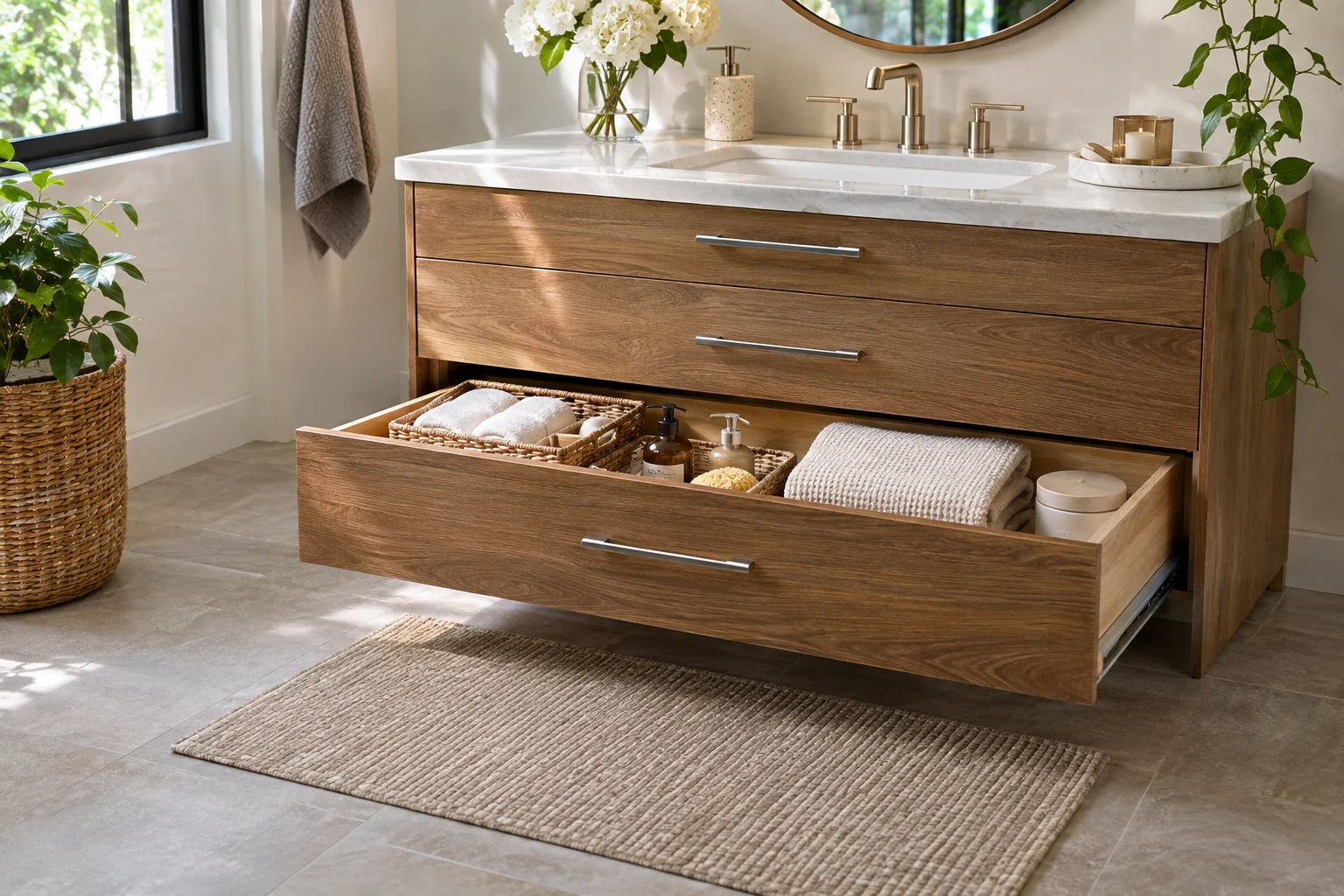
A low drawer can meet a thick textile before it reaches its full opening. Check the drawer with the actual mat in place, including normal changes in position during use. Keep the arrangement from becoming something that has to be shifted whenever storage is accessed. Choose the mat's profile and location around the furniture you already have.
13. Keep the mat clear of a pedestal's awkward shape
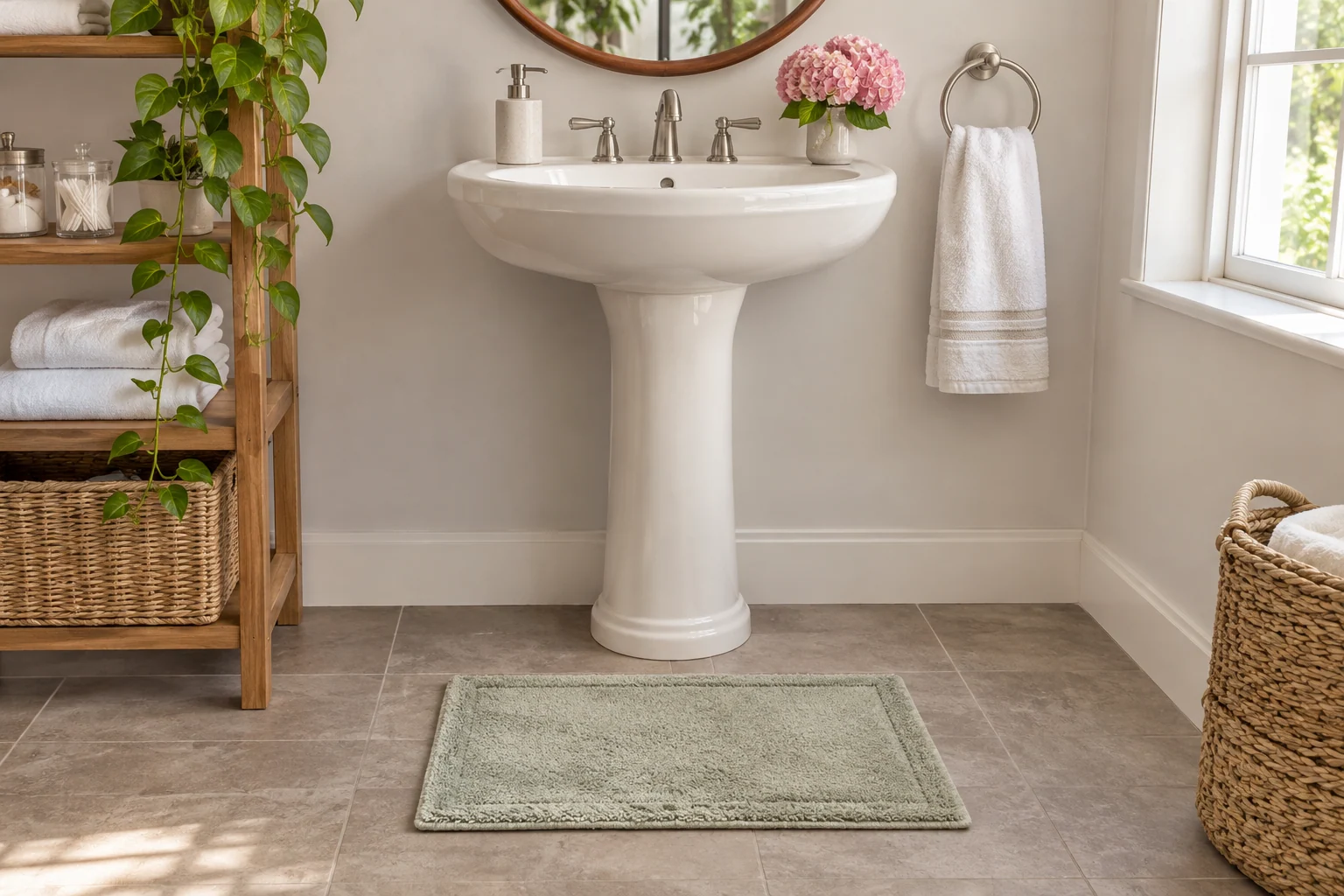
A pedestal basin or unusual cabinet base can create a floor area that is wider in one direction than another. Measure that real shape before choosing a standard rectangle. Keep the textile fully supported and flat rather than tucking a corner around plumbing or a base. A smaller suitable mat can be more practical than a larger piece forced into the opening.
14. Use a smaller mat in a compact bathroom
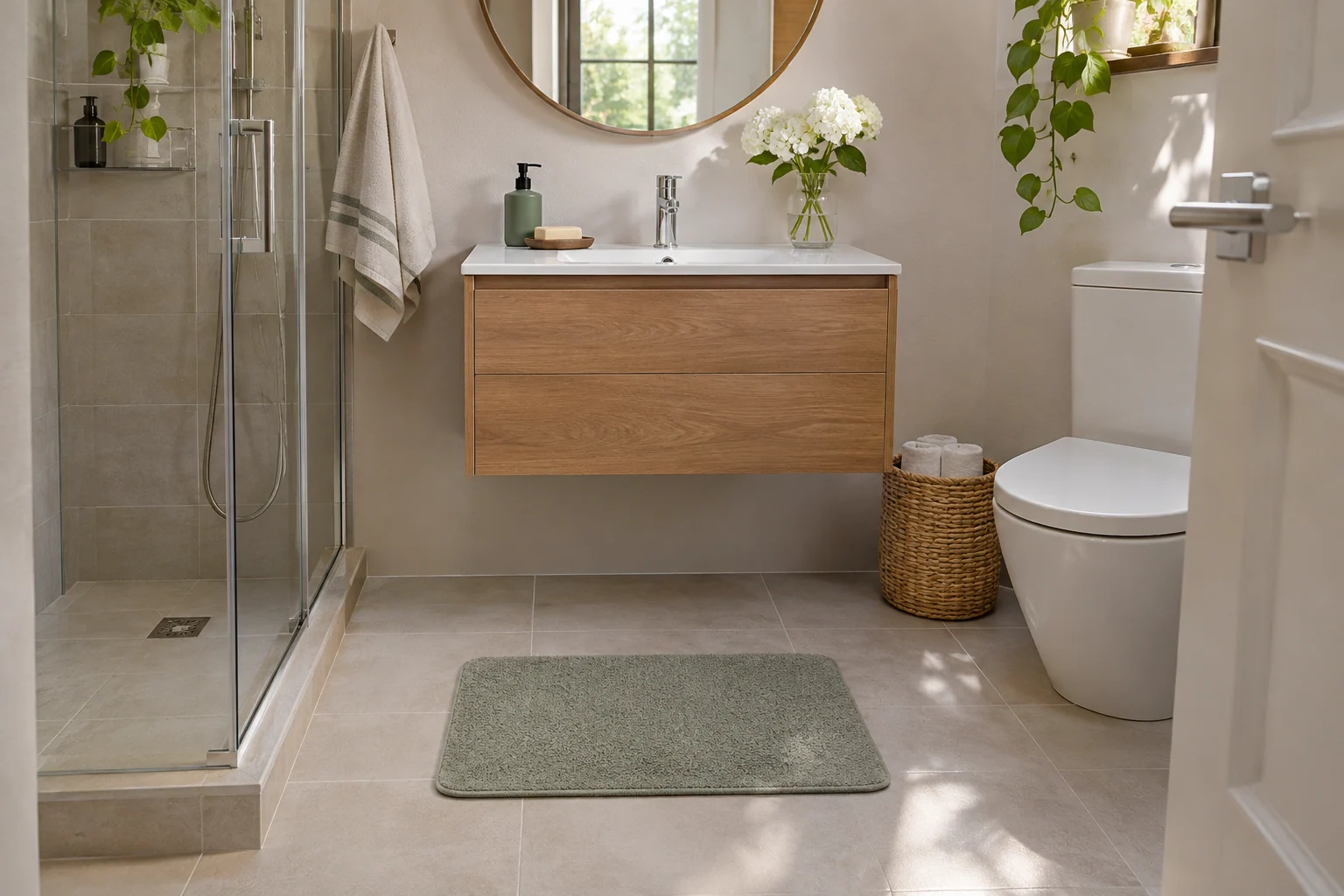
A modest textile can serve the intended position while leaving more visible floor in a small room. Test the normal approach and door movement rather than choosing the smallest size automatically. The useful mat still needs to suit the activity and its instructions. Keep a simple arrangement instead of layering several small pieces to cover an awkward gap.
15. Give the drying position a real place
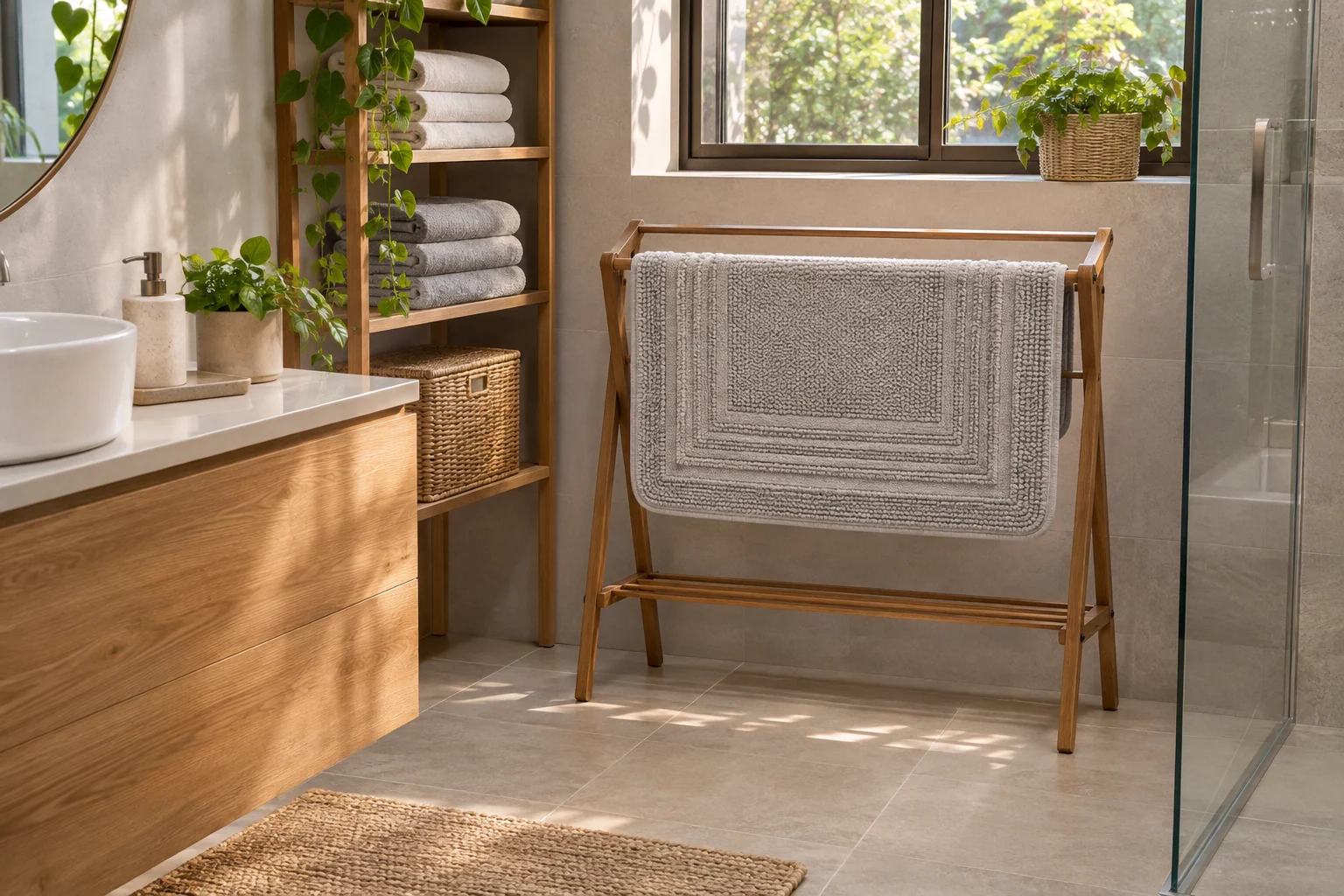
Choose where the mat goes when its instructions call for drying away from the floor. Check that the support suits the product and the actual bathroom. Avoid laying a damp textile over furniture or hardware not intended for that use. A workable drying position belongs in the plan before adding a second mat to the routine.
16. Keep a clean spare in a defined cabinet space
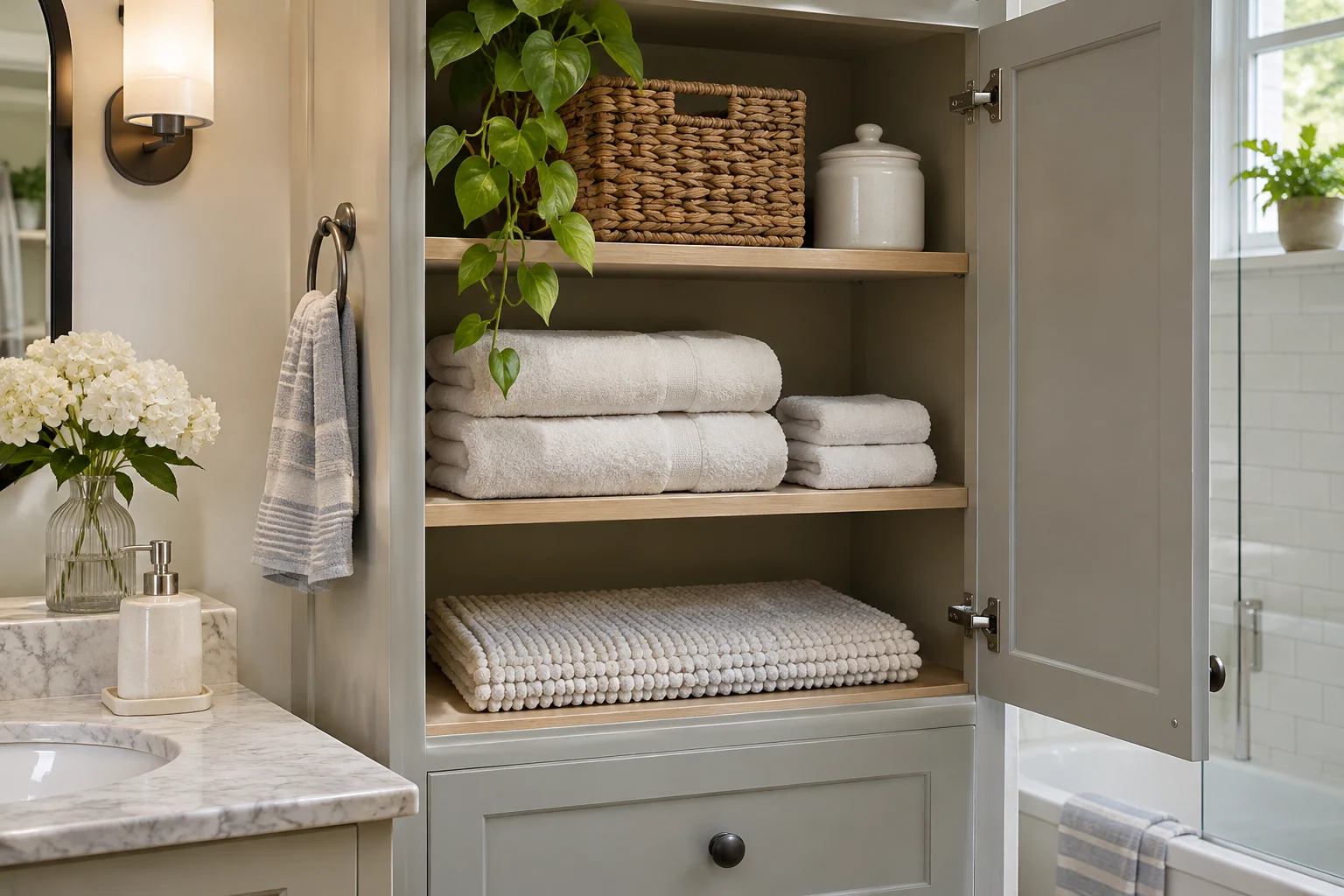
A spare can make the care routine easier when it is stored clean and completely dry according to its guidance. Give it a suitable supported place, separate from products that could spill onto it. Keep the number around the household's actual rotation. A large stack of unneeded spares can consume the cabinet that would make everyday towels easier to use.
17. Choose a care routine suited to the actual construction
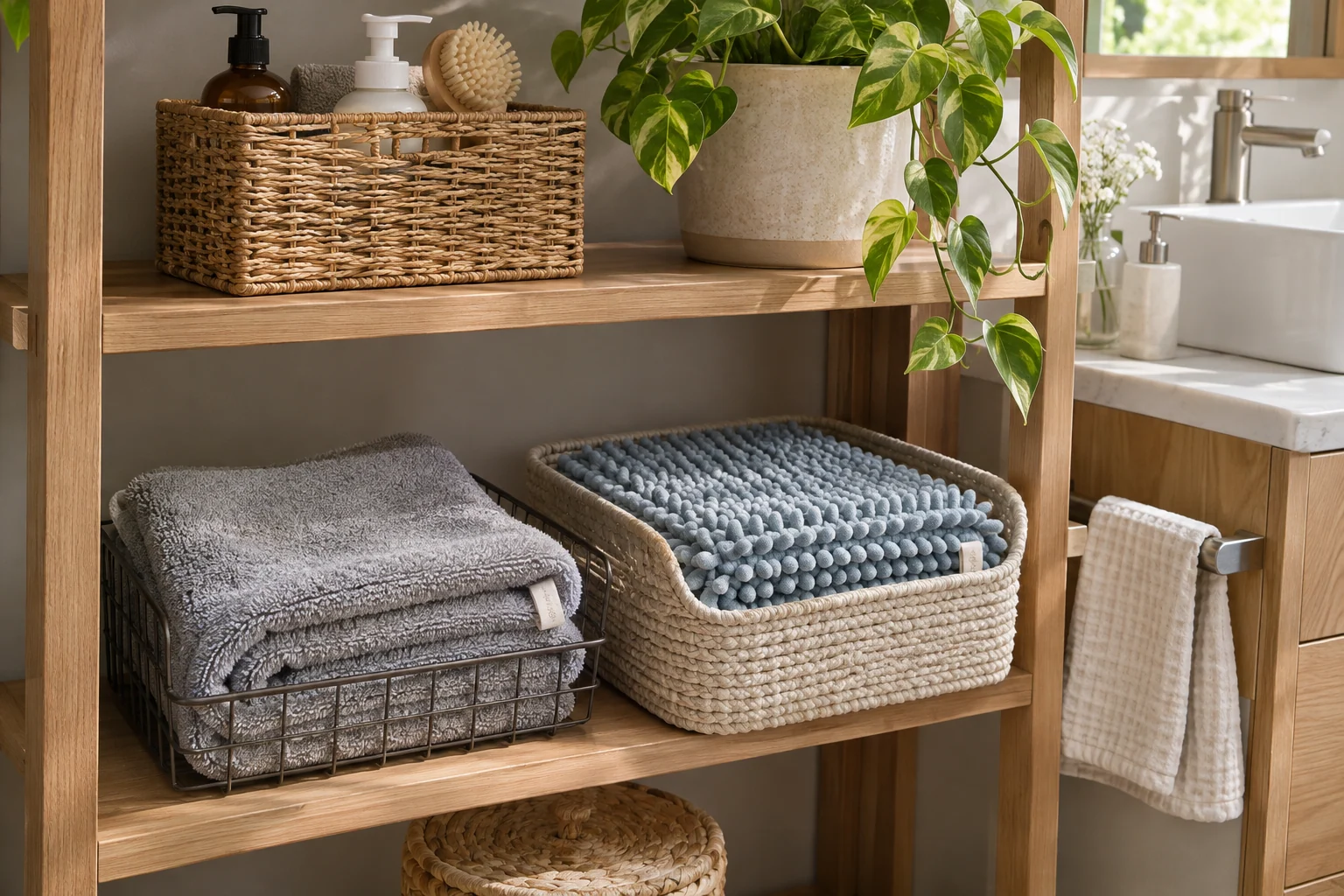
A washable fabric surface does not by itself describe how the complete mat should be cleaned. Check its backing, edging and stated drying method. Keep the instructions identifiable if several mats look alike. The product-specific TOFTBO example in the planning section illustrates why a general material name is not enough to choose a universal wash cycle.
18. Keep indoor and outdoor textiles distinct
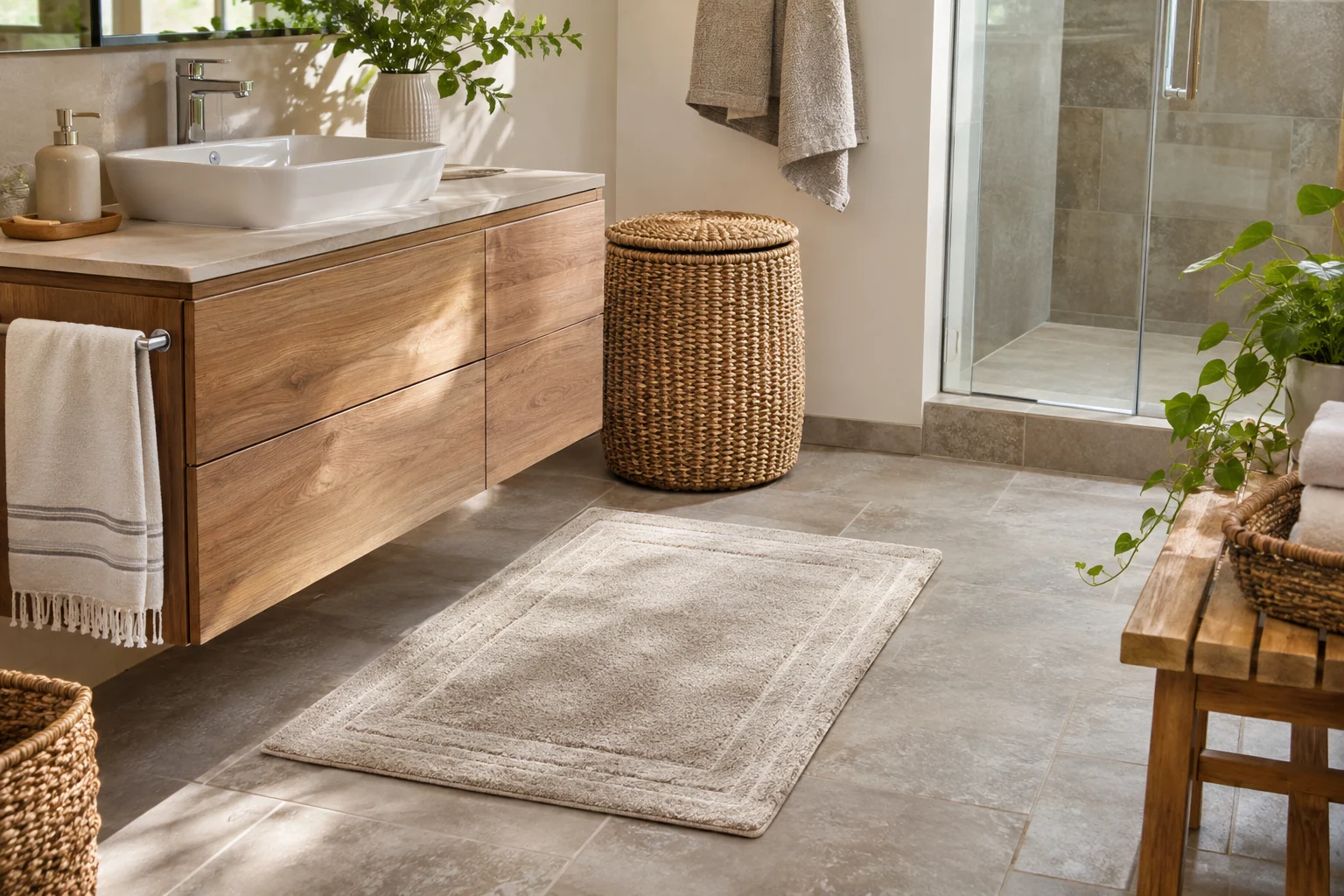
A bathroom floor textile and a porch doormat serve different conditions. Choose a product intended for the actual setting rather than moving a decorative piece between them because its color matches. Follow its own use and care instructions. Keeping the groups separate can also make storage more understandable when seasonal or outdoor textiles are stored elsewhere in the home.
19. Use a quiet pairing with a patterned shower curtain
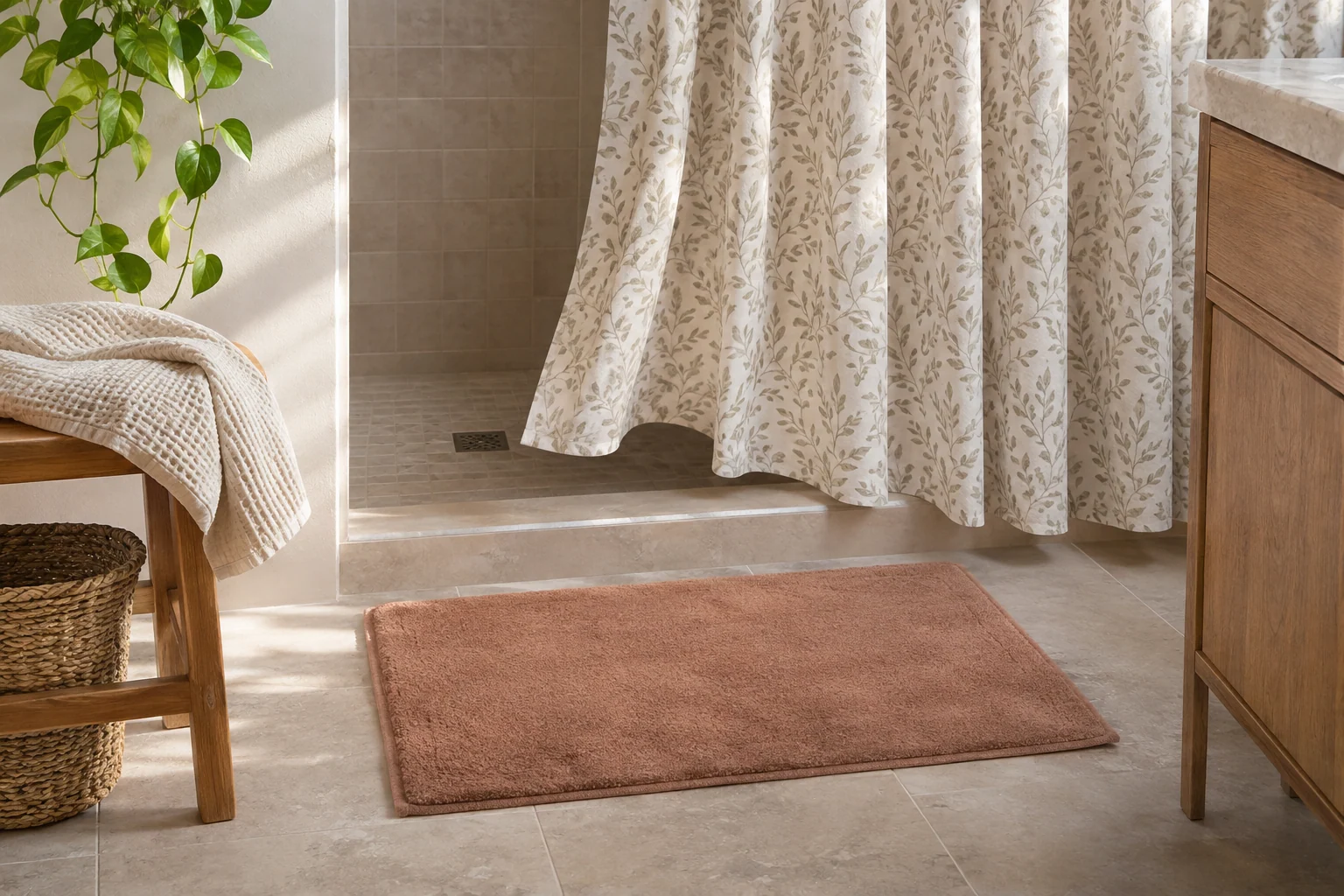
A plain mat can balance a patterned curtain while giving the room one clear textile focal point. Repeat a small color from the curtain if useful, but keep the floor arrangement uncomplicated. Check the curtain's normal hanging and opening movement alongside the mat. Coordinated styling should not place the textile where it interferes with the shower access.
20. Keep separate pieces from overlapping
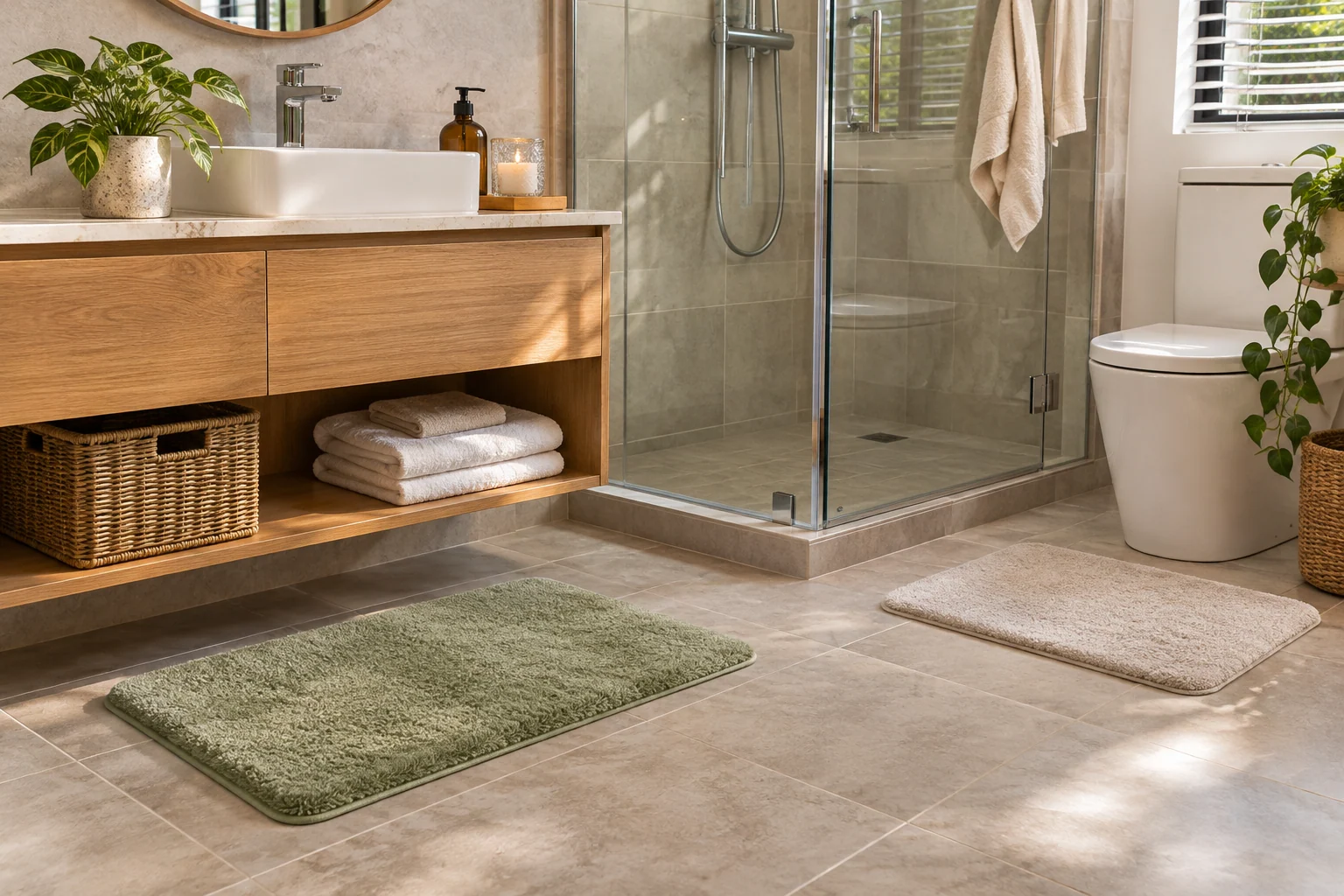
If two mats are needed, plan their complete shapes so they sit independently in their intended positions. Check the arrangement after normal use rather than only when freshly styled. Avoid adding a small decorative layer on top without product guidance supporting that combination. A simpler one-piece choice may be more useful when the available floor cannot accommodate both.
21. Check the floor underneath during the ordinary reset
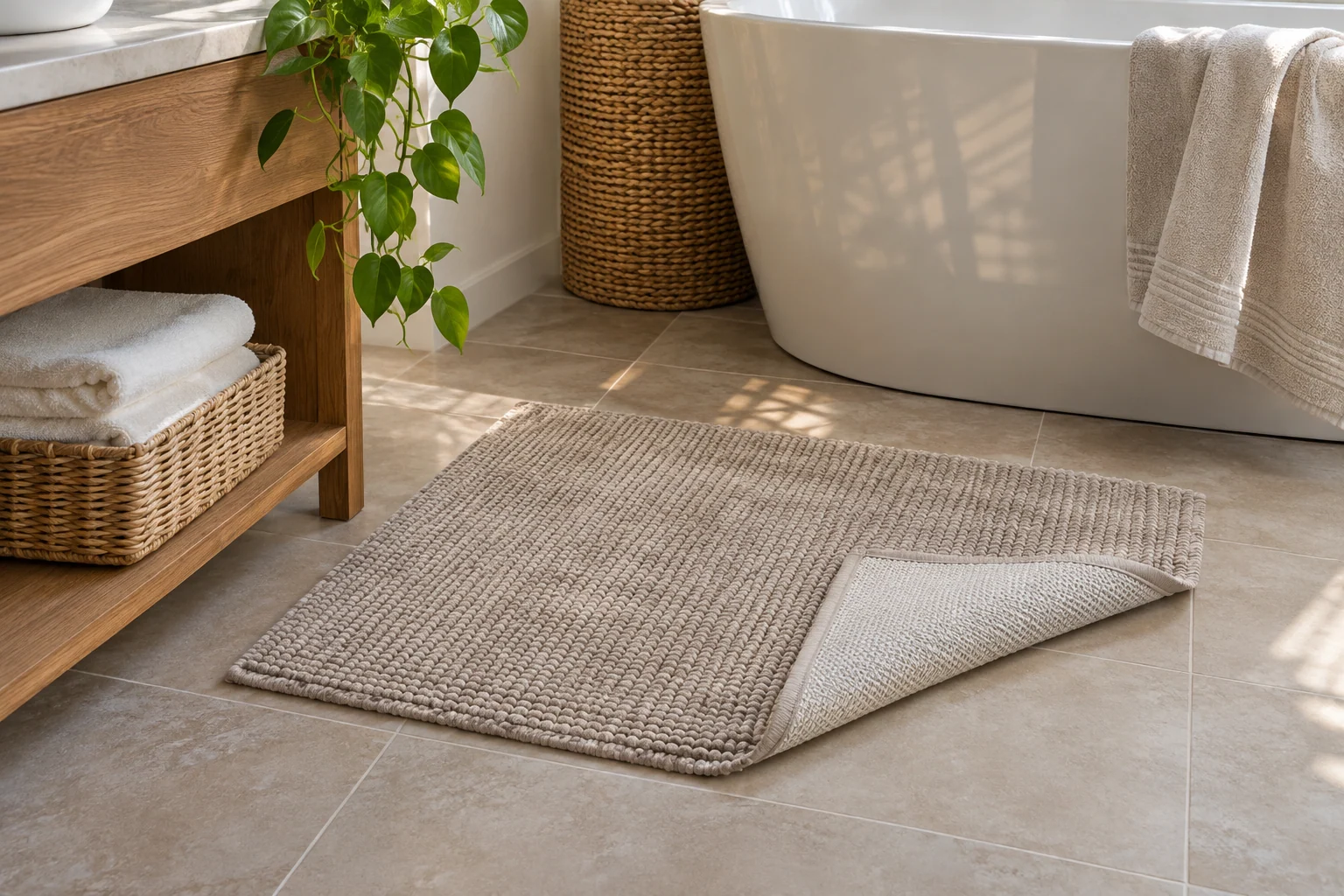
Follow the mat and floor care guidance when lifting the textile and returning it to position. Notice whether the arrangement is easy to maintain or whether a corner repeatedly catches a cabinet. Change the actual cause rather than hiding it beneath another layer. A useful mat setup should make the everyday care of both the textile and floor straightforward.
22. Choose a guest-room set with simple instructions
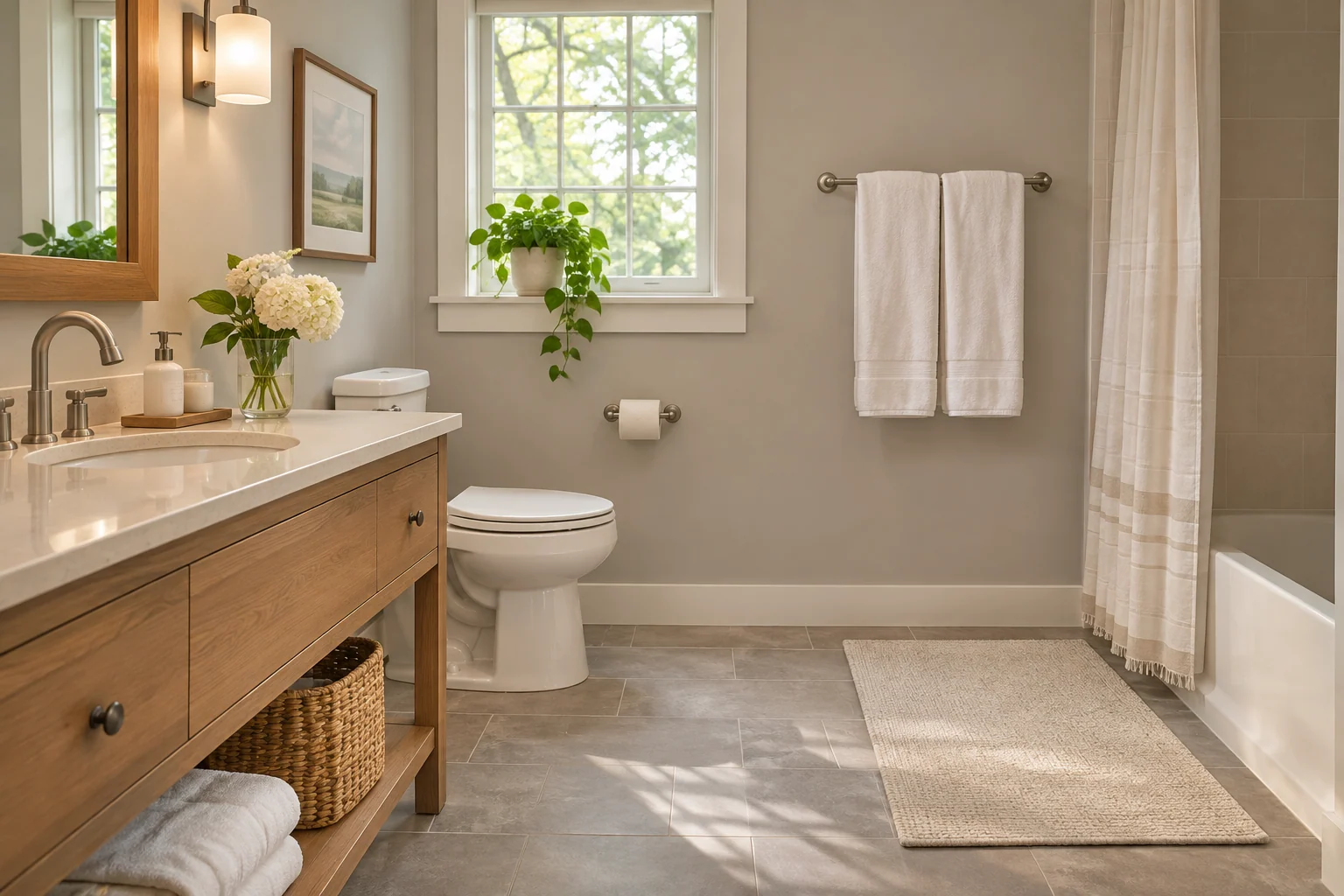
A guest bathroom can use a small clear arrangement without requiring visitors to understand several overlapping textile zones. Keep the intended step-out position obvious and provide a suitable place for the mat's normal care routine. Choose around the actual room and household use. A large matching set is unnecessary if only one piece serves a practical purpose.
23. Review the mat with every door in normal use
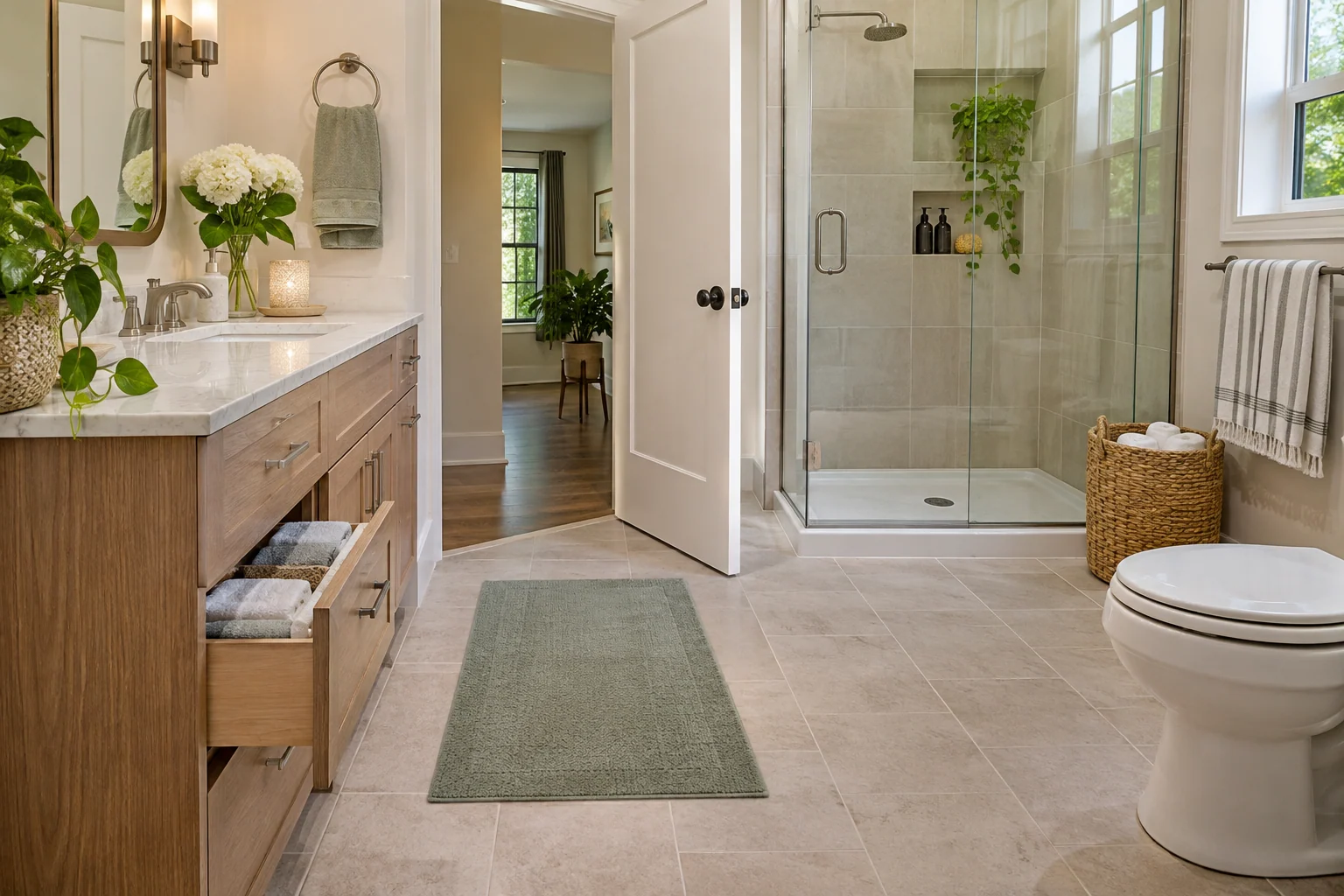
Finish by checking the main door, shower opening and storage fronts together with the mat in place. Notice the position after an ordinary use and reset. Keep the successful parts of the arrangement and correct a repeated obstruction before changing the whole style. The best fit is the one that works in the actual bathroom, beyond the centered photograph.
Compare one long mat with two smaller ones
Sketch the useful standing positions and every opening door. In a hypothetical 72-inch-wide vanity area, two 20-inch-wide mats use 40 inches of textile width, leaving 32 inches across the rest of that outline. That does not decide where the gap belongs, establish safe clearance or account for depth. Compare the full shapes, floor compatibility and care routine with the actual room before choosing either arrangement.
A practical next step
Choose the mat around the bathroom's movement and care, then use color and texture to connect it to the room. A simple flat arrangement with a workable drying routine can serve better than a larger coordinated set that obstructs ordinary use.
The images are original AI-generated design concepts. They illustrate arrangements rather than tested products, installations or measured performance.
Sources and care references
Related reading on Nestroxe
Optional digital guide for this topic
If you prefer a structured workbook, explore this related paid guide.