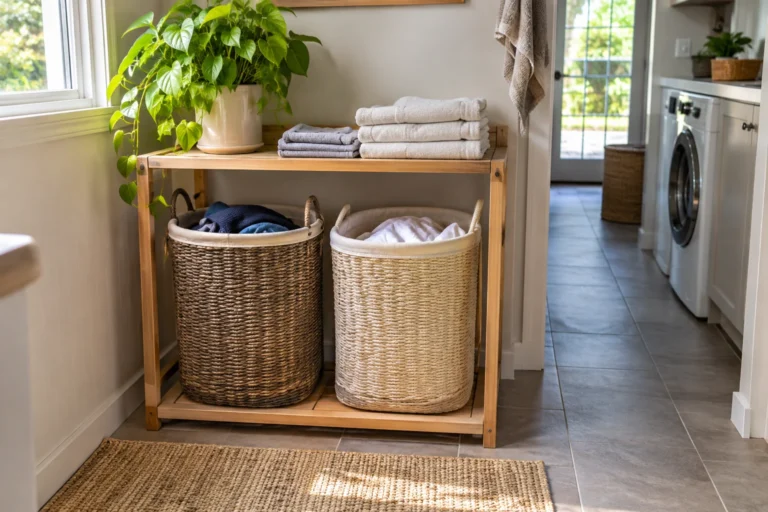
A collection of reusable bags is useful only when the right ones are clean, easy to find and available for the next trip. The problem is often the return route: bags are unpacked in the kitchen but remembered only at the door. Plan that route before choosing a basket large enough to hide the whole collection.
Keep grocery use and bag care part of the decision. FoodSafety.gov advises separating raw meat and poultry from ready-to-eat purchases and cleaning reusable bags frequently. Check the actual bag's cleaning instructions and choose a product whose care suits its intended use; a storage organizer does not make every bag material suitable for every shopping task.
Contents
- 1. Stand folded totes in a shallow drawer
- 2. Use a small open file box for soft bags
- 3. Keep one roomy basket near the unpacking area
- 4. Use a narrow cabinet bay for a visible row
- 5. Hang suitable dry totes from compatible hooks
- 6. Check an over-cabinet organizer with the door closed
- 7. Make a small ready-to-go group near the entrance
- 8. Give the return route a defined stop
- 9. Keep bags awaiting care out of the working group
- 10. Store insulated bags around their own construction
- 11. Fold structured shoppers only as designed
- 12. Give large shoppers a separate broad position
- 13. Keep long handles contained without tight knots
- 14. Store mesh produce bags as a small separate set
- 15. Give a shopping backpack its full empty footprint
- 16. Use a pocket bag as a distinct small item
- 17. Keep a vehicle-trip kit limited and deliberate
- 18. Separate grocery bags from general errand bags
- 19. Use a shelf divider for an existing folded collection
- 20. Keep a small reserve outside the daily position
- 21. Choose an organizer that can be maintained too
- 22. Review duplicates before adding storage
- 23. Finish with the next-trip test
Separate the bags by their real jobs
Make a working group of ordinary grocery totes, keep structured or insulated designs in appropriate separate positions, and give small pocket bags their own home. Store bags clean and completely dry according to their guidance. Keep used bags needing care out of the ready-to-go group. Choose the quantity around actual trips rather than the number of promotional bags that have accumulated.
Compare the storage or placement options
- Soft daily totes: A visible folded working group with contained handles and comfortable retrieval.
- Structured or insulated bags: A separate position suited to their construction and actual care guidance.
- Bags needing care: A distinct appropriate waiting place, separate from the ready group.
- Remembering the bags: A limited next-trip kit and a defined return route after unpacking.
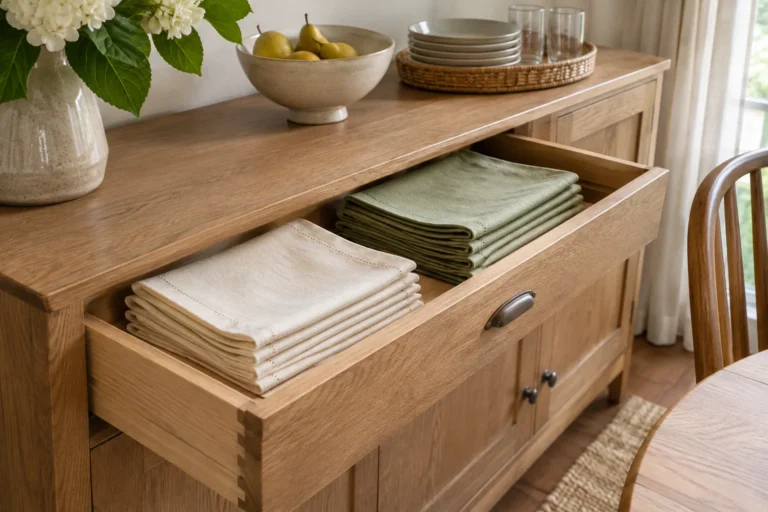
1. Stand folded totes in a shallow drawer
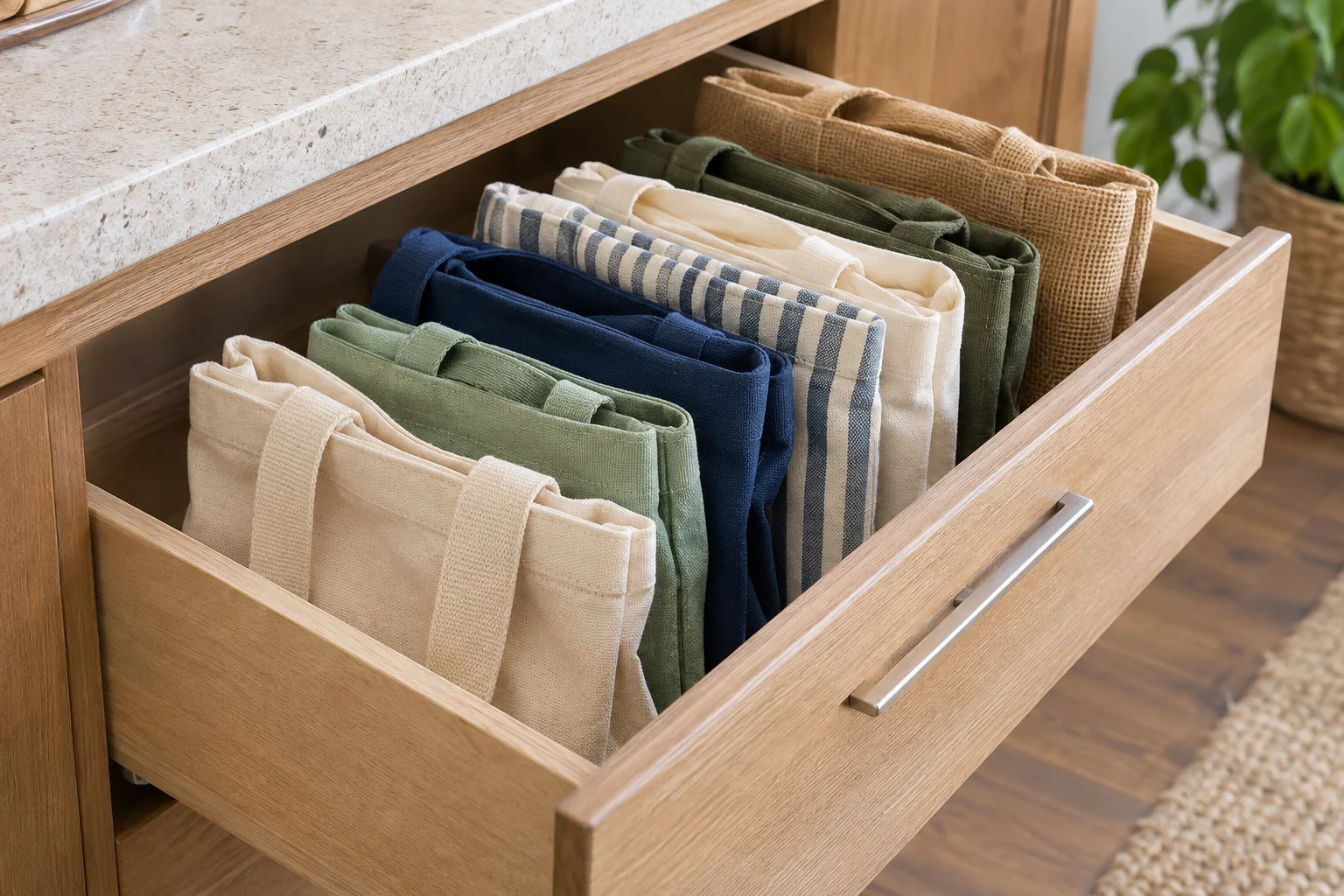
A single visible row can make the working collection easy to choose. Fold suitable bags around the drawer's actual depth and leave the handles contained. Keep the group loose enough that one bag comes out without pulling several others with it. The drawer should remain a defined home rather than become another compressed pile of unrelated fabric.
2. Use a small open file box for soft bags
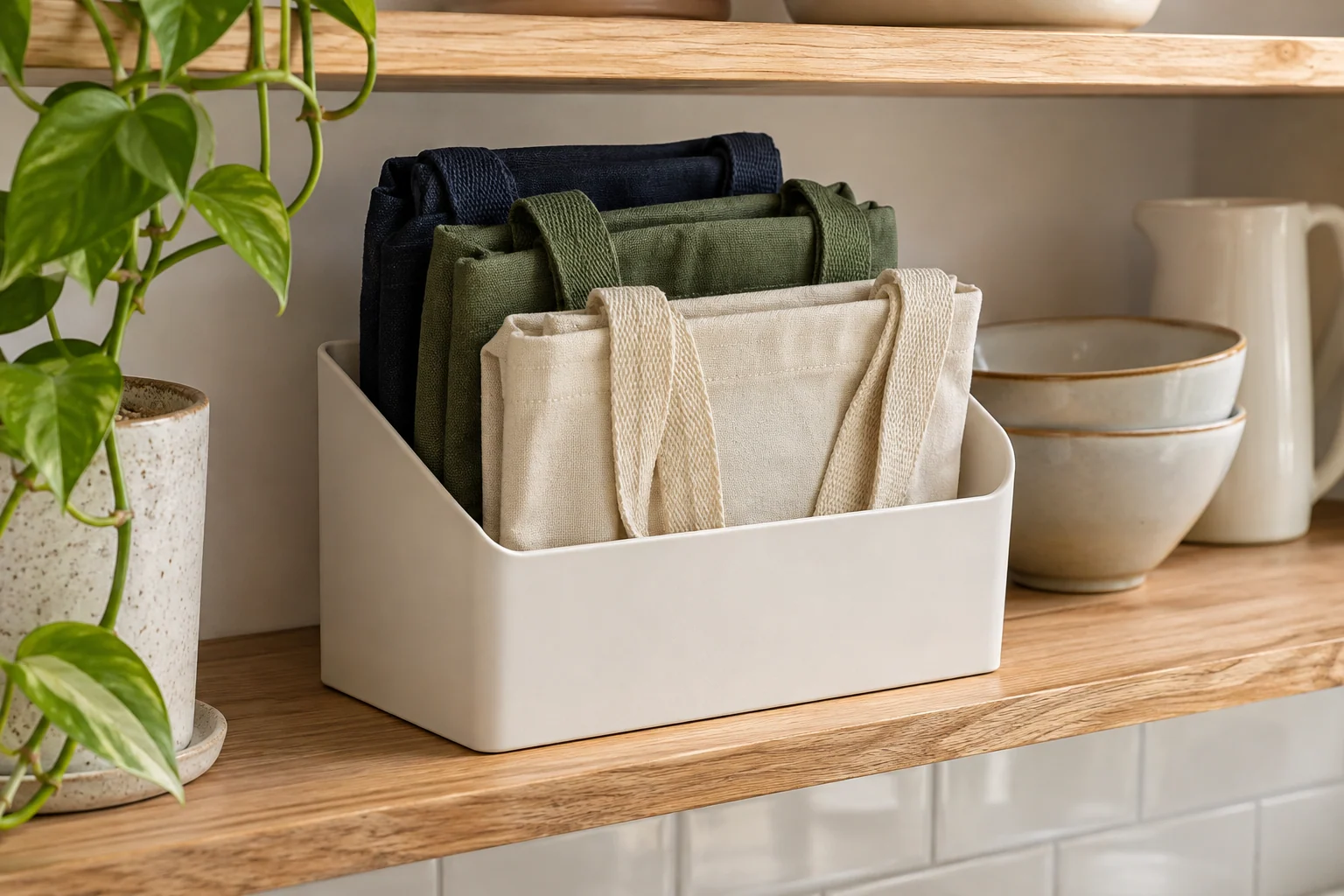
A smooth suitable container can give folded flexible totes a visible boundary on a shelf. Compare its opening with the actual folded pieces and keep the full box supported. Avoid forcing structured bottoms into a narrow shape simply to match the container. A smaller working group can be easier to use than a large box that needs unloading to reach the back.
3. Keep one roomy basket near the unpacking area
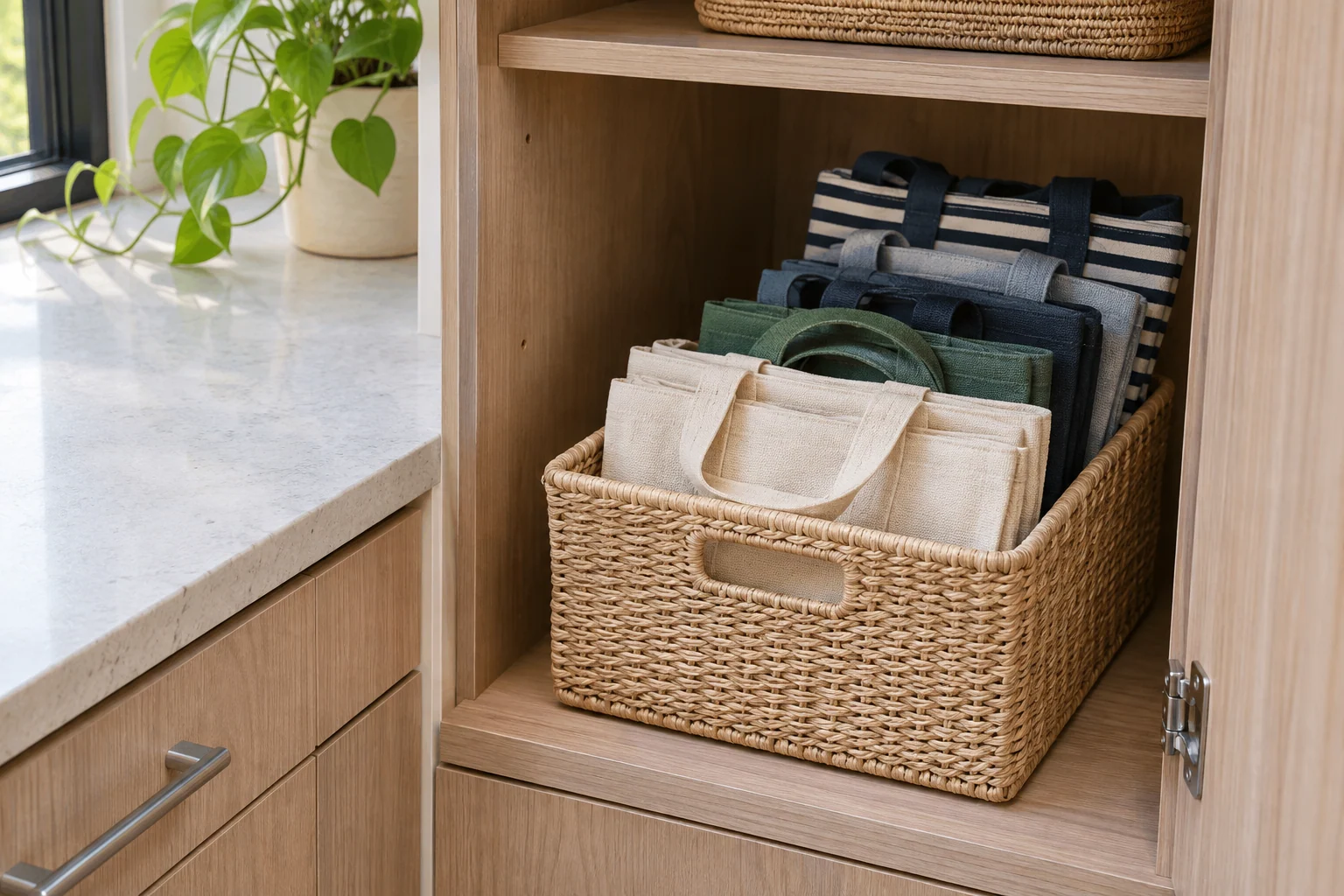
A basket near the place where groceries are unpacked can make the return step obvious. Choose a dry suitable position separate from food preparation clutter and household products. Keep only ready bags there. A distinct care-needed group can wait elsewhere so a used bag does not disappear back among the clean working set.
4. Use a narrow cabinet bay for a visible row
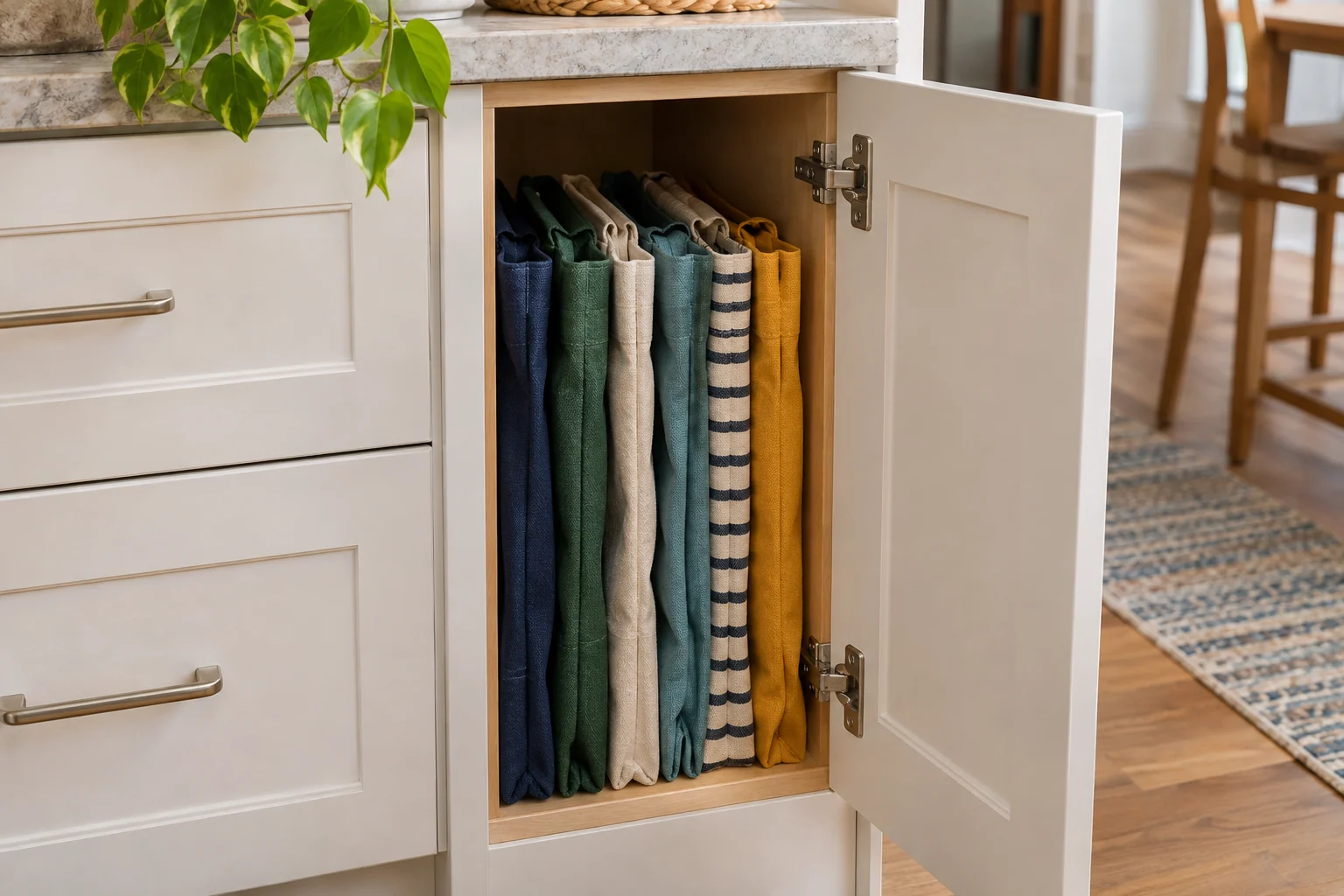
A small bay can suit a few folded bags when its internal height and depth fit them. Keep the door and hinges clear of loose handles. Test removing the middle bag without disturbing the entire row. A dedicated narrow section can be more practical than letting spare totes occupy every unused gap in the kitchen.
5. Hang suitable dry totes from compatible hooks
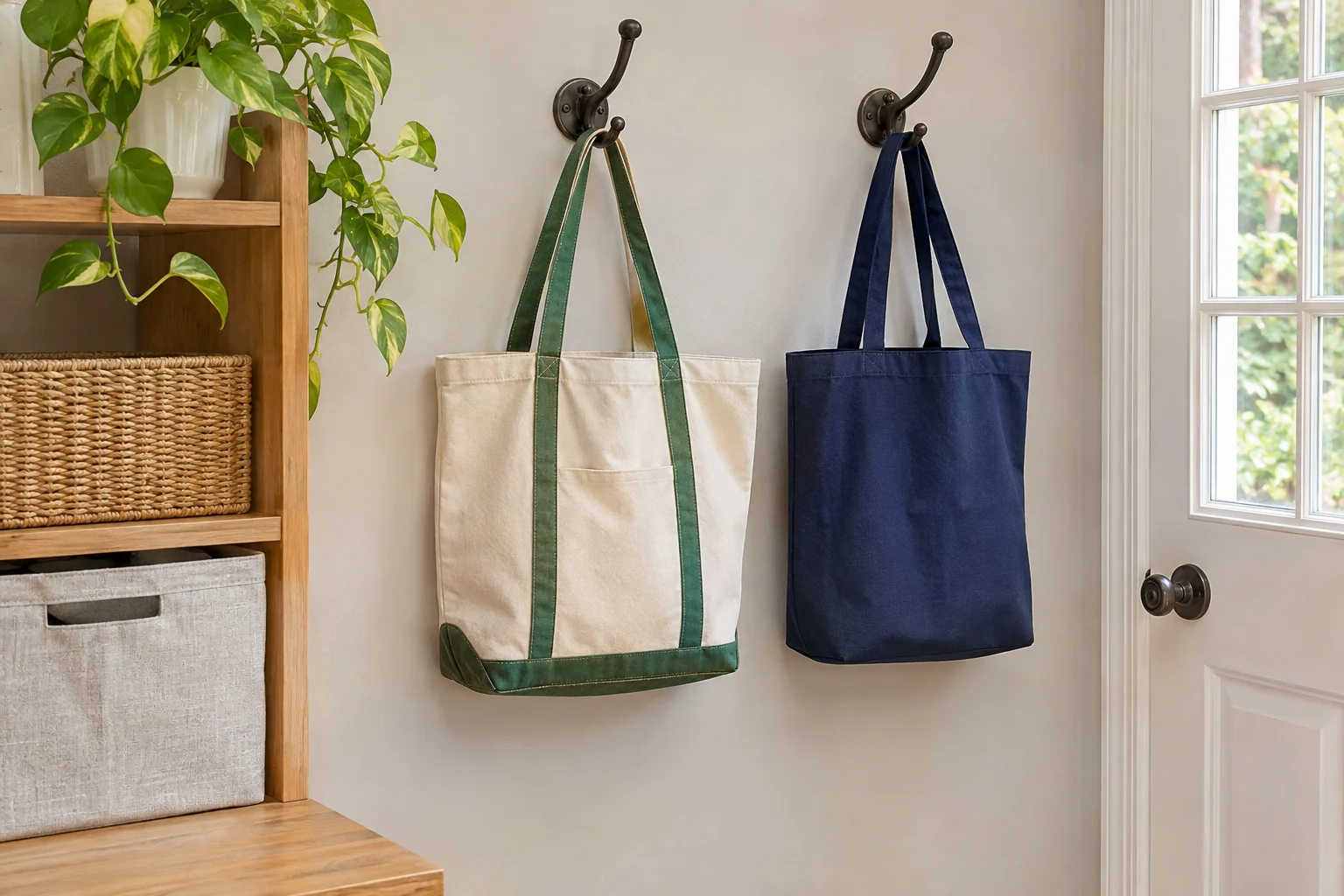
A purpose-designed hook arrangement can serve a small group when the bag handles, product load and wall setting are compatible. Follow the hook's actual instructions and keep the bags clear of the floor and door movement. Do not load the hooks with full shopping simply because they hold empty totes. The storage job and a loaded carrying job are different.
6. Check an over-cabinet organizer with the door closed
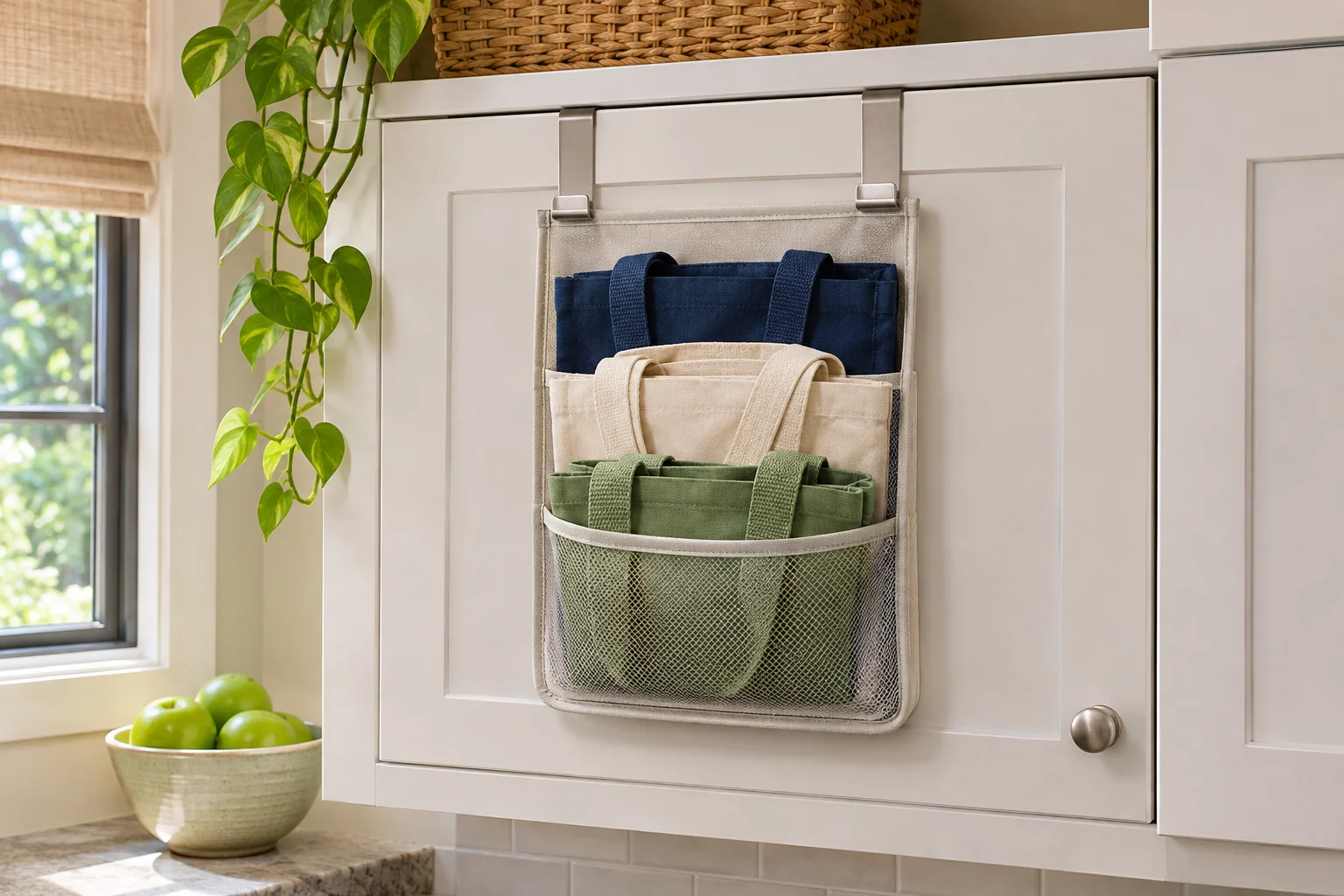
An over-door or cabinet accessory can use a suitable position when its thickness, projection and loading match the actual furniture. Check the closure and normal movement with the bags inside. Keep handles from catching the hinge. Choose another arrangement when the organizer crowds the opening or relies on holding the cabinet door slightly ajar.
7. Make a small ready-to-go group near the entrance
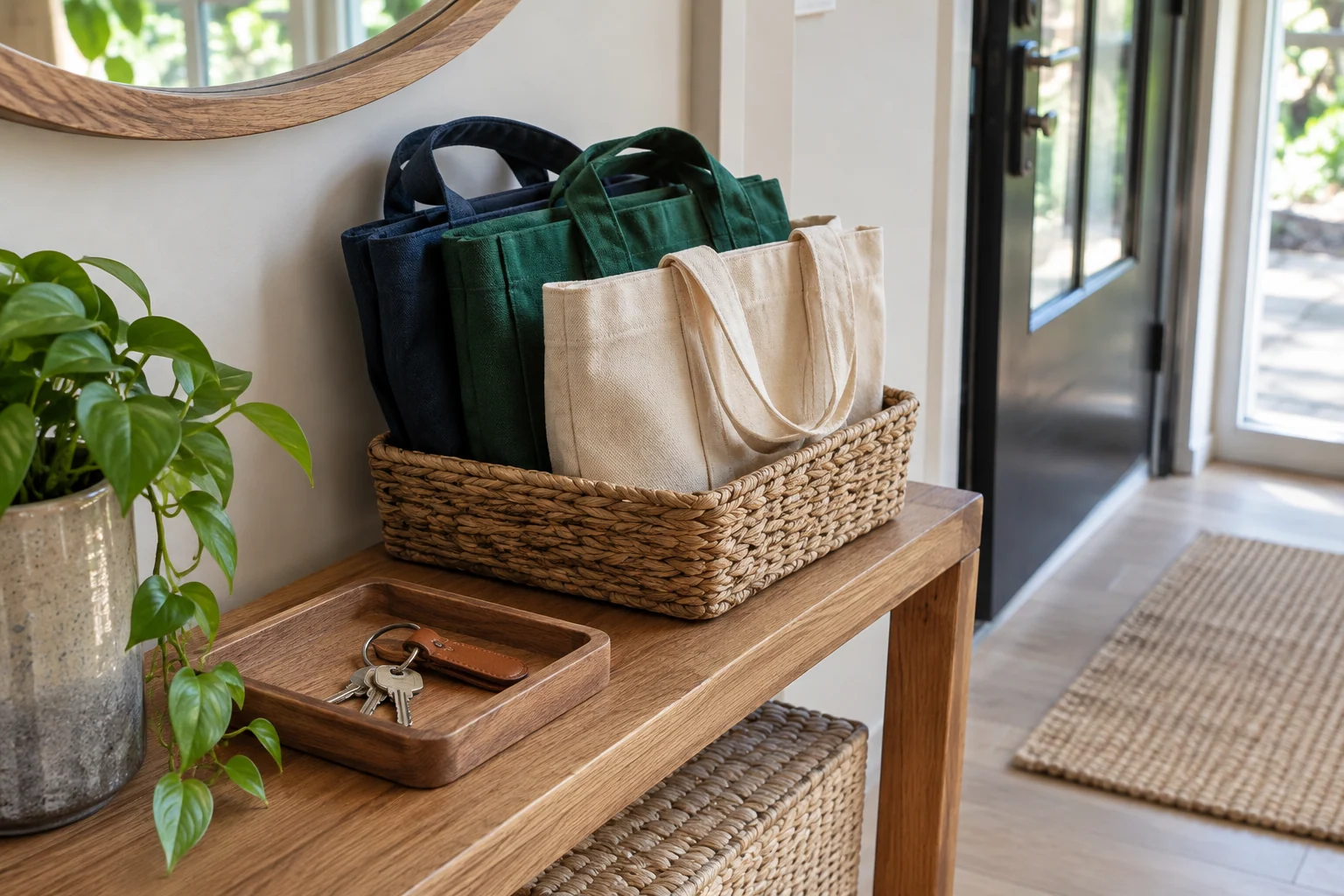
A limited trip group near the usual exit can connect storage with remembering the bags. Keep it clear of keys, shoes and the main passage. Return it after the bags have been unpacked and appropriately cared for. A small useful kit serves this purpose better than moving the entire tote collection into an already busy entryway.
8. Give the return route a defined stop
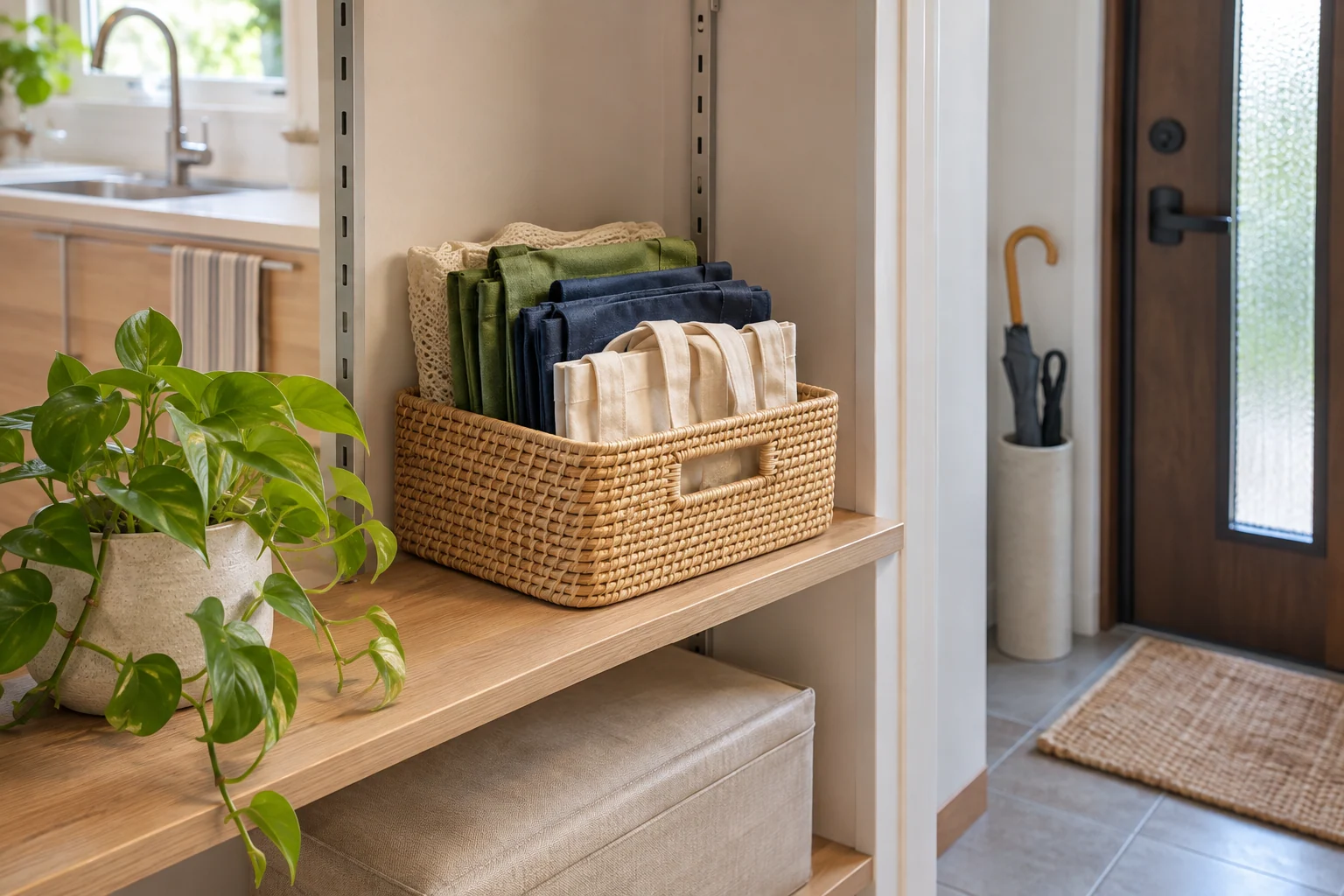
Choose where clean dry bags go between the unpacking area and the next trip. A small transfer basket can work when it has a clear purpose and is emptied regularly. Keep the process simple enough that it happens during ordinary chores. Without a return step, even a beautifully organized kitchen drawer can leave the bags behind when they are needed.
9. Keep bags awaiting care out of the working group
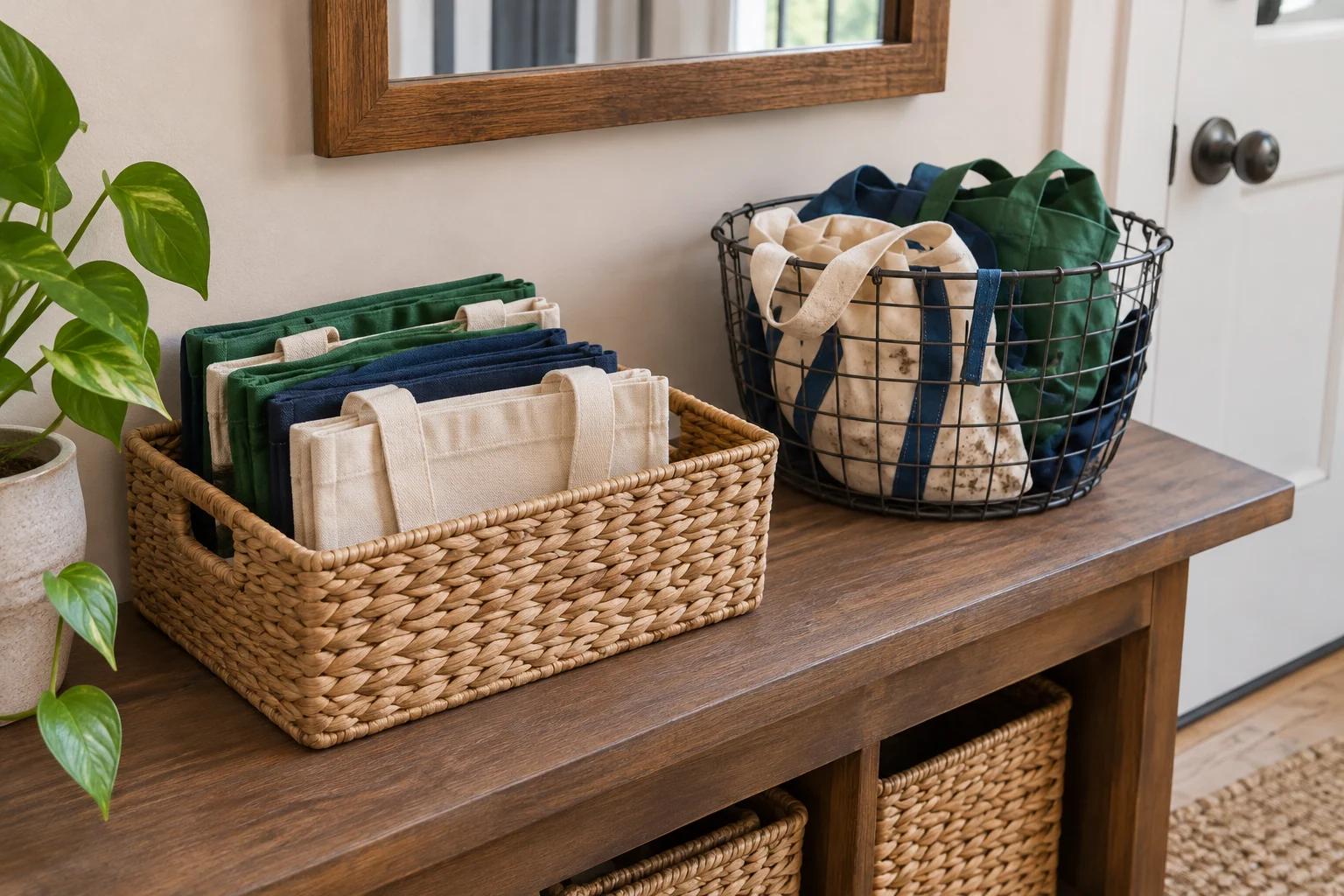
A distinct suitable place can hold bags until their actual care instructions are followed. Keep the category visible and give it a next step rather than a closed long-term pile. Do not mix it back with ready bags merely because the colors match. The useful organization follows condition and use, not only the shape of the containers.
10. Store insulated bags around their own construction
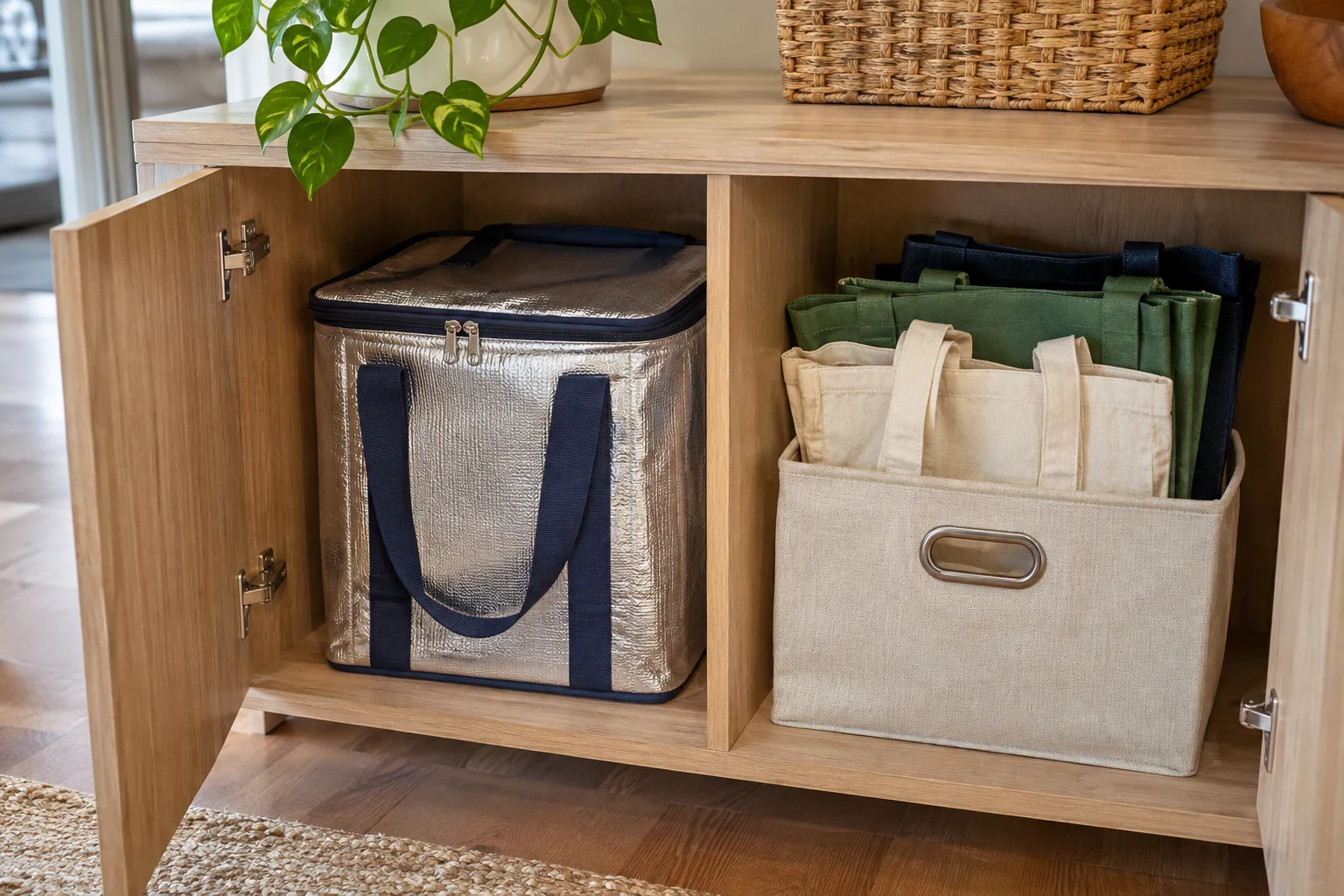
An insulated bag may need a different folded shape, cleaning method or drying routine from a soft cotton tote. Follow its actual instructions and keep it identifiable in storage. Give it an opening large enough that zips and liners are not forced. Its presence in the cupboard does not replace appropriate food-handling steps during the next shopping trip.
11. Fold structured shoppers only as designed
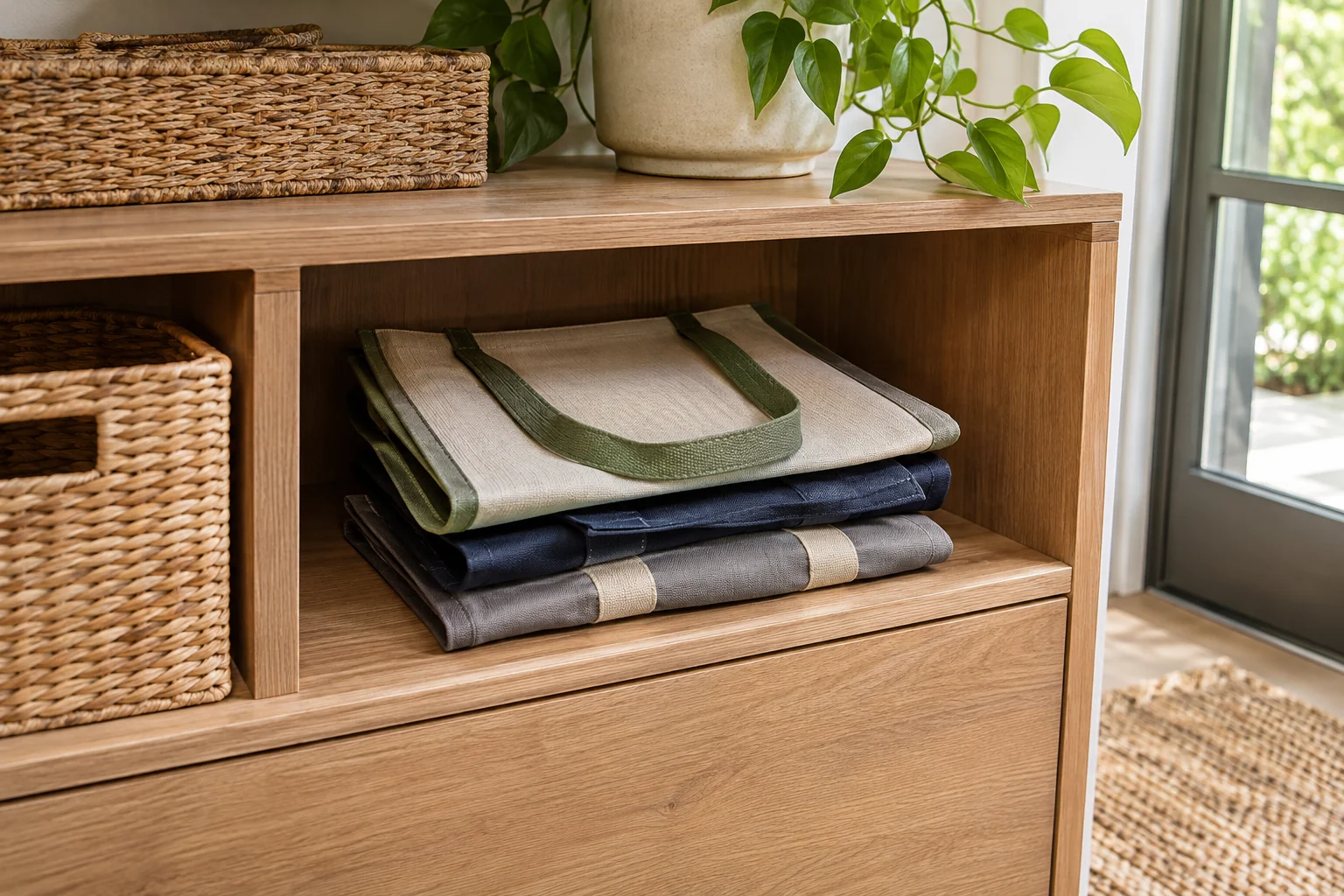
A rigid or semi-rigid shopping bag may have a base that folds in a particular way. Keep that construction intact rather than compressing it into the smallest gap. Measure the folded depth with the base and handles included. A wider supported slot can suit it better than the narrow fabric-tote row used for softer bags.
12. Give large shoppers a separate broad position
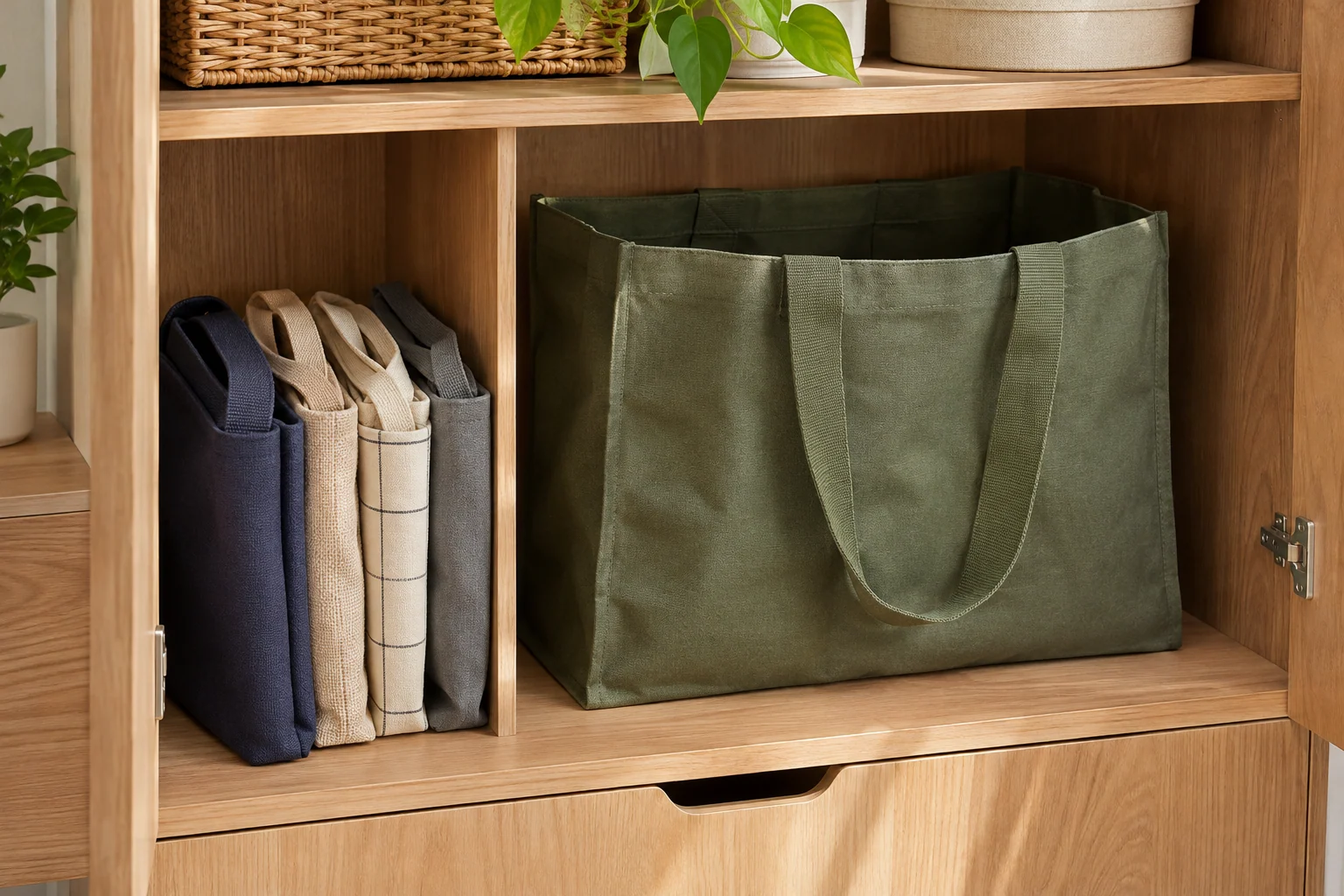
A large bag can dominate a small working basket even when it is used infrequently. Store it in a suitable defined position and keep the smaller daily totes easy to reach. Check the actual empty shape before choosing the opening. Separating one large item may free the existing organizer without requiring another large basket.
13. Keep long handles contained without tight knots
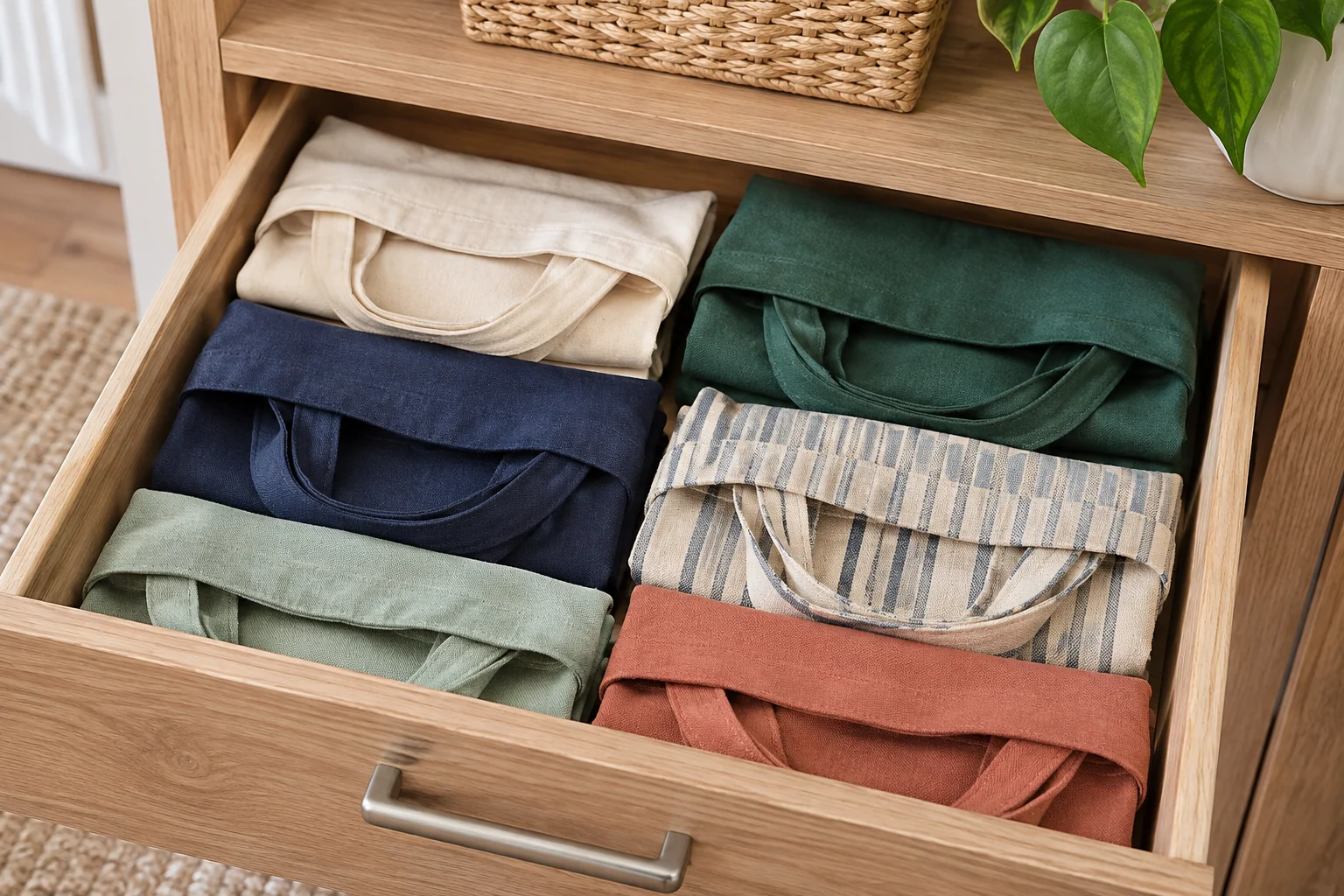
Loose handles can catch on a drawer or tangle with neighboring bags. Fold or contain them in a way that suits the bag instead of tying tight knots that make it awkward to reopen. Test the complete return movement. The aim is a tidy usable shape that can be unfolded for the next trip, not the smallest possible bundle.
14. Store mesh produce bags as a small separate set
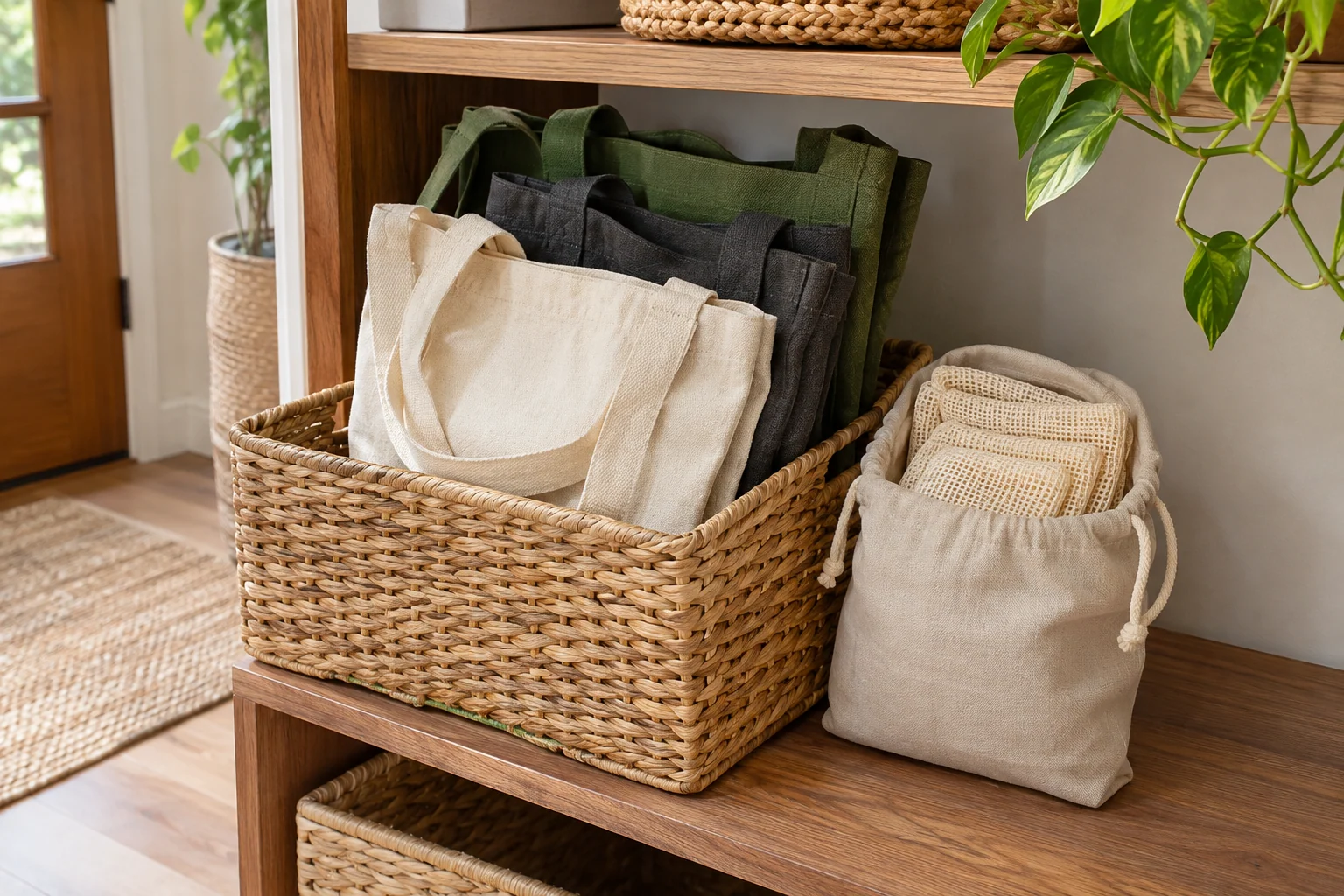
A modest pouch or compartment can keep suitable produce bags identifiable without mixing their drawstrings through the main tote group. Follow their actual use and care instructions. Keep the set clean and dry before returning it. A separate small group makes it easier to take the intended bags without emptying every shopping tote to find them.
15. Give a shopping backpack its full empty footprint

A reusable backpack can serve a different trip from a hand-carried tote. Store it according to its construction and keep straps contained so it does not catch in the cabinet. Check its empty depth and opening rather than assuming it will collapse like a thin fabric bag. A dedicated position can preserve both its shape and the smaller tote organizer.
16. Use a pocket bag as a distinct small item
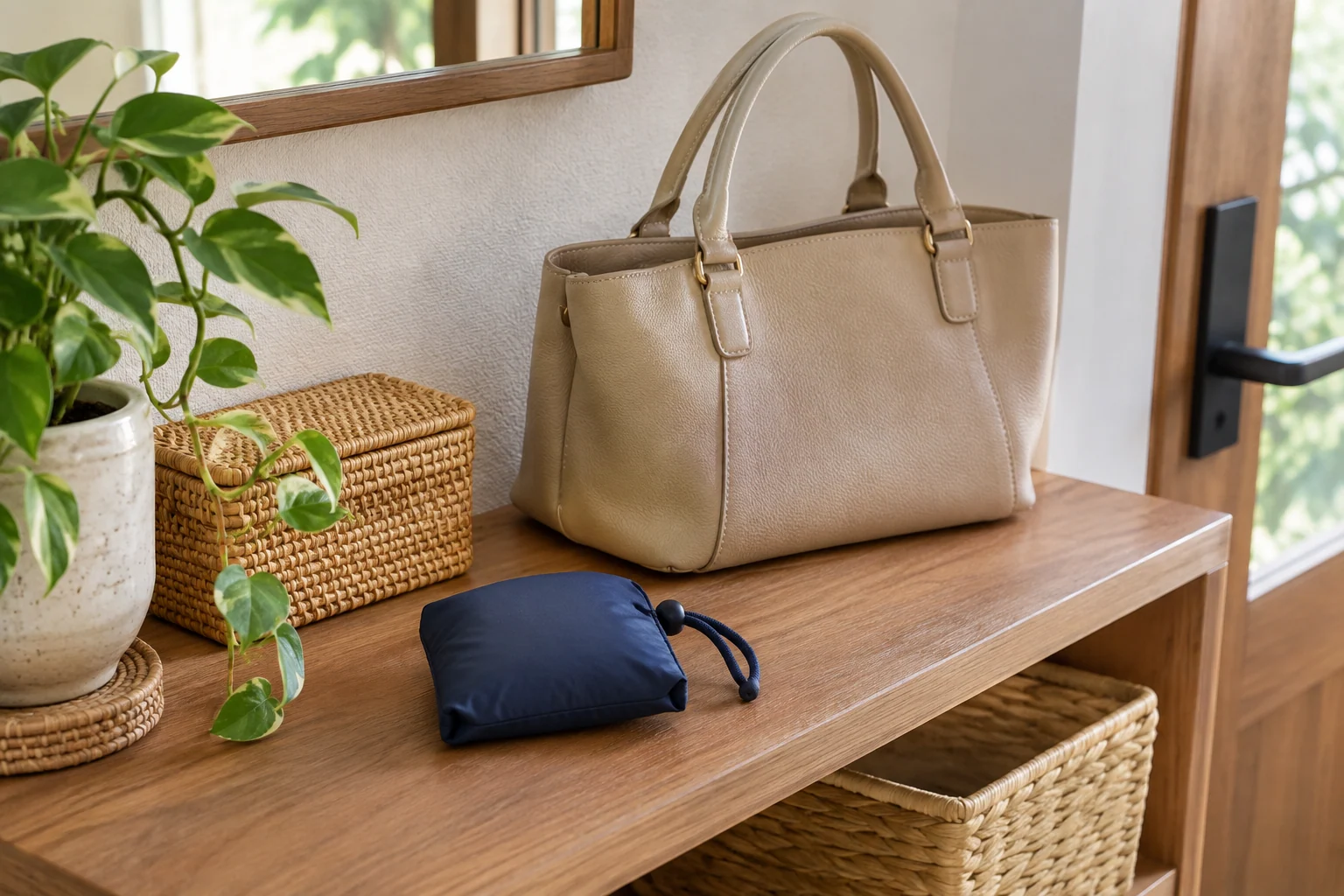
A compact foldaway bag can have its own home near the everyday bag or travel pouch used for errands. Return it after use and care rather than leaving it unfolded in the main cupboard. Keep its intended folding method simple and identifiable. It can serve an occasional extra need without becoming another large storage category.
17. Keep a vehicle-trip kit limited and deliberate
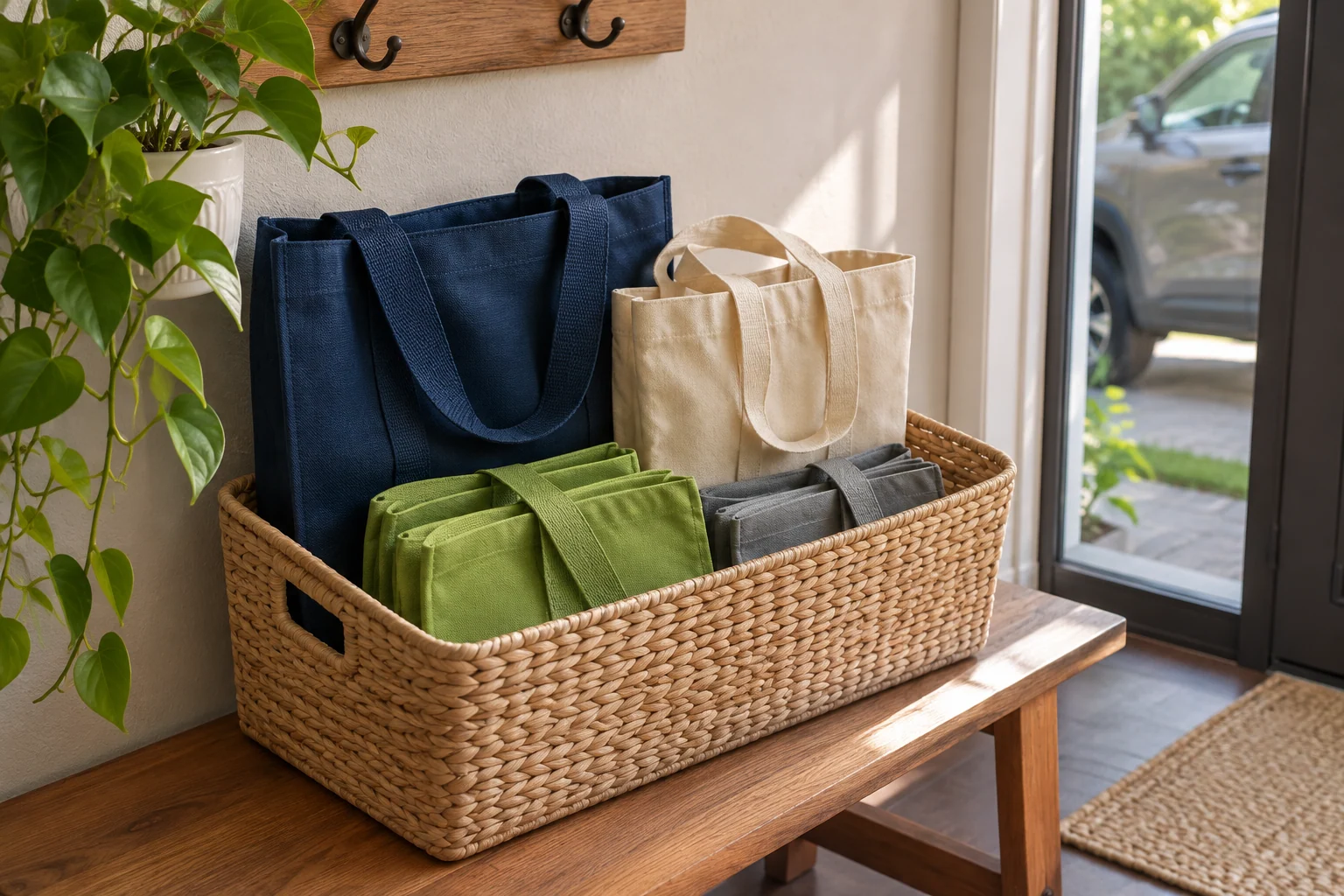
A small clean ready group can be prepared for a planned journey, then returned through the household's ordinary care routine. Keep food-handling and any product storage limits separate from the question of where empty bags are remembered. Do not turn a bag's insulated appearance into a claim about how long groceries can be kept without appropriate temperature control.
18. Separate grocery bags from general errand bags
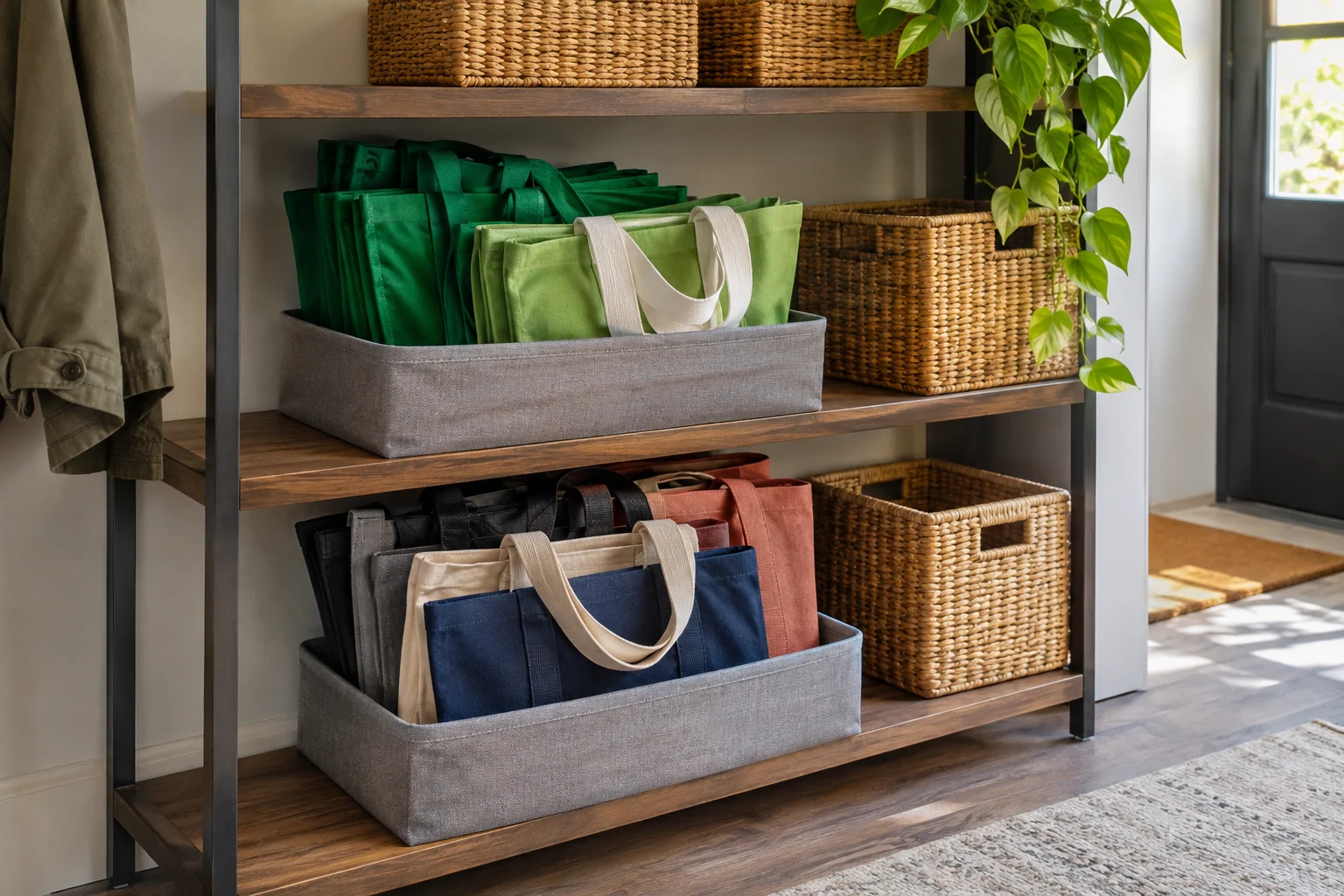
A household may use bags for library returns, donations or other tasks as well as food shopping. Give those groups distinct suitable places instead of organizing every bag by color. Keep the distinction understandable to the people using it. The goal is a clear use and return route, not a complicated collection of nearly identical categories.
19. Use a shelf divider for an existing folded collection
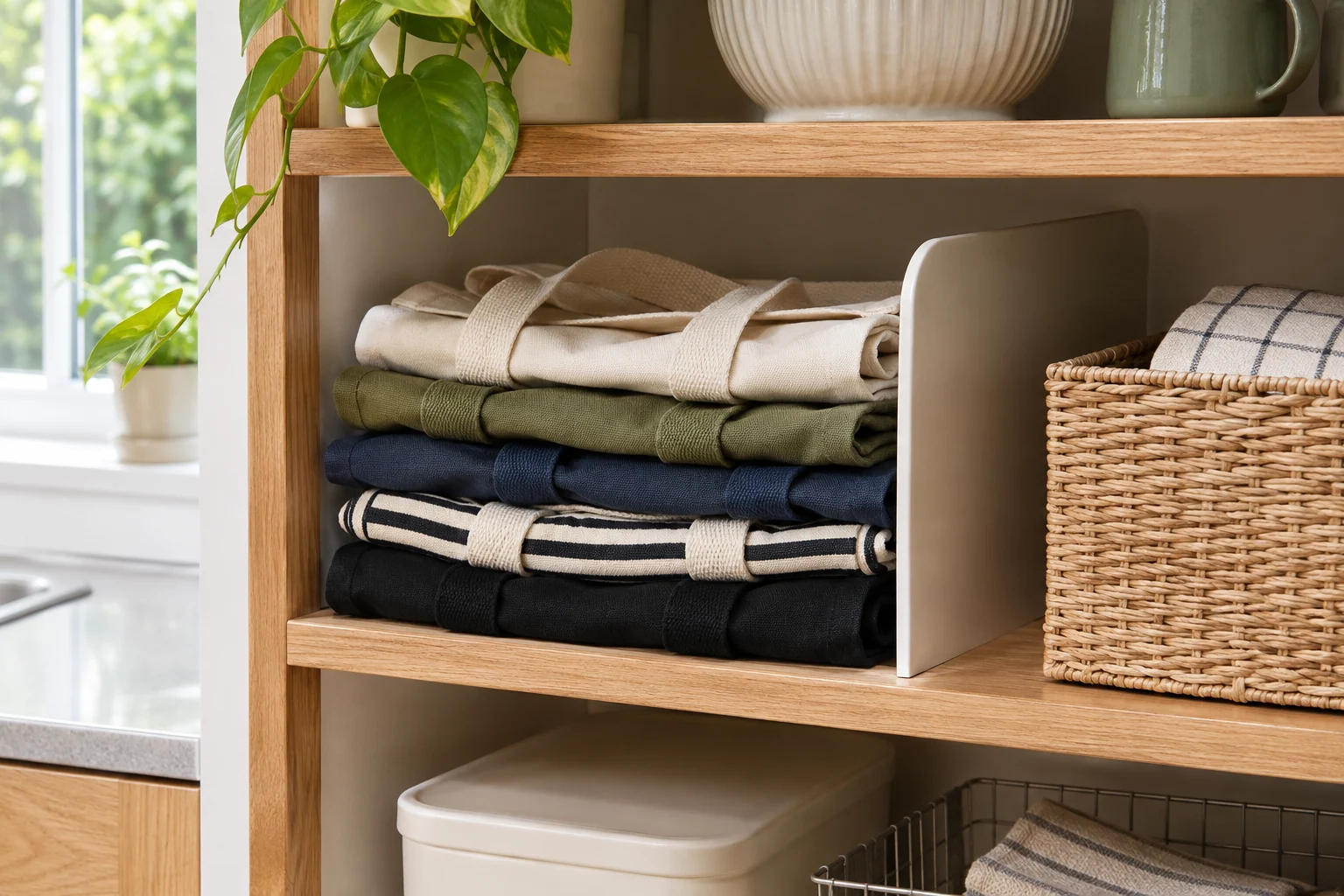
A compatible divider can make a broad shelf more understandable without buying several separate boxes. Check that the divider suits the shelf and does not catch the bag fabric. Keep the complete folded pieces supported. It should create a clear boundary while leaving the bags easy to remove, rather than squeezing them into an inflexible line.
20. Keep a small reserve outside the daily position
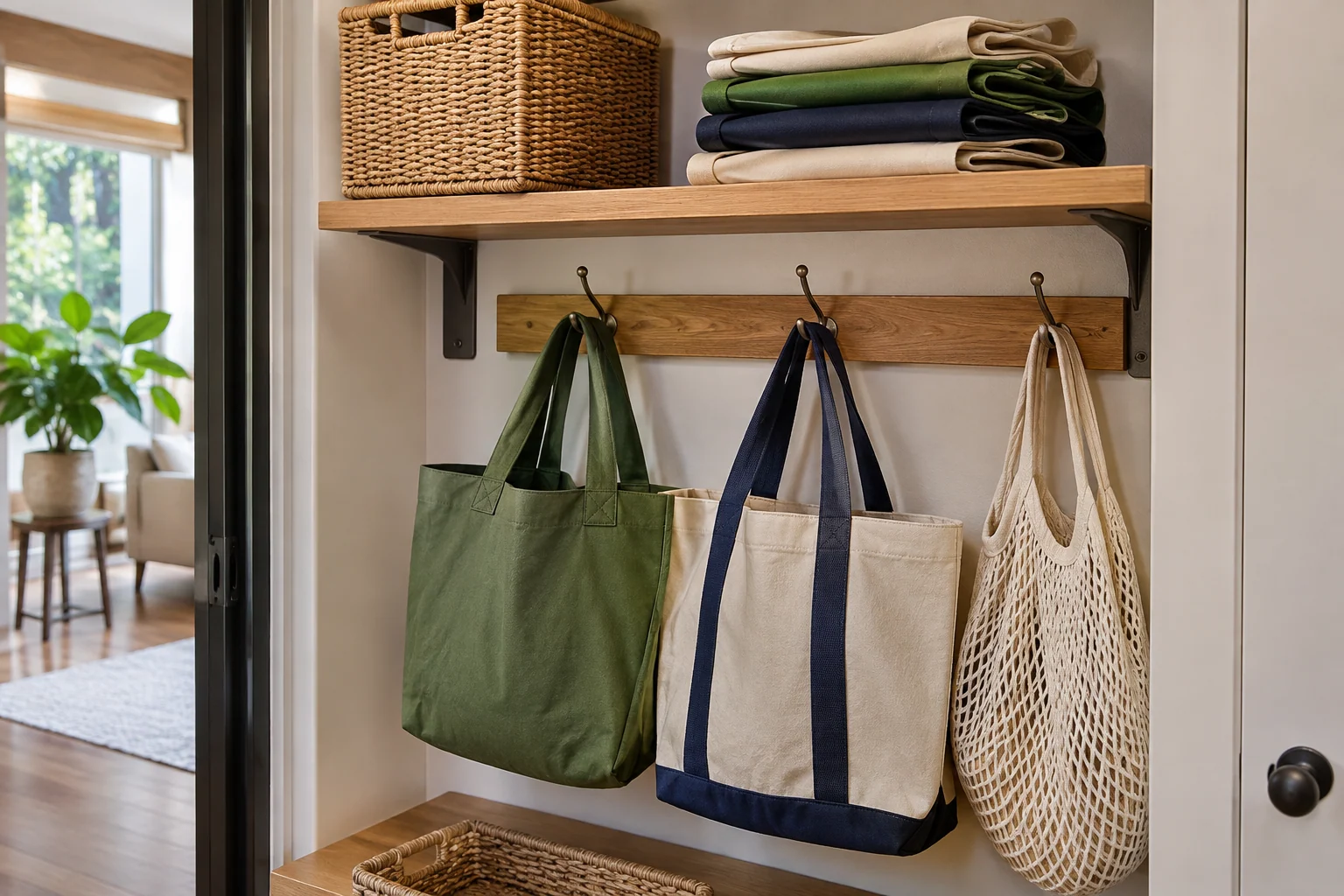
A reserve can be useful for an occasional larger trip, but it does not need the easiest drawer. Keep only the amount the household realistically uses, in a suitable dry position. Review it when the daily group becomes crowded. Moving an unnecessary excess into another cabinet is different from maintaining a purposeful reserve.
21. Choose an organizer that can be maintained too
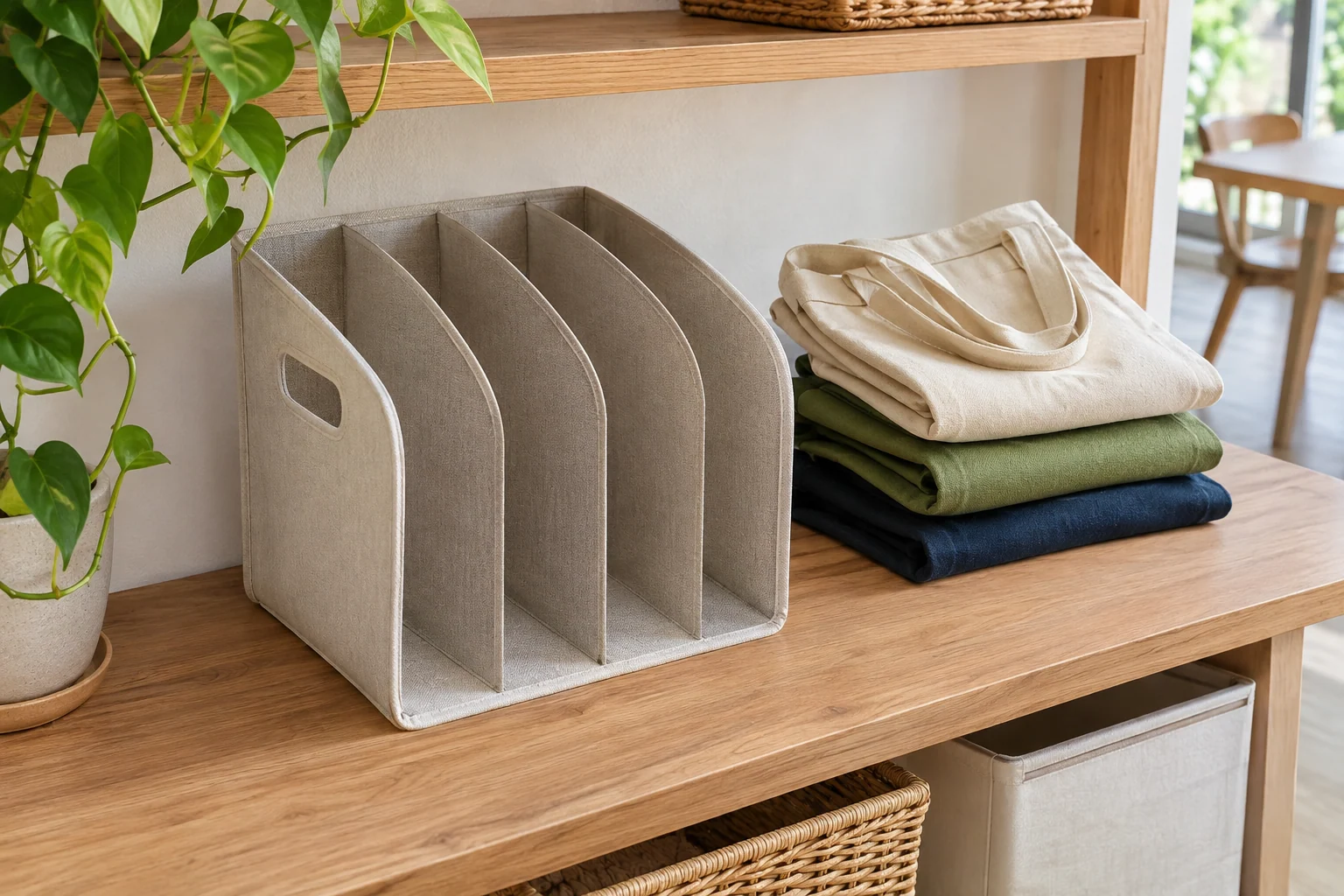
The bag container is part of the routine and should have care appropriate to its material and use. Choose a smooth, accessible arrangement that does not trap loose debris in an unreachable corner. Follow its instructions alongside the bags' care. A decorative basket is useful only when keeping it in ordinary condition fits the household's routine.
22. Review duplicates before adding storage
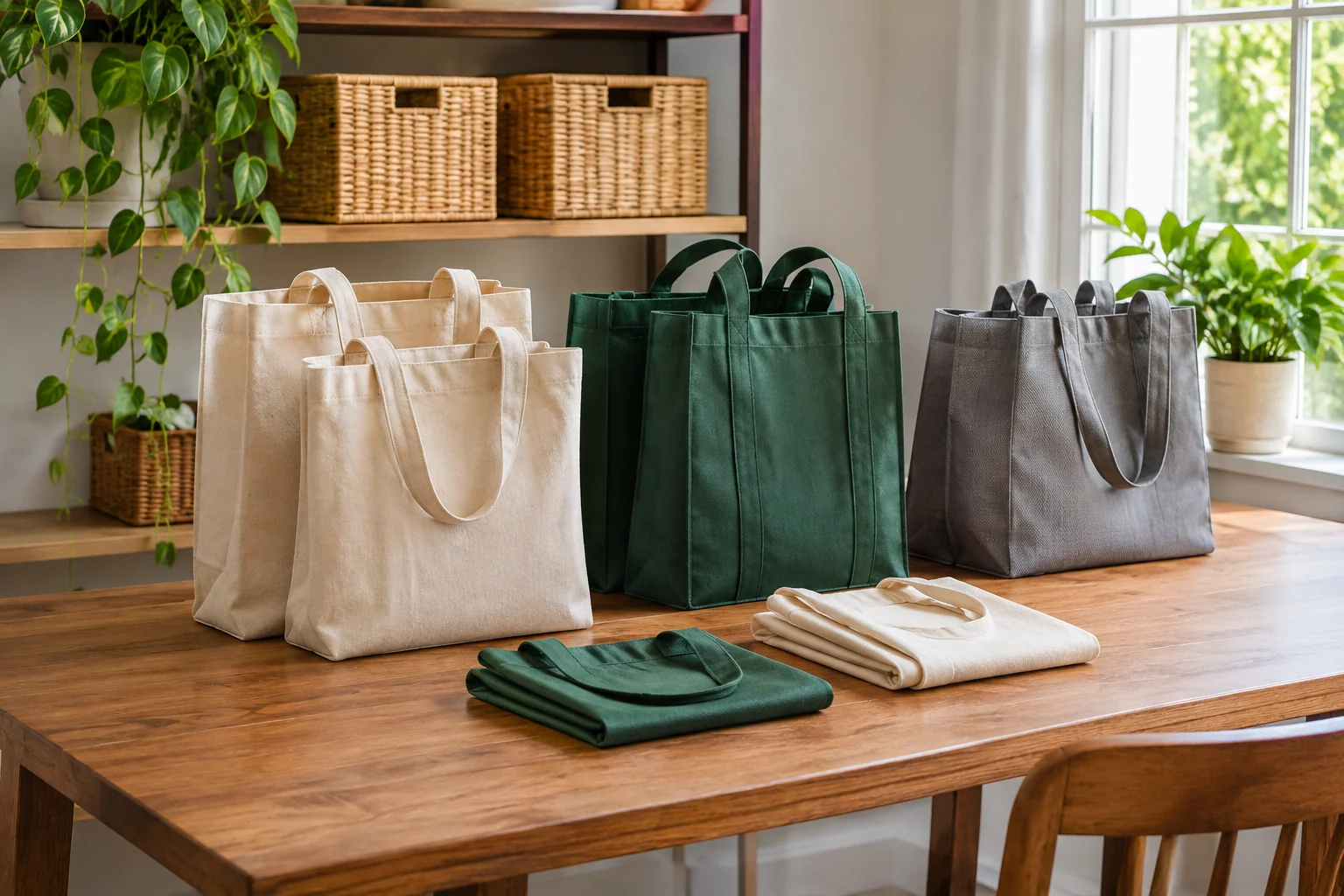
Spread out the empty collection in a suitable clear place and identify the working set, useful reserve and genuine duplicates. Choose an appropriate next destination for extras rather than returning them automatically. Keep the bags that serve real tasks and can be cared for as needed. A manageable collection can make the organizer smaller and the next trip easier to prepare.
23. Finish with the next-trip test
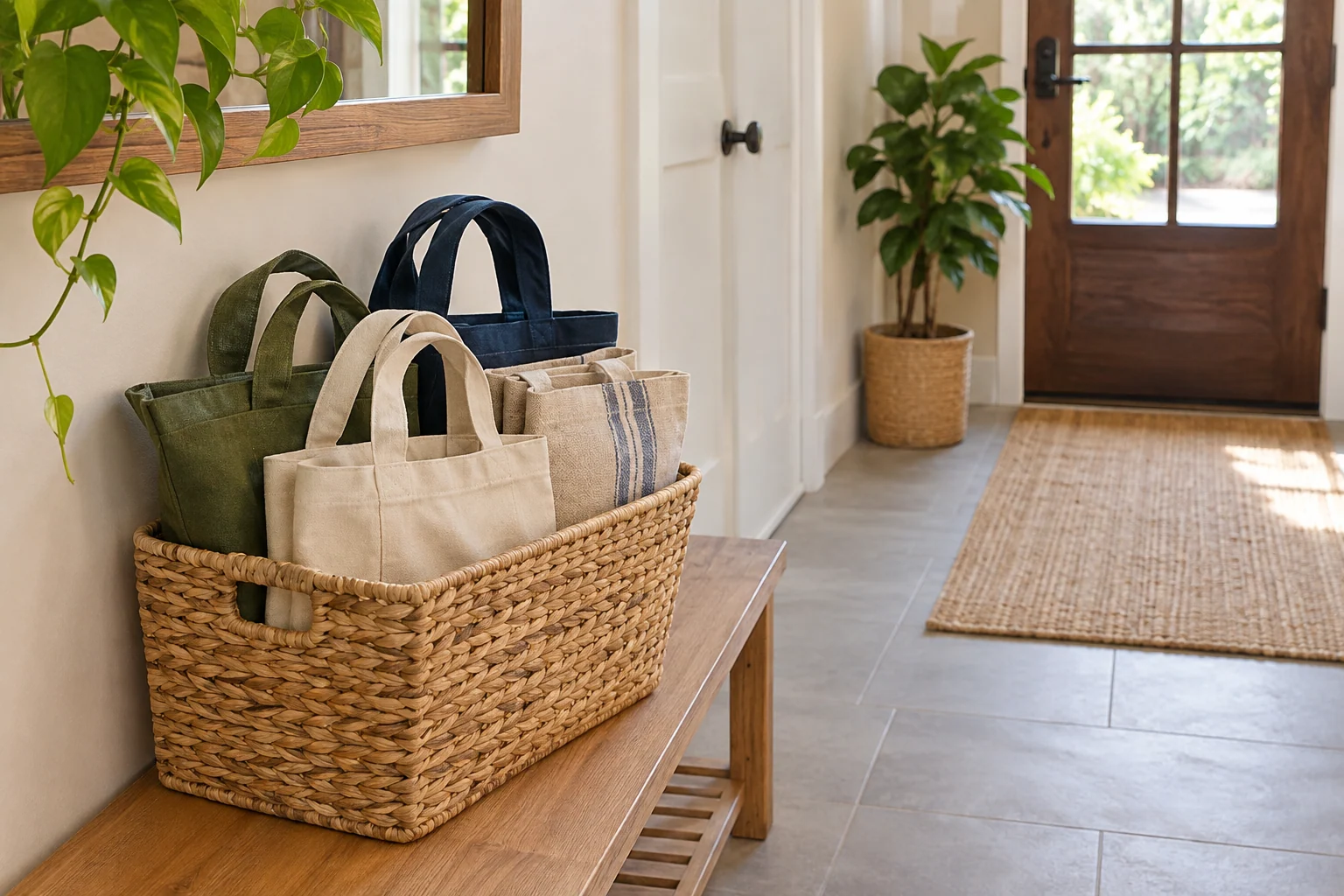
Prepare the bags for an ordinary trip without unfolding and refolding the entire collection. Check whether the useful group is ready, easy to carry and straightforward to return afterward. Correct a repeated missing step before changing all the containers. The best bag storage is the arrangement that gets the right clean bags back into actual use.
A clean-store-return card
For each bag type, record its real task, care method, dry return position and next-trip trigger. Measure the complete stored shape before choosing the organizer. Three hypothetical folded bags each 4½ inches wide use 13½ inches before grip space; a 14-inch opening therefore leaves only ½ inch across the remainder. That arithmetic does not prove a comfortable fit or justify forcing a structured bag into the gap.
A practical next step
Choose the bag groups and their return route before expanding storage. A small clean working set, a suitable reserve and a clear next-trip position can be more useful than a large basket that hides every tote the household has ever received.
The images are original AI-generated design concepts. They illustrate arrangements rather than tested products, installations or measured performance.
Sources and care references
Related reading on Nestroxe
Optional digital guide for this topic
If you prefer a structured workbook, explore this related paid guide.