Board games are awkward storage objects: some boxes are tall, others wide, and a few contain many small pieces that need to stay together. The best arrangement lets you find the right game, remove it without dismantling the shelf and return every component afterward. A tidy photograph is only the beginning.
Sort by the way you play before buying new furniture. Everyday family games may belong near the table, while a large occasional game needs a shelf that supports its actual box. These ideas work with original packaging where possible and explain when trays, separate compartments or a dedicated cabinet can make the collection easier to use.
Contents
- 1. Start with a shelf for the games played most often
- 2. Group boxes by their actual shape
- 3. Use horizontal storage for loose internal trays
- 4. Stand compatible boxes upright with support
- 5. Reserve a wide bay for oversized games
- 6. Keep card games in a shallow drawer
- 7. Give travel games a carry-ready basket
- 8. Use a cabinet near the playing table
- 9. Make one shelf a rotating selection
- 10. Leave expansion material with its parent game
- 11. Separate shared accessories from game-specific pieces
- 12. Use component cups during play
- 13. Create a dedicated home for rulebooks
- 14. Use adjustable shelves for an evolving collection
- 15. Keep a family selection within comfortable reach
- 16. Use a bench compartment only when the fit is practical
- 17. Choose transparent secondary containers selectively
- 18. Leave a return gap on the shelf
- 19. Set up a separate space for unfinished play
- 20. Use a closed sideboard for a quieter room
- 21. Give small puzzles their own section
- 22. Make missing-piece checks part of cleanup
- 23. Store heavy games in suitable lower positions
- 24. Keep a borrowing space separate from the main row
- 25. Review the collection before adding storage
- 26. Finish with a repeatable game-night return routine
Measure boxes in their intended storage position
Record the height, width and depth of the largest boxes, including the direction you will pull them out. Check the furniture's usable openings and stated shelf loads, not just its exterior size. Heavy collections need suitable furniture, and furniture with drawers, doors or shelves may require anchoring according to its instructions and CPSC guidance. Upright storage only suits boxes whose contents remain secure in that orientation; test gently with the actual game rather than assuming every insert will hold components in place.
Compare the storage or placement options
- Open shelves: Easy browsing; plan support, hand gaps and a manageable visible collection.
- Closed cabinet: Quieter room outline; check doors, usable openings and shelf loads.
- Shallow drawer: Useful for small boxed games; keep each game's components together.
- Travel basket: Convenient for a small carry-ready selection; check actual carrying suitability.
1. Start with a shelf for the games played most often
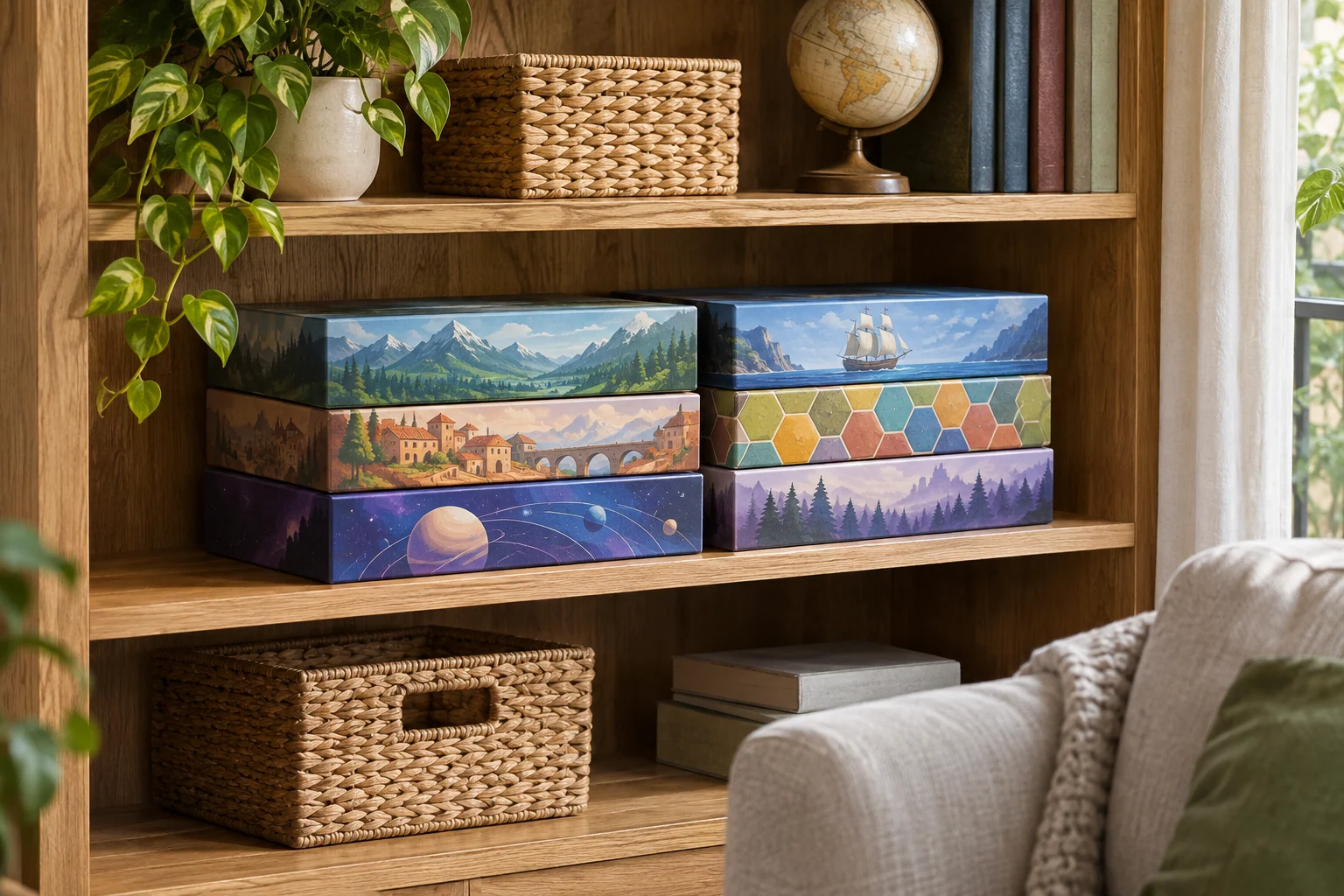
Put the games you reach for weekly in the easiest shelf position. Leave enough space to grasp a box at its sides rather than pulling on the lid. This makes the useful part of the collection visible and reduces the temptation to stack everything on the floor. Keep less frequently played titles elsewhere if they crowd the everyday row.
2. Group boxes by their actual shape
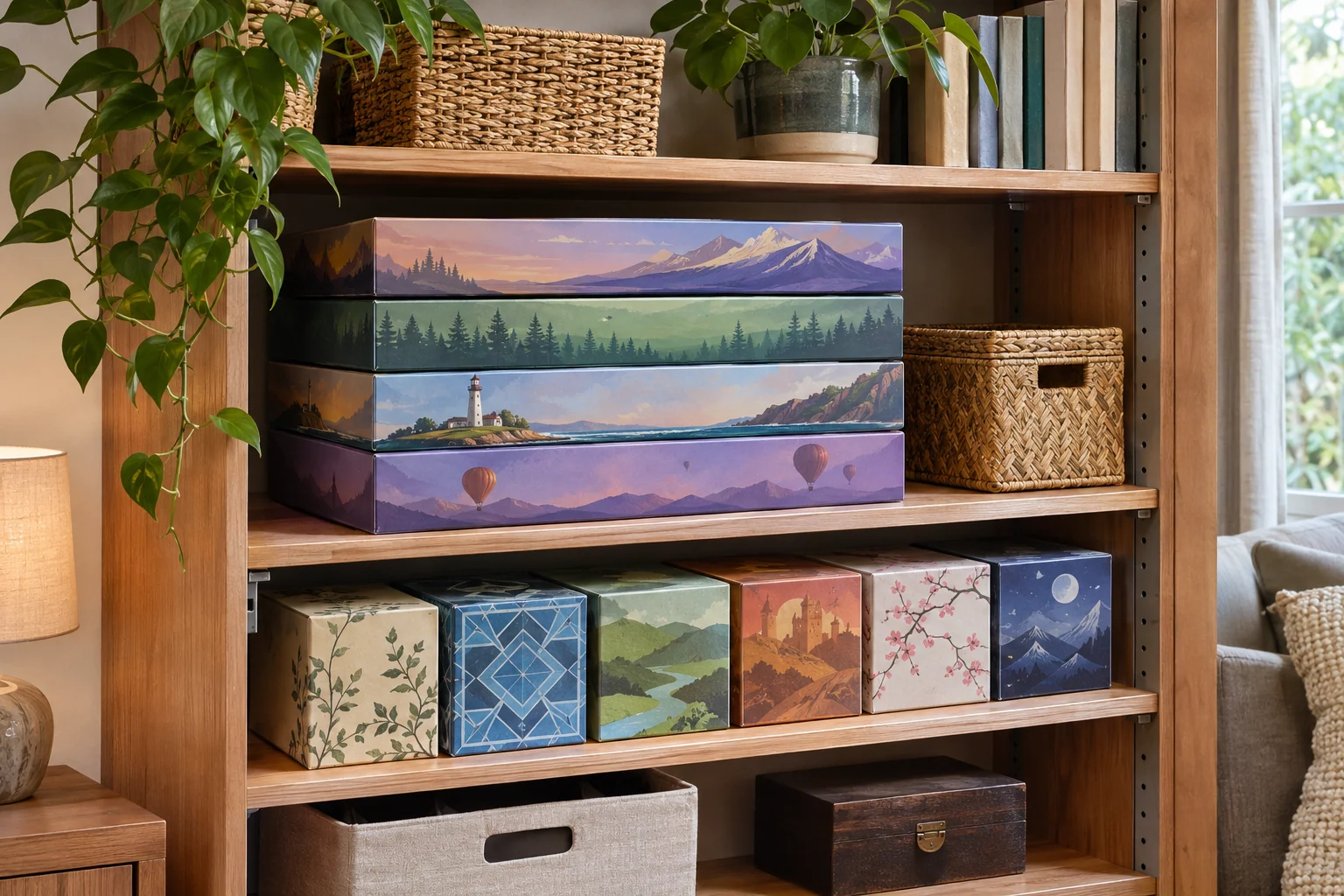
Wide flat boxes, compact card boxes and tall party games use space differently. Separate these shapes before deciding on shelf heights. Adjustable shelves can reduce wasted vertical space, provided their supports and load limits suit the collection. Keep a little room for fingers above the boxes. An arrangement that fits exactly on paper may be frustrating to retrieve in real life.
3. Use horizontal storage for loose internal trays
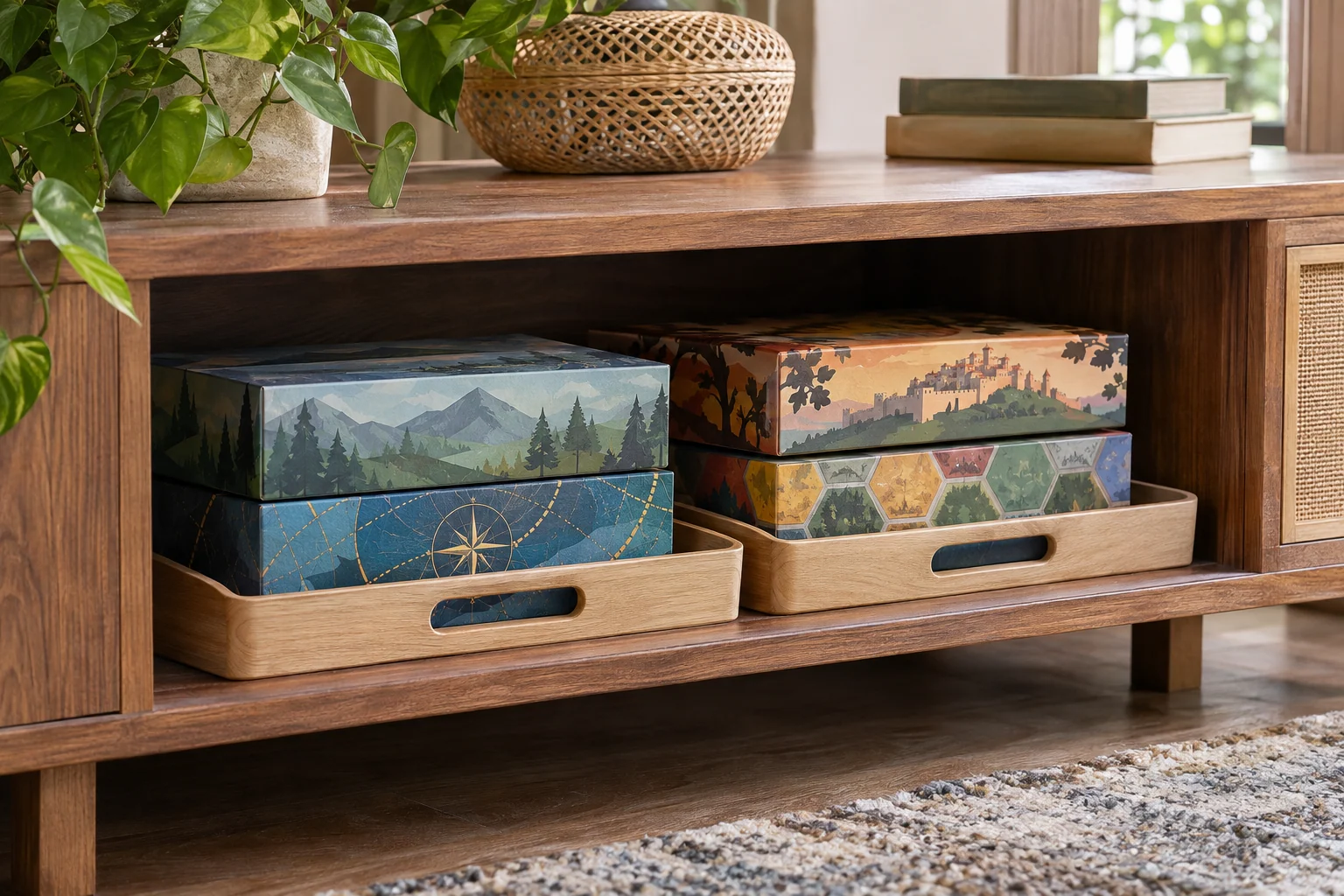
Some games scatter their contents when stored on edge because the insert depends on the box lying flat. Keep those games horizontal unless the maker provides a suitable alternative. Limit stack height so the bottom box remains manageable. A low shelf with two small stacks can be easier to use than a single tall column that must be rebuilt after every choice.
4. Stand compatible boxes upright with support
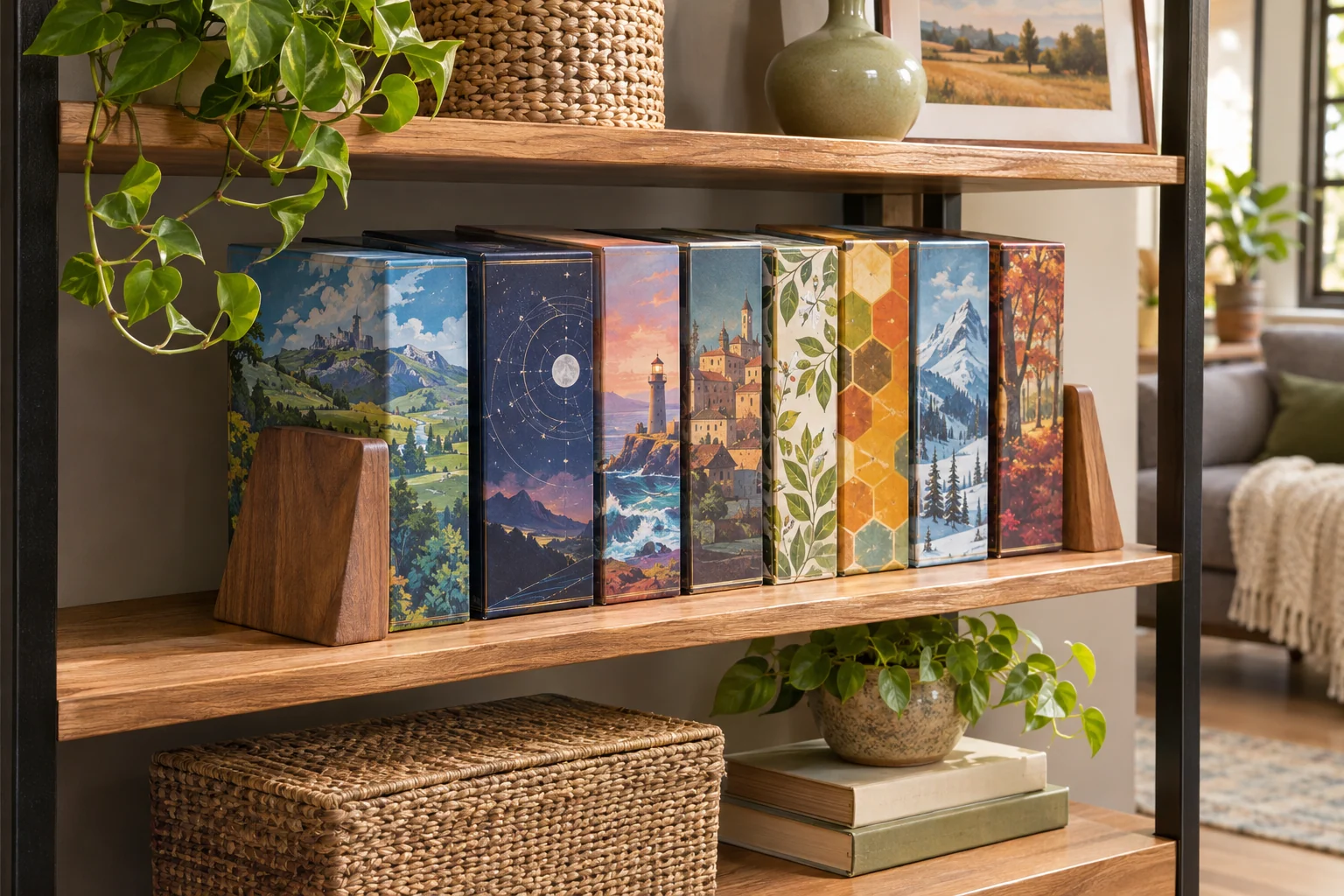
Upright boxes can make the collection easier to browse when lids and internal components stay secure. Try the position with one game first and check inside afterward. Use appropriate dividers or bookends if needed, without compressing boxes. Keep the visible edge consistent so the shelf is easy to scan, and return any game that spills internally to a horizontal position.
5. Reserve a wide bay for oversized games
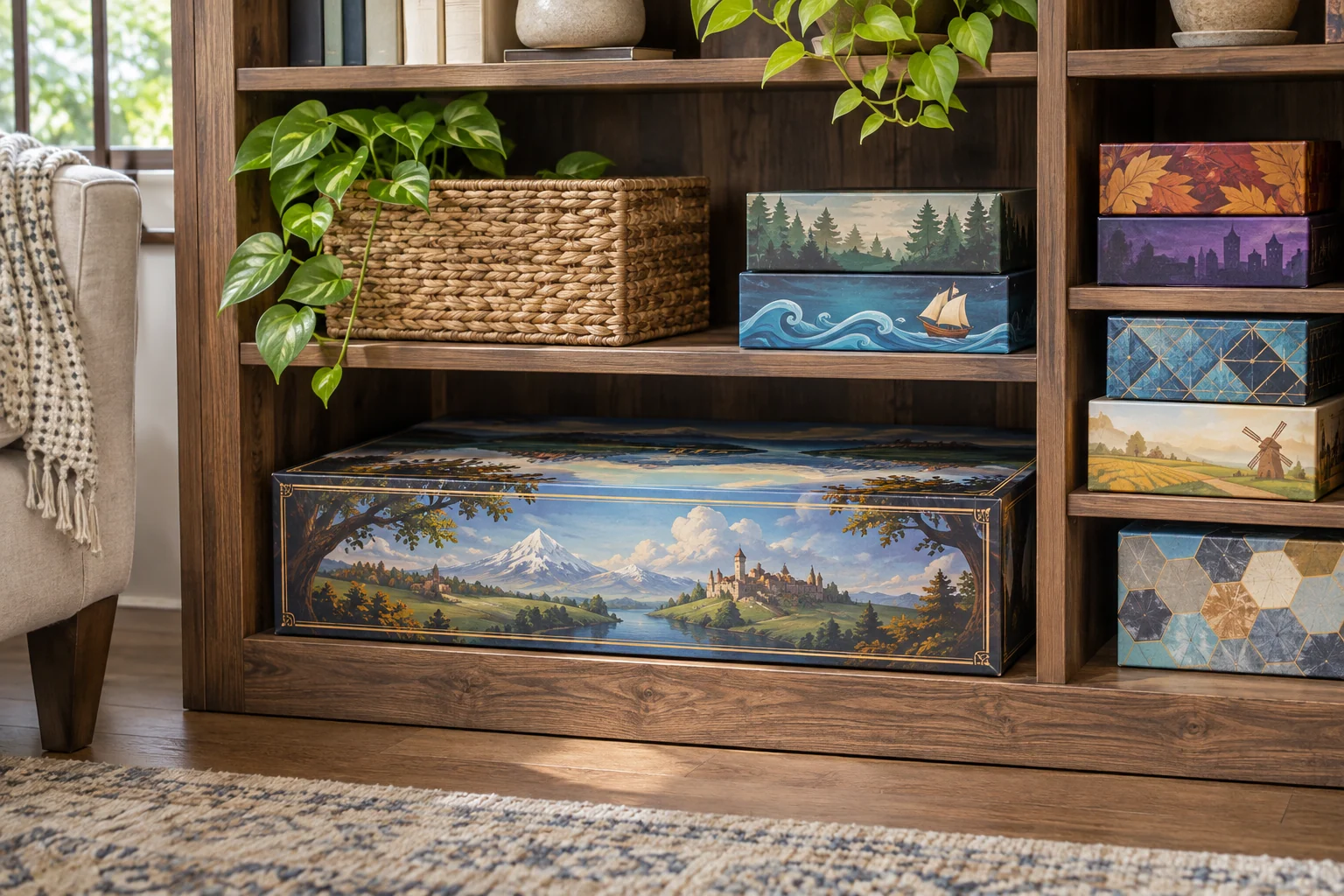
A large box should not overhang a narrow shelf simply because most of the collection fits there. Give it a bay with full support and enough clearance for removal. Measure the actual game rather than relying on a standard cube dimension. If only one box is unusually large, a separate suitable cabinet position may be more efficient than replacing all the storage.
6. Keep card games in a shallow drawer
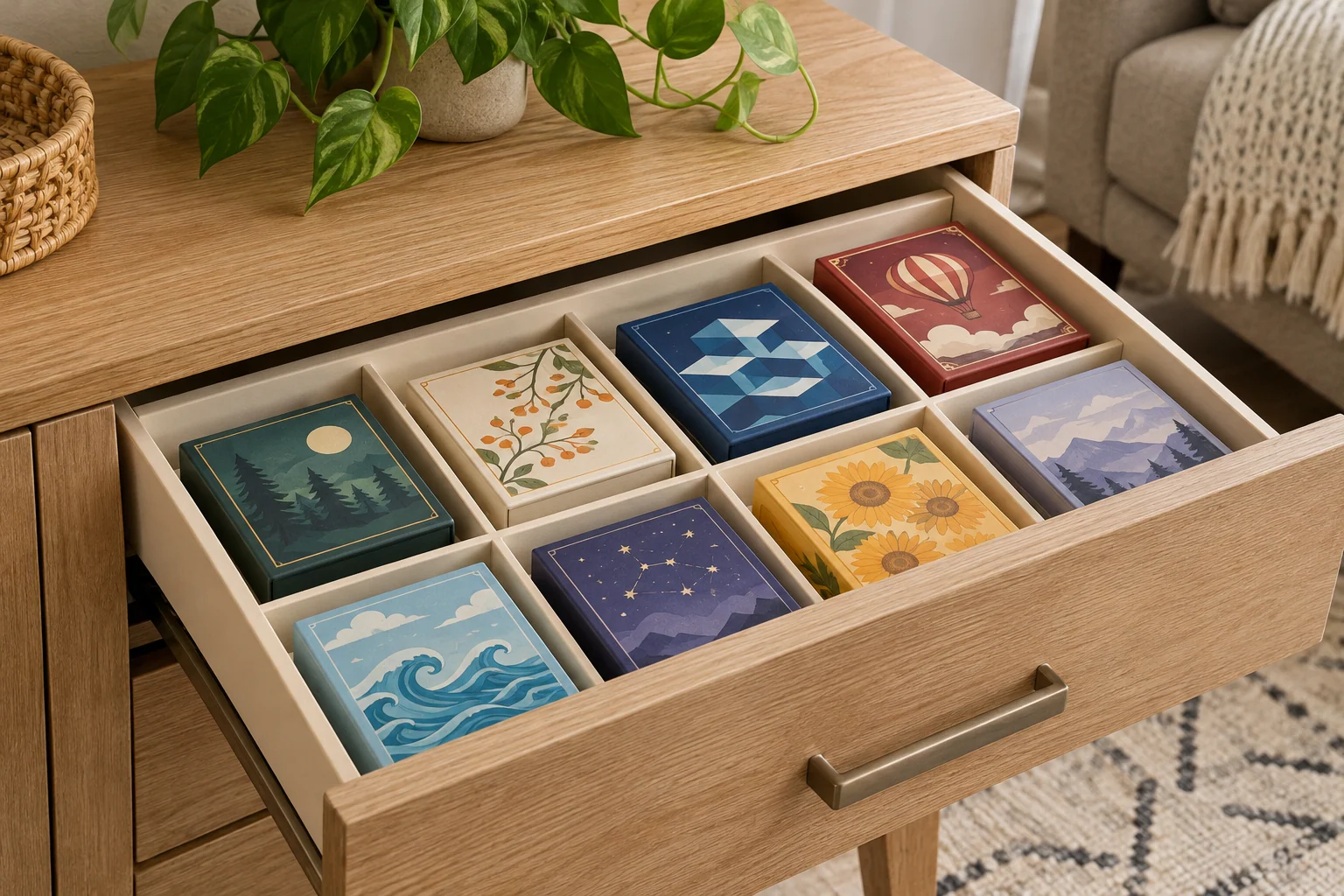
Compact card-game boxes can disappear behind larger board games. A shallow divided drawer keeps them visible and prevents small boxes from sliding into the back. Arrange them with a clear grasping edge and avoid filling every inch. Keep decks in their own suitable boxes or sleeves so the drawer is an organizer, not a loose mixture of cards from different games.
7. Give travel games a carry-ready basket
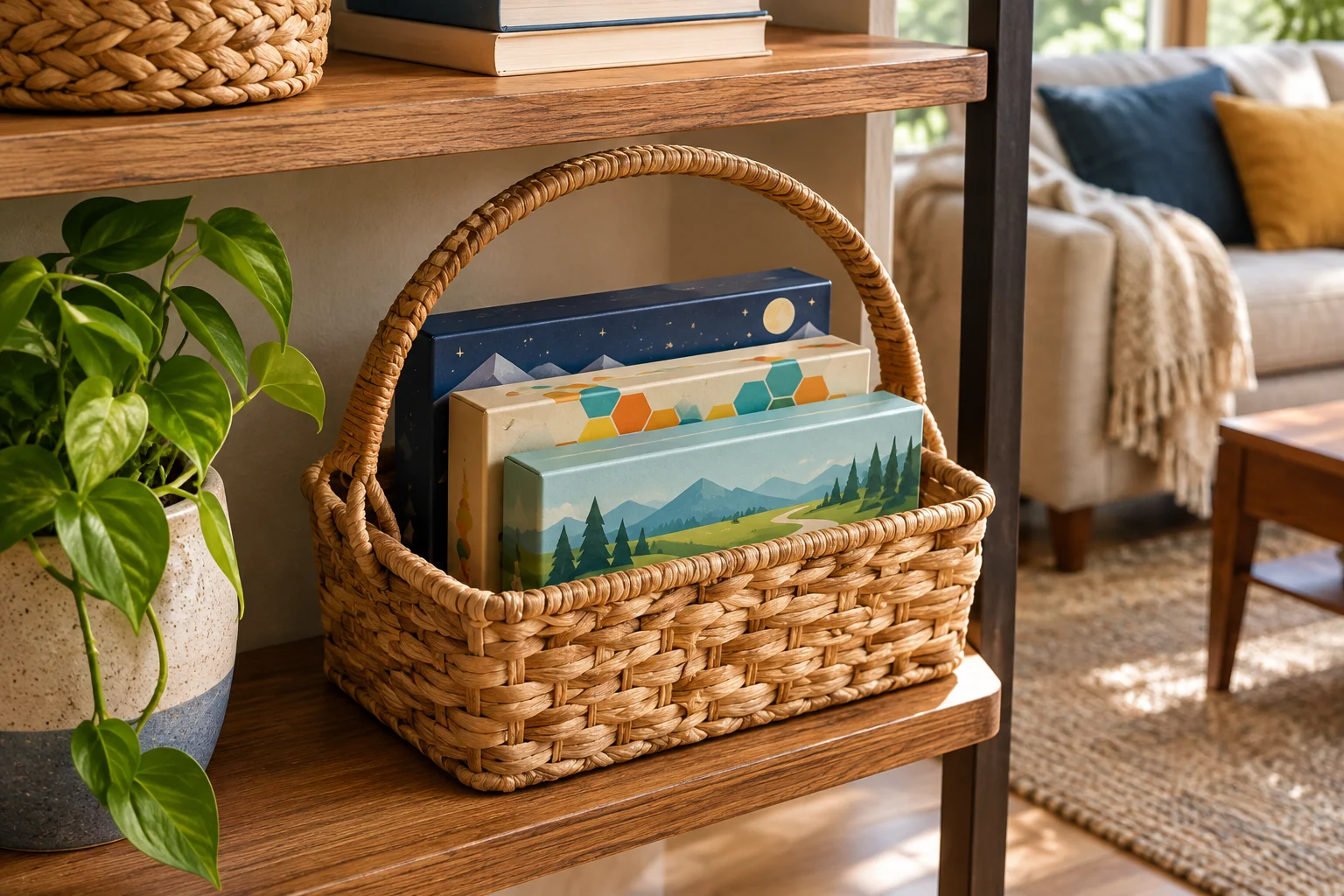
A modest basket near the main collection can hold the games you take to visits or weekends away. Keep the games in secure original boxes or appropriate cases and check the basket's actual carrying suitability. Avoid adding so many that it becomes awkward to lift. The basket should represent a small ready-to-go group rather than a second unsorted collection.
8. Use a cabinet near the playing table
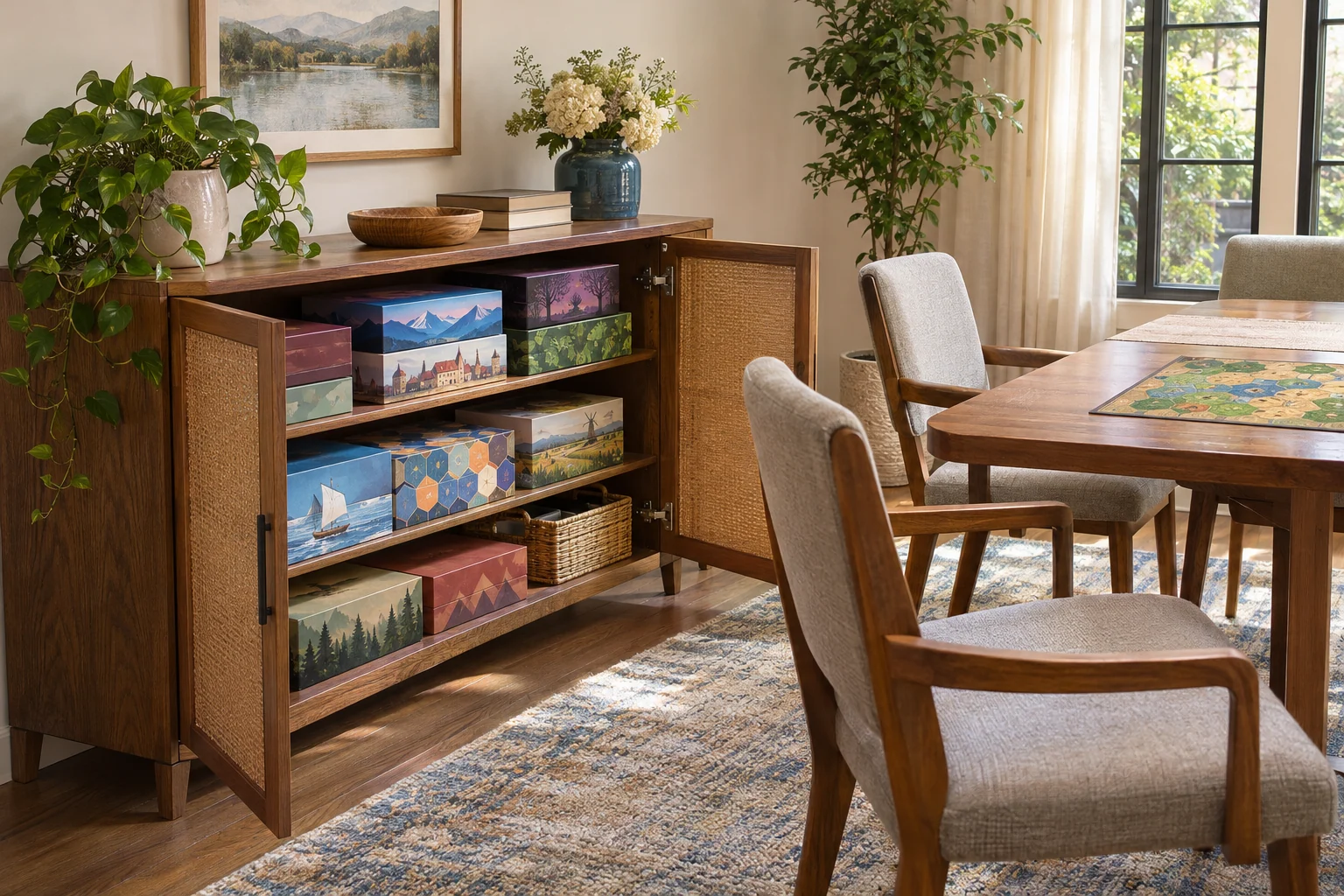
Storage close to the table reduces the distance that boxes and loose components travel. Choose a cabinet that allows doors and chairs to move normally in the same room. Test the cabinet with dining chairs pulled out, not just pushed under the table. Keep frequently used games at an easy retrieval height and leave the tabletop available for actual play.
9. Make one shelf a rotating selection
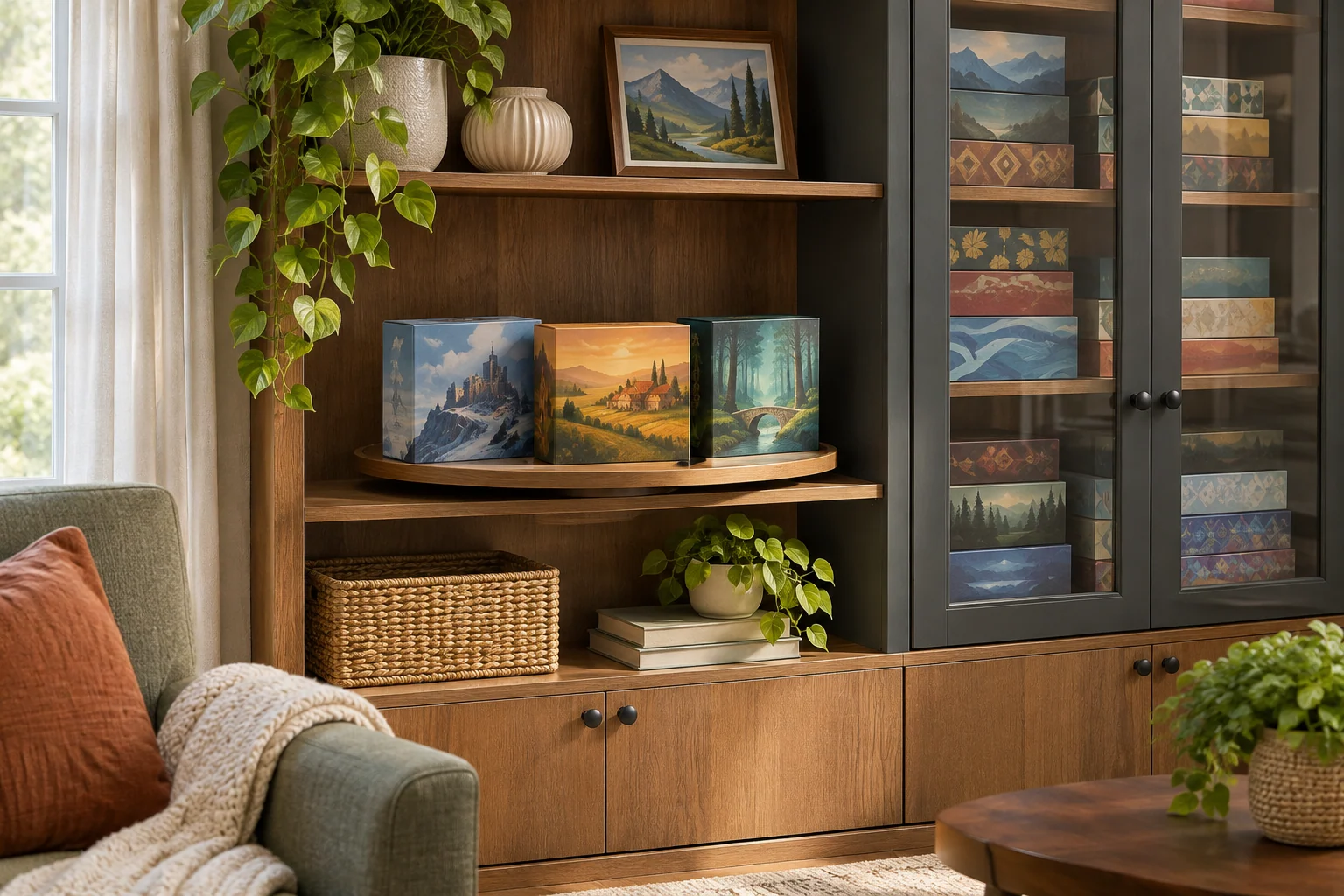
Choose a small group for the next few weeks and move it to the most visible shelf. Keep the rest organized in the main cabinet. Rotation can help a large collection feel easier to choose from without buying more storage immediately. Return games to their proper positions when the selection changes, so the display shelf does not become another permanent pile.
10. Leave expansion material with its parent game
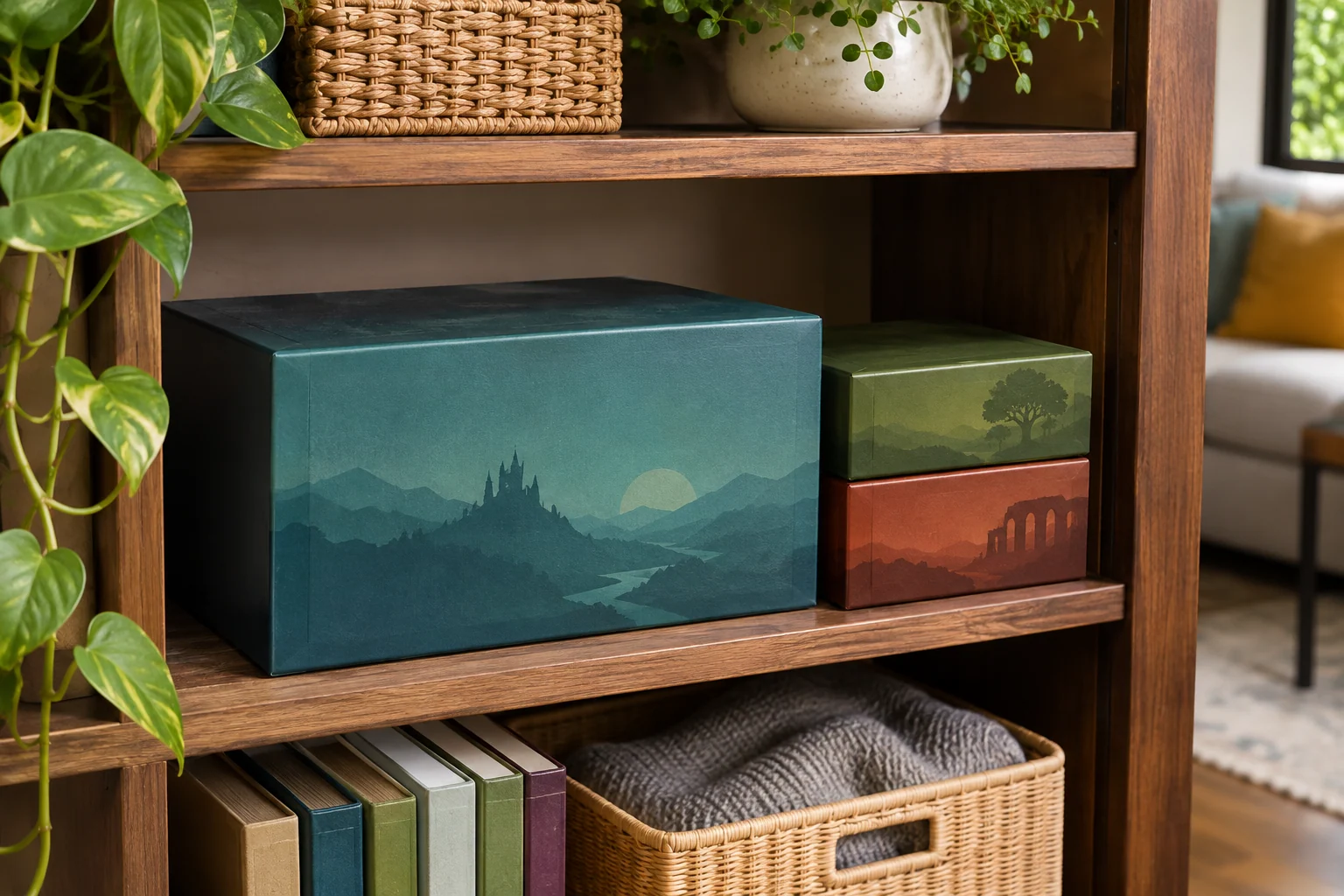
An expansion is easier to use when its location is obvious beside the base game. Keep separate boxes together or use a manufacturer-compatible organizer if the original box can genuinely accommodate it. Preserve needed rules and components. Do not force a lid closed over extra material; a slightly larger dedicated position is preferable to damaged corners and a box that never closes.
11. Separate shared accessories from game-specific pieces
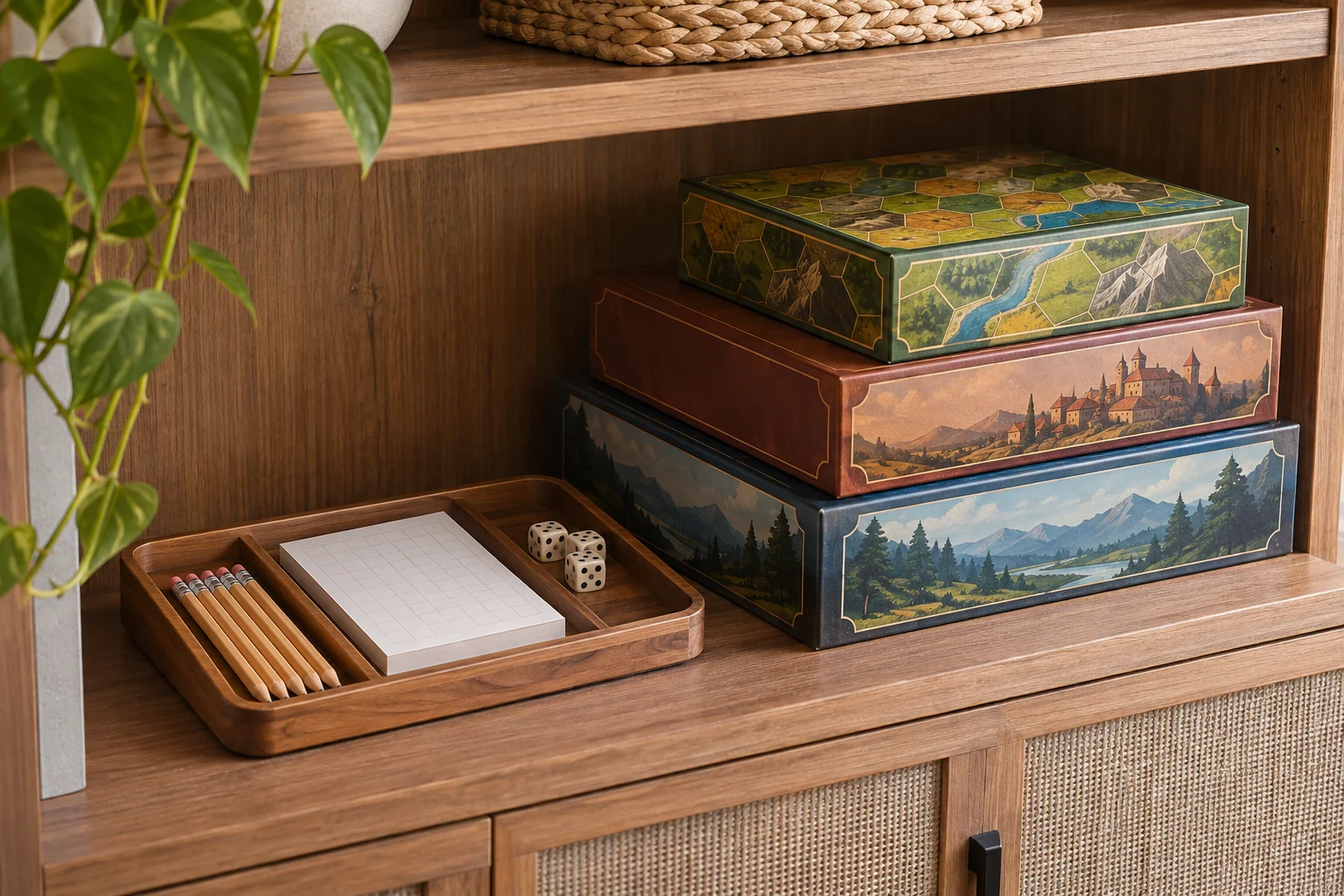
General pencils, a score pad and spare generic dice may deserve a small shared tray. Keep unique components inside their own games so they do not become difficult to identify. Check the shared tray before game night and return it to a clear position afterward. The goal is fewer searches, not transferring every small piece into an attractive but ambiguous container.
12. Use component cups during play
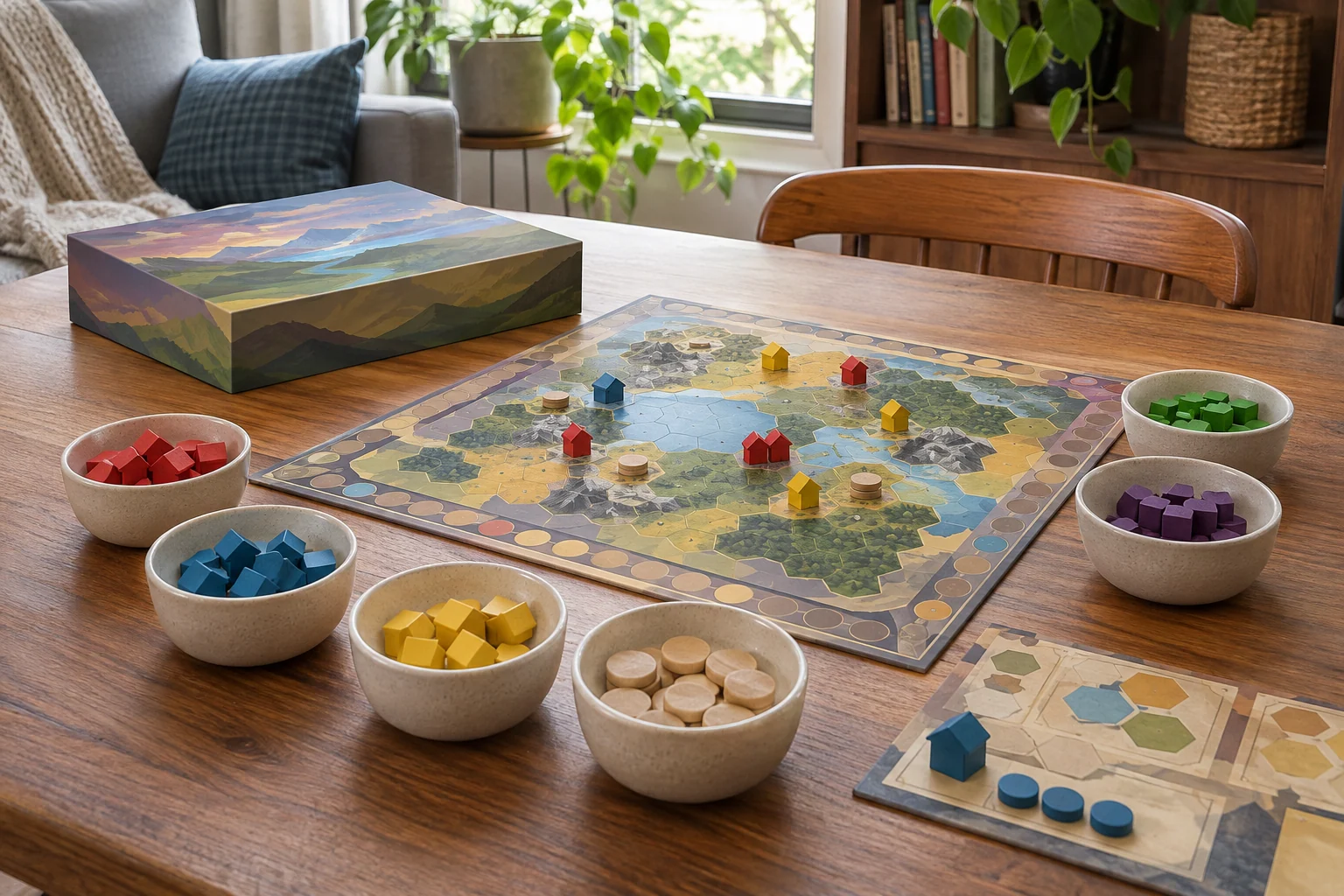
Small cups or trays can stop tokens from spreading across the table while a game is in progress. Choose enough for the game you are playing and check how the pieces return to their original storage afterward. Do not assume a decorative dish belongs permanently inside the box. A separate stack of nesting cups can support several games without altering their packaging.
13. Create a dedicated home for rulebooks
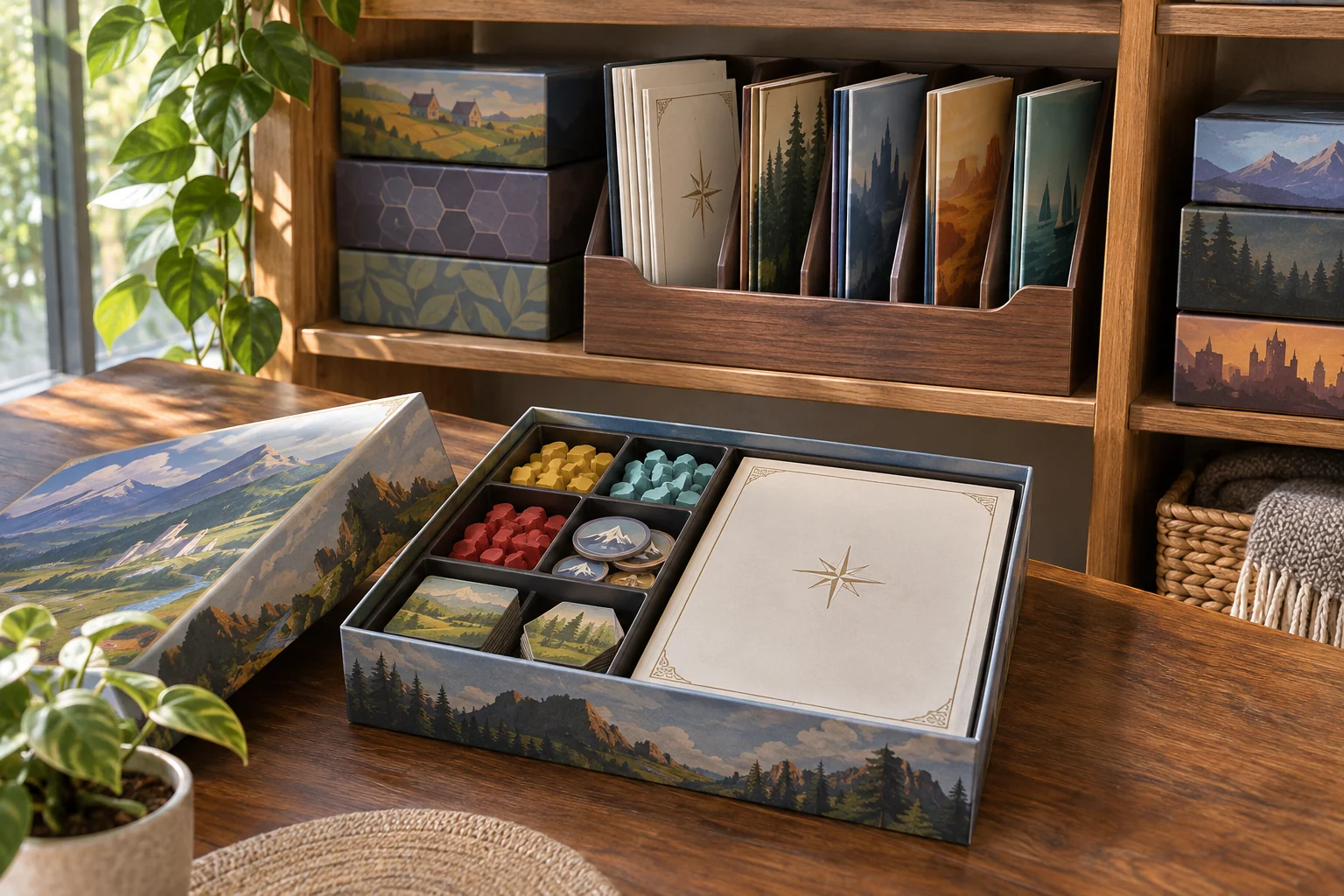
Keep each rulebook with its game unless you have a clear reason to store it separately. If several belong in one box, a suitable folder or sleeve can prevent them from slipping between components. Preserve page order and avoid forcing a large booklet into a smaller compartment. A digital reference can be useful, but it should come from the game's official source when available.
14. Use adjustable shelves for an evolving collection
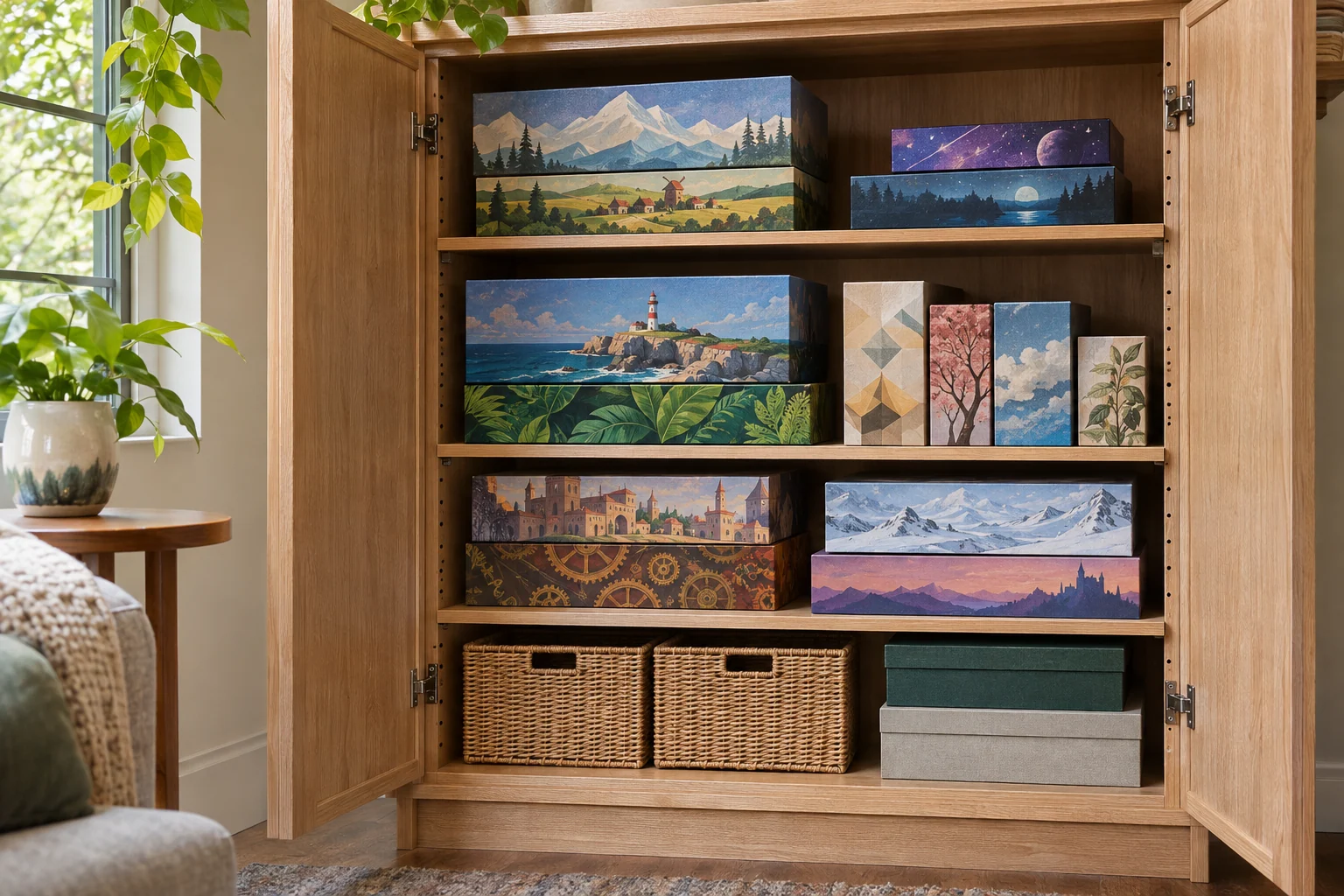
An adjustable cabinet can adapt when box sizes change. Plan several usable shelf positions rather than filling the cabinet around one current arrangement. Keep the manufacturer's supports and load instructions with the furniture records. Recheck the layout after moving shelves: a changed opening should still support the boxes and leave enough hand room, with the heaviest suitable items placed thoughtfully.
15. Keep a family selection within comfortable reach
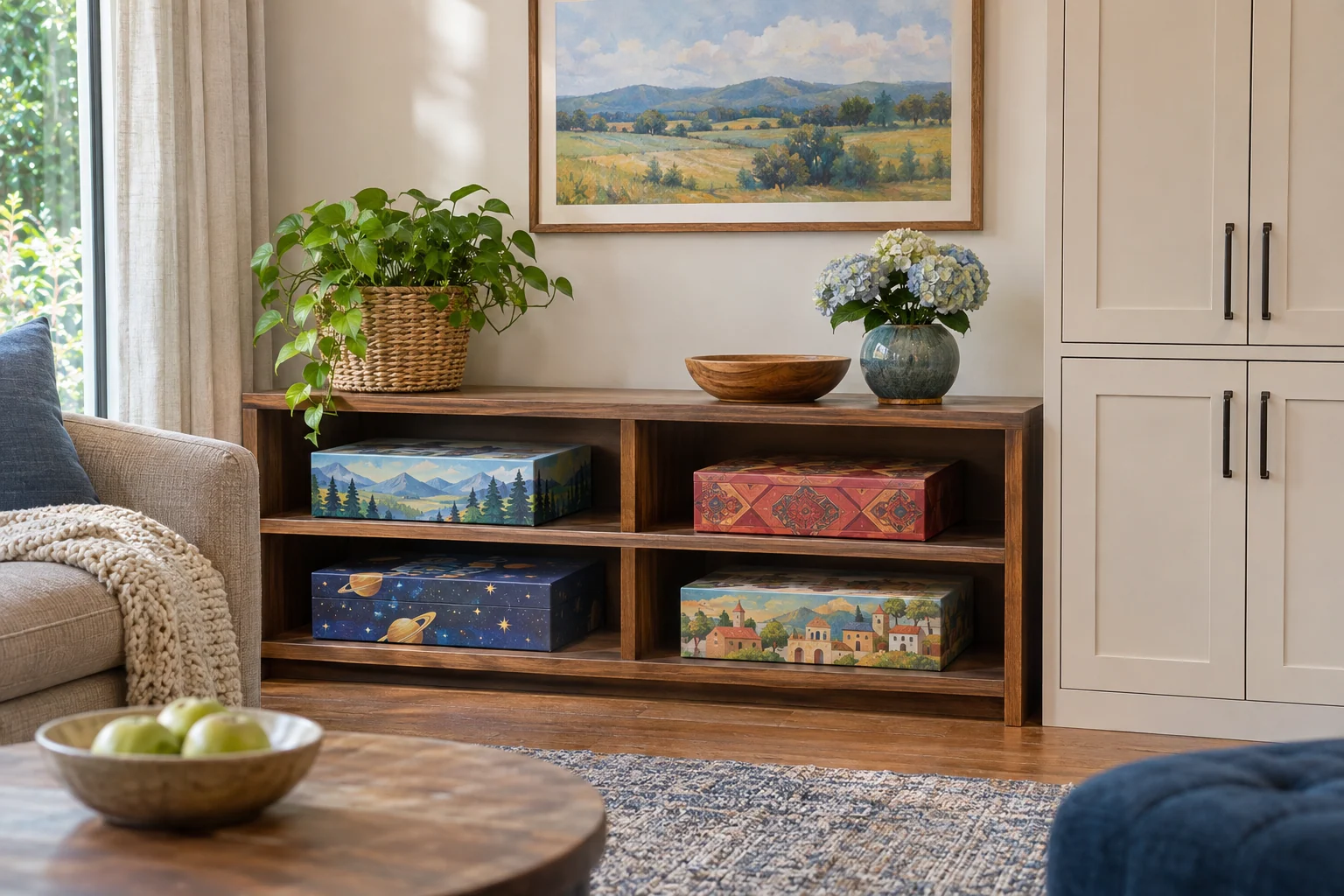
Place the games intended for independent everyday use where their users can retrieve and return them comfortably, while respecting age guidance and small-parts considerations. Store other games separately as appropriate for the household. Avoid treating an attractive low shelf as universally suitable for every game. The right arrangement depends on the people using it as well as the furniture.
16. Use a bench compartment only when the fit is practical
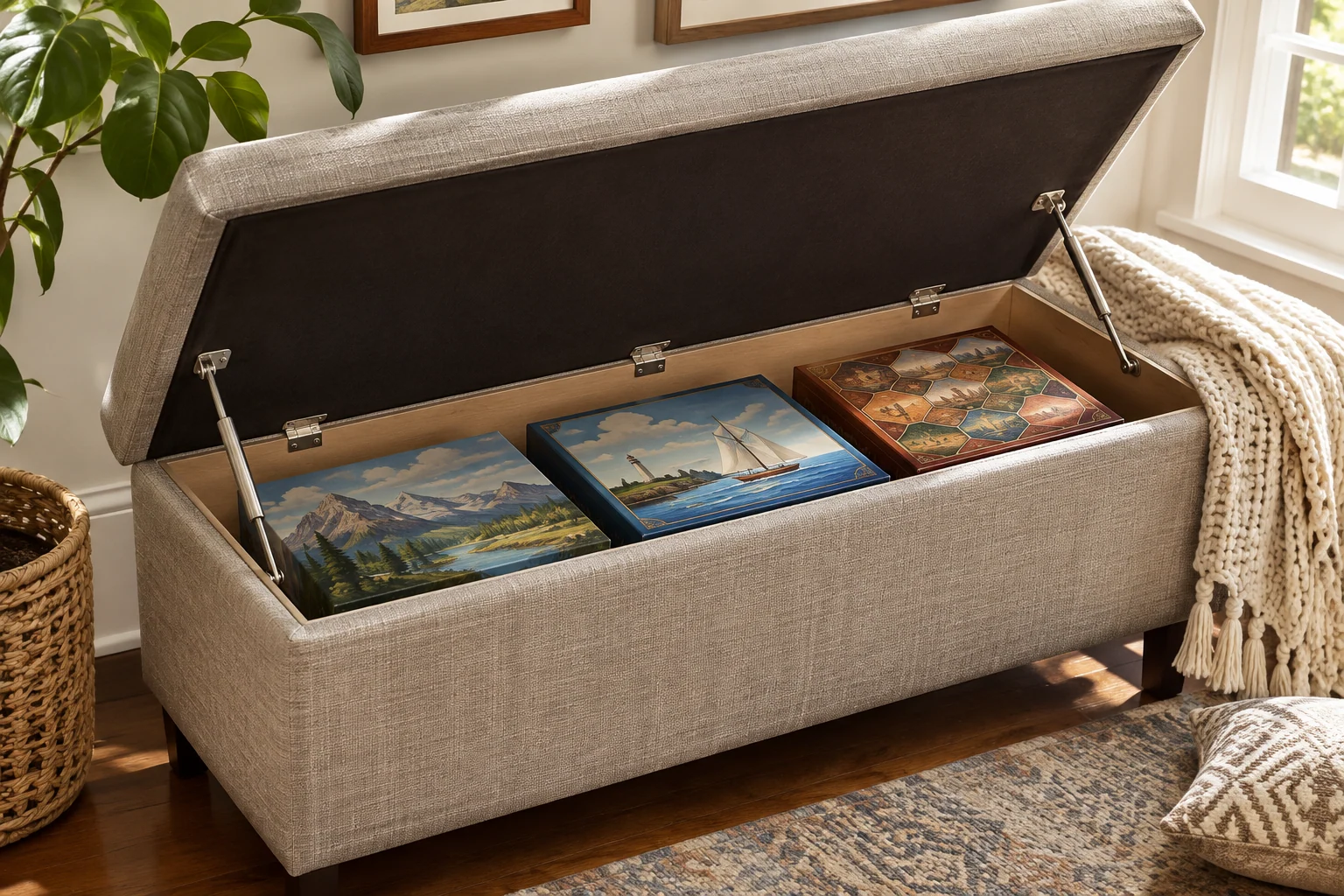
A storage bench can hold occasional games near the living room, but check its opening, hinge operation and internal dimensions first. Keep boxes fully supported and easy to lift out. Follow the furniture maker's instructions for lid use and intended function. If retrieving one game requires emptying the whole bench, a visible shelf may be a better everyday solution.
17. Choose transparent secondary containers selectively
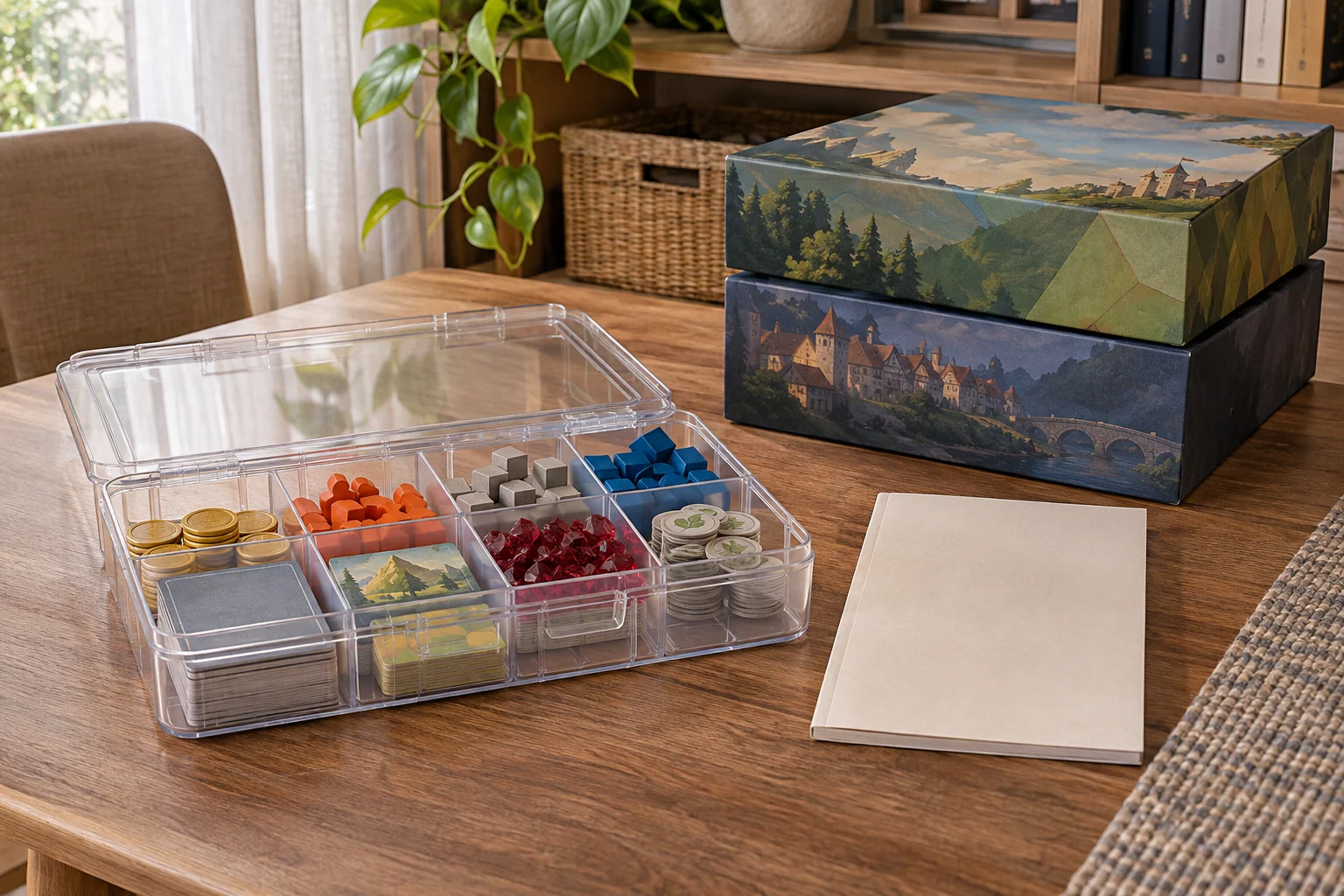
A clear container can help identify a game with failed packaging or organize compatible small accessories. Measure the contents and keep a clear record of what belongs together. Preserve original rules and useful packaging information. Avoid transferring complete games solely for matching aesthetics; the original box may already be the simplest, best-fitting way to keep its components and identity together.
18. Leave a return gap on the shelf
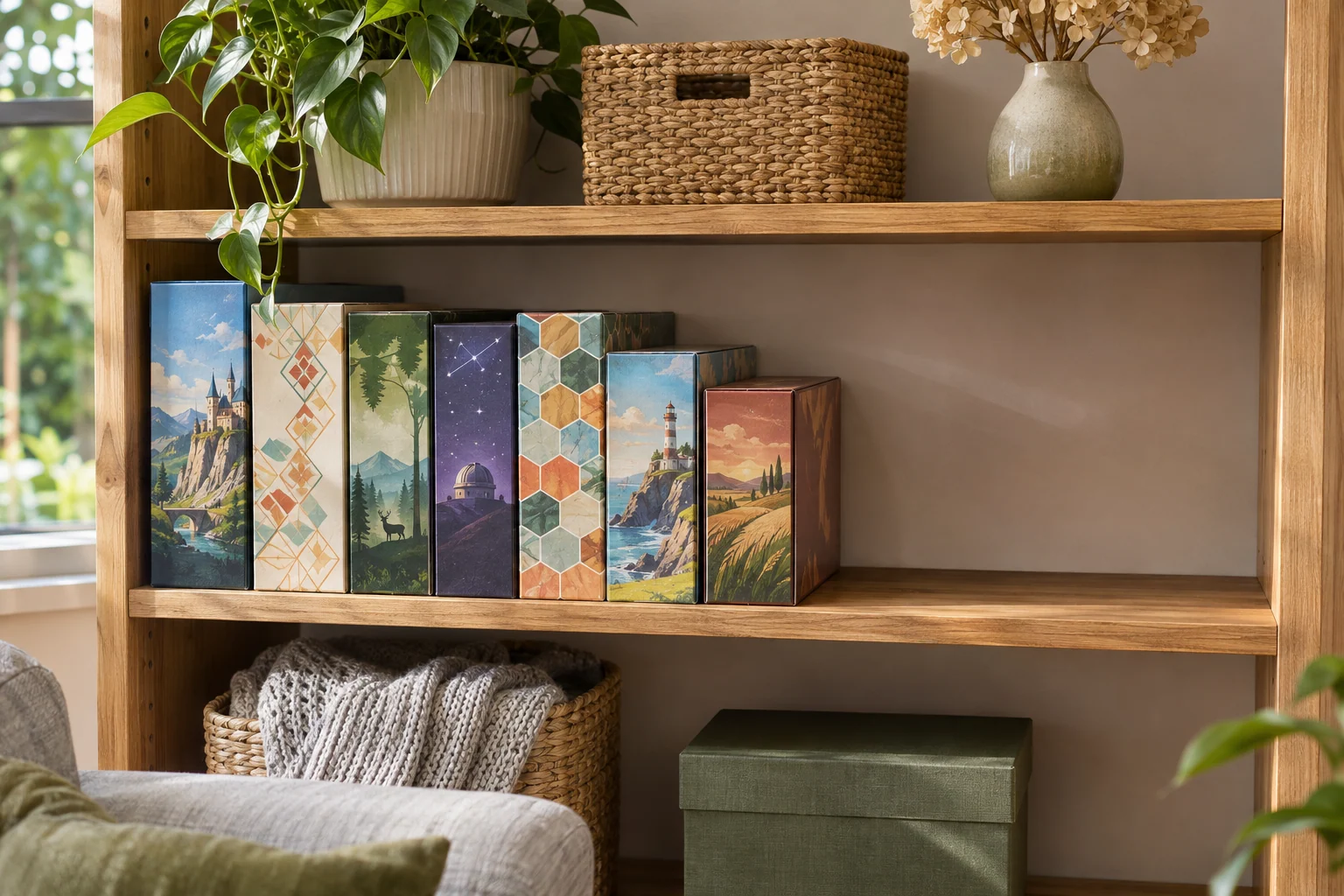
A shelf packed tightly edge to edge makes cleanup harder, especially when lids are not aligned perfectly. Leave enough free width to guide a box back into place without forcing its corners. Test this with the largest regularly used game. A little unused space can improve daily function more than another decorative bin squeezed into the last available opening.
19. Set up a separate space for unfinished play
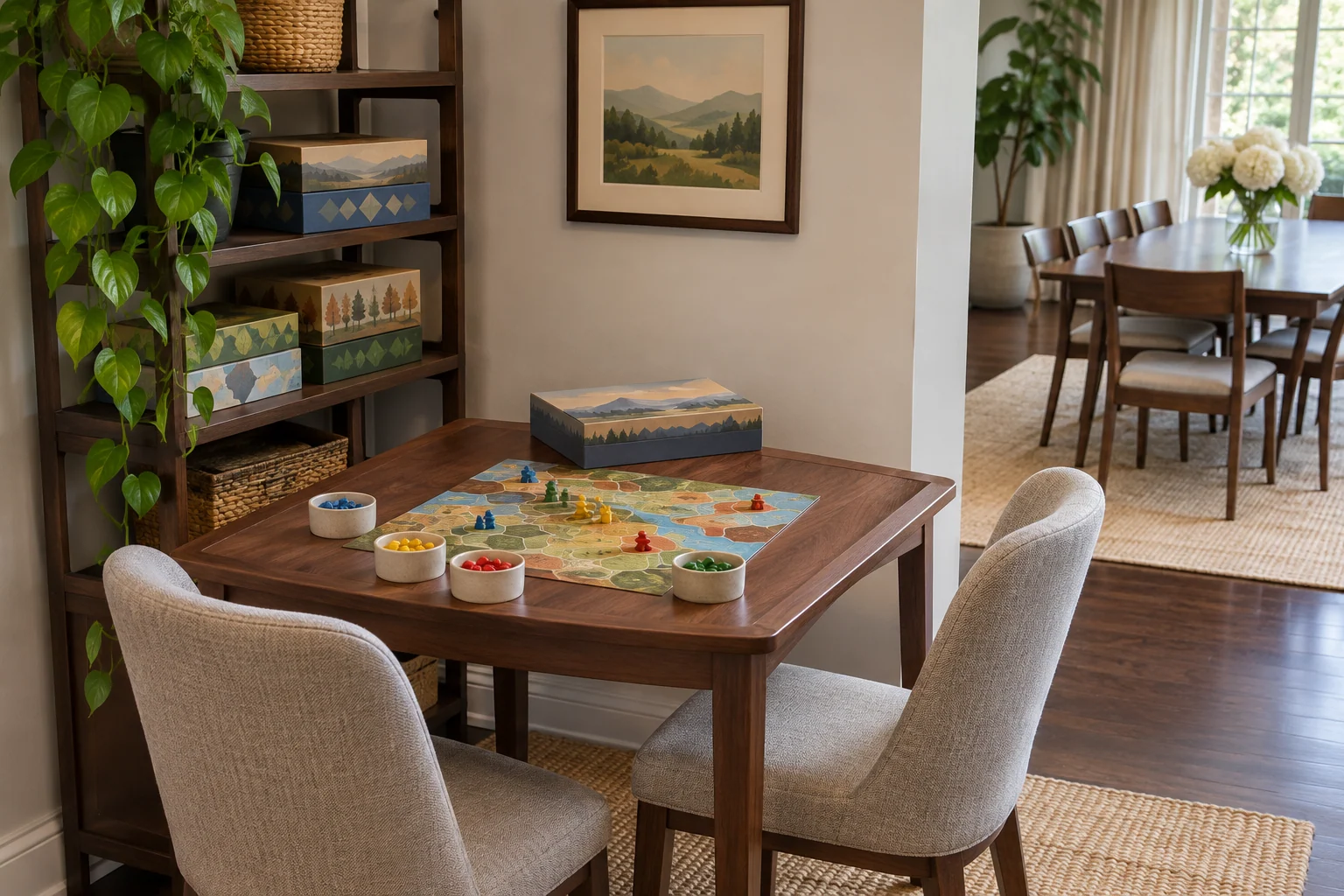
If a game regularly spans several sessions, plan how the setup will pause. A suitable separate table or a compatible game storage system may work better than balancing an unfinished board on top of the collection. Check dimensions and movement needs before buying anything. Keep loose pieces contained and preserve the state of play without blocking the room's everyday dining or walking route.
20. Use a closed sideboard for a quieter room
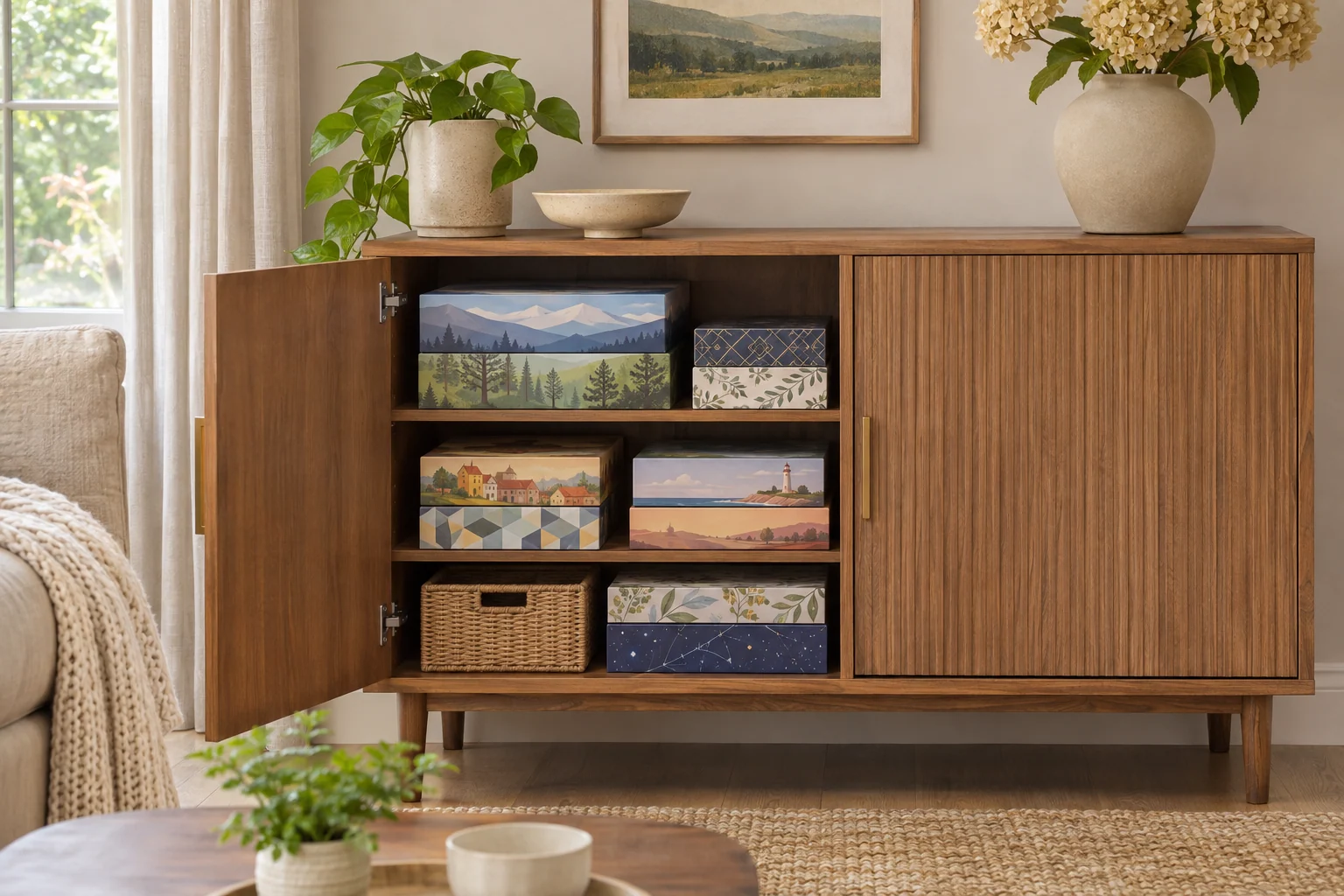
A closed sideboard can absorb colorful packaging in a living or dining room that already has strong patterns. Organize the interior as carefully as an open shelf, with usable gaps and sensible box groups. Check door clearance in the room. Closed doors improve the visual outline, but they do not make an overloaded or difficult-to-search cabinet work better.
21. Give small puzzles their own section
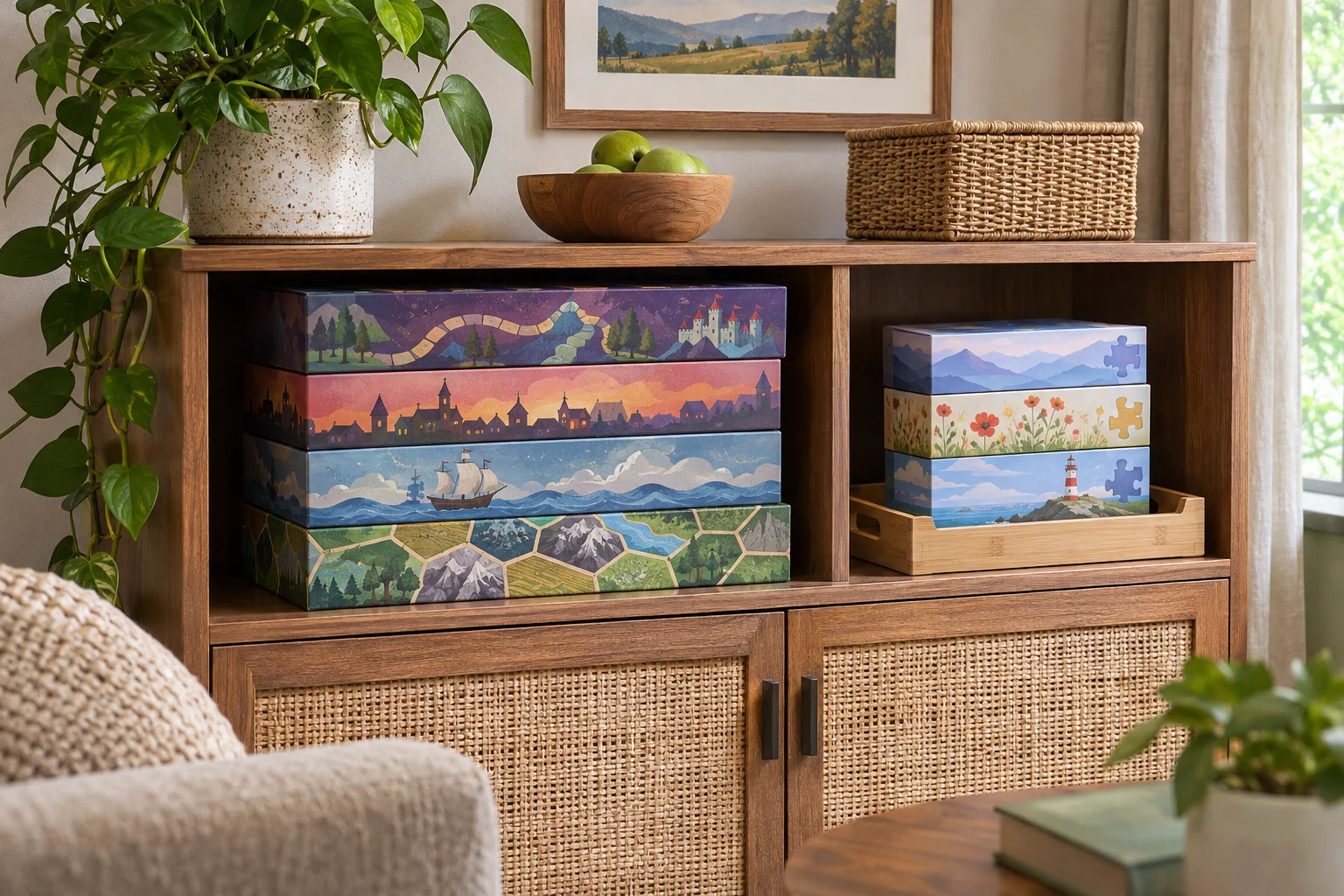
If puzzles share the storage, separate them from board games so pieces and expectations do not become mixed. Keep each puzzle in its own complete box or suitable secure container. Group similar box sizes where practical, but avoid a tall stack that is awkward to dismantle. A clear section also makes it easier to notice which activity needs more storage space.
22. Make missing-piece checks part of cleanup
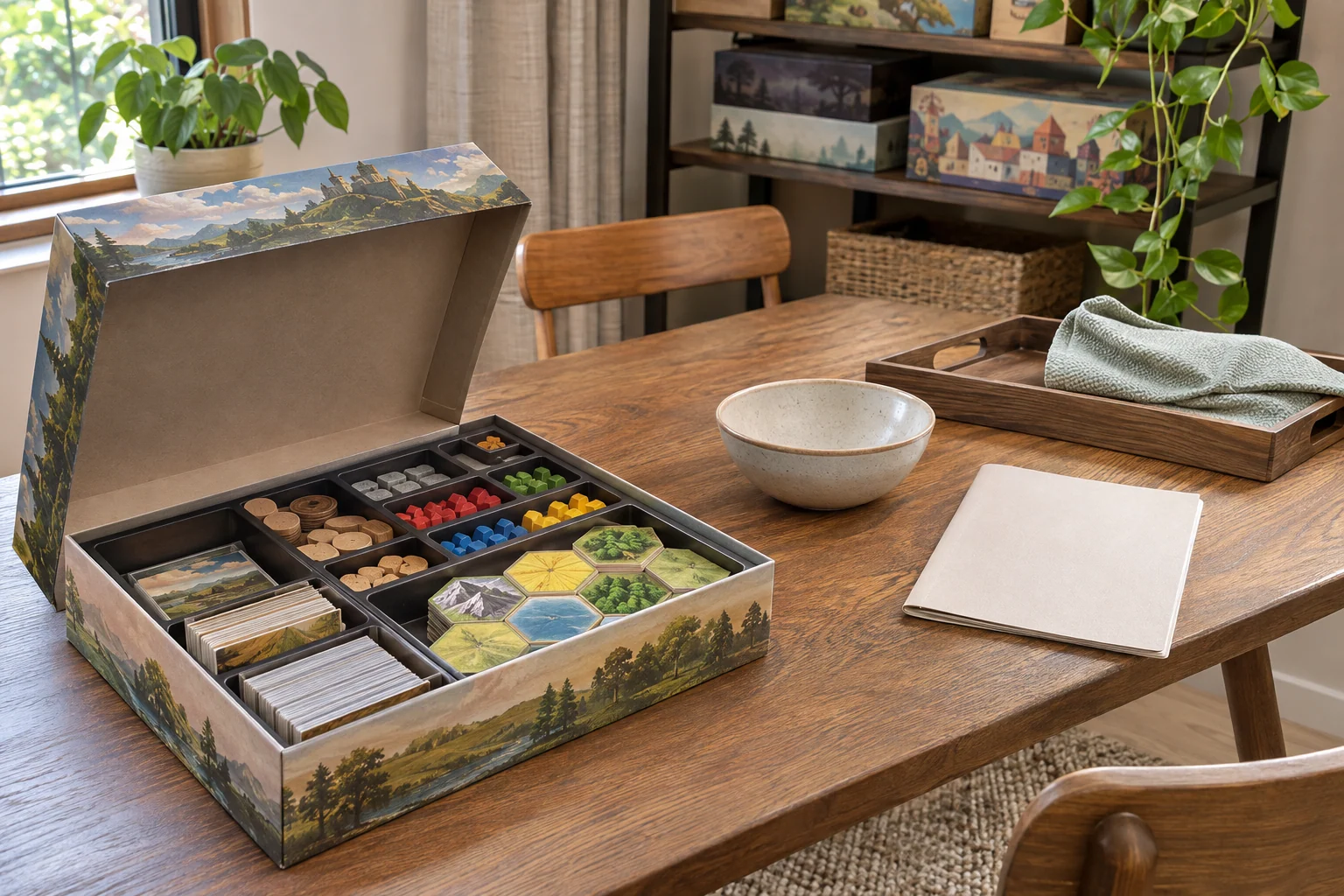
Before closing a game, return components to their intended compartments and check the table and floor around the playing area. Use any official contents list supplied with the game rather than guessing. Record a problem privately if a piece is missing, then keep the game separate until it is resolved. This prevents repeatedly choosing an incomplete game on a busy evening.
23. Store heavy games in suitable lower positions
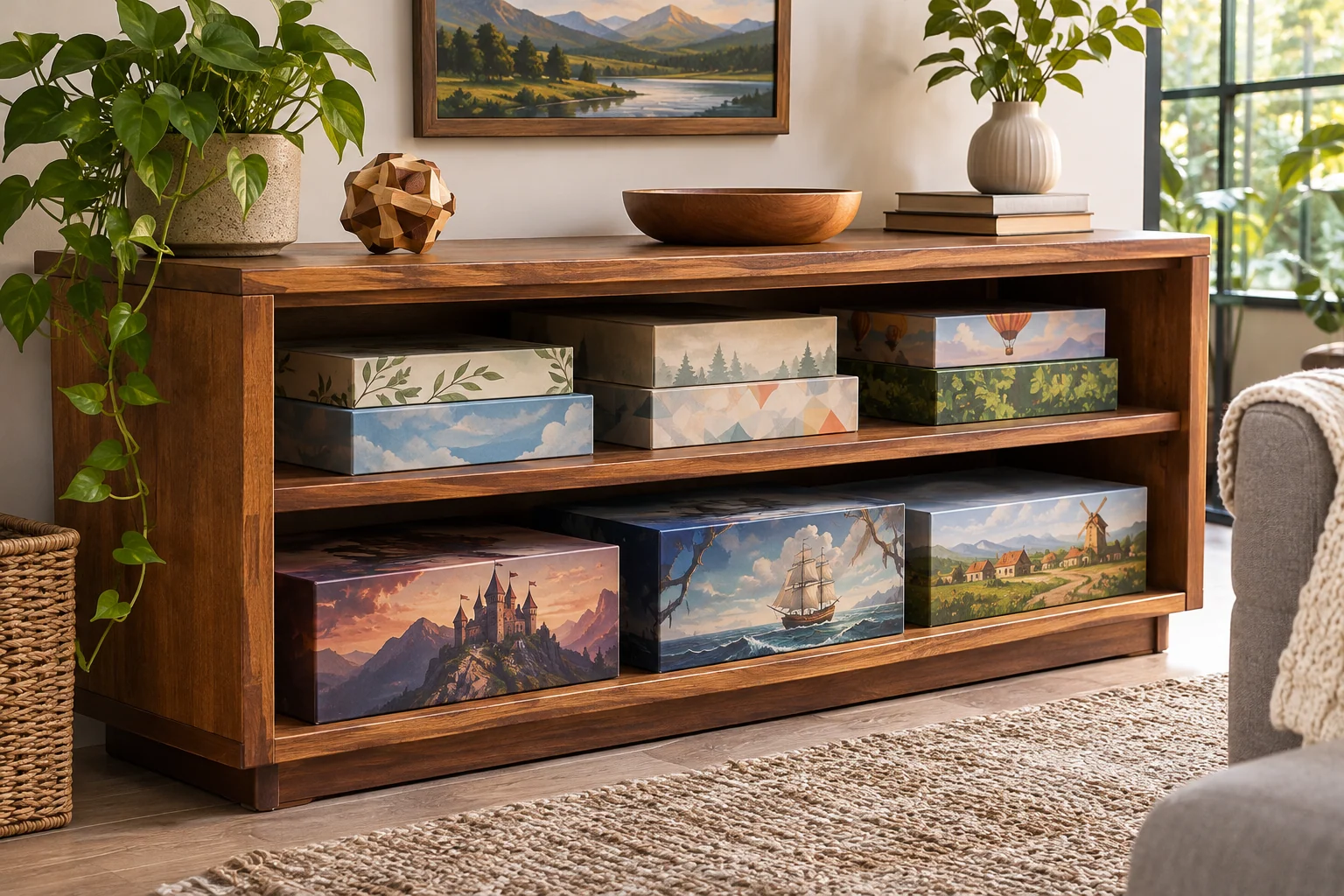
Large games can be surprisingly heavy as a collection. Check each shelf's stated limit and the total furniture guidance before filling it. Suitable lower storage can make heavy boxes easier to handle, but it does not replace required anchoring or sound furniture. Avoid using a photograph of a familiar cube shelf as evidence that your particular unit supports the same load.
24. Keep a borrowing space separate from the main row
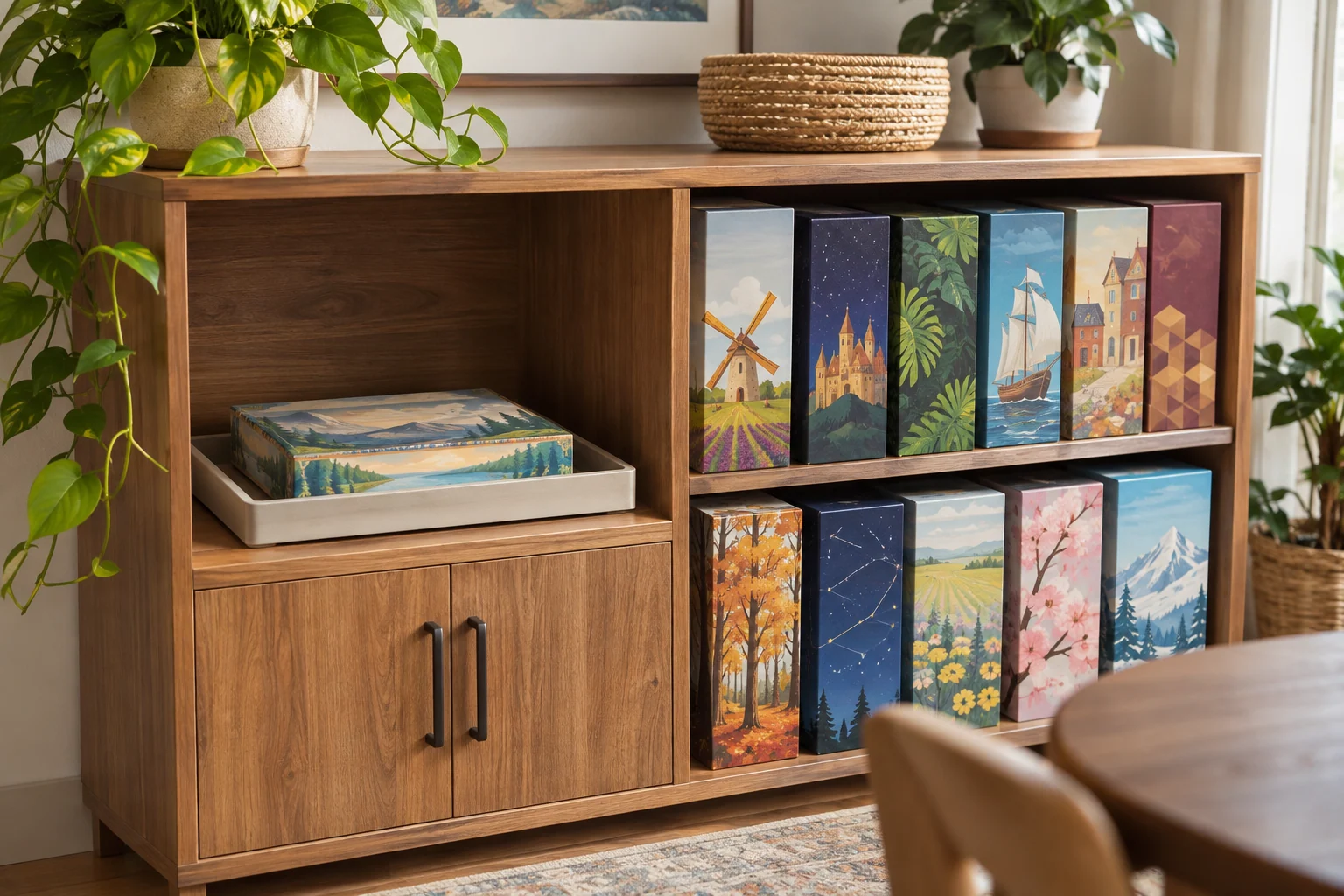
If games circulate among friends, give incoming or ready-to-return boxes a clearly separate temporary position. Keep any borrowing record private rather than displaying names or contact details on the shelf. A small dedicated space prevents someone else's game from disappearing into the collection. Clear it regularly so the temporary area does not become an overflow zone for unrelated items.
25. Review the collection before adding storage
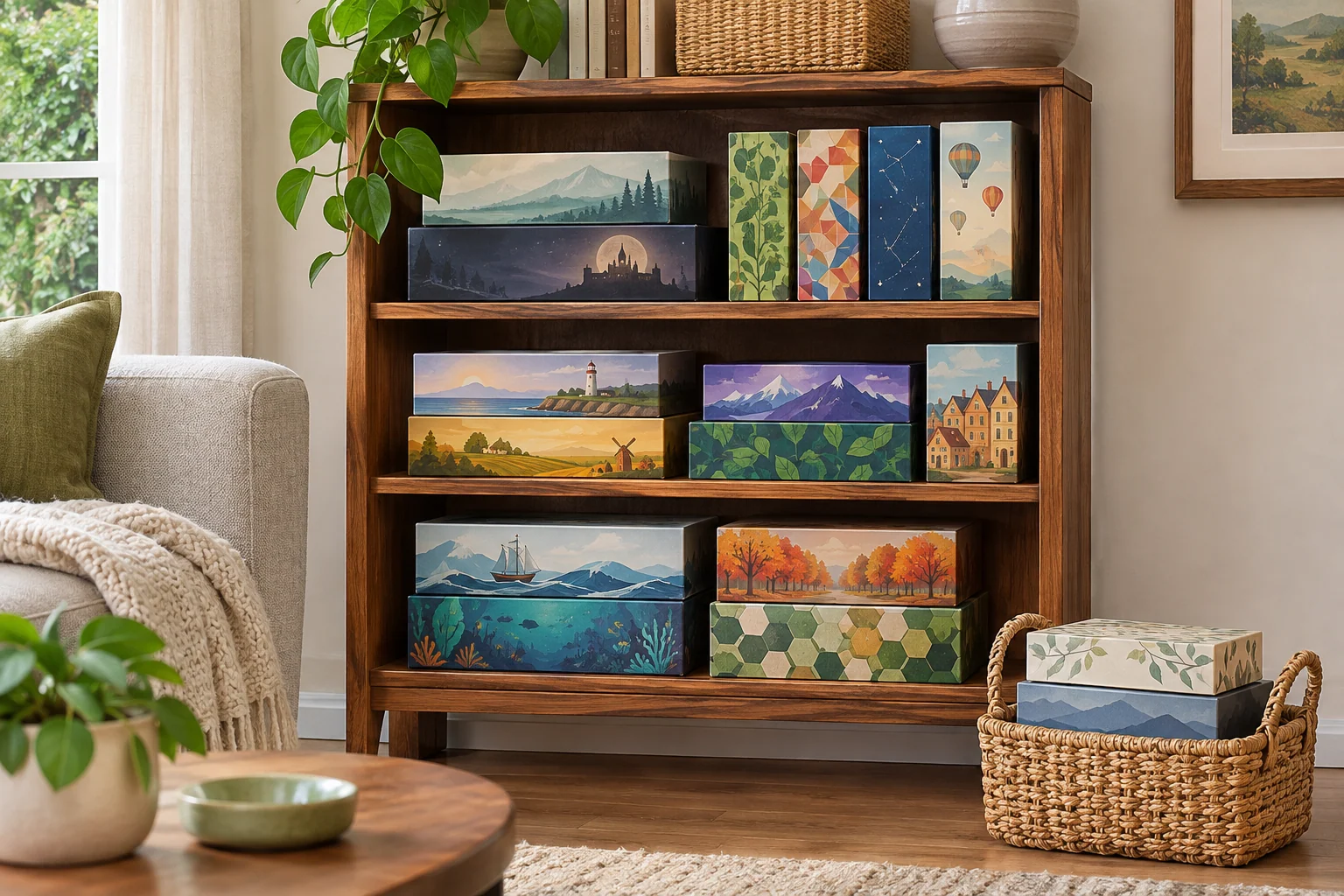
Separate games you actively enjoy from incomplete, unused or unsuitable ones before choosing a larger cabinet. Decide what to keep, repair or pass on according to your household's preferences. Measure the retained collection afterward. This makes the furniture decision more accurate and avoids using extra storage to postpone choices about boxes that no longer belong in the regular rotation.
26. Finish with a repeatable game-night return routine
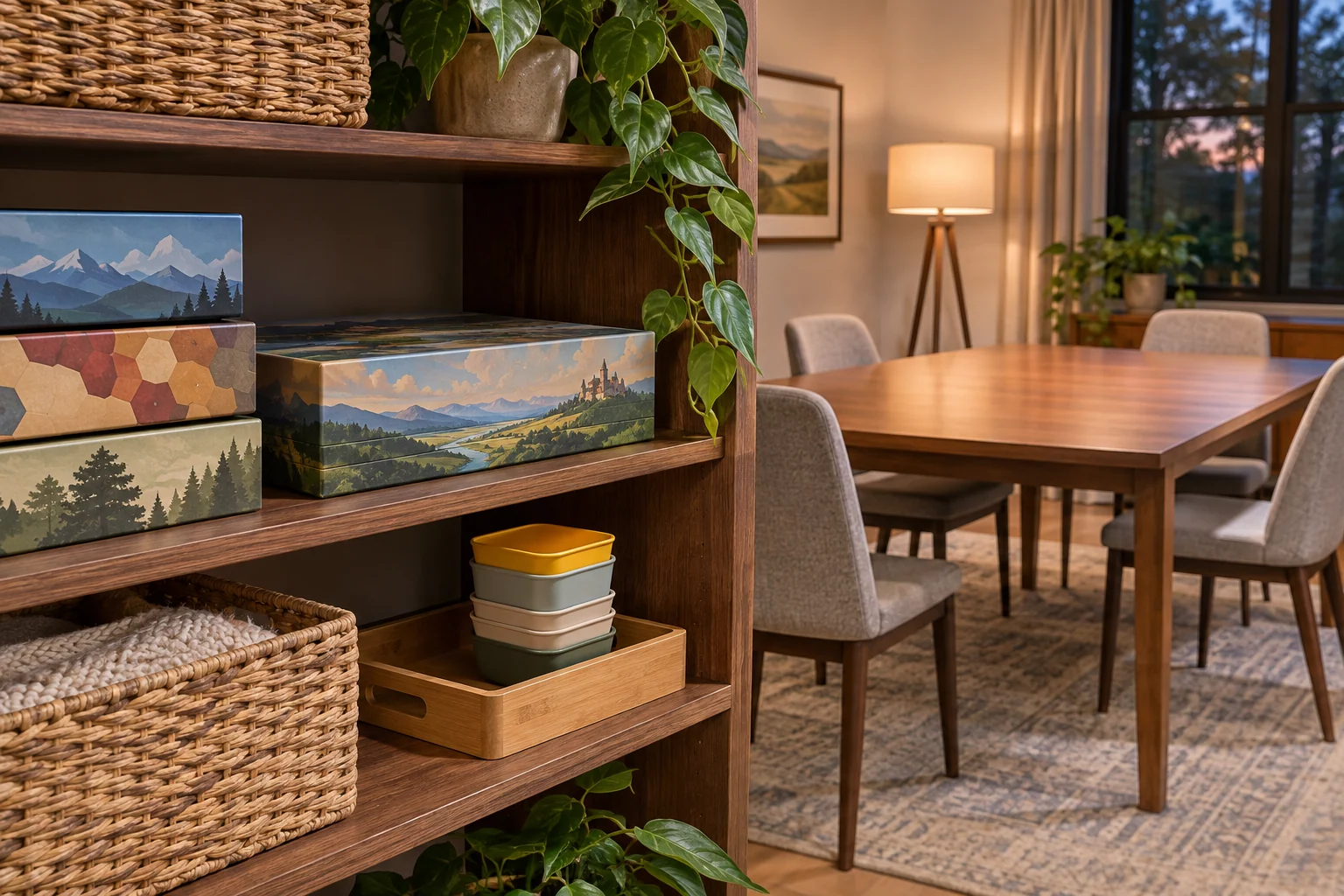
Choose a sequence everyone can follow: collect loose pieces, return each component, close the lid fully, then put the game back in its assigned position. Keep the needed trays nearby but separate from unrelated clutter. Try the sequence with a real game before changing the whole collection. A storage plan is successful when cleanup is straightforward after an ordinary evening, not only immediately after organizing.
A board-game shelf-fit worksheet
For each game, record the closed box dimensions, preferred orientation, approximate weight if the shelf limit requires it and how often it is played. Measure the clear cabinet opening and removal path, then compare them with the actual boxes. In a hypothetical collection with one 18-inch-wide game and several 12-inch boxes, the wider game may need its own broad bay rather than the same small cubbies. Leave finger room instead of matching opening and box dimensions exactly. Photograph the finished shelf privately as a return reference without personal information.
A practical next step
Organize for the entire game-night cycle, from choosing a box to returning the final piece. Match storage to real dimensions and components, keep the favorite games accessible and allow a little empty space. A collection that is easy to use will stay useful longer than an arrangement designed only to fill every shelf.
The images are original AI-generated design concepts. They illustrate arrangements rather than tested products, installations or measured performance.
Sources and care references
Related reading on Nestroxe
- Plan the rest of the family-room storage
- Choose storage near the playing table
- Compare storage ottoman arrangements
Optional digital guide for this topic
If you prefer a structured workbook, explore this related paid guide.