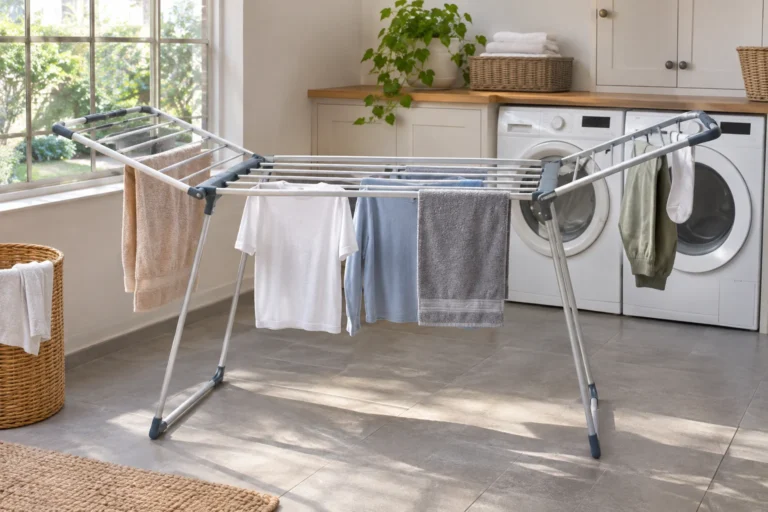
Table linens are easier to enjoy when you can see what fits the table and take out a complete setting without disturbing the rest. A deep drawer full of mixed folds may hide useful napkins, while a carefully styled shelf can still make the right tablecloth difficult to find. Organize around the way you set the table.
Start by separating tablecloths, napkins, runners and placemats. Then group the pieces you use together and choose folds or containers that suit their actual dimensions. These table linen storage ideas include everyday drawers, dining-room cabinets and occasional-use storage, with attention to fabric care rather than treating every textile as washable in the same way.
Contents
- 1. Give everyday napkins a shallow drawer
- 2. Group tablecloths by the table they fit
- 3. Store a complete everyday setting together
- 4. Use vertical folds for suitable sturdy napkins
- 5. Keep embellished pieces in their own section
- 6. Use a broad shelf for large folded tablecloths
- 7. Separate everyday and occasional-use linens
- 8. Keep placemats flat when their design calls for it
- 9. Use upright slots for compatible placemats
- 10. Give long runners a dedicated fold
- 11. Use a small basket only for a manageable group
- 12. Keep neutral and accent napkins easy to compare
- 13. Reserve a ready-to-use stack for the next meal
- 14. Store napkin rings separately from the fabric
- 15. Put table protectors in their own suitable space
- 16. Use a hanging position only for suitable pieces
- 17. Keep care information with the collection
- 18. Choose a cabinet near the table-setting route
- 19. Use dividers that match the current collection
- 20. Keep a separate return area for items needing care
- 21. Make seasonal settings visible without mixing them in
- 22. Leave room above the stack
- 23. Review duplicates around actual guest numbers
- 24. Use a simple private fit reference
- 25. Finish with a repeatable clean-and-return routine
Store clean, dry linens according to their own care labels
Check the care instructions for each fabric and finish before washing, drying or pressing. A cotton tablecloth's directions do not automatically apply to linen, embellished runners or vintage pieces. IKEA's SVARTSENAP page is one example of a product with specific washing, drying and ironing guidance. Make sure items are appropriately dry before storage and address persistent moisture in the storage area. For valuable or fragile textiles, seek relevant specialist preservation advice rather than assuming an ordinary decorative basket is archival storage.
Compare the storage or placement options
- Shallow drawer: Good visibility for everyday napkins and suitable placemats.
- Broad shelf: Useful for larger folded cloths; keep stacks low and fully supported.
- Small suitable basket: Defines a manageable group; check the interior for snagging surfaces.
- Separate occasional section: Keeps everyday access clear; retain fit and care information.
1. Give everyday napkins a shallow drawer
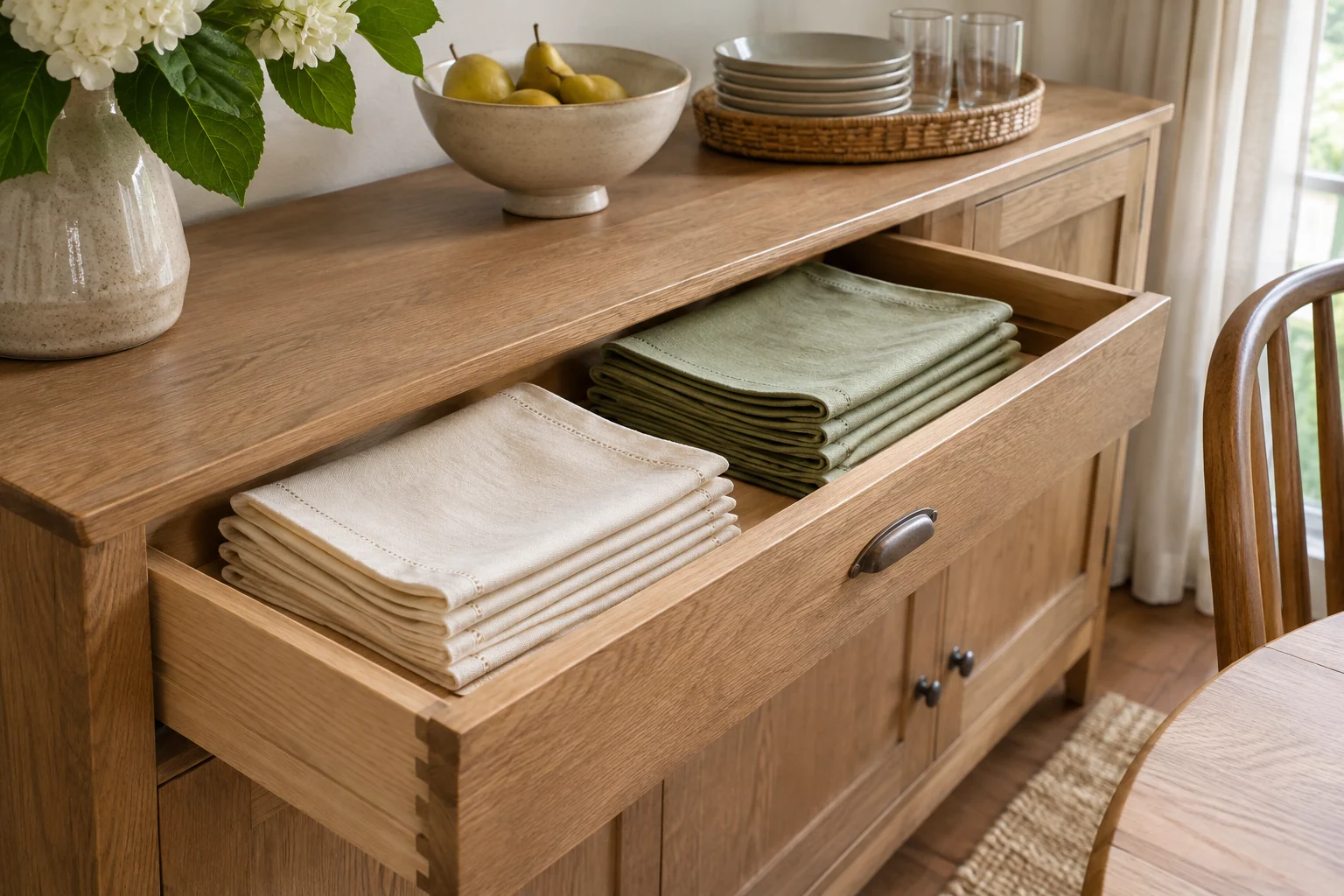
A shallow drawer makes frequently used napkins easy to see without a tall stack. Fold them to suit the drawer's clear dimensions and leave enough room to lift one set. Keep the drawer near the table or the route used to set it. A practical everyday position can encourage using the linens you already own instead of saving them indefinitely behind occasional pieces.
2. Group tablecloths by the table they fit
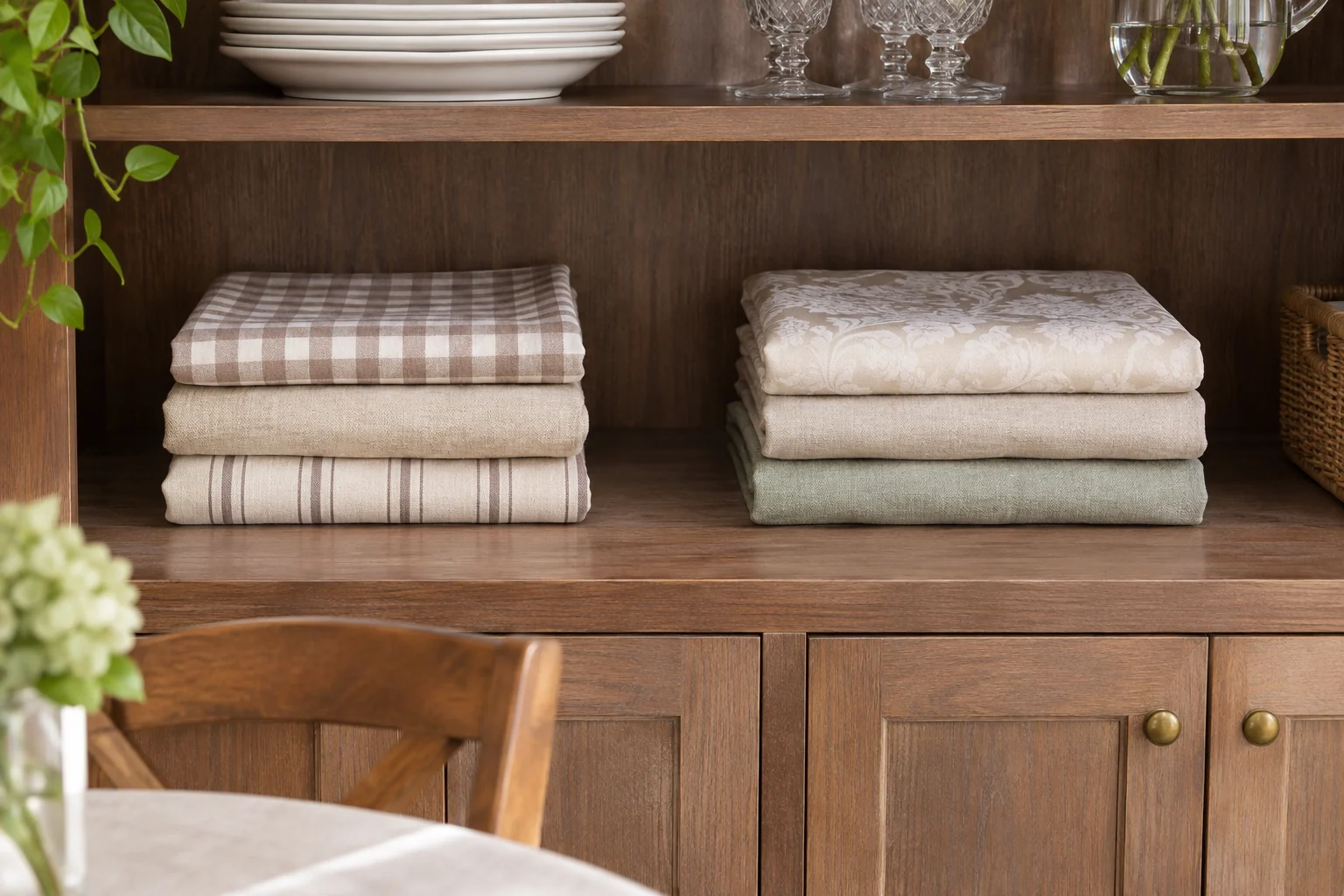
If you have more than one table or use an extension, separate the matching cloths into clear groups. Keep a private measurement note if the difference is not obvious when folded. This avoids unfolding several large pieces before a meal. Choose a consistent fold that fits the actual shelf, while preserving any fabric-specific guidance for delicate trims or finishes.
3. Store a complete everyday setting together
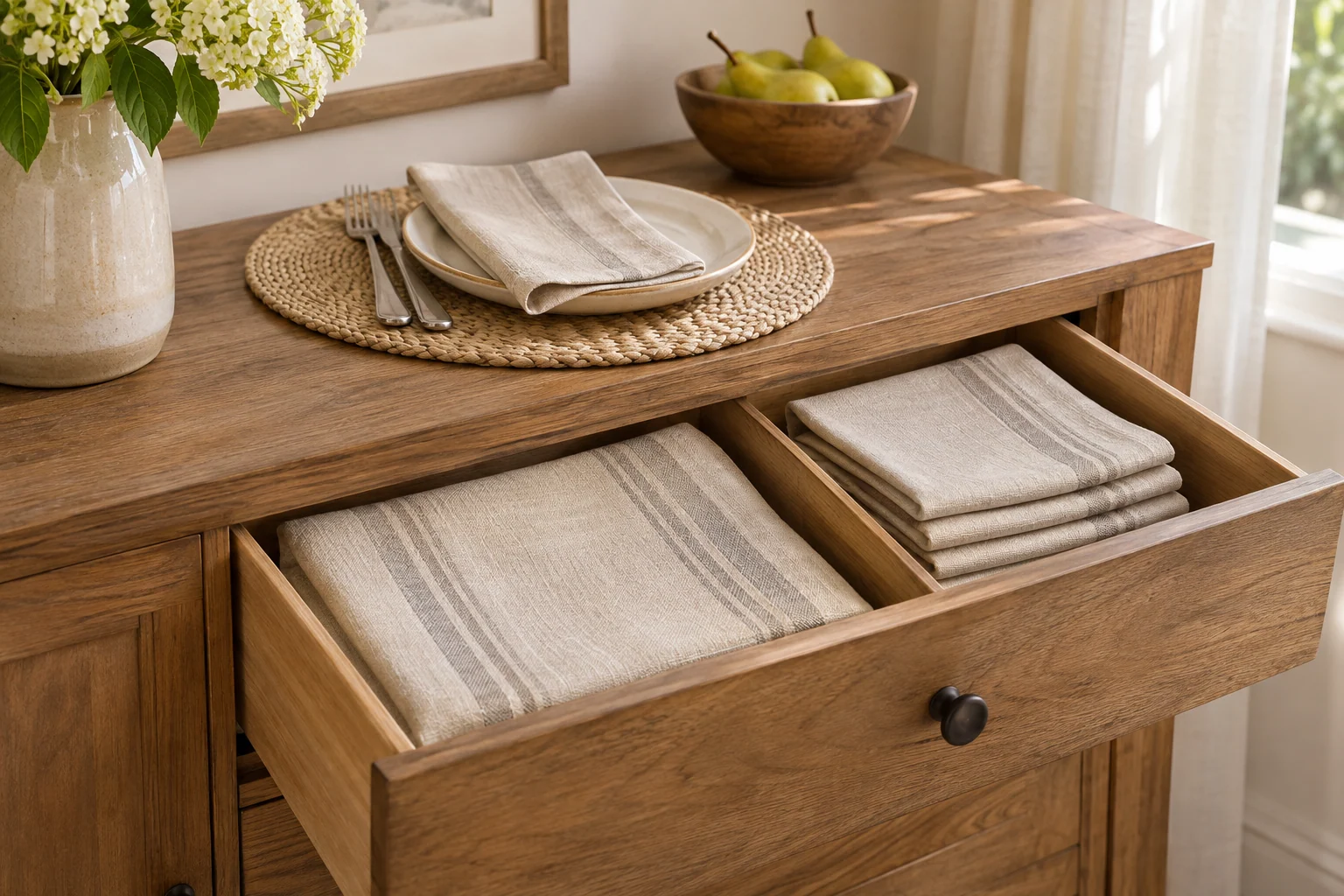
Place the tablecloth or runner and the napkins you regularly use with it in adjacent compartments. They do not need to be tied together or packed into one tight bundle. The aim is to make the combination easy to gather. Keep replacement pieces nearby if useful, and adjust the group when your ordinary table setting changes rather than preserving a decorative arrangement nobody uses.
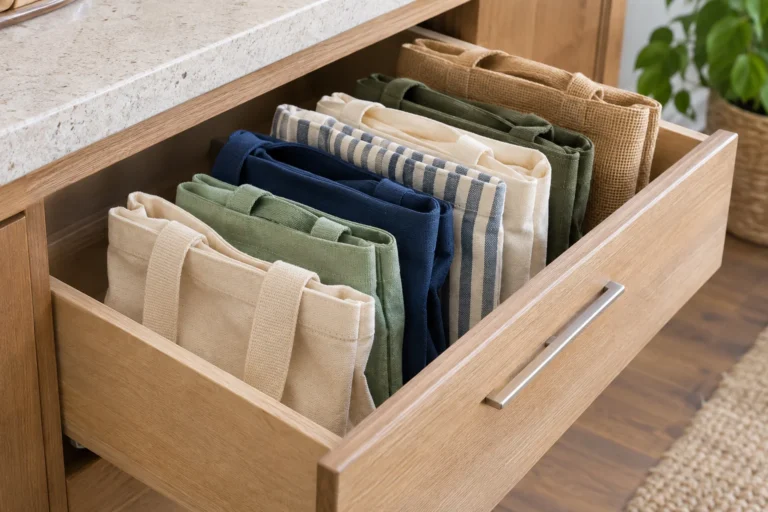
4. Use vertical folds for suitable sturdy napkins
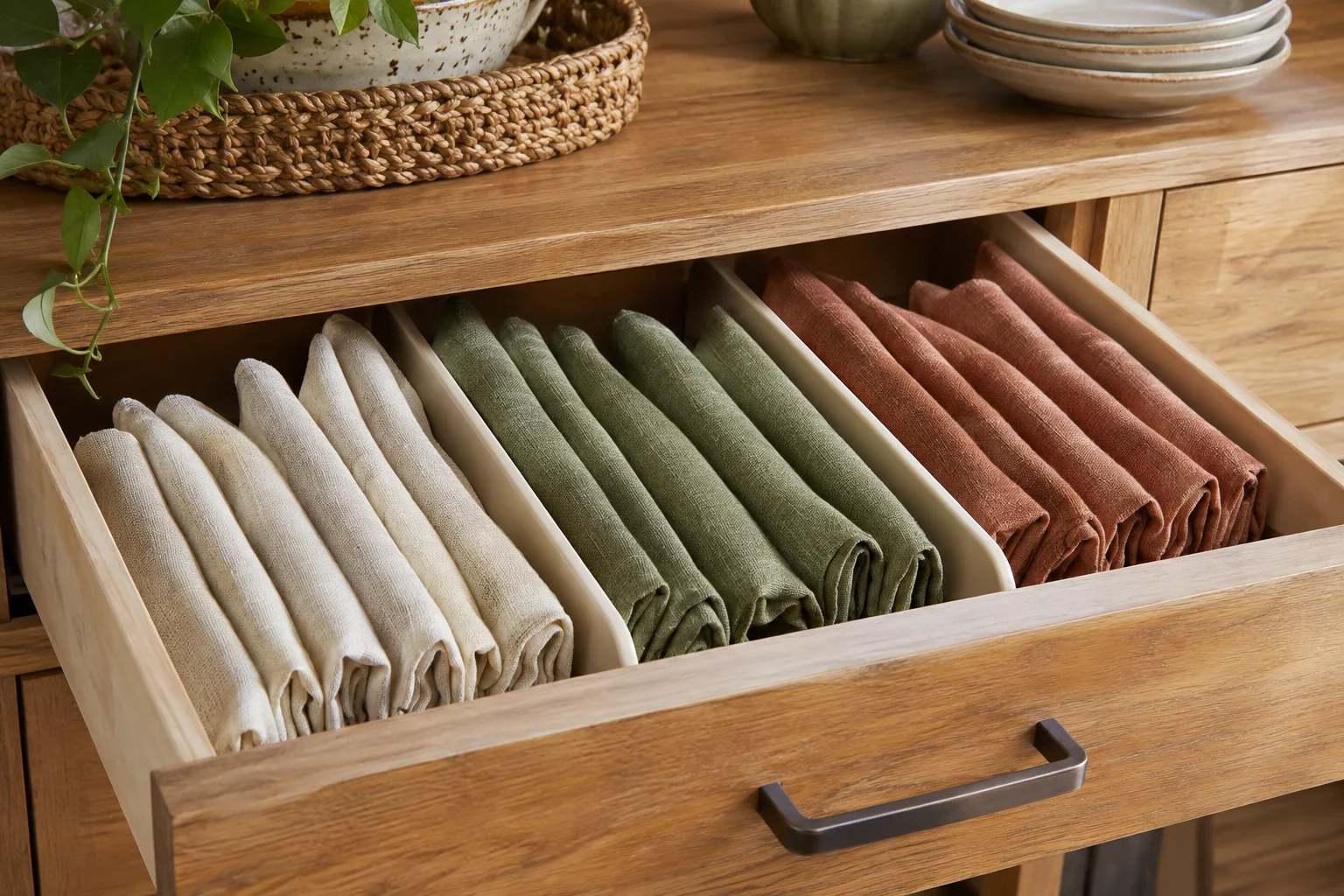
Some everyday napkins can stand in a shallow row so colors remain visible from above. Test the fold with the actual fabric and drawer height instead of forcing stiff folds into delicate material. Leave the row loose enough to remove one without pulling out its neighbors. A small divider can define the section if it is compatible with the drawer and does not snag the cloth.
5. Keep embellished pieces in their own section

Beading, embroidery, fringe and raised decoration may catch on neighboring linens or make tight stacking awkward. Follow the item's care guidance and choose a separate suitable position with enough support. Avoid treating all embellished pieces the same. If a valuable textile needs special storage, get appropriate advice before adding tissue, plastic or other materials based solely on their appearance.
6. Use a broad shelf for large folded tablecloths
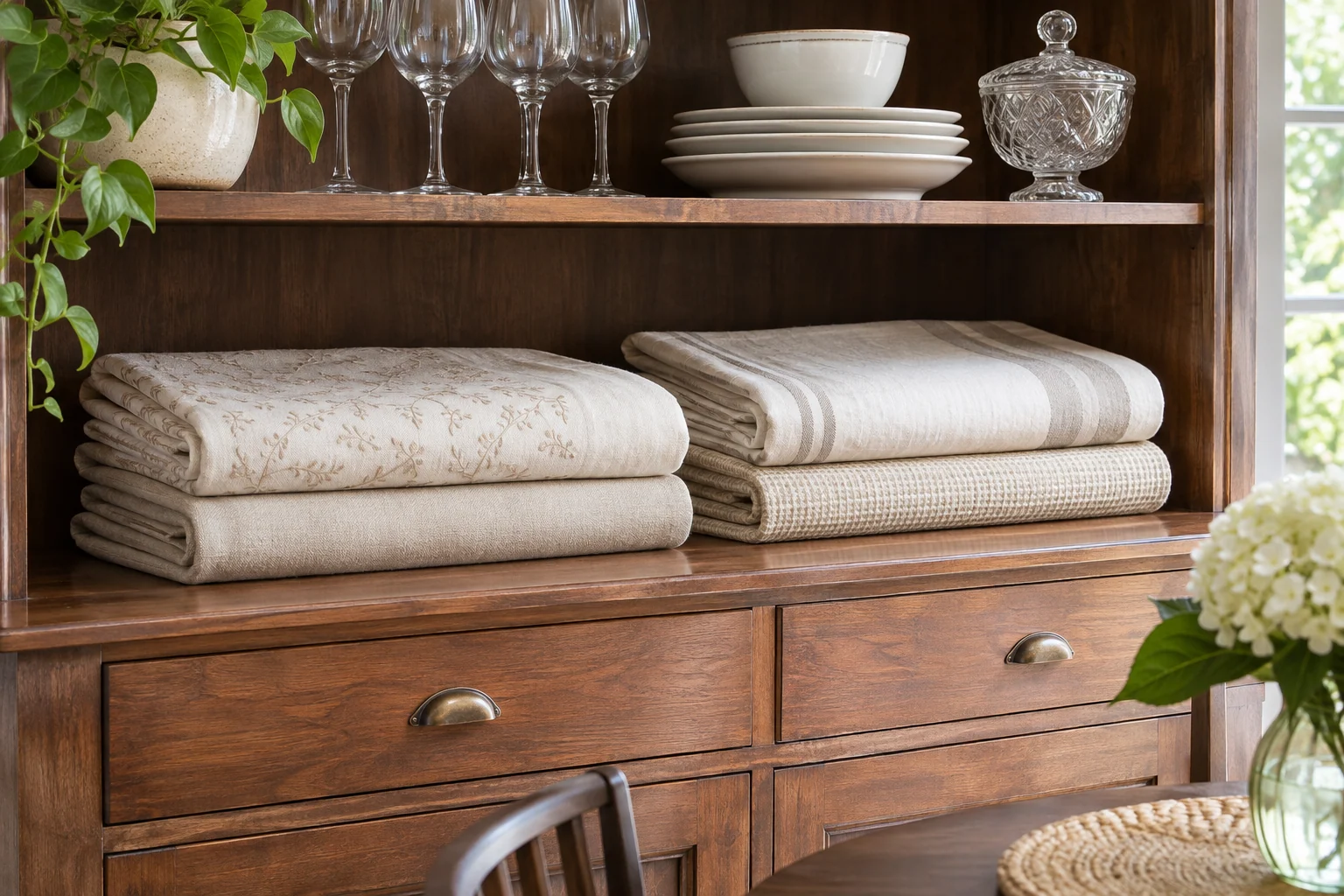
A wide, accessible shelf can be easier than a narrow drawer for a bulky tablecloth. Fold it to sit fully supported without overhanging the edge. Keep the stack modest so the bottom piece can be removed without lifting a heavy pile. Put the most frequently used cloth at the top or in its own position rather than automatically arranging everything by color.
7. Separate everyday and occasional-use linens
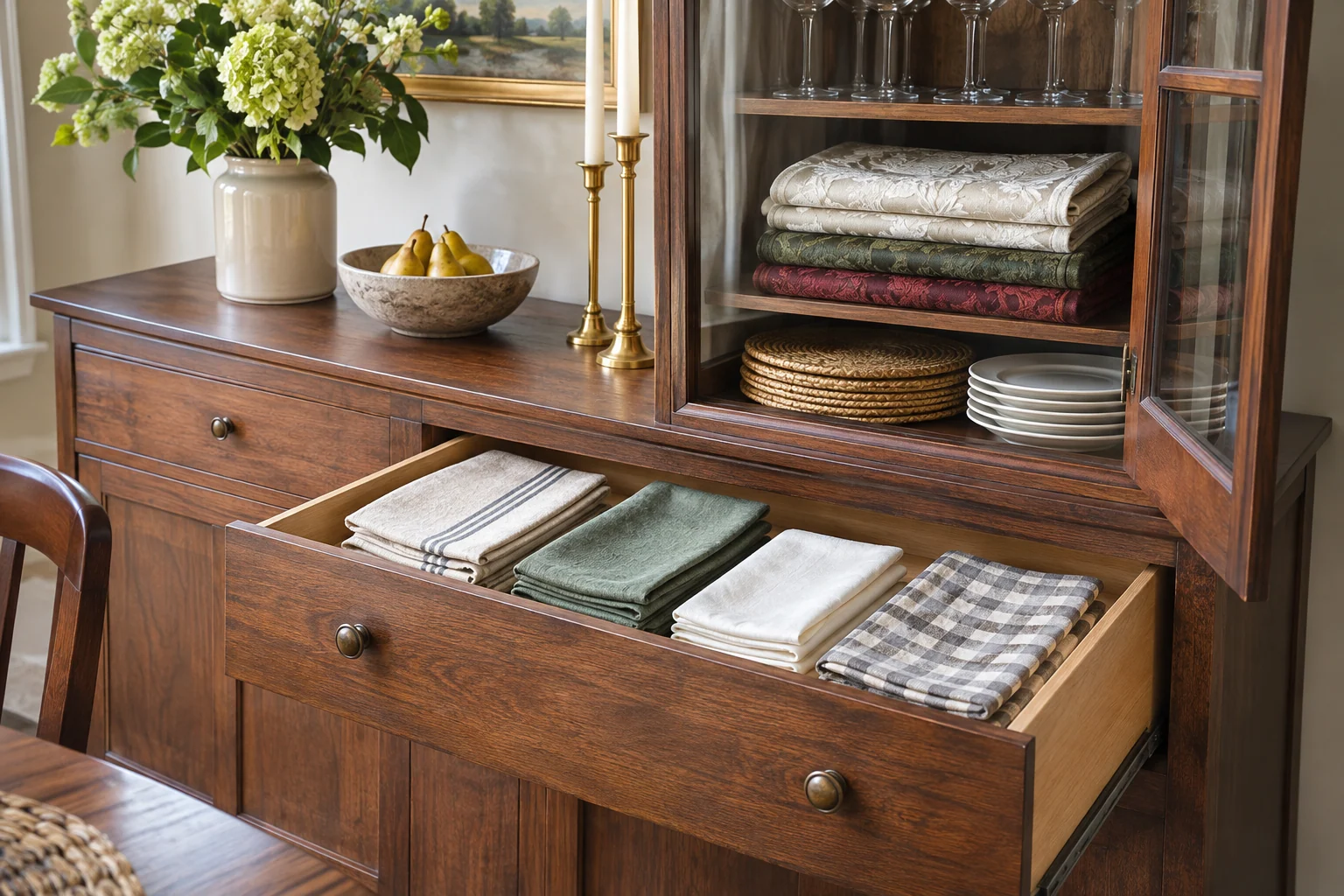
Keep the items used weekly in the easiest position and move occasional settings to a clearly defined secondary space. Make the distinction about use rather than value: a favorite special tablecloth should still be findable. Review the occasional group before gatherings so you know what is clean and ready. Avoid letting seasonal pieces fill the drawer needed for normal meals.
8. Keep placemats flat when their design calls for it
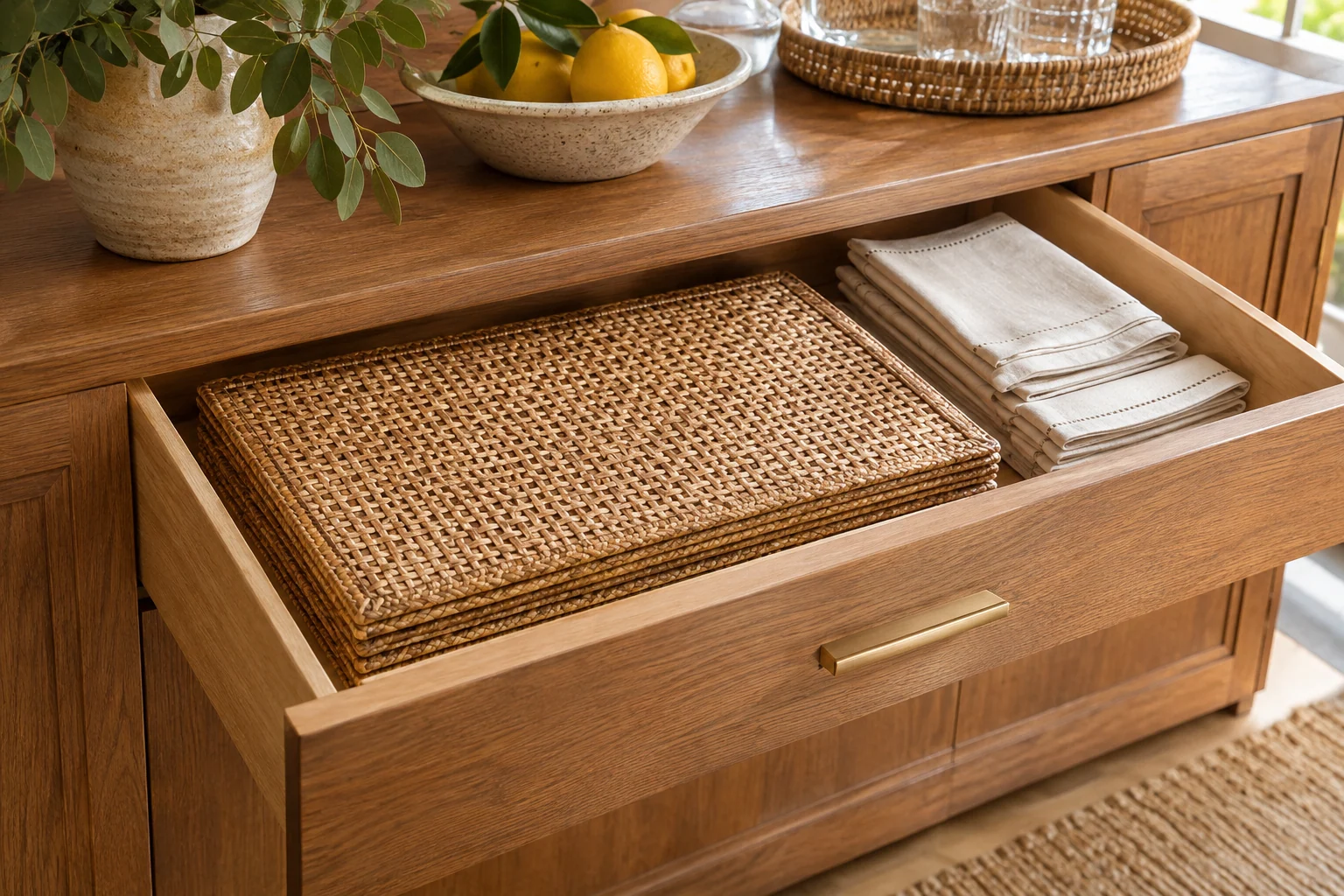
Rigid, structured or layered placemats may need a flat position to avoid distortion. Check the product guidance and measure the full shape, including trim. A broad drawer or shallow shelf can keep them supported. Do not force a large placemat into a smaller basket simply to match the napkin storage; different shapes can use different compartments while remaining part of one coherent system.
9. Use upright slots for compatible placemats
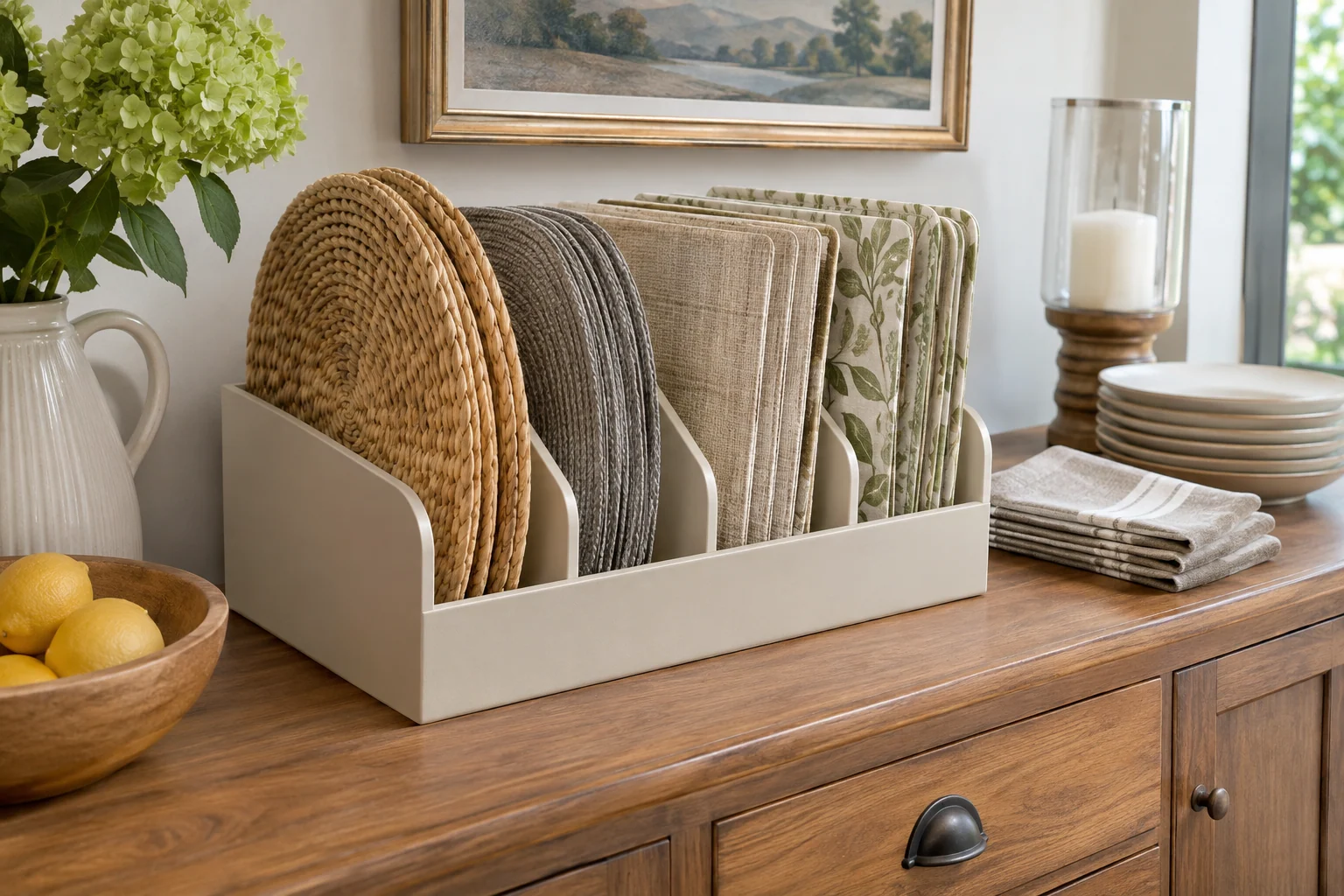
Some sufficiently supported placemats can fit a suitable upright divider, making individual designs easier to browse. Confirm that the material and maker's guidance allow the position. Keep the dividers smooth and the row loose enough to avoid bending edges. If a mat slumps or curves in storage, return it to an appropriate flat position rather than adding pressure to hold it upright.
10. Give long runners a dedicated fold
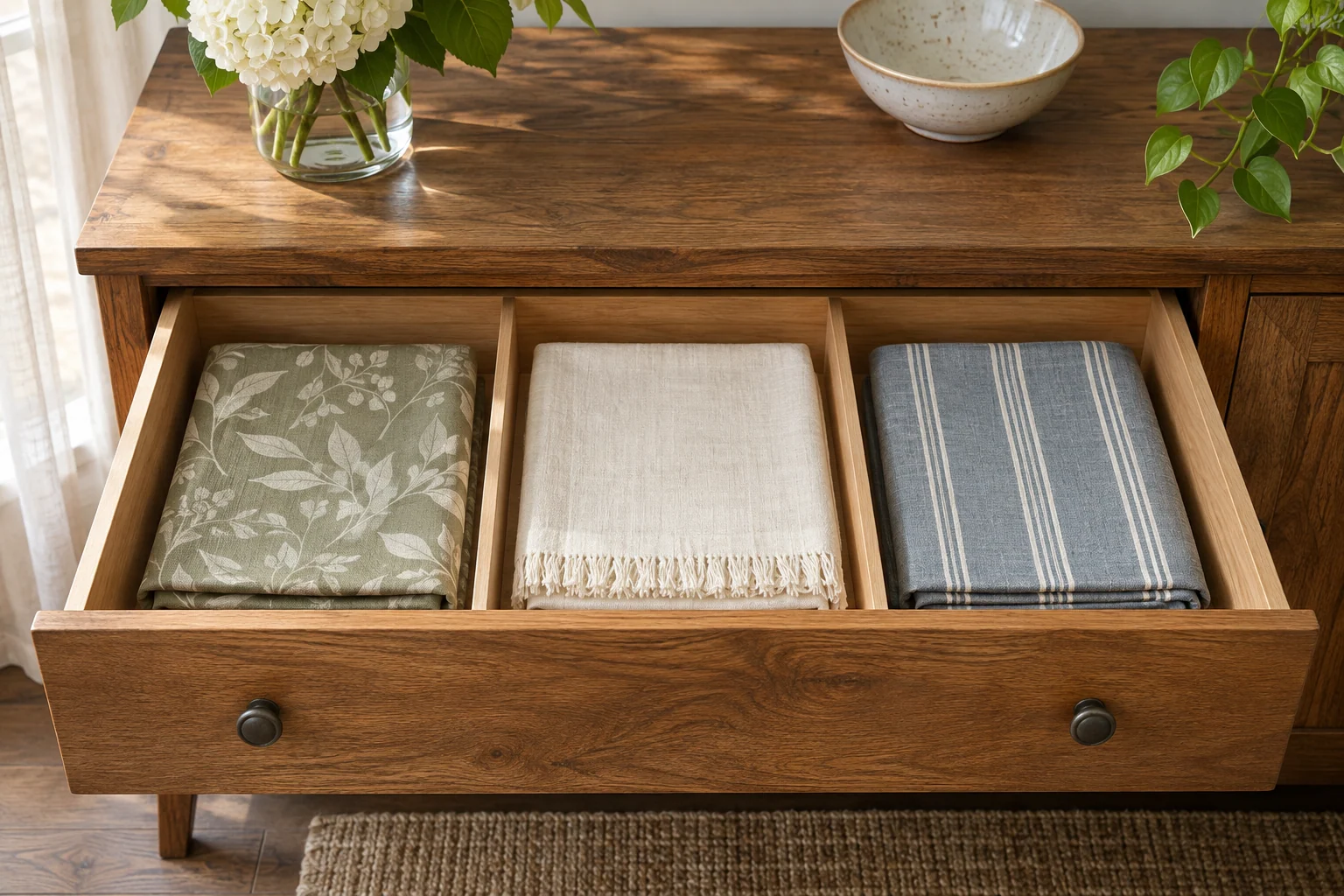
A consistent fold helps runners occupy a predictable space. Check the total length and width so the folded piece fits without being jammed into the back of a drawer. Keep tassels or trim from tangling with neighboring items. If the material needs a different storage method, follow that guidance instead of imposing the same compact fold used for ordinary cotton napkins.
11. Use a small basket only for a manageable group
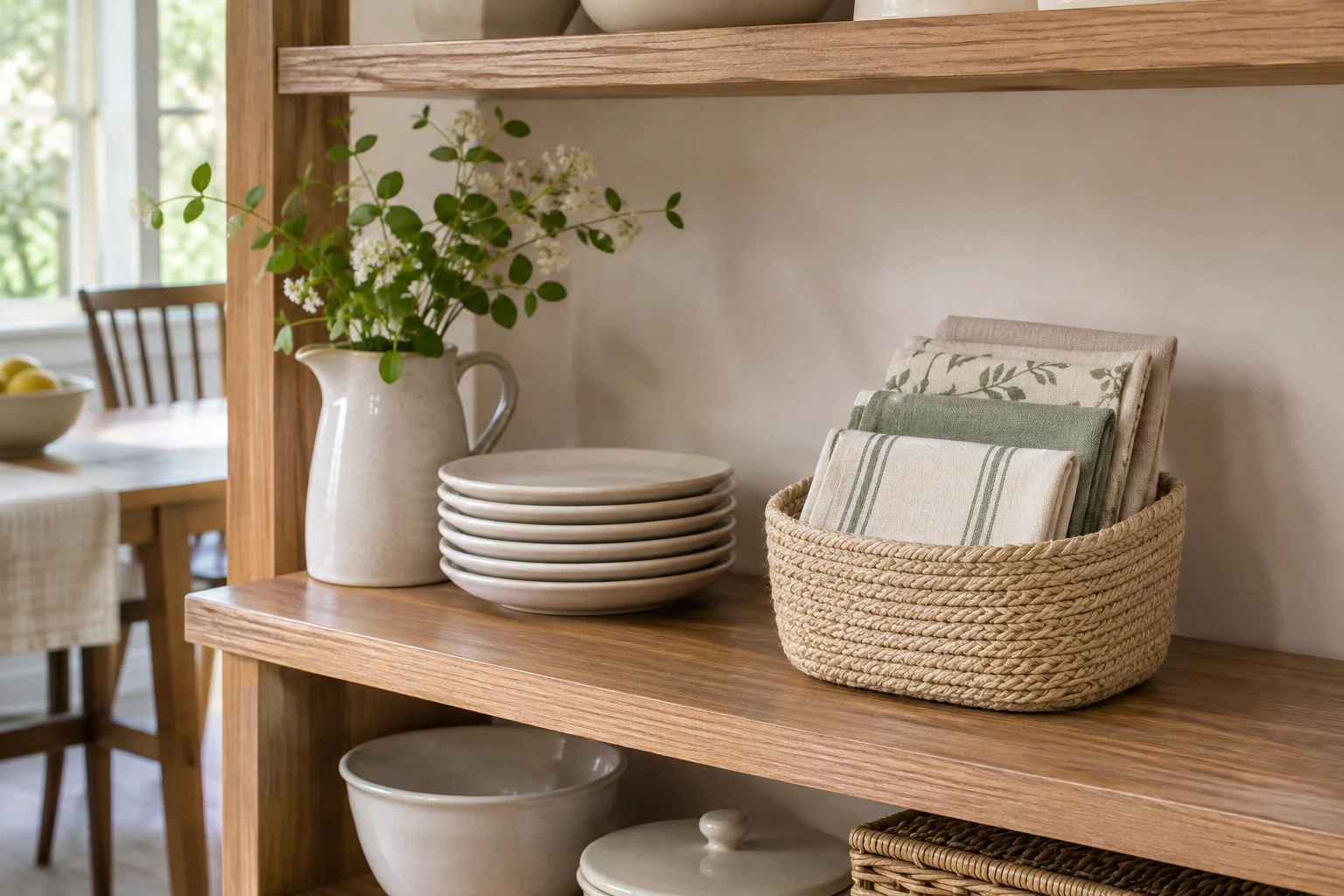
A basket can hold everyday napkins on an accessible shelf when its interior is smooth and suitable for the fabric. Check for rough fibers or edges that might snag. Keep the group small enough to lift and return easily. A basket should create a clear boundary, not conceal several unrelated table settings beneath an attractive top layer.
12. Keep neutral and accent napkins easy to compare
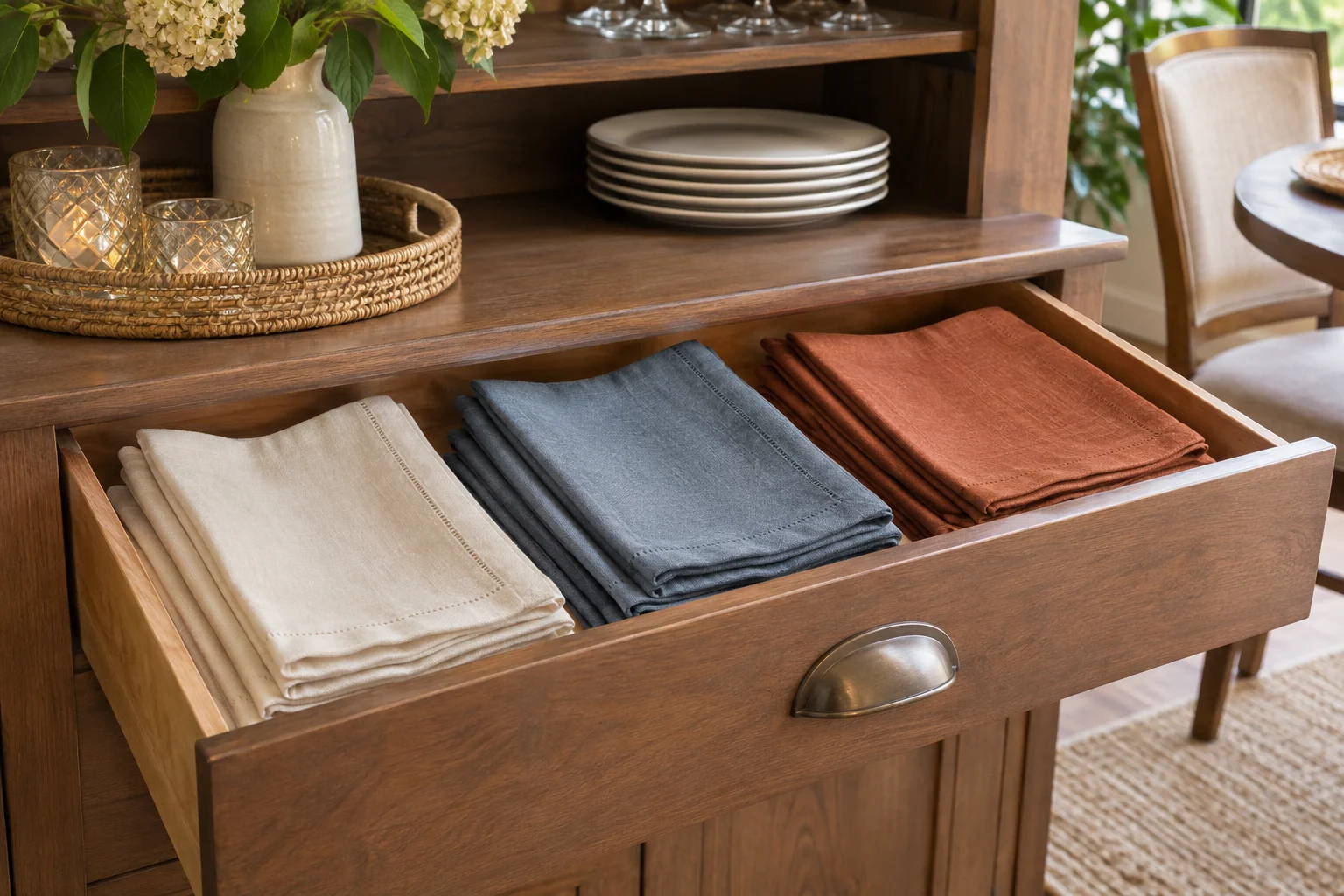
Put basic napkins beside the colors you use to change the table's mood. A visible pair of groups makes combinations easier to choose without unpacking the whole collection. Avoid buying containers for every individual shade unless that fits the collection. Consistent folds and a little separation can provide enough order while leaving the drawer adaptable to new combinations.
13. Reserve a ready-to-use stack for the next meal
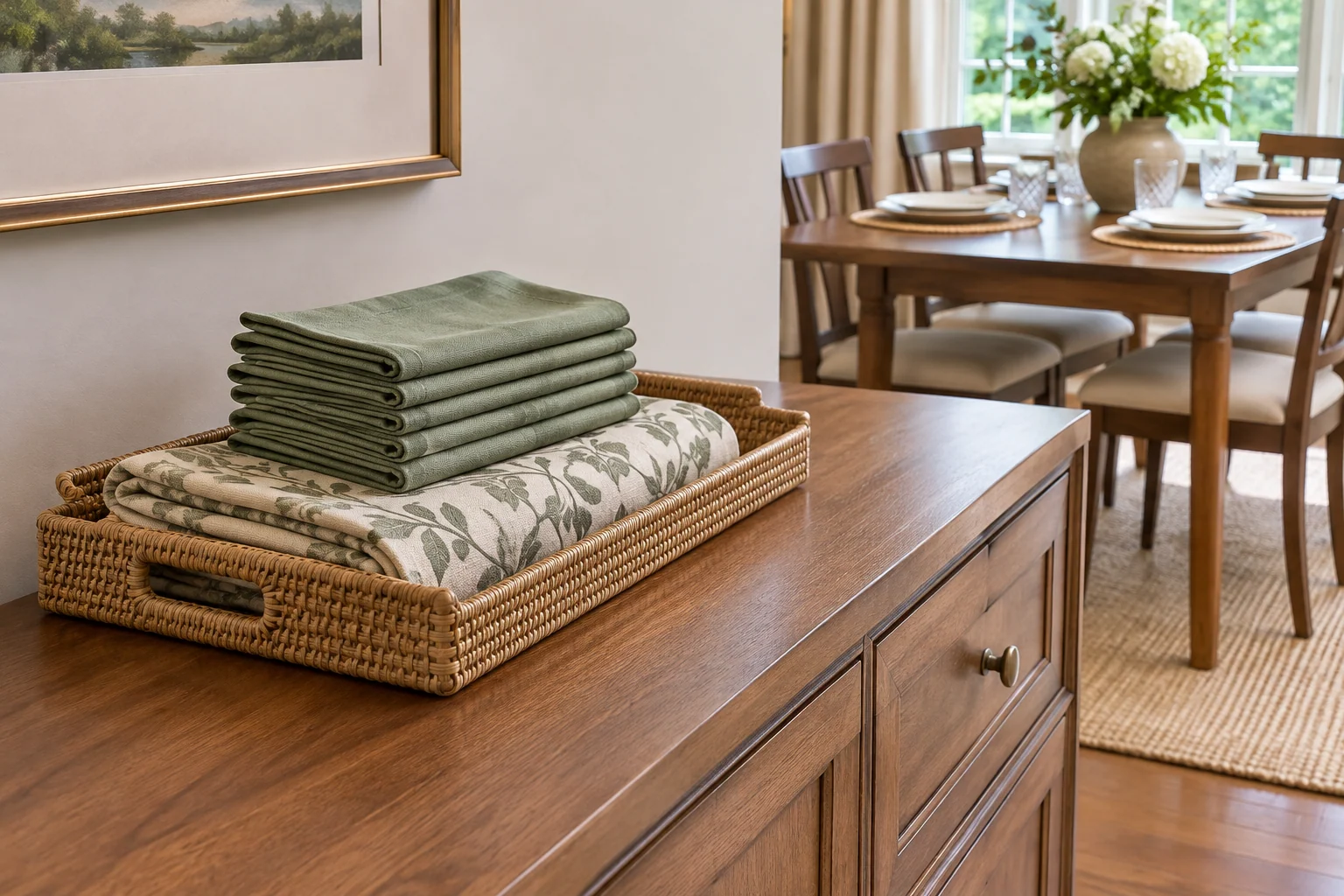
A small current-use section can hold the napkins or runner planned for the next gathering. Keep it distinct from clean overflow so the main drawer remains orderly. Return unused pieces after the meal rather than leaving them permanently on the sideboard. This simple preparation step can make setting the table feel less like searching and more like arranging.
14. Store napkin rings separately from the fabric
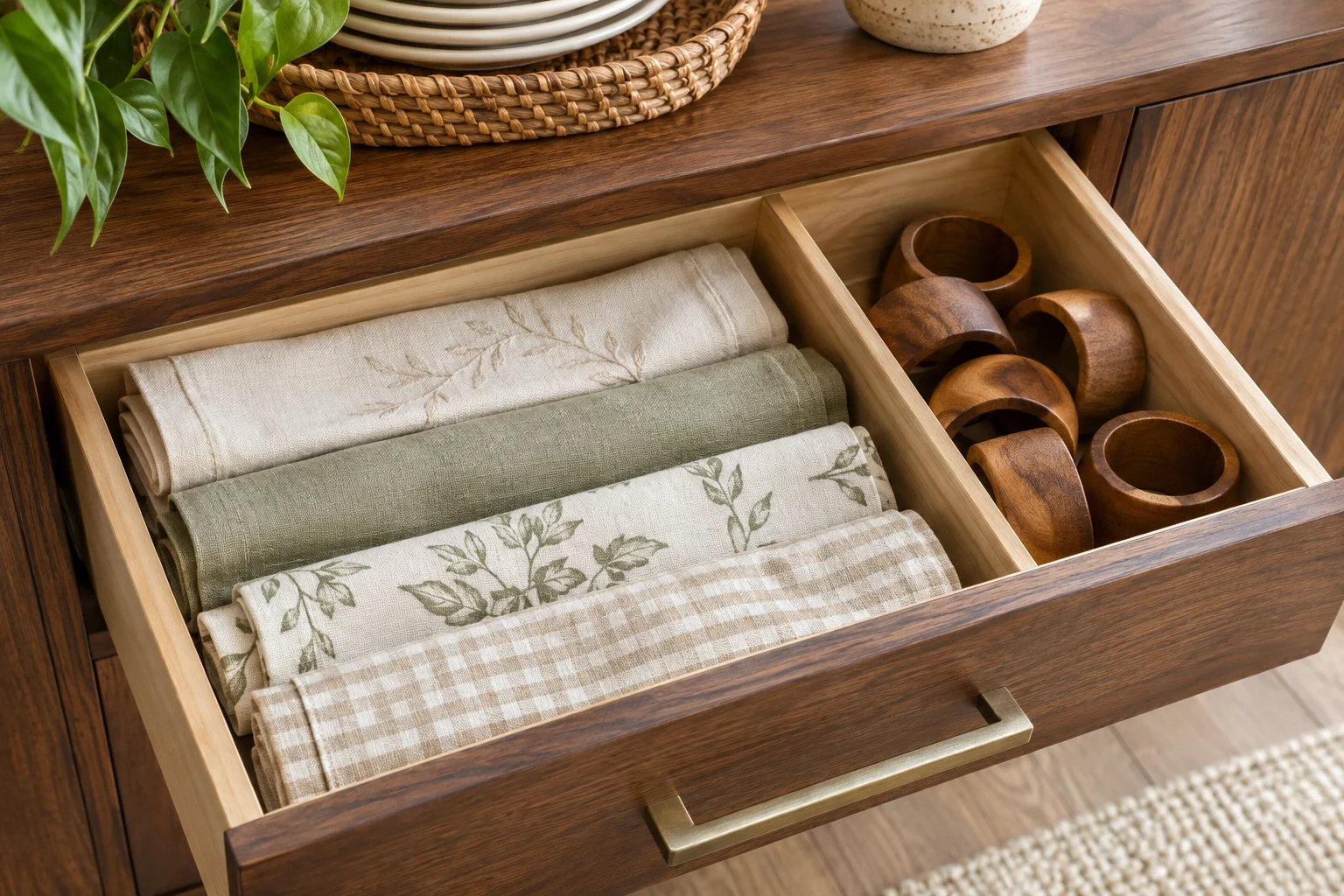
Rings and clips can snag or mark textiles if they are mixed into a folded stack. Give them a separate smooth compartment appropriate for their material. Keep the number easy to count and avoid piling metal pieces against delicate fabric. Gathering accessories from the next section is still convenient while making the linen storage simpler to clean and rearrange.
15. Put table protectors in their own suitable space
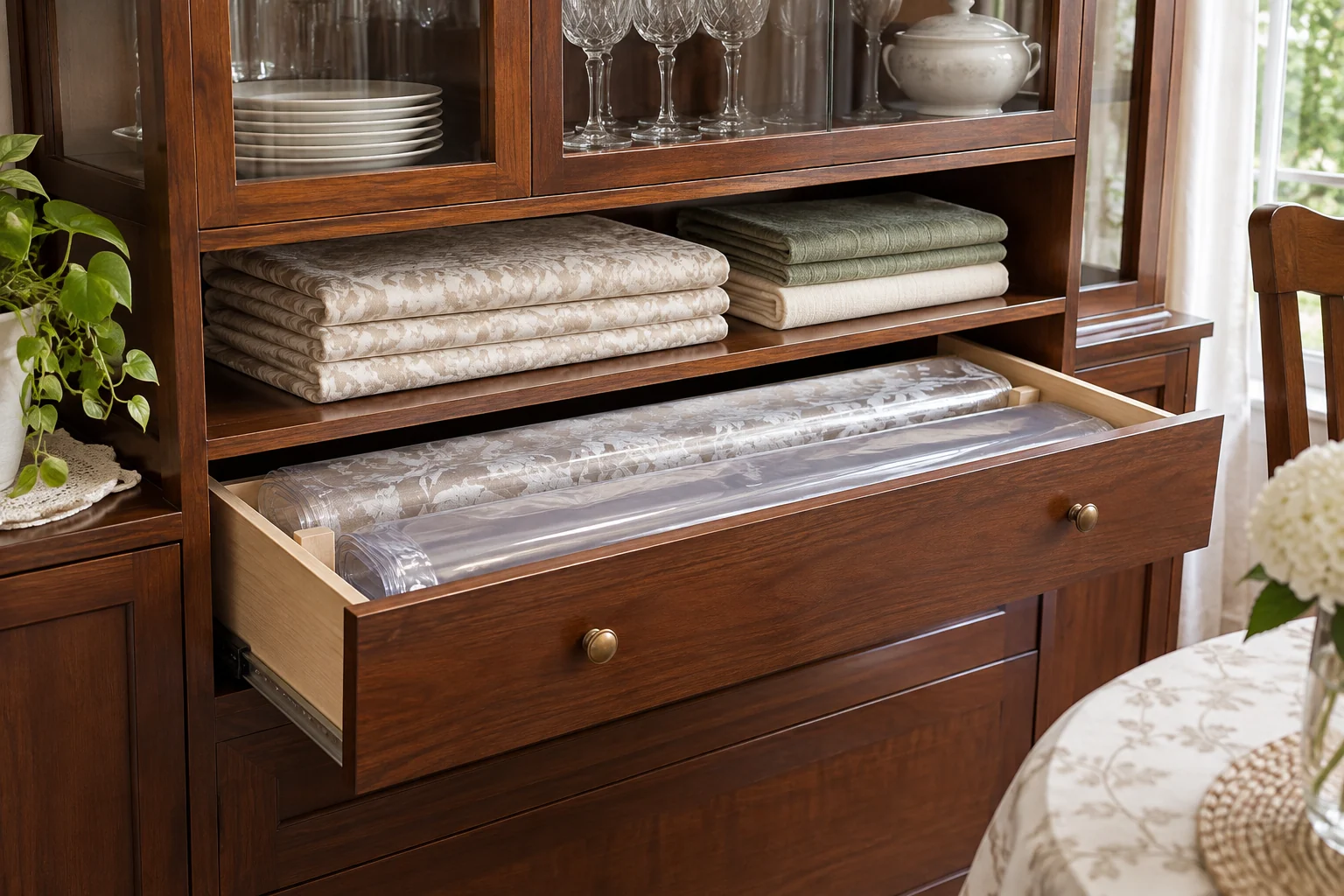
A table protector may have storage instructions that differ from those of the decorative cloth above it. Check whether it should be rolled, folded or stored flat, then provide the required space. Keep it easy to find with the table linens without forcing it into their arrangement. A dedicated position helps protect its shape and makes preparing the table more predictable.
16. Use a hanging position only for suitable pieces
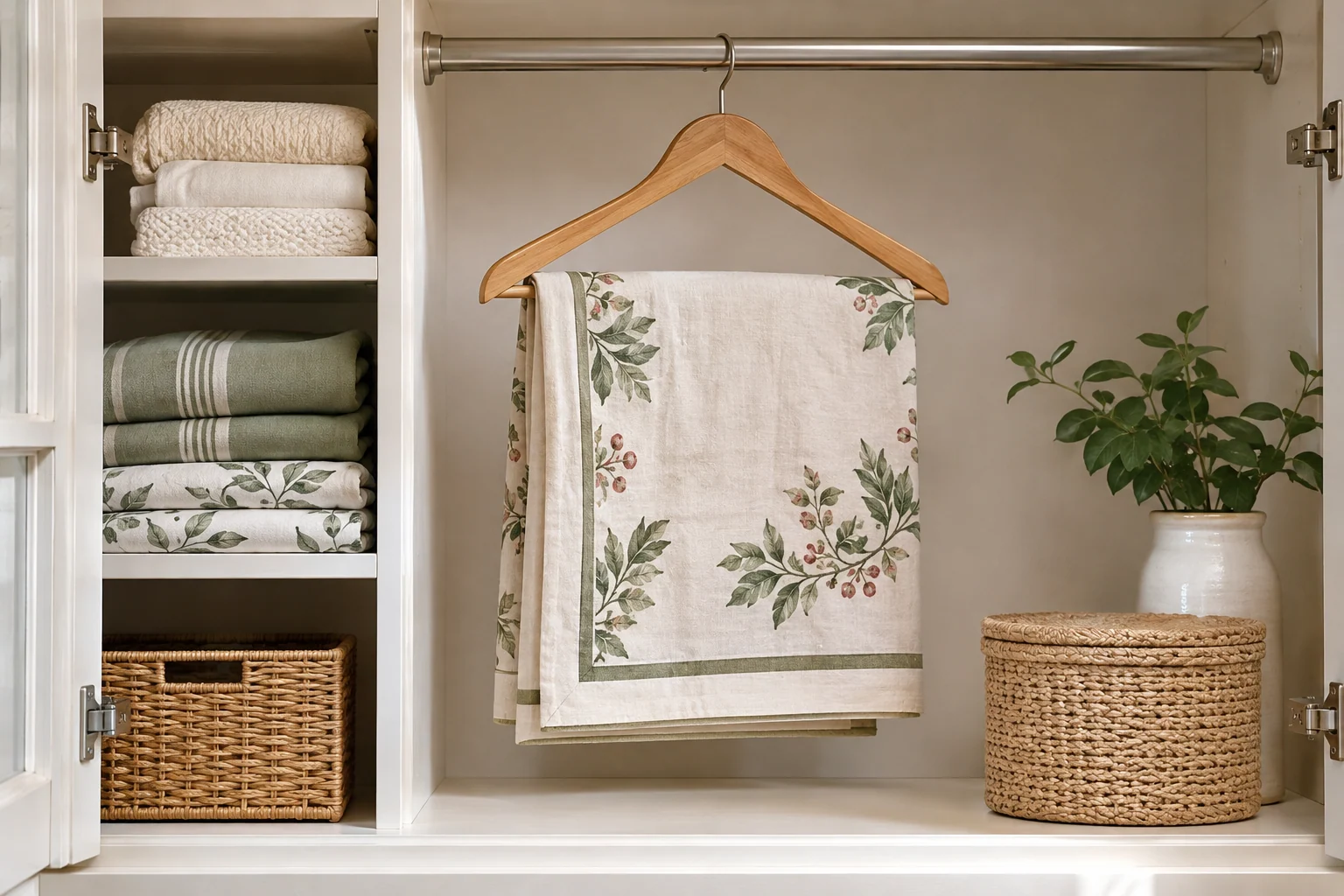
A suitable hanger or rail may work for some tablecloths if the material, weight and storage conditions allow it. Check relevant care guidance and use adequate support instead of a narrow improvised edge. Leave space around the cloth and keep it separate from rough hardware. Valuable or fragile textiles need more specific advice than a general decorative hanging idea can provide.
17. Keep care information with the collection
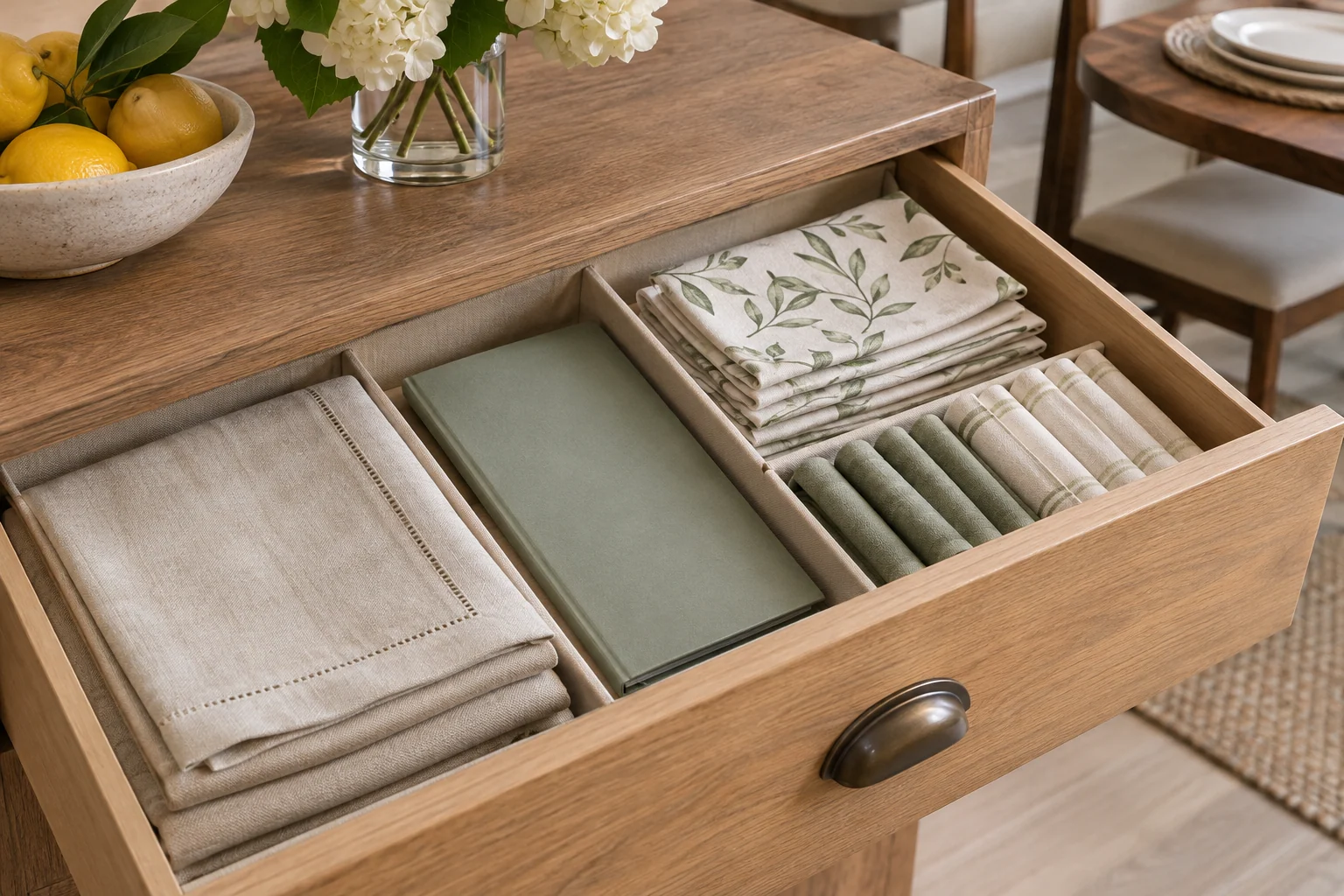
Preserve useful product care directions or record them privately by item. This is especially helpful when several neutral cloths look similar but have different finishes or washing needs. Do not invent one temperature for the whole drawer. Keeping the information accessible can prevent an attractive organization system from encouraging a careless mixed wash after a large meal.
18. Choose a cabinet near the table-setting route
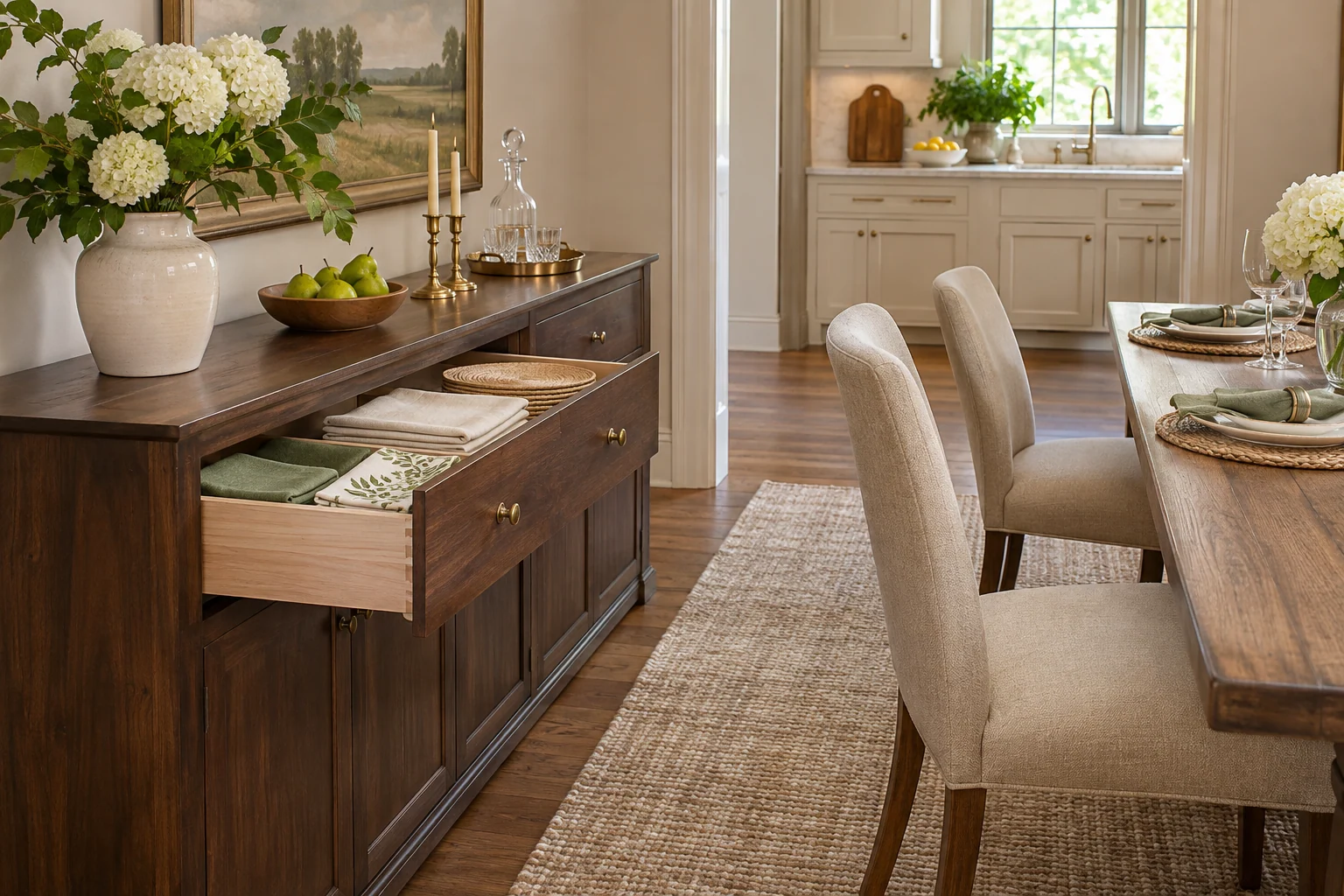
Storage between the kitchen and dining table can reduce back-and-forth movement when setting a meal. Check door and drawer clearance against chairs and circulation. If a nearby cabinet already exists, reorganizing one section may be more useful than adding furniture. Keep the linens separate from products or objects that could soil or snag them while sharing the same cabinet.
19. Use dividers that match the current collection
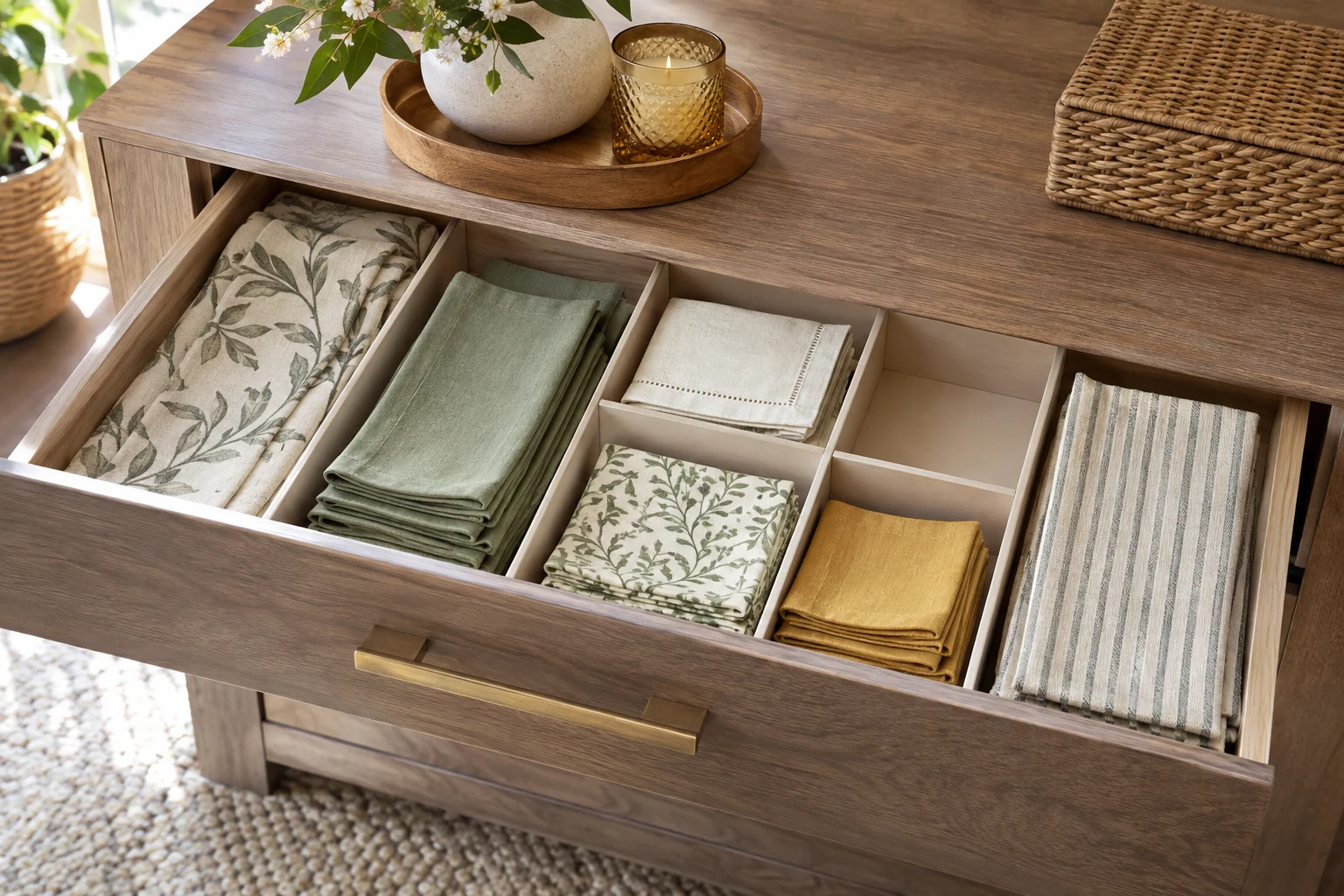
Adjustable dividers can stop small groups from spreading across a broad drawer. Set them around the actual folded pieces, not an idealized grid of equal squares. Check edges and pressure so the fabric is not caught or compressed. Leave one flexible area if the drawer serves different gatherings; a little adaptability can keep the storage useful as napkin counts or table sizes change.
20. Keep a separate return area for items needing care
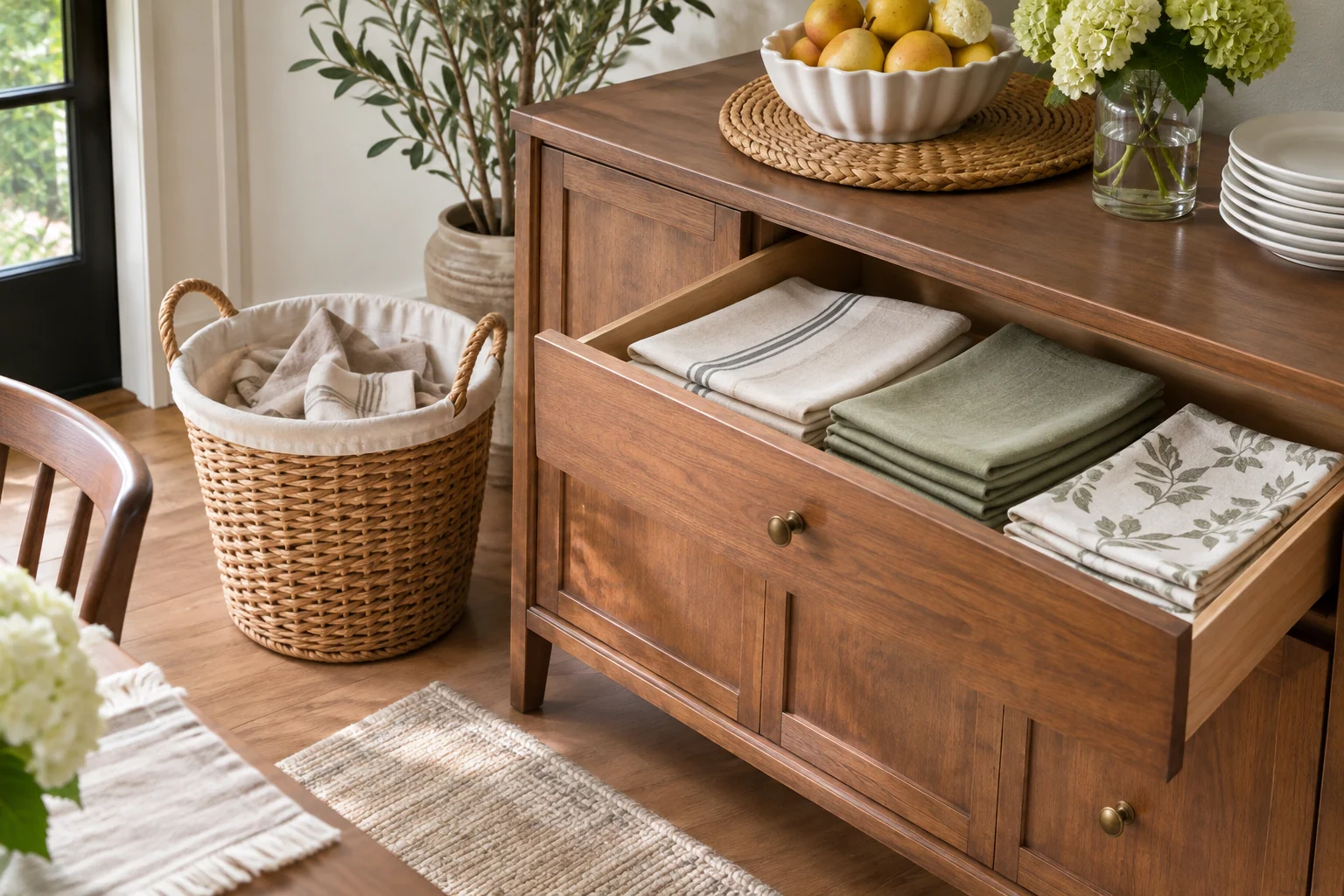
Used or stained linens should not disappear back into clean storage. Give them an appropriate temporary place and follow their care instructions promptly. Avoid storing damp pieces in a closed decorative basket. Keep the clean drawer clearly separate so preparing the next table does not reveal unfinished laundry. The return routine is as important as the arrangement of fresh folded pieces.
21. Make seasonal settings visible without mixing them in
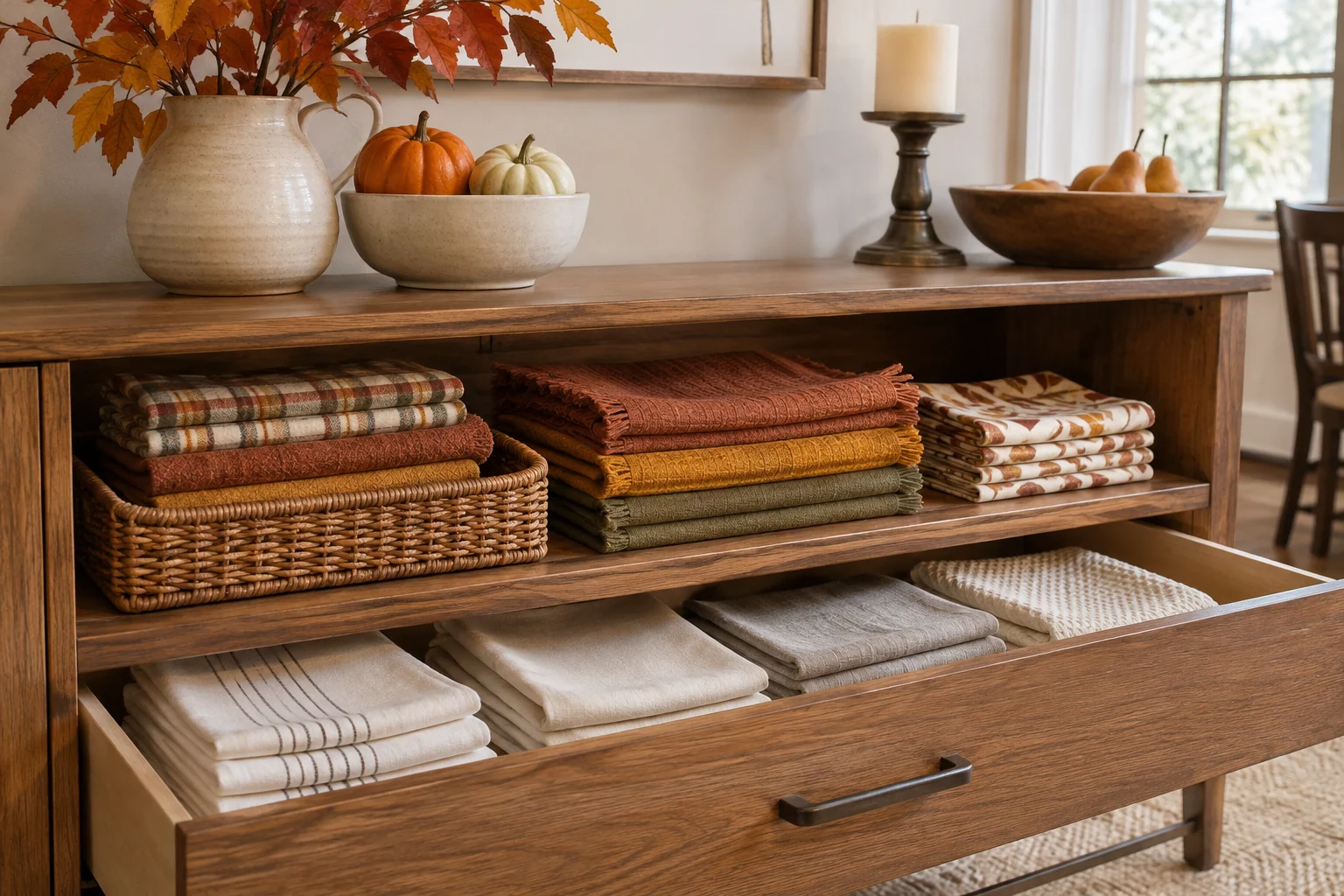
A separate shelf or suitable container can group the linens used for a particular season. Keep the complete setting easy to identify and preserve any fabric-specific storage requirements. Review the group before the season begins rather than stacking new purchases on top of old ones. A contained seasonal collection leaves everyday storage easier to use throughout the rest of the year.
22. Leave room above the stack
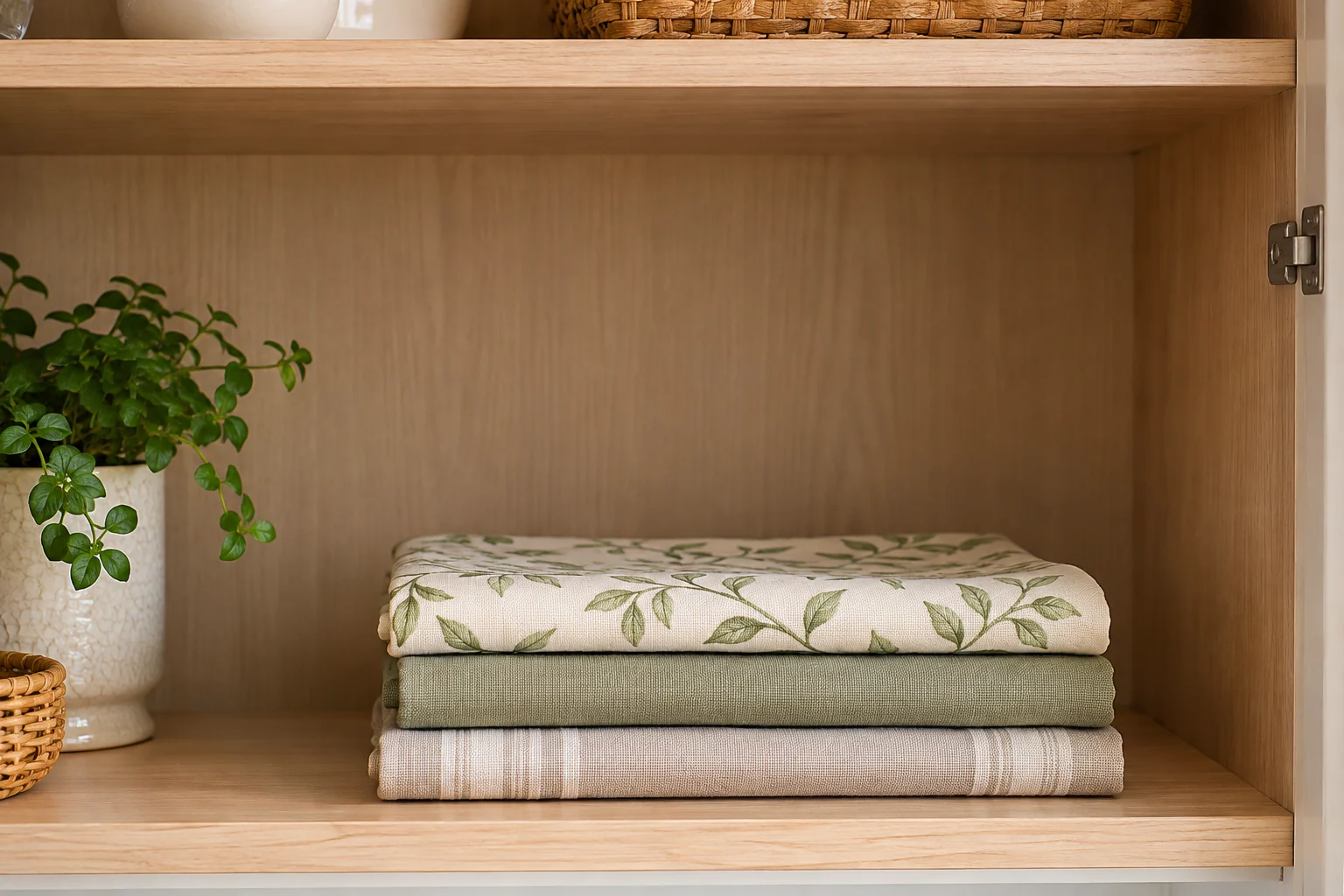
A stack that touches the shelf above can be difficult to remove and may catch trim or corners. Lower the pile or use another section rather than packing more tightly. Test retrieval with the largest cloth, not only a small napkin. Comfortable hand room makes the storage easier to maintain when pieces return from ordinary laundry with slightly different folds.
23. Review duplicates around actual guest numbers
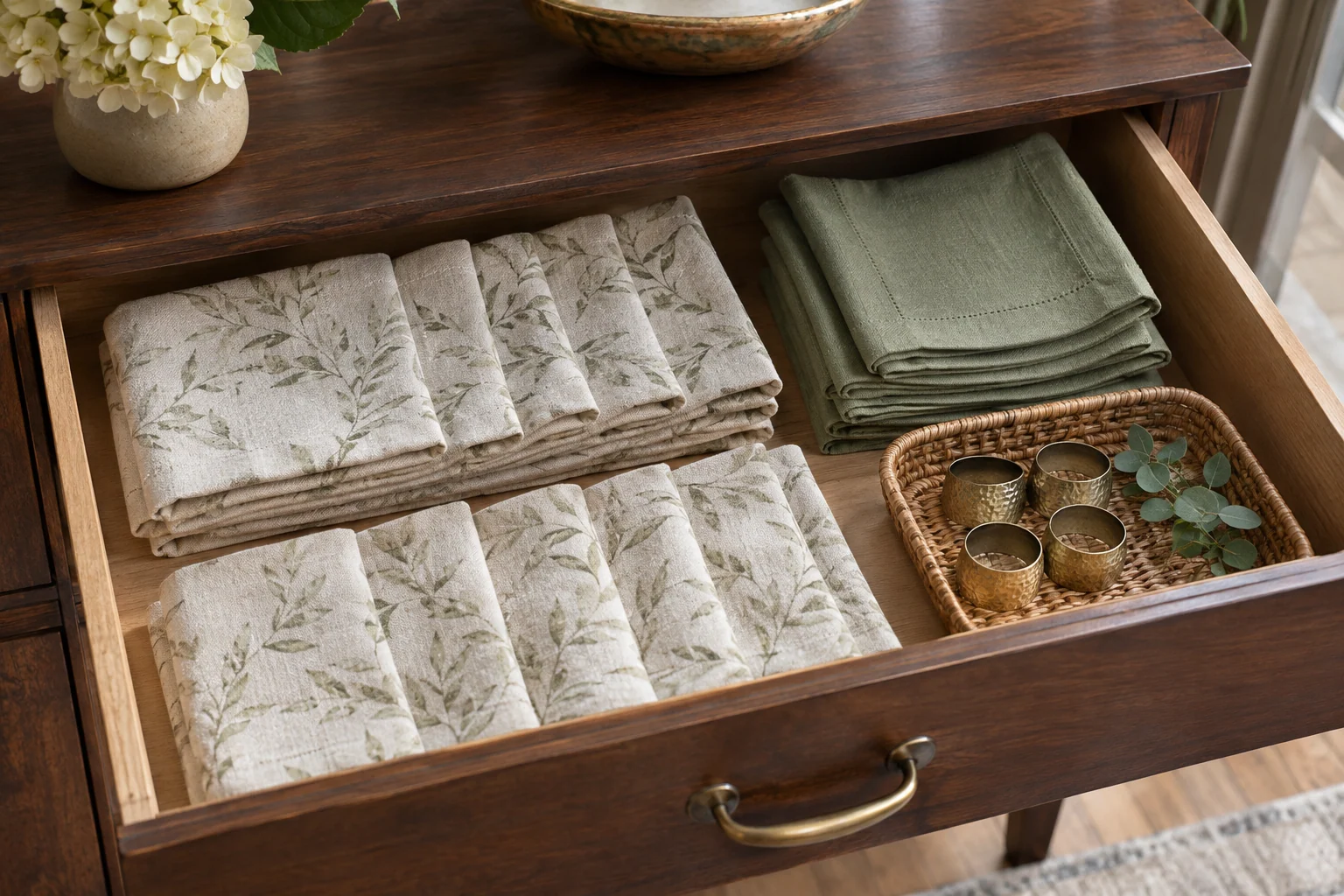
Count the napkins and placemats used for typical meals and occasional gatherings. Keep useful matching or compatible sets clear, then decide what role the remaining pieces serve. Do not discard a favorite simply because it breaks a perfect set, but avoid storing unidentified extras indefinitely in the prime drawer. The collection should reflect the tables you genuinely set.
24. Use a simple private fit reference
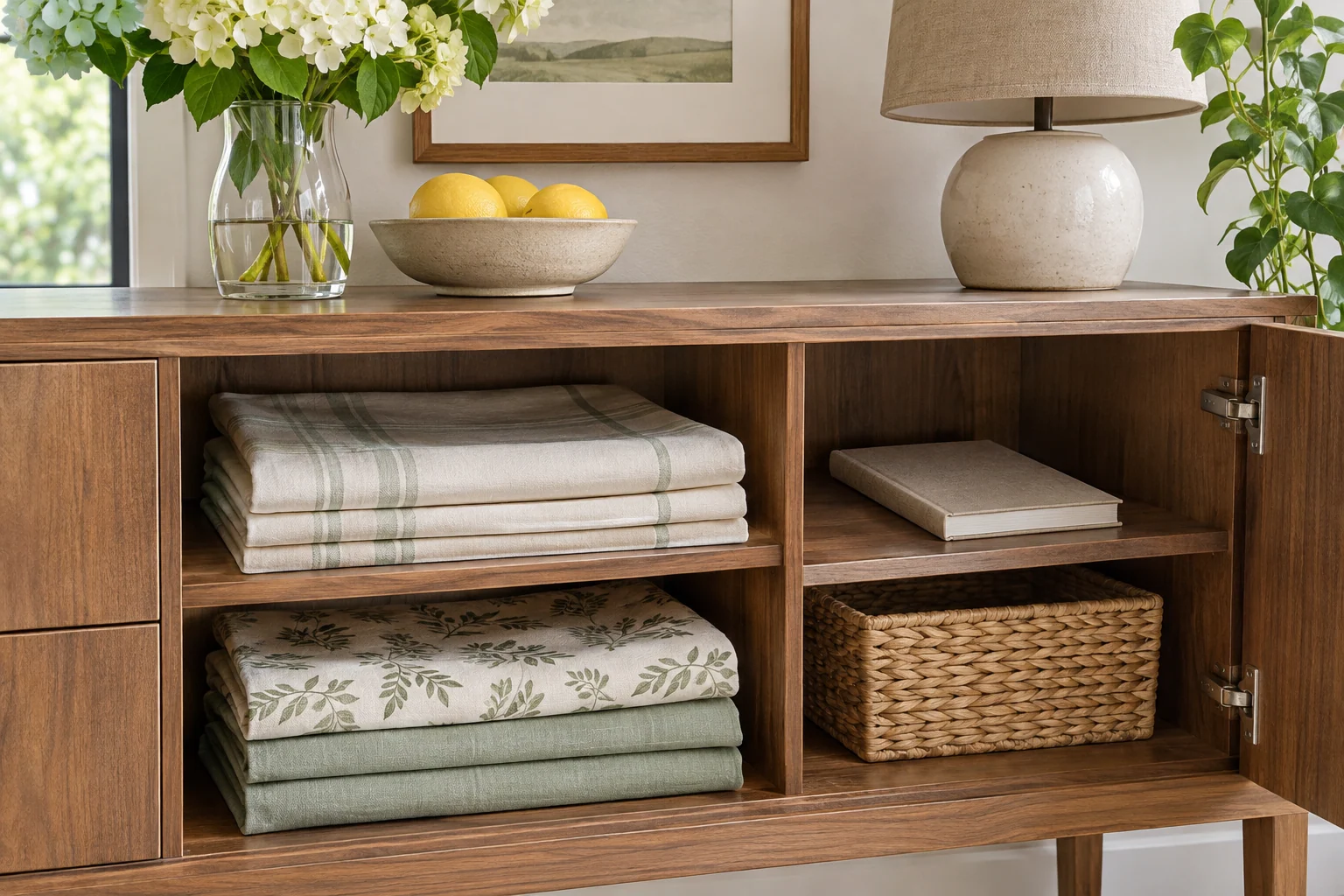
Record which cloth fits the everyday table and which fits its extended form. A small private note can save repeated measuring, especially when several folded cloths look similar. Keep any record separate from fabric if its material could transfer marks or snag. The reference should make choosing easier without turning the drawer into a complicated catalog that is difficult to maintain.
25. Finish with a repeatable clean-and-return routine
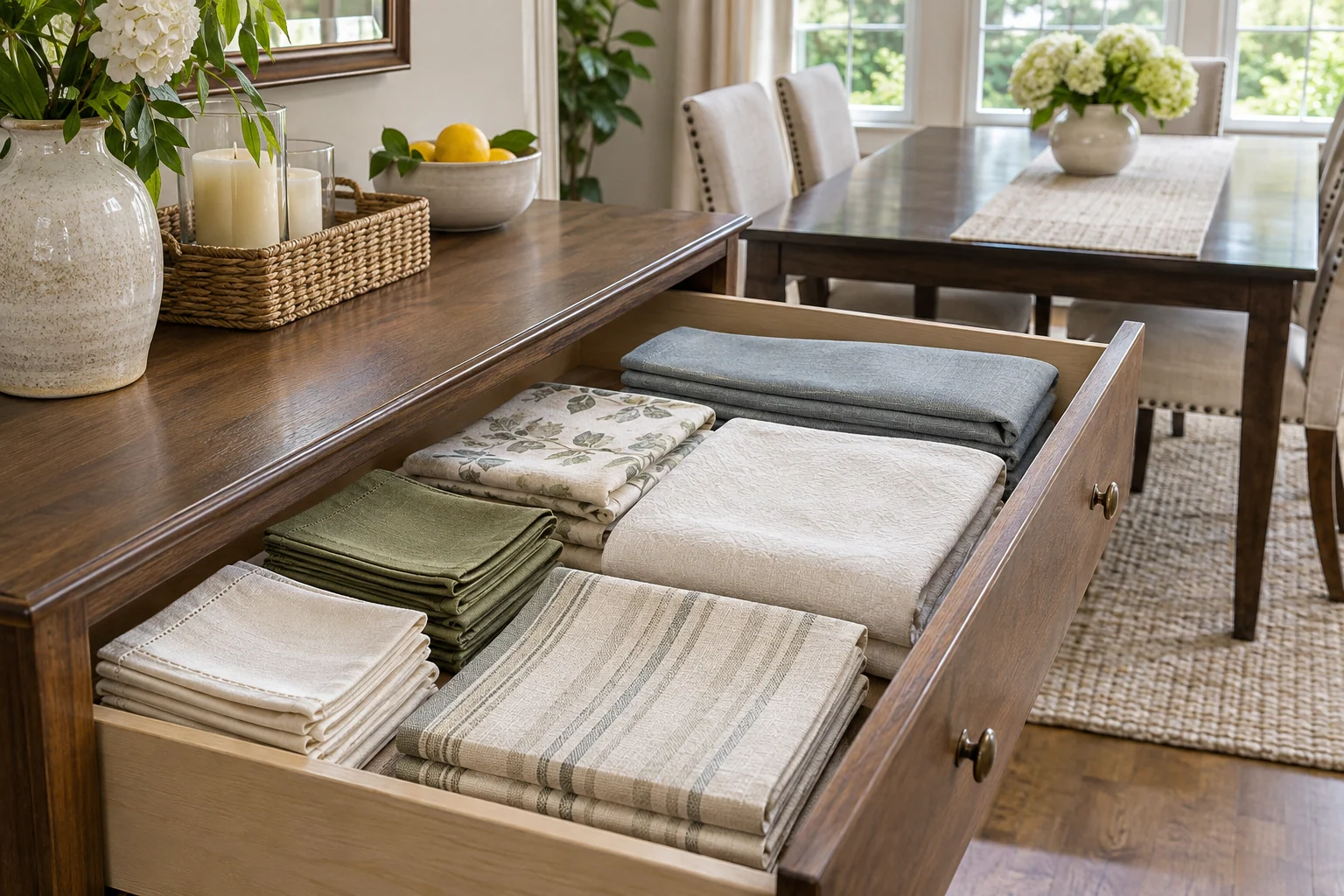
After each meal, separate pieces needing care, follow their own instructions and return them appropriately dry to the same groups. Recheck the drawer for loose rings, receipts or unrelated objects. Keep the routine short and consistent rather than refolding the entire collection every time. A practical system should make the next meal easier, even when the drawer is not styled for a photograph.
A table-linen fit and setting card
Record the table's ordinary and extended dimensions, the linens that fit each arrangement, the number of compatible napkins and any distinct care instructions. Measure the clear drawer or shelf before choosing a fold. In a hypothetical drawer 18 inches deep, test a folded tablecloth with room for fingers and the drawer mechanism rather than assuming an 18-inch folded piece will fit comfortably. Group one everyday setting first and try gathering it in a single trip. Adjust the sections around that real routine before organizing the occasional collection.
A practical next step
The most useful table linen storage follows your table sizes, fabrics and normal meals. Keep clean pieces visible, preserve care information and give each shape enough room. Once gathering and returning a setting becomes straightforward, the linens can become part of everyday dining rather than a collection hidden behind the cupboard door.
The images are original AI-generated design concepts. They illustrate arrangements rather than tested products, installations or measured performance.
Sources and care references
Related reading on Nestroxe
- Organize the rest of the dining-room cabinet
- Plan shared household linen storage
- Keep serving trays accessible for meals
Optional digital guide for this topic
If you prefer a structured workbook, explore this related paid guide.