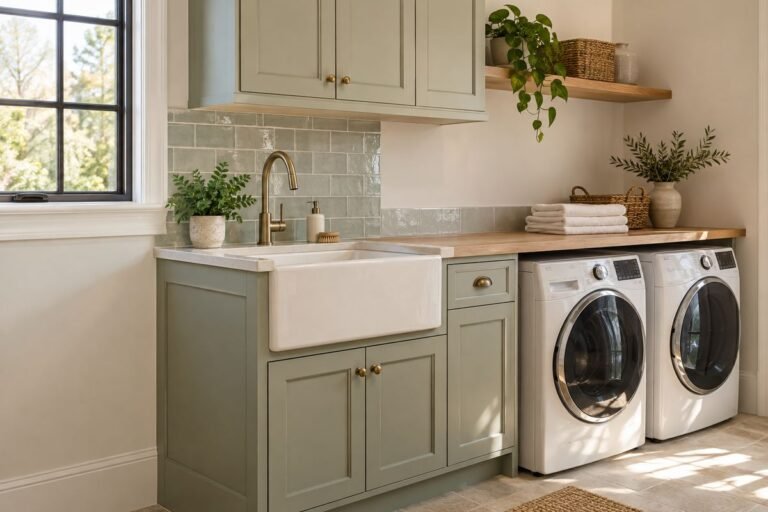
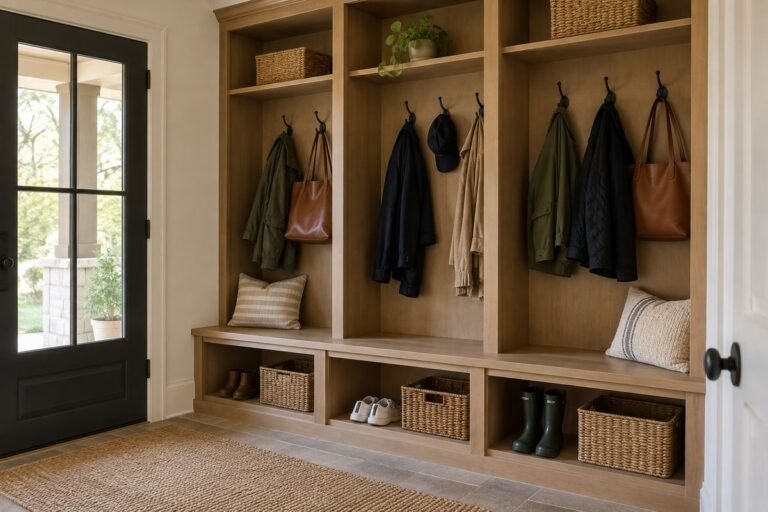
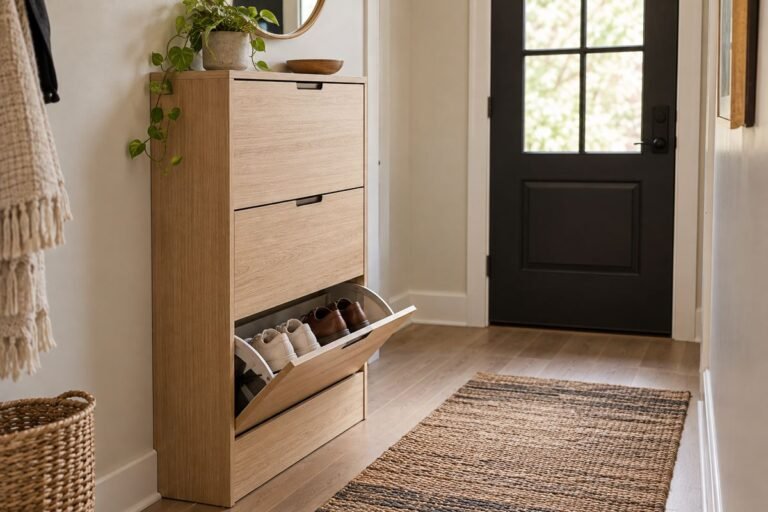
Laundry folding station ideas should solve the part of laundry that happens after washing: laying out a garment, making a manageable stack and getting it back to the right room. A beautiful counter can still become a permanent pile if there is no clear place for the finished load to go.
Start with one ordinary dry load and observe where folding actually happens. Note the largest item, the number of outgoing baskets and whether the household prefers standing or sitting. Choose the surface and storage around those tasks before adding cabinets, baskets or decorative details.
These 24 concepts range from a separate table to a supported counter and a compact folding surface that stores away. They illustrate finished room arrangements, not construction plans. Keep appliance installation, support, ventilation and servicing requirements separate from the visual design, and follow the exact product instructions.
The images are original AI-generated decor concepts, not installation diagrams or photographs of completed client projects.
Browse These 24 Laundry Folding Station Ideas
Jump to an idea
- Start with a separate laundry folding table
- Use a properly supported counter above compatible appliances
- Let a side worktop serve the folding task
- Give a top-load washer its own open bay
- Laundry folding station ideas for occasional use
- Compare a rated fold-away wall product
- Use a mobile station only where it can park securely
- Dock the clean incoming basket beside the work area
- Give finished laundry a defined outgoing basket
- Laundry folding station ideas for a shared household
- Size the towel area from the stacks you make
- Laundry folding station ideas for large linens
- Keep hanging garments beside the folding sequence
- Keep wet sink tasks separate from clean folding
- Give small laundry accessories a shallow drawer
- Use a small contained place for unmatched socks
- Laundry folding station ideas with a seated position
- Check the light where the garments are handled
- Choose a surface finish from its care requirements
- Keep the folding edge free of permanent clutter
- Share a work surface through a clear changeover
- Let the room door open through the whole routine
- Preserve appliance replacement and service access
- Finish with a surface that can reset completely
Plan laundry folding station ideas around one complete load
Measure the usable flat surface after allowing for anything that stays on it. Then map the route from dryer or drying area to folding surface, from surface to outgoing basket and from basket to the destination room. Include the space occupied by an open appliance door, a person folding and a basket on the floor. A station succeeds when all three can coexist during ordinary use.
| What interrupts the routine | Direction to compare | Useful test |
|---|---|---|
| Clean clothes land on appliance lids | A separate suitable folding table | Can a full dry load move to it without blocking the room? |
| A small room has no permanent surface | A suitable folding table or fold-away product | Where does it go in both open and stored positions? |
| A top-load washer needs lid space | A side folding bay | Can the lid and controls remain fully accessible? |
| Folded stacks never leave the counter | A defined outgoing-basket position | Can the finished group go directly to its destination? |
| Large linens hang over the worktop | A larger clear surface or separate linen routine | Can the actual item be handled comfortably? |
| Several people use the room | Recognizable outgoing groups | Can each user identify the finished load? |
| An above-appliance counter is proposed | An independently supported compatible design | Have support and exact appliance clearances been checked? |
Support a counter independently from the appliances
IKEA’s countertop guidance says a worktop should not rest directly on a washing machine or dryer; it needs appropriate support from cabinets or legs. Its published span and overhang limits belong to the specified IKEA context. They are not a structural design rule for every material or room. Have the complete support and fastening arrangement checked for the actual surface and products rather than interpreting an inspiration image as a construction drawing.
Use the exact appliance manuals for clearances
Whirlpool’s space-planning guide distinguishes the appliance footprint from room needed for hookups, ventilation, doors and lids, and says installation requirements vary by model. LG’s top-loader checklist also provides general installation guidance that must be matched to the chosen product. Do not use a single clearance number from a decor article to design every laundry installation. Preserve service access and consult the actual appliance documents before ordering cabinetry.
Keep the folding surface for clean, dry laundry
Separate the folding task from chemical storage, wet sorting and household repairs. Follow care instructions for the surface and textiles, and follow laundry-product labels for their storage. A clear surface does not need permanent decorative accessories to look finished. Give the room its color and texture through appropriate finishes while leaving the working area available.
1. Start with a separate laundry folding table
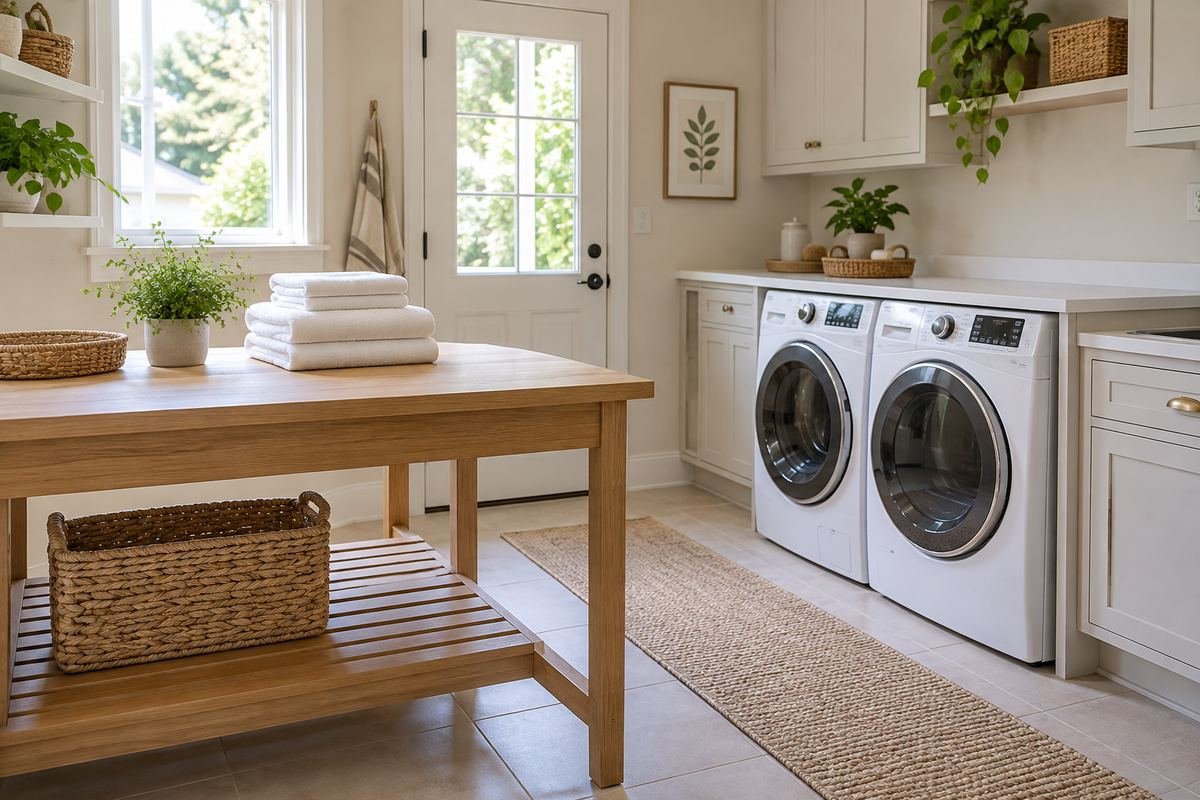
A separate suitable table gives clean laundry a surface that does not depend on an appliance lid or an improvised bridge between machines. Choose a stable product intended for the task and test its usable area with the garments you normally fold. The table should have a clear purpose rather than become the room’s general landing place.
Place it along the actual route from drying to put-away. If reaching it requires squeezing past an open machine or moving several baskets, reconsider the position before buying a larger table. Leave the room comfortable to use while a load is being folded.
Practical tip: Test the route with a basket and the appliance door open.
2. Use a properly supported counter above compatible appliances
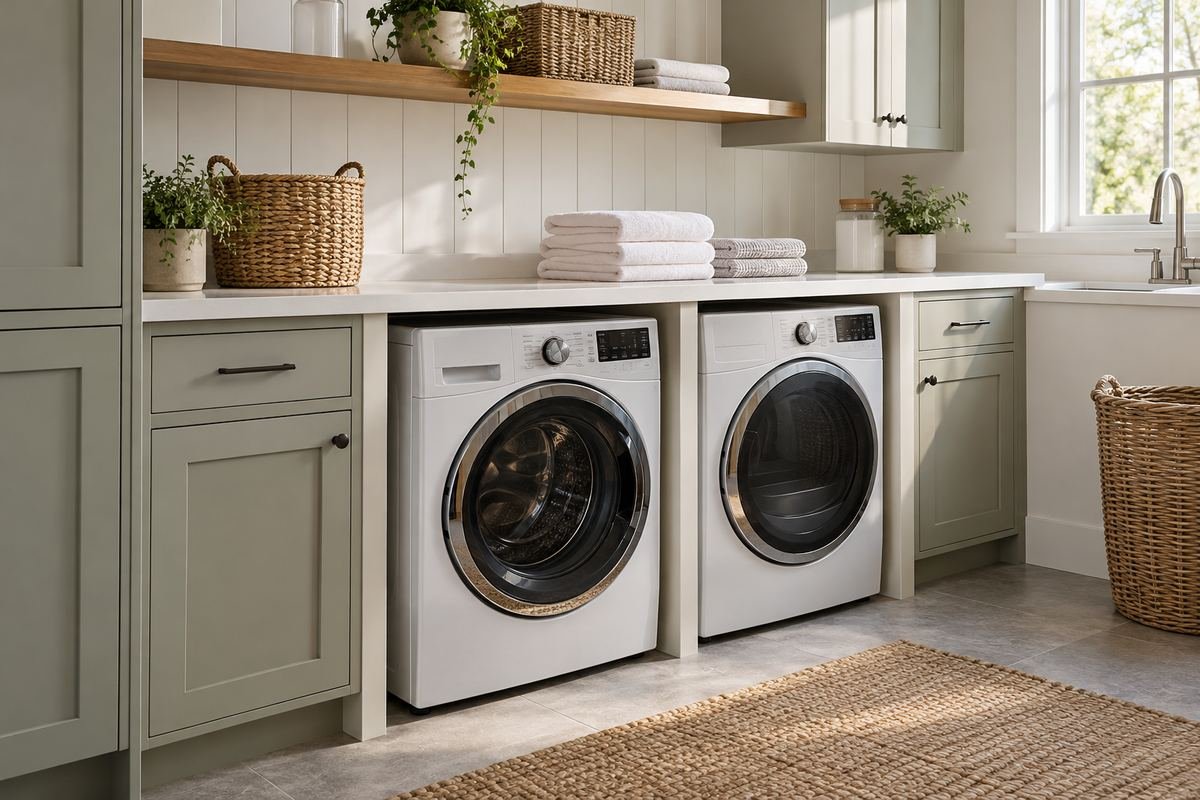
An above-appliance worktop can provide a continuous folding area when the complete installation is suitable. Plan independent support and the exact appliance clearances before choosing the finished surface. A visually continuous counter should not transfer its load onto the machines.
Compare the resulting height with the way you actually fold. A counter that is convenient for appliance concealment may be too high for your preferred task. Keep controls, service needs and connections accessible according to the product instructions.
Practical tip: Resolve support and access before selecting the decorative finish.
3. Let a side worktop serve the folding task
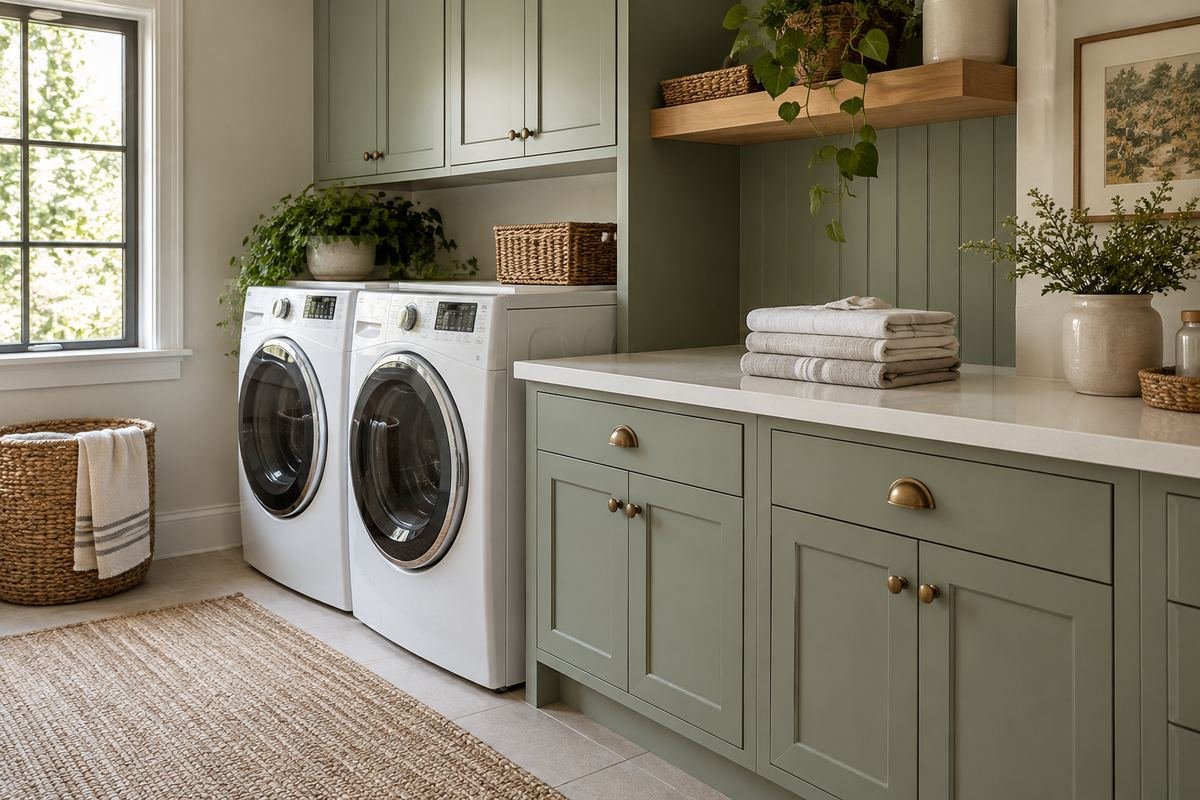
A counter beside the appliances can separate the working height from the machine height. Use suitable cabinetry or a table base and compare the available surface with a real load. Keep the task within the clear area instead of filling the side bay with permanent accessories.
Check how laundry moves from the appliance to the surface and into the finished basket. A side location is most useful when it shortens that sequence. Avoid using every spare space for storage before testing whether the person folding has enough room to work.
Practical tip: Keep the main transfer side free of decorative objects.
4. Give a top-load washer its own open bay

A top-load washer needs the space required for its lid and ordinary access. Place the folding surface beside it rather than across the opening. Check the actual model instructions and test the full lid movement before fixing a cabinet or worktop nearby.
The side bay can still look connected through color, hardware or surface finish. Visual coordination does not require covering the appliance. Keep the transfer route clear so the folded-laundry area remains easy to use while the washer is accessible.
Practical tip: Test the top opening and control access together.
5. Laundry folding station ideas for occasional use
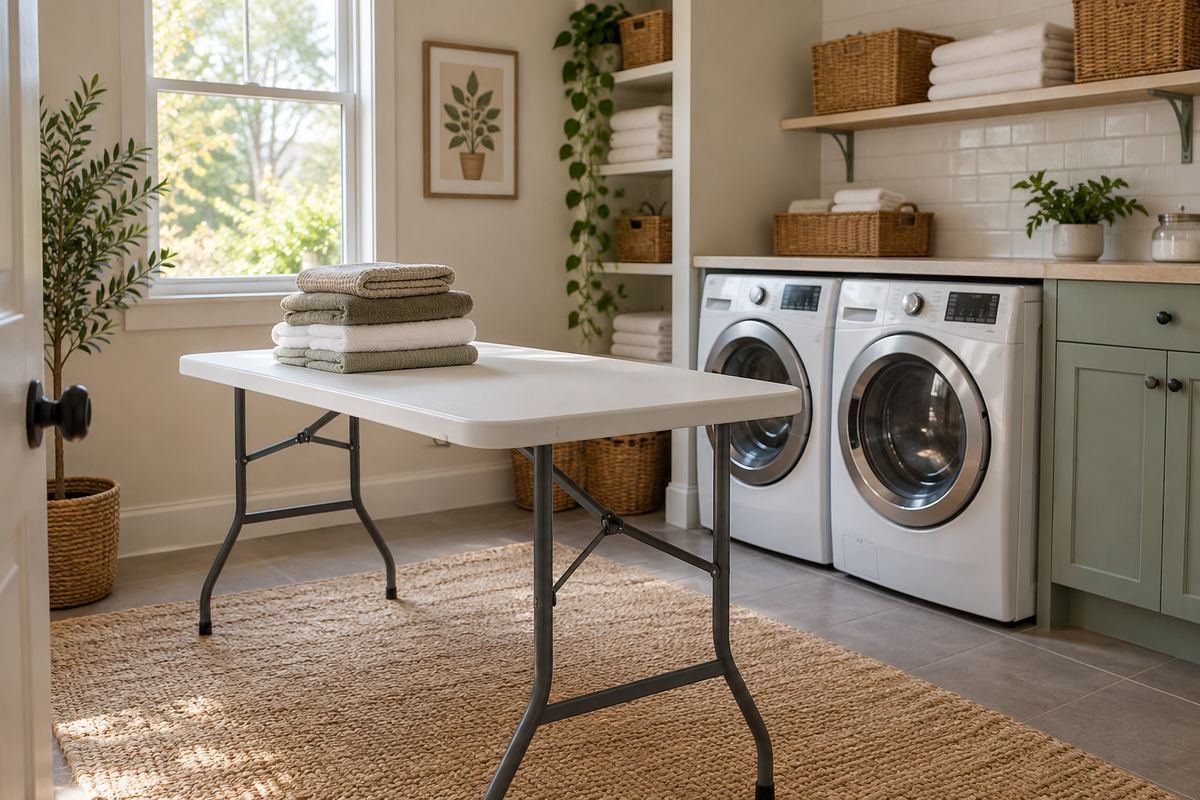
A folding table may work when the laundry room cannot spare a permanent footprint. Compare the product’s intended use, support and folding mechanism with the task. Open it fully according to its instructions and test it with a normal manageable load.
Plan the stored position as carefully as the open one. A folded table leaning in front of a service panel or appliance door simply moves the problem. Choose a suitable storage place that keeps the room available after the folding task ends.
Practical tip: Measure both the open and stored arrangement.
6. Compare a rated fold-away wall product

A purpose-made fold-away surface can make a small laundry space more flexible when the wall and installation are suitable. Follow the product’s fastening, load and operation instructions. Do not treat a decorative shelf with improvised hinges as an equivalent installation.
Check the room while the surface is open, including the person folding and the outgoing basket. If it blocks the only practical route, a portable alternative may serve the space better. Keep the closing movement clear and use the product as intended.
Practical tip: Confirm the complete installation requirements before choosing the position.
7. Use a mobile station only where it can park securely
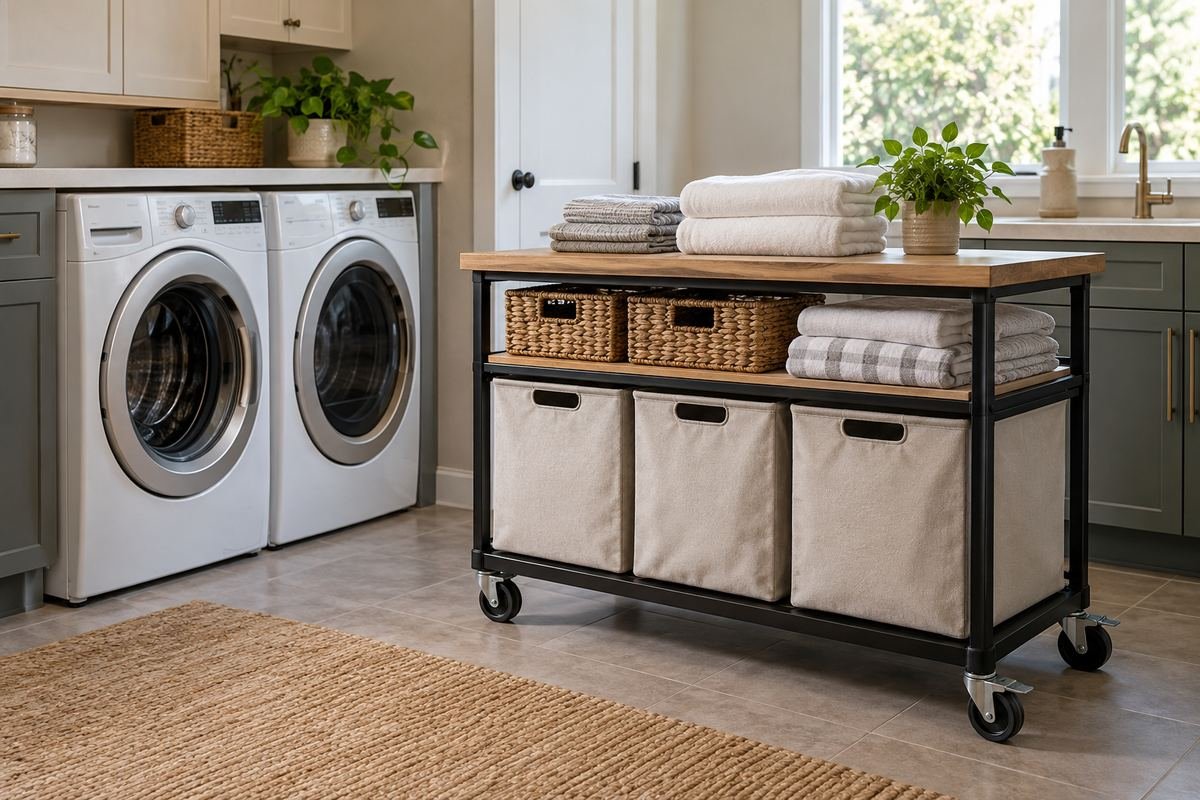
A suitable mobile folding station can move to the useful side of the room when the floor and route allow it. Check the product’s intended use, load and wheel-locking provisions. Keep the working arrangement stable according to its instructions before placing laundry on top.
Give the station a defined parking place after use. A cart left in front of appliance access is not a space-saving solution. Compare the top surface with the actual folding task rather than assuming every narrow rolling trolley offers enough usable work area.
Practical tip: Test the parked, moving and working positions.
8. Dock the clean incoming basket beside the work area
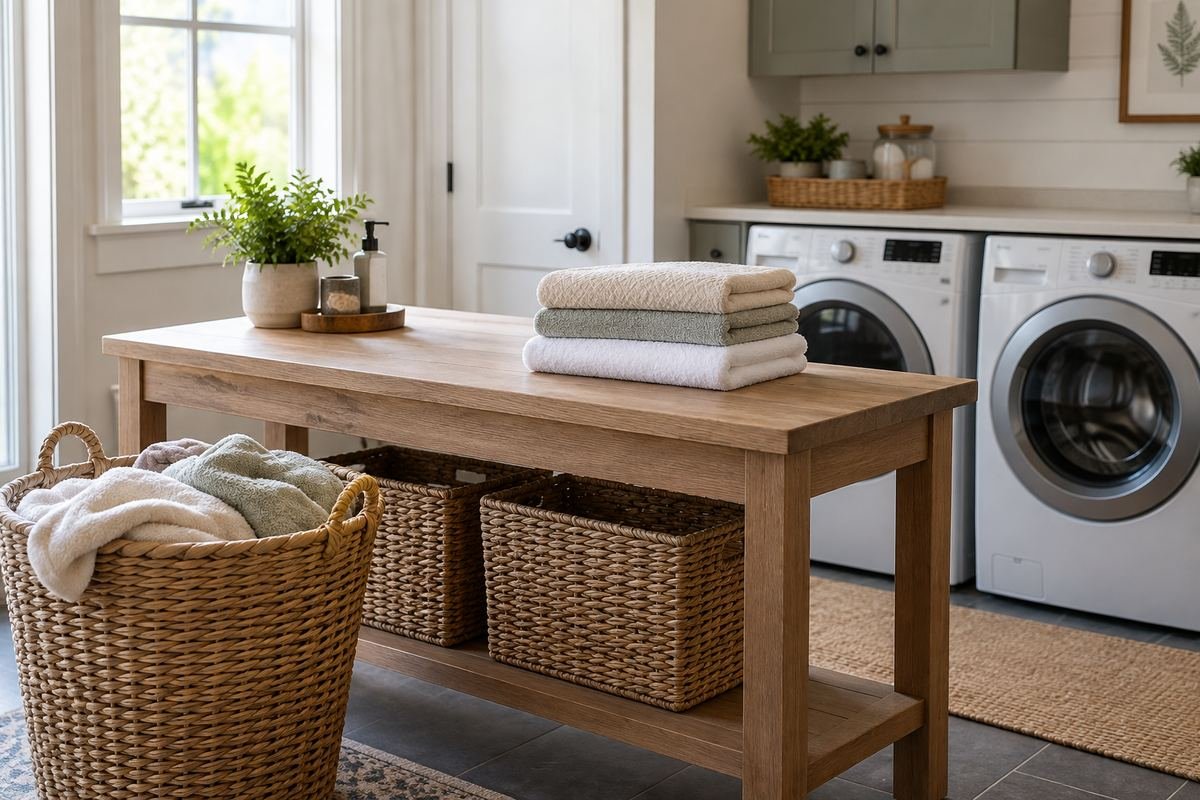
A clear incoming-basket position can prevent the first half of the load from occupying the surface before folding begins. Choose a suitable place within the ordinary transfer route and compare the loaded basket with the available floor or shelf area.
Keep it distinct from dirty laundry sorting. If both groups regularly land in the same place, change the arrangement so the task remains recognizable. The station should make it easy to move one clean load through, not create several indistinguishable piles.
Practical tip: Try the basket in its normal loaded condition.
9. Give finished laundry a defined outgoing basket
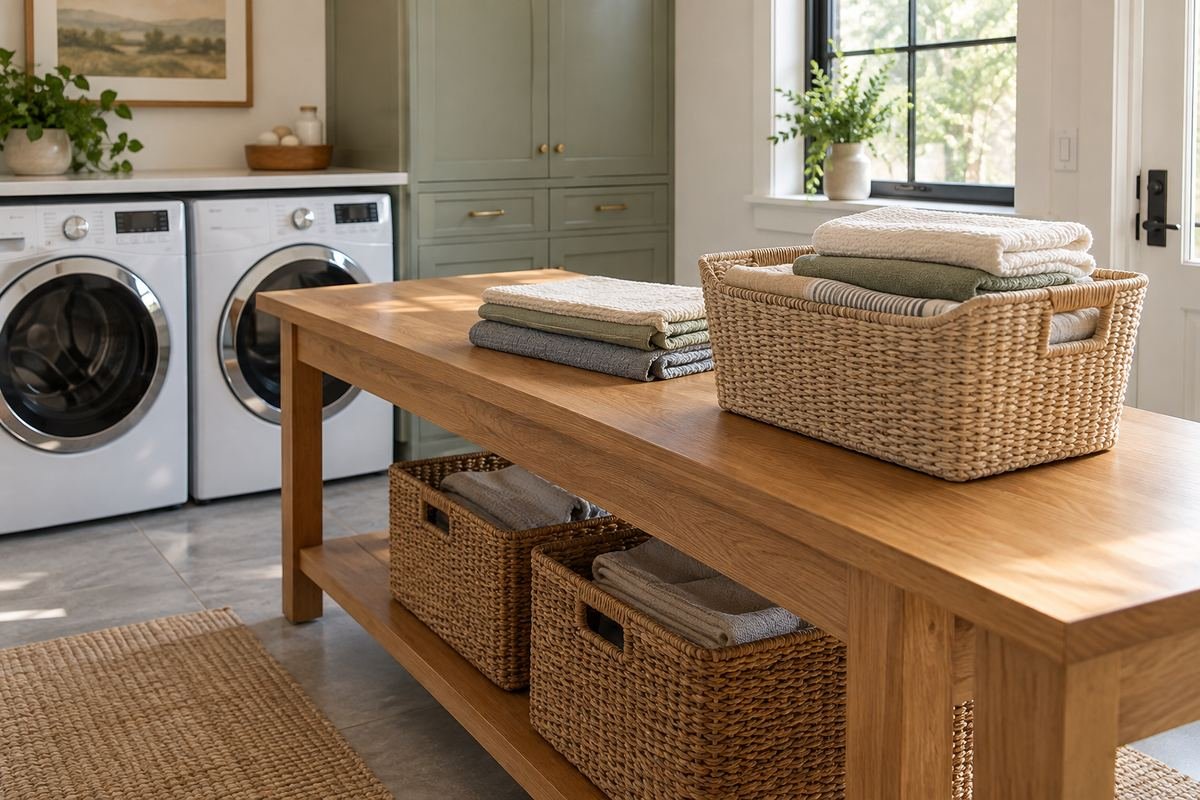
An outgoing basket connects the folding surface with the final put-away step. Place it where a finished group can move directly into it without crossing the remaining unfolded load. Choose a manageable size for the route to its destination.
If the basket stays full indefinitely, review the return routine rather than buying a second identical basket automatically. The station works best when the finished group can leave and the next clean load has somewhere to go.
Practical tip: Keep the outgoing home visible during the folding task.
10. Laundry folding station ideas for a shared household
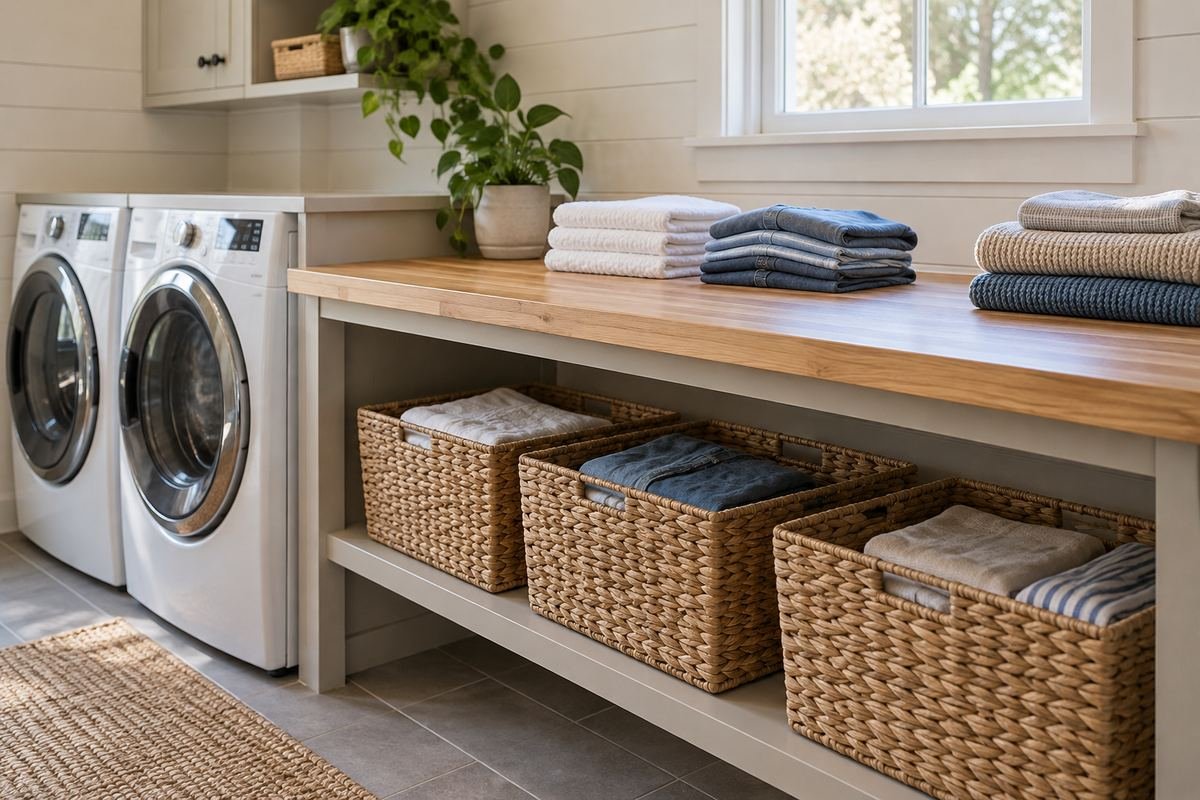
A few recognizable outgoing groups can help when clean laundry returns to several rooms. Use the division that fits the household rather than creating a separate container for every garment type. The grouping should reduce the final sorting step.
Test whether the containers fit while leaving the folding area available. If they consume the whole worktop, move them to a suitable adjacent bay or use fewer groups at one time. Keep the loaded containers comfortable for their actual return route.
Practical tip: Choose the groups from destinations, not decorative symmetry.
11. Size the towel area from the stacks you make

Towels can suit a repeated folding rhythm, but the station still needs enough clear space for the unfolded piece and the finished stack. Test the household’s actual towel sizes and preferred folds rather than choosing a counter from a display photograph.
Keep stacks manageable and move them to their destination before they become a permanent wall of textiles. A dedicated outgoing group can help distinguish finished towels from the clean load waiting to be folded.
Practical tip: Compare a real unfolded towel with the usable surface.
12. Laundry folding station ideas for large linens

Sheets and other large textiles may need more handling area than ordinary clothing. Compare the real item with the station and decide whether a larger separate surface or a different folding sequence is more practical. Do not assume a narrow counter must handle every household textile equally well.
Keep the surface clean and suitable for the fabric, then return the finished group promptly. If large linens repeatedly drag into an unsuitable area, reconsider the task location instead of adding more baskets to the same cramped station.
Practical tip: Test the largest regular linen item before fixing the layout.
13. Keep hanging garments beside the folding sequence
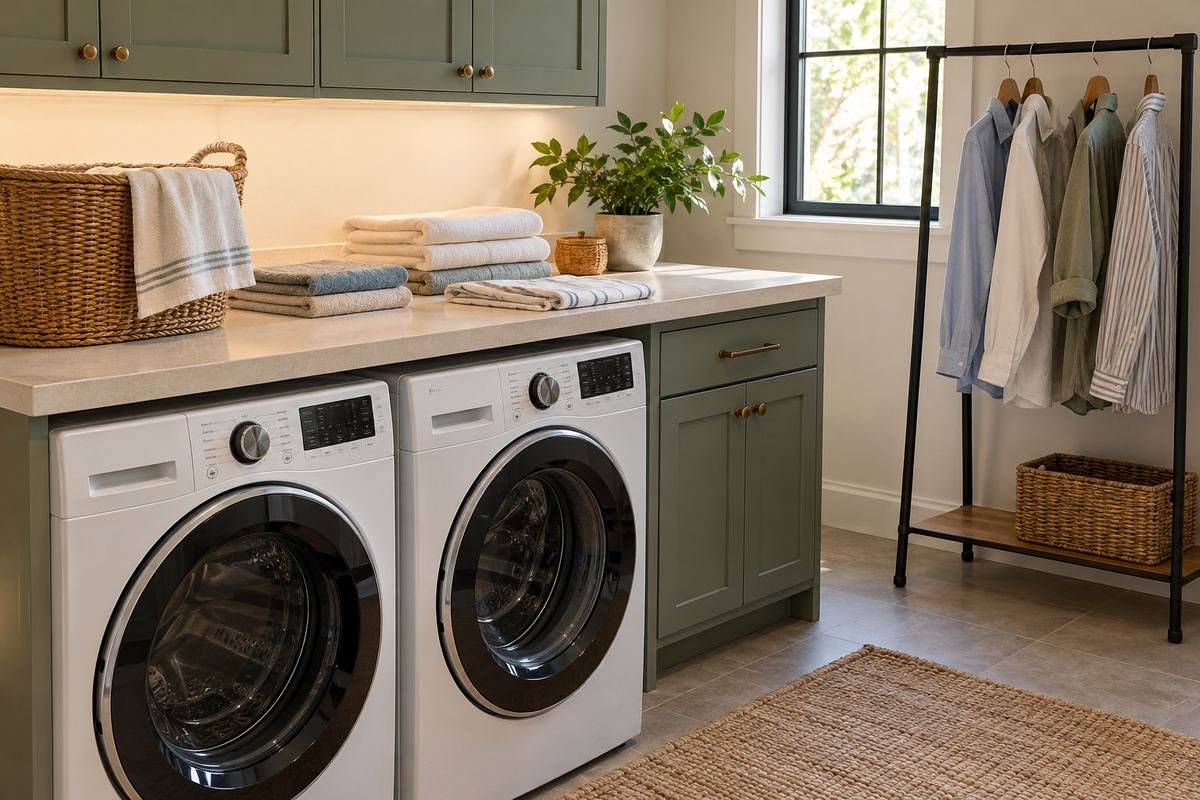
Some clean garments leave the laundry area on hangers rather than in a folded stack. A suitable nearby hanging provision can keep those items from occupying the folding surface while the rest of the load is handled. Use the product within its intended load and installation requirements.
Compare the hanging garments’ full length with the surface and baskets below. Keep access to the counter, controls and appliances available. A short useful rail in the right place may work better than a long hanging arrangement that interferes with every other task.
Practical tip: Test with the longest garment normally handled here.
14. Keep wet sink tasks separate from clean folding

A laundry sink and a folding surface can share a room without sharing the same working area. Place the clean dry task where regular splashes and wet objects are less likely to interrupt it. Choose the surface and care routine for the conditions actually present.
Use a real task trial rather than assuming the sink edge is always dry. If wet sorting regularly expands across the proposed folding spot, give it a different location. The useful detail is a clear boundary between two activities, not a fixed distance that supposedly suits every sink.
Practical tip: Observe the sink area during an ordinary wet task.
15. Give small laundry accessories a shallow drawer

A shallow suitable drawer can hold the few accessories used during folding without placing several containers on the worktop. Keep the category focused and choose compartments from the actual objects. The drawer should open without conflicting with the person working at the station.
Keep laundry chemicals and other products in their proper labeled storage according to their instructions, rather than mixing them into a convenient open accessory drawer. The benefit here is preserving the surface for the folding task while keeping ordinary small tools easy to retrieve.
Practical tip: Store only accessories that genuinely serve this step.
16. Use a small contained place for unmatched socks

A modest designated container can keep unmatched clean socks from spreading across the counter. Give the group a regular review rather than letting the container become a permanent archive. Choose an appropriate dry storage place that does not consume the main folding area.
Keep the system proportionate to the actual problem. If the collection steadily grows, review the washing and put-away sequence as well as the container. A small visible group is easier to assess than several anonymous baskets filled with forgotten items.
Practical tip: Review the contents during a normal laundry reset.
17. Laundry folding station ideas with a seated position
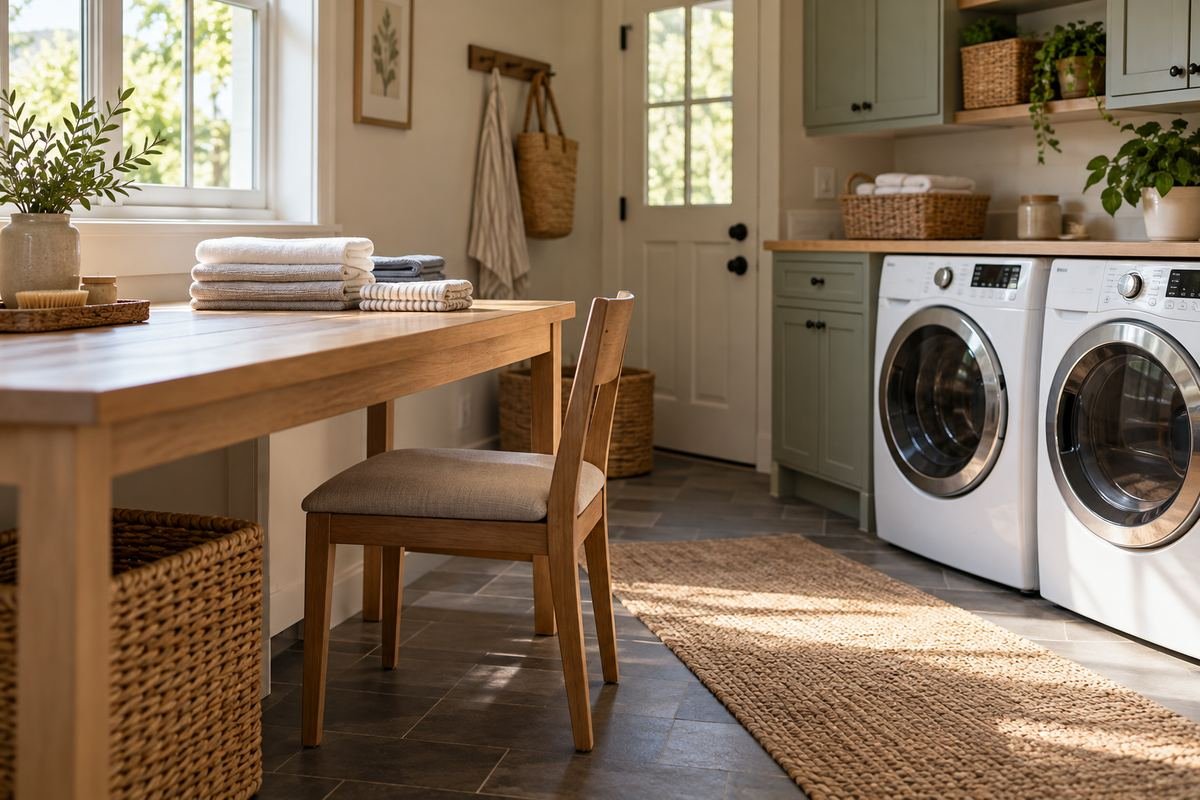
A separate suitable table may allow a seated working position for people who prefer it. Test the actual chair, reach and space beneath the surface before choosing the furniture. There is no universal table height or chair arrangement that suits every person and task.
Keep the incoming and outgoing groups easy to reach without trapping the chair between baskets. The seat should have a practical storage position when the station is not in use. If the room cannot support a comfortable seated arrangement, consider a suitable surface in another clean space.
Practical tip: Try the real task with the intended chair before committing.
18. Check the light where the garments are handled
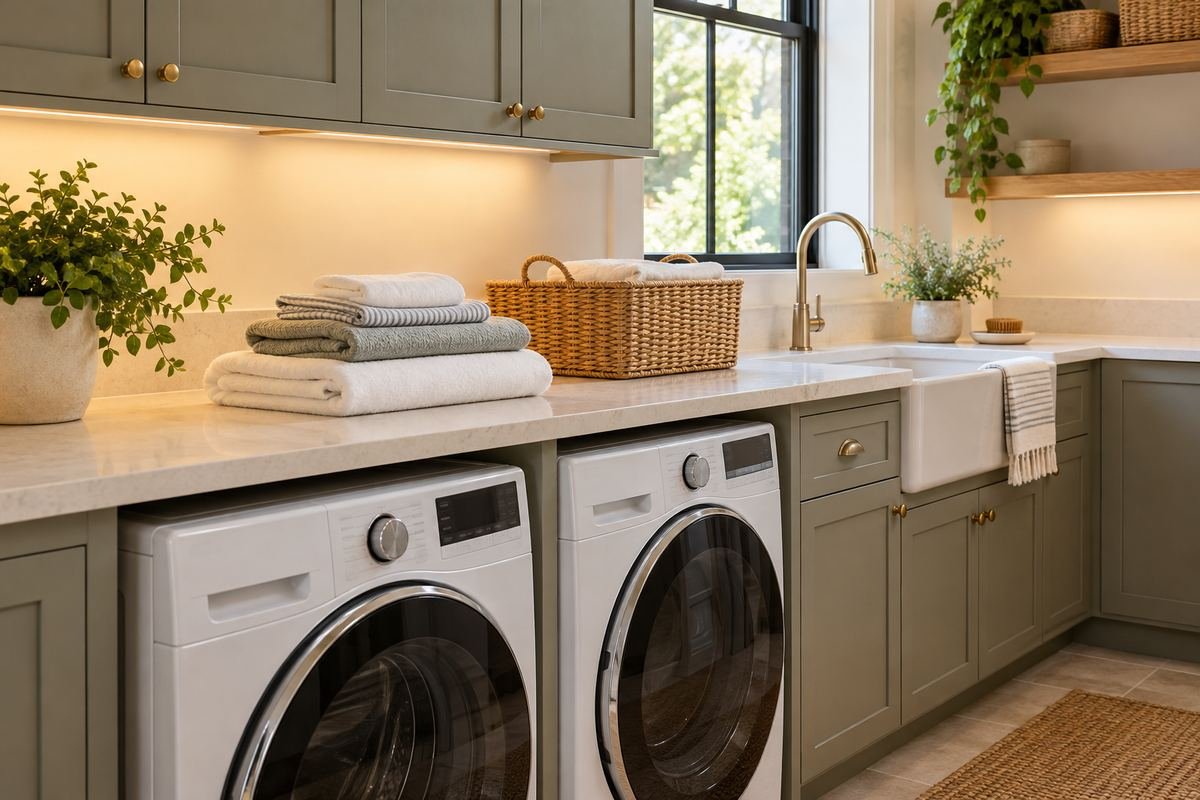
Evaluate the folding surface under the light normally used at laundry time. A ceiling fitting that lights the room generally may leave the working area in shadow. Choose appropriate lighting for the location and use qualified installation where required.
Compare daytime and evening conditions before adding decoration that blocks a window or darkens the task area. Keep the surface visually simple so the edges of garments and finished stacks remain easy to distinguish. The useful test is the actual task, not a dramatic lighting photograph.
Practical tip: Check the surface at the time the household usually folds.
19. Choose a surface finish from its care requirements
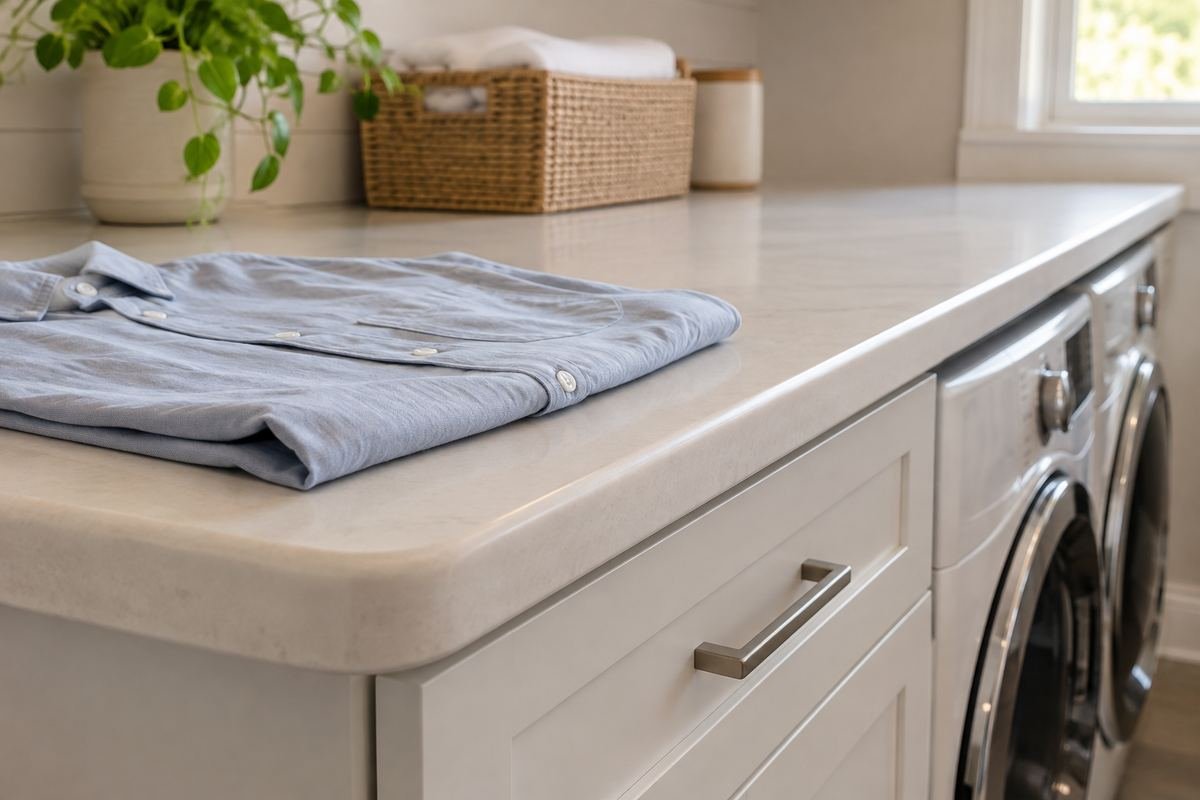
A folding surface should suit the room conditions and the household’s cleaning routine. Compare the manufacturer’s care guidance, edges and permitted uses before choosing a finish only for its appearance. Keep the surface clean and dry as appropriate before handling finished laundry.
Test whether the finish catches delicate fabrics or makes the task awkward in another way. A small sample can help compare color and texture, but it does not replace the product’s actual use and care information. Choose the complete surface rather than treating every material with a similar appearance as equivalent.
Practical tip: Read the care instructions before choosing the finish.
20. Keep the folding edge free of permanent clutter
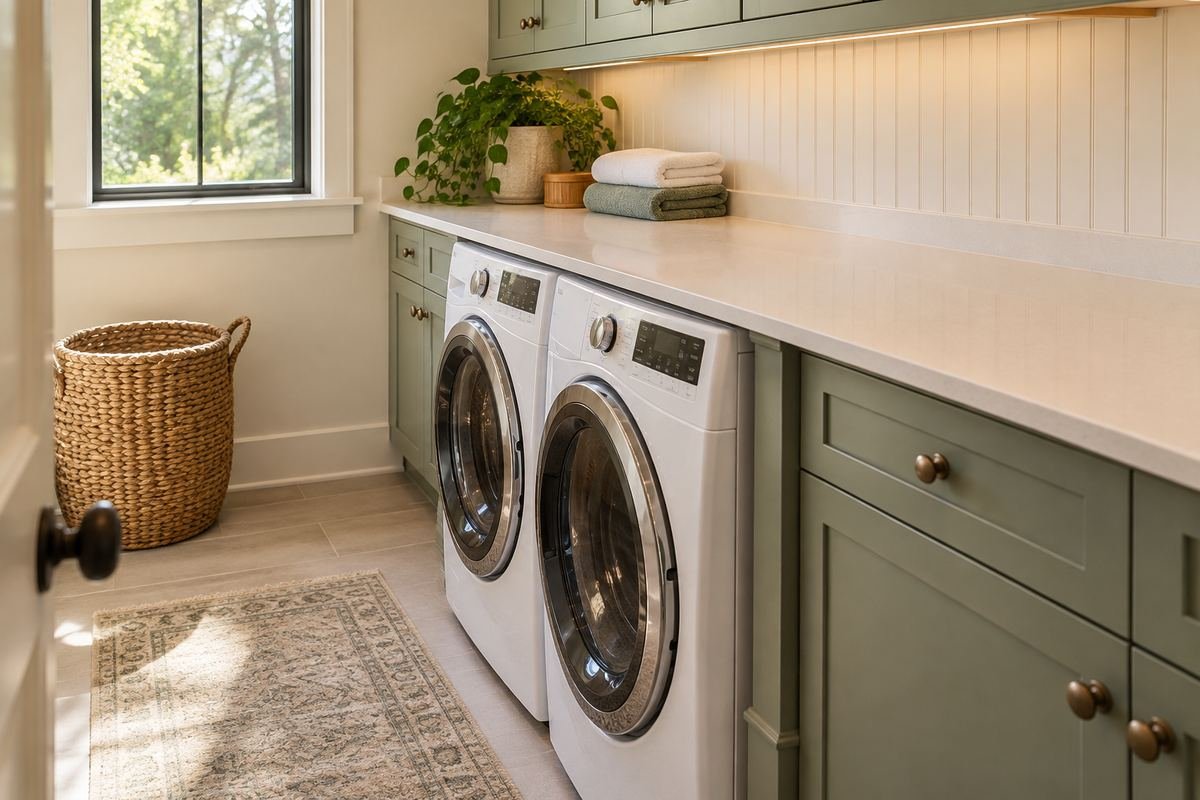
The front edge is part of the working area, especially when garments are turned and folded. Avoid lining it with decorative jars, small plants or unrelated household items. Let the station’s finishes provide the visual interest while the edge remains available for use.
Notice which objects are moved every time a load arrives. Give those objects another suitable home instead of building the cleanup step into the routine. A clear edge can make a modest table more useful than a larger counter whose working area has been filled.
Practical tip: Remove the item that gets shifted before every load.
21. Share a work surface through a clear changeover
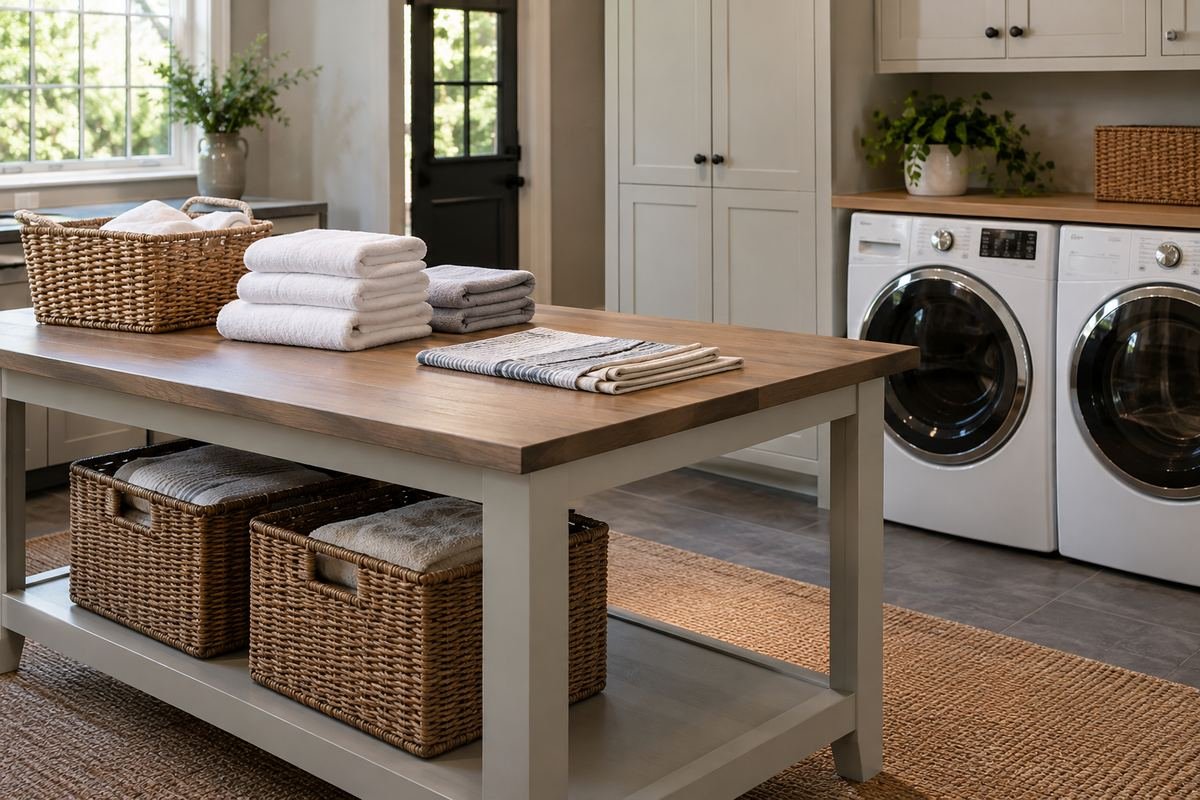
A suitable table in a multipurpose utility space can serve folding at certain times if the previous task leaves it clean, dry and appropriate for textiles. Establish a simple changeover that clears the surface completely. Do not combine incompatible tasks just because both need a flat area.
Keep the incoming clean load elsewhere until the table is ready. If changing the surface takes so much effort that laundry never reaches it, a smaller dedicated alternative may work better. The useful arrangement is the one the household can repeat on an ordinary day.
Practical tip: Try the full changeover once before assigning two permanent uses.
22. Let the room door open through the whole routine

A folding station changes the room when baskets, a person and appliance doors are present. Test the room entrance during the actual task rather than checking only the empty furniture plan. Keep the route workable without balancing baskets behind an opening door.
If the door conflicts with the station, reconsider the furniture position or select a different suitable product. Do not assume a smaller table automatically fixes the problem when the baskets still occupy the same route. Evaluate the complete arrangement in use.
Practical tip: Test the entrance while the working setup is fully in place.
23. Preserve appliance replacement and service access
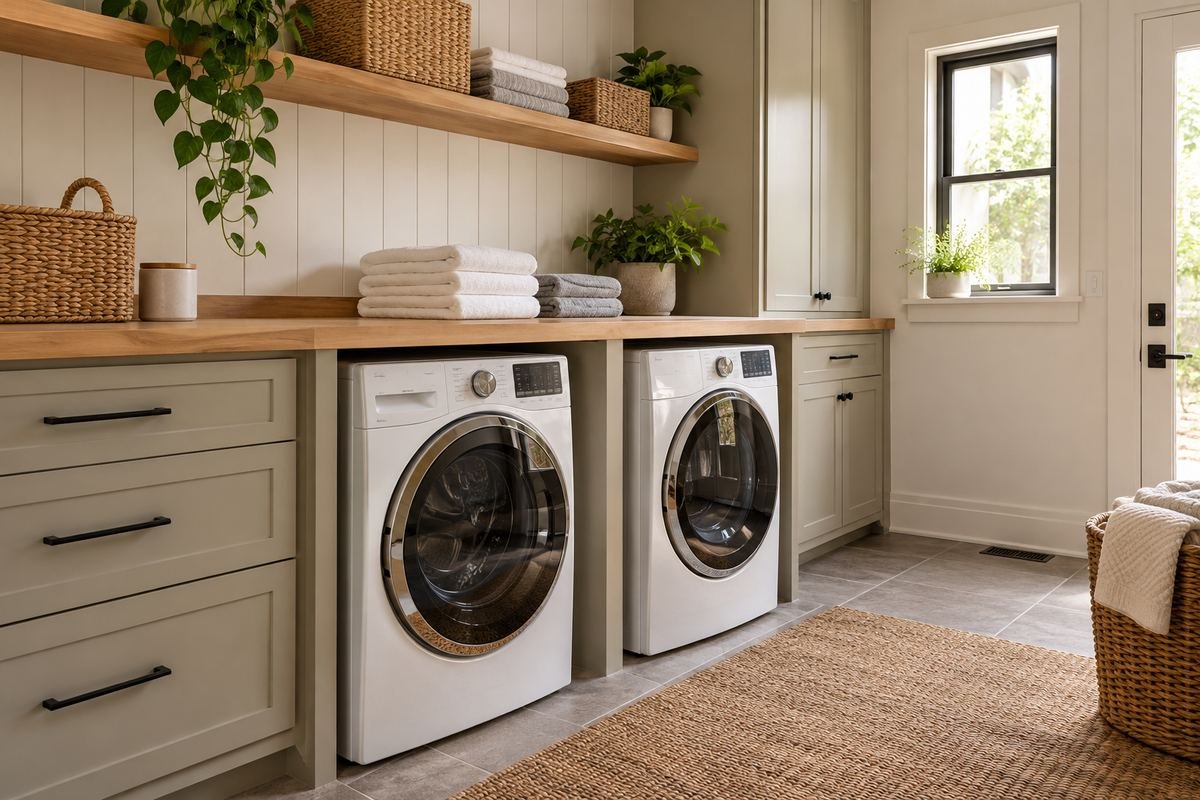
A finished folding station should allow the appliances to be maintained and replaced as required by their instructions. Consider how a supported counter or adjacent cabinet affects access before making the installation permanent. Decorative continuity should not hide a practical removal problem.
Keep model information and installation documents available for future changes. A replacement appliance can differ from the current one even if both are described with a similar size category. Recheck the complete fit when equipment changes instead of assuming the old cabinetry layout remains suitable.
Practical tip: Include servicing and future removal in the original plan.
24. Finish with a surface that can reset completely
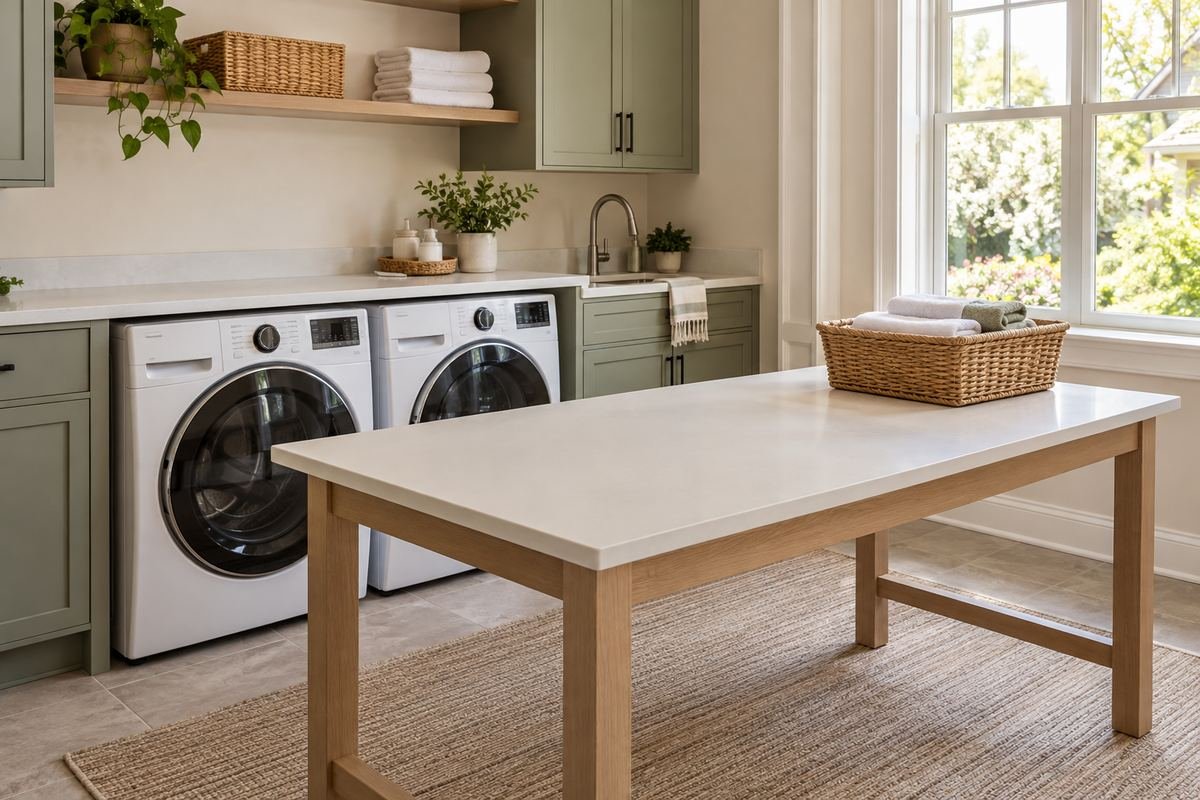
The most useful laundry folding station ideas include a definite finish: outgoing laundry leaves, the basket returns to its home and the surface becomes available again. Keep the process simple enough for the household’s normal routine. A station that is permanently covered with finished stacks has lost its working area.
Review the first few loads and change the repeated obstacle. The answer may be a better outgoing-basket location, a smaller active load or fewer objects on the counter. Improve that one step before adding another storage unit to the room.
Practical tip: Check that the surface is available before starting the next load.
Frequently Asked Questions
How large should a laundry folding surface be?
There is no single size for every household. Test the garments and linens you normally fold, the space for a finished stack and your working position. Compare that usable area with the room while appliance doors, baskets and the room door are in use.
Can a counter rest directly on the washer and dryer?
IKEA’s guidance advises against using the appliances as worktop supports. Choose an appropriately designed independently supported arrangement and follow the actual appliance, counter and cabinetry instructions. An inspiration image does not specify the required structural or installation details.
What works beside a top-load washer?
A separate side table or folding bay can provide a surface while preserving the top opening. Check the full lid movement, controls, hookups and model-specific installation requirements. Do not bridge a counter over the opening and assume the machine remains usable.
Can a folding table work in a small laundry room?
It can if the product is suitable for the task and the room has a practical open and stored position. Test the support, rated use, folding mechanism and route around the table. The stored table should not obstruct appliance access or the room door.
How do I stop folded laundry collecting on the counter?
Assign the finished group a specific outgoing basket or return route. Keep only the amount of laundry that can move through the station in the normal routine. If the counter repeatedly fills, adjust the put-away step rather than increasing the size of the permanent pile.
Should a folding station include an ironing area?
Only if the room and equipment instructions support a separate suitable setup. An ordinary folding counter is not automatically an ironing surface. Plan storage and operation for the exact equipment and keep the clean folding task available.
Choose the Details That Work in Your Home
Choose laundry folding station ideas from the complete route: dry load in, clear surface available, finished group out. Protect appliance access, support any worktop appropriately and keep the working area sized to the actual task. A useful station makes the last part of laundry easier to finish instead of creating another place to store an unfinished load.
For related ideas, explore laundry room shelving ideas, laundry room backsplash ideas, small laundry room organization ideas.
Planning References
IKEA: independent countertop support over laundry appliances; Whirlpool: room measurements, appliance access and model-specific clearances; LG: top-loader installation location and access checks. Follow the instructions for the exact products you choose.
Optional digital guide for this topic
If you prefer a structured workbook, explore this related paid guide.