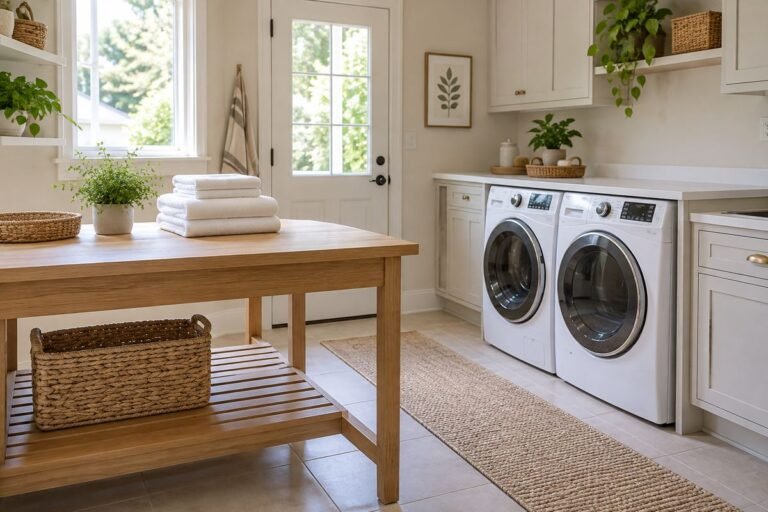
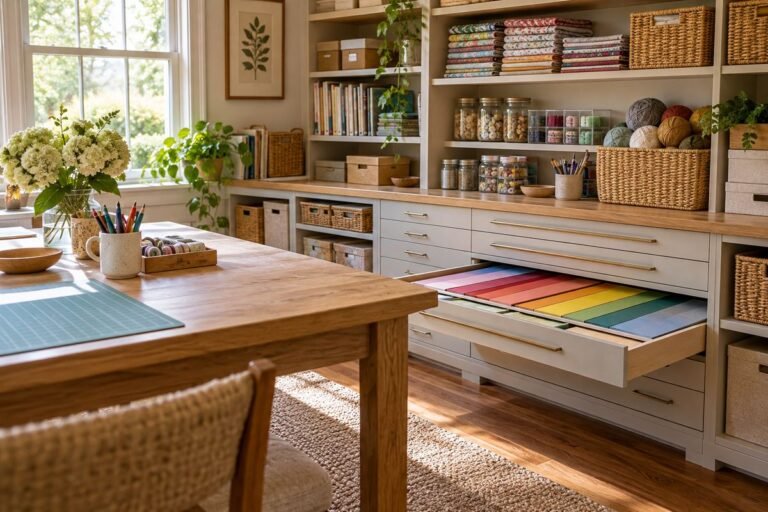
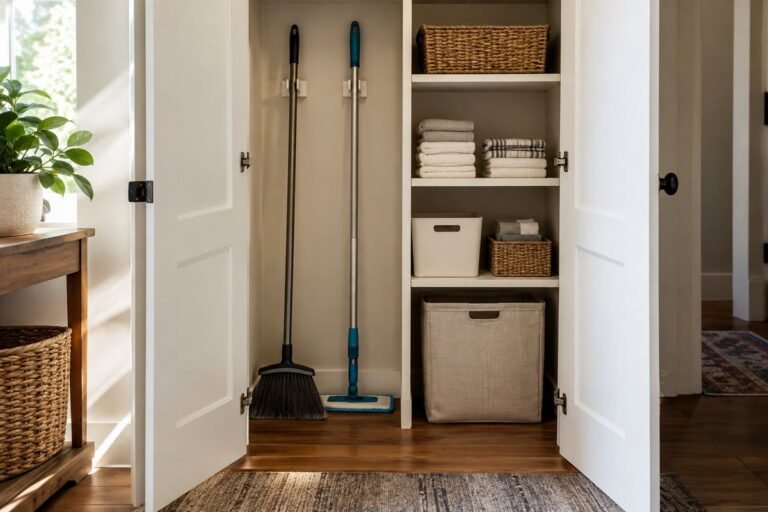
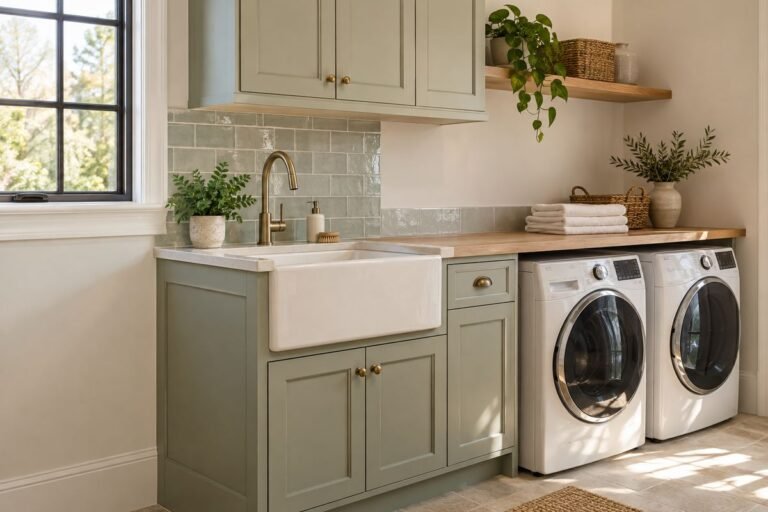
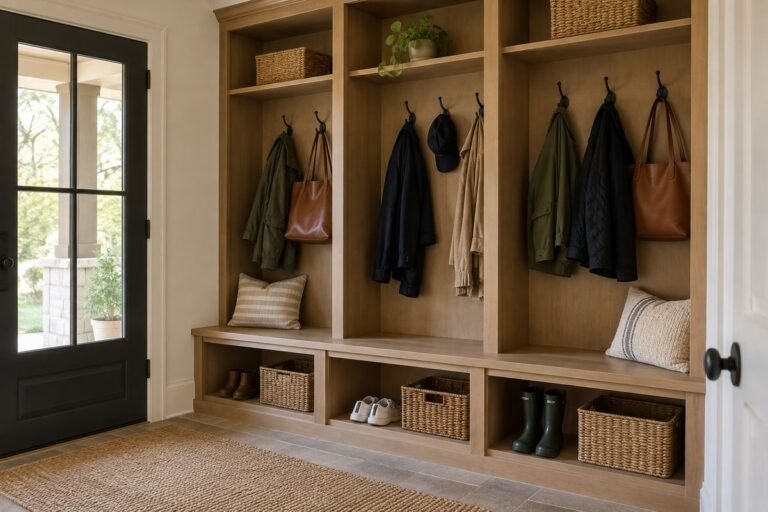
Laundry room shelving ideas should make the work easier before they make the room look styled. The most useful shelf has a clear purpose, an accessible position and enough space around it for the appliances and daily tasks to function.
Begin by separating clean linens, empty baskets and small nonchemical accessories from products that require secure storage. Then map the washer and dryer doors, controls, connections and service access. The 26 concepts below cover shelf arrangements, finishes and practical ways to divide the room.
The images are original completed-room concepts, not structural or appliance installation diagrams. Have the exact shelf system, wall construction, intended load and appliance requirements checked before installation. There is no universal shelf height or clearance that suits every laundry appliance.
The images are original AI-generated decor concepts, not installation diagrams or photographs of completed client projects.
Browse These 26 Laundry Room Shelving Ideas
Jump to an idea
- Give clean towels one reachable shelf
- Use a pair of shelves for separate linen groups
- Try shallow laundry room shelving ideas on a side wall
- Create a dedicated bay for empty laundry baskets
- Use open shelves beside a closed cabinet
- Keep the area over a top-loader clear
- Define a folding zone with shelves beside it
- Use one short shelf above a separate counter
- Let warm wood soften a pale utility room
- Use painted shelves to connect with the cabinetry
- Try visible brackets as a deliberate detail
- Choose a floating appearance for a quieter wall
- Give a tall basket its own shelf opening
- Use a small bin for appropriate sewing accessories
- Keep everyday linens within comfortable reach
- Use a higher shelf for suitable less-used light items
- Leave space beside a window
- Use a corner only when the back stays reachable
- Create a shelf rhythm with different useful heights
- Use metal shelving for a distinct utility character
- Give folded cloths a small dedicated section
- Connect shelves to a narrow storage tower
- Keep shelves separate from drying space
- Use one small decorative detail after the storage works
- Leave a clear place to return the basket
- Edit laundry room shelving ideas after a week of use
Plan laundry room shelving ideas around the real routine
List what each shelf will hold and measure those items. Sketch the appliance bodies with their doors or lids fully open, then include controls, connections and the service route. Choose a shelf depth and spacing from the intended objects and useful reach. Confirm the exact system’s load and fixing requirements with the actual wall before ordering; a finished-room image cannot establish concealed supports.
| Storage task | A useful shelf arrangement | What to check |
|---|---|---|
| Clean towels | A reachable shallow linen shelf | Folded towel depth and easy removal |
| Empty baskets | A wider dedicated bay | Basket width, height and return route |
| Small sewing accessories | A defined suitable container | Contents and household access needs |
| Top-loading washer | Shelving away from the open lid | Complete lid movement and exact appliance instructions |
| Household cleaning products | Original containers in suitable locked storage | Product labels and access by children |
Keep appliance space separate from shelf storage
Use the exact washer and dryer manuals for installation, ventilation, door movement, connections and service access. LG’s support system provides model-specific manuals; one machine’s dimensions or clearances do not apply to every model. Shelves should not rest on appliance controls, obstruct required openings or prevent normal use. Have the combined layout assessed before an attractive shelf arrangement becomes an installation plan.
Give laundry products appropriate secure storage
CPSC advises keeping household cleaning chemicals in their original containers and safely locked away from children. Laundry packets should remain in the original closed packaging, out of children’s sight and reach. Decorative food-style jars are not a suitable replacement. Use the open shelf concepts for linens and appropriate nonchemical household items, with cleaning products stored according to their labels and household needs.
1. Give clean towels one reachable shelf
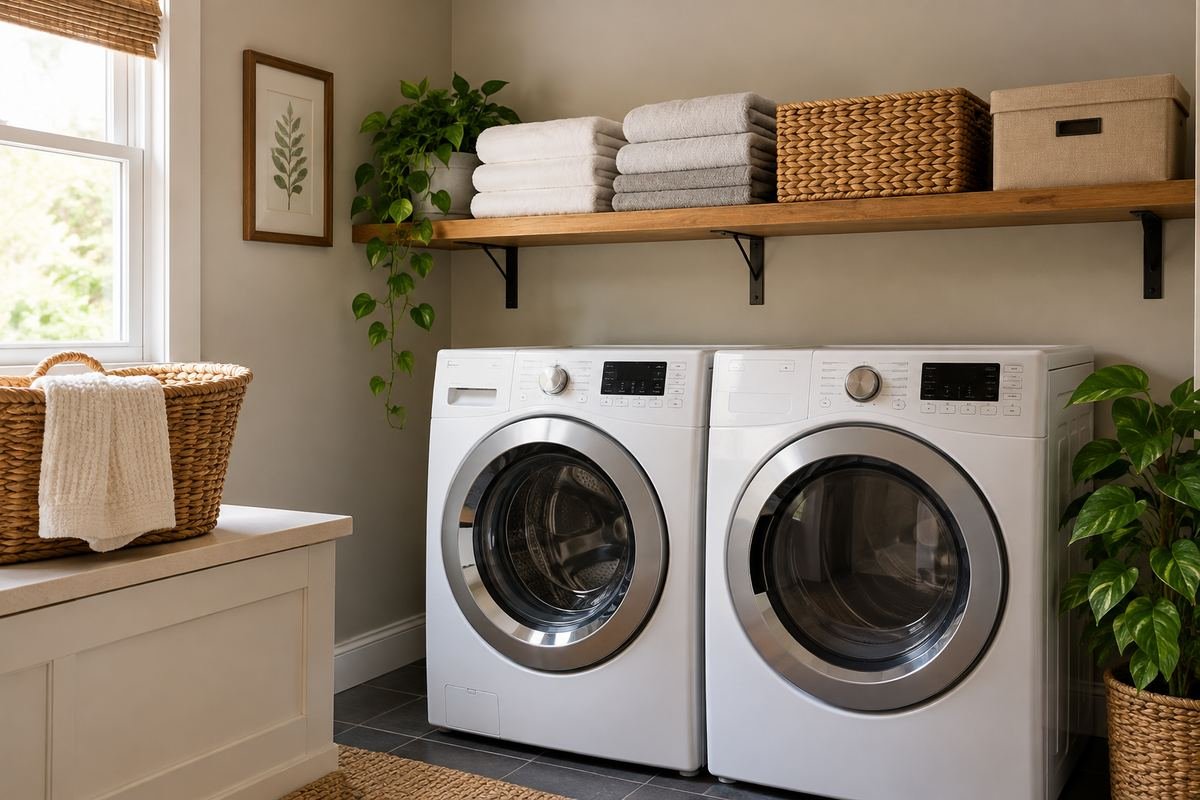
A dedicated towel shelf keeps clean linens in a defined place without mixing them with every laundry accessory. A modest stack can look orderly while remaining easy to remove.
Measure the folded towels before choosing the depth. Leave enough clearance above the stack to lift a towel without pulling the whole pile forward. Confirm suitable shelf support for the intended load rather than judging strength by its appearance.
Practical tip: Measure the stack in the way you actually fold it.
2. Use a pair of shelves for separate linen groups
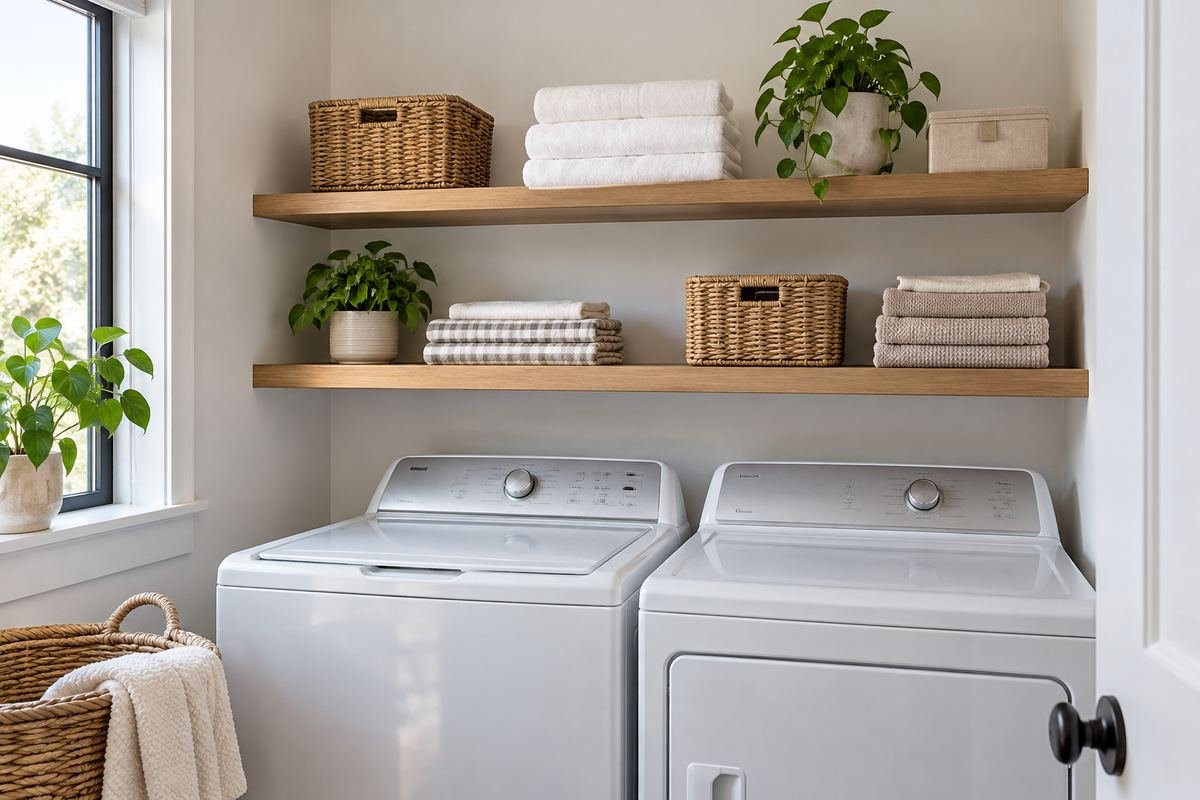
Two shelves can divide towels and spare household linens into clear categories. The separation helps the room remain organized without a matching container for every item.
Choose the spacing from the real stacks and useful reach. Keep the upper shelf for suitable lighter items that are handled less often. The whole system still needs the correct load and wall fixing specification.
Practical tip: Assign a distinct category before adding the second shelf.
3. Try shallow laundry room shelving ideas on a side wall

A shallow side-wall shelf can offer storage without placing everything over the machines. It may suit a narrow room where the main appliance wall needs to remain comparatively clear.
Check the loaded depth against the walking route, not just the empty shelf. Keep doors and useful reach in the plan. Choose storage items that fit the actual depth rather than letting baskets overhang into the room.
Practical tip: Measure the route with the shelf fully loaded.
4. Create a dedicated bay for empty laundry baskets
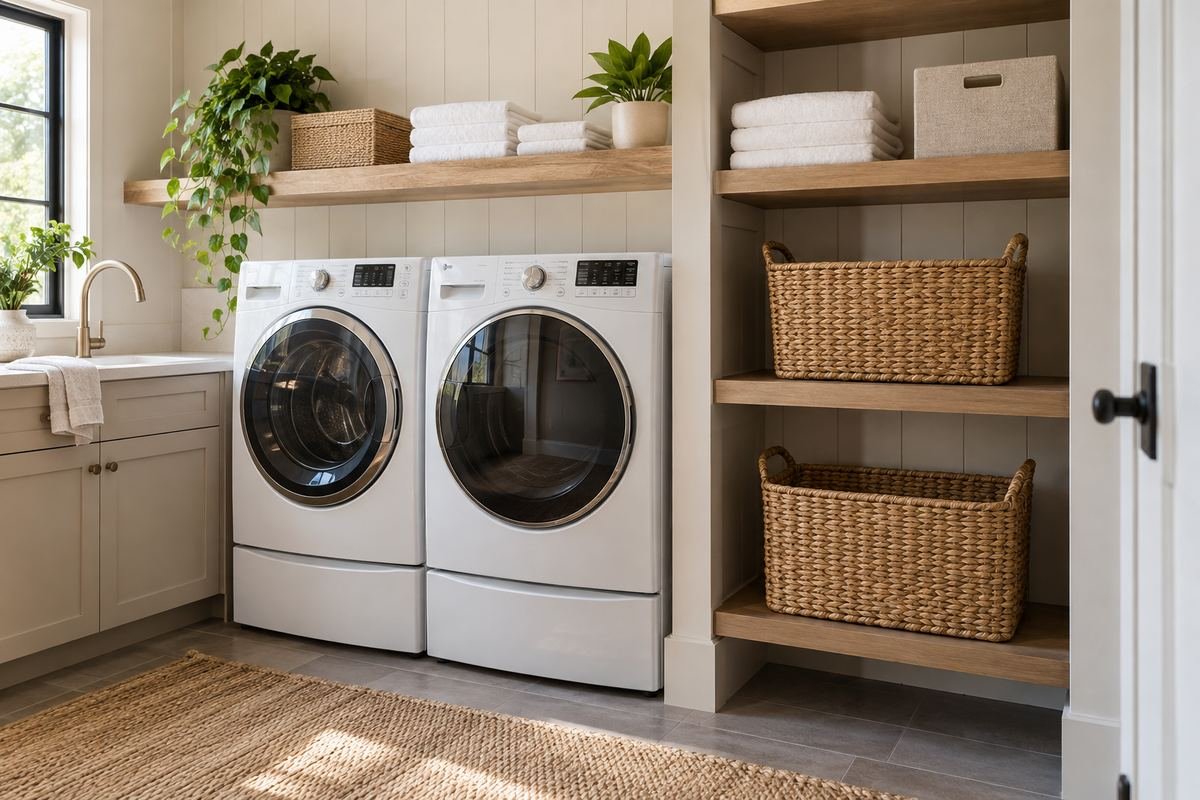
Empty baskets need a place to return after use. A defined shelf bay can keep them from collecting in front of the washer or across the doorway.
Measure the basket handles as well as the main body. Leave room to lift and slide the basket without scraping the shelf above. Keep the bay separate from plumbing and service access that may need to remain reachable.
Practical tip: Include handles in the basket measurements.
5. Use open shelves beside a closed cabinet
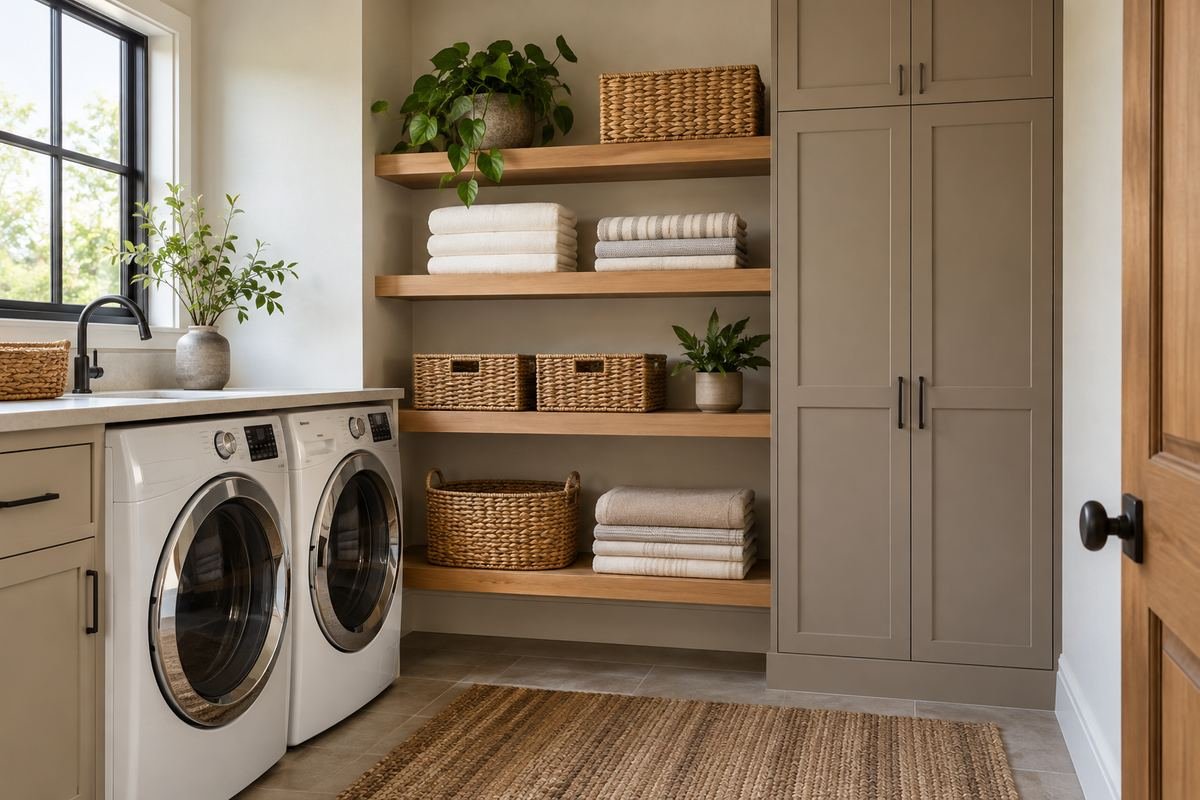
Open shelves can hold clean linens while a closed cabinet handles items that need a different storage arrangement. The contrast gives the room both useful access and a quieter visual area.
Assign the contents before choosing widths and heights. Cleaning products need suitable secure storage under their labels and household needs. Do not assume a decorative cabinet door alone provides appropriate restricted access.
Practical tip: Separate open linen storage from secure product storage.
6. Keep the area over a top-loader clear
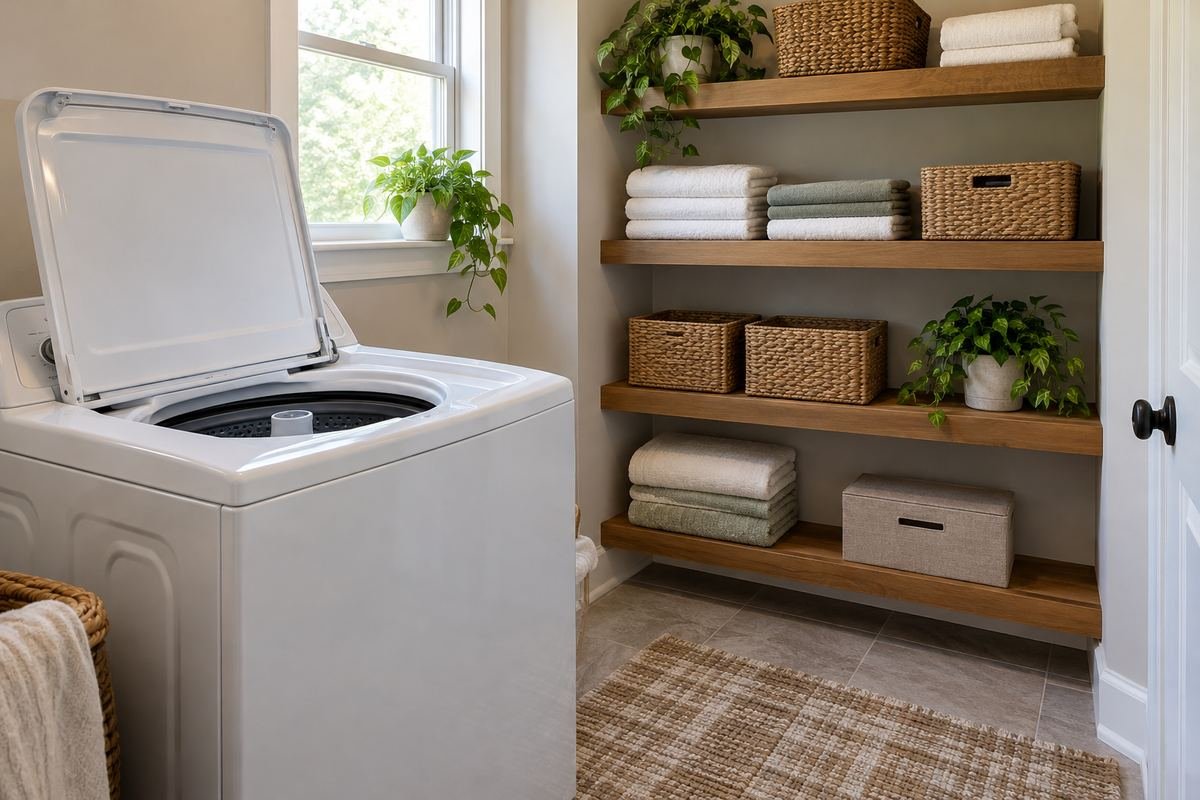
A top-loading washer needs its full lid movement. A clear wall area above it can be more useful than adding a shelf that makes loading or controls awkward.
Use the exact appliance manual and check the open lid in the actual room. Place storage on a side wall or another suitable area if necessary. The most practical shelving idea may be the decision to move it away from the machine.
Practical tip: Draw the lid in its fully open position.
7. Define a folding zone with shelves beside it
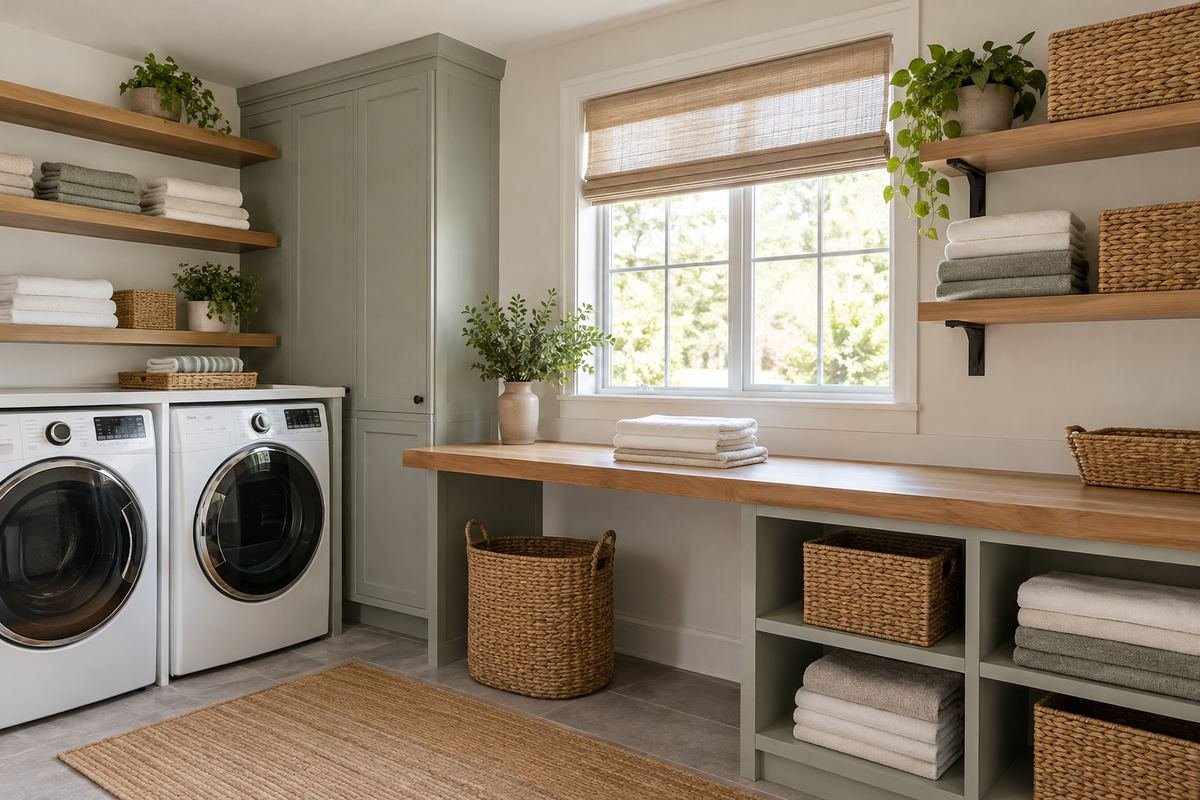
Shelves near a folding surface can give clean linens a logical destination. The arrangement works best when the useful folding area stays clear rather than becoming another display shelf.
Check how you move a basket onto and away from the surface. Keep the shelf position out of that movement, and choose a suitable supported work surface independent of appliance requirements. Organize the storage around the task sequence.
Practical tip: Walk through the basket-to-folding-to-storage routine.
8. Use one short shelf above a separate counter
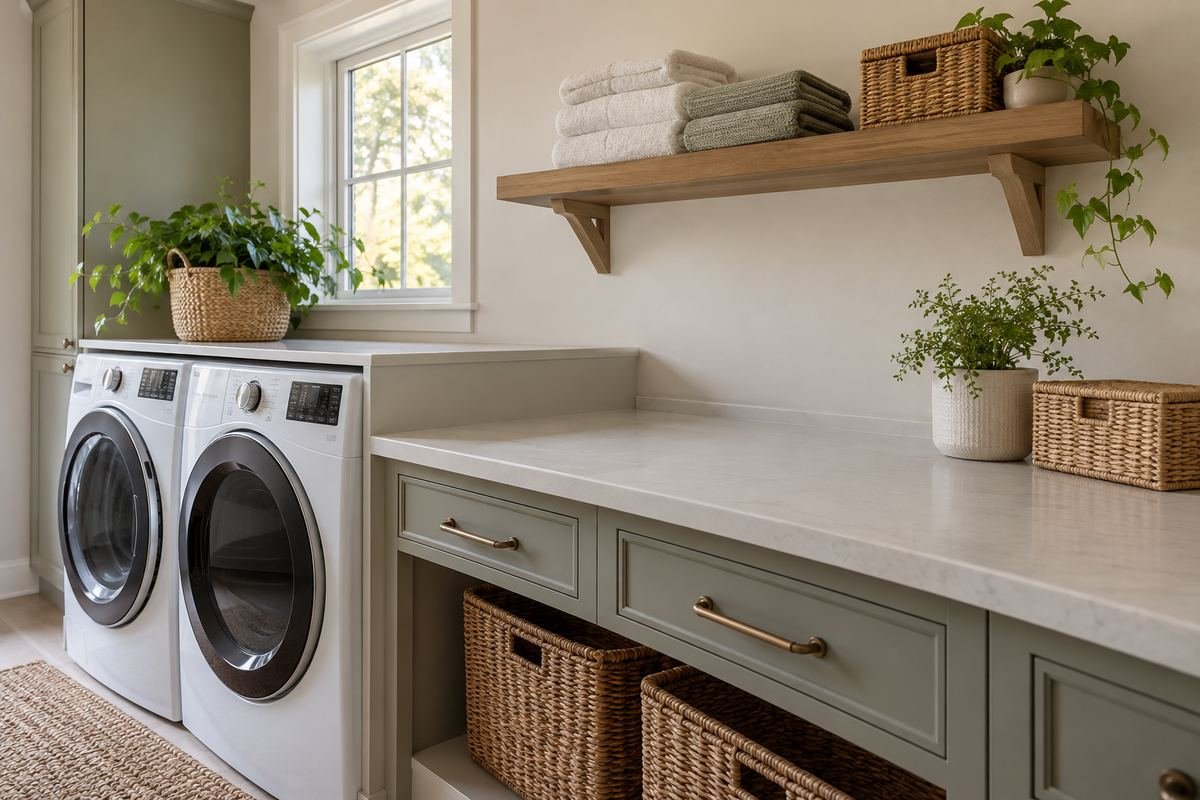
A short shelf can add a focused storage area without covering an entire wall. Above a separate counter, it can support a few clean folded cloths or an appropriate small container.
Compare the shelf with the counter task and the available headroom. Keep the counter useful and avoid positioning objects where they can be knocked during folding. Confirm the actual support and load before selecting the final shelf length.
Practical tip: Choose the shelf length from the task below it.
9. Let warm wood soften a pale utility room
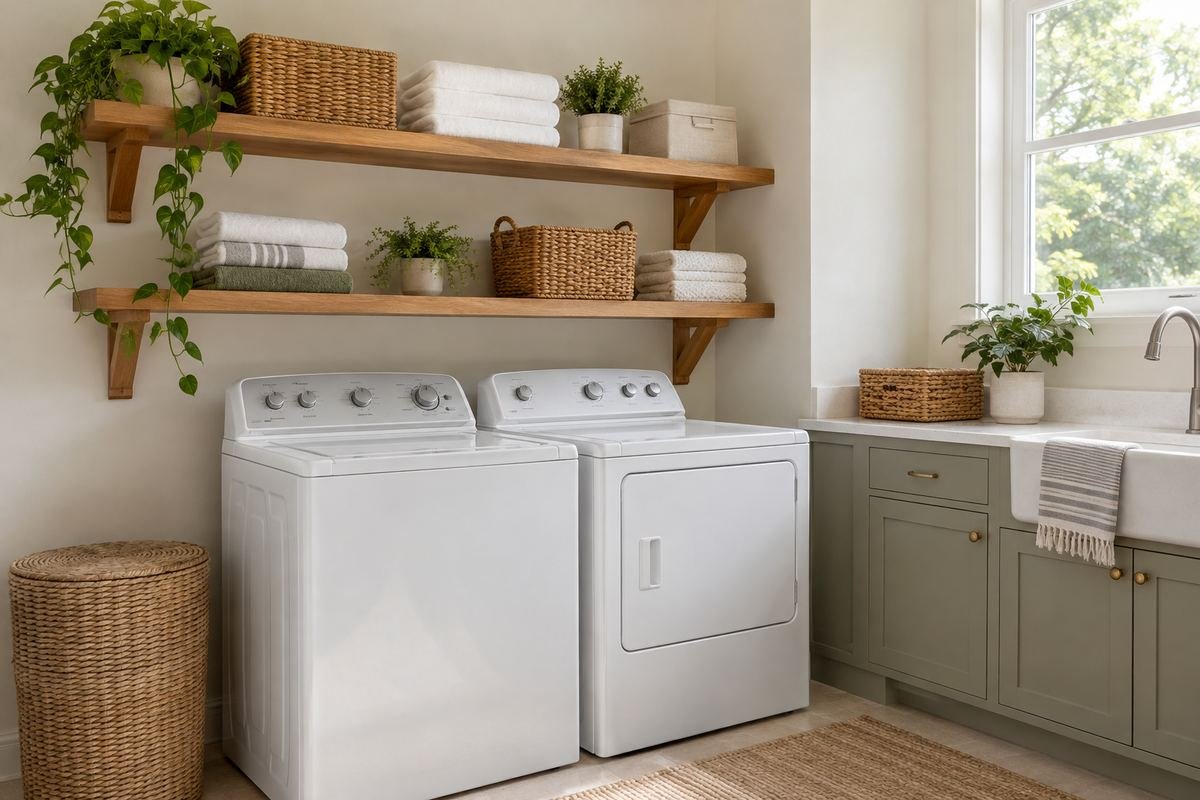
Wood shelving can add warmth to plain walls and simple machines. A restrained edge profile lets the material provide detail without making the room feel heavily decorated.
Choose a product and finish suitable for the actual conditions, and follow its care instructions. Keep the wall and supports considered as part of the complete system. A warm color alone does not establish moisture resistance or structural capacity.
Practical tip: Confirm the actual finish and support specification.
10. Use painted shelves to connect with the cabinetry
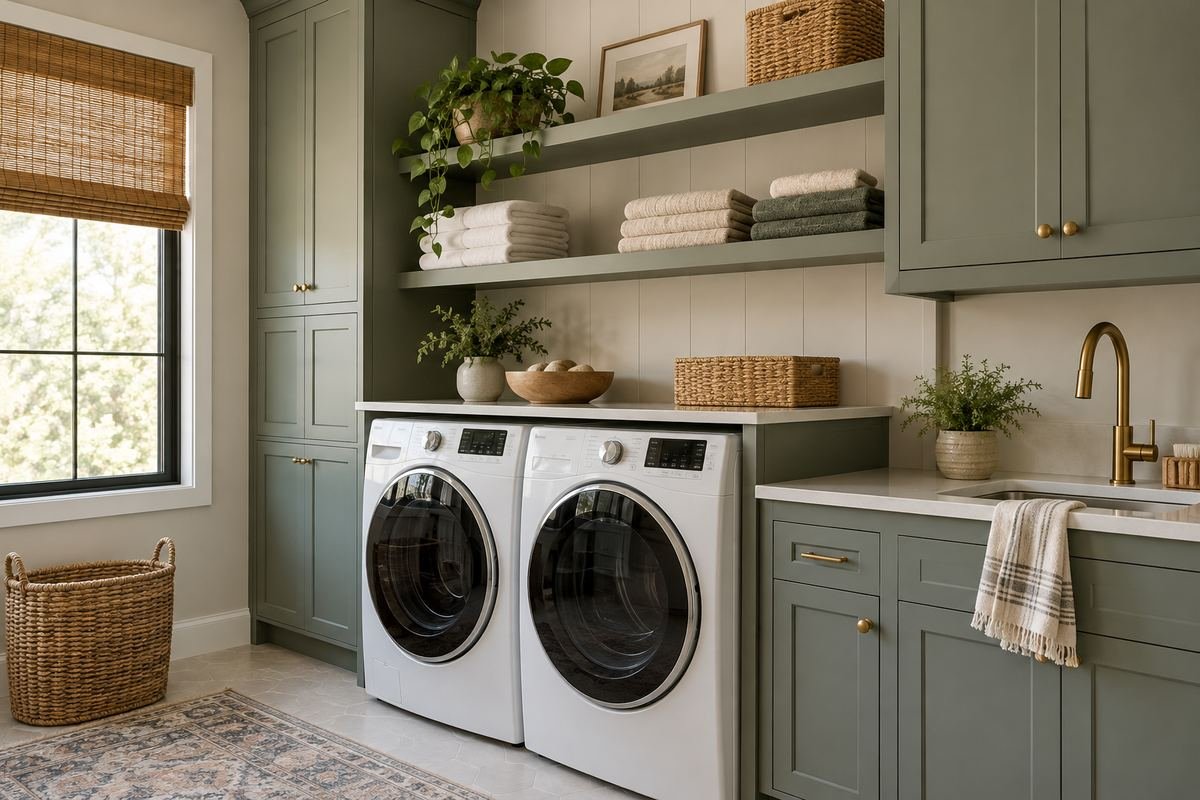
A painted shelf can relate to existing cabinets and make separate storage pieces feel considered. A close color keeps the shelf from becoming a competing feature.
Compare the actual paint or factory finish beside the cabinet in the room. Similar names can hide different undertones and sheens. Choose the surface for suitable care and use as well as its color.
Practical tip: Compare color and sheen together.
11. Try visible brackets as a deliberate detail

Visible brackets can give shelving a clear practical identity. A restrained metal finish can relate to another room detail without hiding the support system.
Select brackets, shelf and fixings as a suitable complete arrangement. Their appearance does not establish the allowable load or wall compatibility. Keep the space below clear enough that the brackets do not interfere with a folding or reaching task.
Practical tip: Specify the support before refining its finish.
12. Choose a floating appearance for a quieter wall

A floating-look shelf can make the storage wall visually simple. It works well when the room already contains several cabinet lines and appliance shapes.
The concealed supports still need an exact specification for the wall and intended load. Do not assume the shelf is stronger because the brackets are hidden. Keep the contents modest and chosen from the confirmed system capacity.
Practical tip: Treat concealed supports as part of the purchase.
13. Give a tall basket its own shelf opening
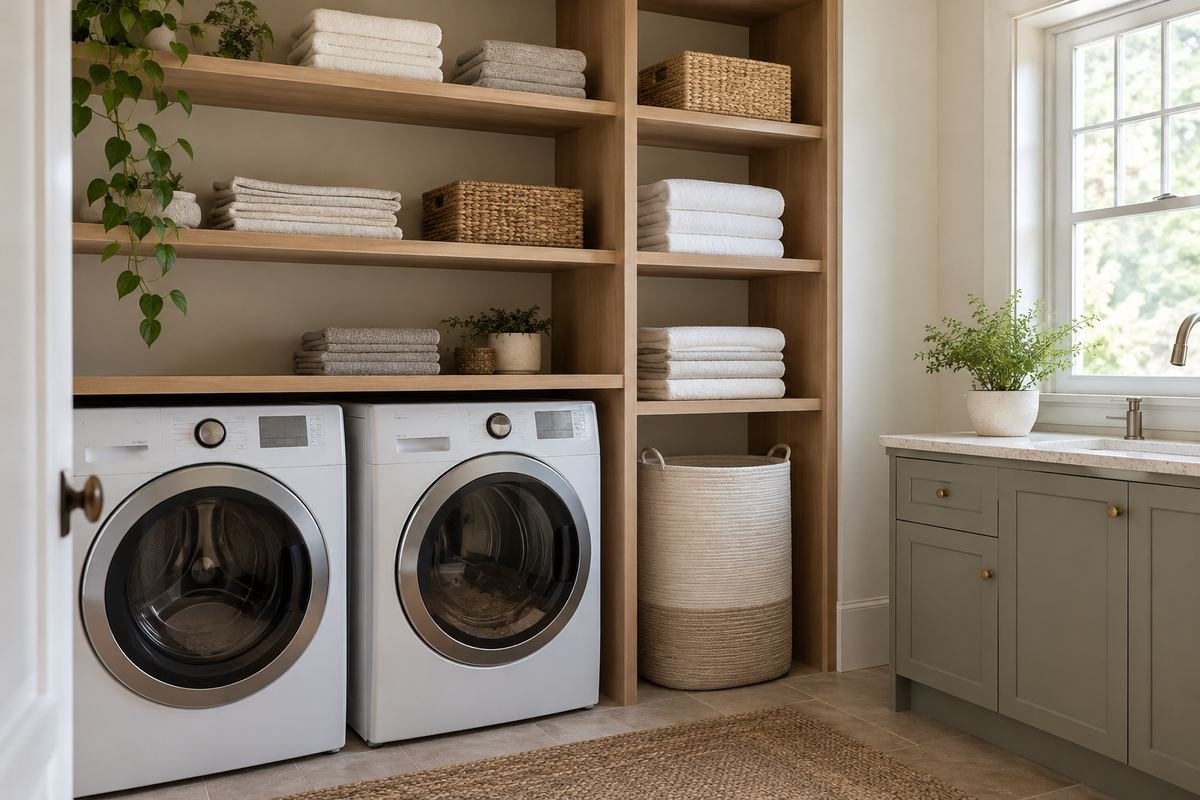
A taller basket can need a different opening from folded towels. Planning that bay separately avoids squeezing it under a shelf that was spaced for another item.
Measure the basket’s complete height and the movement needed to remove it. Leave the storage useful when the basket is full. Choose only suitable contents and keep heavy items in appropriately supported and accessible positions.
Practical tip: Include removal movement above the basket.
14. Use a small bin for appropriate sewing accessories

A defined container can keep small nonchemical sewing or repair items together. It makes the shelf useful without scattering loose objects across the counter.
Choose storage appropriate for the actual contents and household access needs, especially if sharp items are involved. Keep the category small enough to inspect easily. A decorative open bowl is not automatically a suitable container for every accessory.
Practical tip: Choose the container from its contents.
15. Keep everyday linens within comfortable reach

The shelf you use most often should work with the people who use the room. Comfortable reach can matter more than a perfectly symmetrical wall arrangement.
Test the proposed position with a lightweight representative item before installation is finalized. Keep heavier storage in suitable accessible locations, and avoid using the appliance as a step. Have the system specified for the actual load and wall.
Practical tip: Test the reaching movement before approving the shelf plan.
16. Use a higher shelf for suitable less-used light items
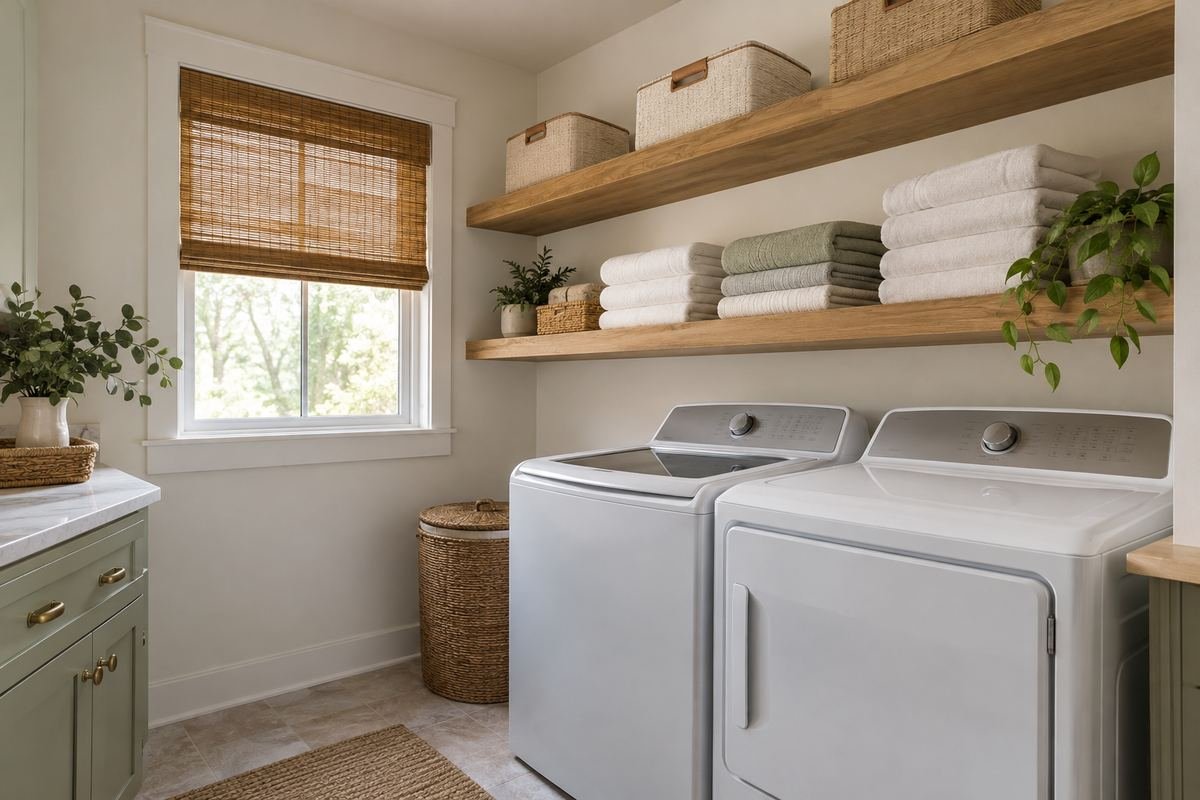
A higher shelf can reserve the easiest reach for daily linens. A small amount of appropriate light storage can keep occasional items in a defined place.
Plan safe access and the system’s load requirements before choosing the contents. Do not turn the highest shelf into a place for heavy awkward objects. If reaching it would interrupt the routine, a different storage location may be more useful.
Practical tip: Choose the contents and access method together.
17. Leave space beside a window
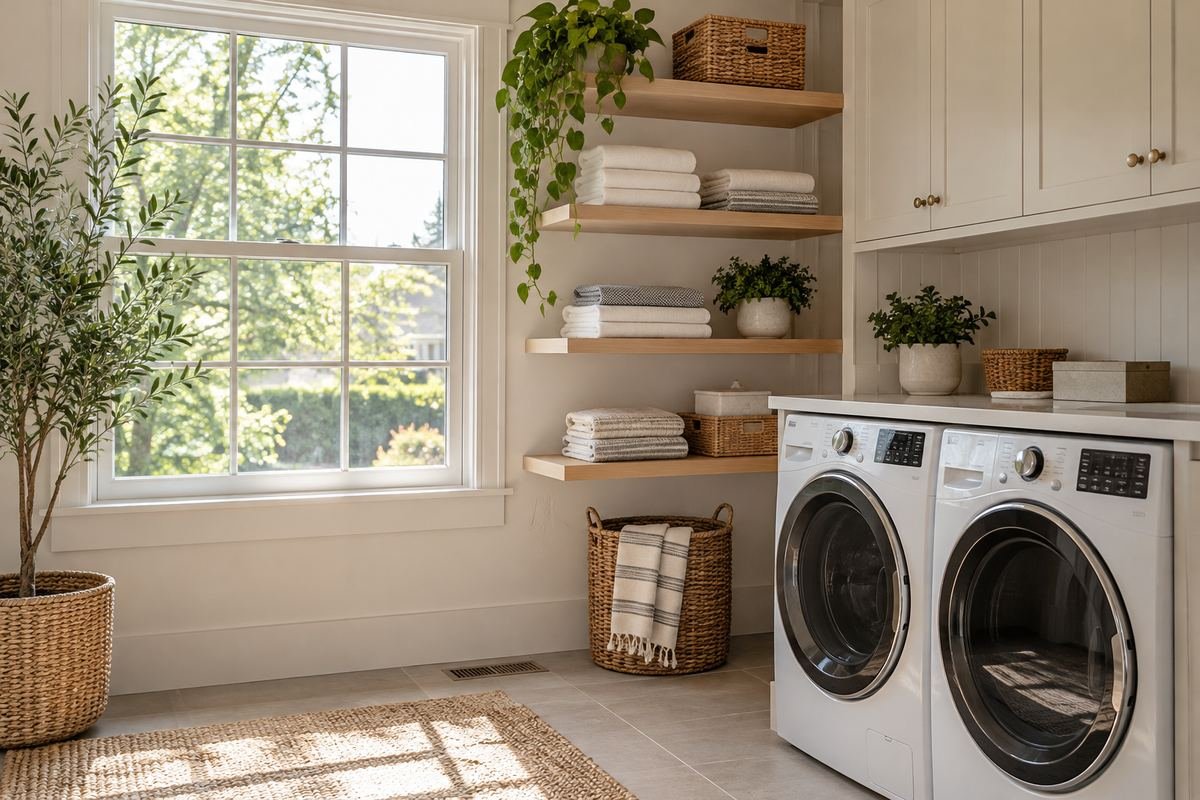
Shelves beside a window can use a wall section while preserving the opening’s light and operation. A limited storage group keeps the window area from feeling crowded.
Check curtain or shade movement, handles and any required access before setting the shelf position. Compare loaded baskets with the actual opening. Avoid treating a shelf across the window as an automatic way to gain more storage.
Practical tip: Plan the window in its normal open and closed positions.
18. Use a corner only when the back stays reachable
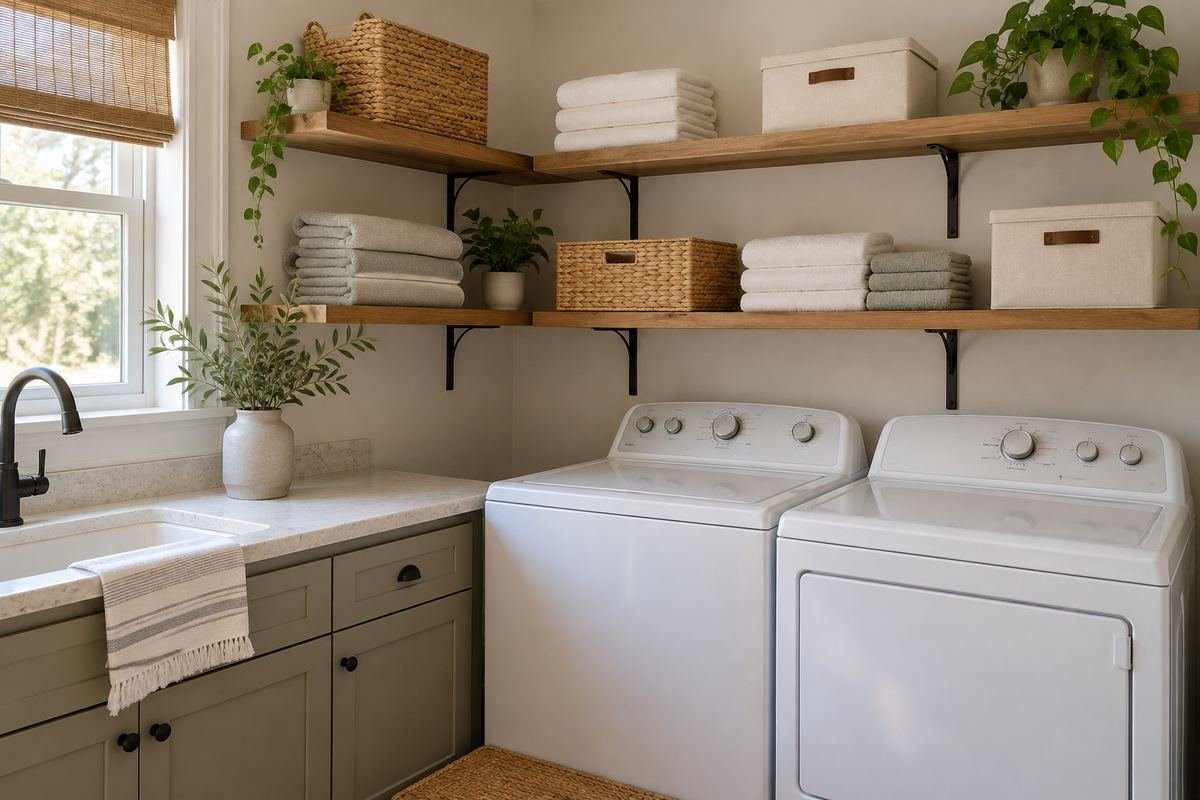
A corner shelf can add storage, but an inaccessible back section can become a place where objects disappear. Keep the intended contents simple and visible.
Test whether you can remove the rear item without emptying the whole shelf. A shallower or shorter arrangement may be more useful than using the maximum wall depth. Confirm the support system for the actual corner construction.
Practical tip: Reach the back item in the proposed loaded layout.
19. Create a shelf rhythm with different useful heights
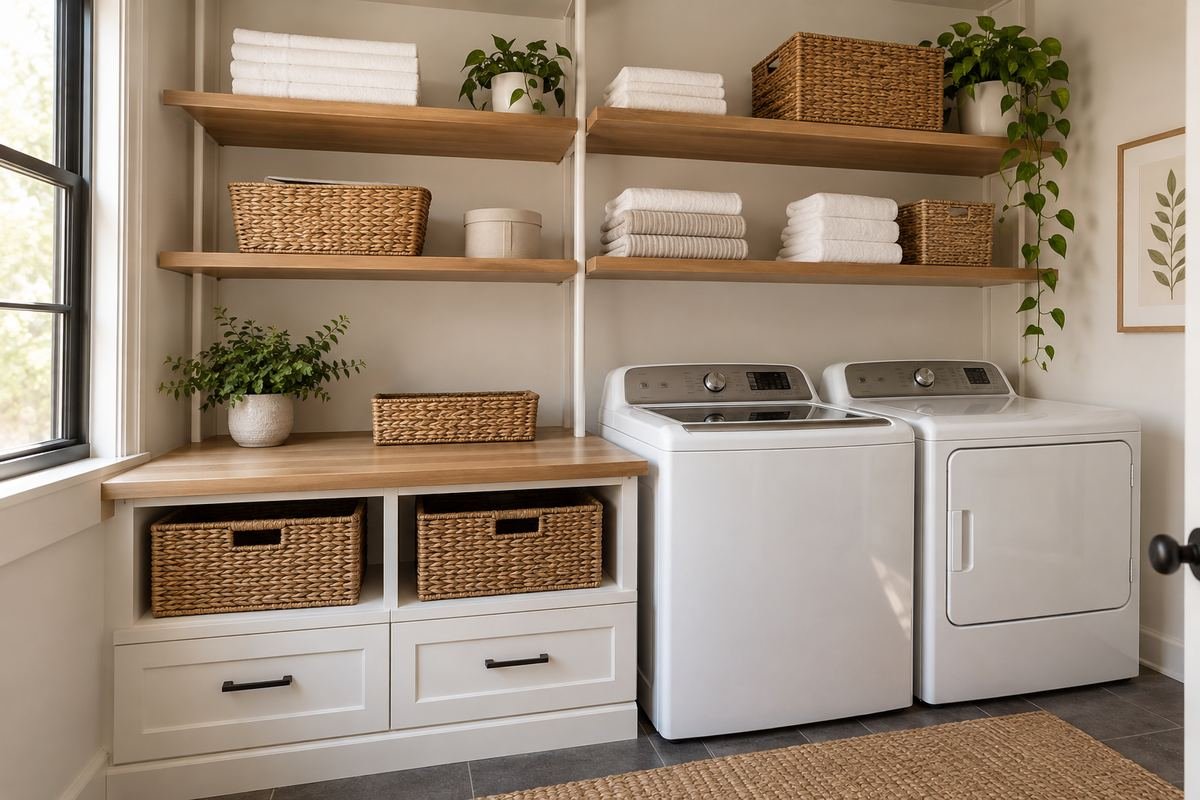
Different shelf openings can accommodate towels, baskets and light fabric storage more effectively than identical gaps. The variation should follow the contents rather than a decorative pattern alone.
Measure the objects and leave the movement needed to remove them. Keep the complete elevation visually clear with a limited finish palette. Confirm the structure and loads for the final arrangement, especially where shelf spans differ.
Practical tip: Let the actual objects set the opening heights.
20. Use metal shelving for a distinct utility character
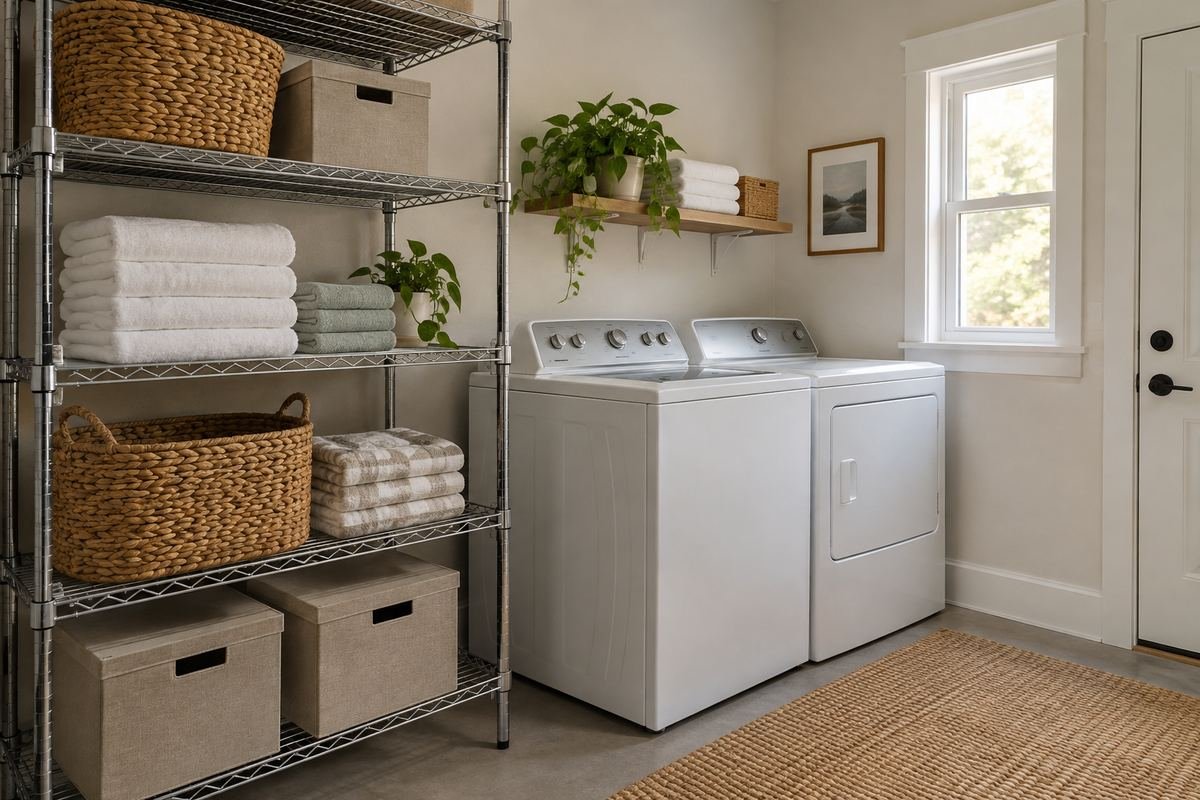
A suitable metal shelving unit can give the room a straightforward utility feel. A restrained container group keeps the open structure orderly without hiding its practical role.
Check the complete unit’s rating, assembly and any required anchoring, along with the actual room conditions. Keep it out of appliance service and circulation areas. Do not assume all metal finishes suit the same moisture exposure.
Practical tip: Review the complete unit specification and anchoring requirements.
21. Give folded cloths a small dedicated section
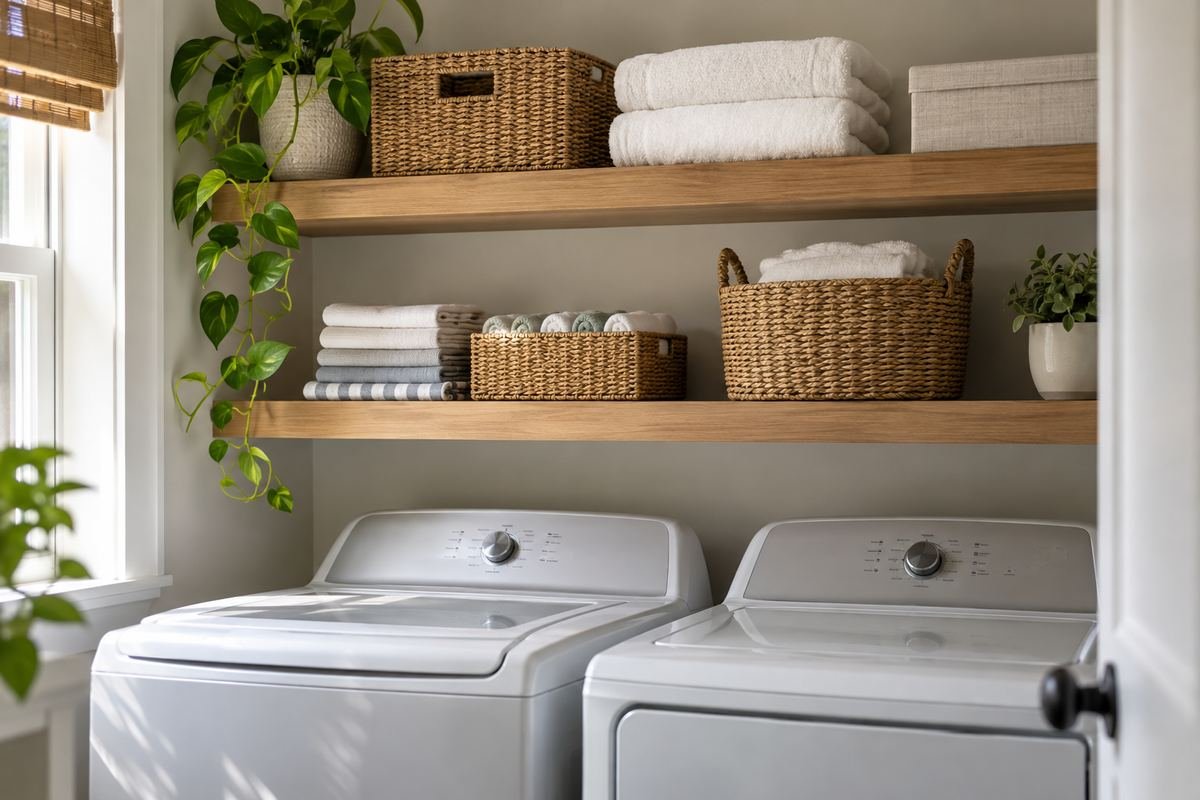
Cleaning cloths that are clean and ready to use can have their own small linen section. The separate category makes it easier to see what is available.
Keep the folded group modest and apart from household cleaning chemicals. Choose a shelf or container that is easy to clean under its own material instructions. Revisit the quantity if the section starts overflowing into the folding space.
Practical tip: Keep only the quantity that fits the assigned section.
22. Connect shelves to a narrow storage tower
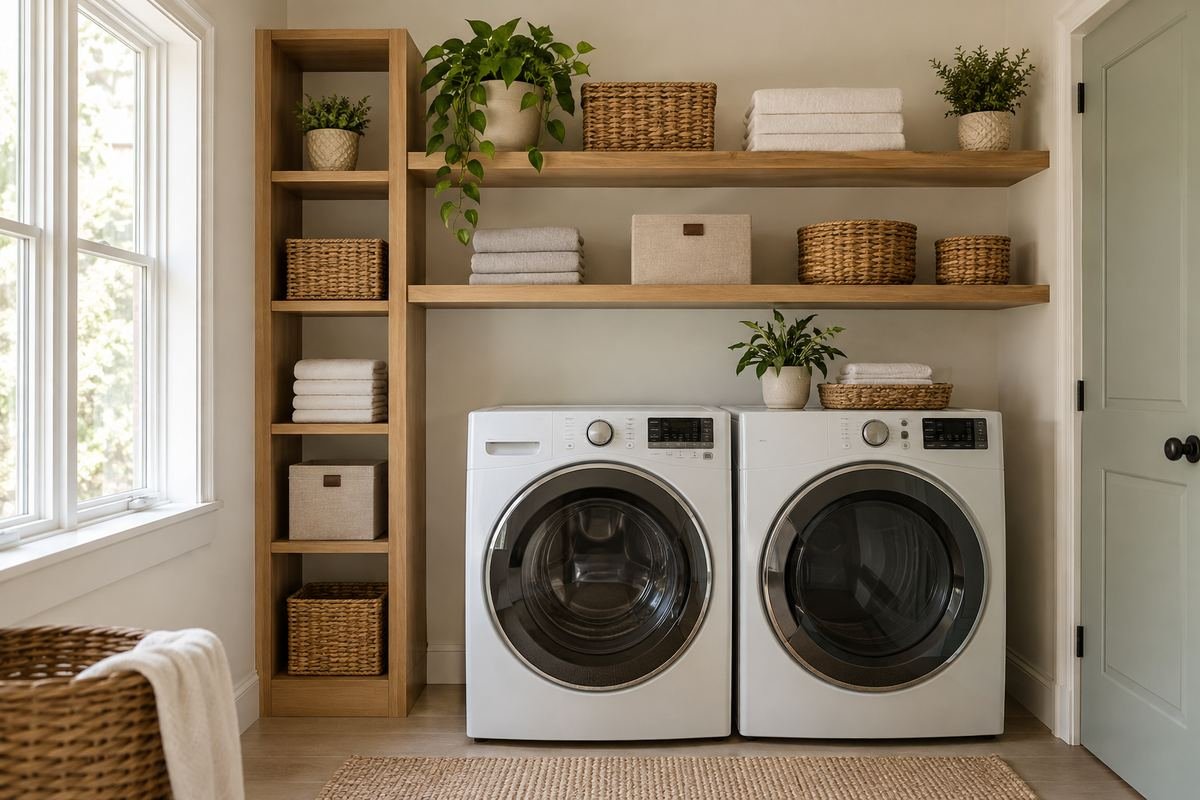
A narrow tower can provide a vertical group beside broader shelves. It may suit a small wall section where a full cabinet would interrupt the route.
Assess the actual width, depth, stability and required anchoring of the complete unit. Keep the loaded tower clear of appliance doors and connections. The narrow appearance does not remove the need for a useful access plan.
Practical tip: Check the loaded depth against doors and service areas.
23. Keep shelves separate from drying space
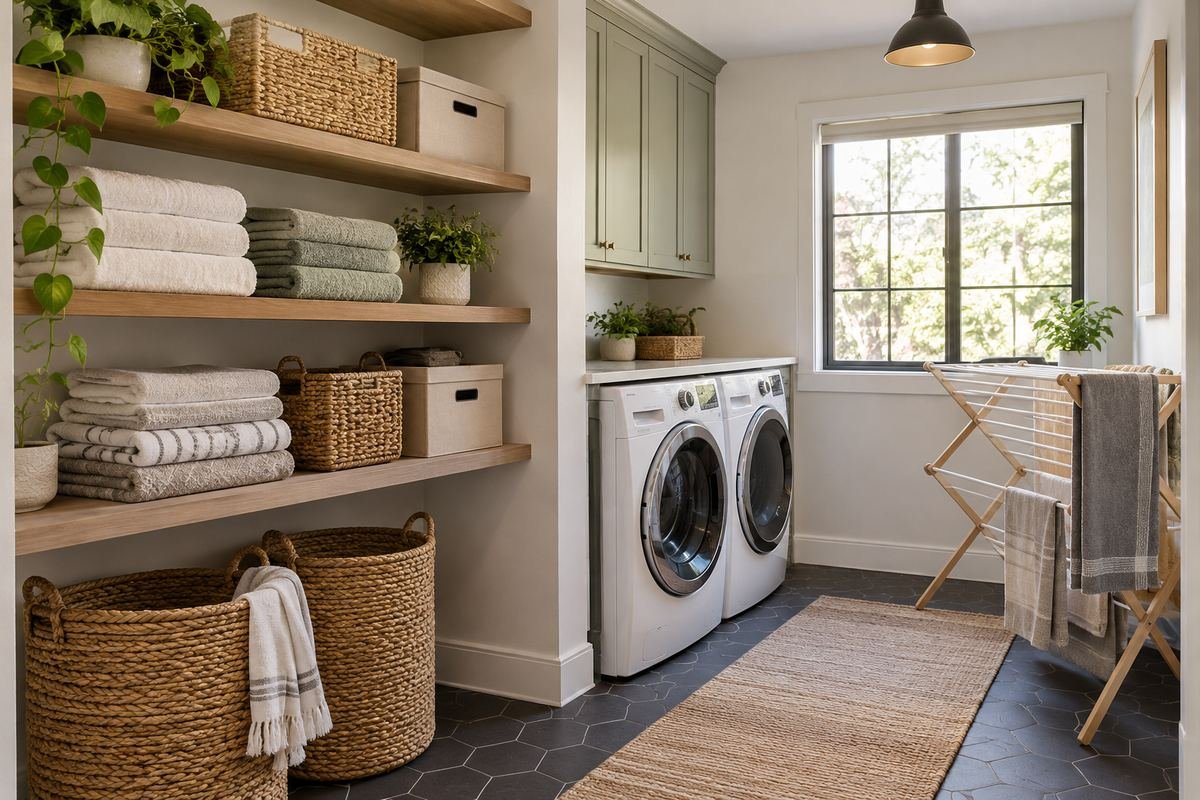
Shelves and drying arrangements serve different tasks. Giving each a defined area can keep damp garments from being squeezed among clean folded linens.
Plan the complete drying system and room conditions with the appliance requirements in view. Keep air movement and normal access considered. Do not assume a decorative shelf can also act as a rated drying support without the appropriate product specification.
Practical tip: Assign storage and drying separate physical roles.
24. Use one small decorative detail after the storage works

A restrained artwork or ceramic can make the laundry room feel considered once the useful categories have a place. The decoration should not displace the folding surface or accessible storage.
Choose an appropriate stable location and material for the room. Keep the object count low and compare the space during ordinary use. If the decor makes reaching or cleaning awkward, a simpler arrangement is the better result.
Practical tip: Add decoration only after testing the daily routine.
25. Leave a clear place to return the basket
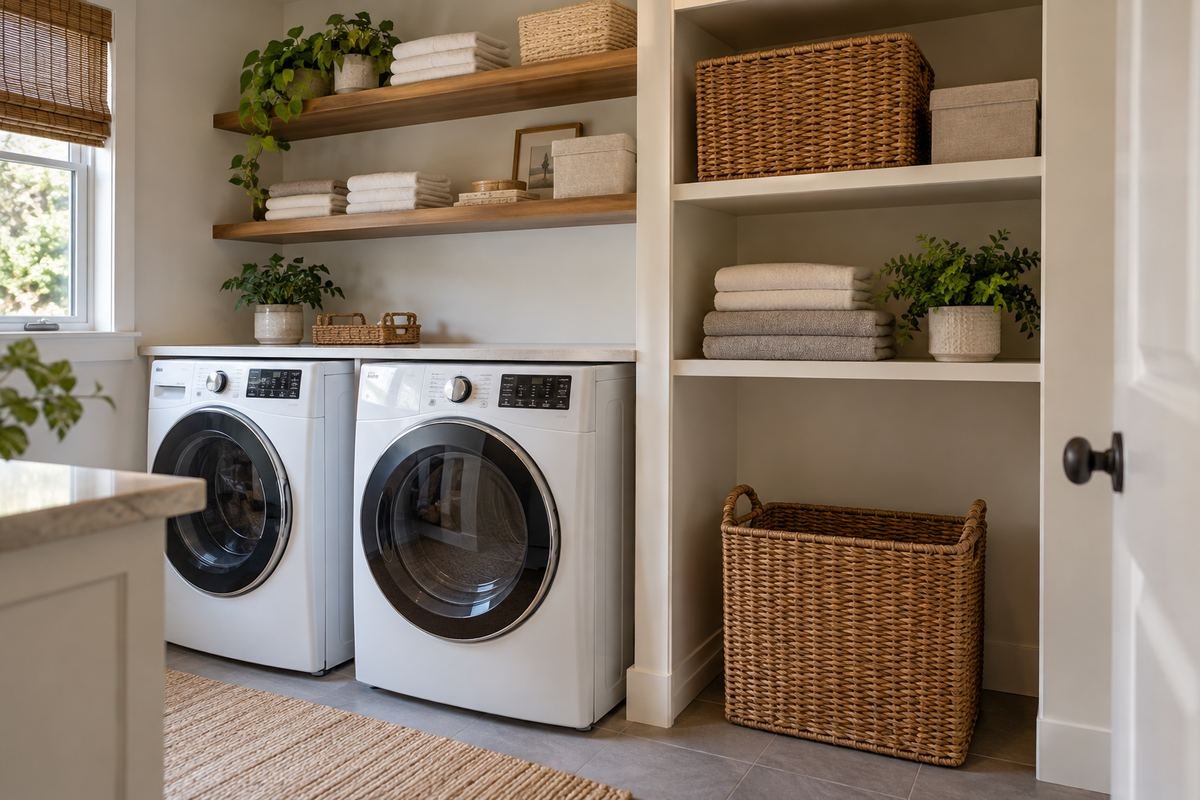
A storage plan should include the moment after the laundry is finished. A clear basket-return area helps the room remain usable instead of becoming crowded between tasks.
Walk through the full routine with the actual basket. Keep the return space away from the door swing and appliance service route. If the plan only works when every basket is perfectly nested, simplify the storage arrangement.
Practical tip: Test the room at the end of a normal laundry cycle.
26. Edit laundry room shelving ideas after a week of use

A useful shelving arrangement should support the real household routine. After a week, the items that remain awkward to reach or return become easier to identify.
Move an appropriate category, reduce an unnecessary stack or change the container before adding another shelf. Keep appliance requirements, supports and secure product storage intact. A clear system with fewer items often works better than filling every opening.
Practical tip: Change one repeated inconvenience before buying more storage.
Frequently Asked Questions
How high should shelves above a washer be?
Use the exact appliance requirements, full door or lid movement and useful reach to determine the location. No single height works for every machine or household.
Which laundry room shelving ideas suit a narrow room?
A shallower shelf or a defined side-wall arrangement may preserve the route, provided the actual system is suitable. Compare loaded depth, door movement and reach before choosing.
Can laundry room shelving ideas work with a top-loading washer?
Yes, when the shelves preserve the full lid opening and the model-specific requirements. A shelf on a different wall may work better than one immediately above the machine.
Can I put detergent packets in a decorative jar?
Keep laundry packets in their original closed packaging and securely out of children’s sight and reach. Use decorative open storage for appropriate nonchemical items instead.
How much weight can a floating laundry shelf hold?
That depends on the complete shelf, supports, fixings, wall construction and installation. Use the exact system’s specifications and have the intended load assessed rather than estimating from the floating appearance.
Choose the Details That Work in Your Home
Choose laundry room shelving ideas from the work you need the room to perform. Reachable linen storage, a clear basket route and preserved appliance access make the space useful every day. Refine the finish after the load, supports and secure product storage are resolved.
For related ideas, explore laundry room design ideas, small linen closet organization, closet measurement planning.
Planning References
LG USA: find model-specific appliance manuals and documents; CPSC: original containers and secure storage for household cleaning products. Follow the instructions for the exact products you choose.
Optional digital guide for this topic
If you prefer a structured workbook, explore this related paid guide.