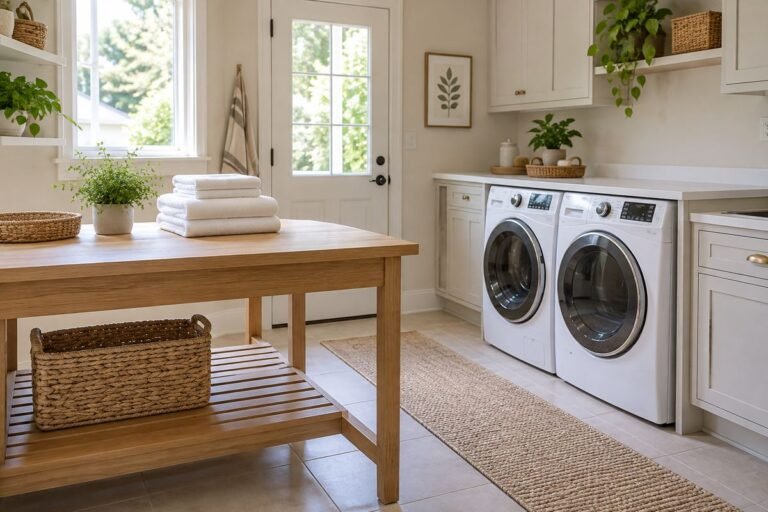
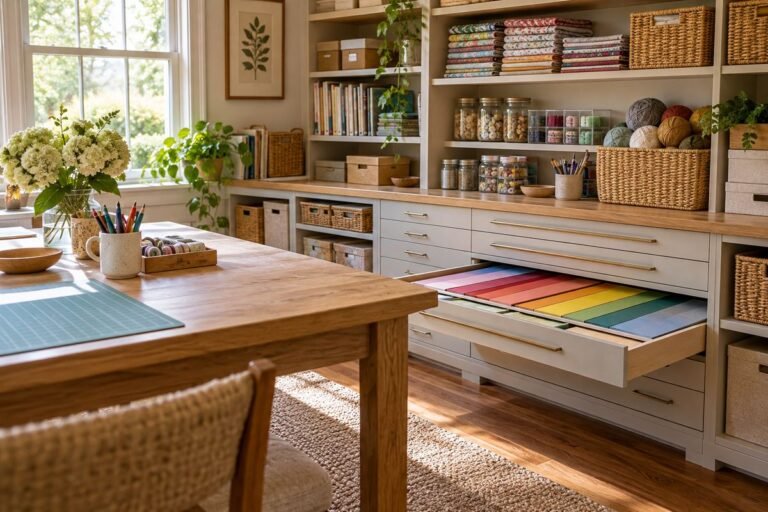
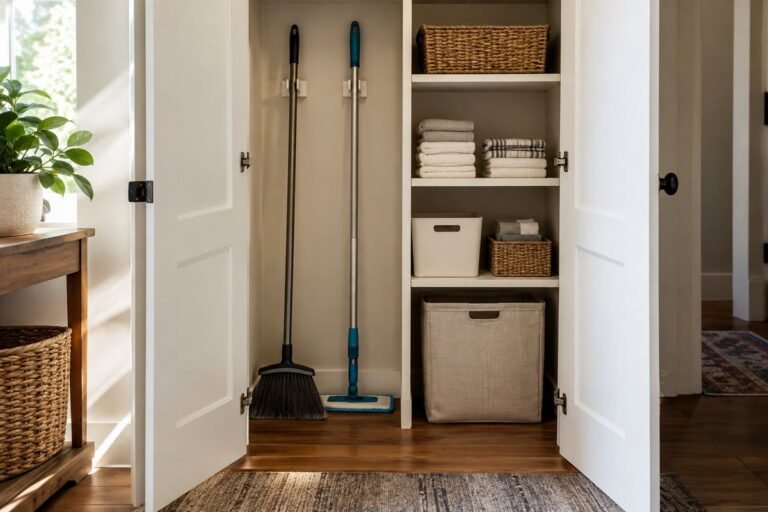
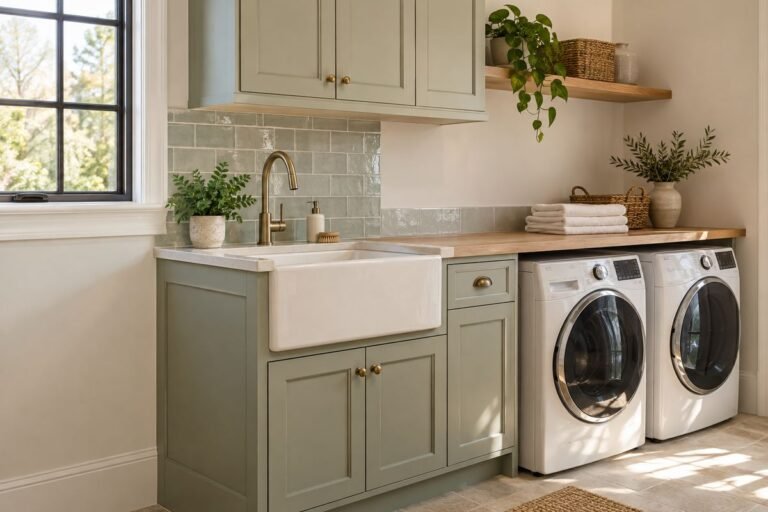
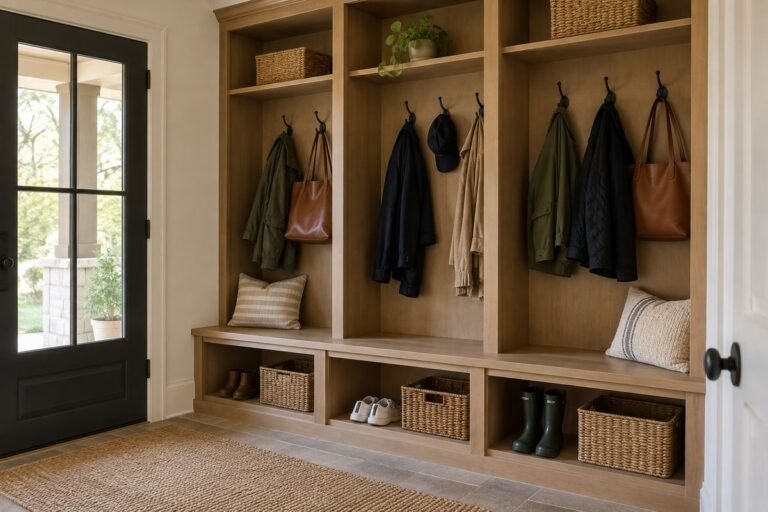
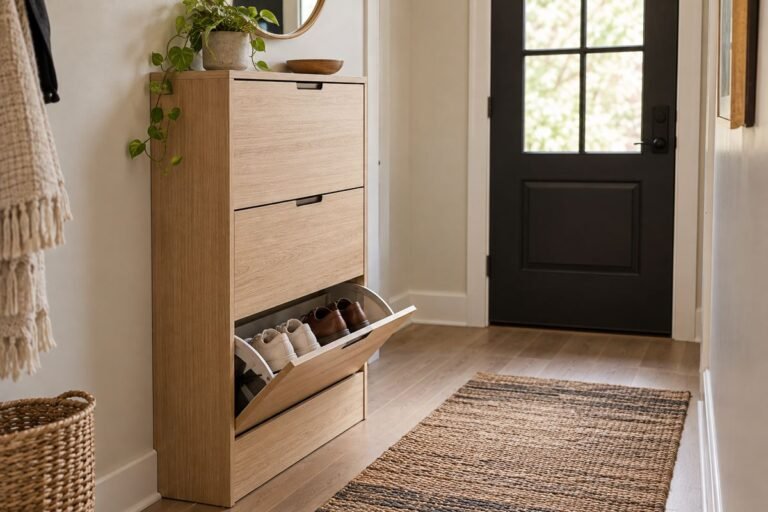
Hallway storage ideas need to earn their place in a space people move through. A cabinet can fit against a wall and still make the hall awkward when its doors open or someone removes a basket. Start with the route, then choose the objects that genuinely belong between the adjoining rooms.
An interior hallway often serves different needs from a front entrance. It may connect bedrooms, a bathroom, a laundry space or the living area. Storage for fresh towels, shared games or a return basket should follow those destinations instead of copying a coat-and-shoe arrangement that the hall does not need.
These 27 concepts compare useful storage groups and furniture arrangements for connecting spaces. They are finished decor illustrations, not construction or accessibility drawings. Follow the furniture instructions, preserve required access and assess any structural changes with an appropriate professional before altering the building.
The images are original AI-generated decor concepts, not installation diagrams or photographs of completed client projects.
Browse These 27 Hallway Storage Ideas
Jump to an idea
- Begin with one suitable shallow cabinet
- Use an existing alcove without assuming it is empty structure
- Let a wider landing hold the main storage group
- Hallway storage ideas for clean towel groups
- Keep bed-linen sets together by destination
- Give guest textiles one contained home
- Give shared games an accessible shelf
- Hallway storage ideas for a small book selection
- Compare wall-mounted storage through its complete installation
- Combine a closed lower group with limited open storage
- Keep long cabinet fronts visually quiet
- Include handles in the hallway fit test
- Give small household accessories a shallow drawer
- Create one temporary destination for items moving between rooms
- Keep frequently carried bags within a suitable compartment
- Keep managed utility storage separate from everyday linens
- Plan a vacuum compartment from the complete equipment
- Hallway storage ideas for spare blankets
- Separate seasonal soft goods from the daily group
- Give pet textiles a separate suitable home
- Park a laundry return basket outside door movement
- Keep storage away from the busiest corner turn
- End a cabinet run before it conflicts with room doors
- Coordinate the cabinet with the actual runner edge
- Check whether the storage creates a dark retrieval area
- Hallway storage ideas that can adapt without another cabinet
- Finish with a hallway reset that keeps the route open
Test hallway storage ideas in their open position
Sketch the hall with every door, corner, switch, service opening and adjoining room. Measure the narrowest usable route with handles and trim included. Then test the proposed furniture footprint, an open door or drawer and the person retrieving an item. Carry a normal household object through the route as well. A practical layout works while storage is being used, not only while every front is closed.
| What the hall connects | Storage group to consider | Operation check |
|---|---|---|
| Bathroom and bedrooms | A contained clean towel or linen group | Can the correct set be removed without moving the rest? |
| Living area and bedrooms | One household return basket | Can the basket leave the hall during the regular reset? |
| Shared family rooms | A limited game or book selection | Can one item be retrieved without a leaning pile? |
| Laundry and bedroom corridor | Clean outgoing linen groups | Does the basket remain outside door movement? |
| A wider landing | A suitable shallow cabinet | Can the route remain usable while the cabinet is open? |
| A narrow through-hall | Less furniture or storage elsewhere | Does adding storage solve more than it obstructs? |
| An existing alcove | A compatible fitted or freestanding unit | Have the wall, services, support and opening been checked? |
Follow the complete furniture installation instructions
CPSC’s Anchor It guidance emphasizes securing furniture and TVs according to manufacturer instructions and removing objects that tempt children to climb. Apply the actual anchoring requirements for the furniture you choose, including low units where required. Do not infer that a shallow cabinet or an attractive built-in appearance makes installation optional. These images do not show or verify hidden fixing details.
Separate product dimensions from usable passage space
For a specific example, IKEA lists the white BILLY bookcase 905.220.43 at 31 1/2 inches wide, 11 inches deep and 41 3/4 inches high, with adjustable shelves and a requirement for secure anchoring. Those figures describe that product, not a universal hallway solution. Compare the finished furniture, baseboards, handles, usable interior and operation with your particular hall.
Keep the hallway’s original functions available
Do not cover ventilation openings, heaters, electrical equipment, service panels, switches or a required exit route with storage. Obtain appropriate advice where building requirements or services affect the proposal. A shallow piece is not automatically appropriate simply because a person can squeeze past it. The room connections and ordinary household movement remain the starting point.
1. Begin with one suitable shallow cabinet
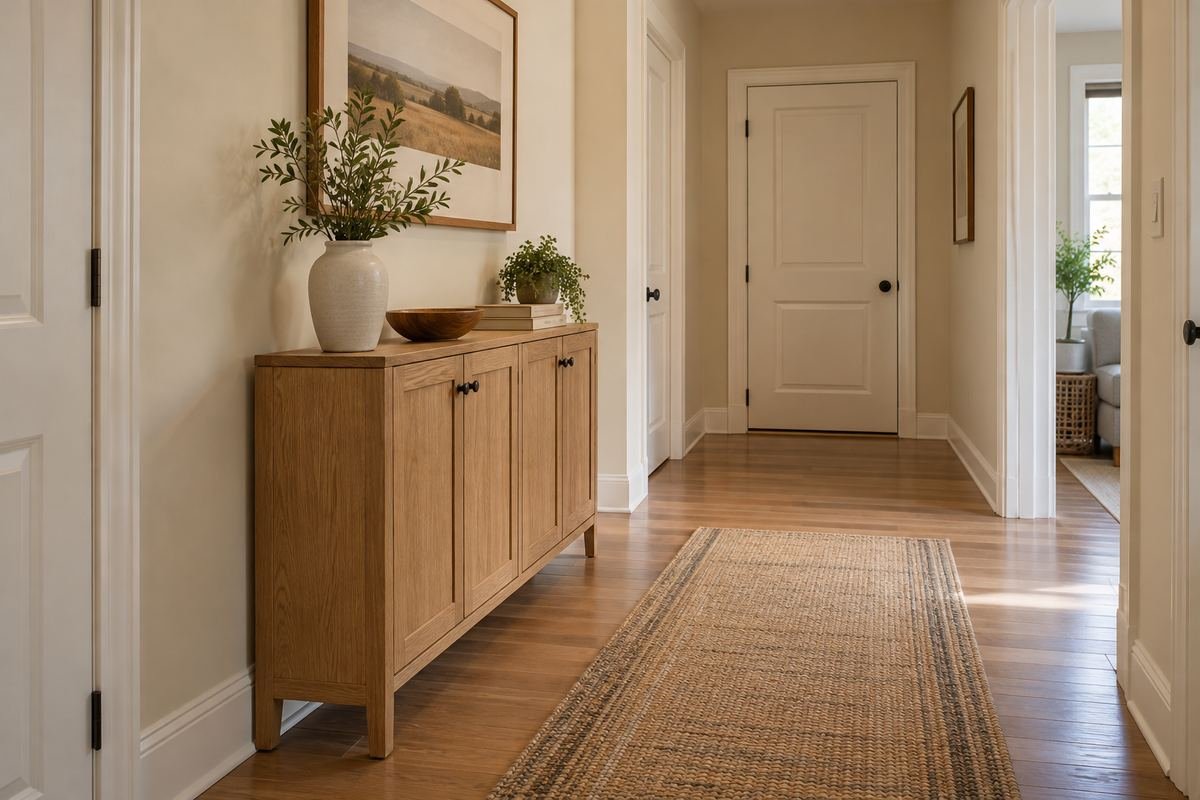
A shallow cabinet can be a useful starting point when its interior fits a specific household group. Choose the contents before the furniture so the unit does not become a general overflow store. Measure the largest object and the movement needed to remove it.
Test the complete cabinet in the hall, including handles and open fronts. Follow its assembly and anchoring requirements and keep adjacent doors usable. If the storage only works while everything stays closed, reconsider the location rather than treating its shallow appearance as proof of fit.
Practical tip: Measure the operating arrangement as well as the exterior.
2. Use an existing alcove without assuming it is empty structure
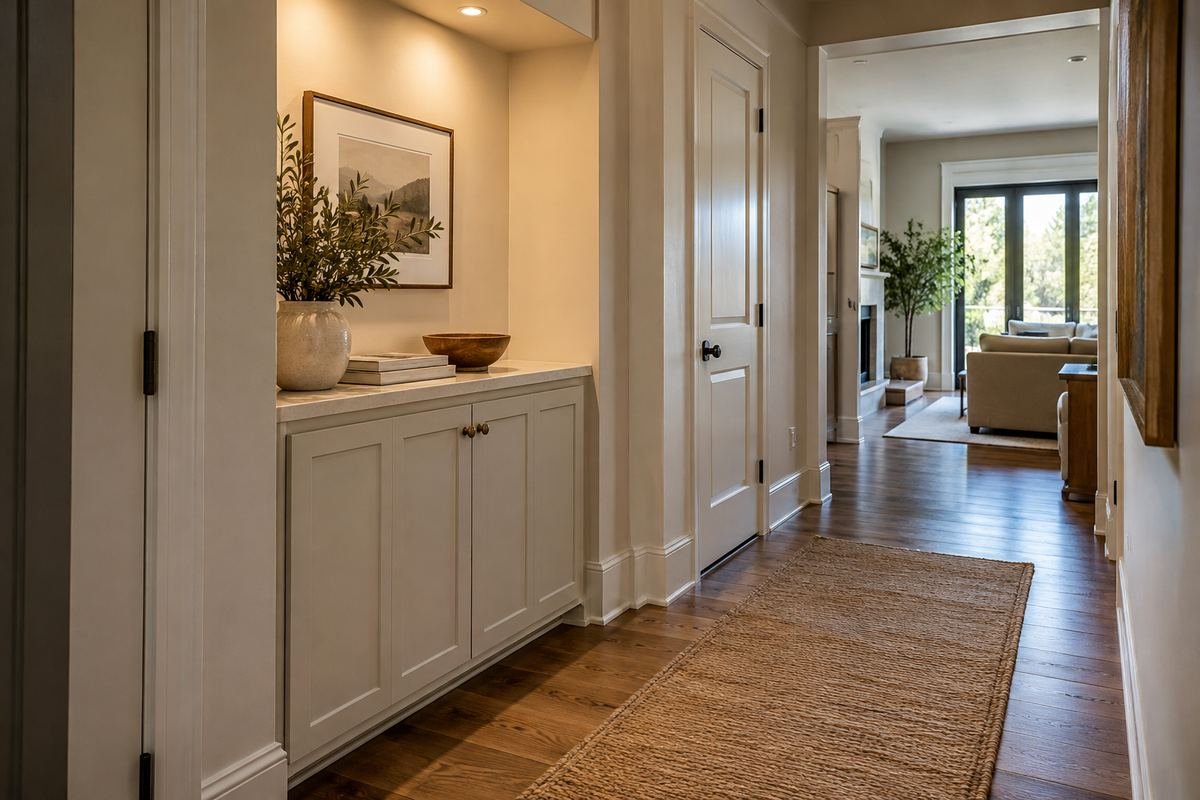
An alcove may offer a useful storage location because the furniture can sit partly outside the main route. Check the actual opening, wall condition, trim and services before choosing a fitted or freestanding unit. A recess in a photograph does not explain what is inside your wall.
Compare the finished storage depth with the alcove at several points. Walls and openings may not be perfectly square. Leave the product’s required installation and access provisions available rather than forcing a large cabinet into the visible gap.
Practical tip: Confirm the usable opening before ordering the unit.
3. Let a wider landing hold the main storage group
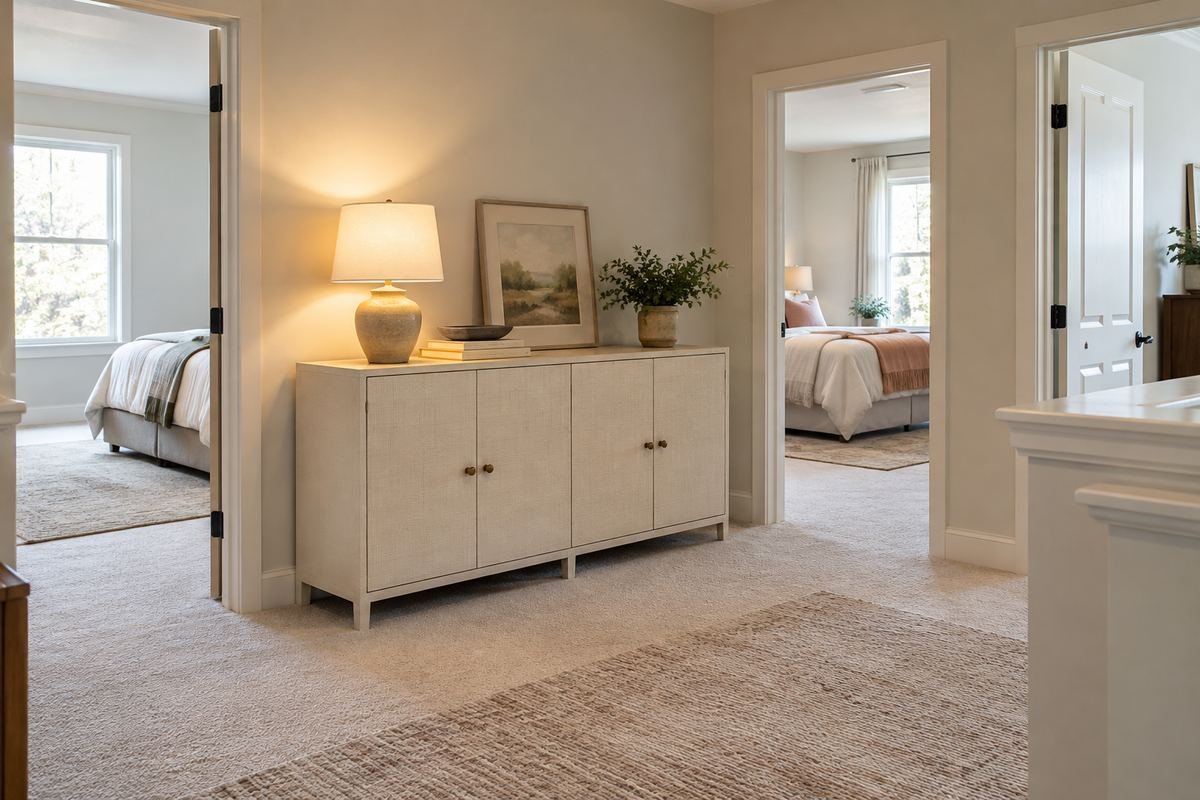
A wider landing may offer more practical retrieval space than a narrow connecting run. Compare the proposed cabinet with all routes crossing the landing, including the adjoining doors. Keep the storage tied to a useful group such as clean linens or shared household items.
Test the location while carrying a normal basket through the area. A landing is often a turning point rather than spare furniture space. Choose a suitable unit and follow its installation requirements even when the surrounding floor appears generous.
Practical tip: Check the turning movement as well as the straight route.
4. Hallway storage ideas for clean towel groups
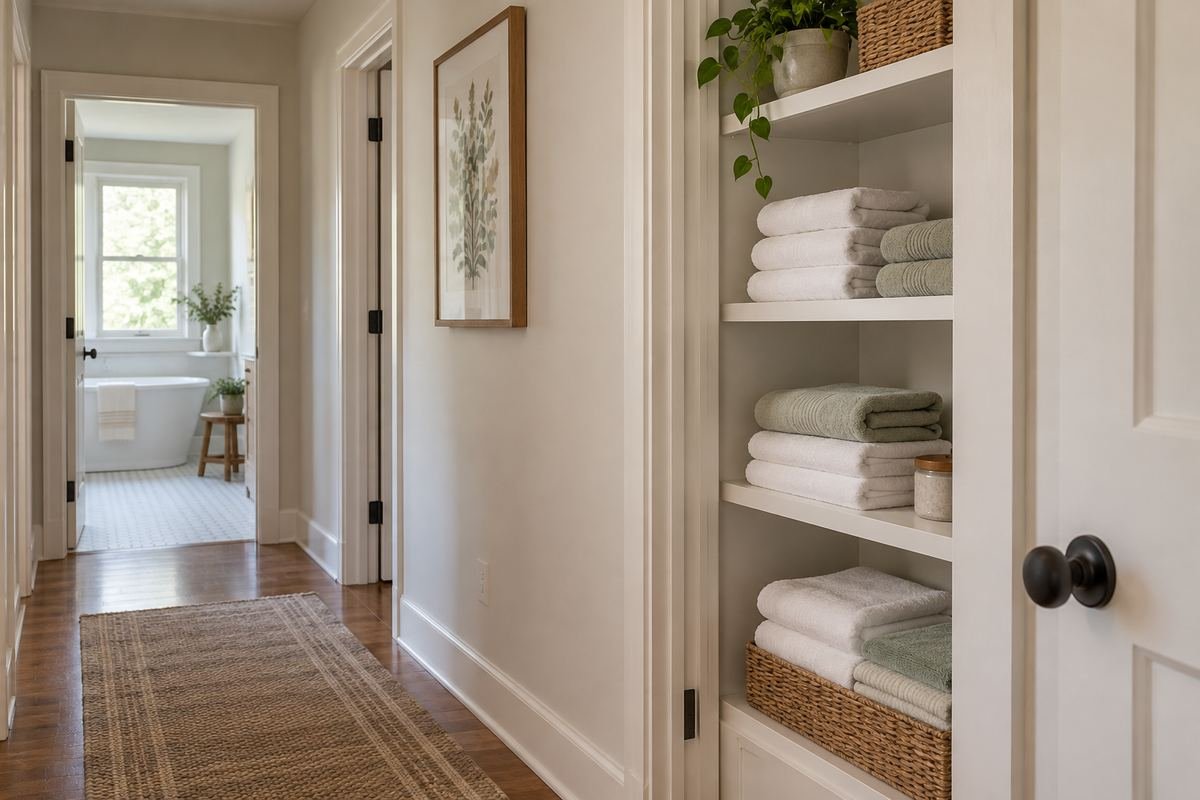
A contained towel group can be useful in a hall serving a bathroom and nearby bedrooms. Keep the textiles clean and dry in storage suited to their care. Choose an opening that lets the intended set be removed without pulling out several neighboring stacks.
Place everyday groups where the users can retrieve them comfortably. Avoid large unstable piles that need constant rebuilding. Compare the capacity with the actual household rotation rather than filling the cabinet with more towels than the routine needs.
Practical tip: Try removing and returning one complete everyday set.
5. Keep bed-linen sets together by destination
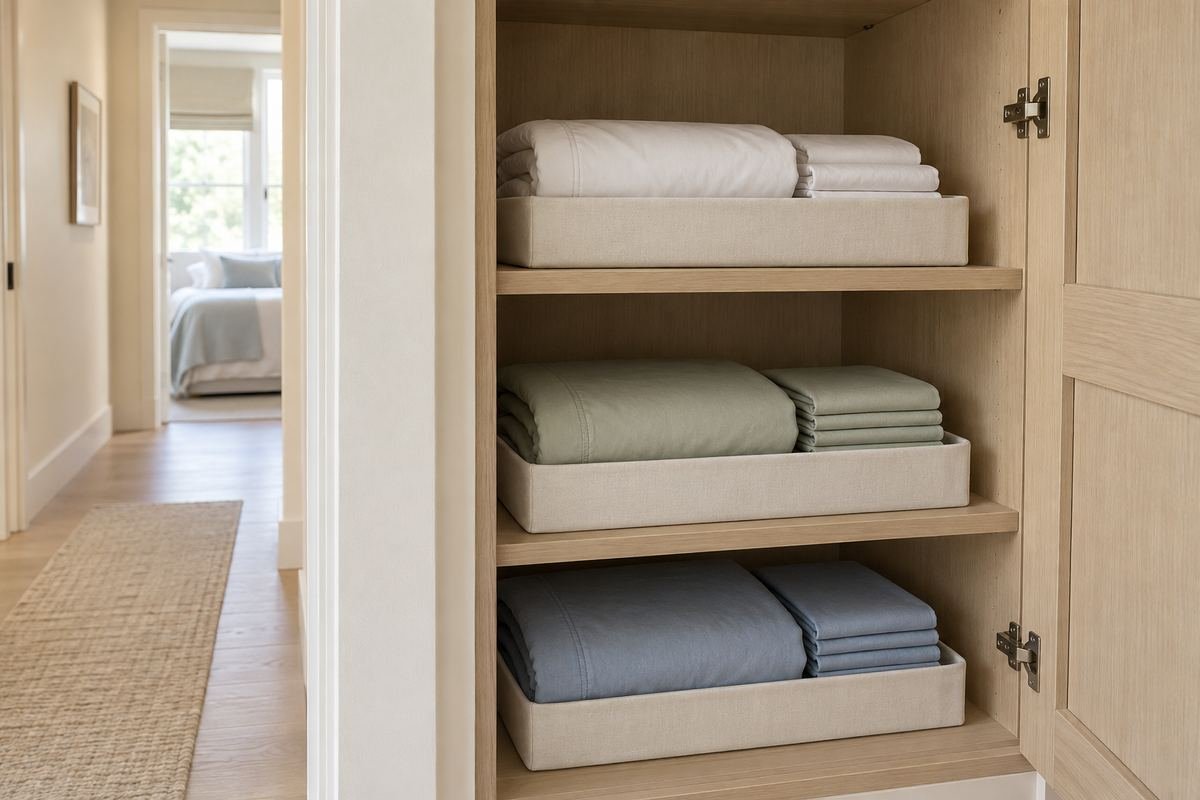
A hallway linen cabinet can group complete sets for the rooms nearby. Use a recognizable arrangement that keeps the matching pieces together and allows them to be removed as one manageable group. The exact fold and container should suit the textiles and shelf opening.
Do not force oversized bundles into a compartment chosen only for symmetry. Test the largest regular set and leave enough access around it. A small number of usable groups will be easier to maintain than several compressed stacks hidden behind a tidy front.
Practical tip: Test the largest complete set in its stored form.
6. Give guest textiles one contained home
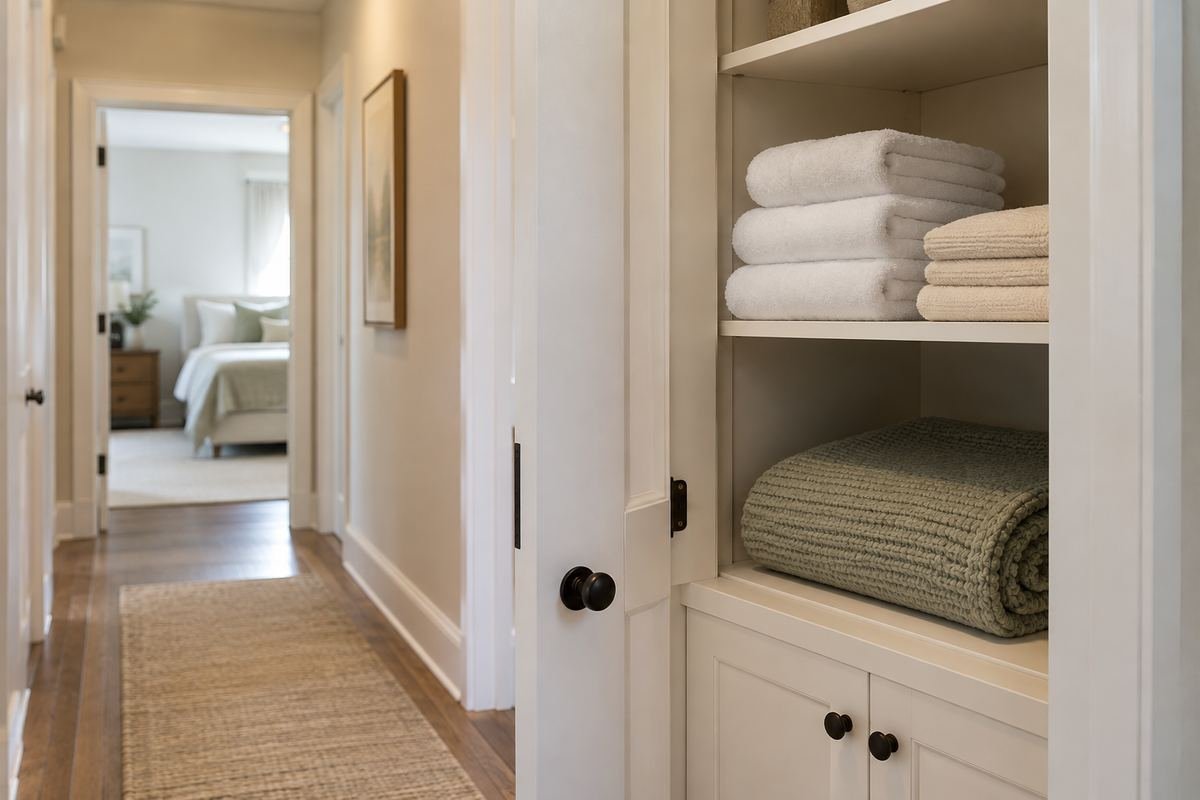
A small guest-linen group can stay together when it is used occasionally and returned to the same place. Choose appropriate dry storage near the rooms it serves and keep the category complete enough to retrieve without searching several cupboards.
Review the contents after use instead of assuming the group remains ready indefinitely. If guest supplies grow beyond the useful space, separate the genuinely needed textiles from unrelated storage. The cabinet should support a task rather than collect every spare item in the home.
Practical tip: Return the group as a complete ready-to-use set.
7. Give shared games an accessible shelf
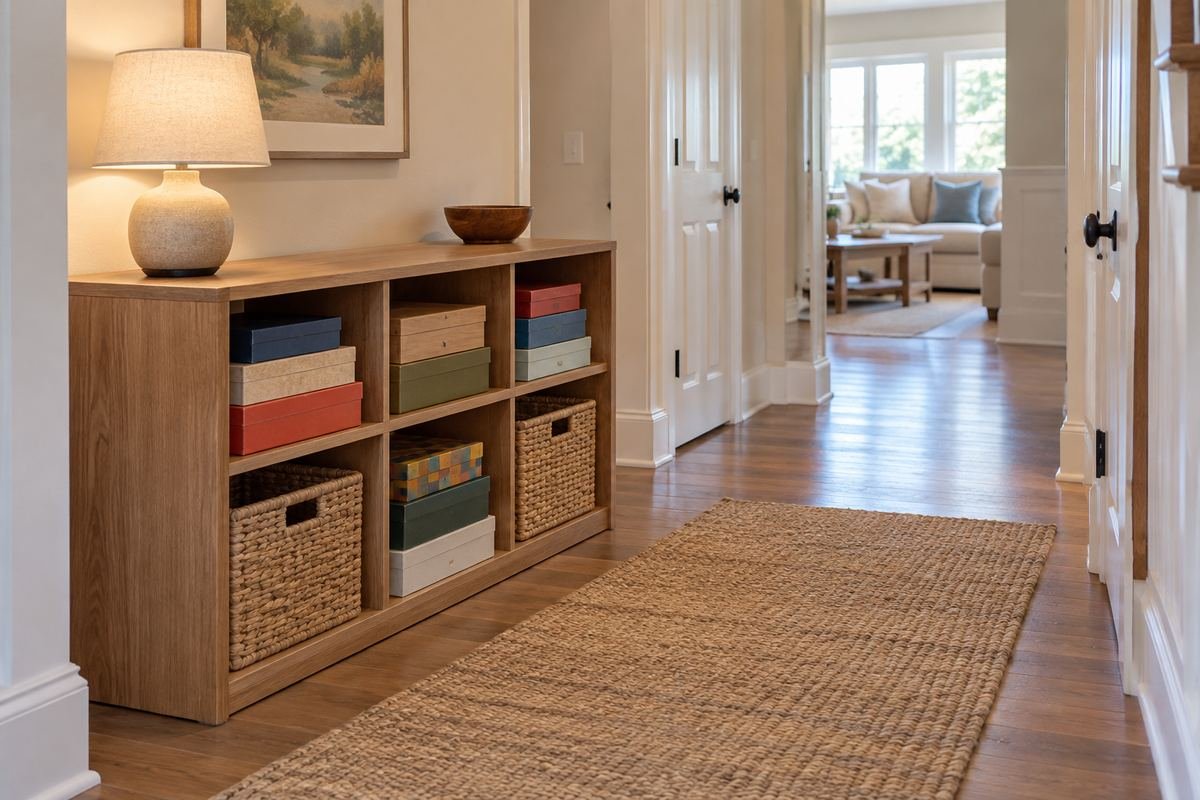
A limited shared game selection can work near the rooms where the games are played. Measure the actual boxes and keep one removable without lifting a leaning pile. Use the shelf’s intended load guidance and the furniture’s complete installation instructions.
Check whether upright storage keeps each game’s contents contained. If not, use an appropriate flat arrangement rather than prioritizing a matching visual line. Keep the selection modest enough that the shelf remains useful as interests change.
Practical tip: Test a complete game removal and return.
8. Hallway storage ideas for a small book selection
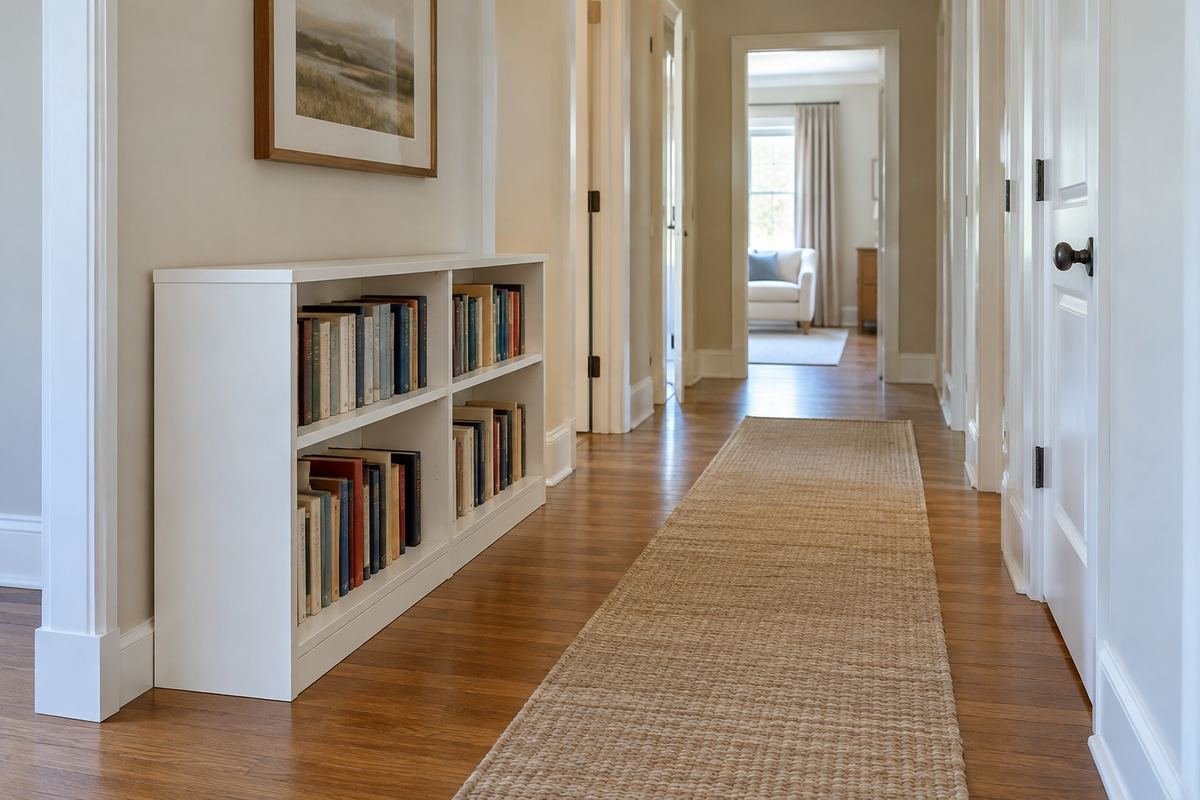
A short book run can connect rooms with a useful shared collection. Choose a shelf depth and support arrangement appropriate to the actual books, then keep them contained within the furniture footprint. Follow the exact shelf and furniture load and installation instructions.
Avoid turning a narrow through-hall into a library aisle simply because a shallow bookcase exists. Test retrieval and passage with the room doors in use. Keep the selection linked to the household’s reading routine rather than filling every spare wall.
Practical tip: Use the largest book in the fit test.
9. Compare wall-mounted storage through its complete installation
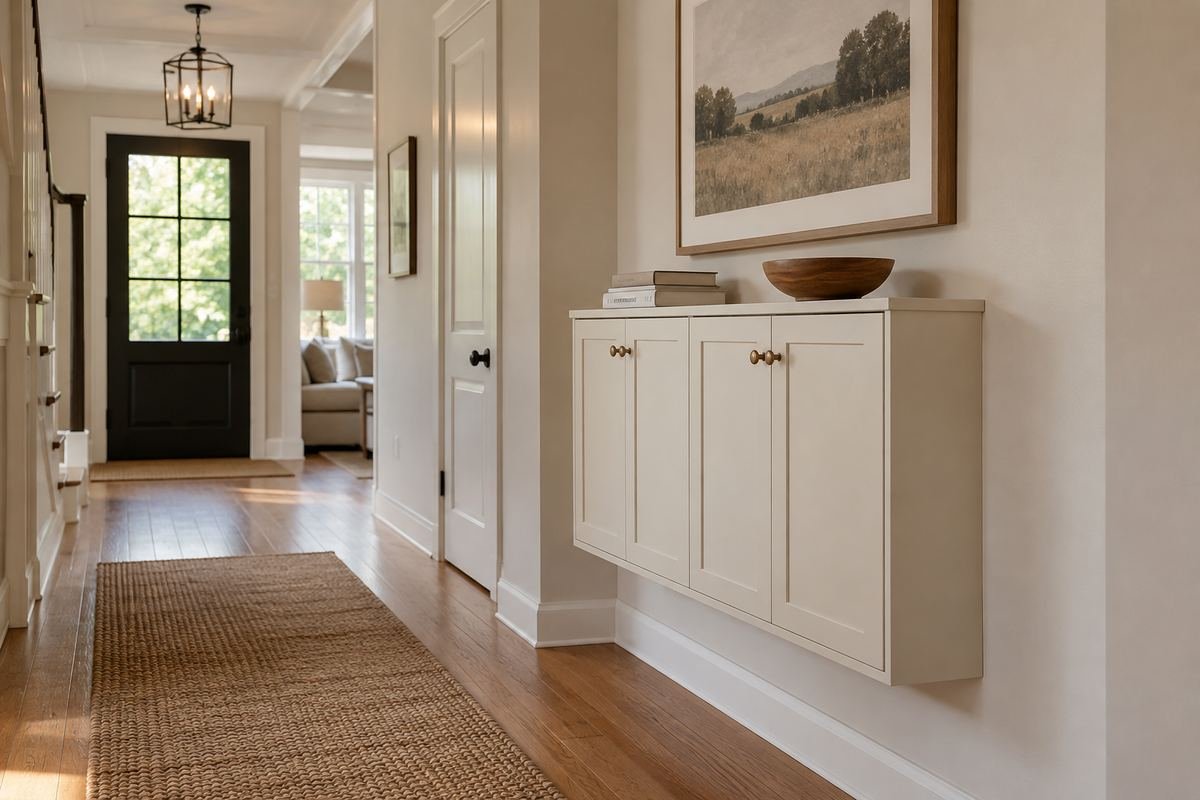
A suitable wall-mounted unit can leave floor visible below, but it still occupies the hall and needs an appropriate wall and fixing arrangement. Follow the exact product instructions and obtain suitable advice if the construction or services are uncertain.
Measure the mounted body, its handles and the opening movement at the intended location. A floating appearance does not remove the need for retrieval space. Keep the design related to a real storage group instead of installing a unit solely to fill an empty wall.
Practical tip: Treat the wall and fixing system as part of the product choice.
10. Combine a closed lower group with limited open storage
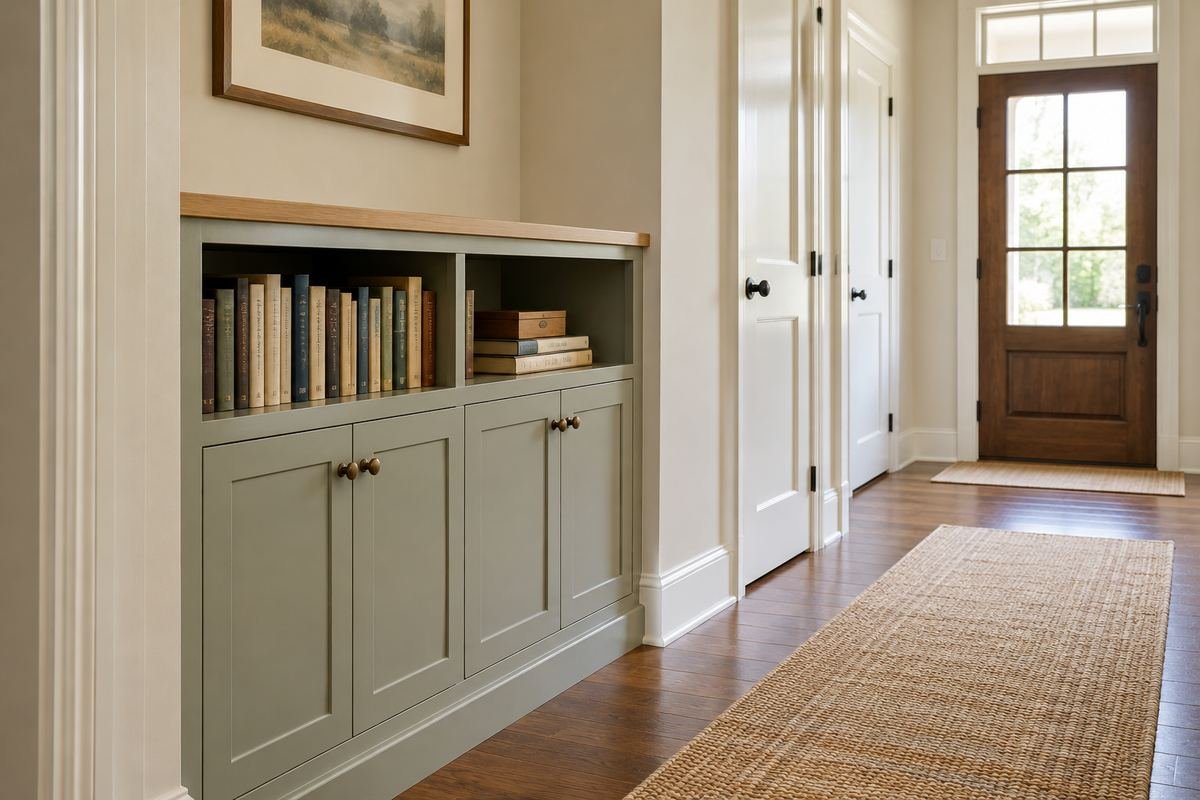
A cabinet with closed storage below and a small open area can separate everyday retrieval from objects that benefit from being contained. Choose each zone from a purpose rather than splitting the furniture into equal decorative sections automatically.
Keep open shelves restrained enough to remain inside the unit’s footprint. Avoid tempting objects on high surfaces where they could encourage children to climb. Compare the complete furniture arrangement with its installation guidance and the people in the household.
Practical tip: Give each open compartment one clear reason to exist.
11. Keep long cabinet fronts visually quiet
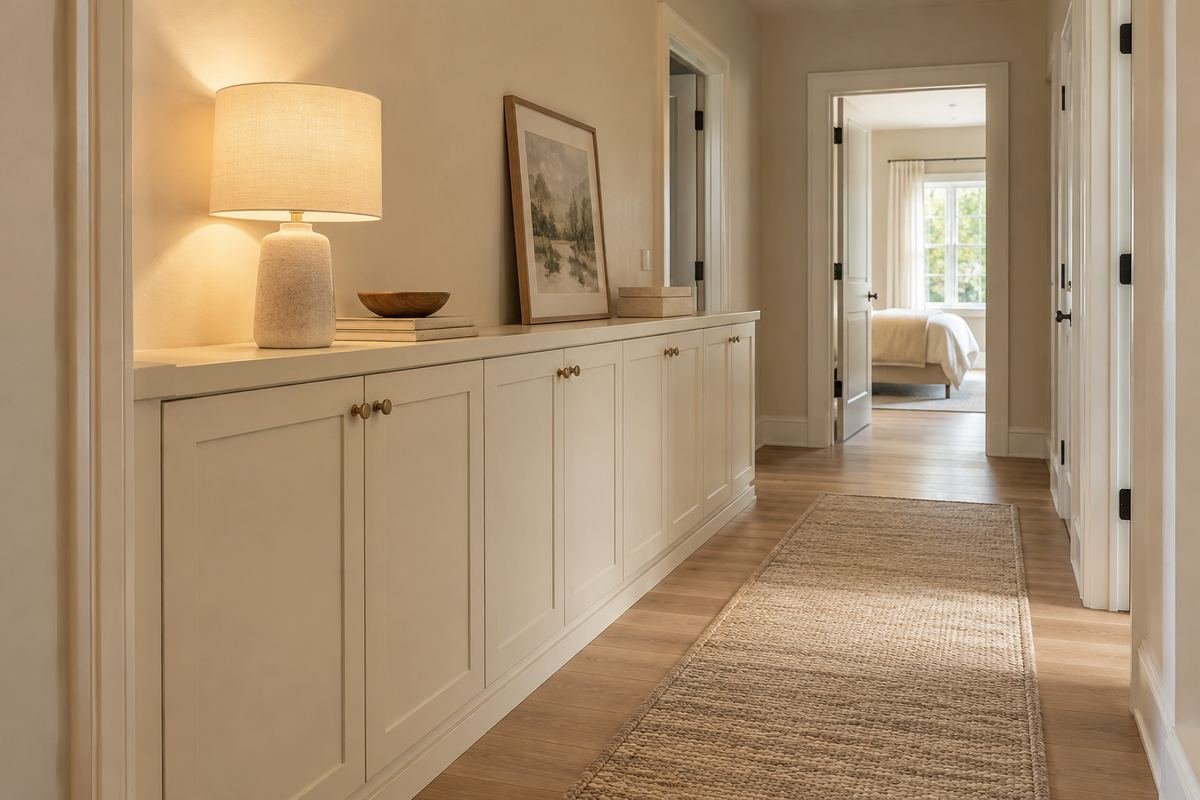
A restrained finish can help a long storage run sit comfortably beside several room doors. Compare the color and sheen with the existing trim and floor in the hall’s actual light. A sample is more useful than assuming every pale finish will match.
Keep appearance separate from fit. A wall-colored cabinet still occupies physical space and needs appropriate installation. Choose a run length that supports the contents and respects the hall’s doors rather than covering every available wall section.
Practical tip: Review the finish from both ends of the hall.
12. Include handles in the hallway fit test
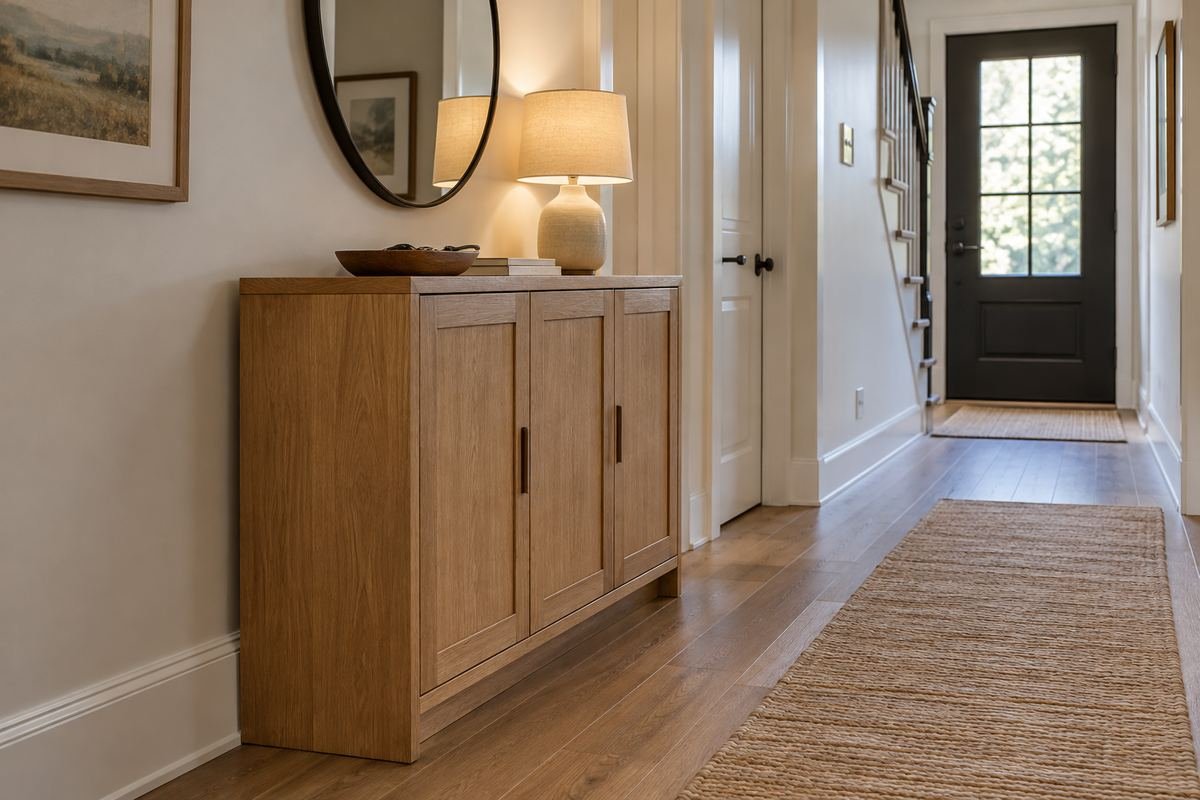
Handles and pulls can extend beyond the cabinet body and affect the route around it. Compare the complete finished projection at the height where people pass and carry items. Choose hardware suitable for the furniture rather than assuming every recessed or small handle will be comfortable to use.
Test opening the front with the actual grip and retrieval task. The least visible handle is not always the most useful one. Keep door swing and neighboring hardware in the comparison so the finished unit remains easy to operate.
Practical tip: Measure the finished projection, not the bare carcass.
13. Give small household accessories a shallow drawer
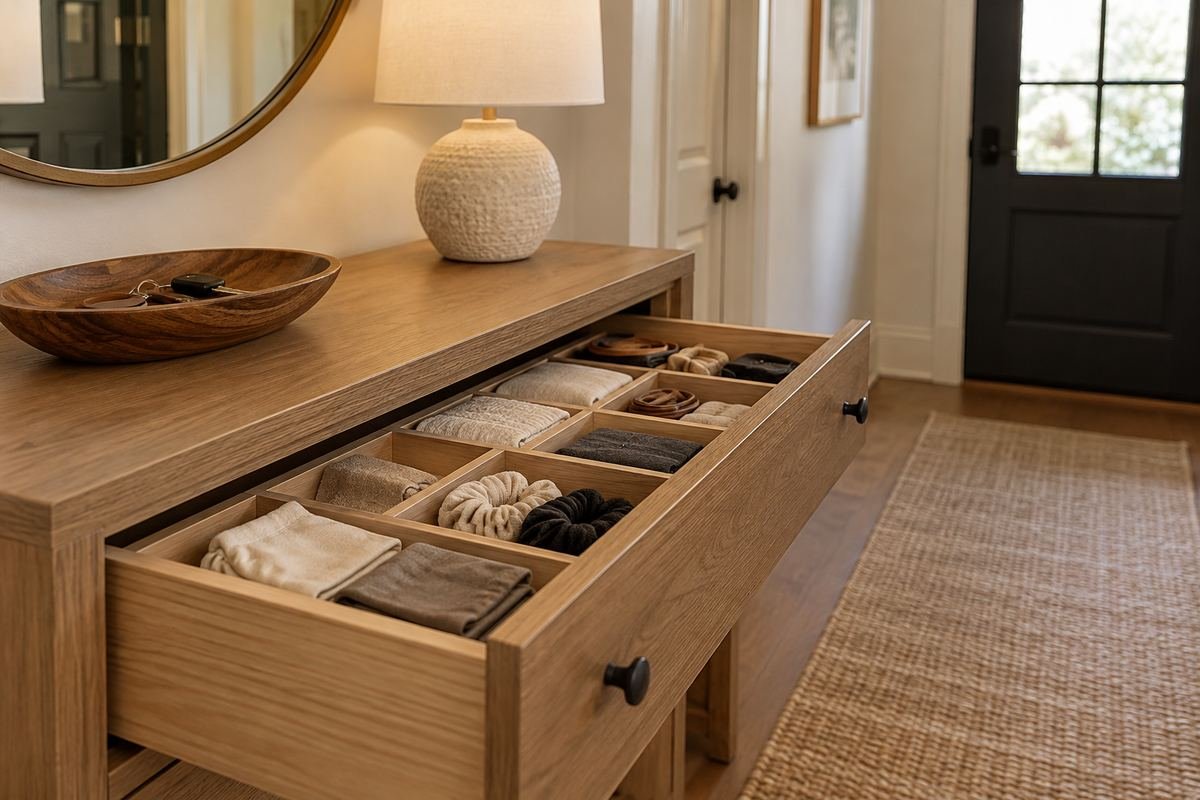
A shallow drawer can keep a limited group of small accessories from spreading across a hallway cabinet top. Choose a category linked to the adjoining rooms and use suitable low compartments. The drawer should reveal the contents without several stacked layers.
Keep sensitive, hazardous or age-inappropriate items in their proper managed storage rather than assuming a convenient hall drawer is suitable. The purpose here is ordinary organization, such as spare cloth pouches or small textile accessories, with a clear limit on the group.
Practical tip: Choose the drawer category before selecting its dividers.
14. Create one temporary destination for items moving between rooms
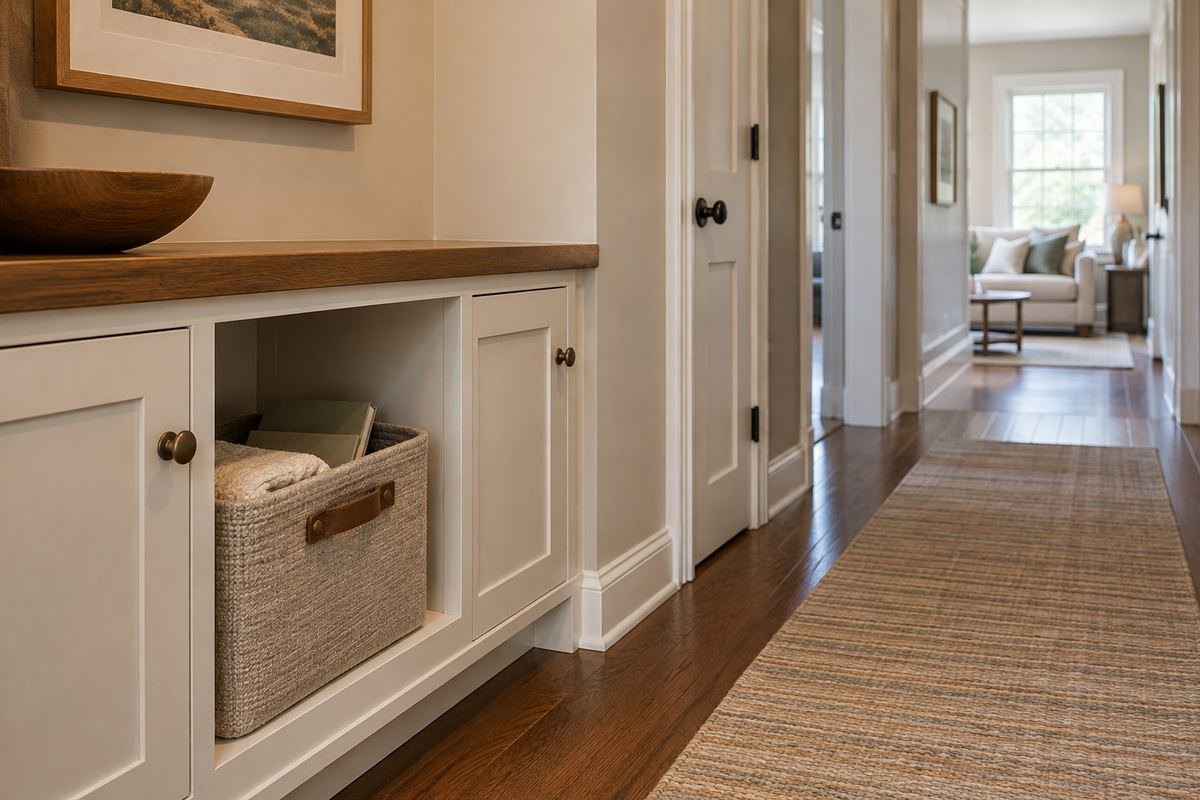
A small designated return group can collect items that belong in rooms farther along the hall. Make it clear that this is temporary transport rather than permanent mixed storage. Choose a suitable container that stays within the furniture footprint.
Empty it during a routine that already exists, such as returning clean laundry or resetting the living room. If the group remains full for days, change the destination storage or the return step instead of choosing a larger container.
Practical tip: Connect the return group to a specific household journey.
15. Keep frequently carried bags within a suitable compartment
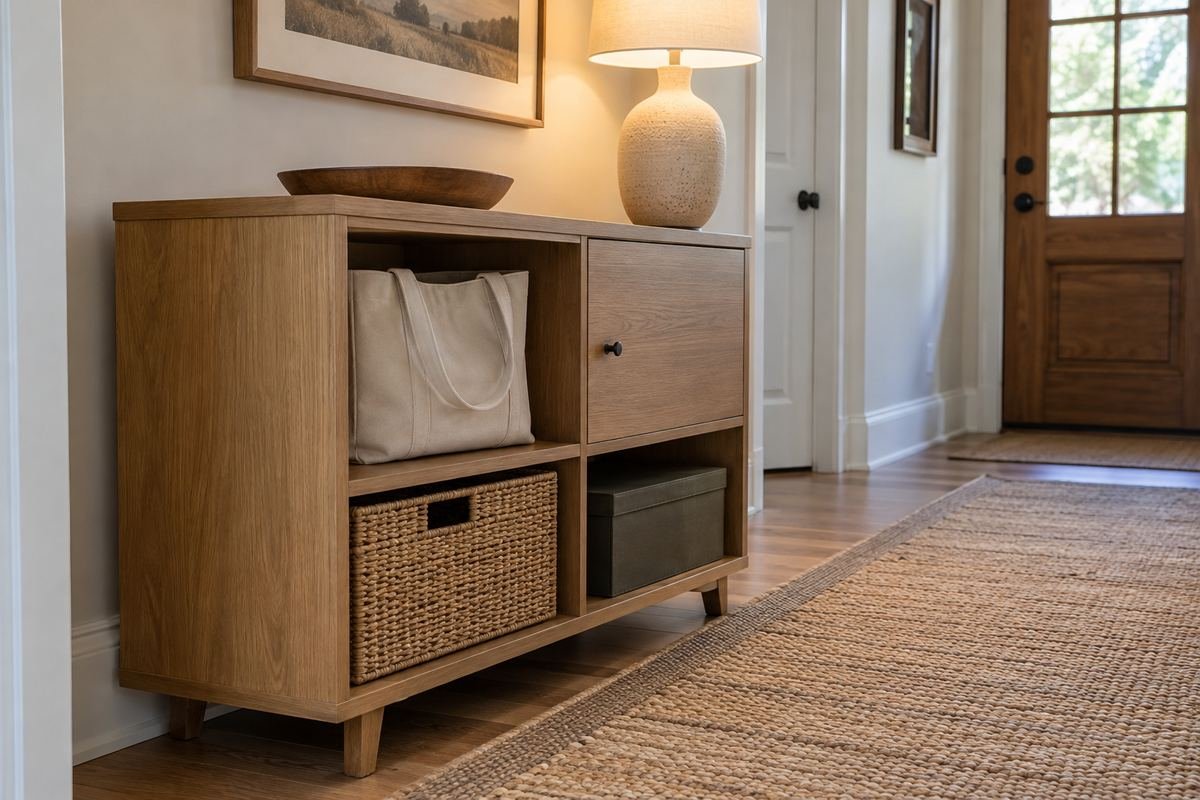
A bag used between rooms can have a defined storage home if its full shape fits without projecting into the route. Compare the bag while loaded normally, including straps and handles, with the usable compartment. Avoid hanging loose straps where they catch passersby or furniture.
Keep the group focused on the bags actually used from this part of the home. A hallway cabinet is less helpful when it becomes permanent luggage storage and blocks access to everyday items. Choose a different location for pieces that need more room.
Practical tip: Measure the loaded bag rather than its flattened empty shape.
16. Keep managed utility storage separate from everyday linens
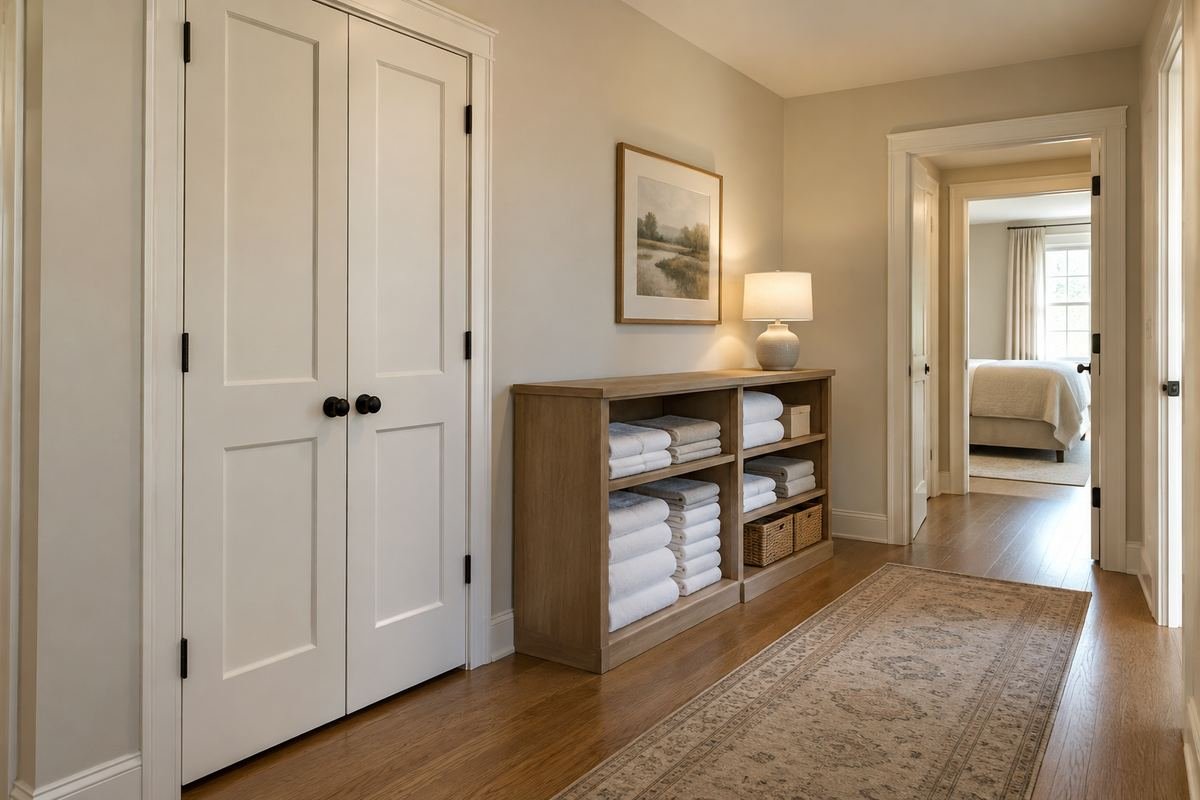
A hall cupboard may already serve a utility purpose. Preserve the appropriate separation and product-label storage requirements rather than combining every household supply with clean textiles. Choose a suitable managed location for items that require restricted access.
The visual design can still coordinate with the hall, but the internal use should remain clear. Do not hide ventilation, electrical equipment or service access behind decorative containers. Where the cupboard contains building services, get appropriate advice before changing its use.
Practical tip: Identify the cupboard’s existing function before reorganizing it.
17. Plan a vacuum compartment from the complete equipment
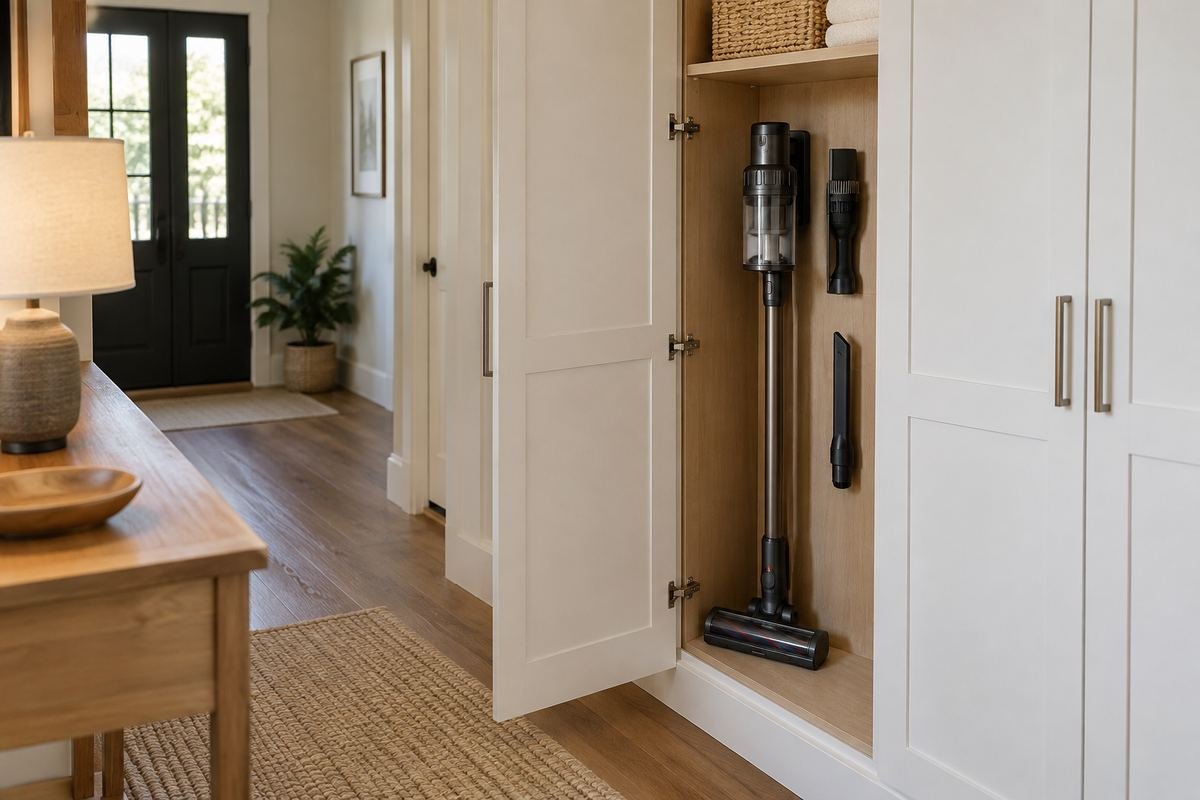
A suitable cupboard can give cleaning equipment a home when the product and room requirements allow it. Measure the actual vacuum, attachments and removal movement rather than choosing a tall narrow space by appearance. Follow equipment instructions, including any charging and ventilation provisions that apply.
Do not improvise a hidden charging setup inside an unsuitable closed cabinet. Keep the design focused on appropriate equipment storage and obtain the necessary electrical provision where required. Test how the full item is removed without dragging accessories into the hall.
Practical tip: Use the equipment’s own storage requirements in the plan.
18. Hallway storage ideas for spare blankets
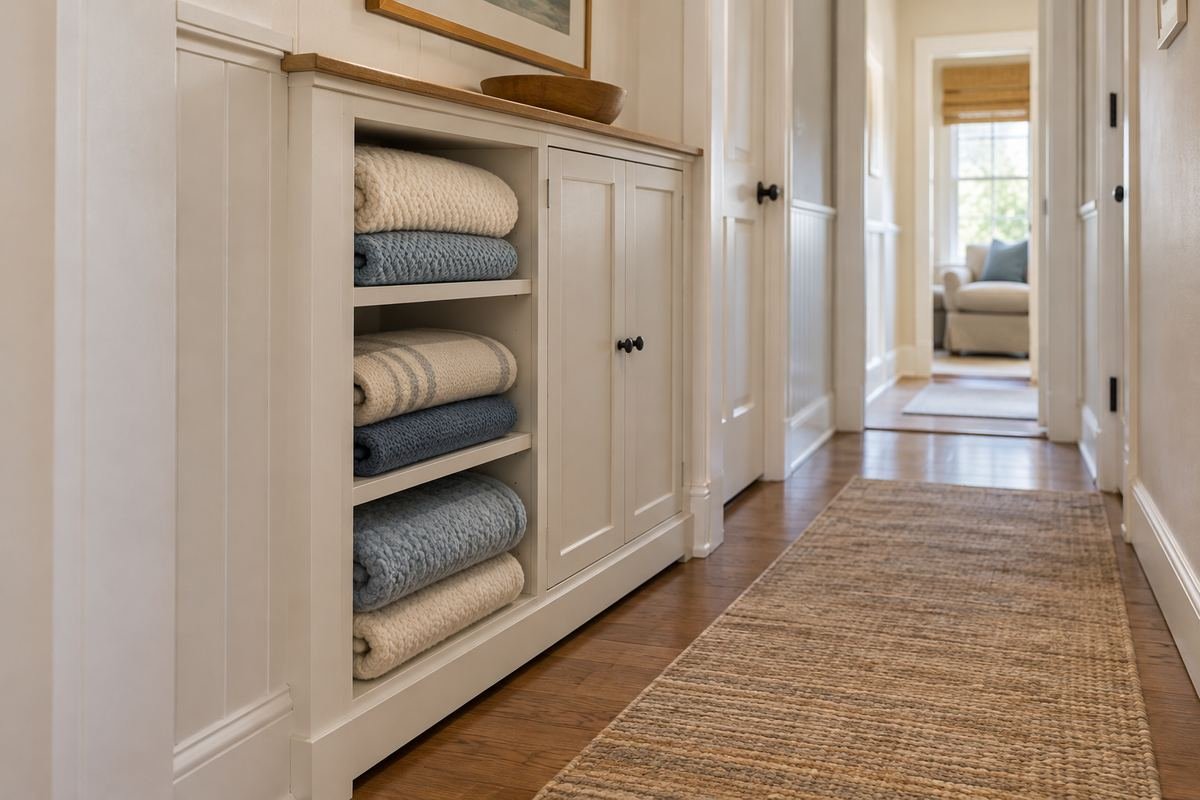
A modest blanket group can work near bedrooms or a living area when the storage is clean and dry. Compare the folded textiles with the actual shelf opening and leave room to lift one without displacing the others. Avoid forcing bulky blankets into small decorative baskets.
Keep frequently used pieces distinct from long-term reserve textiles. The arrangement should support the way blankets move through the home. Review their care and storage requirements instead of assuming every fabric can be compressed or stored in the same container.
Practical tip: Test the bulkiest regular blanket before selecting a bin.
19. Separate seasonal soft goods from the daily group
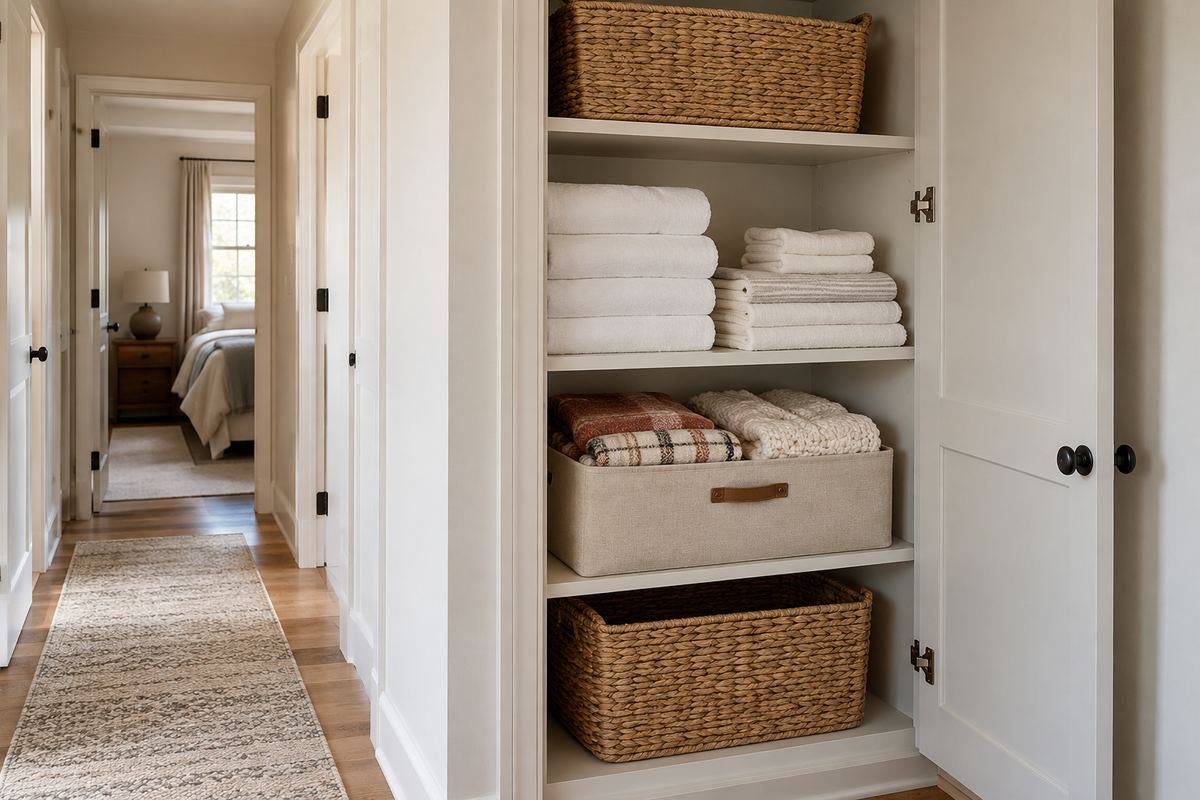
Seasonal textiles can use a suitable reserve compartment while everyday items remain easier to retrieve. Store them clean and dry according to their care requirements and keep the group recognizable. The useful division is frequency of use rather than simply placing everything less attractive out of sight.
Review the contents when the season changes. If a reserve group has not been needed for a long time, reconsider whether it belongs in the hall. Connecting spaces are most useful when their storage serves the rooms around them.
Practical tip: Change the active group without dismantling the whole cabinet.
20. Give pet textiles a separate suitable home
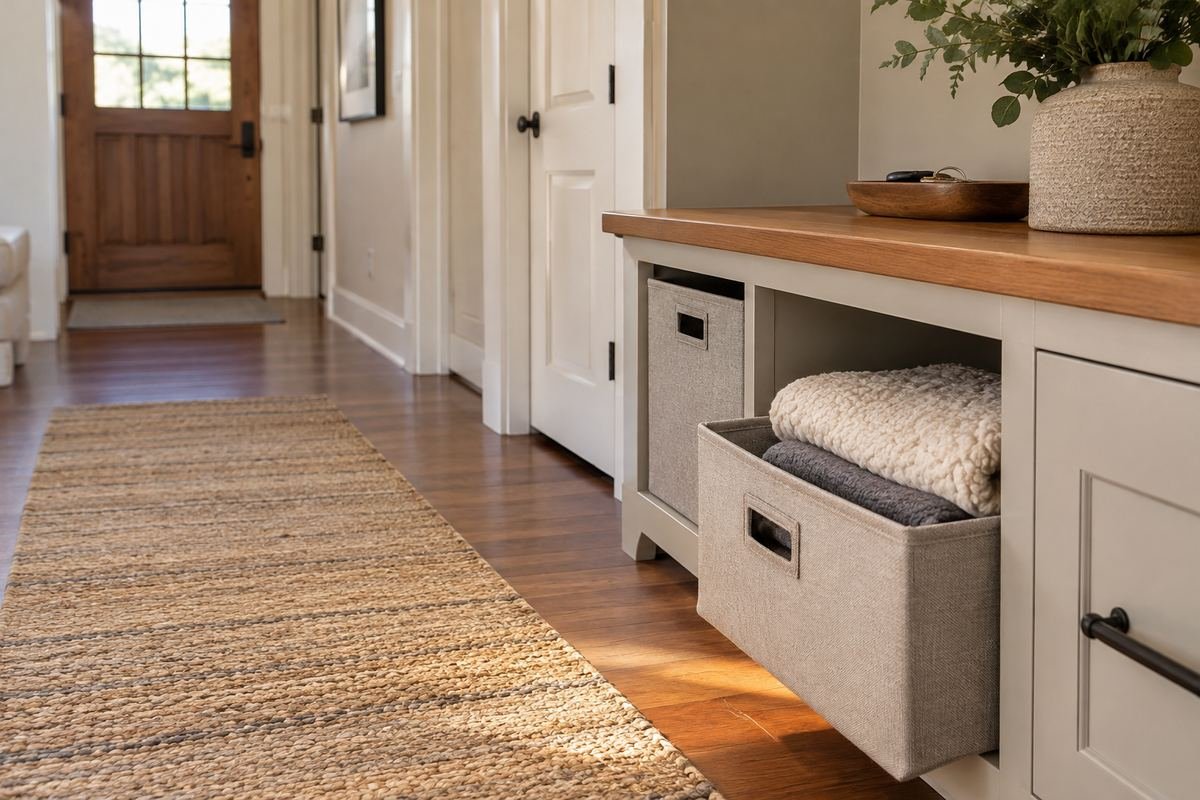
A household may benefit from a contained group of clean pet blankets or towels near the rooms where they are used. Keep this category distinct from other linens and choose a storage place suited to its care routine. The container should be easy to remove and clean as appropriate.
Avoid leaving the group loose on the hall floor where it can interfere with movement. Review the size from actual use rather than storing every spare pet item in the same compartment. Keep food and other products in storage appropriate to their instructions.
Practical tip: Use a removable container that suits the cleaning routine.
21. Park a laundry return basket outside door movement
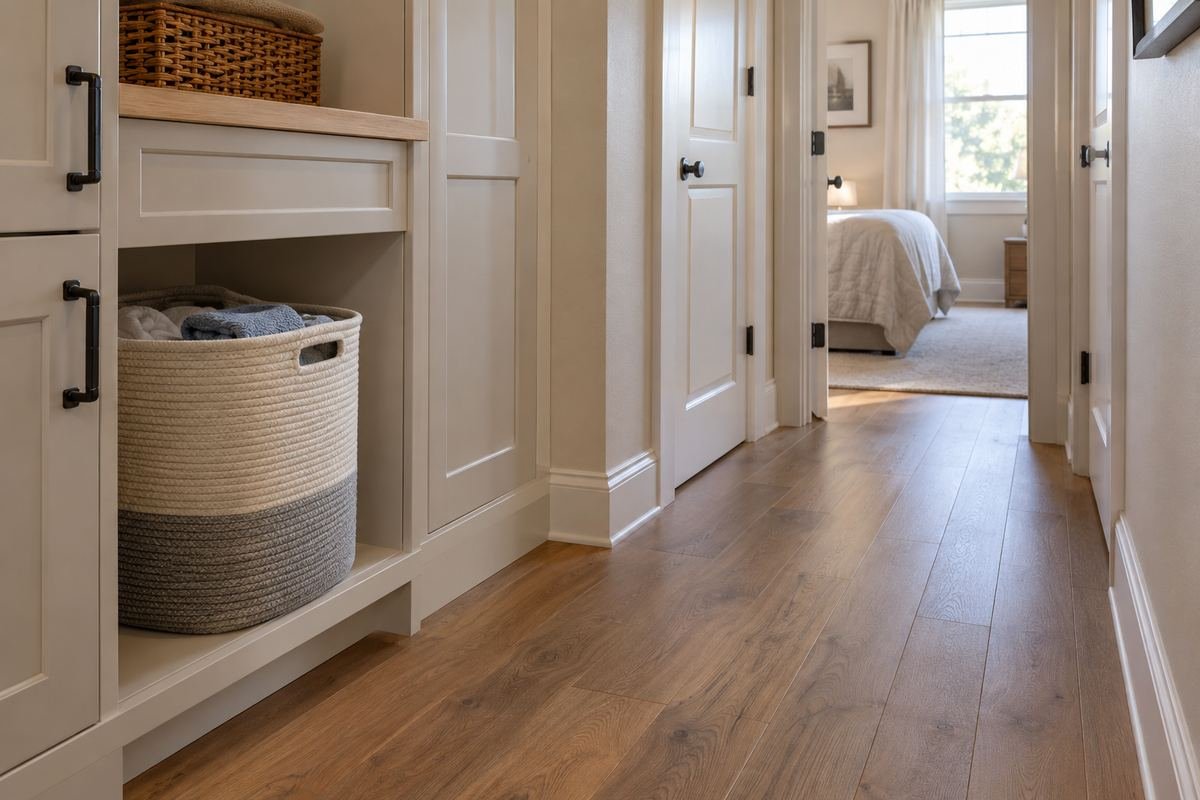
A hall between laundry and bedrooms can offer a short-term position for clean outgoing textiles if the complete basket stays clear of the route. Choose a defined appropriate bay rather than leaving it wherever the floor happens to be empty.
Keep the basket moving toward its destination. If it remains in place permanently, the temporary parking spot has become another storage problem. Test the route with the loaded basket and the room doors open before assigning the location.
Practical tip: Treat this as a transfer point with a clear next step.
22. Keep storage away from the busiest corner turn
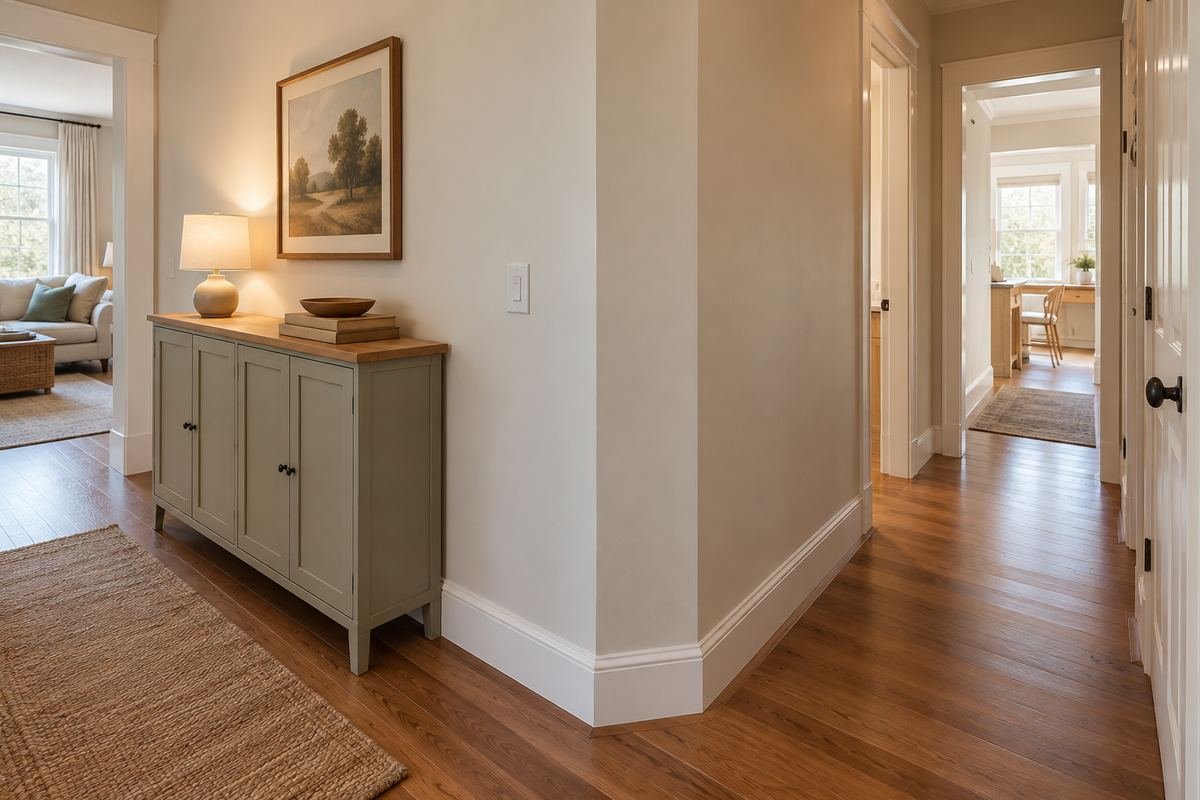
A hallway corner needs room for turning and carrying household items. A cabinet that fits on a straight wall may still create a difficult corner when its end projects into the turn. Compare the full route with the objects carried through it regularly.
Consider ending the storage earlier or placing the group in a wider area. Do not assume a rounded edge alone solves an unsuitable layout. The useful change is a workable route, including the open storage and the person retrieving an item.
Practical tip: Carry a normal basket around the proposed corner.
23. End a cabinet run before it conflicts with room doors
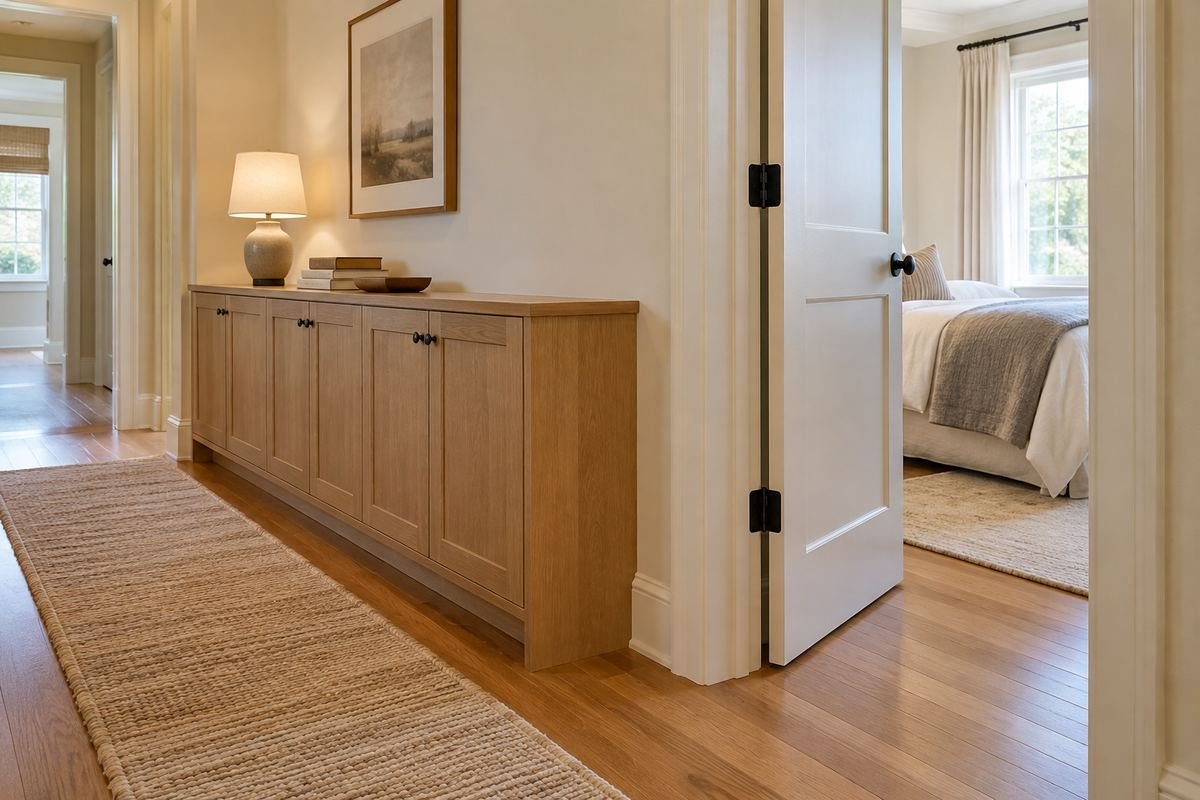
A shorter run can be more useful than a wall-to-wall arrangement when several doors meet the hall. Compare every door’s movement and handle position with the proposed cabinet. Keep the fronts independently usable rather than creating a sequence where one must close before another can open.
Choose the stored group to fit the appropriate run length. If the contents require a cabinet that conflicts with the room, move part of the storage elsewhere. The hall does not need to hold a category simply because the adjoining wall is long.
Practical tip: Test neighboring doors in their ordinary positions.
24. Coordinate the cabinet with the actual runner edge
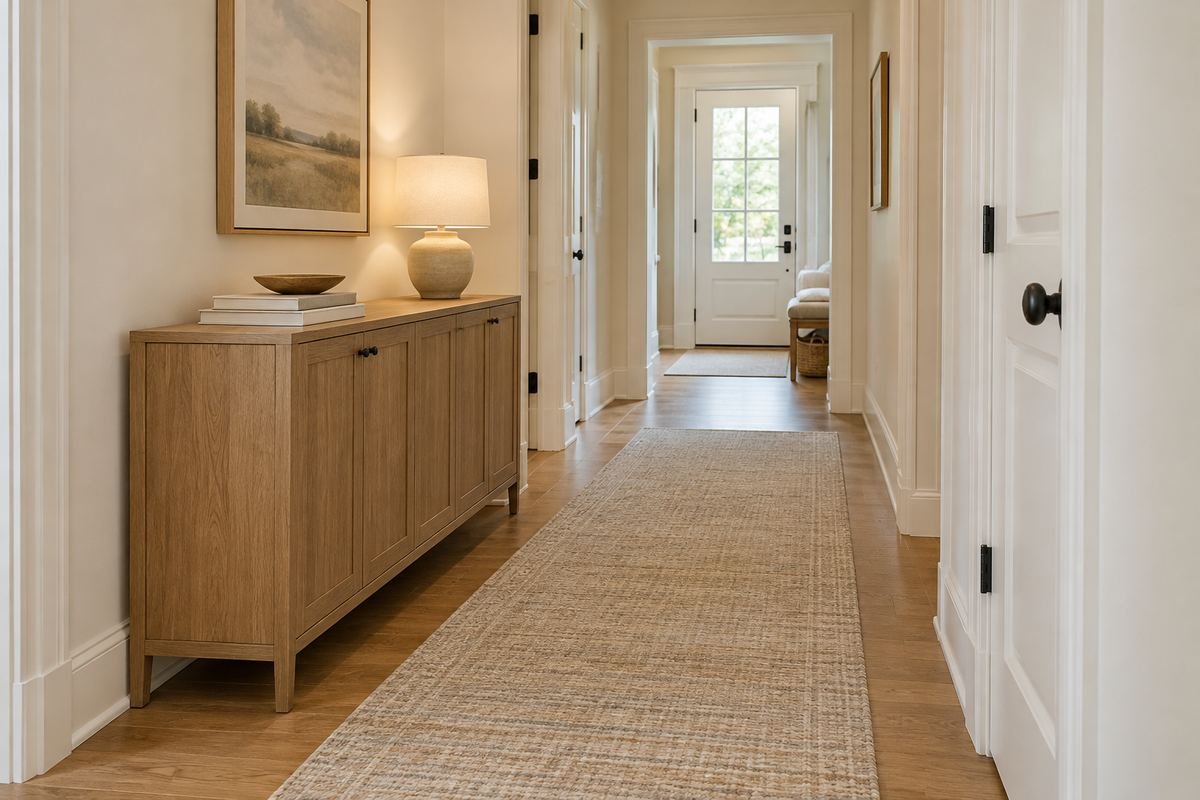
A runner and a storage unit affect the same floor area. Compare cabinet feet, open doors and the route of someone removing a basket with the floor covering. Keep edges and transitions visible and choose a runner arrangement that suits the actual hall.
Do not use the rug to disguise an awkward furniture position. A patterned strip can connect the space visually, but it should work with the cabinet rather than create an extra obstacle during retrieval. Recheck the complete setup after adding a rug pad or changing the rug.
Practical tip: Test the cabinet with the final floor-covering assembly in place.
25. Check whether the storage creates a dark retrieval area
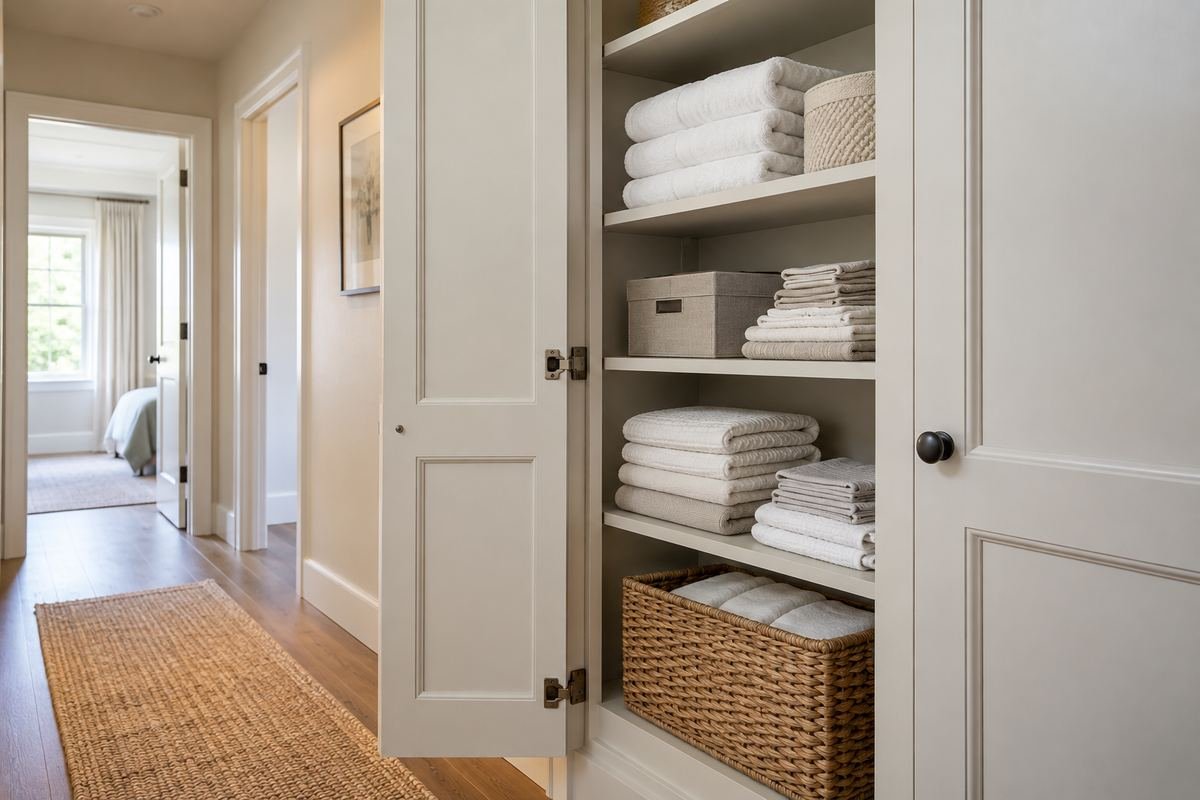
Storage can shade a nearby switch, shelf or room entrance even when the hall looks bright in an empty photograph. Test the arrangement under the light used during ordinary mornings and evenings. Keep the contents and routes easy to identify without adding unsuitable temporary wiring.
Choose appropriate lighting for the location and use qualified installation where needed. A lighter cabinet interior or a simpler group may improve retrieval without changing the electrical setup. Judge the actual task rather than creating a decorative pool of light around the furniture.
Practical tip: Check the open cabinet at the time it is normally used.
26. Hallway storage ideas that can adapt without another cabinet
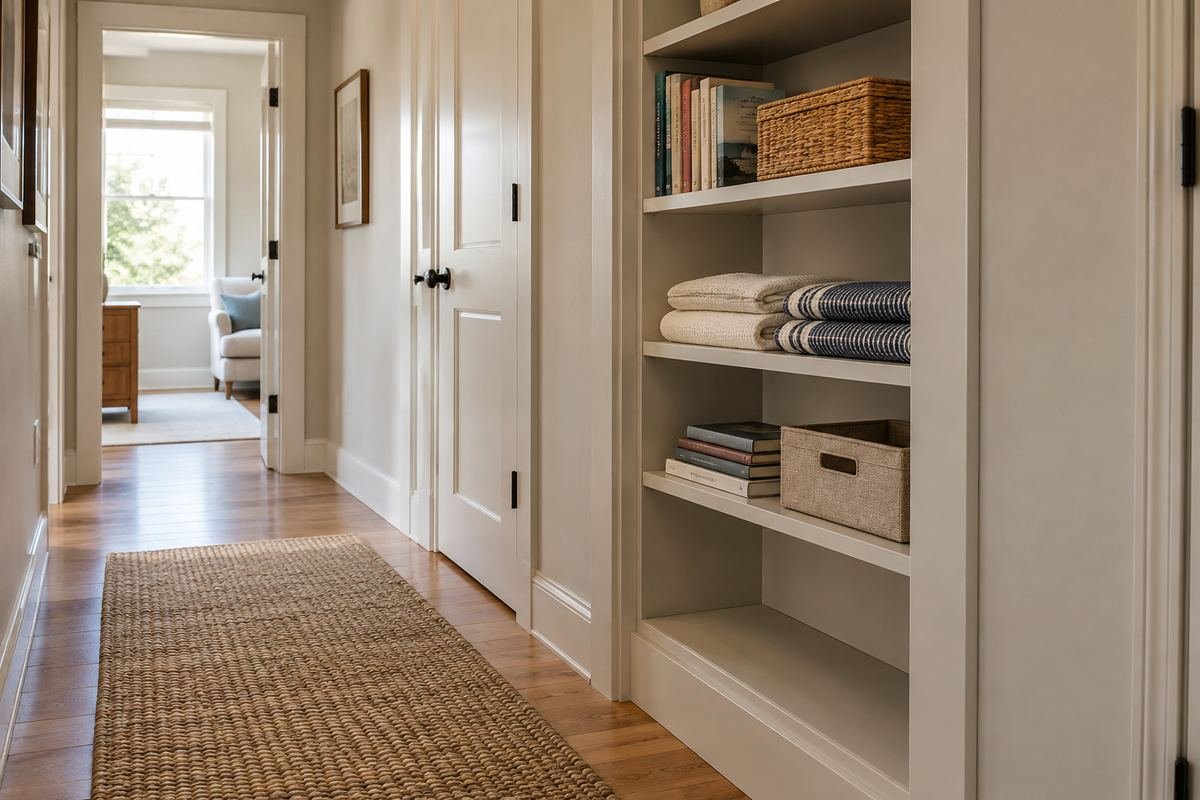
Adjustable shelves or suitable removable containers can help an existing unit respond to changing household groups. Check the product’s intended positions and load requirements before moving components. Plan the new opening from the largest item in the revised category.
Keep a little usable capacity so a new group does not force every shelf to be reorganized. If the furniture no longer suits the hall’s purpose, reconsider the use rather than endlessly subdividing the same cramped space. Flexibility comes from usable openings and a clear routine.
Practical tip: Change one compartment and test it before reorganizing the whole unit.
27. Finish with a hallway reset that keeps the route open
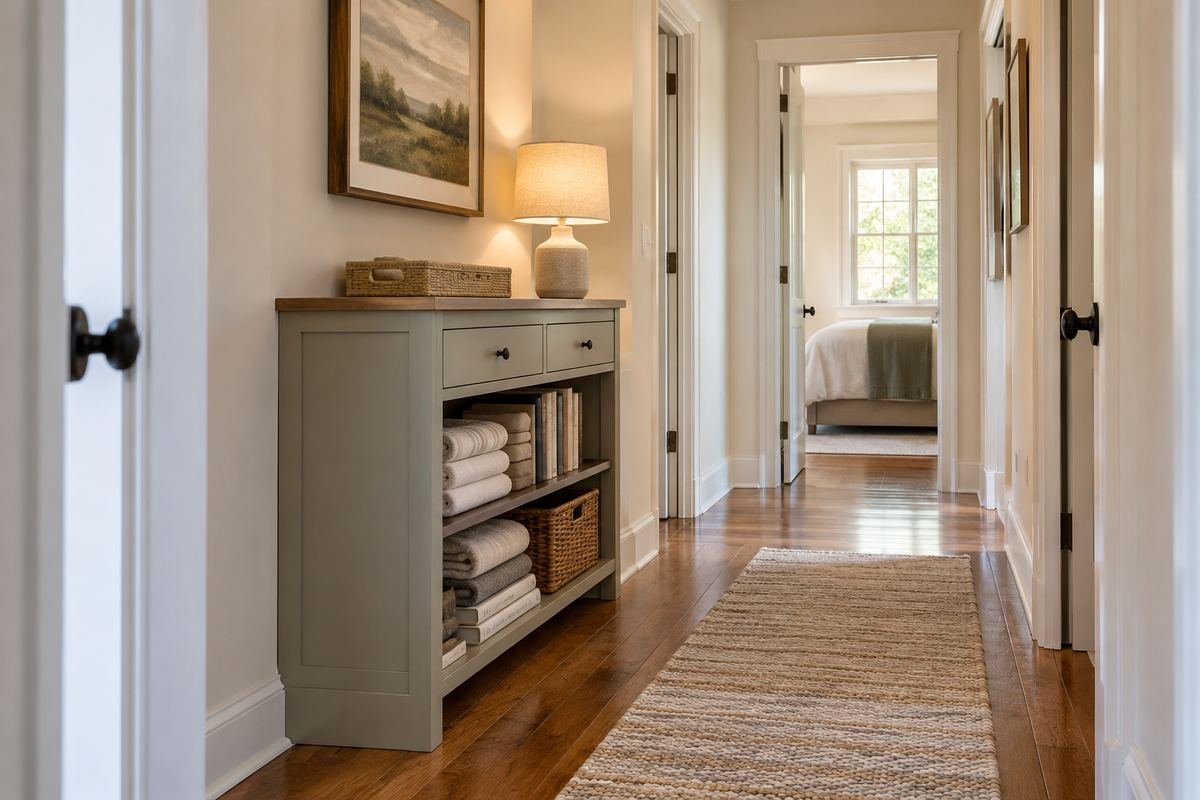
The most durable hallway storage ideas include a regular return to a clear connecting route. Put temporary items in their defined group, return stored objects to their homes and remove the piece that repeatedly lands on the floor. Keep the reset simple enough to happen during ordinary household activity.
Review the cabinet after several days of real use. The overflowing category may need a smaller active selection, a different container or another room as its home. Improve that repeated point of friction before adding another unit to the hall.
Practical tip: Review the group that repeatedly leaves its storage home.
Frequently Asked Questions
What is the best storage for a narrow hallway?
Start by deciding whether furniture belongs there at all. Test the complete route and any open storage front with the people and items that use the hall. A suitable shallow unit may work in one home while a different storage location is the better choice in another.
How deep should a hallway cabinet be?
Choose from the actual objects and the remaining usable passage. Include handles, trim, baseboards, the opening movement and the person retrieving an item. There is no single cabinet depth that guarantees every hall remains appropriate or meets its applicable requirements.
Can a bookcase work in a hallway?
It can be a candidate when the complete product, contents and operating space suit the location. Follow the exact installation and anchoring instructions. Test the largest book and the route past the shelf before treating the exterior depth as the only fit measurement.
Should hallway storage match the wall color?
Matching or closely related colors can make a long storage run feel visually quieter. It is an appearance choice rather than a substitute for appropriate furniture depth and placement. Test a finish sample beside the existing doors, floor and trim.
What belongs in a bedroom hallway?
Consider useful groups tied to adjoining rooms, such as clean linens, a small shared book selection or outgoing items waiting for a regular return. Avoid filling available space with unrelated long-term storage just because a cabinet has room.
How do I keep a hallway from becoming a dumping area?
Give every stored group a clear purpose and a practical limit. Keep temporary return items distinct from permanent storage and empty them during an existing household routine. Review the category that repeatedly overflows before adding another basket.
Choose the Details That Work in Your Home
Choose hallway storage ideas that support the rooms on either side and remain workable when someone uses them. Measure the full operating footprint, follow the furniture installation instructions and keep ordinary routes available. A modest useful group in the right location is more valuable than a larger cabinet that makes every trip through the house harder.
For related ideas, explore hallway runner ideas, hallway lighting ideas, hallway paint colors.
Planning References
CPSC: furniture anchoring and climb-attracting objects; IKEA: BILLY 905.220.43 dimensions, adjustable shelves and anchoring. Follow the instructions for the exact products you choose.
Optional digital guide for this topic
If you prefer a structured workbook, explore this related paid guide.