Kitchen windowsill ideas should work with the window before they decorate it. A plant or ceramic bowl may look settled in a photograph yet interfere with a handle, catch a blind or make the sill difficult to clean. Start with the usable ledge and the way the window operates.
Notice the light at different times, the moisture around a nearby sink and the view from the usual working position. A narrow sill may be best with one small object or nothing at all. A deeper recess can support a modest group when every item stays stable within its usable surface.
These 23 original concepts compare small arrangements, plant choices and practical ways to keep a kitchen window useful. They are decor illustrations, not instructions to alter a window, extend its sill or modify drainage. Follow the care and operation guidance for the actual window and any products you choose.
The images are original AI-generated decor concepts, not installation diagrams or photographs of completed client projects.
Browse These 23 Kitchen Windowsill Ideas
Jump to an idea
- Start with a deliberately clear windowsill
- Let one suitable plant set the scale
- Kitchen windowsill ideas with separate herb pots
- Group a few objects on a removable tray
- Use one low vase with a restrained stem group
- Keep a small ceramic group below the sightline
- Keep the sink-side section easy to clear
- Leave a crank handle’s working area available
- Respect the movement of a sliding sash
- Kitchen windowsill ideas for a wider bay
- Use a deep recess for one settled focal point
- Kitchen windowsill ideas for a very narrow ledge
- Contrast a dark window frame with a light container
- Let a stone ledge supply some of the texture
- Keep plant moisture separate from a wood ledge
- Let the trim color frame a small arrangement
- Keep the main view open with a low arrangement
- Kitchen windowsill ideas that clear a moving blind
- Use a characterful outer vessel with a suitable inner pot
- Review kitchen windowsill ideas as the light changes
- Connect the ledge to one existing kitchen color
- Give a sink brush a suitable contained position
- Finish with a group that can reset easily
Measure kitchen windowsill ideas around the moving window
Measure the genuinely usable flat area rather than the full trim depth. Open and close the window as intended, check the handle and lock, and move any window treatment through its normal range. Include cleaning and access to the frame. Then test the proposed arrangement with the real pot, saucer or tray instead of guessing from its listed width.
| Window condition | Direction to compare | What to test |
|---|---|---|
| A very narrow ledge | One small stable object or an empty sill | Does the full base sit securely inside the usable area? |
| A sunny location suited to herbs | A modest group in separate suitable pots | Actual light, drainage and each plant’s care needs |
| An opening crank or handle | An arrangement outside its operating area | Can the window still be operated normally? |
| A sink directly below | A small removable group or clear sill | Splash, cleaning and access during ordinary use |
| A deeper bay or recess | A restrained group with usable gaps | Can every surface and window section remain accessible? |
| A blind or curtain near the ledge | Low objects outside its movement | Does the treatment clear the whole arrangement? |
| Limited growing light | Suitable nonliving decor or a different plant location | Is the choice based on real conditions rather than appearance? |
Choose plants from the available light and drainage
University of Maryland Extension emphasizes light and well-draining containers for indoor herbs, with needs varying by species. Iowa State Extension identifies light as a major limit indoors and recommends separate containers for different herbs. Use those principles to assess the actual window rather than promising that any kitchen sill will grow every herb. Choose a plant and care routine suited to the observed conditions.
Keep the window’s drainage and maintenance available
Andersen’s product-care information explains that windows with drainage systems use designed routes and exterior weep openings, and that regular appropriate maintenance supports operation. Follow the exact instructions for your window. Do not cover drainage channels, pack objects into operating tracks or add a decorative extension that interferes with the unit. These arrangements sit on suitable interior ledges without modifying the window.
Use a simple lift-and-clean trial
Before adding more pieces, remove the proposed group, clean the ledge as its material requires and put everything back. Notice what catches, spills or needs an awkward reach. A small arrangement that can be lifted easily is often more practical than several separate objects that must be moved one by one around the sink. Keep the task appropriate to the actual surface and products.
1. Start with a deliberately clear windowsill
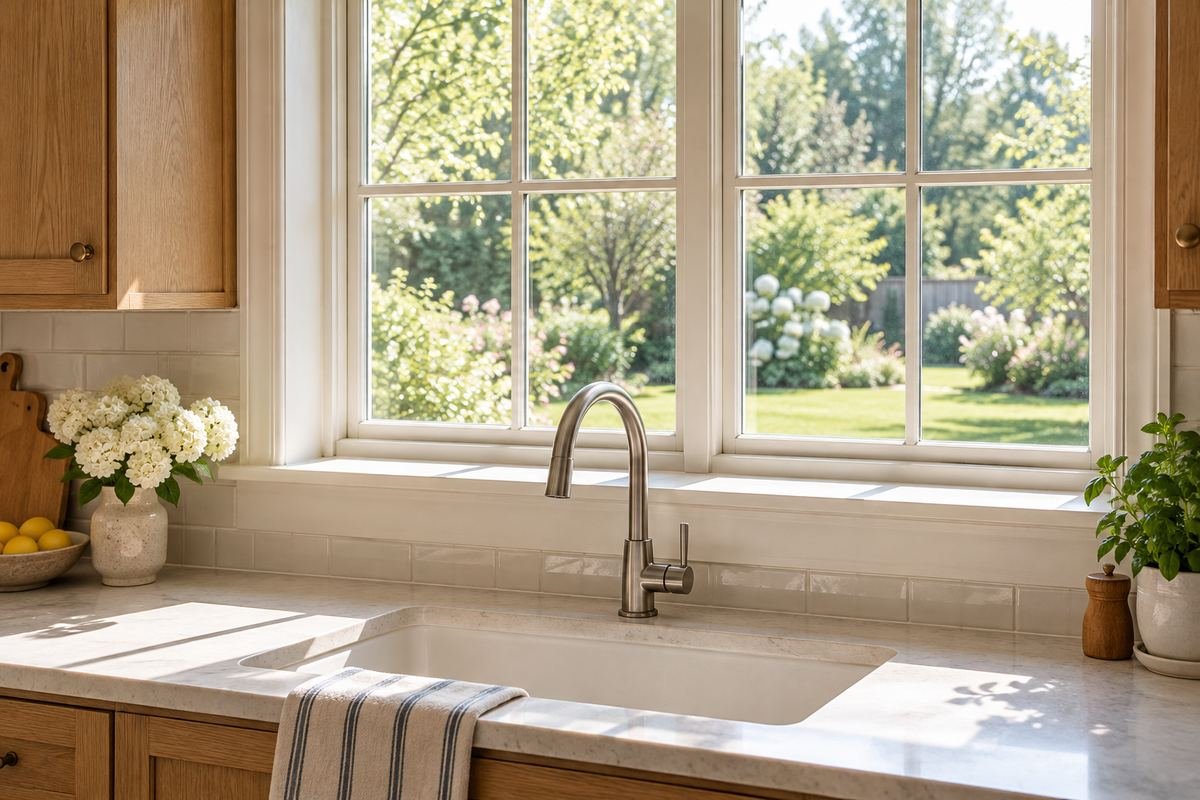
An empty ledge can be a finished choice when the window, view or sink area already supplies enough visual interest. Keep the surface clean according to its material and let the trim line remain visible. This is especially useful when a narrow sill cannot support a stable group.
Observe the window during ordinary cooking and cleaning before deciding that it needs decoration. If an added object would have to move every time the handle is used, a clear sill may be the most practical arrangement. Add interest through the surrounding room instead.
Practical tip: Try the clear arrangement for a few days before adding objects.
2. Let one suitable plant set the scale
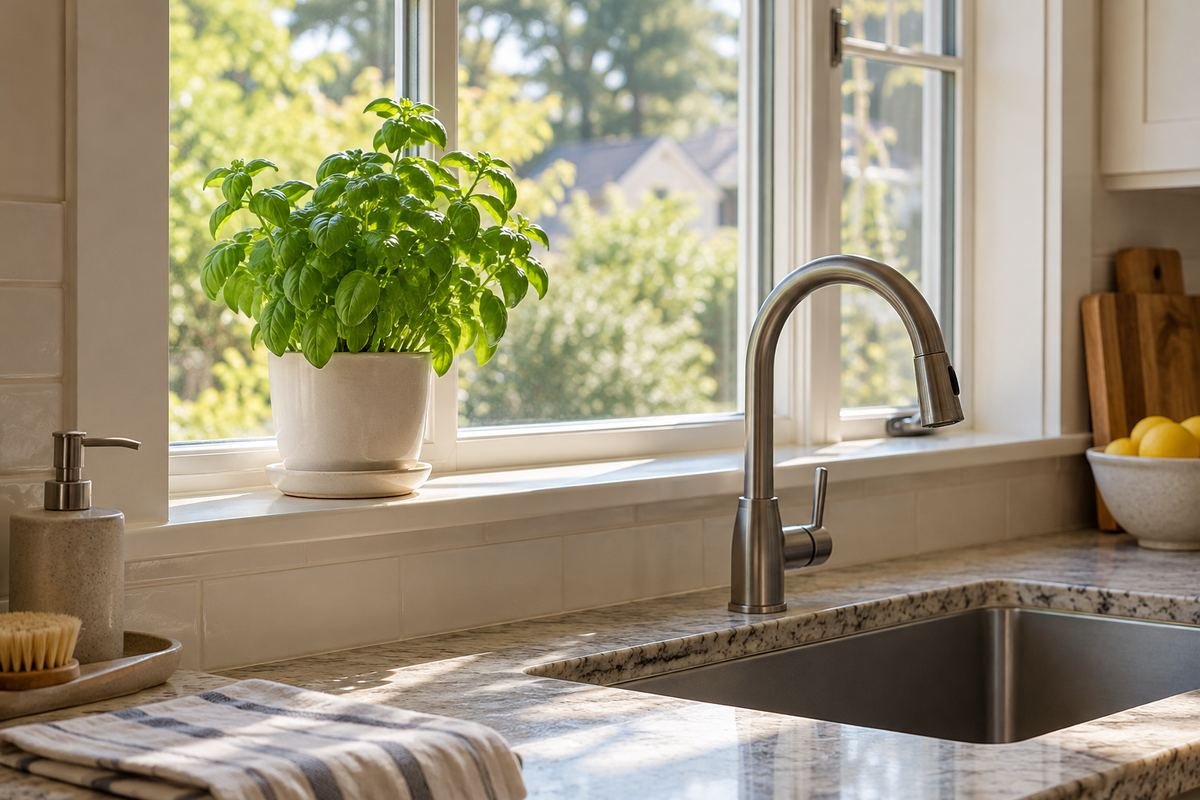
A single plant can give the window a clear focus without occupying the whole ledge. Choose the plant from the actual light and its care requirements, then compare the complete pot and saucer with the usable flat surface. Keep the base stable within the ledge.
Consider the mature growth as well as the small plant on the day it arrives. Leaves should not interfere with the lock, moving sash or nearby treatment. If the plant needs conditions the window cannot provide, choose another location rather than compensating with a more decorative pot.
Practical tip: Check the pot, saucer and expected growth together.
3. Kitchen windowsill ideas with separate herb pots
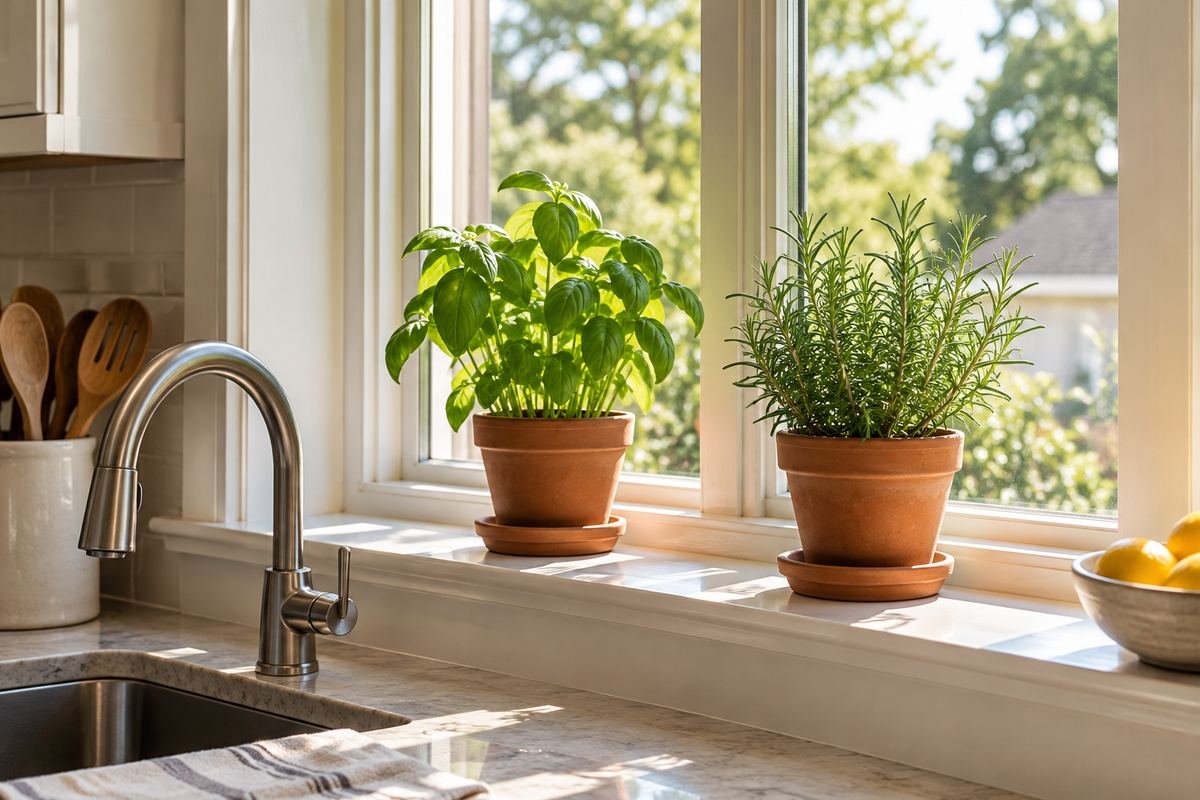
A small herb group can be useful when the window provides suitable growing conditions. Keep different species in separate appropriate containers so their care can be managed individually. Choose the number of pots from the available ledge and actual light rather than filling the full width.
Observe the plants and follow their particular care guidance. A sunny exposure may still change with seasons or nearby shade. Keep drainage and surface protection suitable, and leave the window’s normal operation available around the group.
Practical tip: Start with a small selection whose care you can maintain.
4. Group a few objects on a removable tray
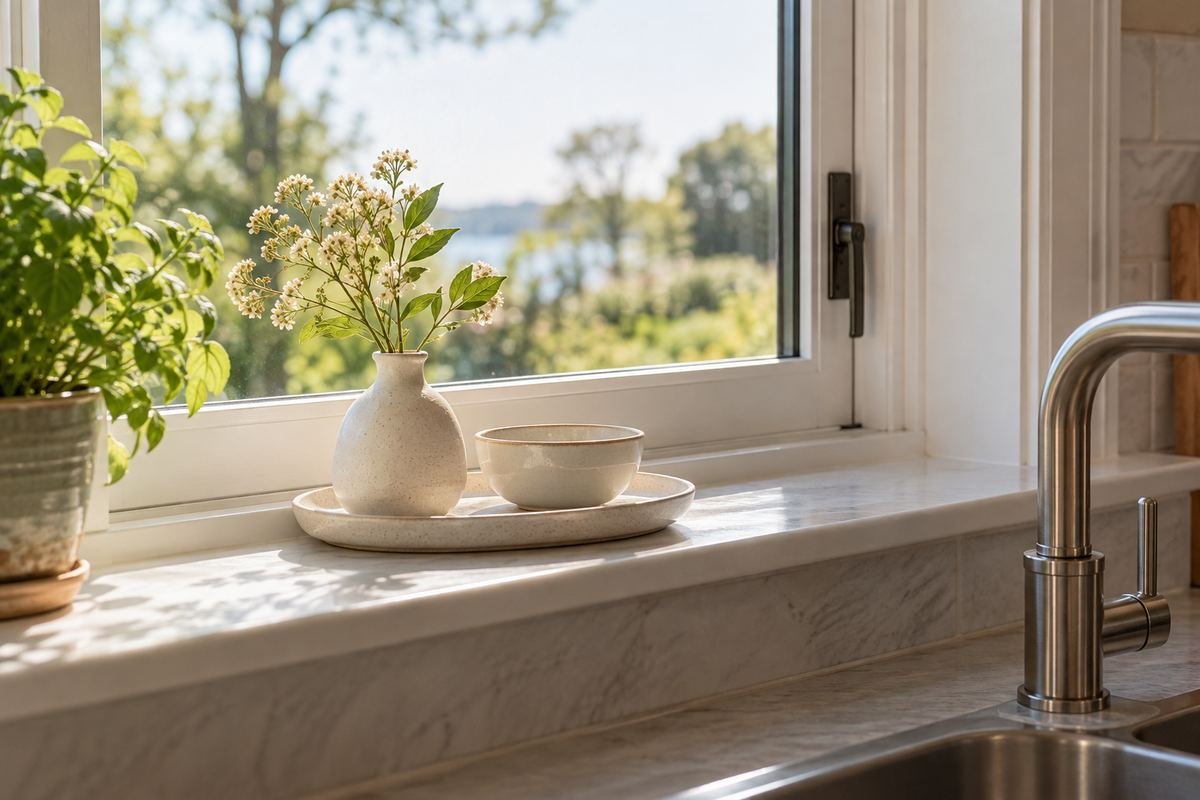
A suitable tray can let a small arrangement lift away as one group for cleaning. Compare the tray’s complete base with the usable ledge and choose materials suited to the conditions. Keep its contents modest enough that the loaded tray remains manageable.
Test the tray around the handle and window treatment before treating it as a permanent display. It should simplify removal rather than create a large object that is awkward to pass around a faucet. Use the tray for the arrangement, not to hide water collecting underneath.
Practical tip: Lift the fully arranged tray during the cleaning test.
5. Use one low vase with a restrained stem group
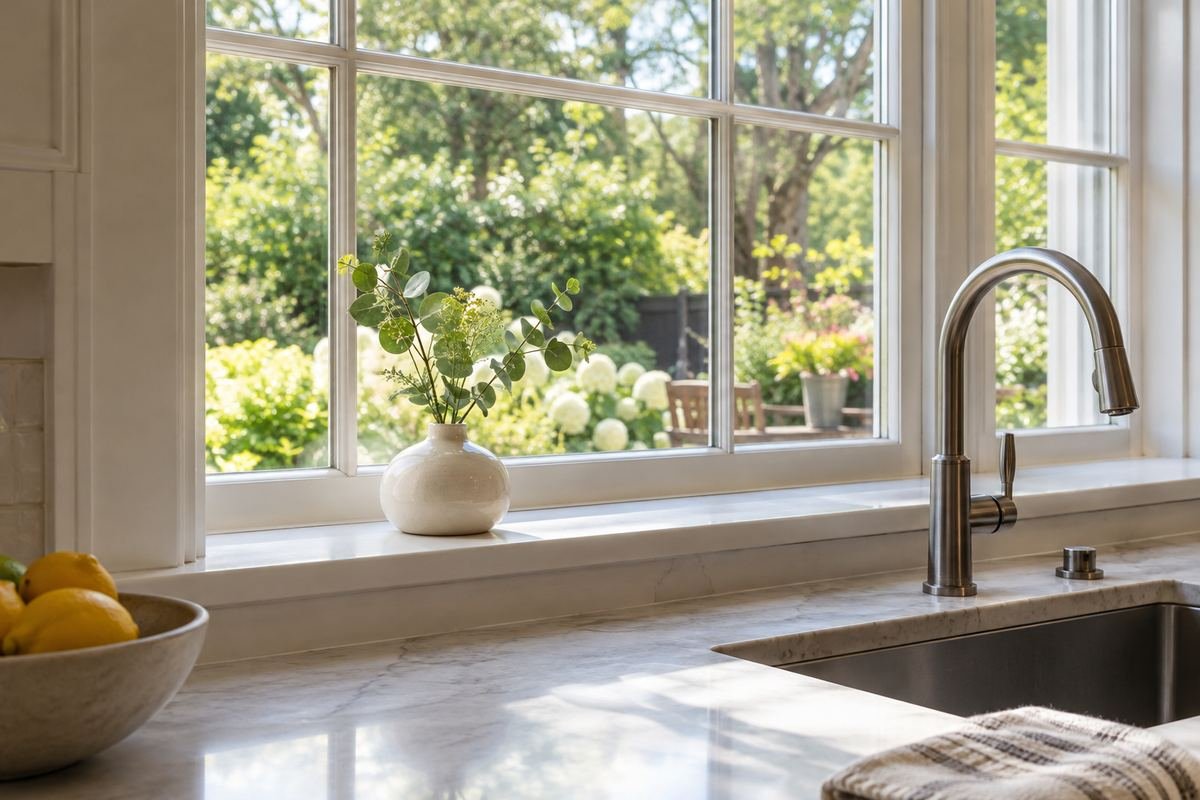
A low stable vase can offer a simple change of texture or shape without creating a tall screen across the window. Choose a size whose base fits the ledge and whose stems remain clear of moving parts. Keep the arrangement appropriate to the household and the kitchen task nearby.
Consider the view from the sink or counter rather than styling only for a front-facing photograph. If the stems interrupt that view or catch a blind, choose a smaller group or another location. Keep the vase easy to remove for its own care and for cleaning the sill.
Practical tip: Judge the arrangement from the usual working position.
6. Keep a small ceramic group below the sightline
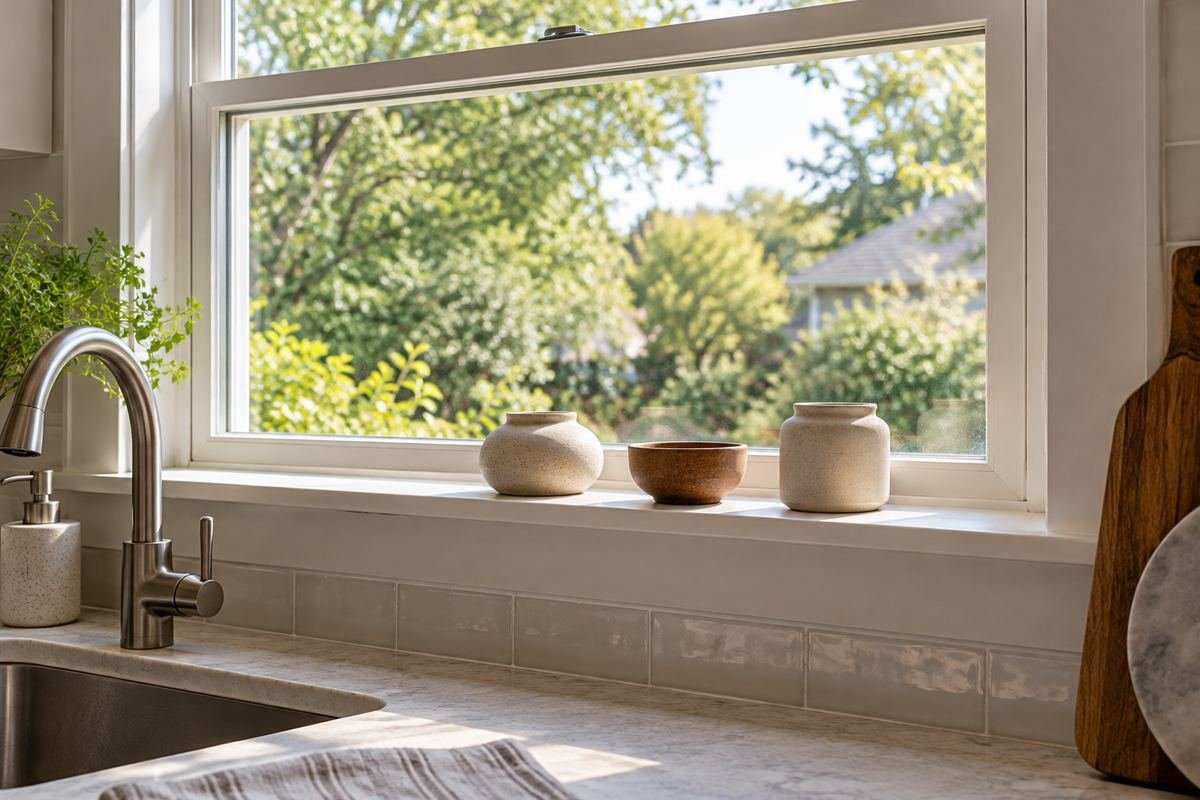
A restrained group of low ceramics can add interest where growing conditions do not suit the plant you wanted. Choose stable objects intended for the conditions and keep every base fully within the usable ledge. A few related shapes can work without occupying every section of the window.
Leave practical gaps for cleaning and operation. If the group needs a large riser or overlapping stacks to look complete, simplify it. The kitchen window should remain useful as a window rather than become a shelf arrangement that requires constant restyling.
Practical tip: Test the group at the height seen from the counter.
7. Keep the sink-side section easy to clear
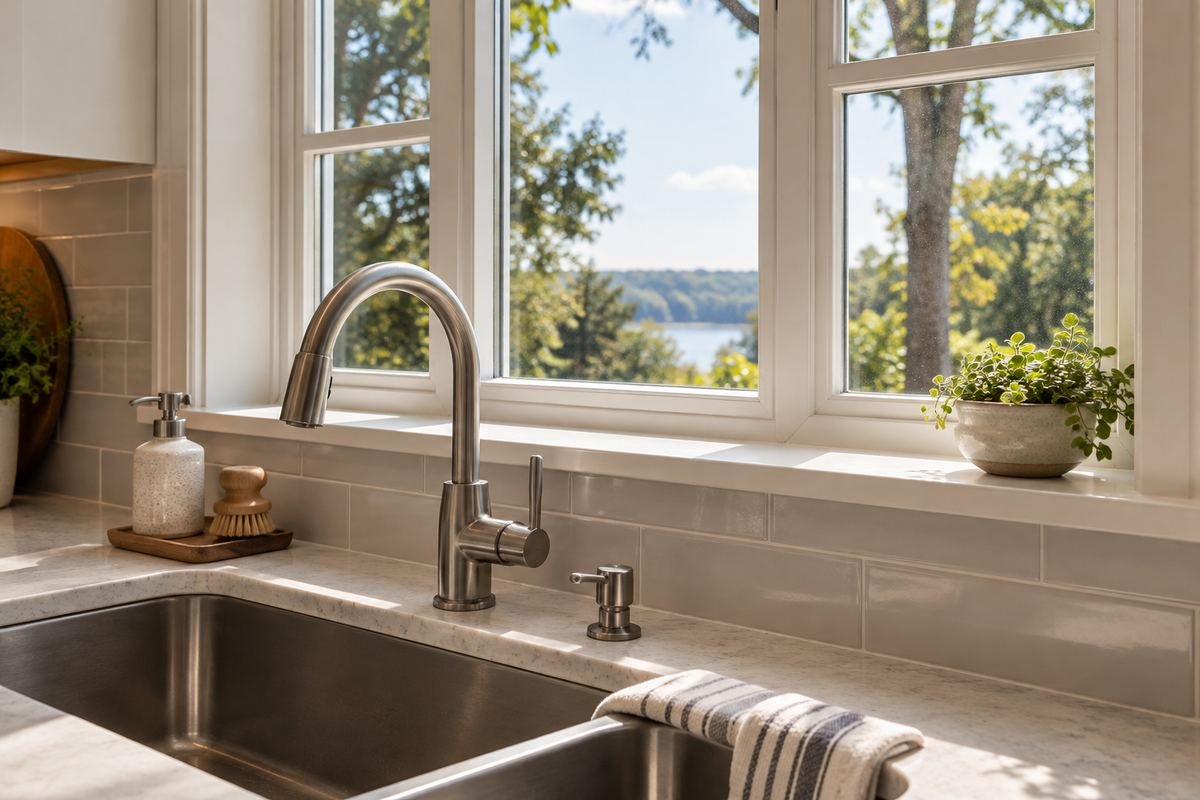
A windowsill above a sink is part of an active working area. Observe the actual splash, faucet movement and cleaning routine before adding a group of objects. A small removable arrangement at one side may be more practical than decorating the full ledge behind the faucet.
Choose materials suitable for the conditions and keep the sink usable in its ordinary way. If objects repeatedly need to move when large items are washed, reduce the group or choose another location. Let the busiest section remain available for the task.
Practical tip: Test the arrangement during normal sink use.
8. Leave a crank handle’s working area available
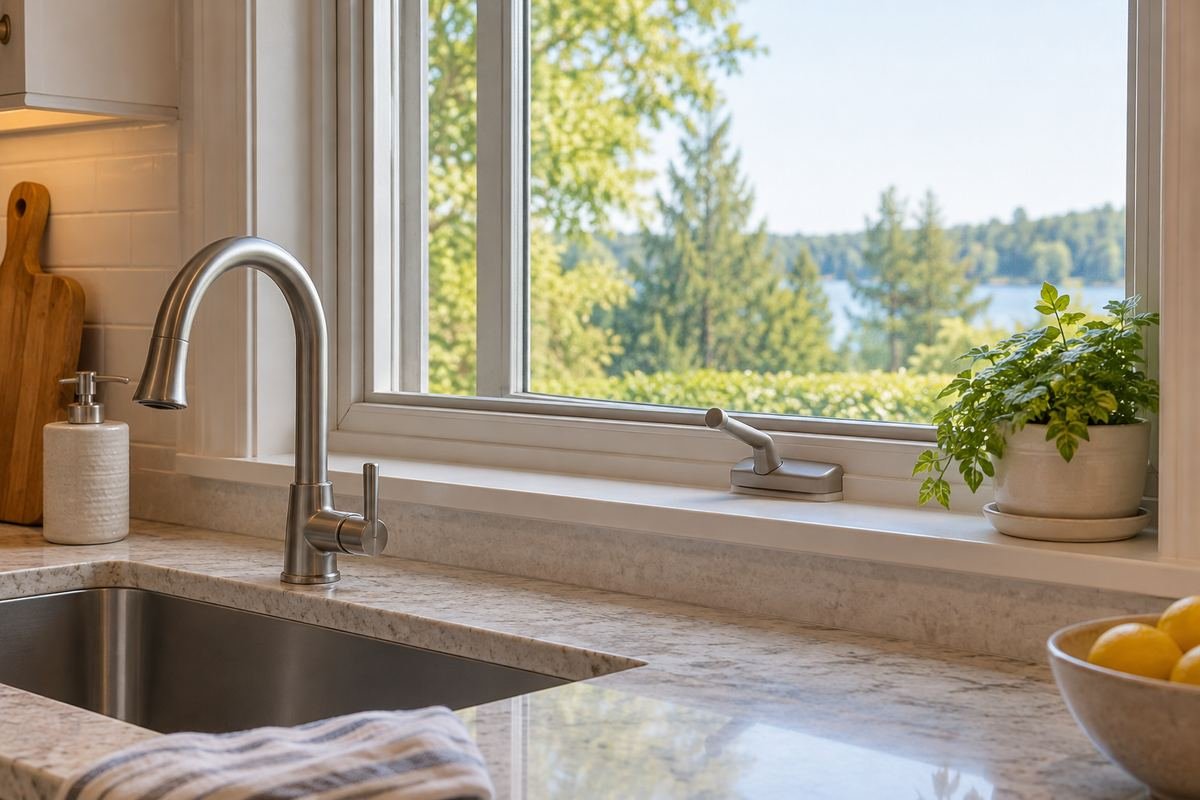
A casement-window crank needs usable space for its intended movement. Try the actual handle through its normal operation before placing pots or a tray nearby. Keep the arrangement outside that area rather than assuming a small object can remain directly beside the mechanism.
Review the handle position again after the plant grows or the display changes. A setup that worked with one short vase may not work with a larger container. The practical starting point remains a window that can be opened and secured normally.
Practical tip: Operate the window with the final objects in place.
9. Respect the movement of a sliding sash
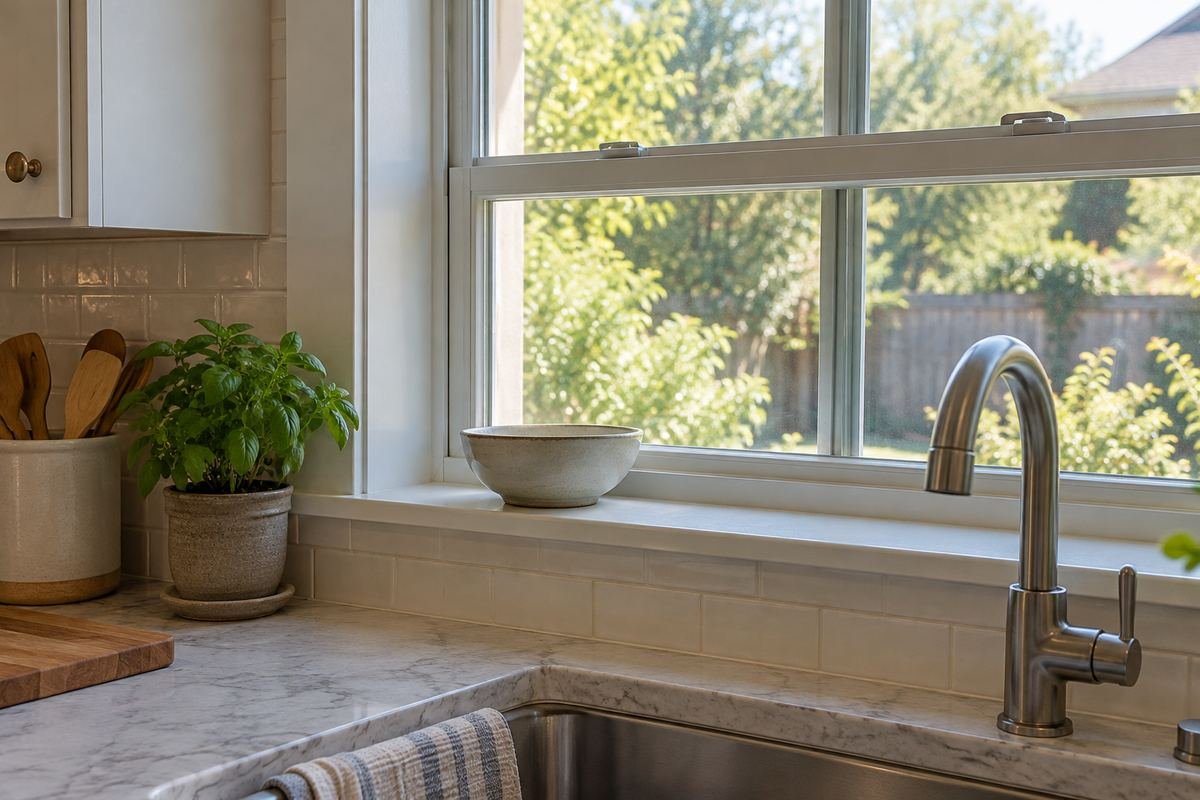
A moving sash can need access and clearance that are not obvious from a closed-window photograph. Follow the window’s operation guidance and test the intended arrangement through the normal movement. Do not place objects where they interfere with tracks, locks or access.
Keep the display modest enough that cleaning and inspection remain practical. A ledge beneath a sliding section is still part of a working window assembly. If no appropriate object position remains, use nearby decor to supply the interest instead of crowding the mechanism.
Practical tip: Check the moving sections rather than only the closed view.
10. Kitchen windowsill ideas for a wider bay
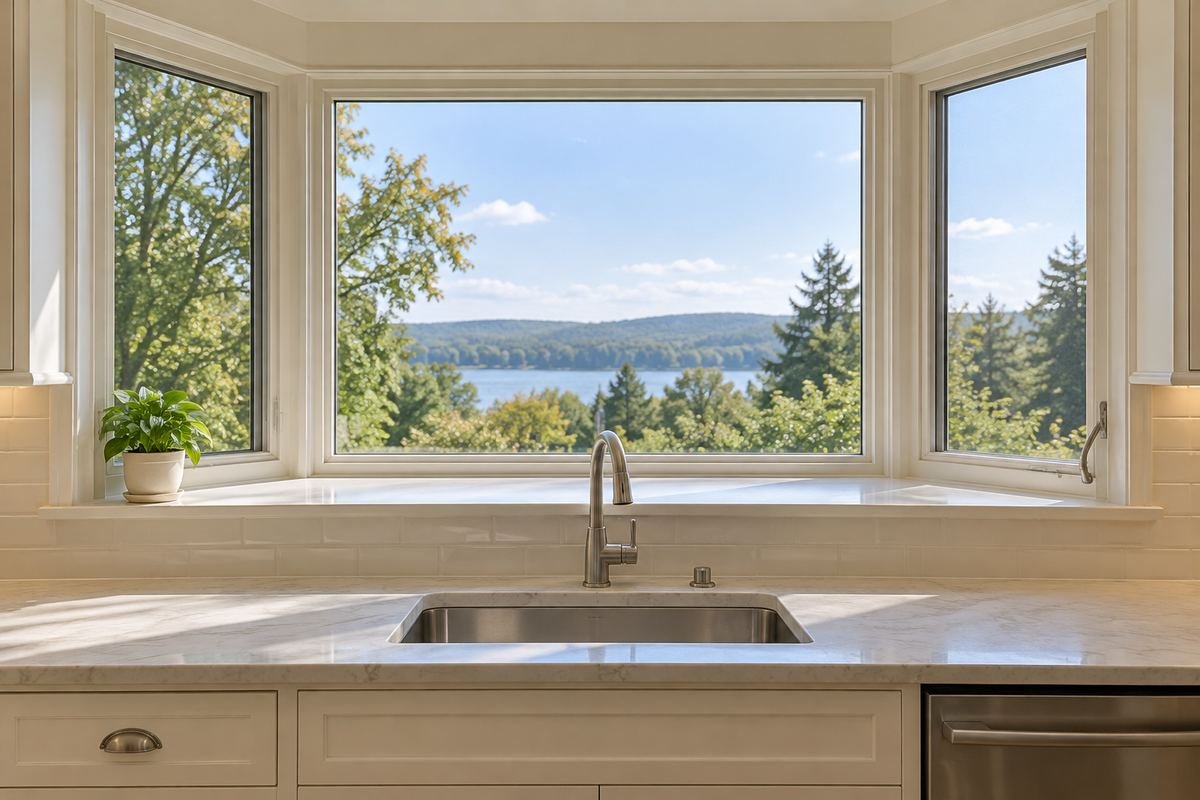
A wider bay can support a small arrangement without placing every object in the center. Compare the side sections and moving window panels, then choose a restrained group that leaves the view and cleaning access available. The bay’s full footprint is not automatically usable display space.
Test the arrangement from the sink or counter as well as from across the room. A group that looks balanced in front view can hide the garden or make a side handle awkward to reach. Use the side areas deliberately rather than filling them symmetrically by default.
Practical tip: Check each window section separately.
11. Use a deep recess for one settled focal point
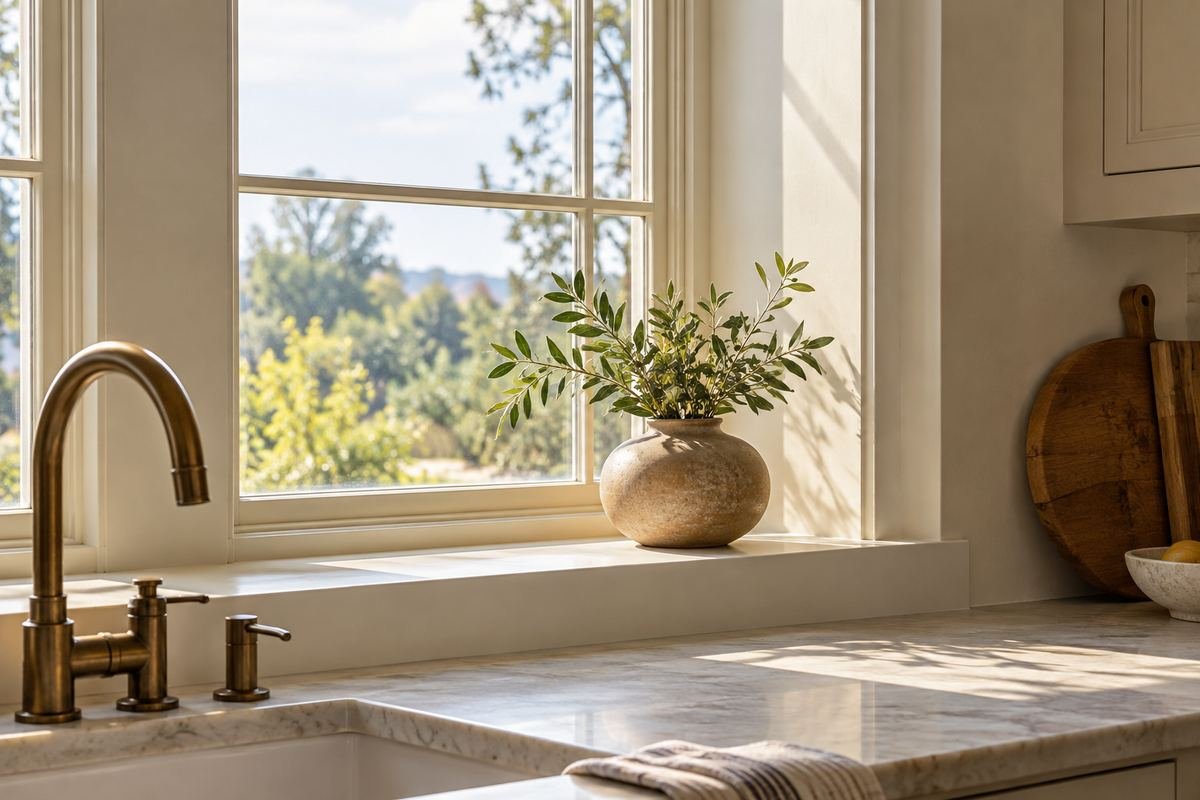
A deeper recess can make one object feel intentional when its complete base has a suitable stable position. Choose a focal point that fits the actual depth without needing a stack of improvised supports. Keep it clear of the opening and the part of the surface that needs regular access.
Depth does not mean the whole recess should be filled. Leave room around the object so its shape can be seen and the ledge can be cleaned. A single well-scaled piece may work better than a long line of small accessories.
Practical tip: Test the object’s full base on the actual flat surface.
12. Kitchen windowsill ideas for a very narrow ledge
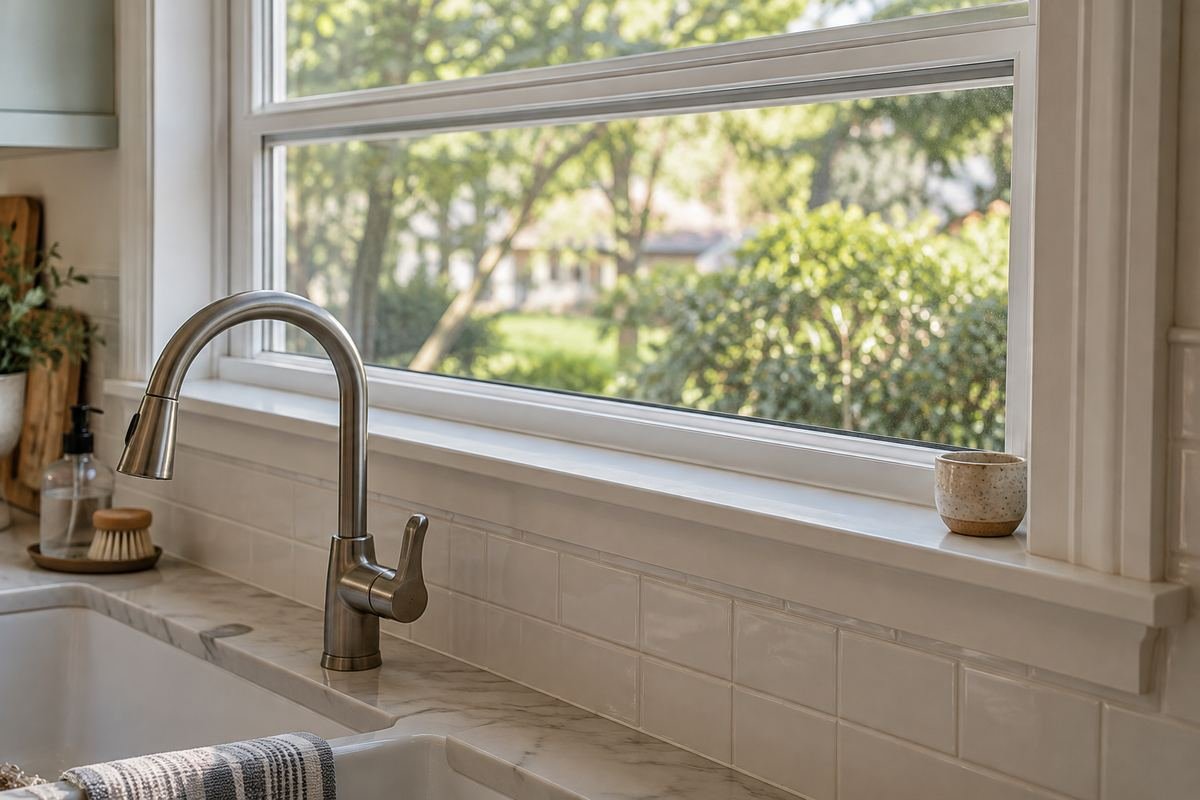
A narrow ledge offers fewer suitable object choices than a deep recess. Compare the complete base, including a saucer or tray, with the genuinely usable surface. Do not balance an object over the edge to copy an arrangement designed for a wider sill.
One very small stable piece may be enough when it fits and the household conditions allow it. Otherwise, let the ledge remain clear and use the wall or nearby counter appropriately. A restrained choice can make the window look more deliberate than an unstable miniature display.
Practical tip: Choose stability before adding visual variety.
13. Contrast a dark window frame with a light container
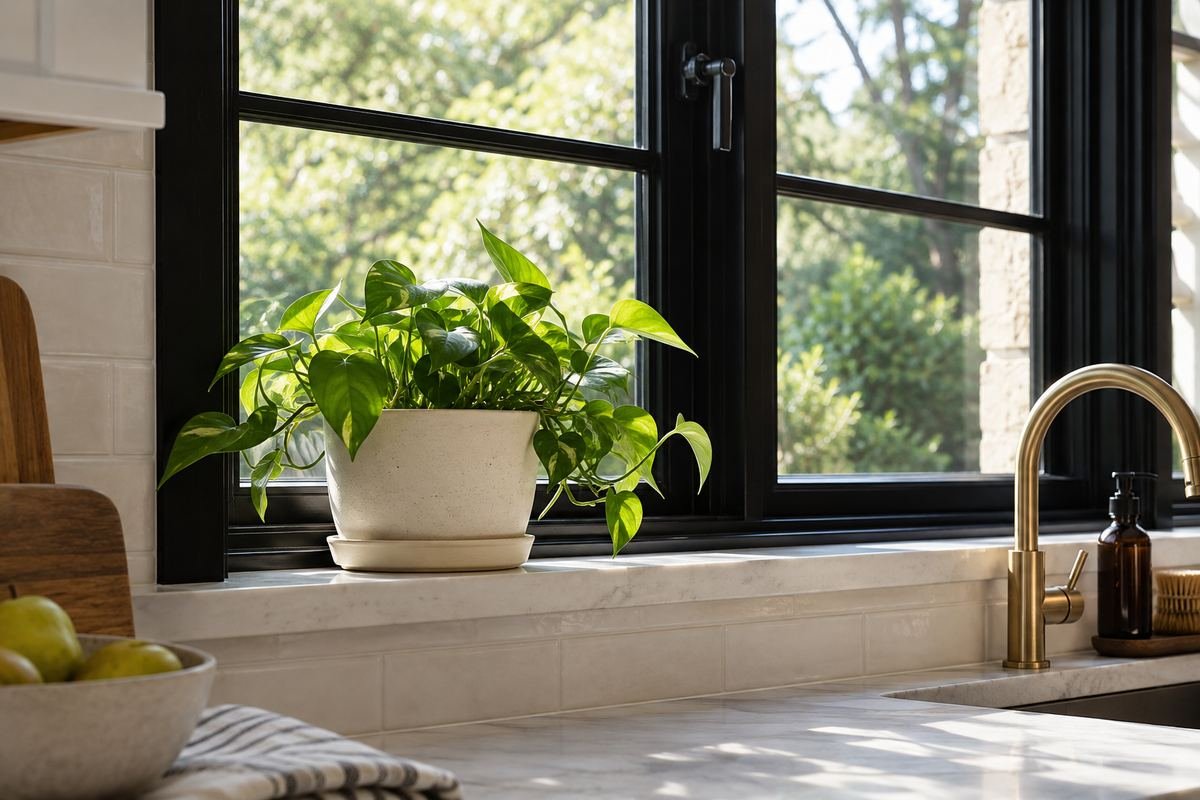
A light-colored container can make a small group readable against a dark frame. Choose the container from its practical role and fit first, then compare the contrast in the window’s actual daylight. A pale finish should support the arrangement rather than become a reason to choose an unsuitable size.
Keep the number of objects modest so the frame still reads as part of the room. The contrast may be enough interest on its own without adding a second material or taller piece. Check the view at the time of day when the kitchen is usually used.
Practical tip: Review the contrast in real light, not just a product image.
14. Let a stone ledge supply some of the texture
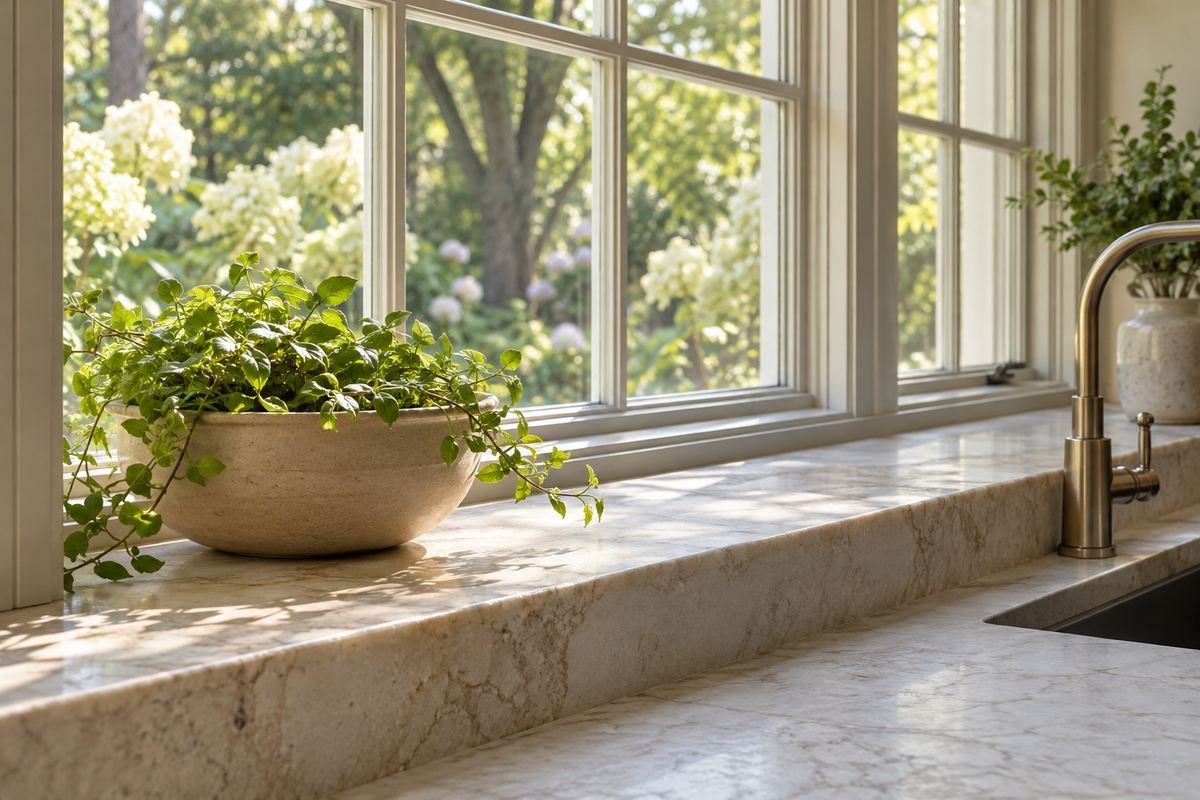
An existing stone or stone-look ledge may already have enough variation to carry a restrained arrangement. Compare a small plain object with the actual pattern instead of competing with it through several busy containers. Keep the surface visible around the group.
Follow the care requirements for the specific material and finish. Similar-looking surfaces do not necessarily tolerate the same moisture, cleaners or plant contact. Choose suitable containers and inspect beneath them during the normal cleaning routine.
Practical tip: Use the ledge’s real finish as part of the palette.
15. Keep plant moisture separate from a wood ledge
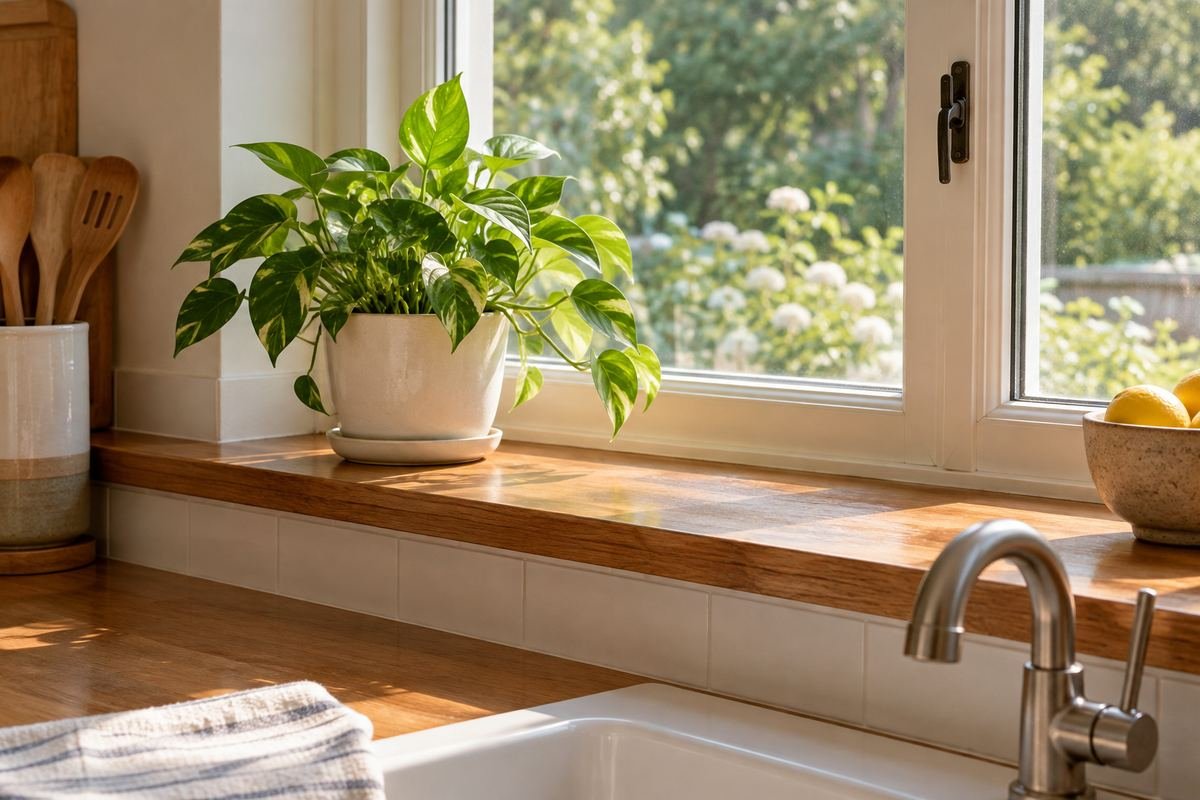
A wood ledge and a living plant need a practical arrangement that respects both care routines. Use a suitable container and surface protection, and avoid leaving water against a finish that cannot tolerate it. Follow the exact wood finish and plant-care guidance rather than assuming a decorative saucer solves every moisture issue.
Lift the container during the normal cleaning check and inspect the surface beneath it. If the location stays damp or the arrangement is awkward to manage, move the plant to a more suitable place. The visible warmth of wood should not depend on accepting hidden ongoing moisture.
Practical tip: Check beneath the container regularly as part of normal care.
16. Let the trim color frame a small arrangement
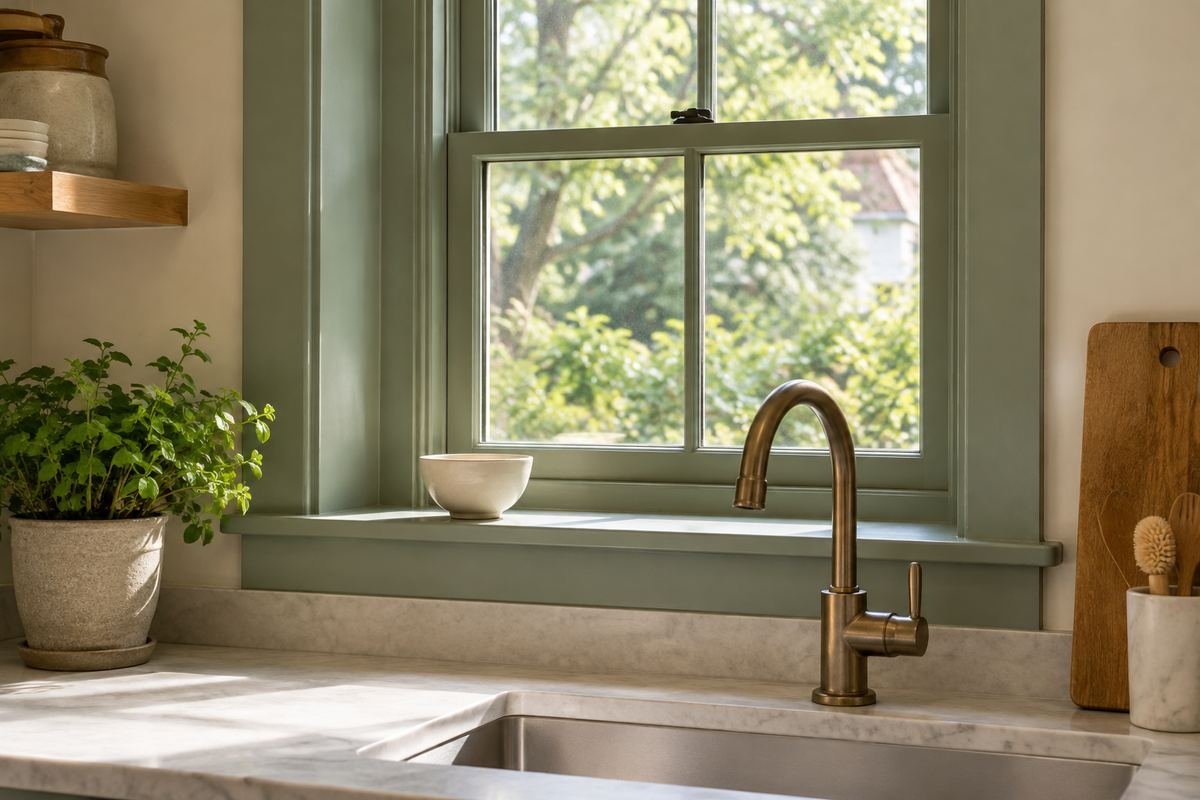
A considered trim finish can connect the window with the kitchen without requiring a crowded display. Compare the existing surface, cabinet color and daylight before selecting a compatible finish. Follow the window and finish manufacturer’s instructions for any maintenance or refinishing.
Keep operating parts, seals and drainage provisions intact. The decor idea is a coordinated finished frame, not instructions to paint every visible part of a window. Once the frame supplies some of the color, a small plain vessel may be enough on the sill.
Practical tip: Choose the finish through the actual product guidance.
17. Keep the main view open with a low arrangement
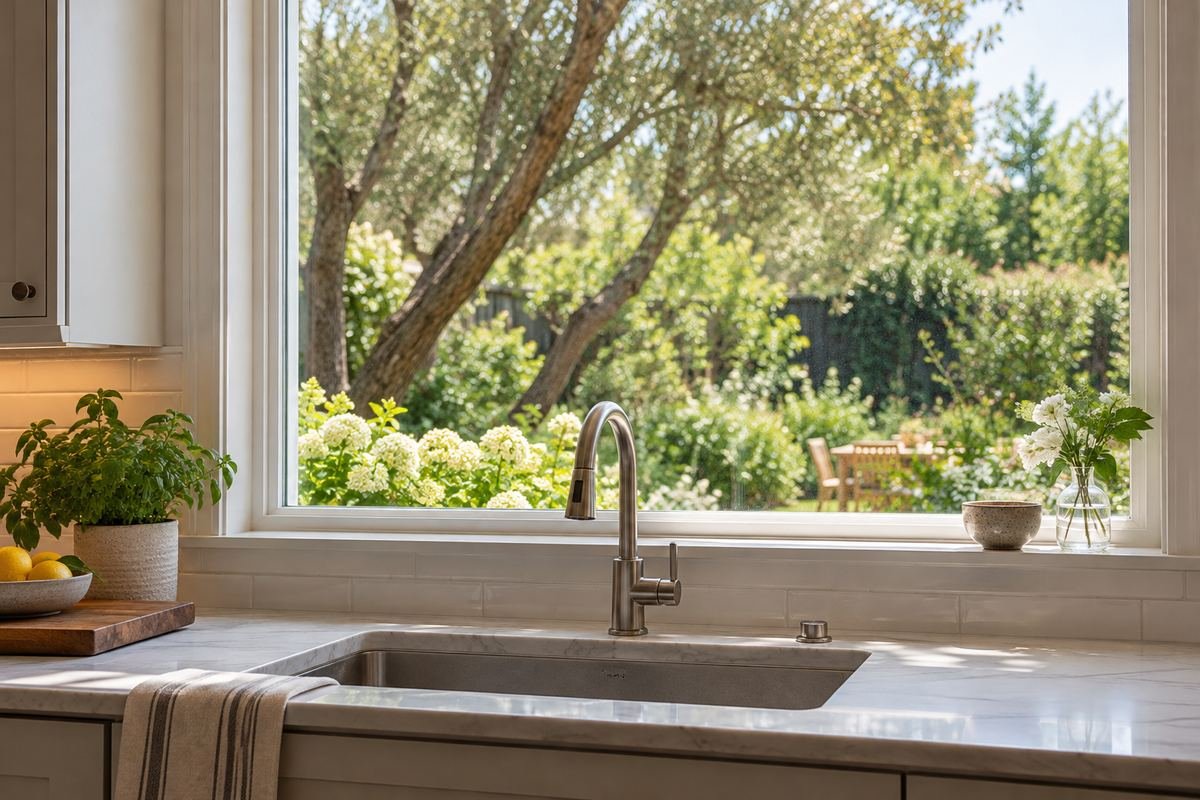
A low group can add a little interest while preserving the view from the working position. Compare the height of the objects from the sink or preparation area rather than from a standing photography angle. Leave the part of the window that matters most to the household visually clear.
Use the surrounding ledge width selectively. Two small pieces at one side may work better than a tall centerpiece directly in the view. If a plant grows into that central area, reassess its location rather than continually pushing other objects toward the edge.
Practical tip: Review the arrangement from where the kitchen is actually used.
18. Kitchen windowsill ideas that clear a moving blind
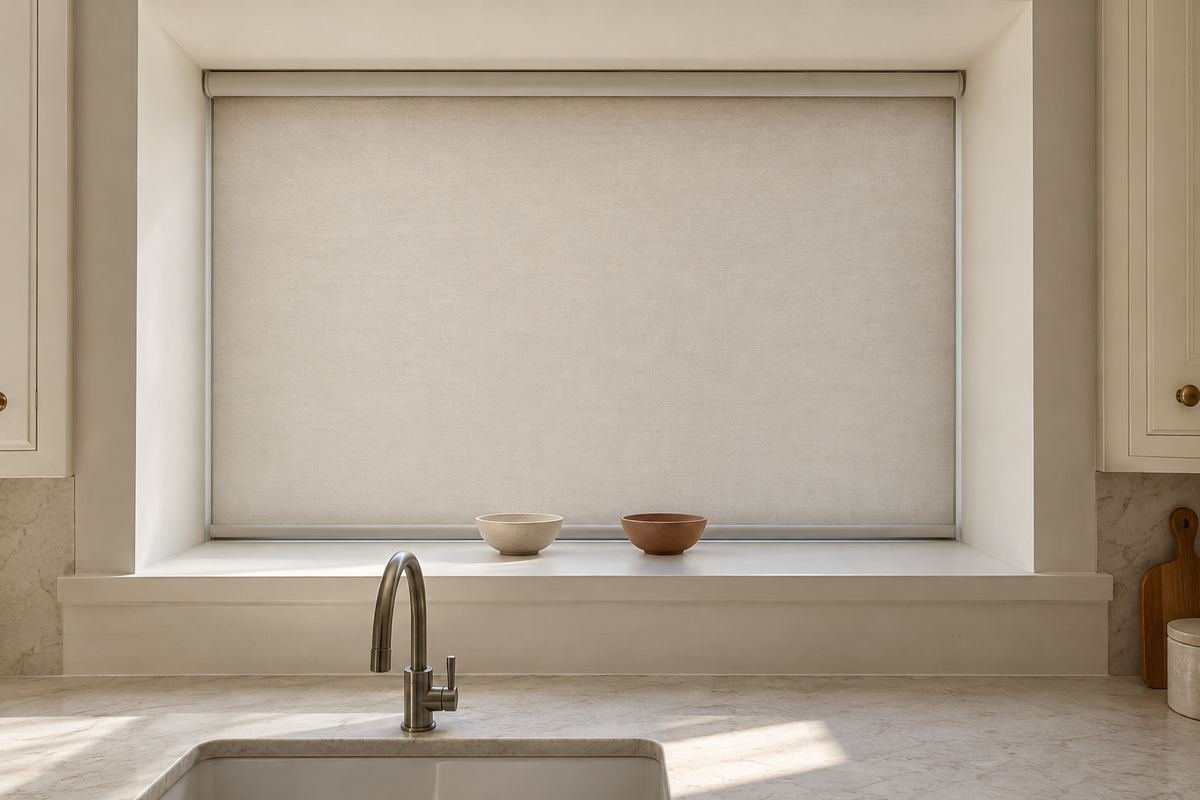
A blind or other window treatment needs room to move as intended. Check its lower edge, operating position and the complete object height before filling the ledge. Follow the product instructions and keep cords or other operating details appropriately managed.
Test the arrangement with the treatment fully lowered and in its normal raised position. A pot that looks fine during the day may interfere with privacy at night. Choose low suitable objects or a clear sill where the available space does not support both uses.
Practical tip: Check daytime and evening treatment positions.
19. Use a characterful outer vessel with a suitable inner pot
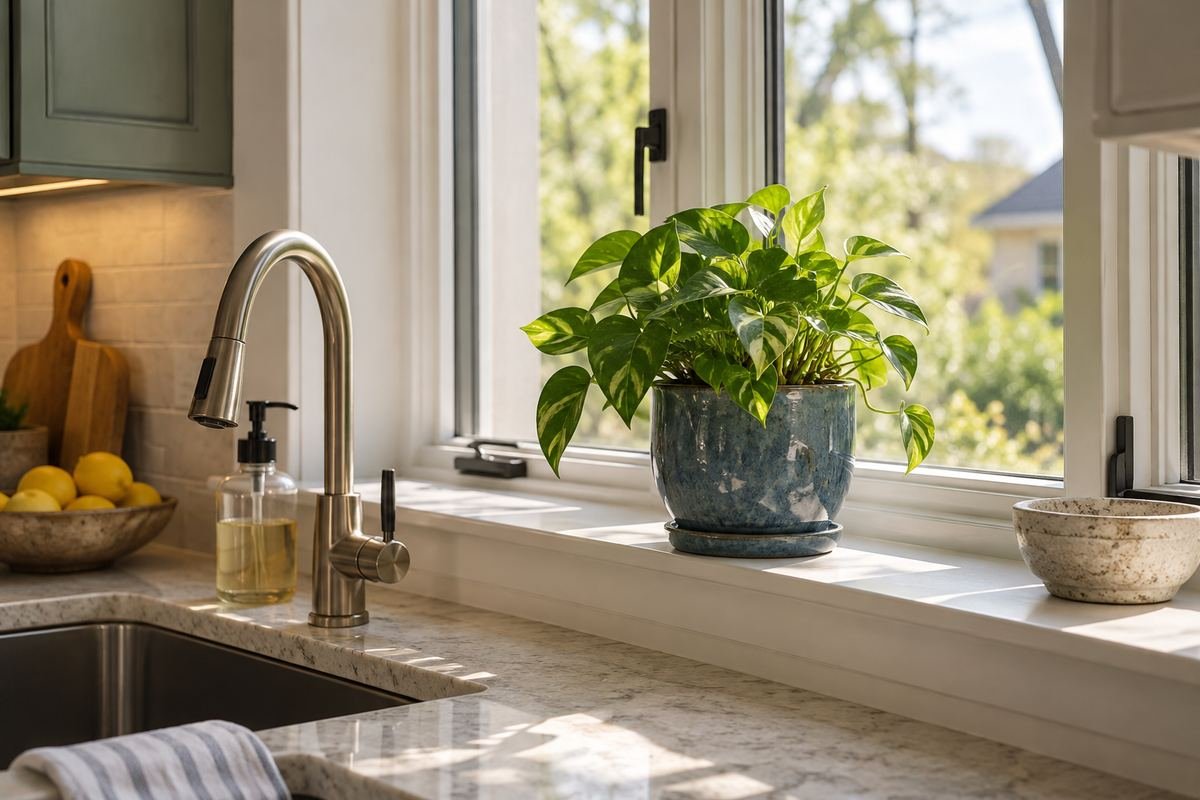
A distinctive decorative vessel can contribute texture when it is used appropriately with the actual plant container. Confirm that the inner pot, drainage and maintenance arrangement work without keeping water against the sill or allowing the plant to sit in unsuitable conditions.
Do not assume an attractive vintage vessel is automatically a planter or suitable for food use. Keep its role clear and choose an appropriate object if its material or condition is uncertain. The useful detail is a manageable complete arrangement rather than the age or price of the outer piece.
Practical tip: Check the whole inner-and-outer container arrangement.
20. Review kitchen windowsill ideas as the light changes
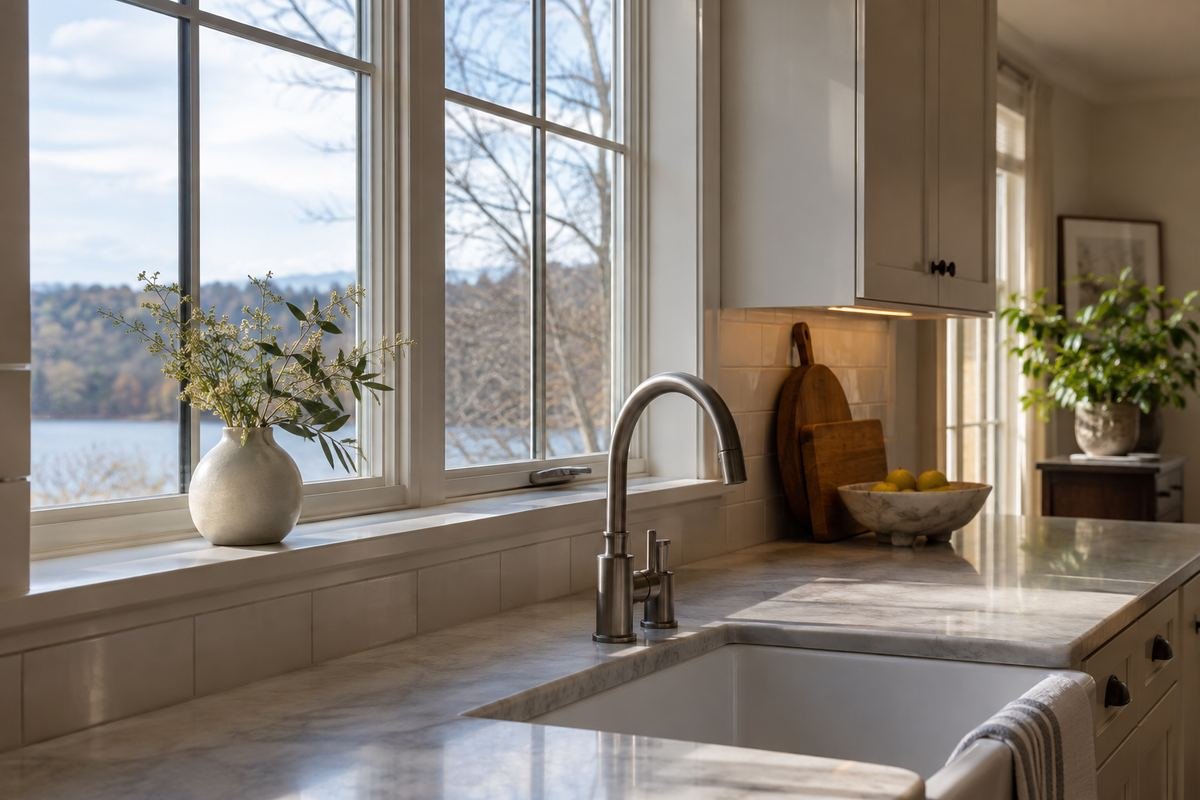
The conditions at a kitchen window can change through the year as sun angles, weather and outside foliage change. Observe the actual plant location and follow the species’ needs instead of expecting a decorative arrangement to stay successful without adjustment.
Move the plant to a more suitable growing location if necessary and let the sill use a different modest arrangement. Supplemental lighting, where used, needs its own appropriate equipment and location. A window display does not have to contain a living plant in every season.
Practical tip: Keep the arrangement flexible enough to respond to the real conditions.
21. Connect the ledge to one existing kitchen color
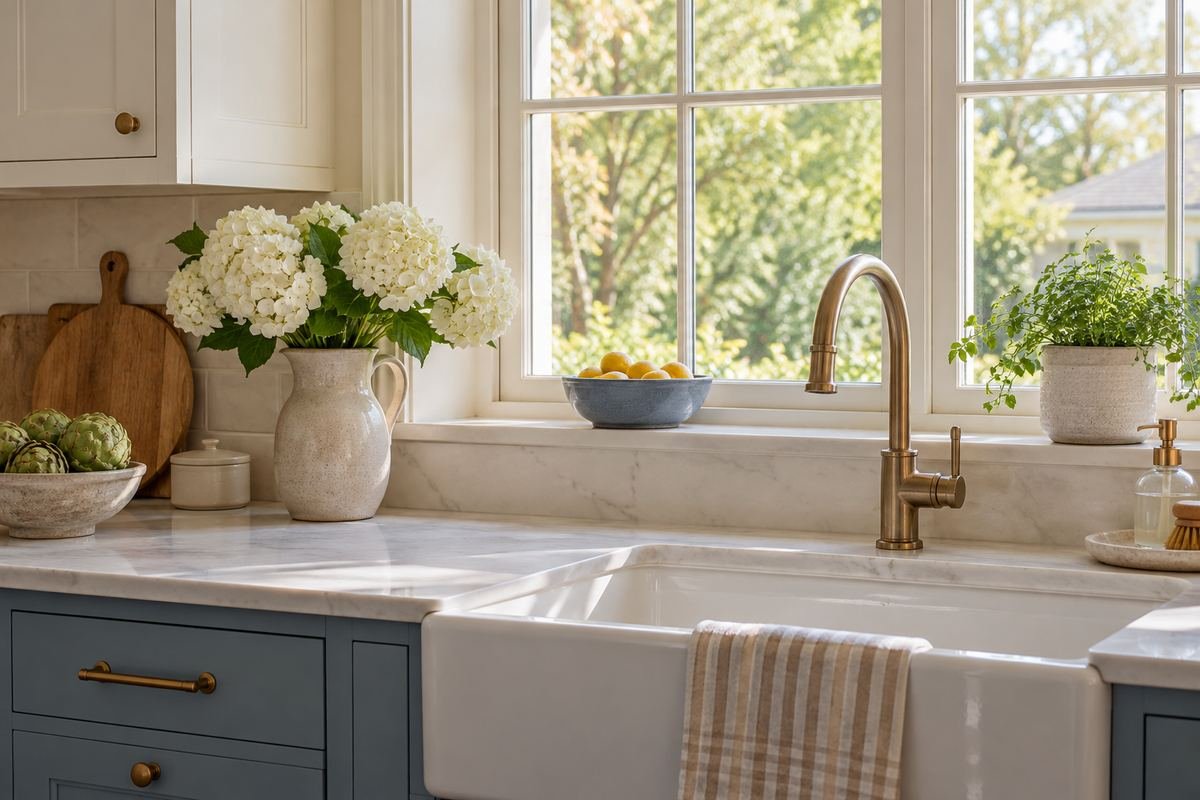
Repeating one color from the cabinetry, tile or nearby textile can make a small windowsill arrangement feel part of the room. Choose a modest object whose size and material already suit the ledge. A connection through color can be subtle without requiring several matching accessories.
Compare the shade beside the actual finishes under daylight. If the group looks busy, remove one competing color or material before adding another piece. The window and surrounding kitchen can share a palette while the ledge remains easy to use and clean.
Practical tip: Repeat one existing color rather than introducing several new ones.
22. Give a sink brush a suitable contained position
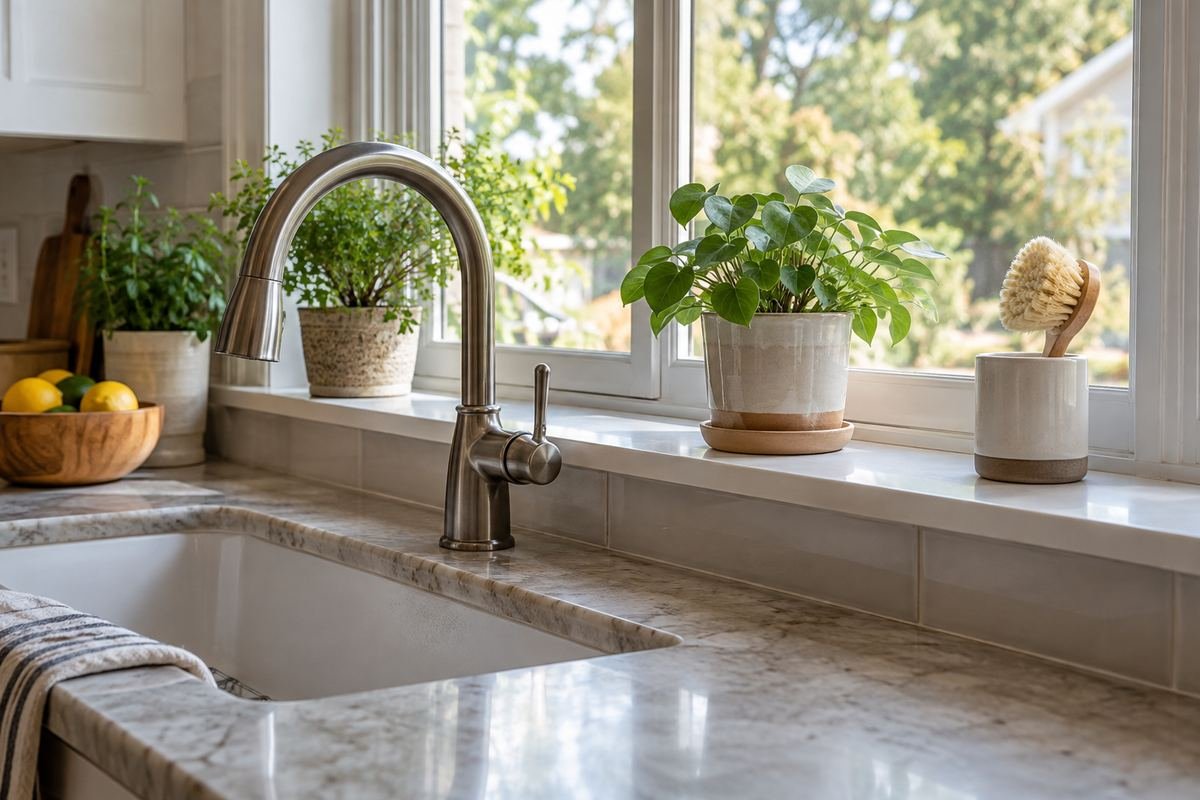
A useful sink accessory can have a defined place near the window when the location and material suit the task. Choose an appropriate holder that manages the accessory according to its instructions and does not interfere with the faucet, window or cleaning access.
Keep the group limited to the items actually used there. A windowsill should not automatically become an open store for every cleaning product. Follow product labels for storage, keep unsuitable items elsewhere and review moisture around the holder during the normal sink routine.
Practical tip: Test the holder during actual washing and cleanup.
23. Finish with a group that can reset easily
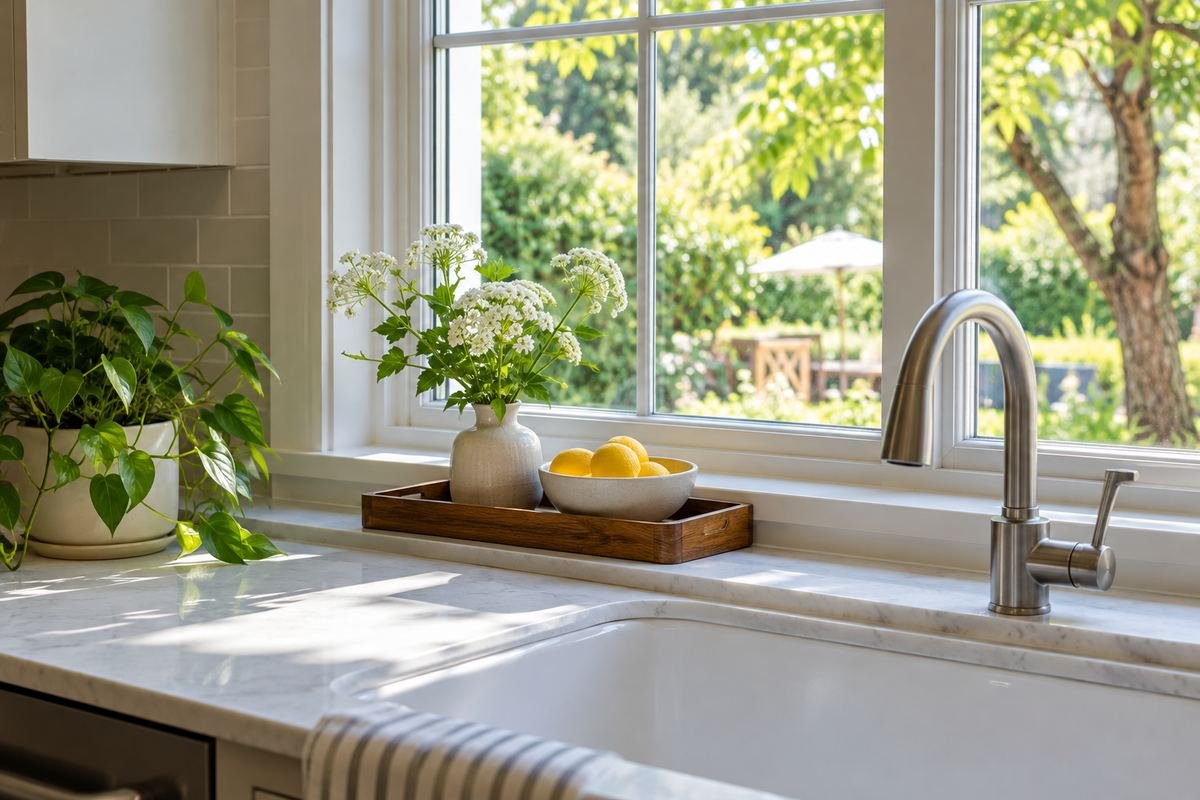
The most useful kitchen windowsill ideas make it straightforward to lift the objects, clean the surface appropriately and restore the arrangement. Choose a number of pieces the household can manage during its ordinary routine. The finished look should survive use rather than require a separate styling session.
Review the display after a few normal days. Remove the object that catches the treatment, move the plant that needs another location and simplify the group that makes cleaning awkward. Improve the repeated point of friction instead of adding another accessory automatically.
Practical tip: Keep the window useful before making the display more elaborate.
Frequently Asked Questions
What can I put on a narrow kitchen windowsill?
Choose one small stable object only if its complete base fits the usable flat area without interfering with the window. An empty sill is a useful option when the ledge cannot support a practical arrangement. Do not balance a wider object over the edge just to create a display.
Can herbs grow on every kitchen windowsill?
No. Assess the light, temperature, container and individual herb requirements. Extension guidance identifies sufficient light and drainage as important factors. A bright-looking room photograph does not establish how much useful growing light reaches the actual plant.
How do I protect the sill from plant watering?
Use a suitable draining pot and compatible saucer, follow the plant’s care needs and keep water from remaining on a surface that cannot tolerate it. Check the complete pot-and-saucer base and lift it regularly to inspect and clean the ledge as required.
Can decor block a window crank or track?
Keep the normal operating area clear. Test the handle, lock, moving sections and window treatment with the actual arrangement in place. Follow the window manufacturer’s instructions rather than adapting the window mechanism around the decoration.
What works above a kitchen sink?
A restrained removable group or a clear sill can make cleaning and operation easier. Observe the actual splash and faucet movement first. Keep unsuitable materials, electrical items and objects that interfere with ordinary sink use out of that arrangement.
Should all the pots match?
Matching pots can provide a calm visual line, but their sizes and suitability should follow the plants and available ledge. A small coordinated group with different useful container sizes can work well. Do not combine plants with different care needs merely to fill one decorative vessel.
Choose the Details That Work in Your Home
Choose kitchen windowsill ideas that preserve the view, window operation and cleaning routine. Let the ledge depth and actual light limit the arrangement, keep plant care practical and give every object a stable suitable place. A small group that works every day will feel more finished than a crowded display that must constantly be moved.
For related ideas, explore kitchen shelf ideas, kitchen island storage ideas, kitchen window treatments, kitchen herb garden planning.
Planning References
University of Maryland Extension: indoor herb light and drainage; Iowa State Extension: indoor herbs and separate growing containers; Andersen: product care, drainage systems and maintenance information. Follow the instructions for the exact products you choose.
Optional digital guide for this topic
If you prefer a structured workbook, explore this related paid guide.