Patio side table ideas should begin beside the outdoor seat that gets used most. Sit normally, include the cushion and armrest, and compare where an ordinary item can be set down comfortably. The table needs to work from that real position before its color or shape can finish the seating group.
Look at the tabletop and the complete base together. A small round top may stand on a broad support, while a narrow rectangle can project beyond a chair into the route. Include getting into the seat, moving any reclining parts and carrying the table to its proper storage place.
These 23 original concepts explore useful outdoor table arrangements rather than a list of tested products. Choose furniture explicitly intended for the actual outdoor use, ground and exposure. Follow the exact product’s assembly, load, handling and care instructions; a concept image cannot establish those requirements.
The images are original AI-generated decor concepts, not installation diagrams or photographs of completed client projects.
Browse These 23 Patio Side Table Ideas
Jump to an idea
- Begin patio side table ideas beside the seat used most
- Use a round top with a complete footprint check
- Choose a square top for a clear compact surface
- Let a narrow rectangle follow the side of a sofa
- Compare an oval surface beside softer seating shapes
- Keep a compact base outside the daily route
- Compare a pedestal form with its real support area
- Check a slatted top with the actual item it will hold
- Use a solid top when a continuous surface suits the task
- Choose coated metal from its exact outdoor care guidance
- Give a timber side table a realistic return routine
- Compare an outdoor synthetic material by its actual specification
- Use one painted table as a controlled color accent
- Keep a matching finish quiet in a detailed outdoor room
- Mix two table shapes through one shared detail
- Test a shared table from both occupied chairs
- Give a sofa end a table that clears the arm and cushion
- Keep a side table clear of a lounger’s full movement
- Compare nesting tables in both stored and working positions
- Choose a carrying handle for the actual return routine
- Give a folding side table a real storage destination
- Leave the useful tabletop larger than the decorative group
- Finish patio side table ideas with an ordinary-session reset
Compare patio side table ideas from the occupied seat
Make a comparison card for the actual chair or sofa: normal seated position, cushion, arm height, useful tabletop area, complete table footprint and the route around the group. Try a familiar small item on a suitable surface at the proposed position. Include standing up and any reclining or swivel movement. Choose the arrangement that supports the ordinary routine rather than following one universal table-height rule.
| The seating situation | Detail to compare | Useful test |
|---|---|---|
| One regular outdoor chair | A table beside the normal seated position | Set down the actual item without an awkward reach |
| Two neighboring chairs | A shared surface or separate tables | Both places work independently |
| A sofa with substantial arms | The actual tabletop position and base | The arm and cushion do not complicate access |
| A reclining lounger | The full chair movement and table location | Nothing collides through the intended movement |
| A narrow route beside seating | The complete table footprint | The base and handles remain outside the route |
| A movable daily arrangement | A suitable handle or folding form | Correct handling and a real storage destination |
| An exposed patio | A product intended for the conditions | Material-specific care and seasonal protection |
Read outdoor suitability and care as separate information
IKEA identifies its MÅBÄRSSKÄR 305.971.64 table as suitable for indoor and outdoor use, while also giving cleaning, drying and storage guidance. That is a useful reminder that an outdoor designation does not remove upkeep. Check the exact chosen table’s complete specification and care instead of assuming all coated metal or wood finishes tolerate the same conditions.
Check projecting handles and usable surface separately
An overall measurement may include parts that rise above or extend beyond the useful tabletop. Check the actual surface position, rim, handles and complete support in a product drawing or identified display. Compare the area where the item will rest with the seated task. A small catalog footprint or a decorative carrying handle does not establish a comfortable landing position.
Make a seated-use and weather-return card
For each candidate, record the exact model, overall dimensions, usable tabletop position, base projection, outdoor suitability and care link. Try setting down one familiar item, standing up, moving the chair as intended and returning the table to storage if relevant. After one ordinary outdoor session, note the repeated awkward movement and revise the arrangement before adding more accessories.
1. Begin patio side table ideas beside the seat used most
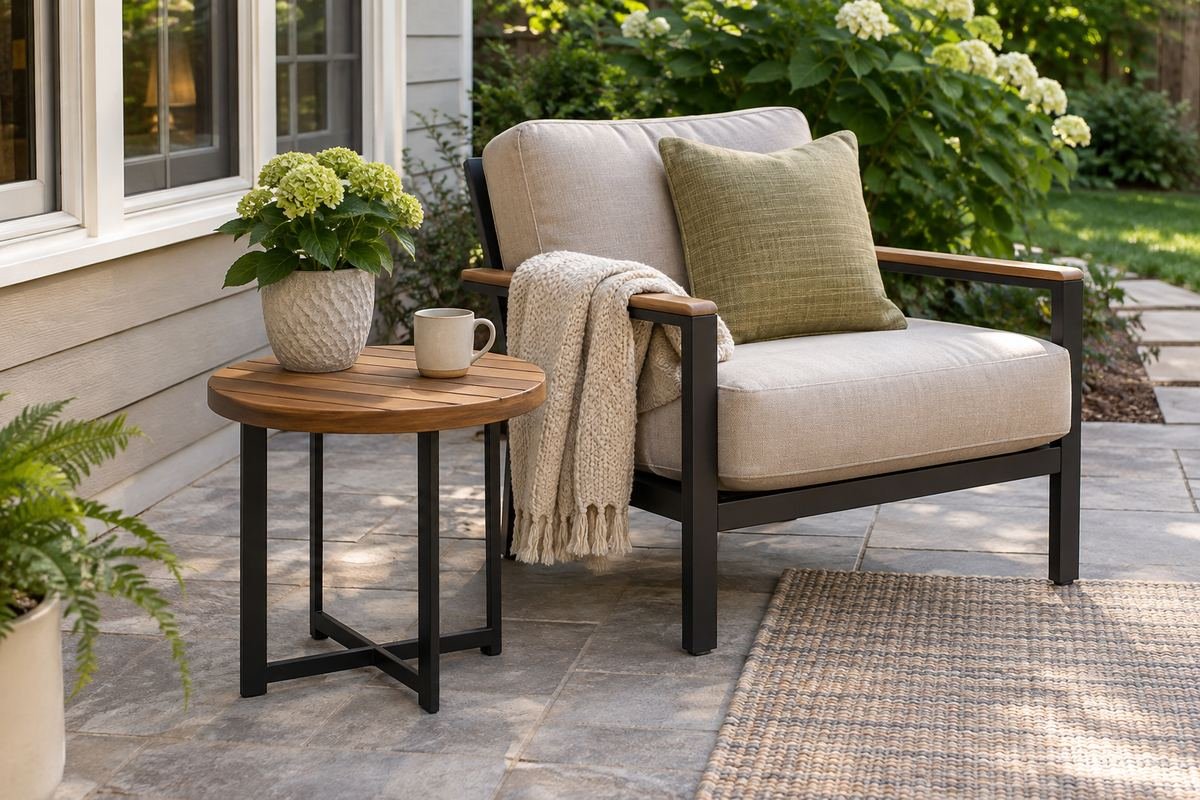
Start with the chair that serves the ordinary outdoor routine. Include its normal cushion and seated position, then compare a suitable table where a familiar item can be set down without an awkward movement. Keep the first arrangement simple enough to assess clearly.
Try standing up and returning to the seat with the table in place. The useful location should work through the whole short routine rather than only in a neatly staged view. Choose that position before adding another chair or a decorative object to the table.
Practical tip: Test the regular seat before planning the full group.
2. Use a round top with a complete footprint check
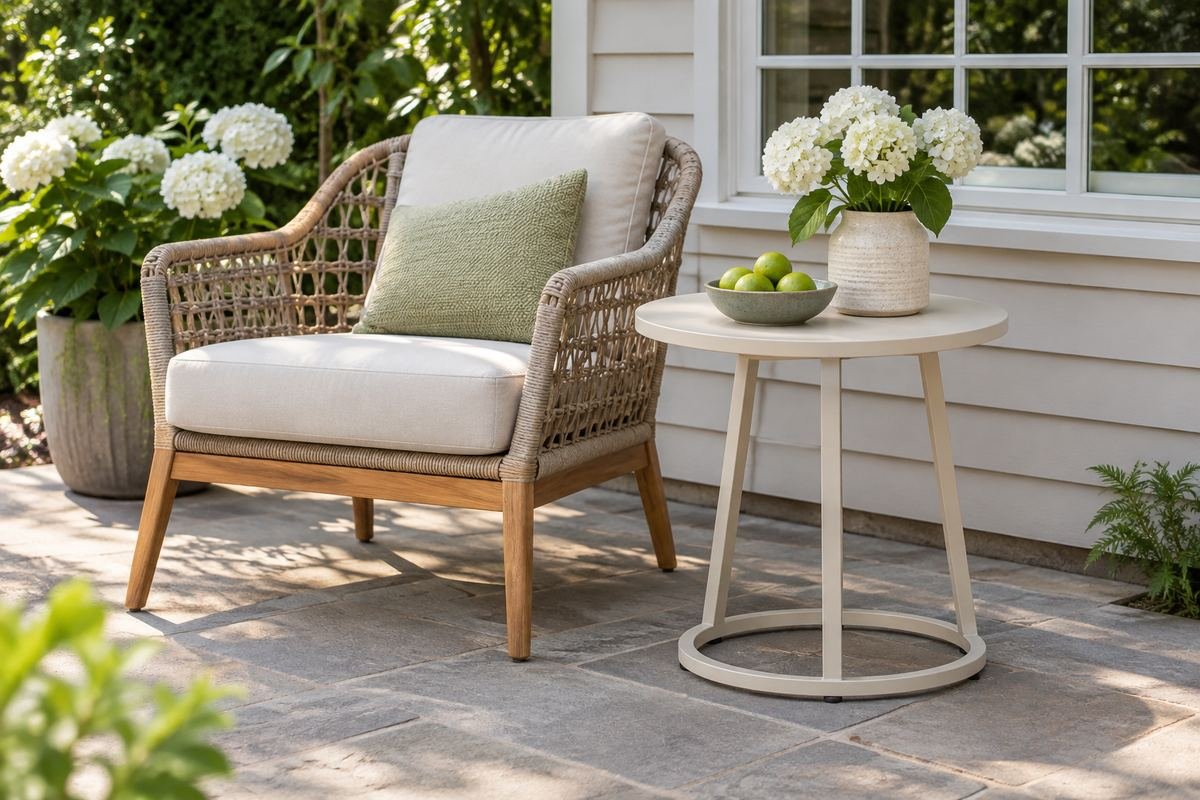
A round table can introduce a softer outline beside rectangular outdoor seating. Compare the actual usable surface with the items needed during an ordinary pause. Include the base and any projecting feet rather than using the tabletop diameter as the whole furniture footprint.
View the table from the approach to the seat and test its position during normal use. A circular outline can look compact while the support still occupies the route. Keep the shape when it improves the group and the seated task together.
Practical tip: Measure the support as well as the round top.
3. Choose a square top for a clear compact surface
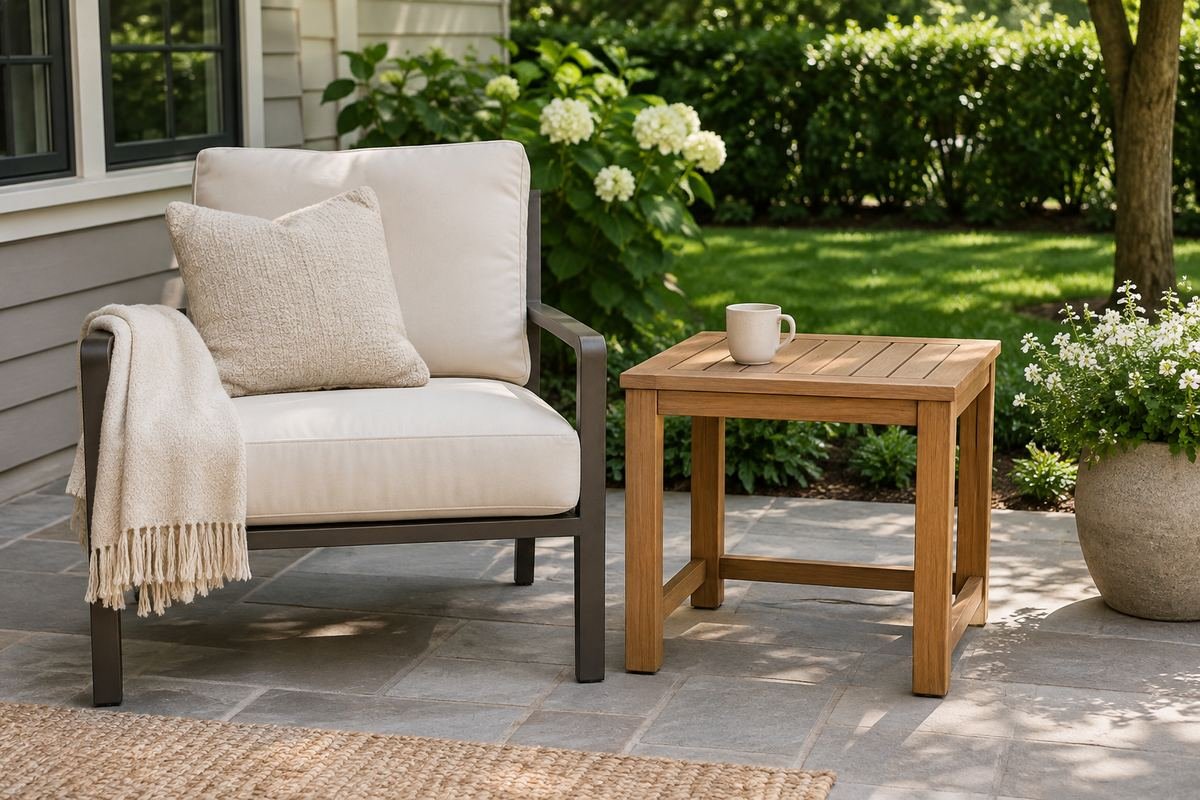
A square top can give a small side table a straightforward relationship with a chair or sofa end. Compare the corners with the actual route and the way the seat is approached. Keep the usable surface large enough for the normal task without filling the whole gap beside the chair.
Turn the arrangement through the everyday movement rather than choosing its angle only for appearance. A small adjustment can change where the corner meets the route. Keep the complete furniture stable and positioned according to its intended use.
Practical tip: Check the corners from the normal approach.
4. Let a narrow rectangle follow the side of a sofa
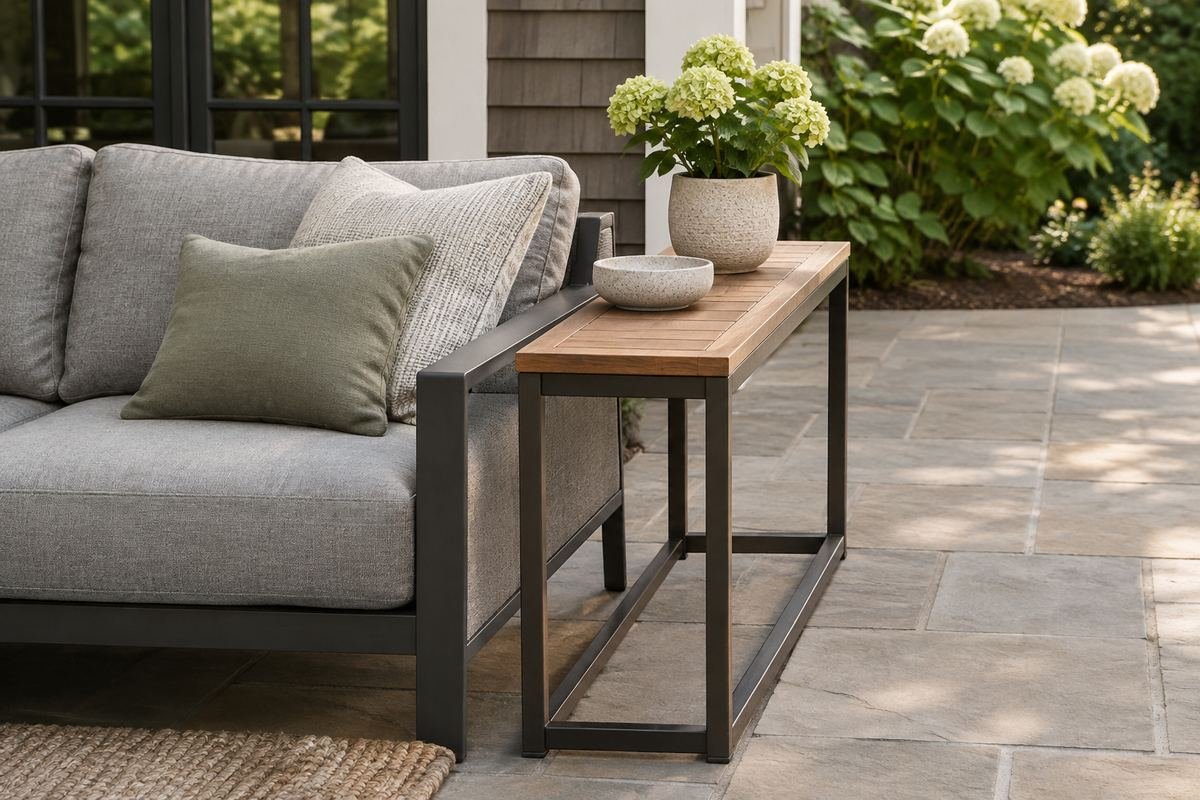
A rectangular table can place a useful surface along an outdoor sofa end when its width and length suit the gap. Compare the complete top and base with the sofa arm, cushion and the position used to stand. Keep the narrow description separate from a real fit test.
Try the actual item from the seated position before placing decoration at the far end. If the table becomes a long strip that is hard to reach, compare a shorter shape. The arrangement should serve the person as well as connect visually to the sofa.
Practical tip: Choose the reachable part of the surface first.
5. Compare an oval surface beside softer seating shapes
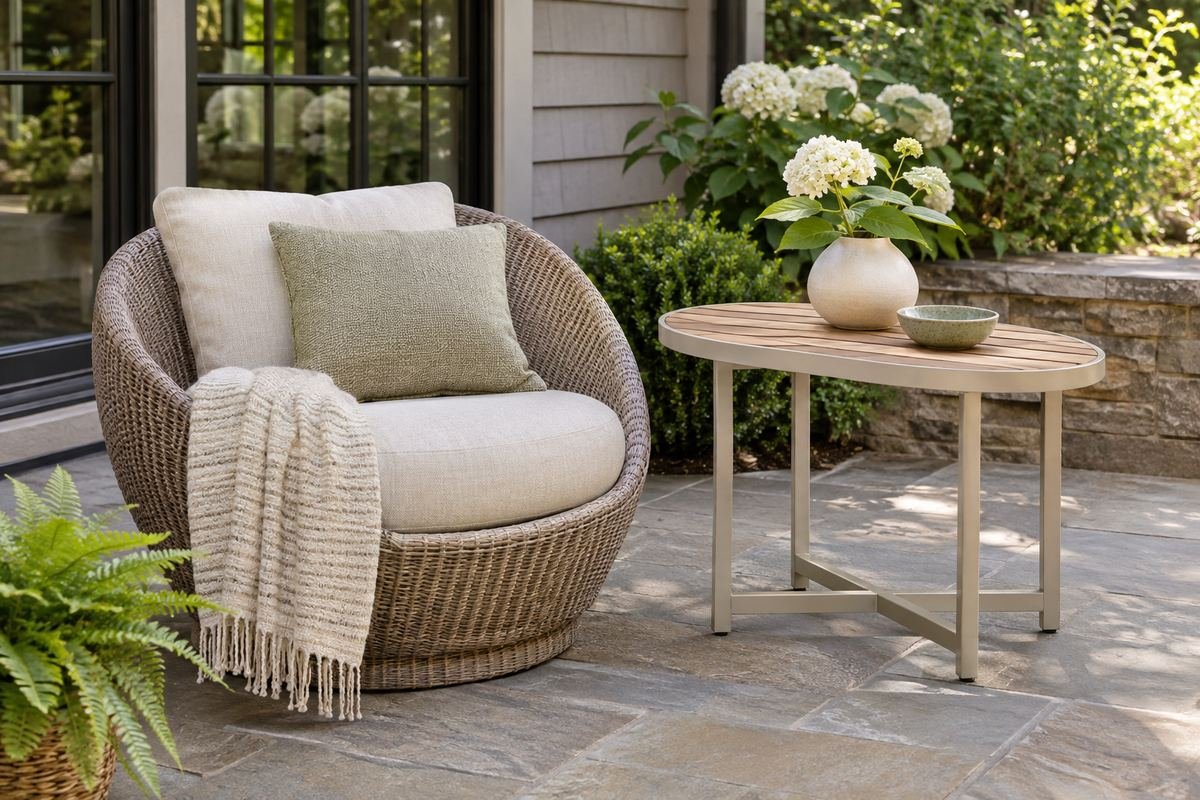
An oval tabletop can relate to curved outdoor seating without creating a large circular group. Compare its full length and depth with the actual landing task. Include the support underneath, which may have a different outline from the top.
View the oval from both the seated position and the patio entrance. Keep it when the softer shape improves the arrangement without using more room than the task needs. A gentle outline still needs a practical place within the complete occupied seating group.
Practical tip: Check the long end as well as the nearest edge.
6. Keep a compact base outside the daily route
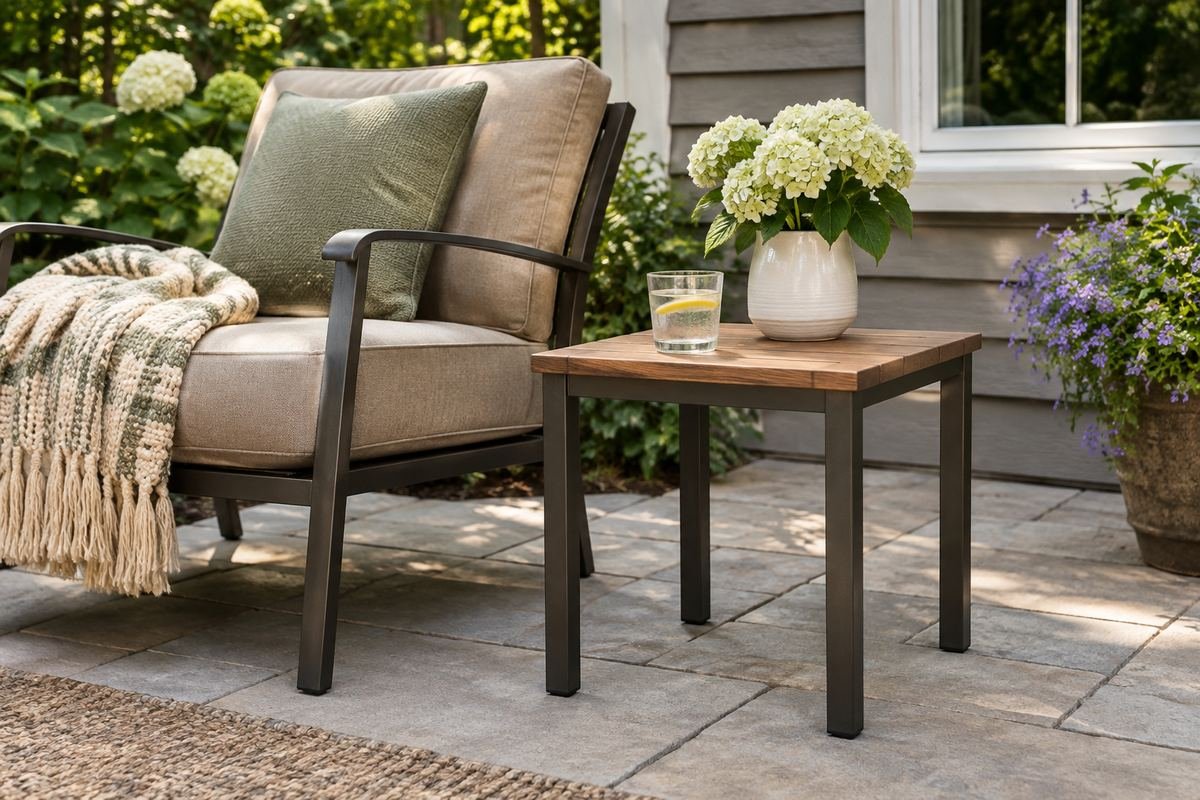
The table’s support can matter as much as its surface when the patio is used. Compare projecting legs, feet and rails with the route beside the occupied chair. Check the product’s intended setup and the actual ground rather than judging stability from the furniture silhouette.
Choose a position that preserves normal movement without turning the table into something constantly moved out of the way. If the base conflicts with the route, compare another suitable shape or location. A small top is useful only when the complete table fits the activity.
Practical tip: Draw the complete base on the seating plan.
7. Compare a pedestal form with its real support area
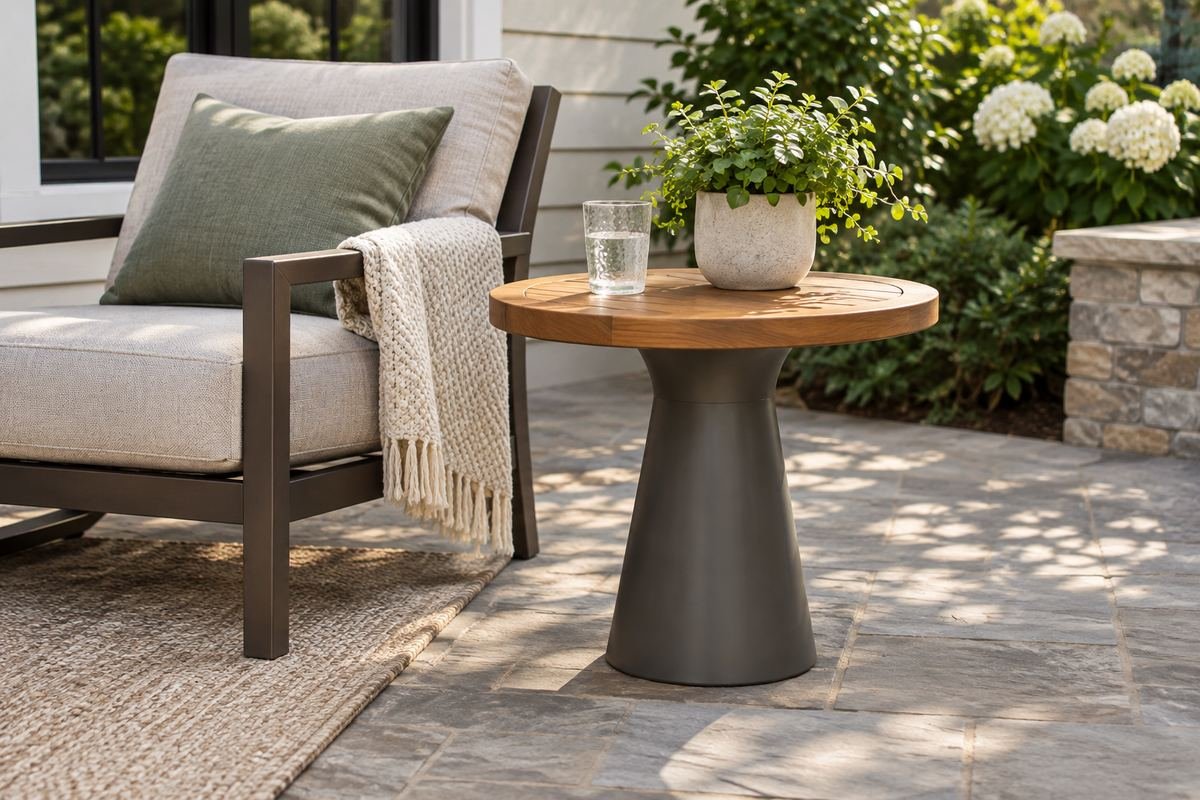
A pedestal table can give the seating group a simpler visual line beneath the top. Compare its actual base dimensions and the maker’s instructions for the outdoor position. The absence of several legs does not establish a smaller complete footprint or suitability for uneven ground.
Test the useful surface from the seat while keeping the base in the normal room route. A substantial pedestal can read calmly beside an open chair frame when the scale is right. Keep the form only after the complete arrangement works in use.
Practical tip: Compare the pedestal base separately from the top.
8. Check a slatted top with the actual item it will hold
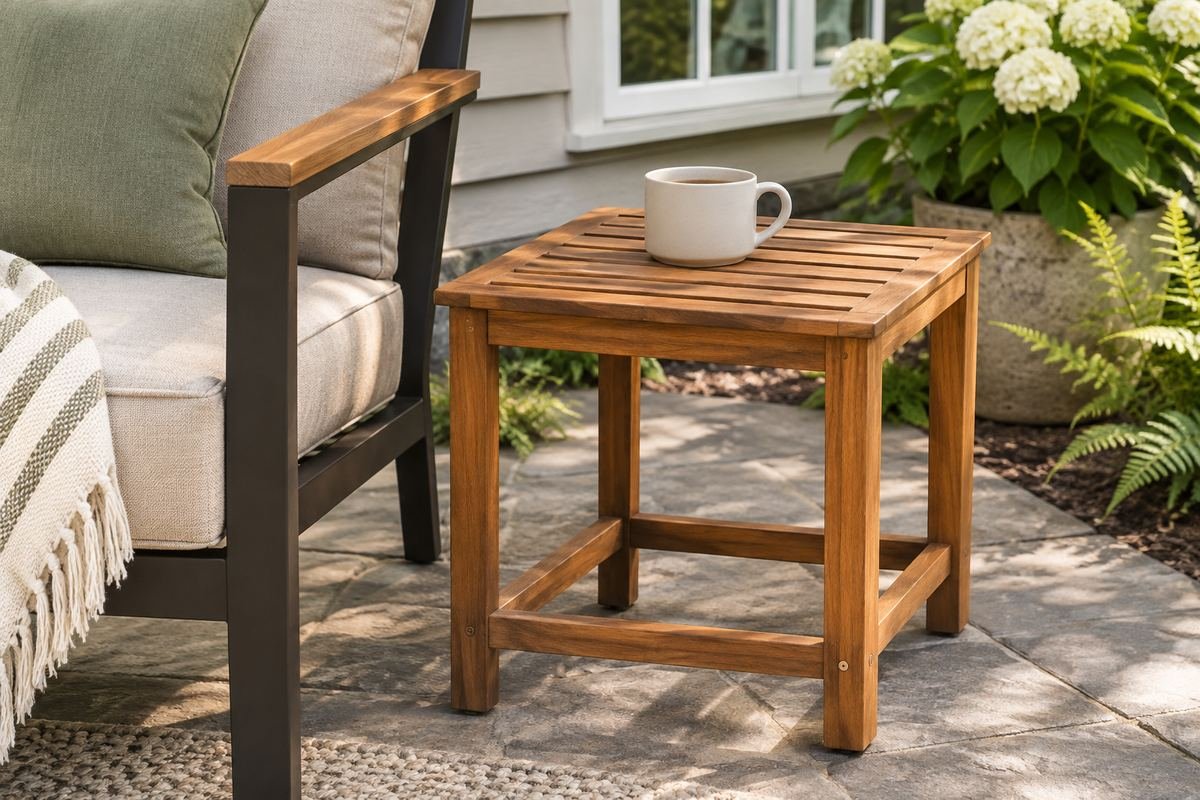
A slatted outdoor table can repeat the texture of timber seating and garden fencing. Compare the top with the size and shape of the ordinary objects used there. The spaces between slats and the exact finish affect how that surface serves the task.
Choose any suitable accessory or protection according to the actual table and item guidance rather than assuming one tray solves every issue. Keep the usable area simple and review cleanup between the slats as part of the material choice.
Practical tip: Test the real item on the actual top where possible.
9. Use a solid top when a continuous surface suits the task
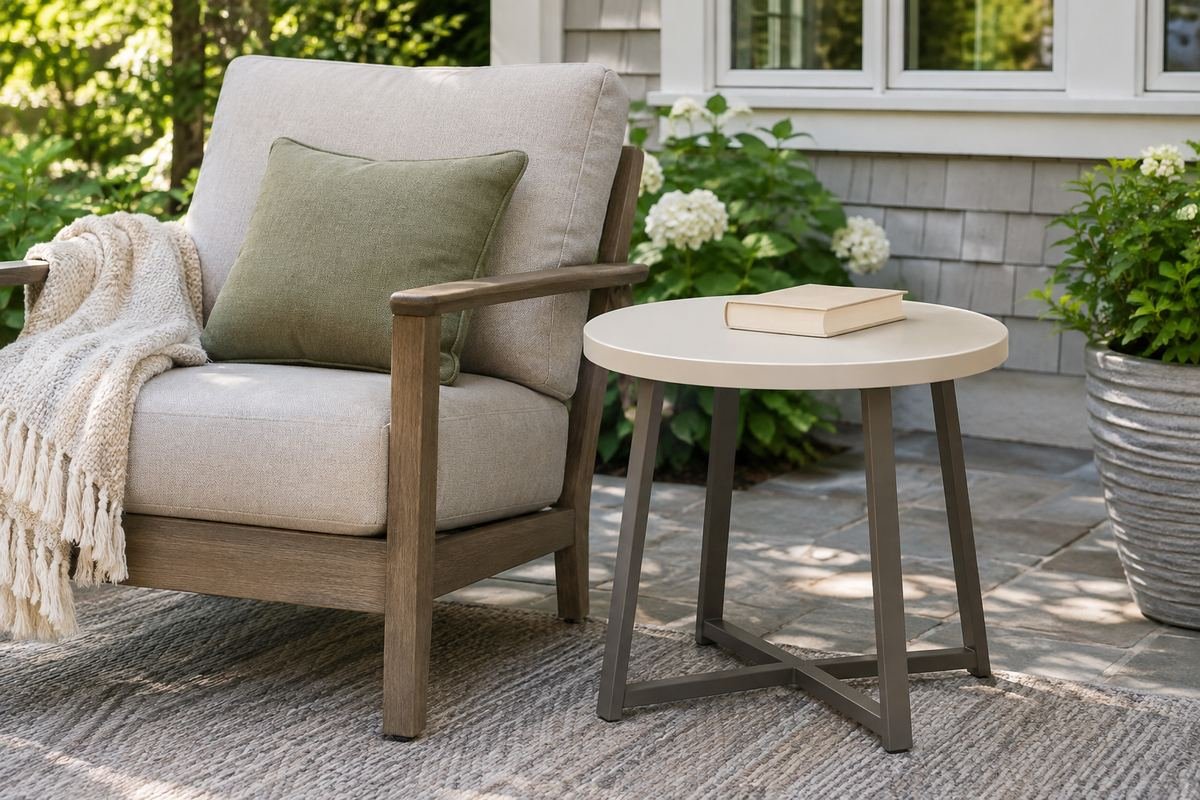
A suitable solid tabletop can provide a clear continuous landing area for the ordinary outdoor routine. Compare its material, finish and care with the actual items and exposure. Keep the whole table’s intended use separate from the convenience of one smooth-looking surface.
Check the edge, any rim and how the top will be maintained after use. Avoid filling a modest surface with a permanent display before testing its practical role. A quiet continuous top can make a mixed seating group feel more settled with very little decoration.
Practical tip: Leave the familiar item a clear landing position.
10. Choose coated metal from its exact outdoor care guidance
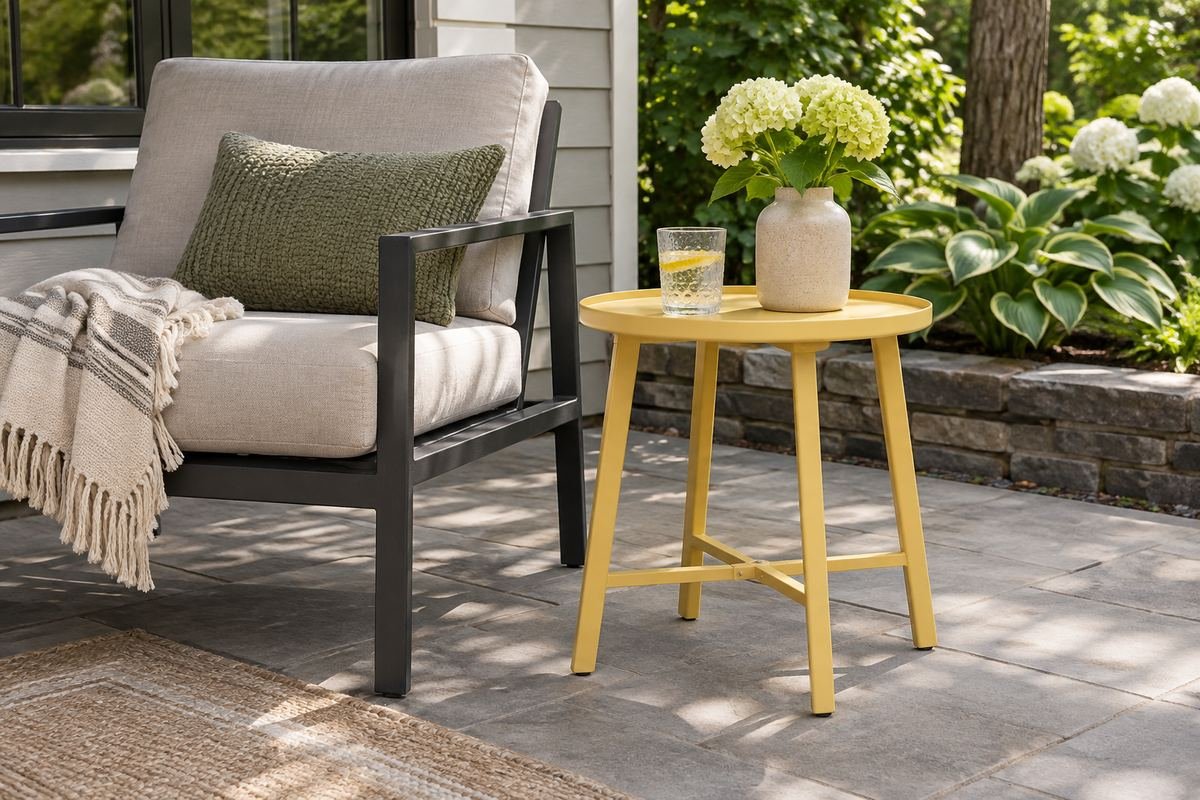
A coated metal table can bring a clear slim line to the patio. Confirm that the complete product is intended for the outdoor use and read the finish-specific care. Similar-looking coatings do not establish identical upkeep or tolerance for the conditions.
Compare the finish with nearby frames and the house exterior, then keep a practical plan for cleaning and protection. A bright or pale metal table can work as a small accent without requiring the rest of the furniture to match. Choose the routine together with the appearance.
Practical tip: Read the actual finish guidance before choosing cleaners.
11. Give a timber side table a realistic return routine
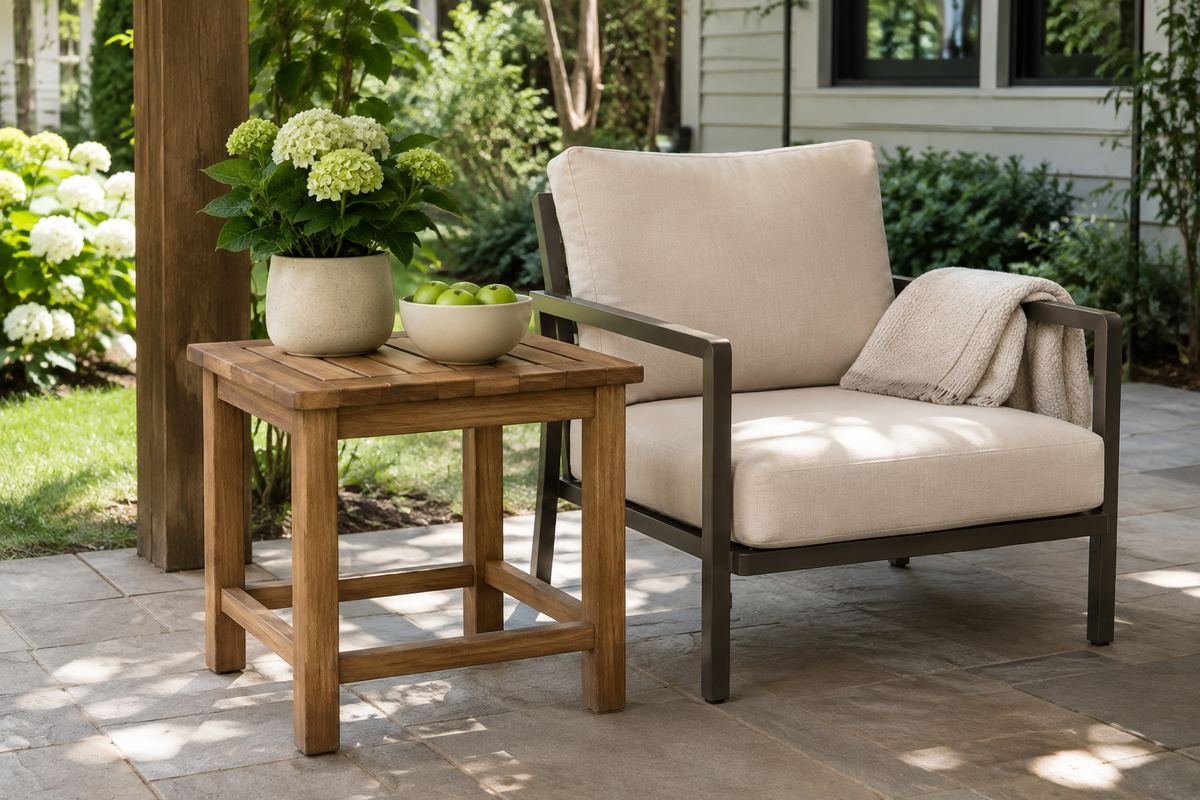
A wood table can connect an outdoor seating area to decking, fencing or a garden bench. Compare its intended exposure and exact finish before selecting it for the grain alone. Include the care and seasonal protection specified for the actual product.
Keep its return destination reachable if the table needs storage between uses. A useful outdoor arrangement should not depend on the household moving several other pieces every evening. Let the timber add character through an appropriate manageable piece rather than a complicated maintenance project.
Practical tip: Choose the storage destination before the final placement.
12. Compare an outdoor synthetic material by its actual specification
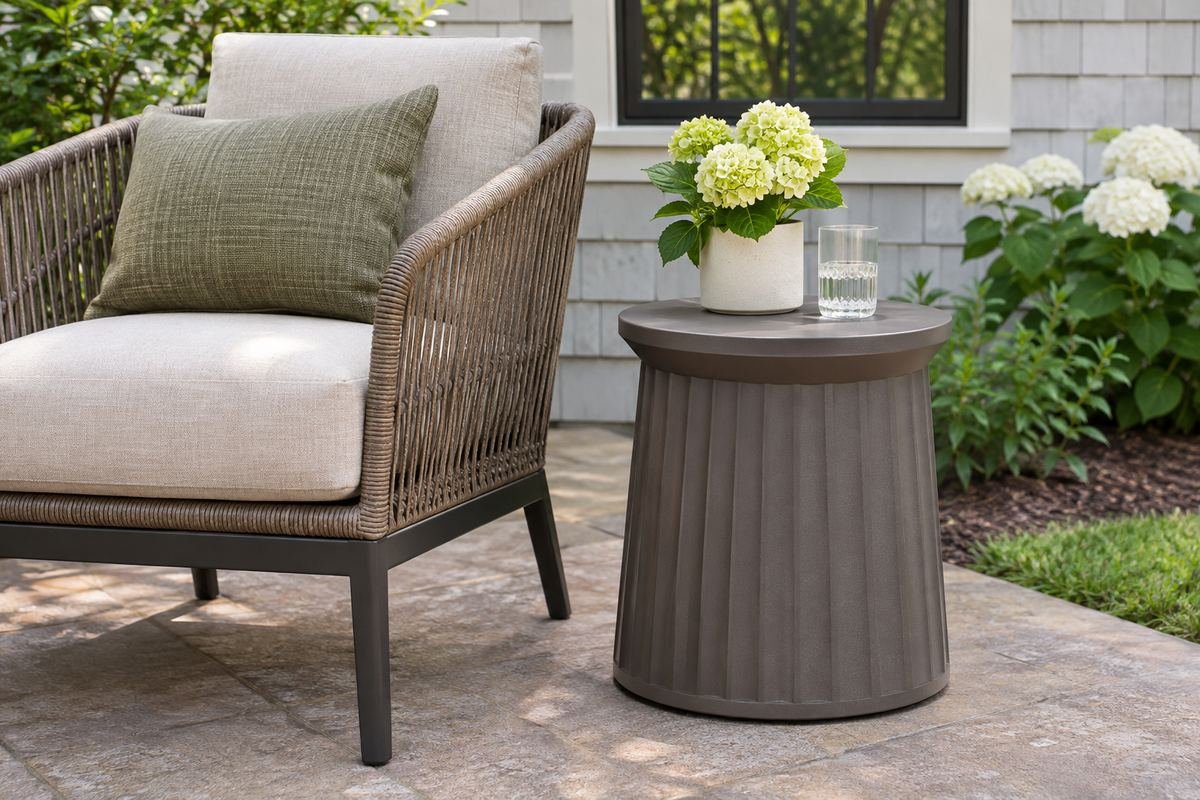
A table made from an appropriate outdoor synthetic material can offer another visual and care choice beside the seating. Identify the real material and finish rather than treating resin, recycled plastic and woven-look surfaces as interchangeable. Compare the whole product’s intended use and guidance.
Choose the color and texture with the existing chairs and keep the practical task visible. A table that looks like a woven stool is not automatically specified for sitting. The useful choice is the exact product that serves the landing task and the actual outdoor conditions.
Practical tip: Confirm the material and intended role independently of appearance.
13. Use one painted table as a controlled color accent
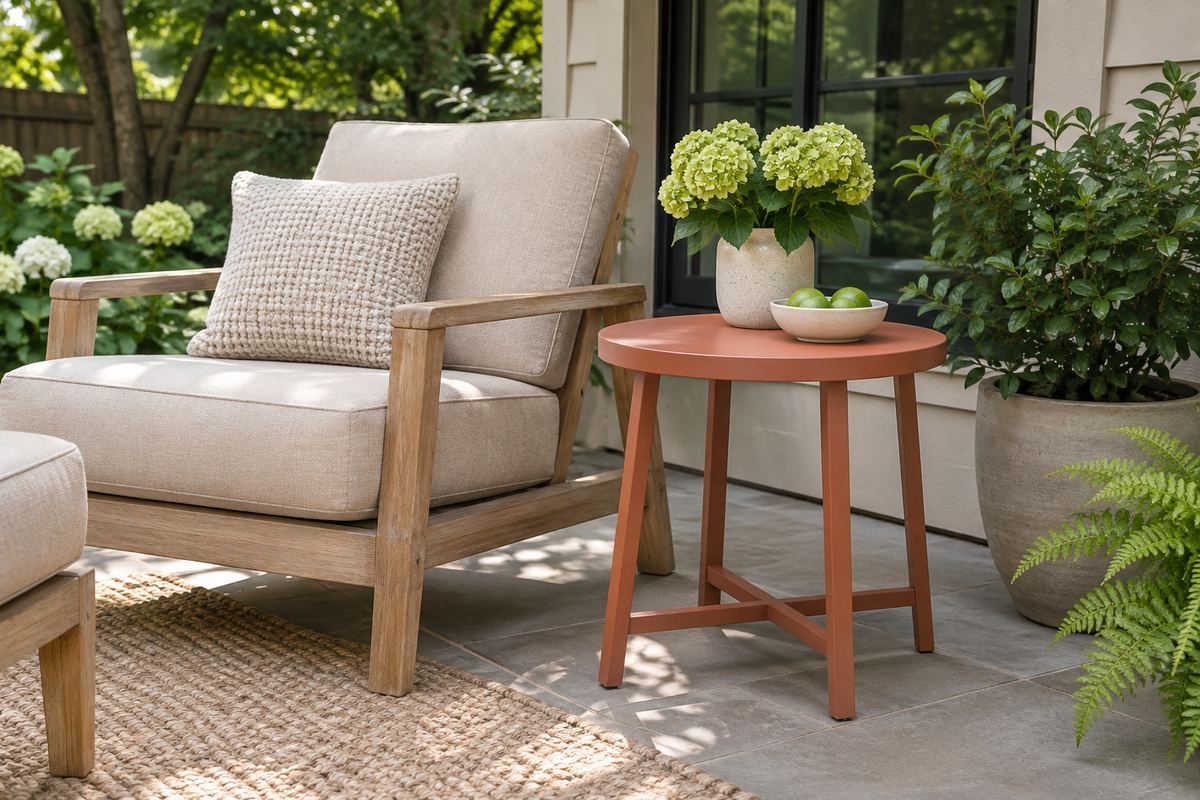
A small colored table can give quiet outdoor seating a clear accent. Choose a suitable product finish that connects to a cushion, planter or another restrained garden detail. Compare the color with the house and surrounding planting in the light where the patio is used.
Keep the tabletop practical while the furniture provides the color. A single deliberate accent can work without repeating the shade on every accessory. The table should still feel considered when the cup or book has been brought indoors.
Practical tip: Let the furniture supply the accent before adding objects.
14. Keep a matching finish quiet in a detailed outdoor room
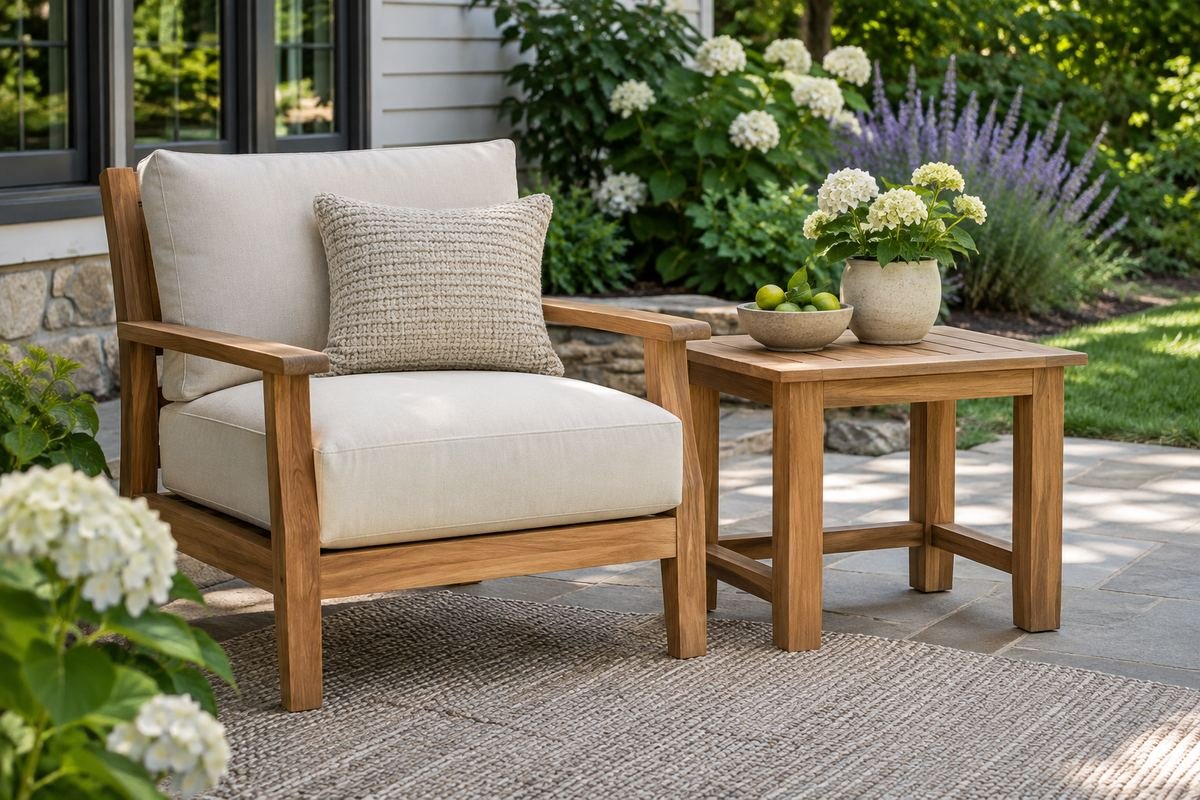
A table related to the seating finish can make a visually busy patio feel calmer. Compare the actual materials and undertones rather than relying on matching product names. Repeating a frame or wood tone can connect the group without requiring an identical set.
View the table with the ordinary cushions and nearby planting in place. Keep a useful surface available so the visual consistency serves a practical outdoor routine. The furniture relationship should remain clear without a large centerpiece or several matching ornaments.
Practical tip: Choose one strong connection and leave the surface useful.
15. Mix two table shapes through one shared detail
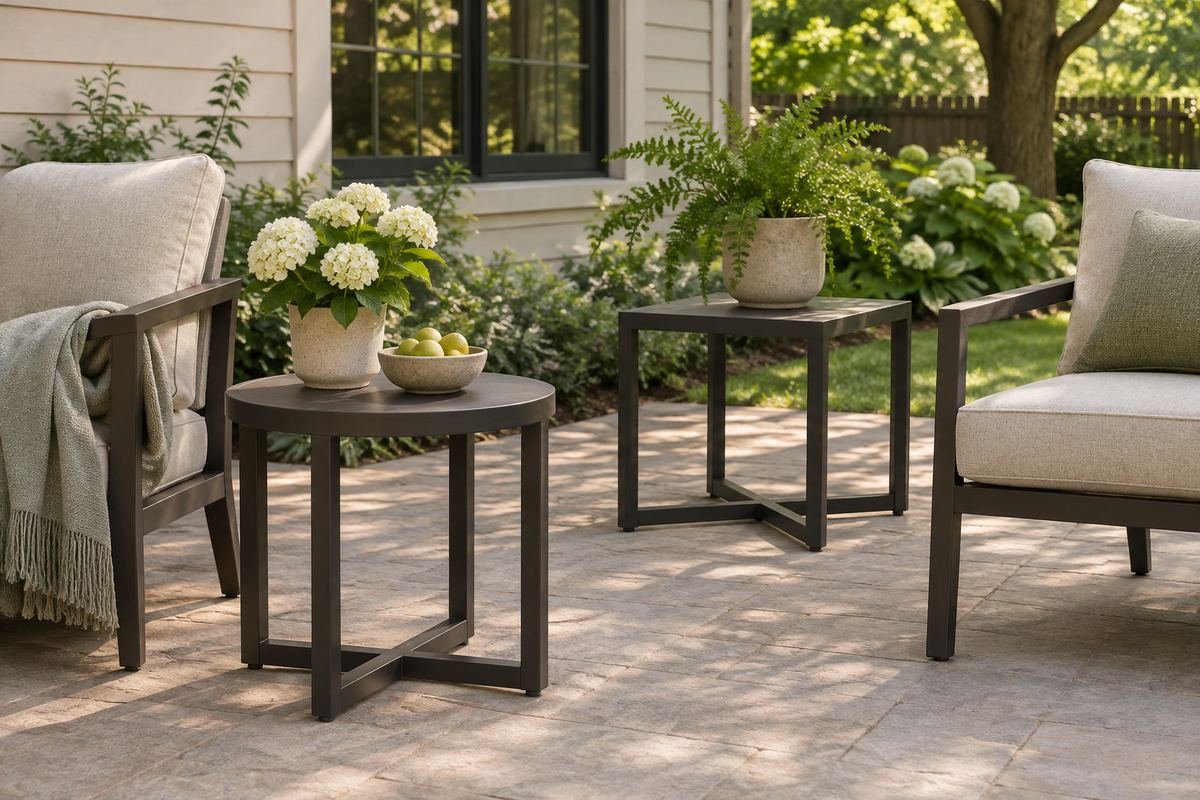
Two different side tables can suit separate seats while sharing a color or material. Begin by testing each table at its own seat, then compare the pair as part of the patio. A related finish can make the difference in shape feel deliberate.
Avoid choosing a matching pair when one seat needs a different useful surface position. Keep both tables appropriate for outdoor use and the actual conditions. The overall composition can stay balanced through a clear repeated detail while each place serves its own routine.
Practical tip: Test the seats separately before coordinating the pair.
16. Test a shared table from both occupied chairs
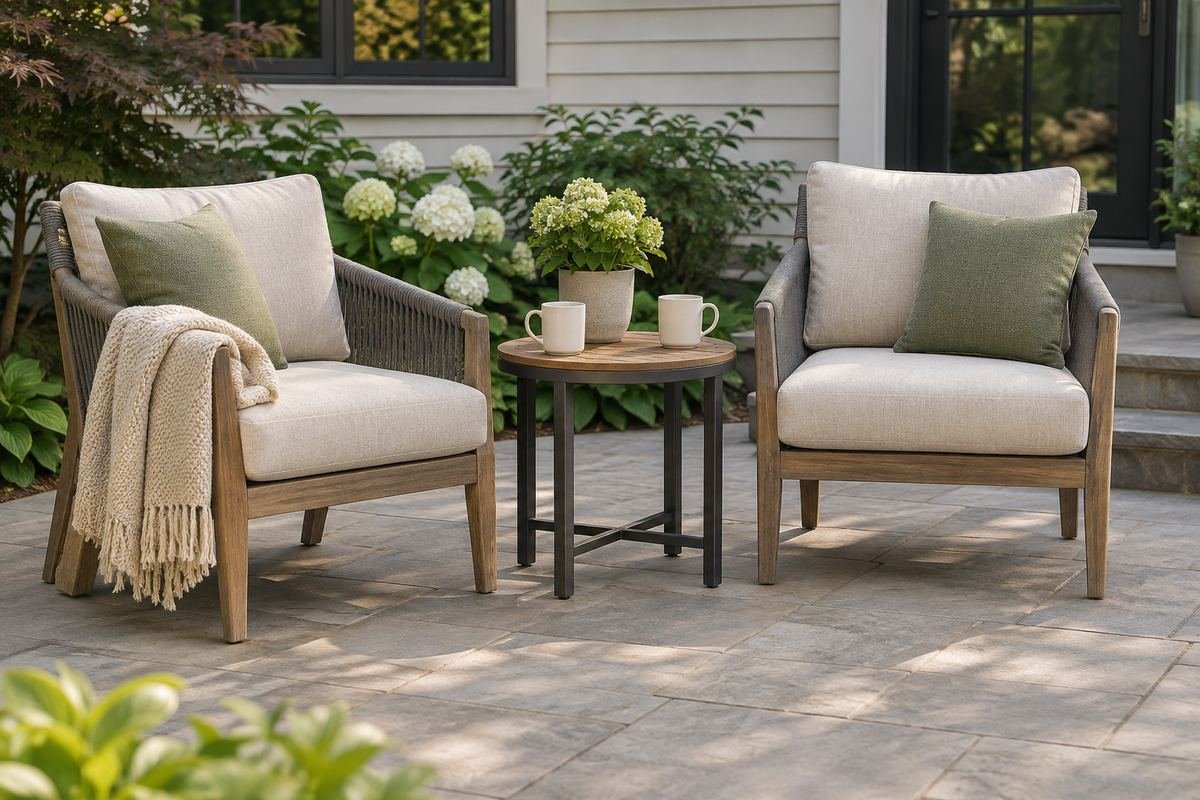
A table between two chairs can give the seating group a useful central landing place. Compare the exact top with each occupied position and the room needed to approach the seats. Do not let one comfortable reach stand in for the whole group.
Try the ordinary small items that might be used at the same time. If the shared position becomes awkward or crowded, compare separate modest tables rather than automatically choosing a larger surface. The useful arrangement should work for both people without repeated rearranging.
Practical tip: Review each seat and the shared task independently.
17. Give a sofa end a table that clears the arm and cushion
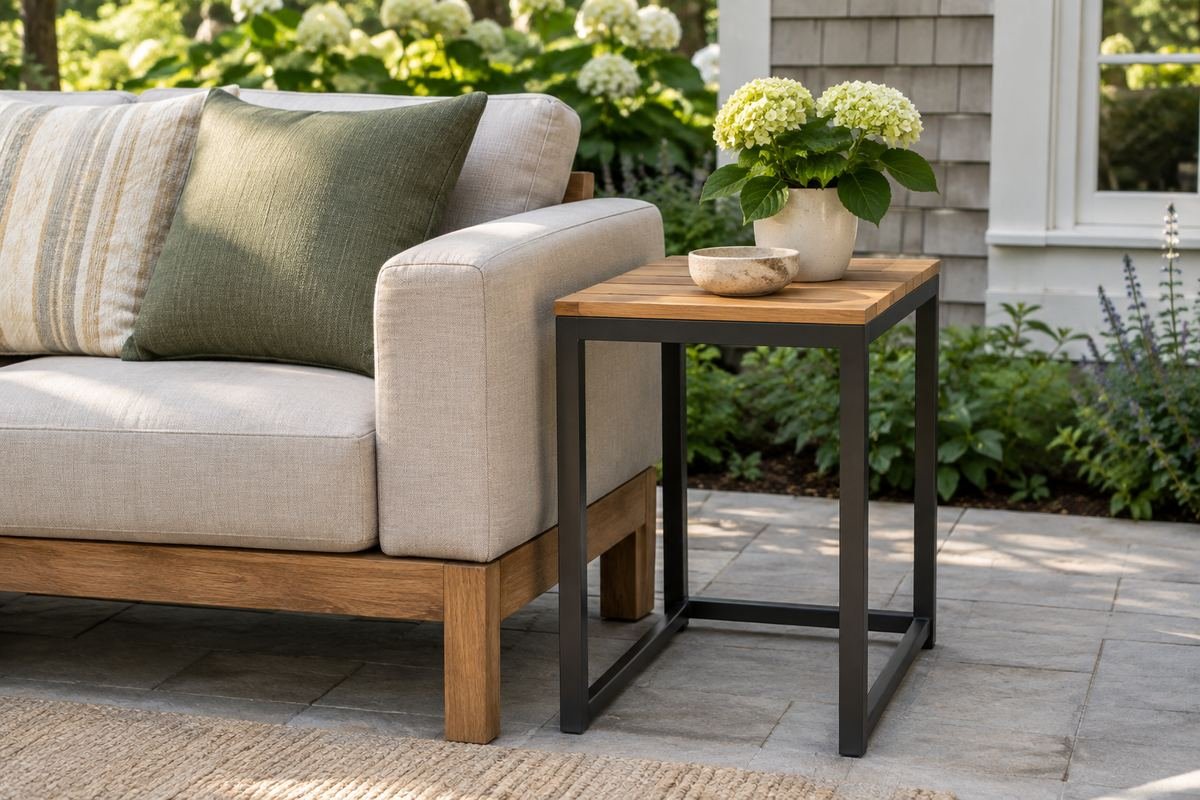
An outdoor sofa end can use a side table when its actual surface works with the arm and normal cushion. Compare reaching the top from the occupied place rather than lining up the furniture only from the front. Include the base where the person’s feet and approach will be.
Keep the table useful for the task at that end of the sofa. A tall-looking decorative handle or raised rim may change how the surface is reached. Confirm the actual tabletop position and choose the complete table that works with the seat.
Practical tip: Compare the landing surface rather than overall height alone.
18. Keep a side table clear of a lounger’s full movement
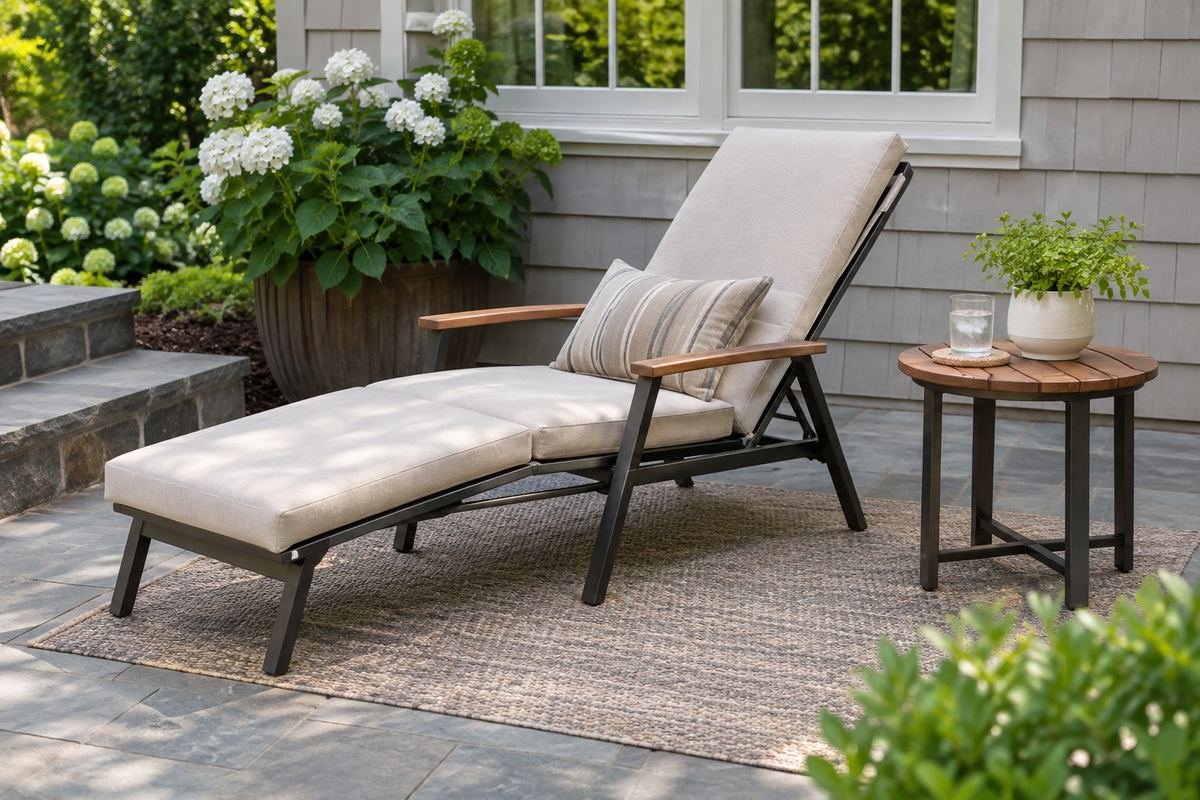
A reclining outdoor seat changes its footprint through use. Compare the table with the chair’s complete permitted movement, including the parts that project behind or in front. Keep the table in a useful position for the actual reclined task without assuming a closed-chair photograph proves the fit.
Try the sequence of sitting, adjusting, using the table and standing again. If one position only works by shifting furniture each time, compare another arrangement. The table should support the lounger routine while normal access to the seat remains clear.
Practical tip: Check every chair position you normally use.
19. Compare nesting tables in both stored and working positions
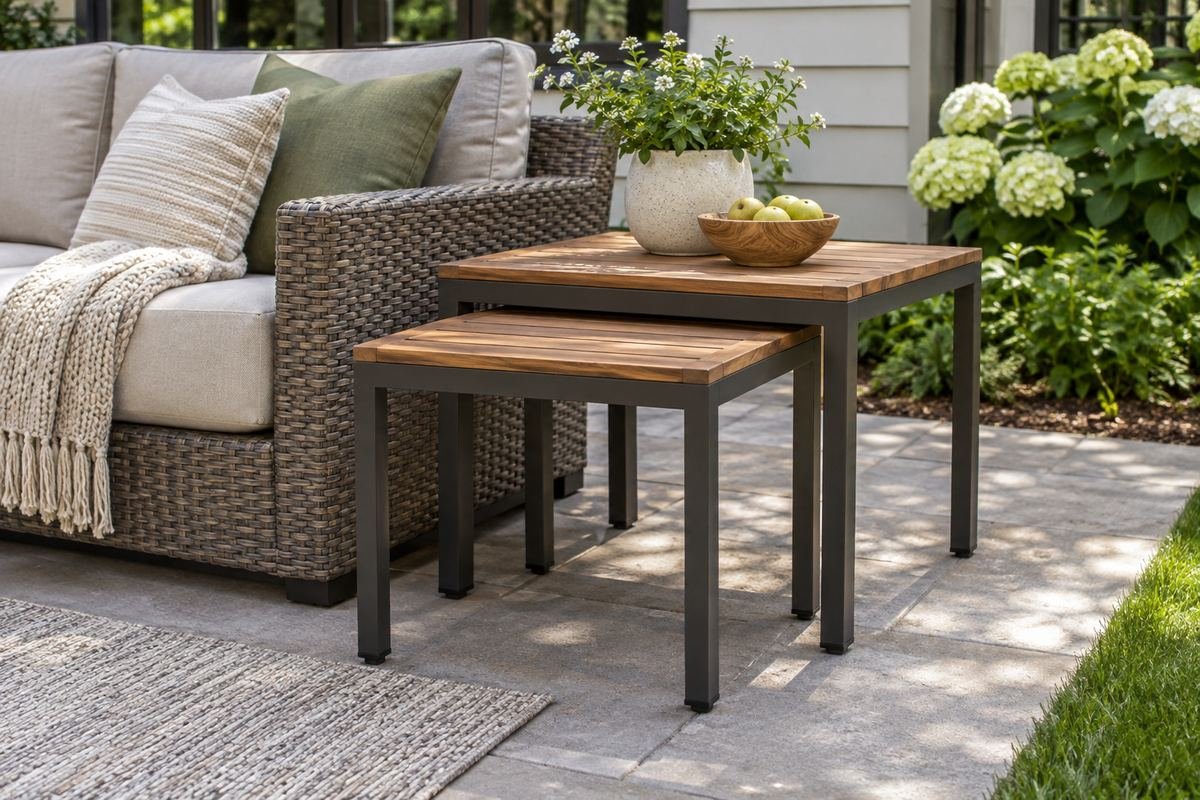
A purpose-designed nesting pair can offer separate surfaces when the patio routine needs them. Compare the correct stored arrangement and the two useful working positions. Keep the exact product’s handling and setup guidance with the decision rather than nesting unrelated tables by appearance.
Choose real destinations for both pieces during use so the second table does not block circulation. A nesting form earns its place when it improves the familiar seating task and returns simply. Extra surfaces are less useful when they become permanent obstacles around the chairs.
Practical tip: Plan two working positions before choosing a nesting pair.
20. Choose a carrying handle for the actual return routine
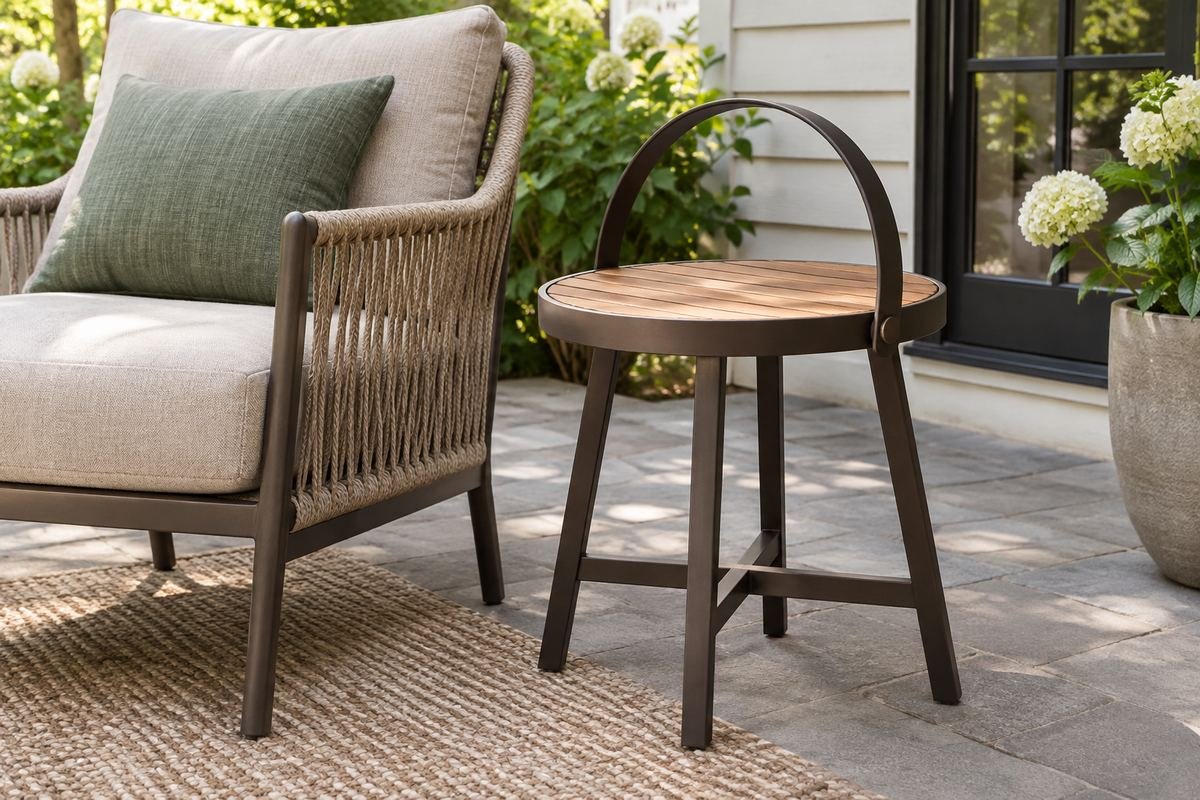
An integrated handle can make sense when a suitable table is moved as its instructions allow. Compare the complete product and the route to its normal position or storage place. Keep the handle’s projection and the usable top separate on the comparison card.
Clear the table as instructed before moving it and use the proper handling method. A convenient grip does not establish that every loaded table should be carried. Choose a manageable piece that can return without catching a door or requiring an awkward route.
Practical tip: Include the handle in the complete dimensions.
21. Give a folding side table a real storage destination
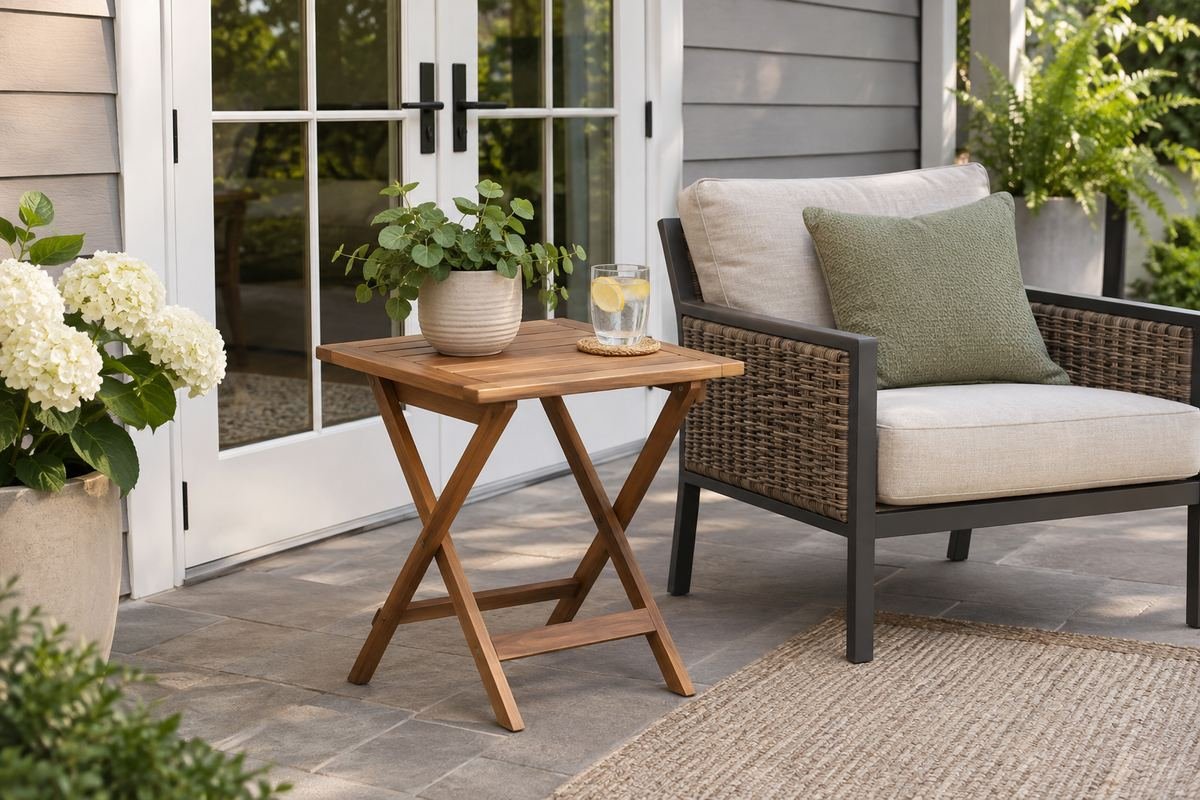
A suitable folding table can support an occasional outdoor pause when its open arrangement works beside the seat. Check the correct setup, locking and handling instructions for the exact furniture. Compare the complete working footprint before treating the folded dimensions as the main benefit.
Choose a proper place for the closed table and test retrieving it through the actual doorway. The routine should be simple enough to repeat after use. Folding convenience helps when it supports a clear return rather than leaving furniture leaning in the normal route.
Practical tip: Test the open task and the stored position.
22. Leave the useful tabletop larger than the decorative group
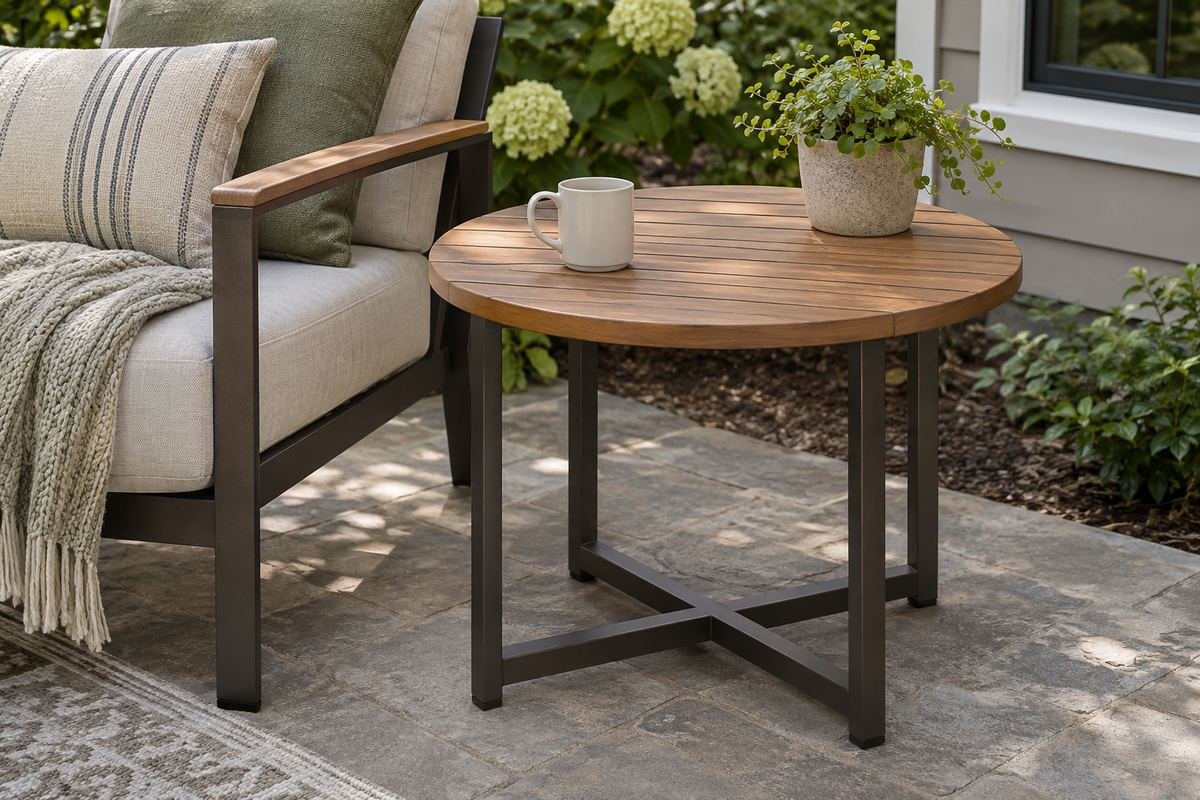
A small accent can give a patio side table character while leaving a clear landing position. Choose one appropriate object after testing the ordinary cup or book. Compare the whole usable top rather than arranging decoration first and fitting the task into the space left over.
Keep objects suited to the outdoor conditions and give loose items a proper return routine. A modest surface can look finished with very little on it. Remove the detail that repeatedly needs moving before the table can serve its everyday purpose.
Practical tip: Reserve the landing position before styling the edge.
23. Finish patio side table ideas with an ordinary-session reset
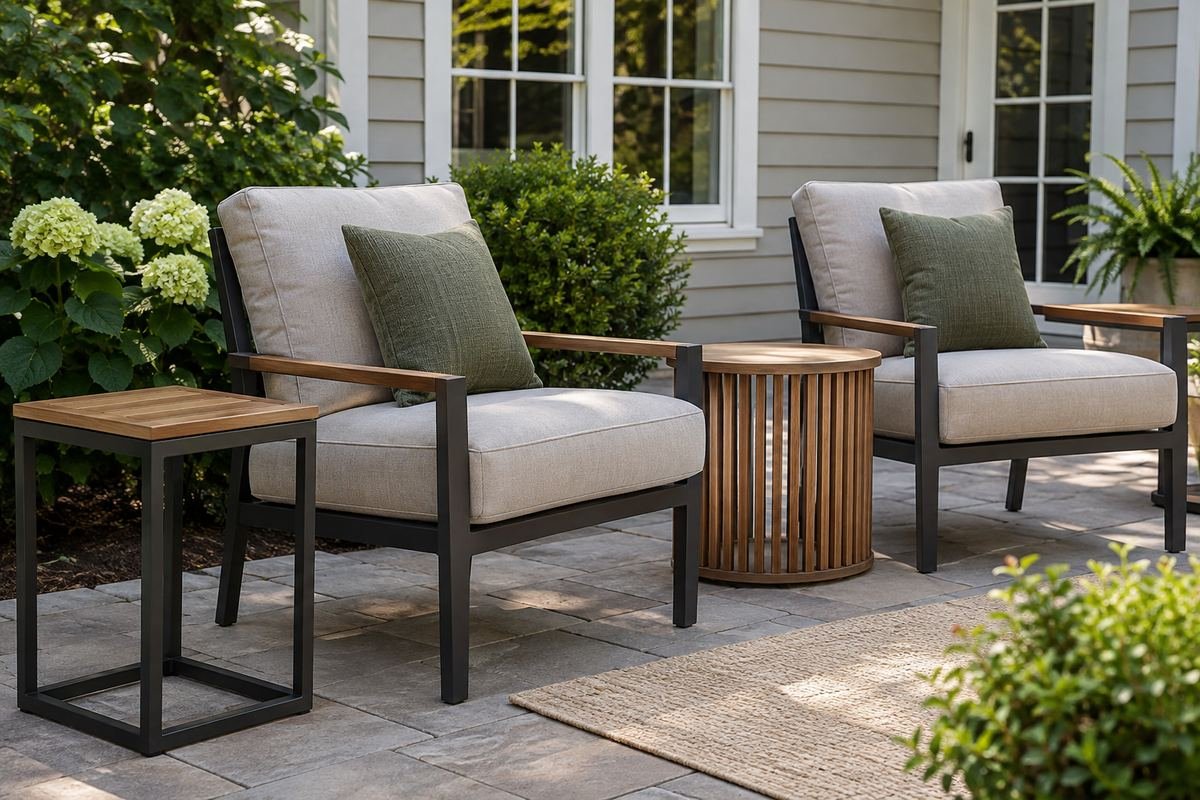
Use the seated-use and weather-return card after one familiar outdoor session. Notice a repeated awkward reach, a base that interrupts the route or an object that takes over the useful surface. Make a specific change to the arrangement before adding another table or decorative layer.
Return loose items and care for the furniture according to its instructions. Keep the exact product record so future cleaning or storage questions have a clear reference. The finished patio should remain useful after the styling has settled into normal life.
Practical tip: Improve the repeated movement before buying more furniture.
Frequently Asked Questions
How high should a patio side table be?
Choose the actual tabletop position from the occupied seat, cushion, arm and task. Compare setting down and retrieving the real item without an awkward reach, and include the complete base and route. One generic height cannot establish that every table, chair and person will work together.
Can I use an indoor side table outdoors?
Only when the exact furniture is intended for the actual outdoor use and conditions. Confirm the complete materials, finish and instructions. A similar appearance or a covered patio does not establish outdoor suitability, and outdoor furniture can still need cleaning, protection and seasonal storage.
Should the table match the outdoor chairs?
It can match, but it does not have to. A repeated color, finish or shape can connect the group while the table serves its real task. Compare the whole arrangement from the patio entrance and keep the useful surface available before adding more decorative details.
Is one table between two chairs enough?
Only if it works from both occupied places and leaves the chairs and approach usable. Test each seat separately with the ordinary task. Two modest tables can be more practical when a shared table is comfortable for one person but awkward for the other.
Can a small outdoor table also be used as a seat?
Do not infer seating use from the table’s height or shape. Use furniture only for its specified purposes and follow its exact load and assembly guidance. A piece marketed for more than one role should still be checked for each intended task.
Does outdoor furniture need a return or storage plan?
Follow the exact product’s current instructions for its material, finish and conditions. Some arrangements need seasonal protection or a place indoors between uses. Keep that destination practical so the furniture can be returned without blocking doors or the ordinary patio route.
Choose the Details That Work in Your Home
Choose patio side table ideas by testing the actual seat, useful surface and complete furniture footprint. Then use shape, color and material to connect the table to the outdoor room. A modest surface that works during an ordinary pause and returns easily after use can make the patio feel more finished than another decorative object.
For related ideas, explore backyard patio planning, patio rug ideas, patio privacy screen ideas, balcony decor ideas.
Planning References
IKEA MÅBÄRSSKÄR 305.971.64: outdoor suitability,handle,materials and care; IKEA: outdoor furniture care by material and exposure; POLYWOOD: outdoor side tables with lounge seating and upkeep. Follow the instructions for the exact products you choose.
Optional digital guide for this topic
If you prefer a structured workbook, explore this related paid guide.