Balcony dining ideas need to work through a complete meal: taking food outside, sitting comfortably, returning indoors and putting loose items away. A table that fits an empty balcony can still make those ordinary steps awkward once both chairs are in use.
Begin with the existing balcony, its door and the places that must remain accessible. Compare the furniture in its open, occupied and stored positions. This guide focuses on freestanding everyday dining arrangements; it does not propose changing railings, attaching furniture to them or assessing structural capacity.
These 25 original concepts help you plan a useful small dining spot with the space you actually have. Follow the exact furniture instructions and applicable building requirements, and get an appropriate assessment if the condition or permitted use of the balcony is uncertain. A photograph cannot establish those details.
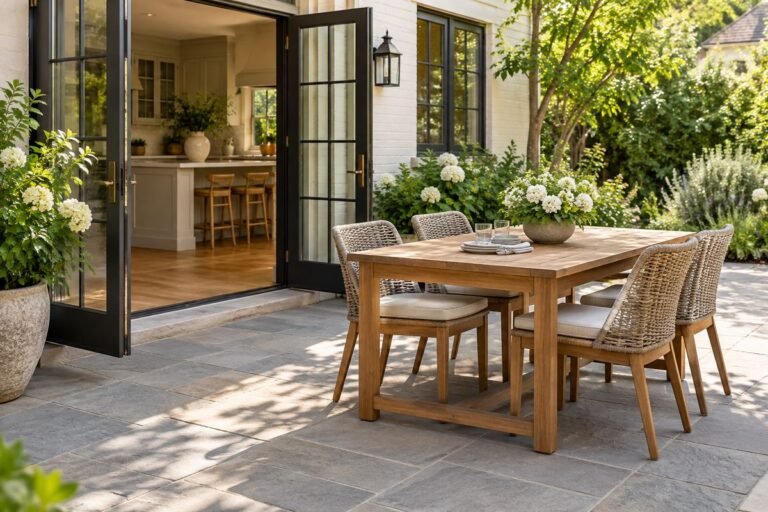
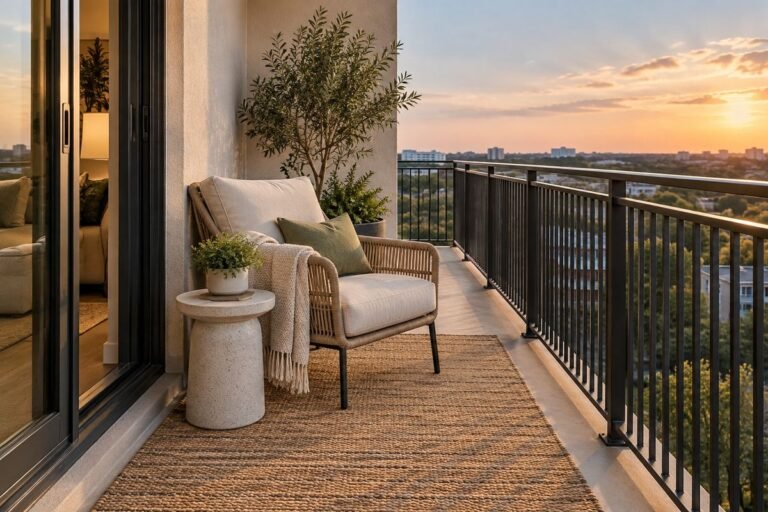
The images are original AI-generated decor concepts, not installation diagrams or photographs of completed client projects.
Browse These 25 Balcony Dining Ideas
Jump to an idea
- Start with the one seat you use most
- Balcony dining ideas with an honest two-seat footprint
- Compare a round table with its actual base
- Turn a compact rectangle to suit the usable length
- Leave an inward-opening door its complete movement
- Keep the sliding-door approach useful
- Use a wall-side position without attaching furniture
- Choose armless chairs from the seated position
- Check chair arms beneath the table edge
- Give a folding table an indoor destination
- Balcony dining ideas with folding chairs that return easily
- Choose a stack only when the product allows it
- Plan the place settings before the centerpiece
- Serve the meal in a sequence that fits the table
- Carry a tray that fits the route and the tabletop
- Keep spare meal items on an appropriate indoor landing
- Give cushions a practical return place
- Keep loose textiles out of the permanent setup
- Balcony dining ideas for a changing weather routine
- Choose wood with its care routine in mind
- Compare coated metal as a different material choice
- Use a low centerpiece only when the meal allows it
- Keep planting in one separate modest corner
- Use the existing shade before adding equipment
- Finish balcony dining ideas with a clear-floor reset
Test balcony dining ideas through the door and a full meal
Measure the usable area, door operation and actual furniture dimensions. Mark a proposed footprint without obstructing access, then compare the real chairs in their sitting and pull-out positions. Include the route used while carrying a tray, the place for folded furniture and the daily cleanup. There is no single table size or clearance that works for every balcony.
| Situation | Arrangement to compare | Check before choosing |
|---|---|---|
| One person uses the balcony daily | One regular seat and a modest table | Comfortable sitting and a direct return indoors |
| Two people share short meals | A compact two-seat dining group | Both occupied chairs and access to the door |
| The balcony serves several tasks | Suitable folding furniture | Open footprint, folding action and a real storage place |
| A narrow usable area | A carefully oriented compact table | Chair movement, door operation and the route beside it |
| Furniture stays exposed | Materials with a manageable care routine | Exact product guidance and protection when not used |
| Loose cushions or accessories | A simple indoor return routine | A dry suitable destination without blocking the threshold |
| Occasional extra diners | An honest capacity check | Do not count seating that makes ordinary access impractical |
Read tabletop dimensions as one part of the footprint
IKEA lists the TÄRNÖ outdoor table, article 700.954.29, with a 21⅝ by 21¼ inch tabletop and seating for two. Those are dimensions of that product, not the full space required by two people using chairs. Compare the exact furniture you choose in place, including its legs, chair movement and route to the door. Do not turn a compact product measurement into a universal balcony size recommendation.
Separate folding convenience from storage reality
A folding table still needs room to open, a suitable position while in use and somewhere appropriate when folded. IKEA’s TORPARÖ outdoor table, article 605.957.24, is a different foldable product with a 51⅛ by 29⅛ inch tabletop and seating for four. Its existence does not make it suitable for a small balcony. Check the actual product and available space rather than assuming all folding furniture has the same footprint.
Match balcony dining ideas to the actual material care
The TÄRNÖ wood-table guidance includes cleaning, drying, protection and regular re-staining as appropriate to its finish. The referenced TORPARÖ table uses powder-coated steel and has different care requirements. Follow the exact product instructions instead of applying a wood treatment to every outdoor table. Both references discuss protection and appropriate storage; any cover also needs the ventilation and fit described for the furniture.
1. Start with the one seat you use most
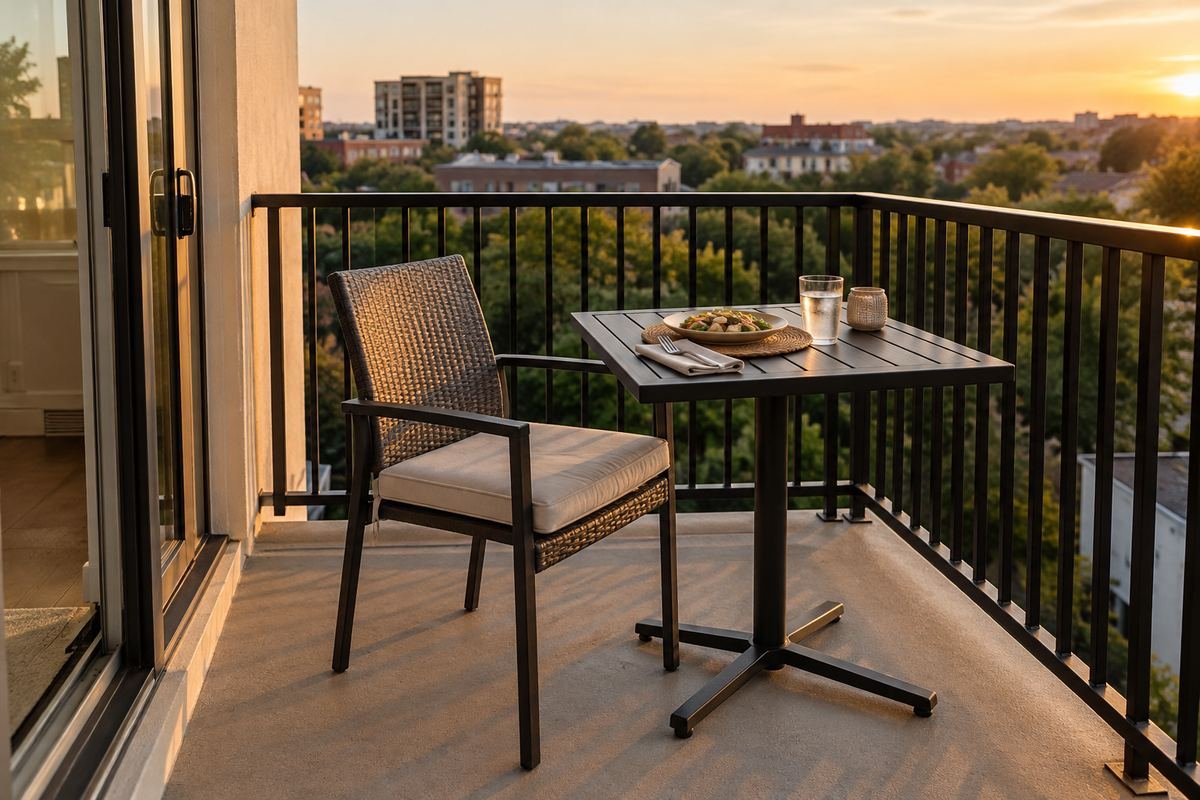
Plan the regular meal before adding occasional seating. One comfortable outdoor dining chair and a modest table can make a balcony useful for breakfast or lunch without filling the entire available area. Choose pieces intended for the actual use and exposure.
Sit in the proposed position and test reaching the tabletop and returning indoors. Keep the chair at a genuine dining height rather than relying on a low lounge seat beside a taller table. Add another seat only when the complete occupied arrangement still works.
Practical tip: Test a real seated meal before expanding the group.
2. Balcony dining ideas with an honest two-seat footprint

A compact bistro group can serve two when both chairs fit in their working positions. Compare the complete setup with the chairs pulled out and occupied, not only tucked neatly under the table. Keep the ordinary route to the door part of that test.
Choose the furniture from the actual users and meals rather than the promise of a small tabletop. If one person must move every time the other stands up, assess whether another orientation or a smaller regular group would work better.
Practical tip: Count usable occupied seats rather than decorative chairs.
3. Compare a round table with its actual base
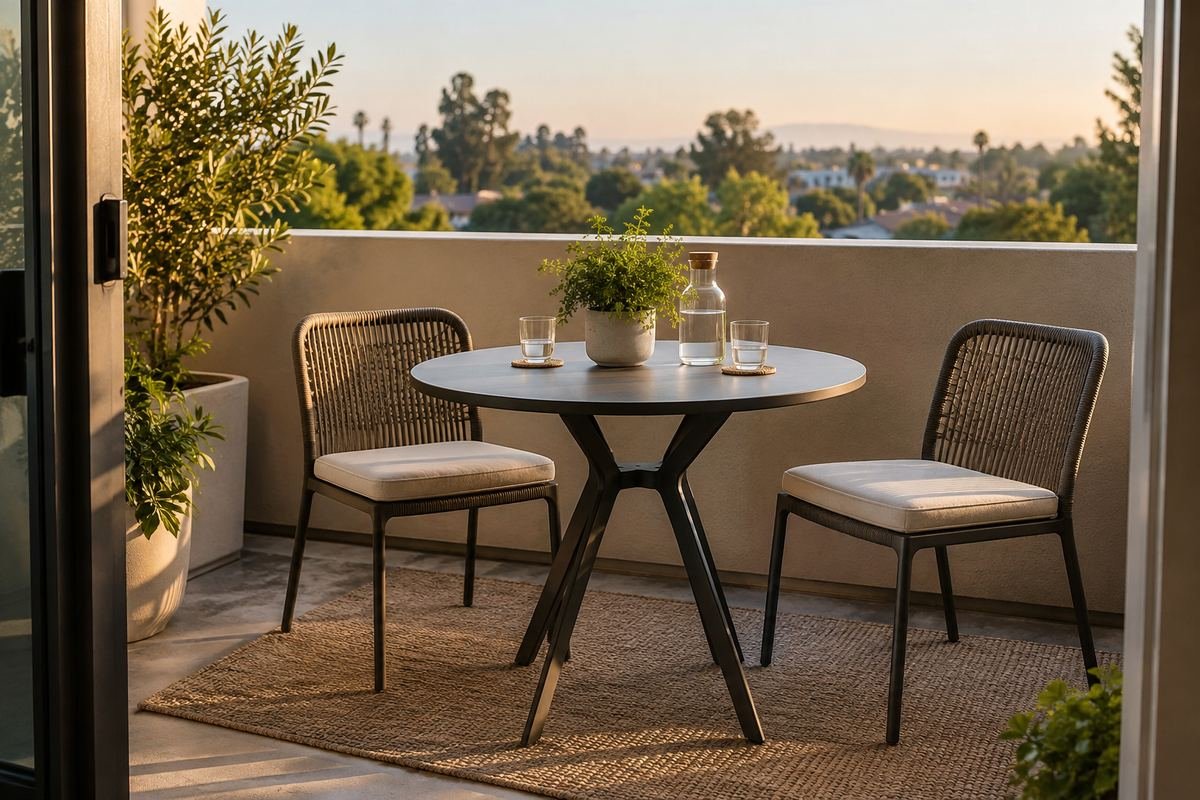
A small round tabletop can give two diners a simple shared center, but the base and chairs determine much of the useful footprint. Compare the exact leg arrangement with the sitting position so knees and chair legs have a practical place.
Place the proposed group within the available balcony rather than automatically centering it against the railing. A circular edge may suit the route, but it does not guarantee more space than a rectangle. Choose from the whole arrangement you can actually use.
Practical tip: Check the base as closely as the tabletop shape.
4. Turn a compact rectangle to suit the usable length

A rectangular table can follow the longer dimension of a balcony when the chairs and door route remain workable. Test both possible orientations before choosing. The better direction depends on the exact furniture and the way people enter and sit.
Avoid treating the space against the railing as automatic spare capacity. Keep the furniture fully within the usable balcony and appropriate to its conditions. A table orientation is successful when a real meal can happen without repeatedly rearranging the whole group.
Practical tip: Compare both orientations with the door operating normally.
5. Leave an inward-opening door its complete movement
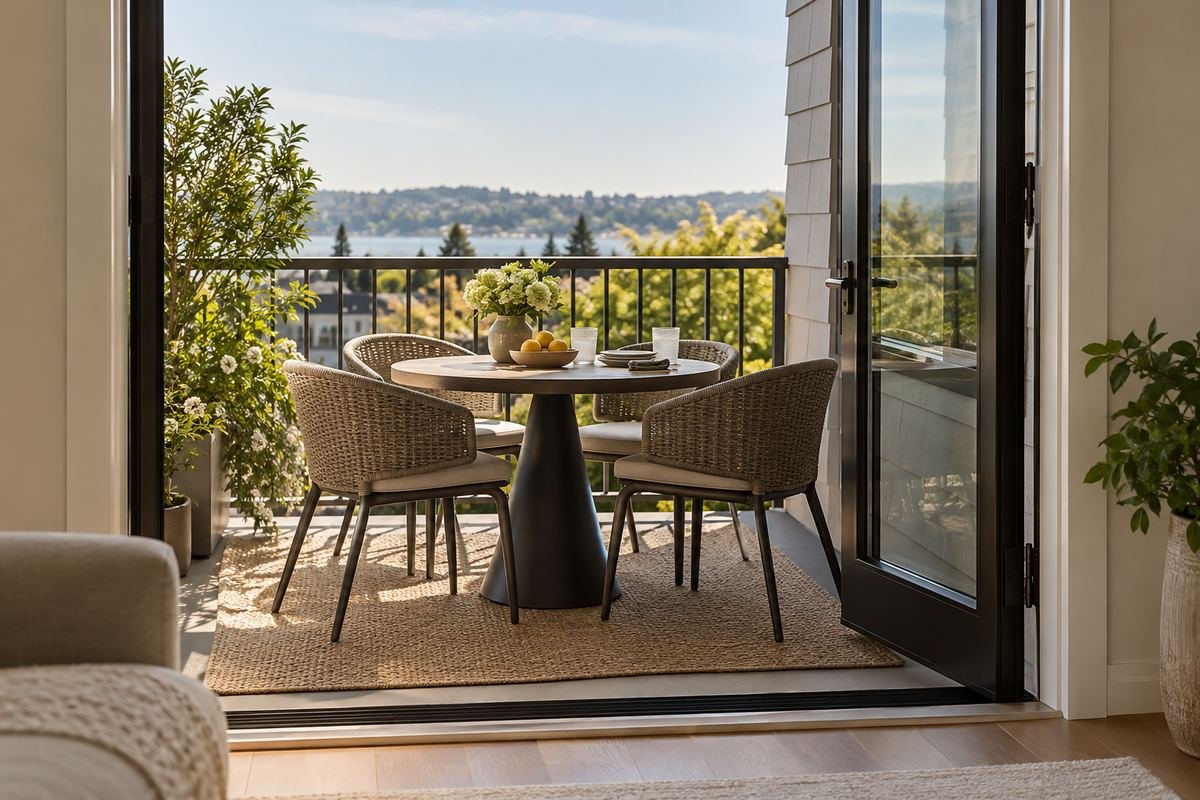
Where a door opens onto the balcony, include its whole normal movement before placing furniture. Keep the dining group outside that area so the door can be used in the intended way. Do not style the table into a position that works only while the door stays partly closed.
Test carrying ordinary meal items through the doorway with the arrangement in place. The threshold should remain visible and usable. If the room cannot support the group and normal door operation together, reduce or relocate the furniture rather than changing the door around the display.
Practical tip: Open the actual door through its intended range.
6. Keep the sliding-door approach useful
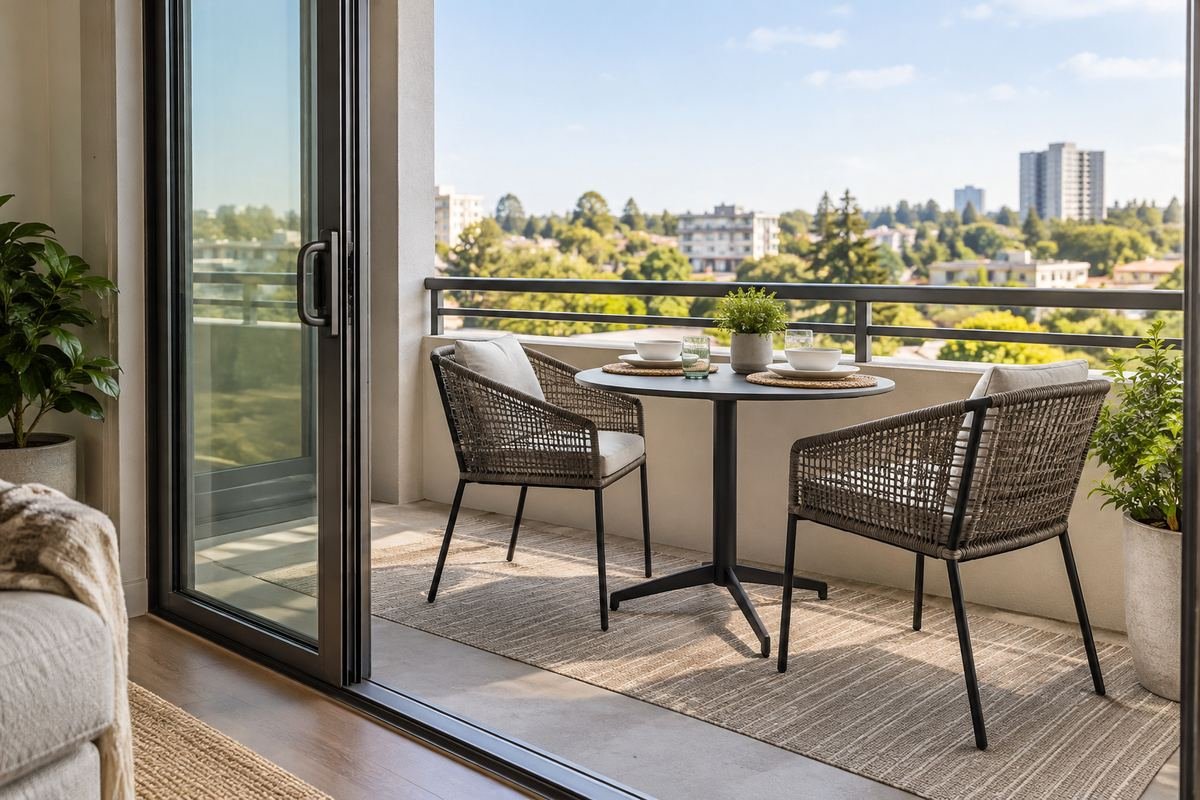
A sliding door may avoid an outward swing, but the approach still needs room for ordinary entry and carrying food. Place the dining group away from the usable opening and keep the immediate threshold area clear. Test the arrangement from inside as well as from the balcony.
Notice where the person carrying a tray first puts their feet and turns toward the table. A chair back that looks harmless from outside can make that turn awkward. Adjust the group before adding plants or accessories along the approach.
Practical tip: Test the first turn after stepping outside.
7. Use a wall-side position without attaching furniture
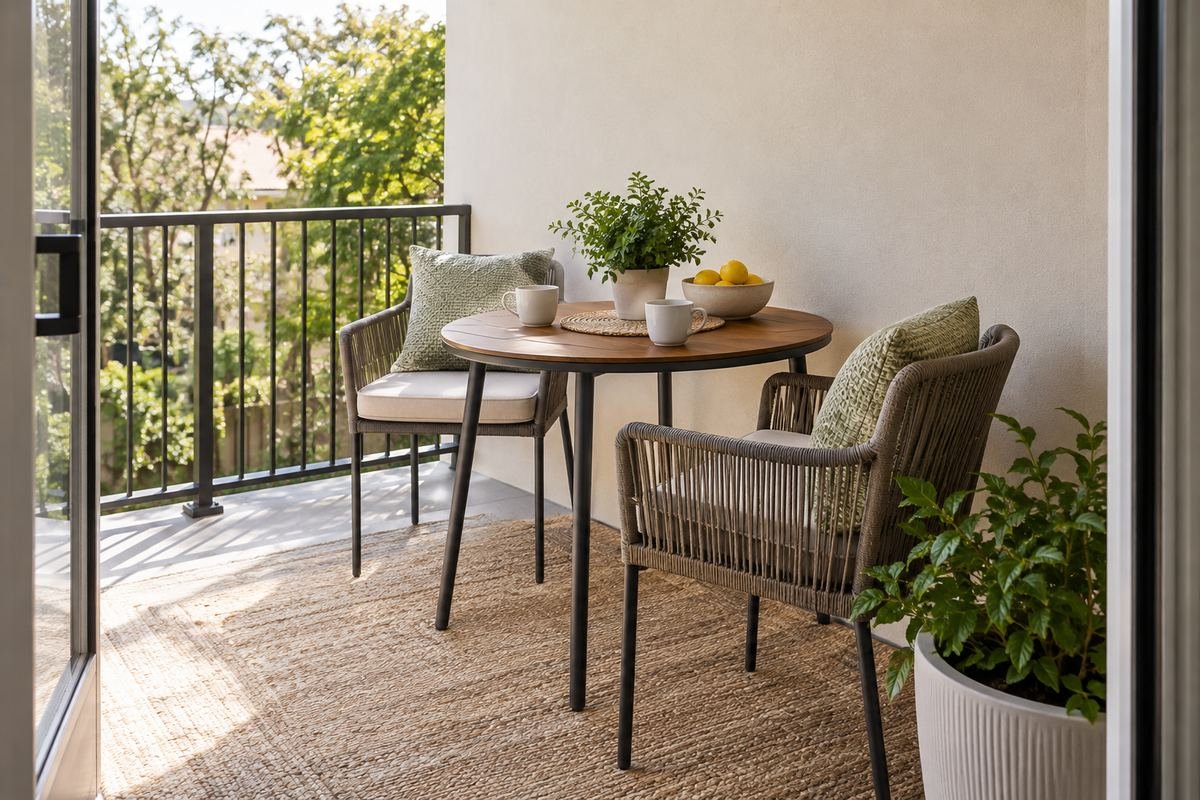
A freestanding table near an existing wall can make a compact dining arrangement feel settled. Keep the gap, finish and furniture position suitable for the actual products and surroundings. The wall provides a visual boundary without becoming a support for a makeshift table.
Check that diners can sit and stand comfortably and that access to nearby doors or equipment remains available. Do not add brackets or alter the building just to reproduce an image. Choose an arrangement that works with the existing balcony.
Practical tip: Use freestanding pieces that work without building alterations.
8. Choose armless chairs from the seated position
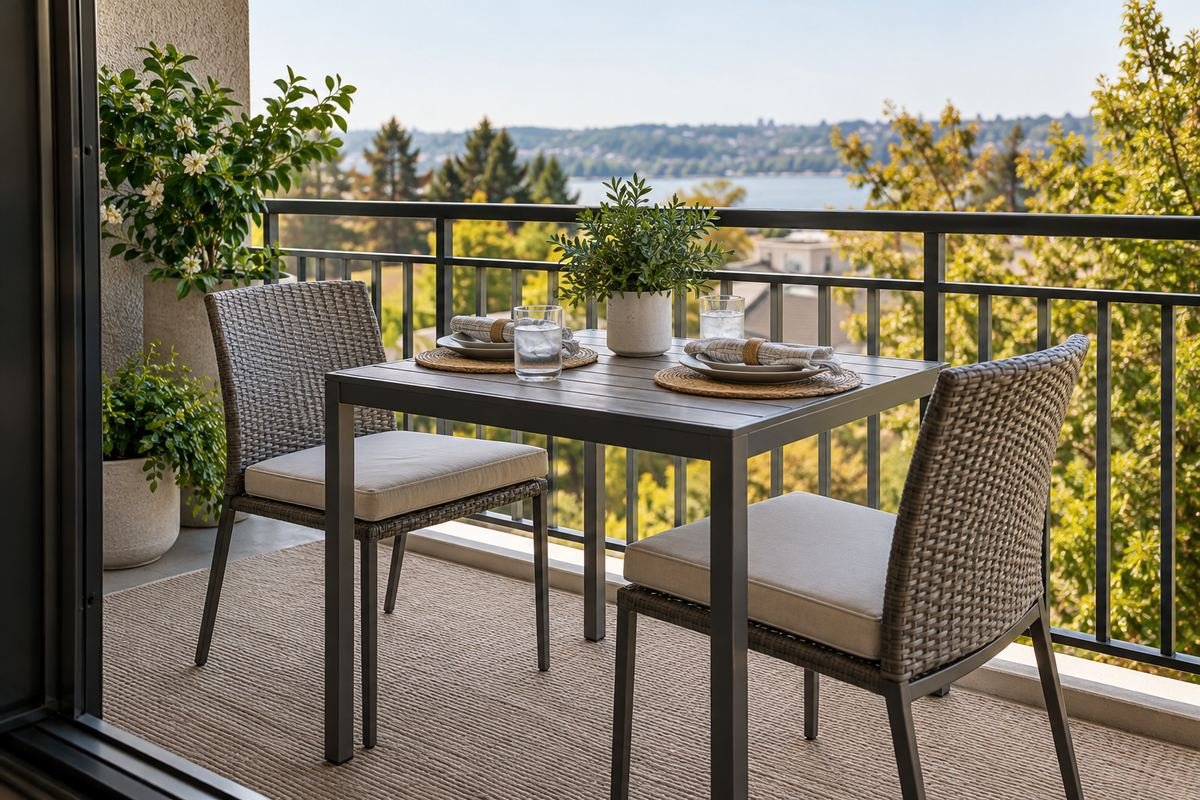
Armless dining chairs may help a compact group when their actual dimensions and comfort suit the users. Check seat depth, back shape and the way the chair meets the table. Removing arms from the description does not guarantee a smaller useful footprint.
Sit at the real table height and compare how easily the chair can move for entry. A narrow chair that is uncomfortable during a meal is not a useful space-saving choice. Keep comfort and movement in the same decision as the stored size.
Practical tip: Try the chair at the table, not in isolation.
9. Check chair arms beneath the table edge

An outdoor armchair can make a balcony meal comfortable when its arms, seat height and depth suit the table. Compare the underside of the tabletop and any apron with the actual chair. A chair that cannot tuck in as expected may take more of the balcony between meals.
Keep the user’s comfort part of the test rather than choosing only the narrowest object. If the desired armchair needs more room than the balcony provides, compare another suitable chair or reduce the regular seat count.
Practical tip: Measure the chair and table together.
10. Give a folding table an indoor destination
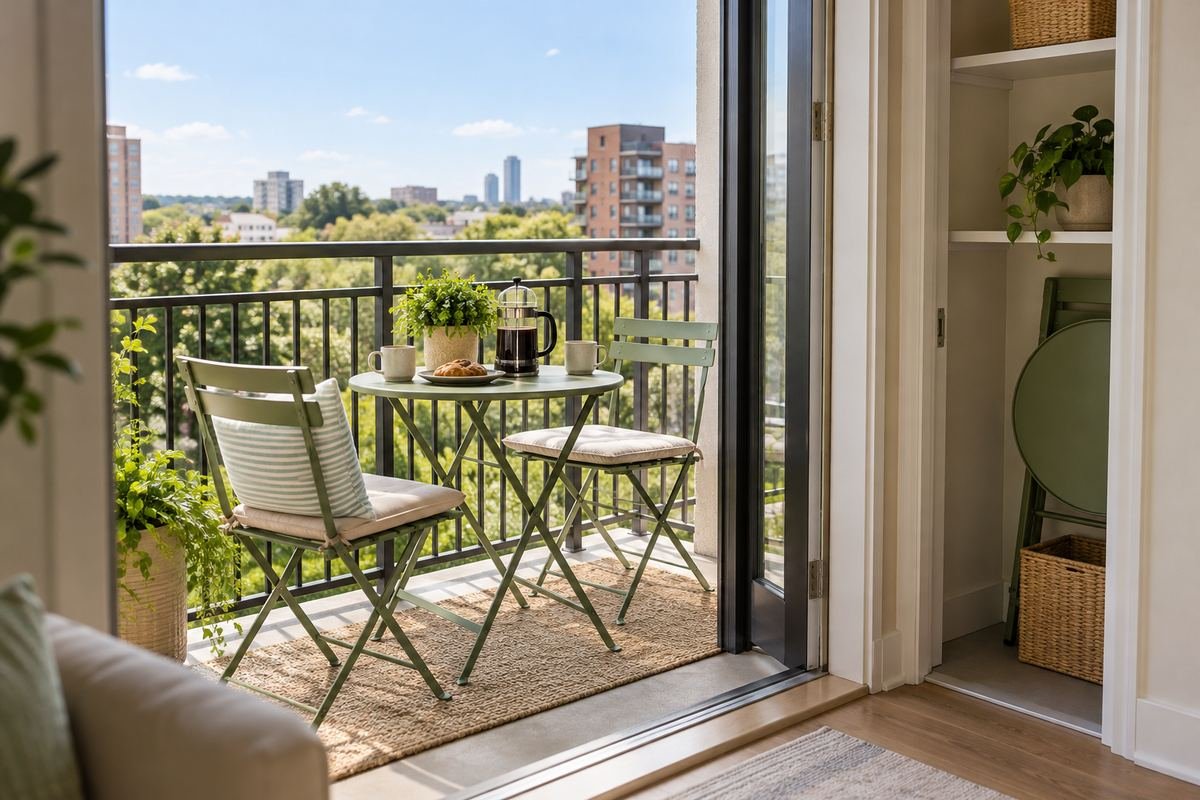
A folding table can let the balcony change from dining to another ordinary use. Choose it only after confirming a suitable place for the folded piece, including the route indoors and the product’s handling and storage instructions. Folding is a transition, not a storage plan by itself.
Test the movement without trapping the piece against a door or filling the only path. The table needs a stable usable position when open and a suitable resting position when stored. Avoid reproducing a display in which folded furniture is simply leaned against the railing.
Practical tip: Name the real storage place before buying a folding piece.
11. Balcony dining ideas with folding chairs that return easily

Suitable folding chairs can reduce the group between meals when their storage is accessible. Compare the folded dimensions, handling and any latching or operating instructions for the actual product. Keep fingers and other objects clear as directed during folding.
A chair used every day should be easy enough to retrieve and return that the routine is realistic. If storage requires moving several unrelated objects, simplify the arrangement. A compact permanent chair may be a better daily choice when the folding routine becomes a chore.
Practical tip: Try retrieving and returning the actual chair before committing.
12. Choose a stack only when the product allows it
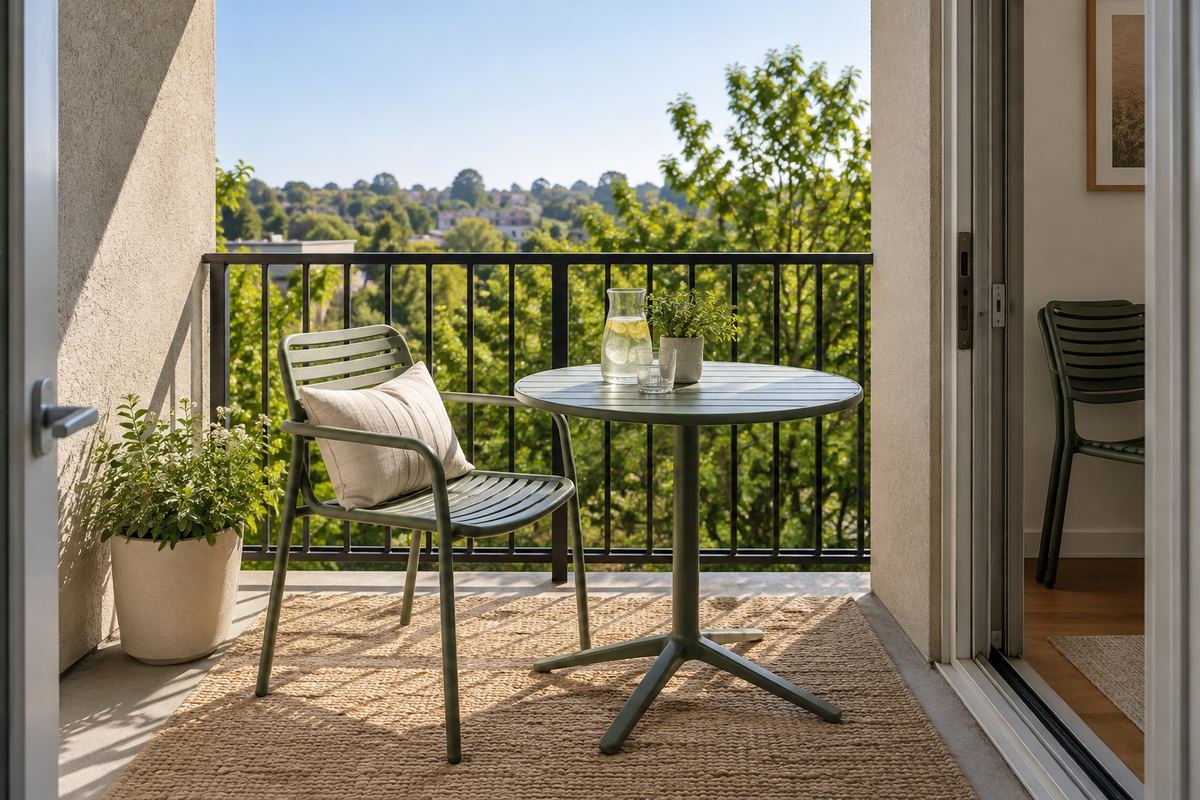
Stackable outdoor chairs can be useful for occasional seating, but stacking suitability and limits belong to the exact product. Check its instructions and plan a stable appropriate storage destination. Do not infer that chairs can be stacked because their shapes look similar.
Keep the stored group out of the doorway and away from an improvised railing-side pile. For a small balcony, an extra chair stored indoors may be more useful than a permanent stack outside. Compare the whole storage routine with how often the extra seat is used.
Practical tip: Follow the specific product’s stacking and storage instructions.
13. Plan the place settings before the centerpiece
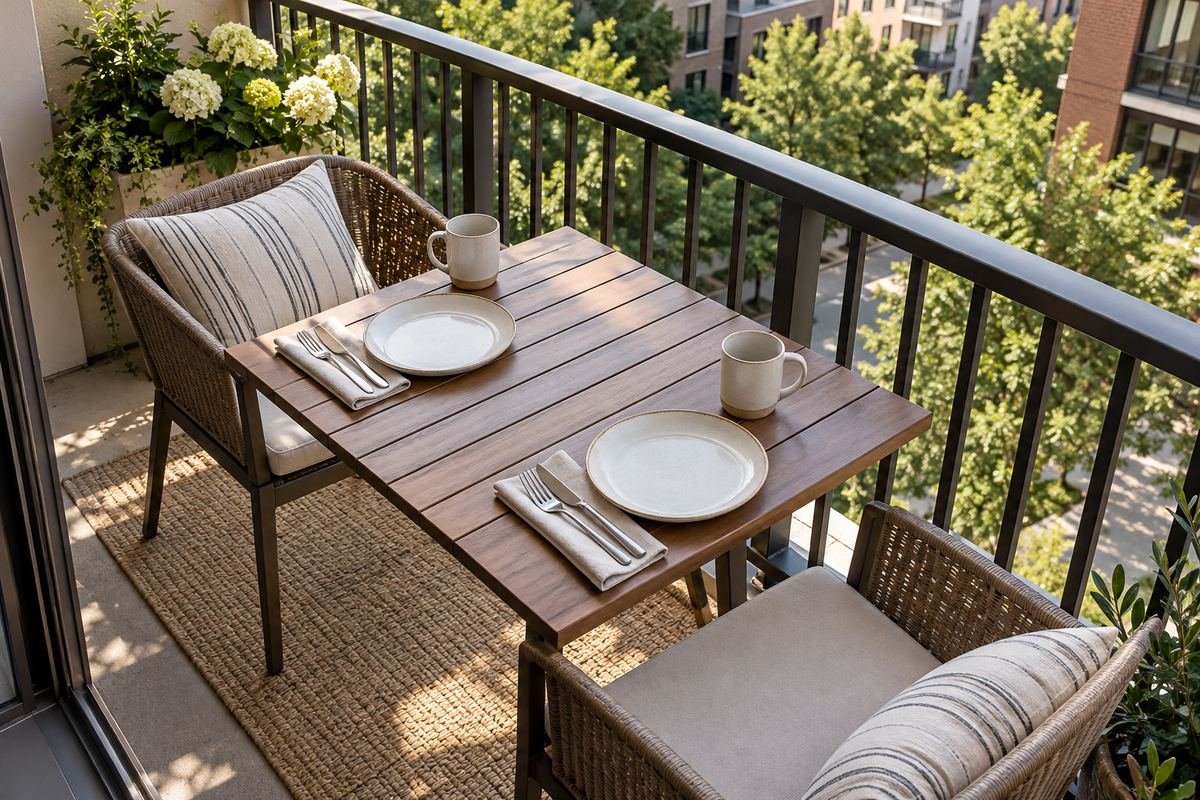
On a modest balcony table, plates, cups and the way food is served determine how much surface is actually useful. Test the everyday meal first and keep the center clear until those essentials fit comfortably. A styled centerpiece should not force the diners to hold items on their laps.
Compare a breakfast setup with the meal you most often eat outside. A small table may suit individual plates but not large shared serving dishes. Choose a serving routine that fits the real surface rather than squeezing in an extra accessory.
Practical tip: Lay out the usual meal before adding decoration.
14. Serve the meal in a sequence that fits the table

A small balcony dining setup can work well when only the items needed for the current course come outside. Keep surplus serving dishes in a suitable indoor place and bring what is needed without repeatedly blocking the doorway. Plan this from the actual household routine.
The aim is a manageable meal, not a complicated restaurant service. If the arrangement requires constant carrying through an awkward route, choose a simpler menu setup, a different table or dining indoors. Do not use the railing as temporary food storage.
Practical tip: Keep the tabletop useful through the whole meal.
15. Carry a tray that fits the route and the tabletop
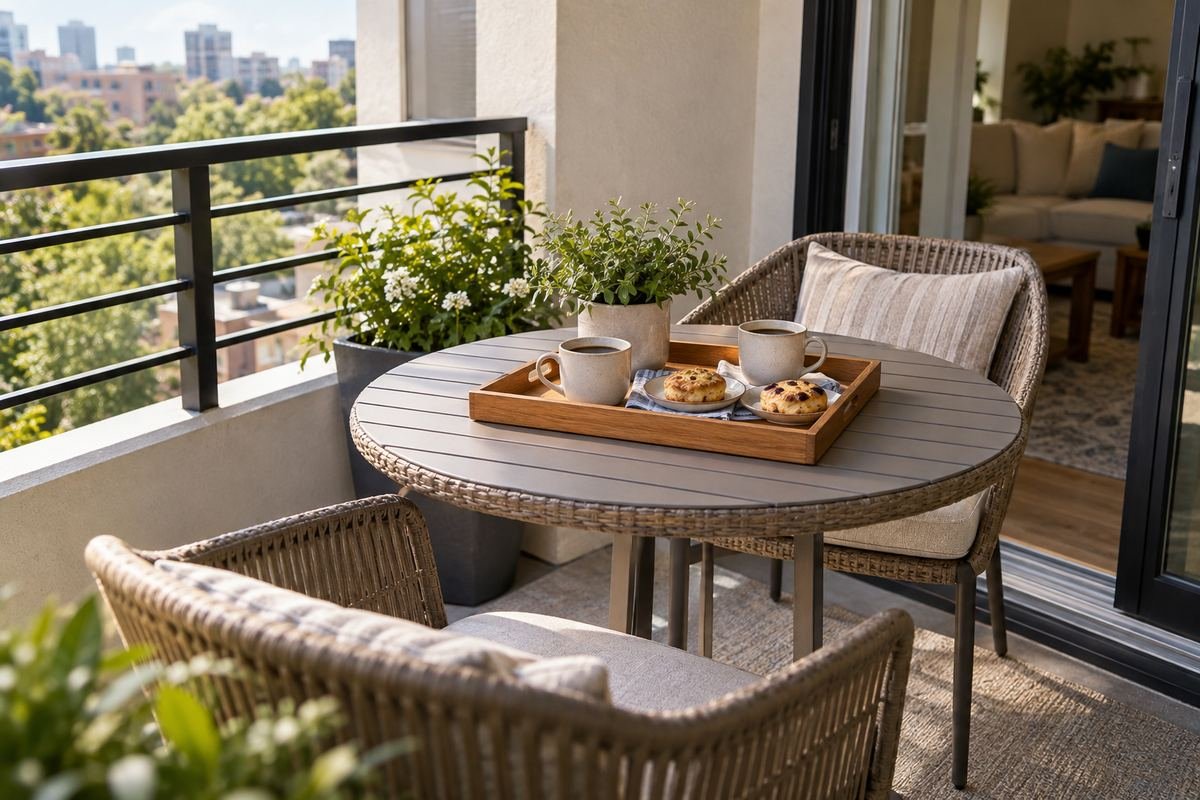
A suitable tray can gather modest meal items for the trip outside, but its loaded size and weight should suit the user, route and destination. Check where it will rest before carrying it through the door. The tray should not turn the small table into an unstable balancing task.
Choose a manageable group of items and make more than one trip when needed. Keep the threshold clear and use the tray according to its intended purpose. Once the food is served, return it indoors if it takes away useful dining space.
Practical tip: Test the empty tray’s destination before loading it.
16. Keep spare meal items on an appropriate indoor landing
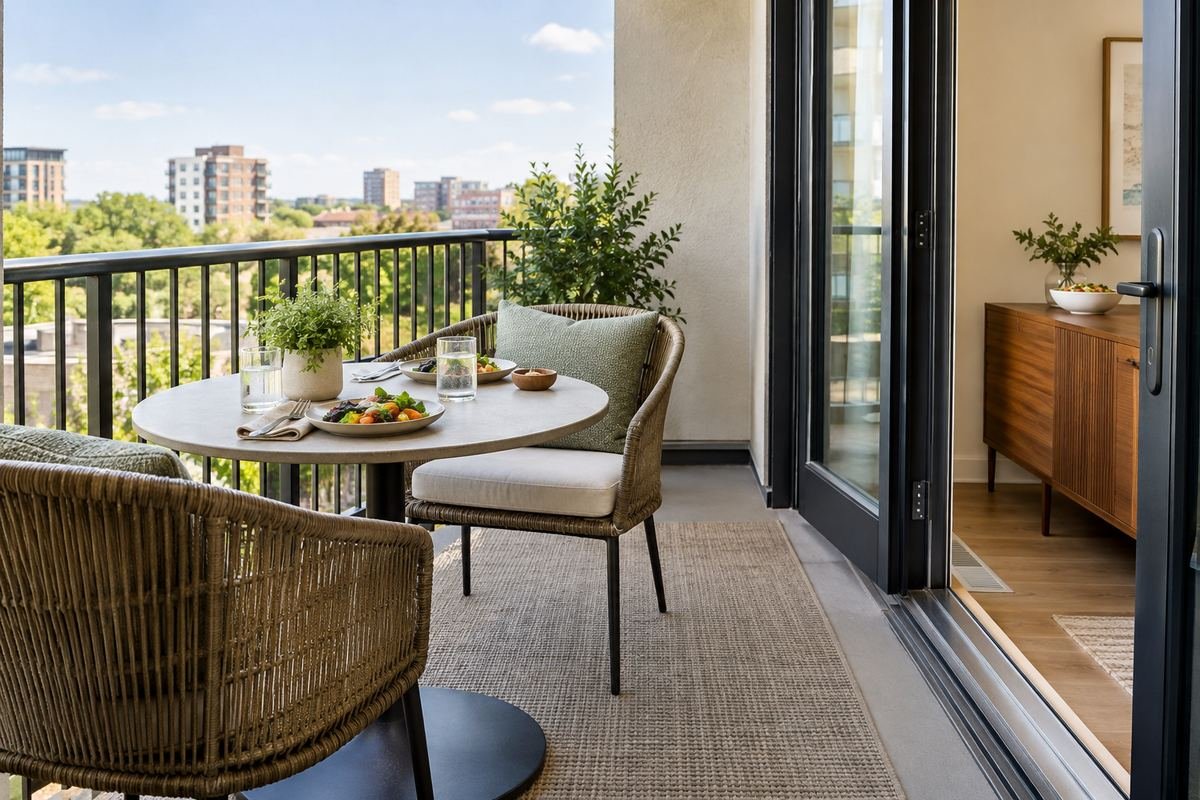
A useful indoor surface near the balcony can hold the items that do not need to remain outside. Choose a suitable clear position without obstructing the doorway or other household tasks. This can reduce the temptation to fill a small balcony with a separate serving cart.
Keep the arrangement limited to the meal rather than making it permanent overflow storage. Check the walking route with the door in use and return food and dishes to their proper places afterward. An indoor landing is useful only when it supports ordinary movement.
Practical tip: Use a suitable existing surface before adding outdoor furniture.
17. Give cushions a practical return place
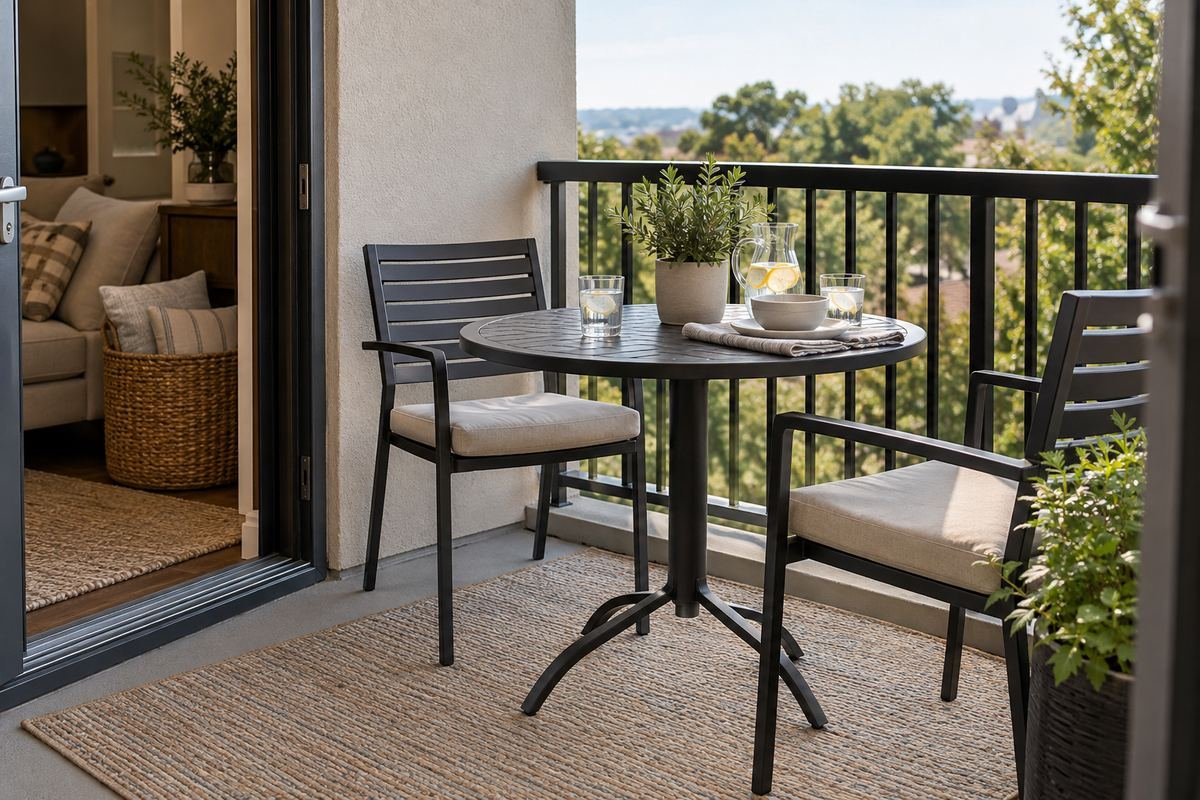
Removable outdoor cushions can make a dining chair more comfortable when they suit the product and conditions. Plan where they go after use and follow the textile and furniture care instructions. A suitable dry indoor destination may make a small balcony easier to maintain.
Choose a manageable number rather than covering every seat with several loose layers. If the return routine requires a large storage box outside, compare that box’s footprint with the dining space it removes. Comfort should fit the whole arrangement.
Practical tip: Choose the storage routine with the cushion.
18. Keep loose textiles out of the permanent setup
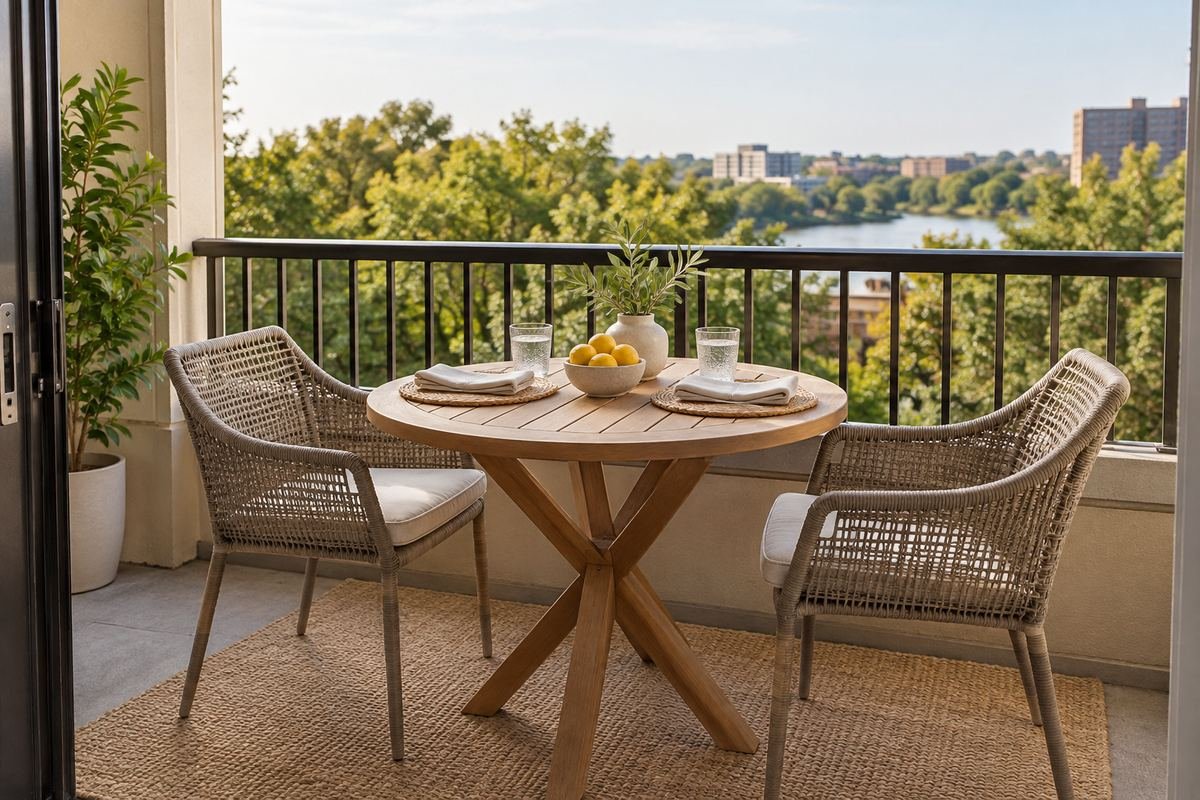
A placemat or napkin can add color during a meal without becoming a permanent outdoor display. Bring suitable pieces out when needed and return them appropriately afterward. Choose them from the way the table is used and the exposure you actually experience.
Avoid long fabric trails and layers that interfere with the small dining group or need constant adjustment. A mostly clear table can be easier to wipe and use than a fully dressed surface left outdoors. Let the meal supply some of the visual detail.
Practical tip: Use a small number of easy-to-return pieces.
19. Balcony dining ideas for a changing weather routine
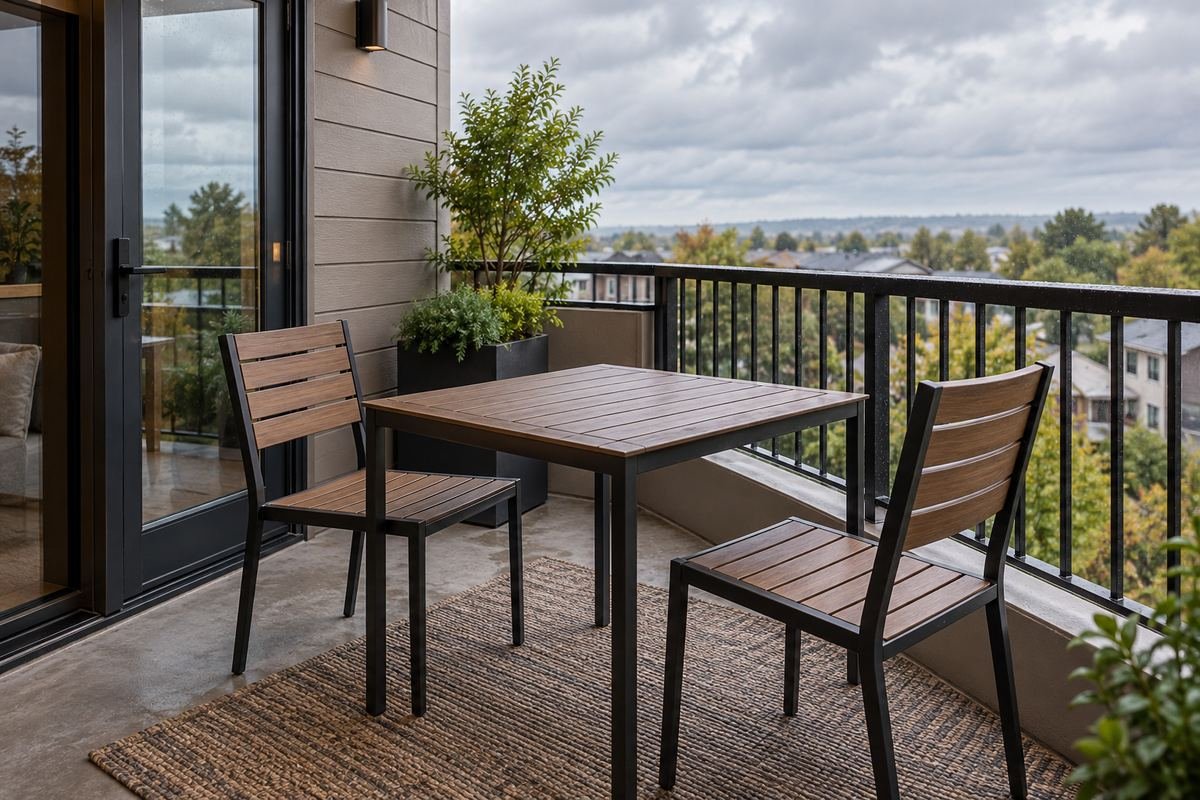
The useful outdoor arrangement may be the one that can return to its resting state without a lengthy job. Review the actual furniture guidance, exposure and storage options before deciding what remains outside. Bring loose meal accessories indoors after use.
Do not rely on a styled image to establish wind performance or year-round suitability. If the weather makes the balcony unsuitable for a meal, use another location and store the items according to their instructions. The design can remain simple and attractive without a permanent tabletop display.
Practical tip: Make putting items away part of the normal meal.
20. Choose wood with its care routine in mind
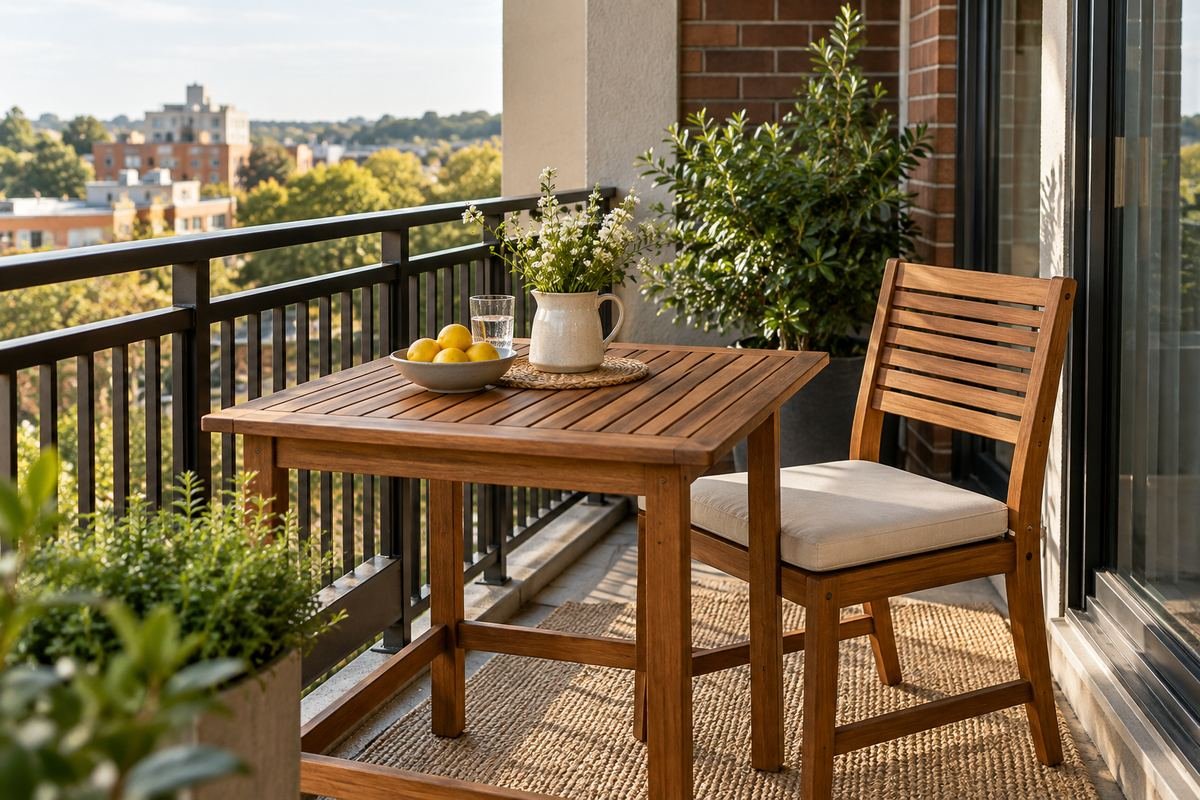
A small wood dining table can bring warmth to a balcony, but its finish needs the care specified for that exact product. Read the cleaning, drying, protection and maintenance guidance before choosing. Keep the table’s appearance connected to a routine the household can manage.
The referenced TÄRNÖ guidance includes regular re-staining as appropriate to its wood finish. That is a product example rather than a treatment schedule for every wood table. Use the correct products and process for the furniture you actually own.
Practical tip: Check material care before choosing the finish.
21. Compare coated metal as a different material choice

A powder-coated metal table can offer a simple visual line, but it still needs appropriate cleaning, drying and protection. Follow its actual care instructions, including how to handle damage or hardware if the manufacturer describes it. Do not assume outdoor metal is maintenance-free.
Keep the decision separate from wood care. A coating is not a reason to apply a generic wood treatment, and one manufacturer’s advice may not match another finish. Compare the product’s routine, feel and size with the way the balcony is used.
Practical tip: Use the instructions for the actual coating and furniture.
22. Use a low centerpiece only when the meal allows it
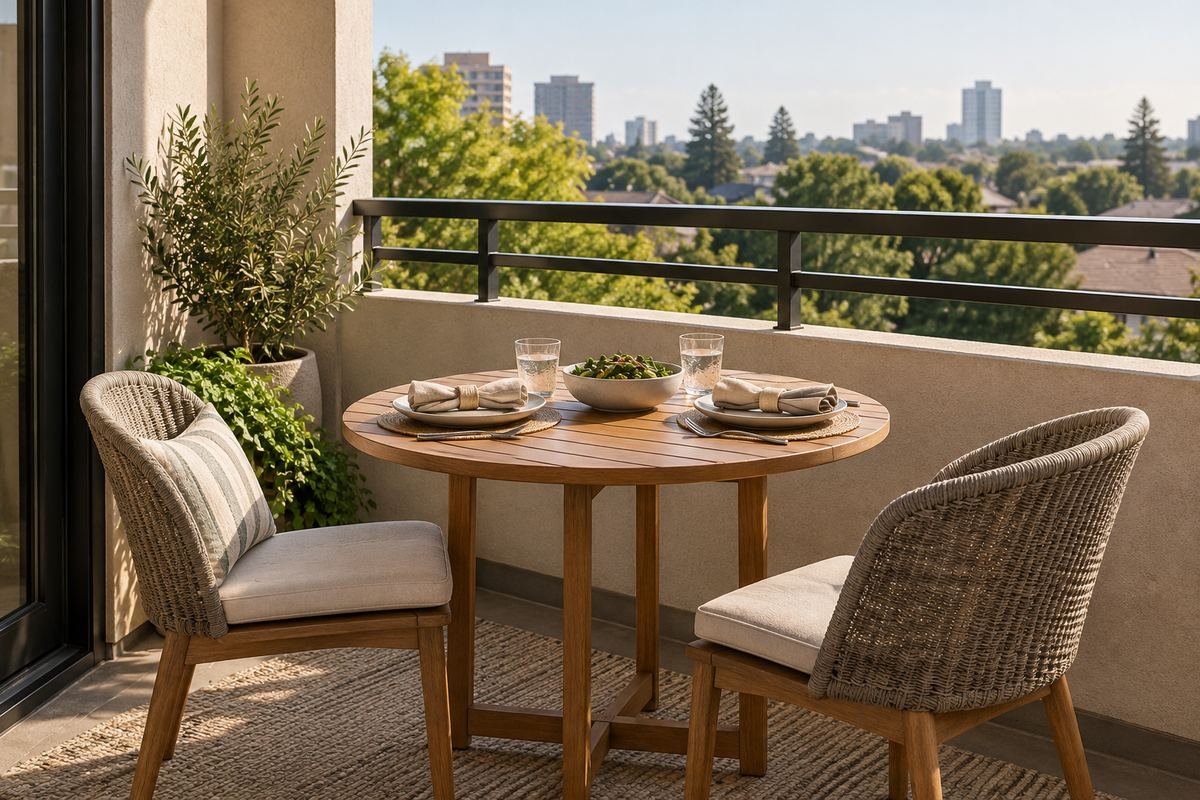
A single low suitable object can give a balcony dining table a finished look without making diners look around a tall display. Keep it stable, fully supported and easy to remove. Test it with the actual plates and cups before deciding it belongs during meals.
An empty center is also a complete choice. If a vase or bowl needs to move every time food arrives, let it remain indoors or bring it out only when appropriate. The table does not need a permanent accessory to function as an inviting dining place.
Practical tip: Keep the useful surface more important than the display.
23. Keep planting in one separate modest corner
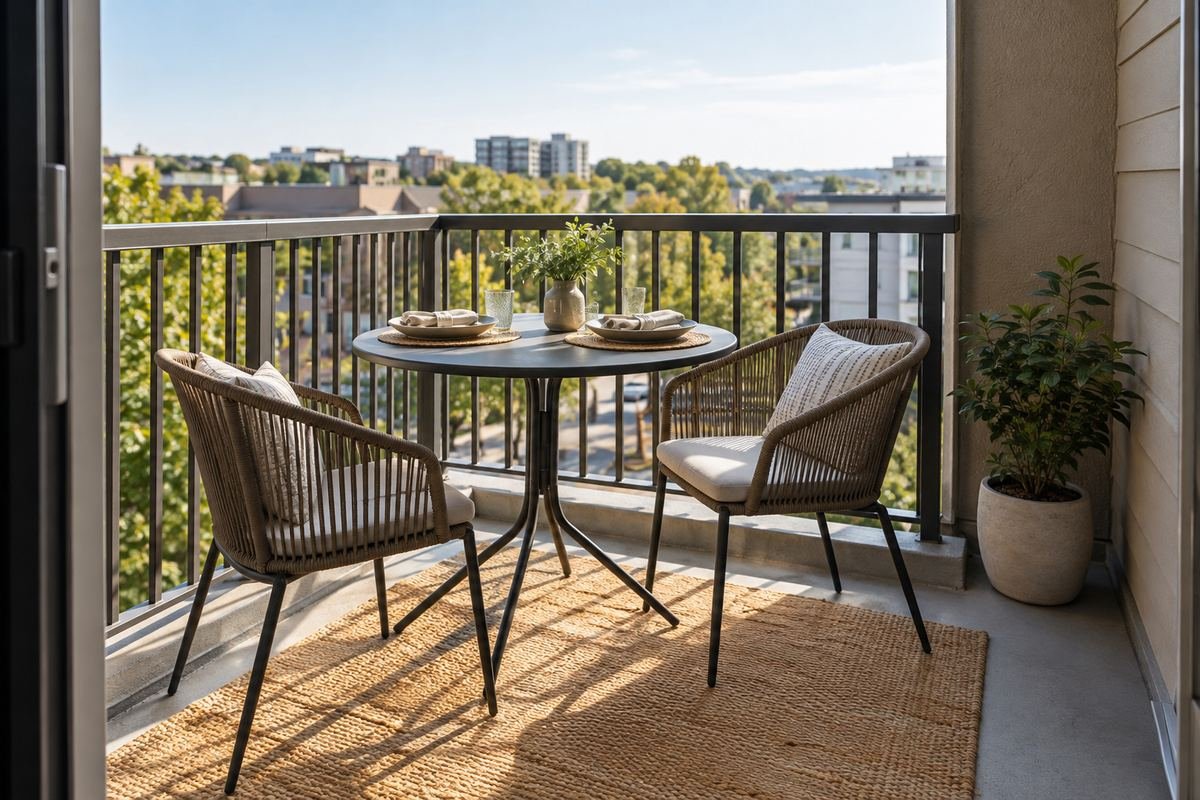
A small appropriate plant can connect the dining spot to the outdoors when its complete container has a useful position away from chair movement and the door. Choose the plant, pot and care from the actual growing conditions and the balcony’s permitted use.
Keep the group restrained rather than lining the railing with heavy or unstable containers. This guide does not assess balcony loads or authorize changes. If the proposed planting raises questions about condition, weight or placement, get appropriate advice before proceeding.
Practical tip: Keep the plant position separate from occupied chairs.
24. Use the existing shade before adding equipment
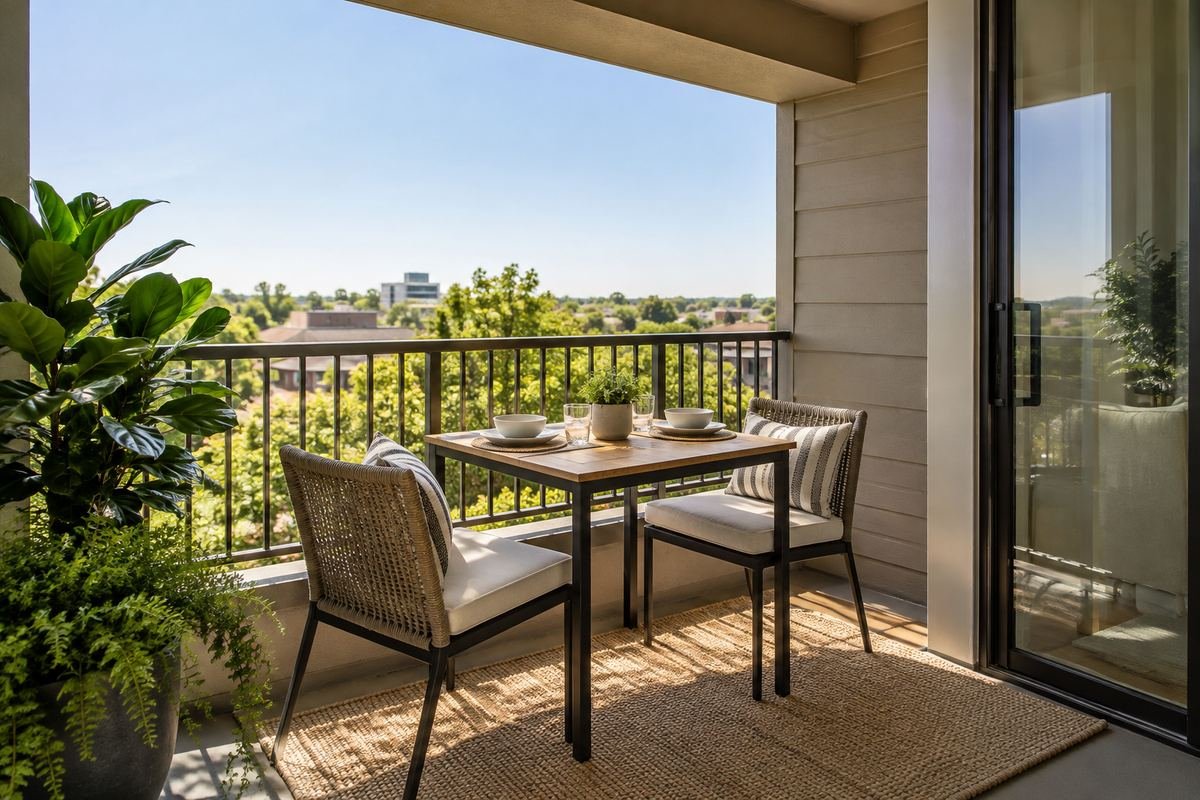
Observe the table position under the balcony’s existing cover or shade at the time meals actually happen. That may help choose where a modest dining group belongs without introducing another object. Test comfort in the real conditions rather than inferring it from a bright photograph.
This concept uses the existing building arrangement and does not specify new awnings, umbrellas or attachments. Any additional equipment needs its own suitable product choice, permissions and installation assessment. Start with what already exists and remains usable.
Practical tip: Review the actual mealtime conditions before adding shade equipment.
25. Finish balcony dining ideas with a clear-floor reset
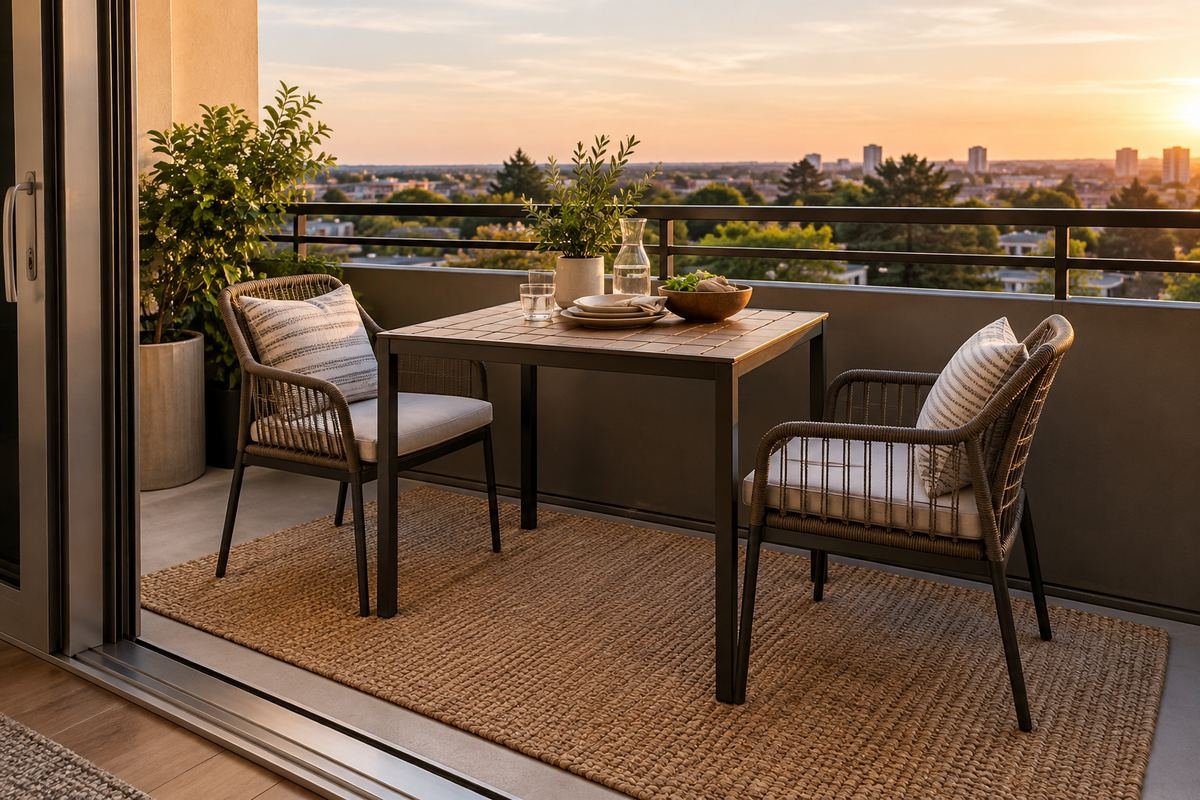
After the meal, return dishes and loose items, wipe the furniture as its care instructions require and restore the planned chair positions. Keep the threshold and usable floor accessible. This ordinary reset can make the balcony inviting for the next meal without a fresh styling session.
Review the point that repeatedly causes friction: a chair that catches the door, cushions with no destination or a tray that never fits the table. Correct that detail before adding more furniture. A small setup becomes useful through reliable everyday use.
Practical tip: Make the next meal easy to begin.
Frequently Asked Questions
What size table works on a small balcony?
Choose from the usable area and the complete occupied dining group. A manufacturer’s tabletop dimensions do not include chair movement or the route to the door. Test the exact table and chairs rather than treating any one measurement as suitable for every balcony.
Is a folding table always the best option?
It helps when the balcony needs to change use and the furniture has a suitable storage destination. Check its open position and folding action as carefully as its stored size. If moving it is awkward, a smaller permanent group may fit the actual routine better.
Can I attach a dining table to the railing?
This guide uses freestanding furniture. A railing is not automatically a suitable furniture support, and an image cannot establish its condition or permitted attachments. Follow the building requirements and obtain appropriate advice before considering changes or attachments.
How can two people dine on a narrow balcony?
Test both chairs occupied, the table orientation and the door route together. A compact group may work, but do not count a second seat that blocks ordinary movement. If the space cannot support the complete activity, use a one-person arrangement or eat indoors.
Can outdoor furniture stay outside all year?
That depends on the exact product, its material, the exposure and its care instructions. Follow the manufacturer’s protection and storage guidance. Outdoor suitability does not remove the need to clean, dry, maintain and store the furniture appropriately.
How much decoration does a balcony dining table need?
Keep room for the actual meal. One low suitable object or no centerpiece can be enough. Return loose accessories and textiles to an appropriate place after use, and choose the routine from real exposure rather than expecting the styled arrangement to stay outside unchanged.
Choose the Details That Work in Your Home
Choose balcony dining ideas that make the ordinary meal easy to repeat. Keep the existing balcony and door usable, compare both occupied chairs, give folding pieces a real storage destination and match care to the exact furniture. A modest setup that can be used and put away comfortably is a worthwhile finished space.
For related ideas, explore balcony decor ideas, outdoor dining area ideas, balcony and patio plant ideas.
Planning References
IKEA TÄRNÖ outdoor table 700.954.29: dimensions, use and care; IKEA TORPARÖ outdoor table 605.957.24: dimensions, folding and care. Follow the instructions for the exact products you choose.
Optional digital guide for this topic
If you prefer a structured workbook, explore this related paid guide.