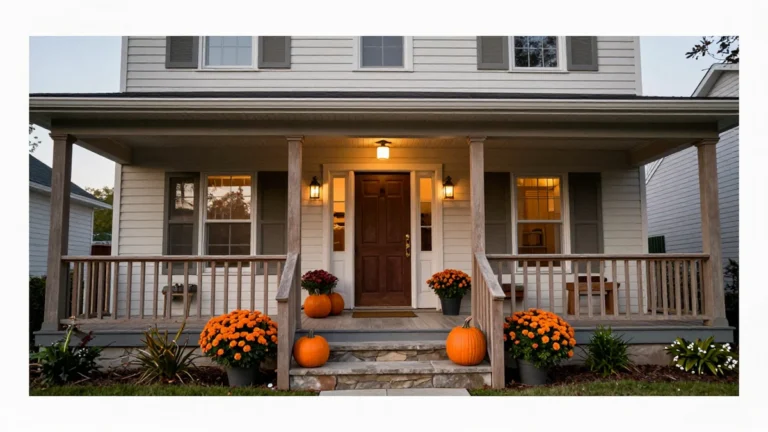
Patio privacy screen ideas should solve a particular view rather than surround every edge automatically. You may want a quieter seat beside a driveway, a more defined dining corner or a little separation from an adjoining garden. Identify that view first.
Sit in the actual chair and look toward the area you want to screen. Then stand and check the view from the house and the main route through the patio. A screen that looks substantial from one angle may leave the seated view open from another.
These 23 original concepts compare pattern, material and placement. The images illustrate design possibilities; they do not certify wind resistance, fixing details or an exact percentage of privacy. Choose the real screen system and installation for your site.
The images are original AI-generated decor concepts, not installation diagrams or photographs of completed client projects.
Browse These 23 Patio Privacy Screen Ideas
Jump to an idea
- Start with horizontal wood patio privacy screen ideas
- Use vertical slats for a quieter repeated rhythm
- Choose wider boards for a more solid-looking backdrop
- Keep narrow timber slats beside plain furniture
- Explore pale wood patio privacy screen ideas
- Use deeper timber tones with a quiet neutral patio
- Try a charcoal screen beside warm materials
- Choose a simple geometric metal pattern
- Use botanical metal patio privacy screen ideas with restraint
- Compare a denser metal pattern for the exposed seat
- Use a rust-toned screen with a considered surface below
- Let a lattice pattern introduce a lighter visual grid
- Pair a suitable trellis with manageable climbing growth
- Explore woven-look patio privacy screen ideas
- Consider an outdoor fabric screen in a suitable frame
- Use outdoor curtains within an appropriate covered structure
- Screen one seating corner instead of every edge
- Create a quieter backdrop behind a dining table
- Use planter-and-screen combinations as complete products
- Keep privacy screen ideas clear of the main door route
- Use a short screen to define a reading chair
- Coordinate the screen with evening patio lighting
- Finish with a small number of well-placed panels
Choose patio privacy screen ideas from the seated view first
Use a temporary visual mock-up to compare the proposed position and height before buying. Keep doors, movement and service access on the plan. For the actual installation, read the complete screen instructions: Veradek’s current help center recommends securing its freestanding screen sets against tipping in high winds. That product example shows why the word freestanding should not be treated as a promise that any screen can stand unrestrained in any location.
| Decision | Check in the actual space | Why it matters |
|---|---|---|
| View to screen | Seated and standing sightlines from relevant angles | Pattern openness and placement affect the result |
| Screen footprint | Posts, feet, planters and any returns | The supporting system also uses patio space |
| Route and doors | Door swings and occupied chair positions | A screen should not make daily movement awkward |
| Exposure | Wind, rain and local site conditions | Choose a suitable complete installation |
| Material and finish | Real samples and the product care directions | Appearance alone does not establish durability |
| Rules and boundaries | Applicable local and property requirements | Resolve the location and dimensions before installation |
Compare two short layouts before drawing a long enclosure
Sketch a screen behind the main seat and another along the exposed patio edge. Mark the view each blocks and the route each leaves open. The shorter screen may be enough when placed near the seating group, while a boundary screen may be needed for a different angle. Test the particular sightline rather than assuming that more panels always produce a better patio.
Use panel arithmetic only as an initial layout check
Three panels advertised as 36 inches wide suggest 108 inches of panel width. The complete installed width may change with posts, connectors, overlaps, gaps or corner details. This arithmetic is not a product order or fixing plan. Obtain the assembled dimensions for the actual system and include its whole footprint in the patio drawing.
Separate visual screening from a boundary or guard
A decorative privacy panel should not be assumed to function as a fence, required guard or load-bearing element. Confirm the intended use of the chosen system. If a US installation involves excavation, contact 811 and follow the applicable state process before disturbing ground. Have the site, supporting surface and fixing arrangement assessed for the selected product.
1. Start with horizontal wood patio privacy screen ideas

Horizontal timber lines can give a seating corner a clear backdrop. Repeating a related wood tone in a table or chair helps the screen connect with the patio.
Compare the spacing from the actual seated angle. A regular slatted pattern may still reveal movement beyond it, so test the intended degree of visual separation before choosing the final product.
Practical tip: Review a full-size sample of the spacing.
2. Use vertical slats for a quieter repeated rhythm
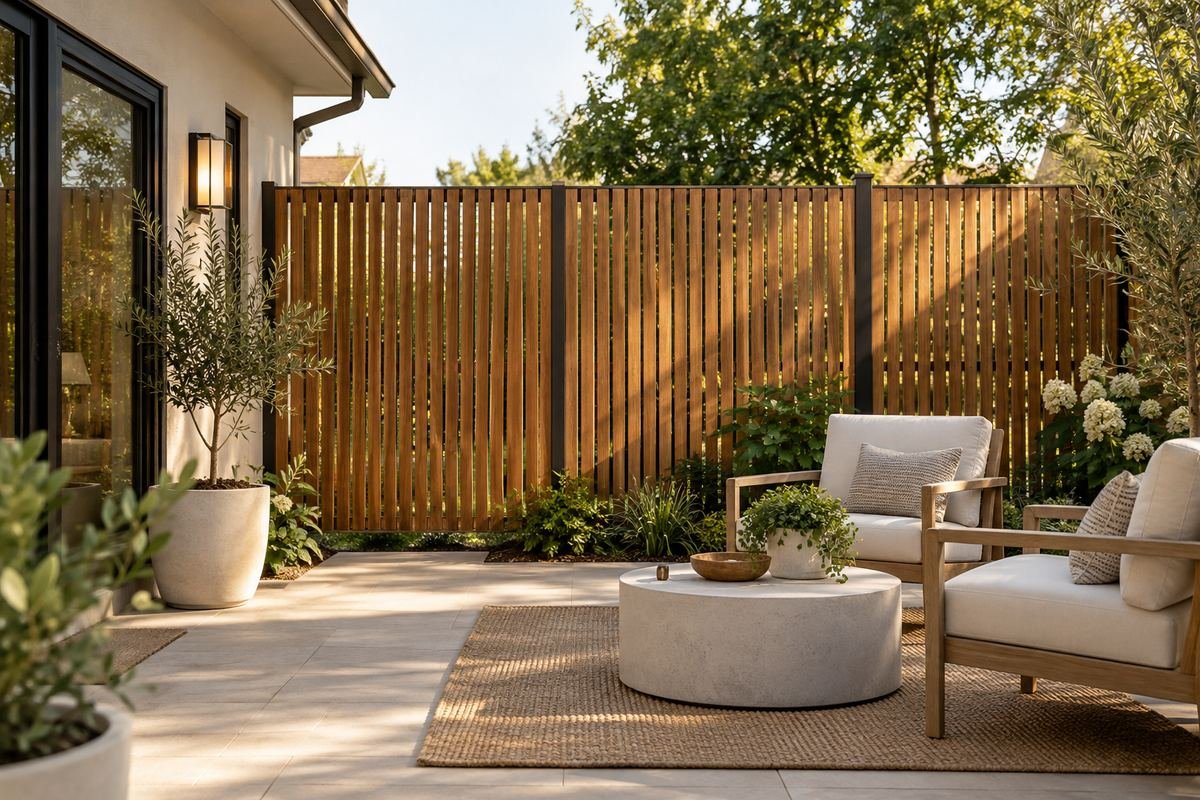
Vertical slats create a different visual rhythm from the horizontal lines of paving and seating. A restrained frame keeps the screen from becoming an elaborate garden feature.
Check the complete layout from the house as well as the patio. The screen will be visible when the seating is empty, so its proportions should relate to the surrounding doors and windows.
Practical tip: Compare the full panel with the house elevation.
3. Choose wider boards for a more solid-looking backdrop

Wider boards can make a screen read as a calmer surface with fewer visible lines. This can suit a patio where furniture already introduces several small patterns.
A solid-looking surface still needs a suitable complete support arrangement. Choose the real product and installation for its exposure rather than changing board coverage independently from the design.
Practical tip: Keep the chosen screen configuration intact.
4. Keep narrow timber slats beside plain furniture

Narrow slats add fine texture behind a quiet seating group. Plain cushions let the repeated lines remain the principal decorative detail.
Avoid combining several different slat widths without a measured plan. The screen can feel busy if its lines compete with striped upholstery, a strong rug and another patterned boundary.
Practical tip: Let one repeated pattern lead the arrangement.
5. Explore pale wood patio privacy screen ideas

A pale wood appearance can connect a screen with light paving and cream cushions. Green planting gives the gentle palette a distinct natural contrast.
Compare actual finish samples outdoors. Similar wood descriptions can look quite different in sun and shade, and the product’s maintenance needs matter as much as the first appearance.
Practical tip: Review the finish and care directions together.
6. Use deeper timber tones with a quiet neutral patio

A darker timber tone gives a small seating group a more defined backdrop. Light furniture can remain visible against it without adding a bright accent color.
Check the view through adjoining windows before committing to a large dark surface. The screen should fit the indoor view as well as the outdoor composition.
Practical tip: Look at the mock-up from inside the house.
7. Try a charcoal screen beside warm materials

Charcoal can connect a screen with dark window frames or outdoor chair legs. Warm timber and restrained planting keep the deep color from dominating every surface.
Choose an actual finish suited to the product and exposure. A charcoal concept does not identify whether the panel is painted wood, coated metal or another material.
Practical tip: Confirm the material beneath the finish.
8. Choose a simple geometric metal pattern

A geometric cutout pattern can become the main detail behind a patio seat. Keep nearby pots and furniture shapes relatively plain so the screen remains easy to read.
Inspect the real pattern from different angles and distances. Decorative openness is part of the visual effect and also changes how much can be seen through the screen.
Practical tip: Compare privacy from the relevant viewpoints.
9. Use botanical metal patio privacy screen ideas with restraint

An abstract botanical cutout can relate a screen to nearby planting without copying the leaves exactly. A simple surrounding frame keeps the panel distinct from the garden.
Choose one patterned field rather than covering every patio edge. The design should support the seating area instead of making the whole space compete for attention.
Practical tip: Balance the decorative panel with quiet surfaces.
10. Compare a denser metal pattern for the exposed seat
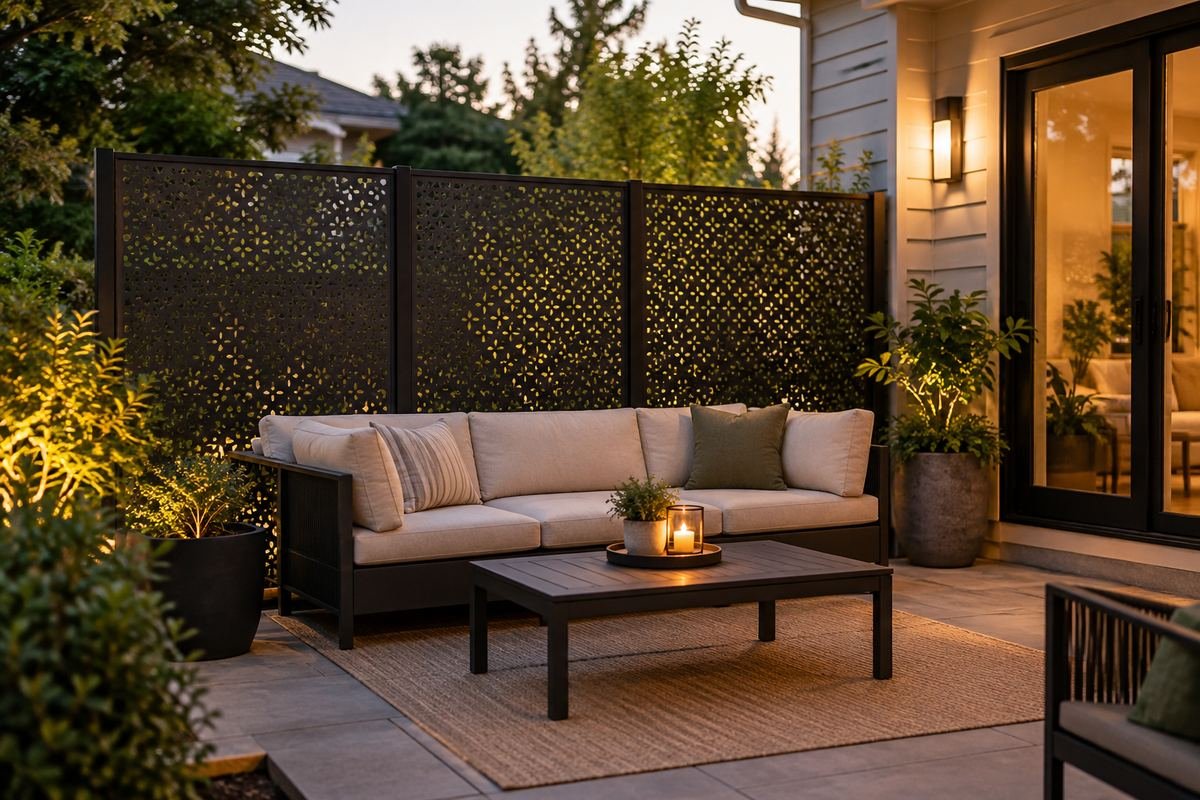
A denser pattern may give a particular view more visual interruption than a very open design. Its effect still depends on placement, angle and lighting.
Use the actual panel sample rather than assuming a pattern name means complete privacy. Check the seated position and the relevant view from beyond the patio.
Practical tip: Test the real pattern before ordering several panels.
11. Use a rust-toned screen with a considered surface below

A rust-toned metal appearance can connect with terracotta pots and warm garden planting. Quiet paving gives the deeper color a clear background.
For actual weathering steel, review runoff and staining guidance. Veradek’s care FAQs note that rust development can mark the surface below; resolve that product-specific issue before choosing its patio position.
Practical tip: Check the actual material and surface-care requirements.
12. Let a lattice pattern introduce a lighter visual grid

Lattice creates a repeated open grid that can feel less visually solid than a broad panel. It can suit a patio beside restrained cottage-style planting.
Treat it as an open screen until the actual arrangement proves otherwise. Added climbing plants change with season and growth and should not be assumed to provide immediate coverage.
Practical tip: Assess the lattice without relying on future foliage.
13. Pair a suitable trellis with manageable climbing growth
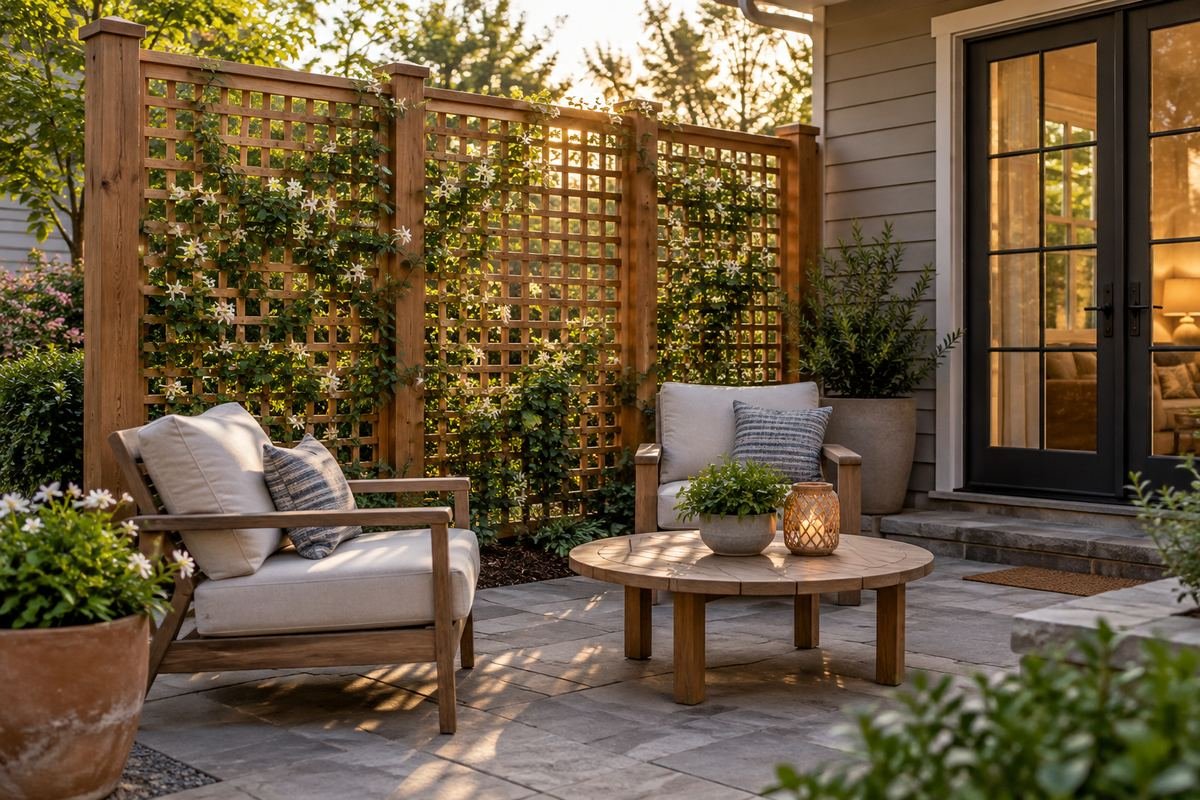
A trellis can connect a seating area with the garden through a modest amount of vertical planting. The structure and plant can remain visible as separate elements.
Select the plant for the real location and the support for its expected growth. Keep access to the screen and the route beside it manageable as the planting develops.
Practical tip: Plan maintenance at the mature size.
14. Explore woven-look patio privacy screen ideas

A woven appearance adds a softer texture beside plain paving. Repeating a related texture in one chair can connect the screen with the seating without filling the patio with wicker.
Confirm the actual panel’s outdoor suitability and supporting system. A natural-looking weave in an image does not establish weather resistance or a suitable fixing method.
Practical tip: Choose the complete outdoor product.
15. Consider an outdoor fabric screen in a suitable frame

A plain fabric panel can introduce a broad quiet field behind a patio seat. A muted color keeps it connected with cushions and surrounding walls.
Use a purpose-made system with instructions for the real exposure. Fabric, frame, fasteners and operating conditions belong together rather than being improvised from an indoor room divider.
Practical tip: Check how the actual system should be used and stored.
16. Use outdoor curtains within an appropriate covered structure
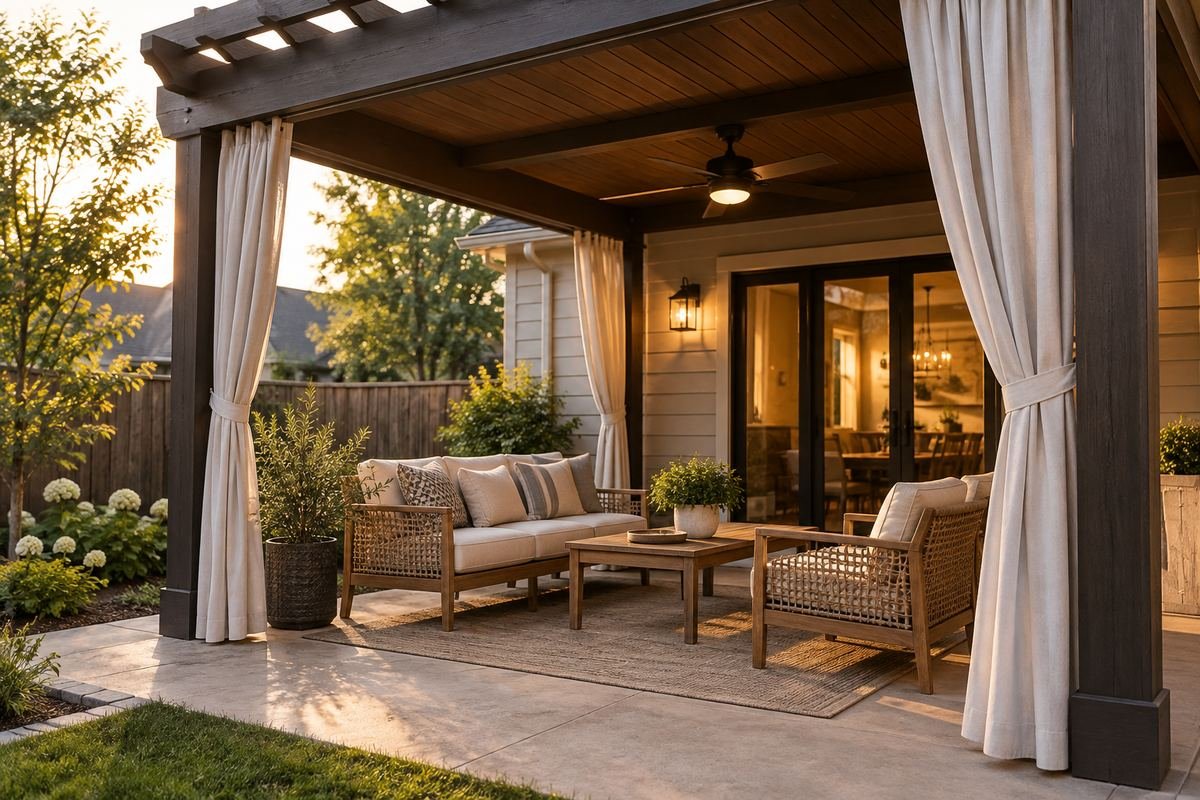
Curtains can soften one side of an existing covered patio when the structure and curtain system are suitable. The fabric introduces a different texture from a rigid panel.
Plan operation, storage and the clear route when the curtains are drawn or gathered. A curtain should not trail into movement or be treated as a permanent all-weather enclosure.
Practical tip: Test the layout in both open and closed positions.
17. Screen one seating corner instead of every edge

A single screened corner can give the main seat a more defined setting while leaving the rest of the patio open. The composition can remain connected to the larger garden.
Identify the specific view before choosing the screen position. An attractive corner arrangement may solve little if the exposed sightline comes from the opposite side.
Practical tip: Place the screen to address the actual view.
18. Create a quieter backdrop behind a dining table

A screen behind a dining group can connect the table with the patio boundary. Repeating a chair or table finish gives the arrangement a deliberate visual link.
Measure the occupied chairs and the route around them. The screen’s support footprint should not reduce the space needed to pull out a chair and pass behind it.
Practical tip: Test the dining layout with chairs in use.
19. Use planter-and-screen combinations as complete products
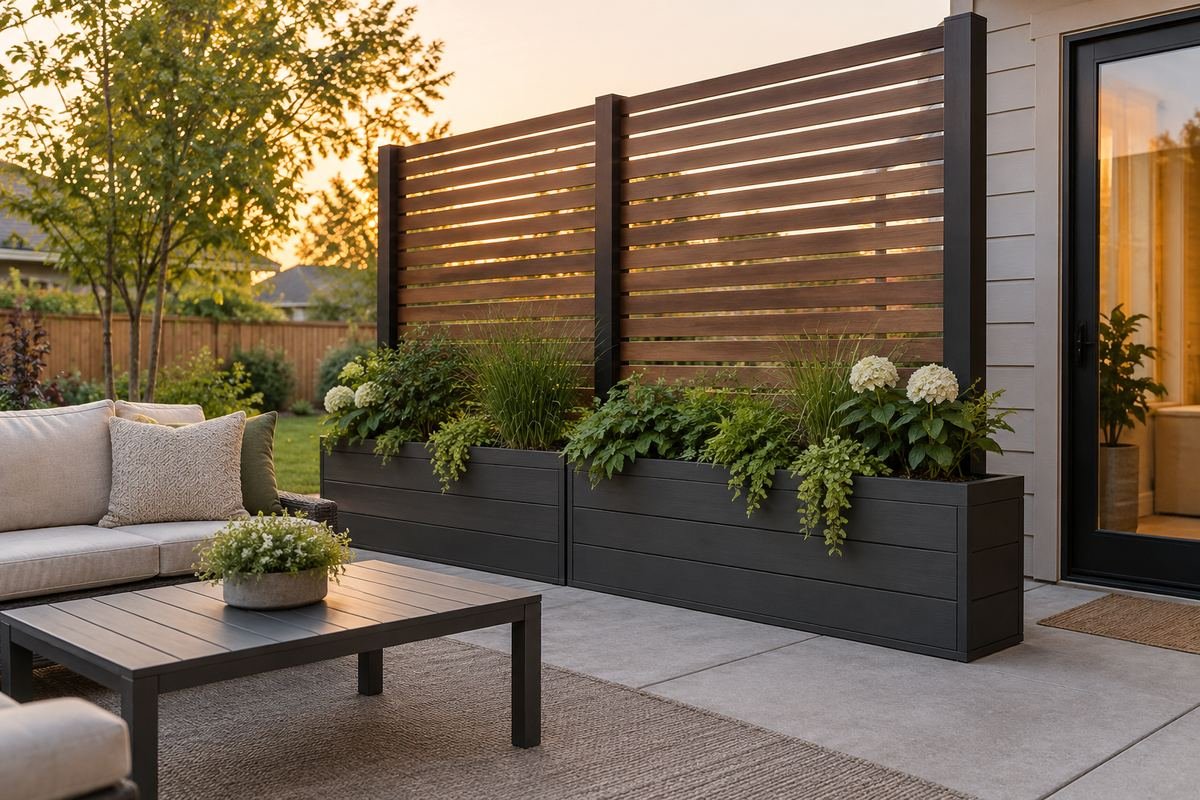
An integrated-looking planter and screen can organize greenery and visual separation into one feature. Repetition can connect it with other patio containers.
Confirm the actual product’s support, load, drainage and installation requirements. A planter-shaped base does not by itself prove that a tall screen is stable or appropriate for the location.
Practical tip: Verify the complete system rather than the silhouette.
20. Keep privacy screen ideas clear of the main door route
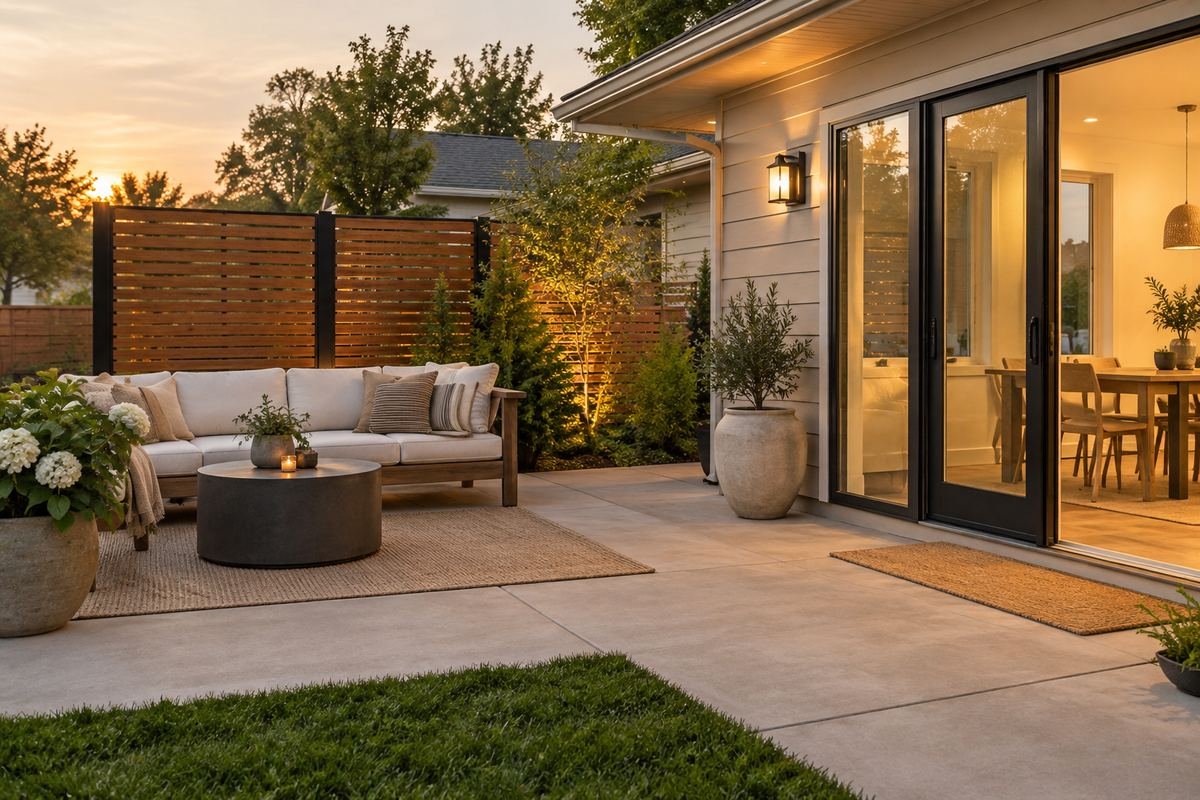
A screen beside the patio can provide visual separation while preserving a clear connection with the house. Its position should respond to the door and seating together.
Include feet, posts and any projecting base in the layout. The visible panel may be narrow while its complete support occupies part of the walking route.
Practical tip: Measure the entire installed footprint.
21. Use a short screen to define a reading chair
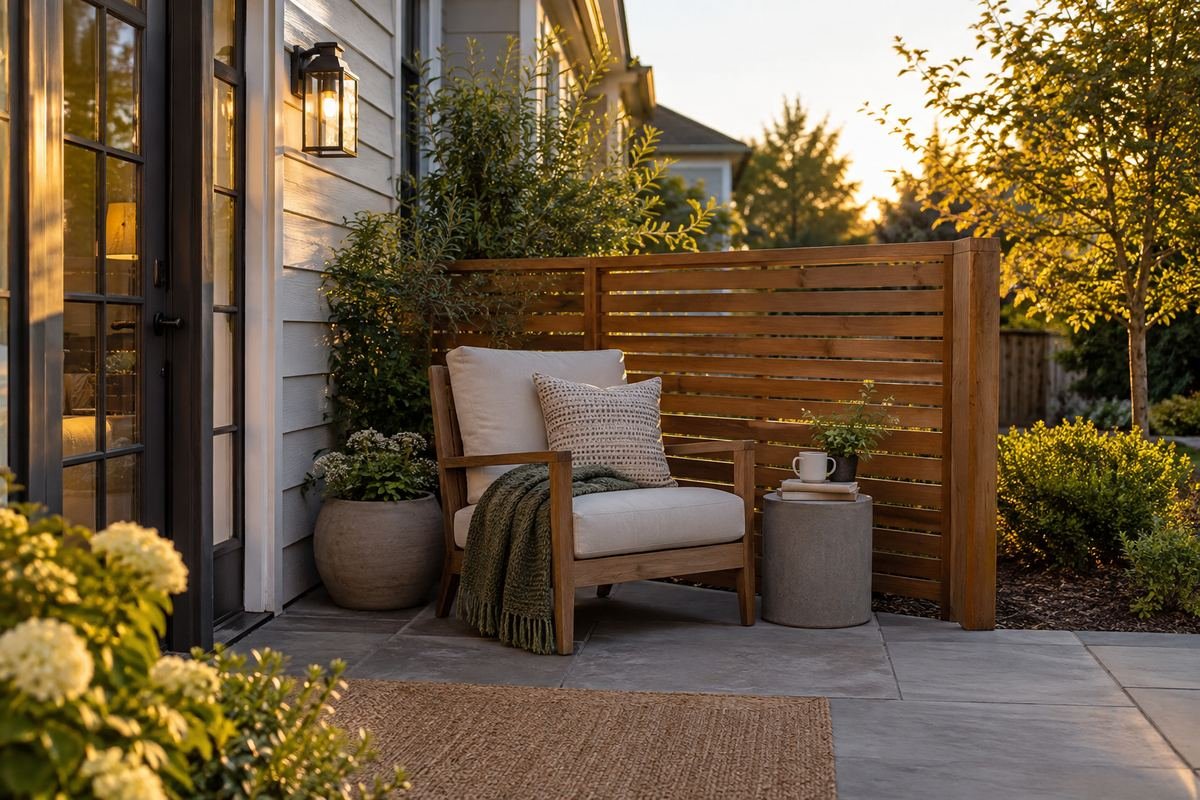
A short screen can give one reading seat a deliberate backdrop without dividing the whole patio. A simple pot or side table can complete the small arrangement.
Keep the screen scale tied to the actual seated view. The composition should remain useful when the chair is occupied and the person stands to leave.
Practical tip: Test both seated comfort and the exit route.
22. Coordinate the screen with evening patio lighting

A screen’s pattern may look different after dark when the patio and surrounding garden have different lighting. Review that view before making the final choice.
Choose suitable outdoor lighting and installation for the space. Avoid assuming that an opaque-looking daytime arrangement provides the same visual separation with bright lights behind it.
Practical tip: Compare the actual sightlines after dark.
23. Finish with a small number of well-placed panels

A few panels placed for a clear purpose can be enough to make the main seating area feel considered. Keep a connection with the garden where no screening is needed.
Review the real pattern, support, exposure and occupied layout together before ordering. Remove any panel that adds complexity without improving a relevant view or the way the patio is used.
Practical tip: Choose the smallest layout that solves the measured problem.
Frequently Asked Questions
How tall should a patio privacy screen be?
Start with the actual view from the seating and relevant surrounding positions, then check the complete product and applicable requirements. A photograph cannot provide a universal height for every patio.
Do slatted screens provide complete privacy?
Not necessarily. Gaps, viewing angle, distance and lighting affect what remains visible. Compare a real sample or mock-up from the viewpoints that matter to the patio.
Can a freestanding screen be left unsecured?
Follow the instructions for the exact screen and location. For example, Veradek recommends securing its freestanding sets against tipping in high winds. Do not transfer one product’s configuration or hardware to another system.
Can plants replace a patio screen immediately?
Plant growth, seasonal foliage and care affect the result. If immediate visual separation matters, evaluate the actual screen structure independently from the planting that may develop around it.
Can I use a decorative screen as a fence or railing?
Only use a product for purposes it is designed and approved to perform. Decorative screening is not evidence of a suitable boundary, guard or structural system. Resolve those functions separately.
Choose the Details That Work in Your Home
Choose the view you want to change, test a modest screen layout and confirm the complete product for the real site. A well-placed panel, restrained materials and a clear route can make the patio feel more comfortable without enclosing every edge.
For related ideas, explore backyard privacy ideas, backyard patio ideas, patio rug ideas.
Planning References
Veradek US: current privacy screen and Corten care FAQs; Common Ground Alliance: 811 before digging in the United States. Follow the instructions for the exact products you choose.
Optional digital guide for this topic
If you prefer a structured workbook, explore this related paid guide.