Wrapping supplies create clutter because they have very different shapes. A long roll does not use the same space as a flat sheet, a ribbon spool or a gift tag. Start by separating those groups and measuring the longest roll, then choose a storage arrangement that can be opened and returned easily.
This is a year-round gift-wrapping setup rather than a seasonal display. Keep everyday paper accessible and store occasional designs separately when useful. The concept photographs illustrate organization, not a claim that a particular decorative box protects valuable paper or has a tested capacity.
Contents
- 1. Use a purpose-designed upright roll container
- 2. Choose a flat box for rolls that fit it
- 3. Keep oversized rolls in a separate long position
- 4. Use a closet-side position only when access stays clear
- 5. Use an intended hanging organizer for a modest group
- 6. Check over-door storage with the door closed
- 7. Give flat sheets full supported storage
- 8. Use a flat portfolio for a selected sheet collection
- 9. Separate tissue paper from heavier wrapping sheets
- 10. Keep gift bags upright by their usable size
- 11. Give ribbon spools a separate shallow tray
- 12. Use a compatible spool holder when the center openings fit
- 13. Store bows where they are not compressed
- 14. Keep tags and cards in a small divided section
- 15. Give tape a defined return spot
- 16. Keep cutting tools stored appropriately between uses
- 17. Use one portable kit for a small working supply
- 18. Choose a wrapping surface that can be cleared
- 19. Use a craft-room cabinet for the complete collection
- 20. Keep everyday paper separate from occasional designs
- 21. Give useful offcuts a realistic size limit
- 22. Keep decorative paper out of damp storage conditions
- 23. Use transparent sections where quick identification helps
- 24. Keep a simple supply note
- 25. Check the holder with the longest new roll
- 26. Give the loaded container an accessible return position
- 27. Finish by restoring the working kit
Measure the roll and the usable opening
Compare actual roll length and diameter with the holder's stated compatible contents or internal dimensions. An IRIS USA 40-inch wrapping-paper container is one manufacturer example explicitly sized for that roll length; its product name should not become a rule for every container. Check the opening, lid movement and the space needed to remove a roll, along with the full stored footprint.
Compare the storage or placement options
- Ordinary rolls: A suitable upright or flat container with actual length and removal clearance.
- Flat sheets and tissue: Separate appropriately sized full support rather than forced folds in the roll box.
- Ribbons and bows: Visible spool storage and a roomy separate home for formed pieces.
- Small household supply: A portable working kit and a clear return place, without a permanent craft-room requirement.
1. Use a purpose-designed upright roll container
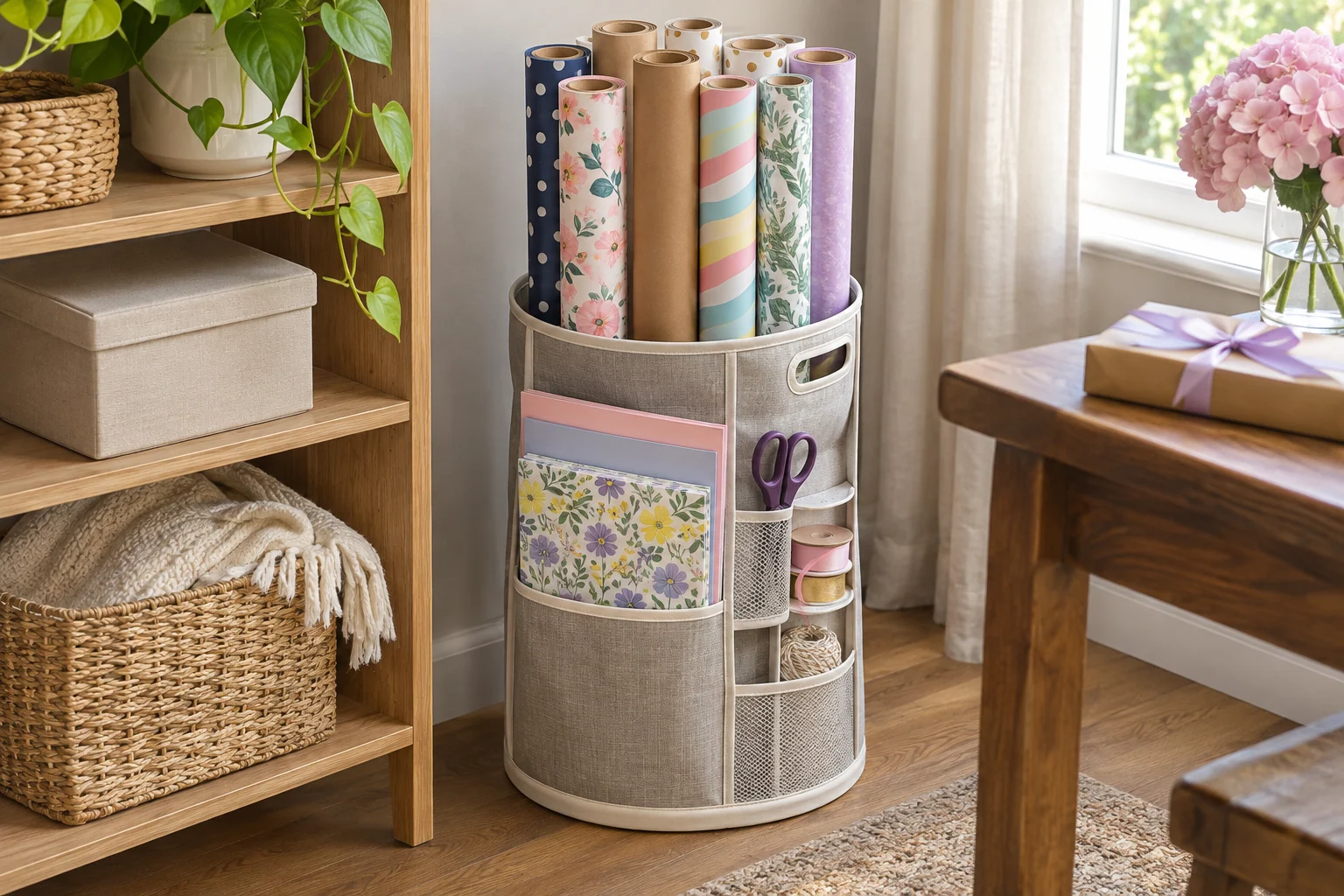
A tall container can keep suitable rolls together when it supports them appropriately and fits their actual length. Keep the stored group modest enough that one roll can be removed without pulling the others out. Check the complete height and lid movement in the proposed location. A narrow floor footprint is useful only when the container remains easy to open.
2. Choose a flat box for rolls that fit it
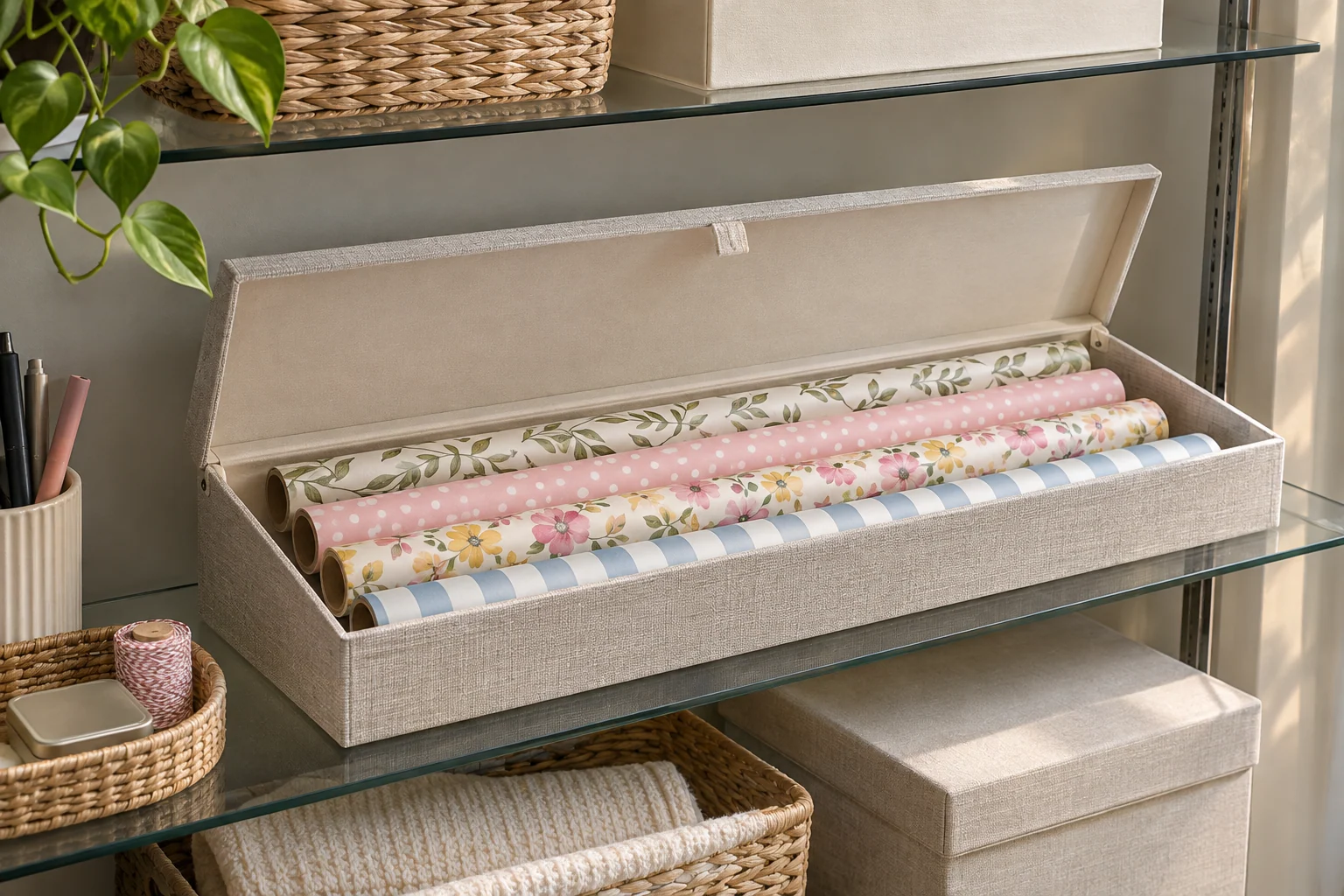
A long shallow box can suit a shelf or under-bed position when the rolls fit without bending. Compare the internal length with the actual longest roll and check how the lid opens. Keep the box fully supported in storage. A large outside measurement does not guarantee the useful space between thick walls or curved corners.
3. Keep oversized rolls in a separate long position
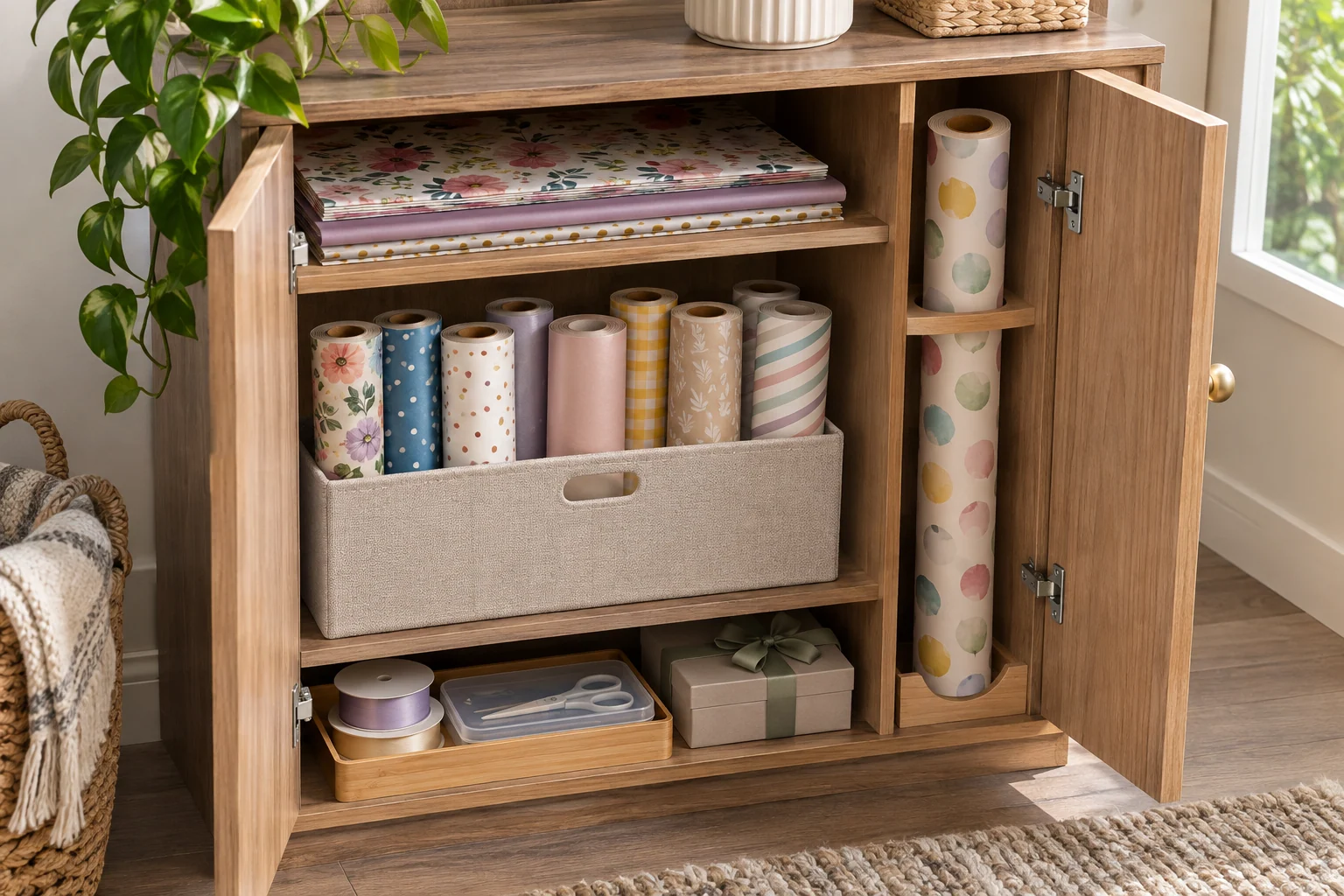
An unusually long roll can prevent an otherwise suitable organizer from closing. Give it an appropriate supported location instead of forcing the whole collection into a larger container. Keep it identifiable so it is not repeatedly tried in the shorter box. Measure new paper before buying another organizer around a length the household rarely uses.
4. Use a closet-side position only when access stays clear
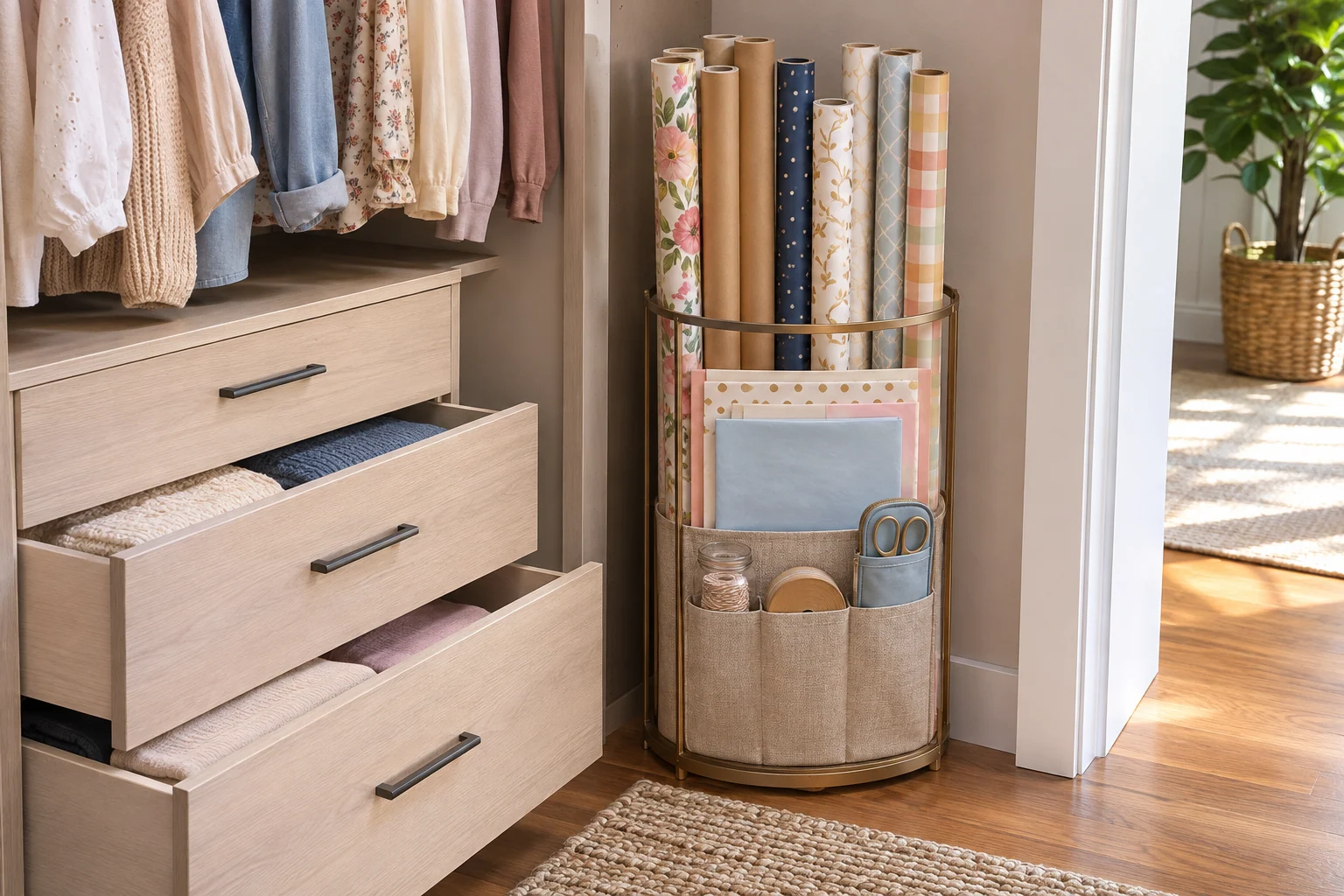
A tall roll holder can fit beside suitable closet storage if it does not block hanging clothes, doors or drawers. Check the full retrieval movement with the closet occupied. Keep the container stable as its instructions require. The available gap should serve the wrapping supplies without making the wardrobe harder to use every day.
5. Use an intended hanging organizer for a modest group
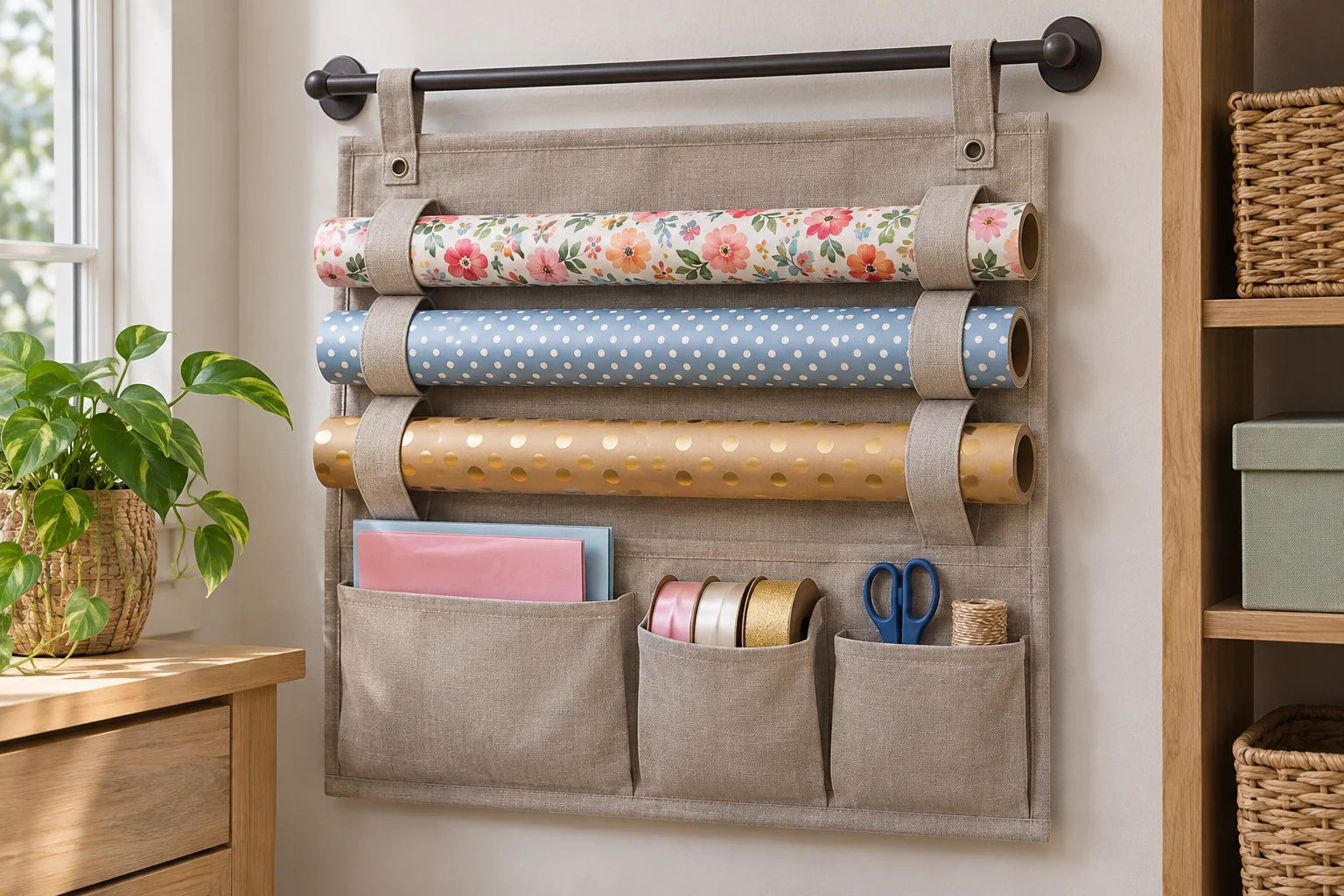
A purpose-designed hanging system can keep rolls and small supplies in one area when its support and loading guidance suit the location. Check the full projection with contents inside, not just the empty fabric. Keep pockets easy to reach. Do not hang a heavy unrelated container from a decorative hook to imitate the arrangement.
6. Check over-door storage with the door closed
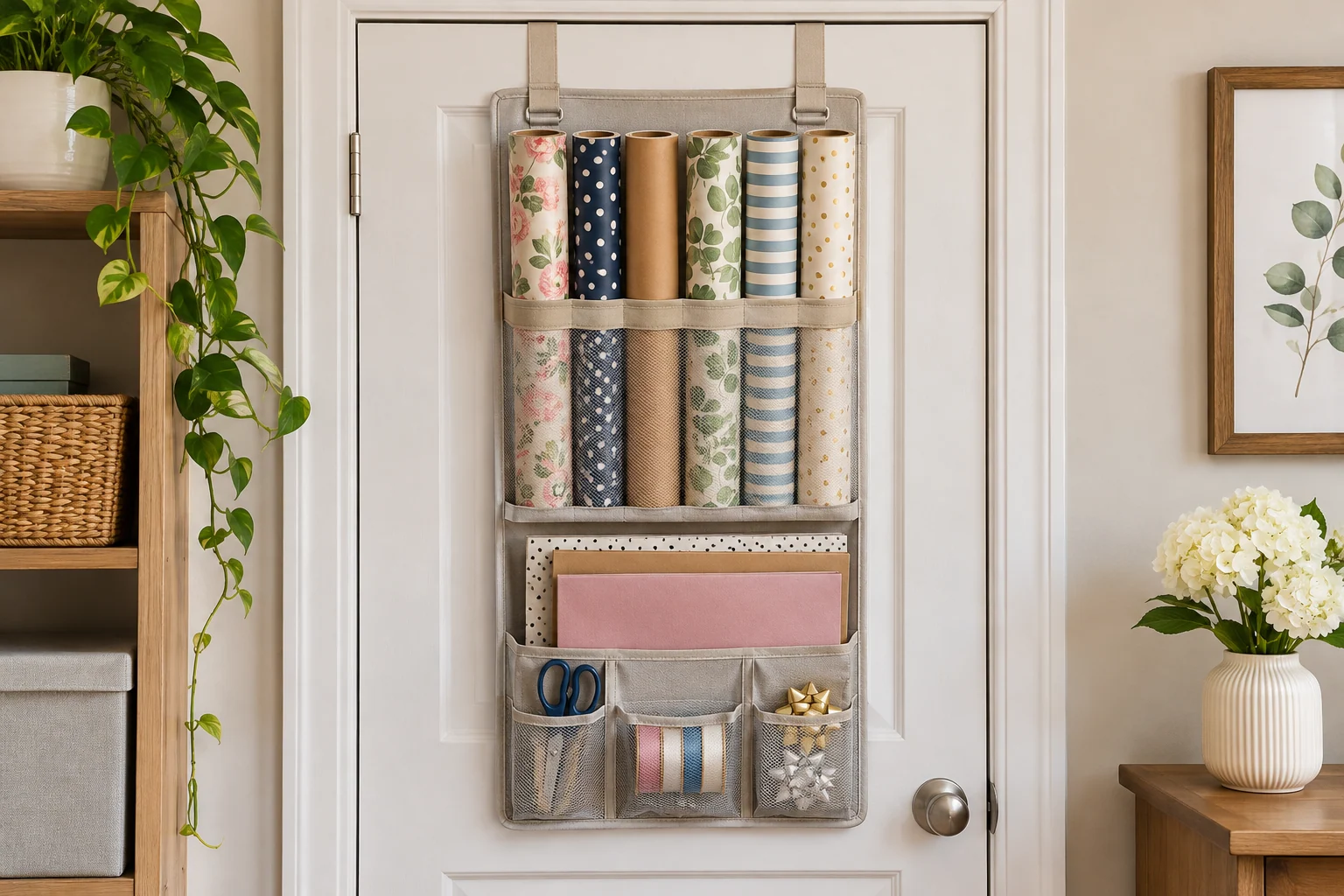
An over-door organizer needs to suit the actual door, frame and load. Test the normal opening and closing movement and the way rolls are removed. Keep loose ribbon or paper edges clear of hinges. Another storage position may be more useful if the organizer occupies the route behind the door or presses into nearby furniture.
7. Give flat sheets full supported storage
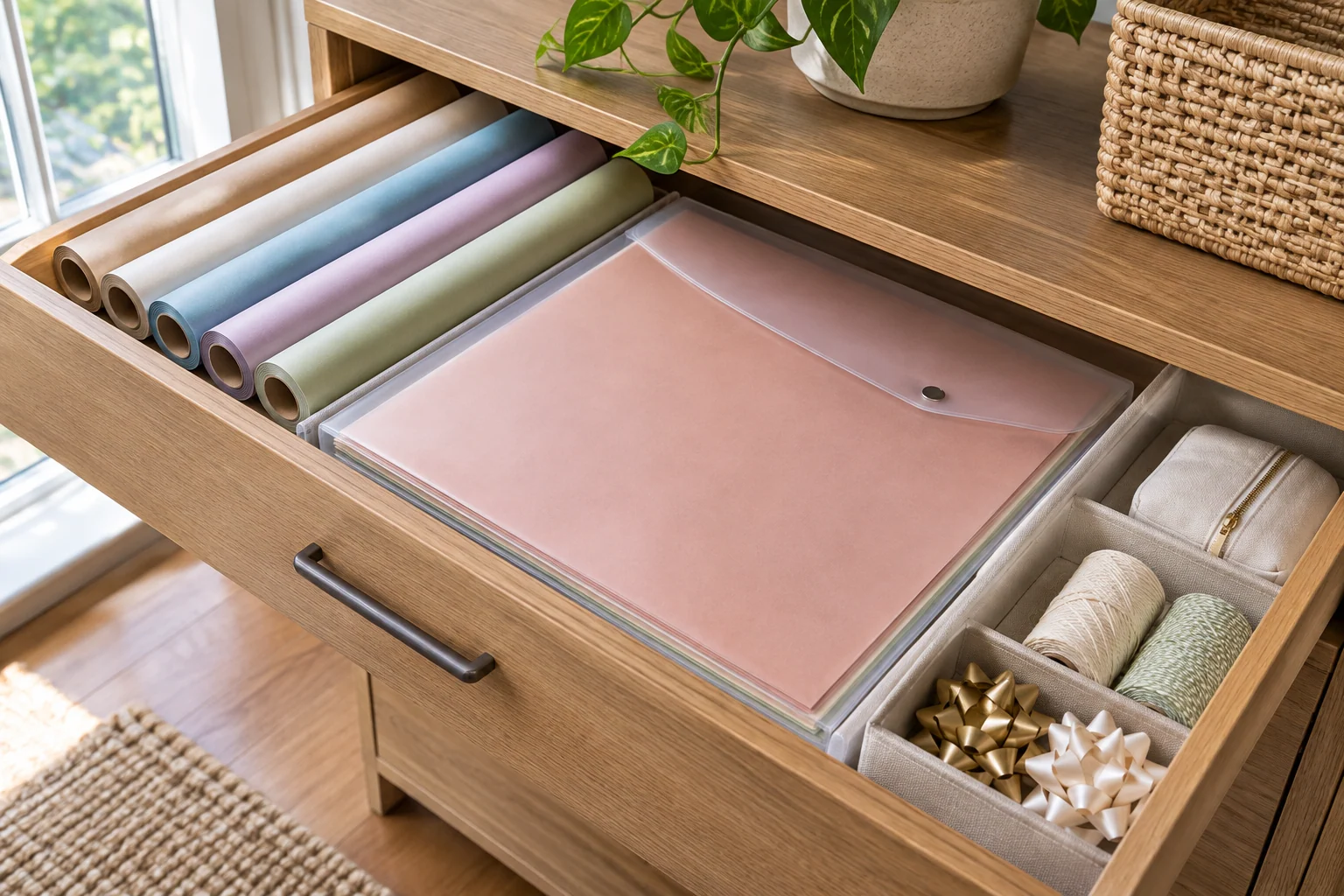
Sheets can remain easier to use when they have a flat suitable enclosure rather than being folded into the roll container. Compare the sheet's real dimensions with the opening. Keep the group modest and supported throughout, especially at the corners. Use appropriate paper-care guidance for material kept for special value rather than assuming an ordinary decorative folder is archival storage.
8. Use a flat portfolio for a selected sheet collection
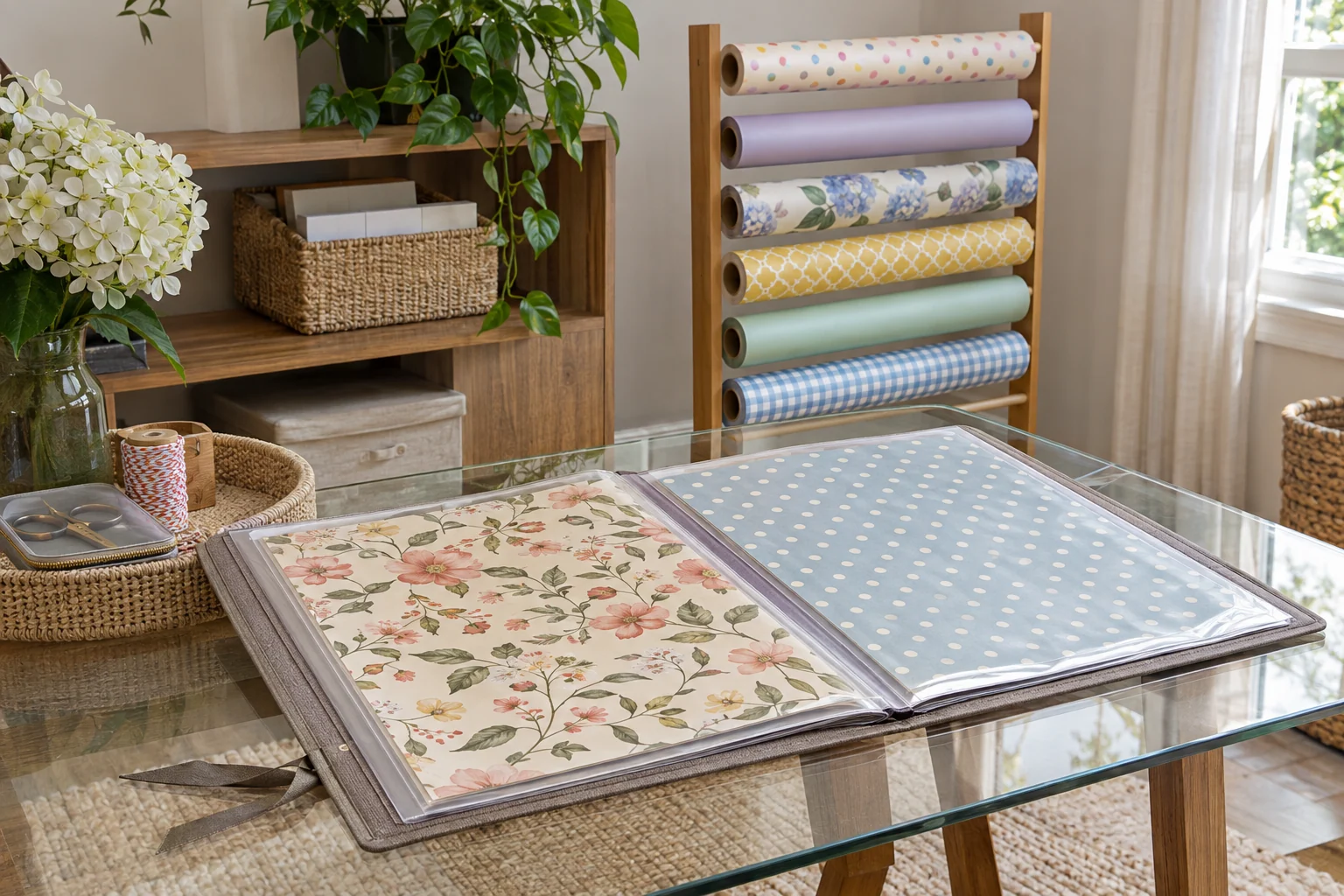
A purpose-sized portfolio can make a small sheet group portable when it provides the support needed. Check its closed dimensions and the way it is carried and stored. Keep rolls in another suitable home. The portfolio is most useful when it contains a deliberate selection, instead of every offcut compressed behind a stretched closure.
9. Separate tissue paper from heavier wrapping sheets
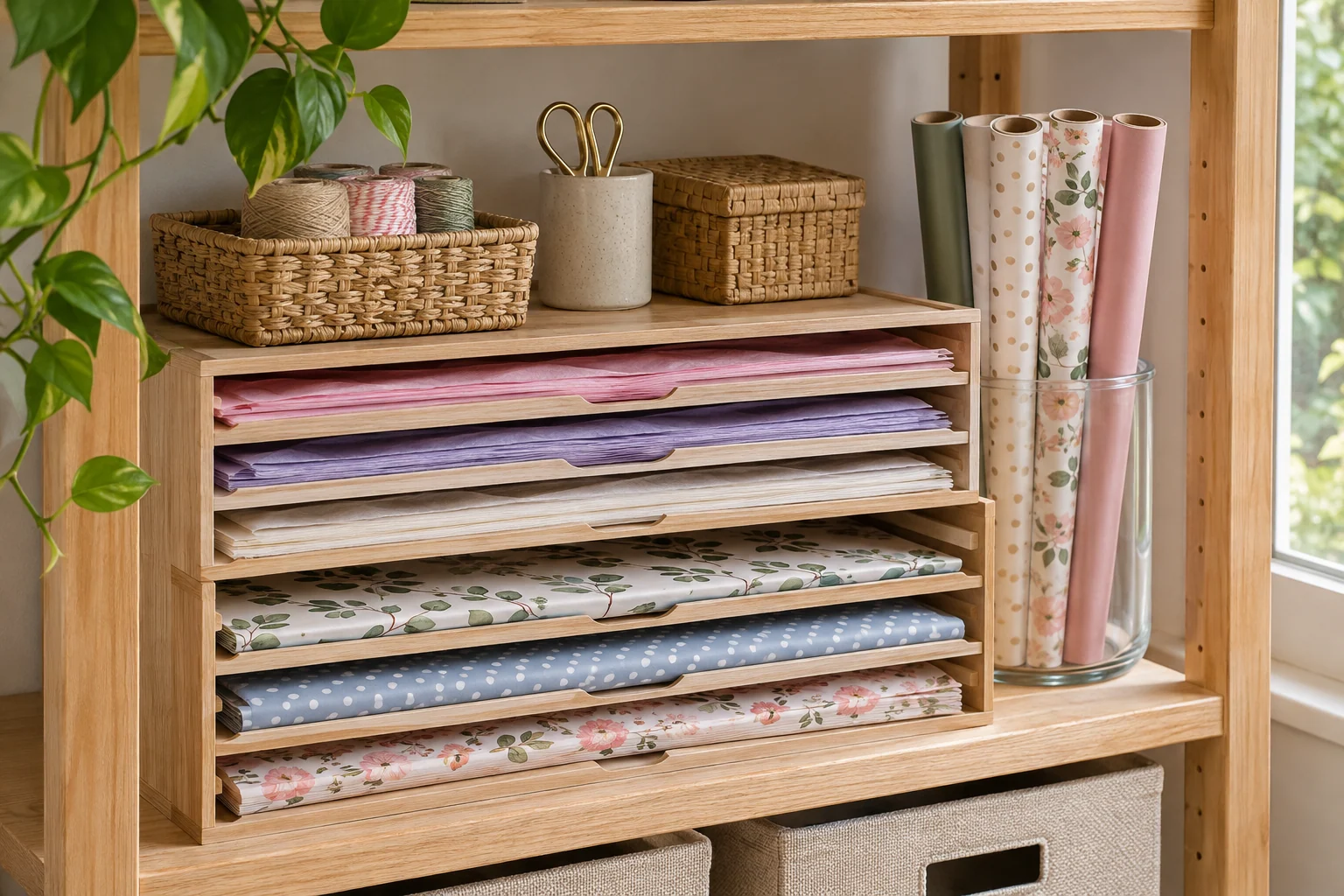
Thin tissue paper can become lost beneath heavier material in a mixed pile. Give it a suitable separate section or folder and keep it easy to lift without disturbing every sheet. Retain only usable pieces. A small clear category can make the existing supply easier to use without requiring another large storage unit.
10. Keep gift bags upright by their usable size
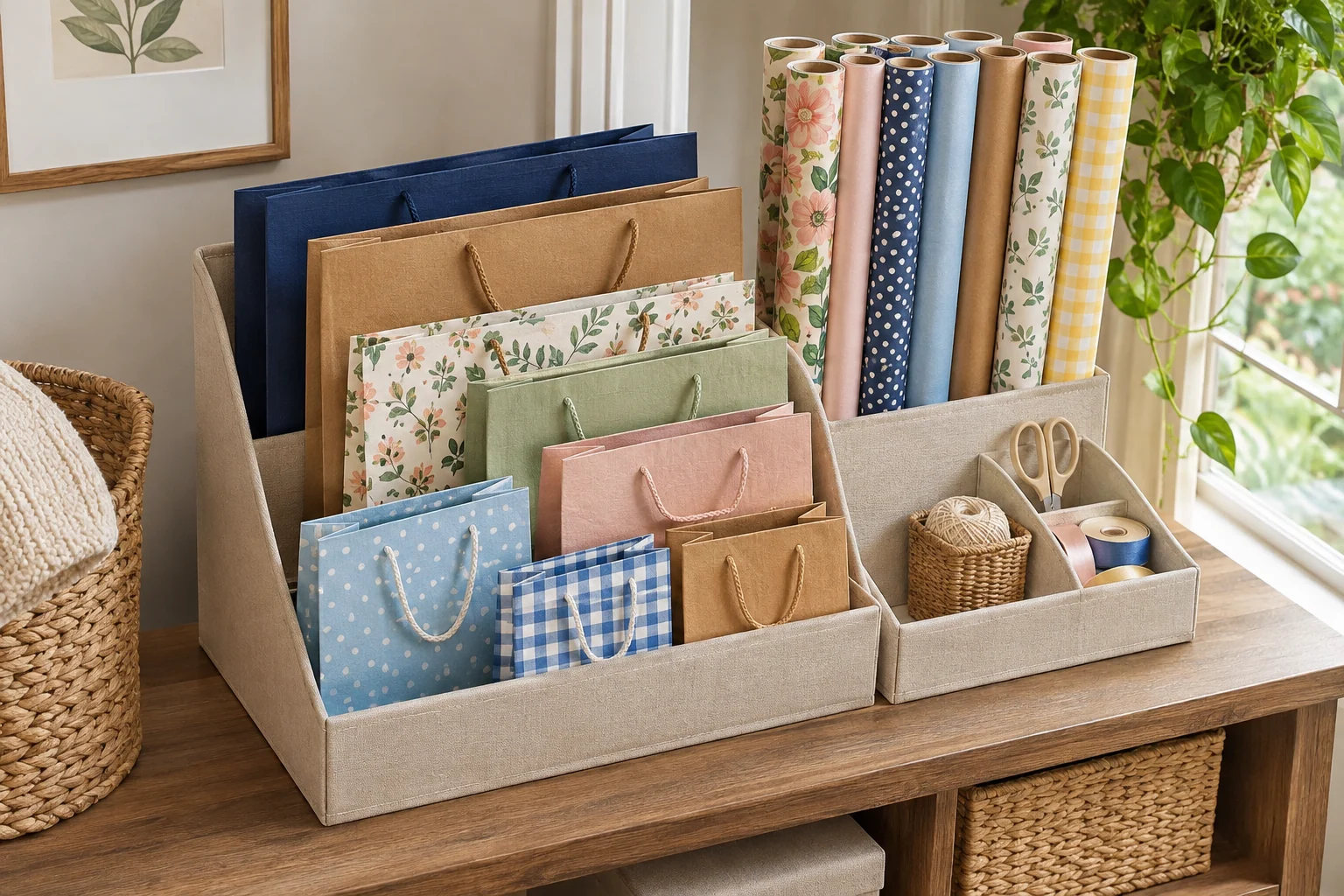
A few broad size groups can make gift bags easier to choose than one tightly mixed stack. Contain handles so they do not tangle across neighboring sections. Keep the bottom folds as the bags are designed to store. A large bag needs a suitable opening of its own rather than being bent around a smaller file box.
11. Give ribbon spools a separate shallow tray
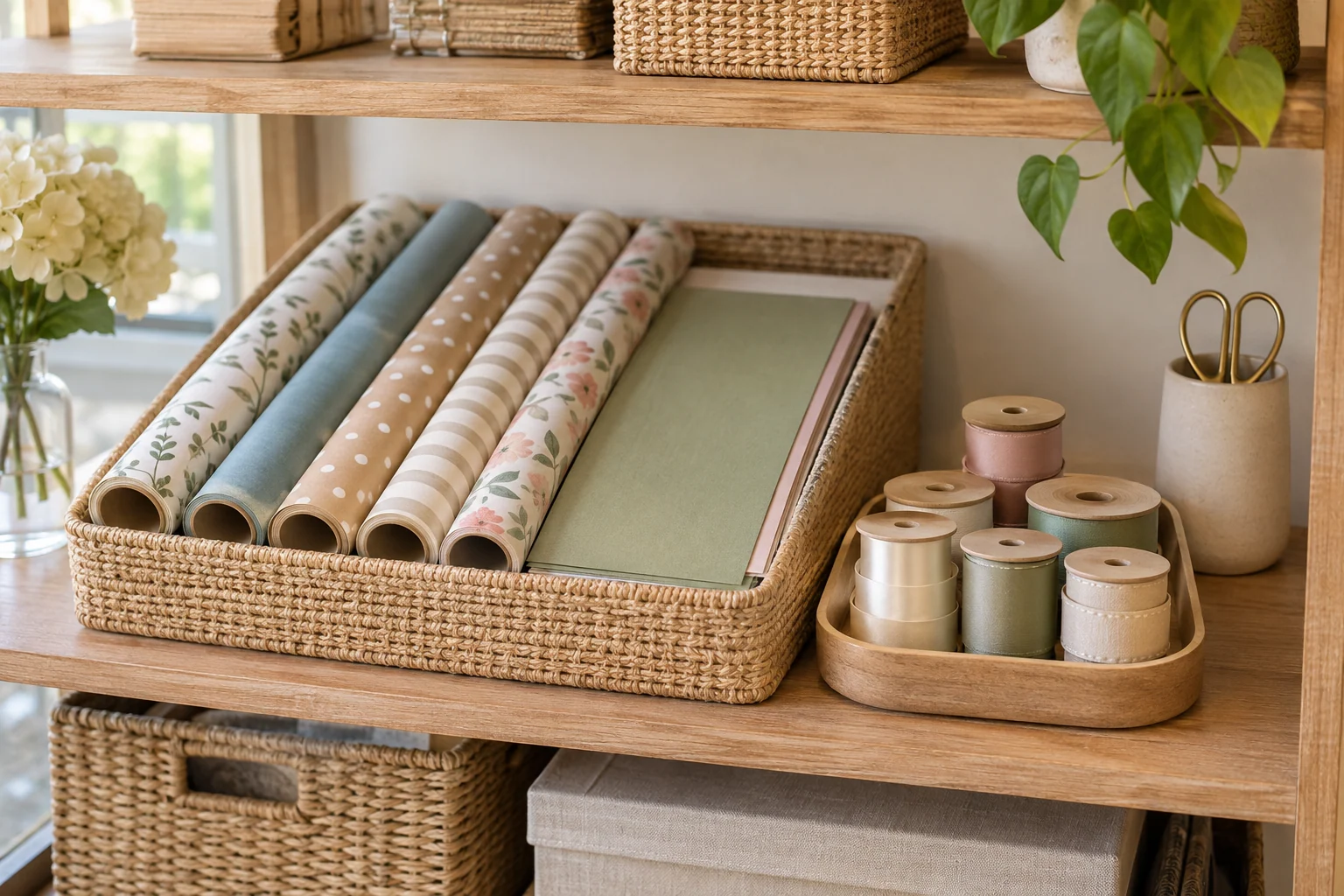
A tray can show the available spools at a glance when they fit without piling into several hidden layers. Keep loose ends contained in a way suitable for the ribbon. Choose the tray around the actual spool diameter and height. A modest visible selection can prevent buying duplicates that were simply buried beneath other wrapping supplies.
12. Use a compatible spool holder when the center openings fit
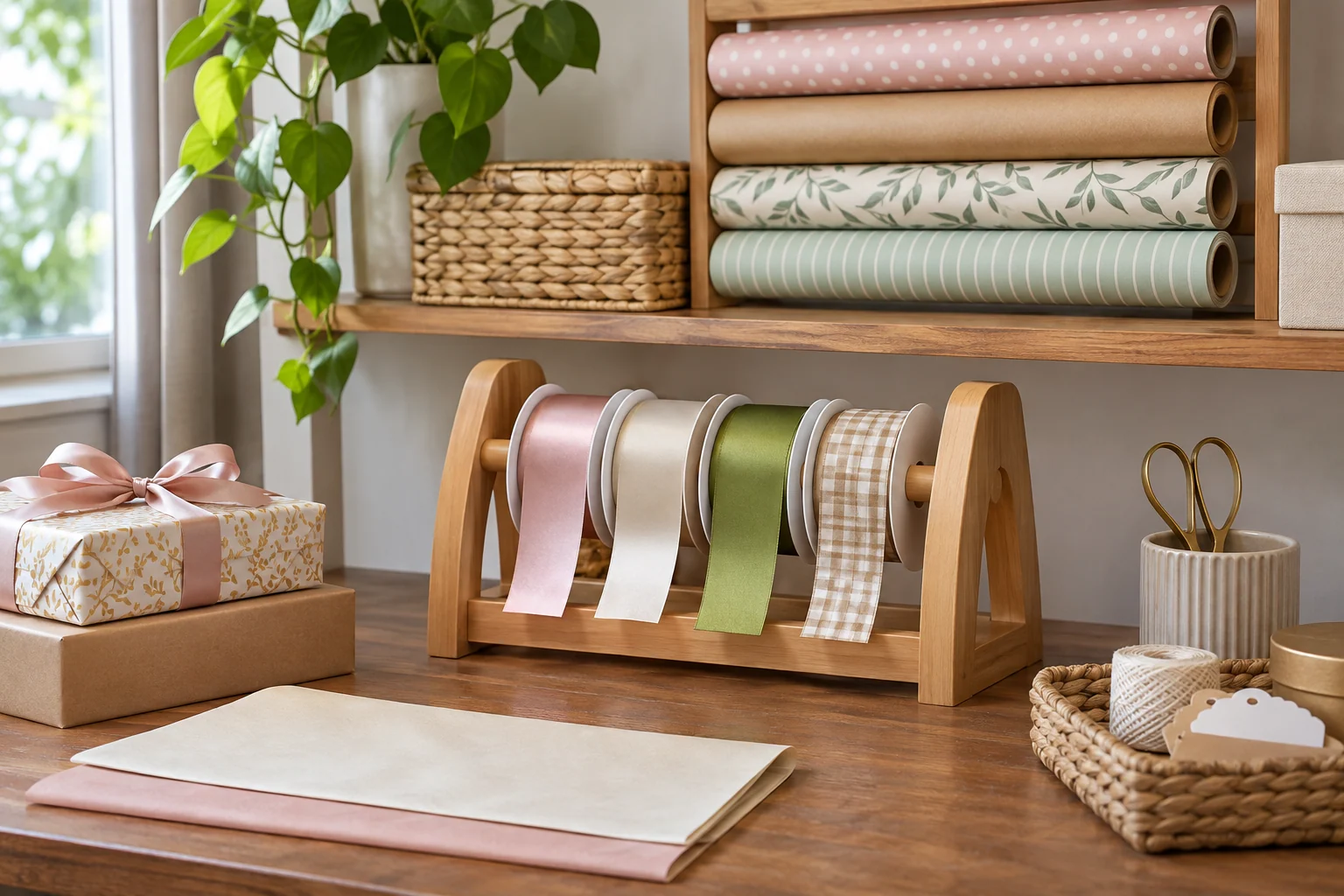
A purpose-designed holder can keep suitable spools together while leaving them easy to use. Compare the actual center openings and width with the system. Follow its support and loading instructions. Avoid assuming that a decorative rod or improvised peg is interchangeable with a holder intended to carry and dispense several spools.
13. Store bows where they are not compressed
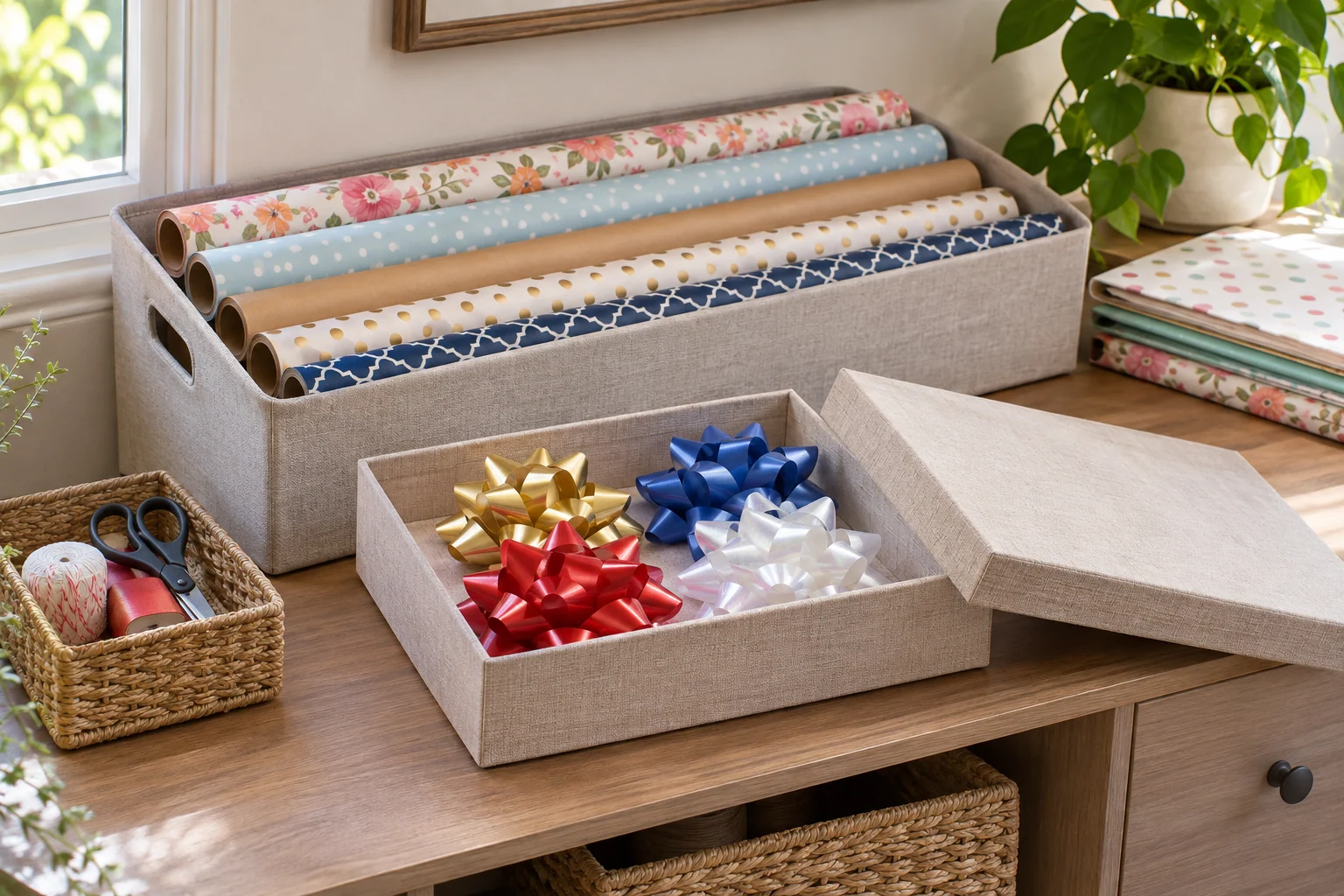
A delicate formed bow needs a different space from a flat sheet or tightly wound spool. Give usable bows a roomy suitable box and keep heavier supplies out of it. Check the lid height before putting the box away. The goal is an accessible supply in its intended shape, not the greatest quantity squeezed into an attractive small container.
14. Keep tags and cards in a small divided section
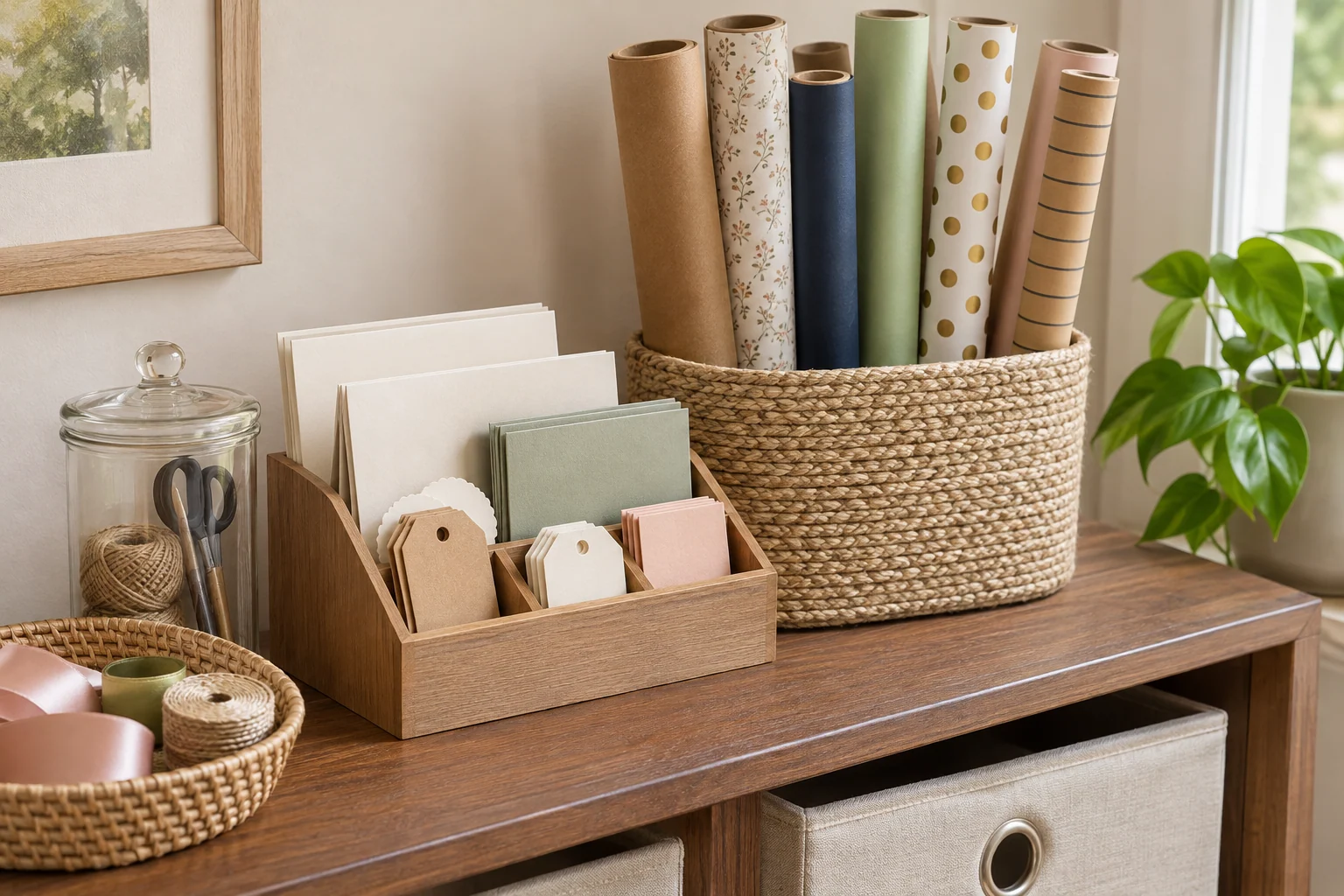
A modest divider can make ordinary tags and cards easier to find without scattering them across the worktable. Group them around the occasions actually used. Keep suitable plain pieces together and avoid creating many categories with only one item. The small organizer should fit within the main storage plan rather than become another independent box to misplace.
15. Give tape a defined return spot

A small ordinary tool group can stay together when each item has a clear home. Keep the tape dispenser accessible without placing it on top of loose paper. Choose the container around the actual items rather than the number of compartments. A simple return position prevents the same tool being borrowed from several rooms whenever a gift needs wrapping.
16. Keep cutting tools stored appropriately between uses
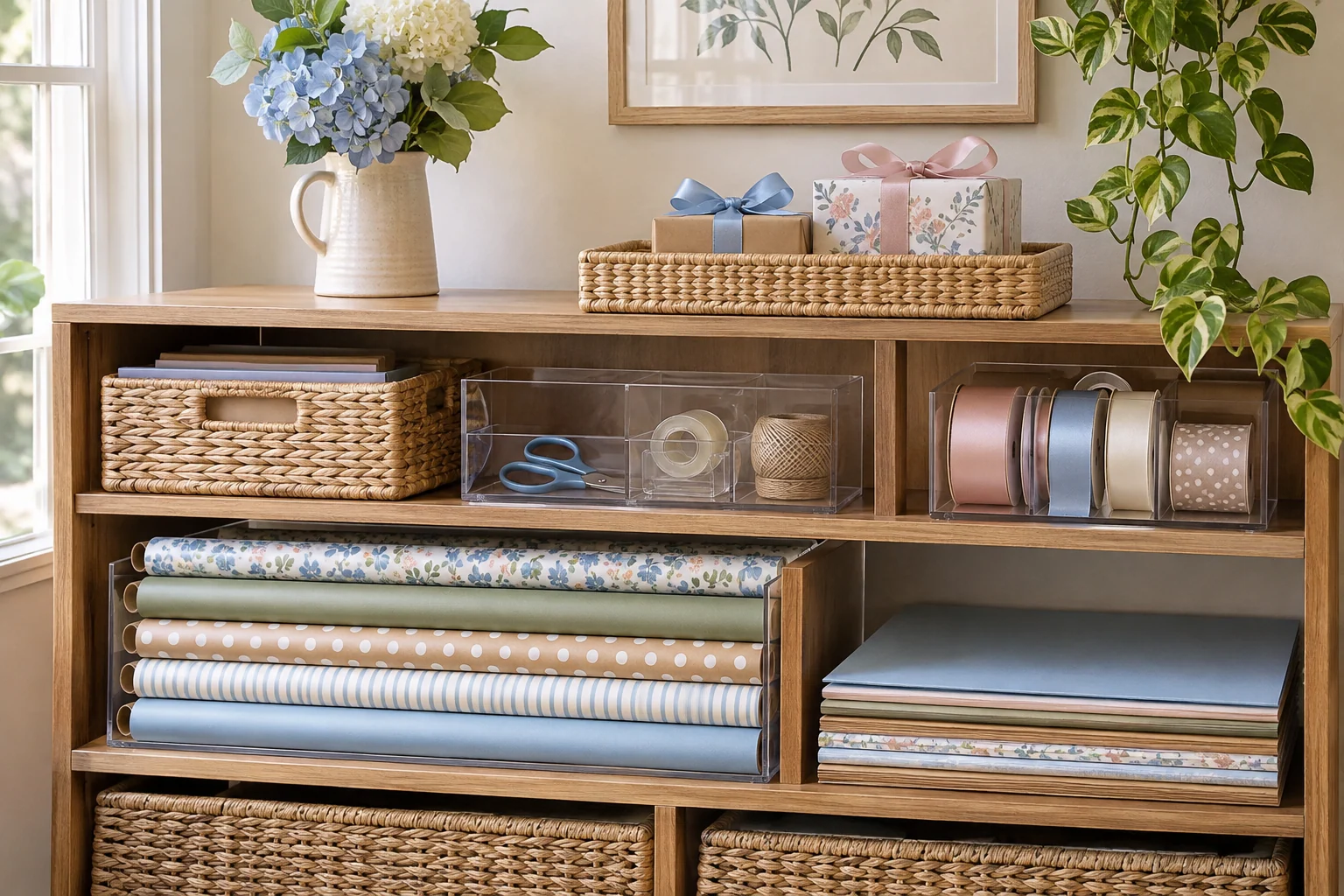
Choose a suitable contained position for the actual tools and household, following their instructions. Keep them separate from soft paper that could catch on a projecting edge. The organizer should make the tools identifiable without leaving them loose among ribbon loops. Use the wrapping surface only when it is properly prepared for the task.
17. Use one portable kit for a small working supply
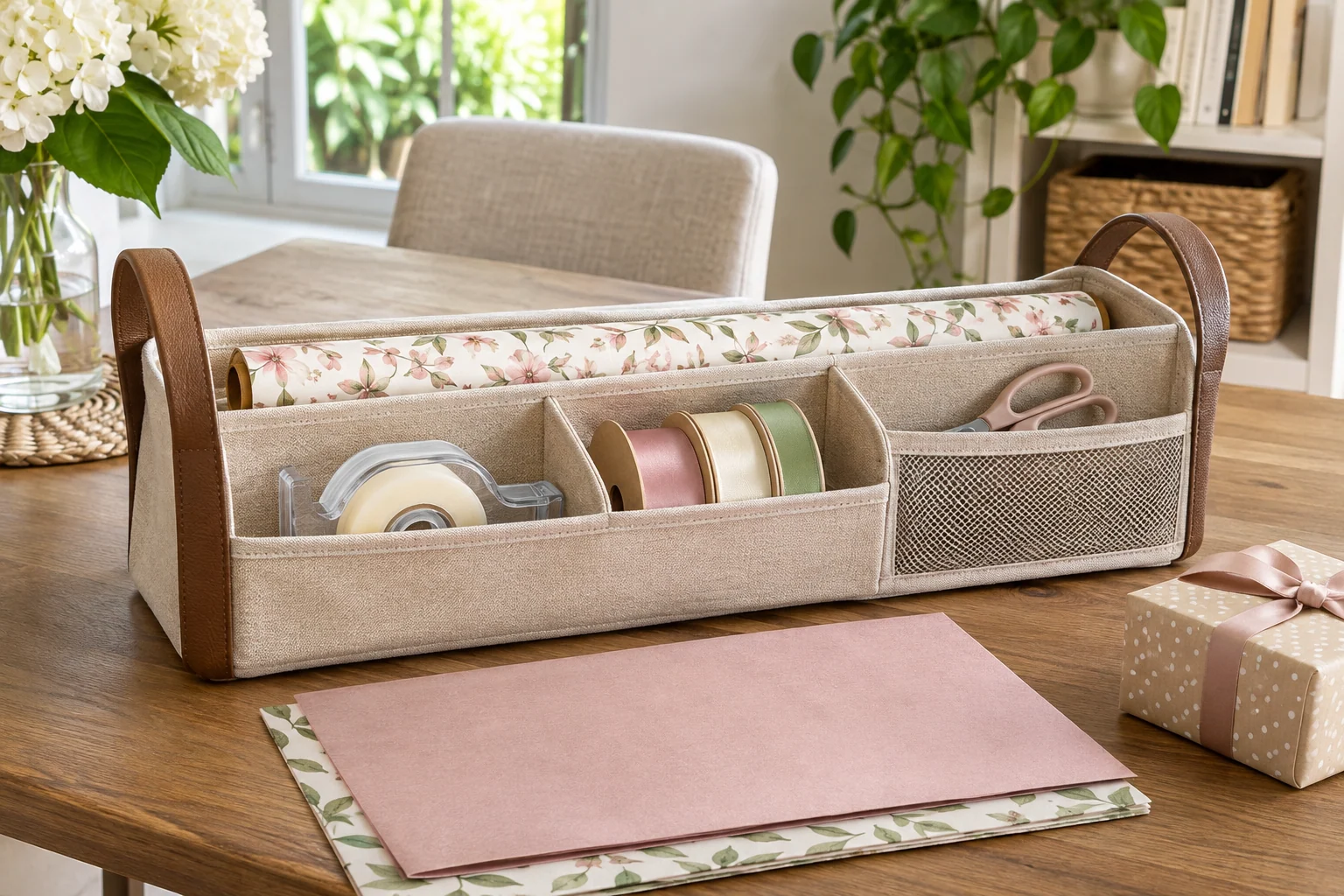
A manageable kit can bring the current roll, tape and selected ribbon to a suitable table. Keep the rest of the collection in its normal storage. Compare the complete carrying size and weight with the actual container guidance. A portable kit becomes less useful when it must carry every occasion's supplies simply because they once fit inside.
18. Choose a wrapping surface that can be cleared
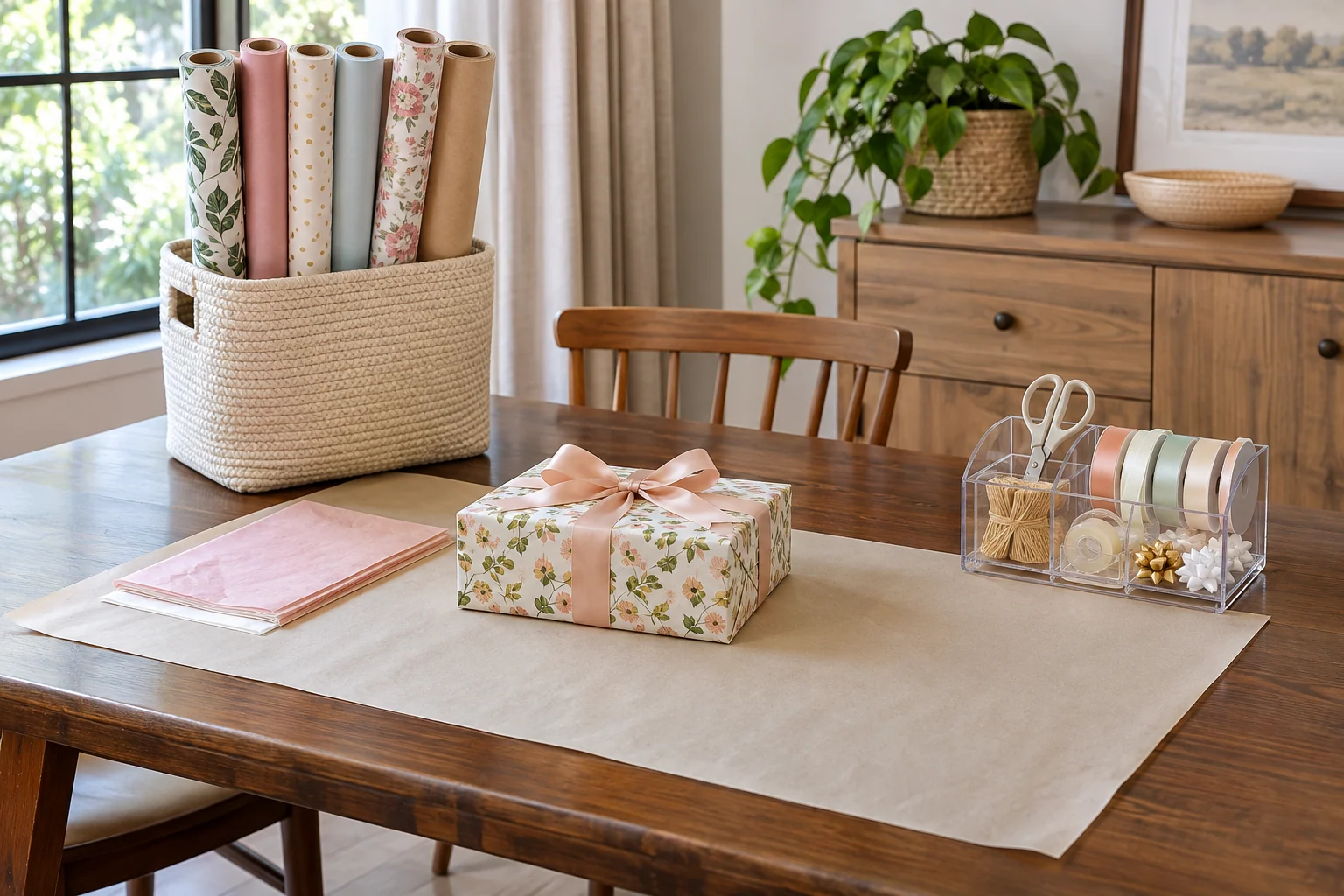
A dining or worktable can serve a temporary wrapping task when its surface is appropriate and protected as needed. Bring out the working kit, then return it afterward. Keep the room's regular use in mind before building a permanent supply display. A well-organized collection can work without a dedicated craft room.
19. Use a craft-room cabinet for the complete collection
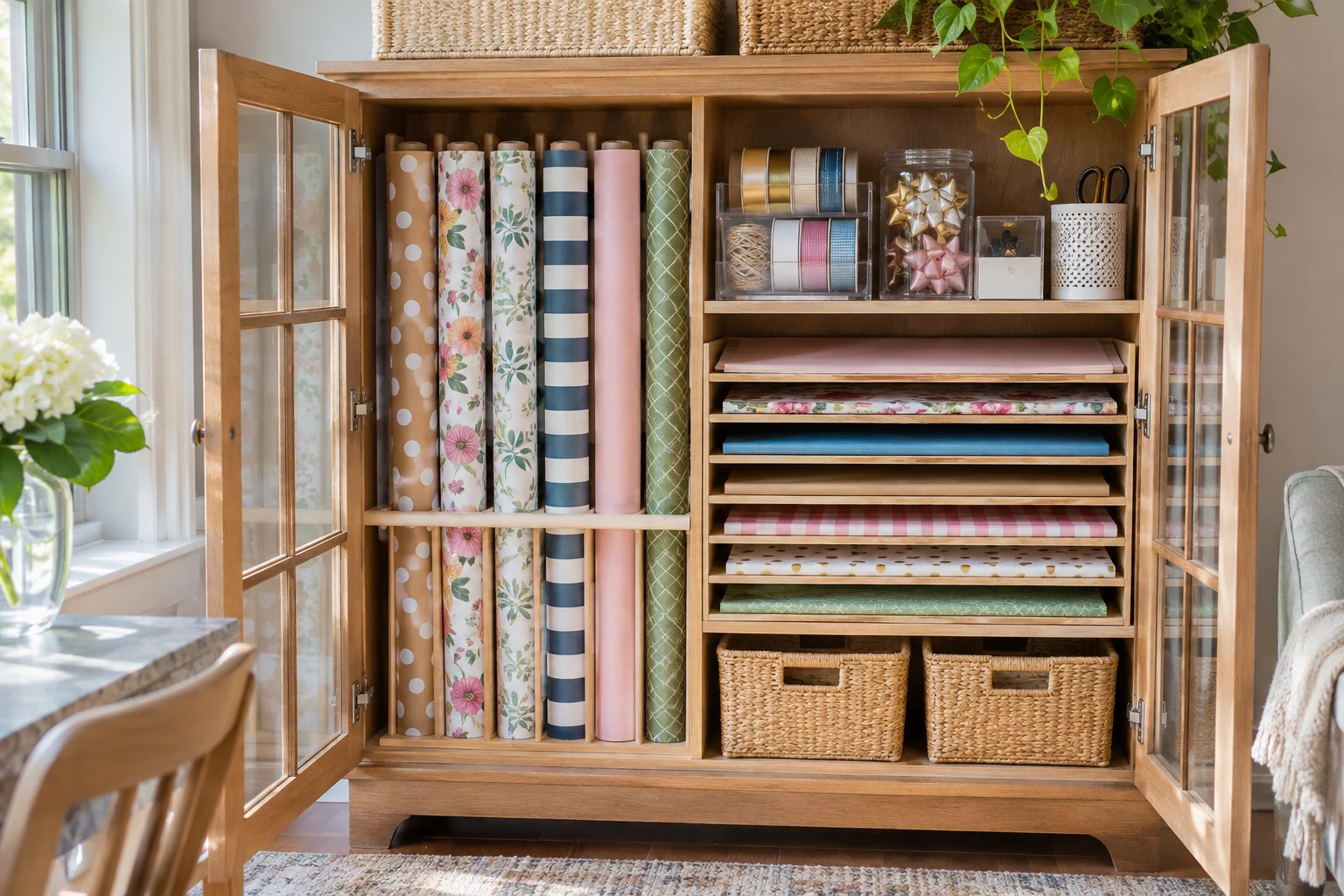
A dedicated cabinet can keep rolls, sheets and small supplies in distinct supported sections. Assign the shapes before choosing baskets or dividers. Check the complete opening and retrieval movement. The most useful interior follows how supplies are selected and returned, rather than making every shelf look identical from the doorway.
20. Keep everyday paper separate from occasional designs
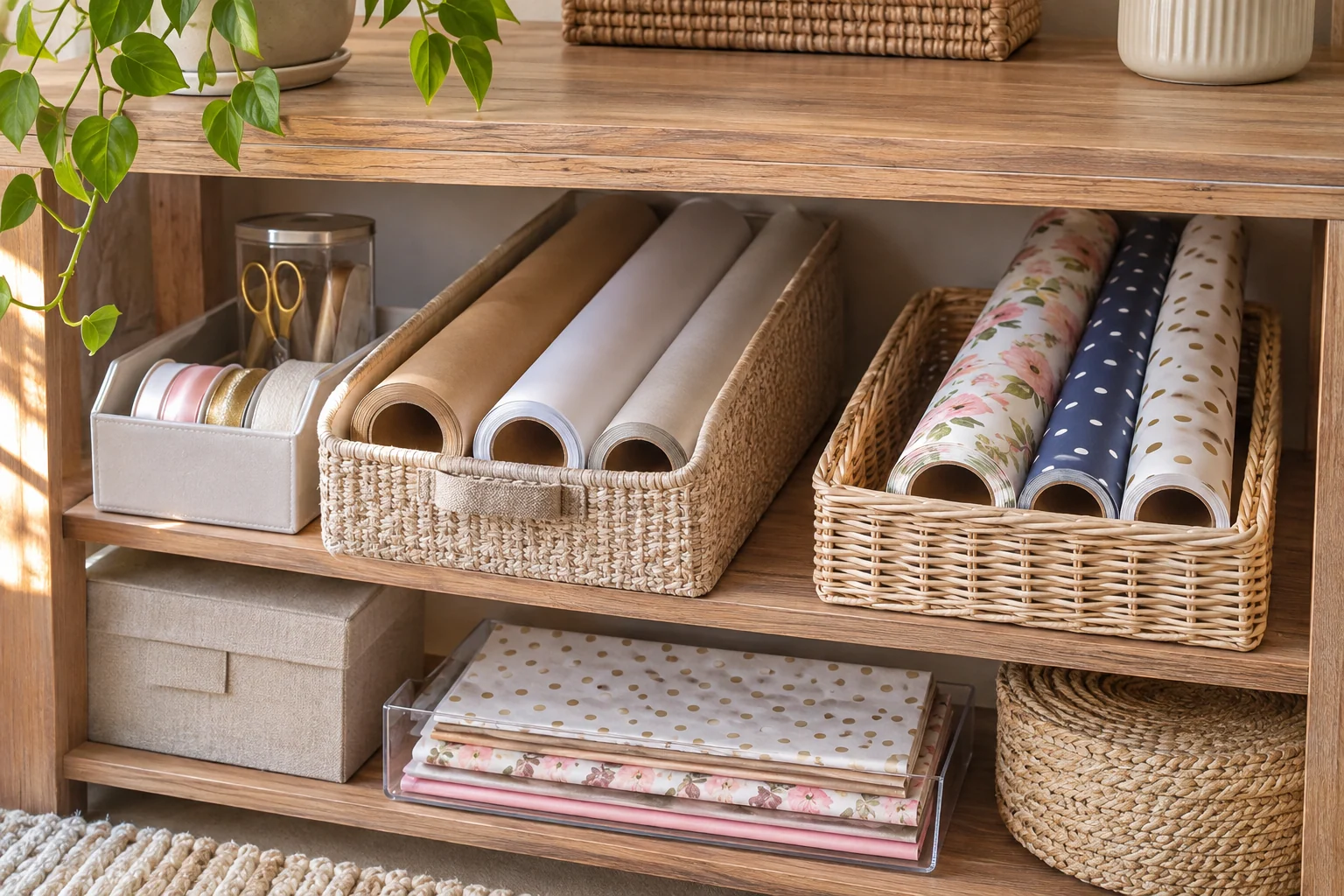
A working group of flexible designs can stay in the easiest position while occasional paper has another defined home. Choose the groups around real use rather than a complicated calendar. Keep the occasional collection identifiable so it is not bought again unnecessarily. A smaller working set can make quick wrapping simpler without discarding useful supplies.
21. Give useful offcuts a realistic size limit
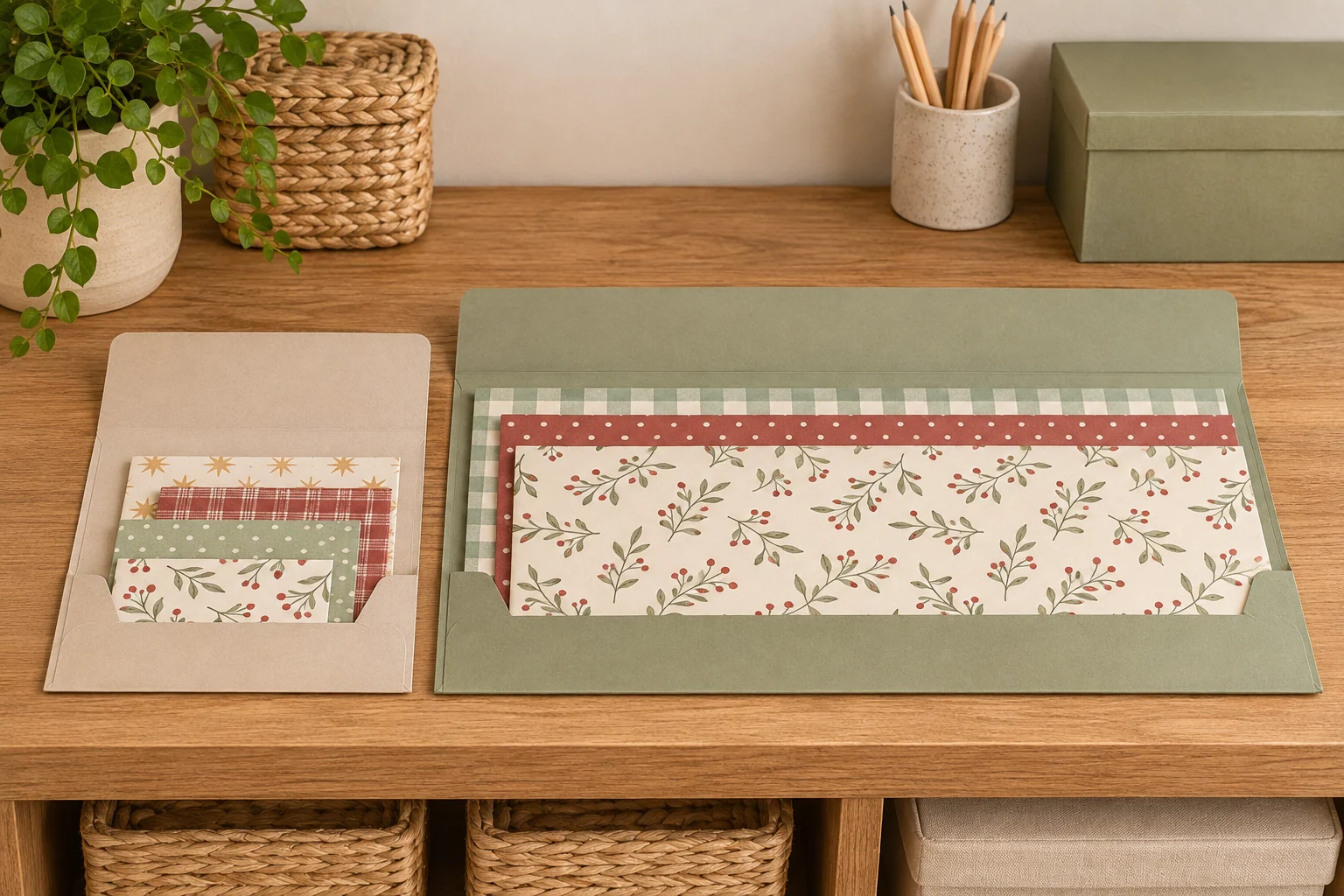
A small flat folder can hold offcuts that genuinely suit future gifts. Keep them supported and choose a sensible boundary for the collection. Review pieces that are too small, damaged or awkward for the actual routine. Saving every scrap can make usable paper harder to find and consume the same space needed for the working supply.
22. Keep decorative paper out of damp storage conditions
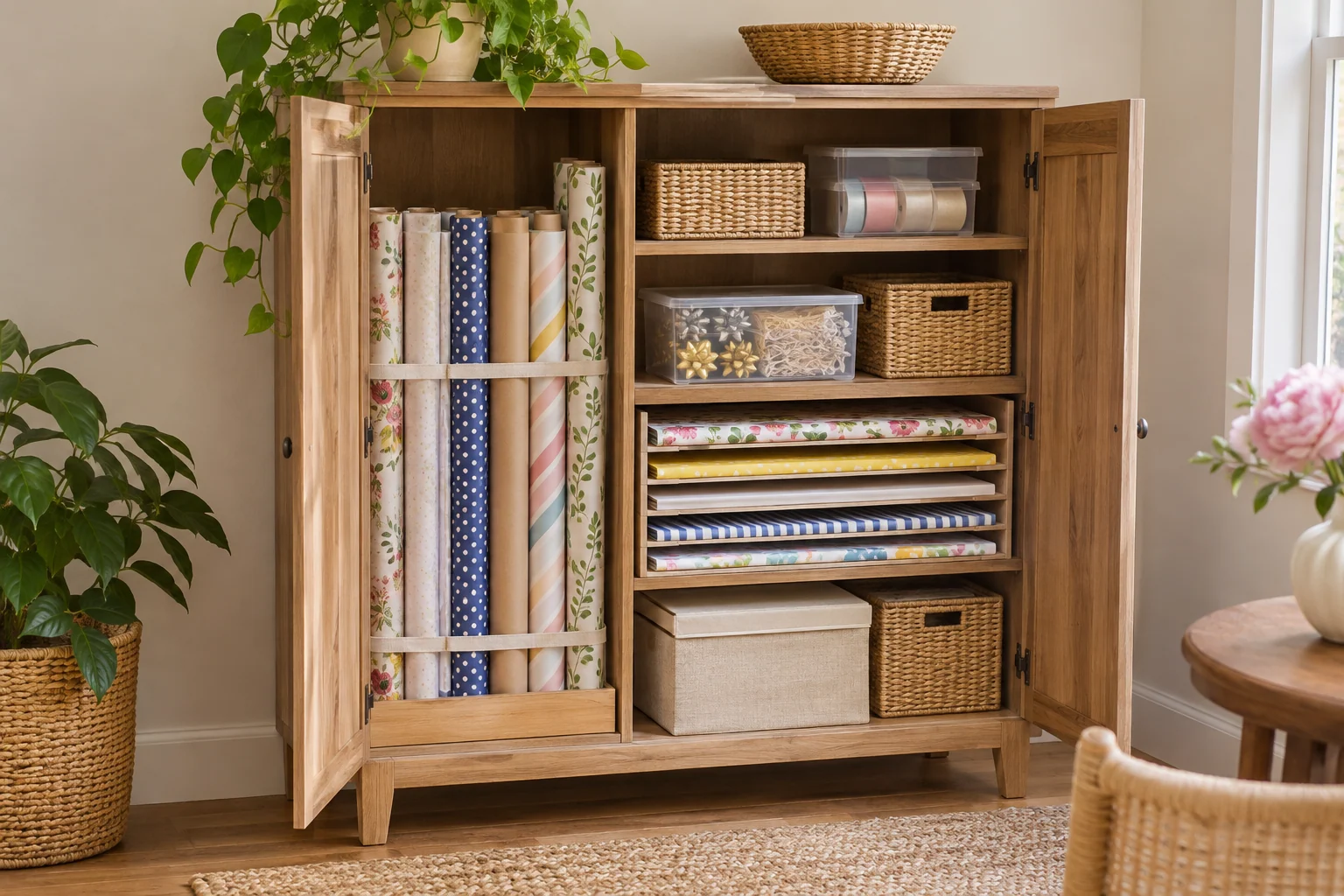
Choose a suitable dry interior position and follow appropriate care for any valued material. A container's decorative exterior is not proof that it manages moisture. Keep supplies separate from areas with known leaks or unsuitable conditions. Storing the paper where it remains accessible can also make its ordinary condition easier to notice.
23. Use transparent sections where quick identification helps
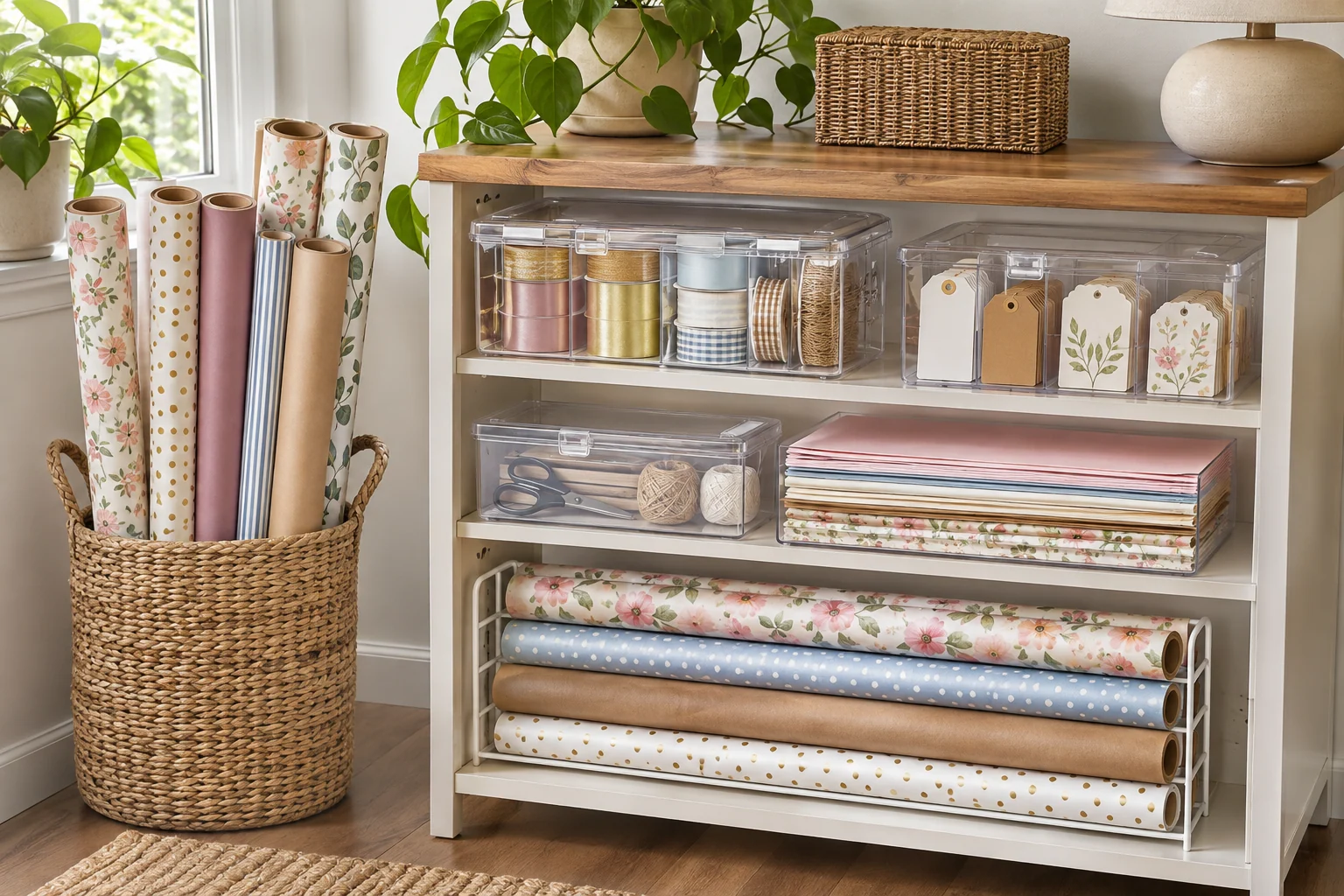
A clear compartment can make a small supply group easy to identify without opening several boxes. Compare its opening and construction with the actual contents. Visibility should support retrieval, not invite overfilling to the point that objects press against the lid. Keep the arrangement modest and appropriate for the paper's intended storage.
24. Keep a simple supply note
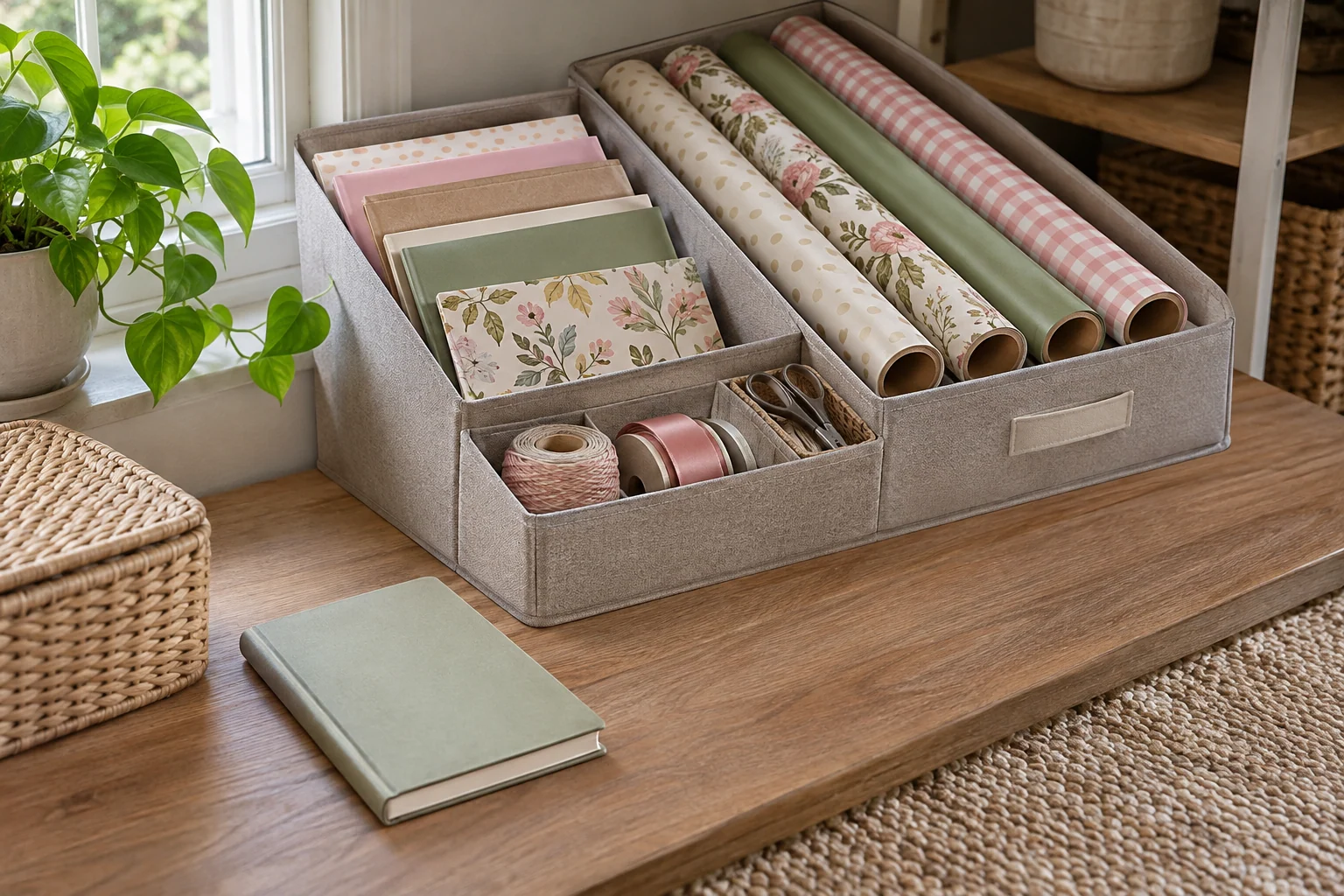
A short list of the useful roll lengths and common supplies can help prevent duplicate purchases. Record what is actually kept and where it belongs. Avoid an elaborate inventory for a small basket that is easy to inspect. The note is most useful for occasional supplies stored out of the everyday working position.
25. Check the holder with the longest new roll
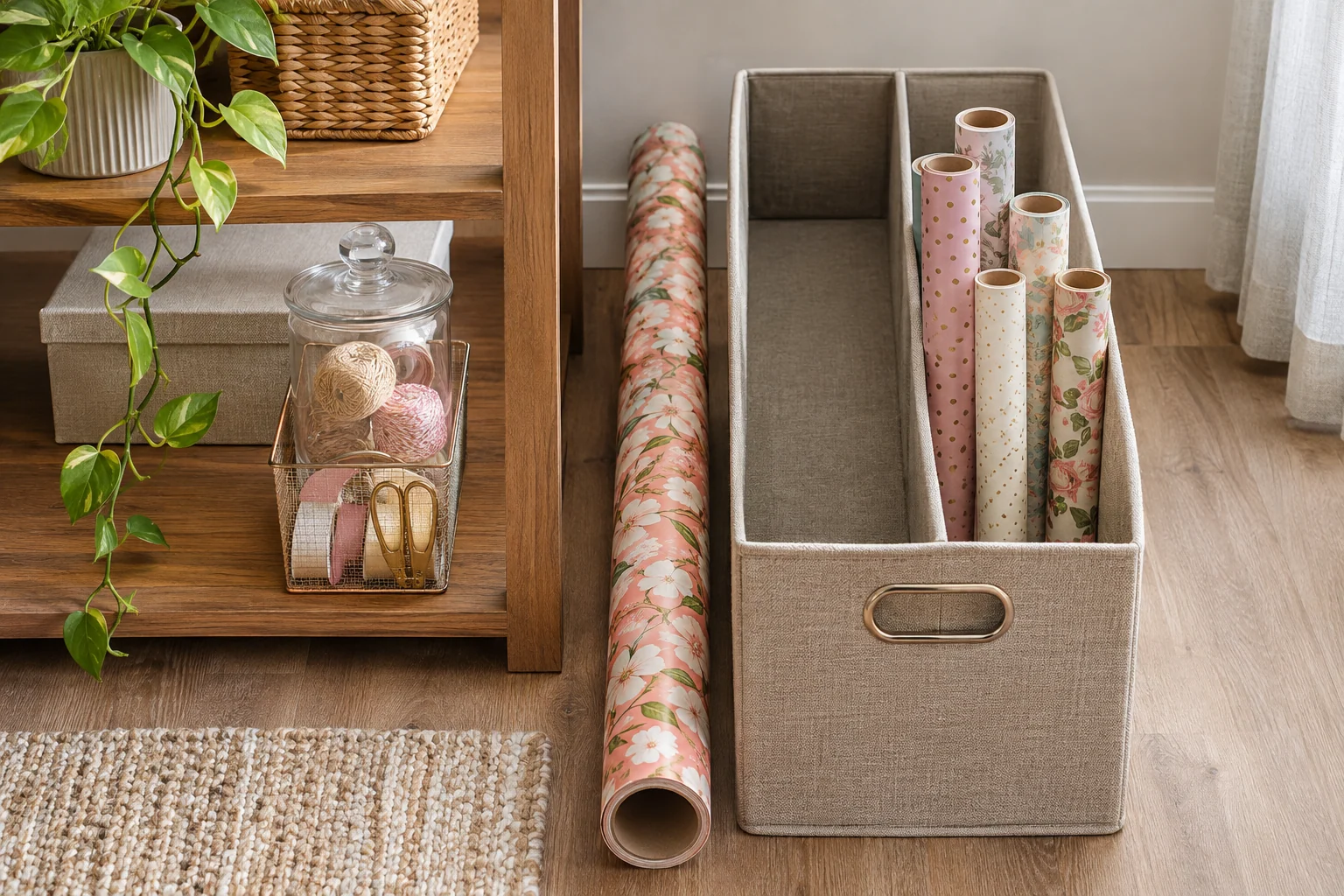
New paper may arrive in a length that differs from the collection's usual size. Check it before assuming the old container will close. Use the stated compatible roll length or actual internal dimensions, not only the outside height. Keeping that measurement in the supply note can make the next purchase a more deliberate choice.
26. Give the loaded container an accessible return position
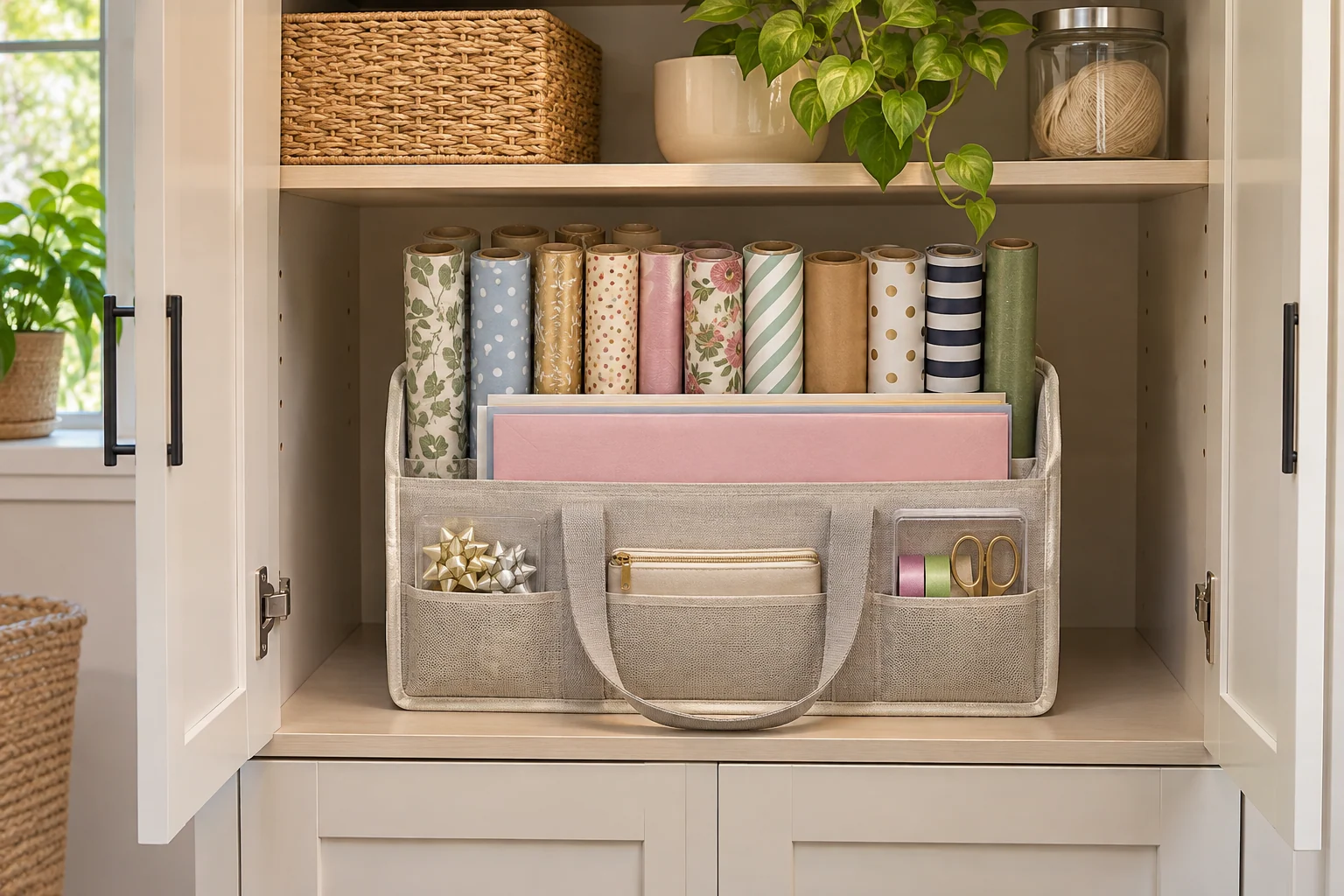
A good container needs a home that can accept its complete loaded shape. Check handles, lid and the route to the shelf or floor bay. Avoid storing it behind heavy objects that must be moved every time a gift is wrapped. The collection should be as straightforward to put away as it is to bring out.
27. Finish by restoring the working kit
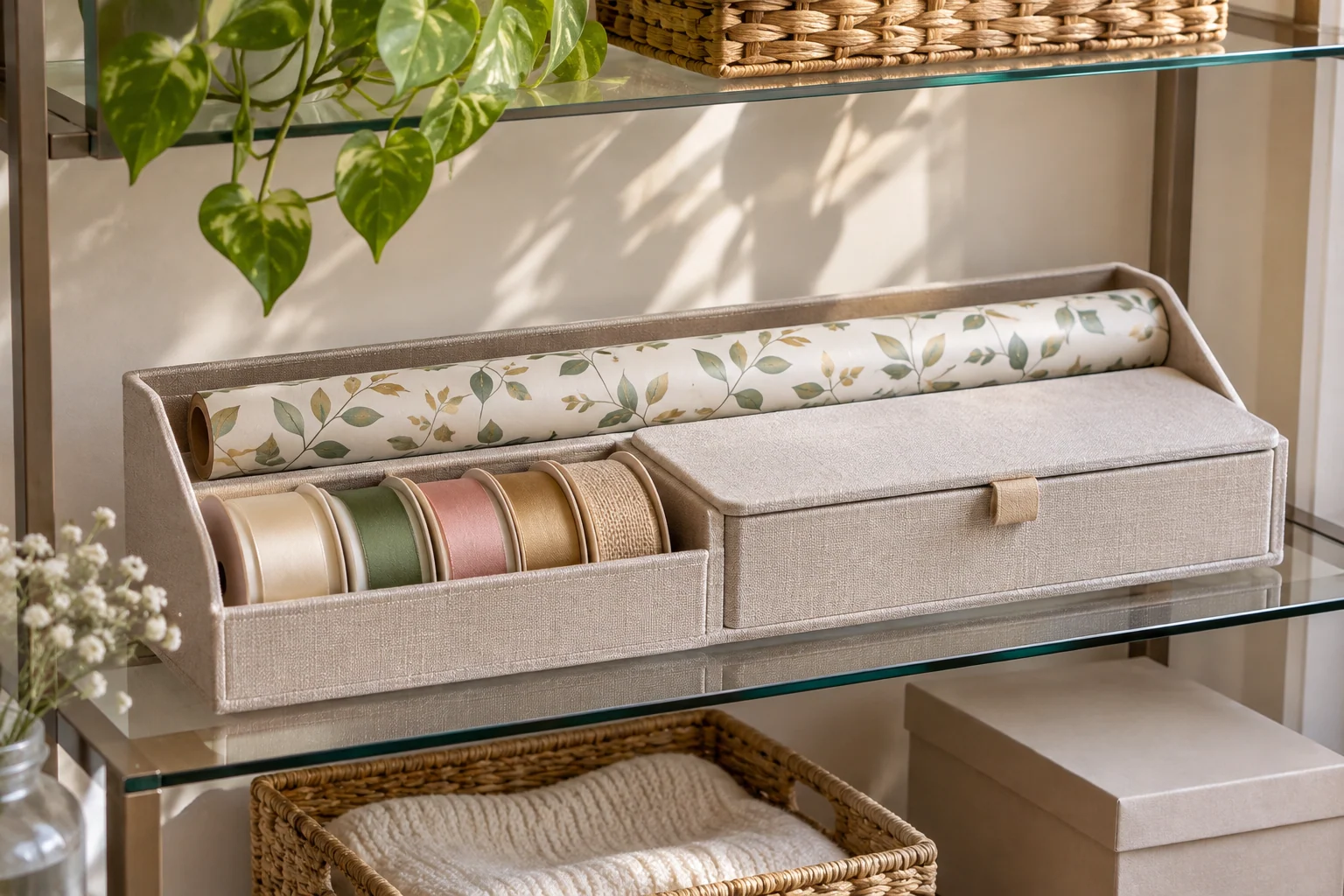
After wrapping, return the remaining roll, contain ribbon ends and put tools in their appropriate positions. Review damaged scraps instead of automatically adding them to the keep folder. Notice any repeated missing item or awkward container. Correct that small problem before buying a larger storage system for a routine that only needs a clear reset.
A longest-roll and supply-shape card
Record the longest roll, widest roll diameter, largest flat sheet, tallest bow, and the intended tool group. Then compare each with its own usable opening. A 41-inch roll does not become compatible with a container expressly sized for 40-inch rolls because the outer case measures slightly taller. Use the maker's stated fit and keep flat-paper support separate from roll storage.
A practical next step
Organize the supply by shape and actual use before expanding the storage. When the longest roll fits, flat paper stays supported and the small tools return easily, a modest collection can serve gifts throughout the year.
The images are original AI-generated design concepts. They illustrate arrangements rather than tested products, installations or measured performance.
Sources and care references
- IRIS USA:40-inch Wrapping Paper Storage Container
- NEDCC: Storage and Handling for Books and Artifacts on Paper
Related reading on Nestroxe
Optional digital guide for this topic
If you prefer a structured workbook, explore this related paid guide.