An umbrella stand should make coming home in the rain simpler. The useful version has room for your actual umbrellas, catches the drips its design is intended to collect and leaves the doorway clear. Its shape and finish can also give a small entrance a more deliberate, finished look.
Start with the umbrellas you use, including folded travel umbrellas and tall walking styles. A beautiful cylinder that swallows a short umbrella or crowds the door will be frustrating every wet morning. These ideas combine storage with the furniture already around it, rather than treating the stand as an isolated accessory.
Contents
- 1. Choose a narrow rectangular stand beside a console
- 2. Balance a curved mirror with a round stand
- 3. Give long umbrellas their own full-height space
- 4. Add a separate place for folding umbrellas
- 5. Use a removable tray as a buying criterion
- 6. Coordinate the finish with existing door hardware
- 7. Let a colorful stand be the single accent
- 8. Place the stand at the end of a bench
- 9. Reserve one corner for rainy-day equipment
- 10. Use a light finish against a dark wall
- 11. Choose an open frame when visibility matters
- 12. Use a solid-sided stand for a quieter outline
- 13. Repeat vertical lines in a paneled entrance
- 14. Keep the door swing completely separate
- 15. Keep a daily umbrella at the front
- 16. Set a realistic capacity for the household
- 17. Keep guest umbrellas visually separate
- 18. Choose a stand that can move for cleaning
- 19. Make a small entrance feel taller
- 20. Pair warm wood with a simple dark stand
- 21. Create a dry return step before long-term storage
- 22. Leave room for the stand to disappear visually
Plan around the wet umbrella, not just the empty stand
Measure the base footprint and the height needed for your longest umbrella. Include room to lift it out without catching a shelf, coat or light. Look for a collection tray you can actually remove and clean; Yamazaki's Layer stand is one manufacturer example with a removable drip tray. That feature does not prove that every decorative vessel is watertight or suitable for wet umbrellas. Follow the chosen stand's care directions and keep water from lingering on surrounding flooring.
Compare the storage or placement options
- Narrow rectangle: Useful beside a straight console; check tray removal and projecting handles.
- Round cylinder: Softens angular furniture; allow for its full diameter.
- Open frame: Makes contents visible; verify support and the actual drip-collection design.
- Solid sides: Creates a quieter outline; check opening width and access to short umbrellas.
1. Choose a narrow rectangular stand beside a console
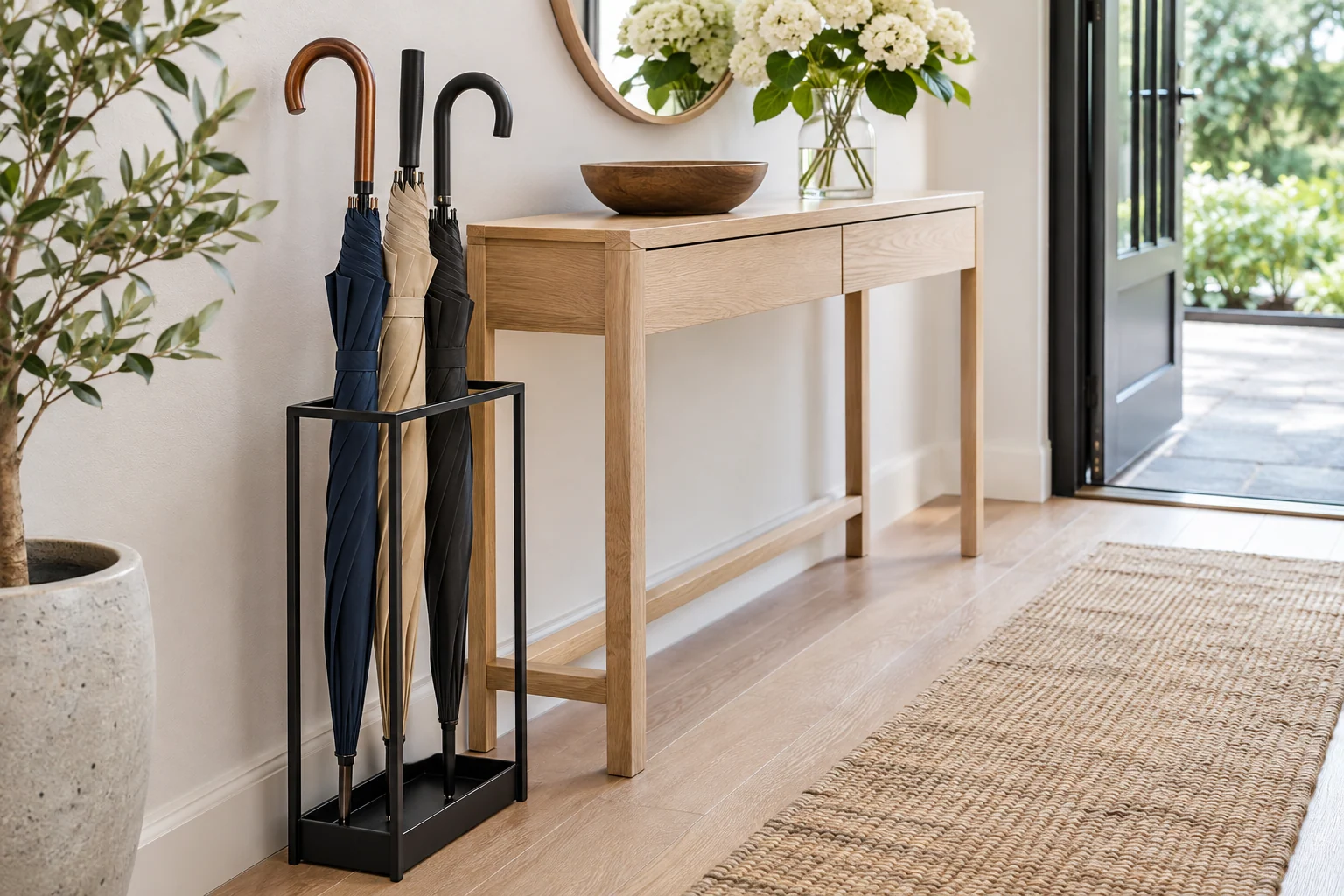
A slim rectangle uses the straight edge of a console more neatly than a broad round pot. Put the short side toward the walking route and leave enough room to lift out the tray. Repeat one console detail, such as its black legs or pale wood, so the stand looks connected to the furniture without requiring an exact matching set.
2. Balance a curved mirror with a round stand
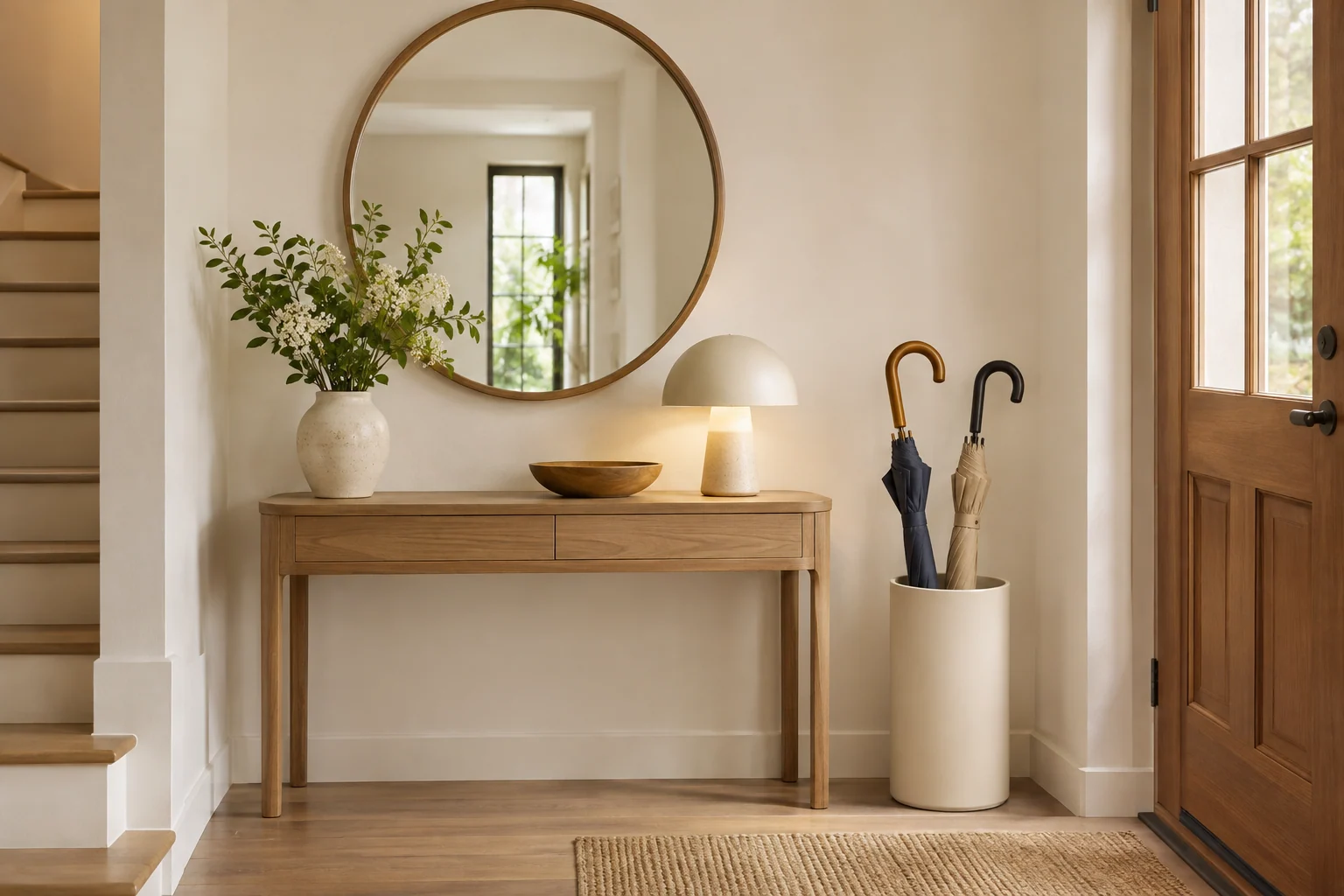
A cylindrical stand can echo the curve of an arched or circular mirror. Keep the repetition simple: one curved mirror above, one round umbrella holder below and a mostly clear console between them. Check the diameter at floor level before choosing the shape. A sculptural piece still needs to leave the door, shoes and feet enough room to move.
3. Give long umbrellas their own full-height space
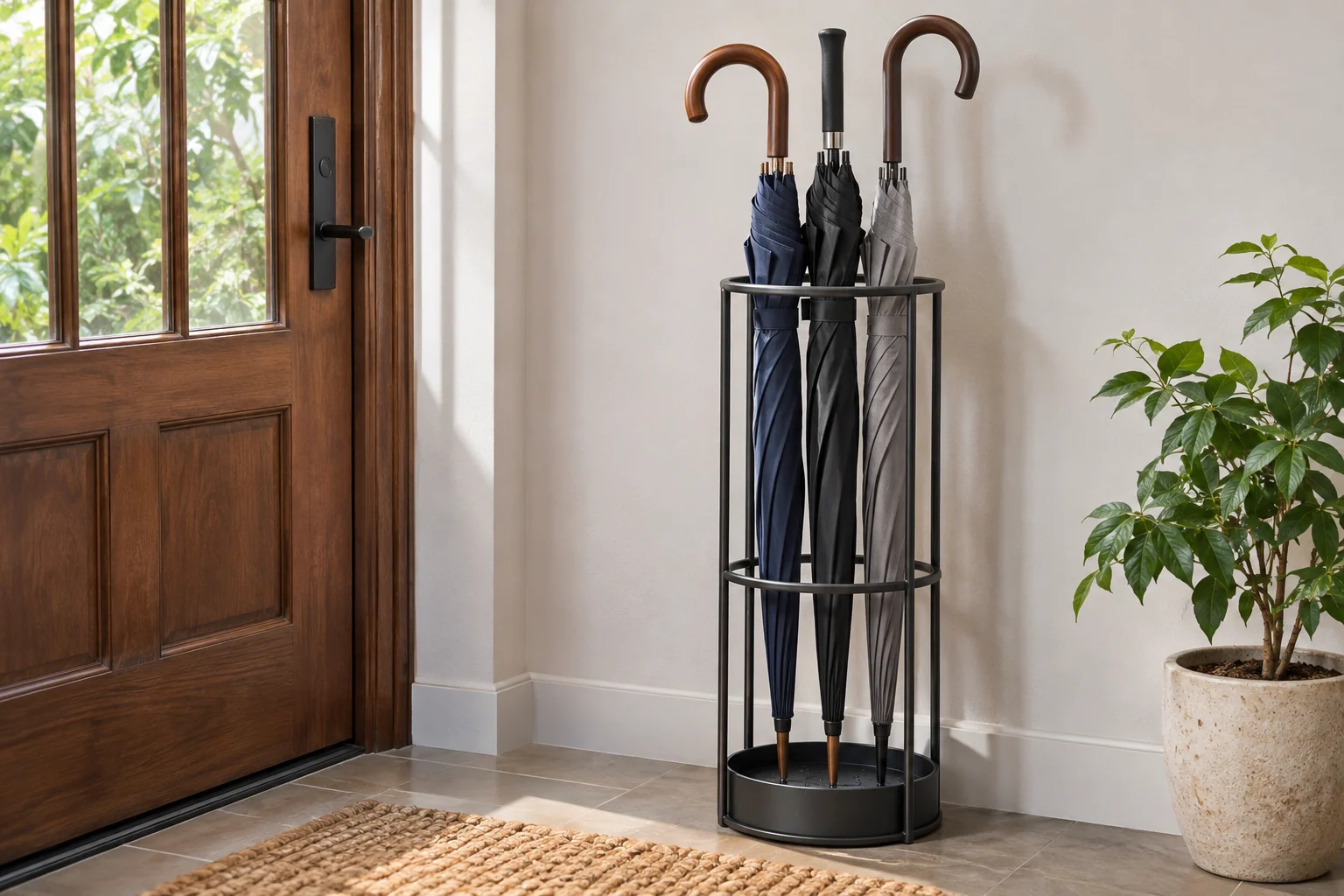
Walking umbrellas need an unobstructed route upward when you remove them. Place their stand outside the overhang of a low shelf rather than forcing the handles beneath it. Choose a holder designed to support that type of umbrella. A shorter decorative pot may look proportional in a photograph but leave too much of a tall umbrella unsupported in everyday use.
4. Add a separate place for folding umbrellas
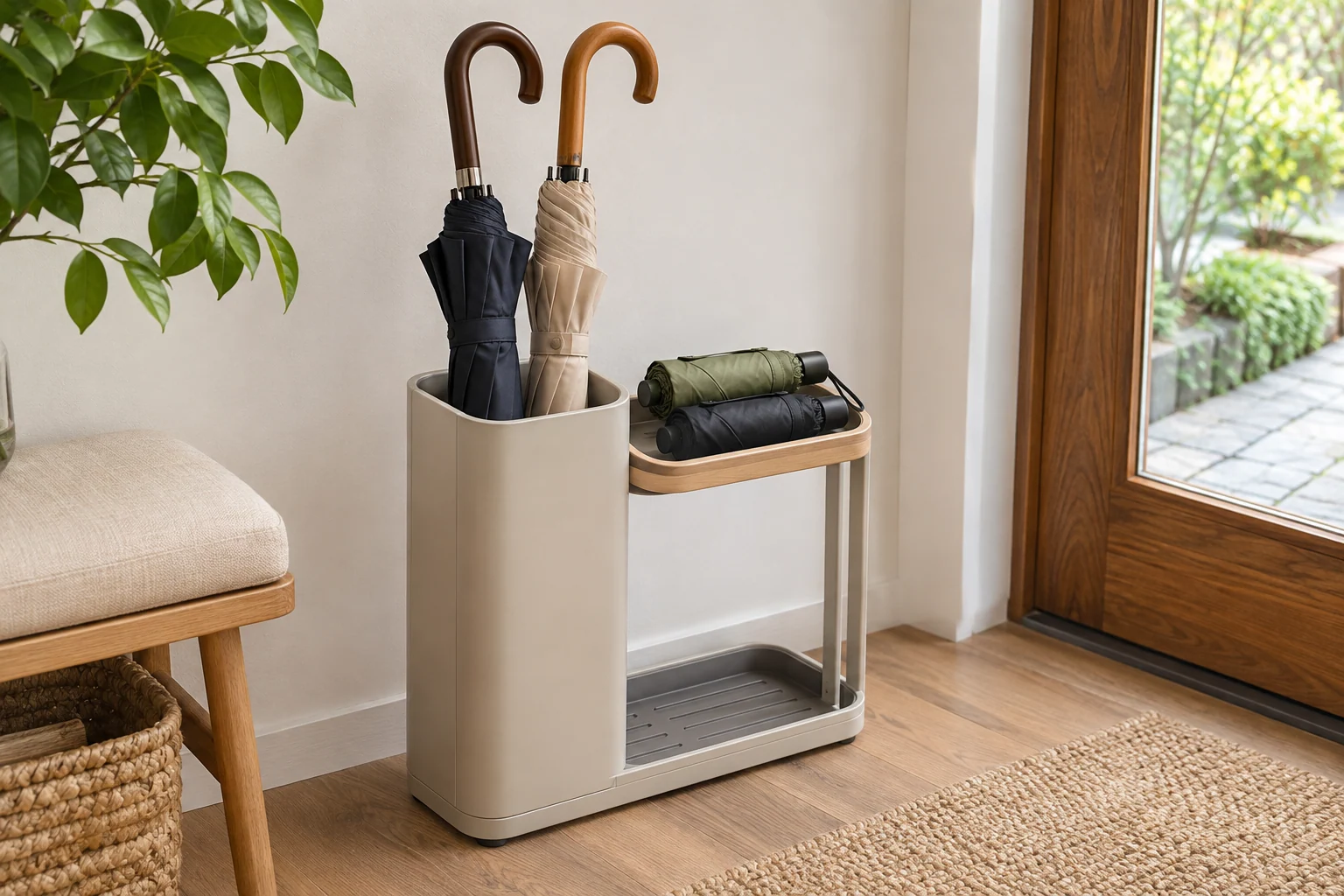
Short folding umbrellas are easier to retrieve from a purpose-designed shallow compartment or hook arrangement. Give them a separate position within the entrance rather than dropping them into the bottom of a deep stand. Keep any wet pouch open to dry according to its care instructions. The useful distinction is length and access, not assigning every umbrella a decorative container.
5. Use a removable tray as a buying criterion
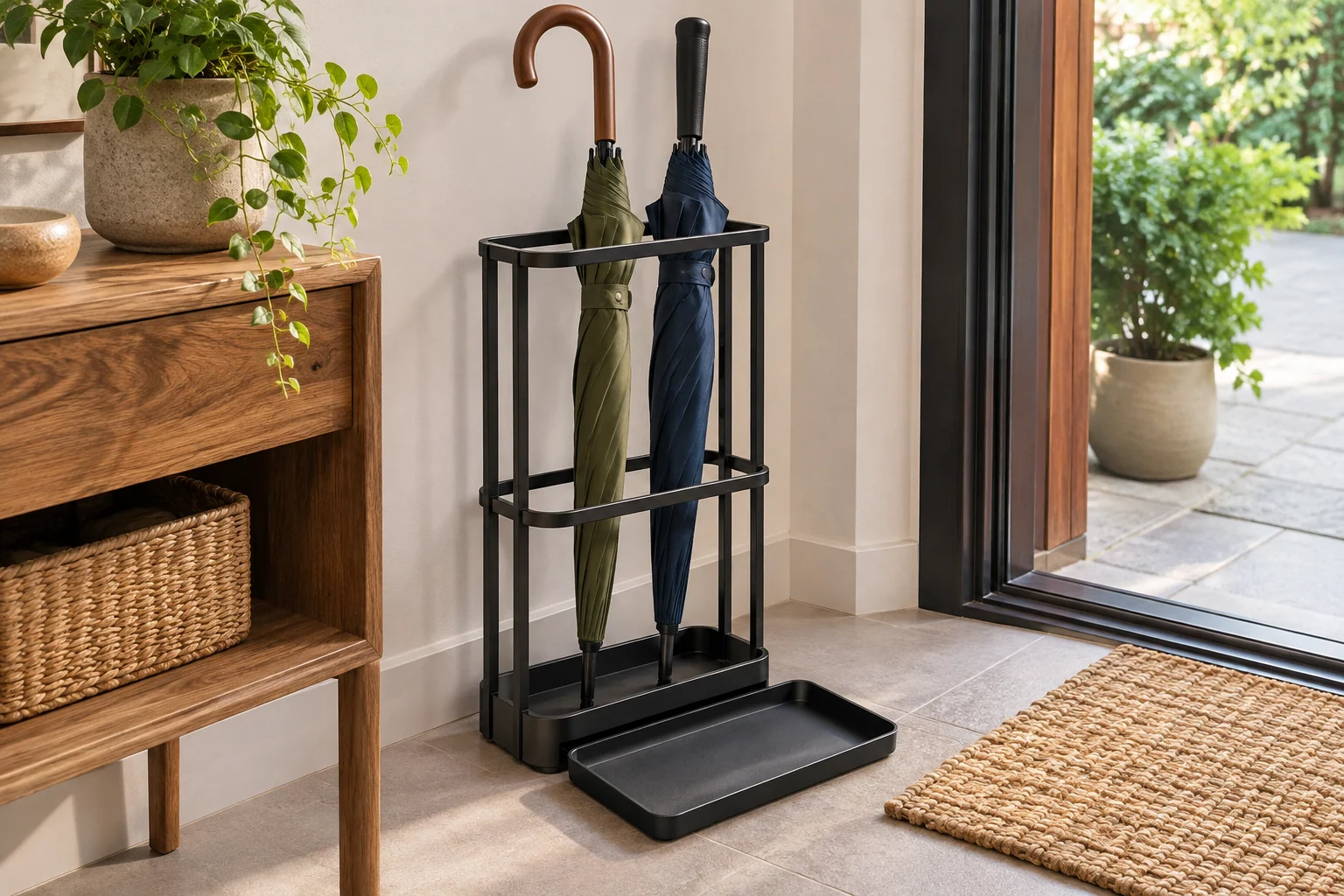
A tray is only helpful if it can be removed without wrestling the furniture around it. Check the removal direction before positioning the stand tightly against a wall. Empty and clean it after wet use as appropriate for the product. Treat that small maintenance step as part of the entrance routine, especially where pale wood or a porous floor surrounds the holder.
6. Coordinate the finish with existing door hardware
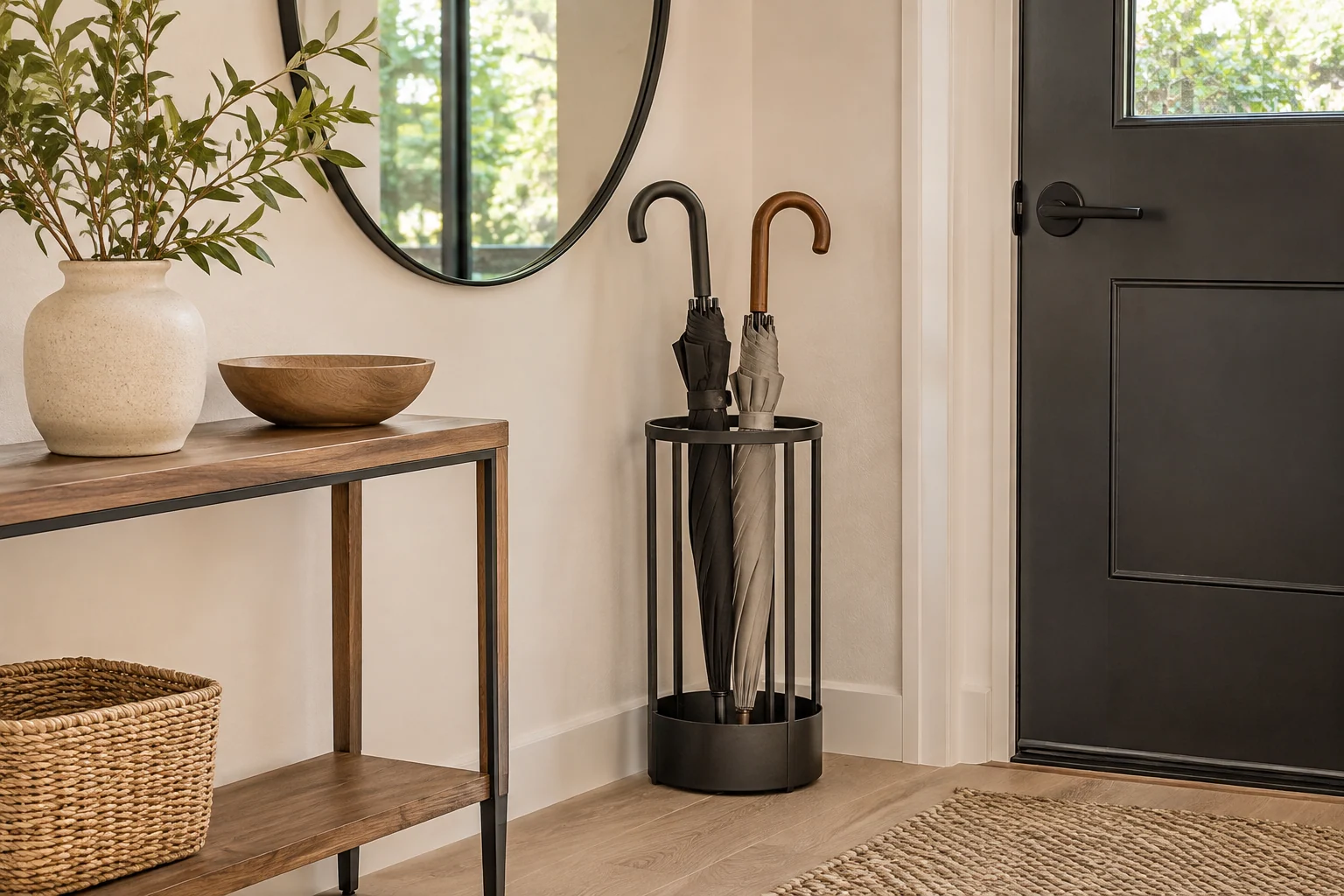
If the entrance already has dark handles, a dark stand gives the small area a consistent outline. Brushed metal can repeat an existing lamp or mirror frame instead. Use the finish as a bridge between objects rather than adding several new metallic tones. Confirm that the actual product is intended for its storage conditions; a matching finish alone says nothing about water resistance.
7. Let a colorful stand be the single accent
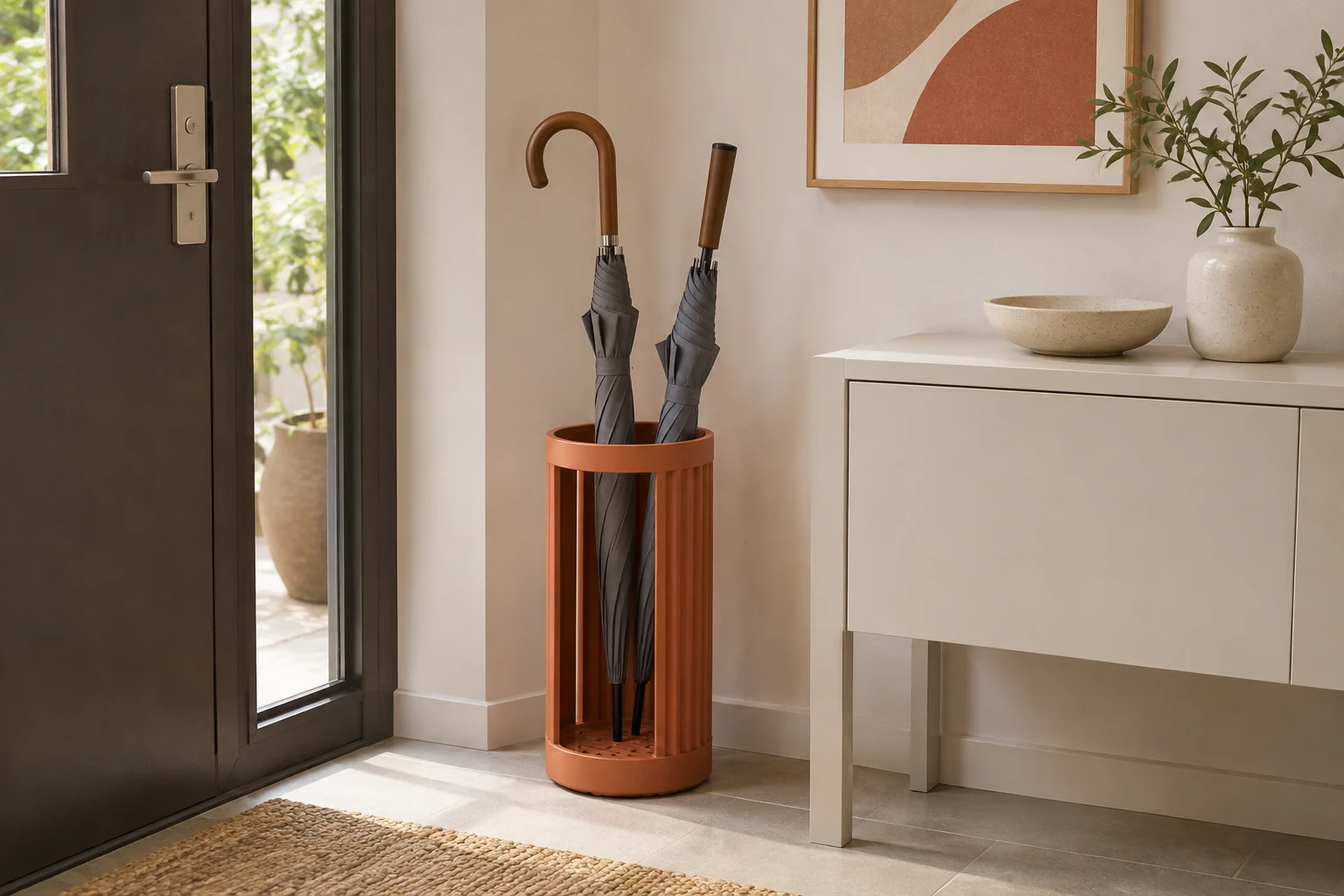
A muted blue, olive or terracotta stand can make a neutral doorway feel less anonymous. Repeat the color once in a small print or nearby textile and keep the remaining surfaces restrained. Leave umbrellas fairly neutral if the stand is the accent. This creates a deliberate focal point without filling the console with small objects that compete with keys and daily essentials.
8. Place the stand at the end of a bench
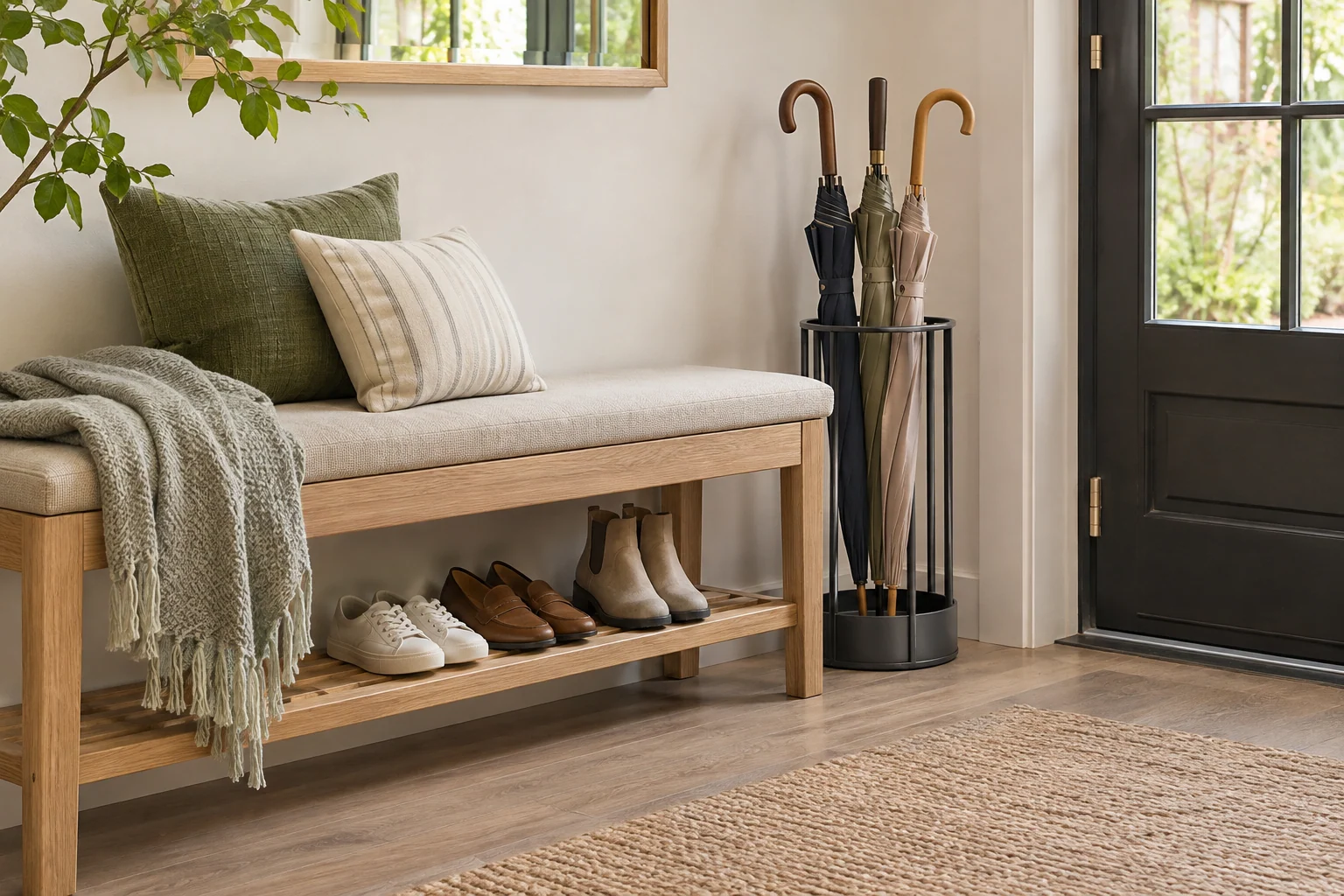
The end of an entry bench can create a sensible boundary between seating and wet-weather storage. Keep the stand beyond the seated person's feet and away from the space needed to turn or stand up. Try the arrangement with shoes on before committing. If someone must step over an umbrella holder to reach the bench, move it to a different wall.
9. Reserve one corner for rainy-day equipment
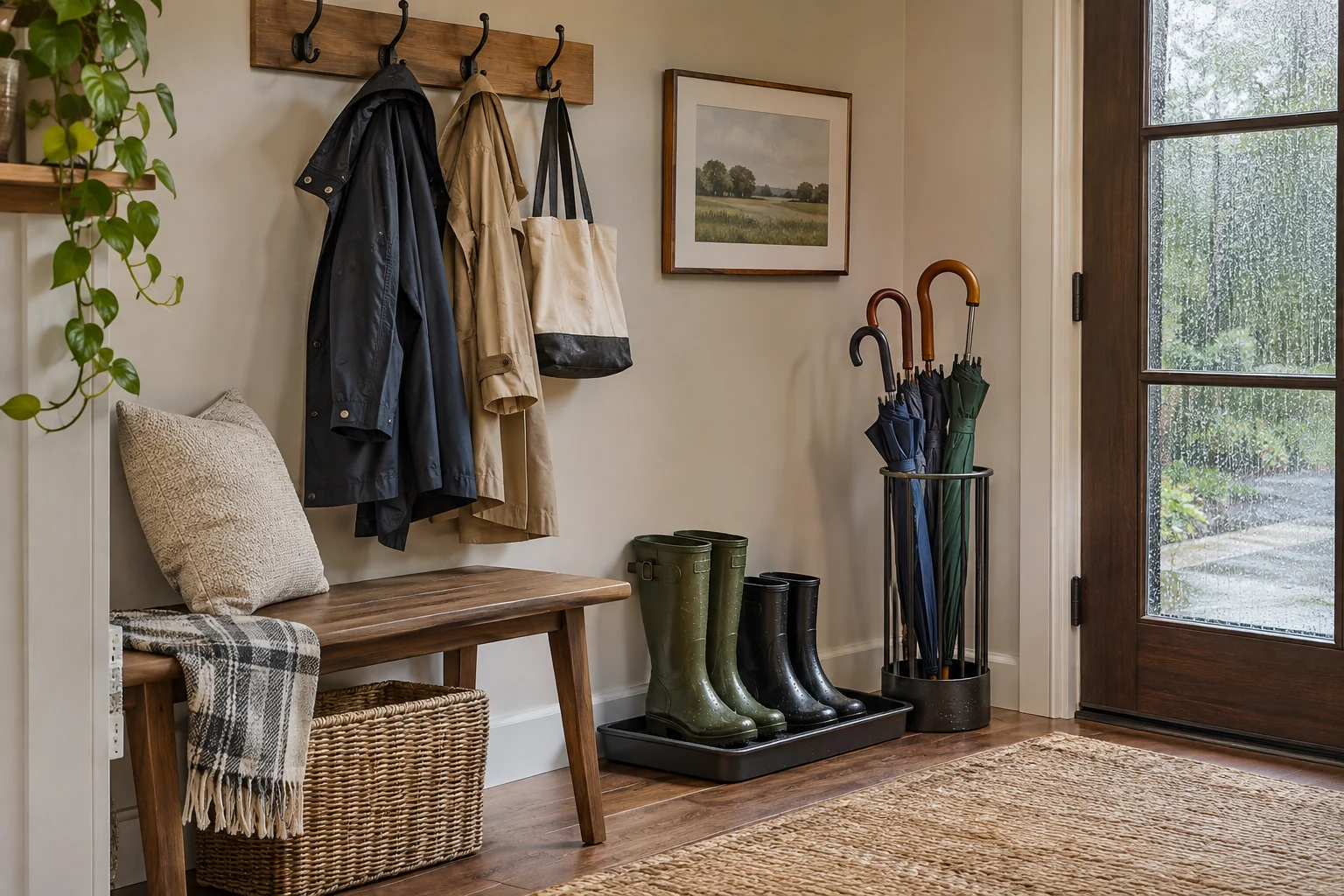
Group umbrellas near the part of the entrance already used for wet-weather shoes. Give each item its own appropriate surface rather than piling everything into a single tray. A visually consistent corner makes the return routine easy to understand. Keep the arrangement small enough that coats do not brush against wet umbrella fabric and shoes remain accessible without moving the stand.
10. Use a light finish against a dark wall
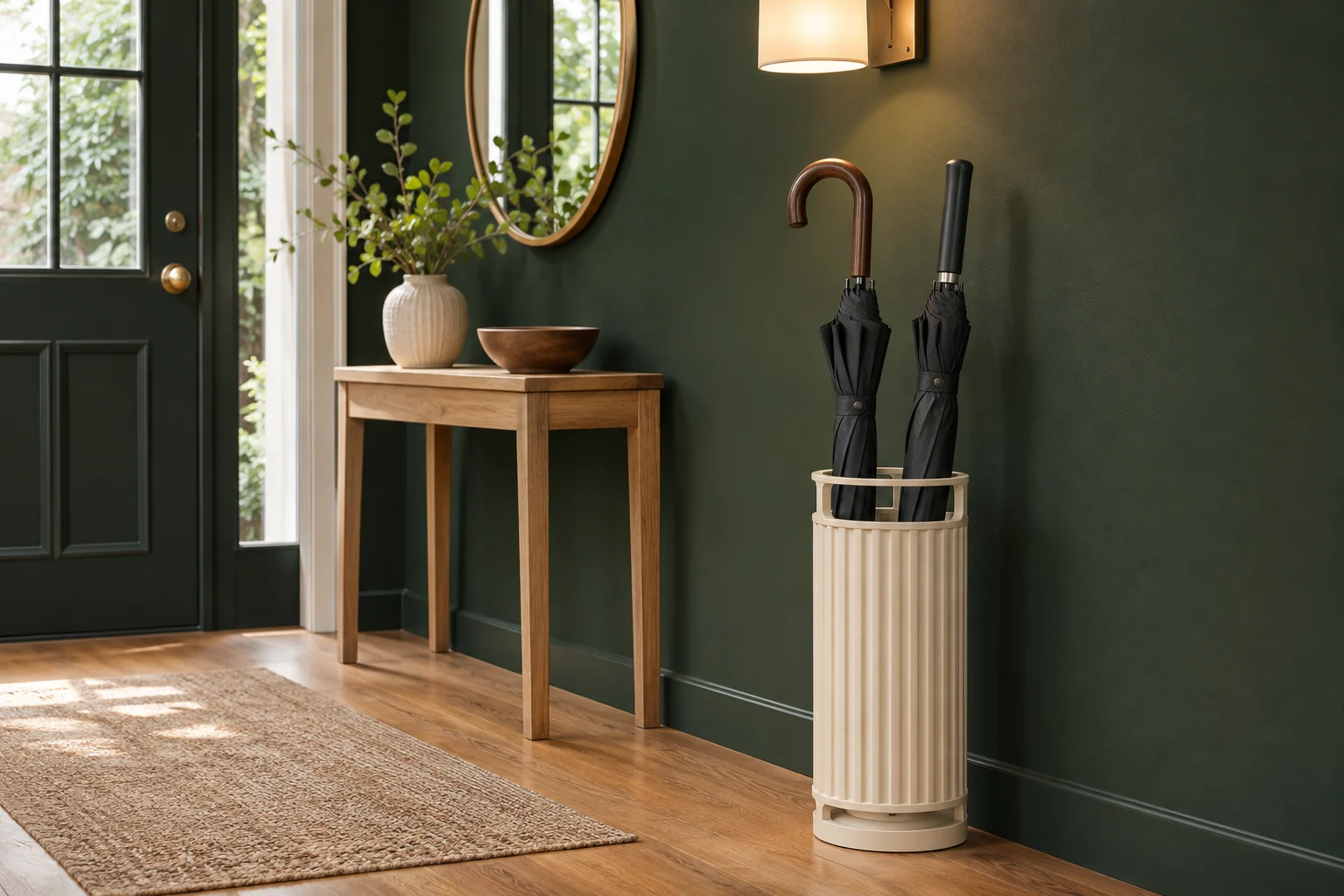
A cream or pale gray stand stays easy to see against a deep green or navy entrance wall. That contrast can make the doorway feel intentional even with very little furniture. Look at the piece in ordinary daylight and evening lighting. Its outline should remain clear when the hall is busy, while the finish still works with the floor and nearby trim.
11. Choose an open frame when visibility matters
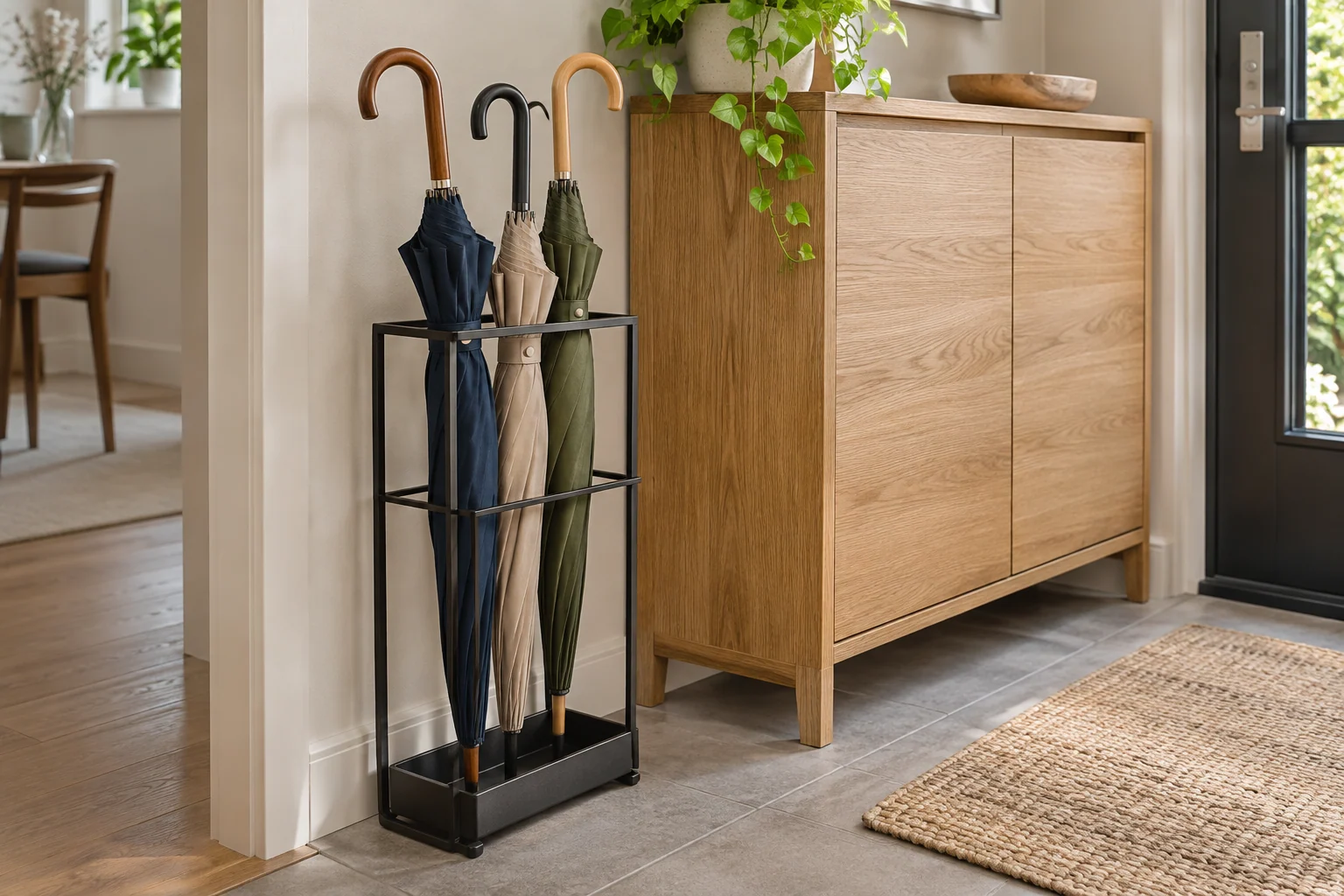
An open metal frame makes it easier to see which umbrella is where. It can feel lighter beside a solid cabinet, particularly in a small hall. Check how that specific design supports short umbrellas and collects drips; open sides do not answer either question. Keep umbrella straps fastened so loose fabric does not catch on the frame during removal.
12. Use a solid-sided stand for a quieter outline
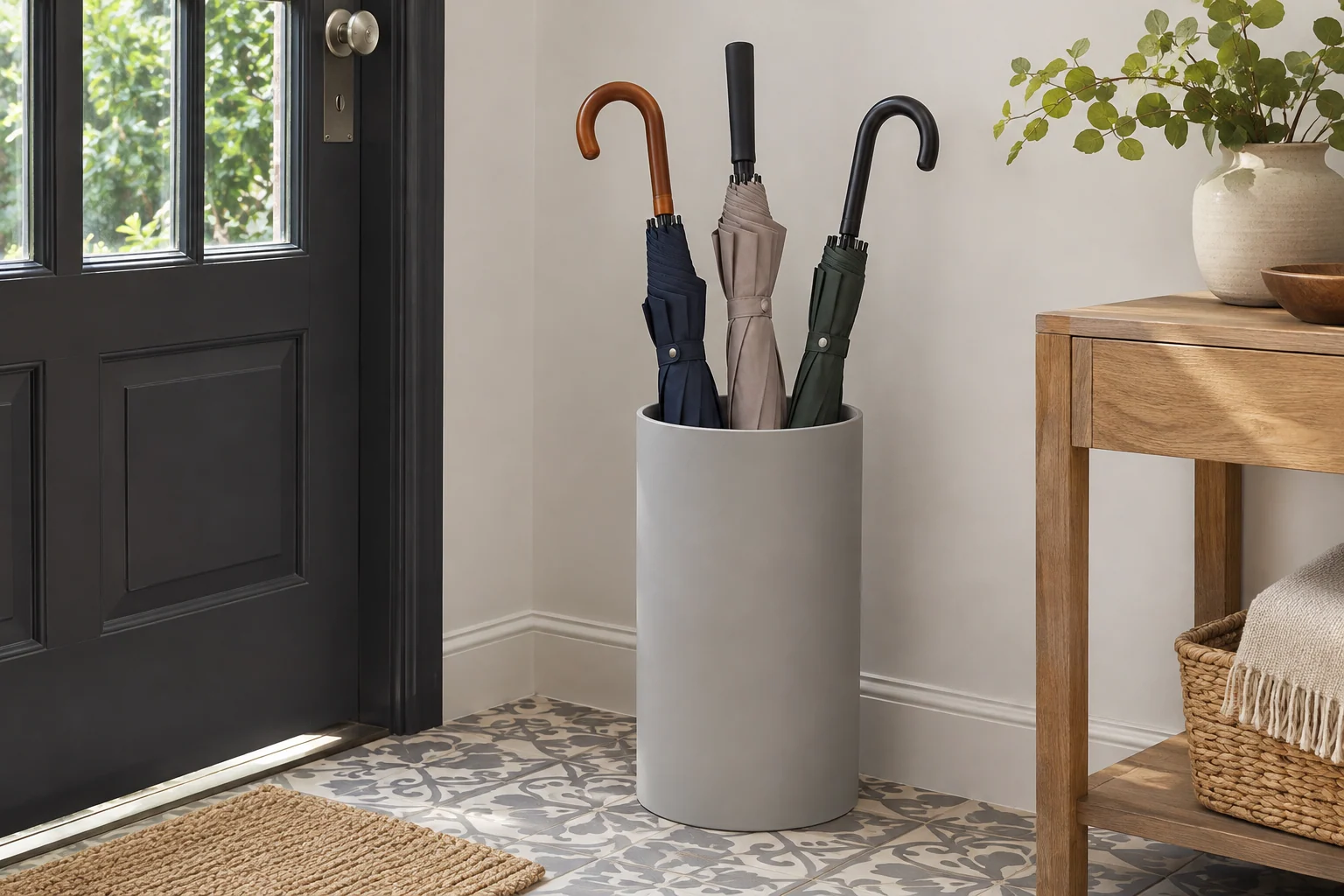
A solid-sided holder hides a mixture of umbrella fabrics and creates a simpler silhouette. It works well where the entrance already contains coats, bags and patterned flooring. Compare its opening with the number of umbrellas you actually need. Avoid forcing several bulky umbrellas into a narrow mouth merely to preserve a tidy-looking exterior; comfortable removal matters more than a full container.
13. Repeat vertical lines in a paneled entrance
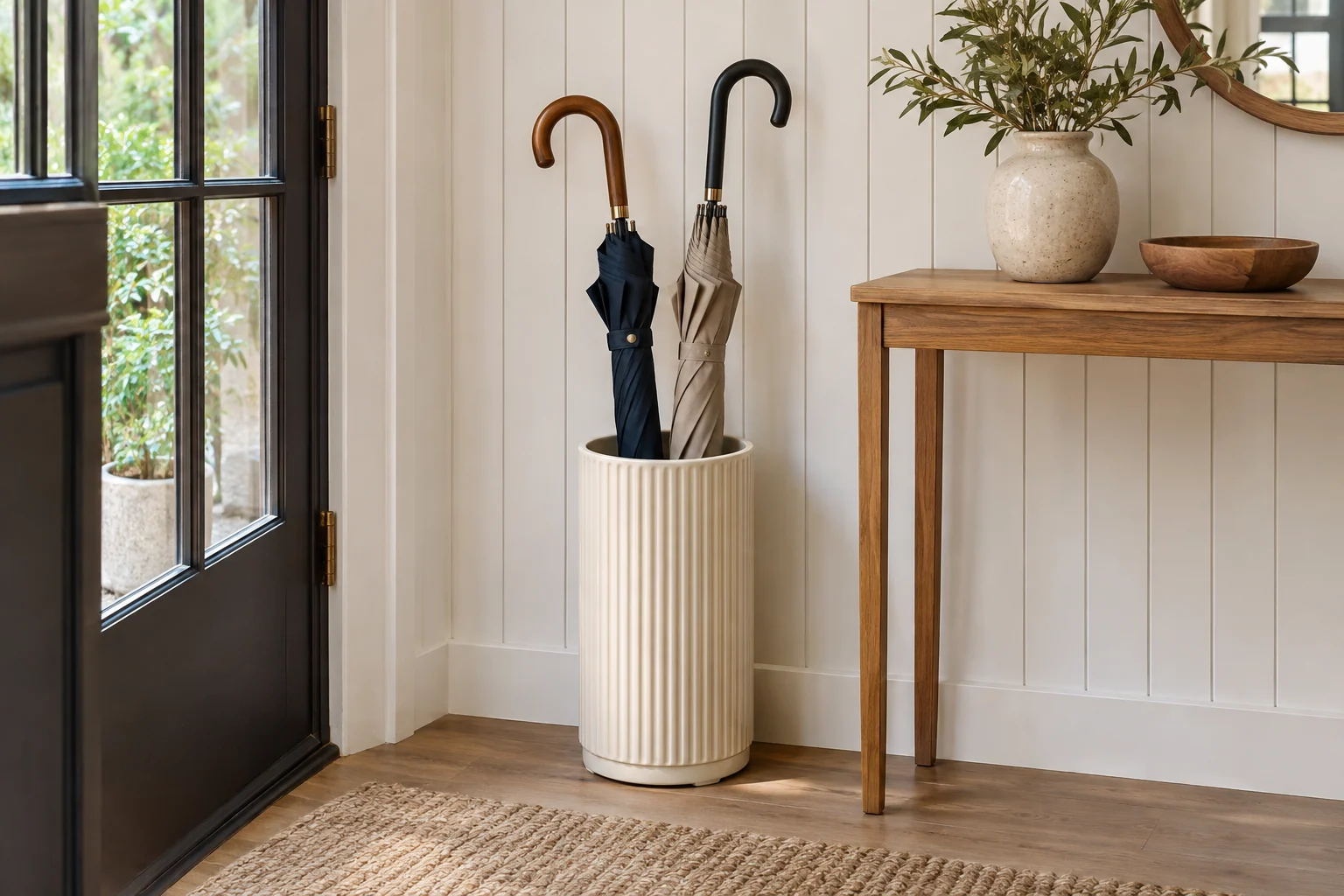
A stand with restrained vertical detailing can relate to wall paneling or slim furniture legs. Choose one repeated rhythm rather than several competing patterns. Stand back at the front door and check that the holder reads as part of the room. A simple ribbed shape often works better than an elaborate piece beside already detailed doors, molding or tiles.
14. Keep the door swing completely separate
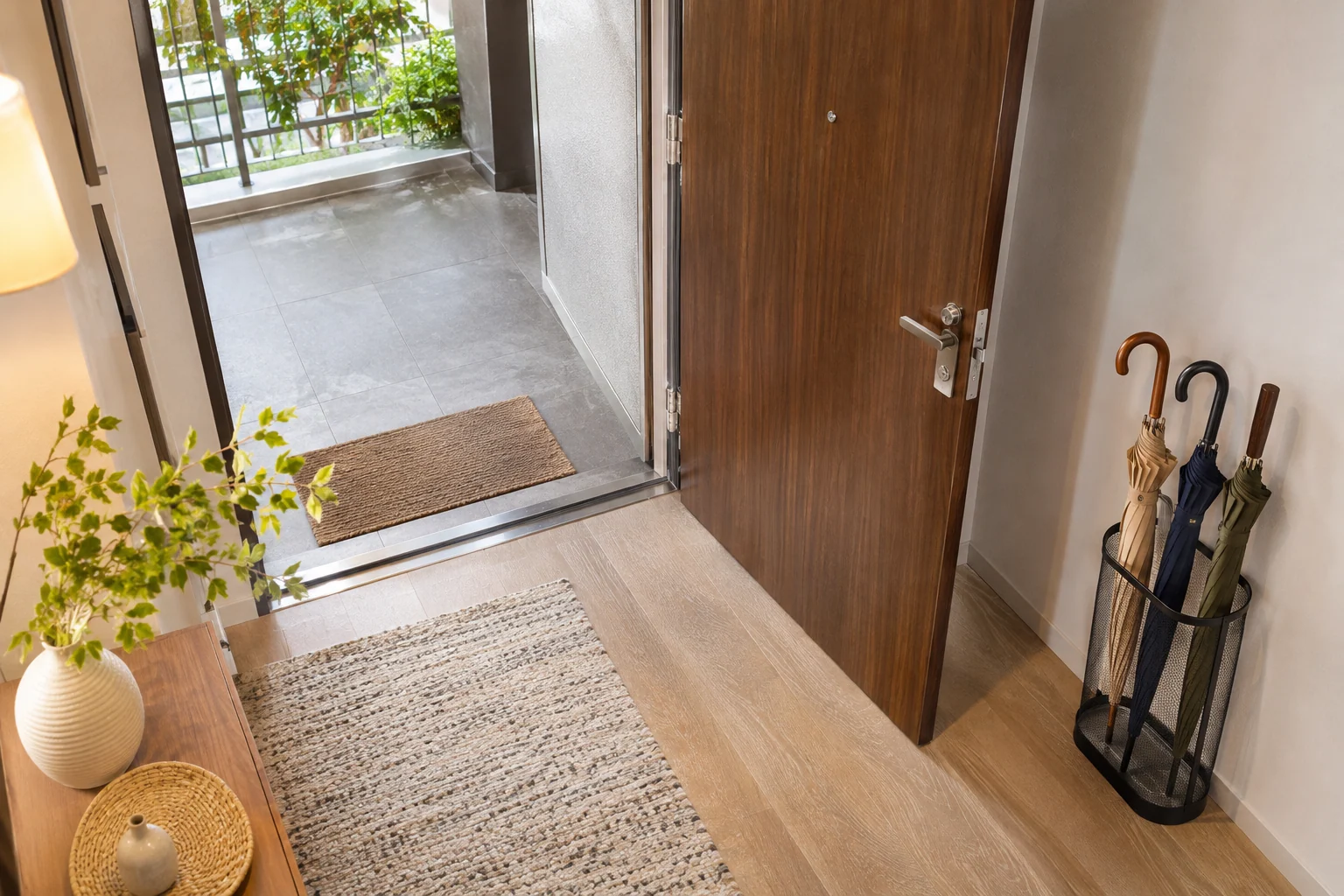
Open the entrance door fully with the stand in its proposed position. Check the handle, door edge and the umbrella handles themselves, which may project beyond the base. A position that works with an empty stand can fail once tall umbrellas are added. Move the holder along the wall until the complete door movement and normal walking route remain comfortable.
15. Keep a daily umbrella at the front
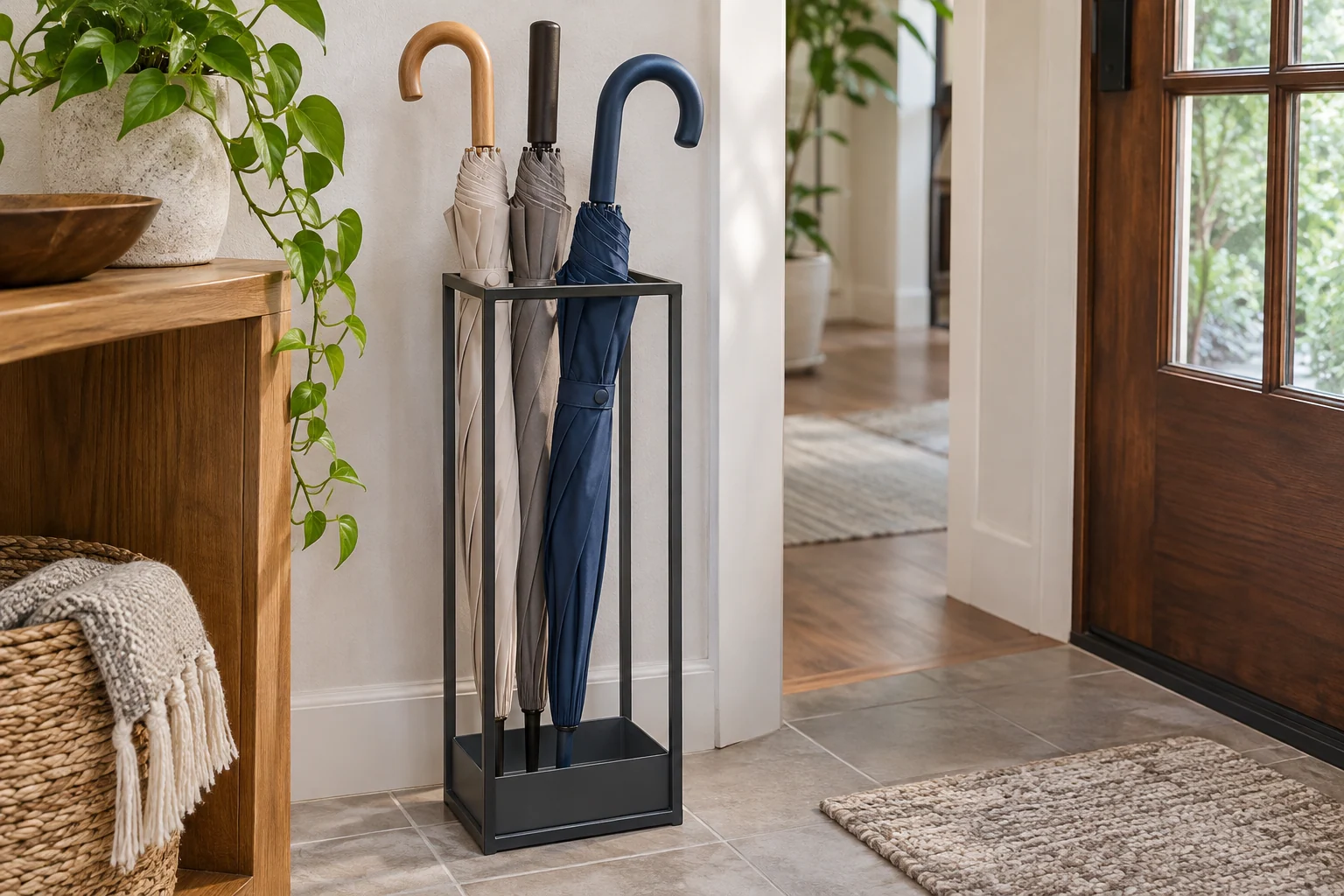
Put the umbrella you use most often in the easiest position to grasp. Reserve the back of the stand for occasional or guest umbrellas, provided the holder supports them without crowding. This tiny adjustment is useful in a shared household: the morning routine should not require lifting out three other umbrellas to find the reliable one at the bottom.
16. Set a realistic capacity for the household
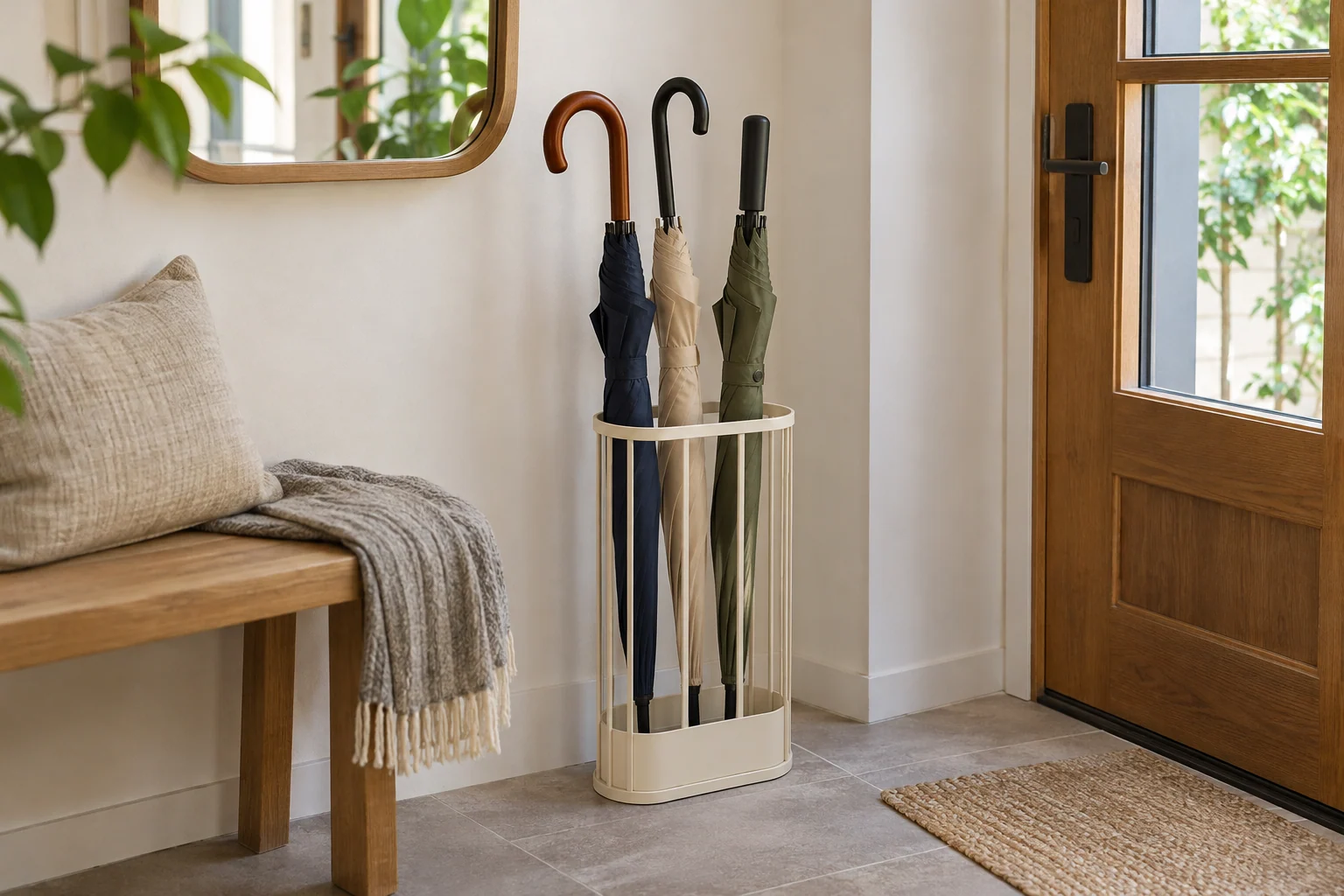
Count umbrellas before choosing a holder and allow room for easy removal. Manufacturer capacities apply to their particular designs and umbrella assumptions, not to every stand with similar dimensions. Keep broken or unused umbrellas out of the daily collection. A smaller, well-used group can fit a modest entrance better than a large stand filled with items nobody chooses.
17. Keep guest umbrellas visually separate
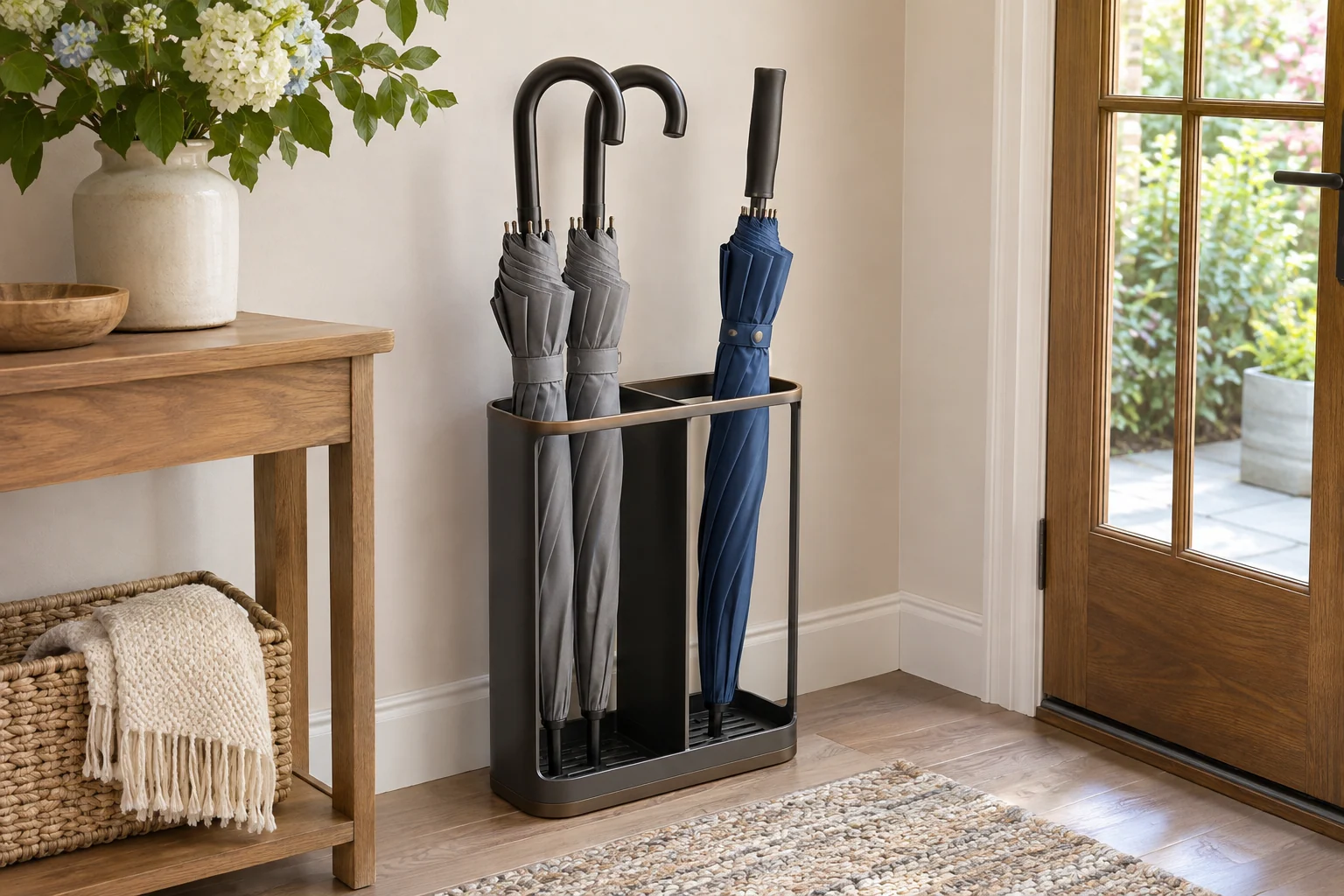
If you regularly provide umbrellas for guests, give them a recognizable position at one side of the holder. Different handle shapes or a separate compartment can communicate the distinction without a row of labels. Keep the arrangement straightforward enough for visitors to return an umbrella naturally. Avoid adding a second full-size stand unless your entrance actually has the floor space.
18. Choose a stand that can move for cleaning
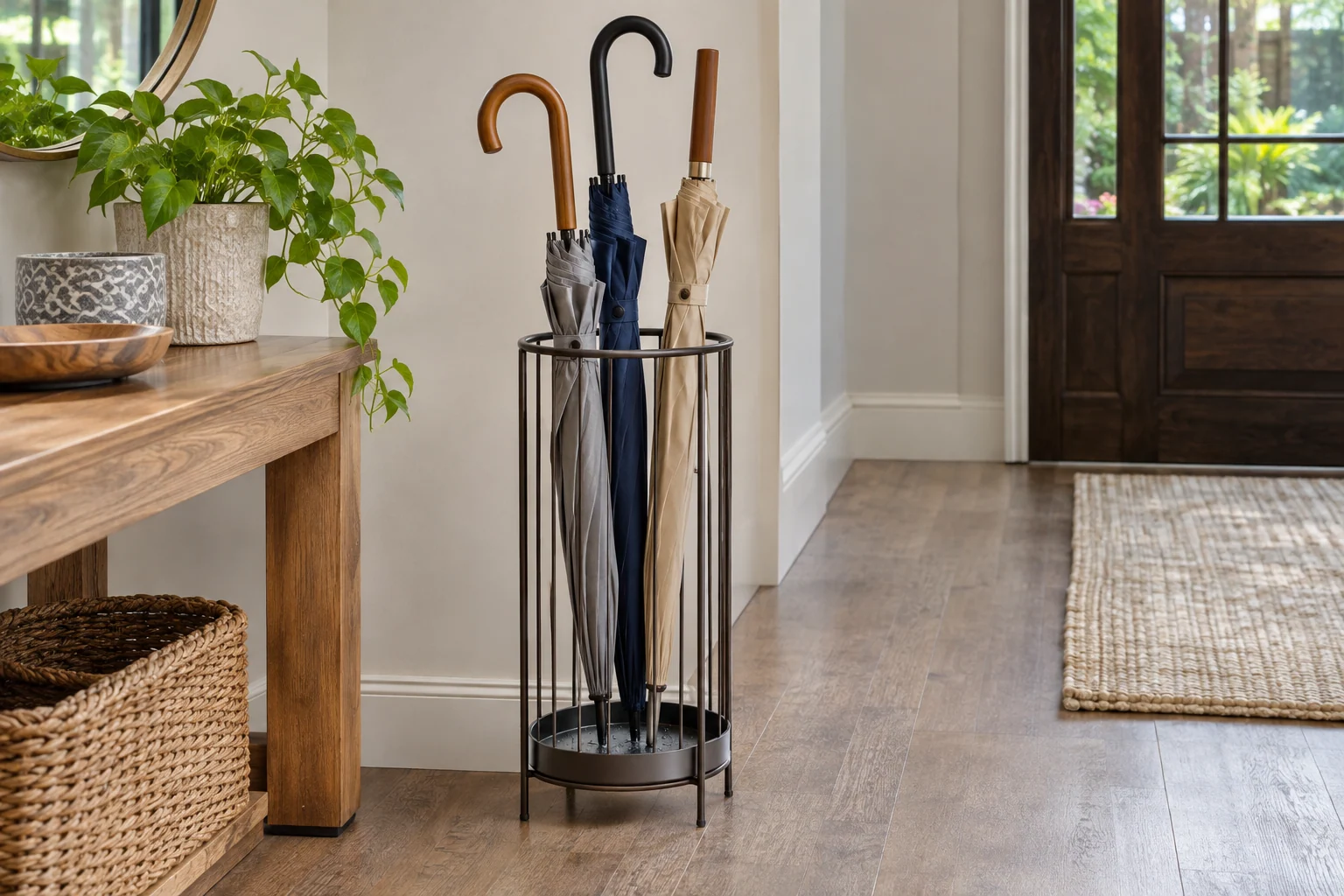
The floor around an umbrella holder collects the same grit as the rest of the entrance. Check that you can move the empty stand and reach behind it without disconnecting other furniture. A heavy decorative vessel may make that simple task unnecessarily awkward. Follow the product's lifting guidance and empty water first; do not assume handles or open-frame bars are carrying points.
19. Make a small entrance feel taller
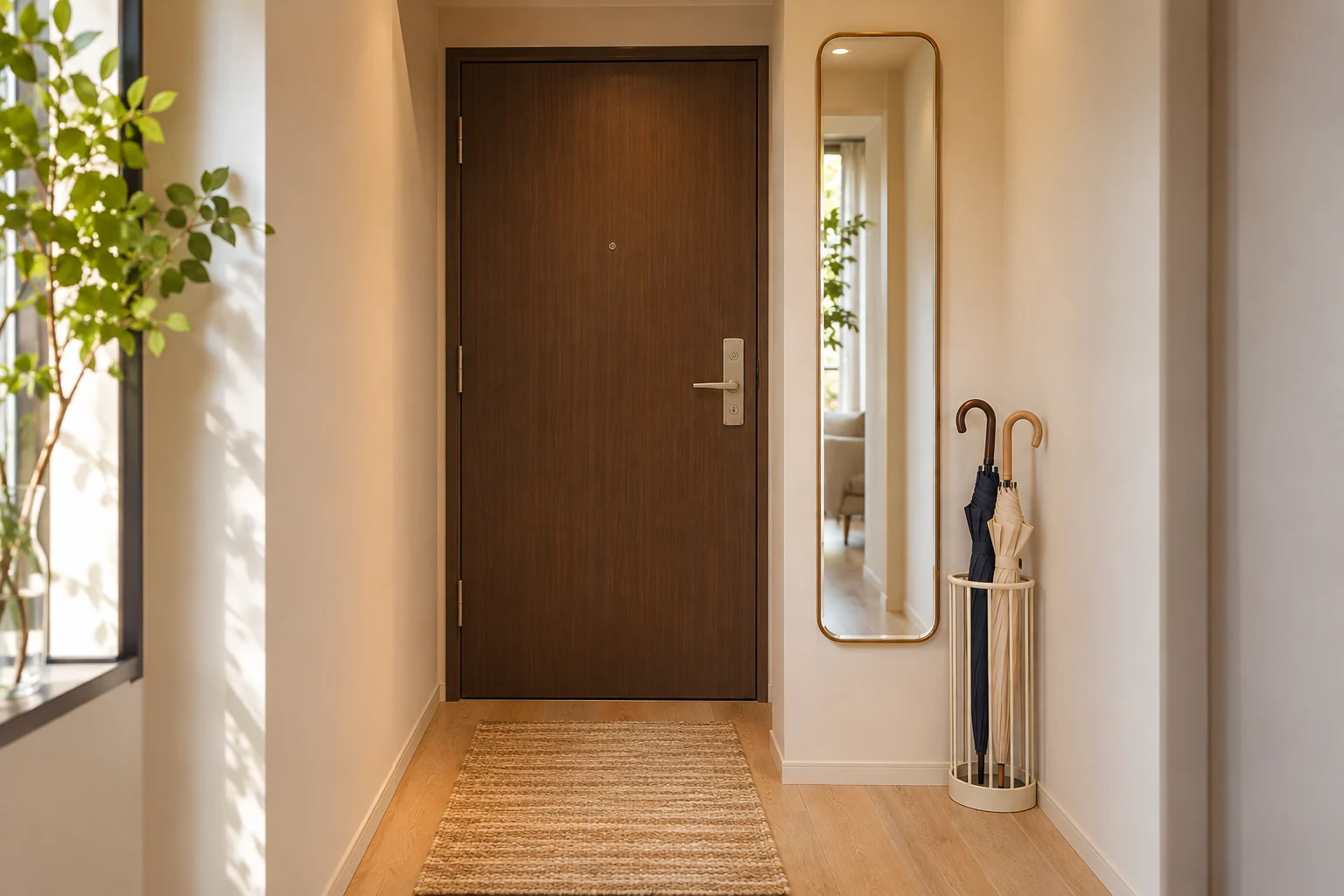
A narrow stand and a taller mirror can draw the eye upward without adding a broad console. Keep their edges aligned loosely rather than filling the whole wall with objects. This is a useful option where you need an umbrella home but have little depth to spare. Verify the stand's actual footprint with tape on the floor before buying a slender-looking photograph.
20. Pair warm wood with a simple dark stand
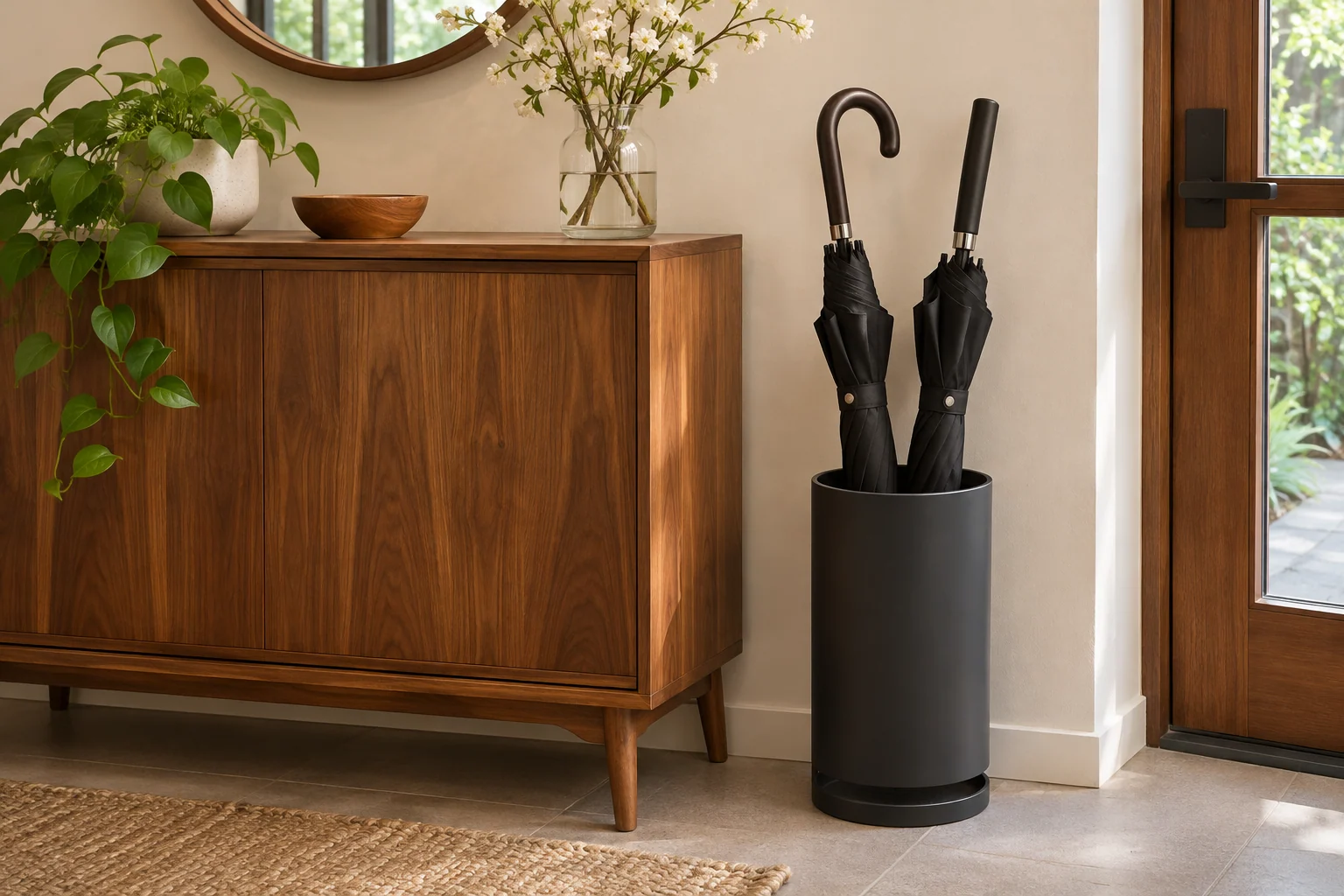
A black or charcoal stand provides a clean counterpoint to a warm wood bench, cabinet or door. Let the wood remain the dominant material and use the darker piece as a small outline. Keep surrounding baskets and trays in a restrained palette. This approach can make practical storage feel composed without requiring a custom-built entrance or replacing existing furniture.
21. Create a dry return step before long-term storage
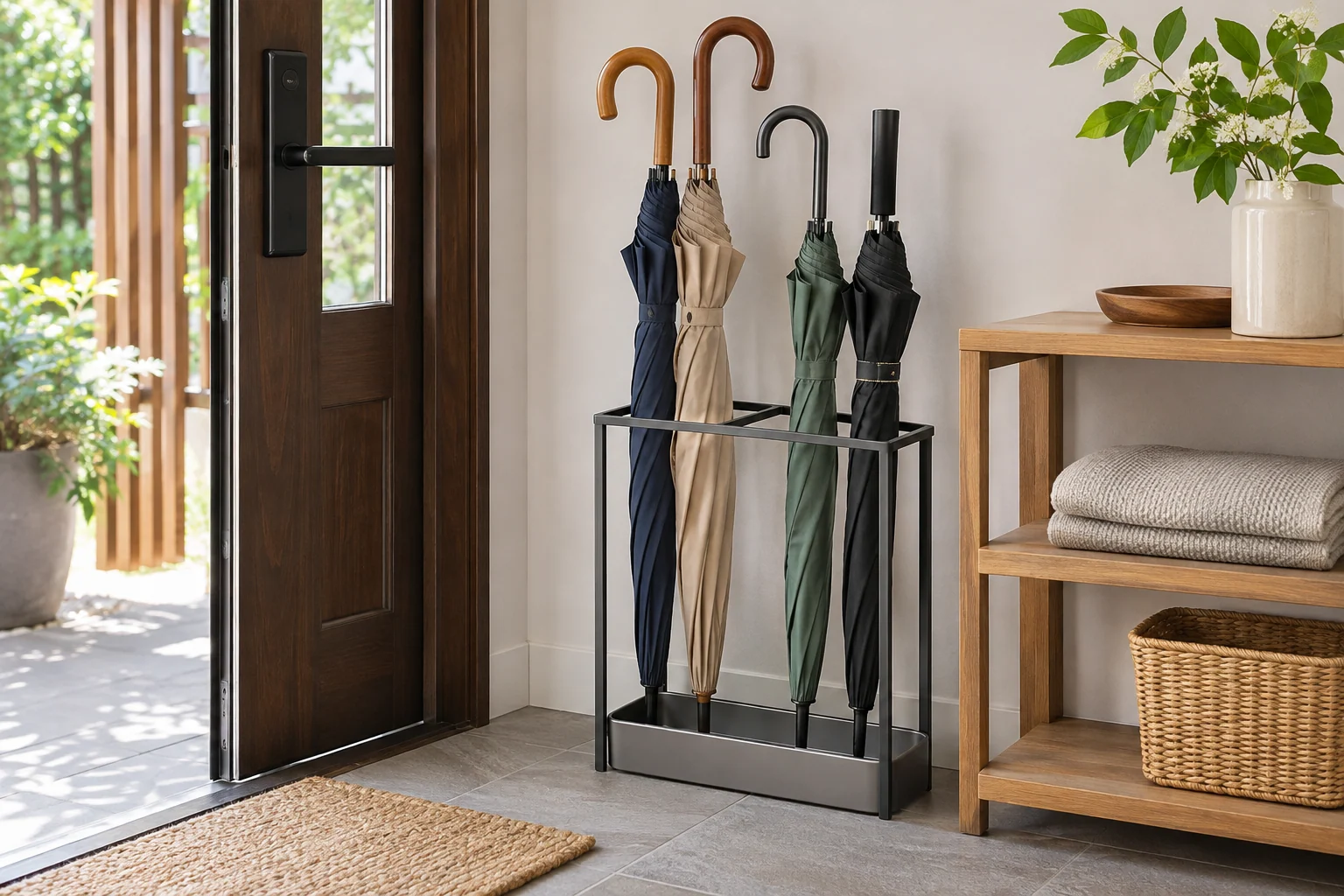
Think about what happens after the rain stops. Follow umbrella care guidance for drying, then return it neatly closed rather than leaving damp fabric compressed indefinitely. Keep the stand and nearby floor clean and dry as part of that routine. A collection tray manages drips during use; it is not a substitute for drying the umbrella or addressing persistent moisture in the entrance.
22. Leave room for the stand to disappear visually
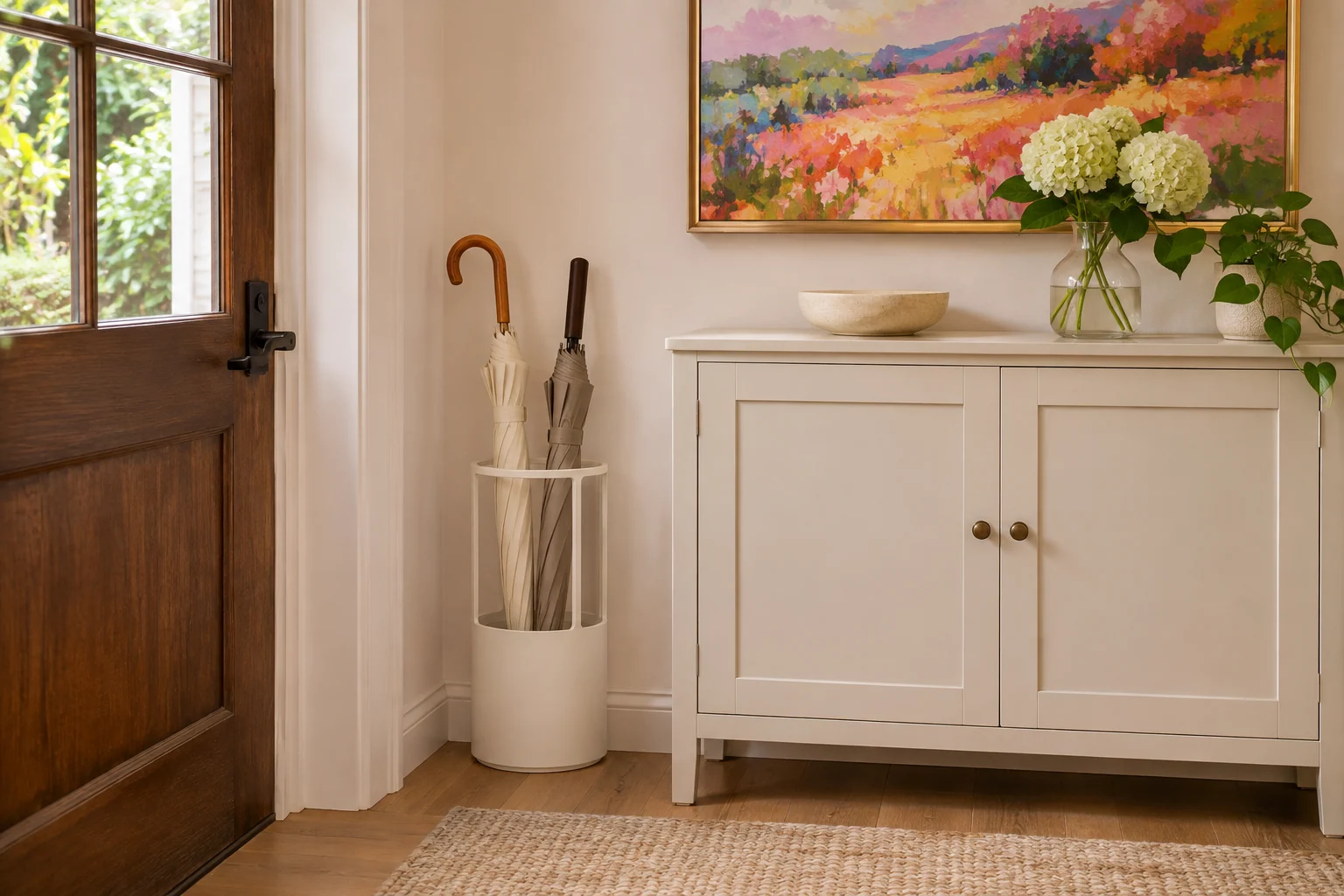
Sometimes the best choice is a modest stand in the wall color, placed beside an existing cabinet. Match the general tone rather than chasing an exact finish. Keep its contents orderly and the surrounding floor clear. This lets a favorite mirror, artwork or front door remain the focal point while the umbrella holder performs a useful job in the background.
A five-minute umbrella station check
Record the longest umbrella, the shortest folded umbrella, the number used weekly and the stand's full footprint. Mark the proposed base on the floor, open the door fully and mime lifting the longest umbrella straight out. Check where drips collect and how the tray leaves the stand. For a hypothetical household with two long umbrellas and two folding ones, a tall holder plus a shallow compact-umbrella compartment may be more usable than a single deep cylinder. This is a planning example, not a tested capacity.
A practical next step
Choose the position first, then the shape and finish. The strongest umbrella stand ideas give wet-weather items a clear place while leaving the door, bench and walking route easy to use. A holder you can empty, clean and return to every day will earn its space more reliably than an oversized decorative piece.
The images are original AI-generated design concepts. They illustrate arrangements rather than tested products, installations or measured performance.
Sources and care references
Related reading on Nestroxe
- Style the console beside your umbrella station
- Plan the seating part of the entrance
- Give everyday shoes their own storage
Optional digital guide for this topic
If you prefer a structured workbook, explore this related paid guide.