Plants and Nature Decor
The right home office plants choice depends on the light in your space, but almost any home office plants selection will make the room feel calmer and more alive. Rotating your home office plants occasionally also keeps growth even on all sides.
Choosing the right home office plants approach is one of the easiest ways to upgrade a room without a full remodel. When your home office plants is scaled correctly, everything else feels intentional rather than accidental.
Getting the home office plants right makes the biggest difference in how the space actually feels day to day. A well-planned home office plants balances function and style, and even small tweaks to your home office plants can transform the whole area.
If your home office feels sterile no matter how you rearrange the desk, the missing piece is probably greenery, not more furniture. A home office is often stuck with limited natural light and a screen-heavy setup, but that doesn’t rule out plants — it just means choosing the right ones for the conditions you actually have.
By the end of this article, you’ll have 13 real, practical ways to bring plants into a home office so the space feels calmer, more focused, and genuinely alive.
Table of Contents
- 1. Anchor a Desk Corner With a Snake Plant
- 2. Hang Trailing Pothos Above a Shelf
- 3. Add a Statement ZZ Plant on the Floor
- 4. Place a Peace Lily Near the Monitor
- 5. Light Up a Windowless Corner
- 6. Cascade a Vine Over a Bookshelf
- 7. Add a Small Desk Terrarium
- 8. Choose a Cast Iron Plant for Dark Corners
- 9. Layer Plants at Different Heights
- 10. Style a Vase With Cut Branches
- 11. Let a Philodendron Cascade Down a Shelf
- 12. Train a Vine Up a Moss Pole
- 13. Display a Chinese Evergreen on the Credenza
- Effort & Cost Snapshot
1. Anchor a Desk Corner With a Snake Plant for Your Home Office Plants
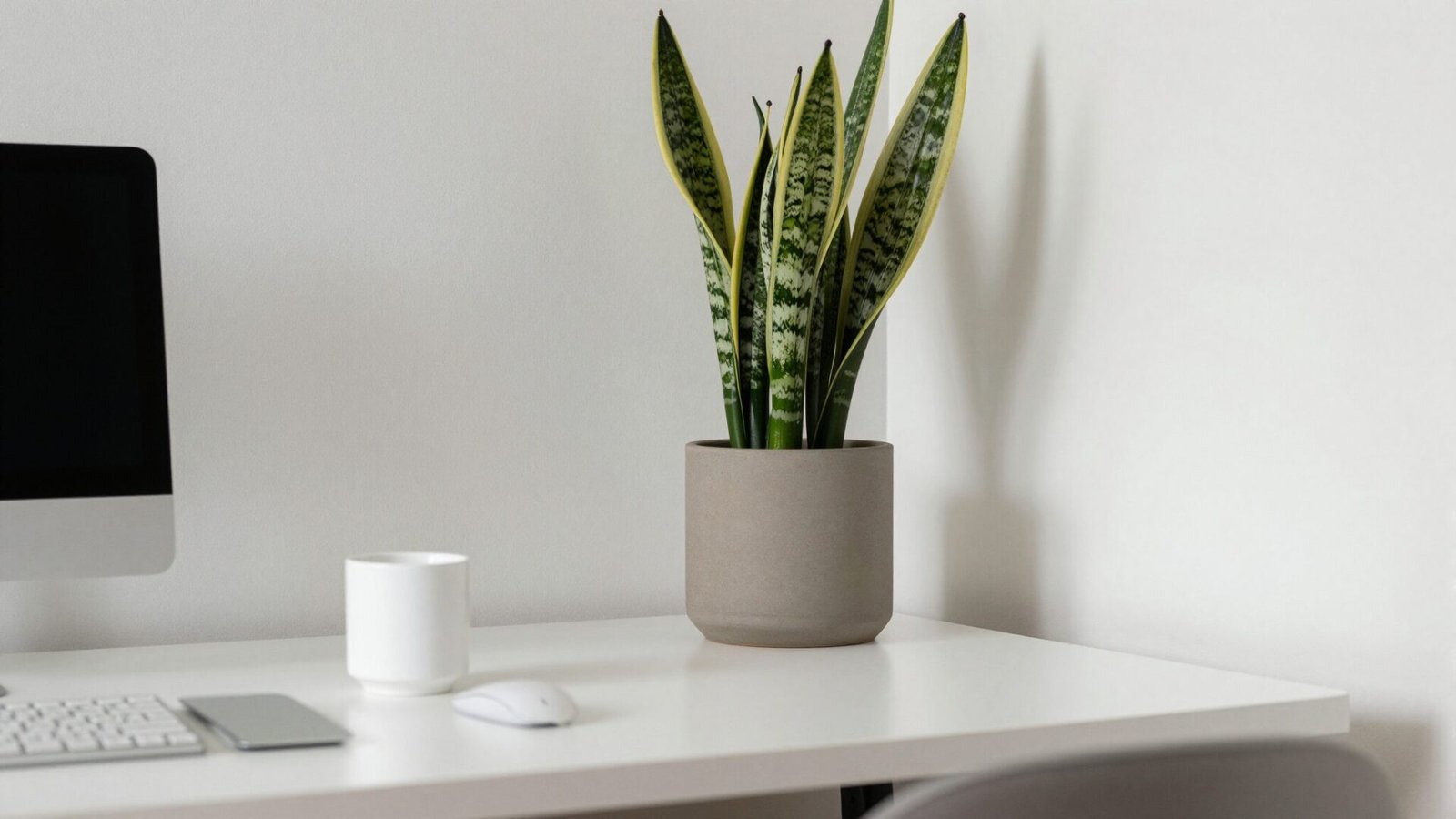
A snake plant’s upright, architectural shape gives a desk corner real structure while asking almost nothing of you in return. It tolerates inconsistent watering and a wide range of light levels, making it one of the most forgiving plants for anyone new to keeping greenery alive at a workspace.
💡 Smart tip: Choose a tall, narrow variety if desk space is limited, since the plant’s height does the visual work without eating into your actual work surface.
⚠️ Mistake to avoid: Overwatering a snake plant out of habit; it stores water in its thick leaves and needs the soil to dry out completely between waterings.
2. Hang Trailing Pothos Above a Shelf for Your Home Office Plants
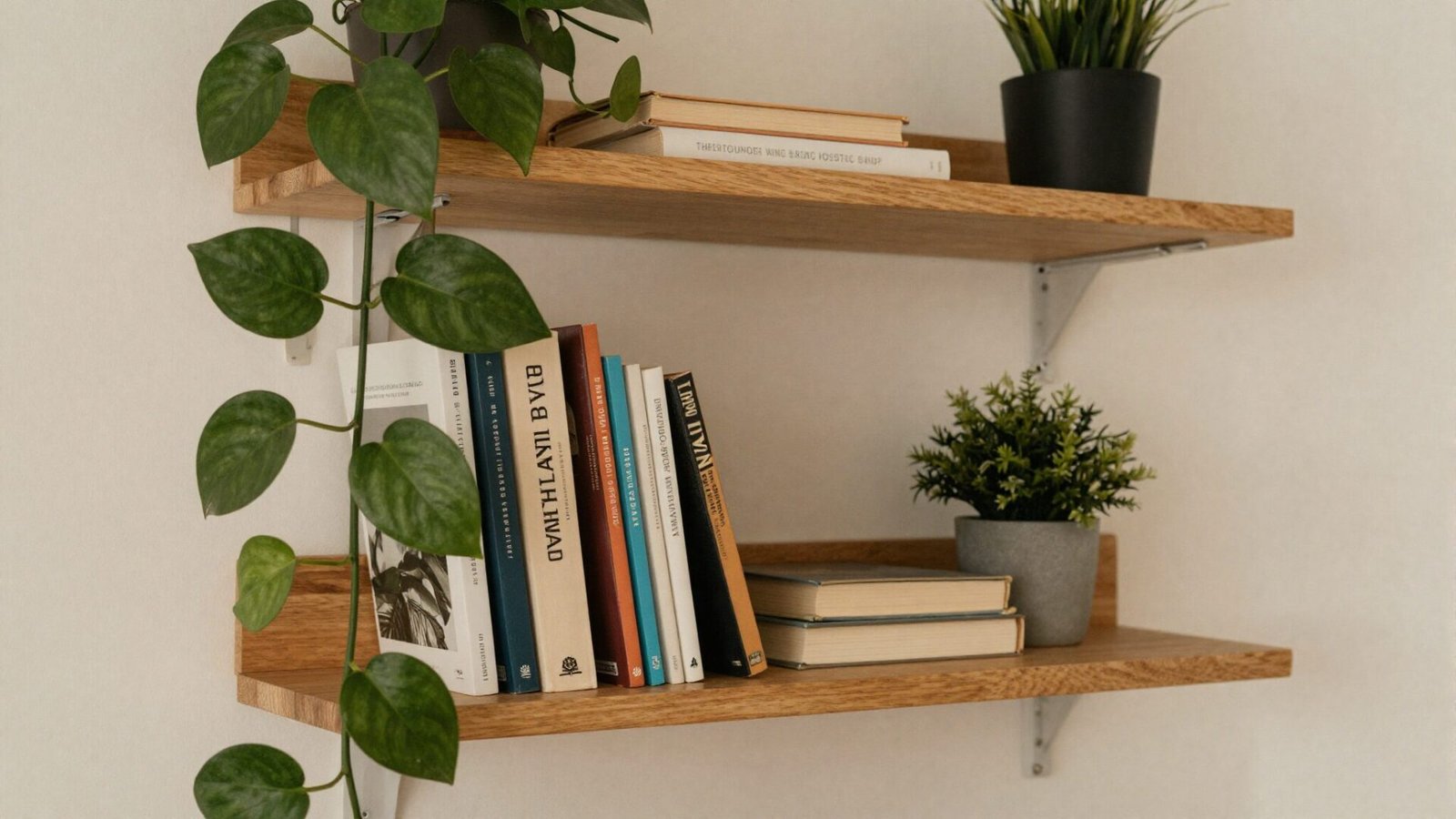
Pothos handles low to medium light better than almost any other trailing plant, making it a reliable choice for an office shelf that doesn’t sit right next to a window. The cascading vines soften the hard lines of shelving and books, breaking up what would otherwise be a flat, uniform surface.
💡 Smart tip: Rotate the pot a quarter turn every couple of weeks so the vines grow evenly rather than leaning entirely toward whatever light source is available.
⚠️ Mistake to avoid: Letting trailing vines grow long enough to tangle with cords or interfere with nearby equipment; trim them back periodically to keep the display tidy.
3. Add a Statement ZZ Plant on the Floor for Your Home Office Plants
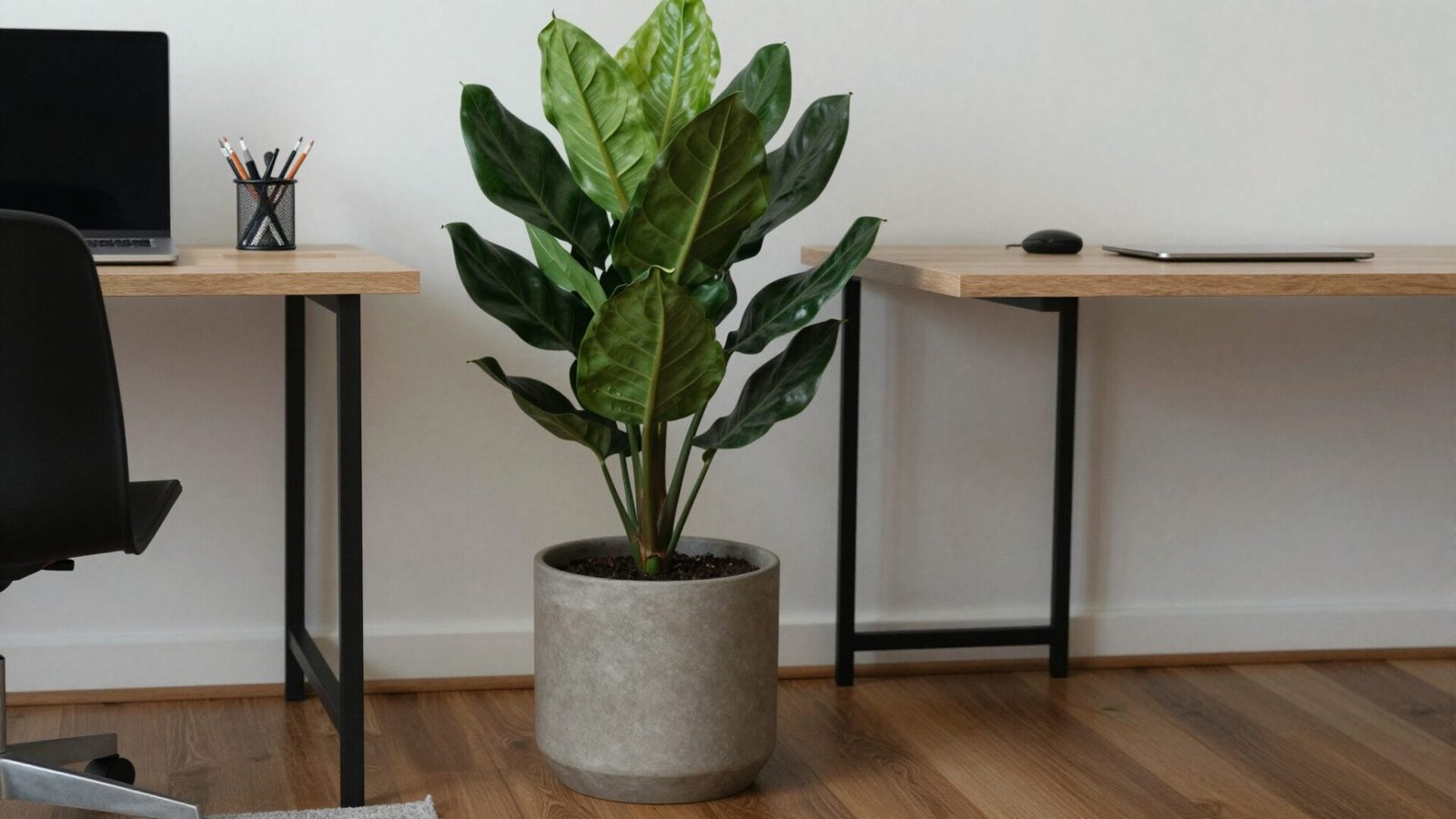
A ZZ plant’s glossy, dark green leaves bring real presence to a floor spot beside the desk, and it genuinely thrives on the kind of inconsistent care a busy home office routine often means. Unlike smaller desk plants, a floor-level statement piece adds scale and grounds the whole room.
💡 Smart tip: Wipe the leaves down with a damp cloth occasionally; ZZ plant foliage is naturally glossy, and dust buildup dulls that reflective quality over time.
⚠️ Mistake to avoid: Placing a ZZ plant directly in a high-traffic walking path; its upright leaves can snap if brushed against repeatedly throughout the day.
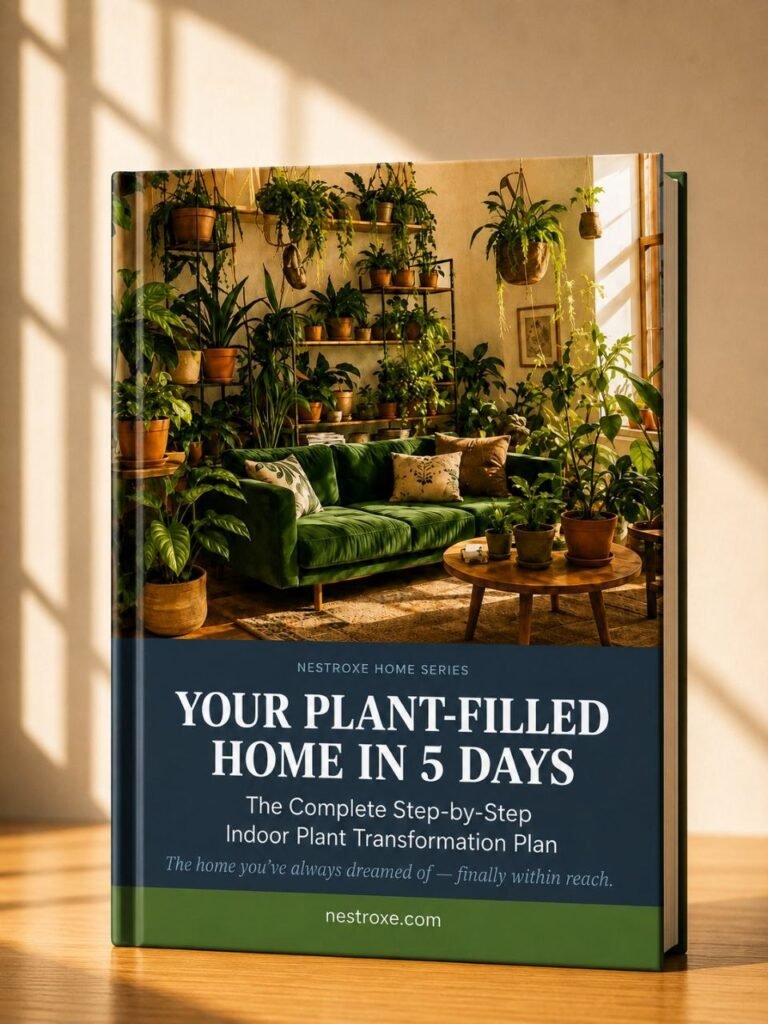
Loving These Ideas? Get the Step-by-Step Guide
Grab the full 5-day eBook and turn these ideas into a finished room.




4. Place a Peace Lily Near the Monitor for Your Home Office Plants
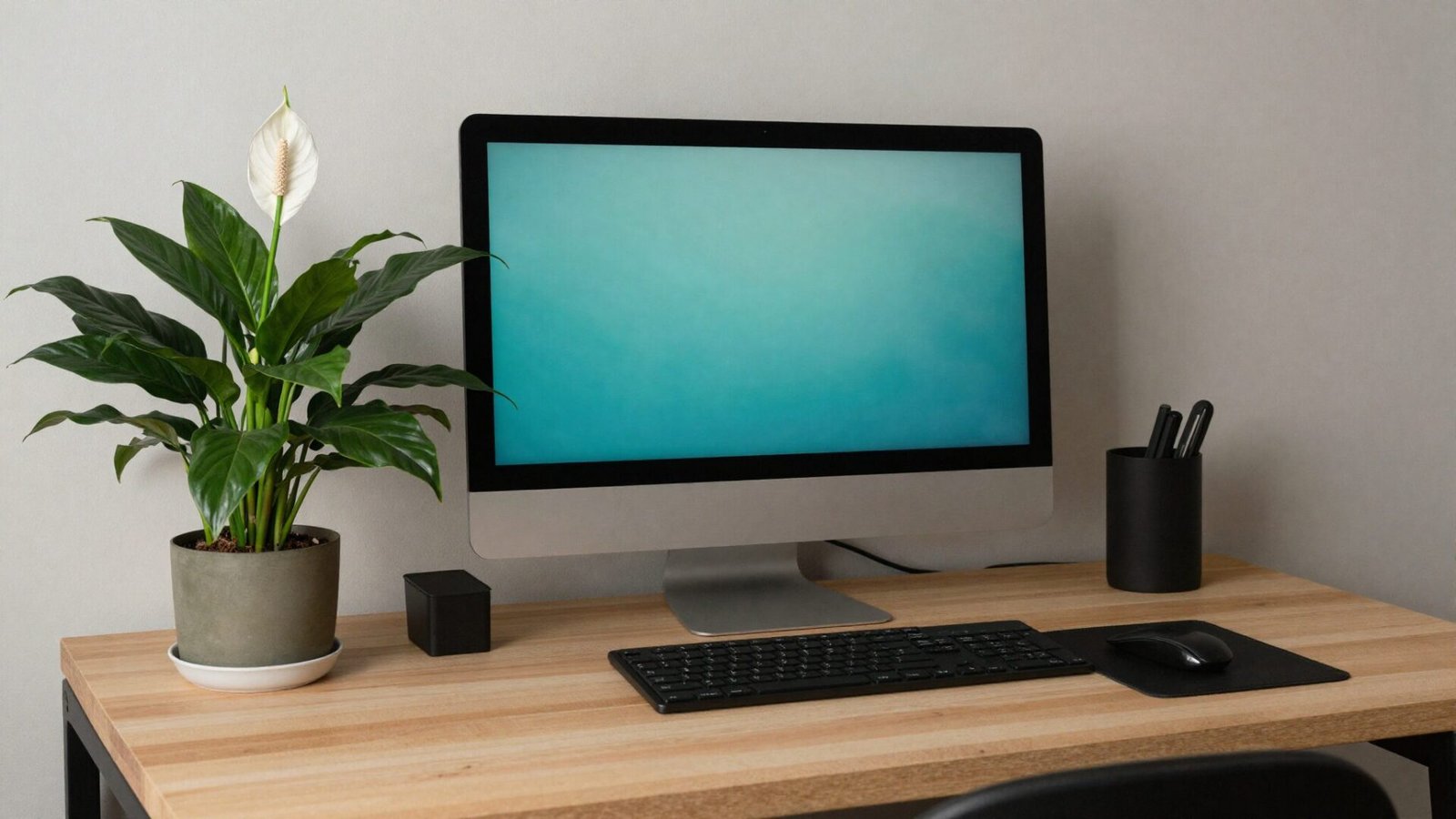
A peace lily’s soft white blooms add a gentle, calming visual break from a screen-heavy desk setup, and it adapts well to the moderate indoor light most offices offer. It’s also one of the more expressive low-light plants, visibly drooping when it needs water and perking back up shortly after.
💡 Smart tip: Use the plant’s own visible wilting as your watering cue rather than sticking to a strict schedule; peace lilies communicate their needs clearly.
⚠️ Mistake to avoid: Placing a peace lily in direct, harsh afternoon sun; the leaves can scorch even though the plant otherwise tolerates lower light well.
5. Light Up a Windowless Corner for Your Home Office Plants
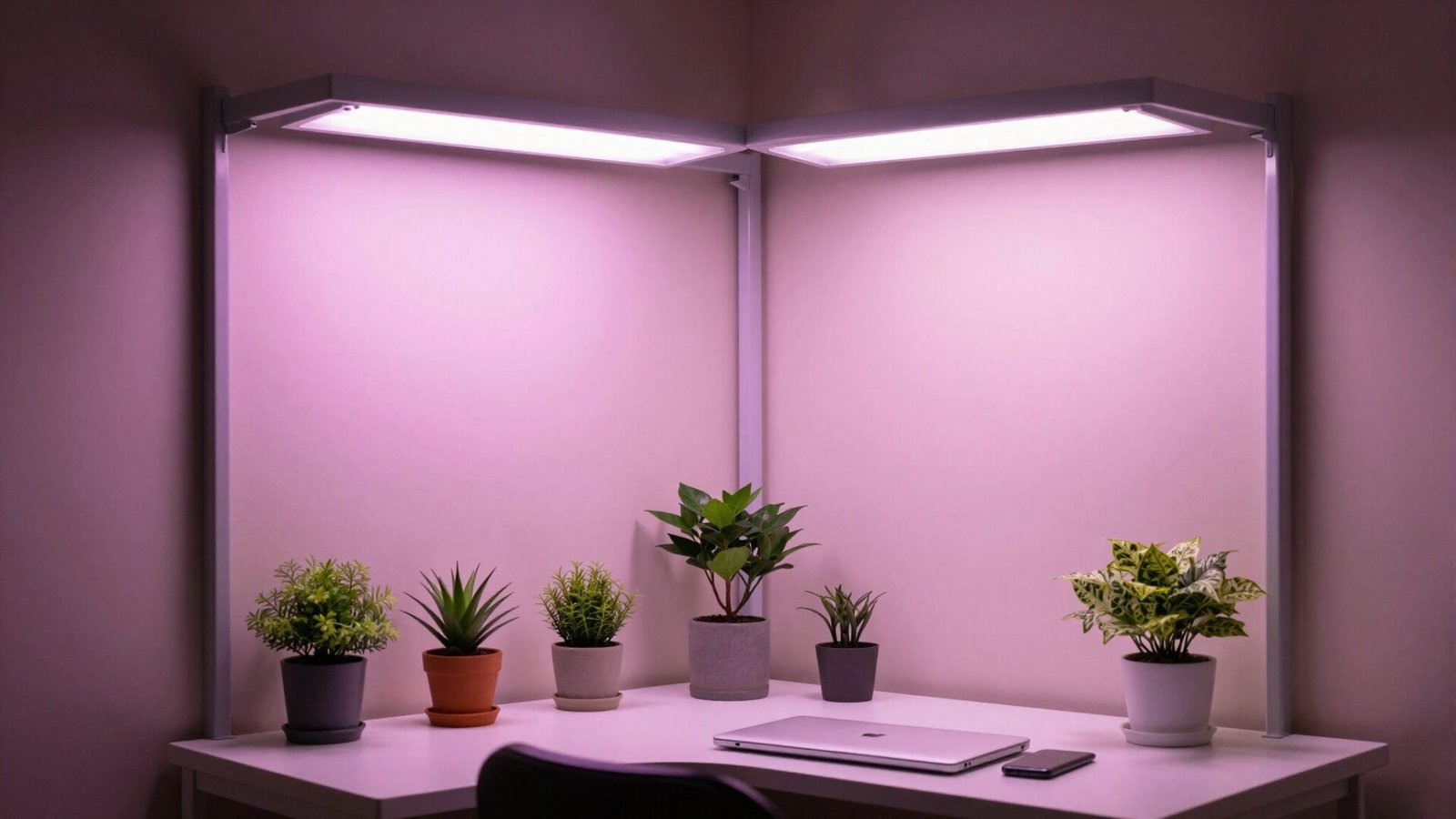
A home office without a window doesn’t have to skip plants entirely — a simple LED grow light gives even the darkest corner enough consistent light to keep greenery genuinely healthy. It’s a practical fix rather than pretending a living plant can survive on ambient room light alone.
💡 Smart tip: Put the grow light on a timer set for around 10 to 12 hours a day, mimicking a natural light cycle without needing to remember to turn it on and off manually.
⚠️ Mistake to avoid: Positioning the grow light too far from the plants; most LED grow lights need to sit within a foot or so of the foliage to be genuinely effective.
6. Cascade a Vine Over a Bookshelf for Your Home Office Plants
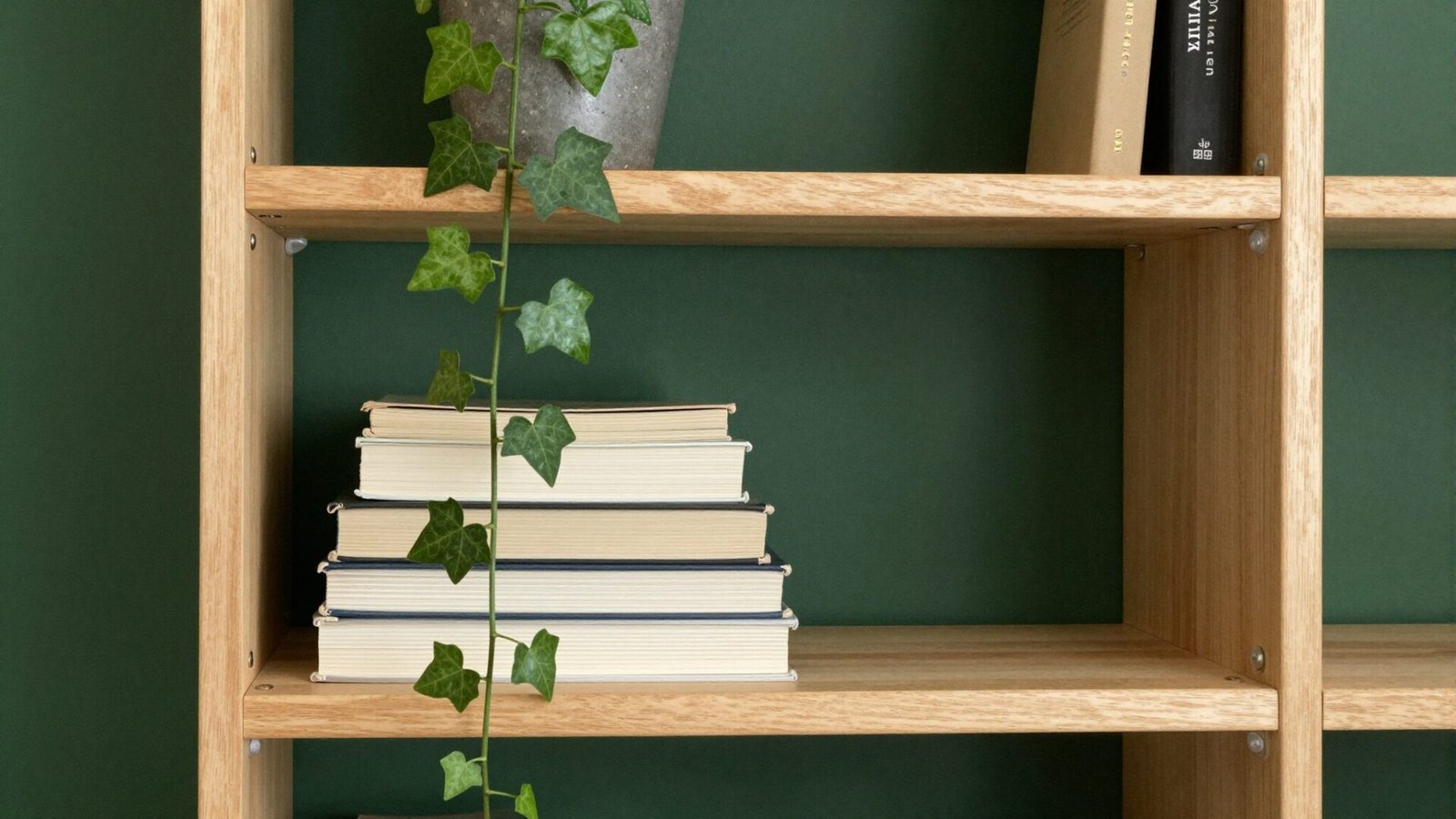
Letting a trailing vine spill down over stacked books breaks up the visual monotony of a bookshelf without requiring any rearranging of the books themselves. The green cascading down the shelf’s edge draws the eye and adds real life to what’s often a purely functional, static piece of furniture.
💡 Smart tip: Choose a vine variety with smaller leaves, like ivy, for a bookshelf setting so the plant doesn’t overwhelm the visual scale of the books and shelving.
⚠️ Mistake to avoid: Setting a vine planter directly on unprotected wood shelving; use a saucer or waterproof liner to prevent water rings from forming underneath.
7. Add a Small Desk Terrarium for Your Home Office Plants
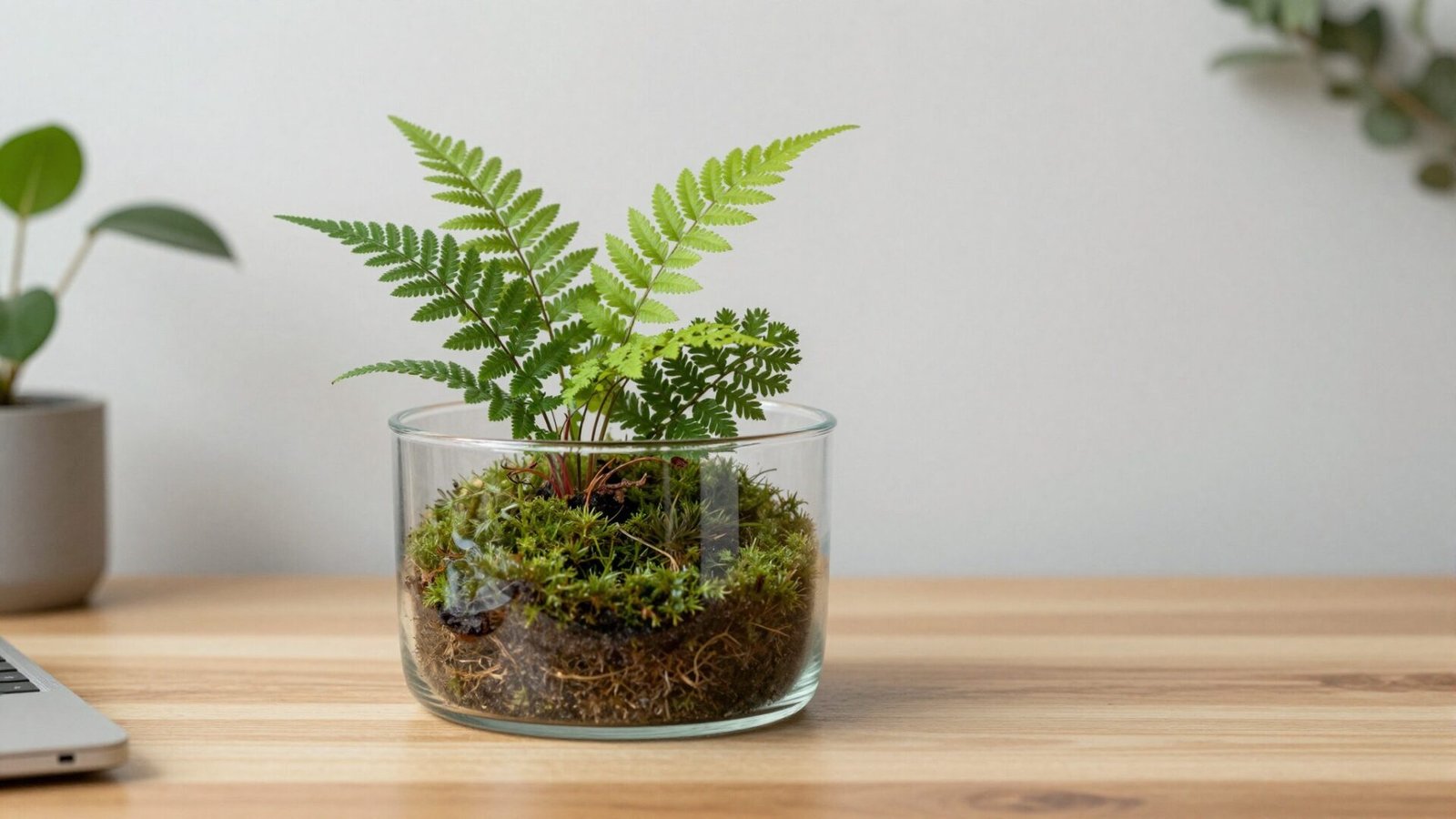
A compact terrarium brings a self-contained, low-maintenance dose of greenery to a desk without competing for space the way a larger plant would. The enclosed glass also holds humidity naturally, which suits ferns and moss that would otherwise struggle in a typical dry office environment.
💡 Smart tip: Choose a terrarium with a removable lid so you can control humidity and airflow manually rather than letting condensation build up unchecked.
⚠️ Mistake to avoid: Overwatering inside a closed terrarium; the enclosed environment retains moisture far longer than an open pot and needs noticeably less frequent watering.
8. Choose a Cast Iron Plant for Dark Corners for Your Home Office Plants
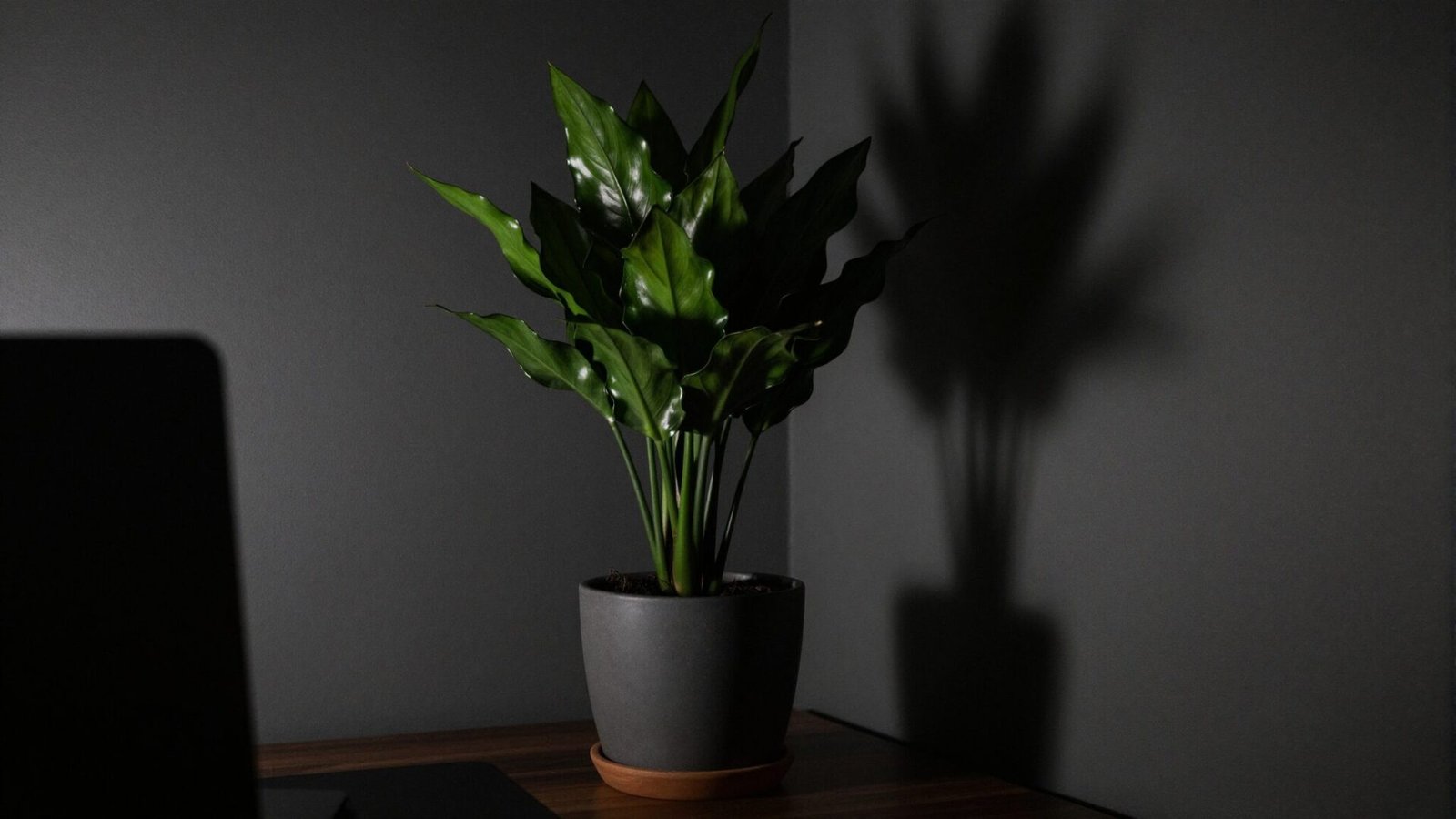
True to its name, the cast iron plant tolerates genuinely dim corners better than almost any other houseplant, making it the right choice for the one spot in the office that never sees direct light. It’s an unfussy, deep green presence that fills a shadowy corner without demanding much attention.
💡 Smart tip: Let the soil dry out fully between waterings; cast iron plants are far more tolerant of neglect than of consistently soggy roots.
⚠️ Mistake to avoid: Expecting fast growth from a cast iron plant; it’s naturally slow-growing, which is part of why it tolerates low light so well in the first place.
9. Layer Plants at Different Heights
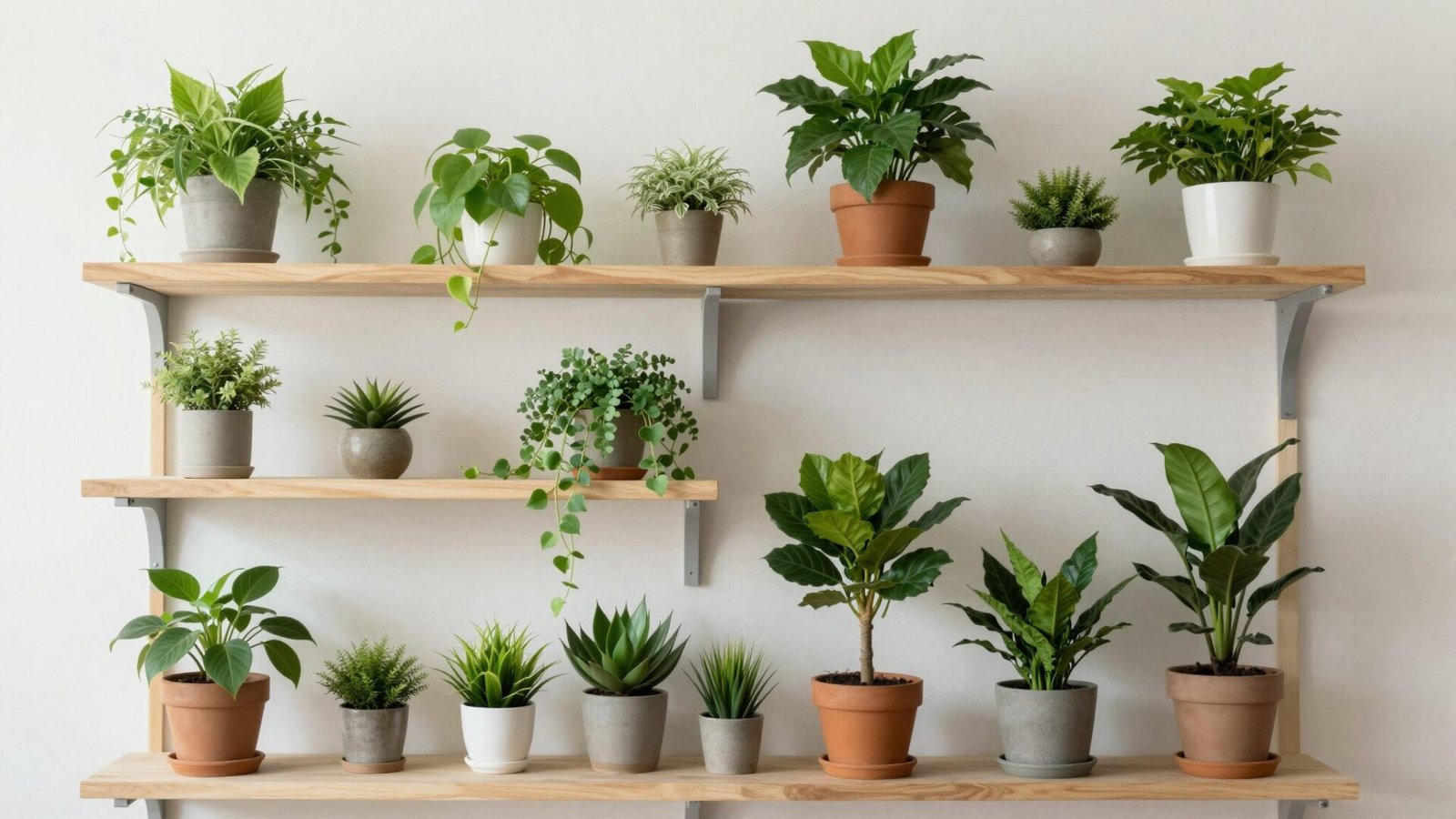
Grouping a few plants of different sizes on a single shelf creates visual rhythm that a row of identical pots never quite achieves. The varying heights guide the eye naturally across the display, making even a small collection of plants feel considered and intentional.
💡 Smart tip: Use small risers or stacked books under shorter pots to create additional height variation without needing to buy new furniture.
⚠️ Mistake to avoid: Grouping plants with very different light and water needs directly next to each other; check compatibility before assuming a shared care routine will work for all of them.
10. Style a Vase With Cut Branches
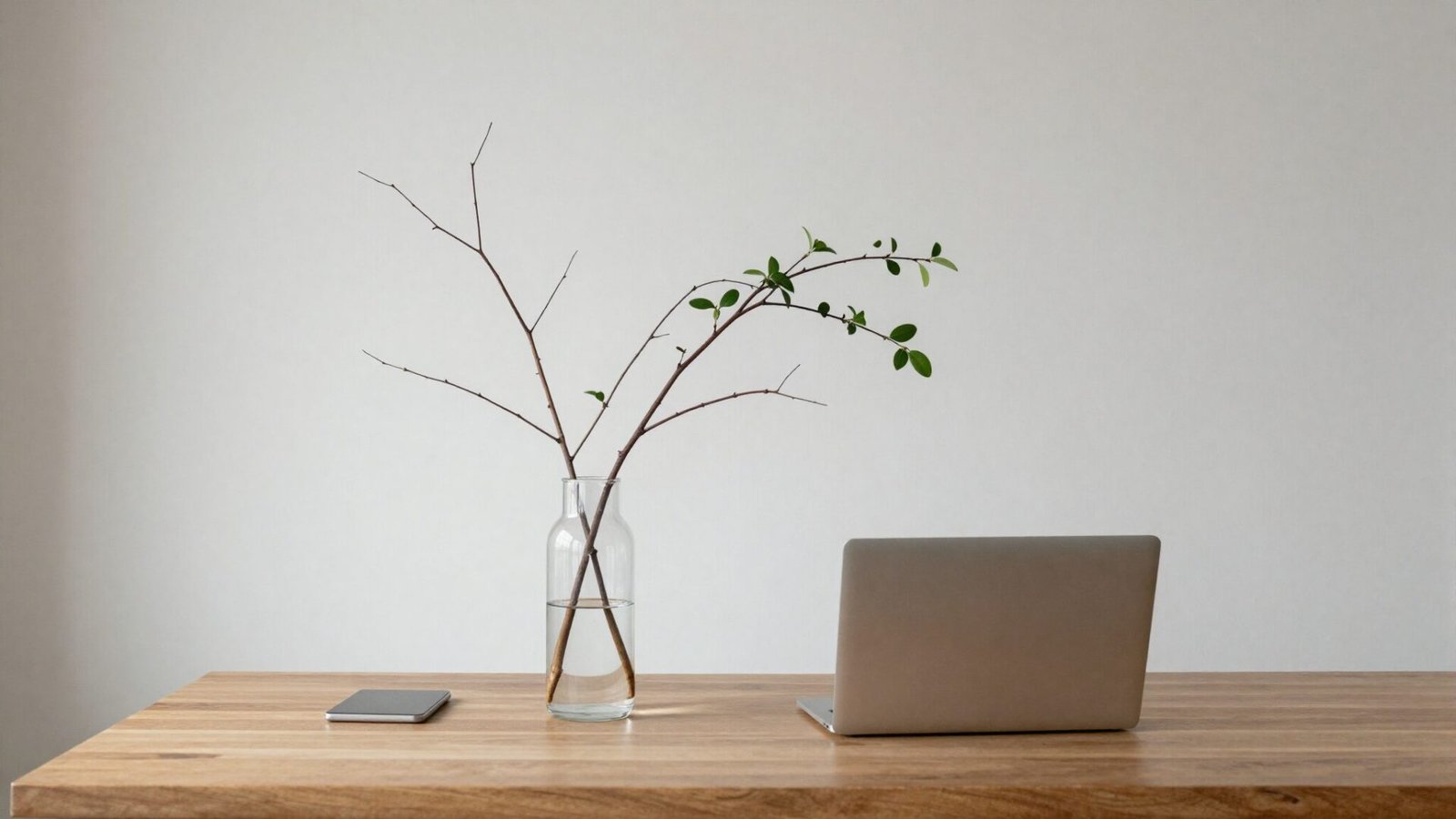
A simple glass vase with a few slender branches brings a minimal, almost sculptural touch of nature to a desk without any of the care commitment a living potted plant requires. It’s a quiet, low-maintenance option for anyone who wants greenery’s calming effect without adding another thing to remember to water.
💡 Smart tip: Choose branches with an interesting natural shape or a few remaining leaves, since the sparse arrangement depends on the branch itself having real visual character.
⚠️ Mistake to avoid: Leaving cut branches in stagnant water for too long without changing it; fresh water every week or two keeps the display looking clean rather than murky.
11. Let a Philodendron Cascade Down a Shelf
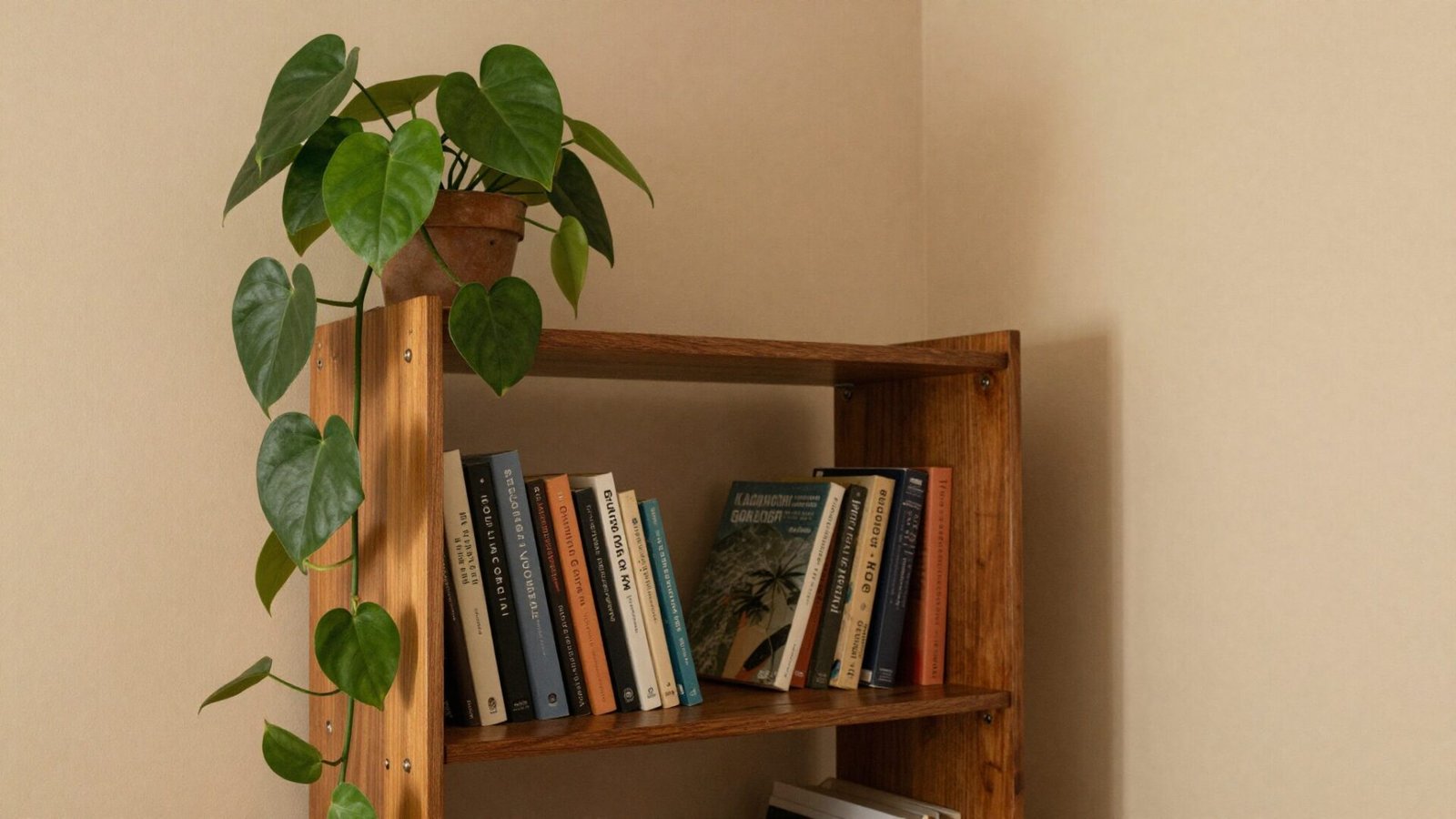
A heart-leaf philodendron trails gracefully down the side of a bookshelf, adding a lush, relaxed quality that structured furniture alone can’t provide. It’s one of the more forgiving trailing plants for a home office, adapting well to moderate indoor light and inconsistent watering schedules.
💡 Smart tip: Pinch back the growing tips occasionally to encourage a fuller, bushier trail rather than a single long, thin vine.
⚠️ Mistake to avoid: Letting a philodendron sit in a pot without drainage holes; standing water at the base is one of the fastest ways to cause root rot in this otherwise easygoing plant.
12. Train a Vine Up a Moss Pole
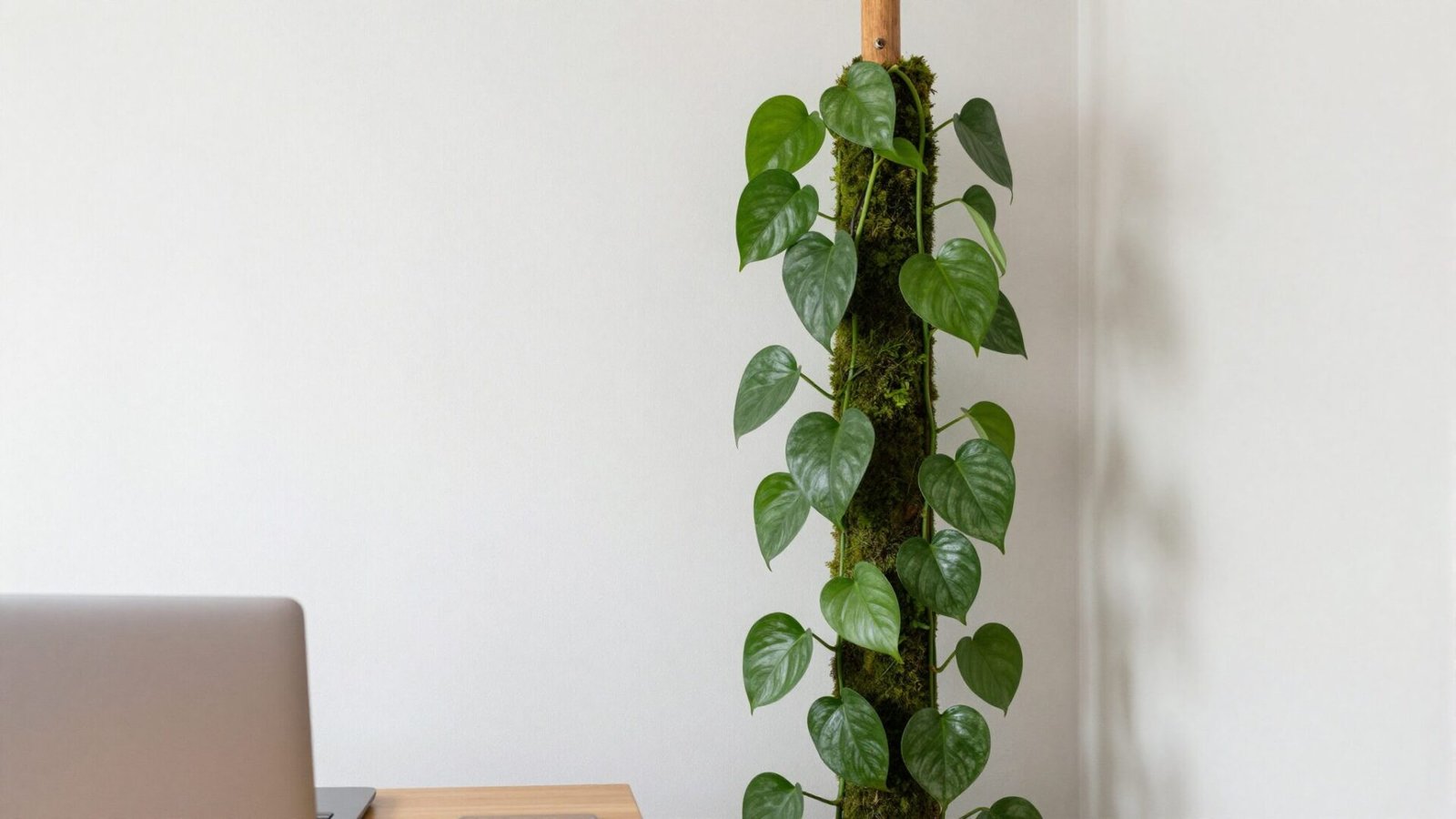
Rather than letting a vine trail downward, training it to climb a moss pole creates a genuinely sculptural, vertical green column in a corner of the office. It’s a striking alternative to the typical trailing or floor-plant look, and it makes efficient use of vertical space in a smaller room.
💡 Smart tip: Keep the moss pole consistently misted, since the vine’s aerial roots attach and climb more readily when the moss stays slightly damp.
⚠️ Mistake to avoid: Forcing a young vine onto a pole before it has enough length to wrap around comfortably; gently guide and secure new growth as it develops rather than all at once.
13. Display a Chinese Evergreen on the Credenza
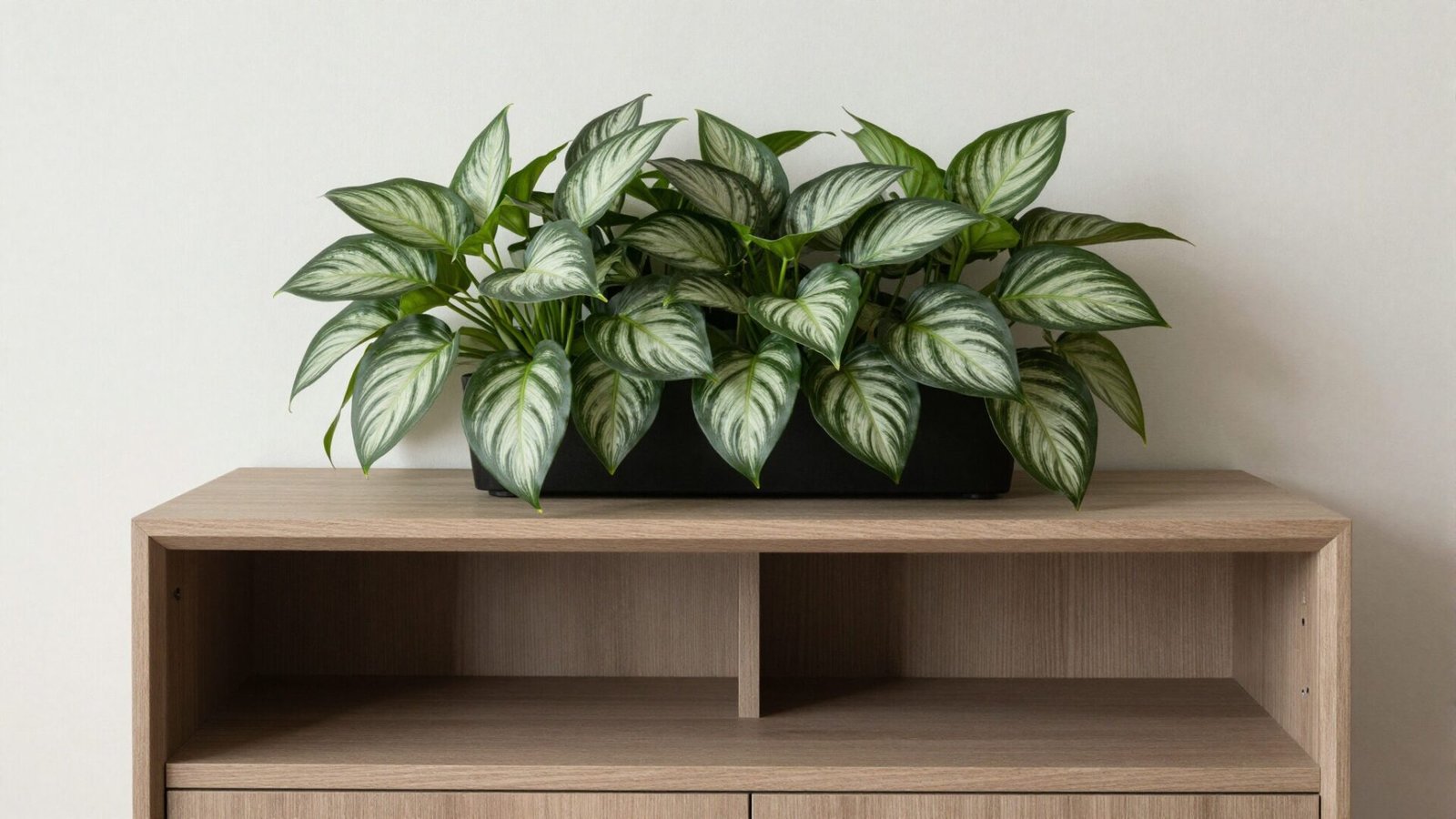
A Chinese evergreen’s patterned silver-green leaves add real visual texture to a low credenza or cabinet, and it’s one of the most tolerant plants available for offices with fluorescent or limited natural light. It brings pattern and color variation to a display without needing a flowering plant to do it.
💡 Smart tip: Choose a variety with more silver or white variegation for the lowest-light spots, since more solid green varieties generally need slightly brighter conditions to keep their color vivid.
⚠️ Mistake to avoid: Exposing a Chinese evergreen to cold drafts near an exterior door or drafty window; this plant is notably more sensitive to sudden temperature drops than other low-light options.
Effort & Cost Snapshot
| Idea | Effort | Approx. Cost |
|---|---|---|
| 1. Snake Plant Desk Corner | Low (purchase and place) | $20–$70 |
| 2. Hanging Pothos on Shelf | Low (DIY install) | $15–$50 |
| 3. Statement ZZ Plant | Low (purchase and place) | $30–$100 |
| 4. Peace Lily Near Monitor | Low (purchase and place) | $20–$60 |
| 5. Grow Light Corner | Low–Medium (DIY install) | $30–$150 |
| 6. Trailing Vine on Bookshelf | Low (purchase and place) | $15–$50 |
| 7. Small Desk Terrarium | Low (purchase or DIY) | $25–$100 |
| 8. Cast Iron Plant | Low (purchase and place) | $25–$80 |
| 9. Layered Height Grouping | Low (styling) | $30–$150 |
| 10. Cut Branch Vase Display | Low (purchase and style) | $15–$50 |
| 11. Philodendron Cascade | Low (purchase and place) | $15–$50 |
| 12. Moss Pole Climbing Plant | Low–Medium (DIY setup) | $25–$80 |
| 13. Chinese Evergreen Credenza | Low (purchase and place) | $25–$90 |
You don’t need a bright, window-lined office to bring real greenery into your workday — you just need to match the right plant to the light you actually have. Save this list to Pinterest so you can build your own calm, focused workspace one plant at a time.
Continue Your Home Transformation
Explore the full collection of step-by-step eBooks and get the guide that fits the room you're working on.