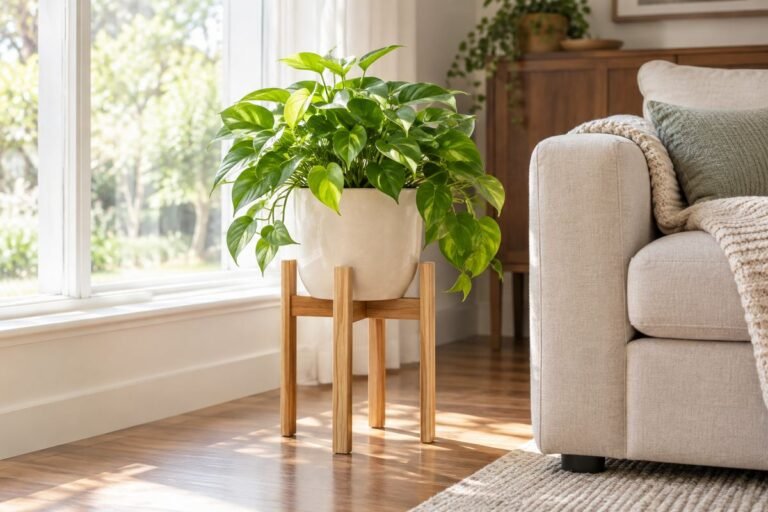
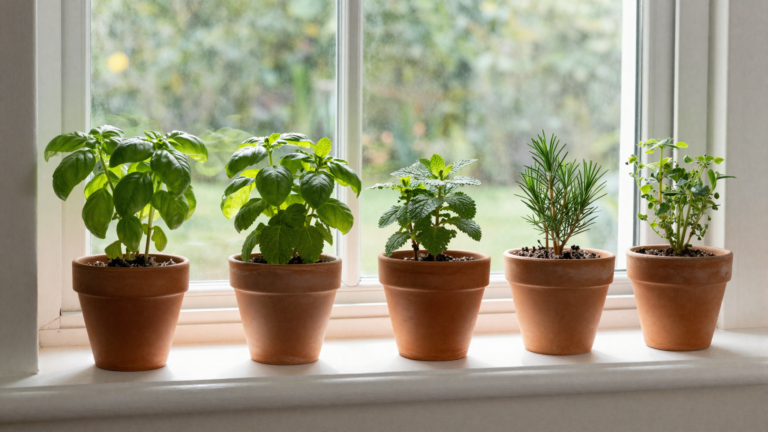
A home office plant can add leaf shape and a small visual pause without occupying the working area. Choose the actual species from the available light and care routine before placing a container beside equipment.
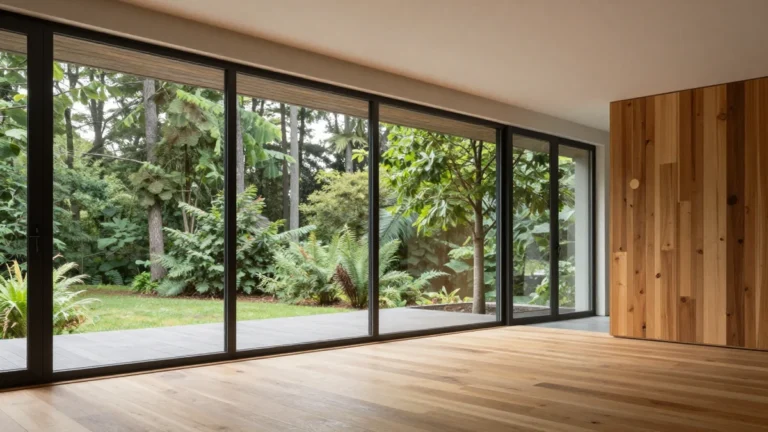
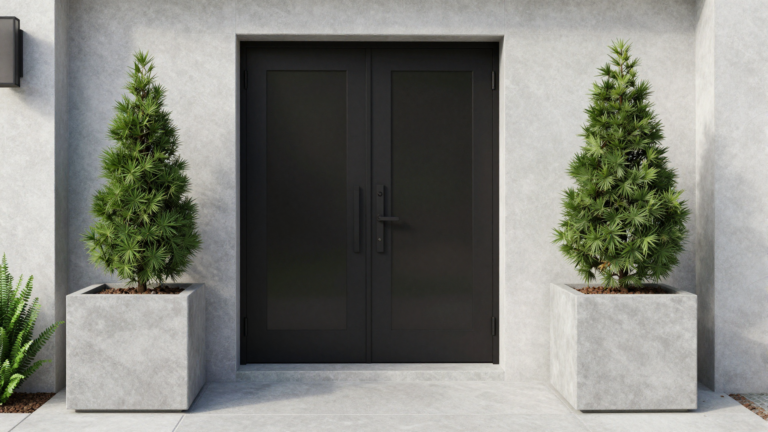
These photographs illustrate display arrangements rather than reliable plant identification or a universal care schedule. Use accurate species information and appropriate household guidance when selecting and caring for a real plant.
Images are illustrative design concepts, including AI-generated replacement images. They are not installation drawings.
Give a Home Office Plant Its Own Care Position
Choose the place where the pot will be watered and drained before completing the display. Next, carry the empty container there from its proposed shelf or stand. For example, a plant that requires moving the monitor every time may belong beside another suitable window. Keep the chosen species information and inspectable pot accessible, and check the route with the office chair in normal use.
1. Use Upright Leaves as a Small Accent
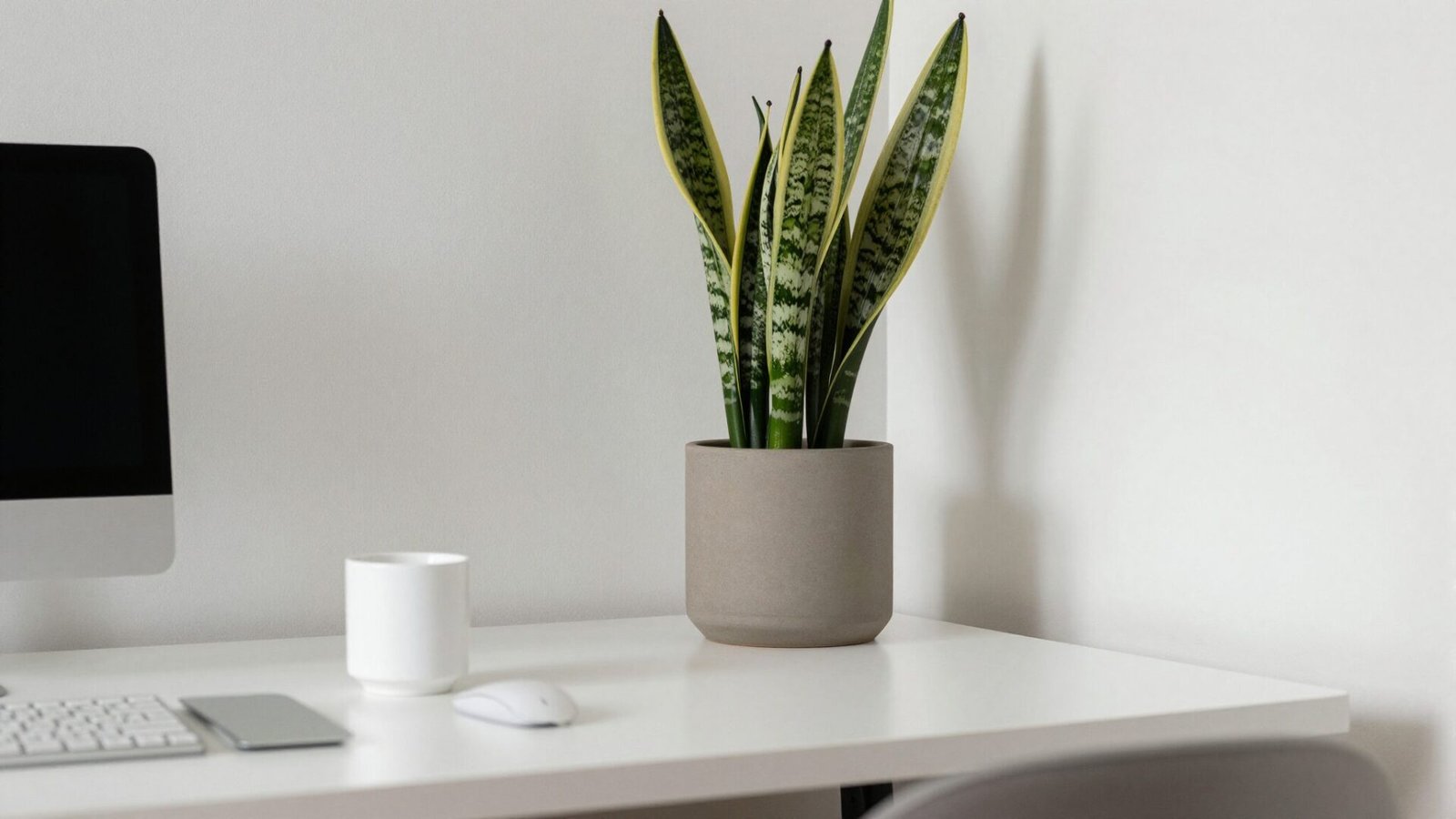
A narrow upright-leaf plant can provide height beside a desk where the actual species and container fit. Keep it outside the main working surface and identify the plant before choosing its care. A small footprint does not mean it needs no light or maintenance.
Try this: Observe the light in the proposed position first.
2. Let a Suitable Trailing Plant Follow a Shelf Edge
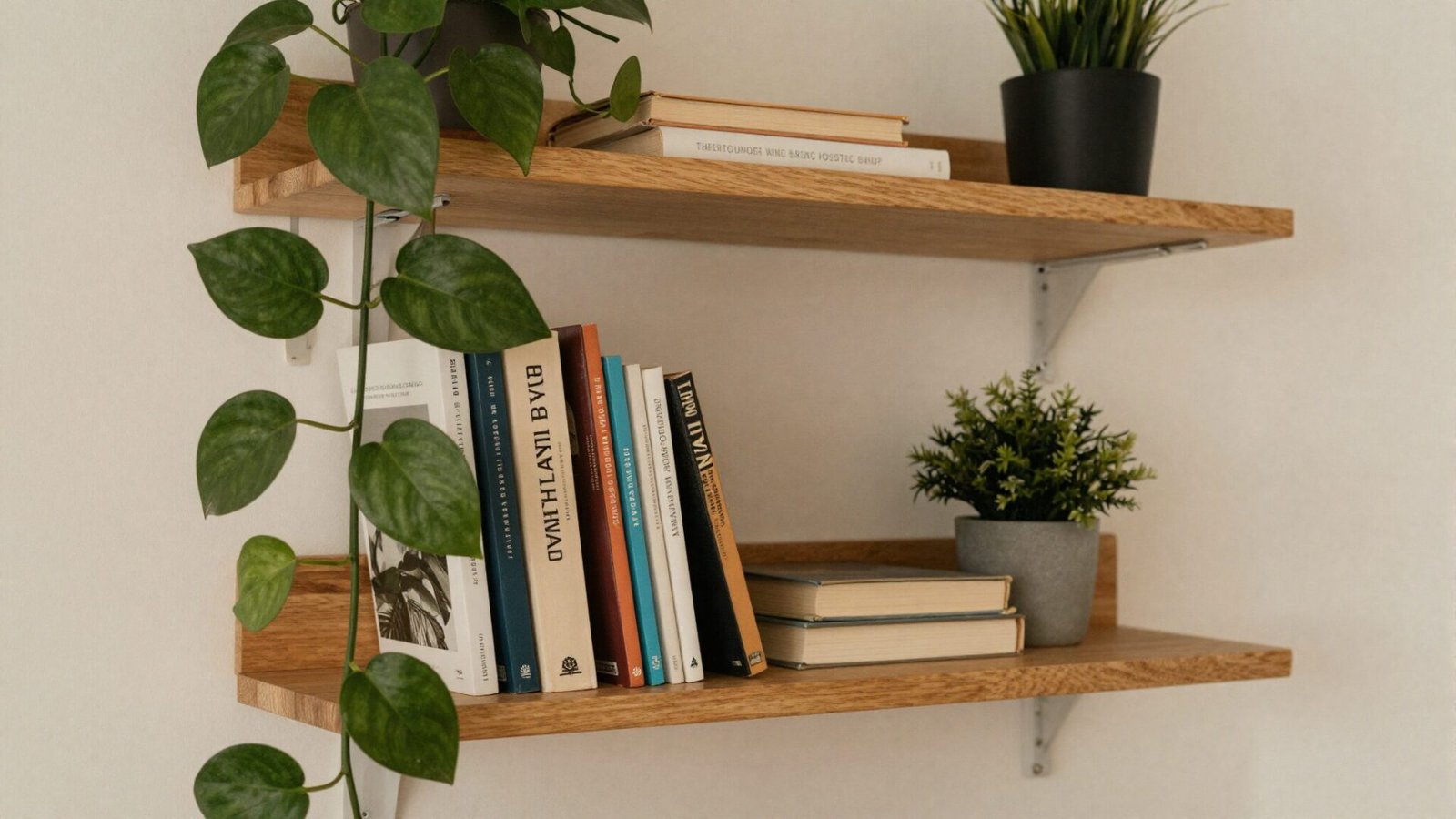
A trailing plant can soften a straight shelf line where its light and support needs are met. Leave access to the pot for care and keep the growth away from equipment and the normal route. Choose a manageable length for the actual workspace.
Try this: Plan where the container will be watered and drained.
3. Give a Larger Leafy Plant a Clear Floor Position
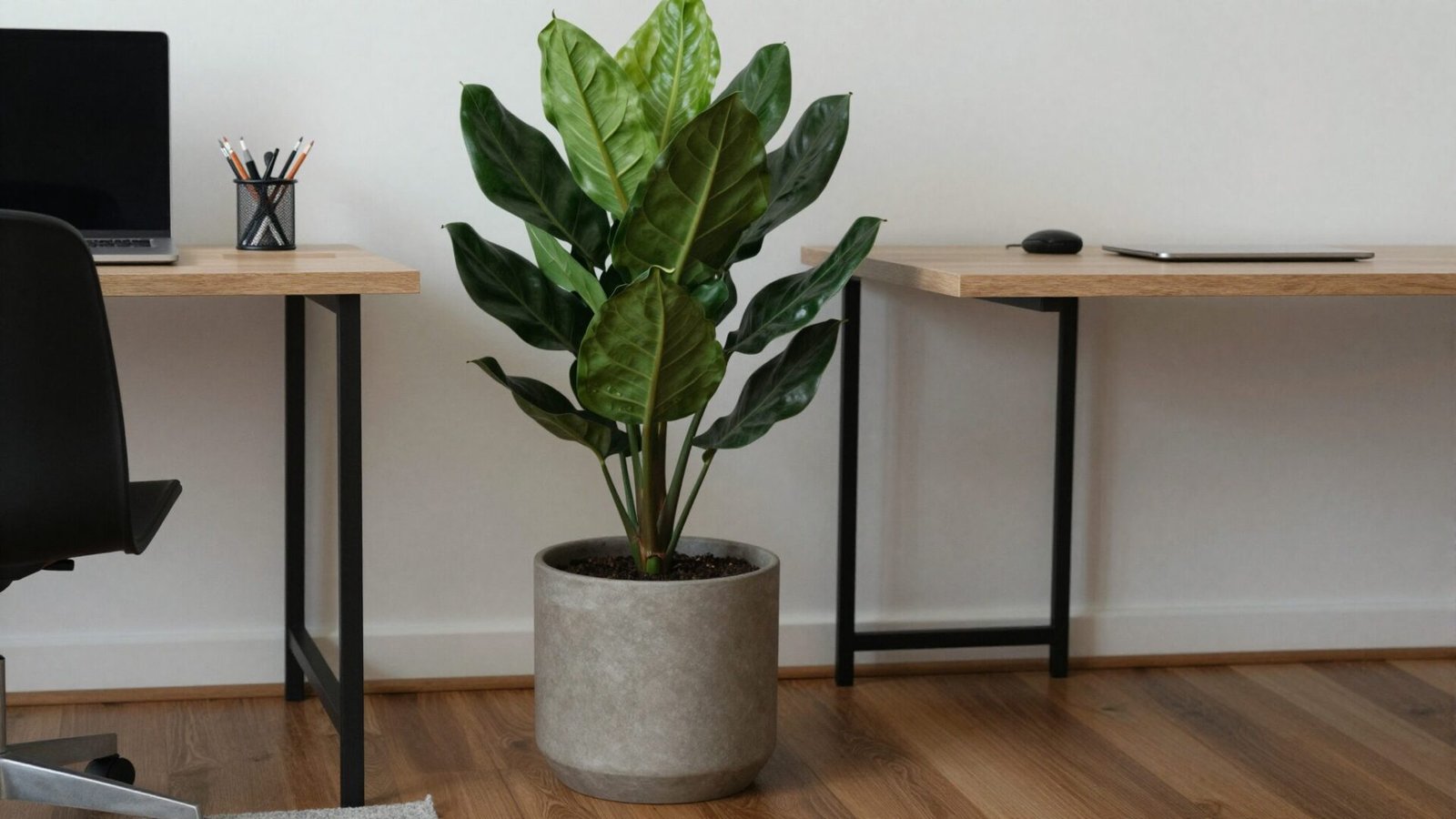
A floor plant can provide a different scale from a small desk pot. Compare mature growth, the container footprint and the species requirements with the actual room. Keep the identified plant name and its care information with the actual pot.
Try this: Keep the route and nearby furniture movement clear.
4. Keep a Small Plant Separate From the Equipment
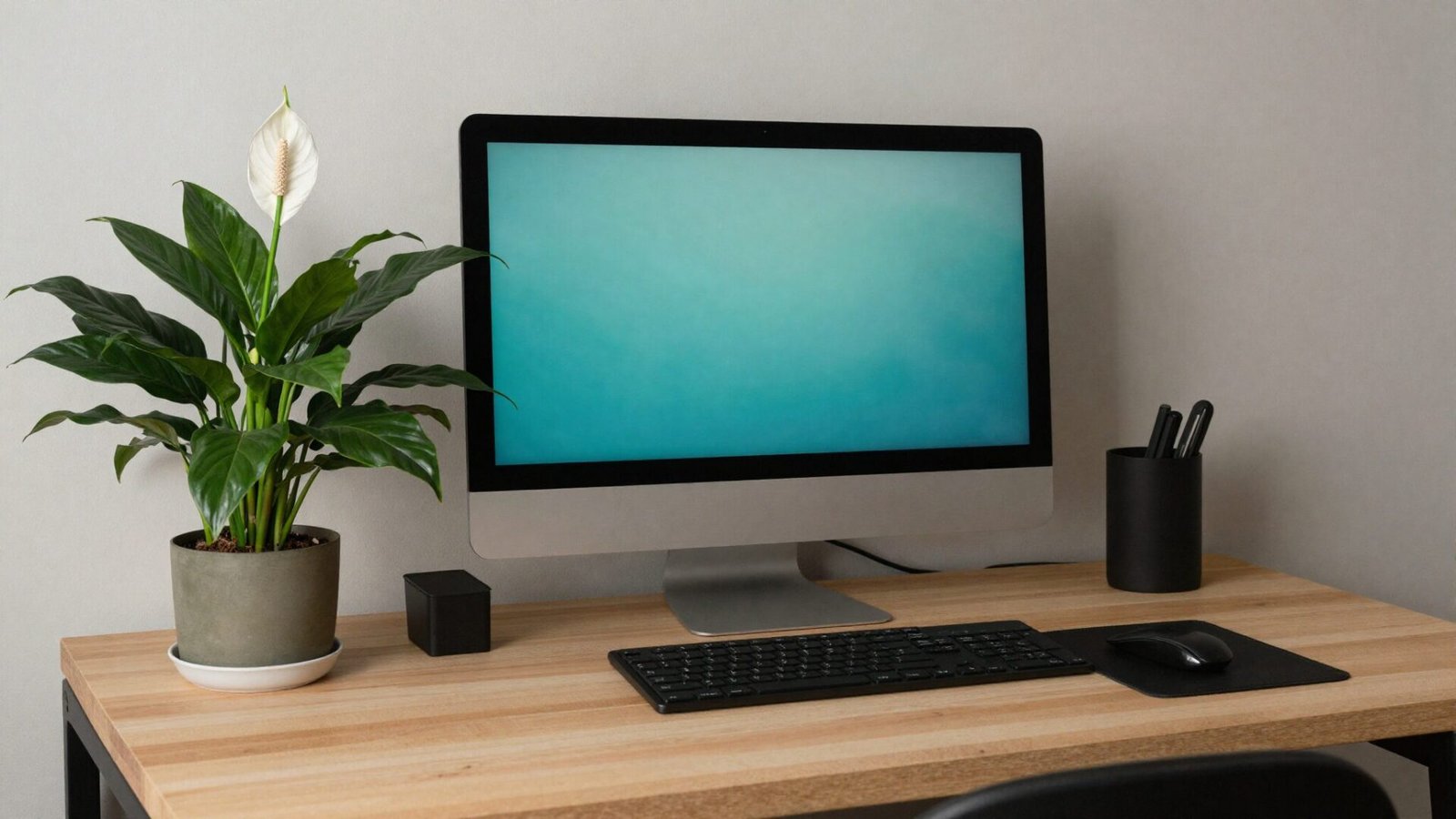
A modest plant display can sit near a monitor without occupying its normal controls or workspace. Identify the actual species and check its growing needs. Do not use visible wilting as a universal watering instruction for every plant or assume the display provides a health effect.
Try this: Move the container to an appropriate place for watering and drainage.
5. Choose Supplemental Plant Lighting From Actual Needs
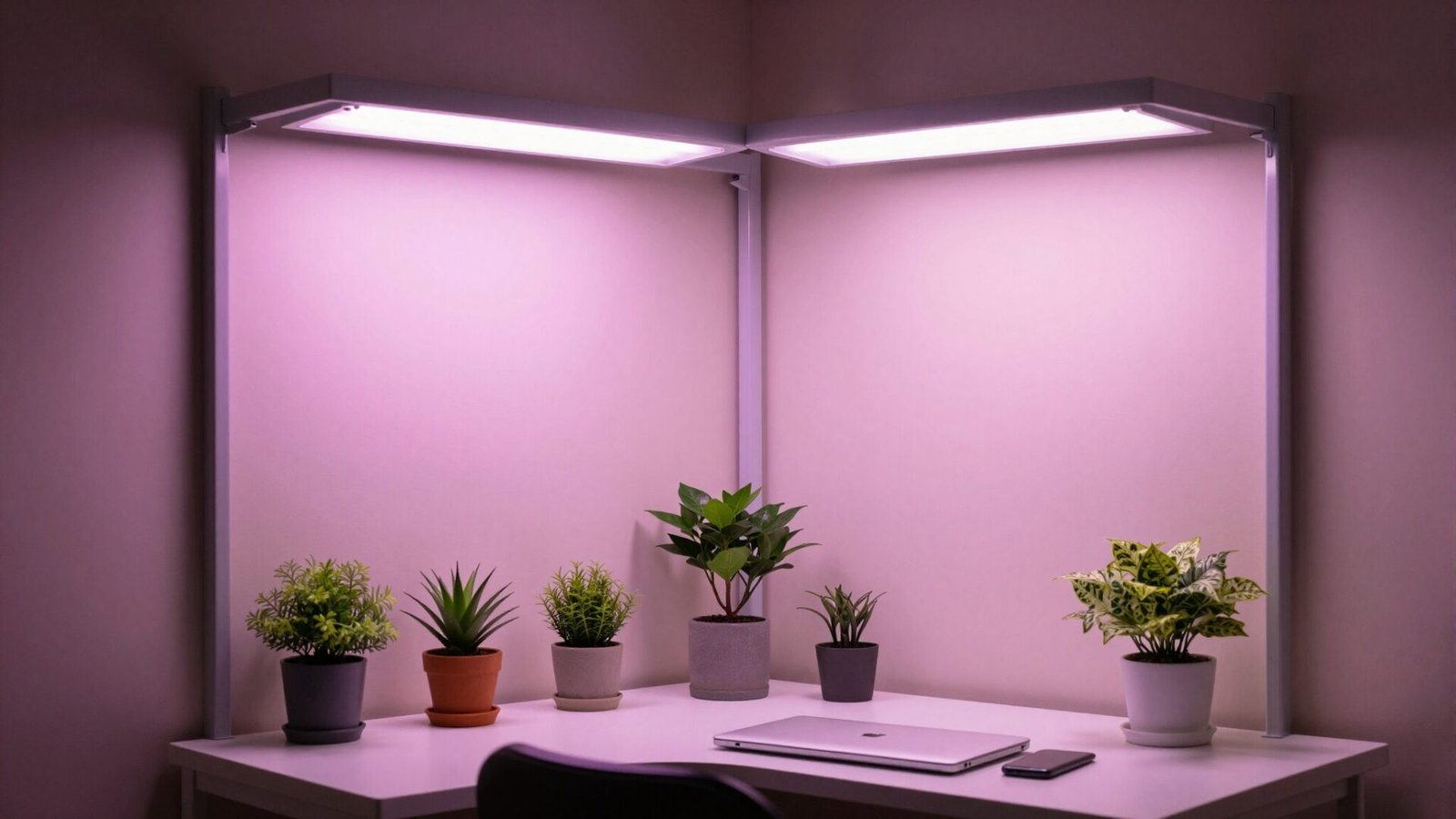
A suitable plant light can support an indoor growing setup when its output and use match the actual plants. Follow the equipment guidance and reliable species information for position and duration.
Try this: Choose the plants and light together rather than treating ordinary room light as sufficient.
6. Keep Shelf Plants Reachable for Care
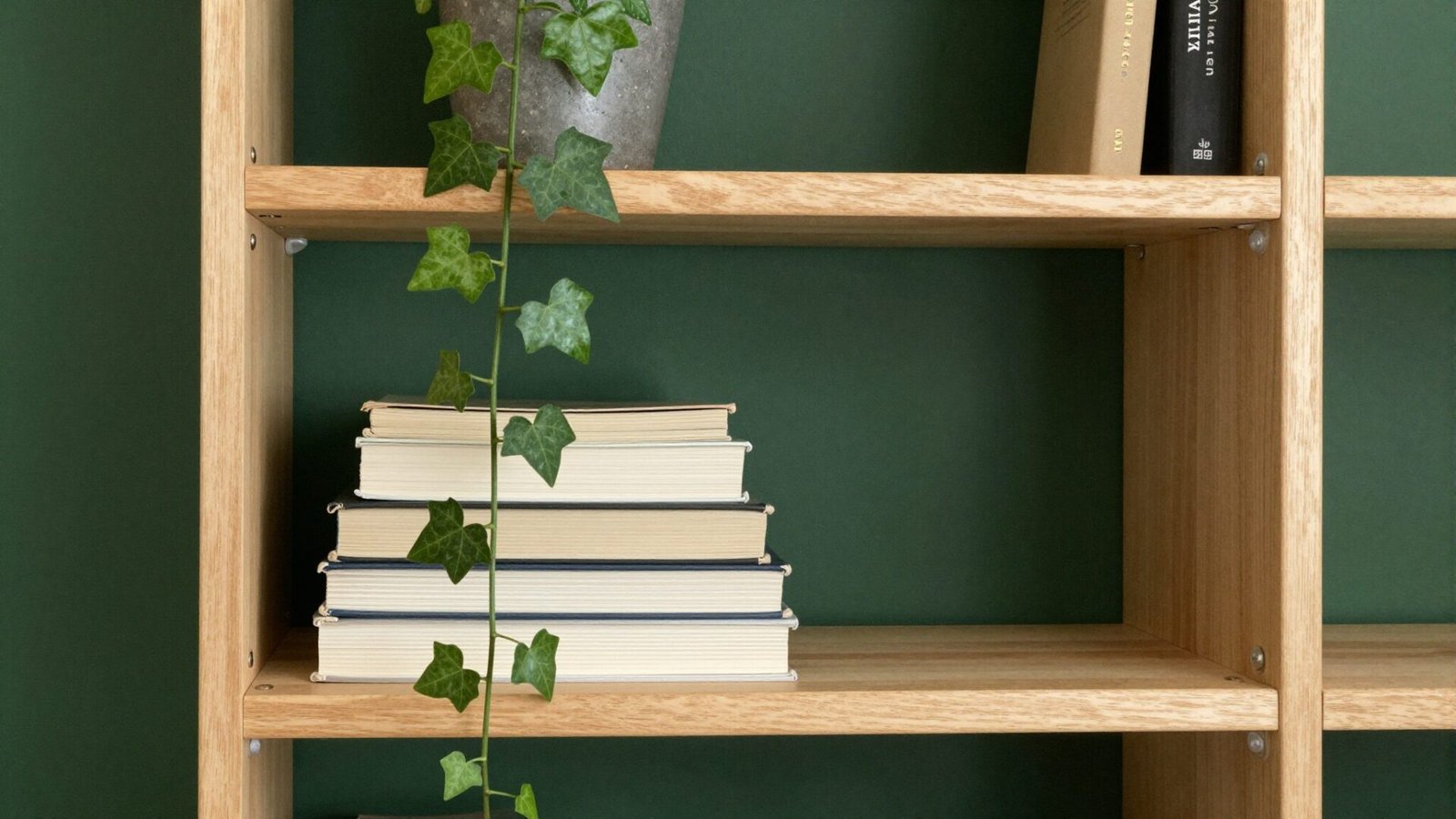
A vine can relate a shelf to nearby books where support and light fit. Use an appropriate container and protect the actual surface according to product guidance. Keep watering and trimming practical instead of allowing the display to hide access to the pot.
Try this: Leave enough room to remove the plant without moving the whole shelf.
7. Treat a Small Glass Plant Display as a Growing Setup
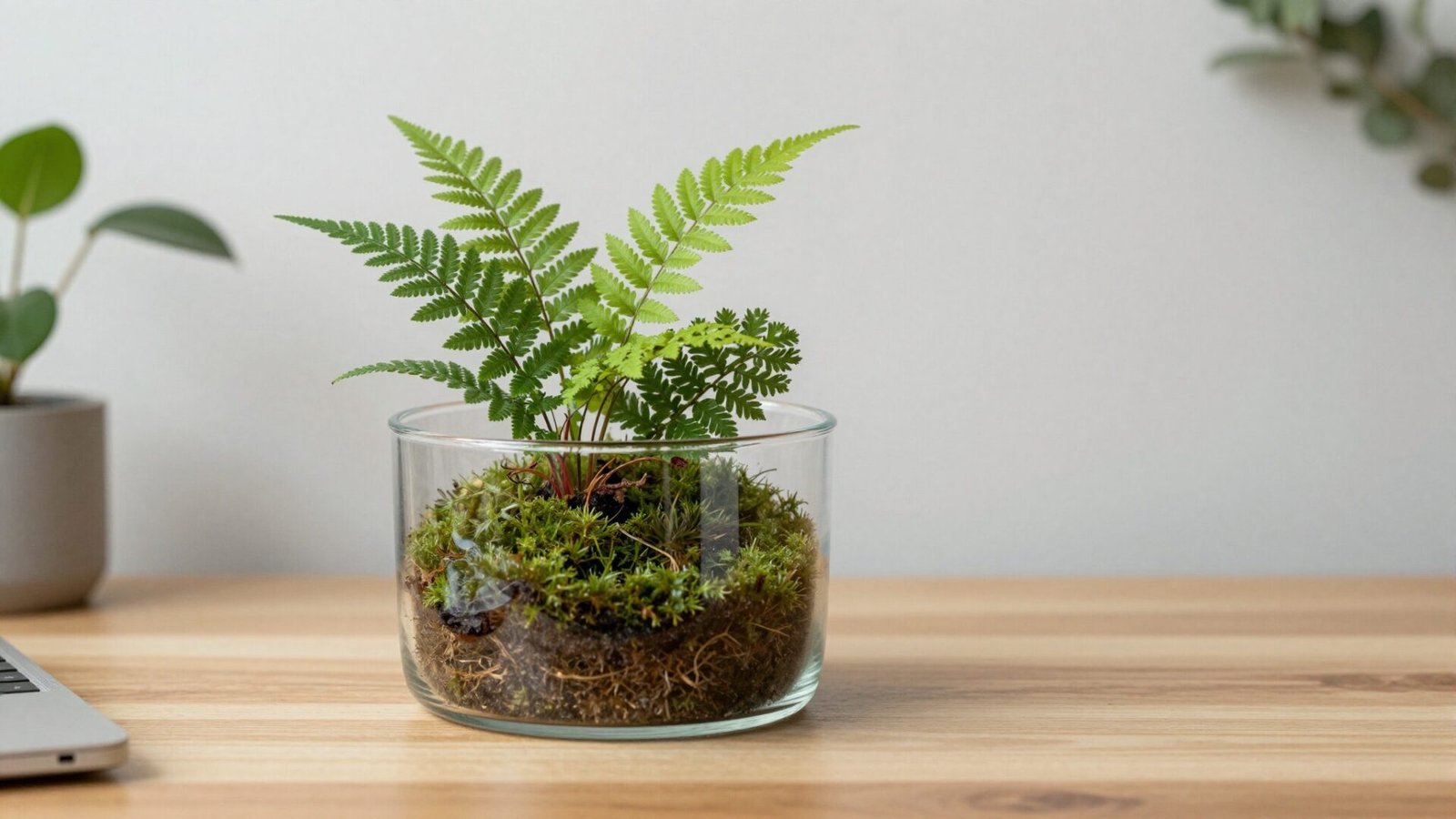
A glass container can provide a distinct visual display, but its contents still need appropriate growing conditions. Identify the plants and follow reliable guidance for the actual open or closed setup. A terrarium label does not establish low maintenance or suitability for every fern.
Try this: Plan the care routine before choosing the container.
8. Match the Plant to the Available Light

Choose the actual species for the available light and care routine rather than assuming a decorative dark corner can support a plant. Identify the plant and use reliable growing information. Check the route past the pot with the office chair in its normal position.
Try this: Observe the available light before choosing the display position.
9. Keep a Multiheight Display Within Practical Support
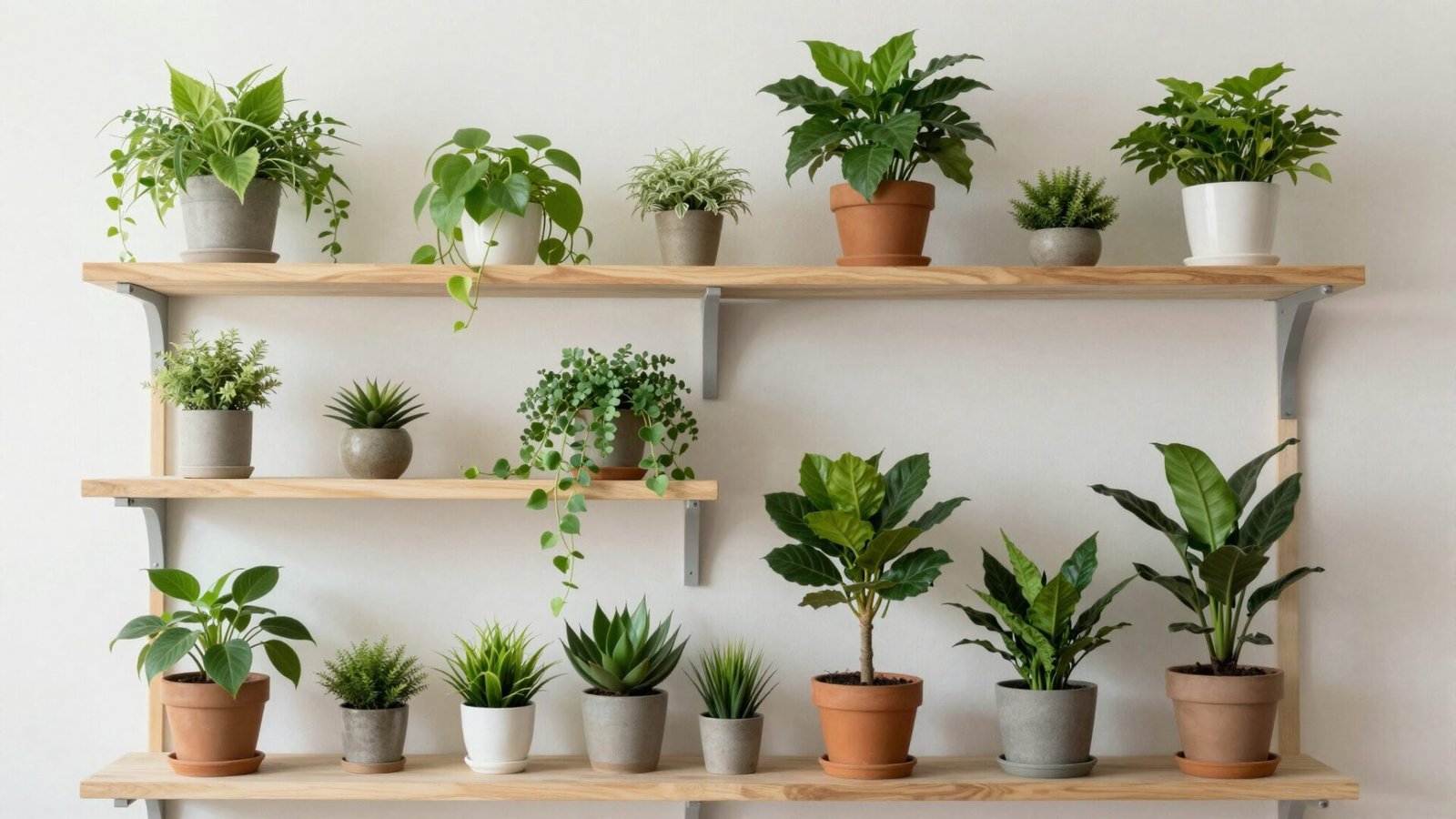
A few plants at different heights can create variety where the actual shelves and containers are suitable. Check the support, mature plant size and access for care. Avoid filling every level simply to reproduce a dense display.
Try this: Begin with a small group whose growing requirements fit the same area.
10. Use Cut Branches as a Separate Decorative Choice
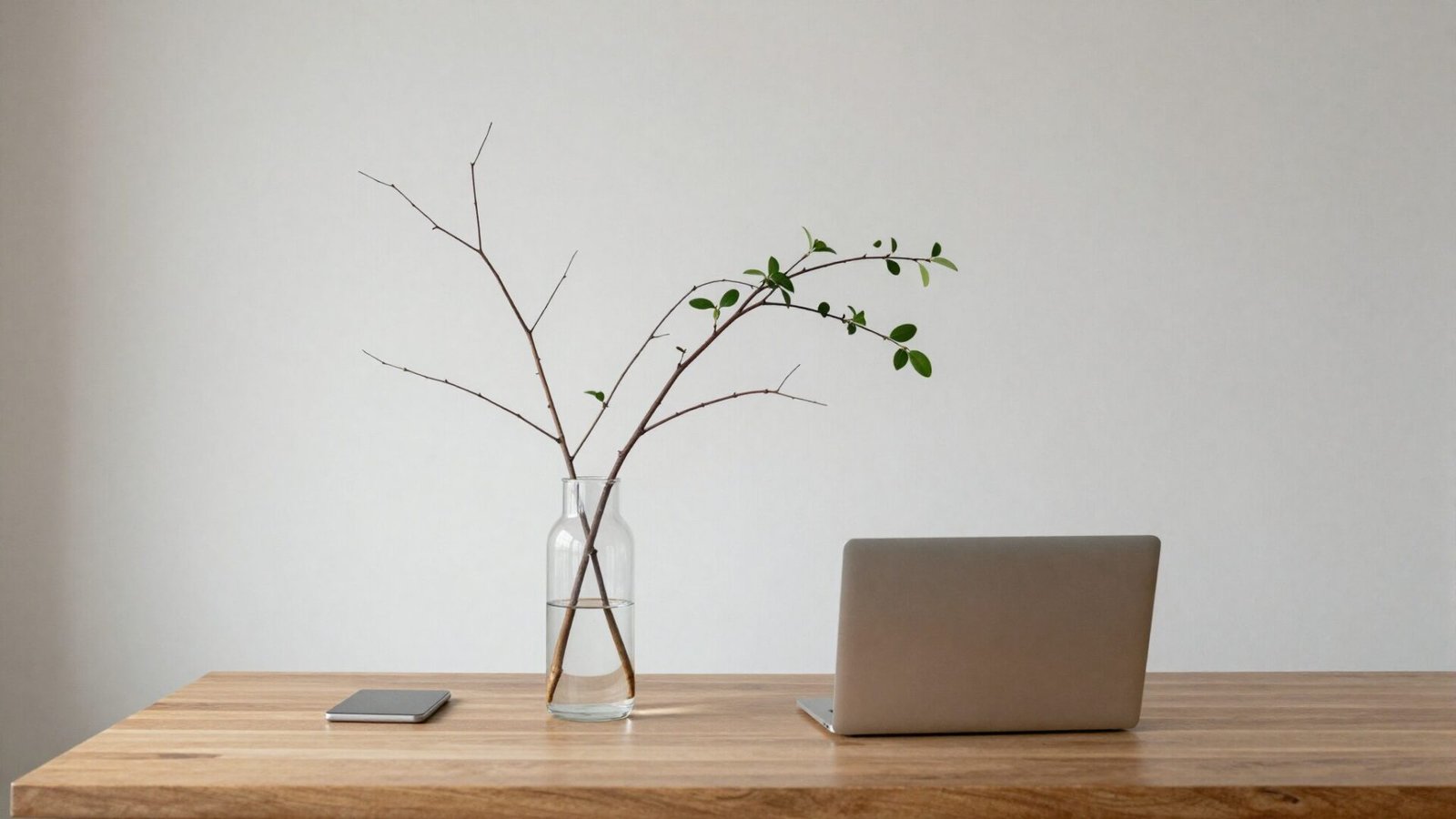
A simple vase of cut branches provides a different display from a growing potted plant. Choose appropriate materials and a stable container for the household. Keep water away from office equipment and maintain the actual vase and contents appropriately.
Try this: Place the arrangement outside the main working reach.
11. Let Leaf Shape Relate to the Shelf Scale
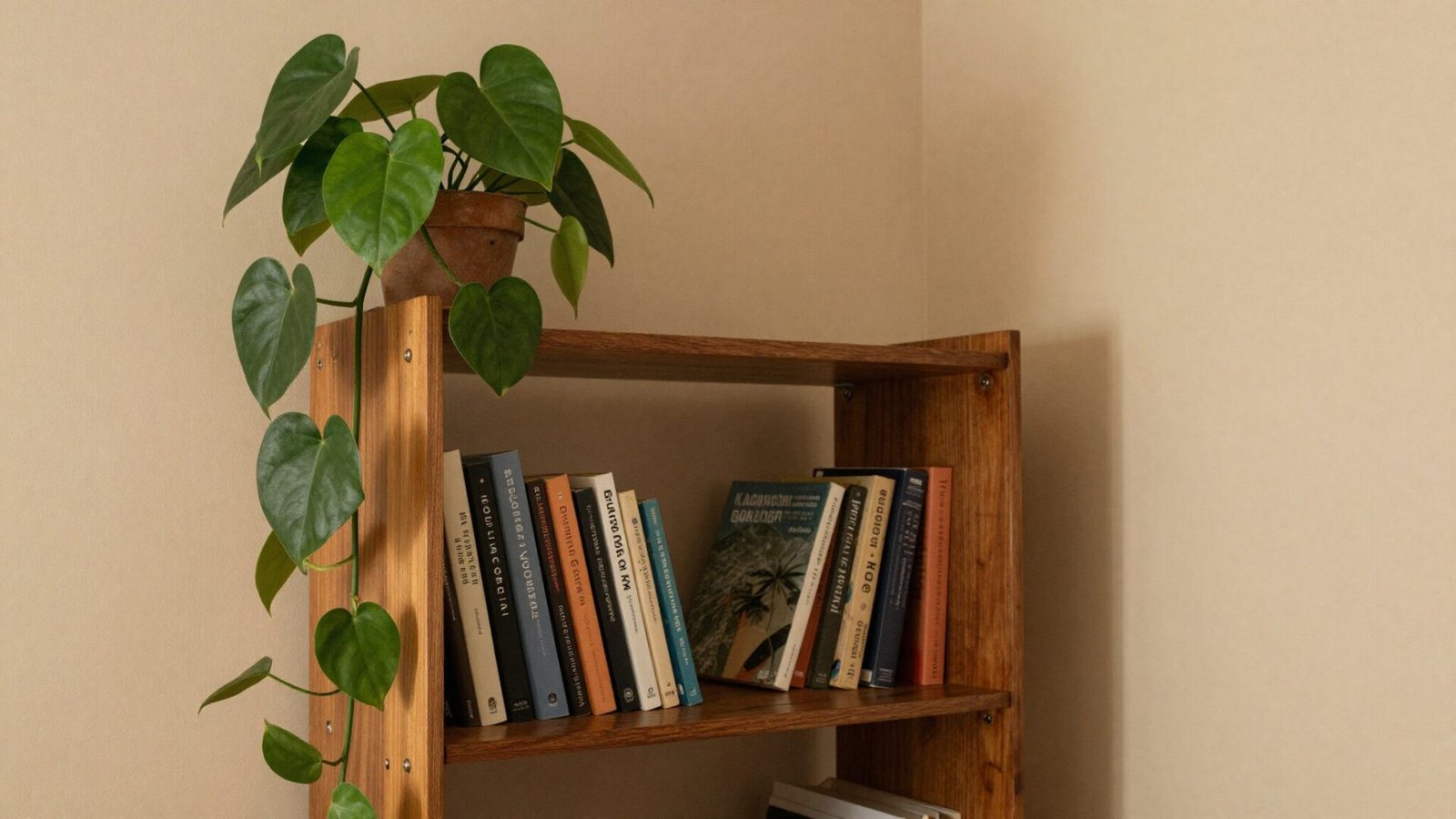
A small trailing group can complement books or a cabinet where light and support suit the identified plant. Keep room to remove the pot for care, and choose a manageable growth habit for the shelf.
Try this: Keep the container reachable without climbing around furniture.
12. Choose Plant Support for the Actual Growth Habit
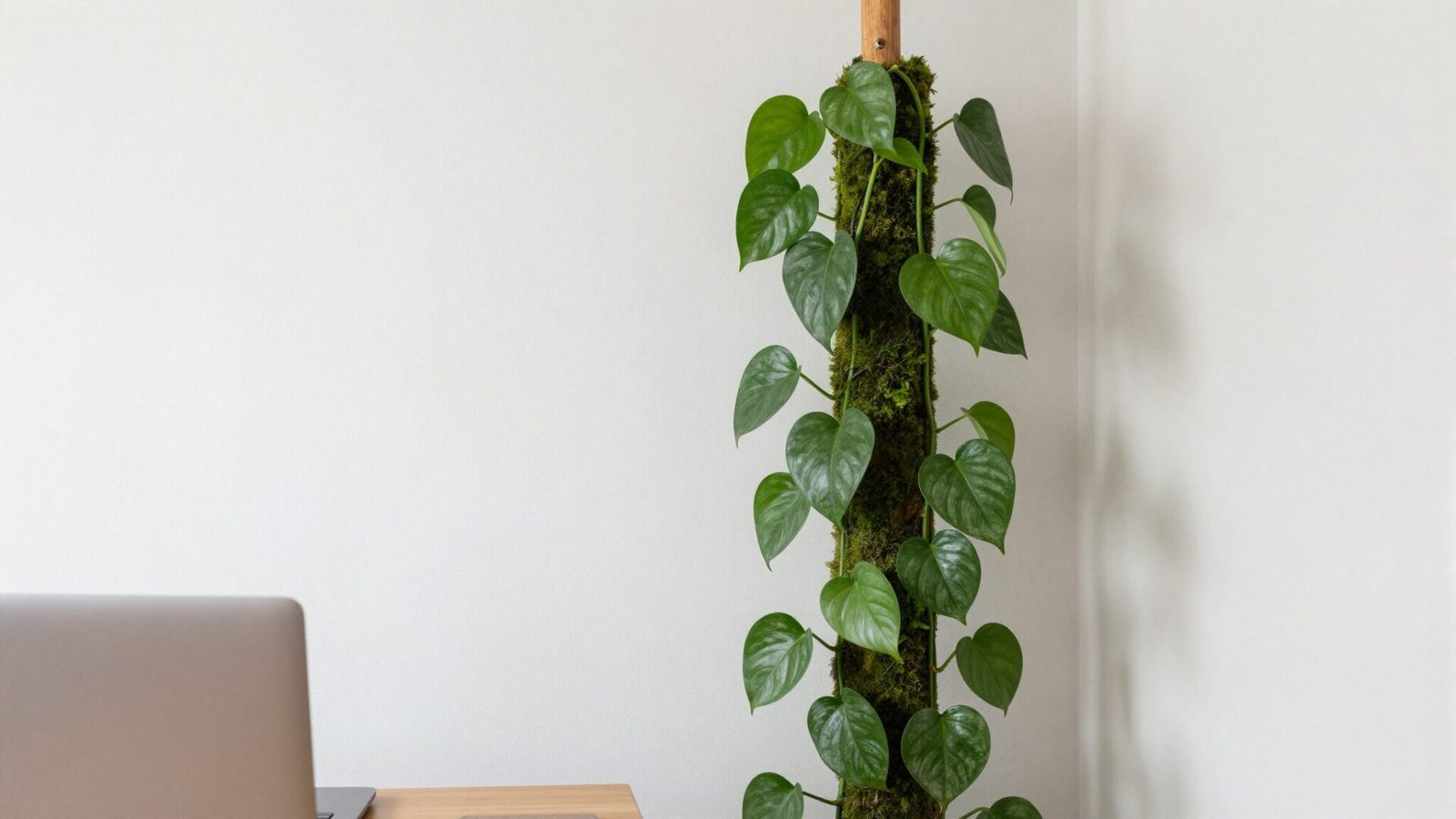
A suitable support can guide some climbing plants where their actual needs and the product guidance fit. Identify the species and compare the mature size with the intended position.
Try this: Plan inspection and future adjustment as the plant grows.
13. Compare Leaf Patterns Without Guessing the Species
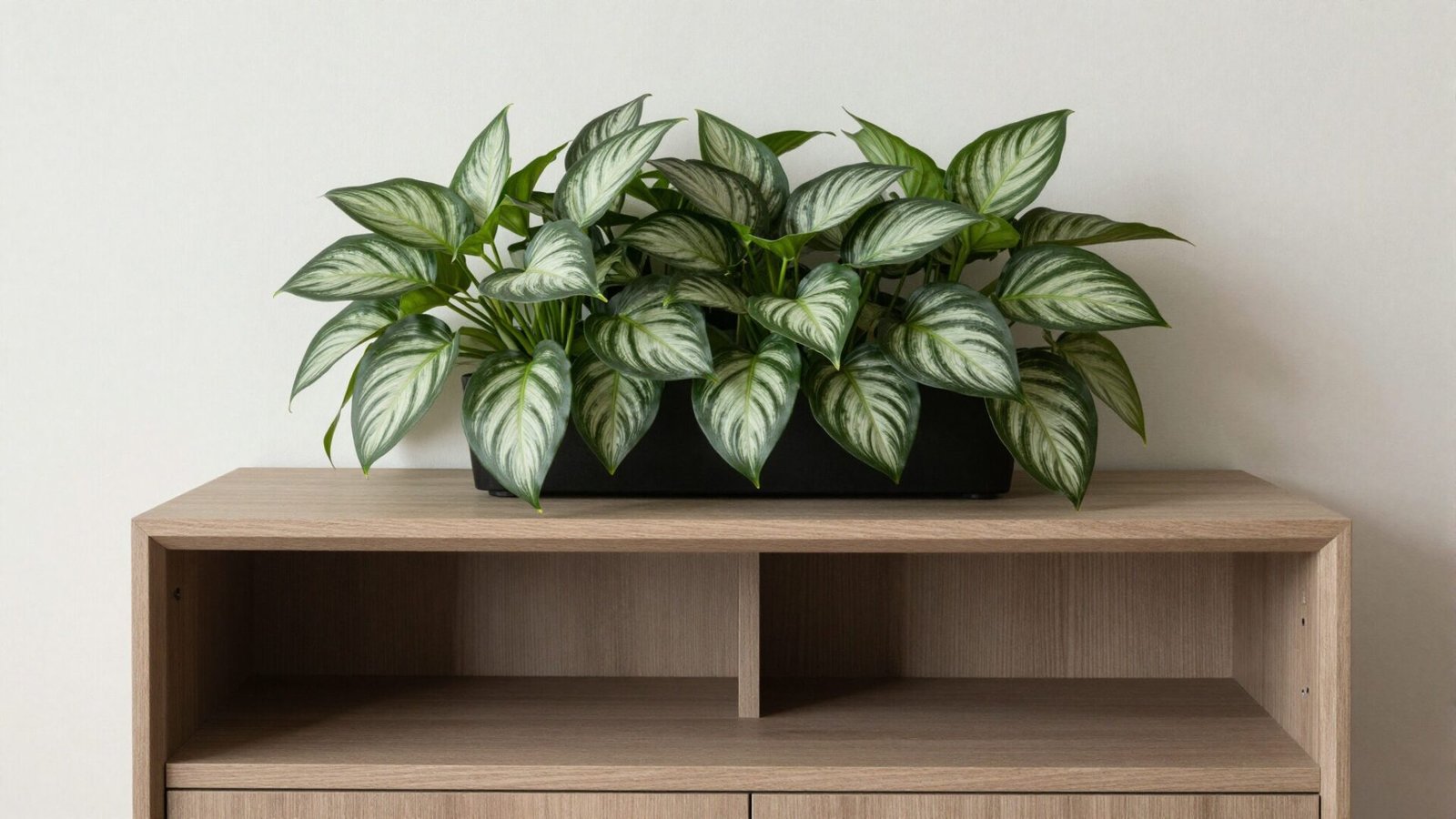
Variegated or patterned leaves can provide a different visual detail on a cabinet. Identify the actual plant before choosing light, water and placement.
Try this: Keep the label and reliable growing information with the real plant.
Choose One Plant and a Manageable Care Routine
Choose one plant whose actual growing requirements fit the office, then give it a practical care position. Add another display only when light, support and maintenance remain manageable.
Related Guides
- 8 Bedroom Plant Decor Ideas That Respect Light and Space
- 10 Kitchen Herb Garden Ideas With Light and Drainage in Mind
- 20 Decorating With Plants Ideas for Vibrant Living Spaces
Further Reading
- University of Minnesota Extension: Lighting for Indoor Plants
- University of Maryland Extension: Watering Indoor Plants
Optional digital guide for this topic
If you prefer a structured workbook, explore this related paid guide.