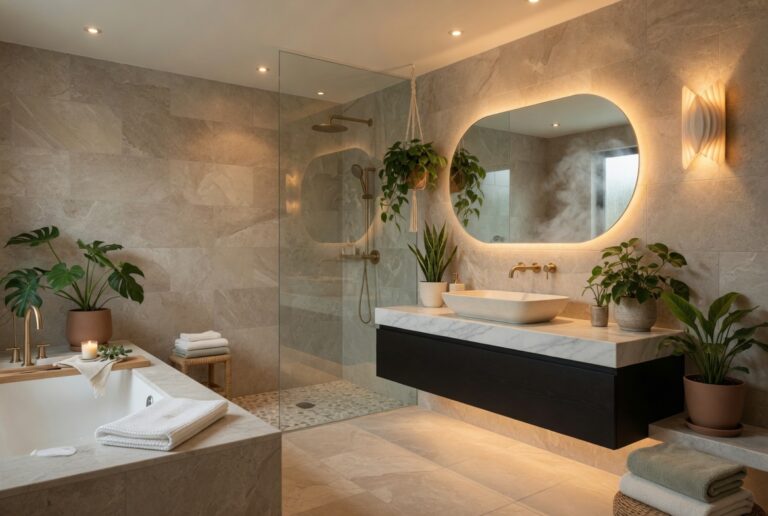
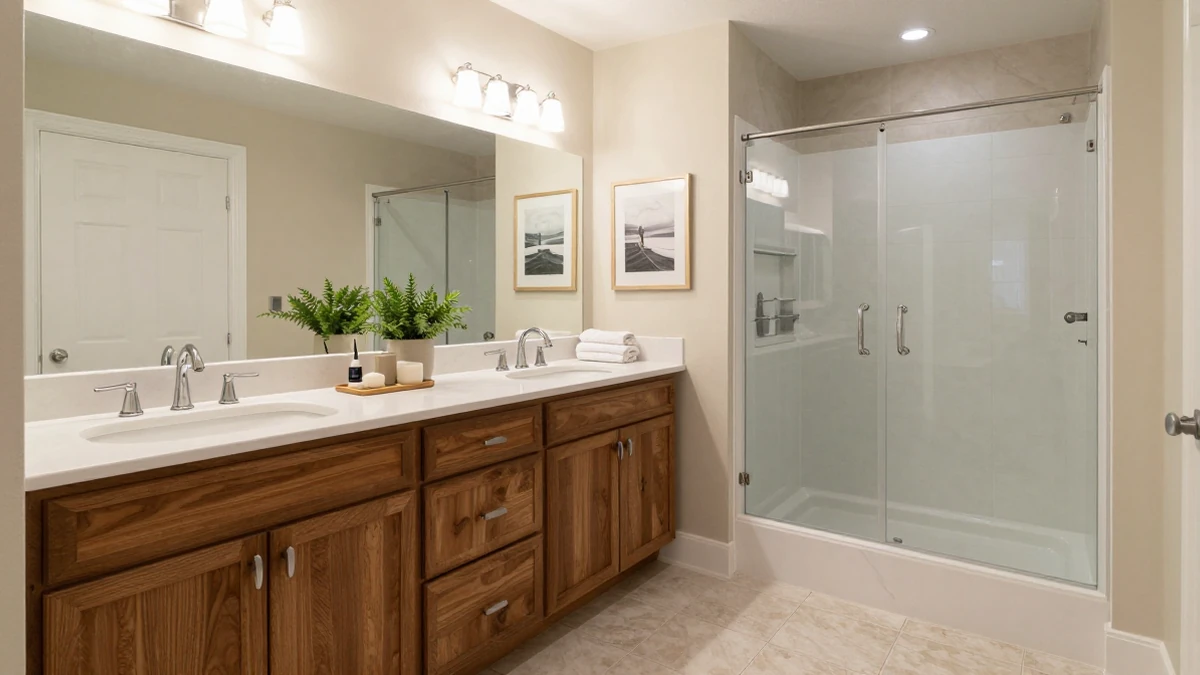
The best bathroom decor ideas do more than fill blank walls. They improve how the room handles wet towels, bright morning routines, limited storage, and frequent cleaning. Before buying anything, identify the bathroom’s main problem: clutter, flat lighting, mismatched finishes, poor flow, or a lack of warmth.
Then make one visual direction guide every choice. A controlled palette, repeated material, or consistent metal finish prevents small upgrades from feeling random. The ideas below range from renter-friendly changes to renovation decisions, with practical checks for moisture, maintenance, placement, and everyday use.
1. Build the Palette From a Fixed Finish
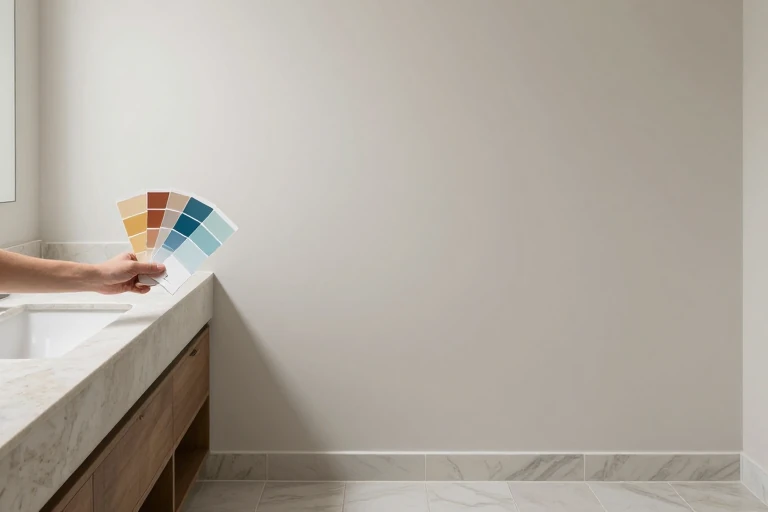
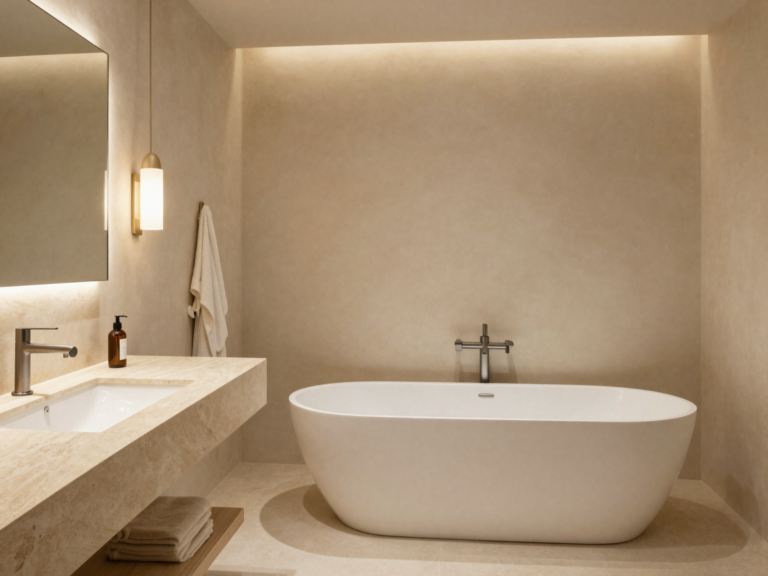
Start with the surface you are least likely to replace, such as floor tile, a stone counter, or the tub surround. Identify its undertone before choosing paint and textiles.
Repeat one existing color in towels or art, then add a contrasting accent. This creates connection without making every element match.
Test samples beside the fixed finish in morning and evening light. A color that works online may expose unwanted yellow, pink, or gray undertones in the room.
2. Give the Vanity a Clear Focal Point
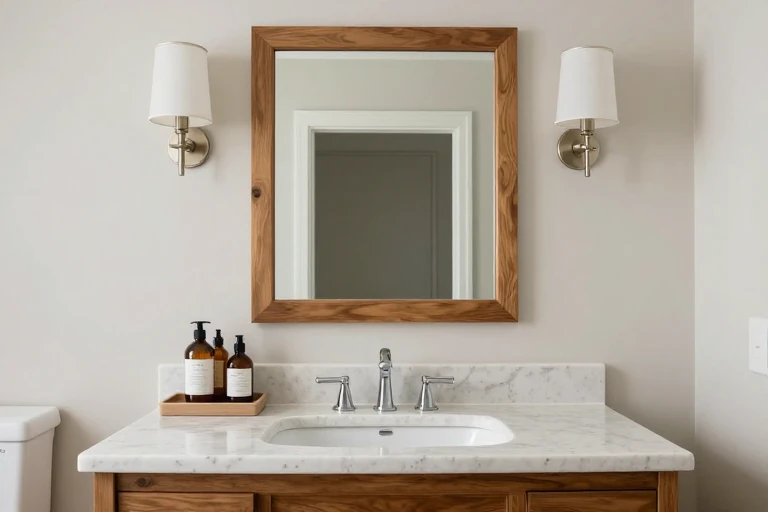
Treat the vanity as one composition rather than a collection of accessories. Center the mirror over the sink or vanity section it serves, then balance lighting around it.
Keep daily products on a small washable tray. Store backups elsewhere so the countertop remains usable for grooming.
Before adding decor, check faucet reach, outlet access, and cabinet swing. Tall vases and leaning art often look attractive but interfere with mirrors, switches, or medicine cabinets.
Loving These Ideas? Get the Step-by-Step Guide
Grab the full 5-day eBook and turn these ideas into a finished room.




3. Layer Task and Ambient Lighting
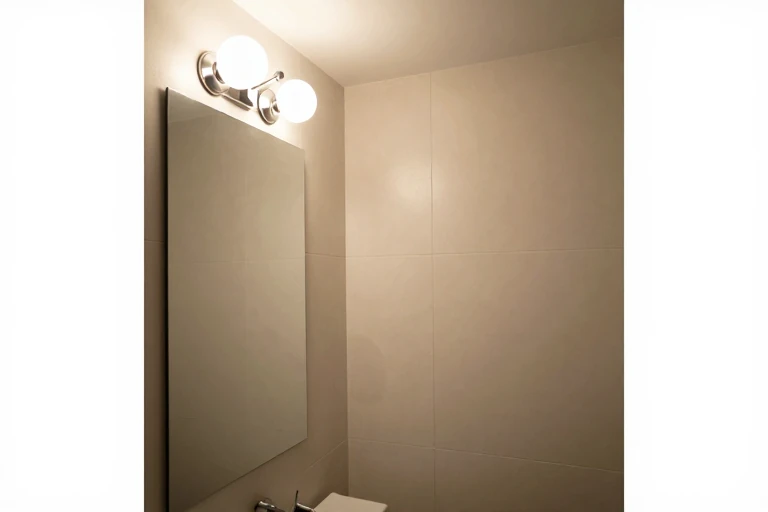
Overhead light alone can cast shadows across the face. Add task lighting beside or around the mirror, then use the ceiling fixture for general illumination.
Choose fixtures rated for their intended bathroom location. Bulb color and output should remain consistent so skin tones and finishes do not shift from one light source to another.
New wiring, fixture boxes, and wet-location installations require site-specific planning and must follow local electrical code; use a qualified professional where required.
4. Choose a Mirror for Proportion and Routine
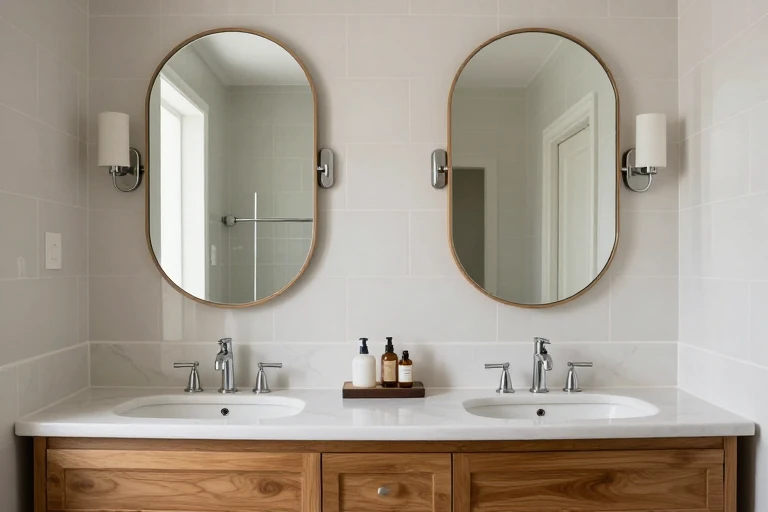
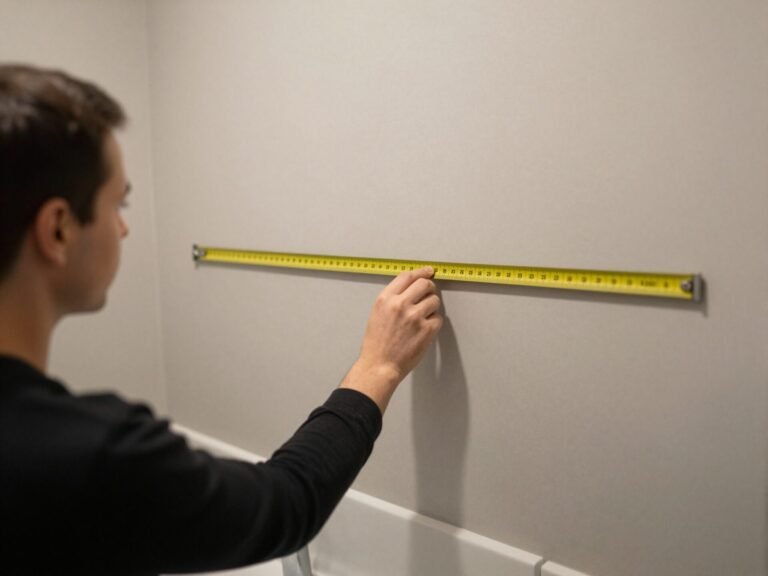
Measure the vanity, faucet height, backsplash, and nearby fixtures before selecting a mirror. A frame should not collide visually or physically with sconces and storage doors.
A wide mirror serves shared grooming space, while separate mirrors can give a double vanity stronger rhythm. Rounded shapes soften rooms dominated by rectangular tile and cabinetry.
For renters, replaceable over-door or freestanding mirrors avoid wall work. Confirm mounting hardware suits the wall construction and the mirror’s actual weight.
5. Use Paint Where Moisture Is Controlled
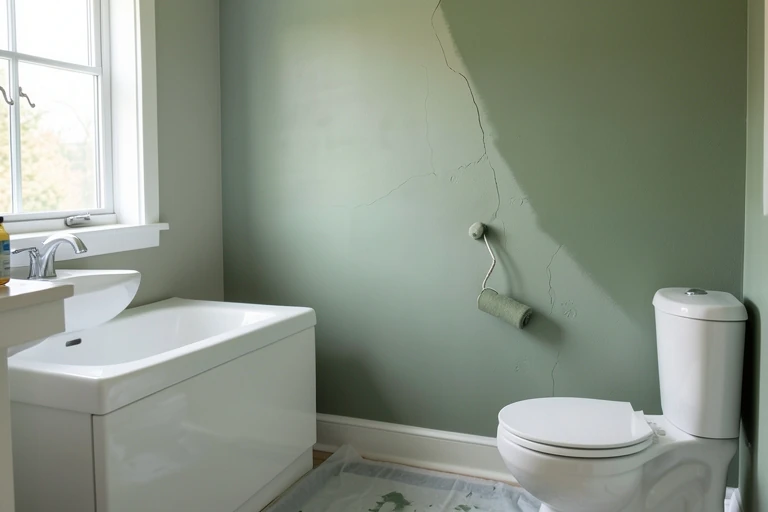
Paint offers a relatively simple color change, but surface preparation determines the finish. Clean residue, repair flaws, and allow the wall to dry before priming or painting.
Use a coating intended for bathroom conditions and follow its curing instructions. Higher-sheen finishes can be easier to wipe, though they may reveal uneven drywall.
Peeling or recurring mildew signals a moisture or ventilation problem, not merely a decorating issue. Address the cause before covering the evidence with another coat.
6. Create an Accent With Tile, Not Clutter
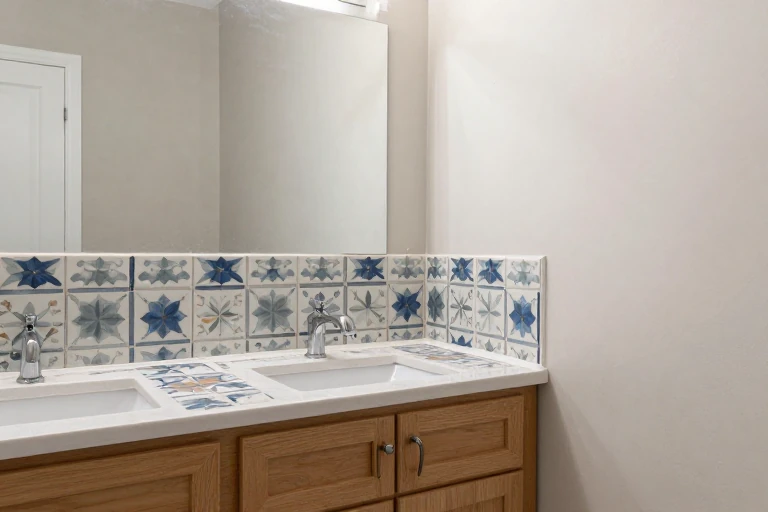
Patterned or dimensional tile works best when it marks a deliberate zone: the vanity wall, shower niche, tub backdrop, or floor. Limiting its boundaries keeps the feature legible.
Pair a detailed tile with quieter surrounding surfaces. Porcelain can provide stone or marble character with different maintenance demands than natural material.
Tile size affects grout quantity, traction, cuts, and installation complexity. Waterproofing and substrate requirements depend on the site and local code, so decorative inspiration is not an installation specification.
7. Warm Hard Surfaces With Washable Textiles
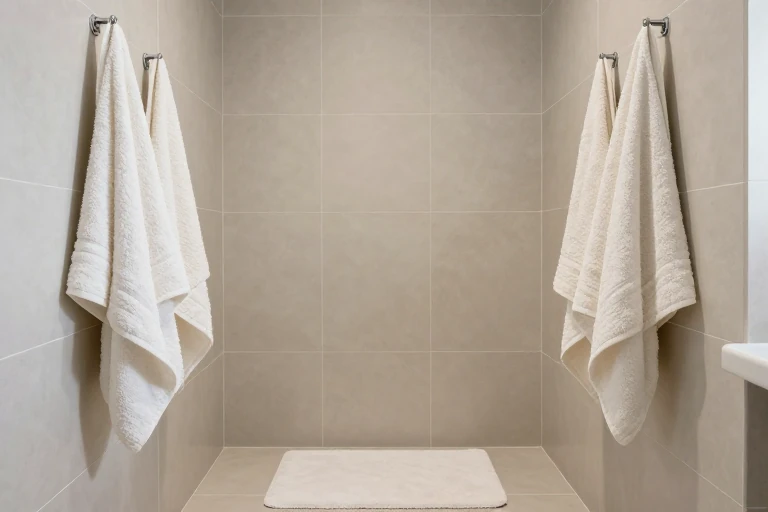
Towels, a bath mat, and a shower curtain can soften tile-heavy rooms without permanent work. Repeat one color across them, but vary texture to avoid a packaged look.
Choose quick-drying, machine-washable pieces for frequently used bathrooms. Thick rugs may feel luxurious yet remain damp longer or obstruct a low-swinging door.
Measure clearance before buying a mat, and keep textiles away from toilet bases where practical. Install enough hooks or bars for items to dry separately.
8. Install Hooks Where Towels Naturally Land
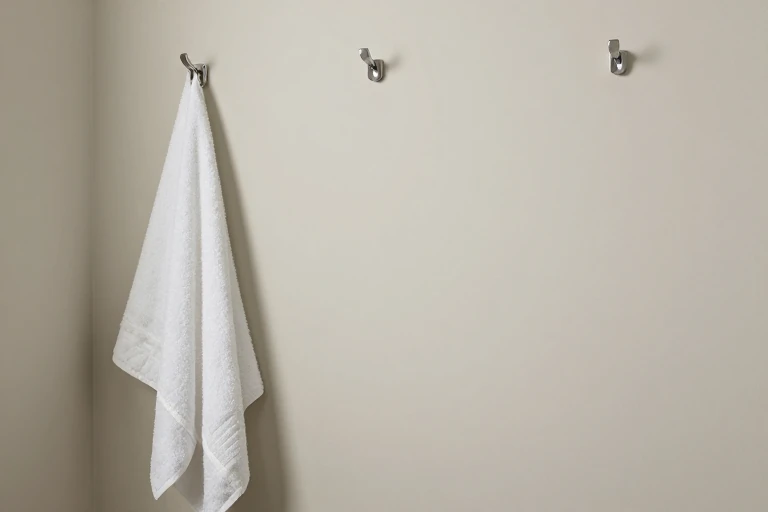
Observe where people drop towels and robes before deciding hook locations. A hook near the shower exit is more useful than one chosen solely to fill an empty wall.
Allow wet items enough separation to dry. In a shared bath, assign a consistent hook position rather than adding decorative markers that complicate cleaning.
Over-door hooks suit renters but can affect door closure or damage trim. Wall-mounted versions need suitable anchors or solid backing for the expected load.
9. Turn Everyday Supplies Into a Display
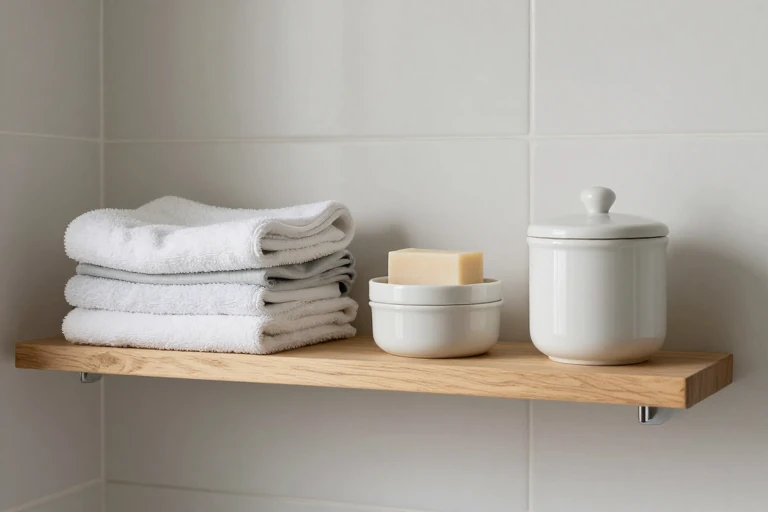
Display only items that tolerate humidity and look orderly in repeated use. Rolled washcloths, cotton products, and wrapped soap are easier to manage than mixed product packaging.
Use open containers only where contents stay clean and dry. A lidded jar or closed cabinet is better near a toilet or splash-prone sink.
Limit the display to one tray or shelf, and leave open space around it. If restocking becomes fussy, the arrangement is decoration rather than useful storage.
10. Add Art That Can Handle the Setting
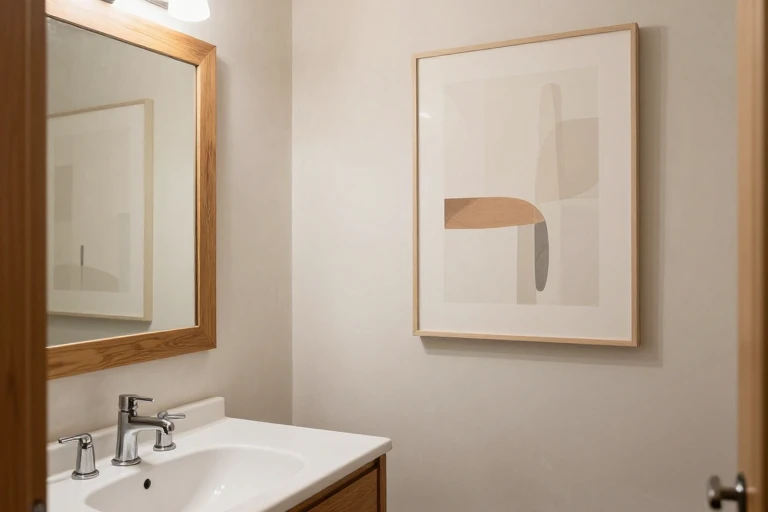
Choose bathroom art by placement, not theme. Works on paper are safer away from direct spray, persistent condensation, and surfaces that receive frequent splashes.
Use sealed frames and moisture-tolerant materials where conditions permit. Avoid irreplaceable pieces in a room with unresolved humidity issues.
Hang art at a viewing height connected to nearby fixtures rather than automatically centering it on the entire wall. Removable strips may suit renters, provided the product supports the frame and wall finish.
11. Bring in Greenery With a Reality Check
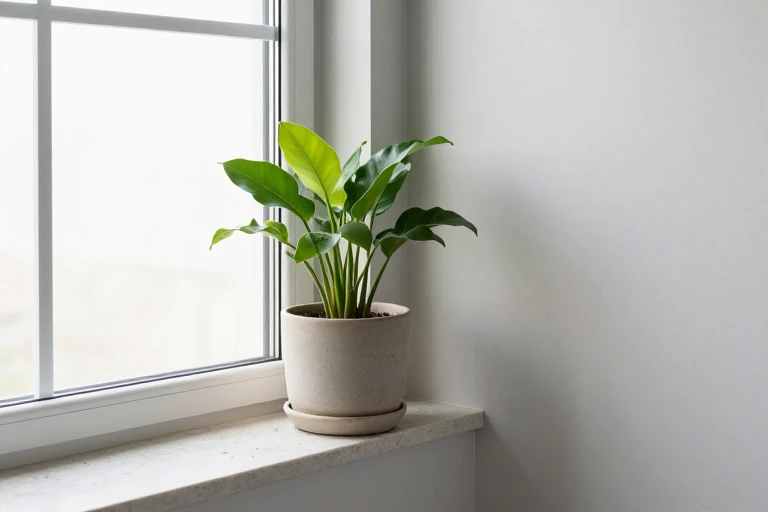
Assess actual daylight before buying a plant. Humidity does not compensate for inadequate light, and bathroom temperature can change quickly during showers.
Select a species suited to the measured conditions and use a pot with drainage protection. Keep leaves away from toiletries and walking paths.
If the room has no useful natural light, a convincing faux stem may be the lower-maintenance choice. Dust it regularly; neglected artificial foliage can make the room feel less clean.
12. Make Open Shelves Earn Their Space
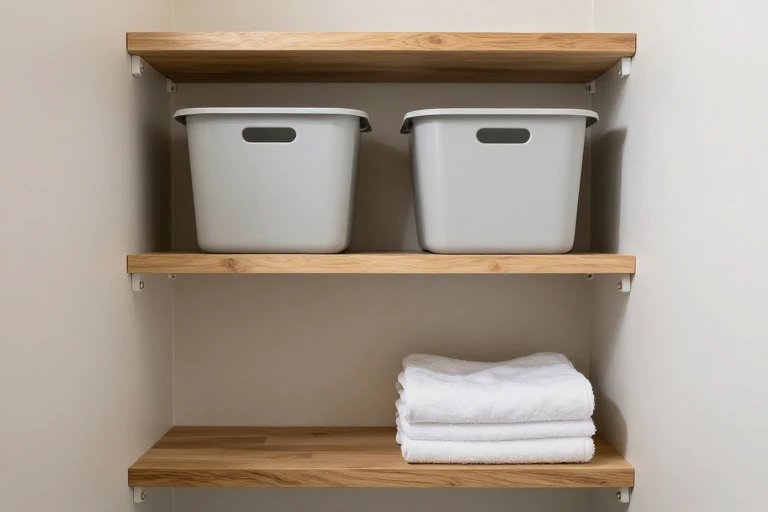
Open shelves are useful for items reached daily, but they expose everything to dust and moisture. Reserve them for towels, closed containers, and a restrained decorative object.
Match shelf depth to the stored item so edges do not crowd the toilet or circulation path. Check head clearance before placing shelves above fixtures.
Group small products inside one washable bin rather than lining them up. If visual order requires constant rearranging, closed storage will serve the household better.
13. Conceal Visual Noise in Closed Storage
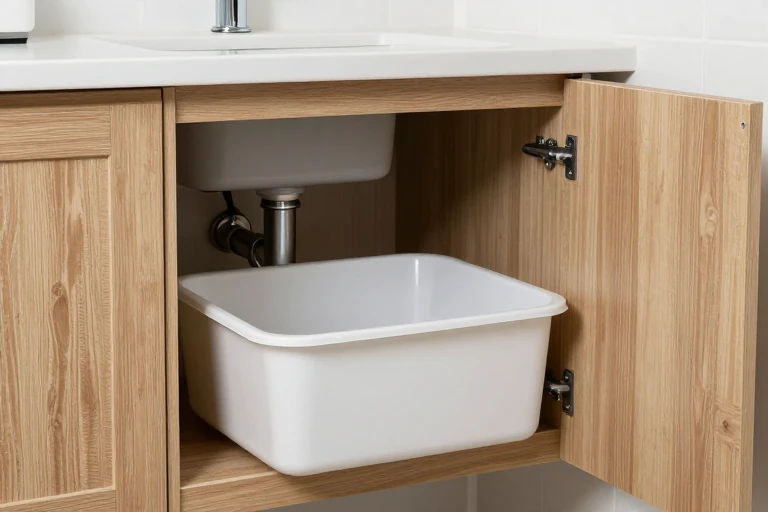
Store backups, cleaning products, medicine, and mismatched packaging behind doors where appropriate. This leaves visible surfaces available for the few objects that support the design.
Measure plumbing, hinges, and interior projections before adding organizers. A bin that fits the cabinet opening may still prevent the door from closing around pipes.
Use removable bins for leak checks and cleaning. Keep medication according to its storage instructions; a humid bathroom cabinet may not be suitable.
14. Repeat Metal Finishes With Restraint
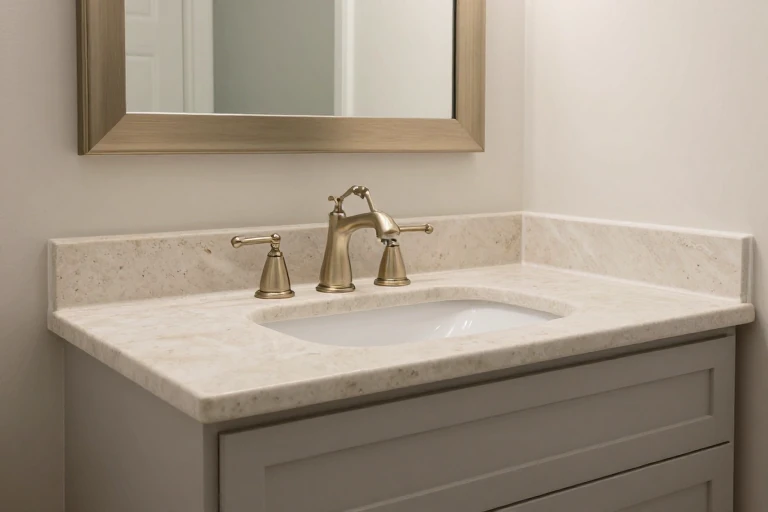
A bathroom can support more than one metal finish when repetition makes the mix intentional. Use one dominant finish and repeat the secondary finish in at least two visible places.
Compare undertones before purchasing. Warm brass, cool chrome, black, and brushed nickel do not all relate equally to every tile or cabinet color.
Do not replace functioning plumbing solely for uniformity. Hardware, frames, and accessories can establish continuity with less disruption, especially in rentals.
15. Upgrade Cabinet Hardware Thoughtfully
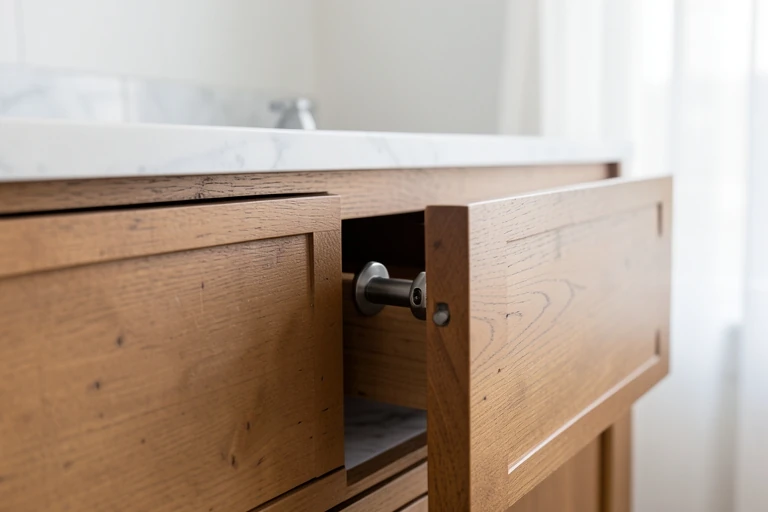
New knobs or pulls can sharpen a vanity, but begin by measuring existing hole spacing and checking how doors and drawers meet. Reusing holes avoids patching and drilling.
Choose shapes that are comfortable with wet hands and do not snag towels. Intricate grooves collect residue more readily than simple profiles.
Renters should label and store the original hardware for reinstallation. Tighten replacements gently; overtightening can damage cabinet fronts or strip the fastener.
16. Use Wallpaper in a Suitable Zone
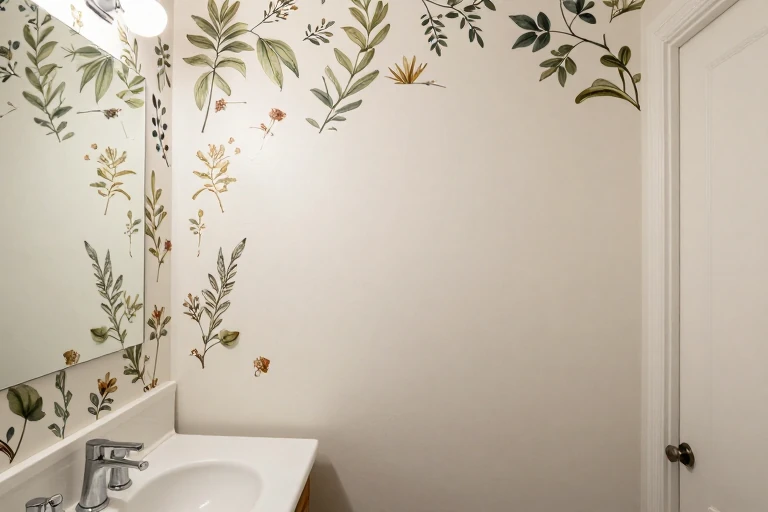
Wallpaper can give a powder room or controlled-moisture wall substantial character. Keep it away from direct water unless the complete wall system is specified for that exposure.
Small patterns create steady texture; oversized motifs make individual shapes more prominent. Order a sample and view it around mirrors, corners, and fixtures before committing.
Peel-and-stick options reduce permanence but are not risk-free. Adhesion and removal depend on wall condition, paint cure, humidity, and product instructions.
17. Add Depth With Tonal Color
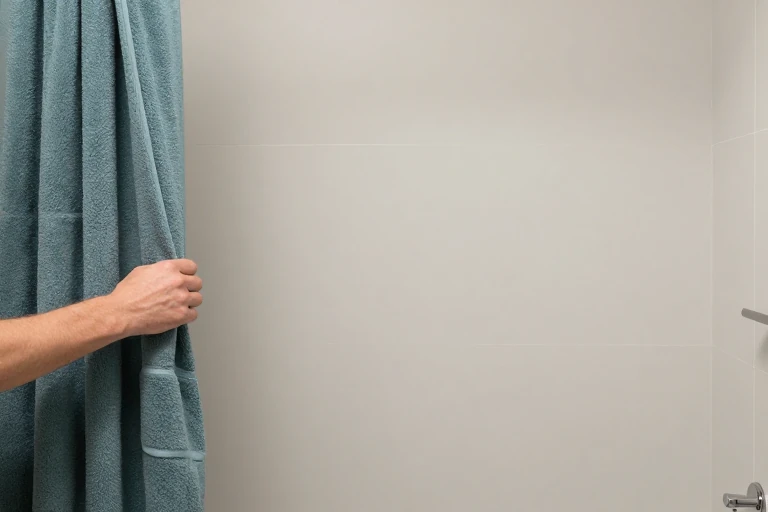
A tonal scheme uses related shades instead of exact matches. Pair a muted wall color with slightly deeper towels and a lighter shower curtain to build depth without strong contrast.
Include differences in surface quality: matte paint, glazed tile, woven cotton, and natural wood reflect light differently even when their colors are close.
Carry samples through the room before buying multiples. Artificial light can make neighboring blue-greens or warm neutrals clash more than expected.
18. Ground the Room With Natural Wood
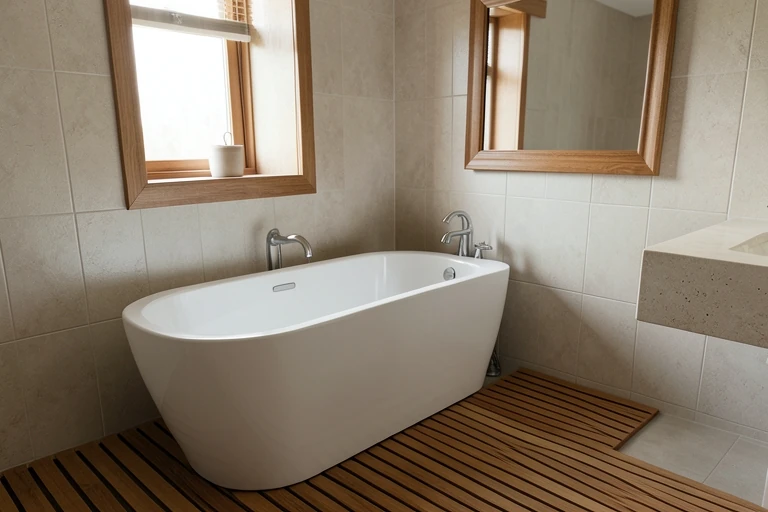
Wood introduces warmth beside ceramic, glass, and stone, but its location matters. Use properly finished pieces and keep vulnerable edges away from standing water.
A framed mirror, stool, tray, or vanity can supply enough wood character. Repeating the tone once prevents a lone wood accessory from appearing accidental.
Inspect regularly for finish wear, swelling, or discoloration. A slatted shower mat still needs lifting and drying; airflow beneath it does not eliminate maintenance.
19. Style a Tub Without Blocking Access
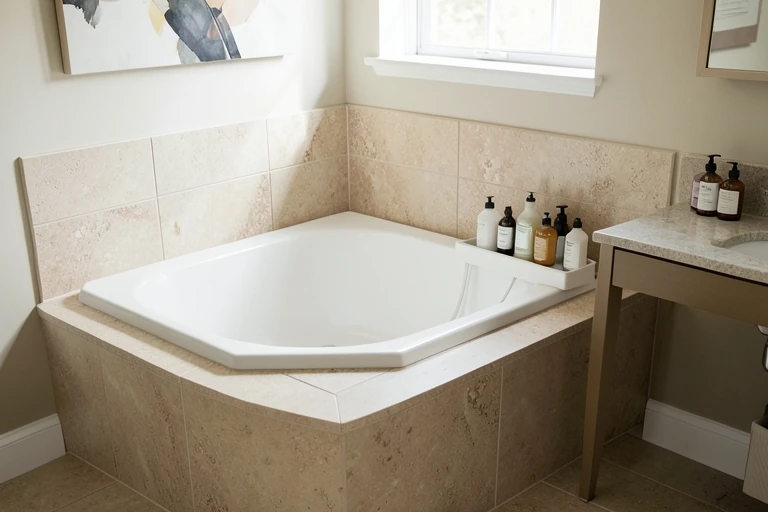
A tub ledge should remain easy to clean and safe to enter. Keep bottles grouped at the faucet end or in a removable tray rather than spacing decor around the rim.
A bath caddy offers temporary surface space but must fit securely and stay out of the entry path. Remove it when bathing children or anyone needing unobstructed access.
Avoid candles, glass vessels, and unstable objects near towels or movement zones. Atmosphere should never depend on a setup that introduces avoidable hazards.
20. Give the Shower Curtain More Presence
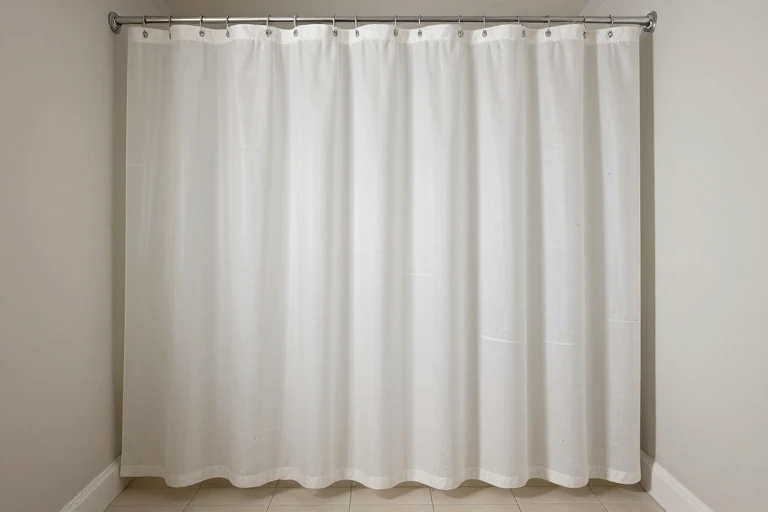
A shower curtain occupies substantial visual space, making it an efficient way to establish color or pattern. Choose a design that relates to the wall and floor rather than competing with both.
Use a washable outer curtain and an appropriate liner when needed. Allow both to dry fully spread out instead of leaving them bunched.
Confirm the rod is secure and the curtain contains water without dragging heavily on the floor. Extra fabric can collect moisture and cleaning residue.
21. Improve the Room With Better Daily Tools
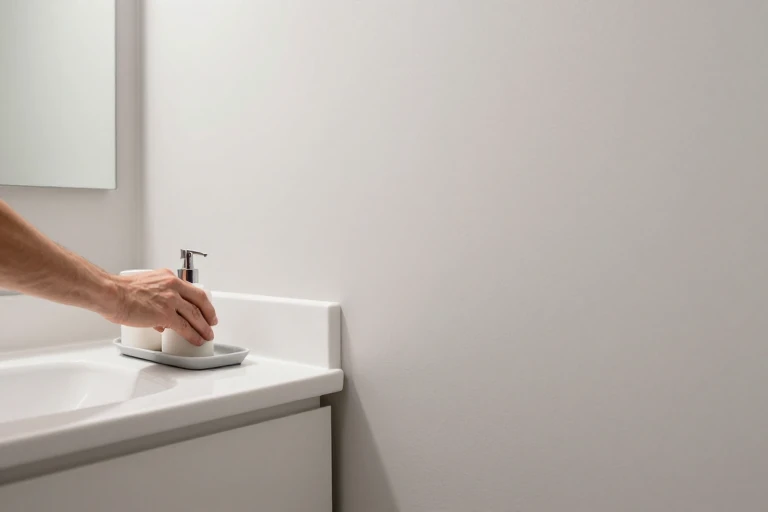
A coordinated soap dispenser, wastebasket, toilet brush, and tissue holder can reduce visual noise, but performance comes first. Choose pieces that are stable, washable, and easy to refill.
A tray should contain drips without trapping grime beneath a collection of bottles. Select a wastebasket that fits the available clearance and can be lifted easily for cleaning.
Buy these tools together only if every item suits the room. A matched set is not useful when one piece is awkward.
22. Edit the Room for Easier Cleaning
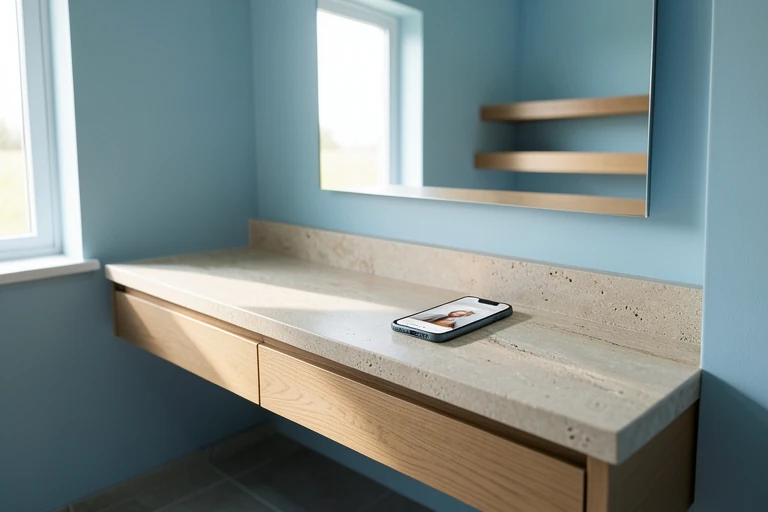
Photograph the bathroom at eye level, then identify objects that interrupt sightlines or create extra surfaces to wipe. The camera often reveals clutter that daily familiarity hides.
Remove one category at a time: duplicate containers, unused decor, floor baskets, or excess countertop products. Keep items that add function, meaningful character, or a clear visual connection.
After editing, complete a normal cleaning routine. If decor repeatedly slows the process, reduce or relocate it.
23. Common Bathroom Decorating Mistakes
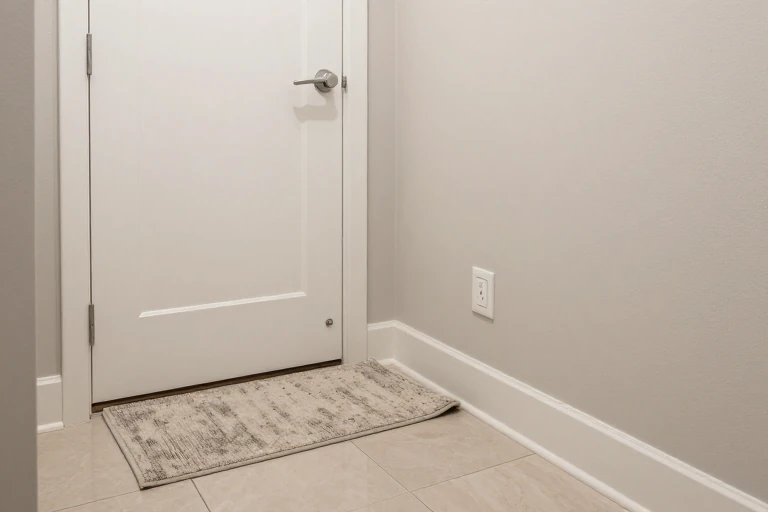
Common mistakes include blocking outlets, crowding the vanity, using absorbent decor beside water, and choosing rugs that interfere with doors. Diagnose function before adding another accessory.
Avoid treating ventilation damage, leaks, loose tile, or failing grout as cosmetic flaws. Plumbing, waterproofing, electrical, structural, and in-wall work depend on site conditions and local code.
Finally, do not mix trends without a plan. Repeat a limited palette and materials, then leave enough open space for safe movement and routine cleaning.
Effort & Cost Snapshot
| Topic | Effort | Cost Note |
|---|---|---|
| 1. Build the Palette From a Fixed Finish | Medium | Varies by materials, scope, and local labor |
| 2. Give the Vanity a Clear Focal Point | Medium | Varies by materials, scope, and local labor |
| 3. Layer Task and Ambient Lighting | High | Get a project-specific professional quote |
| 4. Choose a Mirror for Proportion and Routine | Medium | Varies by materials, scope, and local labor |
| 5. Use Paint Where Moisture Is Controlled | Medium | Varies by materials, scope, and local labor |
| 6. Create an Accent With Tile, Not Clutter | High | Get a project-specific professional quote |
| 7. Warm Hard Surfaces With Washable Textiles | Medium | Varies by materials, scope, and local labor |
| 8. Install Hooks Where Towels Naturally Land | Medium | Varies by materials, scope, and local labor |
| 9. Turn Everyday Supplies Into a Display | Medium | Varies by materials, scope, and local labor |
| 10. Add Art That Can Handle the Setting | Medium | Varies by materials, scope, and local labor |
| 11. Bring in Greenery With a Reality Check | Low | Often achievable with existing furnishings or simple updates |
| 12. Make Open Shelves Earn Their Space | Medium | Varies by materials, scope, and local labor |
| 13. Conceal Visual Noise in Closed Storage | High | Get a project-specific professional quote |
| 14. Repeat Metal Finishes With Restraint | High | Get a project-specific professional quote |
| 15. Upgrade Cabinet Hardware Thoughtfully | Medium | Varies by materials, scope, and local labor |
| 16. Use Wallpaper in a Suitable Zone | Medium | Varies by materials, scope, and local labor |
| 17. Add Depth With Tonal Color | Medium | Varies by materials, scope, and local labor |
| 18. Ground the Room With Natural Wood | Low | Often achievable with existing furnishings or simple updates |
| 19. Style a Tub Without Blocking Access | Low | Often achievable with existing furnishings or simple updates |
| 20. Give the Shower Curtain More Presence | Low | Often achievable with existing furnishings or simple updates |
| 21. Improve the Room With Better Daily Tools | Low | Often achievable with existing furnishings or simple updates |
| 22. Edit the Room for Easier Cleaning | Low | Often achievable with existing furnishings or simple updates |
| 23. Common Bathroom Decorating Mistakes | High | Get a project-specific professional quote |
Frequently Asked Questions
How can I decorate a bathroom without remodeling?
Start with removable or surface-level changes: paint where permitted, towels, a shower curtain, art, a mirror, hardware, and better organizers. Keep the palette connected to existing tile and counters. Renters should save original hardware, confirm lease restrictions, and test removable products in an inconspicuous spot.
What decor works best in a small bathroom?
Prioritize shallow storage, wall-mounted hooks, one clear focal point, and a limited palette. Choose decor that also performs a job, such as an attractive mirror or washable tray. Avoid deep shelves and floor accessories that narrow circulation or complicate cleaning.
How do I make bathroom decor look coordinated?
Repeat a few elements rather than matching everything. Use one dominant color, one supporting tone, and recurring material or metal finish. Compare samples beside permanent surfaces under the room’s actual lighting, then remove objects that do not connect to the scheme.
Which bathroom upgrades require a professional?
Changes involving new wiring, plumbing, waterproofing, structural alterations, ventilation, or in-wall work may require qualified professionals and permits. Requirements depend on the project, site, and local code. Decorative examples should guide appearance, not substitute for technical plans or installation instructions.
Successful bathroom decor supports the room’s routines instead of competing with them. Begin with the least flexible finish, solve the biggest functional problem, and make each new color or material connect to something already present.
Before calling the room complete, test door swings, splash zones, drying space, storage access, and cleaning effort. Small edits often have more impact than adding more objects. If a planned change reaches wiring, plumbing, waterproofing, structure, or concealed wall systems, shift from decorating inspiration to qualified, code-compliant project planning.
Sources & Further Reading
- 24 Stunning Primary Bathroom Tile Ideas for a Luxurious …
- Design | NAHB
- Kitchen & Bath Design + Industry Awards 2025: Meet the Secondary Bath Finalists – NKBA
- Bathroom Planning Guidelines with Access Standards
- Embracing Modern Trends in Bathroom Design-NARI
- Top 10 Kitchen & Bath Trends for 2023 – NKBA
- goodhousekeeping.com/home/decorating-ideas/g2000/decor-ideas…
Continue Your Home Transformation
Explore the full collection of step-by-step eBooks and get the guide that fits the room you're working on.