Window seat ideas work best when the seat fits both the opening and the way you use the room. A beautiful cushion cannot make up for a bench that blocks a handle, crowds the walking route or feels awkward to sit on.
Begin with an existing seat designed for sitting, or a properly specified built-in. A window board, ordinary storage cabinet or improvised shelf is not automatically a bench. If you are adding a built-in, have its support and relationship to the window assessed by a suitable professional.
These ideas focus on adult seating and styling. Keep window operation, ventilation and any required emergency access usable, and follow the window and seat instructions. Consider the household carefully: furniture beside a window can create climbing access for children. The concepts are not a childproofing solution or a construction guide.
The images are original AI-generated decor concepts, not installation diagrams or photographs of completed client projects.
Test Window Seat Ideas With the Cushion and Window in Use
Mark the seat footprint and try the intended cushion thickness before choosing the finished fabric. Next, sit down, stand up and operate the window and nearby storage. For example, a bench may fit the alcove width while its cushion changes the useful sitting height or catches an open curtain. Use a seat designed for sitting and keep the required window access available rather than treating an ordinary ledge as seating.
Jump to an idea
- Fit a shaped seat to an angled bay
- Place a freestanding bench by a straight window
- Use one tailored cushion across the seat
- Split a long seat into separate cushions
- Keep the center clear for sitting
- Add a supportive cushion at one end
- Repeat a narrow stripe on the seat
- Use a small check as the main pattern
- Choose a plain cushion beside patterned curtains
- Let one accent color define the alcove
- Keep a pale seat interesting through texture
- Use a darker bench base for definition
- Bring warmth with a visible timber base
- Plan drawers that open into clear floor space
- Choose cupboard doors for larger stored items
- Use open cubbies for a small, defined collection
- Keep a simple open space under the bench
- Pair the seat with a small movable side table
- Keep a blanket in a separate basket
- Let an existing light serve the seat
- Keep window treatments clear of the cushion
- Make a bedroom seat visually quiet
- Use the seat as a secondary living room perch
- Use removable covers with a clear care routine
- Change one small detail with the season
Measure window seat ideas in the room before choosing cushions
Write down the available width, intended seat depth and height, window-handle position, baseboard projection and route through the room. For a hypothetical 72-inch alcove, a 60-inch freestanding bench leaves 12 inches of width, or 6 at each side if centered. That calculation describes the width only; it does not prove the seat fits the window or provides enough circulation. Tape the proposed footprint on the floor and test the window and nearby doors. For a cushion, measure the actual usable seat surface rather than the wall opening. Ask the maker how the cover, seams and cushion thickness affect the finished dimensions, and test the sitting position before committing to custom work.
| Existing space | Possible starting point | Check before buying |
|---|---|---|
| Angled bay | A professionally fitted shaped seat | Window operation and the supported seat footprint |
| Straight wall with a window | A purpose-made freestanding bench | Depth, sitting comfort and the route past it |
| Alcove with useful storage below | A specified bench with drawers | Drawer opening space and the seat instructions |
| Room with several uses | A simple seat with few loose cushions | How quickly it can return to everyday use |
1. Fit Bay Window Seat Ideas to the Actual Opening

A seat that follows an existing bay can make the architecture feel intentional. The front edge can stay visually simple while the angled ends follow the actual opening.
Have the shape and support specified for the space rather than copying a standard bench plan. Measure the cushion from the finished seat once the dimensions are confirmed.
Practical tip: Treat the bay shape as a measuring task before a fabric choice.
2. Place a freestanding bench by a straight window
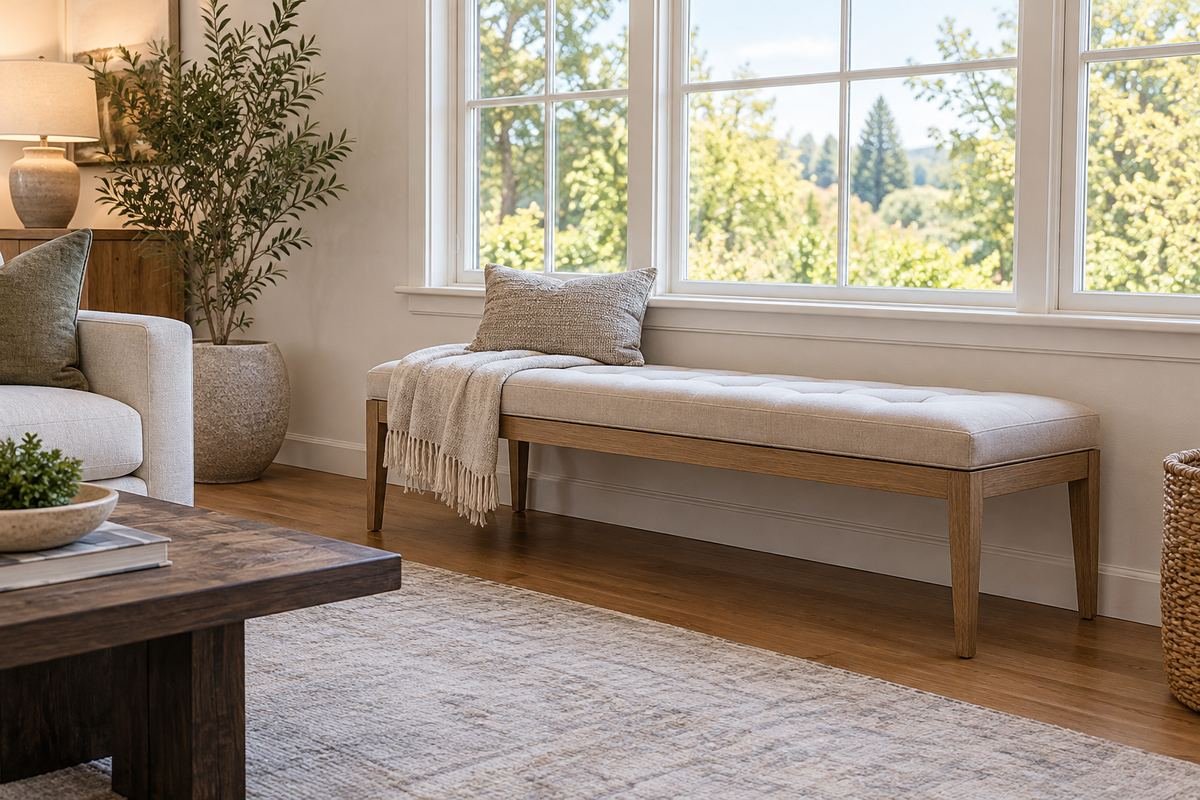
A separate bench offers a useful alternative when a built-in is unnecessary. Visible legs can keep the arrangement light and allow cleaning beneath the seat.
Choose a product intended for sitting and test its depth against the room. Leave the window fittings usable and avoid squeezing a bench into a space just because its width fits.
Practical tip: Check the full footprint, not only the advertised length.
3. Use one tailored cushion across the seat
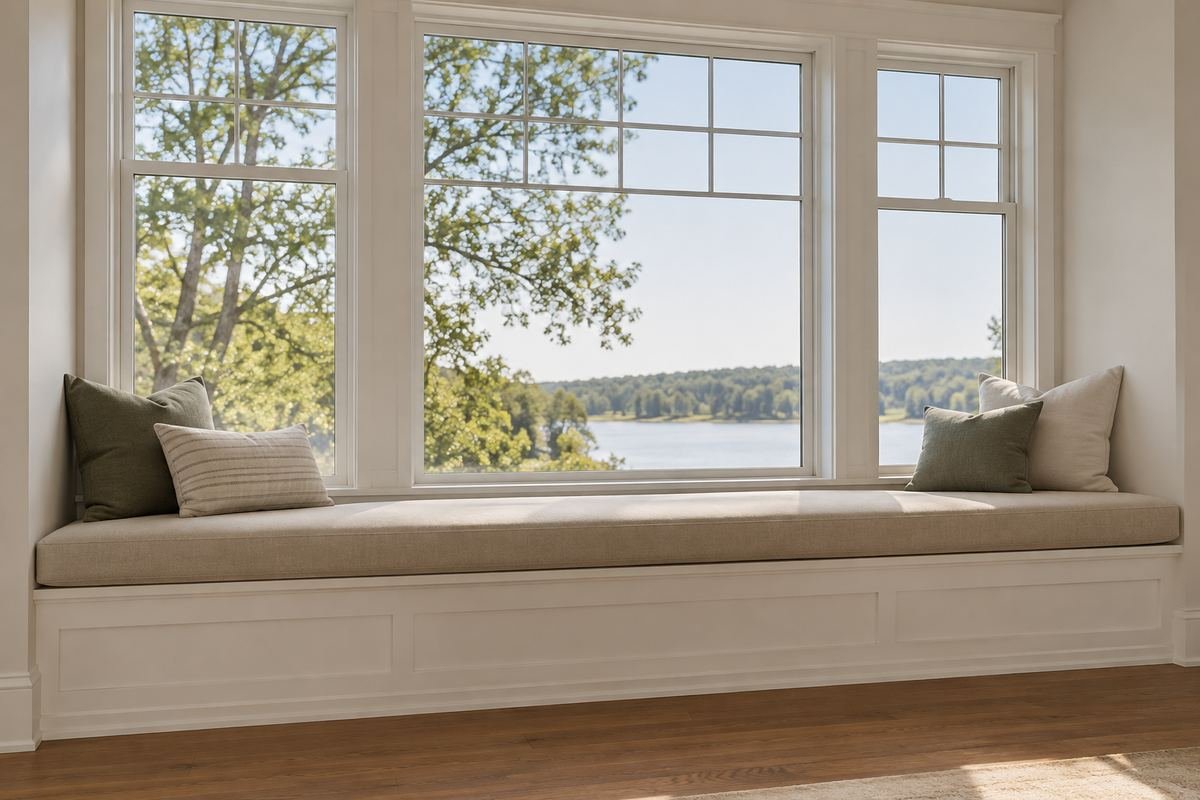
A single cushion can give a long bench a clean outline. It also avoids several small pads drifting apart when someone changes position.
Confirm how the cushion cover comes off and how the filling is cared for. A long cushion may be awkward to remove in a tight alcove, so test the practical access.
Practical tip: Choose the cushion from the finished seat measurements.
4. Split a long seat into separate cushions

Separate cushions can make a lengthy seat easier to handle. They also allow one section to be lifted without moving the whole upholstered surface.
Plan the joins where they feel comfortable to sit. Compare the covers side by side so the seams and pattern direction look consistent along the bench.
Practical tip: Check the cushion joins from a seated position.
5. Keep the center clear for sitting
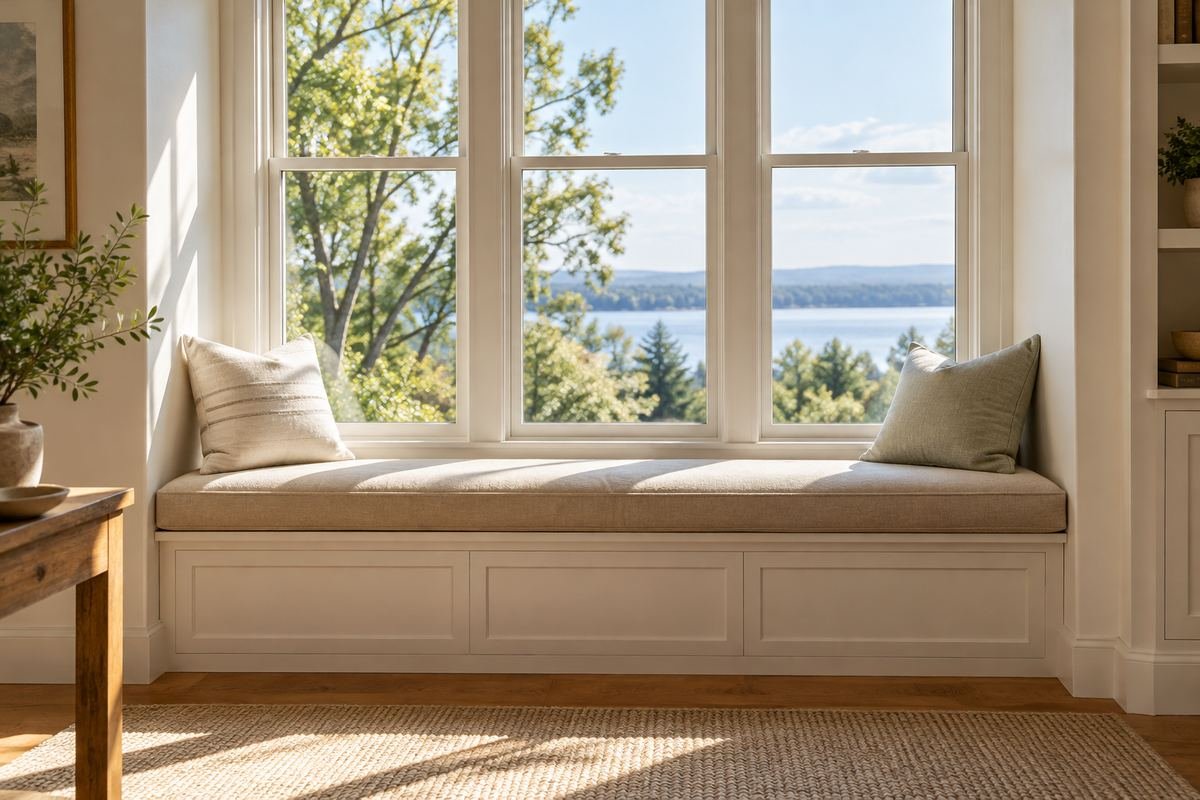
A seat can look inviting without being filled with pillows. Place the useful back or end cushions where they support a person and let the middle remain open.
Sit on the finished arrangement before adding another accent pillow. If you have to carry cushions away every time, the styling is using too much of the seat.
Practical tip: Leave a visible place to sit down.
6. Test Supportive-Cushion Window Seat Ideas From the Seat

One end cushion can suit a person who tends to sit sideways. It gives the arrangement a definite direction without making both ends equally full.
Try the angle you actually use before selecting a cushion. An attractive oversized pillow may push the sitting position too close to the front edge.
Practical tip: Test the arrangement with the person who uses it.
7. Repeat a narrow stripe on the seat
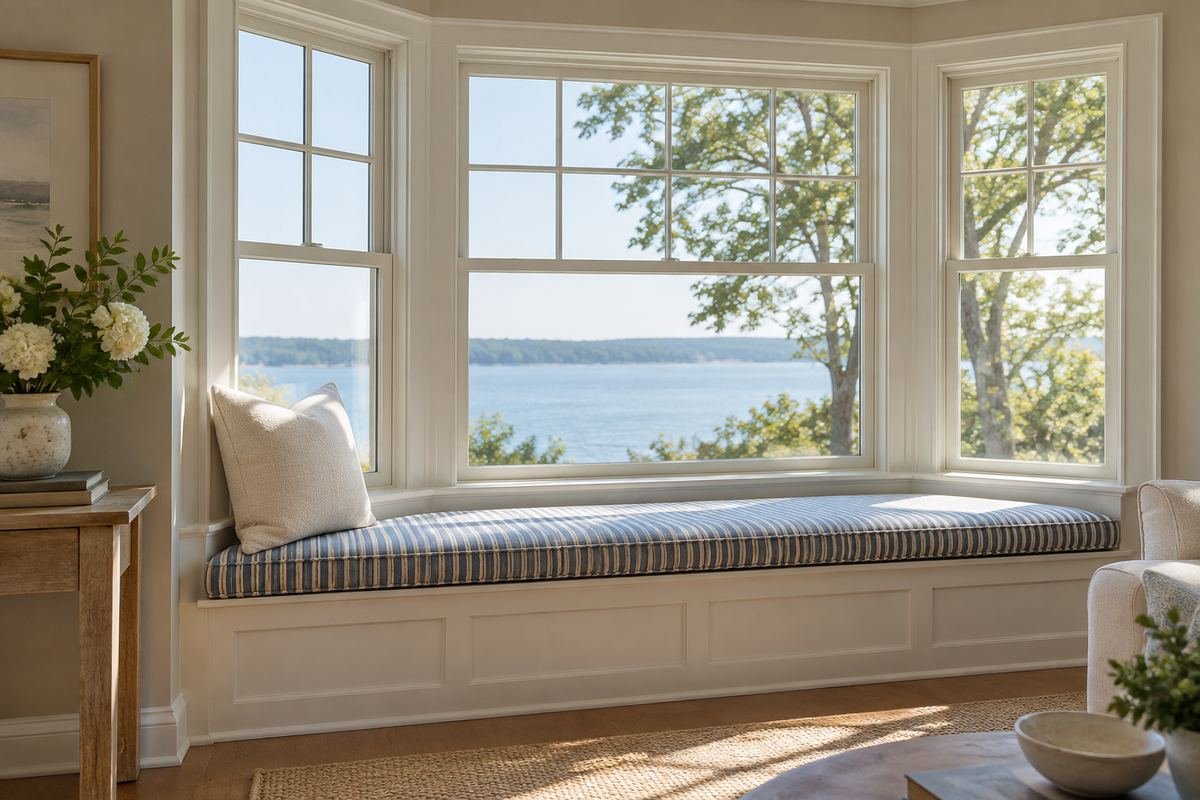
A small stripe can add movement while keeping the overall color scheme quiet. Its direction also makes the cushion outline easy to read.
Ask how stripes will align around seams and any angled corners. A fitted cushion gives the pattern more definition than several loose pads with conflicting directions.
Practical tip: Review the fabric direction before ordering a custom cover.
8. Use a small check as the main pattern
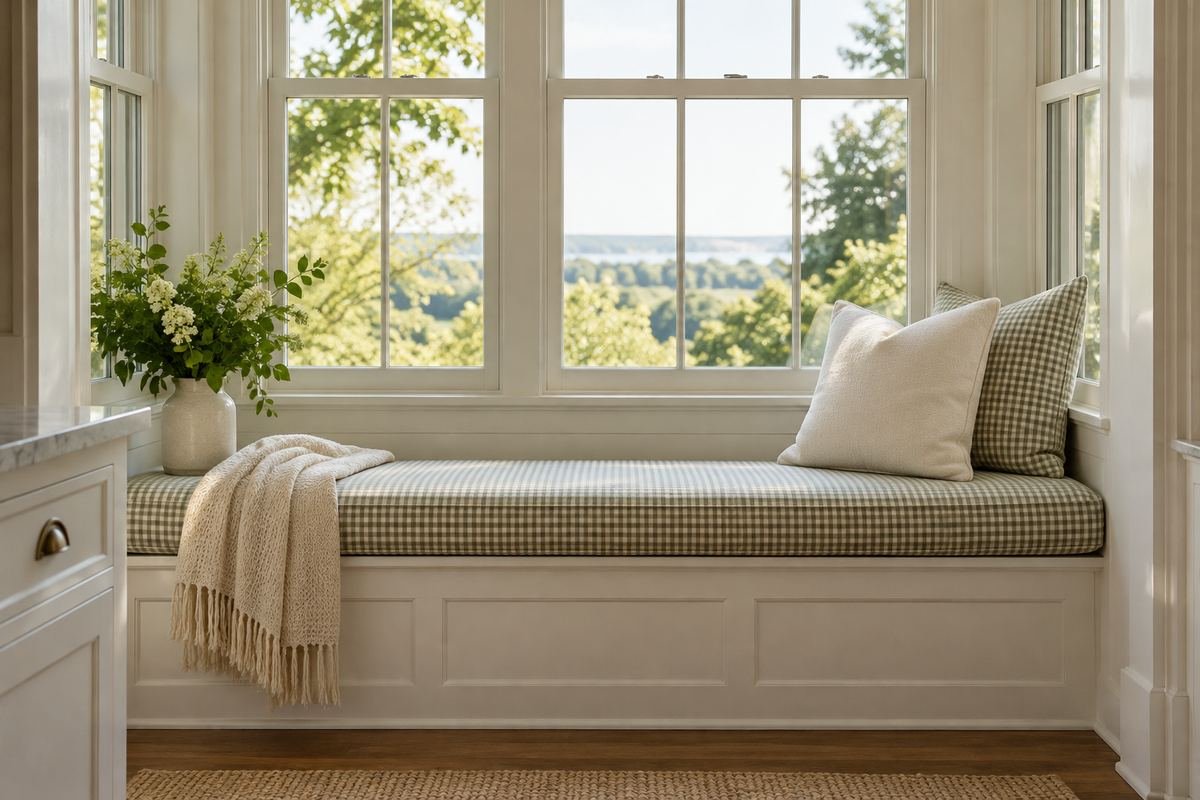
A restrained check can add detail without requiring patterned pillows as well. It works particularly well when the walls and window trim are simple.
Compare a fabric sample in the actual daylight. The pattern can feel stronger across a long cushion than it does on a small swatch.
Practical tip: Use a plain companion cushion to give the check space.
9. Choose a plain cushion beside patterned curtains
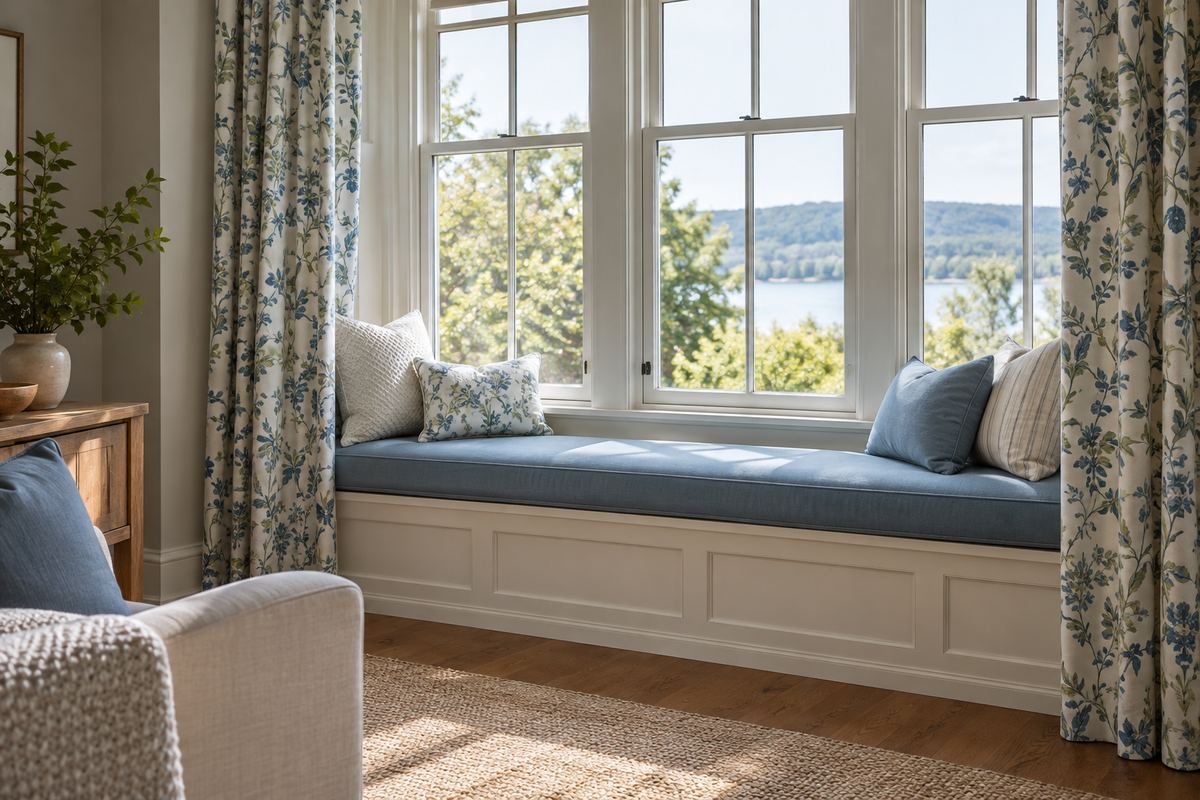
When curtains carry the pattern, a plain seat helps the window arrangement remain readable. Pick one quieter color from the fabric for the cushion.
Check where the curtains gather when open. The fabric should not become a bulky layer across the usable seat or prevent access to the window.
Practical tip: Plan the open curtain position as well as the closed view.
10. Let one accent color define the alcove
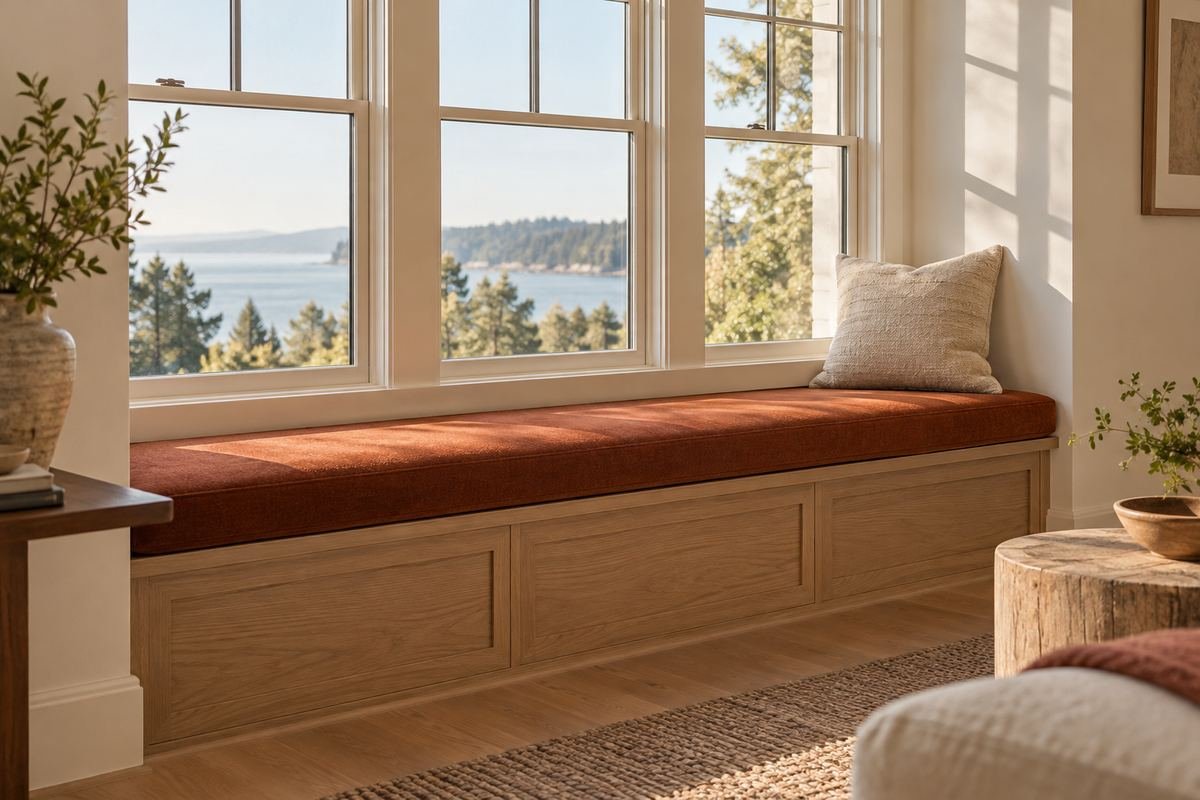
A cushion in a considered color can distinguish a window seat from the rest of the room. The surrounding walls can stay quiet so the seat reads as one deliberate feature.
Relate the color to an existing detail you like rather than adding several matching accessories. The seat cushion provides enough area to establish the accent.
Practical tip: Try the fabric beside the wall and flooring.
11. Keep a pale seat interesting through texture

A quiet color scheme can still feel layered when the fabrics have different surfaces. A woven cushion and a smooth pillow can be enough to create contrast.
Check the care requirements of each fabric rather than assuming all neutrals are easy to maintain. Consider how visible wear will look where someone sits most often.
Practical tip: Use texture you can look after in everyday life.
12. Define Window Seat Ideas With a Darker Bench Base

A dark base can give a long seat a more definite outline. A lighter cushion above it keeps the sitting surface easy to see.
Test the finish beside the existing window trim. A strong contrast is a design choice, so use it consistently instead of adding unrelated dark details around the alcove.
Practical tip: Let the base supply the visual weight.
13. Bring warmth with a visible timber base

A timber bench base can connect the window seat to furniture elsewhere in the room. The grain supplies detail even when the cushion and pillows are plain.
Compare undertones in daylight rather than trying to match every wood exactly. Keep the cushion simple if the timber has a strong grain pattern.
Practical tip: Choose one timber tone to lead the alcove.
14. Plan drawers that open into clear floor space
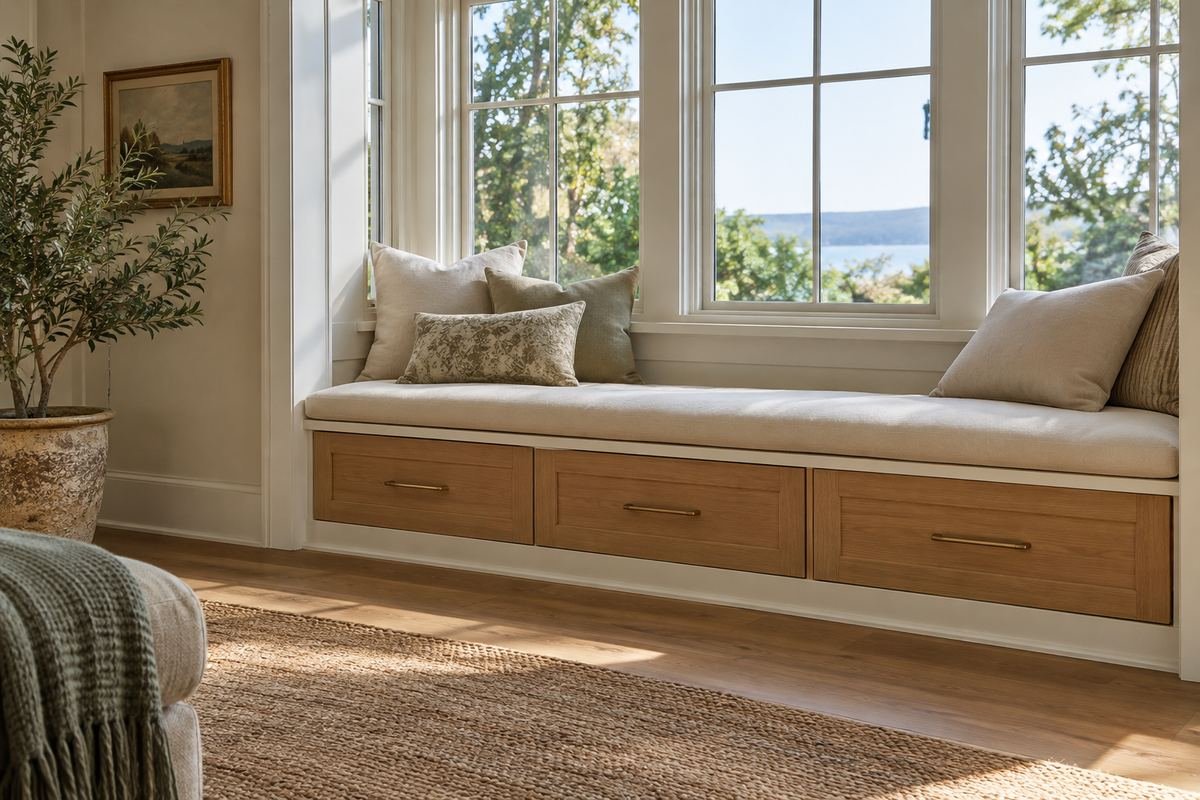
Drawers can make small items easier to sort beneath a properly specified bench. They work best when the fronts can open without moving a table or rug.
Measure the drawer extension and the route past it before planning the layout. Keep only items that suit the intended storage and the manufacturer’s limits.
Practical tip: Test the storage in its open position.
15. Choose cupboard doors for larger stored items
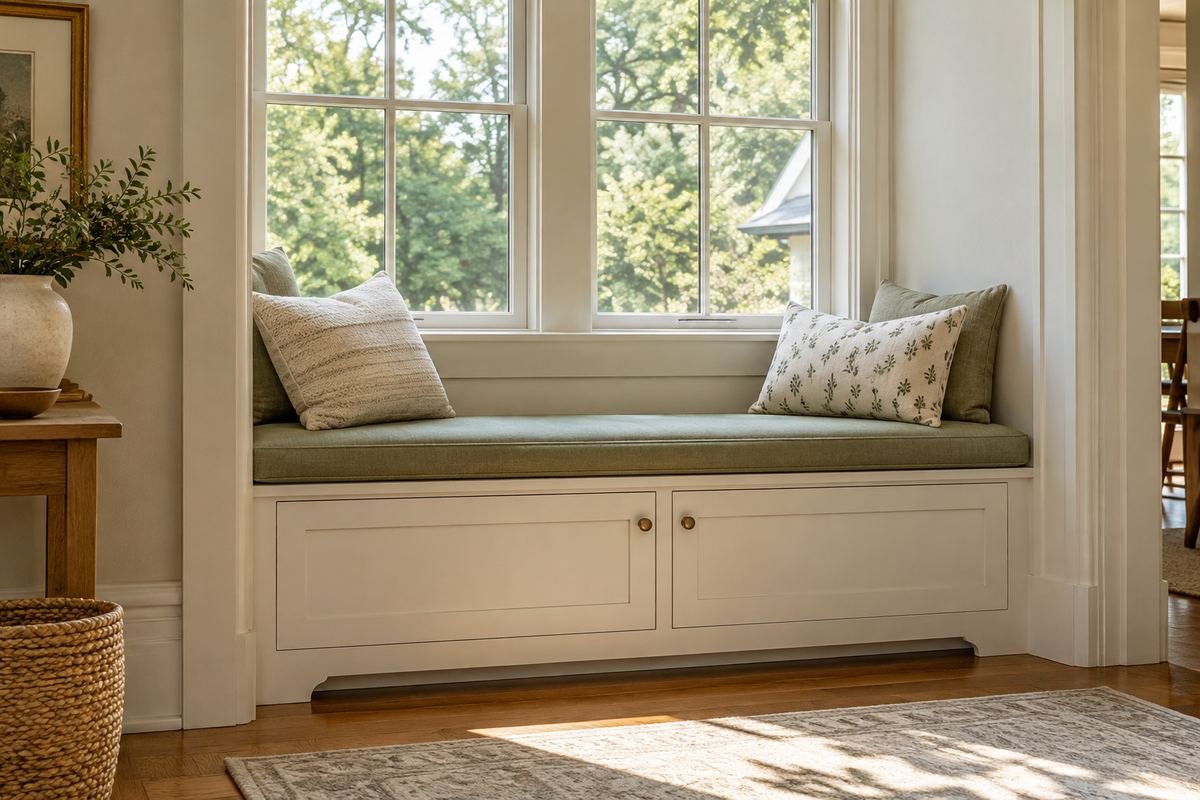
Cupboard compartments can suit bulkier household pieces that do not fit neatly in shallow drawers. Plain doors keep the seat base visually quiet.
Check where each door swings and whether you can reach the back comfortably. Avoid a layout that requires climbing over the bench to retrieve ordinary items.
Practical tip: Match the opening method to the objects you will store.
16. Use open cubbies for a small, defined collection
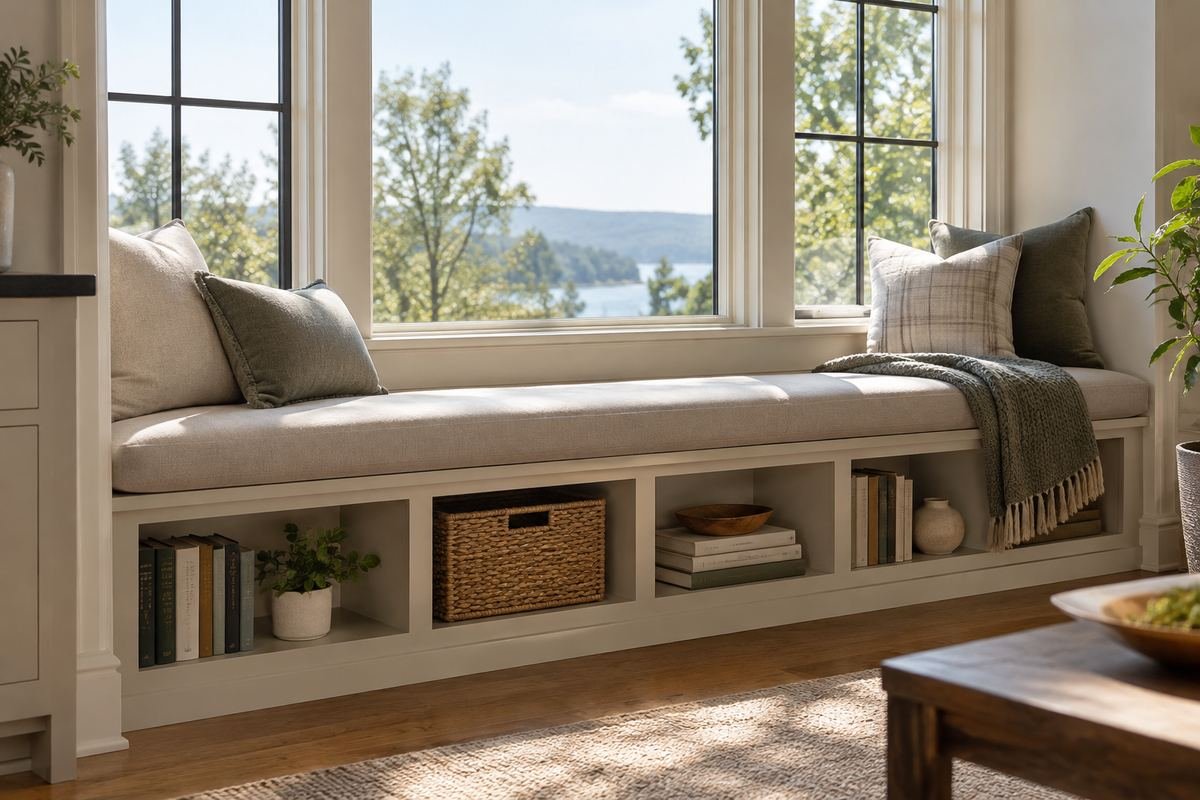
Open storage is useful when the contents are tidy enough to remain visible. A few grouped books or one appropriate basket can keep the base from feeling busy.
Decide what belongs in each compartment before adding organizers. Do not treat the open cubbies as space for every loose item from the room.
Practical tip: Give each compartment one clear use.
17. Keep a simple open space under the bench

A bench with open space underneath can feel less permanent in a small room. It also makes the floor easier to see around the window.
Resist filling the space immediately with boxes. Check how the legs and frame support the seat, and choose an actual seating product with the appropriate instructions.
Practical tip: Let the open floor remain part of the design.
18. Pair Window Seat Ideas With a Reachable Side Table
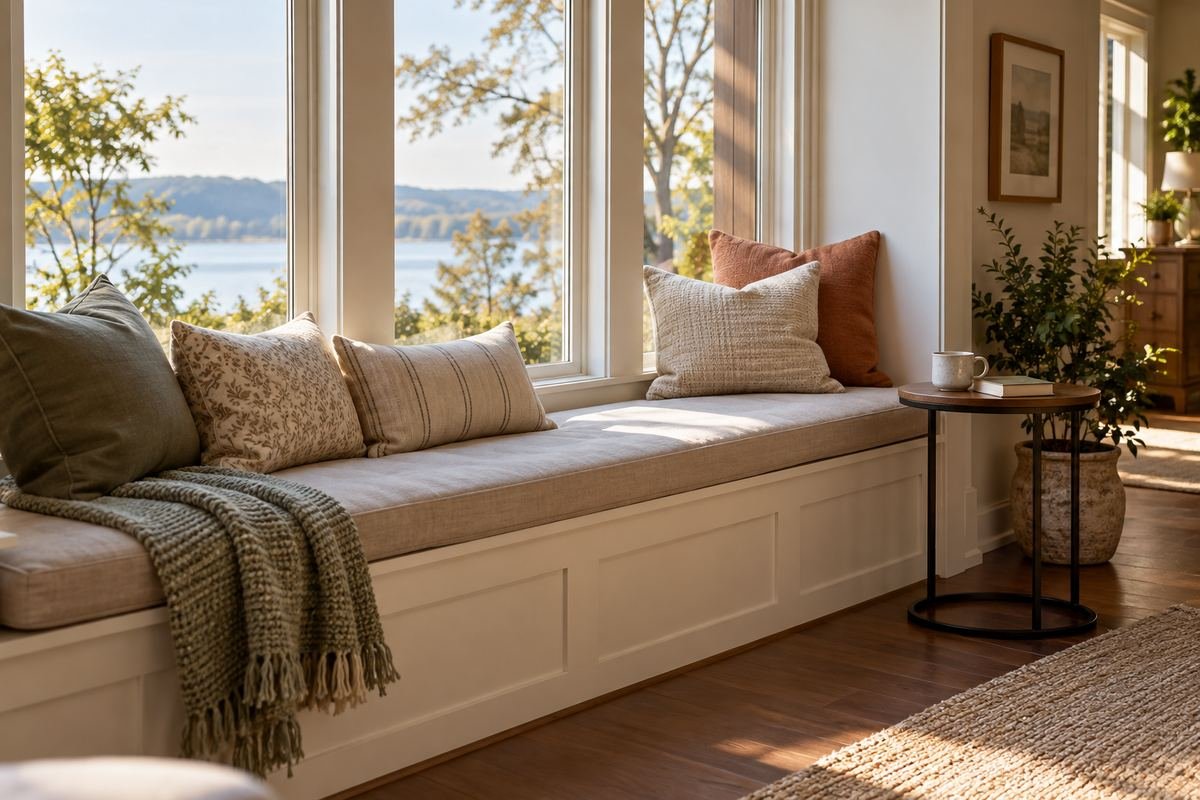
A compact side table can provide a place for a cup or book without occupying the bench. A separate table is easier to reposition when the room changes use.
Test the reach from a seated position and the route past the table. Keep it out of the window opening and avoid unstable narrow arrangements.
Practical tip: Place the table beside the seat rather than in the main path.
19. Keep a blanket in a separate basket

A blanket can make a seat useful during a quiet break, but it does not need to cover the whole cushion. A basket nearby gives it a clear home when unused.
Choose a spot where the basket stays outside the walking route. Check the blanket care label and keep the arrangement easy to reset after sitting.
Practical tip: Store the blanket where it can be reached and put away easily.
20. Let an existing light serve the seat

A nearby light may already support evening use without another fixture in the alcove. Try the seat after daylight fades before deciding what is missing.
If adding lighting, use the right product and appropriate installation. Keep cables managed away from the seat and window hardware, and avoid treating a styling photograph as wiring guidance.
Practical tip: Check the evening experience before buying more lighting.
21. Keep window treatments clear of the cushion

The relationship between the shade, curtain and cushion affects everyday use. A treatment that bunches onto the seat can make a neat bench feel crowded.
Open and close the actual window treatment with the seat in place. Use the product as instructed and consider suitable cordless options where relevant to the household.
Practical tip: Test the window treatment in both positions.
22. Make a bedroom seat visually quiet
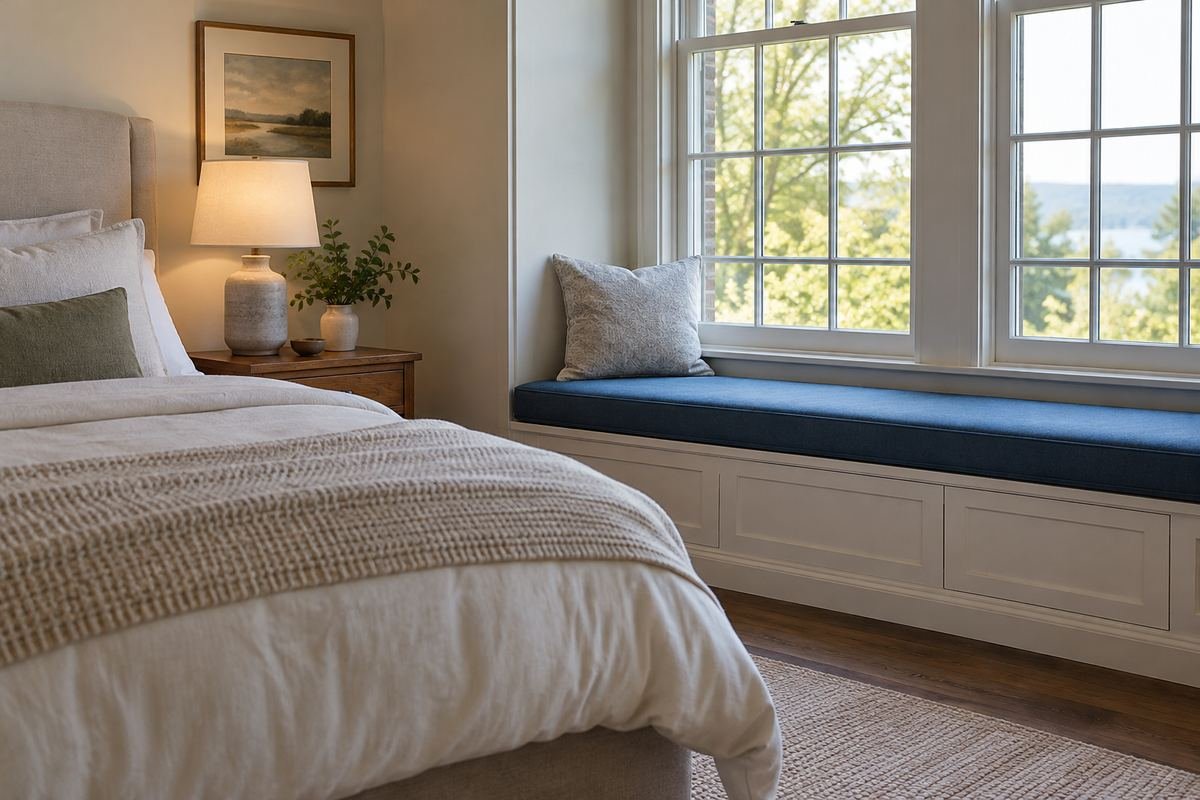
A window seat in a bedroom can provide a short pause without becoming another pile of bedding. A cushion related to the bed textiles can connect the two areas.
Leave the seat a separate usable surface. Store spare bedding elsewhere if it prevents sitting or makes the window difficult to access.
Practical tip: Use fewer pillows than you use on the bed.
23. Use the seat as a secondary living room perch

A window bench can provide another place to sit without repeating the main sofa. Its cushion can relate to the living room while keeping its own shape.
Check how a person reaches the seat when other furniture is occupied. A beautiful alcove loses usefulness if a coffee table blocks the approach.
Practical tip: Keep the approach usable during an ordinary gathering.
24. Choose Window Seat Ideas Covers for a Clear Care Routine
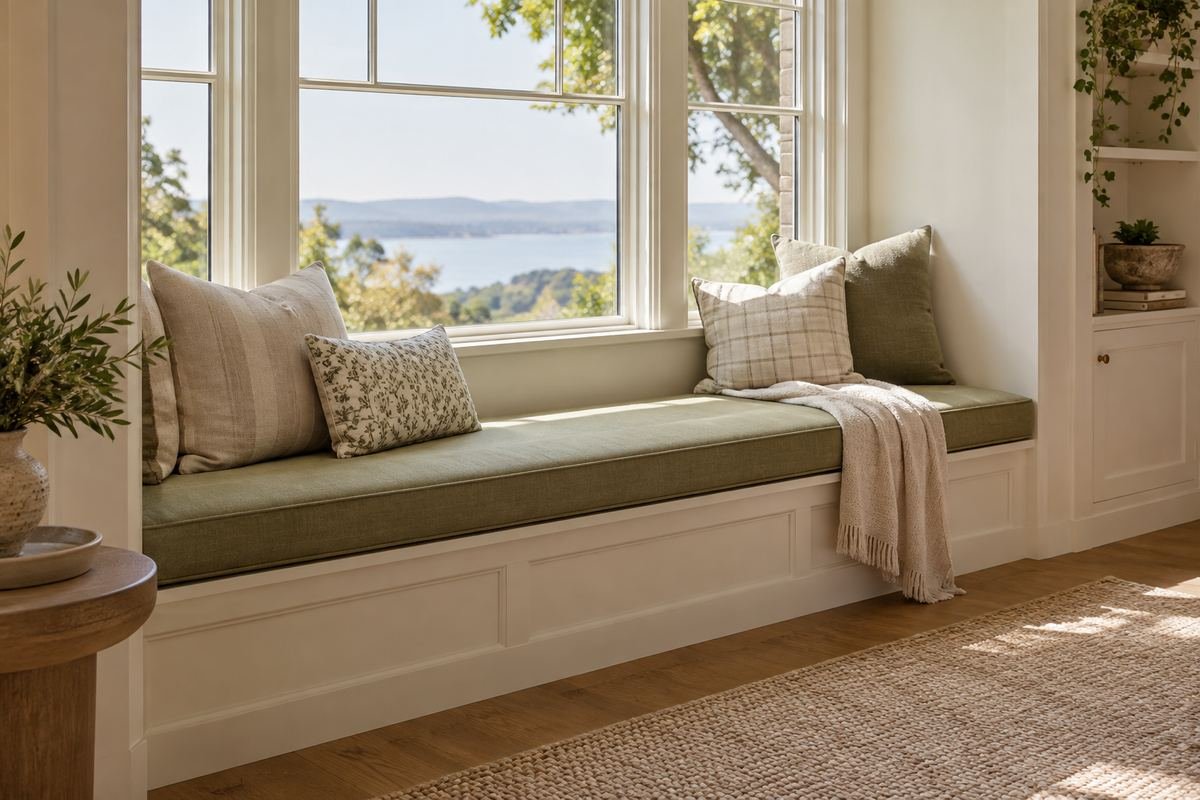
A removable cover can help keep a frequently used seat presentable when its care method suits the household. Choose the routine as carefully as the fabric color.
Read the exact cover and filling instructions. Removable does not mean machine washable, and a damp cover should not be put back over a cushion unless the product guidance permits it.
Practical tip: Save the care information with the cushion order.
25. Change one small detail with the season
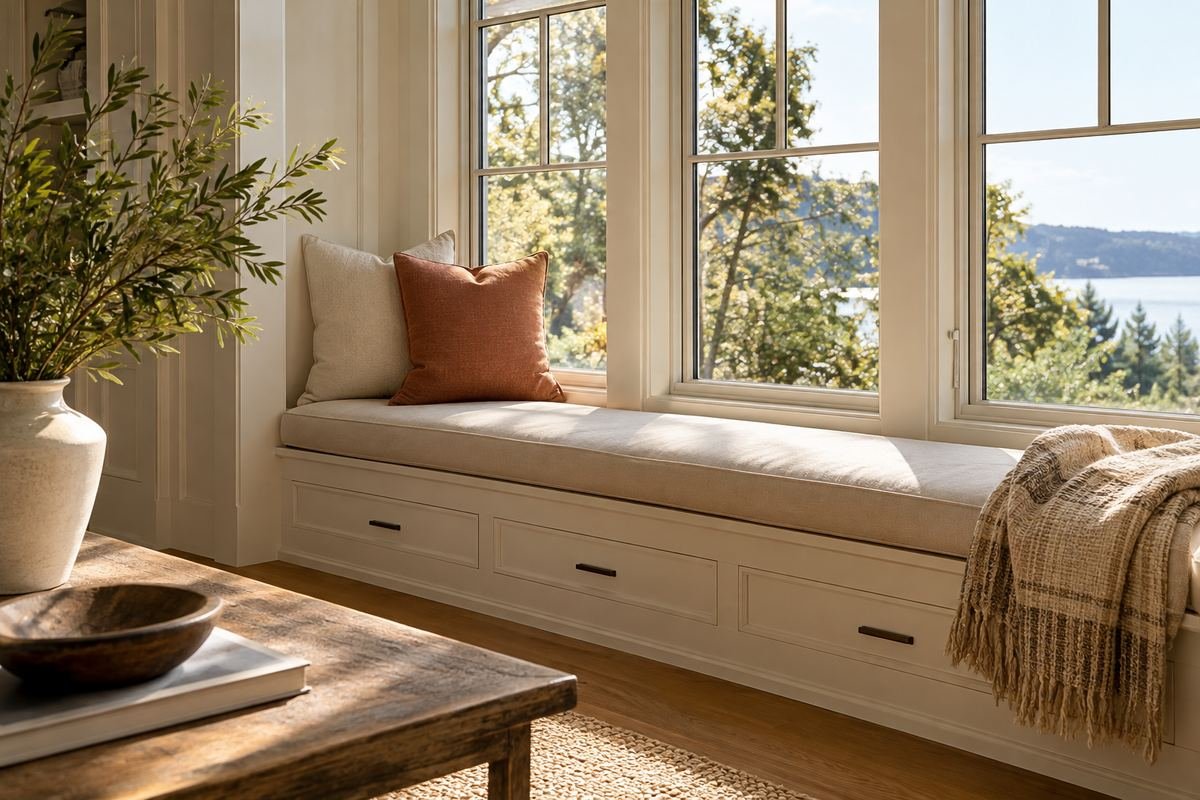
A single pillow cover can refresh the seat without replacing the fitted cushion. Keep the main arrangement familiar so the bench remains ready to use.
Store the alternative cover elsewhere and remove the previous accent when adding the new one. The seat does not need a growing collection of seasonal objects.
Practical tip: Swap one item instead of adding another layer.
Frequently Asked Questions
Does a window seat need to be built in?
No. A purpose-made freestanding bench can work when its dimensions, load rating and placement suit the room. Check the seat instructions and window access instead of choosing from appearance alone.
How do I measure a window seat cushion?
Measure the usable seat surface, including any angled ends, and confirm the cushion maker’s measuring method. Window openings and bench tops are not necessarily the same size. Include how cushion thickness changes the finished sitting position.
How many pillows should I put on a window seat?
Use only enough to support how you sit. Start with one at each useful end, then sit down. If the pillows push you off the front or require moving a pile every time, reduce them.
Can I use storage cabinets as a window seat?
Only when the exact system is intended and specified for sitting in that configuration. Do not infer a seating load rating from a cabinet top or from a photograph of a similar arrangement.
What should I check near the window?
Keep the handles, cleaning access and required openings usable. Follow the window instructions and consider climbing risks in homes with children. Obtain appropriate project advice if adding a seat affects the window or its required access.
Choose the Details That Work in Your Home
Choose the seat footprint first, then add the cushion and a restrained set of useful details. The most successful arrangement is the one you can sit on comfortably, keep tidy and use without struggling to reach the window.
For related ideas, explore Small reading nook ideas, Bedroom curtain ideas, Entryway bench ideas.
Planning References
Pella: an alcove window seat with curtains; Pella: bay window configurations and interior space. Follow the instructions for the exact products you choose.
Optional digital guide for this topic
If you prefer a structured workbook, explore this related paid guide.