Good living room accent chair ideas begin with a useful seat. The chair may add color or soften a straight-lined sofa, but it should also suit the person who sits there and the route through the room. An attractive piece that blocks a door or rarely gets used has not improved the arrangement.
Decide what is missing from the existing group. You may need one seat for conversation, a pair facing the sofa, or a chair that can turn toward two areas. Then compare the silhouette, fabric and color with the furniture you already own instead of choosing a striking chair in isolation.
These 25 concepts combine appearance with everyday decisions. Use them to build a shortlist, test the actual seating where possible and compare the full dimensions with your room. The images illustrate original design ideas rather than named products or chairs we have personally tested.
The images are original AI-generated decor concepts, not installation diagrams or photographs of completed client projects.
Browse These 25 Living Room Accent Chair Ideas
Jump to an idea
- Start with a compact chair and slim arms
- Use an exposed wood frame to introduce an open silhouette
- Soften a straight sofa with a curved barrel chair
- Choose a swivel chair for two useful directions
- Place a matching pair opposite the sofa
- Add one chair at the open end of a sectional
- Try two different chairs with one clear connection
- Use olive upholstery as a restrained color accent
- Bring warmth with a rust-colored chair
- Use a blue chair to connect a patterned rug
- Contrast a fabric sofa with a leather chair
- Let one patterned chair carry the print
- Use a stripe to sharpen a relaxed room
- Use a textured chair within a quiet palette
- Choose a slipcovered appearance for a relaxed group
- Give a wingback chair a place within the conversation
- Compare a low lounge chair with the sofa seat
- Let one sculptural chair become the shape accent
- Introduce woven texture with an indoor chair
- Angle one chair toward the sofa near a window
- Pair a chair with a movable footstool
- Provide a useful surface beside the seat
- Coordinate the chair and its nearby lamp
- Use two chairs to make a modest secondary group
- Choose a finished back for a chair seen from the entrance
Check living room accent chair ideas against the real furniture plan
Record the chair’s overall width, depth and height separately from the usable seat dimensions. Add the sofa, tables, doors and main walking route. Include the full movement of a swivel or reclining model where relevant. Check how the chair enters the home as well as where it stands after delivery.
| Priority | Compare before buying | Useful room test |
|---|---|---|
| Conversation | Seat direction and relationship with the sofa | Can people talk without twisting toward each other? |
| Compact footprint | Overall dimensions, arms and base | Does the chair preserve the route when occupied? |
| Flexible orientation | Actual swivel range and surrounding objects | Can it turn without striking a table or wall? |
| Comfort | Seat height, depth, firmness and arm position | Can the intended user sit and stand comfortably? |
| Care | Exact fabric and cleaning instructions | Does the care routine suit the household? |
| Delivery | Product and package dimensions | Can it pass every turn on the route to the room? |
Separate a small-looking chair from a small footprint
Open legs, narrow arms or a low back can make a chair appear lighter, but they do not establish its actual dimensions. Compare the overall footprint and usable seat separately. A broad sculptural chair may look airy in a large photograph while taking more floor space than a compact upholstered armchair.
Measure the route into the room
Article’s delivery-measuring guide distinguishes the furniture dimensions from the package dimensions and asks buyers to review doorways, hallways, corners, stairs and elevators. Keep that separate from the final furniture plan. Confirm any delivery or assembly questions with the actual seller before ordering rather than assuming a chair will fit because it is smaller than the sofa.
Test the seat instead of judging comfort from the silhouette
Where possible, sit in the actual model for the kind of use you expect. Compare the seat depth, cushion feel, back and arm position, and getting in and out. Two chairs with similar outside dimensions can feel different. A decorative label such as lounge chair or accent chair does not establish comfort for every user.
Choose care requirements before the final color
Check the exact upholstery and care instructions with the supplier. A removable cover is not automatically machine washable, and a textured or dark fabric is not automatically resistant to stains or pets. Keep a sample with the sofa fabric and review both its appearance and the maintenance the household can realistically manage.
Build a practical three-chair shortlist
Compare accent chair ideas by writing down three real candidates and the same facts for each: overall footprint, usable seat dimensions, upholstery care and the delivery route. Then identify the reason each belongs in the room. For example, one may provide the best conversation position, while another adds the material contrast the sofa needs. Remove a candidate that fails an important daily-use requirement before choosing between colors. This keeps the final choice tied to the room instead of the most appealing product photograph.
1. Start with a compact chair and slim arms

A compact upholstered chair with slim arms can provide a distinct seat without the visual bulk of a broad lounge chair. It works well when the sofa already supplies the room’s softest, largest shape. Keep the chair’s proportions connected to the surrounding furniture.
Compare overall width with the usable seat width before deciding it is a good fit. Very narrow arms do not guarantee comfort or enough sitting space. Place the real footprint on the plan and check the route with the chair occupied.
Practical tip: Compare the usable seat as well as the outside dimensions.
2. Use an exposed wood frame to introduce an open silhouette

An exposed wood frame can bring a lighter outline beside a fully upholstered sofa. The contrast is particularly useful when the room needs a different material rather than another large block of fabric. Repeat the timber tone in one modest detail to connect the piece to the room.
Review the frame, arms and cushion in person where possible. The attractive outline does not tell you whether the arm position or seat angle suits the intended user. Keep enough space around the frame for ordinary movement and cleaning.
Practical tip: Test the actual arm position before choosing the frame.
3. Soften a straight sofa with a curved barrel chair

A curved barrel-style chair can introduce a softer silhouette beside a sofa with straight arms. Let the curve be the main contrast while the fabric remains related to the room. This can make a seating group feel less rigid without adding another pattern.
Compare the chair’s widest point and depth, including its curved back. A rounded silhouette may take more space than it appears to in a front view. Review the position from the room entrance so the curve improves the composition without narrowing the approach.
Practical tip: Measure the widest point of the curved back.
4. Choose a swivel chair for two useful directions
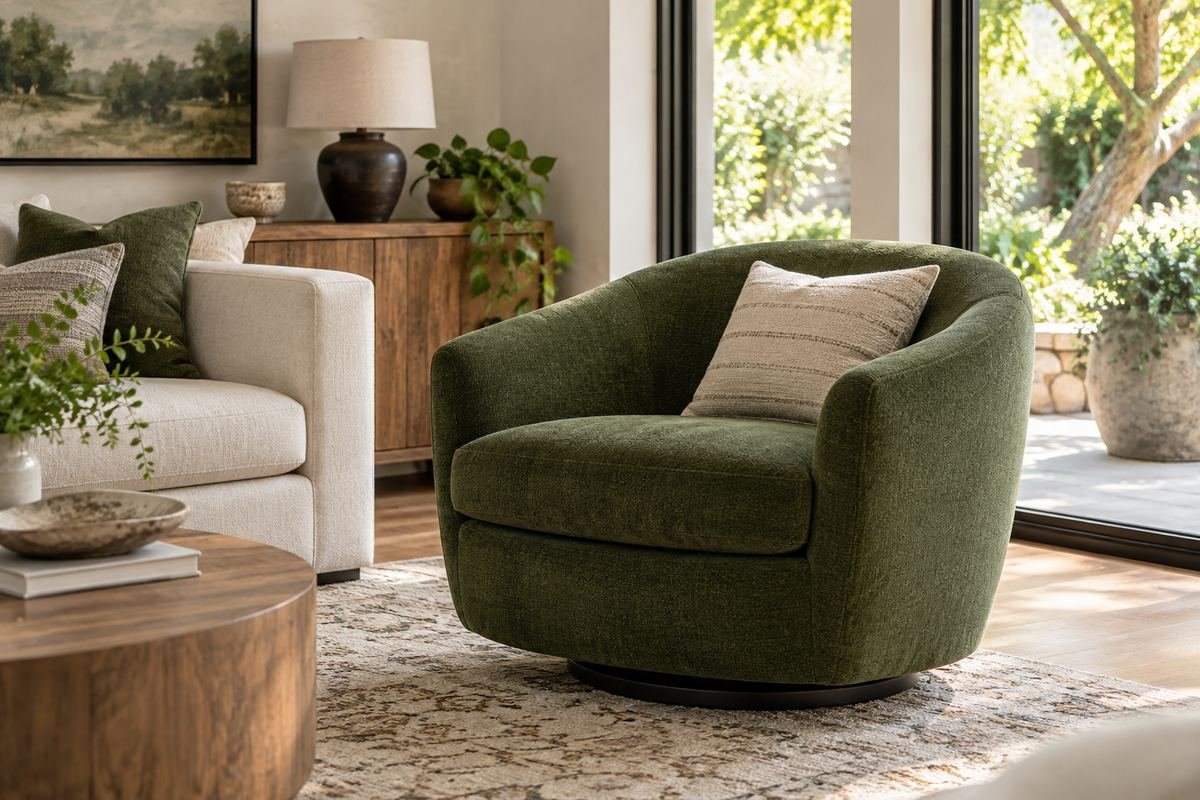
A swivel chair can connect a conversation group with another view when turning is part of the actual routine. It may face the sofa during a visit and a window at another time. Choose a restrained form so its flexibility does not add visual clutter.
Show the intended turning movement on the plan with nearby furniture in place. Check the real model’s dimensions and operation rather than judging from its base alone. Keep the chair useful in both positions instead of solving one view while blocking the other.
Practical tip: Check the full intended turn beside the actual table.
5. Place a matching pair opposite the sofa

A pair of related chairs can give a living room a clear conversation arrangement. Their repeated form creates order while the sofa remains the largest piece. Keep the fabric or frame restrained if the room already has a patterned rug or strong wall color.
Test the actual seat directions and the route between the pieces. A balanced photograph does not establish a comfortable conversation distance for your room. Check the tables and walking route together before committing to two full-size chairs.
Practical tip: Review the pair as occupied seats rather than empty shapes.
6. Add one chair at the open end of a sectional
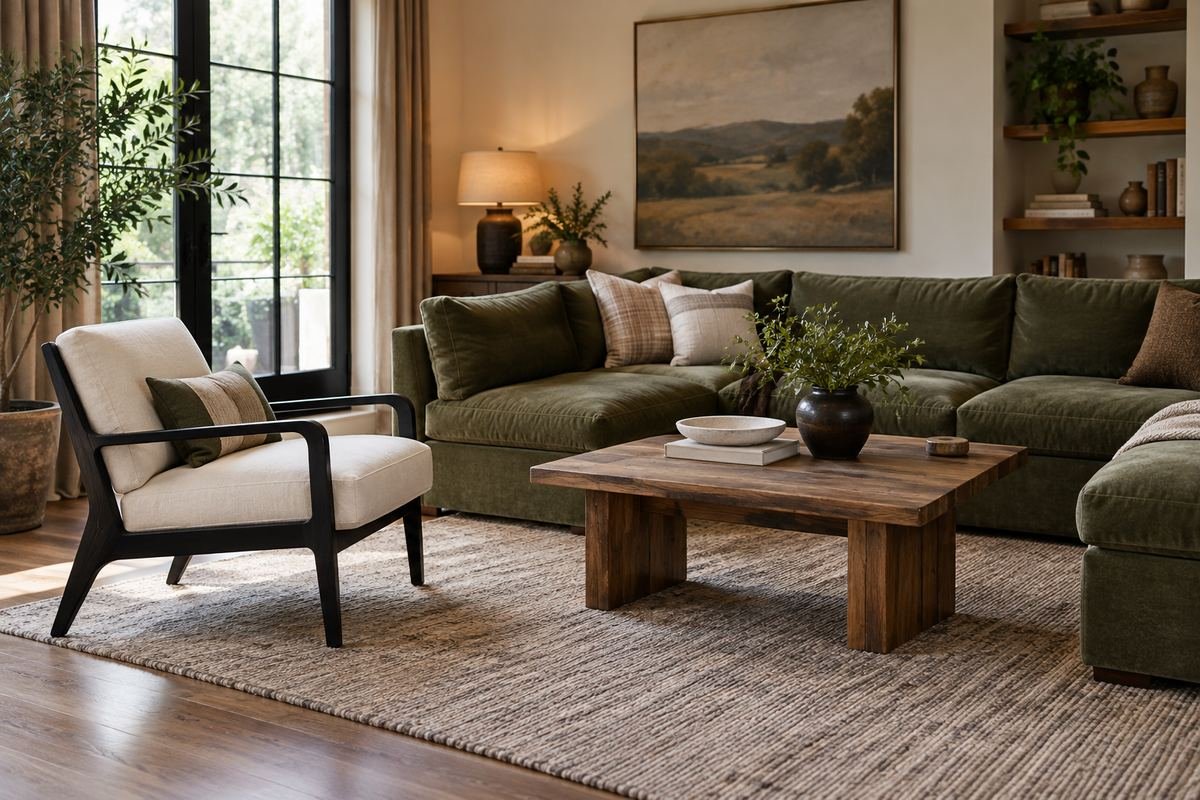
One accent chair can complete the social edge of a sectional without enclosing the entire seating group. A visually lighter frame can help the open side remain legible. Angle the chair toward the people it is meant to join rather than simply pointing it at the coffee table.
Check the route around the sectional’s projecting section and the chair together. The additional seat should not turn a useful opening into a narrow turn. Compare the layout with the actual ottoman, side table and occupied positions included.
Practical tip: Protect the useful opening beside the sectional.
7. Try two different chairs with one clear connection
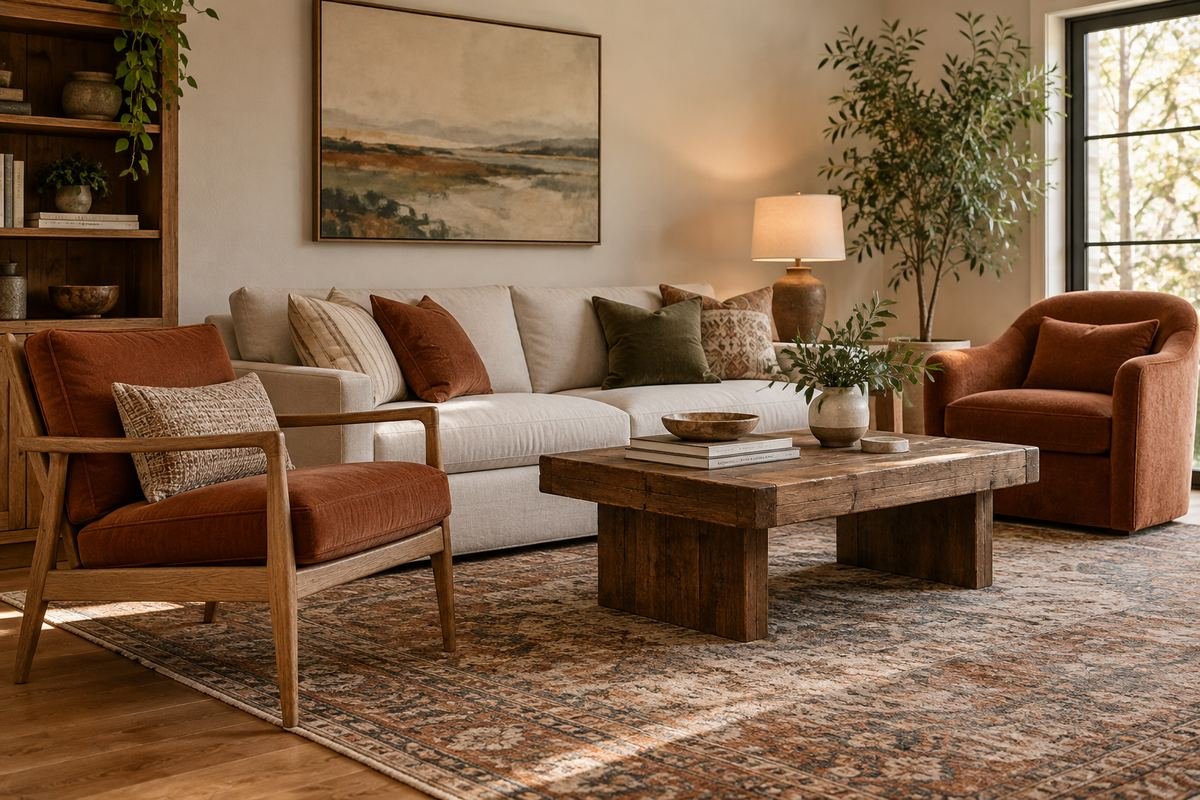
Different chairs can make a seating group feel collected when they share a deliberate relationship. A related timber tone or fabric undertone may be enough. Let their silhouettes differ without making every color and material compete at the same time.
Compare visual weight and seat position as well as color. A very low lounge chair and a tall upright chair can create an awkward relationship even if their upholstery coordinates. Check the actual users and room views before choosing the pairing.
Practical tip: Name the one relationship that connects the two chairs.
8. Use olive upholstery as a restrained color accent
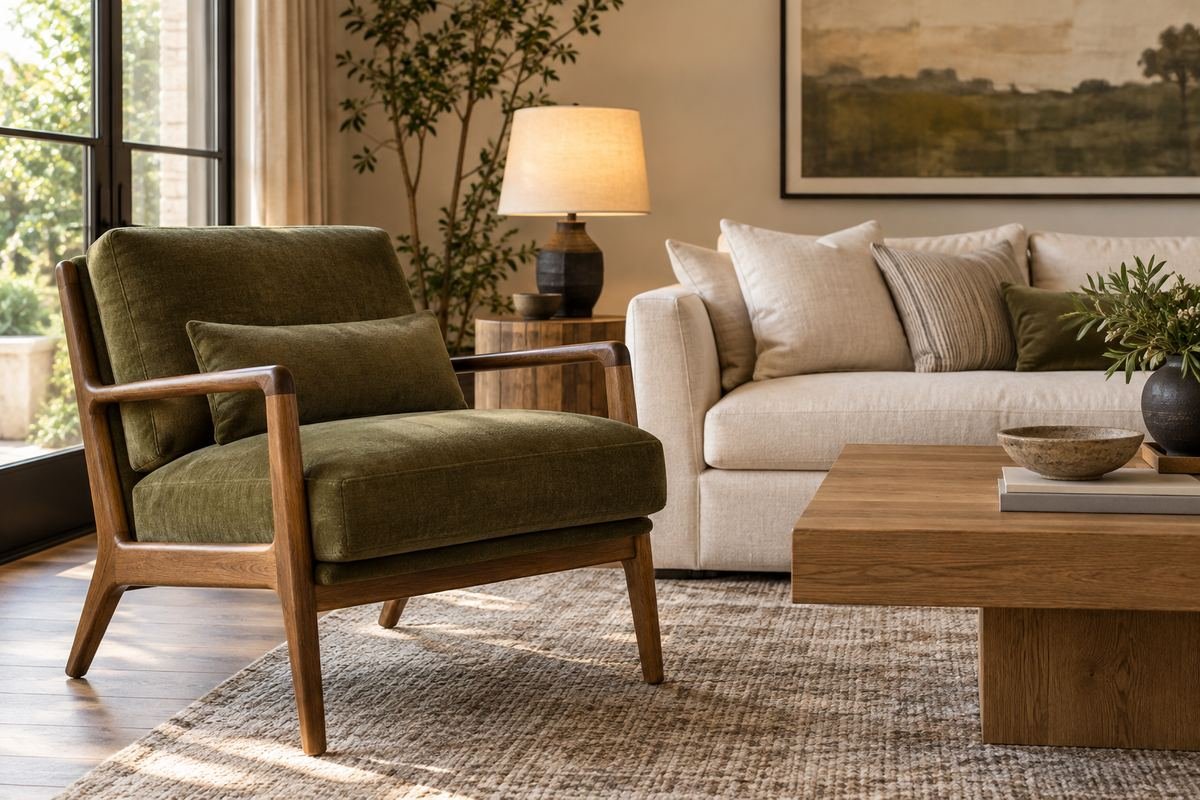
Olive upholstery can add a definite color to a neutral living room while relating to warm timber and other muted tones. Keep the chair’s shape simple so the color has room to work. Repeat it lightly in art or a small textile if the room needs a connection.
Compare the fabric in the actual light beside the sofa and floor. Some olive tones appear browner or grayer than a small online image suggests. Choose the exact sample you prefer rather than expecting a broad color name to guarantee the effect.
Practical tip: Review the olive sample beside the sofa fabric.
9. Bring warmth with a rust-colored chair
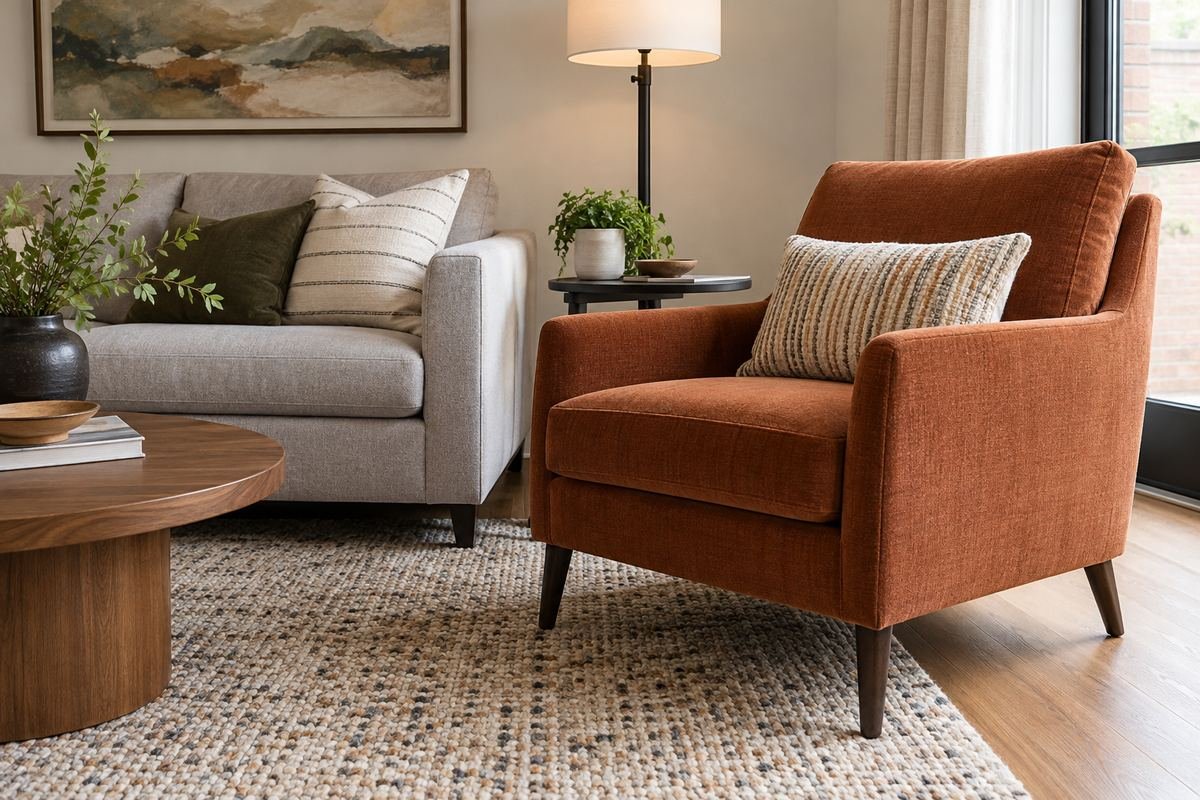
A rust-colored chair can provide a warm point of interest in a room with pale walls or cool upholstery. Use a fabric with enough depth to feel intentional across the whole chair. Keep nearby cushions modest so the accent does not become a repeated theme on every seat.
Set the fabric sample beside the room’s largest existing colors. Rust can vary from orange to brown or pink, so the relationship with the sofa matters more than the label. Review it under evening lamps before choosing the final tone.
Practical tip: Compare the rust tone in evening light.
10. Use a blue chair to connect a patterned rug

A blue chair can pick up one restrained tone from a rug and give the pattern a clear relationship with the furniture. The chair need not match the rug exactly. Look for a related depth or undertone that makes the room feel connected without becoming overly coordinated.
Compare the whole rug with a substantial fabric sample. A tiny blue detail may not justify a large blue chair if the remaining colors disagree. Let the existing room guide the choice and keep the other upholstered pieces relatively quiet.
Practical tip: Lay the fabric sample beside the full rug.
11. Contrast a fabric sofa with a leather chair

A leather chair can introduce a different surface beside an upholstered sofa. Its grain and tone may provide enough contrast without a complicated silhouette. Choose the actual leather type and finish with the room’s use in mind rather than treating all leather as one material.
Check the supplier’s care guidance and review a representative sample. Appearance, variation and maintenance differ by product and finish. Avoid assuming a leather chair will be carefree or develop a particular look simply because another chair in an inspiration photograph did.
Practical tip: Ask for care information for the exact leather finish.
12. Let one patterned chair carry the print

A patterned chair can add character when the sofa and curtains are relatively calm. Choose a print with a scale that remains clear across the chair’s arms and back. One deliberate patterned piece often gives the eye more to enjoy than several unrelated small prints.
Review a sample large enough to show the full repeat and ask how the pattern will sit on the chosen chair. A pleasing swatch can look different over curved arms or separate cushions. Compare it with existing rugs and artwork before adding another print.
Practical tip: Look at the full pattern repeat on a chair-shaped example.
13. Use a stripe to sharpen a relaxed room

A striped chair can provide a clear rhythm beside soft solid upholstery. Keep the color contrast suited to the room rather than choosing the boldest stripe by default. A restrained stripe can feel deliberate without making the chair the only object you notice.
Check the direction and alignment of the stripe across the actual model. Curved surfaces and separate cushions affect the result. Compare the stripe with nearby window lines or a patterned rug so the room does not become a collection of competing repetitions.
Practical tip: Review the stripe direction on the actual chair model.
14. Use a textured chair within a quiet palette
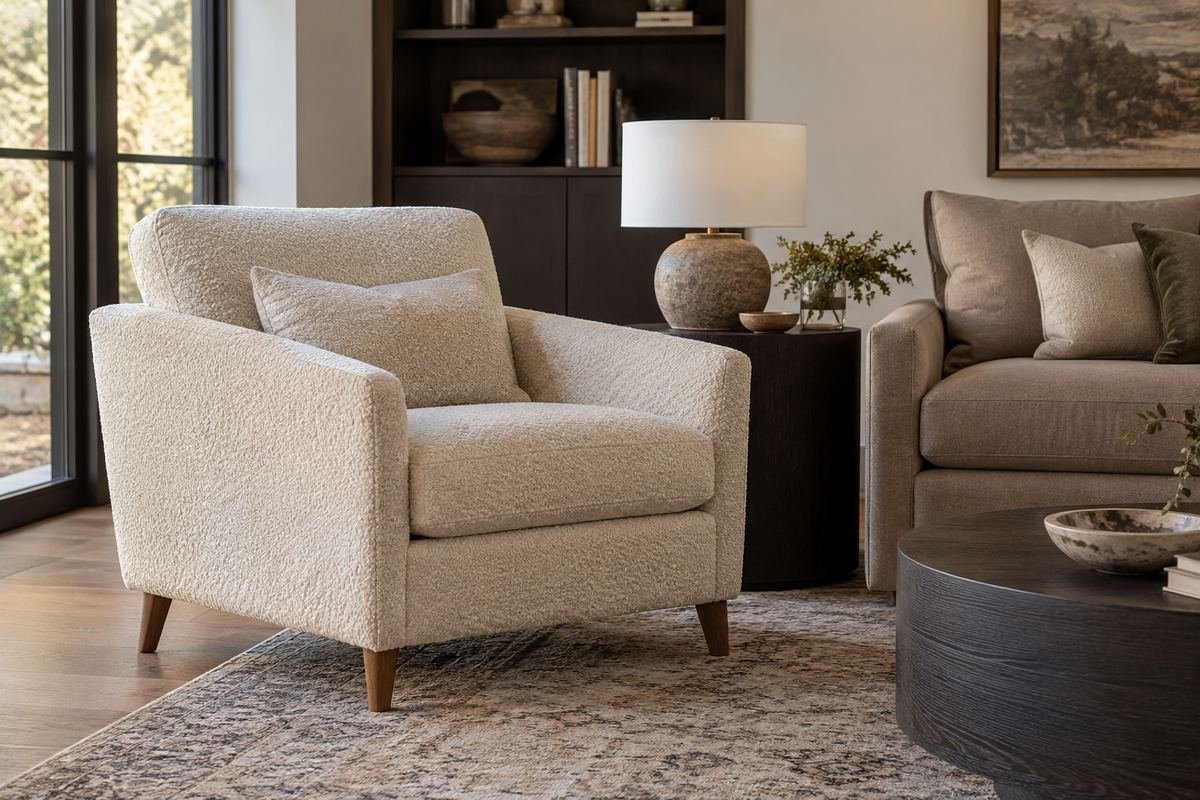
A textured upholstery can distinguish a chair even when its color stays close to the sofa. The effect comes from the difference in surface rather than a strong color change. Keep the silhouette relatively simple so the texture remains the main detail.
Handle the real sample and review its care requirements. A looped or nubby appearance does not establish durability or suitability for the household. Compare the sample in ordinary light because shadows can make texture appear much stronger than it does on a small online swatch.
Practical tip: Judge the texture by touch as well as appearance.
15. Choose a slipcovered appearance for a relaxed group
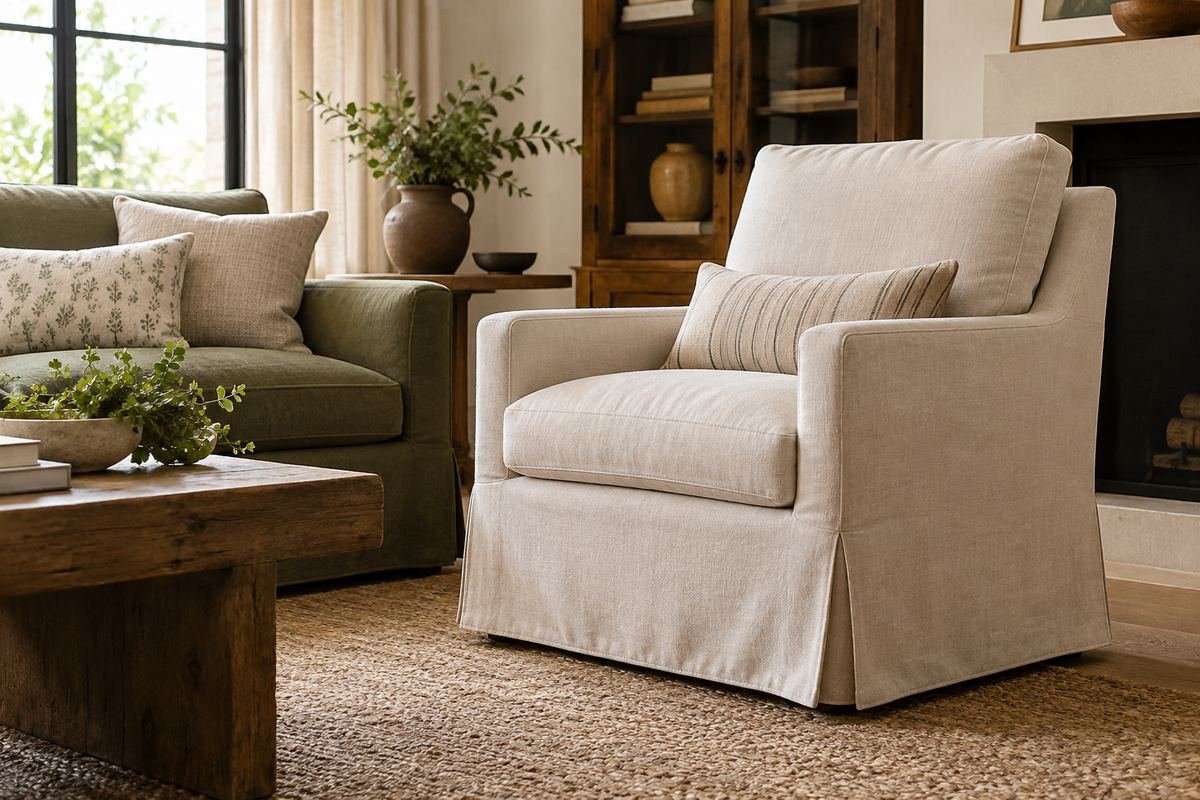
A tailored slipcovered appearance can soften a living room with several hard-edged pieces. It may suit a comfortable everyday seating group where the chair should feel approachable. Keep the fit deliberate so the fabric follows the chair instead of appearing loosely draped over an unrelated shape.
Confirm whether the actual cover removes and how it is cleaned. Some removable covers still need specialized care. Review replacement availability with the seller if it matters to the household, rather than assuming a relaxed look means the chair is easy to wash or re-cover.
Practical tip: Read the exact cover’s cleaning instructions.
16. Give a wingback chair a place within the conversation

A wingback-style chair can add height and a clear silhouette beside a lower sofa. Use its shape as the feature and keep the surrounding wall arrangement restrained. It can feel comfortable within the group when its direction includes the other seats.
Check the real back height from the entrance and from behind the chair. A tall piece may block a view or feel dominant in a smaller room. Test its seat and back for the intended user instead of assuming a traditional shape provides a particular level of support.
Practical tip: Review the tall back from the room entrance.
17. Compare a low lounge chair with the sofa seat

A low lounge chair can make a living room feel relaxed and introduce a different sitting posture. It is most useful when that posture suits the person and activity. A simple open frame can keep the piece visually distinct from a large upholstered sofa.
Compare the actual seat heights, angles and getting in and out of both pieces. A dramatic height difference may make conversation feel awkward for some users. Keep the low chair only if it contributes a seat people enjoy using in that particular group.
Practical tip: Sit in the lounge chair beside a comparable sofa height.
18. Let one sculptural chair become the shape accent
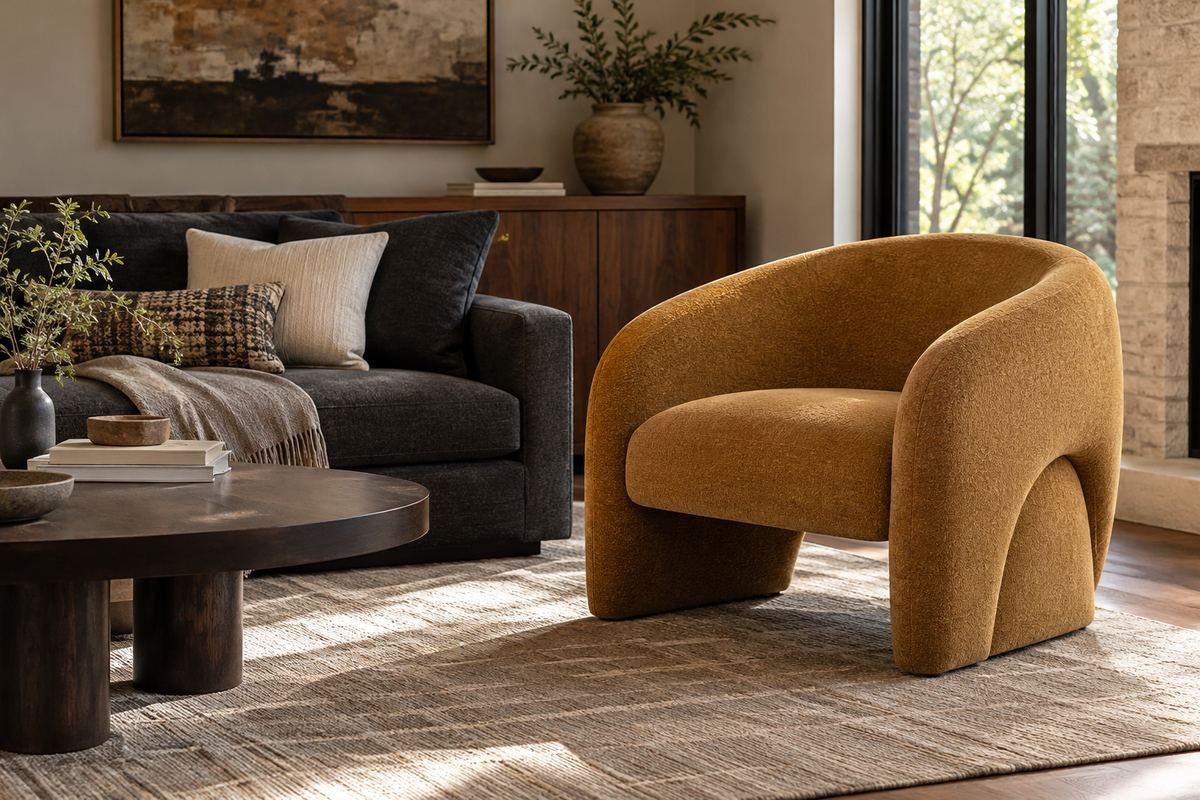
A sculptural chair can provide the room’s main shape contrast when the sofa, tables and rug are restrained. Choose a silhouette that still reads as useful seating. One clear curved or angular form is easier to integrate than several competing statement pieces.
Review the footprint from more than the front view. A broad back or projecting arm can change how the room works. Compare comfort and movement with the visual appeal before deciding the chair deserves such a prominent place.
Practical tip: Check the side and rear views before buying.
19. Introduce woven texture with an indoor chair

A woven chair can add a different texture beside upholstered seating. Keep its frame and cushion connected to the room palette so it feels like part of the group. The open pattern can be particularly effective when the other furniture has solid, smooth surfaces.
Choose a product intended for the actual indoor use and check its construction and care guidance. Appearance alone does not establish strength or comfort. Test the seat and cushion together rather than treating woven texture as a substitute for evaluating the chair.
Practical tip: Try the actual woven seat and cushion together.
20. Angle one chair toward the sofa near a window

A chair near a window can remain part of the main seating group when its angle acknowledges the sofa. This gives the room a useful seat without making the window corner feel separate. Keep the table and lamp modest so the arrangement does not become crowded.
Check curtain movement, window operation and the normal walking route with the chair in place. The most attractive angle in a photograph may not suit the real room. Include the occupied chair and the way someone approaches it before fixing the final position.
Practical tip: Test the angle with the curtains drawn.
21. Pair a chair with a movable footstool

A separate footstool can give one chair a more relaxed role without changing the whole seating group. Choose a related material or color and keep its size proportionate to the chair. A movable piece can return the floor to another use when needed.
Plan where the footstool goes when it is not in use. If it always occupies the main route, the flexibility is only theoretical. Test the chair and stool together for the intended user rather than assuming a matching set guarantees a comfortable position.
Practical tip: Give the footstool a practical resting place.
22. Provide a useful surface beside the seat
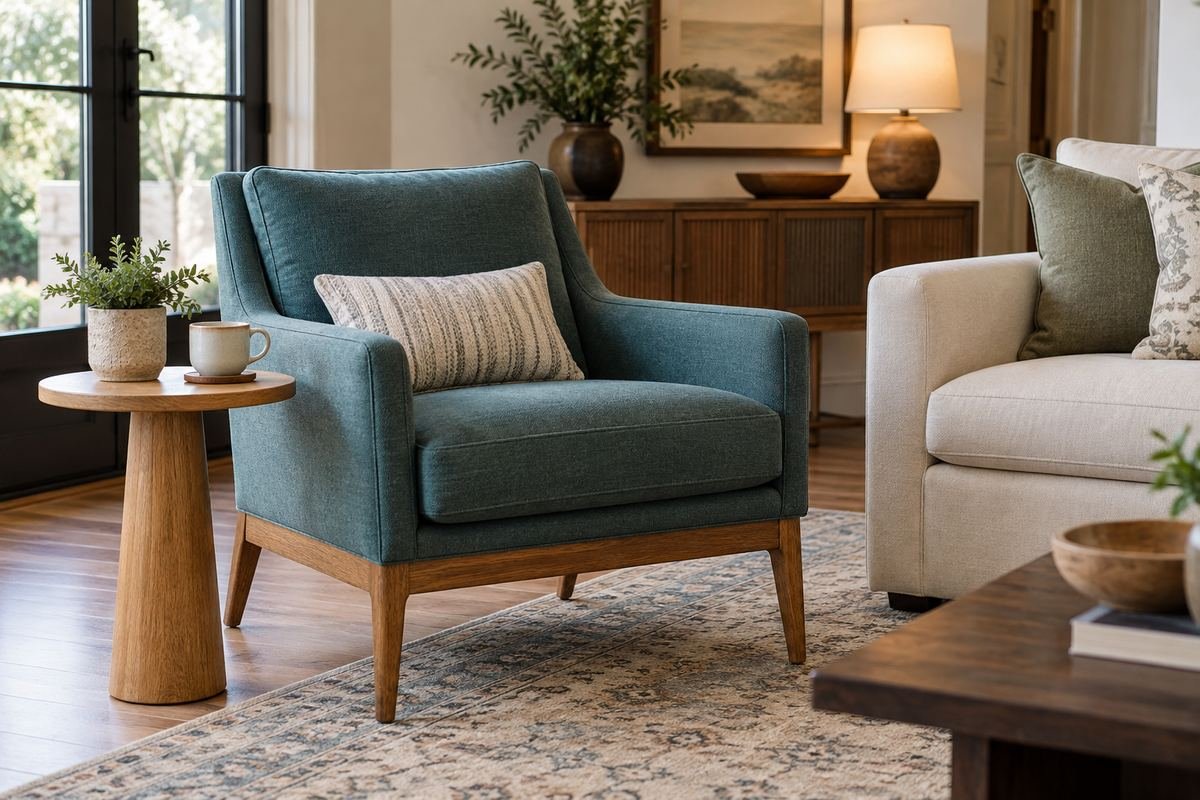
A small side table can make an accent chair useful for a drink, glasses or a book without adding another large coffee table. Relate its scale to the chair arm and the objects it needs to hold. Keep the surface simple enough to remain available.
Try the reach from the actual sitting position. A table that looks neatly aligned may be awkward to use or easy to knock. Check the route and, with a swivel chair, the full movement before settling on the table’s location.
Practical tip: Test the reach with the chair occupied.
23. Coordinate the chair and its nearby lamp

A nearby lamp can give an accent chair a deliberate place in the evening room. Choose a form that relates to the chair without filling every space around it. The relationship should support the intended activity and the wider lighting plan.
Check the light from the real sitting position and keep cables out of the route. A beautiful lampshade does not establish comfortable light for every task. Compare the chair, table and lamp together so each object has a useful place.
Practical tip: Review the lamp while sitting in the intended chair.
24. Use two chairs to make a modest secondary group

Two chairs with a small table can form a useful secondary conversation area in a sufficiently generous living room. Keep the arrangement connected to the room rather than treating it as an unrelated furniture display. A quieter chair form helps the main group remain legible.
Decide whether the household will actually use the additional group. Compare the route, access to storage and the relationship with the main sofa. If the room works better with one chair or a clear open area, reduce the proposal before buying a pair.
Practical tip: Give the secondary group a specific everyday purpose.
25. Choose a finished back for a chair seen from the entrance
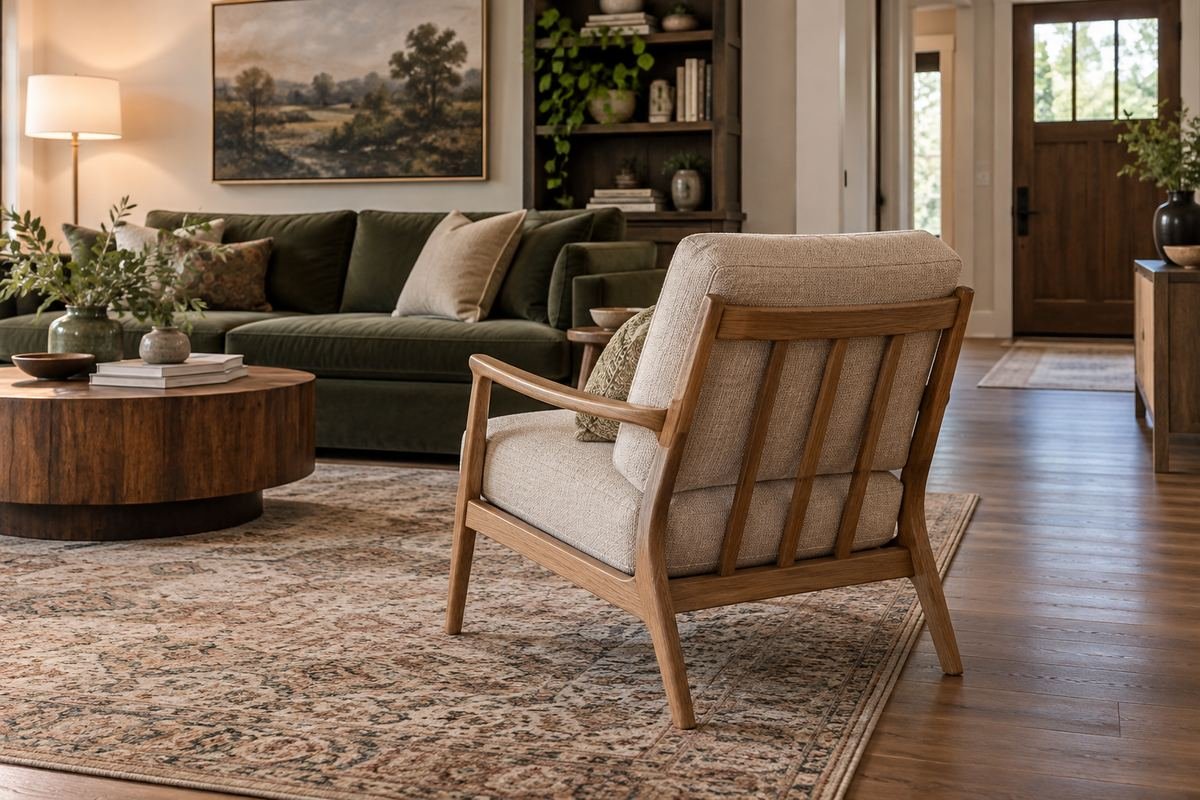
An accent chair placed away from the wall is often first seen from behind. A coherent upholstered back or well-finished frame can make that view feel intentional. Keep the chair’s orientation useful for the seating group while considering its place in the larger room.
Ask to see the actual rear view before ordering. Seams, fabric placement and exposed construction can differ from the front photograph. Review the route behind the occupied chair so its attractive back does not become a reason to place it where people struggle to pass.
Practical tip: Inspect the rear elevation before finalizing the position.
Frequently Asked Questions
Do accent chairs have to match the sofa?
No. They can relate through an undertone, material, shape or repeated color while retaining a different silhouette. Compare the actual samples and the whole group rather than trying to match every element.
Is one accent chair enough?
Yes, if it provides the seat the room needs and the arrangement feels coherent. A pair is useful only when the room and household benefit from two seats. Do not add a second chair just to complete a photograph.
How do I choose an accent chair for a small living room?
Compare the real footprint, usable seat and route around the occupied chair. Narrow arms or open legs may help the appearance, but actual measurements and comfort should decide whether the model works.
Can I mix two different accent chairs?
Yes. Give them a clear relationship such as a related fabric tone, similar visual weight or a shared timber finish. Check their seat positions and comfort as well as the way they look together.
Does a swivel chair need extra space?
Plan for its actual movement and the way the occupant uses it. Check nearby tables, walls, curtains and other seats through the intended range. Follow the requirements for the model rather than assuming its stationary footprint describes the whole space it needs.
What fabric is best for an everyday chair?
Choose according to the exact product, the household’s use and the supplied care instructions. Compare real samples and documented properties. A fabric category or attractive texture alone does not prove durability, cleaning performance or suitability for every home.
Choose the Details That Work in Your Home
Use living room accent chair ideas to add a seat that belongs in the room’s daily routine. Start with the job, comfort and measured footprint, then choose the color, silhouette and finish that connect it to the sofa. A useful chair can bring personality to the room without asking the rest of the furniture to move around an impractical choice.
For related ideas, explore living room furniture spacing, living room rug sizing, living room corner ideas.
Planning References
Article: measuring furniture and the delivery route; IKEA: armchair and accent-chair forms. Follow the instructions for the exact products you choose.
Optional digital guide for this topic
If you prefer a structured workbook, explore this related paid guide.