Entryway bench ideas are most useful when they begin with the moment you come home. A place to sit while changing shoes can also give bags and footwear a defined home, provided the bench leaves room to open the door and move through the hall.
This collection focuses on choosing and arranging a bench rather than decorating an entry table. Some ideas suit a narrow apartment entrance; others use an alcove or a longer wall. Pick the storage style that matches what actually arrives at your door.
Measure the seat footprint, its storage openings and the space used by a seated person. Test the front door, closet doors and nearby drawers. A bench that fits along the wall may still be too deep once someone sits down or pulls out a basket.
The images are original AI-generated decor concepts, not installation diagrams or photographs of completed client projects.
Compare Entryway Bench Ideas With a Person Seated
Try the arrival routine with the usual footwear and bag, then sit and stand while another person uses the entry route. Next, pull out the basket or drawer intended for everyday items. For example, a compact seat can fit the wall while its knee space prevents the front door from opening normally. Choose furniture intended for sitting and keep a separate suitable drying area for wet footwear before enclosed storage.
Test the arrival routine before choosing a bench
Mark the complete footprint with paper and walk through carrying a bag. Choose furniture specifically designed for sitting and follow its load and assembly instructions. A shelf, cabinet or storage cube is not automatically a seat. Secure tall hall units as instructed, keep the exit route clear and check how wet shoes, bags and floor cleaning will affect the materials.
1. Begin Entryway Bench Ideas With a Useful Open Shelf

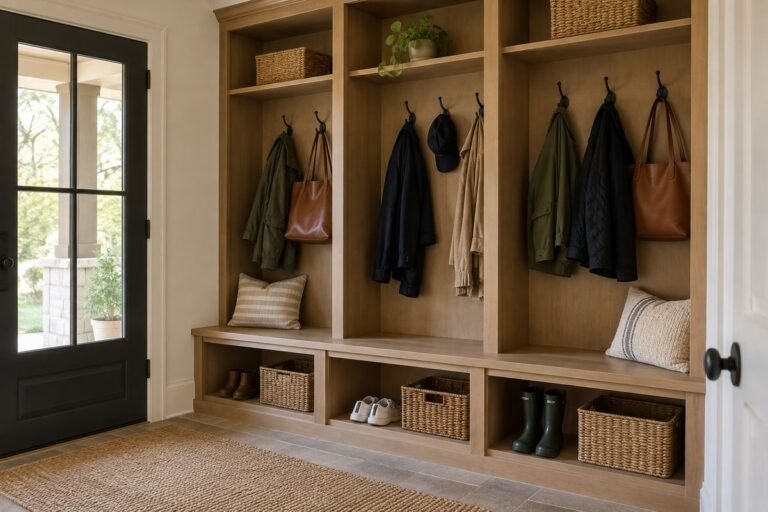
An open shelf gives frequently worn shoes a visible place to land. It suits a household that prefers a quick reset to opening several drawers, especially when only a few everyday pairs live near the door.
Keep the shelf contents limited so shoes do not spread into the walking route. Choose a bench designed for seating, and leave enough access to sweep or vacuum beneath it without moving every item.
Practical tip: Store occasional footwear somewhere else.
2. Individual baskets beneath the seat

Separate baskets let each person collect a small set of arrival items. A bench with open bays makes the system obvious while keeping scarves, hats and spare bags less visible than a loose pile.
Measure the basket with its handles and test the pulling motion. A basket that fits tightly inside the opening may scrape the frame or be awkward to remove when someone is sitting above it.
Practical tip: Choose baskets that can come out without tilting.
3. A closed shoe bench for a visible entrance

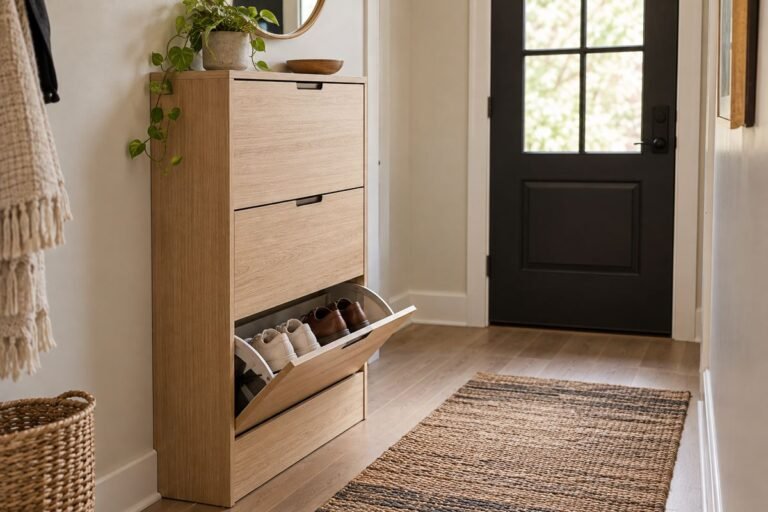
Closed fronts create a quieter view when the entry opens directly into the living room. A simple seat and restrained cabinet detail can make the piece feel like part of the room rather than utility storage.
Check the shoe compartment dimensions against real pairs. Closed storage should suit the footwear and the product ventilation guidance; deal with wet or muddy shoes before putting them inside.
Practical tip: Test the doors with the front door open.
4. A freestanding bench in an alcove

An alcove can give a bench a defined home without a custom built-in. Choose a piece that leaves visible breathing room at the sides so the recess does not look accidentally overfilled.
Check the skirting board and any sockets before ordering. The usable width at seat height may differ from the width at floor level, and a nominal furniture measurement may exclude projecting handles.
Practical tip: Measure the alcove at several heights.
5. A built-in seat with drawers
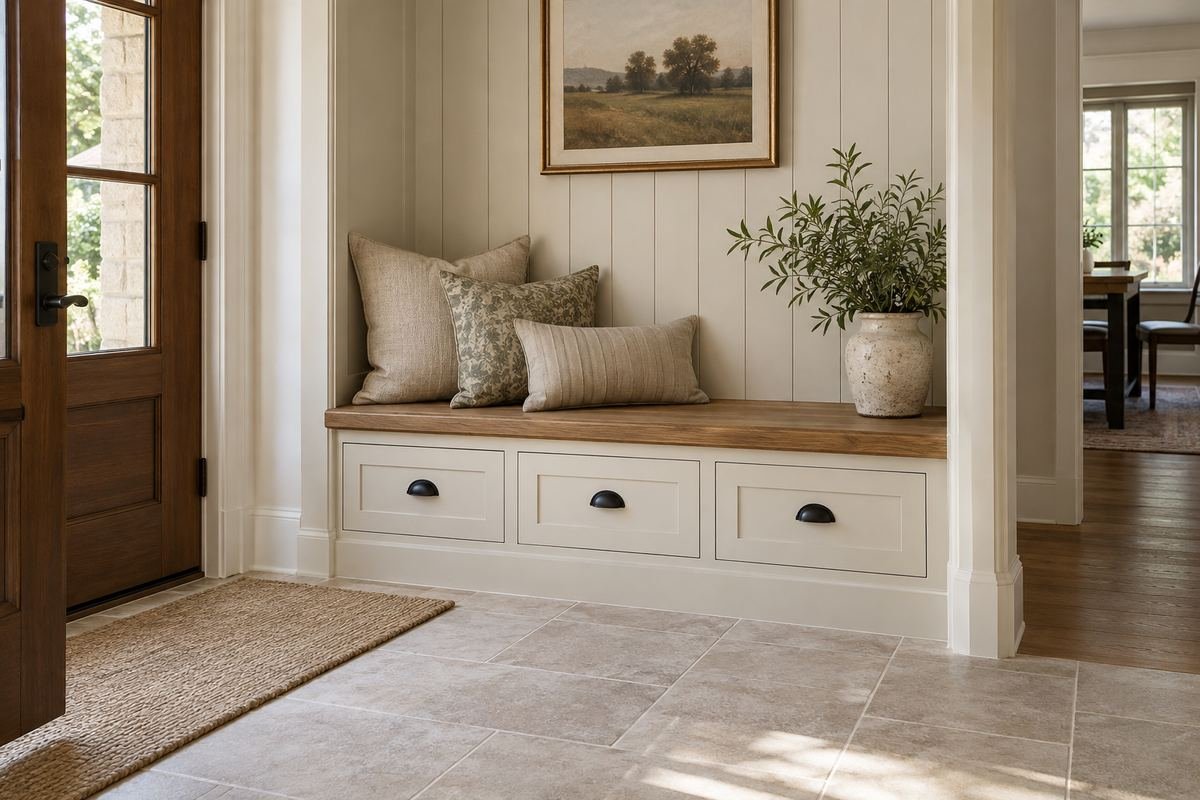
Drawers beneath a fitted seat can organize gloves, small bags and footwear in a deep recess. This arrangement works when the entry has a stable layout and a tailored solution solves a real storage problem.
Plan the seat structure, drawer clearance and access together with the maker. Leave room to pull out a drawer while standing or sitting nearby; the storage should not require blocking the main route.
Practical tip: Separate frequently used items from seasonal storage.
6. Fit Cushions to Entryway Bench Ideas and Daily Care

A removable cushion softens a simple wooden bench and allows the cover to be cleaned separately. It is especially useful when the entry is used every day and comfort matters more than a decorative pile of pillows.
Choose the cushion for the exact seat shape and follow its care label. It should stay in place during ordinary use without loose ties or bulky corners dangling into the storage below.
Practical tip: Keep the sitting area mostly free of decorative pillows.
7. A dark bench against pale walls
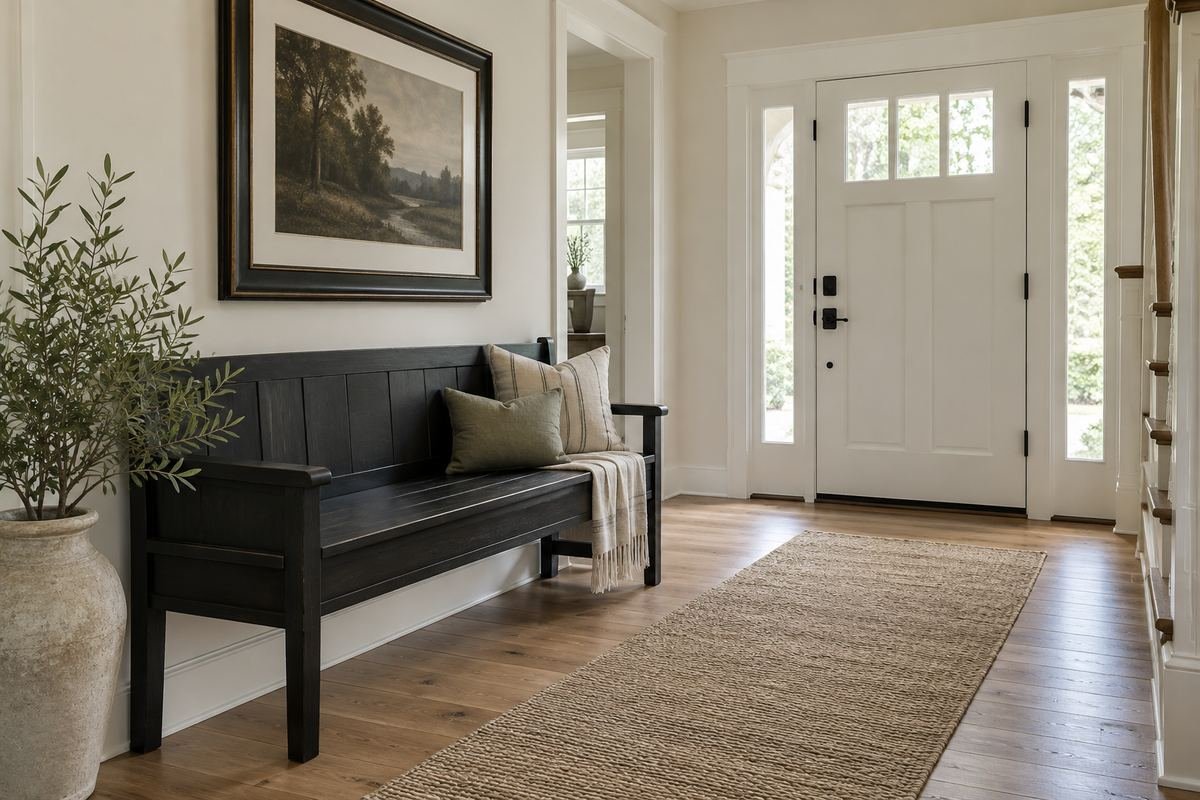
A dark wood or painted bench can define a light entryway with very little additional decoration. Repeat the darker tone in one frame or handle so the seat feels connected to the surrounding room.
Consider wear before choosing the finish. Scuffs, dust and pale shoe marks can show differently on a dark surface, so inspect a finish sample and read the recommended cleaning method.
Practical tip: Choose a finish you can maintain after daily arrivals.
8. A warm wood seat with painted storage

Combining a natural wood seat with painted lower storage gives the bench a useful visual hierarchy. The top looks like a place to sit, while the base relates to nearby trim or cabinetry.
Use a finish suitable for the actual use and clean spills promptly. A decorative finish that looks attractive in a photograph may need more careful treatment than the household can reasonably give it.
Practical tip: Keep a record of the finish and care instructions.
9. Hooks positioned for the seated user

Hooks and a bench work well together when coats do not drape across the seat. Place the hanging zone so someone can sit comfortably without leaning into bags, sharp hardware or a wall of bulky coats.
Try the arrangement with the longest coat and a real bag before fixing hardware. A balanced empty wall can become crowded after the first busy evening if the actual hanging depth has been ignored.
Practical tip: Test with the objects you will actually hang.
10. A bench beside a separate key shelf

A small key shelf can keep the seat available for sitting. Separating the landing surface from the bench prevents mail, keys and sunglasses from gradually becoming a permanent obstacle on the cushion.
Place the shelf where it can be reached without stepping across shoes. Keep its contents limited to the items that need to leave the house, rather than using it as a second general storage surface.
Practical tip: Give paper clutter another home.
11. An easy-clean boot zone next to the bench

A separate boot tray handles wet footwear while the bench provides a dry place to sit. Keeping the two functions adjacent makes the routine clear without exposing the seat storage to constant dampness.
Choose a tray that sits fully outside the door swing and walking route. Clean and dry it regularly; a tray overflowing with water or shoes can create a new obstacle even when the bench itself fits well.
Practical tip: Plan a place to dry footwear before closed storage.
12. Check the Full Leg Footprint in Entryway Bench Ideas
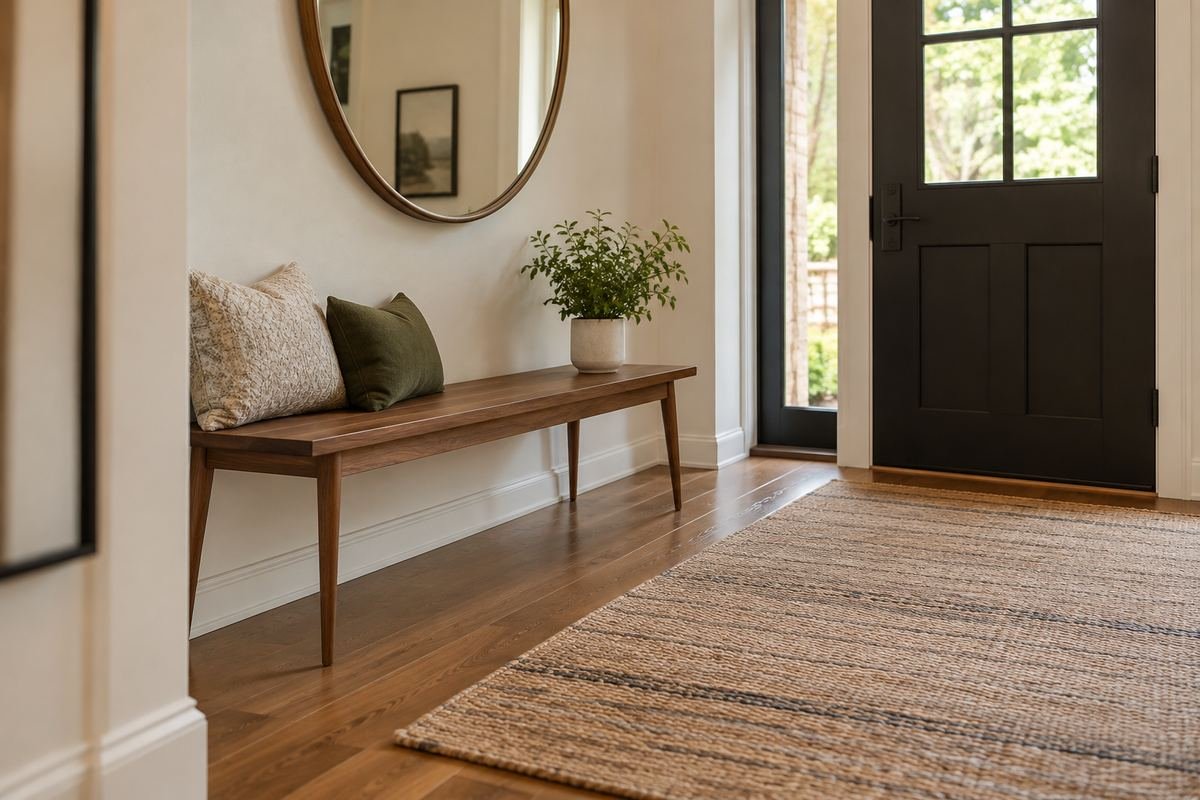
A seat with visible legs can feel lighter in a modest entrance than a solid storage block. It leaves the floor line visible and is useful when the entry already contains a large closet or tall cabinet.
Check the leg position as well as the overall width. A projecting foot can catch bags or make the usable floor area narrower than the seat outline suggests.
Practical tip: Look at the footprint from above before buying.
13. A seat facing into the room

In an open entrance, a bench can sit along the wall while facing the living area. A restrained design lets it work as occasional seating as well as a place to put on shoes.
Keep the arrival storage separate from the guest seating end if possible. The bench will remain more useful when one side is not permanently occupied by bags and coats.
Practical tip: Choose a seat that looks finished from the room.
14. A short bench for one-person arrivals

A short bench can be enough when the entrance is used one person at a time. It gives the routine a dedicated seat without forcing a long storage unit into an unsuitable stretch of wall.
Prioritize a usable sitting surface over extra trim or a bulky back. Check that someone can place both feet comfortably and stand up without colliding with the opposite furniture.
Practical tip: Test the seat with a bag beside you.
15. Two separate seats for a changing layout

Two small purpose-made seating pieces can adapt more easily than one long bench. Use them together when the wall allows, or separate them when a door, radiator or corner makes a continuous piece awkward.
Confirm that each piece is intended for sitting and remains stable on the floor. A decorative stool or plant stand should not be treated as a seat simply because its height looks suitable.
Practical tip: Keep the gap deliberate and easy to clean.
16. A bench beneath a high window

The wall below a window may offer a natural home for a low bench. The daylight can make a small entry pleasant, while the seat uses an area unsuitable for tall storage.
Check window operation and any heating equipment first. Around children, consider climbable furniture near windows and follow window safety guidance; an attractive placement should still suit the household.
Practical tip: Keep the sash, sill and heating equipment accessible.
17. A curved end to soften a tight corner
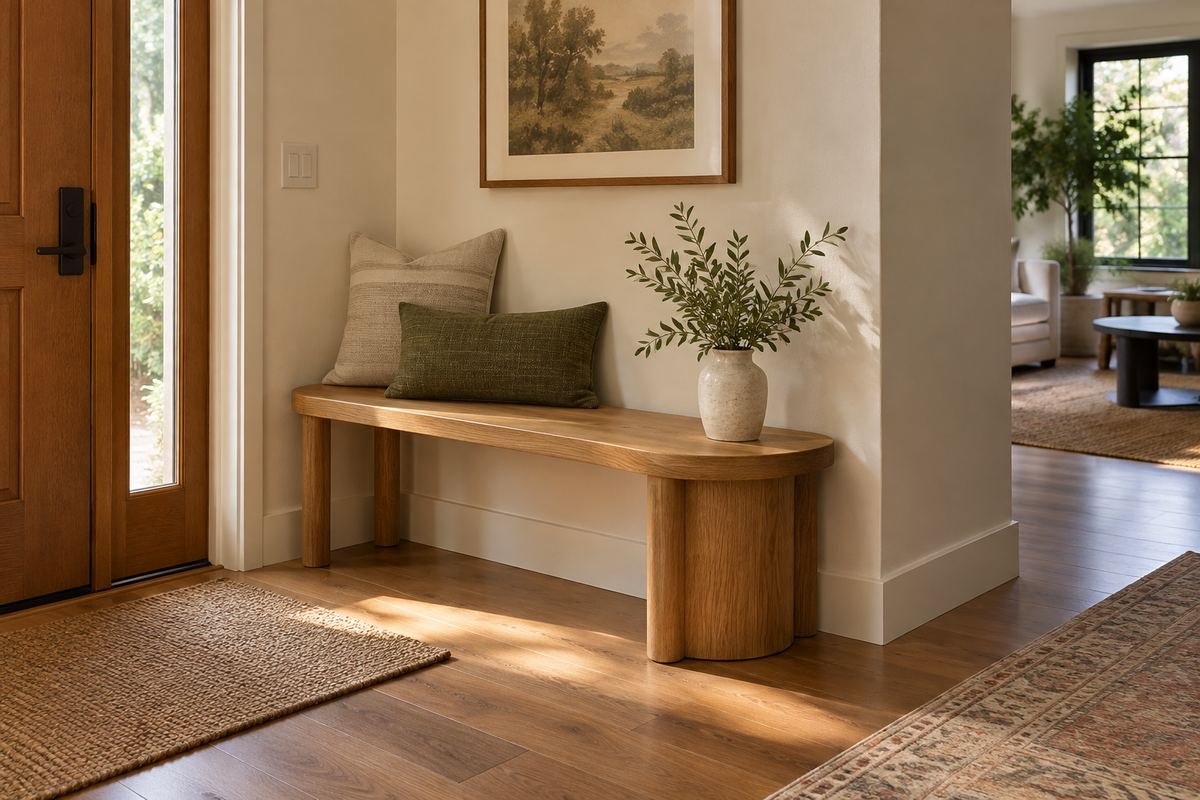
A bench with rounded ends can look gentler where an entrance turns into another room. The curve also reduces the visual bulk of a long rectangular seat, although it does not create extra floor space.
Use the full footprint when planning circulation. Rounded styling cannot compensate for a bench that projects too far into the route, especially when someone is seated or carrying a shopping bag.
Practical tip: Walk the turn with the seat outline in place.
18. Compare Backrest Entryway Bench Ideas With Actual Seat Depth

A bench with a back can suit someone who spends longer putting on shoes or waiting by the door. A simple backrest also gives the seat a more furniture-like presence in a generous entrance.
Allow for the complete depth and the way the back meets the wall. Some designs need to stand farther forward than a backless bench, which changes how much room remains in front.
Practical tip: Compare usable seat depth as well as overall depth.
19. A patterned cushion on a plain bench

A small amount of pattern can make a basic bench feel considered without a large wall treatment. Choose a removable cushion with a color that relates to the adjacent room or runner.
Keep the pattern scale distinct from a nearby rug so both remain readable. One well-fitting cushion is often more convenient than several pillows that must be moved every time someone sits.
Practical tip: Choose the runner and cushion together.
20. A storage bench for reusable shopping bags
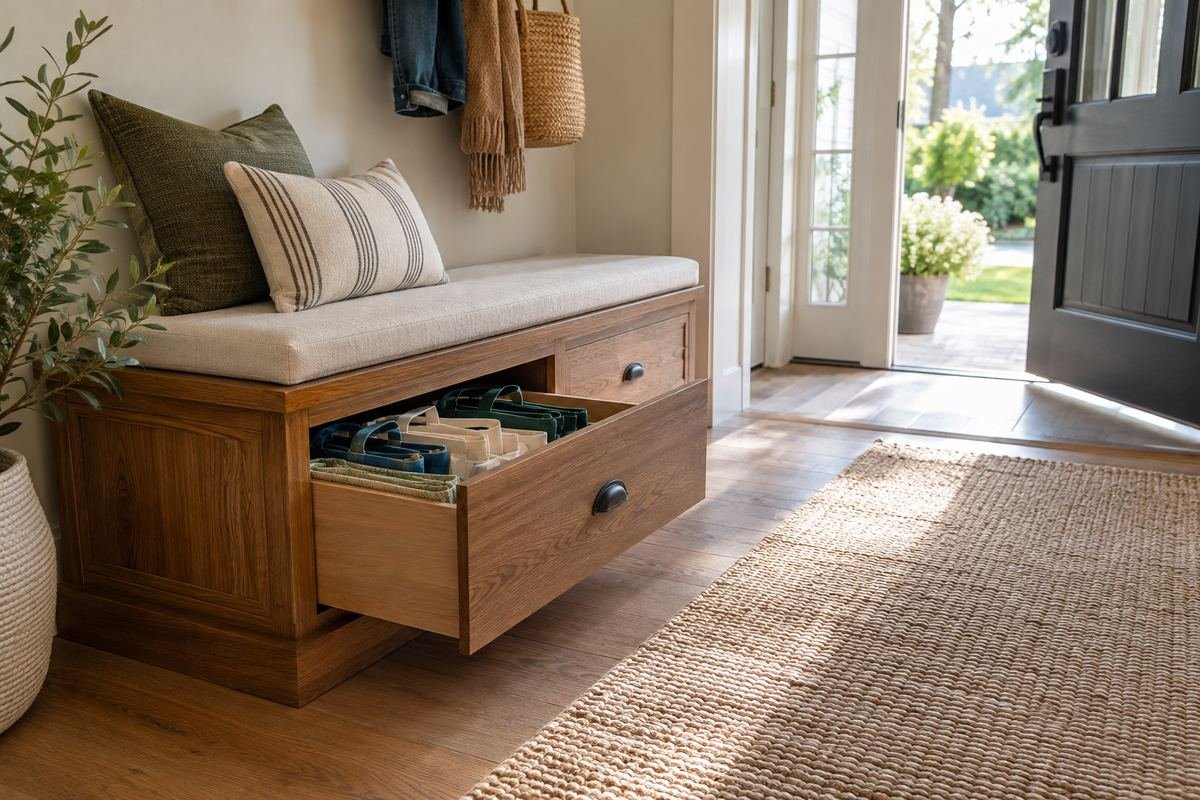
A bench compartment can hold folded reusable bags close to the exit. A defined bag home prevents them from accumulating on the seat or getting lost in a kitchen cupboard when needed on the way out.
Store only clean, dry bags and keep the opening easy to use. A large mixed pile of seasonal supplies can bury the everyday items and turn useful storage into another catch-all.
Practical tip: Keep the bags nearest the easiest opening.
21. A simple bench with one meaningful artwork

A plain bench can anchor a favorite painting or photograph without requiring a full gallery wall. The seat gives the arrangement a base, while one piece above it keeps a small entrance visually calm.
Hang the artwork securely and check its relationship to someone sitting down. Avoid projecting frames or loosely leaning objects where coats, bags or movement may knock them.
Practical tip: View the arrangement from the front door.
22. Keep Seasonal Entryway Bench Ideas Useful Every Day

A neutral bench can remain the same while a cushion cover changes with the room or season. This keeps the main purchase useful and avoids rebuilding the entry whenever you want a different color.
Choose textiles around laundering and actual wear. Seasonal styling should still leave a usable seat, accessible shoe storage and a clear path; a large decorative arrangement on the bench defeats its everyday purpose.
Practical tip: Change one textile instead of covering the seat with objects.
Frequently Asked Questions
How do I know whether a bench will fit a narrow entryway?
Check more than its width against the wall. Include the seat depth, a person putting on shoes, the swing of every door and the space needed to use drawers or baskets. Try the routine with a temporary outline before buying.
Can I turn a storage cabinet into an entryway bench?
Only use it as seating when the manufacturer specifically permits that use or a qualified maker has designed and assessed the conversion. A shelf load rating does not establish that a cabinet can safely support someone sitting down.
Is open or closed shoe storage better beneath a bench?
Open storage is quick to use and easy to see, while closed fronts hide visual clutter. Consider damp footwear, ventilation, cleaning and access. Do not put wet shoes into a sealed compartment simply to keep the entry looking tidy.
Choose the Details That Work in Your Home
The best entryway bench ideas support an ordinary arrival with very little effort. Choose a comfortable seat, give the shoes or bags a realistic amount of space and keep the route through the hall easy to use. Styling can stay simple once the furniture is doing its job.
For related ideas, explore Entryway table decor ideas, Shoe storage for small spaces, Mudroom organization ideas.
Planning References
IKEA hallway furniture and planning ideas; IKEA HEMNES bench care and assembly information. Follow the instructions for the exact products you choose.
Optional digital guide for this topic
If you prefer a structured workbook, explore this related paid guide.