Bedroom lighting ideas work best when you start with what happens in the room. Reading a few pages, finding clothes and walking to the door ask different things of a light. One bright ceiling fixture rarely handles all three comfortably.
Think in small, useful layers: light for moving around, light for a specific task and a softer option for quiet evenings. You do not need every fixture in this guide. Choose the combination that fills a real gap in your room, then check the view from the bed as well as the doorway.
These original concepts focus on placement, finishes and everyday use. For fixed wiring, bathroom-adjacent positions or changes to existing electrical work, use an appropriately qualified professional and follow the exact fixture instructions.
The images are original AI-generated decor concepts, not installation diagrams or photographs of completed client projects.
Jump to an idea
- Start with a shaded bedside table lamp
- Use an adjustable wall light for reading
- Bedroom lighting ideas for shared routines
- Free a narrow nightstand with a fixed wall lamp
- Choose a low pendant for a deliberate bedside layout
- Soften the ceiling light with a fabric shade
- Use a compact flush fixture in a low room
- Give a reading chair its own floor lamp
- Use a table lamp to define a dressing surface
- Balance light around a bedroom mirror
- Illuminate the wardrobe interior thoughtfully
- Light a deep clothes shelf from the front
- Use cove lighting as a soft background layer
- Highlight a headboard niche with indirect light
- Give artwork a separate pool of light
- Use a rechargeable lamp where flexibility matters
- Make the main switch easy to find
- Add a reachable evening control beside the bed
- Choose dimming for a real range of use
- Keep plug-in cord routes deliberate
- Repeat a finish without matching every fixture
- Bedroom lighting ideas for darker walls
- Stop when each layer has a useful job
Plan bedroom lighting ideas around your daily routine
Write down four moments: getting dressed, reading in bed, winding down and leaving the room after dark. For each, note where your eyes and hands will be and which control you can reach. Place furniture on the plan before fixtures. A lamp behind your head can cast a shadow across a book, while a bare bulb visible from the pillow can be uncomfortable even when the room looks attractive from the door. Use the worksheet below to identify a missing layer before buying another light.
| Activity | Possible light | Test before committing |
|---|---|---|
| Finding clothes | Wardrobe light or well-placed room light | Can you distinguish garments without standing in your own shadow? |
| Reading in bed | Shaded table lamp or adjustable reading light | Is the page lit without a direct view of the bright source? |
| Quiet evening | A shaded, separately controlled lamp | Can you use this layer with the ceiling light off? |
| Dressing at a mirror | Balanced light around the dressing area | Does your body block the only source? |
| Getting to the door | A suitable low-level or reachable light | Can you operate it without crossing an unlit route? |
Compare bulbs by lumens, then check the fixture
Lumens describe light output; watts describe electricity use. Two hypothetical bulbs labeled 800 lumens have the same stated output even if one uses 9 watts and the other 10. That does not make the room equally bright: shades, direction and surface colors affect the result. Check the actual bulb label for light appearance, brightness and use restrictions. If you want dimming, confirm compatibility among the bulb, fixture and control rather than assuming every LED will dim.
Test bedroom lighting ideas before a permanent change
With your existing lamps, try the proposed positions at the time you normally use the bedroom. Read an actual page, open the wardrobe and sit at the mirror. Keep the bulb within the fixture rating. A warm appearance can create a coherent visual mood, but choose output and direction from the activity. Record what worked so a new fixture solves that problem rather than adding another decorative object.
1. Start with a shaded bedside table lamp
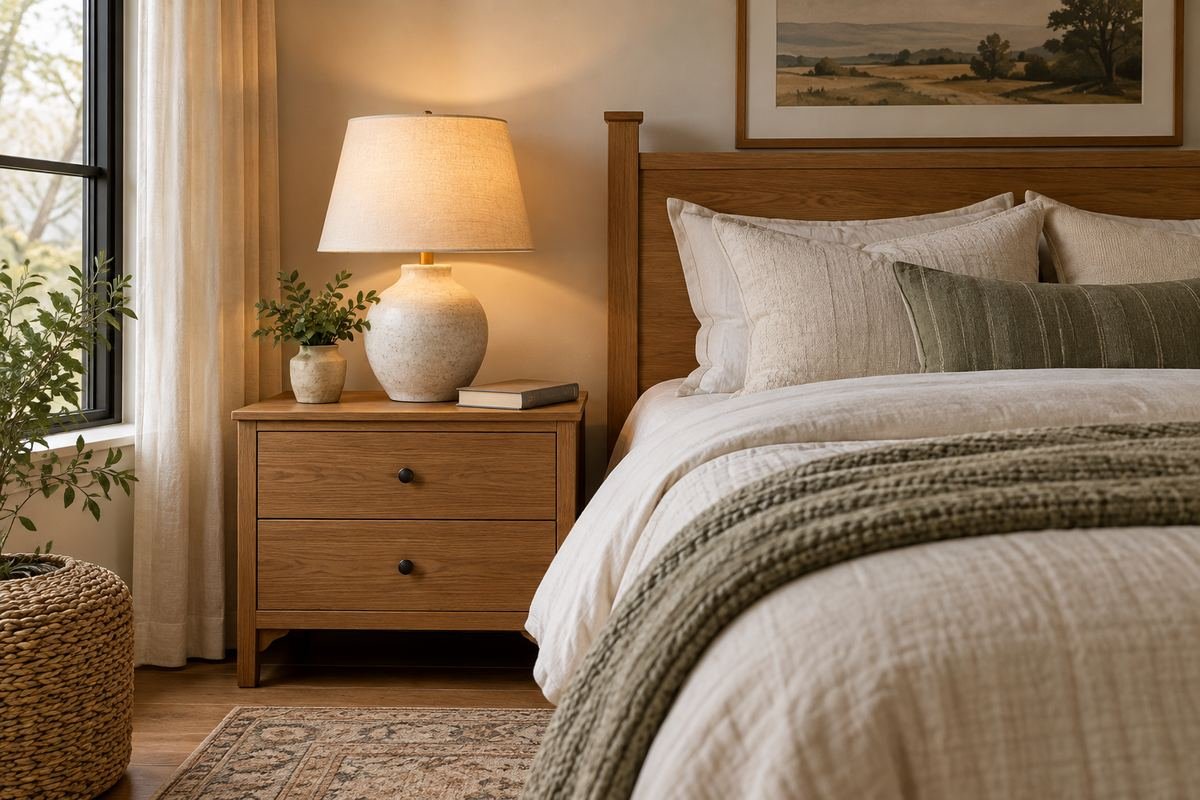
A shaded lamp gives a familiar bedside arrangement and lets you change its position as the room evolves. Choose its footprint alongside the things you actually keep on the table.
Sit on the bed before settling on the shade height. The aim is useful light on your book or bedside surface without looking directly into a bright bulb. A beautiful lamp that crowds the table is the wrong size for that spot.
Practical tip: Test the lamp while sitting and lying down.
2. Use an adjustable wall light for reading
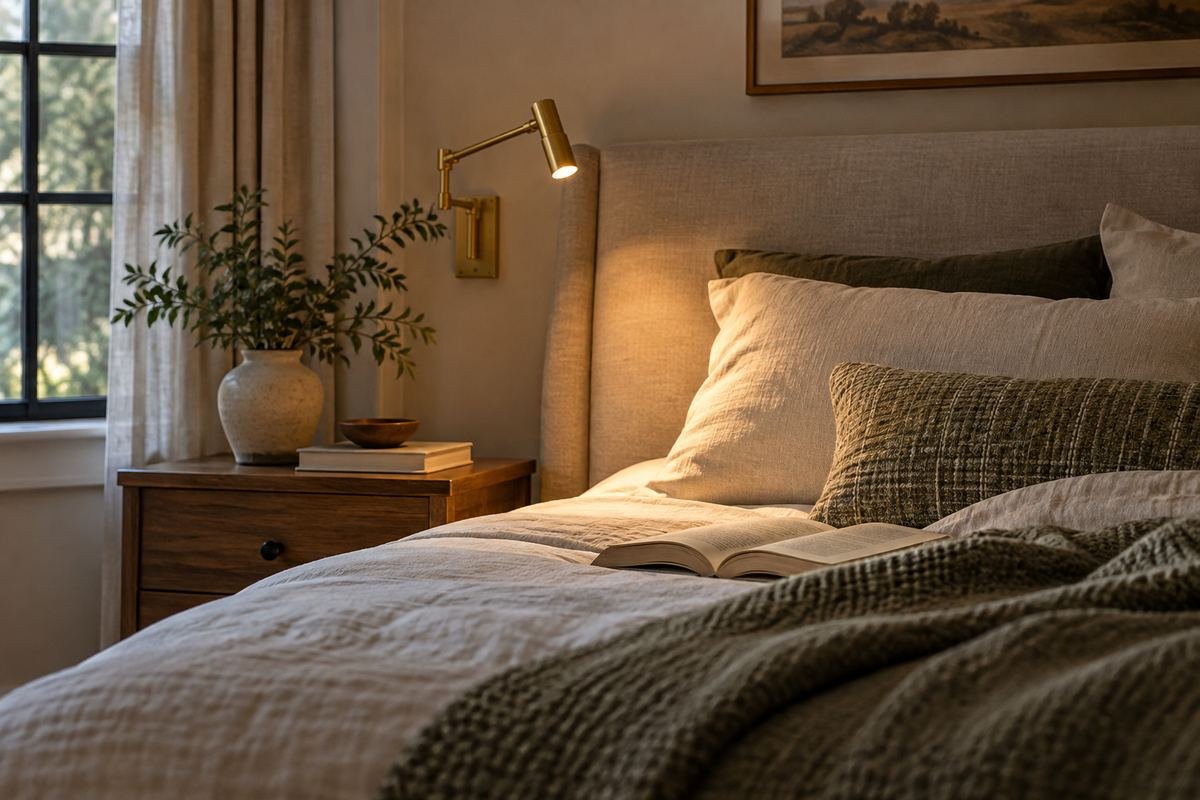
A directional wall light can bring light toward the page while leaving the bedside top free. It suits a reader who changes position between sitting upright and reclining.
Check the light’s movement with the actual headboard and pillows. Ask the installer to confirm a suitable position and installation method. An adjustable arm should not become an obstacle when you sit up or make the bed.
Practical tip: Mock up the reach before fixing the position.
3. Bedroom lighting ideas for shared routines

Separate controls can make a shared bedroom easier to use when routines differ. Matching fixtures are optional; the useful feature is independent operation.
Check the view from both pillows. A reading light that shines directly across the bed may still disturb the other person even with its own switch. Aim the light carefully and compare shaded or more directed options.
Practical tip: Judge each fixture from both sides of the bed.
4. Free a narrow nightstand with a fixed wall lamp
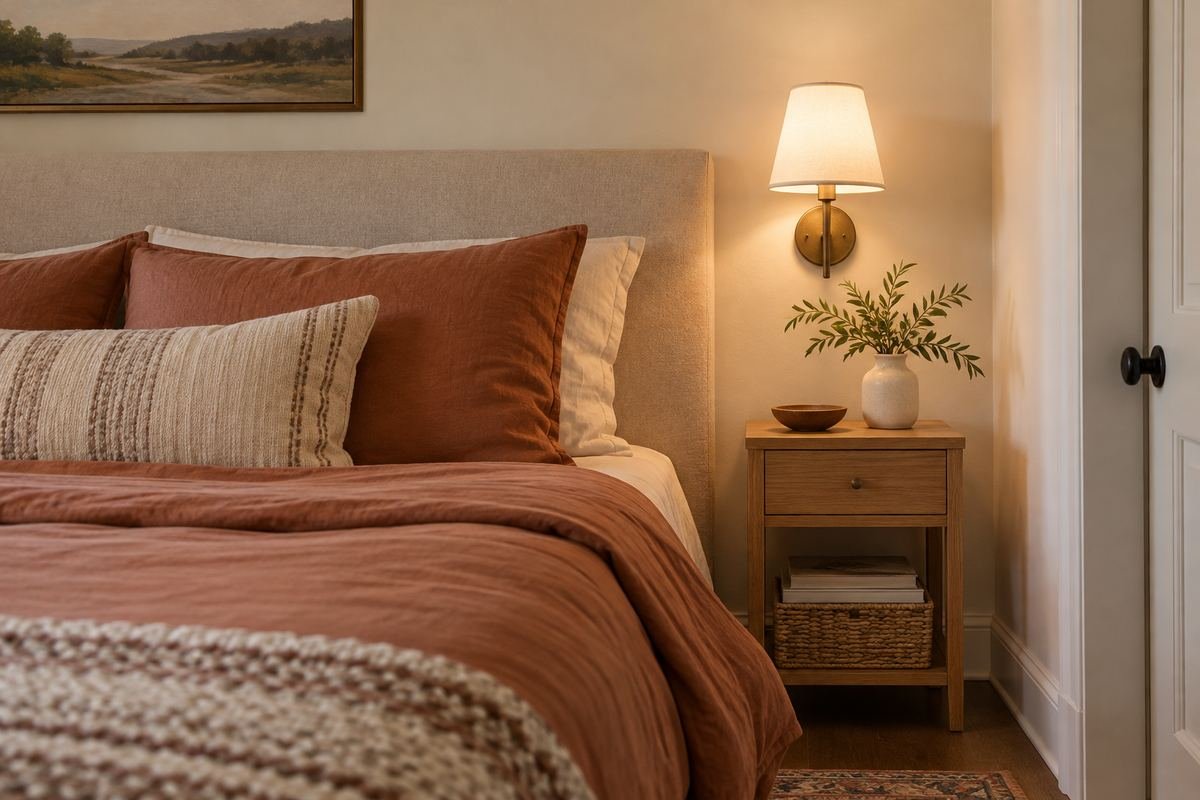
A compact fixed wall lamp can suit a narrow bedside ledge where a table lamp would take most of the usable surface. A soft shade helps the fixture feel part of the bedroom.
Position it from the bed height, shade dimensions and how you use the surface below. Avoid choosing the height from a photograph of a different room. Fixed fittings deserve a careful layout before installation.
Practical tip: Measure the whole shade, not just the mounting plate.
5. Choose a low pendant for a deliberate bedside layout
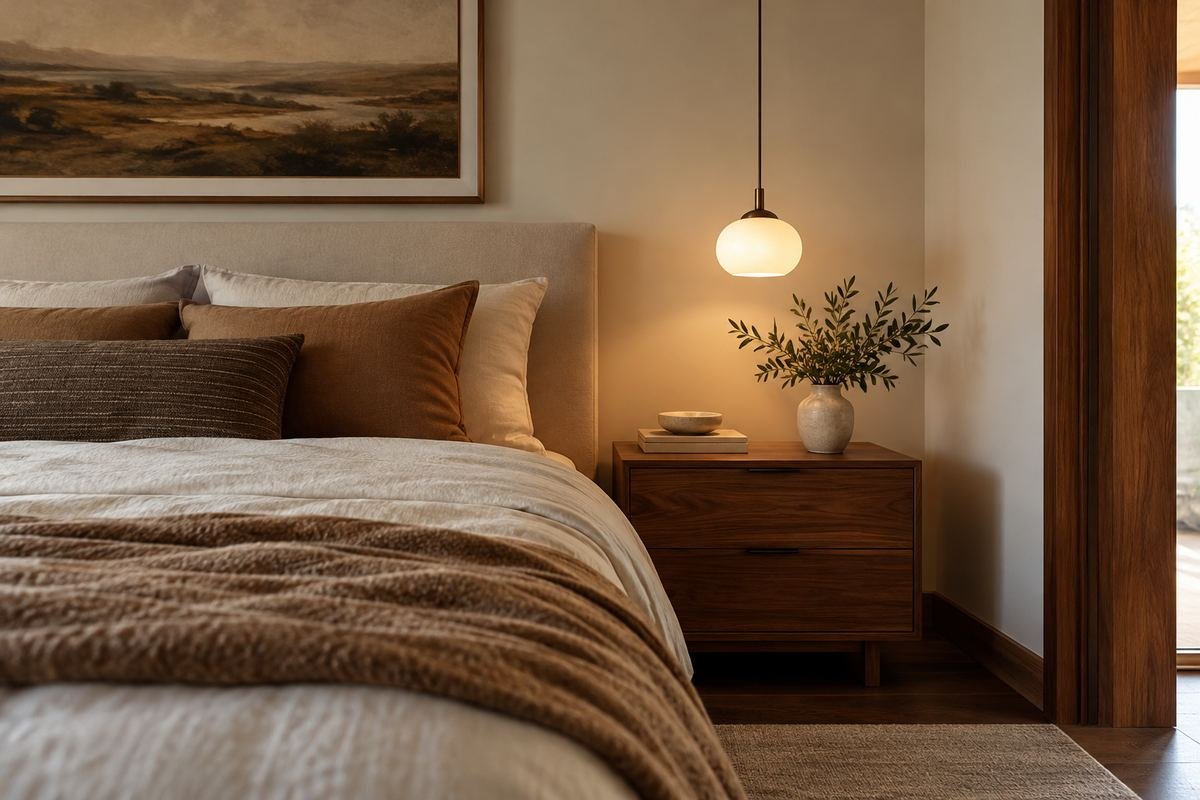
A bedside pendant can frame one side of a bed and leave a table available for daily items. Its hanging line gives the arrangement a different rhythm from a table lamp.
Plan the location with the bed in its final position. Include head movement, shade width and access around the bed. Use a fixture intended for the location and have fixed electrical work handled appropriately.
Practical tip: Check the pendant against the occupied bed, not an empty plan.
6. Soften the ceiling light with a fabric shade
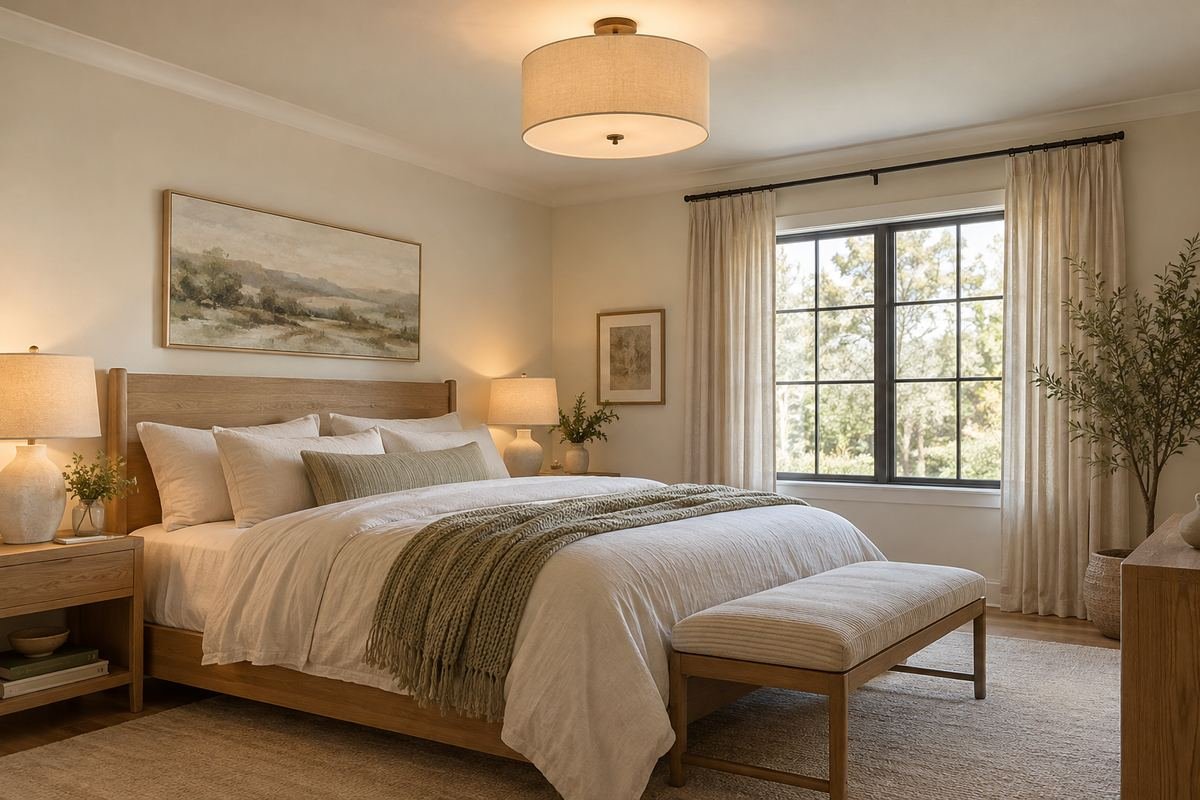
A broad fabric shade can make the general lighting layer feel visually gentle. It works especially well when the room needs a ceiling fixture that does not dominate the bed.
Check how the shade distributes light and whether the bulb remains visible from below. Follow the fixture’s bulb and clearance instructions; decorative fabric is not a reason to improvise a cover around an existing fitting.
Practical tip: Choose a complete suitable fixture and shade.
7. Use a compact flush fixture in a low room
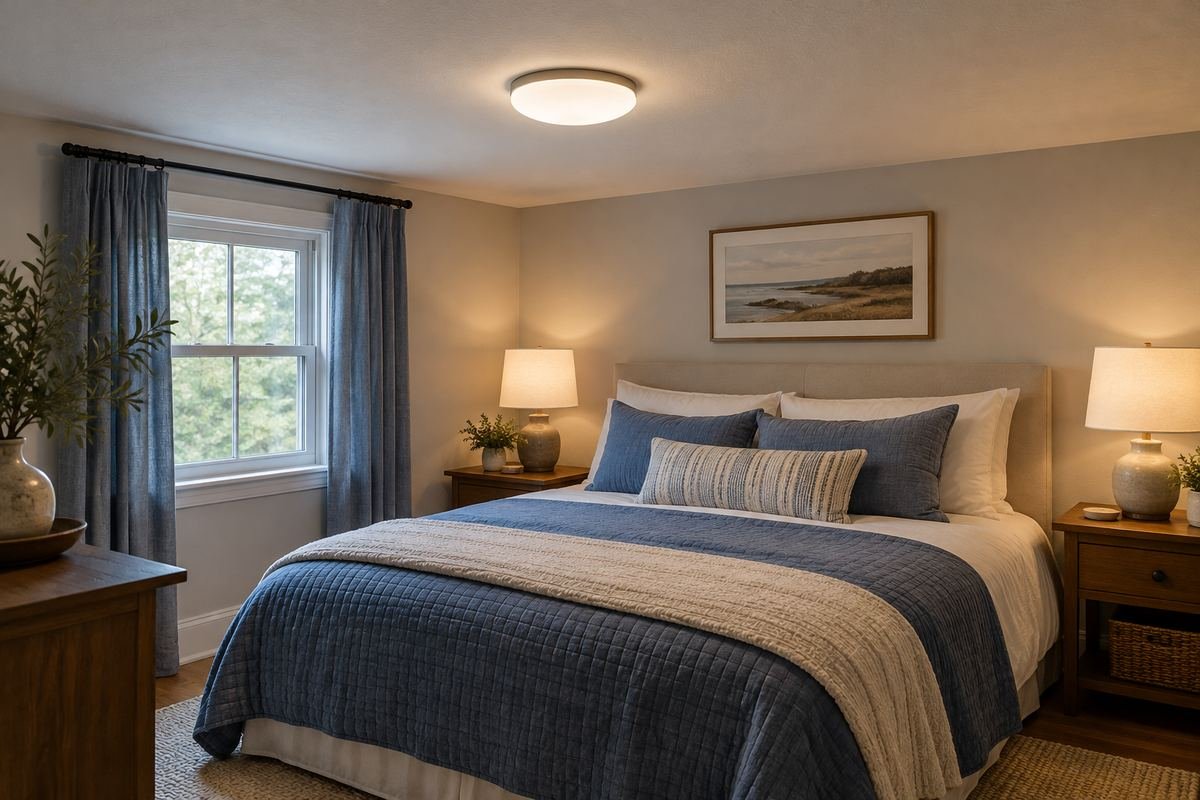
A low ceiling may benefit from a compact fixture that leaves the room visually open. A simple diffuser can make the ceiling layer recede while the bedside lighting provides character.
Compare the complete fitting dimensions with doors, wardrobes and the room’s use. Low profile does not automatically mean low glare, so check the diffuser and output rather than selecting on thickness alone.
Practical tip: Evaluate glare from the pillow as well as standing height.
8. Give a reading chair its own floor lamp
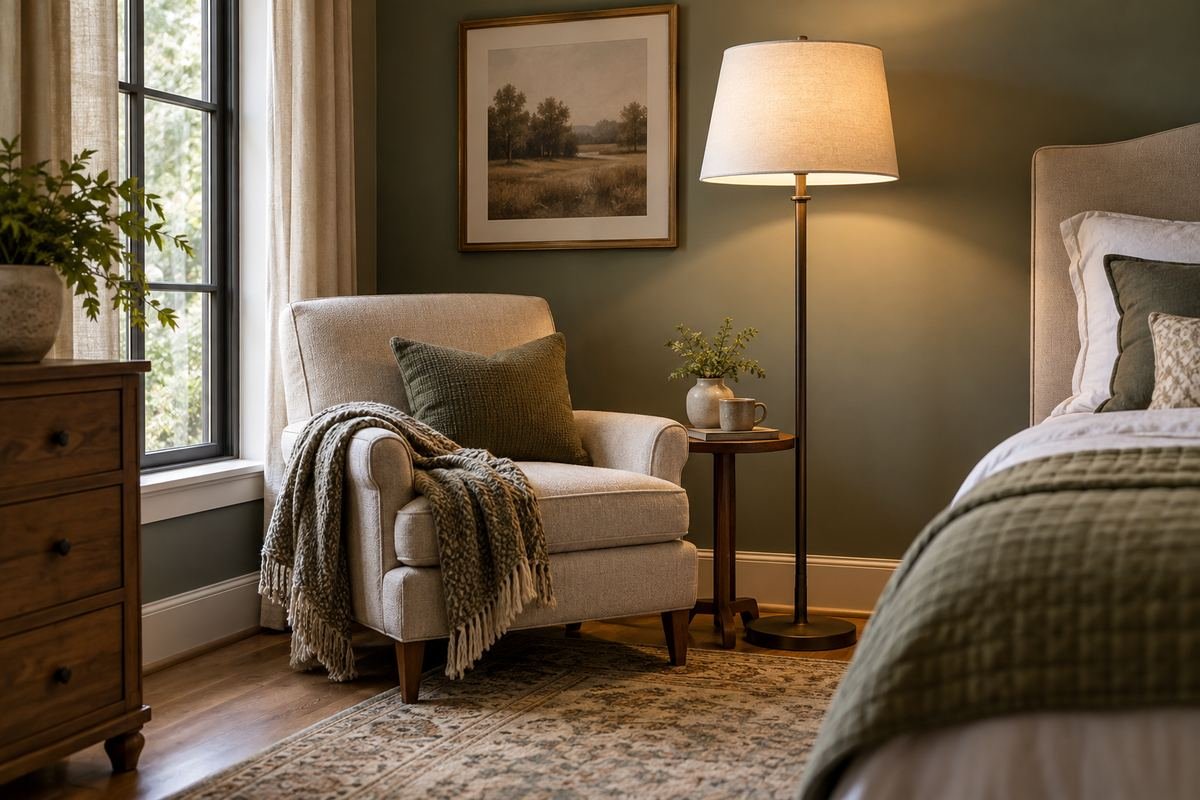
For bedroom lighting ideas centered on reading, judge the occupied chair first. A dedicated floor lamp can serve the page without adding another table or lighting the whole room.
Test the lamp from the occupied chair. Keep the base stable and clear of the route to the bed. The shade should put useful light on the page without making the chair face a bright exposed source.
Practical tip: Place the base where feet and chair legs will not compete.
9. Use a table lamp to define a dressing surface
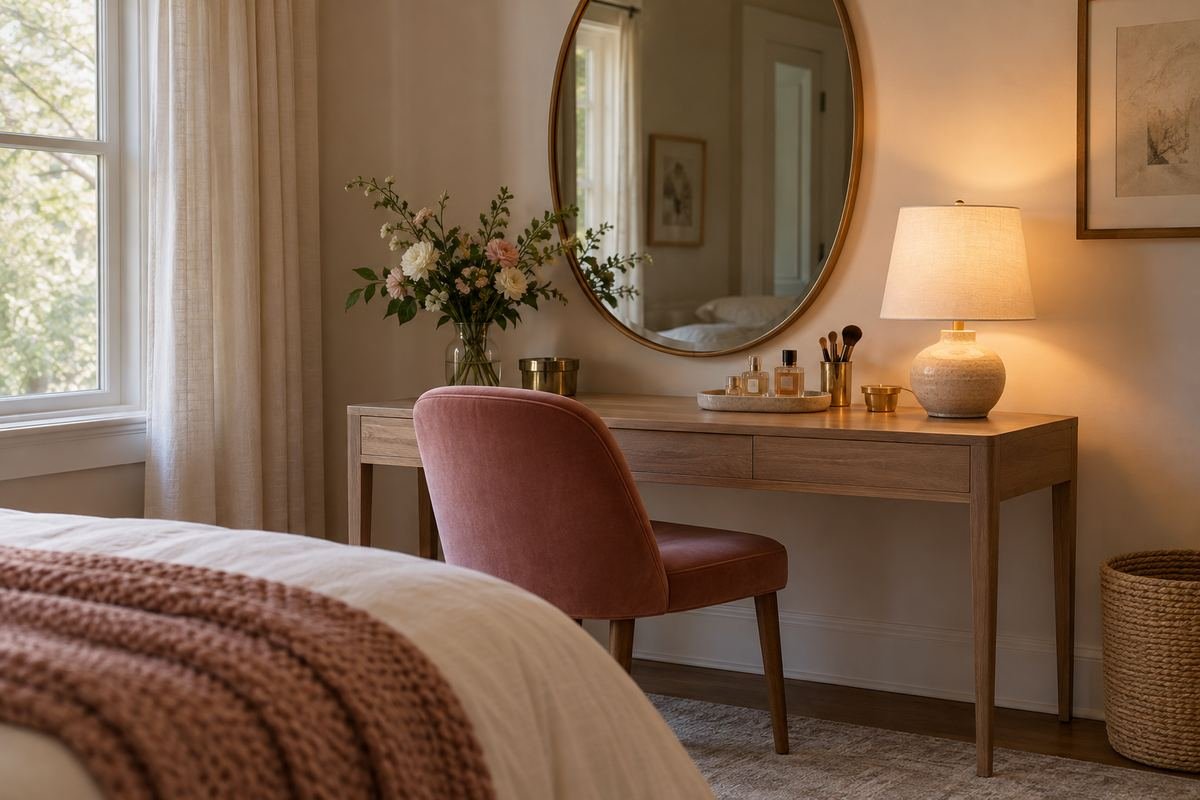
A dressing table can have a distinct light layer instead of borrowing whatever reaches it from the ceiling. A lamp also gives the surface a useful focal point when it is not in use.
Test the mirror with your body in position. A decorative lamp on one side may create uneven shadows, so choose the arrangement from the work you do there rather than symmetry alone.
Practical tip: Check your reflection before styling the surface.
10. Balance light around a bedroom mirror
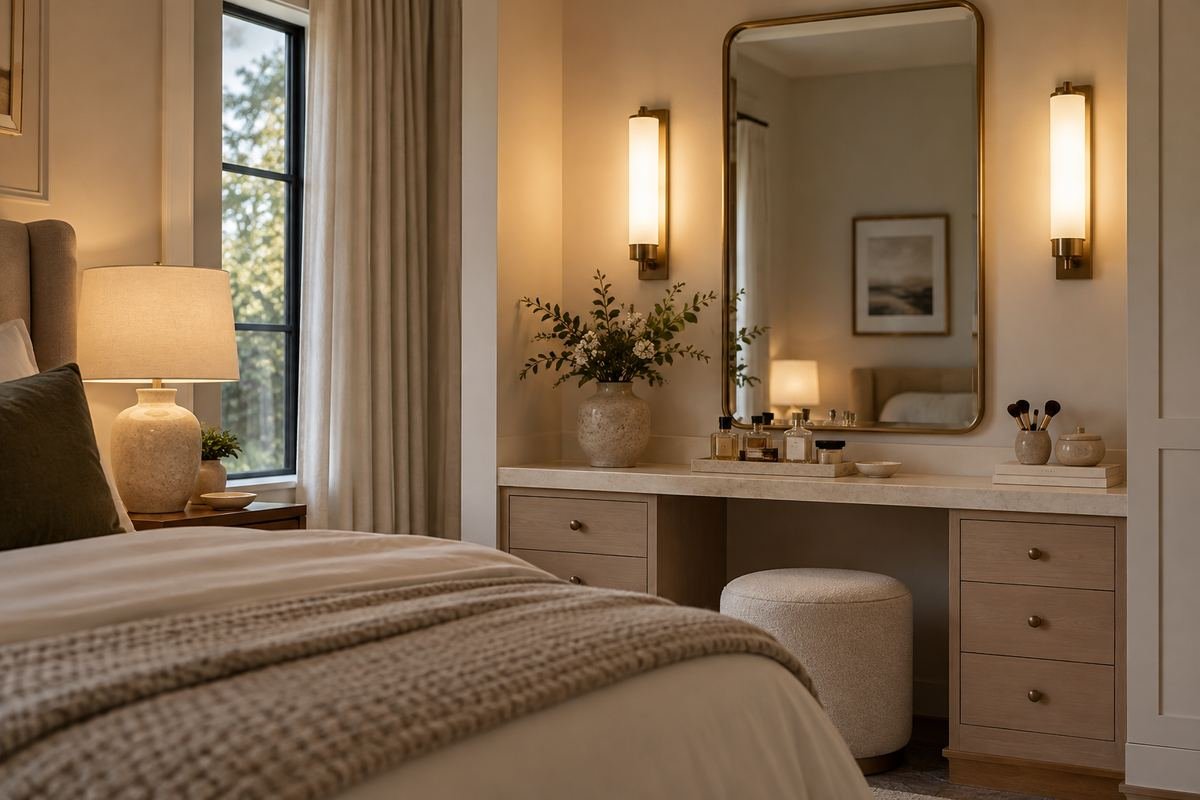
Light arriving from more than one direction can make a dressing area easier to assess. Two suitable side fixtures can create a deliberate frame around a mirror.
Use the actual mirror height and occupied position when planning. Avoid pretending that a photographed arrangement guarantees accurate color or professional makeup results. Test the chosen lamps with the room’s other light sources.
Practical tip: Compare the mirror with daylight and evening light.
11. Illuminate the wardrobe interior thoughtfully
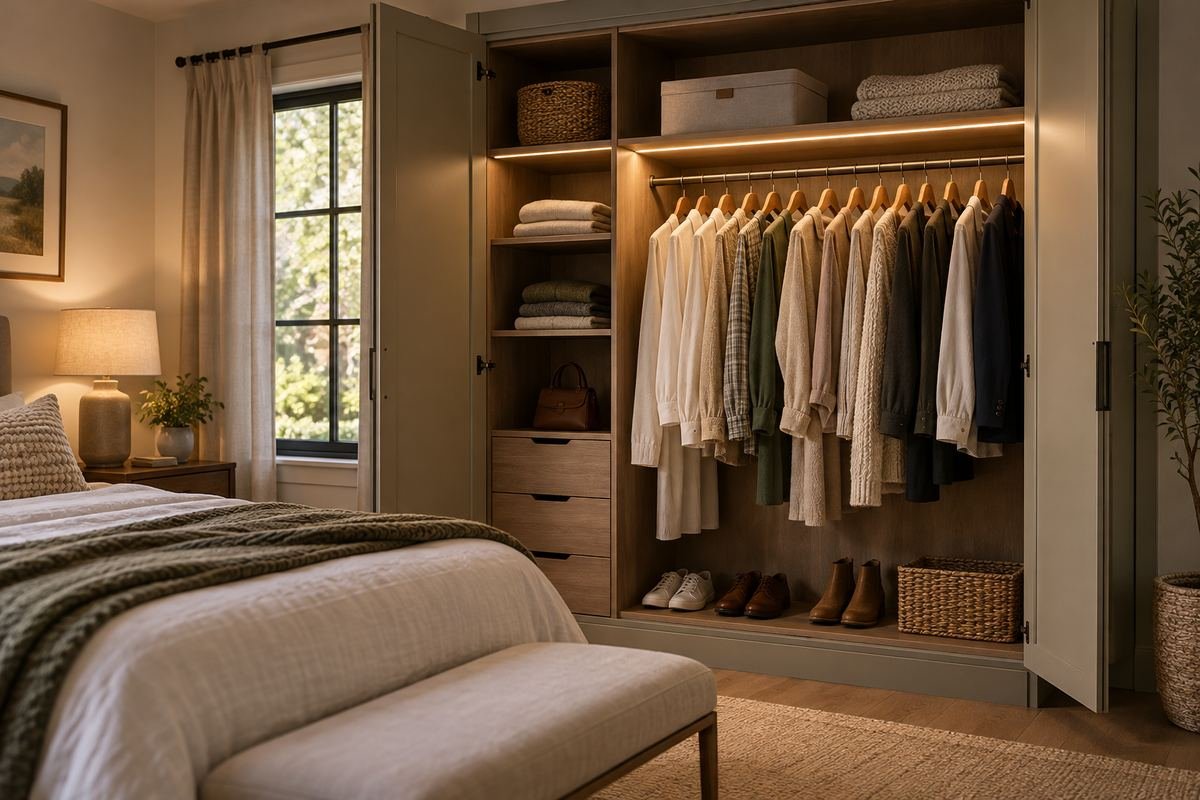
A suitable wardrobe lighting system can make stored clothes easier to find. It is most useful where shelves or hanging garments block the room’s general light.
Choose components intended for the furniture and follow their electrical and mounting guidance. Keep fittings and cables clear of hinges and stored items, and avoid enclosing a generic lamp among clothing.
Practical tip: Use a system designed for the storage arrangement.
12. Light a deep clothes shelf from the front

An upper shelf can cast a shadow over the contents below. A suitable front-positioned cabinet light may help you see folded items without lighting the empty space behind them.
Test the loaded wardrobe, since empty shelves give a misleading result. Keep the lighting within its intended installation and temperature conditions, and make the control easy to understand.
Practical tip: Check the shelf with your real clothes in place.
13. Use cove lighting as a soft background layer
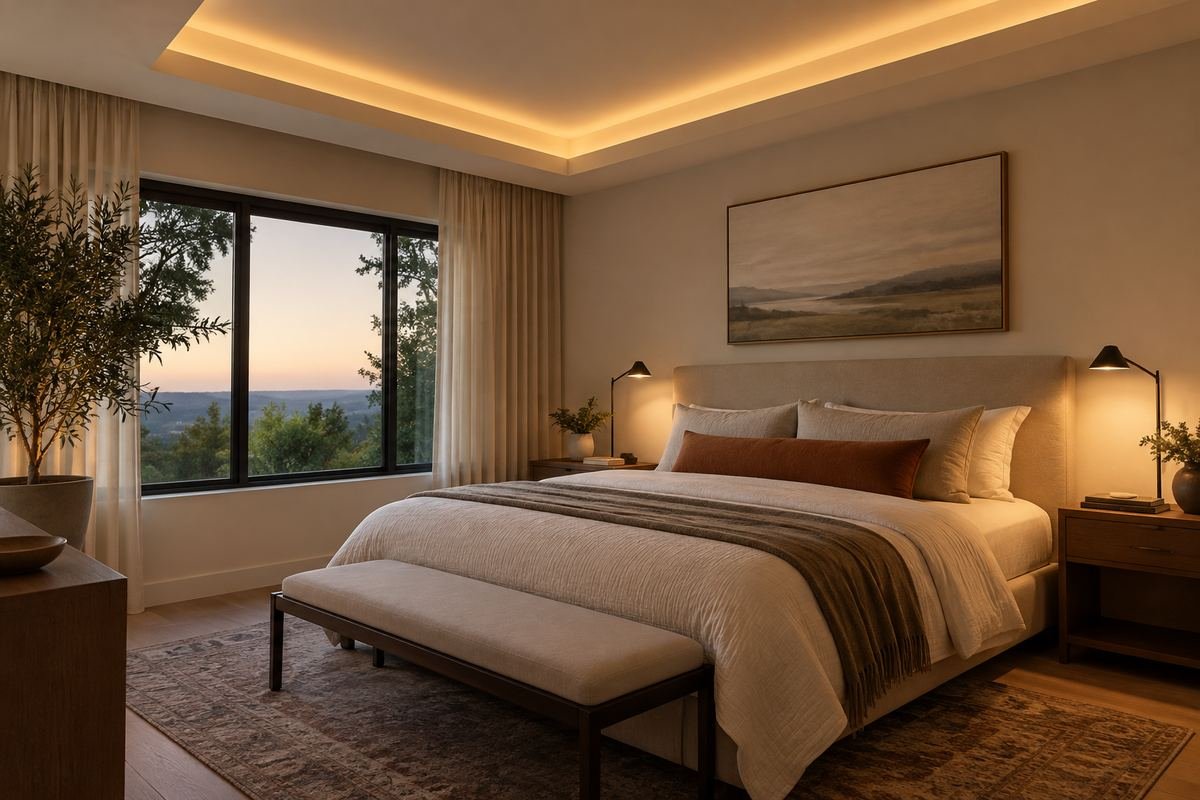
Architectural bedroom lighting ideas, such as a professionally planned cove, can give a room a gentle background glow while the source stays out of direct view. Use this as one layer beside useful task lighting.
The visual result depends on the cove shape, light position and wall finish. Have the complete system planned for access, heat management and compatibility. A glowing architectural edge should not be the room’s only useful light.
Practical tip: Retain a separate light for reading and dressing.
14. Highlight a headboard niche with indirect light
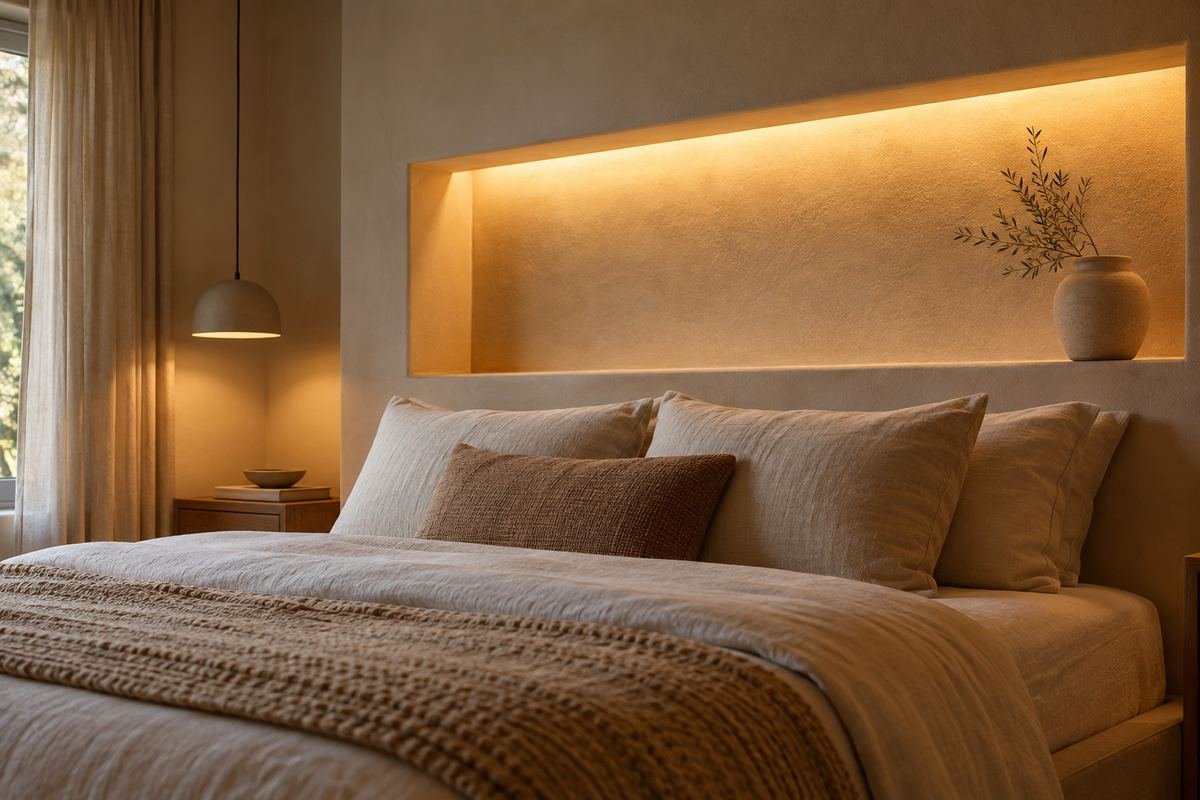
A shallow architectural niche can become a quiet focal point with a concealed light source. The effect is more restrained when it outlines the recess rather than shining toward the bed.
Plan it as an integrated system with accessible components. Check reflections and the sightline from the pillows. Keep the niche styling minimal so the lighting does not become a spotlight on clutter.
Practical tip: Review the concealed source from the lowest viewing position.
15. Give artwork a separate pool of light
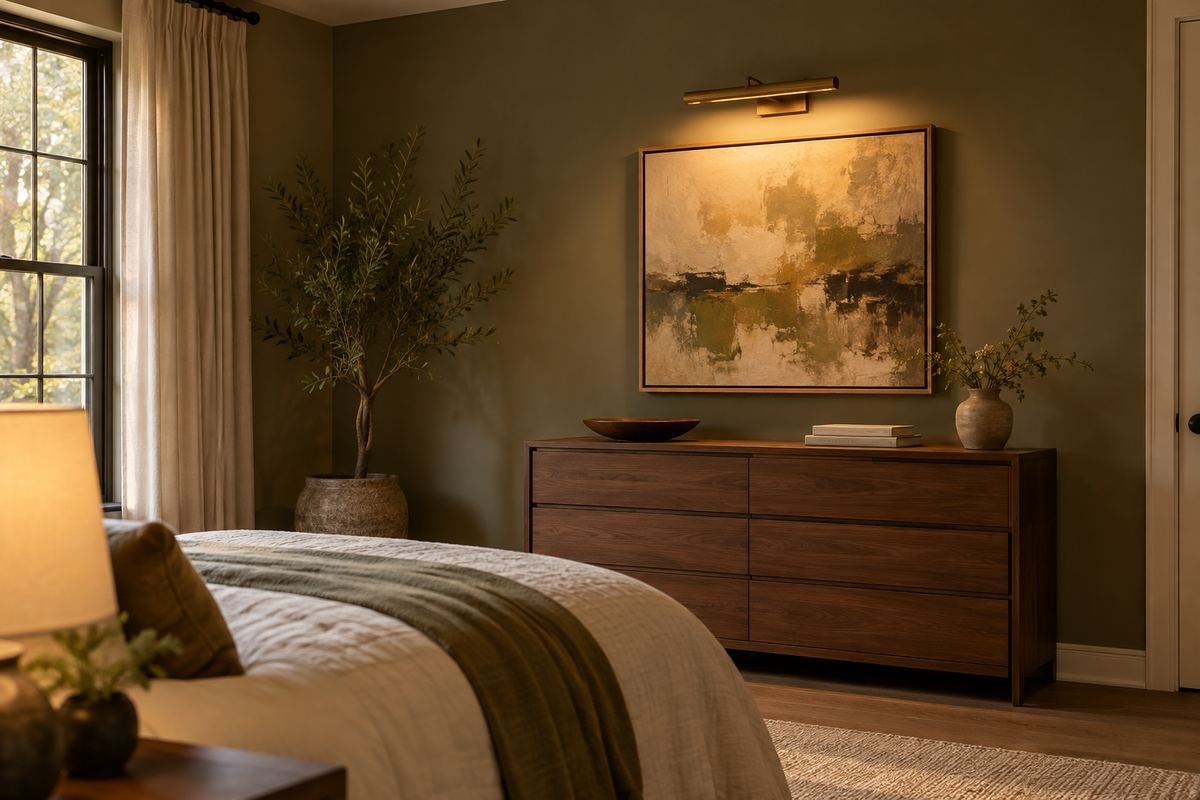
One picture can anchor the room when it has its own carefully directed illumination. This works well on a quiet wall that does not need more furniture.
Choose a suitable fixture and check reflections on glass. Valuable or light-sensitive art may need specialist guidance; do not assume any decorative picture light is appropriate for every material.
Practical tip: Test the beam and reflection before fixing the arrangement.
16. Use a rechargeable lamp where flexibility matters
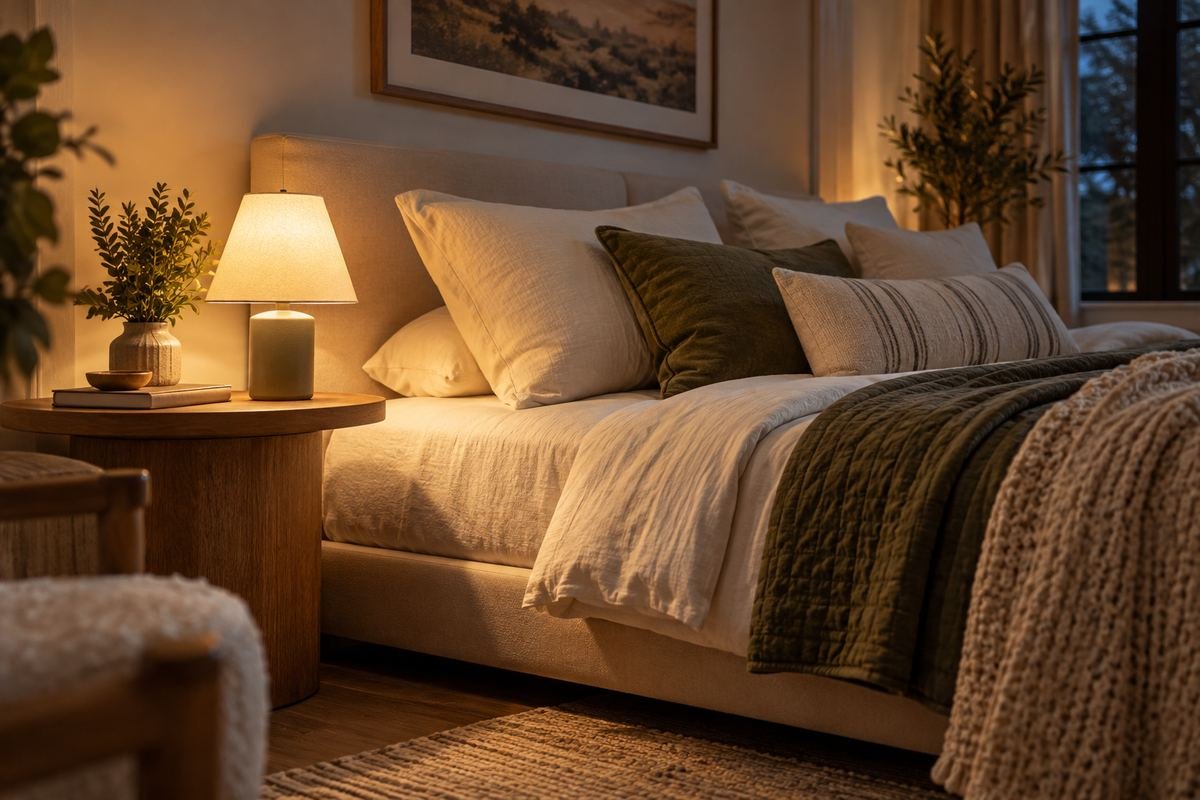
A suitable rechargeable lamp can offer a flexible decorative layer where an outlet location is inconvenient. It can move between a bedside surface and a reading nook when the product suits those uses.
Check the actual output, run time and charging instructions. A cordless appearance is not proof that the lamp can replace a reading light. Give it a stable location and charge it as the manufacturer directs.
Practical tip: Choose the lamp from the job and its documented output.
17. Make the main switch easy to find
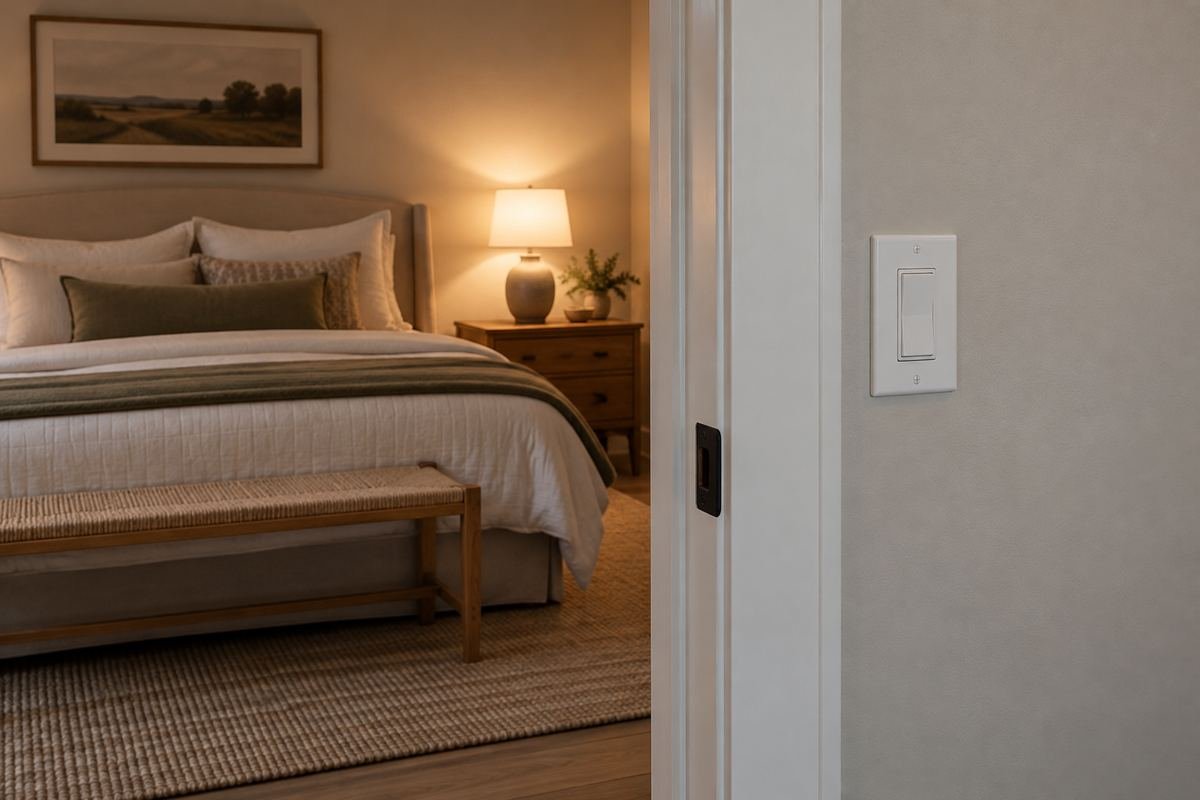
A room can have attractive fixtures and still feel awkward if the first control is hidden. The arrival route deserves attention before any decorative lighting choice.
Walk in carrying something, then try to operate the light normally. Keep switches accessible and clearly related to their fixtures. Electrical relocation is a planned installation task, not a styling shortcut.
Practical tip: Test the entrance routine as part of the layout.
18. Add a reachable evening control beside the bed
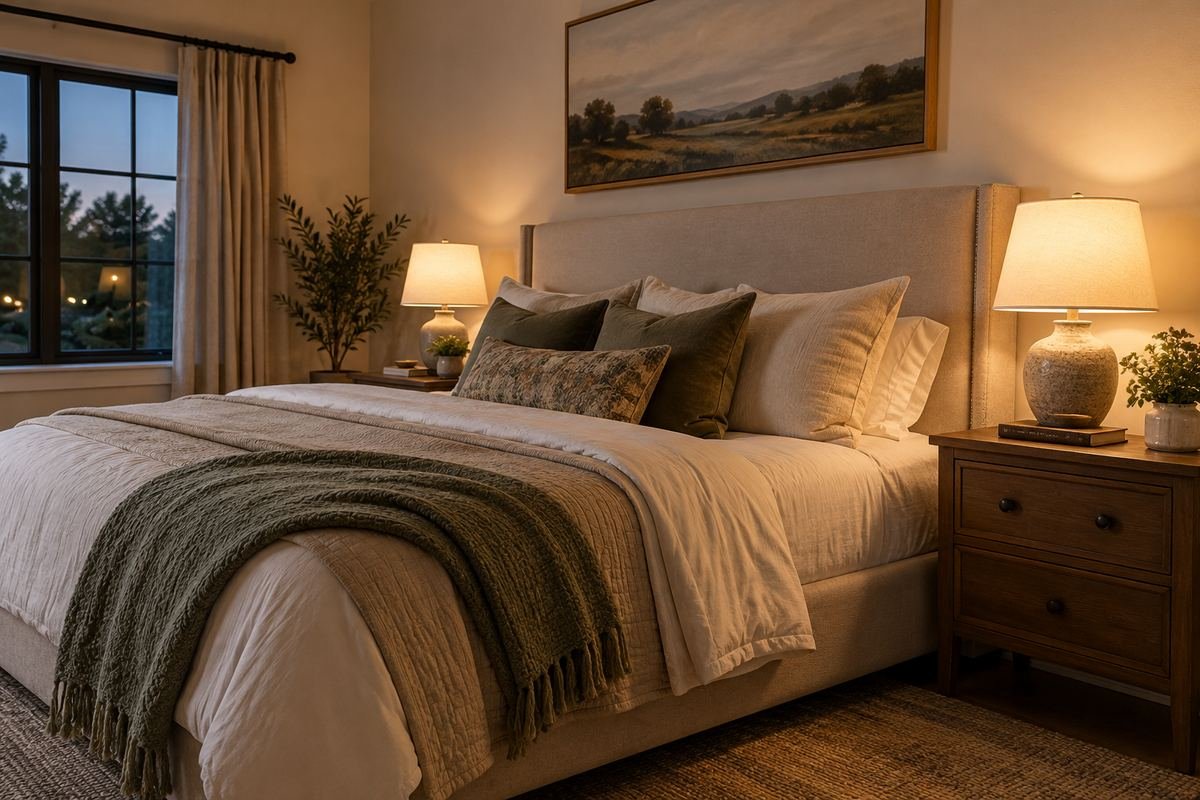
A useful bedside control lets you finish reading without getting up to turn off the room’s main light. It is a small decision that can improve the whole arrangement.
Compare suitable switched fixtures, properly installed controls or compatible systems. Make sure the normal manual operation remains understandable for anyone using the room, including guests.
Practical tip: Explain the controls in one sentence; simplify if you cannot.
19. Choose dimming for a real range of use

Dimmable bedroom lighting ideas let one lighting layer serve more than one moment. They are useful when the fixture remains comfortable at the brightness levels you actually want.
Confirm the complete bulb, fixture and dimmer combination. Test for the usable range rather than assuming the lowest setting will work smoothly. Keep a suitable task layer when a low decorative glow is not enough.
Practical tip: Use the compatibility list for the exact products.
20. Keep plug-in cord routes deliberate
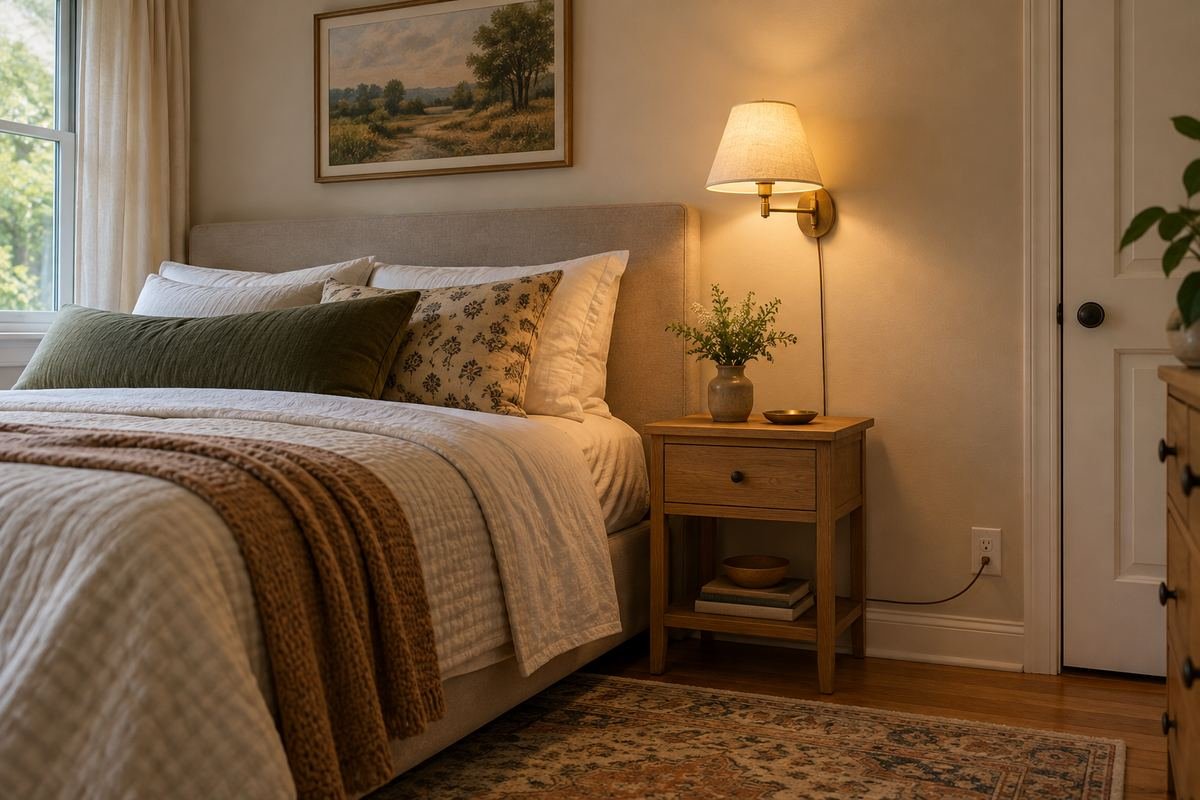
Plug-in fixtures can give flexibility without changing fixed wiring. Their success depends partly on where the outlet and furniture sit.
Follow the lamp instructions and keep cables away from walking routes and moving furniture. Do not hide a hazardous route under a rug simply to make the photograph cleaner. Choose another fixture position if the cord cannot run sensibly.
Practical tip: Plan the cord before buying the shade.
21. Repeat a finish without matching every fixture
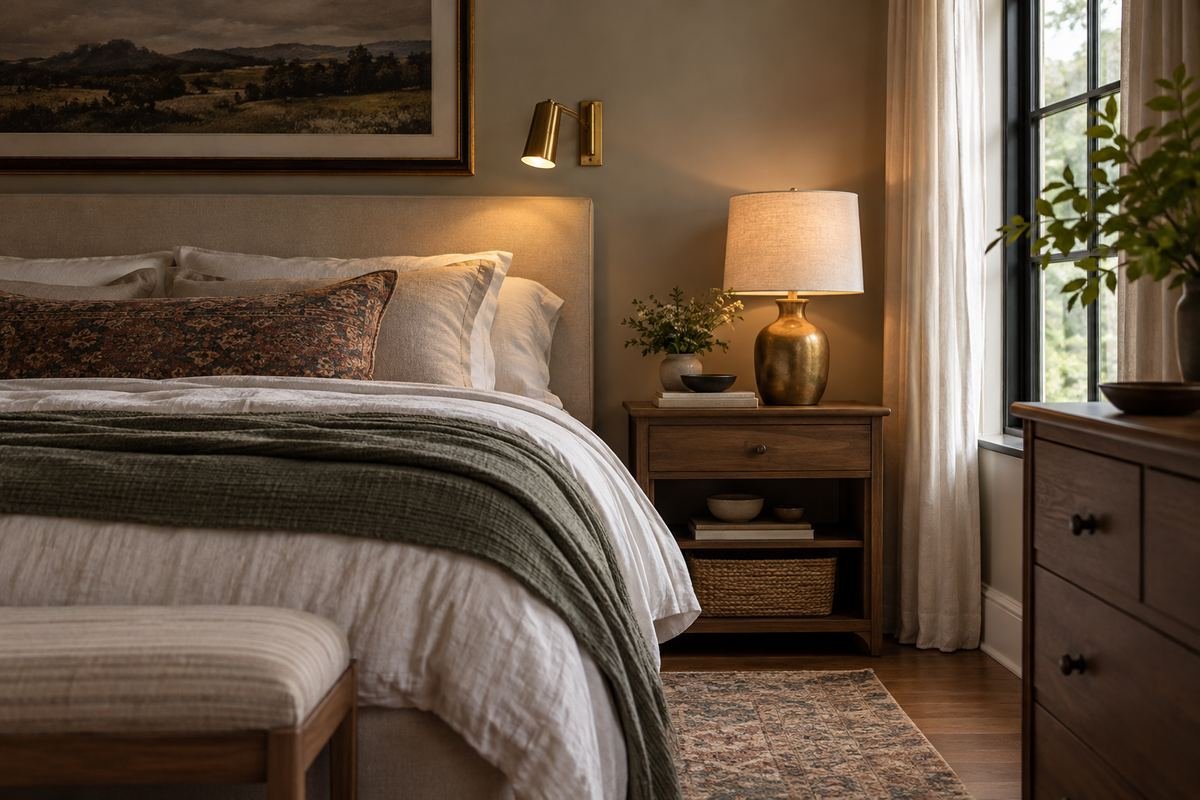
A repeated metal or shade tone can connect different lighting layers. The room can combine a useful reading light and a softer decorative lamp without buying an identical set.
Choose the function of each fixture first. Repeat one finish selectively, then let shape and scale respond to the location. Too many matching statement pieces can make a small room feel busier.
Practical tip: Connect the layers with one finish and varied shapes.
22. Bedroom lighting ideas for darker walls
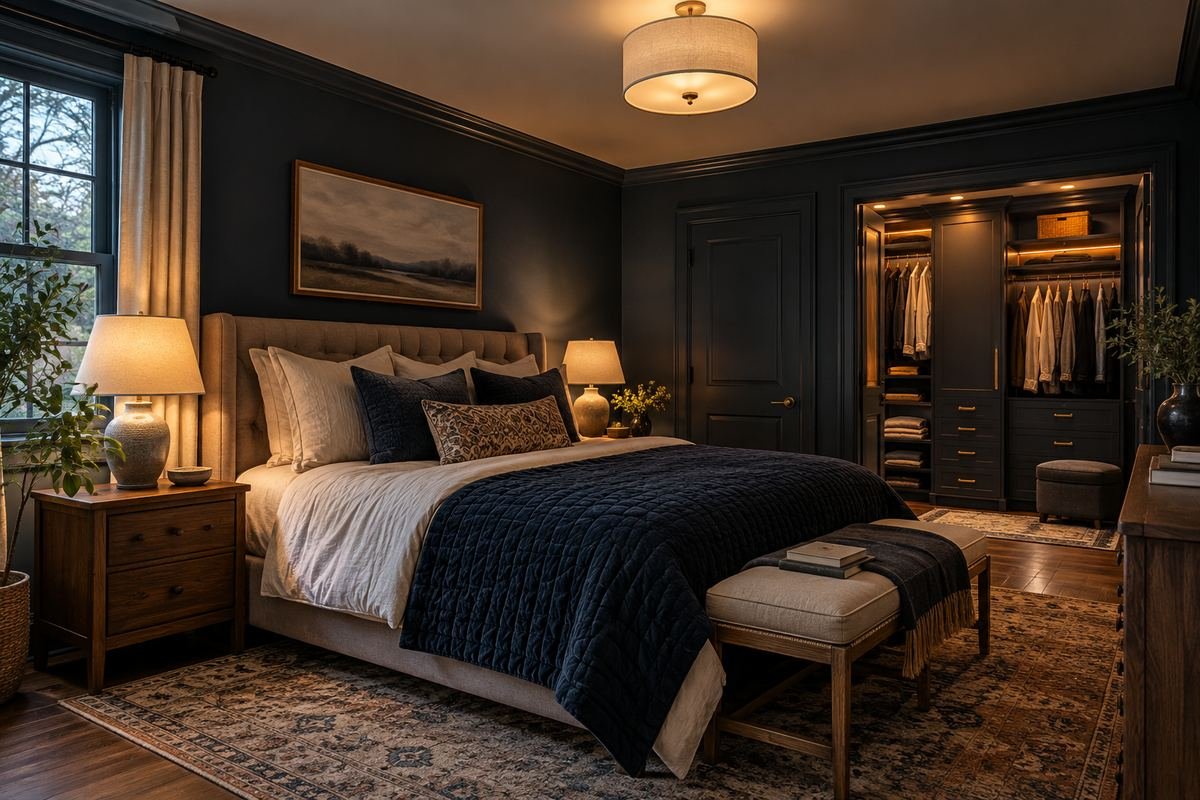
A darker paint color changes the way a room reflects light. A few bright sources may create striking contrasts without making every activity easy.
Test the actual paint and bulb combination at night. Add light where it is needed rather than simply increasing the brightness of one central bulb. A reading area and wardrobe can deserve different solutions.
Practical tip: Judge the room after dark, not only in daylight.
23. Stop when each layer has a useful job
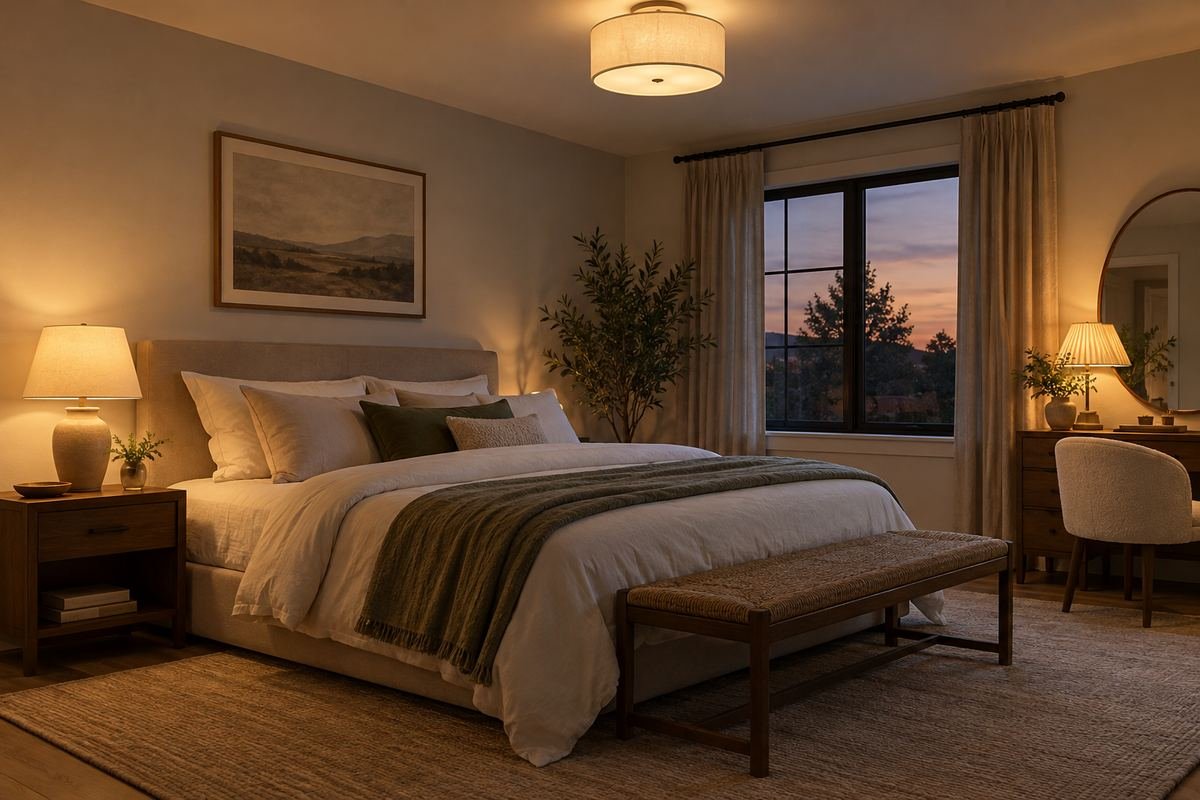
The final lighting idea is an editing decision. A room with a clear general layer, usable task lights and a pleasant evening option may not need more fixtures.
Turn on one layer at a time and note what it contributes. Remove redundant decorative lights if they crowd surfaces or complicate controls. Keep the arrangement simple enough to use on an ordinary tired evening.
Practical tip: Keep a fixture because it helps, not because a corner is empty.
Frequently Asked Questions
How many lights does a bedroom need?
There is no useful universal fixture count. Start with the activities, room layout and light already available. A room may need a general layer and one or two task lights; another may need separate wardrobe or dressing light. Test the result before adding more.
Are wall lights better than bedside lamps?
They can free a small bedside surface, but their position is less flexible after installation. A table lamp is easier to move. Compare reach, glare, headboard height and the actual fixture requirements rather than choosing from appearance alone.
What does warm white mean on a bulb?
It describes the appearance of the light, generally toward the yellow end of the white-light range. Use the product label to compare color temperature. Warm appearance does not tell you how much light the bulb produces.
Can I put any LED bulb on a dimmer?
No. Use a dimmable bulb and a compatible control and fixture. Check the manufacturers’ guidance, including any minimum load, enclosed-fixture and installation requirements.
How can a small bedroom feel less cluttered with lights?
Give each fixture a job and keep controls and cables organized. A well-placed wall light, compact shaded lamp or suitable wardrobe light can be useful, but remove redundant fixtures before adding more.
Choose the Details That Work in Your Home
Choose one missing lighting function first. Test its position from the bed, dressing area and doorway, then add a fixture whose output, shade and control support that task. A few well-chosen layers can make the room easier to use without filling it with lamps.
For related ideas, explore 25 Small Nightstand Ideas for a More Useful Bedside Space, 22 Headboard Ideas for a Bedroom That Feels Finished, 23 Bedroom Curtain Ideas for Privacy, Light and a Calm Room.
Planning References
FTC: shopping for light bulbs; ENERGY STAR: understanding brightness; U.S. Department of Energy: purchasing efficient light bulbs. Follow the instructions for the exact products you choose.
Optional digital guide for this topic
If you prefer a structured workbook, explore this related paid guide.