The best headboard ideas make the bed feel settled without making the bedroom harder to use. A beautiful panel can still be the wrong choice if it hides an outlet, catches a drawer or disappears behind your pillows. Start with the bed and the wall you have, then choose the shape and material.
This collection compares different headboard constructions, profiles and practical arrangements. It includes softer options for sitting up, open designs for smaller rooms and a few wall treatments for people who prefer a simpler bed frame. The goal is a useful focal point rather than a matching furniture set.
Measure the finished mattress height, the bed frame and the wall space beside it. Mark the proposed outline with removable paper and view it with pillows in place. Check the complete product dimensions and mounting instructions: a queen-size label alone does not establish compatibility between a headboard and an unrelated frame.
The images are original AI-generated decor concepts, not installation diagrams or photographs of completed client projects.
Test Headboard Ideas With the Mattress and Pillows in Place
Mark the full outline, including wings or side compartments, beside the dressed bed. Next, sit up and reach the bedside surface, light controls and outlets. For example, a low wood panel may nearly disappear behind thick pillows while a wide upholstered design affects access to a drawer. Confirm the complete frame or wall attachment separately from mattress size, and review any moving bed base with the exact product instructions.
Check fit before choosing your headboard ideas
Decide whether the product attaches to the frame, the wall or a manufacturer-specified support system. Follow the exact instructions and use fixings appropriate to the wall and complete weight; a heavy panel should not simply lean behind the bed. Keep outlets accessible, leave room for bedding changes and check how a moving bed base works before pairing it with any fixed furniture.
1. Begin Headboard Ideas With a Simple Upholstered Panel

A straight upholstered panel gives patterned bedding a quiet background. Choose a gently textured fabric if the rest of the bedroom already has several strong shapes. A plain outline also lets you change bedding colors without replacing the largest feature behind the bed.
Look at how much padding remains visible above the pillows. When you sit up, check the actual backrest rather than assuming every upholstered headboard will feel equally supportive.
Practical tip: Order a fabric swatch and compare it against the bedding.
2. A single rounded arch

An arched headboard softens a room with square windows, framed art and boxy storage. Keep the top curve broad enough to read as one clear shape rather than filling the wall with several competing arches.
A solid fabric makes the silhouette especially clear. If the wall already has strong architectural detail, use a smaller arc so the headboard does not crowd it.
Practical tip: Mark the curve on the wall before choosing its height.
3. Shallow vertical channels

Channel upholstery adds a little rhythm without requiring a busy fabric. Shallow channels feel quieter than deep sculpted sections and can connect a wide bed to a room with tall curtains.
Check the seams and cleaning access when comparing products. On a small wall, fewer wider channels often look calmer than many narrow ridges.
Practical tip: Look at the headboard with all sleeping pillows in place.
4. Open timber slats
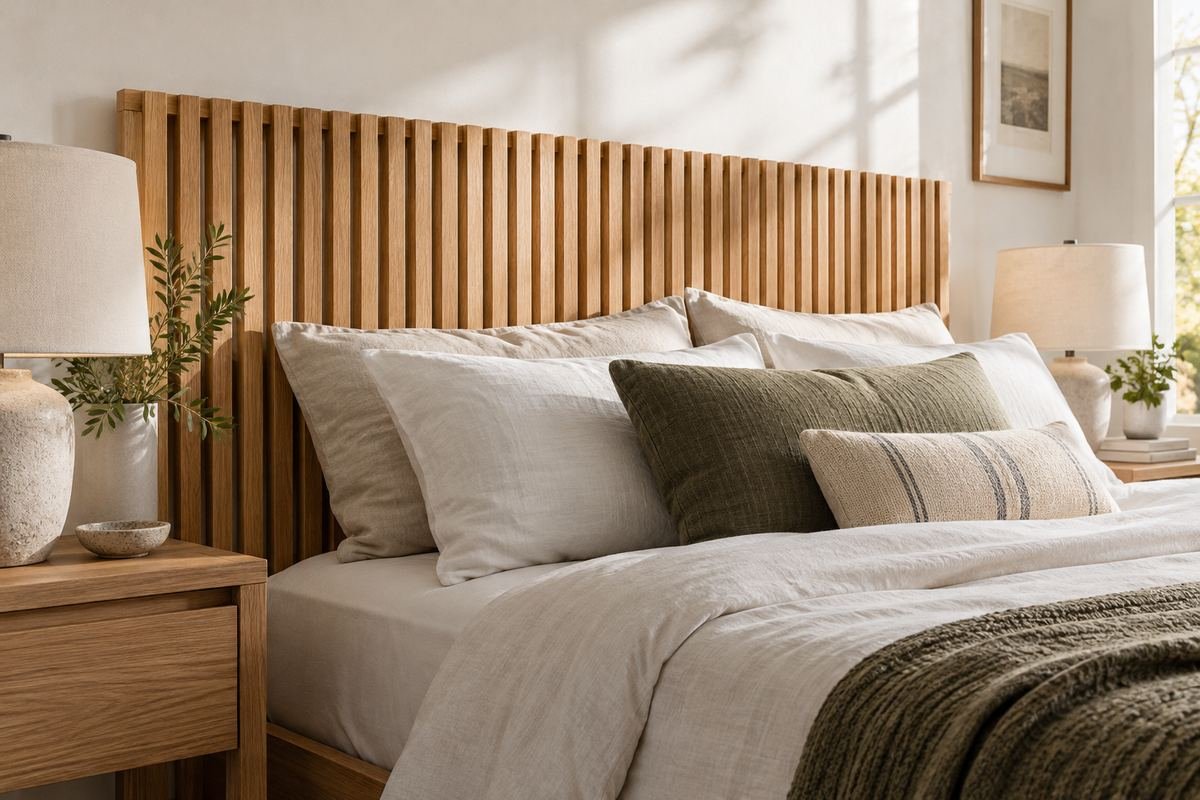
A slatted headboard brings the warmth of wood while leaving visible wall between the pieces. This can be useful when a small bedroom feels weighed down by a broad solid panel.
Choose a finished product with smooth edges and a stable attachment system. Open slats are a visual treatment, so check whether you still want pillows behind your back for sitting.
Practical tip: Dusting access matters as much as the front view.
5. A low solid wood panel
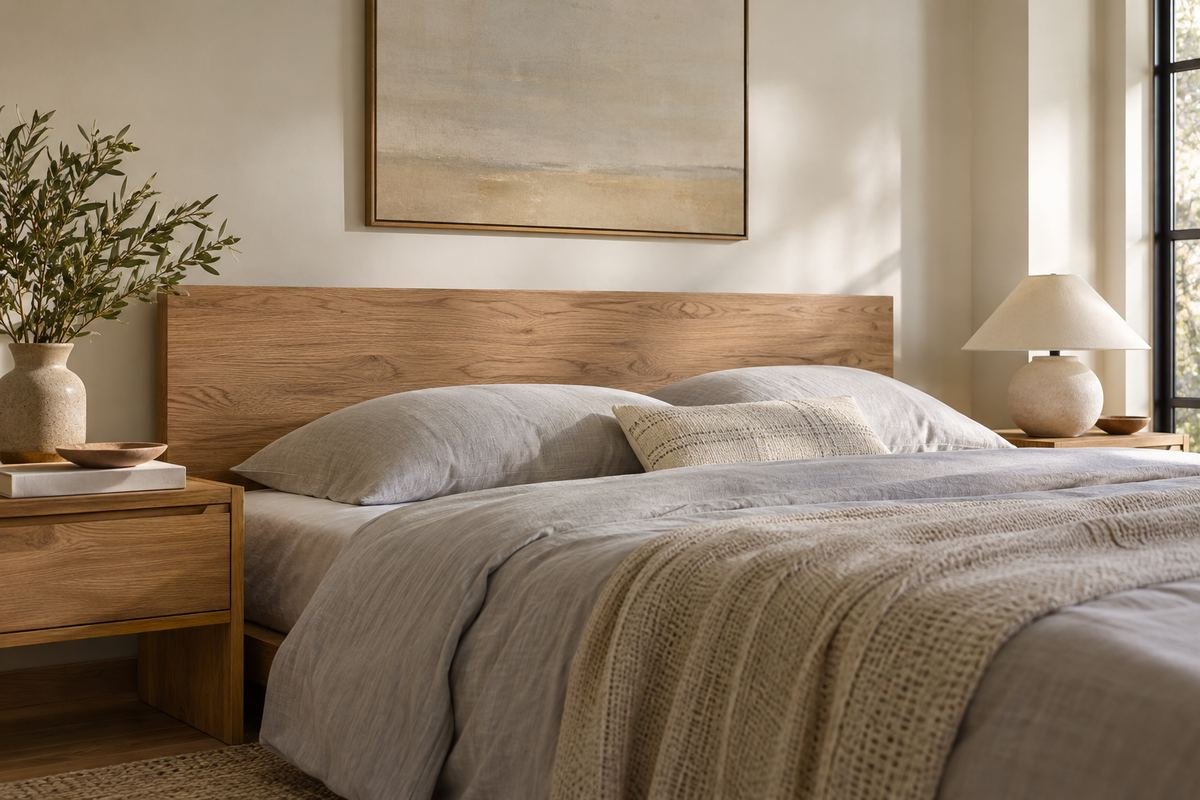
A low wooden headboard suits a room where windows or artwork already create the vertical interest. The grain becomes the main detail, so the surrounding bedding can stay fairly simple.
Compare the panel against the finished mattress height. A low design can almost disappear after adding a deep mattress and several pillows, changing the effect you expected.
Practical tip: Measure the visible panel above your actual pillow height.
6. Compare Cane Headboard Ideas Through Intended Use
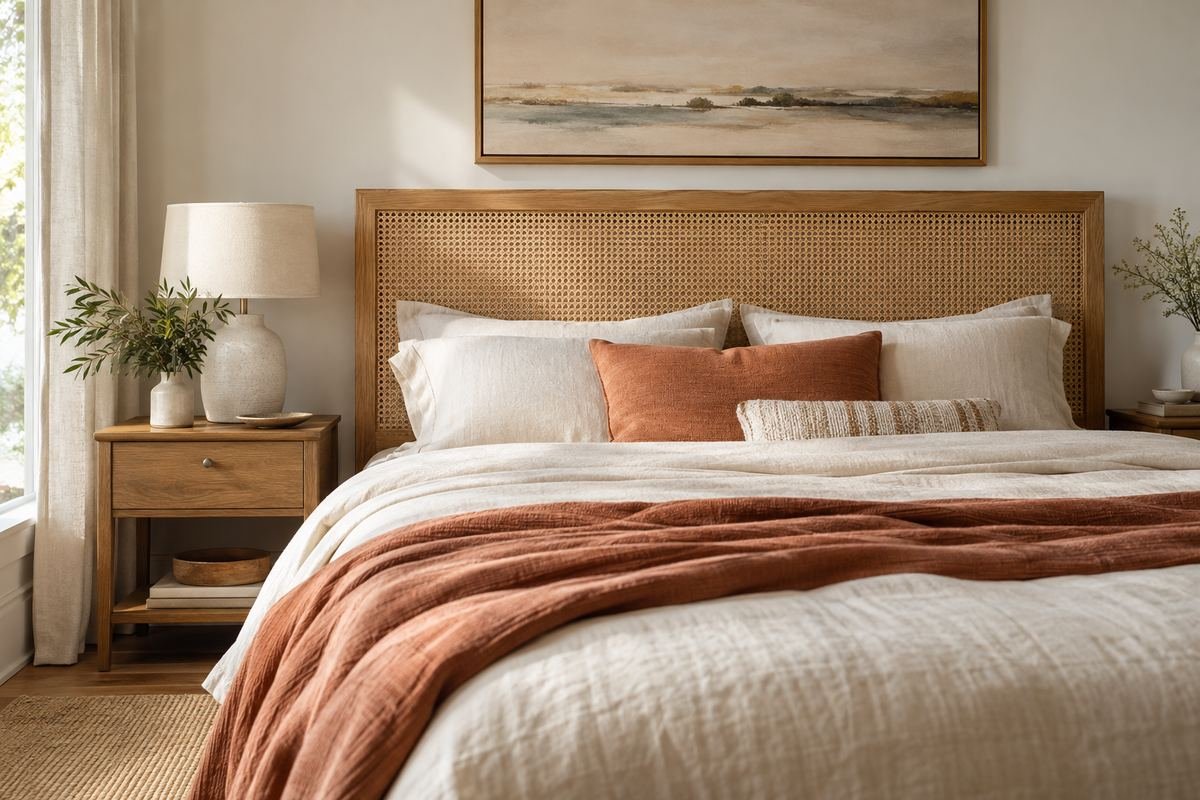
A cane insert offers a lighter texture than a fully upholstered panel. The framed construction gives it a defined edge and works well with plain linen, painted walls and a restrained palette.
Avoid treating the woven section as a robust backrest unless the product instructions allow it. Check the frame and cane condition carefully when buying a secondhand piece.
Practical tip: Use the product care advice rather than soaking woven material.
7. Slim black metal

A metal headboard can outline the bed without covering much wall. A restrained black frame is especially useful when nearby furniture is already substantial or the room has a strong paint color.
Look for a comfortable relationship between the bars, mattress and pillows. A fine outline is a design choice; it does not make every metal frame a comfortable surface to lean against.
Practical tip: Check the joints and finish on a secondhand frame.
8. A spindle profile

A spindle headboard adds familiar furniture detail while staying visually open. A painted version feels crisp; a natural wood version can connect to floorboards without matching every bedside piece.
Keep the spindle shape readable by using a fairly plain pillow arrangement. If your bedding is strongly patterned, simplify the rest of the wall so both features have space.
Practical tip: Choose one wood tone to repeat elsewhere in the room.
9. Tailored leather upholstery

A smooth leather headboard brings a different texture to a room full of soft textiles. A simple seam pattern lets the material show without turning the bed into a very formal centerpiece.
Compare care requirements and the actual material description. Natural leather, coated fabric and synthetic alternatives can need different cleaning methods even when they look similar in a photograph.
Practical tip: Check how the finish looks in daylight and lamplight.
10. A removable fabric cover

A covered headboard gives you a way to refresh the visible fabric while keeping the underlying shape. It suits a bedroom where bedding changes often or the headboard is frequently touched when reading.
Buy for the exact compatible frame and review the care label before committing. Extra fabric is not a substitute for a correctly fitted cover, especially around corners and attachment points.
Practical tip: Keep the care label with the cover for future washing.
11. A wide horizontal panel

An extended headboard can visually join the bed and bedside tables. It works best when there is enough wall for the complete composition to breathe rather than squeezing the panel between two doors.
Map the switches and outlets before choosing the width. You still need to use the bedside furniture and replace bedding without the extended panel interfering.
Practical tip: Include the bedside tables in your paper layout.
12. Test Tall Headboard Ideas Against the Actual Wall
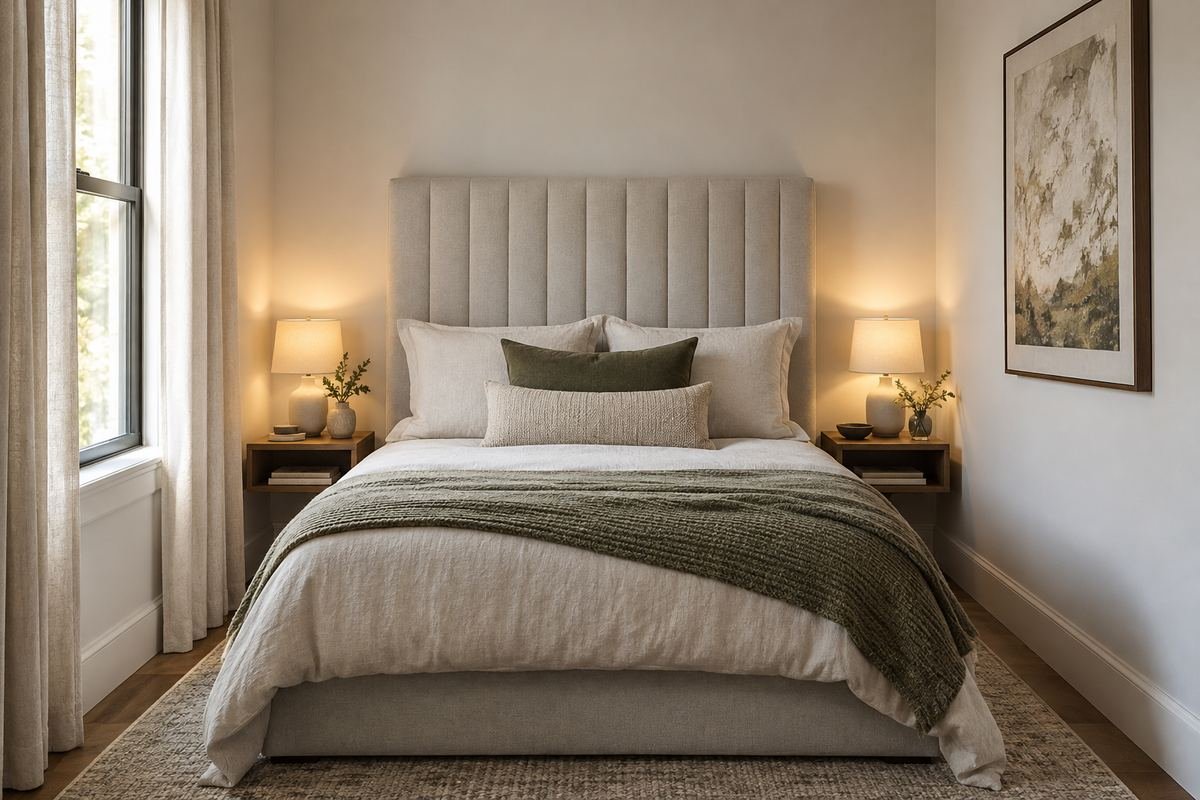
A taller headboard can draw attention upward when there is limited space beside the bed. Keeping it close to the bed width avoids using the narrow room as a reason to add a much wider panel.
Use a simple material so the height feels deliberate. Check the relationship to ceiling trim, wall lights and nearby window frames rather than measuring from the floor alone.
Practical tip: Look at the outline from the bedroom doorway.
13. Subtle wingback sides

Small upholstered wings give the bed a more enclosed look without requiring a large canopy. They can work well in a plain room where the headboard needs to provide most of the furniture detail.
Check the outer width and how the wings affect reaching a bedside table. A product can fit the mattress yet still feel awkward to use in a compact layout.
Practical tip: Measure the widest part of the wings, not just the back panel.
14. An upholstered corner return

A purpose-made headboard with a short return can help a bed placed beside a wall look intentional. Use it where the side wall genuinely forms part of the bed arrangement rather than adding a return to an open layout.
Check bedding access on the enclosed side. The return should be part of a stable designed system, with no loose padded panels trapped between the bed and wall.
Practical tip: Plan how you will tuck in sheets before ordering.
15. Integrated bedside niches

A headboard with small side compartments can hold a book or glasses when separate bedside tables will not fit. Keep the storage focused on a few nightly objects so the bed does not become surrounded by shelves.
Review the complete depth and mounting requirements. Avoid loading an overhead ledge with heavy display pieces simply because a product photograph shows decorative storage.
Practical tip: Check whether a charging plug fits inside the intended opening.
16. Built-in reading lights

A headboard designed with reading lights can keep the bedside surface simpler. Choose adjustable light positions that serve the person reading without requiring the entire room to stay bright.
Check where controls and cables sit when the bed is assembled. Follow the lighting system instructions and use qualified help for fixed electrical work instead of improvising wiring inside upholstered furniture.
Practical tip: Try the controls from your normal reading position.
17. An offset upholstered composition

An intentionally offset headboard can suit a room with an asymmetric layout. For example, a longer upholstered section can extend toward the larger bedside area while the smaller side stays simple.
Repeat one line elsewhere, such as a picture frame or shelf, so the asymmetry looks chosen. This is most convincing when it responds to the room rather than fighting a centered window.
Practical tip: Draw the entire wall composition before choosing the panel.
18. Keep Curved Headboard Ideas Visible Above Pillows

A softly waved upper edge can bring personality to a bedroom without relying on a bold pattern. The shape is easiest to read when the wall color and bedding stay relatively calm.
Compare the lowest and highest points of the profile with your pillows. Avoid choosing the height from the tallest peak alone; much of the upholstery may sit lower.
Practical tip: Use one curved detail elsewhere rather than repeating waves everywhere.
19. A restrained patterned fabric

A small-scale fabric pattern can become the bedroom’s main decorative element. Choose colors that already appear in the bedding or curtains so the headboard feels connected rather than like a separate sample board.
View a large swatch where the bed will sit. A repeat that seems tiny in a close-up can look much busier across a king-size upholstered panel.
Practical tip: Compare the pattern from across the room.
20. A painted headboard-shaped backdrop

Paint can define the bed wall when you prefer a simple bed frame without a large additional panel. A rectangle or soft arch gives the pillows a visual background while leaving more physical space around the mattress.
Treat this as a wall finish rather than a padded support. Test the color and finish first, and keep the painted outline in proportion to the bed and bedside furniture.
Practical tip: Use removable paper to test the painted shape before committing.
21. A framed panel behind a modest headboard

A shallow decorative wall panel can add definition while a smaller actual headboard provides the bed’s finished edge. This separates the wall design from the furniture instead of asking one oversized item to do everything.
Keep projections modest and maintain access to outlets. Any decorative panel needs a suitable installation method; the bed should not be used to hold it upright.
Practical tip: Check the combined depth of the furniture and wall treatment.
22. Check Adjustable-Base Headboard Ideas for Compatibility

An adjustable bed can still have a clear visual focal point. Choose an arrangement expressly compatible with the moving base, keeping the headboard independent of moving sections where the product system requires that.
Check the approved brackets, wall mounting and clearance instructions before buying. The practical details should guide the decorative choice, particularly if the base or mattress will change later.
Practical tip: Confirm compatibility with both manufacturers rather than relying on bed size.
Frequently Asked Questions
How high should a headboard be above the mattress?
There is no single visual height that suits every bed. Mark the outline with the actual mattress and pillows in place. A headboard that barely shows behind pillows will read differently from a tall panel, even when both fit the frame. Check the product dimensions before ordering.
Can I use a headboard with an adjustable bed?
Check the moving base manufacturer’s instructions and the headboard specifications together. Some arrangements use approved brackets; others use a separate wall-mounted headboard. Keep the moving sections and any required clearances unobstructed rather than assuming a matching mattress size establishes compatibility.
Is an upholstered headboard difficult to keep clean?
The answer depends on the fabric and construction. Compare the care label, texture and access around seams. A removable cover may help, but removable does not automatically mean machine washable. Choose the care routine you can maintain rather than a material name alone.
Choose the Details That Work in Your Home
Narrow your headboard ideas to the options that fit your frame, leave useful bedside space and suit your cleaning habits. Then choose the outline and texture that make the bed feel intentional. A full-size paper outline is a better final check than a small product thumbnail.
For related ideas, explore Bedroom curtain ideas, Bedroom rug placement, Bedroom dresser decor ideas.
Planning References
IKEA BRIMNES headboard product and mounting information; IKEA bed and headboard covers. Follow the instructions for the exact products you choose.
Optional digital guide for this topic
If you prefer a structured workbook, explore this related paid guide.